Lunchmeat Festival 2026
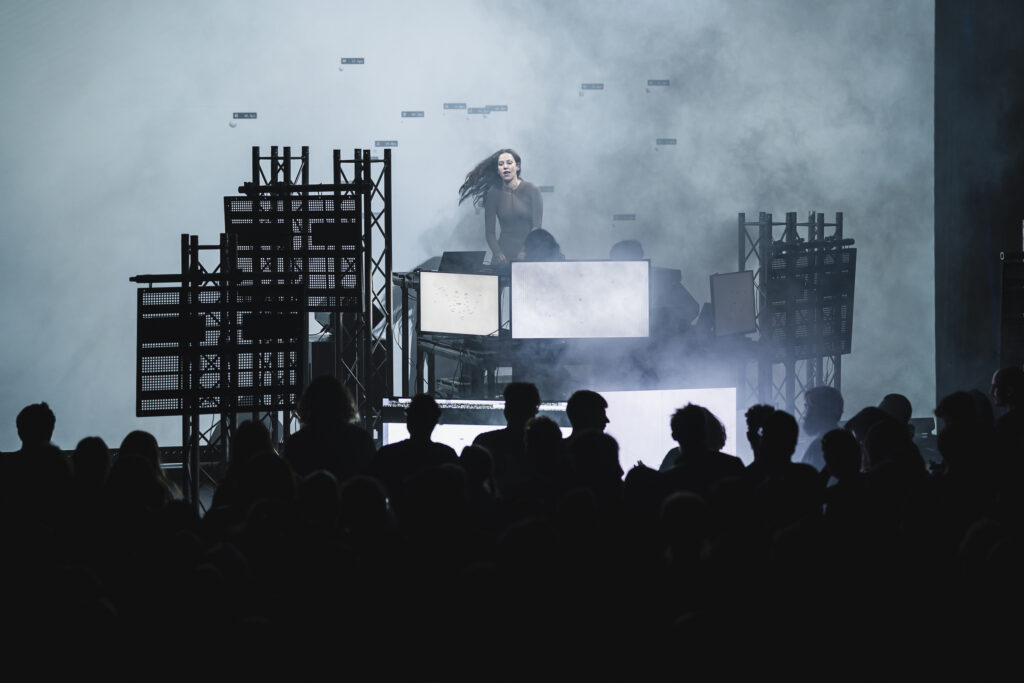
Of Dichotomy and Paradox
As Prague’s frantic summer energy shudders its last, the long hot evenings dissipating into riotous autumn colours and brisk chill, a pensive mood, soon to be shattered, quietly gathers, evocative of the coming fog. Dissecting the city’s ancient heart, the Vltava river, violent under winter rains yet diminished into flat placidity come dry summer: it is dichotomous, vital yet poisoned, wild yet tamed, severing the city into bulbous, misshapen halves just as its aqueous glue makes the place whole.
On the cusp of seasonal shift, Lunchmeat Festival occupies a paradoxical place; simultaneously slap bang in the middle of Europe and at the fringe of its culture; between the centre and the edge, dichotomy and paradox; in the void space between question and answer, contradiction.
Nearly two decades of events has cemented Lunchmeat as arguably the most influential of Czechia’s nightlife fixtures, impacting the region’s cultural fingerprint on the micro/individual and macro/social levels — its fashionable sonics, the structure and artistic/aesthetic focus of emerging acts. It’s not hard to see why: it’s one of Czechia’s few grand-scale annual events, corralling many large or must-see acts together under one ticket fee within the nation’s capital.
Pilgrimage is often a core component of what makes a festival — the joy of the event is multiplied by the effort to reach it — but Lunchmeat is a rare occasion that summons the sacred to home, offering convenient access to an enticing world that often goes on all about Prague, but seldom in our midst. Ritual and inner journey therefore feel more prevalent; returning annually allows the shifts to ring louder, and iterative change becomes central to the experience.
Memory and continuity, deviance and development: it is never the same person, nor the same river, twice; but a baptism by definition alters the individual — how many submersions, before nothing is the same? What portion of oneself is lost with each cleansing?
What honours a festival’s lineage, and what shirks away from the past? How is it repeating itself, and how is it not?
What changes to the river itself?

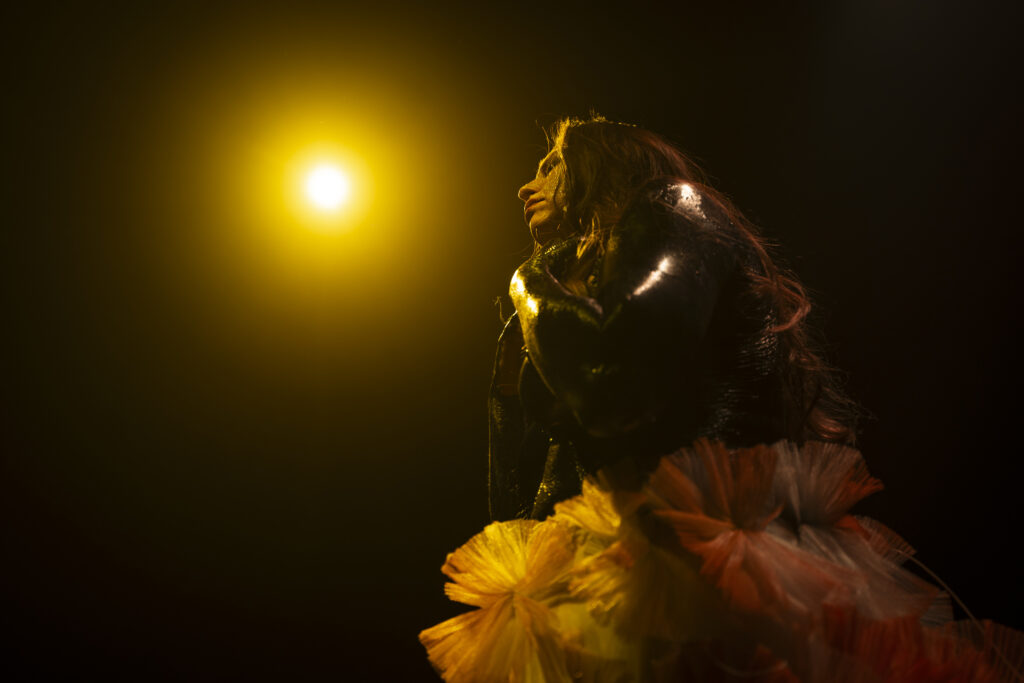
With many questions seeking answers, I held a short Q&A on the festival’s specific approach to programming with Jirka Kredenc, co-founder and curator of the festival. From the outset, his answers challenged certain inbuilt assumptions: regarding the “direction” of this year’s edition, I was instead redirected with the image of a “mosaic… a jigsaw puzzle that sends out an impulse to insert the next piece only at a specific moment”; a curious metaphor, one which seeks to unpick the warp and weft of time’s consecutive tapestry in favour of rhizomatic sprawl.
Curiouser still, Kredenc informs that Lunchmeat doesn’t pursue unity throughout the mosaic, but rather “a contrast”, one that hopes to engage and challenge the audience with “the widest scope of dramaturgy and combining the expected with the unexpected”, all the while placing acts together which “defy any sort of cohesion, or definitive line”: not monotone harmony, but rather a yin-yang image of sharply defined edges demarcating one another.
Fitting that the answers given are so contradictory to my probing questions: “Advanced Electronic Music and New Media Entertainment” might be Lunchmeat’s byline, but its present form suggests the established credo’s melting solidity. Draped cloth, elaborate puppets and the artist among the audience were seen to replace the formula of stageside musician and visual artist hunched over laptops; performance, and vivid human presence, instead of the communal yet private sensory experience, on-screen and in-ear, of Lunchmeat’s past.
This is clearly fruit of the festival’s search for “the broadest possible scope of what an audiovisual work can represent,” a search that frankly feels a necessary development after attending for six consecutive years and imagining the preceding eleven: robotic powersuits, DIY hard- and software, and inventive approaches to sound and light dominated previous editions, but sometimes invoked a sterile technological feel, result of the intentional sublimation of the essential mortal element in music and art.
Similarly, thanks to Autechre being the first name announced, it was hard to reify Lunchmeat’s unspoken manifesto of “no headliners”; truthfully, this scarcely repeated slogan feels more directed at the festival’s consistent intention to elevate emerging acts from the local region, and to try to avoid having a singular source of gravity.
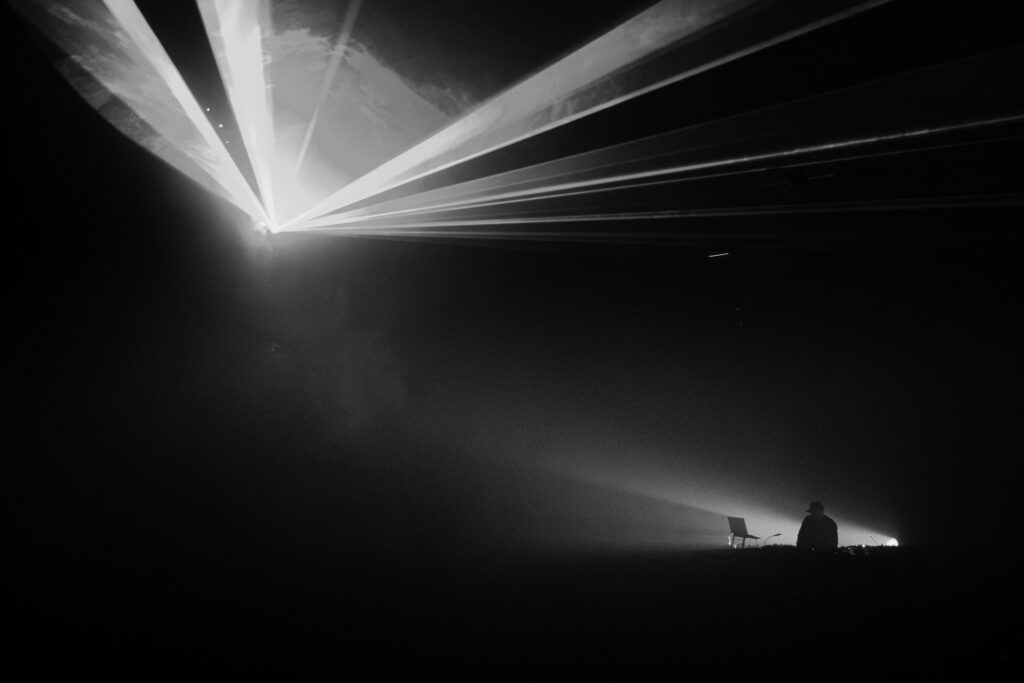
Lunchmeat also has a motto — “See You Dancin’” — which this year also felt a contradiction: the presence of multiple live dance music acts, formerly a major component of the festival’s terroir, was noticeably missing. There’s a subliminal cheekiness to this mantra which feels especially prominent this year: Autechre perform in the dark.
Lunchmeat’s challenge to the audience to appreciate each act is facilitated through a one-act-at-a-time approach. There’s no clashes, and no acts missed because you weren’t in the right queue for the right building an hour beforehand, halfway across the city from the next must-see show. In this, the festival’s sometimes brutal approach to cohesiveness feels most apparent; all share a broadly similar experience, with the discerning measure being an individual’s taste, curiosity, and persistence in selfishly pushing to the front to carve an experience against the whirling throng.
At times it’s a battle: this year, each day sold out at a higher capacity than ever before, and sometimes the room was pressed beyond bursting. The logistical issue of squeezing the same number of people into a room far less than half the size presents a question of its own: if Lunchmeat gets any bigger, will it be forced to rethink the “one-act-a-time” format that’s been its calling card for more than a half-decade?
Lunchmeat endeavours in “a constant search for interesting, fringe projects” to share with its wider audience, but is nonetheless bound to more commercially-minded bookings designed to fill the room. Bringing such a plethora of foreign names to the country comes with economic complications for a somewhat sidelined territory still with its endemic Koruna, weak against the Euro: sustained local and regional cultural funding — paradoxically both the lifeblood and the hewing axe — is essential to the festival’s potential growth, the continuation of its production, and its mission to “to present acts that few people have heard of”.
In such a pressure system of awareness, partnerships are essential; the further afield, and the higher calibre, the better. Past editions saw elevated presence from Planet Mu- and SVBKVLT-releasing artists, among other labels and institutions, and 2026 saw changes, but not to the pattern: longstanding friends MUTEK Montreal flew Tati Au Miel over for the opening concert in the Ankali nightclub, and “As Nature” — an ambient A/V work jointly-commissioned with Rewire and the Barbican Centre — from KMRU, Nick Verstand, and Mareike Bode was a key early exciter on the lineup.
KMRU’s performance was subtly chromatic, like gazing long enough into the stars that you start to see red, gold, green and blue in alternation, not merely a blanket of dark pricked with points of light. These subtle tricks of sound were hammered home by Verstand’s gentle coloured reworking of the space with minimal lighting snuck into corners, while directly overhead a long blue shroud floated in the crosswinds forged by fog machines and the cumulative breath of the packed room. Mareika Bode’s contribution to the work, a custom scent, was sadly absent, or perhaps suppressed under the whelm of the many people.
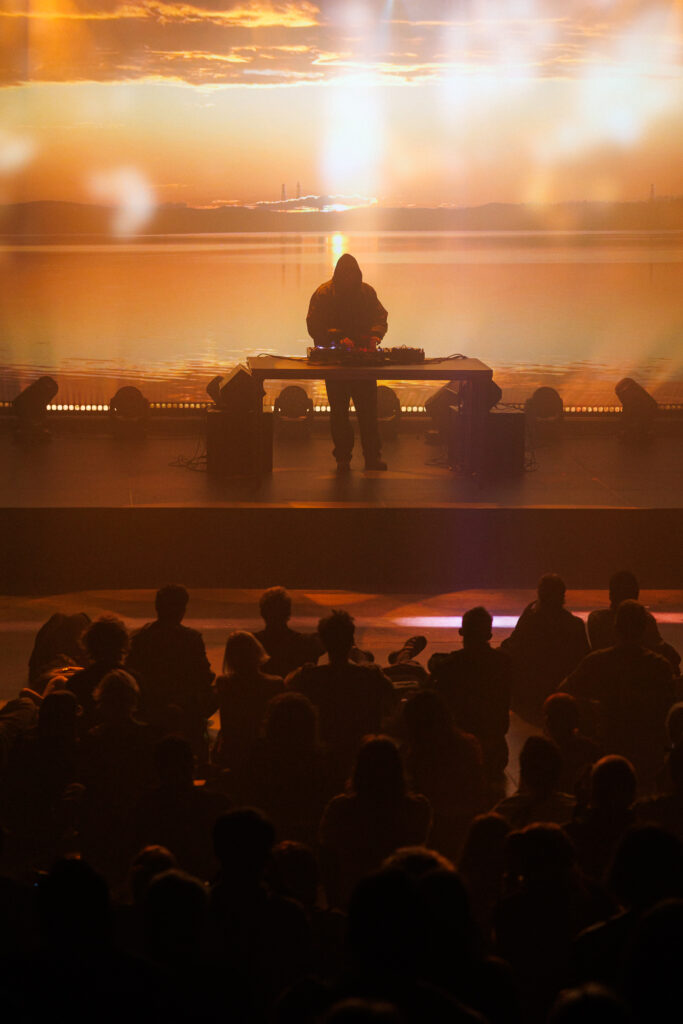
International artists passing by Lunchmeat speak of the festival as a high water mark in its field, not only for its audiovisual specialisation but also its technical prowess and consultancy, but the offering to local artists greater: an agnostic stage that, with varying success, eschews the leaderboard and the hierarchy that pervades so many other aspects of music culture. The fingerprint of Lunchmeat’s influence is frequently felt in local performances, as is the unification of the music and arts scenes in this small city, showcasing the essential interconnectivity and collaboration at place in the city’s finest works and honouring Kredenc’s avowal that “each slot dedicated to local artists presented a highly distinct approach to creation”.
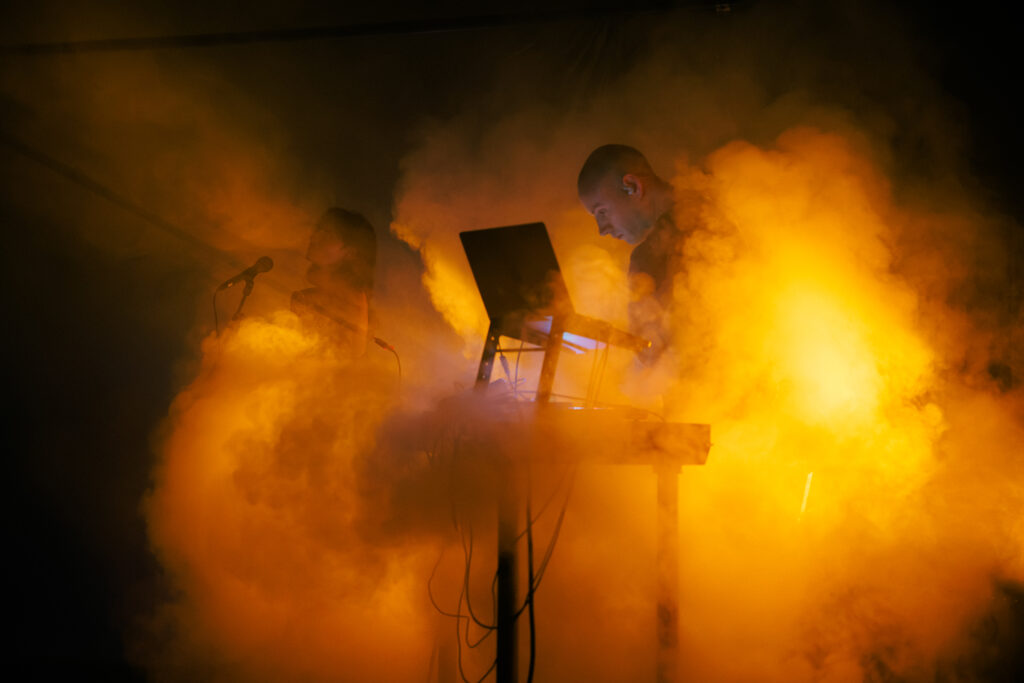
Technological marvels and mechanical props certainly took a backfoot this year, but were not entirely absent: DJ GÄP and Isama Zing’s ‘Prelude for Light and Fog’ focussed on the raw, haptic-driven sonics of MIDI-manipulated lasers, lights, and fog machines. Rendered curiously inept by being forced into the primary role, these machines squeaked and scratched, producing rhythm and sound to the duo’s programming; it was brief, perhaps necessarily so, but a demonstration of technological novelty coupled with the desire to step away from what is typical.
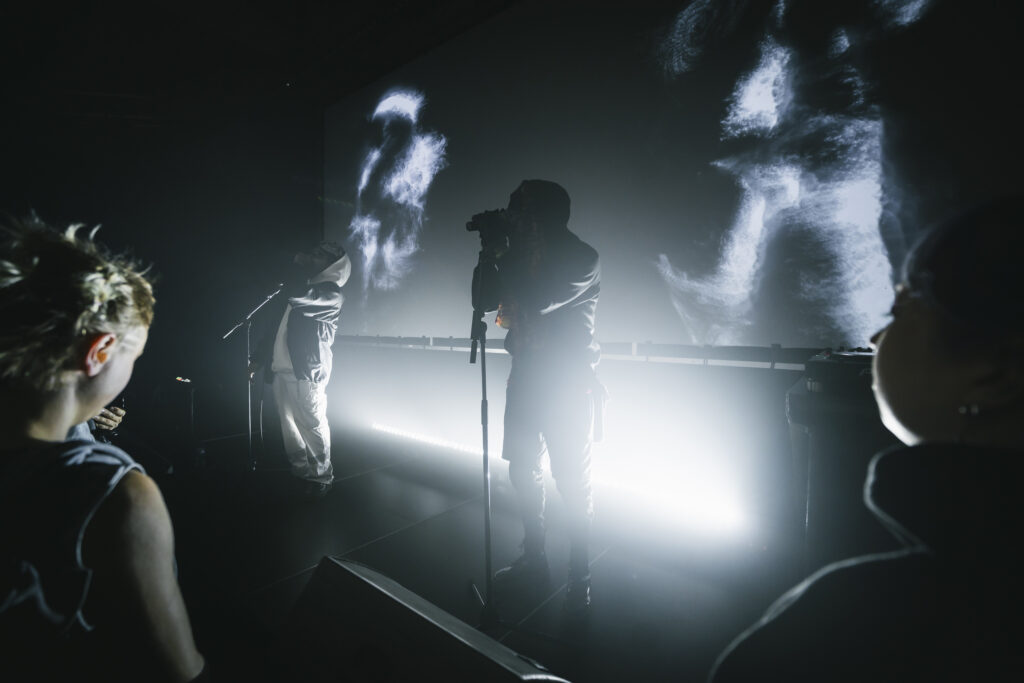
Seeking the same ends, “Tangled in Narratives” brought together many minds (Natálie Pleváková, Magdalena Rybanská, Jan Matýsek, Jitka Sara Pániková, and Antonín Gazda) for the debut performance of the newly-minted persona nan Cifra. The focal performer (Pleváková), followed with videocameras linked to the screen, played a coarse but structured sound heavily informed by post-club collage, which unevenly flowed over the rocks of chronology. Mirroring the many small silences between songs or acts, an object with bodily appendages reminiscent of an instrument which Kredenc describes as being “elevated… to the level of an actual performer”. ‘Harpo’ by name, it remained stationary centre-stage: as a “performer” of its own right it was less than actively present, but rather lingering as a ghost, waiting for seldom touch.
Later, on the grand stage, Miriam Kardošova’s “I tell her to speak” performance took things in a more radical and unexpected direction. Her avant-garde theatre was inarguably an outlier even amongst six years’ worth of memories: no grand projection, no radical use of contemporary equipment, no boldly inventive instrument. As we enter, Kardošova stands centre-stage, stringently strumming a guitar with a technique best described as intentionally amateur; three backing dancers, faces mutated by masks, murmur indistinctly into a shared mic, out of time and focussed tune. It’s not entirely unpleasant, but it is unsettling; one imagines this to be the aim.
The scene lasts for a long minute before abruptly halting. The guitar is laid aside, and without rush two hammers are taken to the patient nearby zither with sudden precision and clear skill, and a voice like a strained wind harp creeps from the artist with a decisiveness and precision utterly incongruous compared with the preceding movement. The experience was challenging for an audience primed to witness sleek technological spectacle and musical proficiency; there was palpable confusion in the room, crushed up with the rapt fascination of others, and the overall impression is hard to decipher; certainly, in Kredenc’s words, “one of the most unforgettable memories of this year’s program”. It seems that, even after 17 years, Lunchmeat can still truly blindside regulars and newcomers alike with something deviant from the norm.
Confronting us with Kredenc’s meaning of “contrast”, PLF (a trio of experimental musicians Peter Kutin, Elvin Brandhi and Lukas König) triggered whiplash on their arrival in Kardošova’s wake. Where Kardošova was unnerving in quiet emptiness, here everything felt enormously packed, tensely composed with rising energy wrought by the artful shrinking of white space. It felt, ultimately, like a jam with three skilled improvisers; there wasn’t a flourishing and orchestrated explosion, but instead a slow and rewarding build. In this the trio stood apart from much of the lineup, and not for its passing similarity to a traditional band (synth, vocal, drum); there was something unknowable in the energy of room, emanating from the players: König’s individualistic drum style snapped sharp up against Brandhi’s electrified shouts and yelps, Kutin’s frictionless noise scattering across the room in lurching starts, chaotic but totally under control.
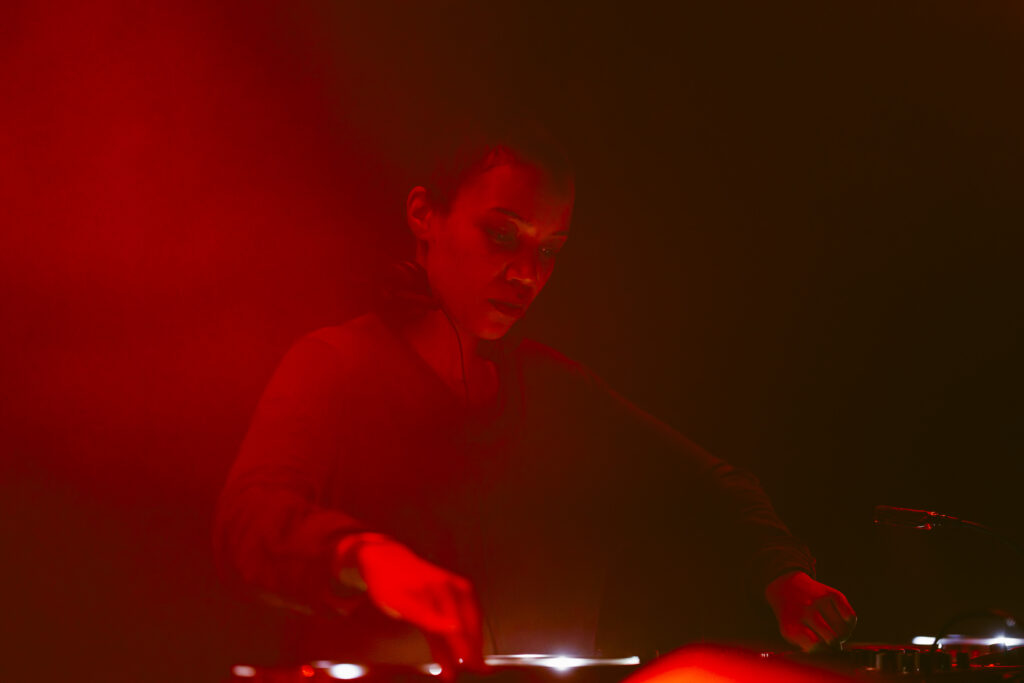

Giving many in the crowd their fix for raw spectacle was “Passage”; Kevin Peter He controls the big screen’s feed manually through use of a gyroscopic camera, bringing us gradually into, ostensibly, a solarpunk future; an Unreal forest of trees and glowing wires is explored gradually, reaching, to intensifying music, a white flame, whereupon the graphic world’s importance suddenly recedes. Now, FITNESSS, the musical component of the duo, make their presence felt, charging around the entire vast room wielding pole lamps, white and red, throwing themself on the floor amongst engaged onlookers as formless blasts of prefabricated noise careen from the speakers.
For the front row it was an intense, physically-oriented performance, but for the backline, a strained neck and some confusion as to where the musician was and what they were doing. The performance was ultimately reliant on participatory closeness; with distance to see the full picture, too much felt hurried, even incomplete: the cybernetic deer mounted on their bioplastic legs slide, rather than trot, and at one point the viewer collides with an unfazed individual.
Perhaps this was why Kosu Nes and Urok stood out much more than it might have in previous years. At the structural level there wasn’t much about it that broke boundaries or expectations, at least for Lunchmeat; one guy with Ableton, another with some video image software manipulating particles into evolving abstract forms. Conversely, the familiarity of format was a genuine cleanser, and from the musical perspective it was one of the highlights, genre-walls adeptly battered down without reservation as the musician rapidly flitted through Djrum-esque hypermutated club music.
Veering far from the product of motherboards and incorporeal pseudo-realities, the seething mass of tangible energy brought by Voronhil and Kuthi Jin instigated immediacy and riot to the masses: Kuthi’s buffeting bass winds ushered us in, his trademark tempestuous sonic experimentalism honed from blunt force to a razor’s edge only to gut itself, and be born again anew. It’s hard to imagine a better backdrop for Voronhil’s blurred mass of body, voice, and intricately woven identity — in their unique case, literally: the act’s calling card was a series of human-esque puppets borne up by both players and crowd, intricately and colourfully crafted with many changeable expressions, that became avatars for their unstoppable flood of noise and sound, a vivid and stunning highlight.
The “club stage” where Kuthi & Voronhil performed was the crucible for the festival’s most energetic moments, and few were more so than B4mba & Mooki6’s NEXUS, a Lunchmeat-commissioned work featuring Barcelona-based artists Akyute. B4mba and Mooki6’s horrorcore-infused snarling drawls and crackling shouts raged within a tight cage of dense bass-driven music, claws reaching out between the bars, symbolic of the project’s focus of rage against a world uncaringly careening over the edge of collapse. In the releasing of their grip, a feeling of incomplete catharsis, and a hungering for more fueled by a belly emptied by fury.
The negative black contrast to these white-knuckle acts was Kevin Richard Martin’s ‘Subzero’; a single tone, an icy blue, and a choking ambient dub pressure synchronised into a singular image: one hand behind your neck, another placed on your back, holding you beneath the frozen lake. With a glacial grip, Martin progressed through dour drone and steady thump (perhaps the heart, trying to the last to keep your veins full of the hot red stuff), while above us all, a device casting about it smoke and a thin frigid light, reminding us that we’re below, under, beneath.
Worlds apart, Valentina Magaletti and Upsammy’s opening live set on Sunday came under changing winds. The back corners of the room, shrouded in gentle lighting, befitted the gentle progression of the drums and the synths. The pair weaved well together, Magaletti’s storied skill self-evident (it’s ever a joy to see a master at work) and Upsammy’s ambient-hued live music is a fitting partner; but there was something about the vastness in the audiospace which seemed to yawn wider as time went, wider until it became a gap (def: a space where something is missing). As an album, ‘Seismo’ feels minimalistically complete, pauses pregnant, but in the live setting nothing seemed to be foregrounded; as a rare surge of bass finally reached the crowd, a satisfied cheer from the audience.
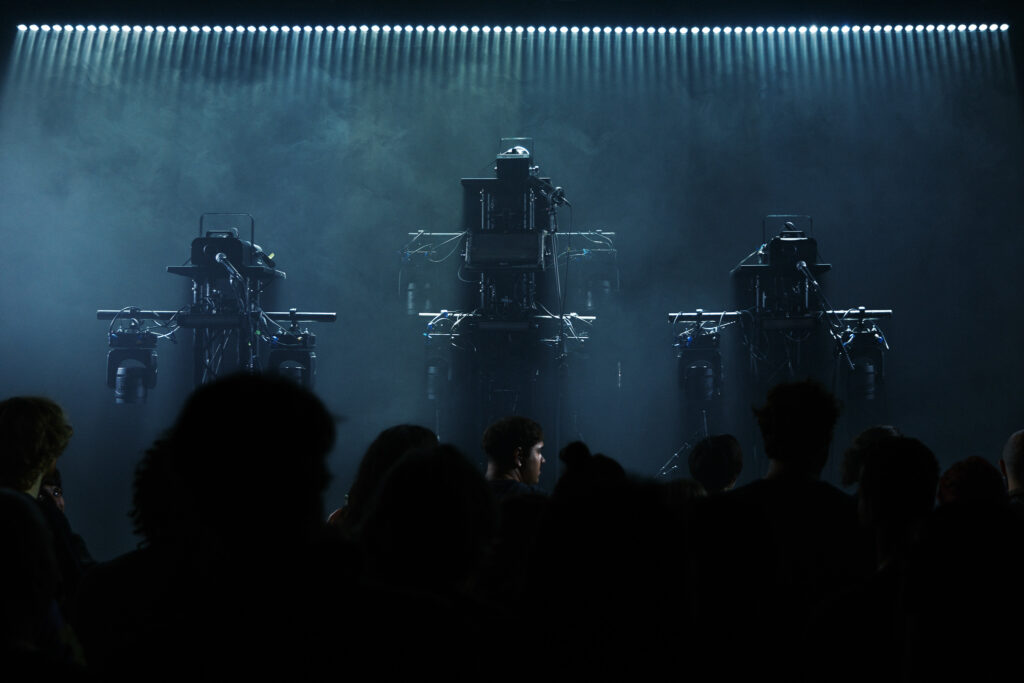
A short walk from our home for four nights, the Planetarium sits on the cusp of the enormous Stromovka park, but we arrive after dark, when the green is most muted, for two short screenings of projections from two separate visual arts studios. In the first, bubbles in the many hues of endangered flowers plunged rapidly down upon the viewer in a snowstorm flurry, and in the second, a blue twisting melee drawn from tidal inspiration, again formed of the same bubbles. Both bore striking similarity to each other, echoing Kredenc’s later admission that, despite efforts to “avoid monotony… patterns are inevitable”. The separated focus on natural matters was a needed cleanser before another dose of mechanical whirr, but people don’t come to Lunchmeat for nature; they come for the product of machines.
Few acts are more synonymous with the diversity of that product than Autechre; their history needs no repeated invocation, other than to illustrate the magnitude of expectation that arrived with their Prague show’s announcement. The duo delivered a thunderous idiomatic journey of their iconically independent sound, the bass piled high even through the tamer opening stretches of their 90-minute marathon, and reaching pummeling weight in the cacophonous sprint finish through grinding whirlwinds of half-comprehensible sound.
For a festival indebted to advanced electronic music, it felt like the cumulative sum of their seventeen years in event-making, but expectation’s dichotomous double-edge was keenly felt: lesser than the palpable anticipation permeating the room, the near-dark sought to be that all-encompassing blackness mandated on the pair’s rider, and what was designed as the unifier of individual experience instead became the individuator. Spectres leer out of the dark, shocking you with their proximity before revealing themselves as shattered fragments of light made sense of by a tired mind; this one I reach out to ward off, but they’re not there at all, while behind me my friend is suddenly crushed by a careless shape, stumbling on its way into the shapes before it.
Autechre’s performance was paradoxical, a shining crown on a spectre’s brow: after a festival that sought to unstick from pattern and past, to differentiate itself from itself, it seemed to demonstrate the importance, or necessity, for Lunchmeat to continue its journey in interrogating its offering, the essentialism defined by both “new” and “advanced”, and of nurturing its place on the fringe.
All images courtesy of Lunchmeat Festival and the respective photographers.
Discover more on lunchmeatfestival.cz