Hôtel Hana Paris
Paris and Japan in Quiet Accord
Bachelard once wrote that a room is a living organism, its walls the skeleton of imagination. Architecture, in this sense, is a structure of perception. A hotel, rigorously conceived, is an orchestration of presence, movement, and attention. To inhabit it is to enter another register of consciousness.
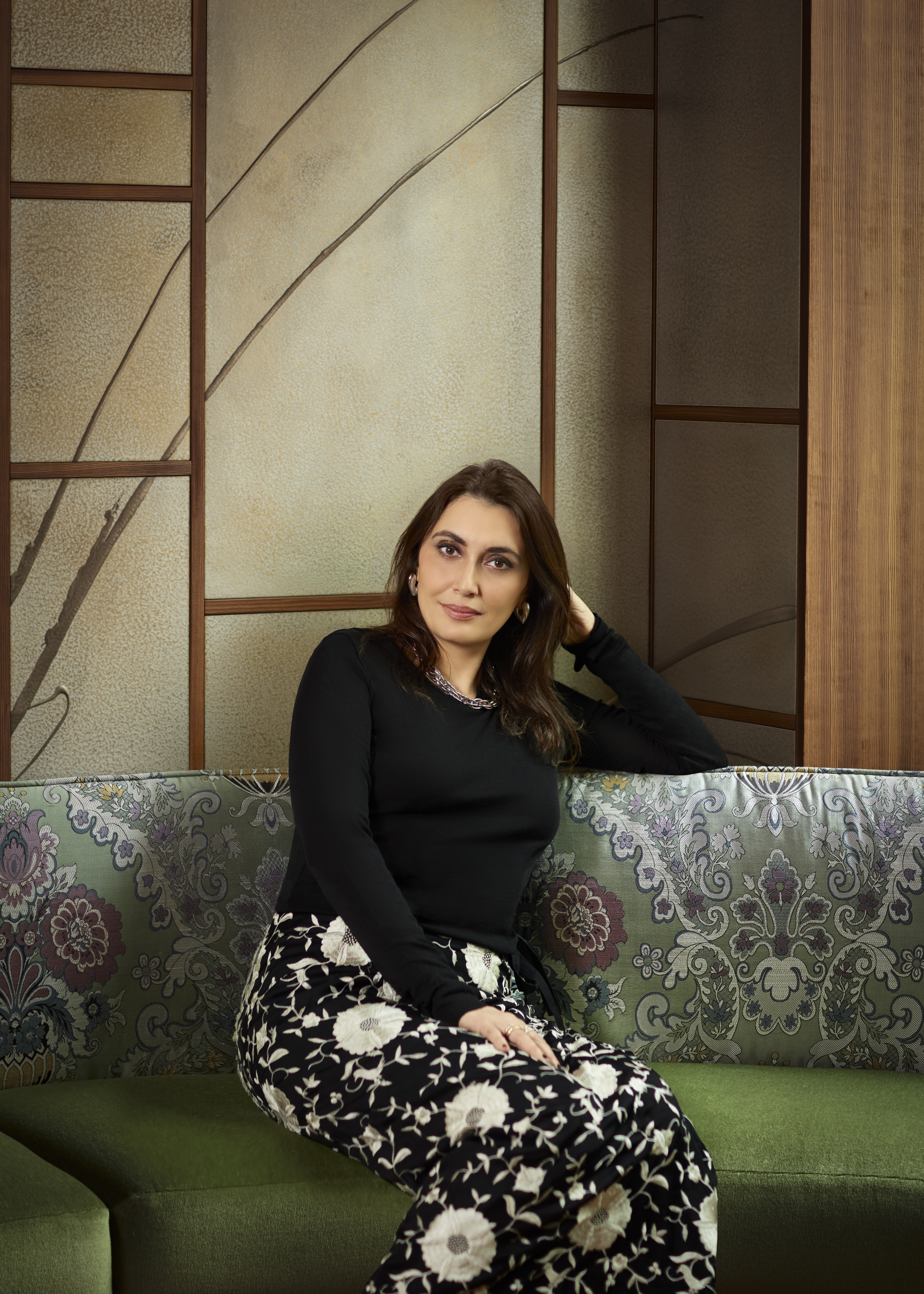
Hotel Hana opened in early 2024 under Chapitre Six, the hotel group founded by Nicolas Saltiel, inside a former office building at 17 Rue du 4 Septembre. Interiors bear the imprimatur of Laura Gonzalez, who built her reputation reviving Parisian institutions like Lapérouse and crafting global flagships for Cartier, conceived in close collaboration with creative director Olivier Leone. The pairing allowed spatial maximalism to meet a precise visual sensibility across eras, cultures, and disciplines.
The five-star property sits in the 2nd arrondissement, between the Opéra Garnier and the Palais Brongniart, on the immediate edge of the neighborhood’s Japanese quarter, centered a few streets over on Rue Sainte-Anne.
Rue Sainte-Anne has carried the residue of the Belle Époque, in its stucco and proportion, and the Japanese shops and restaurants that have settled into the street over the past forty years. Most projects on this stretch of Paris pick a side. Hotel Hana didn’t.
“The intention was never to create a Japanese hotel in Paris,” the designer says, “but to imagine a place where these two heritages could engage in a subtle and meaningful dialogue.” What drew them to the site was a proximity of two visions of beauty, French and Japanese, that had never been asked to speak to each other directly. “The pull is always toward projects that tell a story without being overly explicit,” they add. Nothing in the hotel announces itself as either French or Japanese. The references sit in the materials, the proportions, the light. None of it lands in a single, quotable gesture.
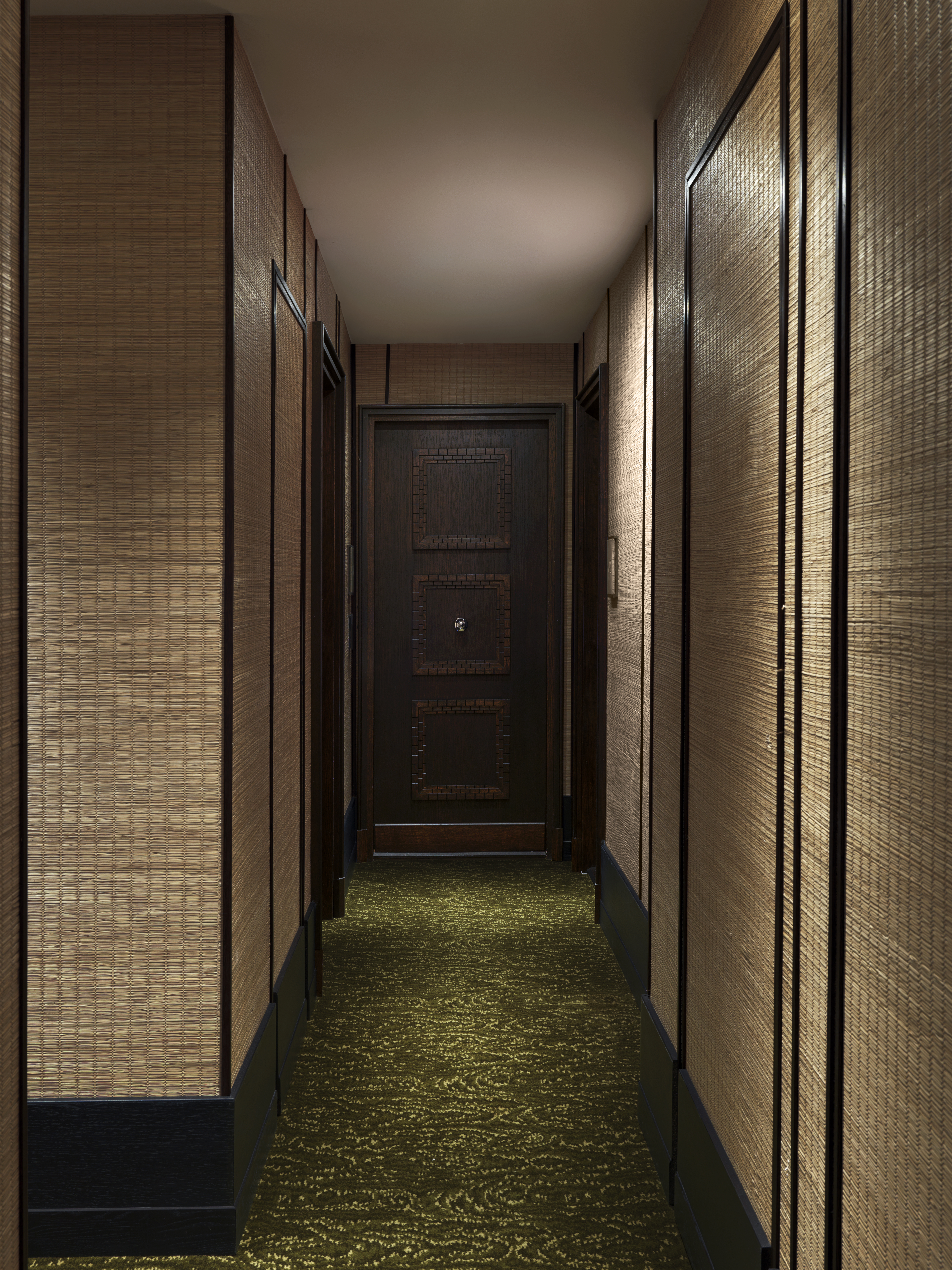
By the designer’s own account, Hana is among the most minimalist projects of their career. “The work is often associated with a certain decorative richness. Here, the aim was a quieter form of sophistication, one that keeps the sensuality and warmth that matter most.” They describe it as a jewel box, “an intimate, welcoming, and precious place where every detail contributes to a larger emotional experience.” Small, exact, built on the idea that intimacy can carry a project the way scale usually does.
Japan shaped the thinking behind the project long before it shaped a single room. “A long fascination with its culture, craftsmanship, literature, and above all its relationship with beauty,” the designer says. “What stands out is the way Japanese aesthetics celebrate materials, imperfections, the passage of time, and the hand of the artisan.” Paris supplied the other half of the equation: the ease of Belle Époque interiors and the low-key confidence of this particular neighborhood.
The project sits inside a named lineage: Japonisme, the nineteenth-century French term for the West’s fascination with, and absorption of, Japanese aesthetics into its own art and decorative movements. Hana continues that lineage more than a century later, working through material and proportion, not through pastiche.
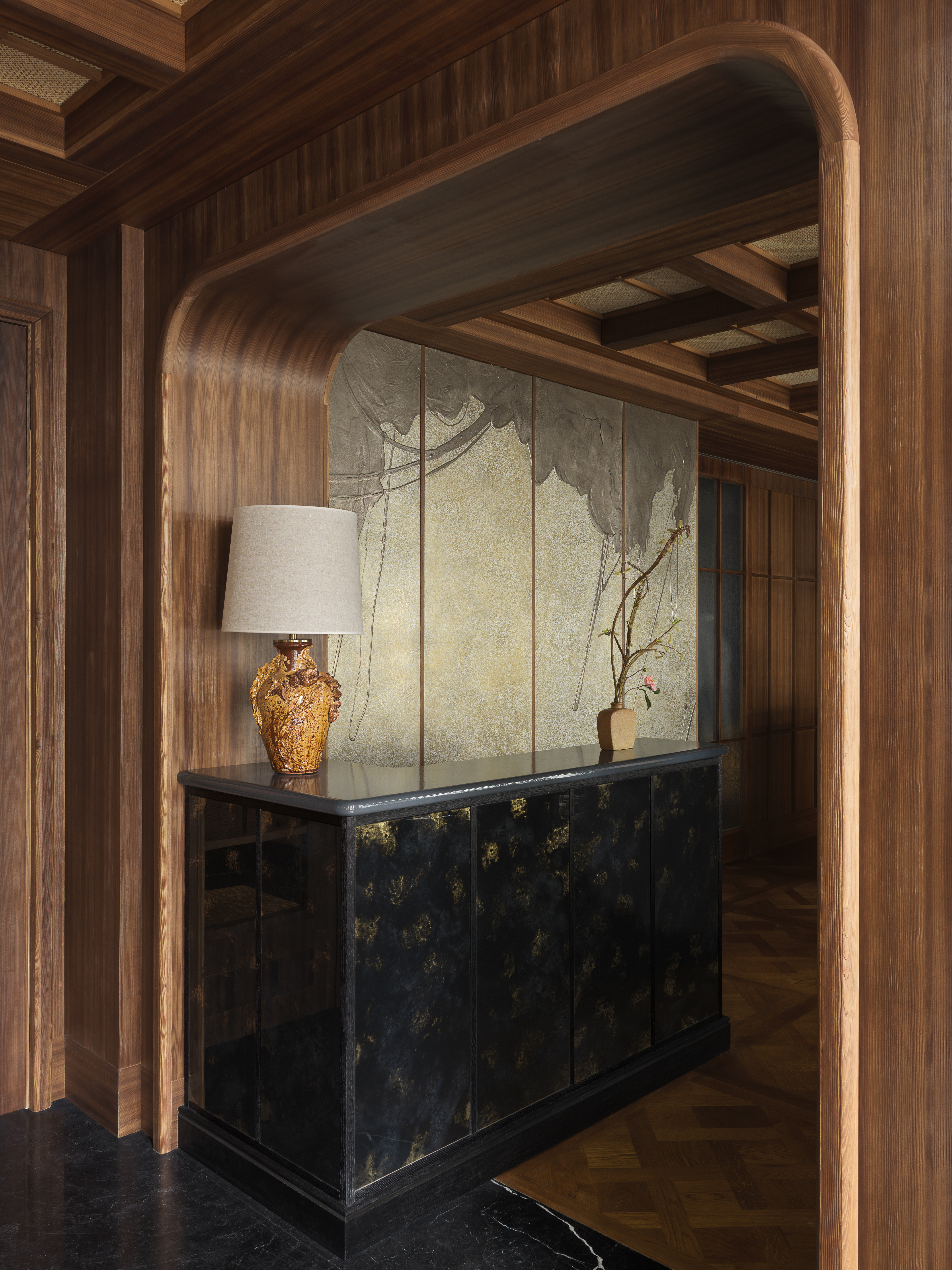
The material palette carries most of the weight. Straw marquetry. Iroko wood. Marble, ceramics, textiles in natural tones. “The aim was for guests to feel a sense of softness from the moment they arrived,” the designer notes, “a tactile, almost instinctive sensation that accompanies them throughout the hotel.” Light and craftsmanship do the work of holding that feeling together from the entrance to the last room.
Avoiding cliché took more effort than embracing it would have. “One of the most interesting challenges was avoiding a literal interpretation of Japanese design. We did not want to reproduce familiar or folkloric references. Instead, we chose to suggest rather than to imitate.” The joinery, the artworks, a handful of architectural details point toward Japan without ever copying it outright. “This restraint creates something more contemporary, more elegant, and ultimately more enduring.”
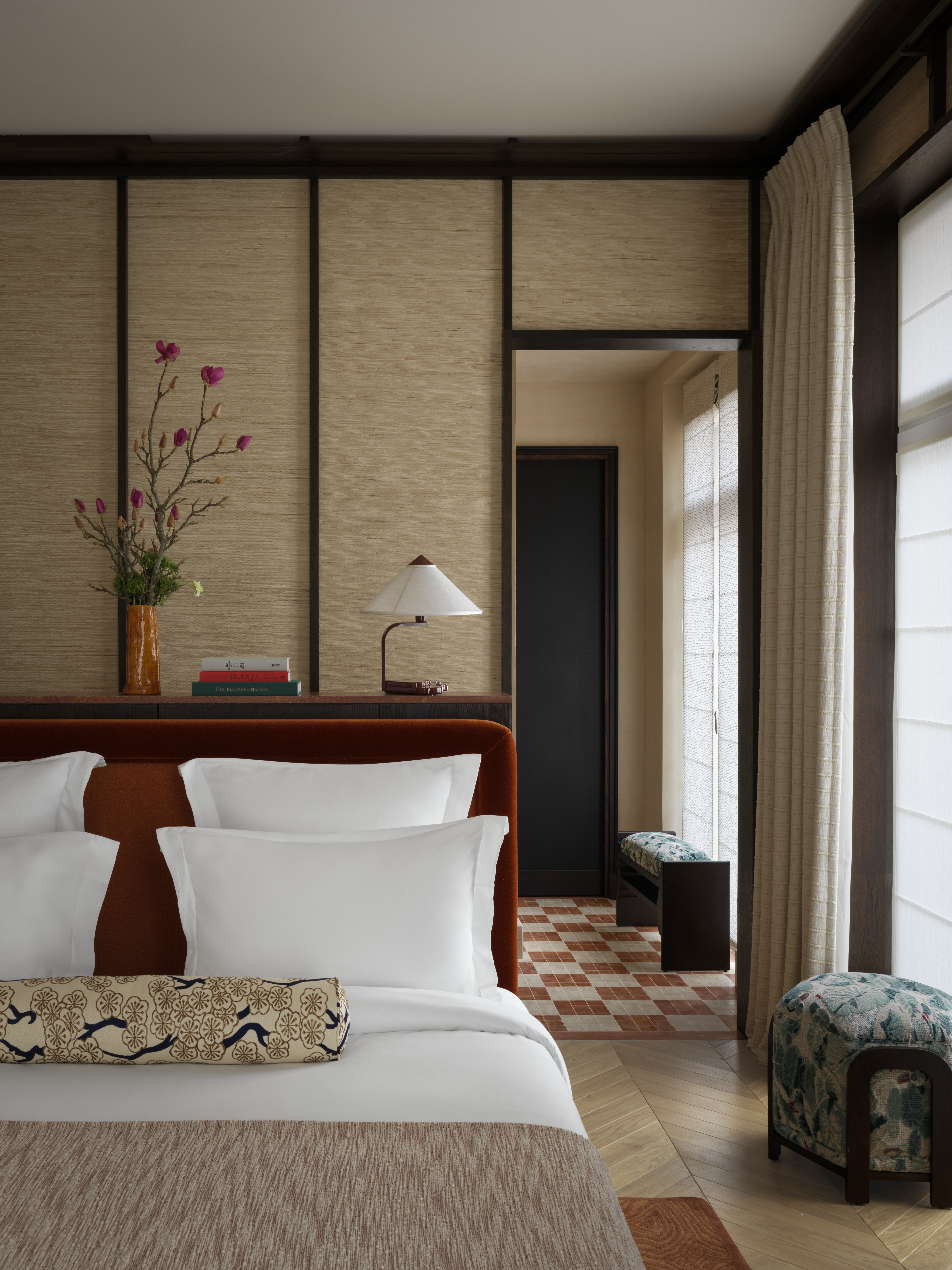
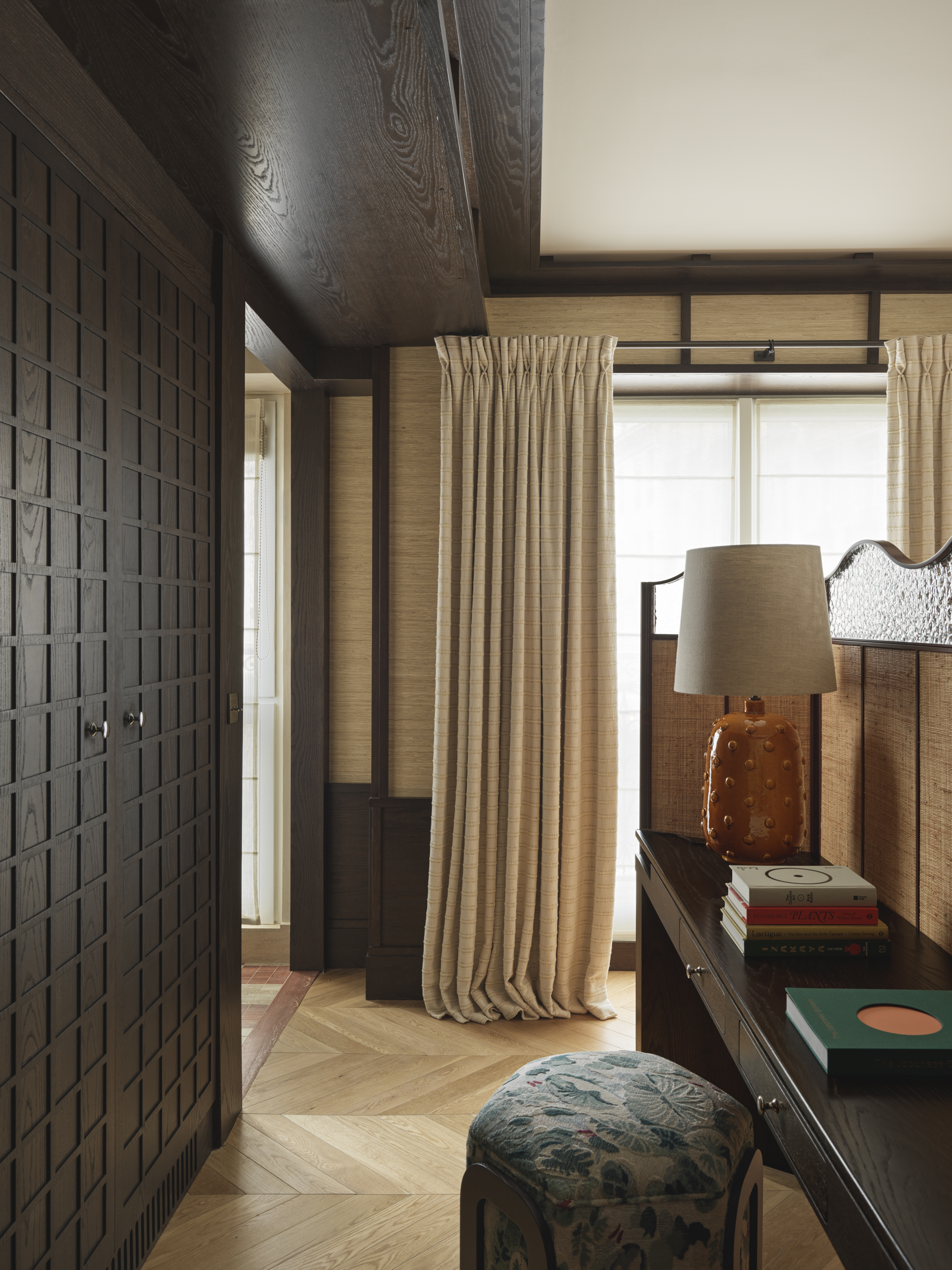
Hana reads as Parisian and, at the same time, as somewhere else. It has the warmth of a private residence and the polish of a hotel, without settling fully into either category. “It combines the warmth of a private residence, the refinement of a luxury hotel, and the serenity we sought to infuse into every stage of the design process.”
Hana means flower in Japanese, and the name was chosen on purpose. “A flower reveals itself gradually and delicately over time. Hotel Hana unfolds in the same way, through its spaces, its details, and the emotions it inspires.” The designer describes the ambition in plain terms: an urban sanctuary, a place of calm and contemplation where guests can feel the energy of Paris and still find room to escape it.
“A story of harmony,” the designer states, “between two cultures, between tradition and modernity, between sophistication and simplicity. If guests leave feeling that they have experienced something that is at once deeply Parisian and subtly Japanese, the soul of the hotel will have come through.”