Villa Fenicia

Where Memory Remains Alive, On Its Own Terms
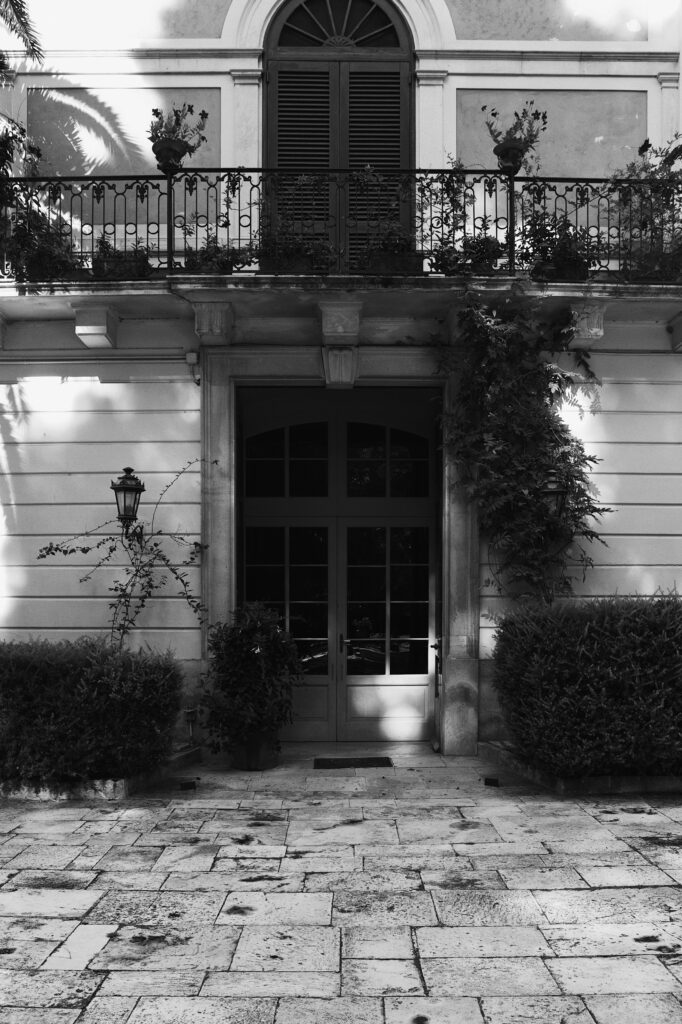
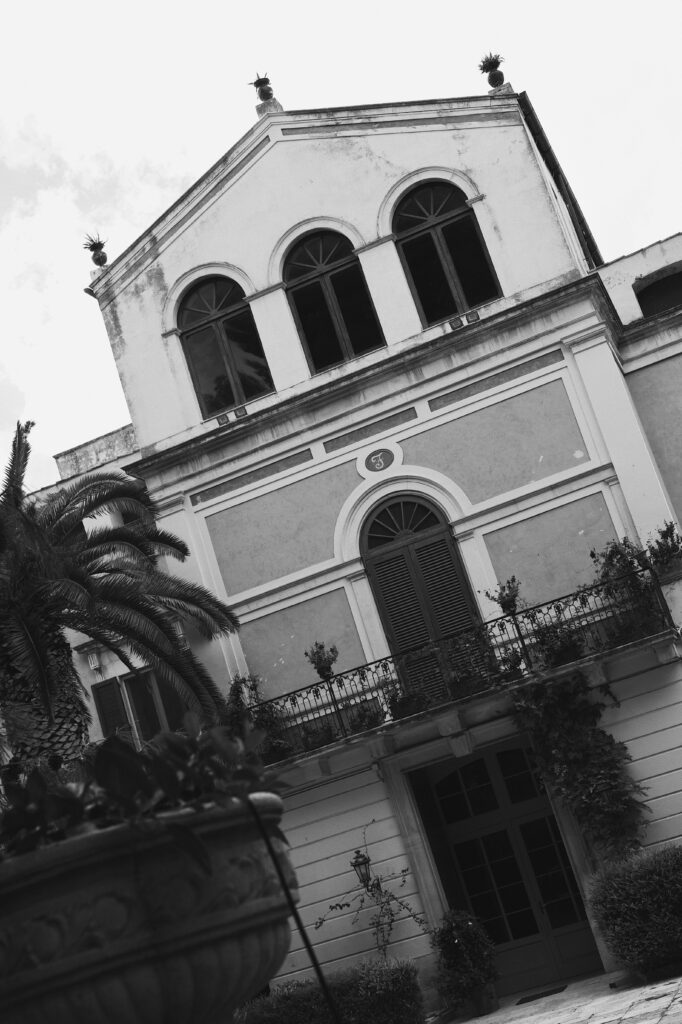
In the Puglian countryside, on the outskirts of a small town called Ruvo di Puglia, a centuries-old family estate continues to evolve without losing the layers of history that made it what it is. At Villa Fenicia, restoration is less an act of reinvention than one of care, a philosophy that extends from the house and its gardens to the kitchen, where the landscape itself dictates what reaches the table.
There is a tree in the gardens of Villa Fenicia that is exactly as old as Federica Fenicia.
When she was born, her father Antonio Fenicia planted a Vallonea oak specifically for her, grown from a single acorn taken from the centuries-old Vallonea oak of Tricase. Today, the tree continues to grow within the estate, quietly marking the passage of the years alongside the woman who grew up here.
It is an almost perfect metaphor for Villa Fenicia itself: something living, rooted in place, shaped by generations and continuously changing, yet never severed from what came before.
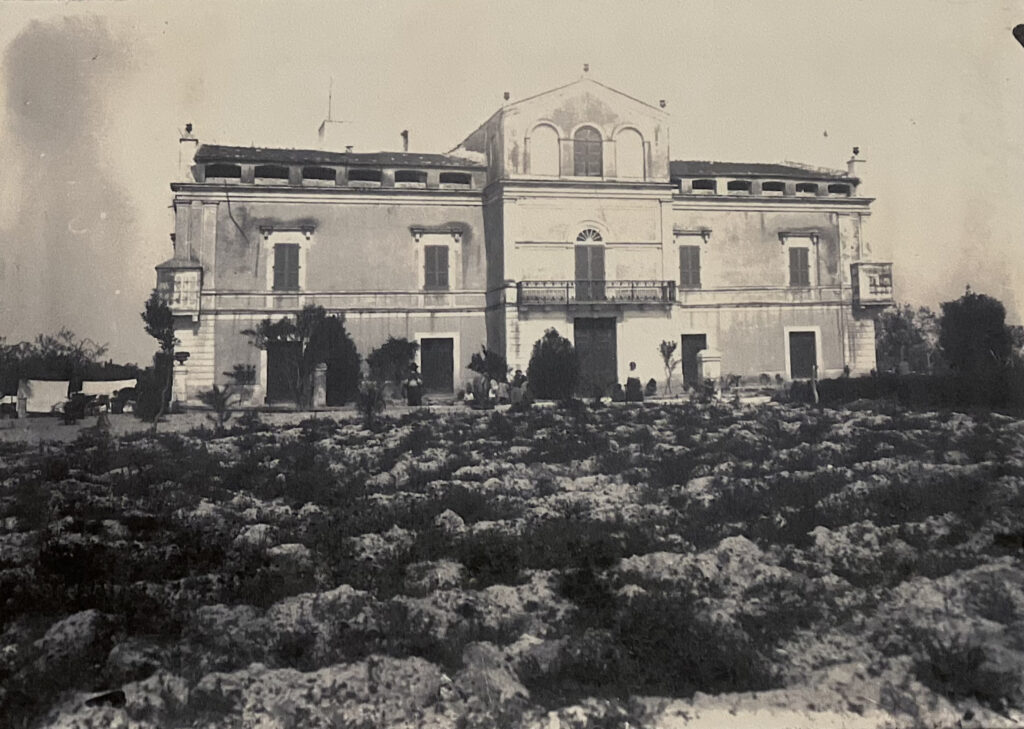
For Federica, Villa Fenicia was never a property she discovered later in life. It was home. She lived there until she was fifteen, growing up among olive and grape harvests, accompanying her father to the olive mill and winery, and watching the restaurant and wedding business develop around her. Her childhood memories oscillate between the noise of celebrations and the quieter rhythms of the land. Weddings, she recalls, made the Villa feel almost permanently festive; her father, meanwhile, would take her around the estate to gather whatever the season was offering, whether it be cherries, persimmons, almonds, peaches, figs, wild rocket, sivoni and wild chicory.
“The land has its own rhythm,” she remembers her father teaching her, without ever turning it into a formal lesson.
Her favourite place in the house was, somewhat unexpectedly, the attic. Filled with photographs, furniture and objects belonging to different periods and generations, it became, in her words, almost “the unconscious memory of the Villa.”
That sense of accumulated memory is fundamental to understanding Villa Fenicia.
The story of the estate begins long before it became the place it is today. The Fenicia family originally came from Ravello on the Amalfi Coast, before members of the family began travelling through southern Italy during the seventeenth century. A marriage to a woman from Ruvo eventually established their roots permanently in Puglia.
The estate itself was originally known as Gigliano. Parts of the structure may date to the sixteenth century, while Roman remains, including stone masks, have also been found on the property. It began as a fortified masseria, where domestic life and agriculture existed alongside one another.
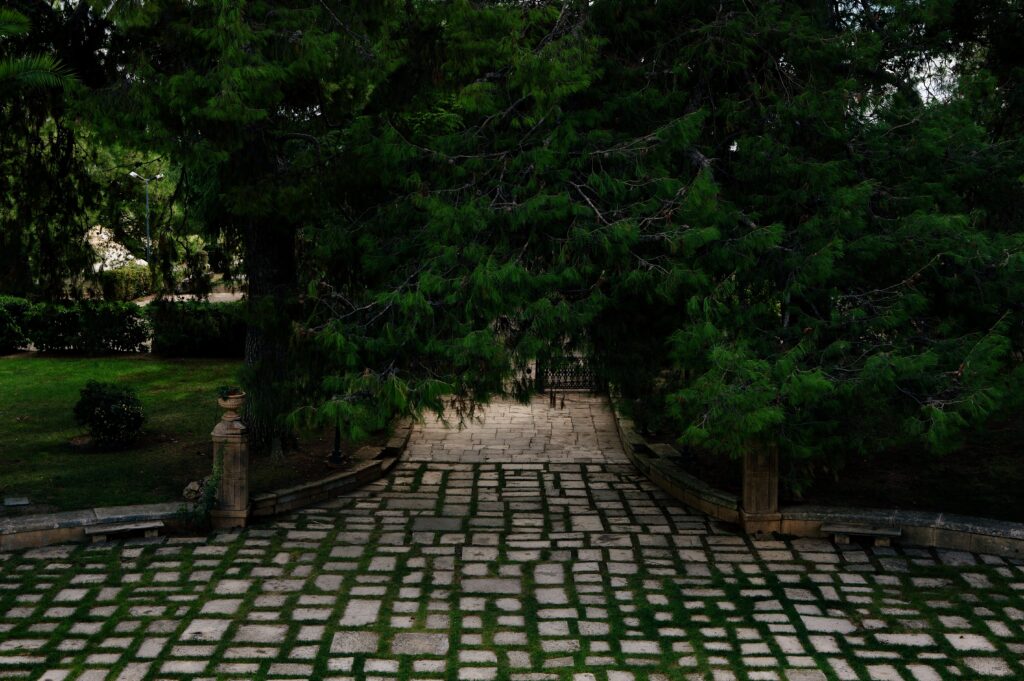
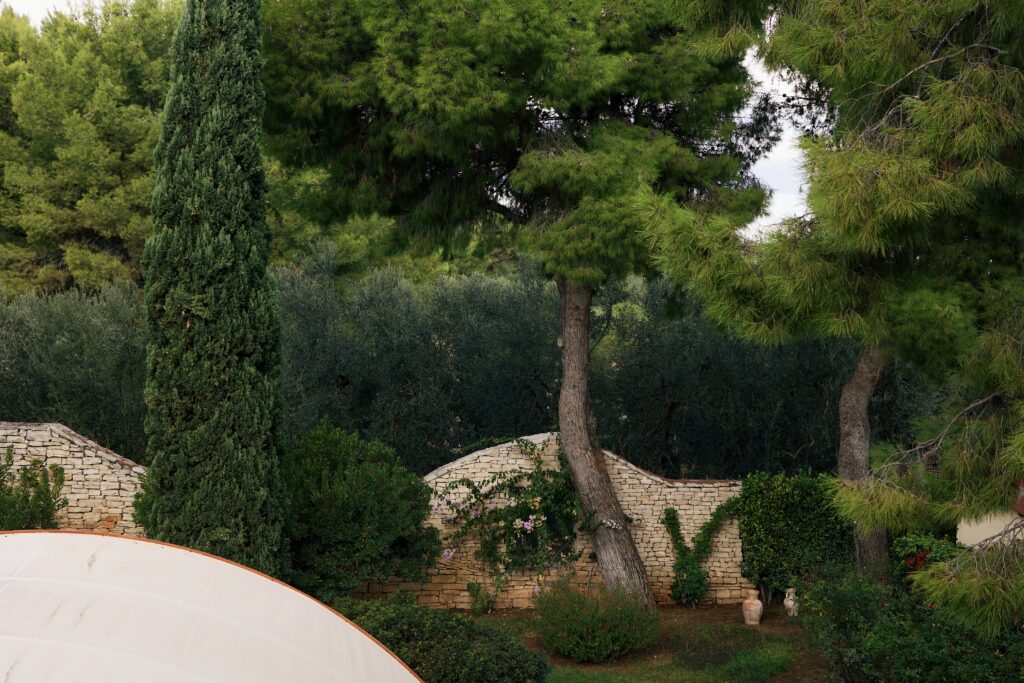
Its defining transformation came much later. Between approximately 1870 and 1880, architect De Judicibus extensively redesigned and enlarged the property, creating the nineteenth-century summer residence whose character remains visible today. Frescoes, furniture, interiors and the surrounding park emerged during this period, while the garden was conceived almost as an extension of the house itself, planted with Lebanese cedars, pines, palms and Mediterranean vegetation.
Yet agriculture never disappeared.
Olive groves continued to surround the Villa, and today the estate remains home to approximately fifty hectares of olive groves, alongside two and a half hectares of vineyard, fruit trees and gardens. The Coratina olive, indigenous to the area, is cultivated organically, continuing an agricultural relationship that has existed across generations.
Villa Fenicia has therefore never had a single identity. It has been a fortified farm, an agricultural estate, a summer residence and a family home. Today it welcomes guests, but, as Federica puts it, “all of those previous lives are still present.”
Perhaps this is why she resists describing it simply as a historic property. “Its history is not something we only preserve in documents. We have lived inside it.”
The restoration of Villa Fenicia began with Federica’s father, Antonio Fenicia, who inherited the property from his father.
The house was not in ruins when he took responsibility for it. Rather, it remained largely in the condition of a nineteenth-century country residence, used by the family at particular moments of the agricultural calendar, during the summer, cherry and almond harvests, and later the olive harvest. To make it genuinely habitable again required something more complicated than cosmetic restoration: electricity, plumbing, drainage and the infrastructure of modern life all had to be introduced into a building never designed to accommodate them.
But Antonio’s instinct was never to modernise for the sake of modernity.
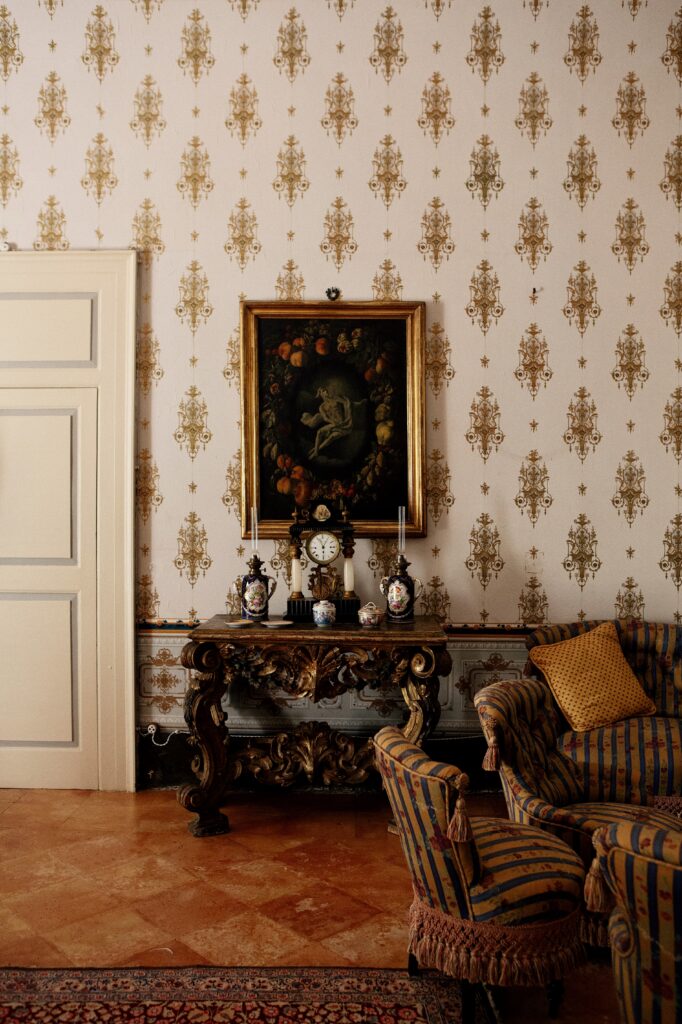
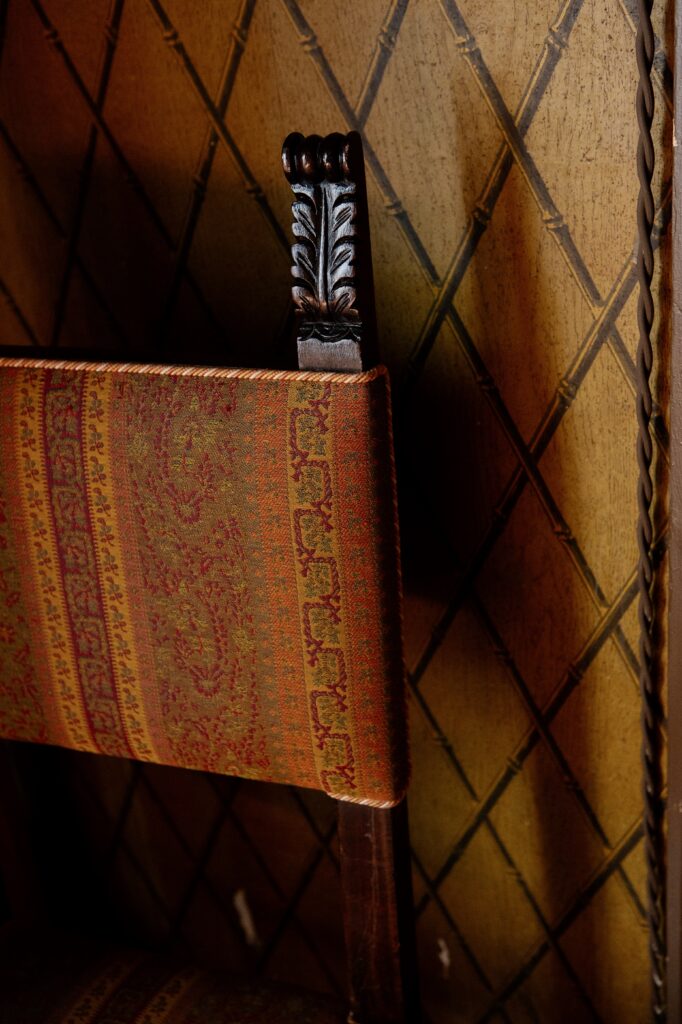
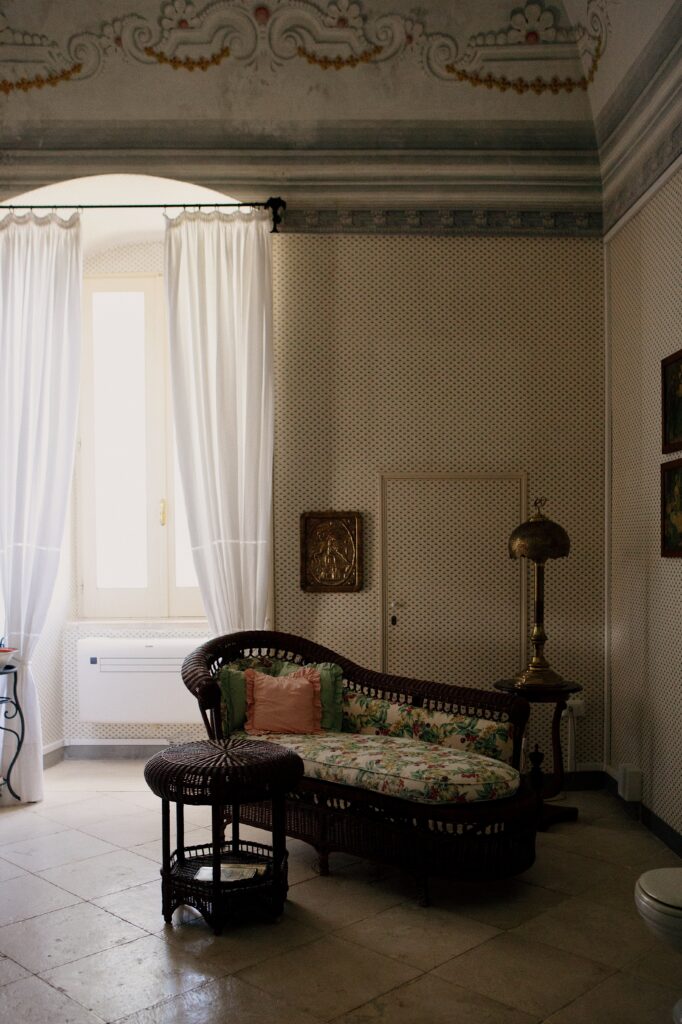
Where frescoes had been damaged by time and humidity, originals were restored wherever possible; where this was no longer feasible, decorative work was recreated according to the nineteenth-century scheme. Throughout the house, nature remains a recurring decorative language, with botanical motifs appearing across the frescoes and even on the original hand-decorated cotton curtains. As Federica recalls,“His objective was never to reinvent Villa Fenicia. It was to make it live again.”
It is a distinction that defines the restoration.
The technical infrastructure was modernised, but the intervention was deliberately made almost invisible. The purpose was to introduce contemporary comfort without allowing contemporary life to become the identity of the house.
In fact, Federica believes the greatest achievement of the restoration is precisely that it is not immediately visible. “You do not immediately perceive the restoration itself. You perceive the house.”
This philosophy continues today. Villa Fenicia has evolved, first through the introduction of modern services and spaces for the restaurant and events, and later through the creation of four suites but every addition has been required to respect the character of what was already there. “Change only what is necessary for the house to continue living.”
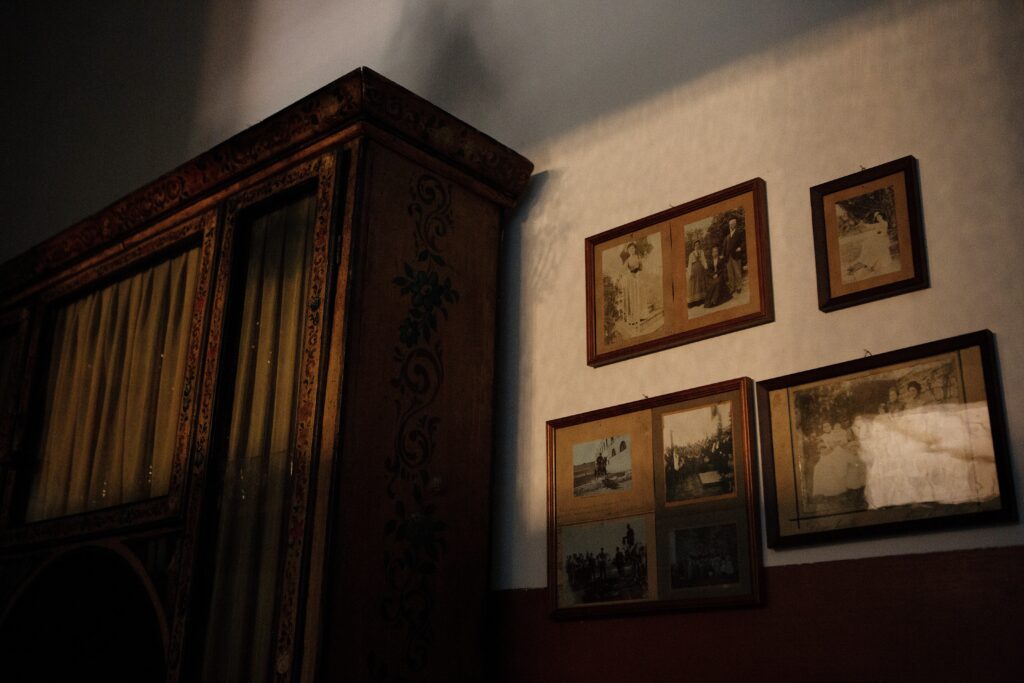
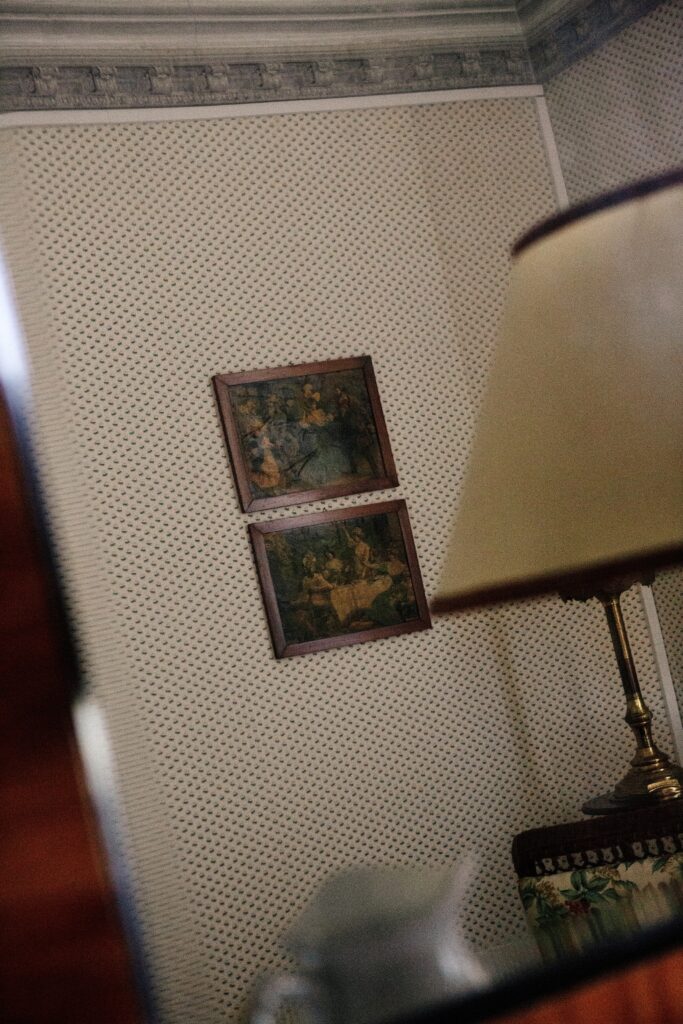
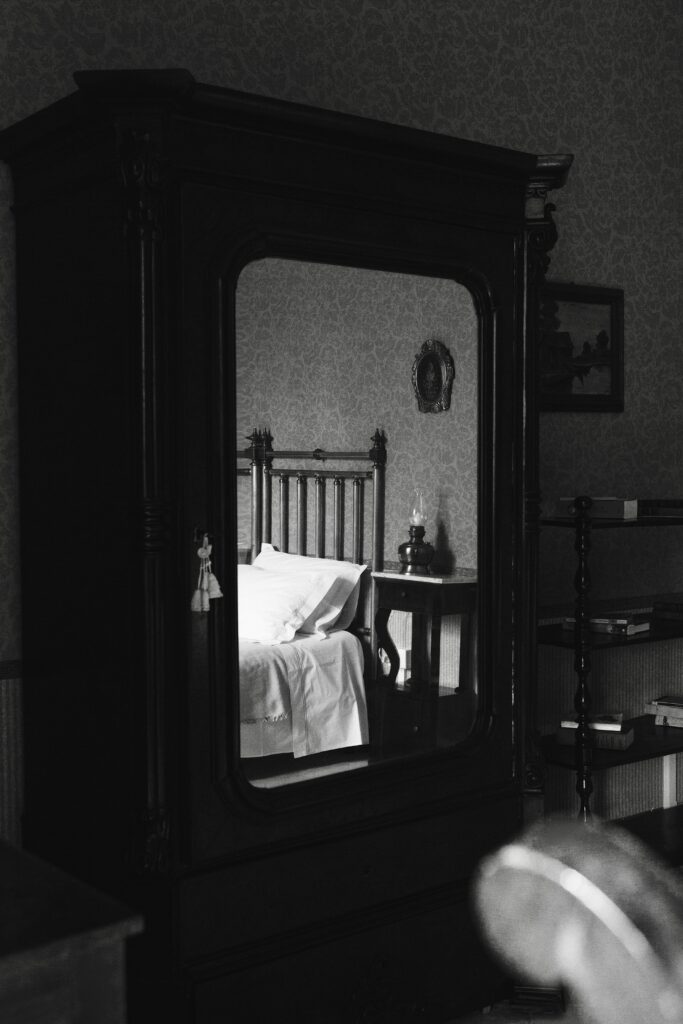
It is perhaps the simplest way to understand the estate. “Every new function has had to adapt itself to the Villa, rather than forcing the Villa to adapt to it.” The result is not a house stripped of the traces of time, but one in which those traces remain visible. The local chianca di Trani limestone and antique terracotta floors have been preserved; nineteenth-century furniture has been restored rather than replaced; family crests remain on pieces of furniture; photographs and objects continue to occupy unexpected corners.
Nothing, Federica explains, has been arranged simply to create an aesthetic effect.
These things remain because “somebody used them, loved them or decided they were worth keeping.” And this accumulation is what makes the Villa feel personal.
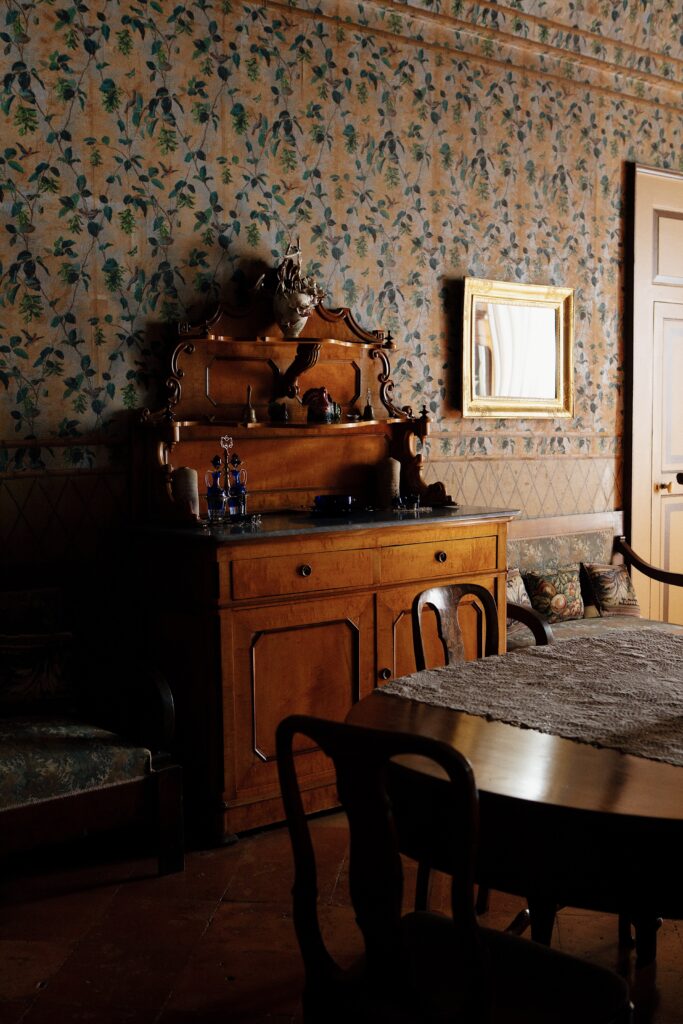
Outside, the same principle continues.
“Agriculture is not the landscape around Villa Fenicia. It is part of Villa Fenicia itself.”
The distinction matters.
The olive trees are not simply picturesque elements surrounding the architecture; they are cultivated land. The gardens are not merely ornamental. The fields produce, require work and change with the seasons. Historically, the estate was far more self-sufficient, with animals also kept on the property, the current restaurant occupying what were once the old stables.
The surrounding Puglian landscape operates according to the same logic.
For Federica, one of the region’s greatest qualities is that beauty and usefulness have never been separated. The olive trees, dry-stone walls and wild herbs are simultaneously beautiful and practical, shaped by generations of agricultural knowledge.
The Murgia, in particular, asks to be observed closely. Its austere landscape of limestone soils, dry grasslands and spontaneous plants may not immediately reveal its richness, but with attention comes an extraordinary biodiversity, and a culture built around knowing how to read what the land provides.
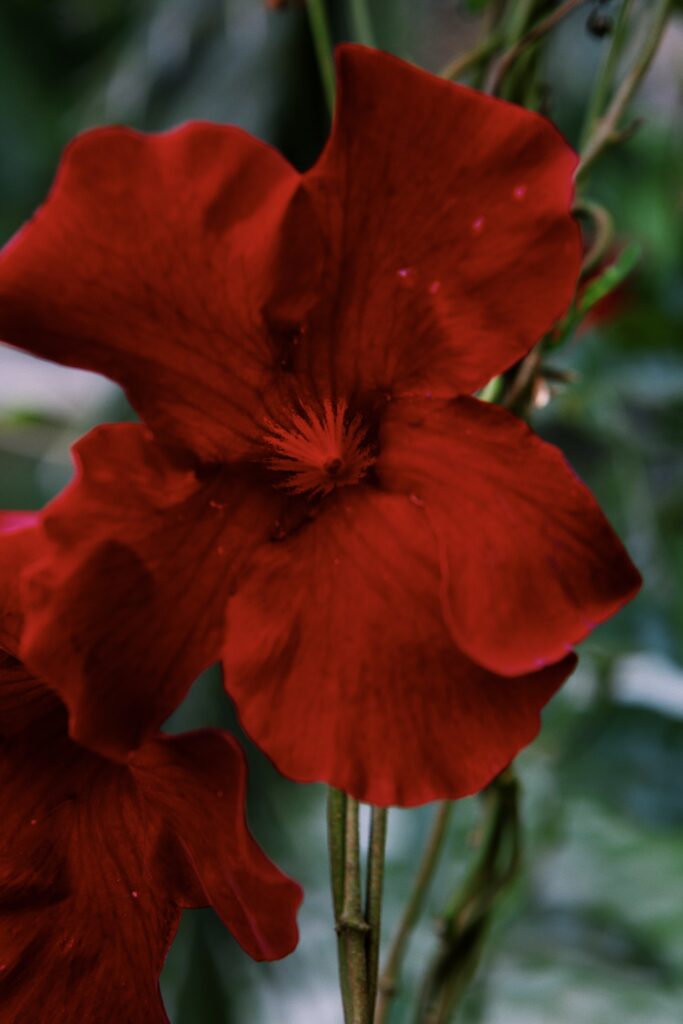
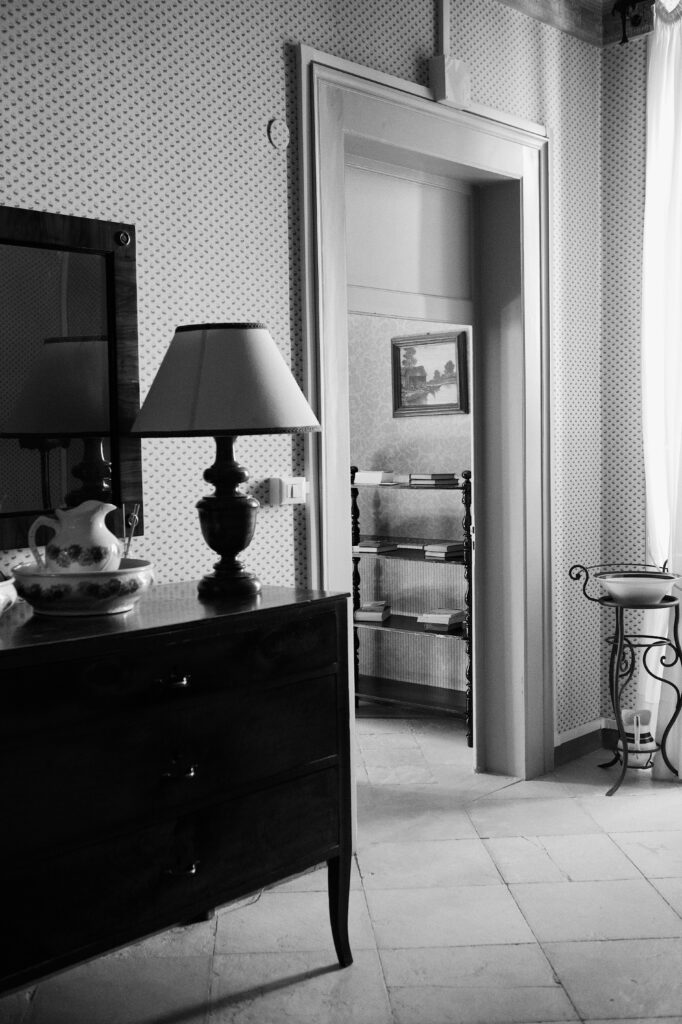
Villa Fenicia therefore does not seek to separate its guests from this landscape. “The Villa should be a starting point for discovering this landscape, not a barrier separating guests from it.”
The decision to open the Villa’s four suites was, in many ways, a continuation of this philosophy. Before the suites existed, Villa Fenicia was already open through its restaurant and events, particularly weddings. But an event is inevitably temporary: you arrive, celebrate and leave.
The suites offered something fundamentally different. The possibility of inhabiting the Villa. “To wake up here. To have breakfast slowly. To walk through the garden without having anywhere particular to go. To watch the light change. To hear the silence after everybody else has left.”
Federica returned from Milan to help her father with this new chapter. And perhaps what Villa Fenicia offers its guests is ultimately less about adding another destination to an itinerary than removing the pressure of having one.
“In a world in which so many of us live according to increasingly frantic rhythms, perhaps one of the greatest luxuries we can offer is simply the permission to stop.”
Villa Fenicia is deliberately not a hotel in the conventional sense. There are only four suites, and Federica believes this scale is essential to preserving the intimacy of the experience. “The greatest compliment somebody can give me is not that Villa Fenicia is beautiful. It is that they felt at home here.”
It is fitting, then, that the culinary project occupying the former stables should follow the same philosophy.
Federica was already a customer of Francesco and Vincenzo Montaruli at their restaurant Mezza Pagnotta in Ruvo. When the decision was made to open Villa Fenicia to overnight guests, she felt that food had to form part of the experience. The brothers’ approach to cooking, rooted in wild herbs, spontaneous plants, inherited knowledge and the biodiversity of the Murgia, seemed to speak the same language as the Villa.
The restaurant became Cucina Villana. Rather than inserting a restaurant into a hospitality property, Federica describes it as the meeting of two projects that were already philosophically aligned.
At the heart of the brothers’ cuisine is what they call an “archaeology of taste”, a recovery of knowledge that was once essential to everyday life but is increasingly disappearing.
They learned to recognise and gather wild plants through their father, grandfather and Ciccillo, the forager who introduced them to many of the Murgia’s secrets. Ingredients once associated with poverty are reconsidered not as symbols of deprivation, but as part of a sophisticated cultural and ecological inheritance.
For Federica, the connection with Villa Fenicia is profound. “Neither project is about recreating the past nostalgically. It is about asking: what is worth carrying forward?” A recipe. A wild plant. An old floor. A photograph. An agricultural practice. A story passed from parent to child.
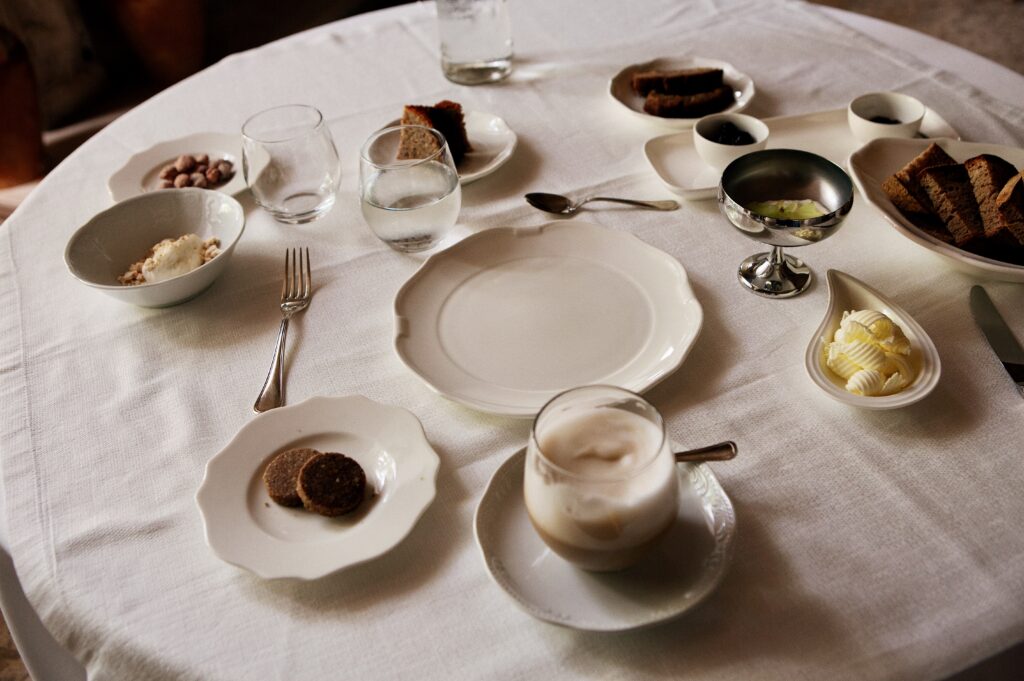
All survive only if someone decides they still matter.
“In that sense, Cucina Villana and Villa Fenicia share the same responsibility: preserving knowledge by allowing it to remain alive.”
The kitchen therefore begins not with a fixed menu but with observation. Wild plants appear when conditions allow; vegetables follow their seasons; harvests and producers change. What reaches the table depends on what the territory is willing to give at that particular moment.
The result is a meal that cannot be perfectly reproduced. And perhaps that is precisely the point.
There is something reassuring about the permanence of Villa Fenicia.
Human lives move quickly around it, Federica says, while the house, trees and land remain comparatively stable. Yet her relationship with the estate is not one of possession.
The older she becomes, the less she thinks of Villa Fenicia in terms of ownership. “You are simply passing through.” Her hope for the future is not to make the estate bigger, but to deepen its relationship with the land, to dedicate more energy to agriculture, cultivation and protection. And ultimately, her ambition is remarkably modest. “I do not feel that this place is mine. In some way, it has been entrusted to me, and I have to earn the right to pass it on. My ambition is actually quite simple: to preserve something meticulously enough that it survives me.”
To leave a trace, a mark that says that, for a brief moment in the long history of the estate, someone was here and cared for it.
Perhaps this is ultimately what makes Villa Fenicia feel so different. Its philosophy does not ask to be admired as something frozen in the past.
It asks to be lived in, listened to and carried forward.
And for a place that has already lived so many lives, perhaps that is the most meaningful form of preservation there is.
Photography · Carissa Díaz Alemán commissioned by NR Magazine.
Special thanks to Federica Fenicia
Discover more on villafenicia.com