Archive page:


Anne Holtrop

“The driving force behind both temporary and permanent work is similar; it’s about the performance.”

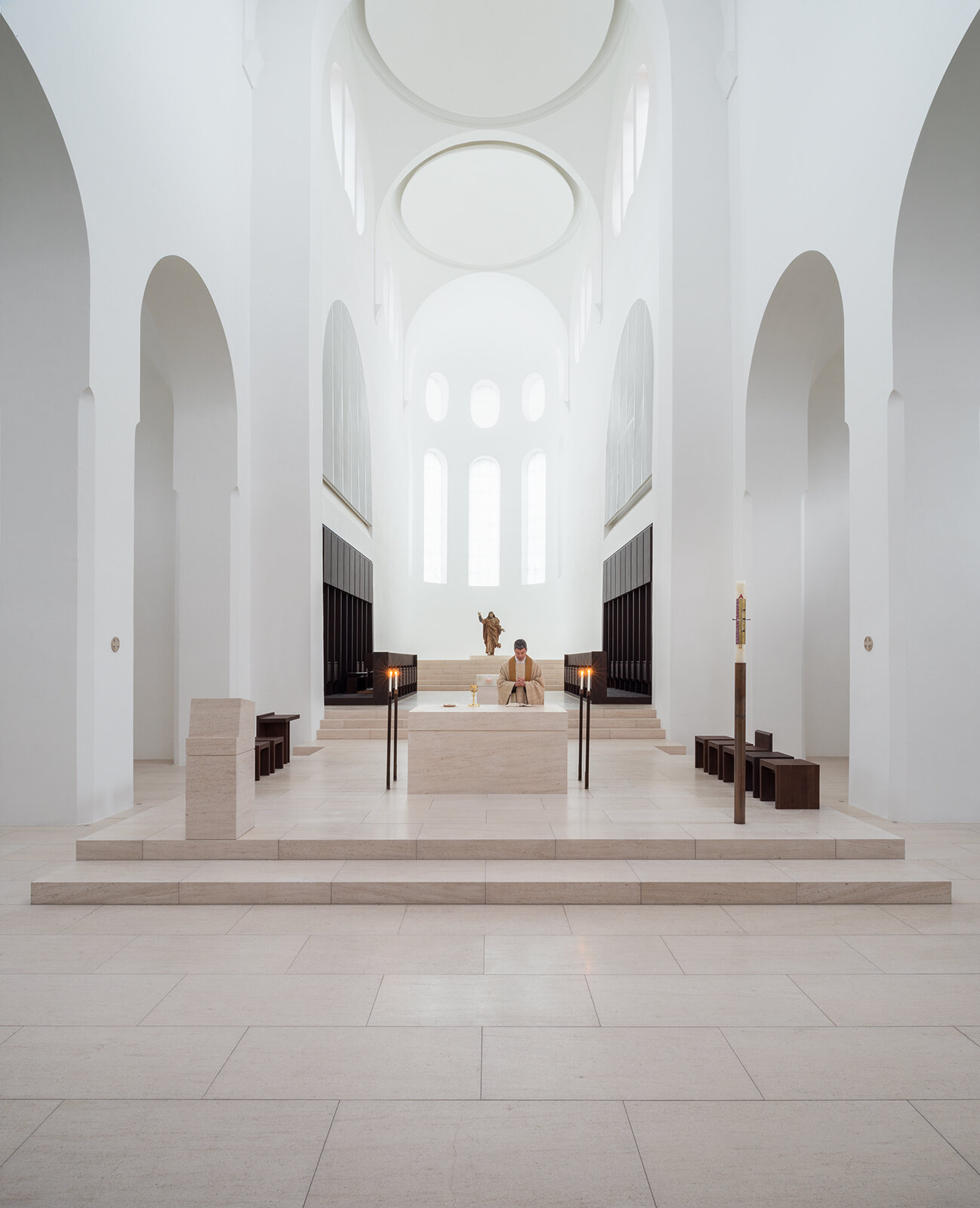
Dutch architect Anne Holtrop started his eponymous studio in 2009. Anne designed the Bahrain pavilion for the World Expo in 2015, without having visited the country beforehand. Now, the architect divides his time between his hometown, Amsterdam, the Kingdom of Bahrain, where he is working to refurbish heritage sites, and as a Professor of Architecture at the ETH in Zürich, Switzerland. Anne’s work spans temporary installation to permanent structures, but it is his use of tactile and organic materials for which the studio is both recognised, and recognisable. Having started out as an assistant to Krijn de Koning, the Dutch artist known for his site specific installations, Anne’s first project was the Trail House in Almere. As part of an exhibition by the Museum De Paviljoens in 2010, the installation consists of a series of paths that make up the house’s structure – described as ‘A house that curls, bends and splits through the [vegetal] landscape’ surrounding it.

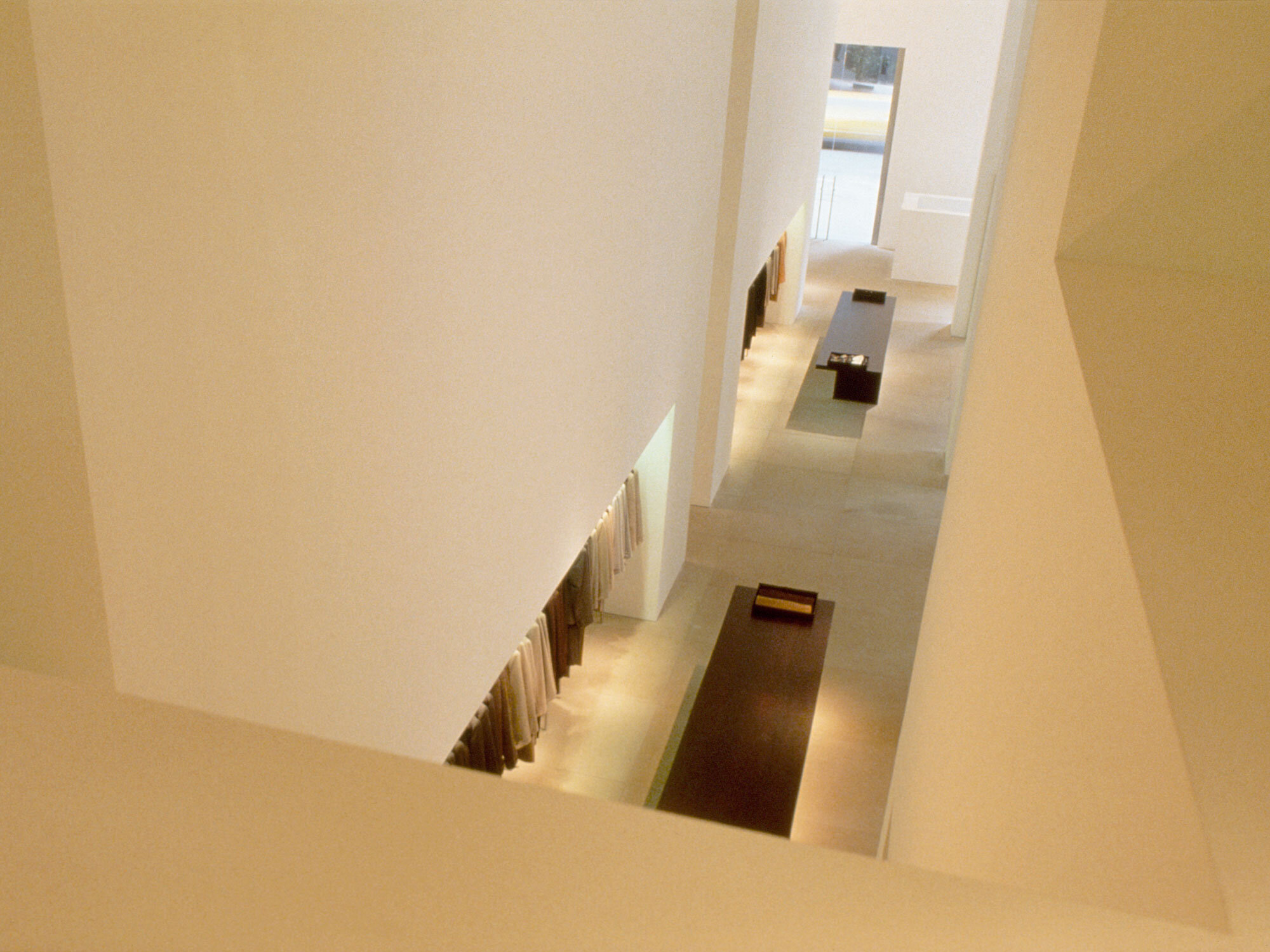
Alongside his work in Bahrain, Anne has worked with John Galliano since 2018 to redefine the brand identity of the Parisian fashion house, Maison Margiela – culminating with the remodelling of the label’s London store earlier this year. The curved gypsum walls and fabric-cast surfaces are evocative of both the studio’s signature feel, and of Margiela’s recent in-store presence. But, as Anne explained over Skype back in February, his work process is limited to neither the studio, nor Galliano’s vision for Margiela. Rather, he heralds the disappearing craftsmanship of specialists and family-led artisans. ‘For Margiela,’ he explains, ‘almost everything is produced in Italy. Around the time I started working in Bahrain, I started working a lot in Italy with small workshops that were specialists in the different materials I’m interested in.’

The gypsum casting that embodies Anne’s work with Margiela? It comes from a small company in Veneto; the profession almost died out, I’m told, because house molding is no longer en vogue. When Anne started working with the company, they had only two employees; they’ve since re-hired former collaborators. That’s not to say that irreparable damage hasn’t been done to artisanal craftsmanship though; despite enjoying something of a renaissance in recent years, Anne is quick to point out that ‘because of our lack of interest for a long time, these industries, which are often small family-based companies, have died out.’ The aluminium that features in the Green Corner building in Bahrain (2020), was cast at a foundry in the Netherlands, where their specialism allows for the experimental techniques that Studio Anne Holtrop employs.

Central to Anne’s design approach is an innate belief in the ‘gestures’ that define materials; the source of those very materials, and the ways in which they’re used to construct spaces and the architectural environment. And as our conversation below demonstrates, these are themes that inform Anne’s vision for the temporary, the interior and the exterior.

Does your practice take on different approaches depending on whether you’re creating something temporary versus a permanent?

With [Maison] Margiela, we did a catwalk show in 2018, shop windows in Osaka and a pop-up store in Tokyo. So these exist for one week, one day, a month – and in architecture, that’s a very short time. What I like about temporary work is it can be more radical in a way, because we have less to fulfil for a permanent use. So for instance, with Margiela, the [display] in the shop windows in Osaka, we made them out of very thick felt that we let hang. So it was a kind of architecture that’s literally soft; that has no rigidity. To make architecture that is literally soft is very difficult to maintain or to use. Although Margiela would love that idea, the practicality of it is just more difficult to manage. The driving force behind both temporary and permanent work is similar; it’s about the performance. You know, how can we form space and how can we also discover space?

The Margiela store in Paris has crooked columns (textile-cast gypsum), which was a process of making, where we deliberately searched for an undefined outcome. It redefined the process of making, and the outcome is different every time you produce it. In that sense, we can discover and invent spatial conditions. John Galliano describes this kind of pyramid where everything starts with the artisanal collection, and then it trickles down. With architecture, we build maquettes of projects with the materials that we want to construct with. So that’s also a kind of temporary building – to scale, but it exists. It has a reality. Even if a project is permanent, that’s its temporary state.

I was looking at images from your work with the Charlotte Chesnais jewellery store in Paris from late last year; the acrylic sheets you use have these really organic shapes. I’d love to know a bit more about the kinds of materials you work with, and how you translate these into organic forms?

I have a liking for irregular forms like the Rorschach inkblots, the butterfly inkblot tests that are basically just ink on paper. But because of its form, you imagine things in it and for me, the irregular or organic forms of things have more possibility than a purely rectangular form. You can project more into it. That’s the way that we work because we have form that is not necessarily architectural. So, we can start to imagine how we’ll use something; how can we read the architecture? And for visitors, that happens [all over] again.

With the Charlotte Chesnais store, [the approach] came from a project before that, where we started casting materials directly in sand, using sand as a natural relief. So we cast another material in it and it takes the imprint of it in the material. We started doing that with gypsum, concrete and aluminium. For the store, we used acrylic but we didn’t cast it; we scanned a 3D relief of the sand. The irregular relief diffuses the light a lot more than it would a flat surface, which works more as a mirror.

[But] the irregular relief starts to diffuse the light so you cannot see through it anymore; the ceiling has this irregular form, and that diffuses light into the space and onto the display. Then we repeated the exact same thing with the display table, which works as a backdrop for the jewellery. So with the specific treatment of a material, we benefit from certain characteristics of it. By changing the relief, we have different characteristics that we can work with. So the material is the same, but the way it is formed and treated enhances, or brings forward, other properties. That is something I call material gesture; to work with the gestures that are intrinsically bound to a material, but also the gestures that, in the process of making things, are formed with the material.

And this is the same process you used for the Green Corner building in Bahrain?

Yes – in the Green Corner building, all the concrete (so, the façades, the walls, the floors) are cast on land next to the building. So we cast it directly in the sand; every time the sand has been worked on by the workmen on the site, and so every time we had different reliefs in the concrete. It was also very efficient, so in that sense it contributes to an idea of sustainability because most of the form work is just in the sand, in the ground that is already there. We didn’t have to transport building materials, just the concrete. I think up to 50% of the energy [to build] is used in making form work, and the other 50% to cast it. So, by shortcutting that first 50% of formwork, we reduced the energy consumption used to make a building. But that’s not the only driving force.

The driving force is that we can building something that feels very local, and very [site specific]. The site itself produces the building, and leaves its mark on the building. With the façade, each one is a fragment of the landscape, but also a moment in time. One was done in March 2019, another in April. So you have this time recording in it as well. The building isn’t static; it becomes a time document and a process. With the Green Corner building, we also have aluminium doors and windows that are also sand casted, but we did that in a foundry. But with aluminium you can’t cast solids so, with the doors, the front side is an imprint of the sand and the back side is hollow.

By changing the material, you get something else. Suddenly you have the negative of the sand that you could never see in concrete. For that reason, we placed the doors and window shutters facing the other way. So when you see the sand cast concrete, you see the aluminium as a hollow version, so they are in a kind of juxtaposition with each other.

You’ve been living and working in Bahrain for seven years now – how has this time allowed you to use different techniques like, for example, the sand casting?

I mean, I was already doing that when I was [still] in Amsterdam. I was visiting Jordan, and going to Petra, a few years before I moved to Bahrain. So, for me there was definitely an interest in the type of landscape and conditions there. It’s very minimal – it’s rock and sand, and that it’s base. And I like that base because that’s also the base of building material; when I see a building standing in that landscape, I just see two versions of the same thing. And I was very excited to work in a place where I can research that kind of relationship.

So the Green Corner building is a very clear building for me in that way because it builds hat relationship between the soil in which it is built, the material, and the matter of it – the building itself and its construction.

The aluminium was also chosen because Bahrain has one of the largest aluminium smelters in the world. I saw it as being a local material, a vernacular material. When we look back in history, we say, you know, we built with clay, stones and things like that. But over the past 50 years, aluminium [has become] one of these materials. It’s a process [rather than a material], but nevertheless still part of it. And I like to build up that relationship. It’s all part of that investigation of material gesture; from the sourcing of material, the process, the craftsmanship of working with the material.

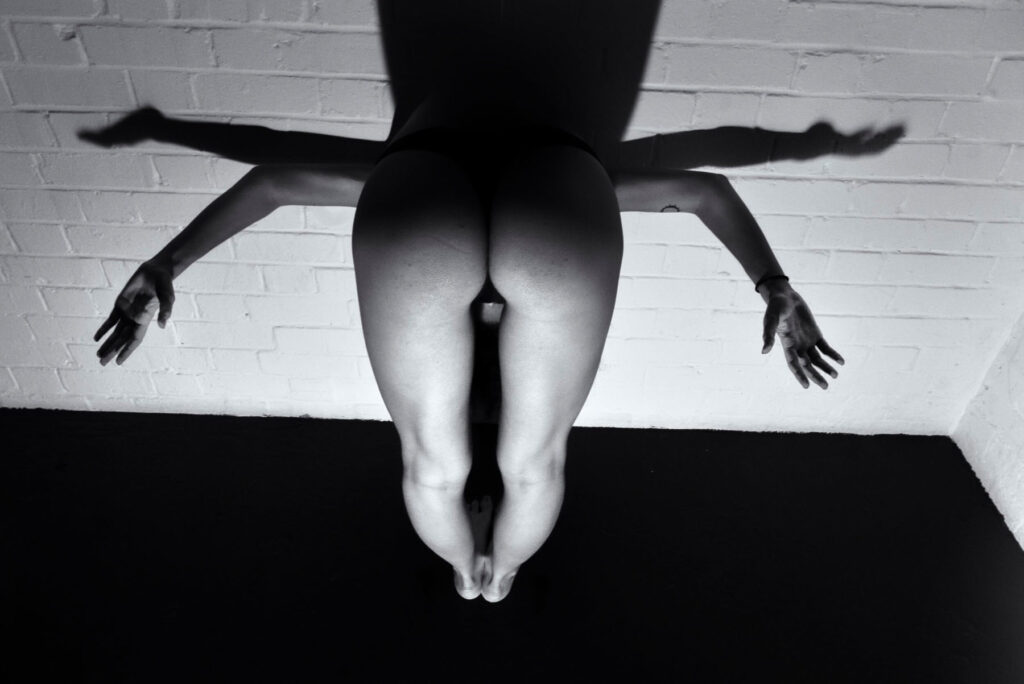
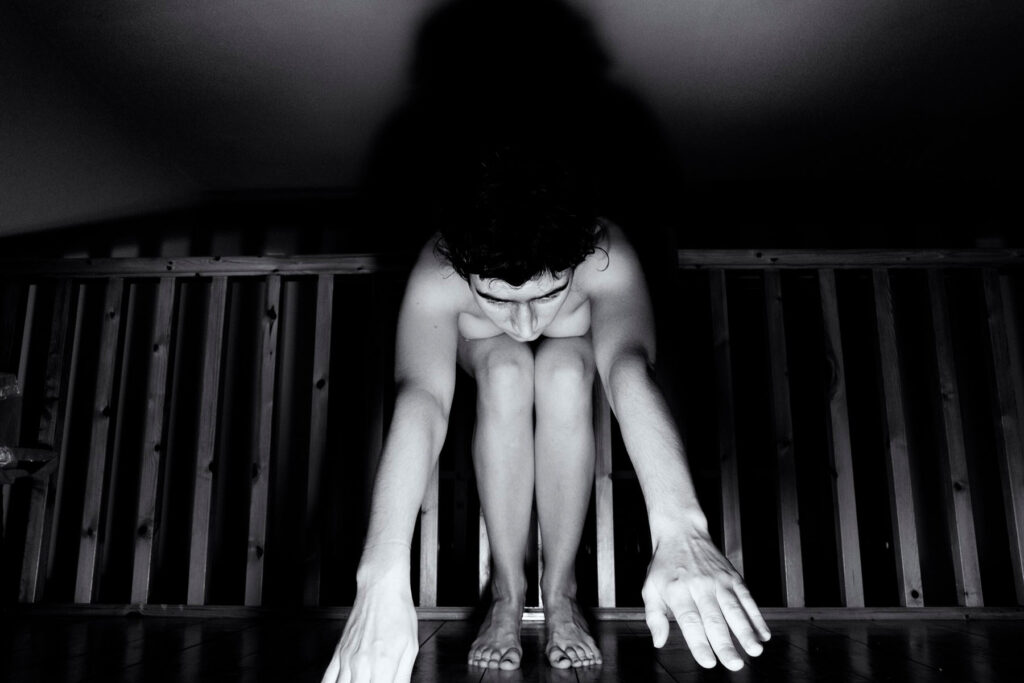
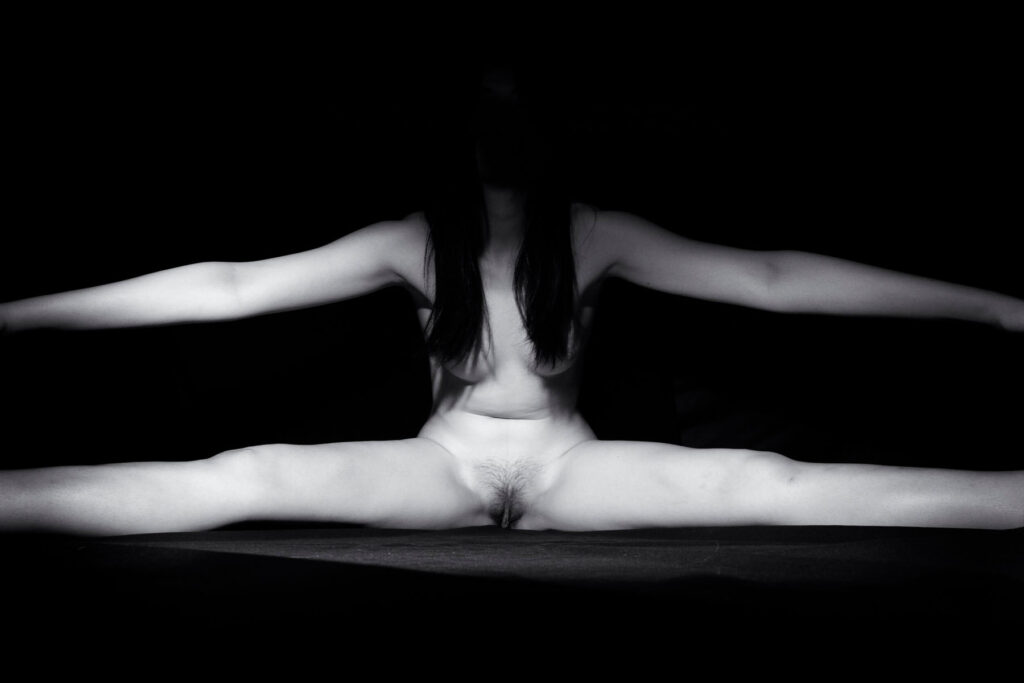
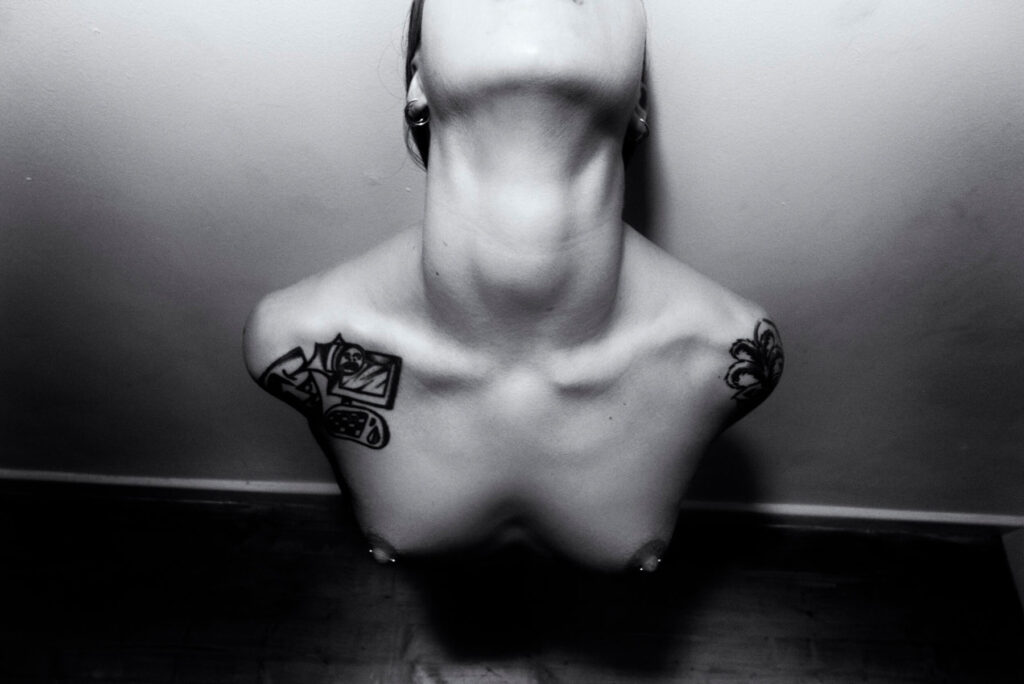
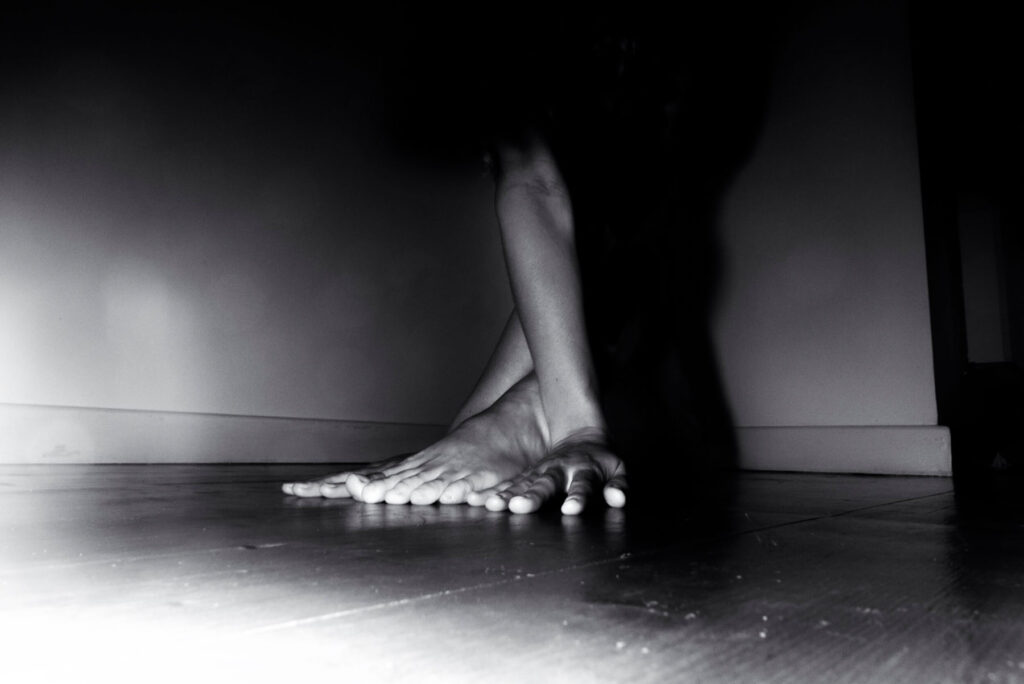
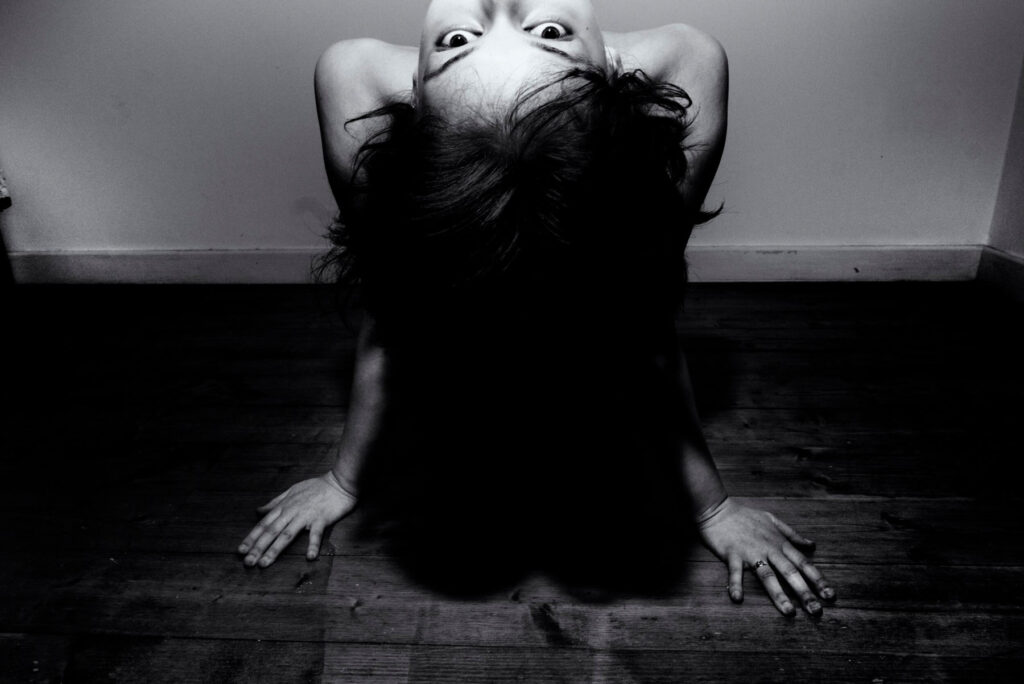
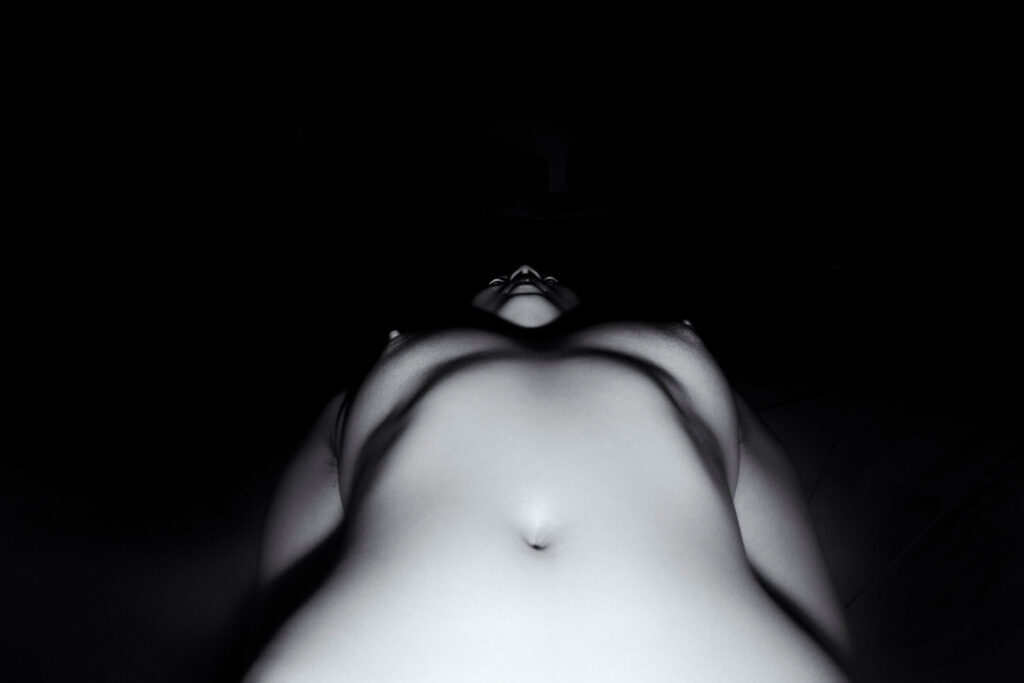
Lyndon French

The Mysteries of the Secrets

Credits

Images · LYNDON FRENCH
https://lyndonfrench.com/

Rick Schatzberg

“conversations helped to create the atmosphere I needed to portray vulnerability”

Rick Schatzberg grew up in a suburb of Long Island in the 1950s – a place constructed out of nothing but a post-war optimism for prosperity and abundance. A place that, by Rick’s own admission, was in reality, characterised by its monotony and it’s ‘nowhereness’. Surrounded by the comfort of middle class living, Rick and his friends discovered the world by hanging out in one another’s bedrooms, the local mall or a wooded area not far from their suburban enclave. As teenagers, the boys (as they came to be known amongst themselves) would experiment with alcohol and drugs, and hang out with girls; an upbringing unremarkable to anyone who wasn’t there at the time. As they grew older, the boys took on different careers. Rick moved to New York and became an entrepreneur, the others would become teachers, taxi drivers, salesmen, realtors and healthcare workers But they remained what Rick calls a ‘cohesive entity,’ eternally bound together by their childhood moniker.

The Boys, the second photobook by Rick Schatzberg, is the result of both his pivot into photography and the unexpected death of two of his friends in close succession. Confronted with the fragility of life, Rick began in earnest to take photographs of the remaining boys. Using a large format camera, the images of himself and his friends, now in their mid-60s, are a stark reminder of the passage of time. In and of themselves, Rick’s photographs are tender portraits capturing the toll of time and age on the human body. But in the book, these images are interspersed with snapshots and photographs from the boys’ youth. Aged bodies become youthful, smiling faces – hanging out, experimenting with weed. Though Rick is quick to outline that The Boys isn’t nostalgic, there’s something poignant in flicking through the book’s pages and recognising the quirks and characteristics of each of the boys as time passes by. Addressing the responses he’s had so far about the book, Rick sums this feeling up well in our interview below: ‘anemoia: nostalgia for a time or place you’ve never known’. Many of the old photographs included in the book are snapshots that had been forgotten about – forgotten in the almost immediate aftermath that they were taken. They raise questions of memory; can the boys even recall the time and place that the photograph puts them in?

Alongside the images, old and now, are twelve short texts. One is an email exchange between Rick and two of the boys trying to piece together the facts of a fight that happened at a wedding. Their recollections of what actually occurred differ; evidence of the unreliability of memory. To celebrate the release of the book, Rick spoke in conversation with the photography writer and curator, David Campany in early 2021. As well as discussing the subject matter of The Boys, something that came up as crucial to the book’s release is its design. As part of the book launch, Rick shared a video of himself going through the book to demonstrate that the large format photographs of his friends feature as fold out pages (something, he tells the audience via Zoom, his mentors and peers from his photography course advised against). But something that also stands out in the structure of the book is that the 12 texts Rick includes in The Boys read like snapshots themselves.

An accompanying essay to the book by the writer, Rick Moody, raises this point, writing about the ‘relationship between a still image and the kind of expressive power that we associate with narrative activity.’ In the context of The Boys, as a photobook, this takes on historical significance. Writing about the 1920s, a time of the proliferation of the photobook and the photo essay, the academic Andreas Huyssen describes how a new form of literature appeared.

The “modernist miniature”, popularised by novelists like Franz Kafka and critical thinkers like Walter Benjamin, sought to capture modern life with photographic precision through words. In that way, then, Rick’s book is much more than a selection of photographs of his peers – young and now old – it’s a reckoning with how we navigate time, memory and our existence through the lens of modern life.

How did your experience of studying photography influence The Boys?

My work on The Boys was influenced by my art school education in several ways. To begin with, the photography MFA program I was enrolled in at Hartford University, Connecticut, is heavily focused on photobooks, and I went knowing I’d be making one. I thought I already knew a fair amount about photobooks, but the breadth of what I was exposed to by teachers, guest artists, and student colleagues was eye-opening. I had to examine my motivations to make any work and to think about how I would make a book that wasn’t just a collection of interesting pictures, but something with substance and depth.

In grad school, one of the challenges of making work that you hope to eventually present to the world is interpreting and deciding what to do with the near constant feedback you receive. You go to art school to not be limited by your inclinations. But there’s also the danger of gearing your work for approval of teachers and fellow students. In the end, I had to absorb what was helpful and discard what wasn’t; making that distinction was sometimes a confusing struggle. 

At the virtual launch, you emphasised that this book had to be universal, and not nostalgic. What feedback have you had from people about The Boys? Does it differ from the boys themselves, those who come from the same place/time, and those with no real connection to the American suburb?

For me, the work is not really nostalgic; I feel that the almost forensic nature of the large format portraits grounds the work in the present. But I may have overstated my case against nostalgia a bit. The feedback has been consistent in that the work evokes an emotional response, which I find very gratifying. But judging from what people have written or told me, the way into the work has really varied. For some, the immediate connection is nostalgia for their youth or that time or place. For others, typically younger readers and often European, it may be anemoia: nostalgia for a time or place you’ve never known. (Like films and novels, photography is good at evoking this.) I’ve heard from people for whom the portrayal of enduring friendship was the hook, and after reading the book they either felt the urge to reach out to friends they have not been so attentive to or lamented that they didn’t have friendships that lasted into adulthood.

Obviously, this work is radically specific: a very particular group of white guys of a particular generation, raised in a very particular American suburban community.

“From the outset though, my feeling was that if this work isn’t felt to be universal then it’s a failure. Mortality, after all, is the bedrock of our biology.”

You mentioned the importance of collaboration in making the book – did this collaboration extend to your friends? Or did they feature just as subjects? Why did you use a large format camera for the portraits? 

I discussed the deeper underlying themes of the project – aging, loss, memory, mortality, friendship – with my friends during our photo sessions. Though my directions for posing were minimal, these conversations helped to create the atmosphere I needed to portray vulnerability. I also explained that I planned to use the work as the basis of my master’s thesis so they understood that there would be a critical audience for the work beyond our circle. Their attitudes went from gracious acceptance to genuine interest. It was as though they became partners with a stake in the outcome.

“It was clear that I would be making unheroic portraits that might not be flattering, and they understood there was good reason for doing so.”

The word that often came to mind in these photo sessions was ceremonial. Using a 4×5 film camera, with all its fussy rituals and storied traditions, felt performative and serious. The slow, cumbersome, and mysterious (to my subjects) process helped amplify the psychological intensity surrounding the project. In the face of our brothers’ deaths, together we were creating a formal certificate of presence (to use Roland Barthe’s expression), using traditional tools.

That said, it is was not a true collaboration because the power to select specific portraits for use in the book was mine alone. My friends did not even see the images I was choosing between, nor did they know how I would ultimately deploy the portraits in the book. They trusted me. It was important to assert my authorial voice, but without entirely drowning out the voices of my friends, which they asserted through the written word, their snapshots, and their gestures in the portraits.

We’re faced with the processes of ageing, time and mortality in The Boys – when returning to your childhood home and neighbourhood for the book, had the nowhere place you came from aged too?

In the winter, with the trees bare, the neighborhood looks very much like it did 50 years ago. In the warmer months the trees, mature and leafy, give the neighborhood a homier, more established feel. The automobiles in front of many of the homes are now more numerous and luxurious, probably more a sign of growing consumer credit and a shift in values than of greater wealth.

The short texts in The Boys read like snapshots, how and why did you choose the texts you include?

I was interested in constructing narratives to loosely link text and images that would stand as discrete memories – not stories as such but fragments that help tell the larger story. I chose to write short texts that could function in different ways: sometimes straight narrative; sometimes like vague, recovered memories; sometimes as meditations; and sometimes more as dream than narrative. The one outlier is the story about my father. I didn’t initially think to include this in the book. I was having a conversation with my editor and I related the story to her.

“She told me to write it down and as soon as I did, I knew it belonged in the book.”

In his essay, Rick Moody refers to a good photograph as one left in a drawer for 30 years. Did the archives of photographs of yourself and the Boys ever come to light in the intervening years leading up to the making of this book? If so, in what circumstances?

Several of the snapshots have been circulating for ten years or so on social media. Others, which I found loosely strewn in boxes stored away for years, may have been passed around shortly after they were taken but were mostly forgotten. Time conferred poignancy as Rick Moody describes, but curating enlarged full-bleed versions astride pictures of old men and stories of death, makes new meaning. Even the more familiar old snapshots felt like new discoveries.

Credits

Images · RICK SCHATZBERG
https://rickschatzberg.com/

Subscribe to our
Newsletter