Archive page:


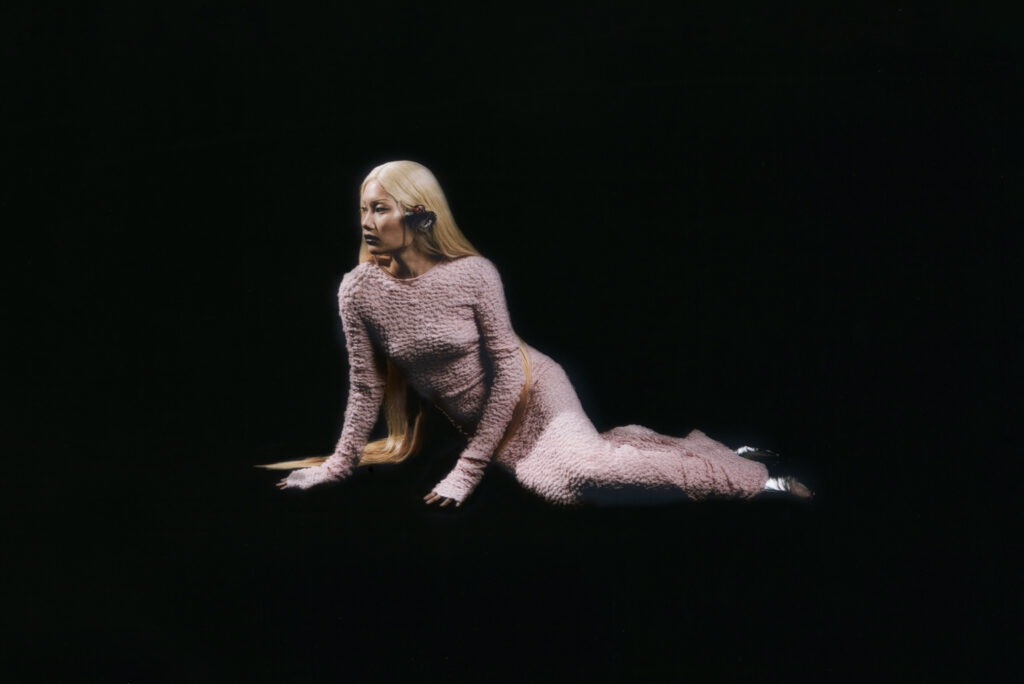
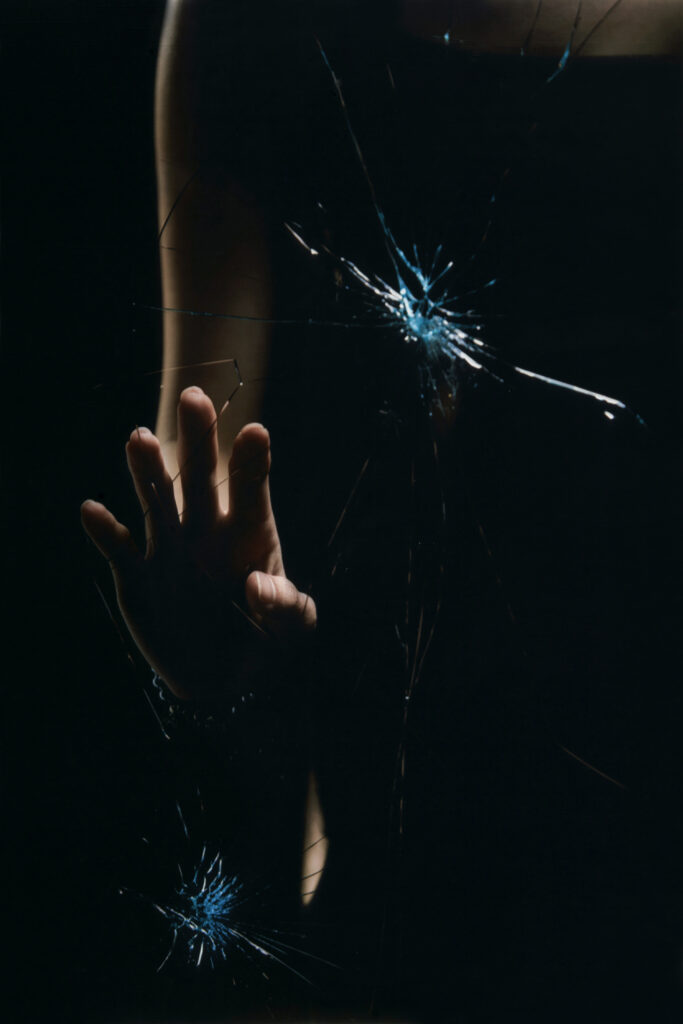
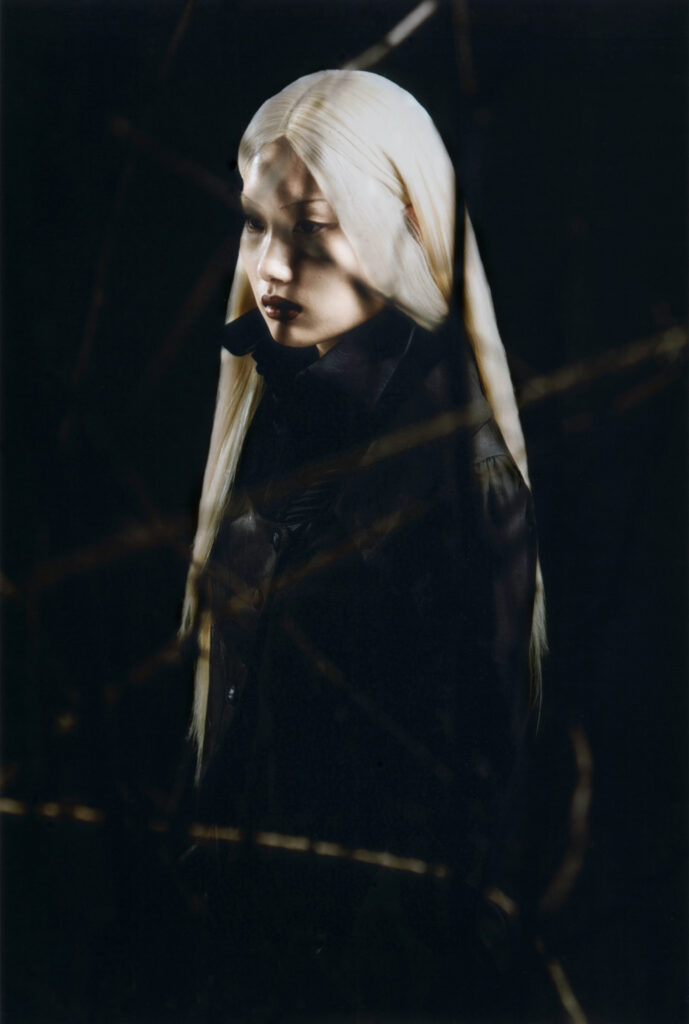
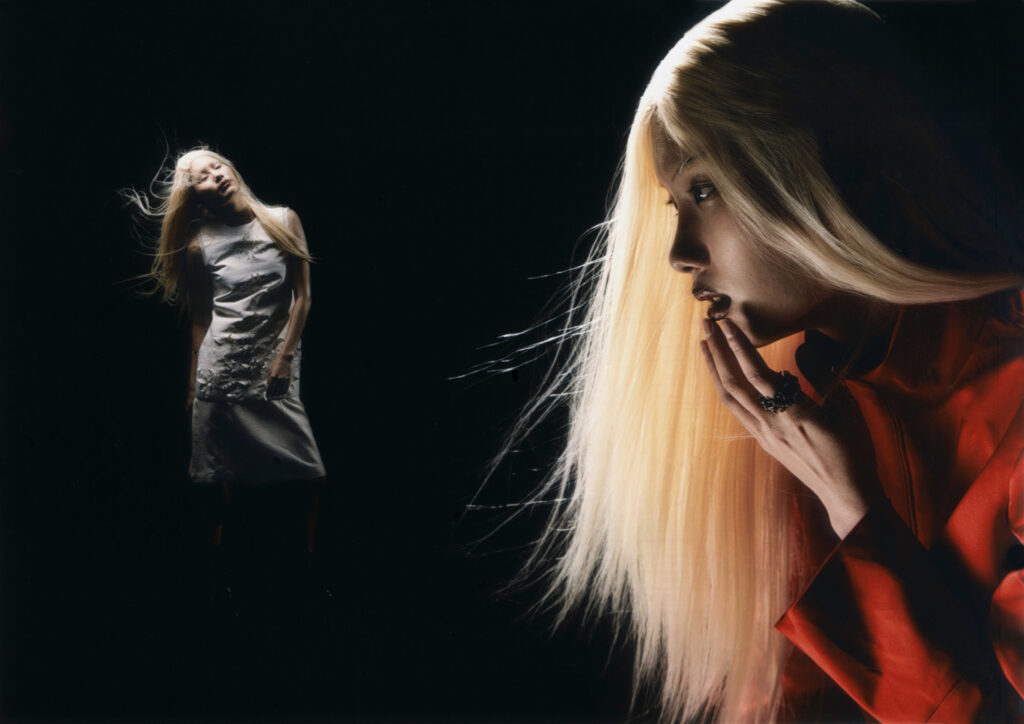
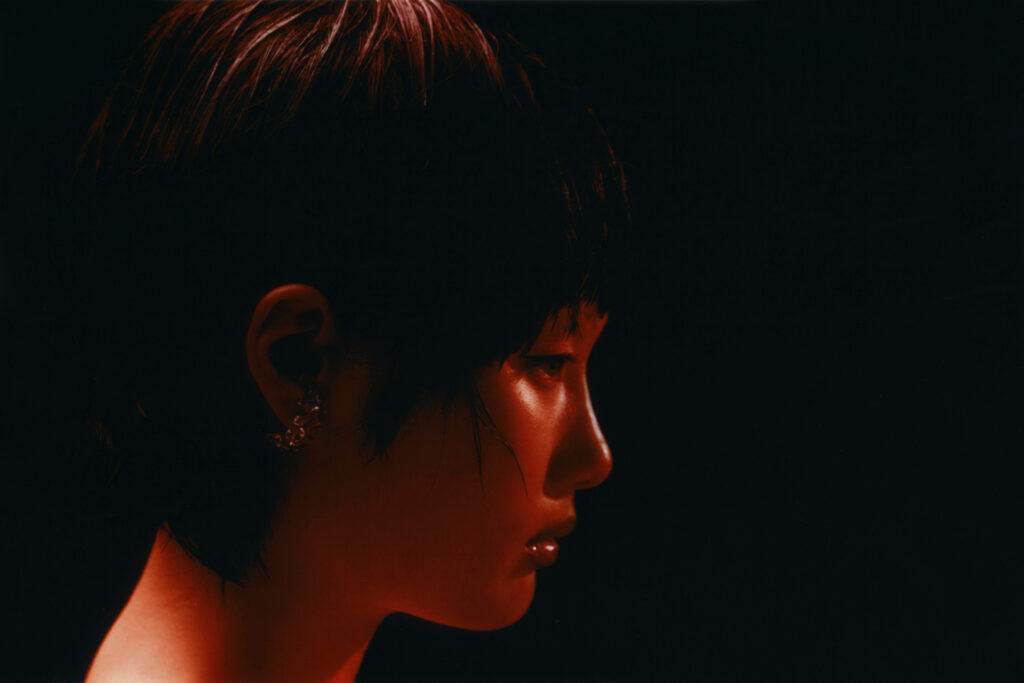
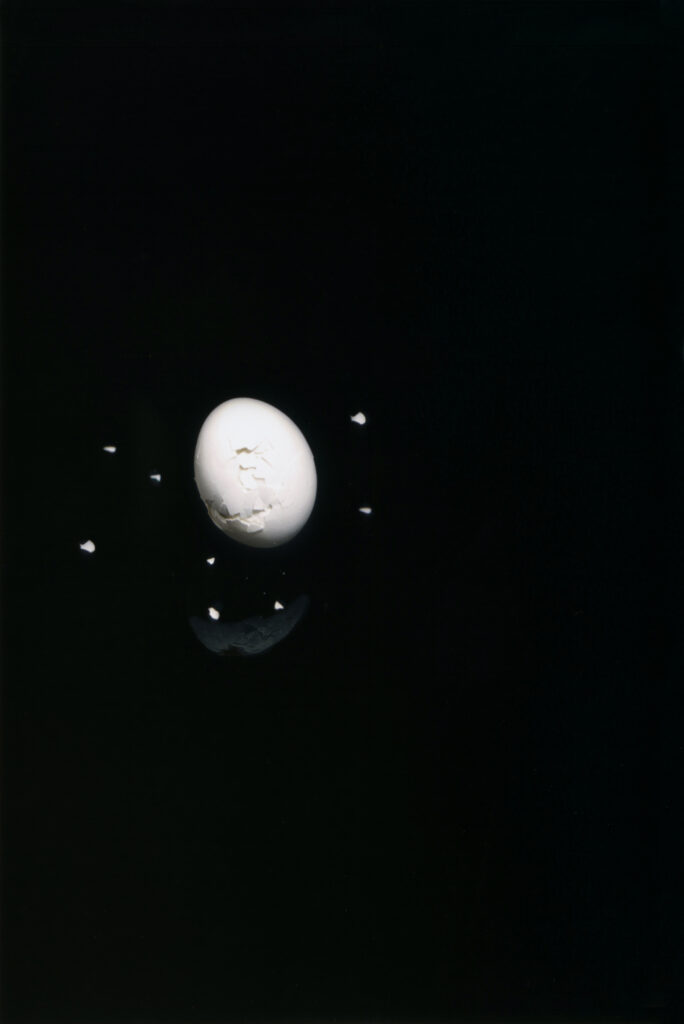
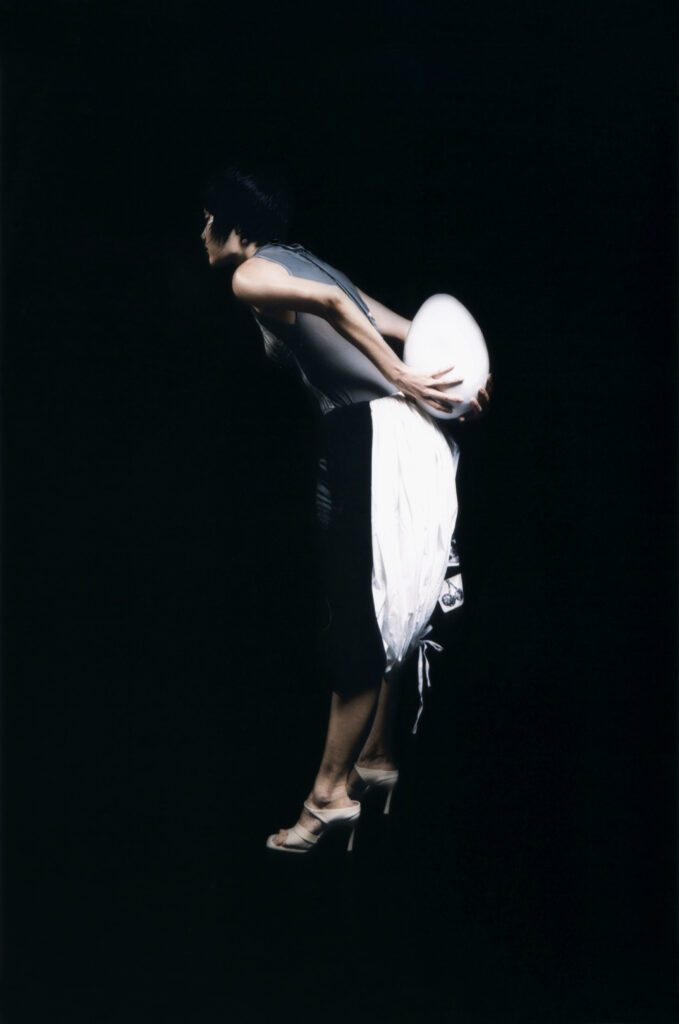
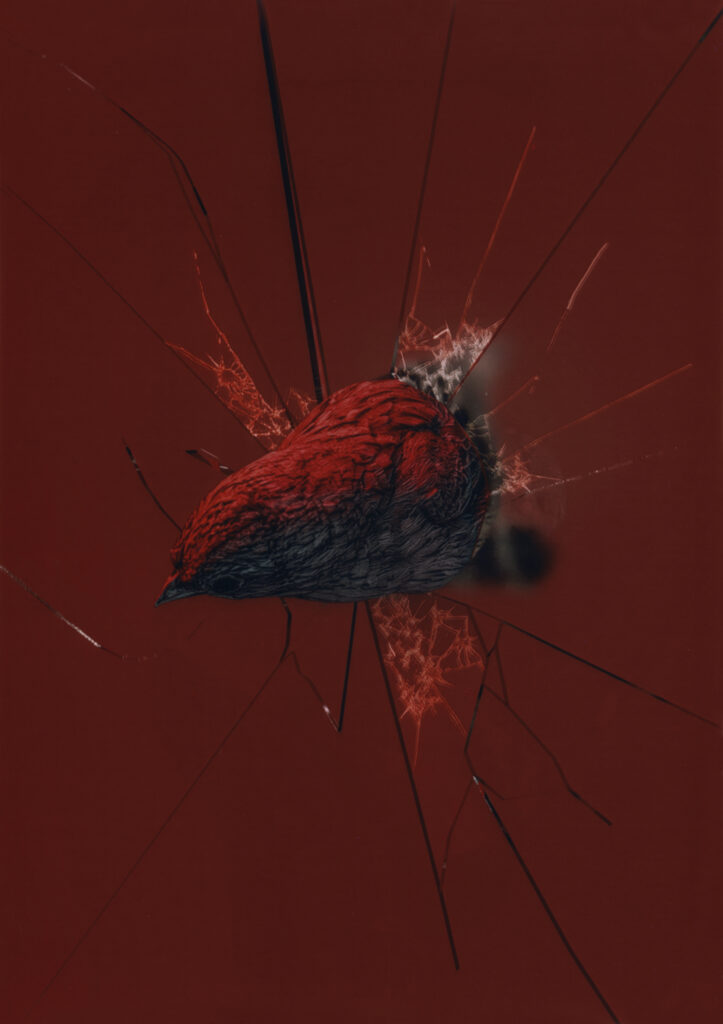
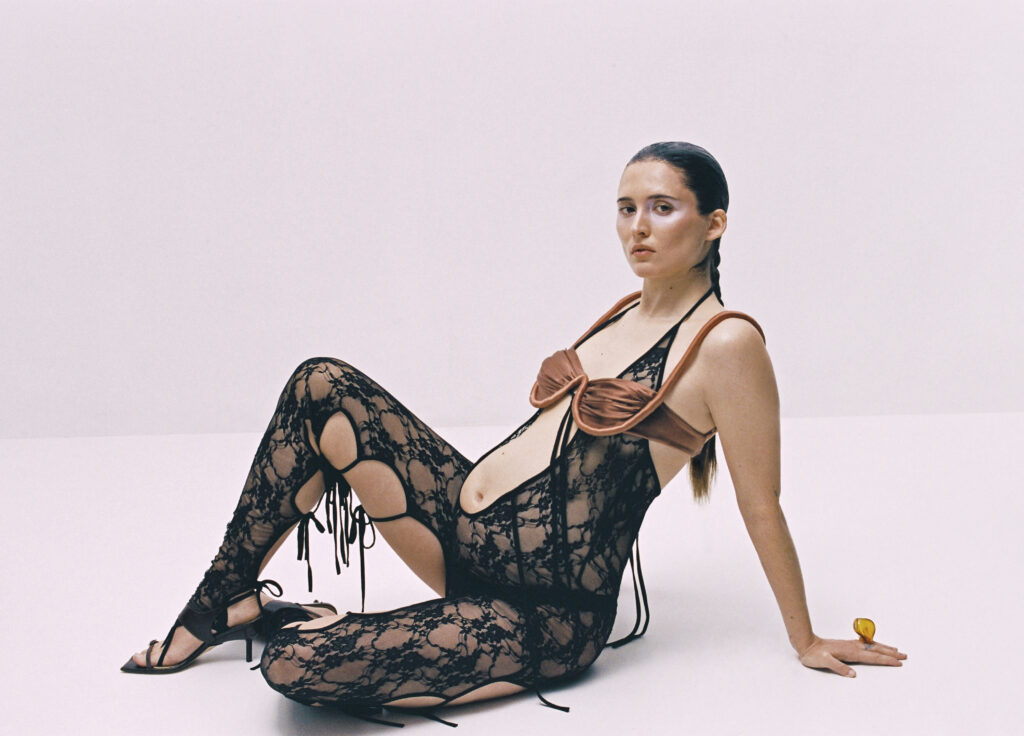
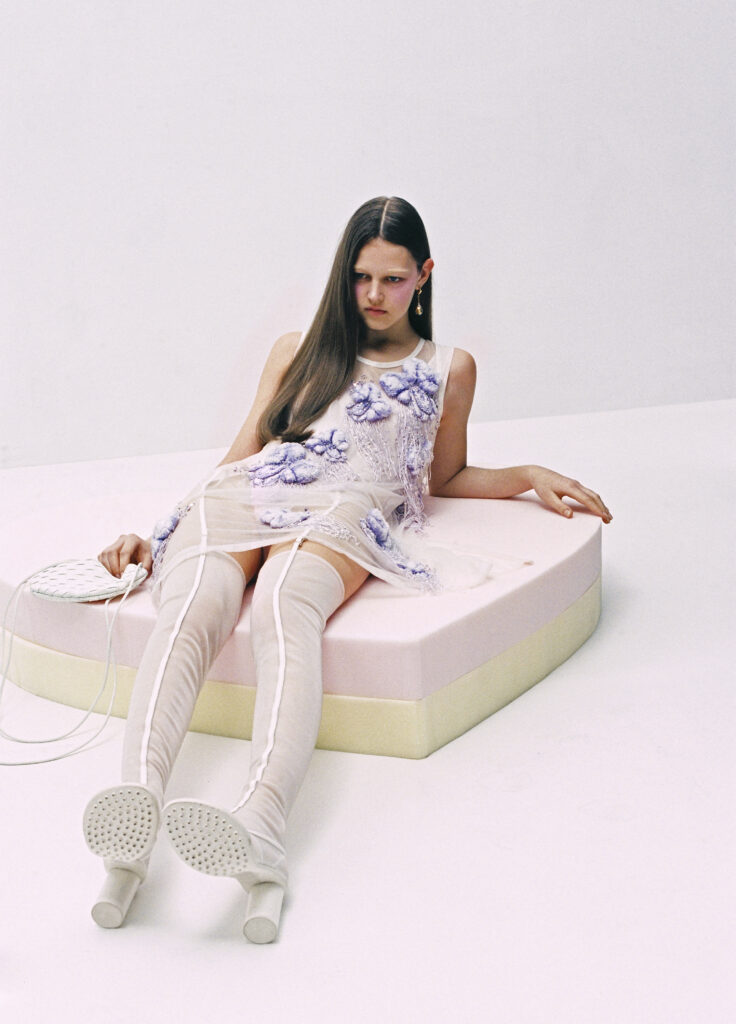
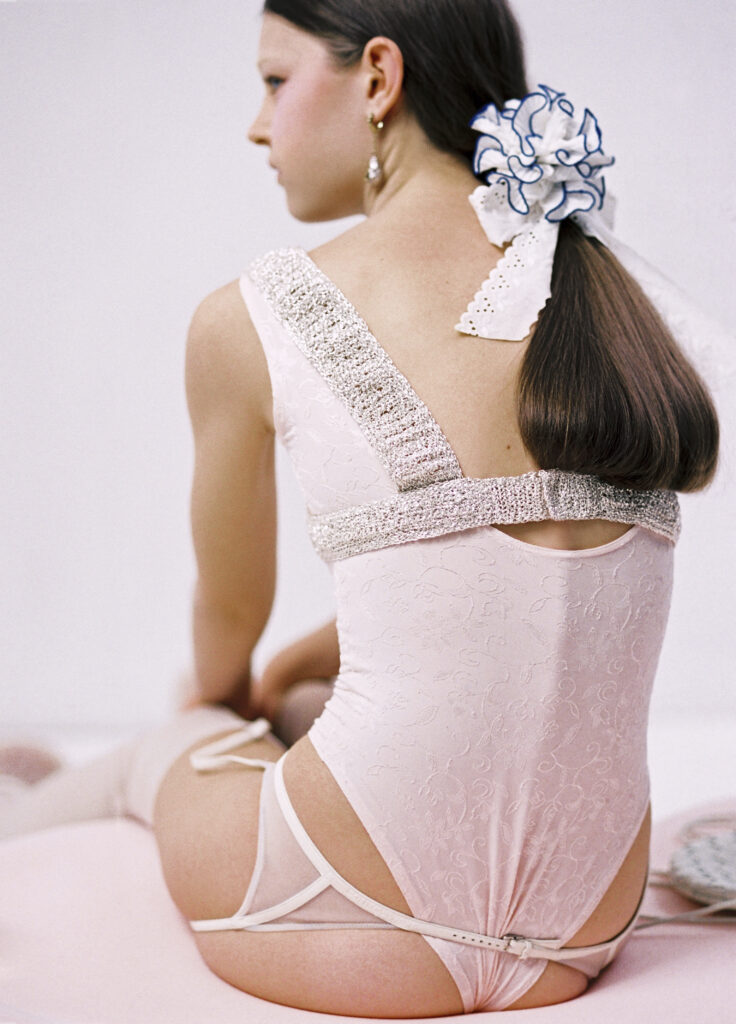
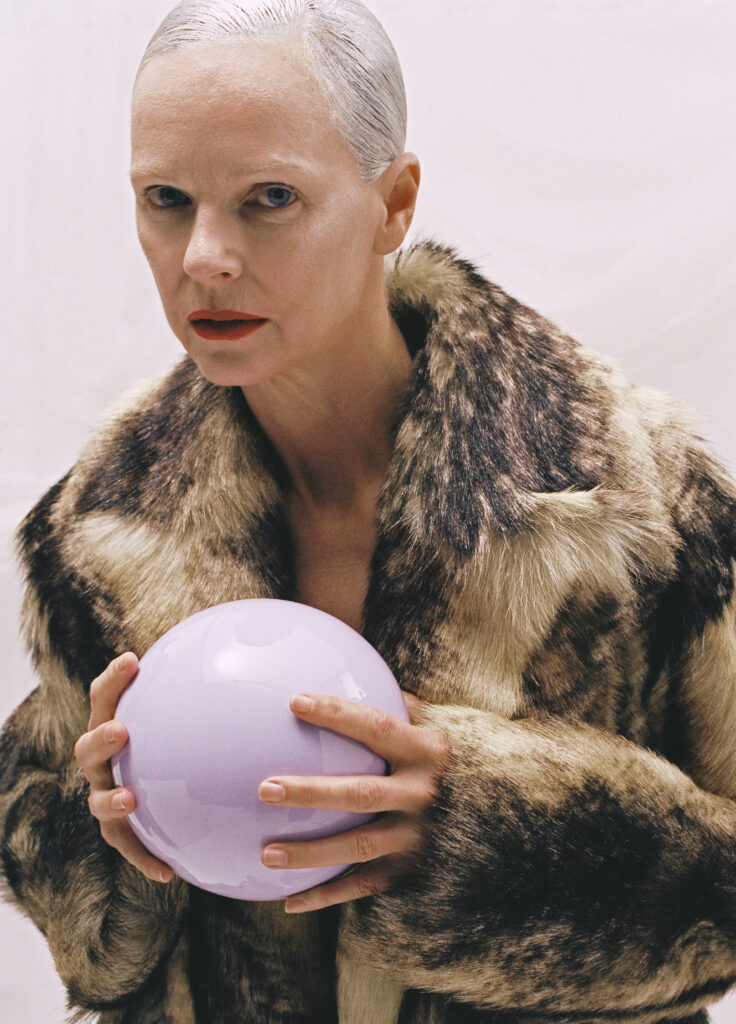
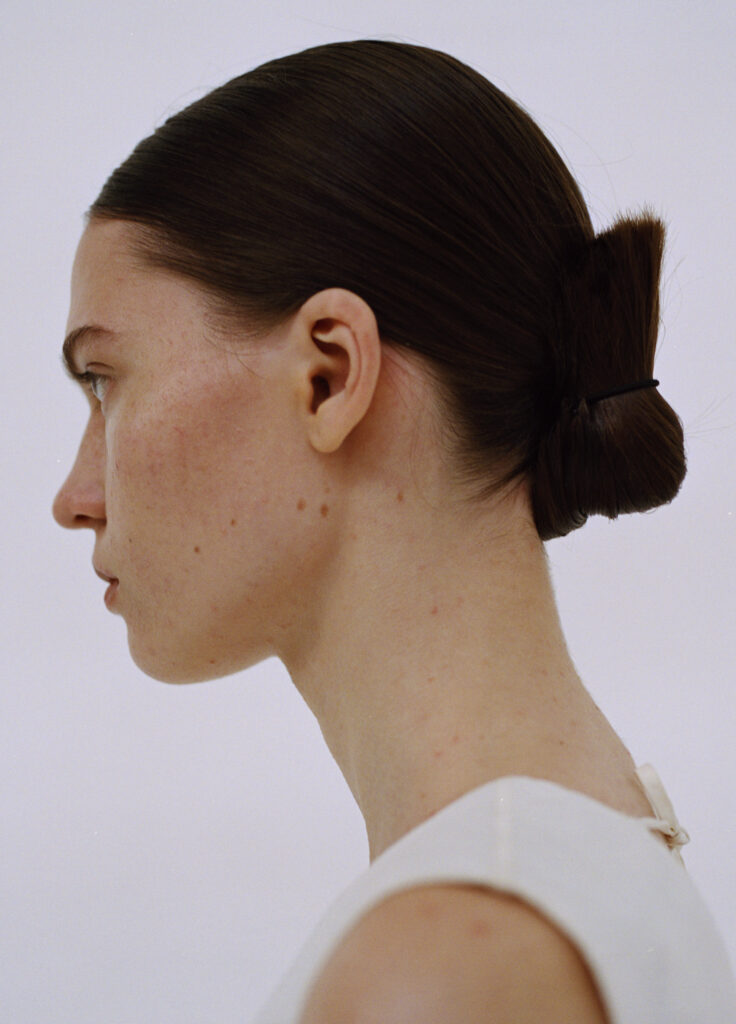
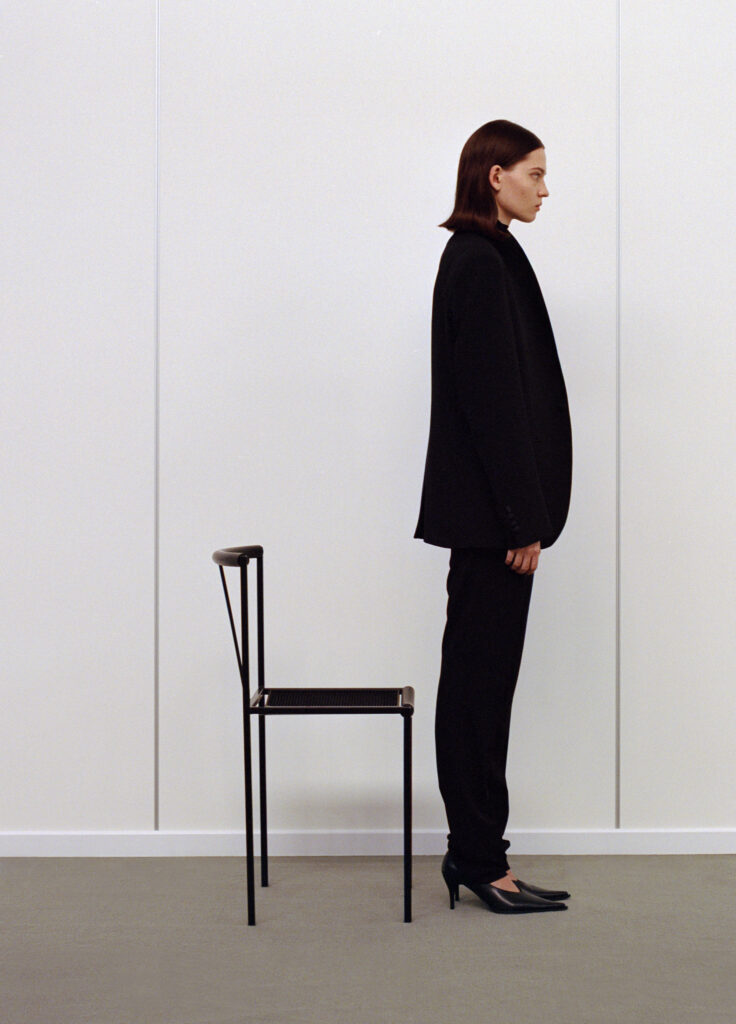
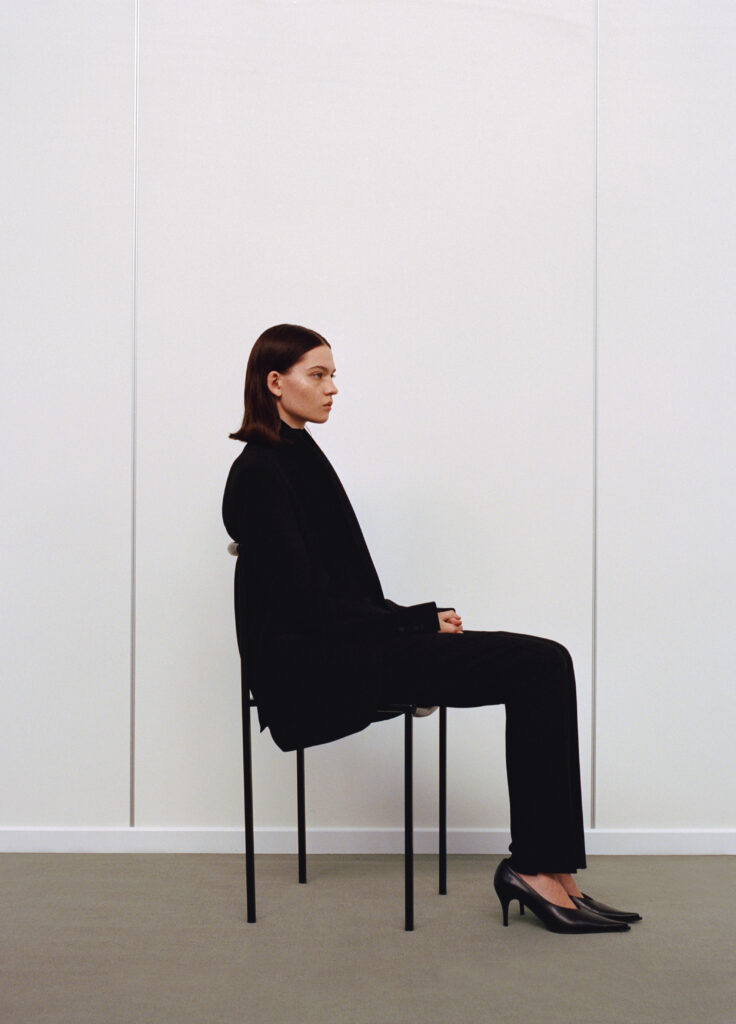
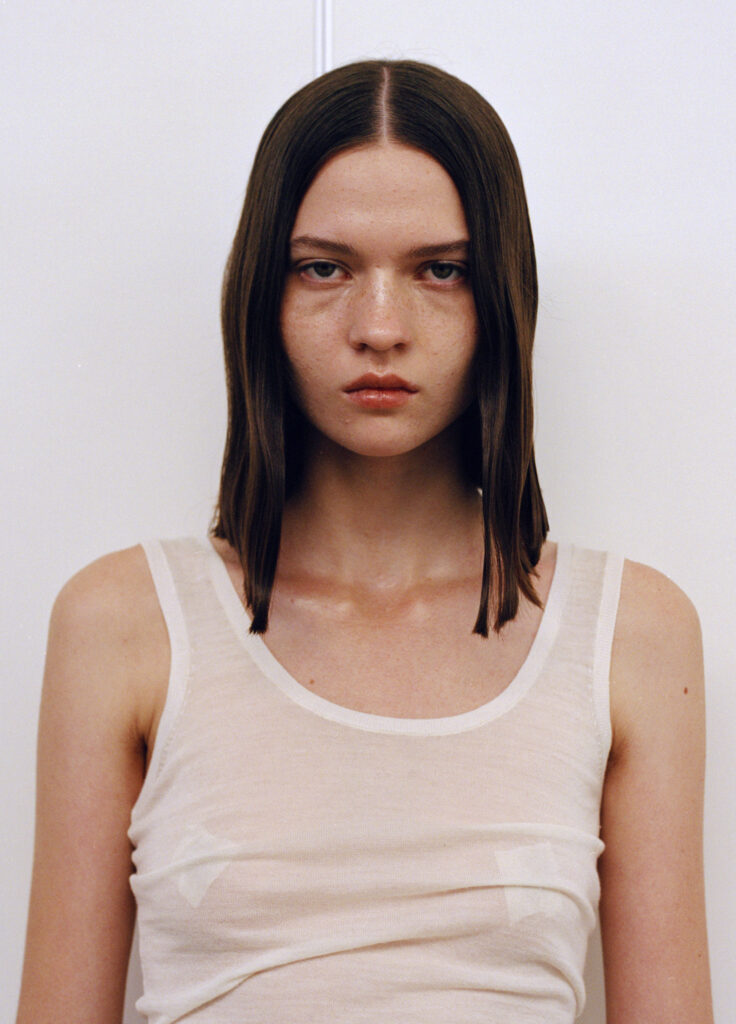
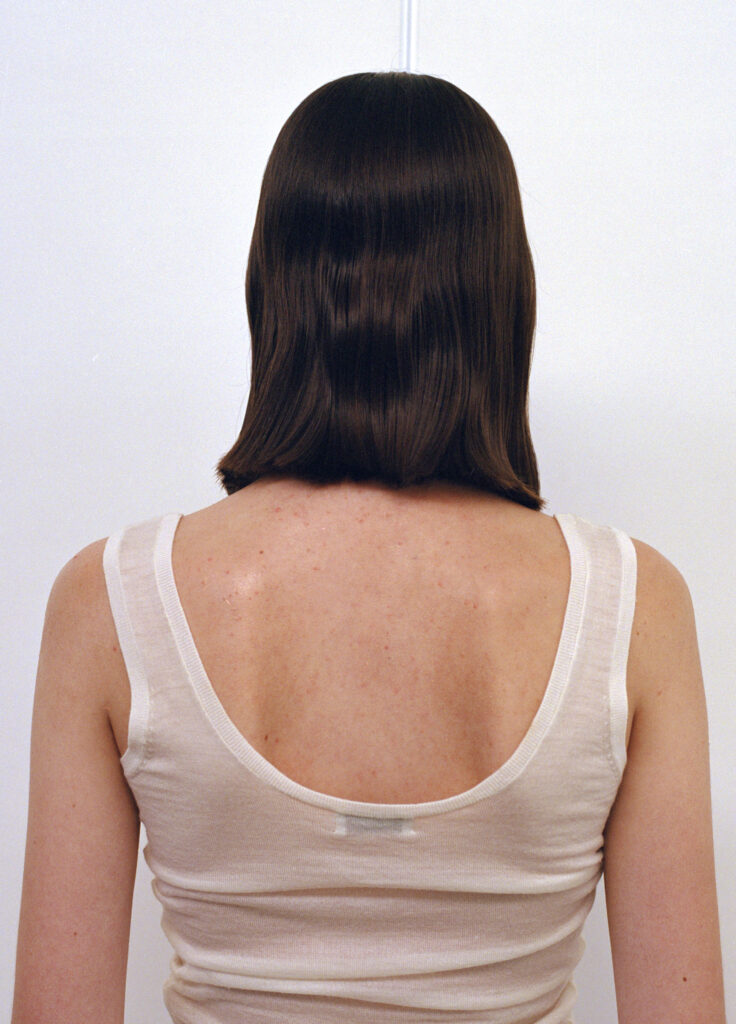
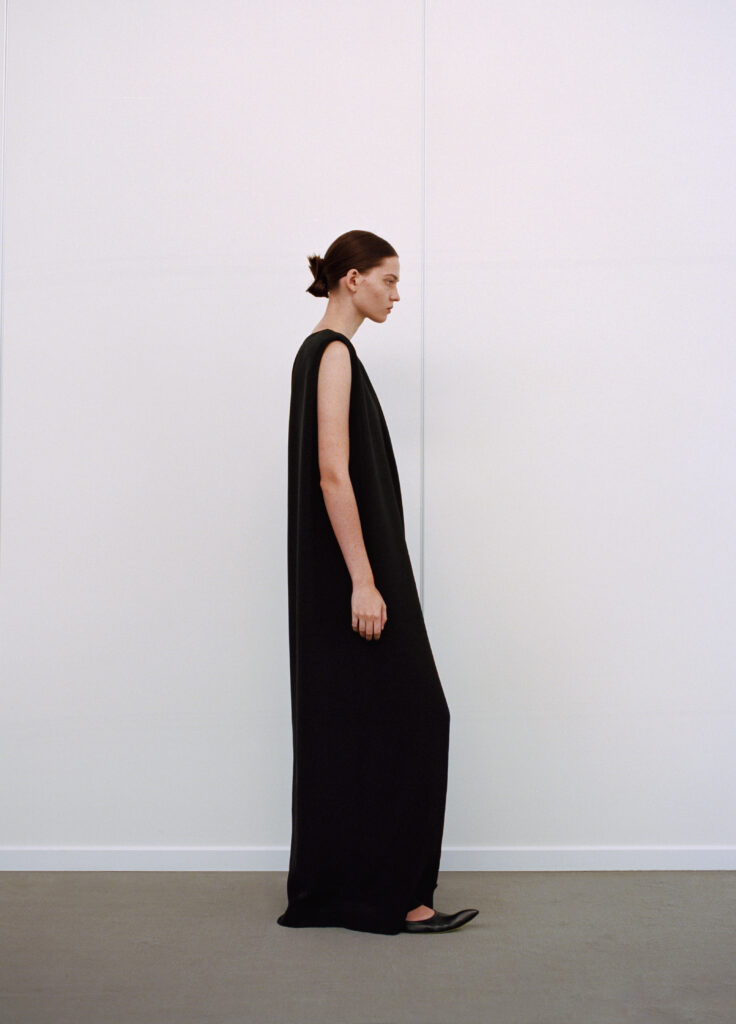
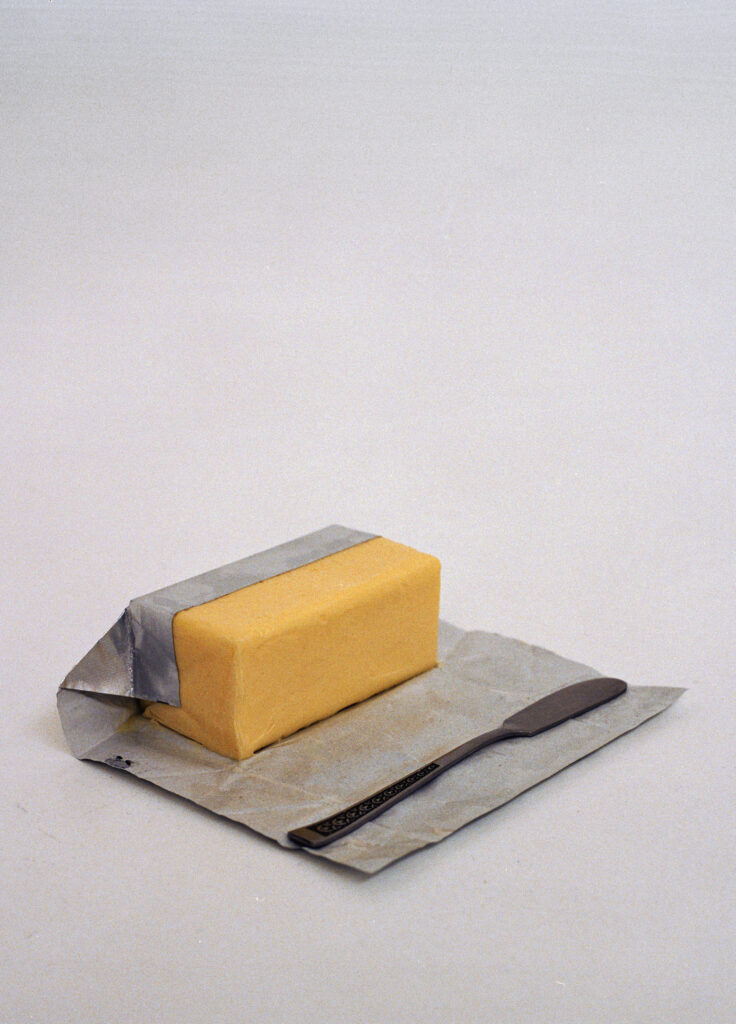
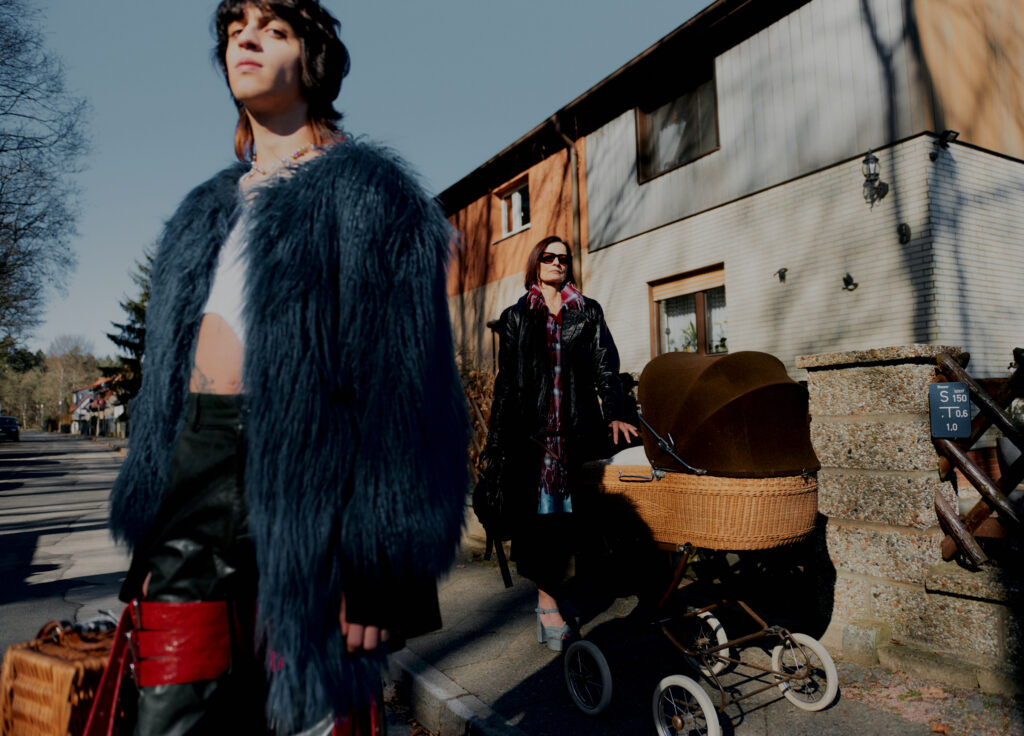
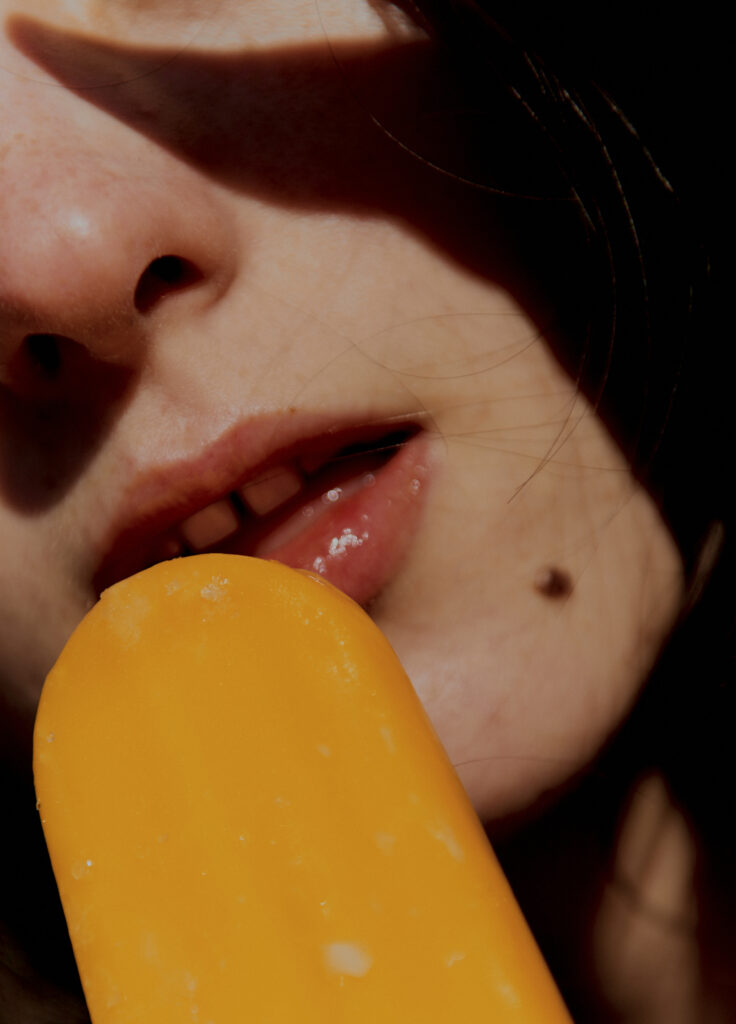
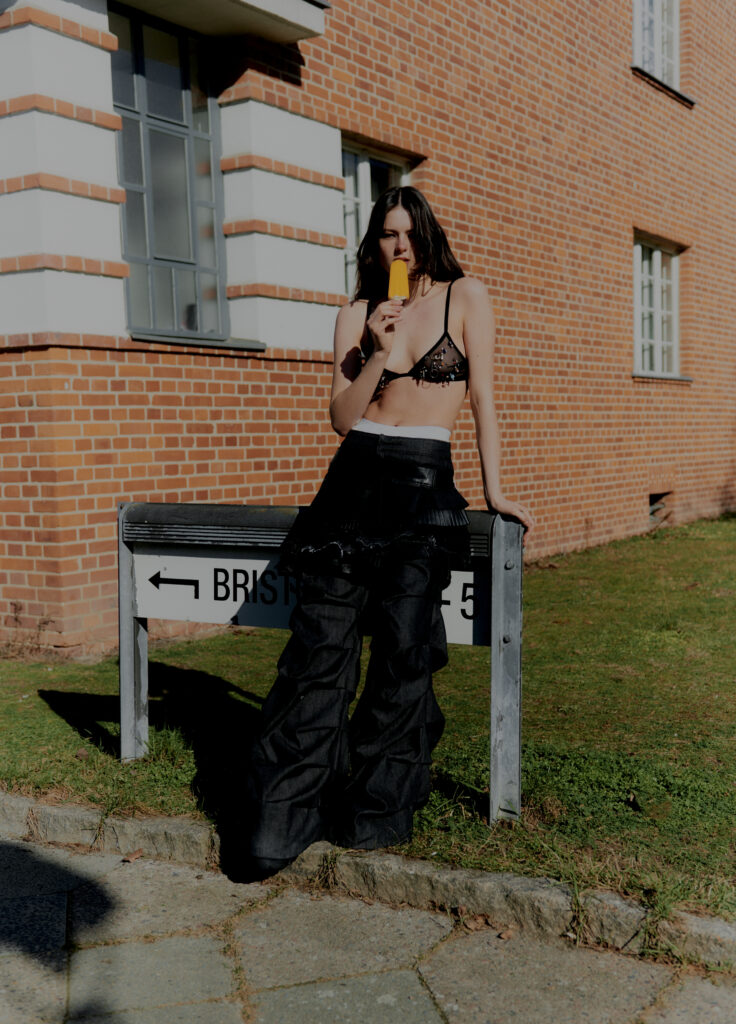
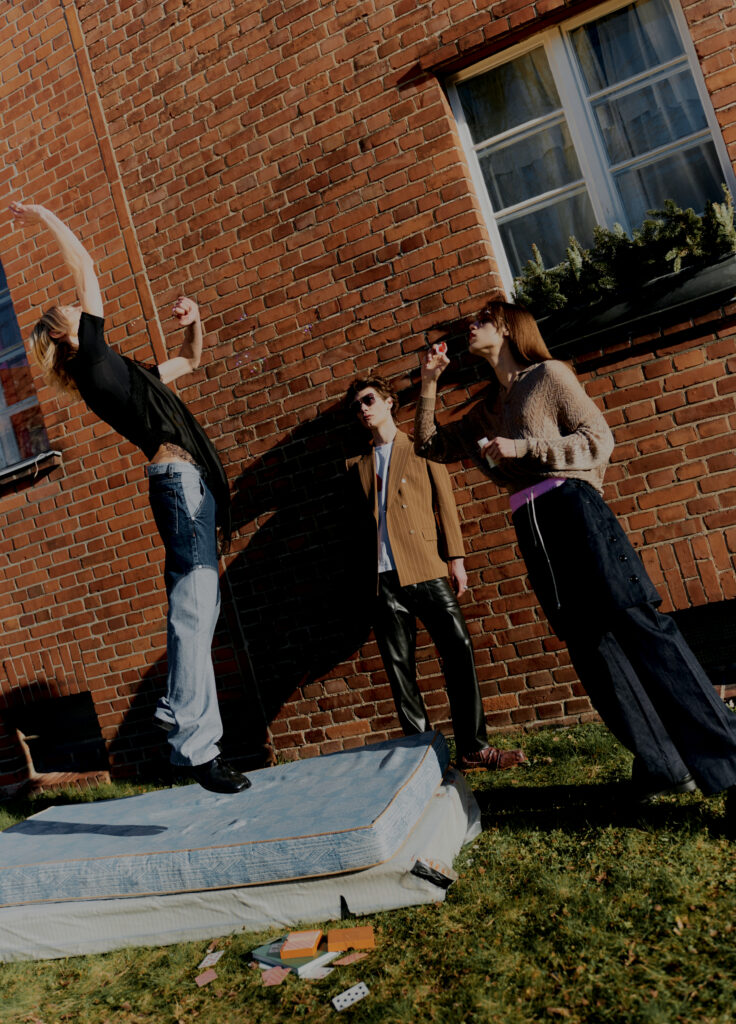
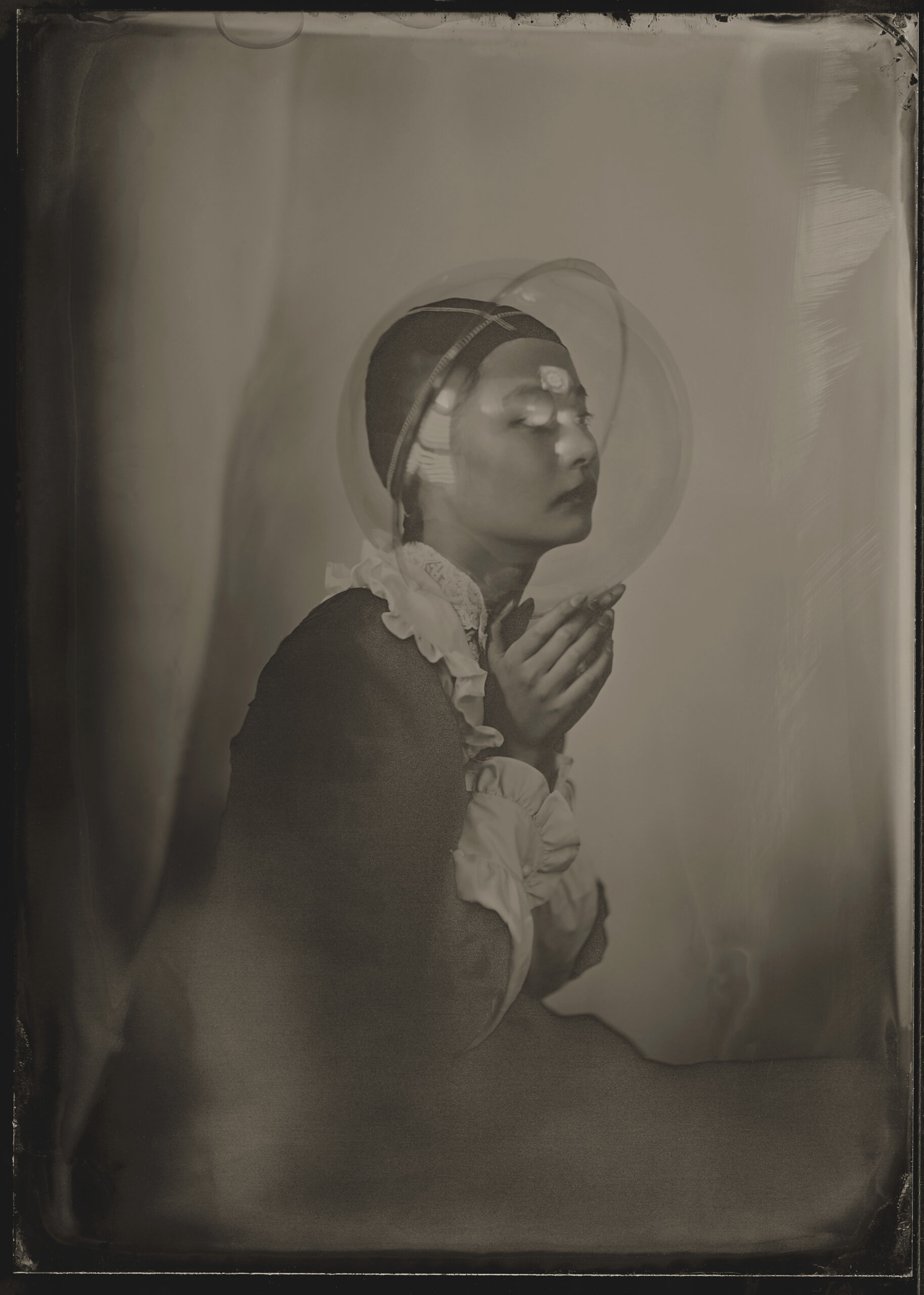
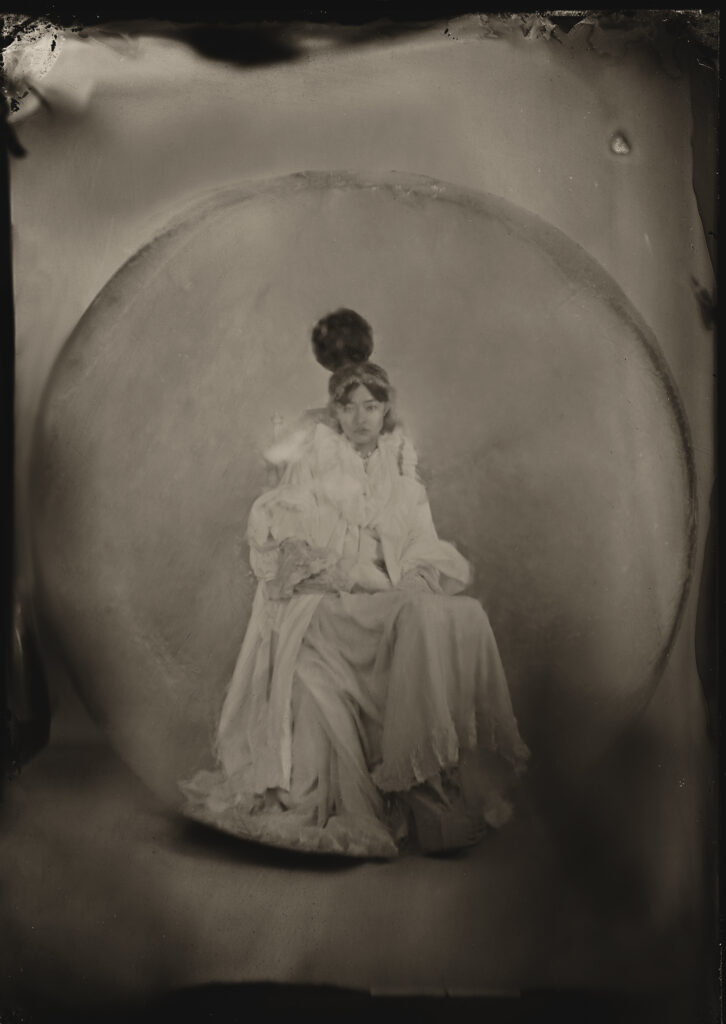
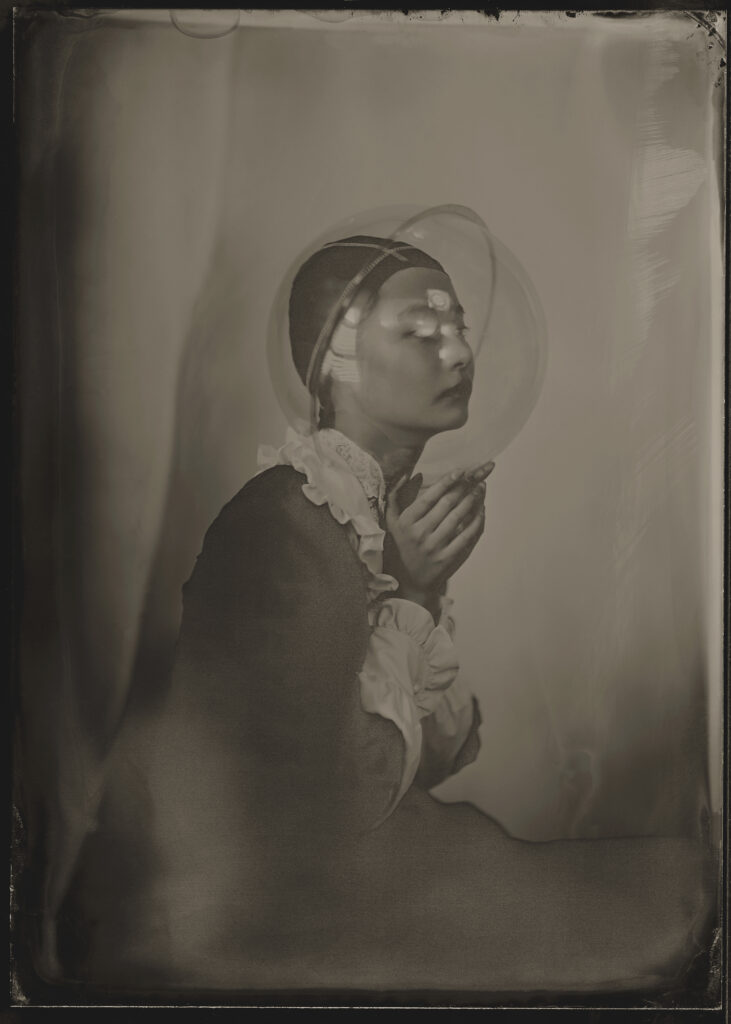
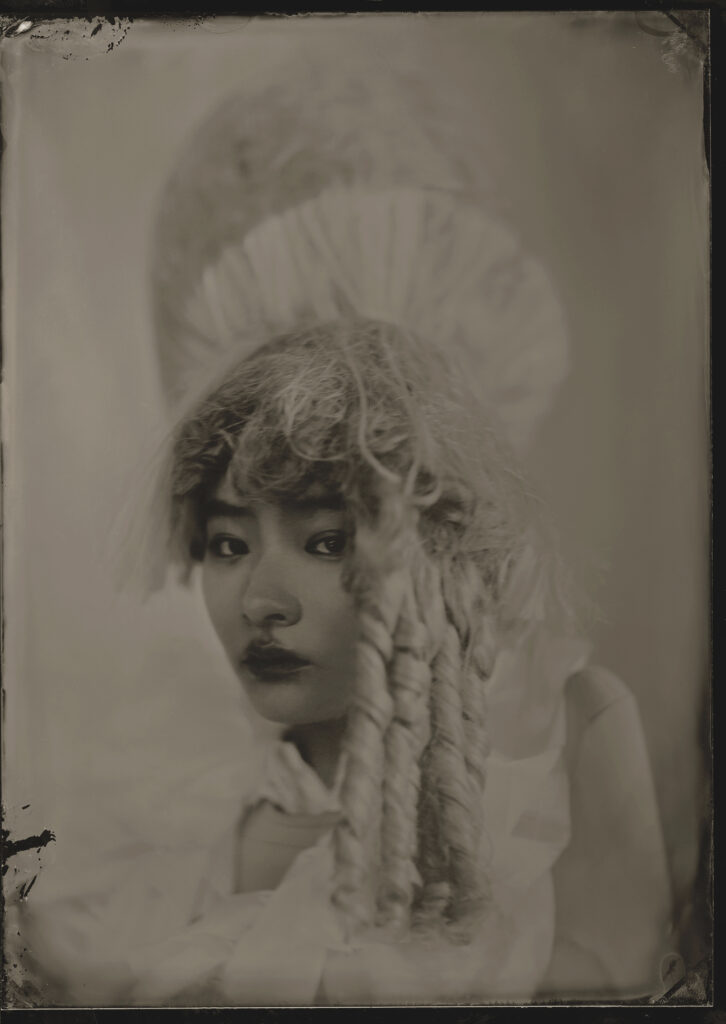
Andrea Lamedica

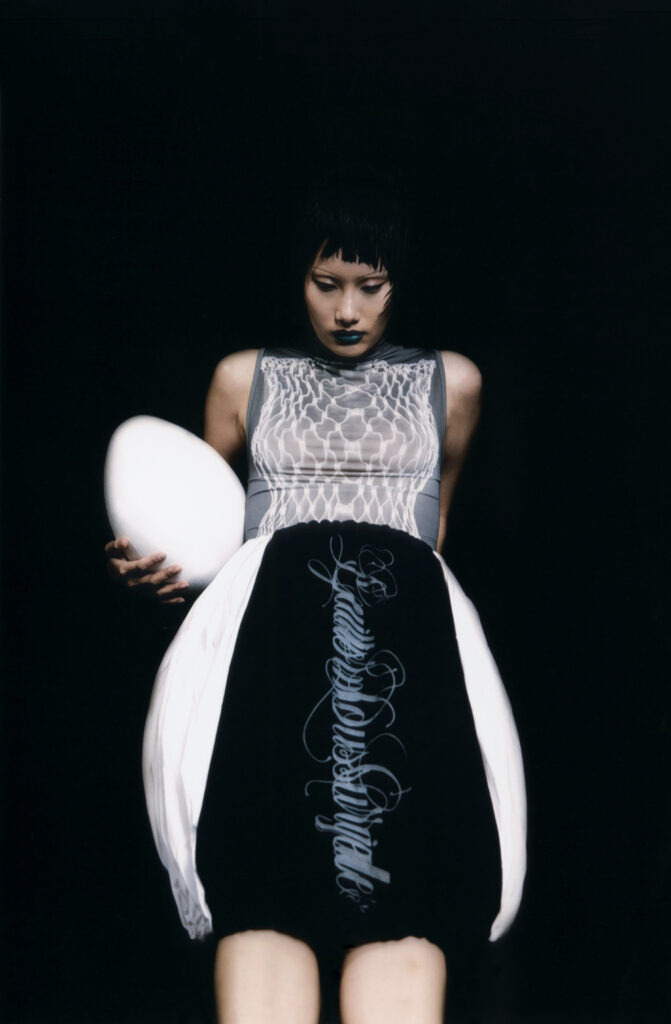
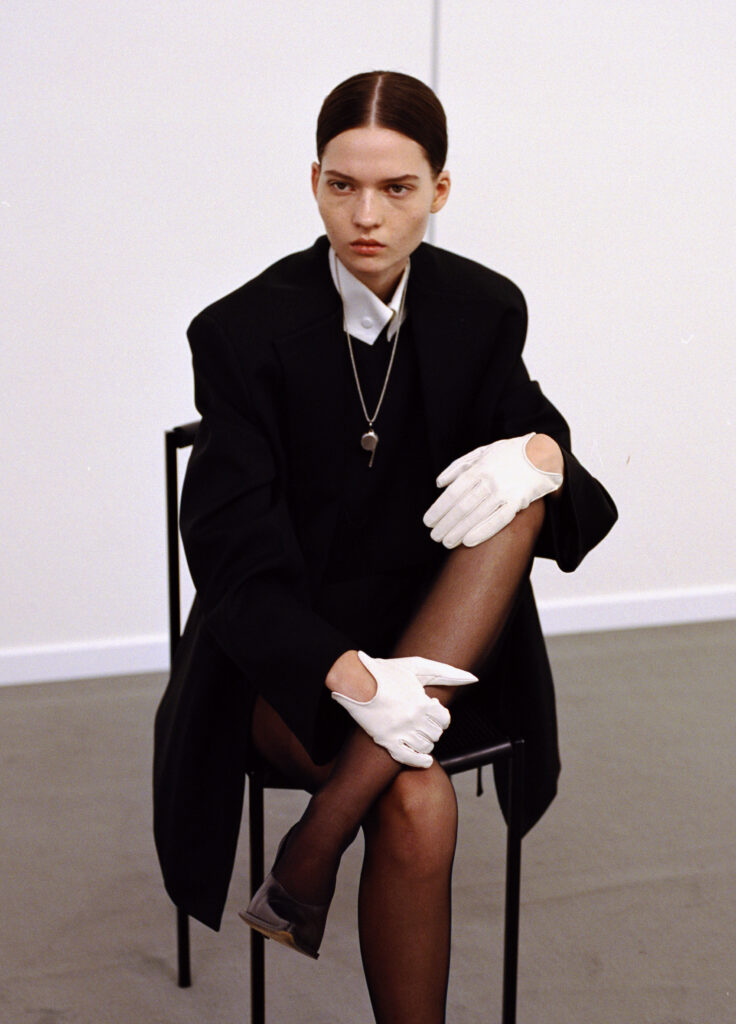
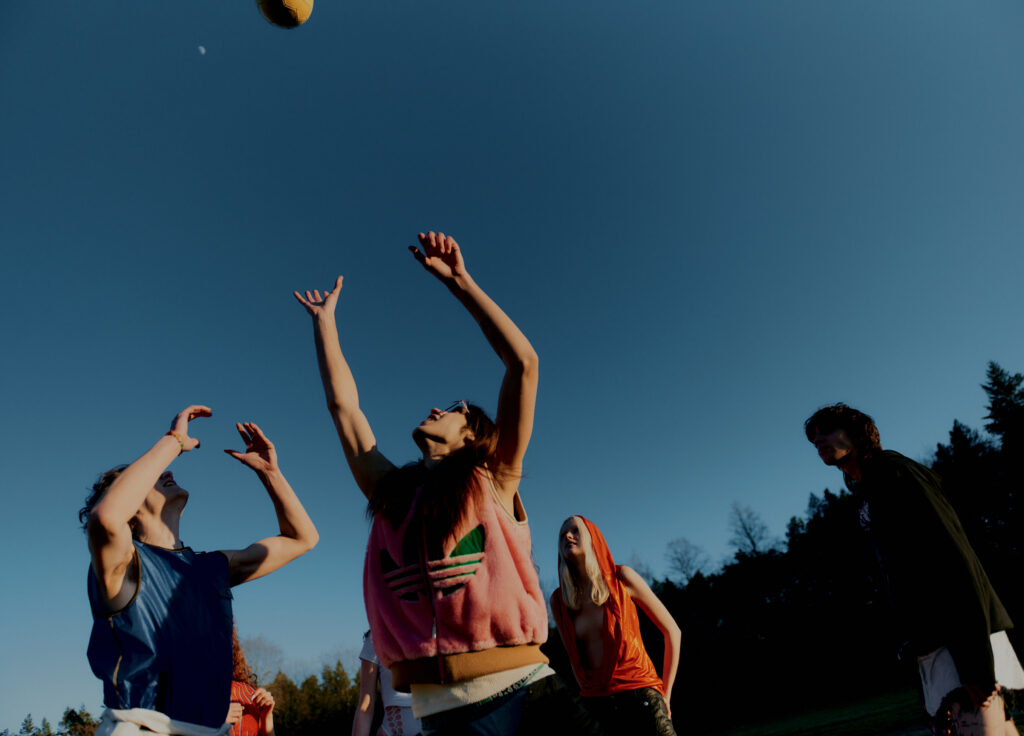
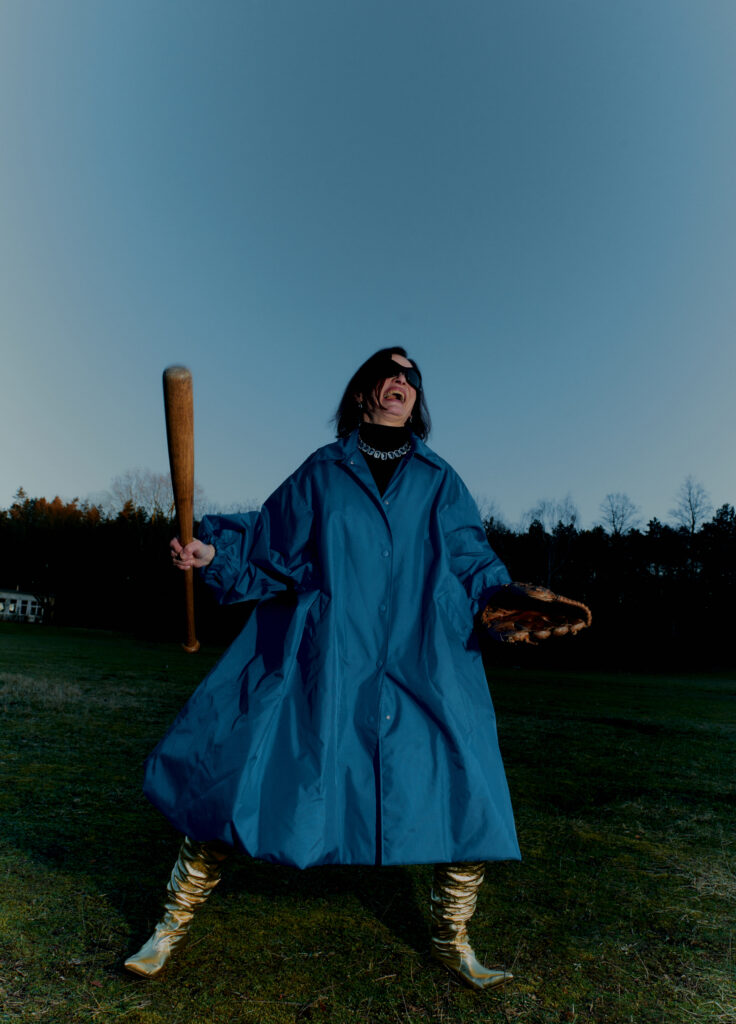
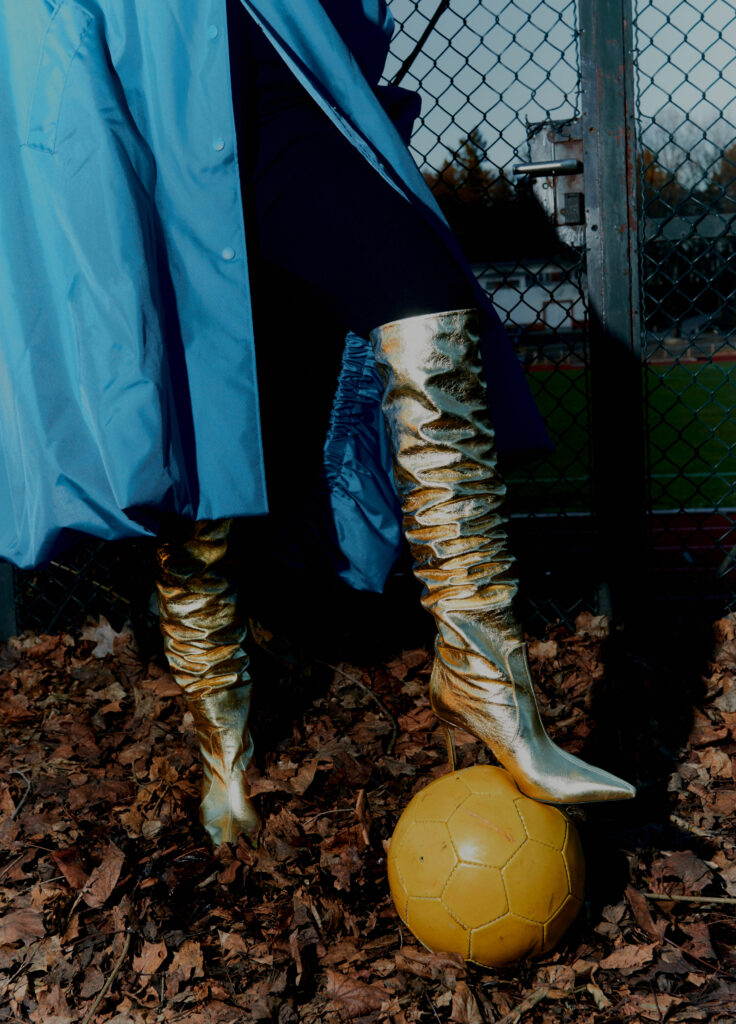
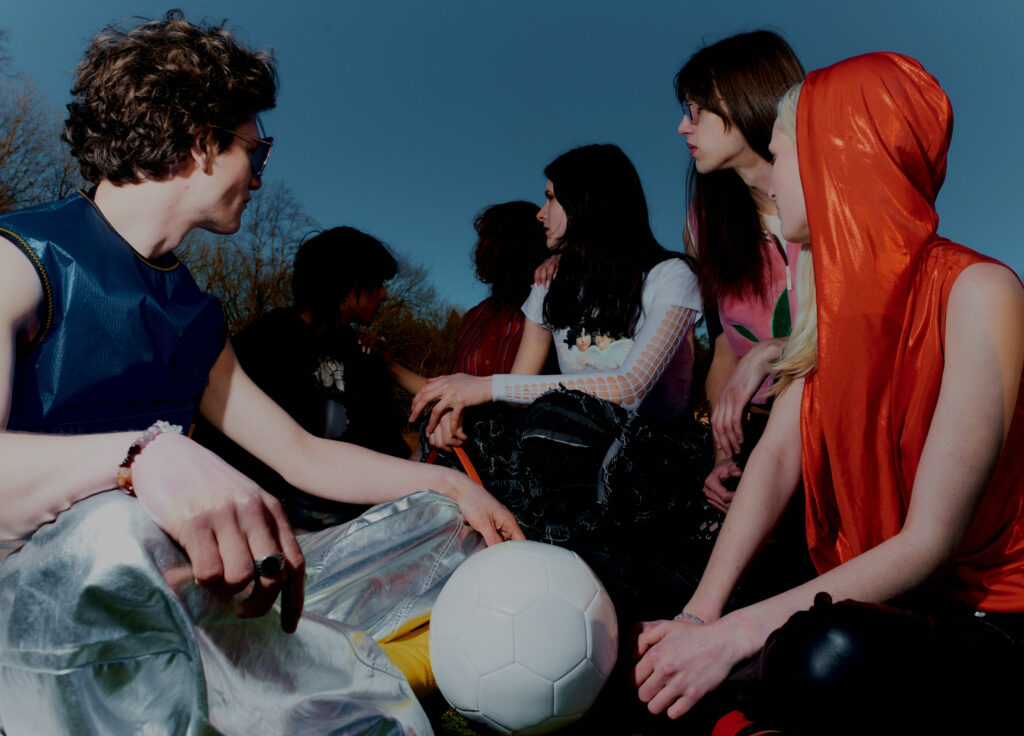
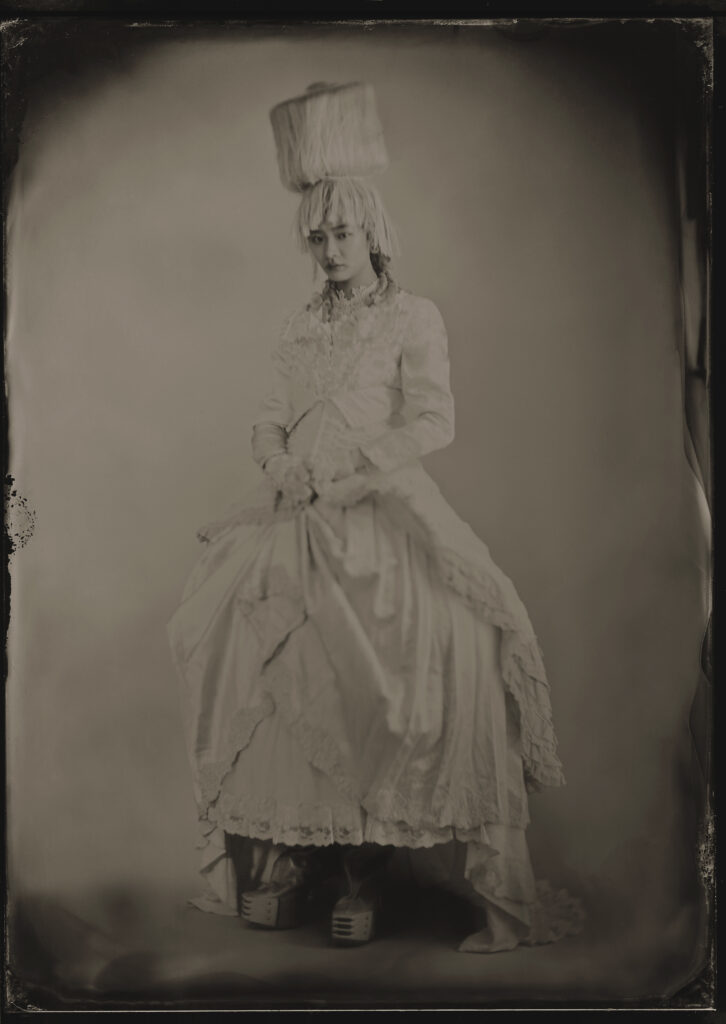
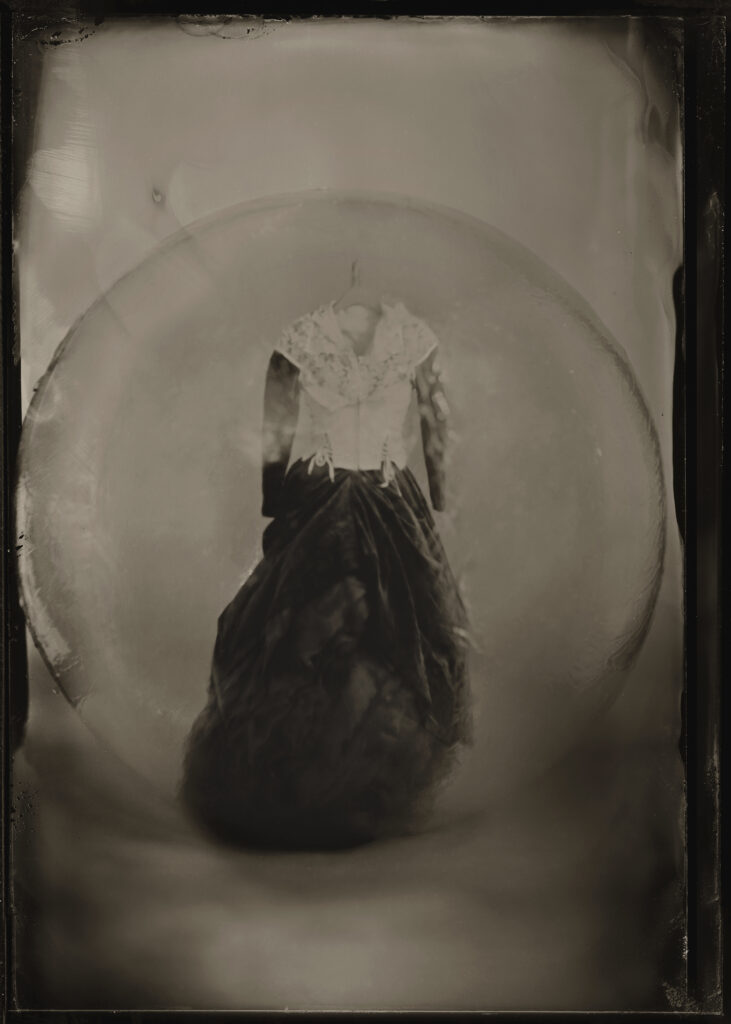
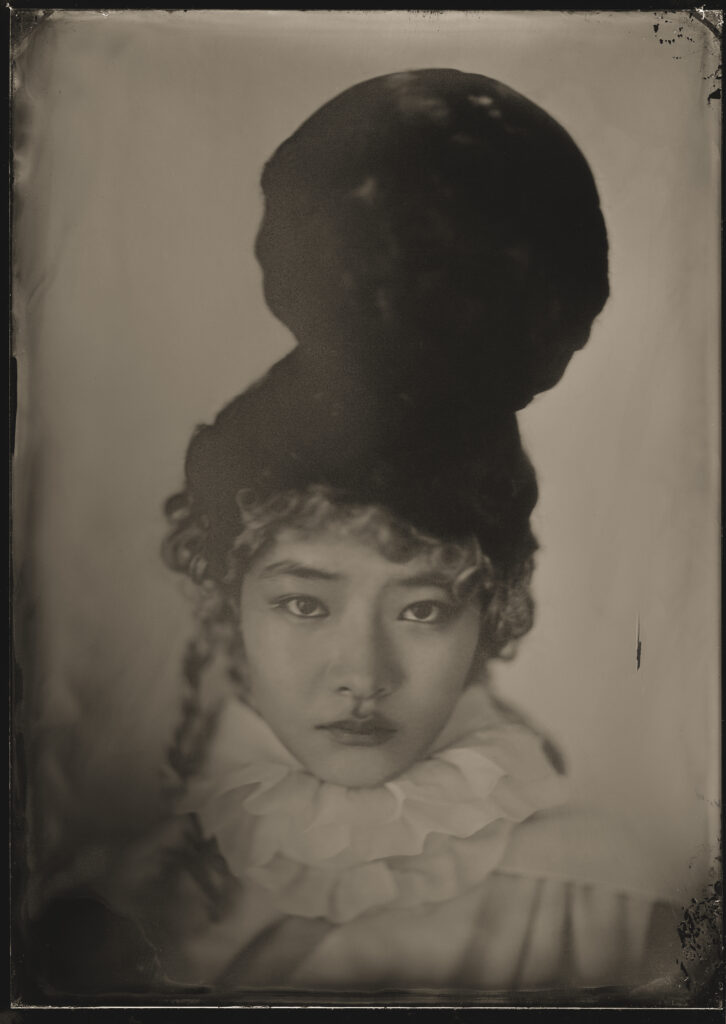
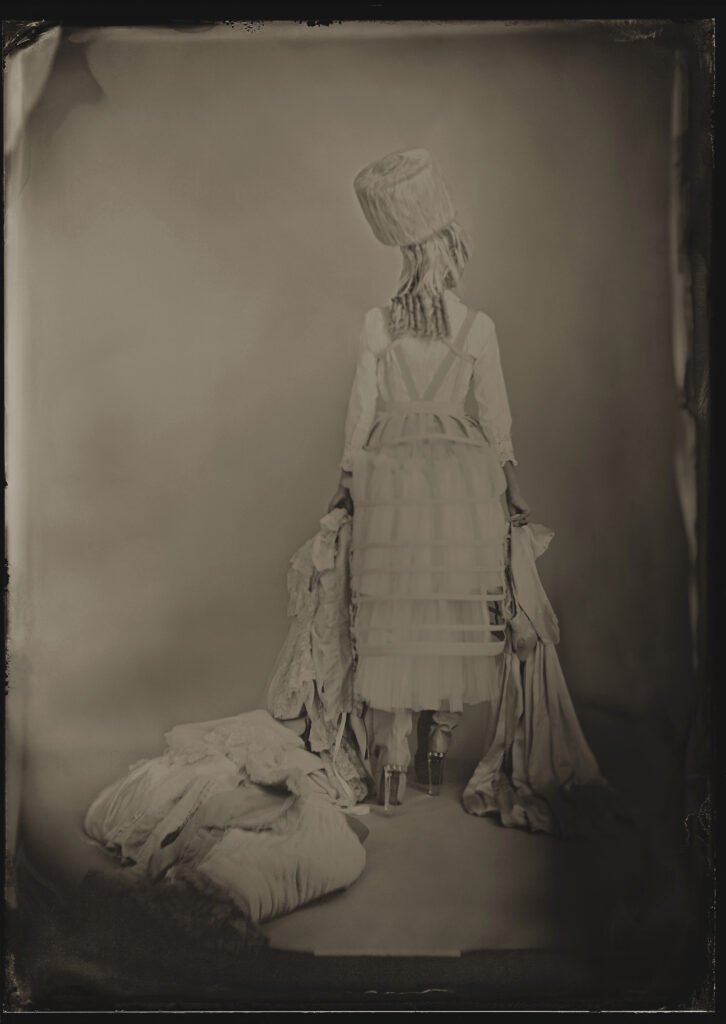
Allegoria

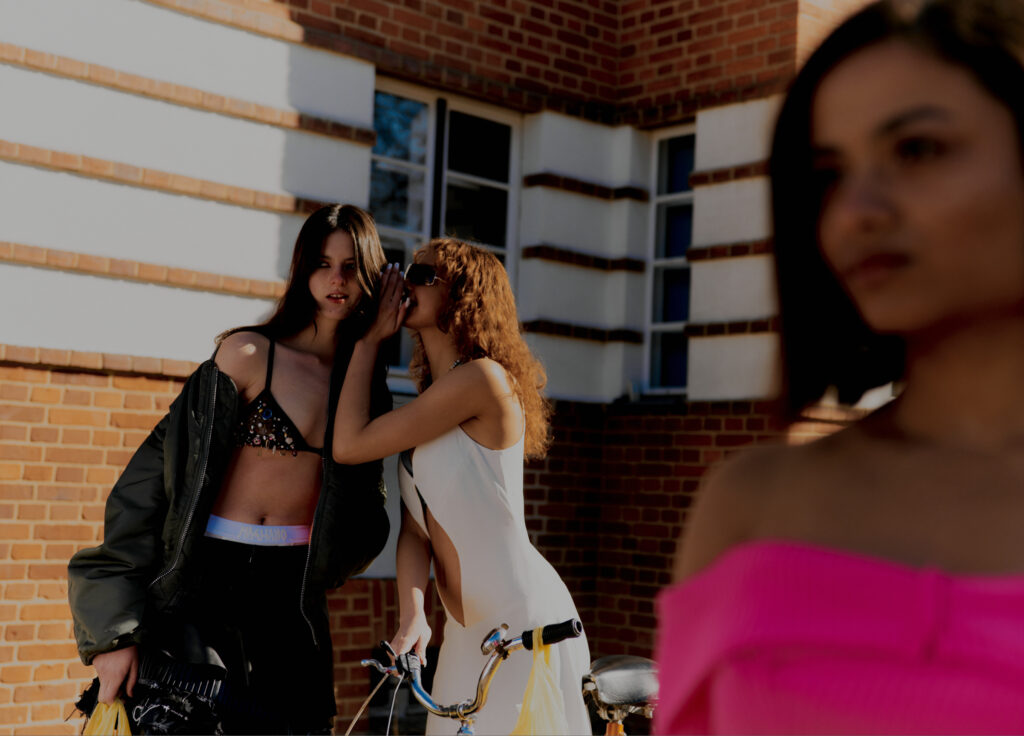
Team

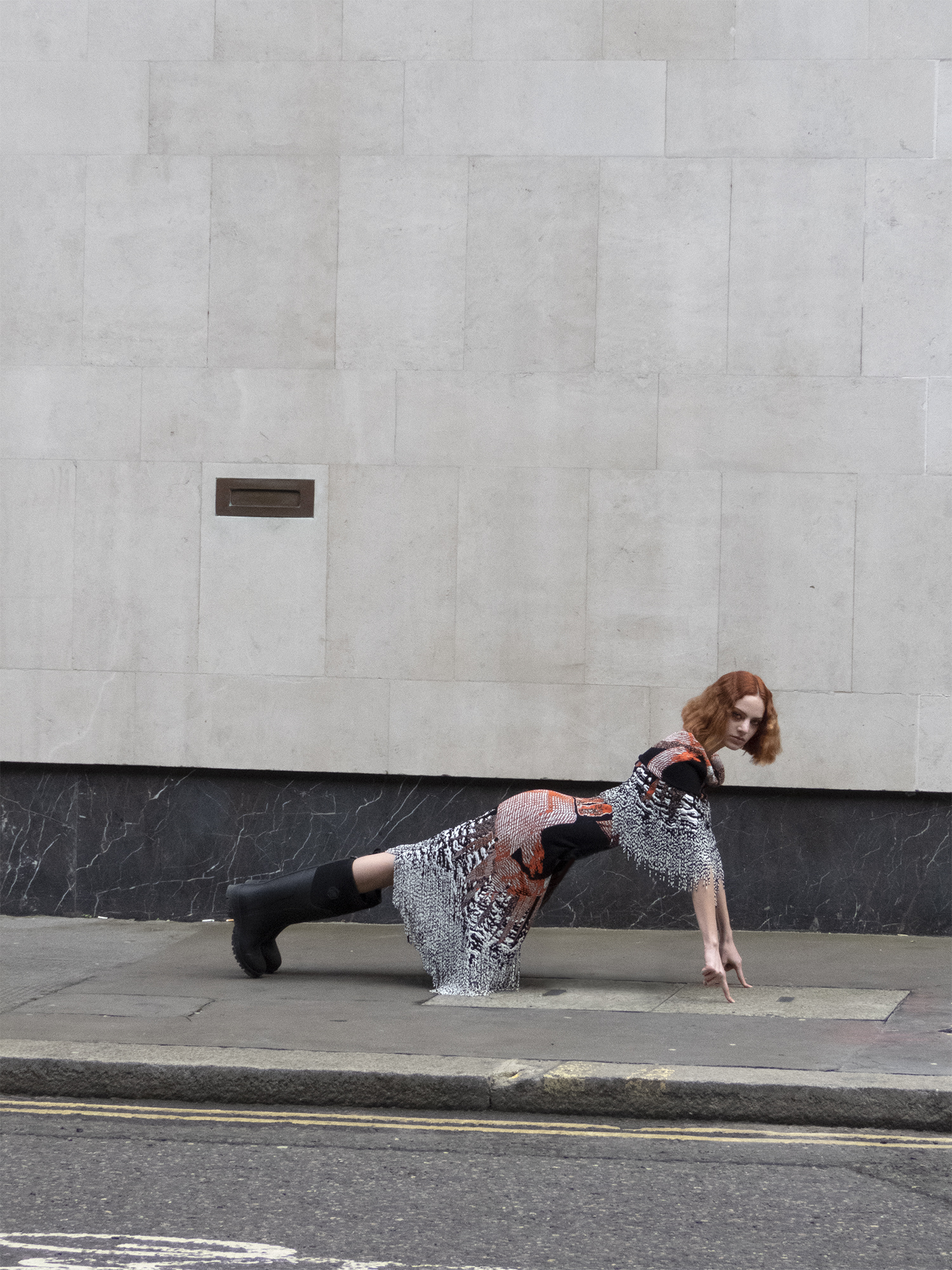
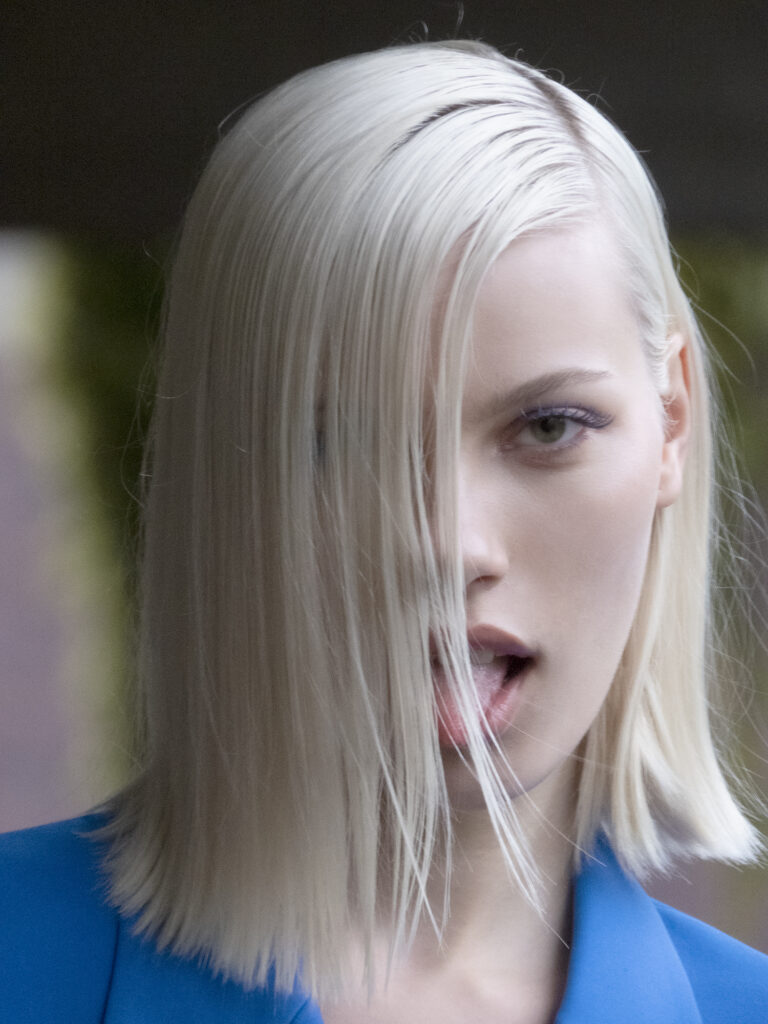
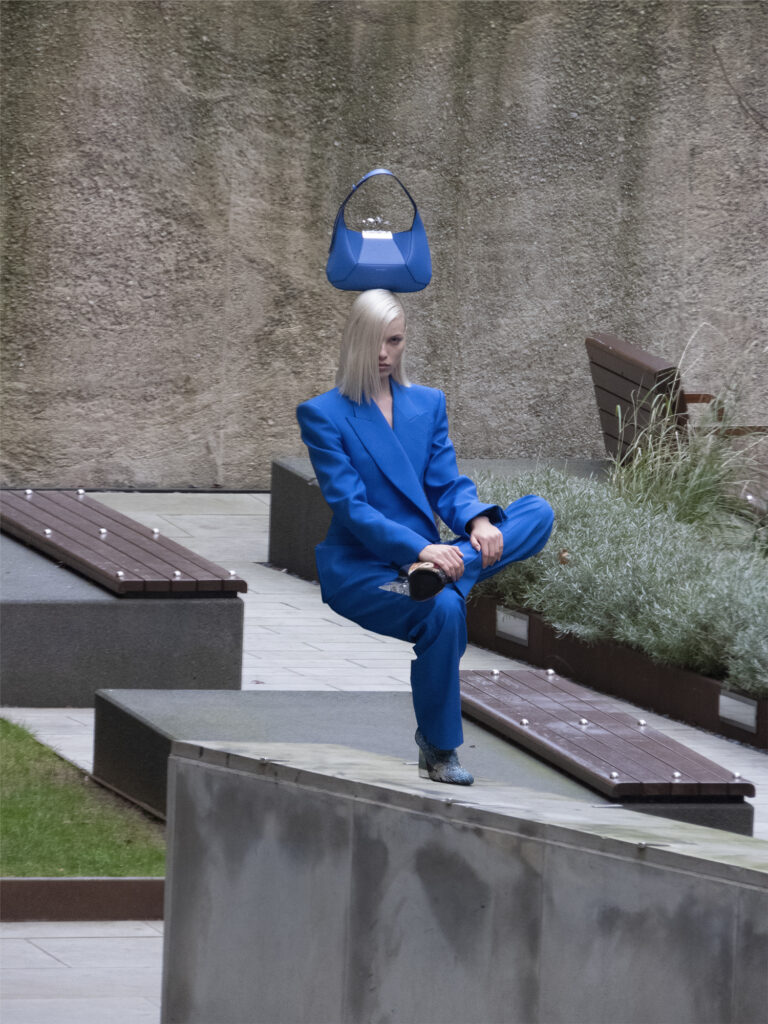
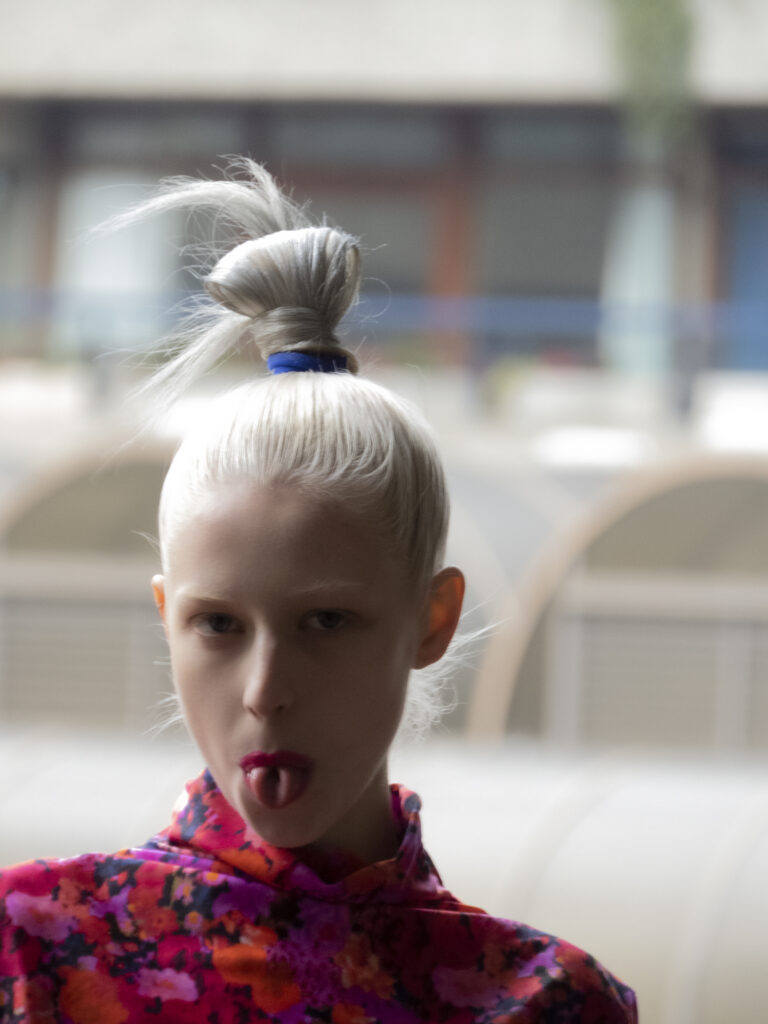
Photography · Andrea Lamedica
Co-Creative Direction and Styling · Allegra Coccolo and Sonia Alipio
Casting · Sofia Michaud
Hair · Davide Perfetti
Makeup · Filippo Ferrari
Model · Jiyeon Park at The Lab Models
Photography Assistant · Francesco Imbriani
Styling Assistants · Seo Young Kim, Anna Di Bernardo, Francesca Filosa and Enrico Calvo
Production · Clara Giberti, Coming Studio 

Designers

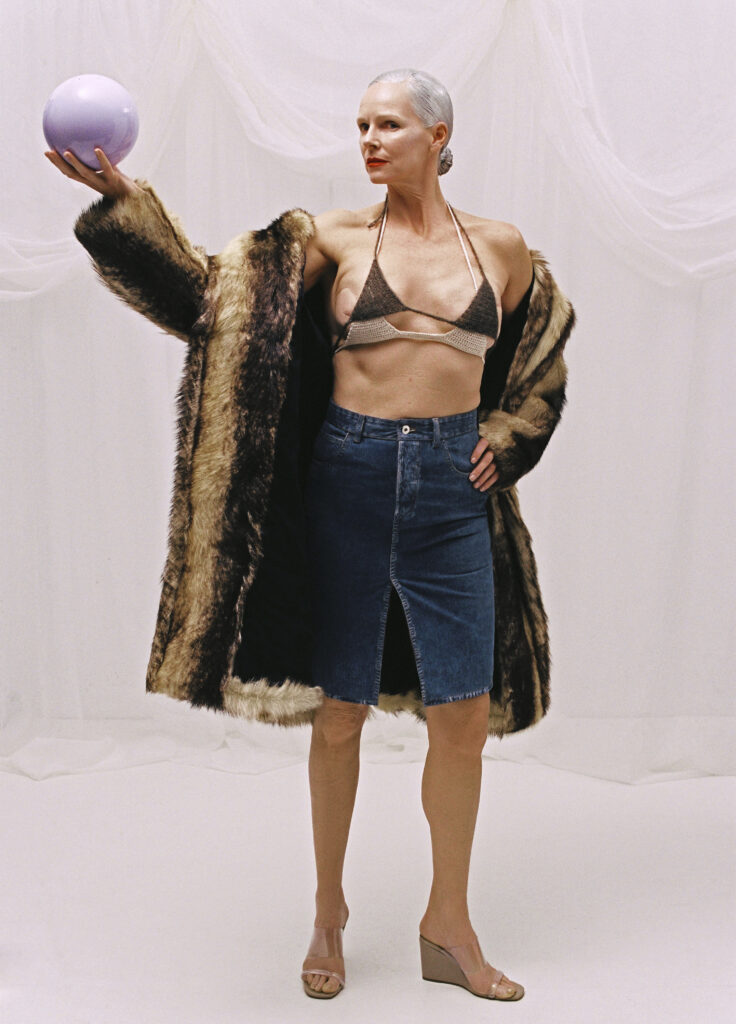
  1.  Jewellery TETIER BIJOUX
    Dress SPORTMAX
    Shoes JIL SANDER
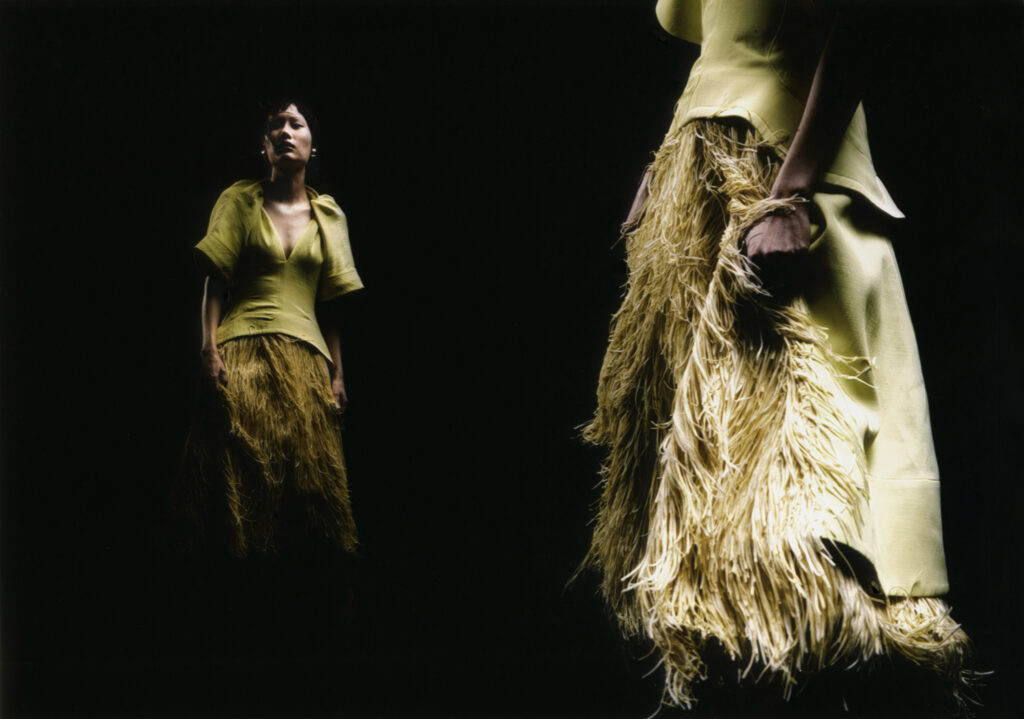
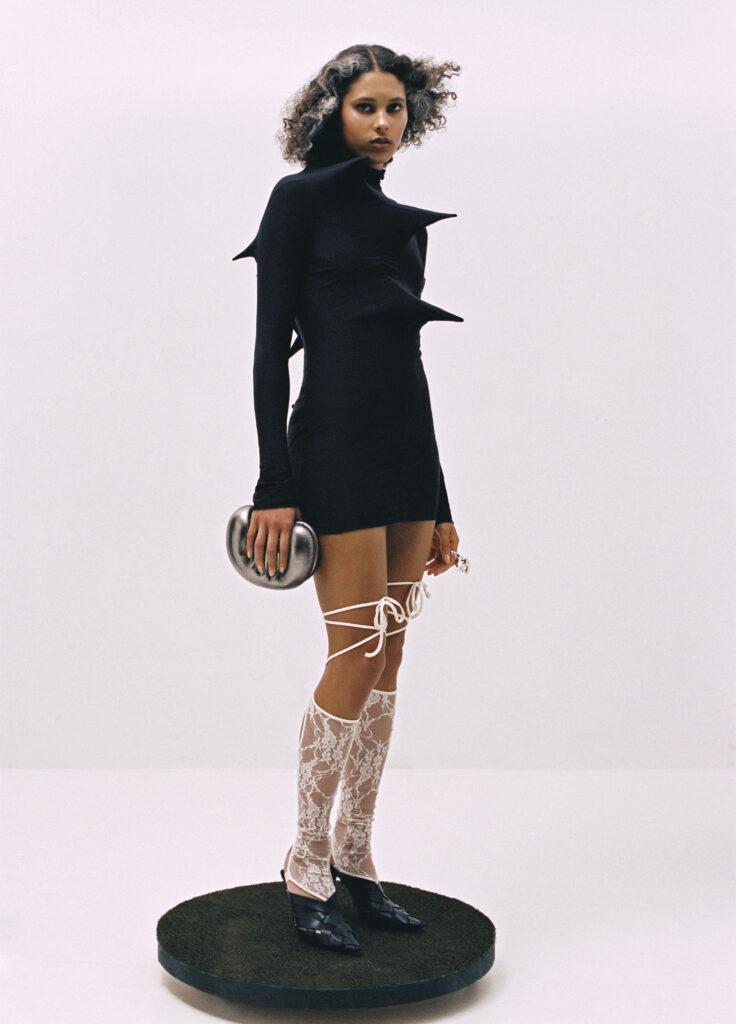
  2.  Dress ANNA HEIM
    Accessories D’HEYGERE
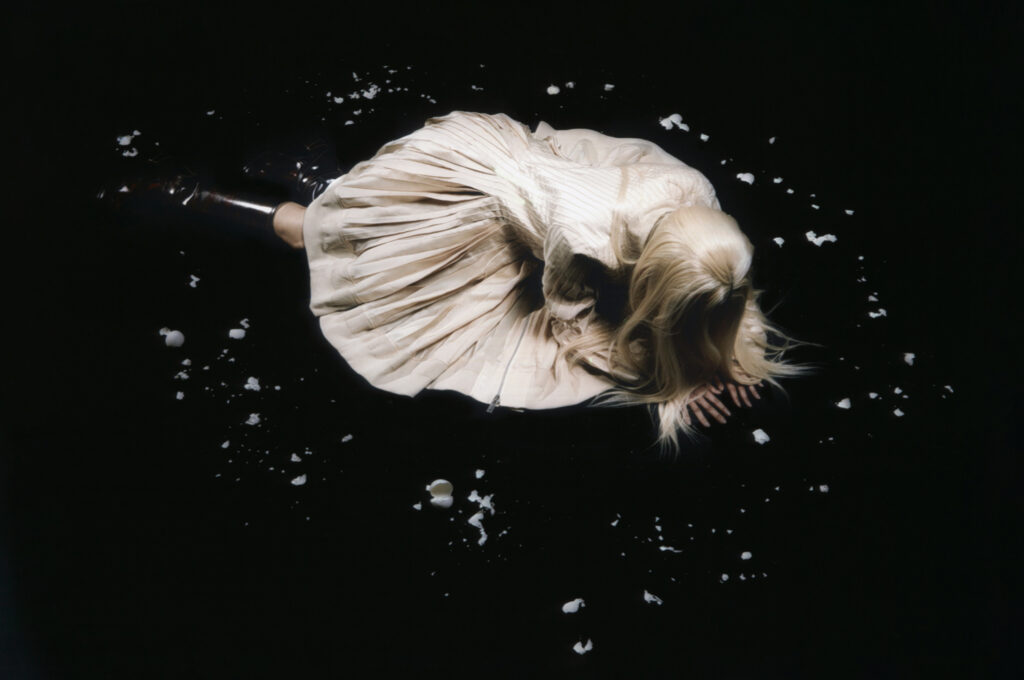
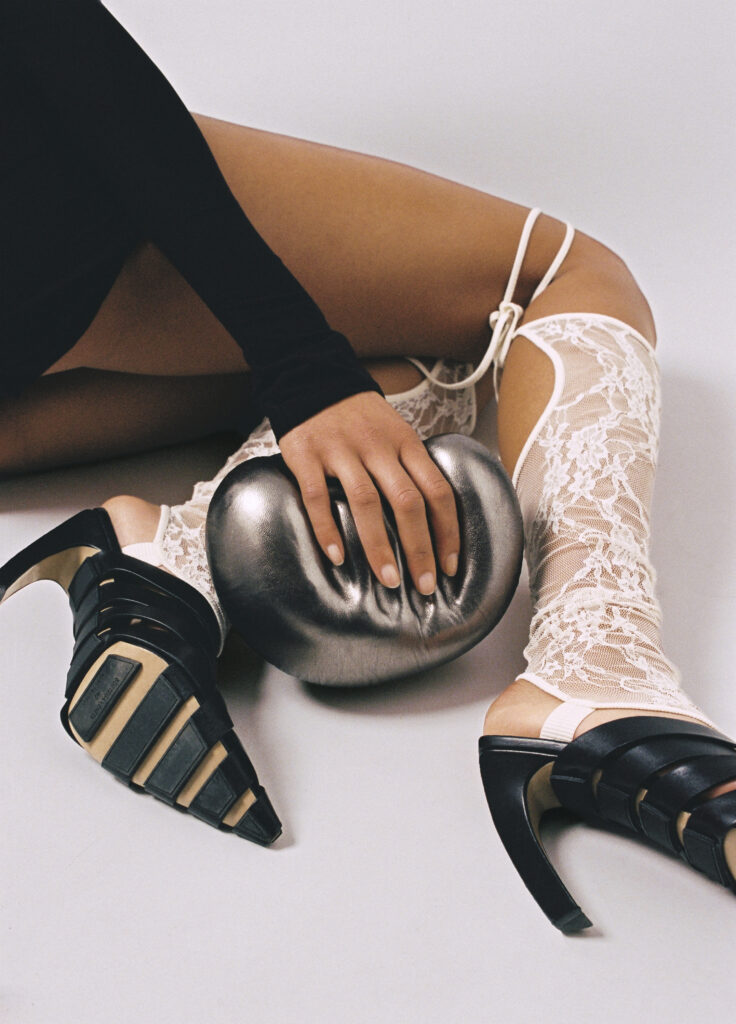
  3. Dress SIM SOO HYUN
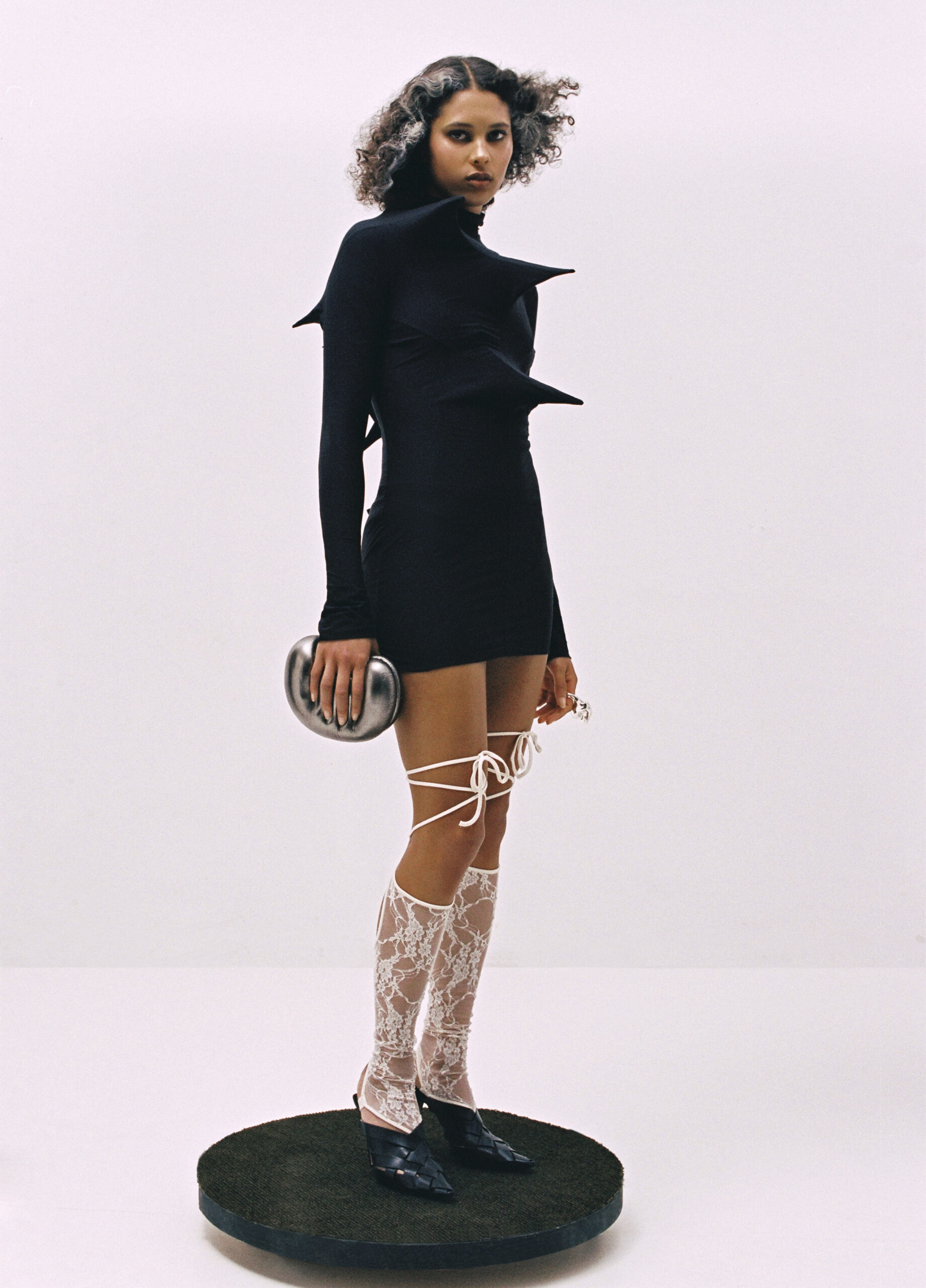
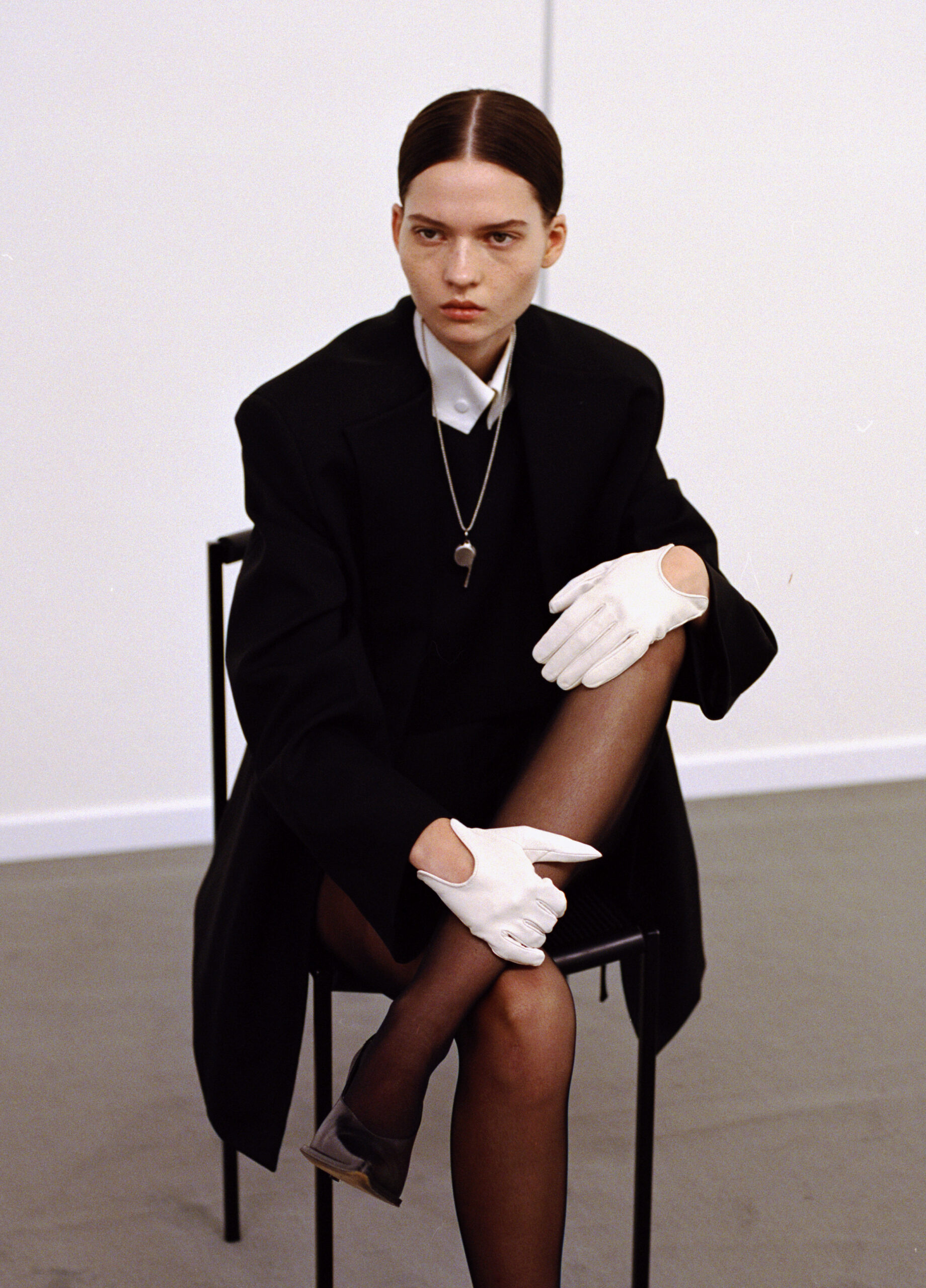
  4. Accessories GARCON DE FAMILLE
  5. Top MM6 MAISON MARGIELA 
    Skirt LEWIS DUSSURGET
    Shoes SPORTMAX
  6. Full look SHANG XIA
  7. Full look FERRAGAMO
    Ring GARCON DE FAMILLE
  8. Full look BOTTEGA VENETA
  9.  Dress SACAI
    Shoes SIMONA VANTH 

Celine Paradis

It’s more than the beating of a single heart

Team

Photography · Celine Paradis
Art Direction · Celine Paradis and Indra Zabala
Styling · Gina Berenguer
Casting · Alexis Ocón at Gaze
Hair · Manuela Pane at Kasteel Artist Management
Makeup · Mariona Botella at Kasteel Artist Management
Set Design · Indra Zabala
Models · Irene Sesé, Sasha and Delfina at Uno Models and Claire at Francina Models
Light · Pascal Schrattenecker
Retouching · Alba Nieto
Location · Committee Studio Barcelona

Designers

  1. Body NICOLAS GUICHARD, bra ISA BOULDER, chain PACO RABANNE, ring AGUSTINA ROS and shoes MUXART 
  2. Full look BOTTEGA VENETA and body AUREMBIAIX 
  3. Full look JIL SANDER
  4. Coat and skirt BOTTEGA VENETA, crochet top IINES FOLCH and shoes MARYAM NASSIR ZADEH
  5. Dress and Bag VICTOR CLAVELLY, tights NICHOLAS GUICHARD and shoes BOTTEGA VENETA

Antonino Cafiero

Vicious Virtues

Team

Photography  · Antonino Cafiero
Art Direction  · Will Merante
Styling  · Francesco Saverio Costanzo
Hair  · Alessia Bonotto at Blend Management
Makeup  · Alessia Stefano at Blend Management
Set Design  · Leyla Heart
Model  · Olesiya Bazanova at IMG Models
Photography Assistants  · Giorgia D

Designers

  1. Vest JIL SANDER
  2. Blazer and Trousers ALESSANDRO GILLES and shoes Stylist’s own 
  3. Top SHEENA and skirt LIDO
  4. Top NANUSHKA
  5. Dress LA COLLECTION and shoes MARNI
  6. Blazer ALESSIA SANTI, vest THE FRANKIE SHOP, shirt BROOKS BROTHERS, tulle top ACT N.1, top JUKKA, underwear TOTEM, tulle culotte ATELIER BOMBA, shorts FERRAGAMO and shoes Stylist’s own

Pietro Groff

Rust Green

Team

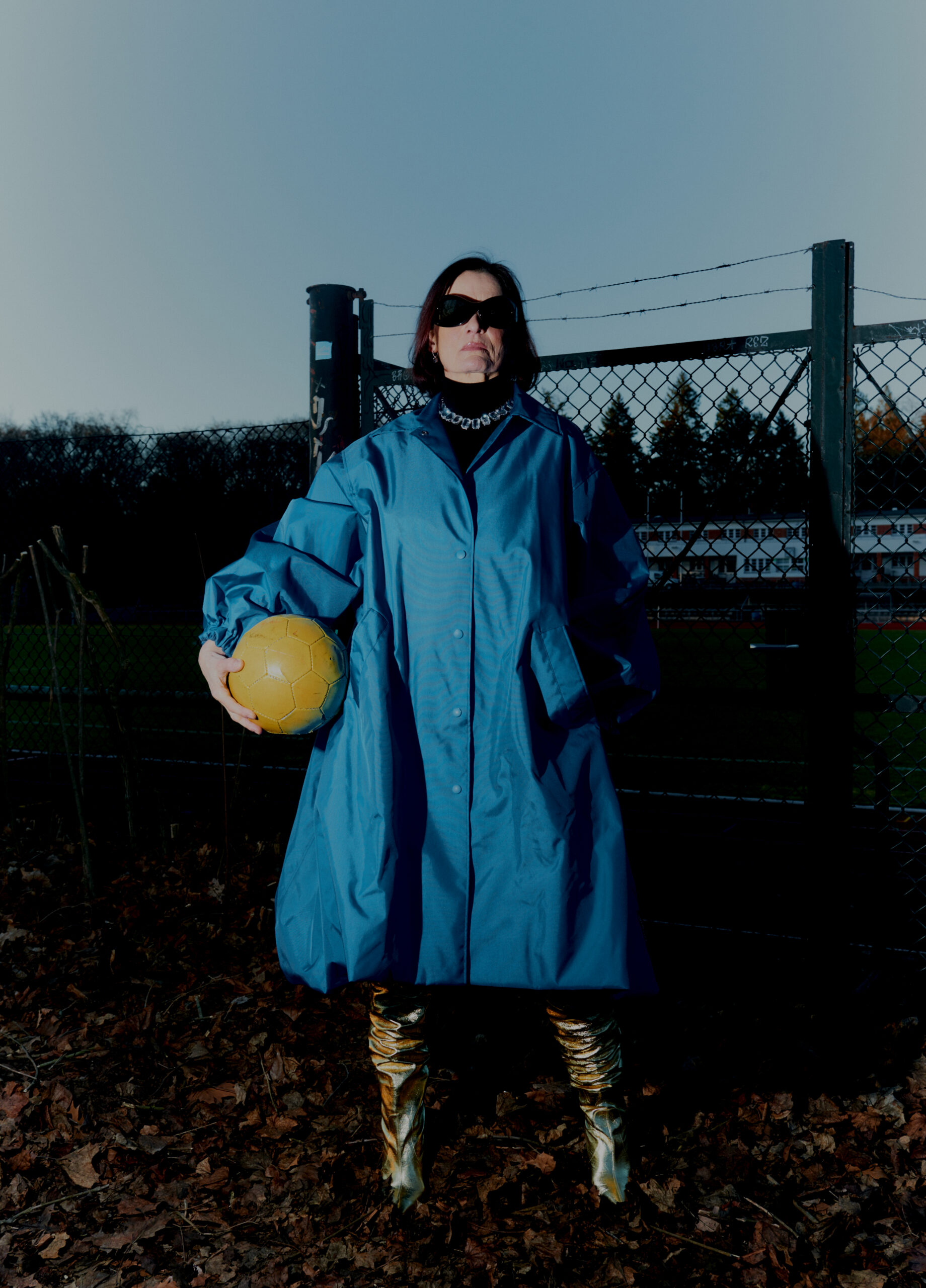
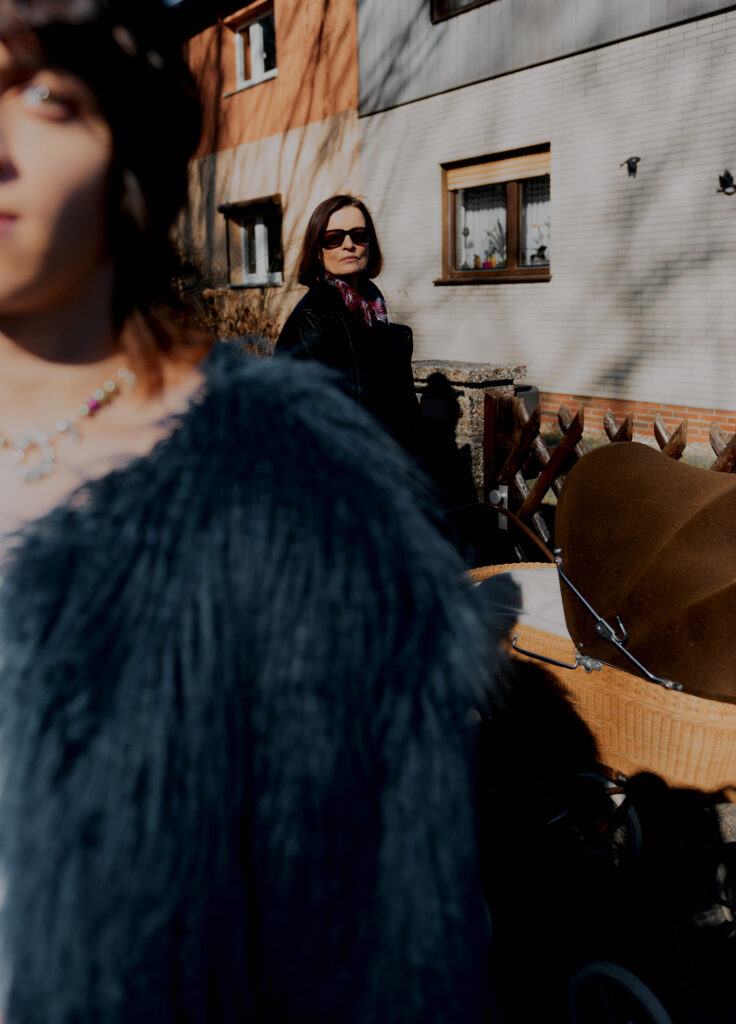
Photography · Pietro Groff
Styling · Antonio Chiocca
Casting · Chisom Abuba at White Casting
Hair · Masayuki Yuasa using Less is More
Make-up · Janette Peters
Set Design · Nina Oswald
Models · Margot Heyer and Masa at Neu Casting, Sophia Zoë and Dan at Eli Xavier Casting, Albena at Indeed Model Management, Ine Michelmann at Modelwerk, Jonathan Scotti at Nest Model Management, Nils Daps at Tigers MGMT and Semi Al-Zubi at Core Management
Photography Assistant · Nina Groff
Styling Assistant · Tania Aquaro
Hair Assistant · Lee Hyangsoon
Make-up Assistant · Anna-Lisa Pritsch
Set Design Assistants · Ruby Oswald, Juliette Catelle
Production · Carina Parke 

Yuji Watanabe

Team

Photography · Yuji Watanabe
Styling · Remi Kawasaki
Hair · Yuki Yanase
Makeup · Anna Misawa
Model · Tsugumi at Donna Models

Designers

  1. Outer YOSHIOKUBO, dress LITTLE TRIP TO HEAVEN, blouse TORO, collar 333 STUDIO and shoes RICK OWENS
  2. Dress and blouse OTOE, blouse LITTLE TRIP TO HEAVEN
  3. Top and Skirt RICK OWENS, blouse LITTLE TRIP TO HEAVEN and collar 333 STUDIO
  4. Dress and Blouse LITTLE TRIP TO HEAVEN, race blouse OTOE, corset vintage, glove RYO TOMINAGA and shoes RICK OWENS
  5. Dress and Race blouse LITTLE TRIP TO HEAVEN, corset Vintage and skirt YU TANAKA
  6. Dress ALAÏA and collar vintage
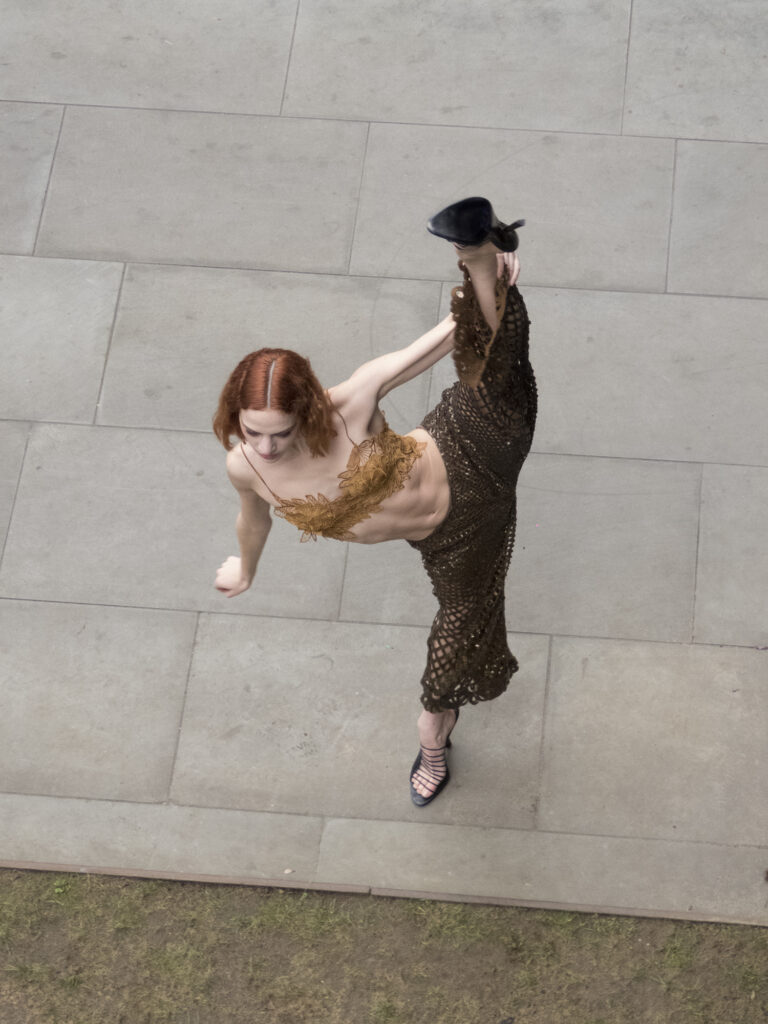
  7. Dress and Crinoline CHIKA KISADA, blouse LITTLE TRIP TO HEAVEN and shoes RICK OWENS

Yis Kid

Team

Photography  · Yis Kid
Styling  · Saik Gonzalez
Hair  · Yuho Kamo
Makeup  · Luz Giraldo
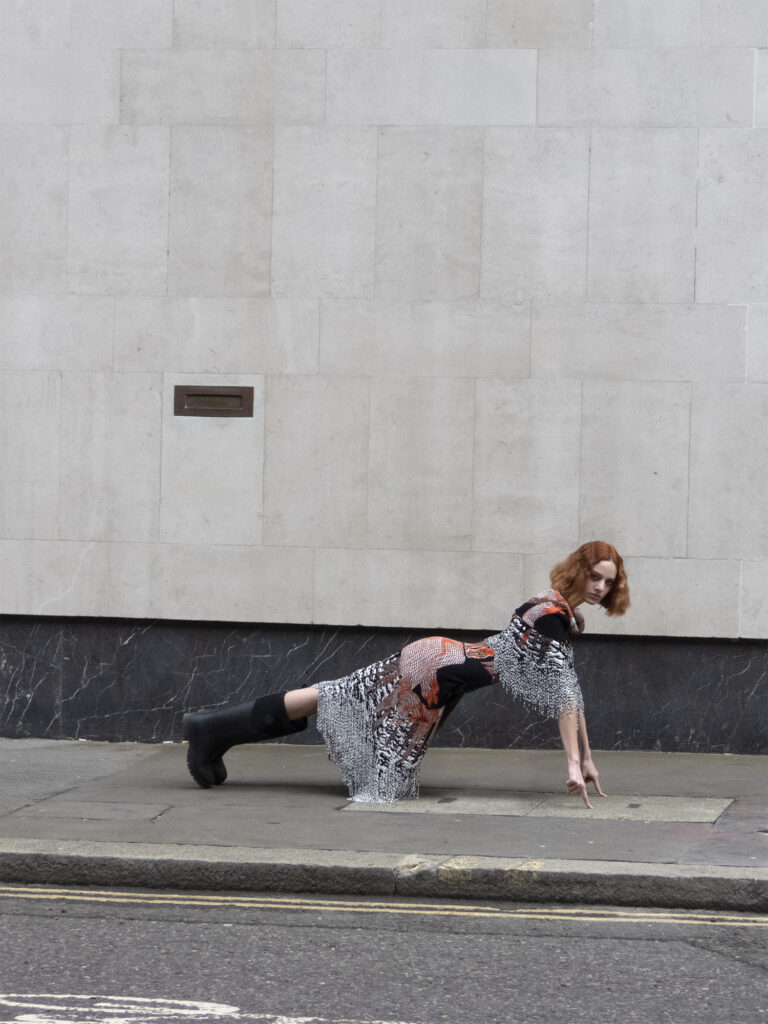
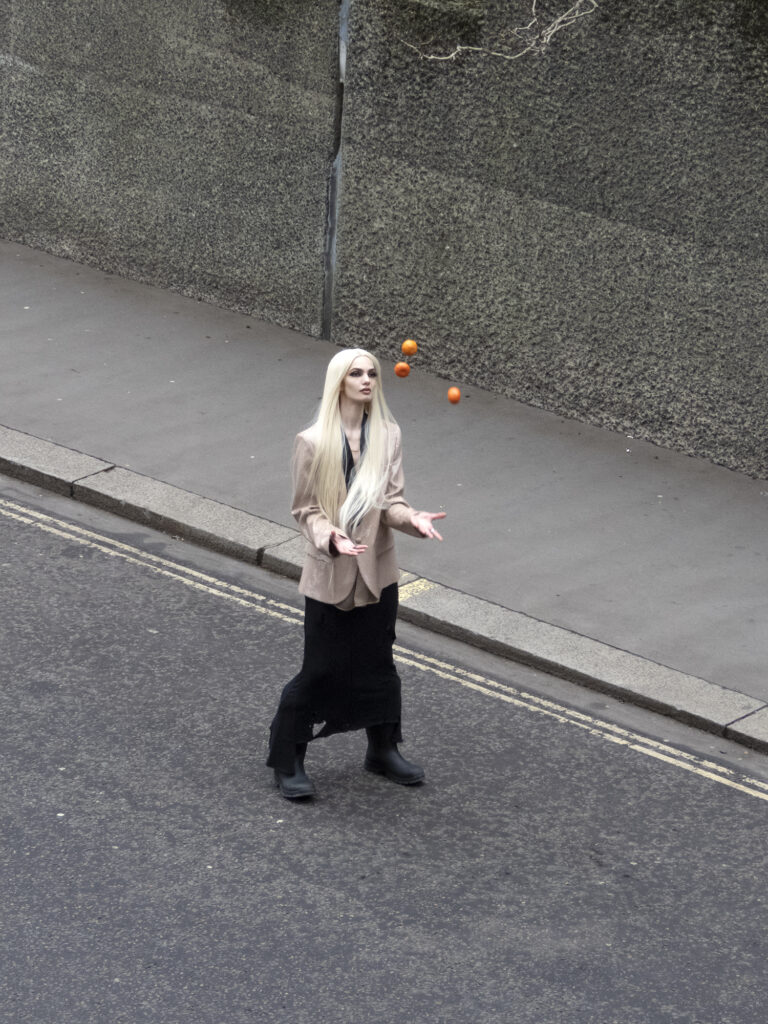
Models  · Valentyna Fedotova, Giselle Gamble and Maria Burić at Select Model London, Lucia and Lesya Tyminska
Styling Assistants  · Jing Toh and Hannah Lewis

Designers

  1. Full look ALEXANDER MCQUEEN
  2. Full look ALEXANDER MCQUEEN and boots Stylist’s own
  3. Dress PHILOSOPHY DI LORENZO SERAFINI 
  4. Top and dress BOTTEGA VENETA
  5. Top and trousers ALBERTA FERRETTI and sandals FERRAGAMO
  6. Blazer and top VALENTINO, skirt MM6 MAISON MARGIELA and boots Stylist’s own
  7. Dress and veil MITHRIDATE, skirt PHILOSOPHY DI LORENZO SERAFINI and boots Stylist’s own


Sun Woo

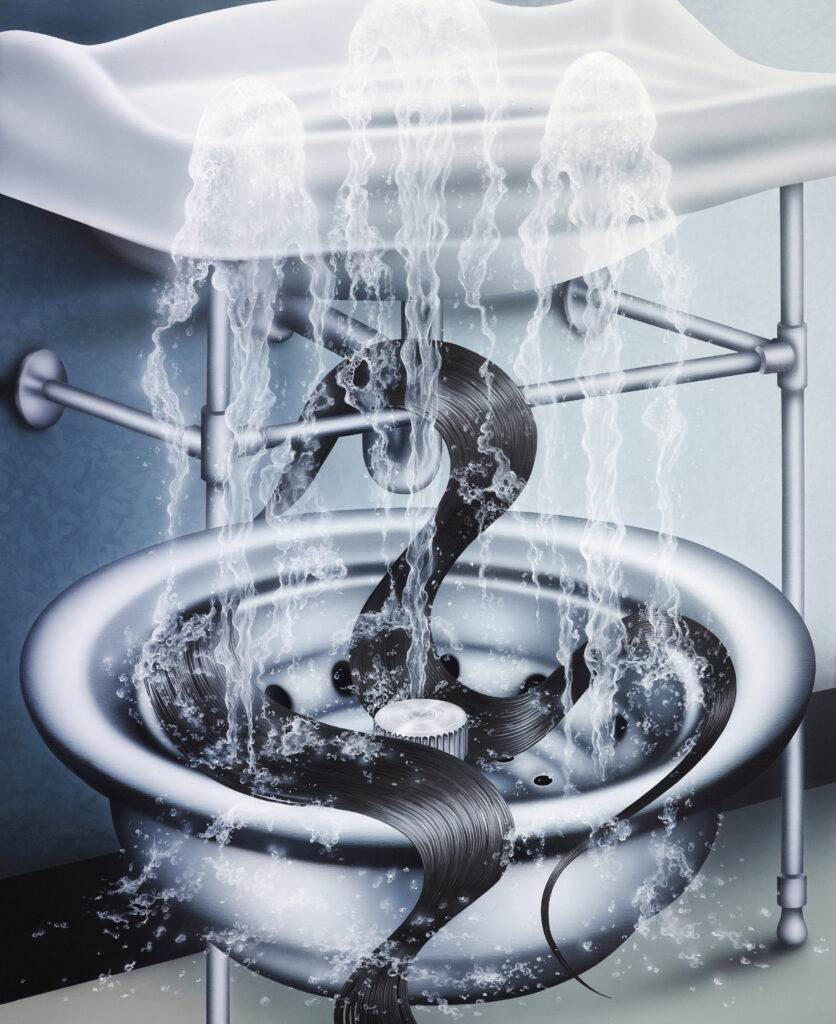
The Trip, 2022

Exploring the intersection of technology and the human experience

Sun Woo (b. 1994, Seoul, South Korea) is a visual artist whose work embodies the intersection between two cultures and generations, and the way technology can inform and transform artistic practices. Born and raised in Seoul, South Korea, Sun Woo migrated to Canada around the age of ten and despite the challenges of being an immigrant, the experience of growing up between two cultures has deeply informed her identity and artistic practice, especially in a time of rapidly shifting technological landscapes.

Her compositions evoke traditional paintings with a precision almost only possible digitally. By integrating digital tools into her practice and merging them with analog approaches reflecting the generation and cultures in which she grew up, Sun Woo explores the intersection of technology and the human experience. Her work reflects the sense of in-betweenness that characterises the contemporary experience and questions the location of the body in today’s technology-filtered reality.

Sun Woo discusses with NR her upbringing, her creative process and the messages behind her recent exhibitions. She explores how her experience growing up between two cultures has influenced her work, why she chooses to use a combination of traditional and digital techniques, what she hopes to convey through her art and her perspective on the merging of cultures and technology in contemporary art.

You were born and raised in Seoul, South Korea but left for Canada around the age of ten. What are your earliest childhood memories there after migrating? How did those two places aliment your desire to create and paint?

When did you start creating? When did you realise this was something you wanted to pursue?

Moving to Canada was not an easy experience as I had to leave my life at home behind and adjust to a completely new environment. Even in the company of friends, I constantly felt alone and never fully understood, which naturally led me to seek other things that could help fill these holes. These first became movies and magazines rented from my aunt who ran a small variety store in town, and later on, new devices such as computers and online platforms began to emerge. They allowed me to remain connected to my community in Seoul, but the physical distance still made me feel like I didn’t belong anywhere.

«I think this kind of upbringing and the sense of groundlessness strengthened my desire to create and paint, as it gave me a voice that was free linguistic and cultural barriers.»

When I moved to New York to attend college, I began to pursue my practice more seriously. Placing myself in a community of artists triggered me to dive into art making as something I’d like to continue to pursue. So after receiving my degree, I moved back and got a studio in Seoul, which is where I’ve been based since then.

What would you say has been most impactful from the merge of these two cultures? Is there one you feel more strongly attached to?

Your compositions evoke traditional paintings but with a precision almost only possible digitally. Airbrushing, hand painting, photoshop are some of the traditional techniques and digital tools you use for your artworks. Why have you chosen those? How do you think technology and analogue coexist together?

I think both my identity and practice have been heavily informed by the experience of growing up in between two cultures and generations. Being an immigrant in a time of rapidly shifting technological landscape allowed me to reach my homeland any time through the screen, while staying physically tied to the cultures of a foreign country. At first, it was difficult since I was born before these devices were introduced and had to teach myself how to utilise them. But they gradually became an intimate part of me, both as a friend and a channel into the world beyond physical bounds. This experience naturally led me to integrate digital tools into my practice, merging them with analog approaches as a way of talking about the generation and cultures in which I grew up. Through this process, I also wanted to reflect on the time that we’re living in, the sense of in-betweenness that comprises a large part of the contemporary experience.

«I often find that my identity bears resemblance to today’s digital images — the way they wander without an anchor.»

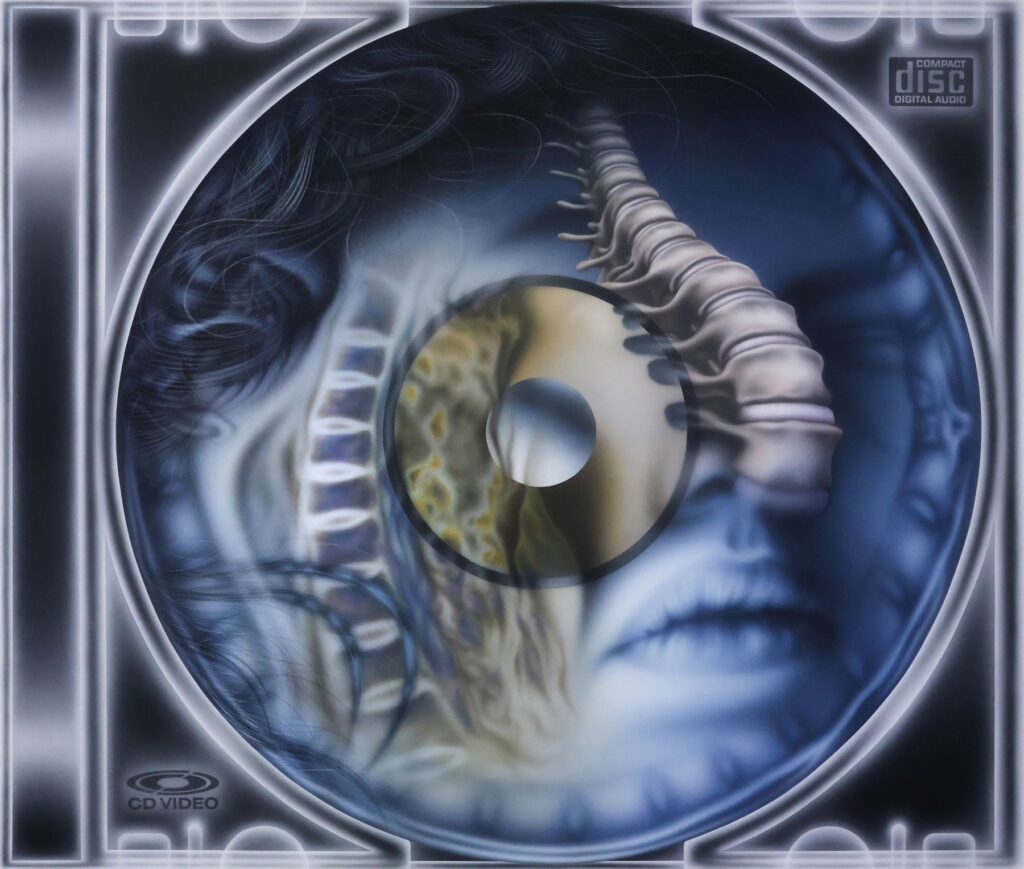
Circuit of Requiem, 2022

On one hand, I think this sense of empathy drives my urge to take these images out of the screen and ground them in the physical space of a painting. Because I imagine them as virtual bodies floating in the online environment, the process of distorting and augmenting them on Photoshop reflects my interest in exploring the transformative aspect of contemporary body, fostered by its increasing interaction with technology. By bringing them out of the web, giving them a tangible form through bodily labor, and putting them back on the Internet, I’m trying to question the location of today’s body — including my own — especially after much of our activities have transitioned into the digital sphere after the pandemic.

Could you tell us about your show ‘Memory of Rib’ curated by Jeppe Ugelvig with a special screening of Theresa Hak Kyung Cha’s Mouth to Mouth (1975) and your show ‘Invisible sensations’ at Carl Kostyal in Milan in May 2022? What were the messages behind these exhibitions?

‘Memory of Rib’ was a show that brought together a group of artists whose works evoke or deal with the idea of corporeality. It explored concepts like the body’s instability, limitations and contingency by looking at the ways in which it interacts with today’s technology and sociopolitical landscape, while also thinking about how we detect and identify with images of the flesh seen in commodities and media. It included a diverse range of artists in terms of age, sexual identity and cultural background, especially with Theresa Hak Kyung Cha, whose work from 1975 provided a historical anchor to which younger generations of artists could contribute their discourse.

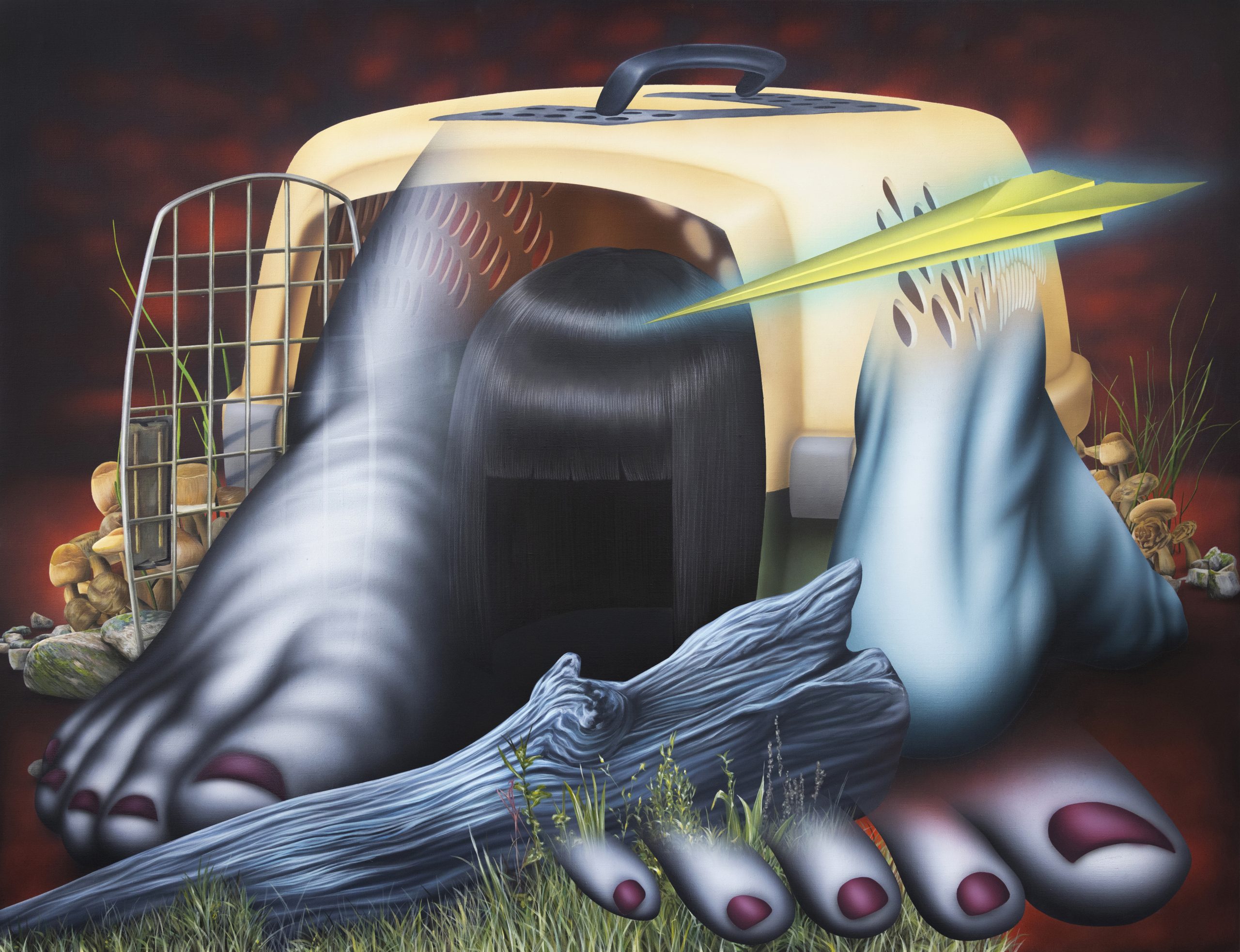
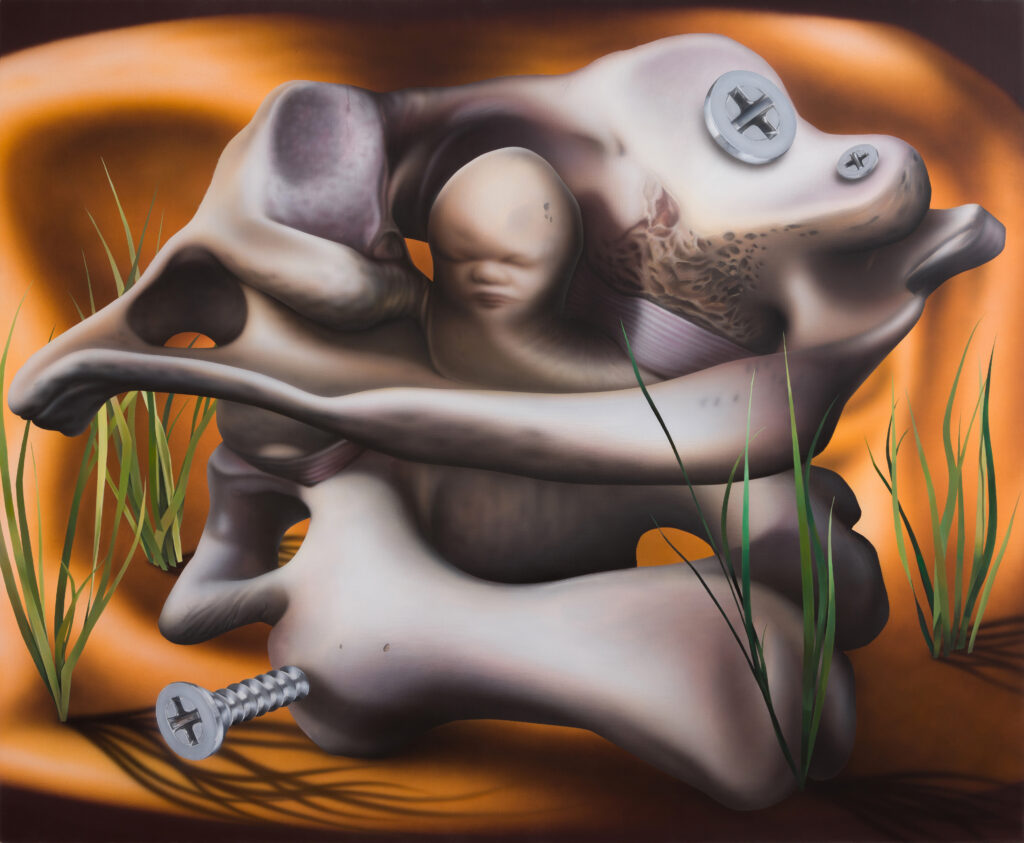
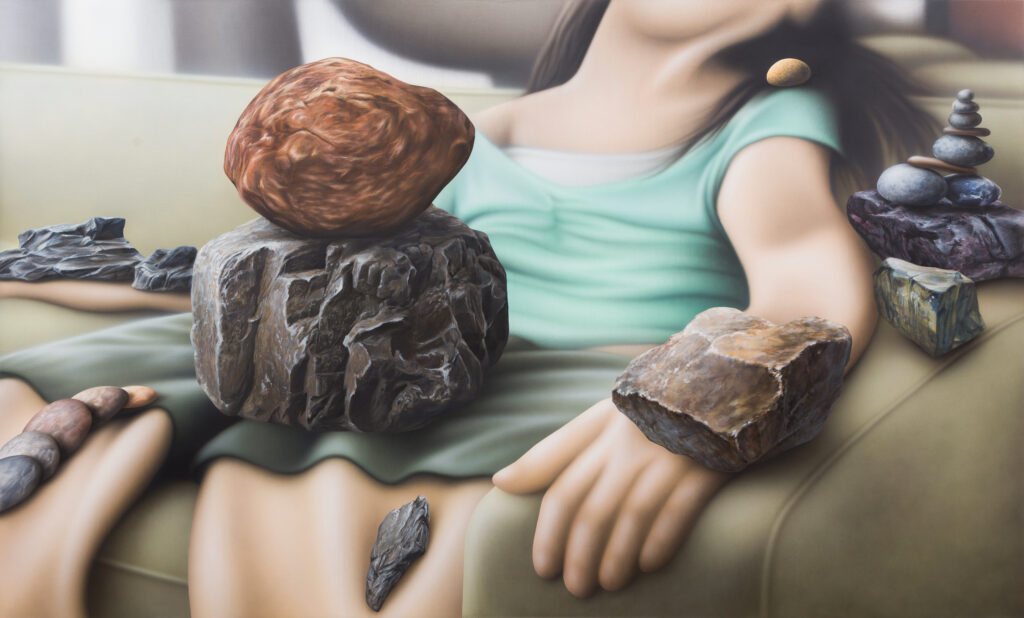
The works that I presented in the show, titled Silent Companions and Baggage, developed from my research on prosthetics and medieval armours and weapons — tools that have evolved to complement physical weaknesses and came to function as literal arms, legs, and skins of an individual.

«Weaving these histories with the relationship between today’s body and technology, I tried to construct compositions in which the organic intersects or collides with the mechanic to become something transcendental.»

Through images like melting meat-candles and strapped rock-flesh, I tried to address how it feels to be a body in a digitally mediated world, which at once “enhances” you and nurtures your feeling of insufficiency.

‘Invisible Sensations’ was my solo show that opened earlier that year, and it also dealt with the emotions and sensations related to inhabiting a technology-filtered reality. It included paintings and 3D-printed sculptures that evoke body’s limits, vulnerabilities, and struggles to resist their mortal fate, as well as social constraints that continue to oppress the female and coloured body. Images of my own body parts, including medical scans that I carried with me at the time to treat a prolonged illness, were collaged with elements that allude to mechanical presence, becoming fragmented, reconstructed, and translated into otherworldly beings. Through this convergence, I tried to look into the fragility and endurance of today’s bodies and question the extent to which their unification with technology can liberate them or transform the atmosphere they inhabit.

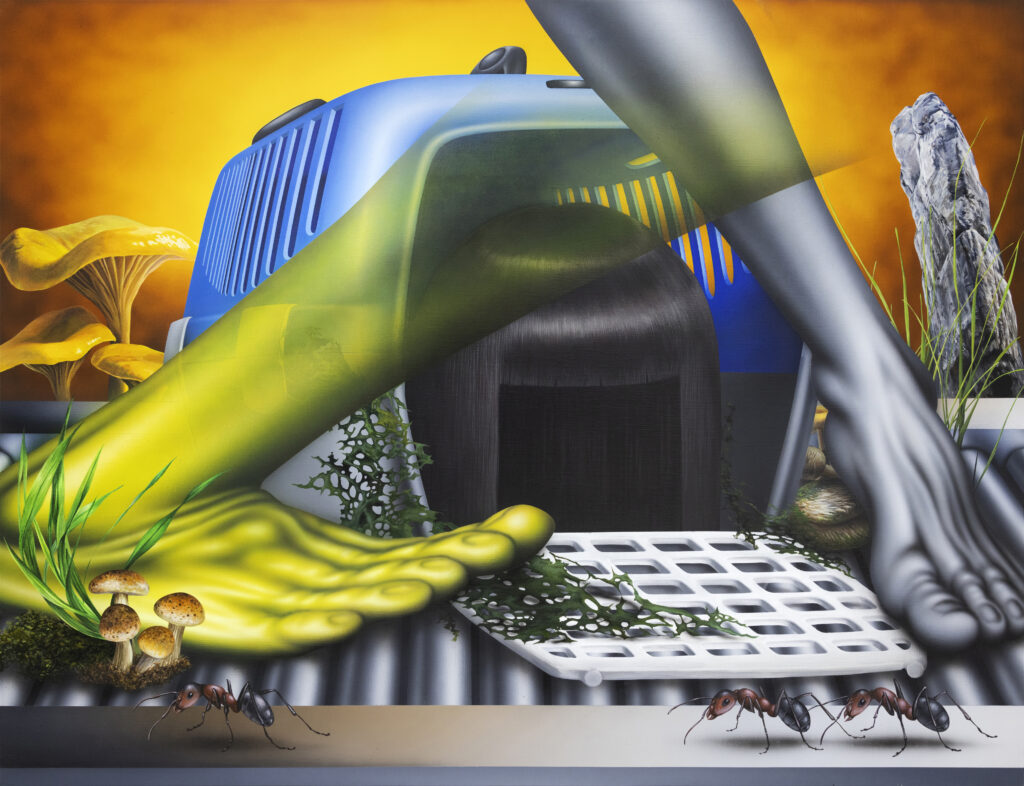
Diligent Heart, 2022

How is the process usually for you when putting together a solo show?

In my past interviews, I’ve revealed that I collage images via Photoshop. But even though my works are presented as images, they actually begin with text. From stories to dissertations, various sources of written materials provide inspiration for my work. Despite this, I am interested in creating something that can only be communicated by being in the presence of my works — something that is to be experienced and surpasses the written language.

«Paintings are not simply re-enactments or something that fits perfectly into an existing theoretical frame, but they are a result of materials that I channel through my own body and create to evoke a response that cannot be fully harnessed by rationality.»

Sometimes, the exhibition space also determines what I decide to paint, even when it’s a white cube. It is important to me that the works speak to the space and vice versa, and that the work is presented in a way that reinforces the viewing experience. As a result, I tend to spend a lot of time contemplating on such a dynamic, which often determines the work’s size and form.

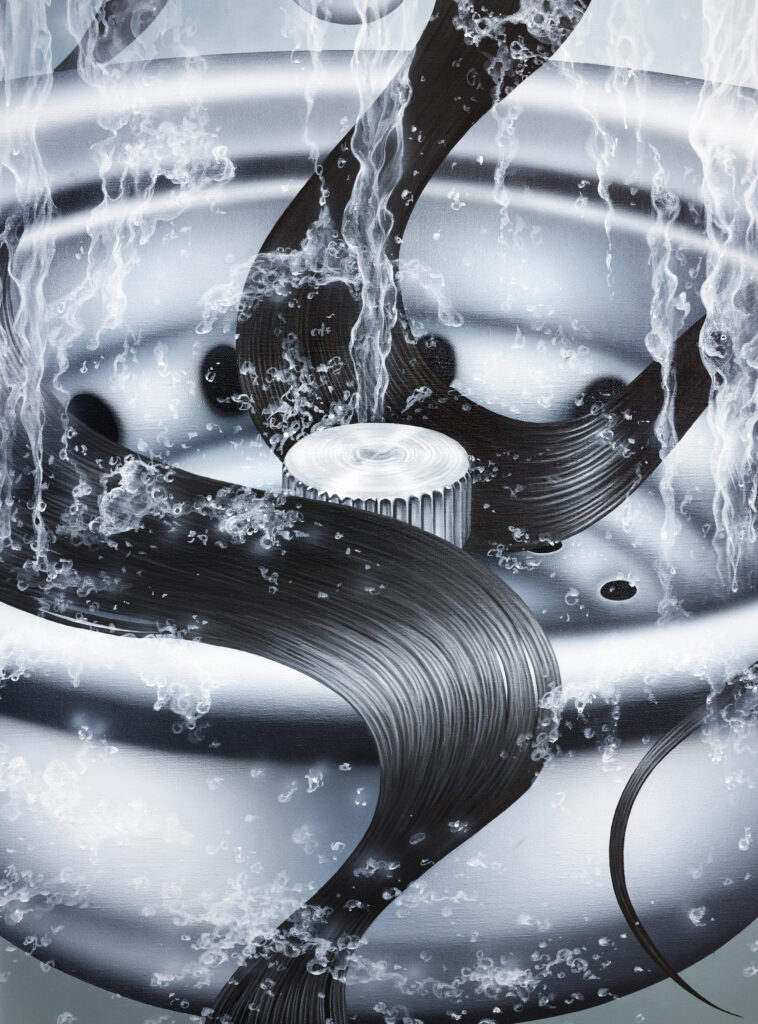
Detail crops from The Crimson Letter (Triptych), 2022

 Your work also interrogates Korean societal desires and more specifically the ways in which female bodies are viewed and represented. Could you talk more about that? How do you think gender roles and stereotypes surrounding being a woman in Korea, will evolve?

Because my practice interrogates today’s social condition and technological landscape through the lens of my own psychological and bodily experience, many of my works are inevitably tied to my identity as a Korean woman. In result, they often speak to the experience of being a female body in both online and offline environment, as well as a body inhabiting two different cultures.

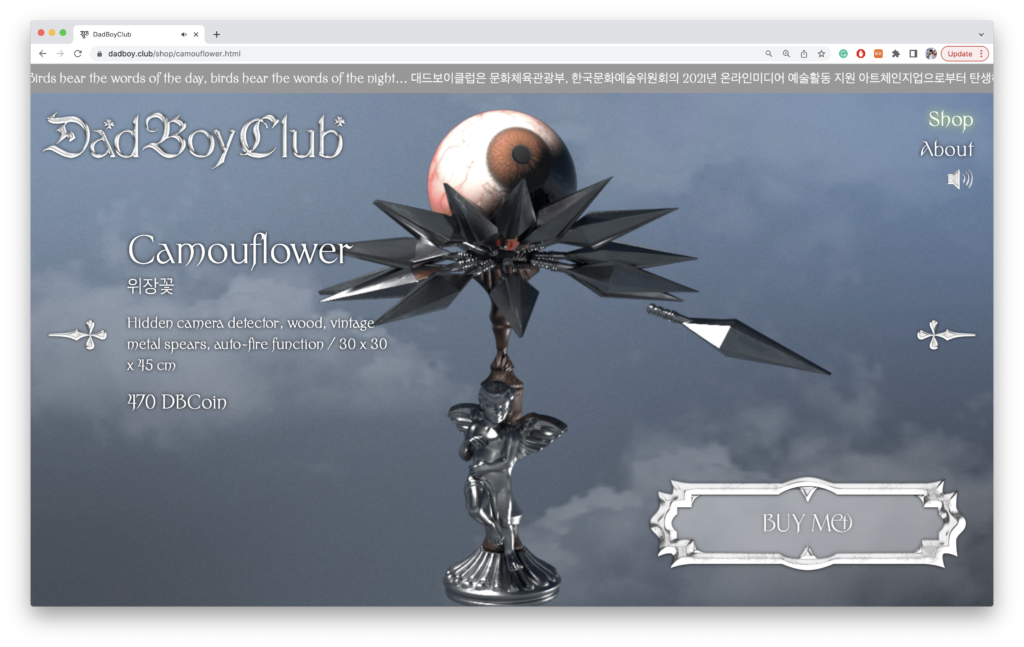
In addition to my painting practice, I’ve also been working on a project called Dadboyclub with an artist and friend, Sangmin Lee since 2021. Dadboyclub, to both of us, is a platform to channel issues specifically regarding the experience of being a woman. For the first iteration of our project, we exhibited virtual ‘products’ that each house a story about womanhood. Objects like an inflating, studded baby pacifier that obstructs a woman’s throat, or a ‘flower’ with a rolling eye that detects and destroys hidden-cameras with automated spears, reveal the conditions and violence women may experience in society through a long-winded joke. These products do not actually exist, in real life nor as NFTs — so they cannot be sold — which was an important aspect of this ‘virtual store,’ which was also a commentary on how female narratives embodying pain are consumed as entertainment online or through popular media. 

Sinkage, 2022

Absurdity is a driving force of this practice, as we navigate the ways we can express our discontent with inequality as well as emotional pain that is regarded as superfluous. Whether it be a small feeling from a failed relationship, to discovering violence embedded in the myth of Psyche and Eros — Dadboyclub re-situates women’s stories, old and new, revealing a prickling truth of reality that was often disregarded as minute and obsolete. We believe the personal is political. 

There have been some progressive developments over the past few years regarding gender issues in Korean society. There has been a change of perspective regarding parenting and housekeeping especially, which have been regarded as female duties up until very recently. More women are speaking up about sexual violence and trauma, which have been looked down upon before the Me Too Movement in Korea. But at the same time, there still remains a local issue of victim-shaming and the taboo of publicly claiming yourself a feminist, grounded in the society’s age-old history of Confucian patriarchy.

«Discussions regarding female equality are voiced more often, but with the growing polarisation between a progressive agenda and right-wing counter-movements — which seems to be a global phenomenon — the backlash hits harder, making it difficult to gauge whether we are moving forward or simply repeating the past.»

Which other mediums and tools would you like to explore? Would you consider using AI systems such as DALL·E?

Actually, my current practice already involves AI in a way, since I often use images that are fed to me by my search engine and social media — which, after analysing and machine-learning my interests, provide me with new sources. In this sense, I often allow my devices to become the agent rather than controlling all aspect of the process, and the resulting work becomes a joint product of these voluntary and involuntary selections. Even so, I sometimes find new programs like DALL-E quite haunting. How do artists justify their practice when AIs actually produce artworks on behalf of them? What new roles are we to take on?

Detail crop from Diligent Heart, 2022

There is a certain longing for the 2000s in your work. Is there any recent pop culture events that has marked you? What are some of your favourite music albums and films?

I think my works embody a sense of longing and empathy in general, not only for the 2000s but also an older past or even the future. They sometimes long for a certain time, place, or person that I’ve physically experienced but also ones that I haven’t. I find this faux-nostalgia, a longing for a time that I do not know, to be an interesting cultural phenomenon that I also engage in. In this sense, the convergence of the physical and virtual plays not only into the process and medium with which I work, but is also echoed throughout the narratives and depictions that drive the work.

No-landing Flight, 2022

How do you feel our hyper consumption of media is shaping us? Do you think we risk to lose ourselves if less time is spent on building connections or do you think it is an inherent part of shaping our identity?

In this new age of technology, how do you ground yourself?

I also find it hard to navigate a time like this, where you’re seeing so much and being surrounded by so many people, especially through social media. From a certain angle, I feel like the world seemed much smaller when we were less connected, as it gave each of us more presence and weight. Now it seems to be the other way around. Our sense of importance seems to dwindle as we become exposed to the lives of so many strangers and ours constantly displayed alongside theirs. We’re endowed with more options of things to see and people to meet than ever, but simultaneously, we also become one of those options as well. These are some of the things that I’ve been thinking about lately, and how do I ground myself in an age like this? I still don’t have an answer to that. 

Dadboyclub, Camouflower, 2022. Website

 What was the first piece of art you saw that left an impression on you?

Francis Bacon and Louise Bourgeois were among the very first, and they still continue to inspire my practice. 

Credits

Artworks · Courtesy of the artist and Carl Kostyál Milan, London, Stockholm.

Lulu Lin

Lulu Lin breeds genderless titans for your fever dreams

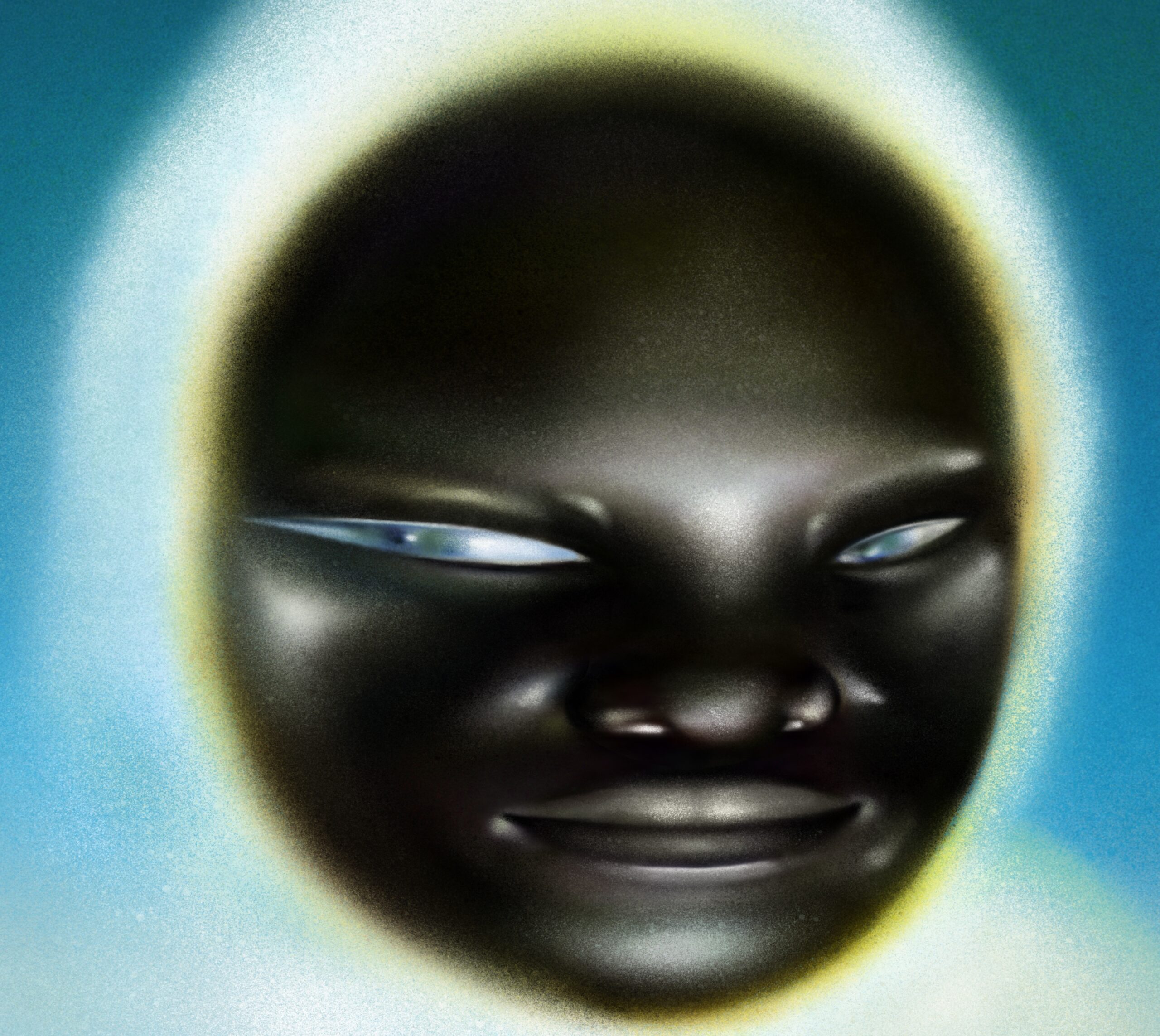
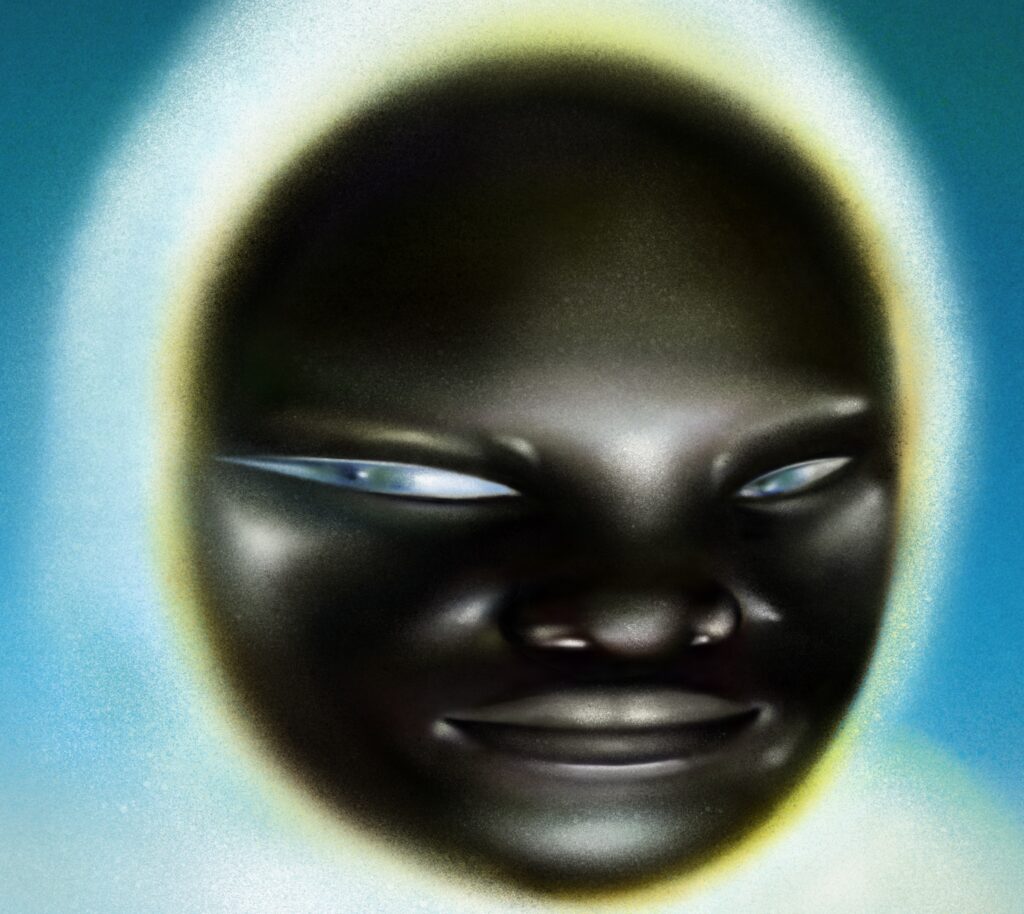
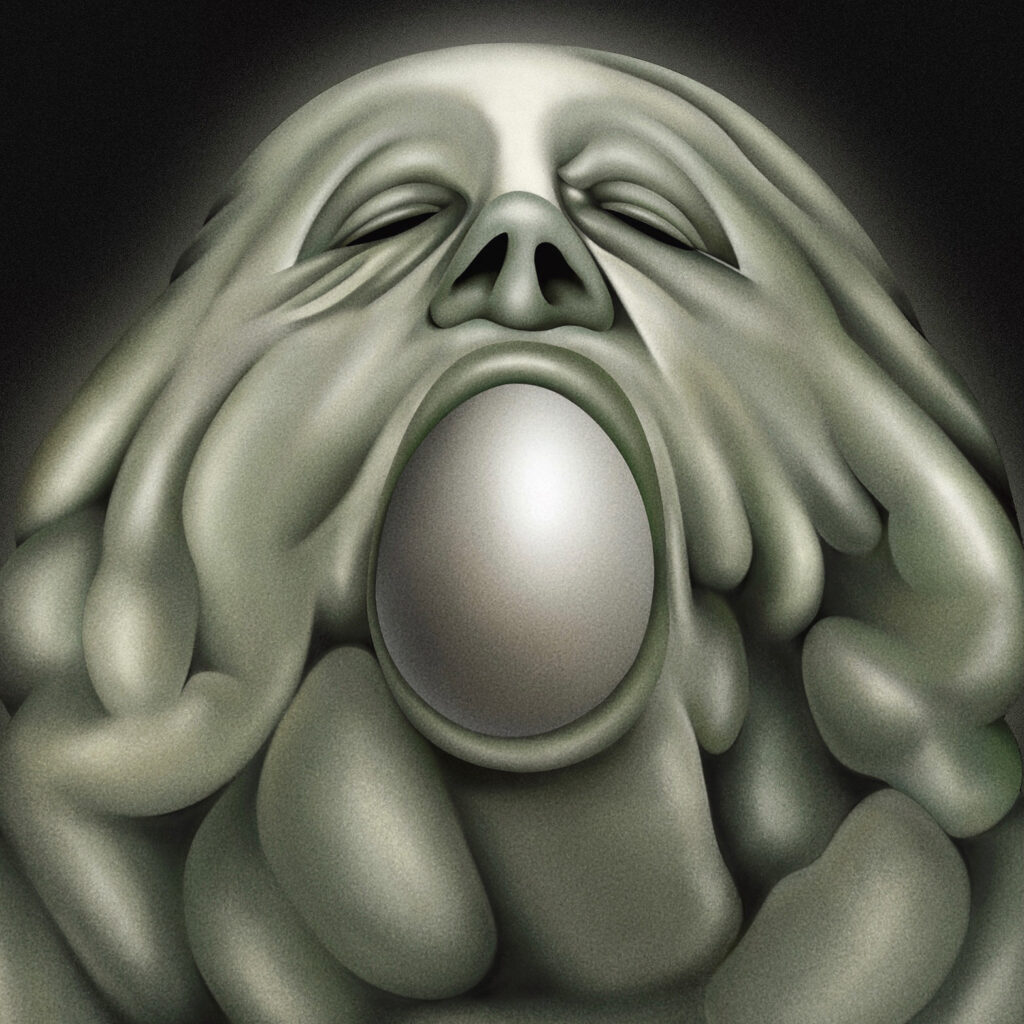
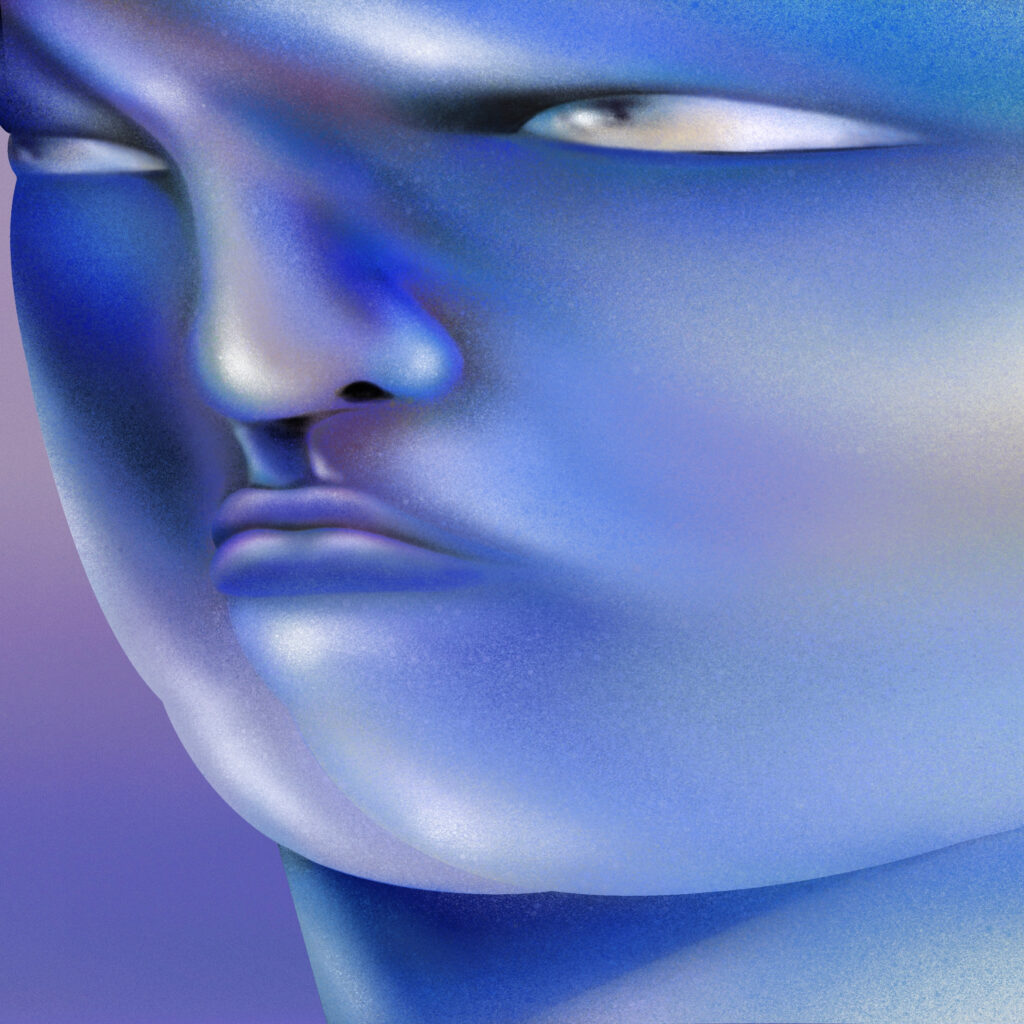
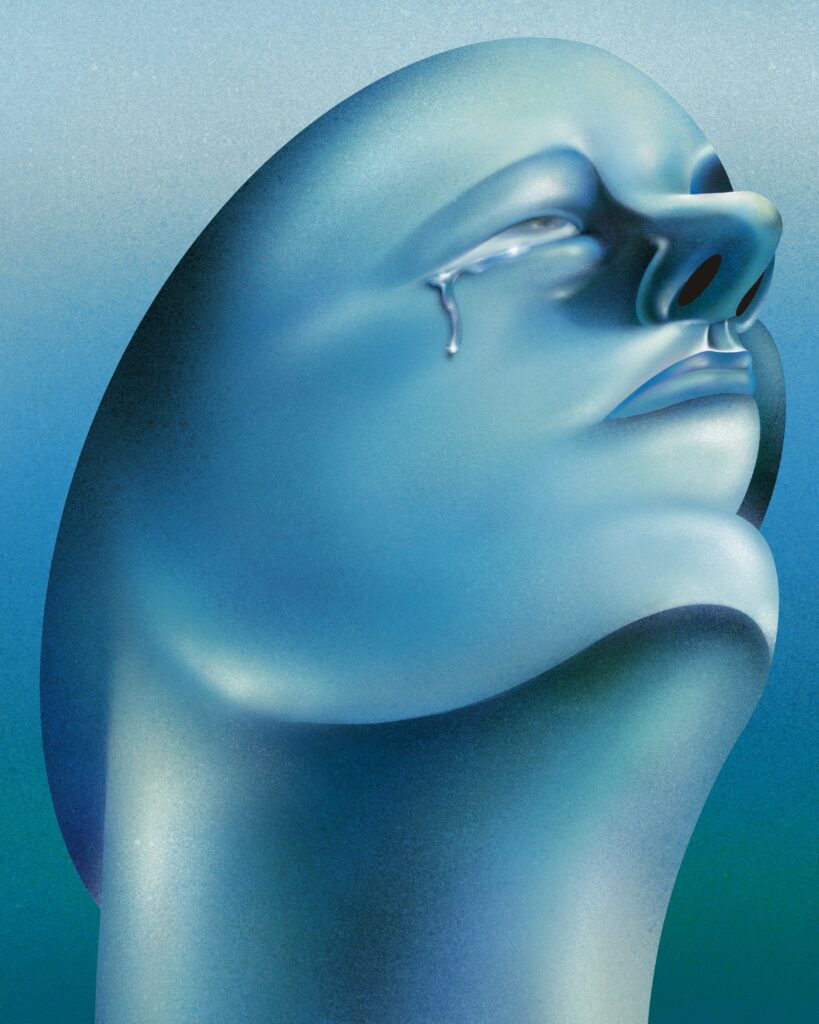
Lulu Lin illustrates the fever dreams and nightmares people wrestle with in their dream state. Oblong faces glimmer like metal sheets, and silver-polished cheekbones and glinting foreheads show up on muscular facial features. Bald genderless titans dominate her oeuvre, a seemingly vicious reminder of her viewers’ submissive tendencies to fear. Their giant hallowed eyes haunt viewers with their dilated, singular-coloured pupils, emotionless gazes, cry-for-help stares, droopy eyelids and eyeballs roaring in ecstasy. The Taipei-born artist reveres scrunched-up lunar faces too that remind us of the potentially monstrous and monotonous cycles the moon goes through if she ever lived as a walking living being among us. 

Lin’s distinctive digital art yearns to ground a profound and genuine relationship with herself and her viewers by pursuing fears that people sweep under the rug. She draws the longing to free oneself from restrictive despair, impending dread and unshakable fright for whatever reason by springing these very fears onto the viewers themselves. The artist seems to take up quite a literal interpretation of facing one’s fears, and she has not yet quieted down with her style. Words do not cut for the resulting illustrations that attempt to underpin her desire to let people feel the fear they try to escape from, since her signature visuals keep stirring the pot, brimming with alien-ised giants that only live in fantasy.

‘I’m fascinated by dreams and what they could mean. The same goes for my illustrations. They are both means for me to conduct intrapersonal communication. Things like self-analysis, self-discovery, and self-awareness are my incentives,’ she tells NR. On top of dreams, Lin’s imagination runs toward human emotions and how people deal with them. Untangling the tangled and often-complex intricacies of the human psyche excites the artist’s creative zen with all its might. The thrill that flows through her artistic veins when she analyses them by drawing results in monolith, otherworldly beings dressed with ovular physiques. ‘Feelings are a fickle thing, and I’m fascinated by them all. I wish to be more emotionally self-aware, and to be more capable of perceiving and comprehending emotional experiences, to be able to convert the knowledge into motivation, communication and behaviour,’ she says.

Past human fears, the abundant stream of visual influences Lin drinks up springs from the well of everyday conflicts people undergo. She shoulders the excruciating joy and euphoric pain people face in their best and worst selves. She finds her deep sense of grounding from the trivial animosity people bear for each other, such as the air of jealousy drifting the success of others or the feeling of betrayal from knowing that the once favourite is no longer the favourite, and the exciting feats people celebrate, such as saying goodbye to predictable sordid personalities and the quieting of occasional mood swings.

Instead of verbally expressing how her people-watching goes, Lin paints them, drawn from her belief that she is more capable of illustrating them rather than fully realising them in words. In fact, she uploads them on her Instagram page which she named dig a hole. ‘It’s how I view my work. There’s never an end, never a clear image of what to expect, always a work in progress. But I’ll still keep on going for some reason. It’s quite similar to the concept of “hobby tunnelling”, only for me, it’s always a hole,’ she says.

Her social media page becomes a safe space for liminal cults who love being reminded of the immaterial, and at times grotesque, pronoun-less visitors in their hazy dreams. ‘dig a hole’ also leads fans into Lin’s state of mind, a seemingly virtual door that Lin leaves ajar for the public to peer through. Flashes of images appear to reflect what Lin cradles in her mind and heart. In one image, she draws a voluptuous dark grey vase with a twinset of cherubim faces crying in blue tears. The lilac tulips planted inside the vase bend their heads, eliciting a seductive yet melancholic tone. Lin writes that this certain image would be her if she were a non-living thing.

Amid the tangible digital artworks rising out from her introspective state, the illustrations of Lin are pulled out of her intuitive guts. Her dexterity in the virtual tools allows the artist to snatch a magnetic non-lead pen resting on the side of her tablet’s case, fire up her Procreate app on her iPad and let her hand and mind draw. She receives bits of images in her vision, like an omen that ships batches of visual scenes to her conscious memory, and trusts that her mindflow will finish the work. ‘Planning or not depends on whether I’m commissioned,’ she says. For a handful of her personal drawings, her cathartic self-expression is manifested in a myriad of looming-over and squashed figures decked out in subdued colours and shades.

Lulu Lin has always enjoyed drawing, but being an illustrator hot-footing to invite cashflow into her pockets was not on the table. She’s still striking a balance between producing artworks for enjoyment and business, and gives herself some time off whenever she needs to recharge her imaginative batteries. Along the way, her artistic sensitivity, sharpened by people’s tedious weight of misery and their unwavering faith in optimism, opens her arms to soak in a platitude of whimsical dilemmas in life. She wields them well into life sized forces of nature that take up Instagram’s image ratio size.

Devotees of her illustrations keep tapping twice on their smartphones to show their affection for the continuous stream of uploads Lin makes. In return, the artist hustles to produce more, not for the sake of commissions, but to participate in a give-and-take relationship between her and her audience, even though she once captioned an illustration with ‘reciprocity in a relationship is overrated’.

Credits

Artworks · Courtesy of the artist

David Bailey Ross

‘Head’ an exploration of the human psyche

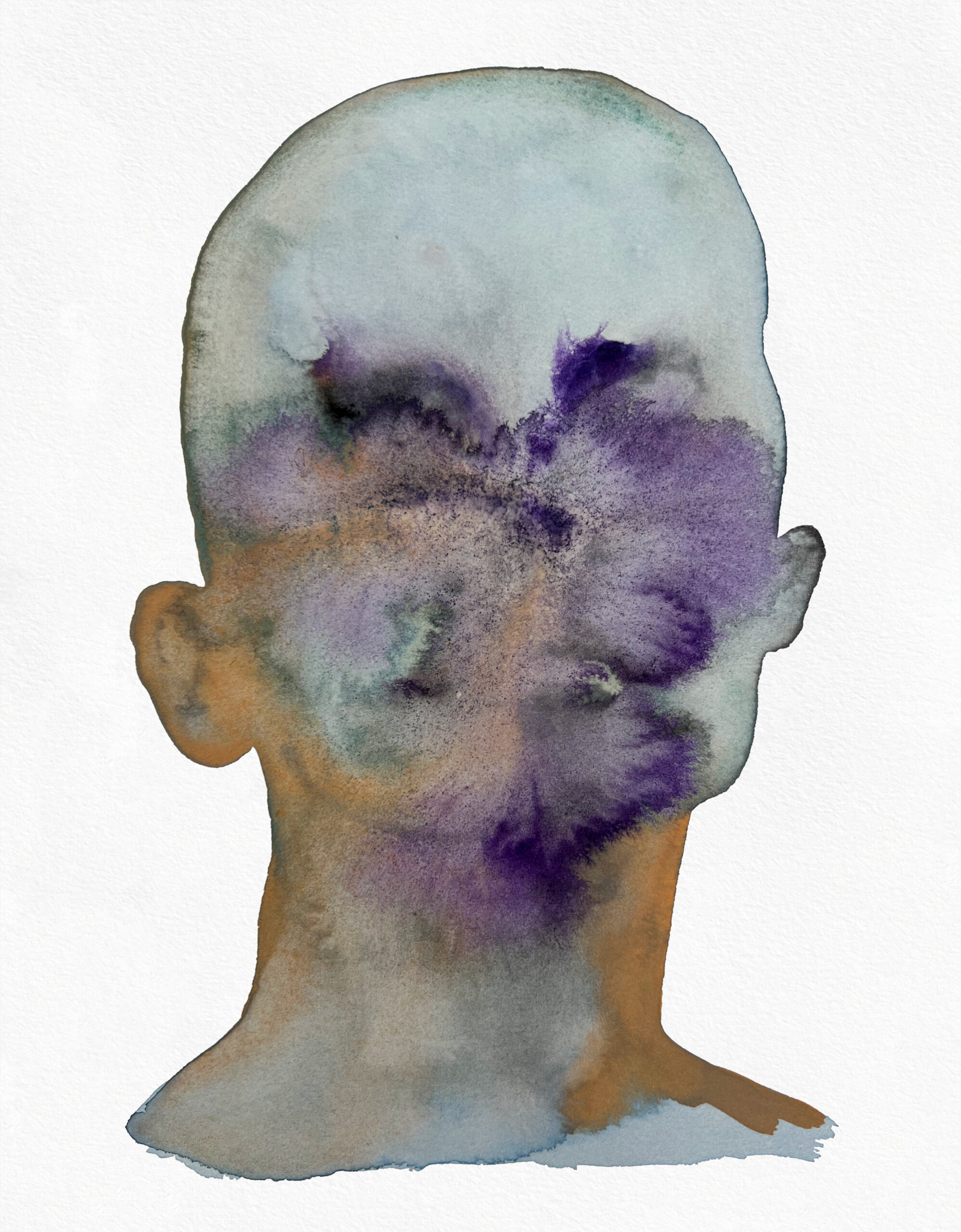
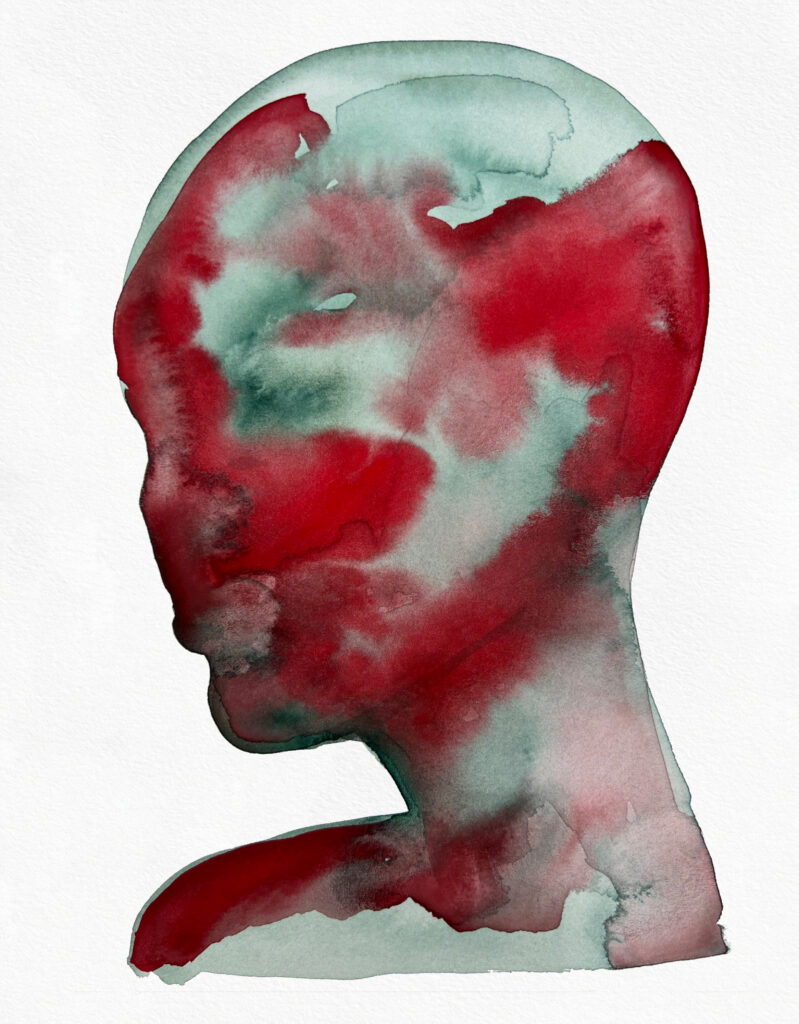
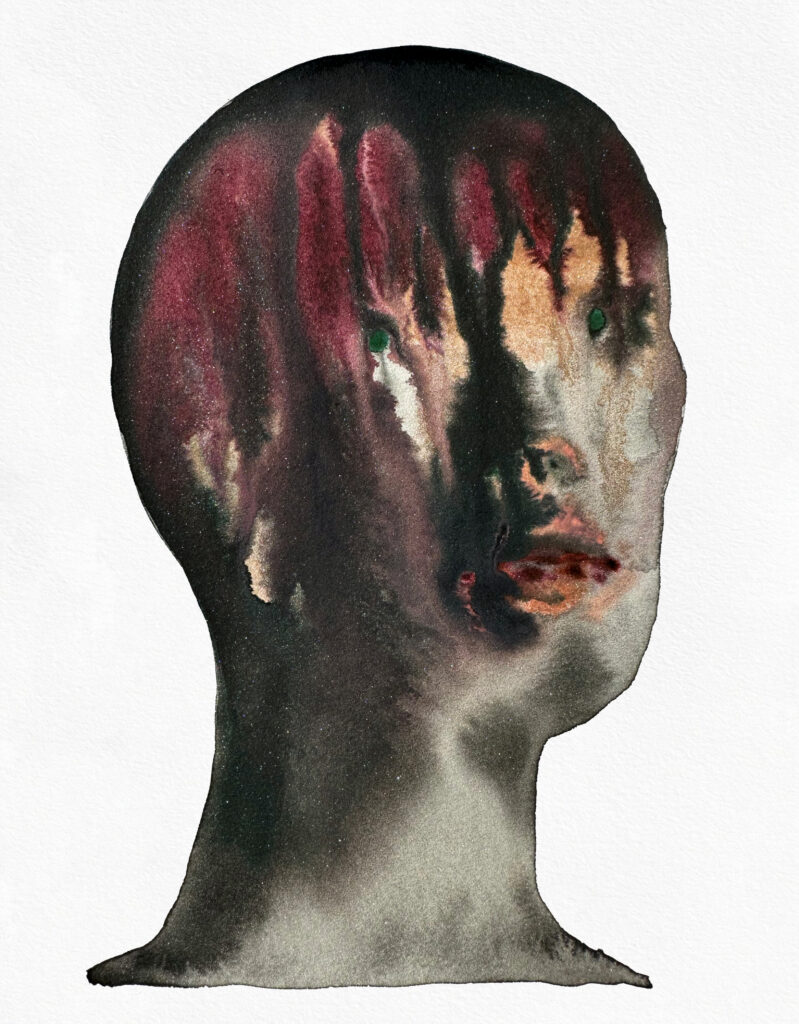
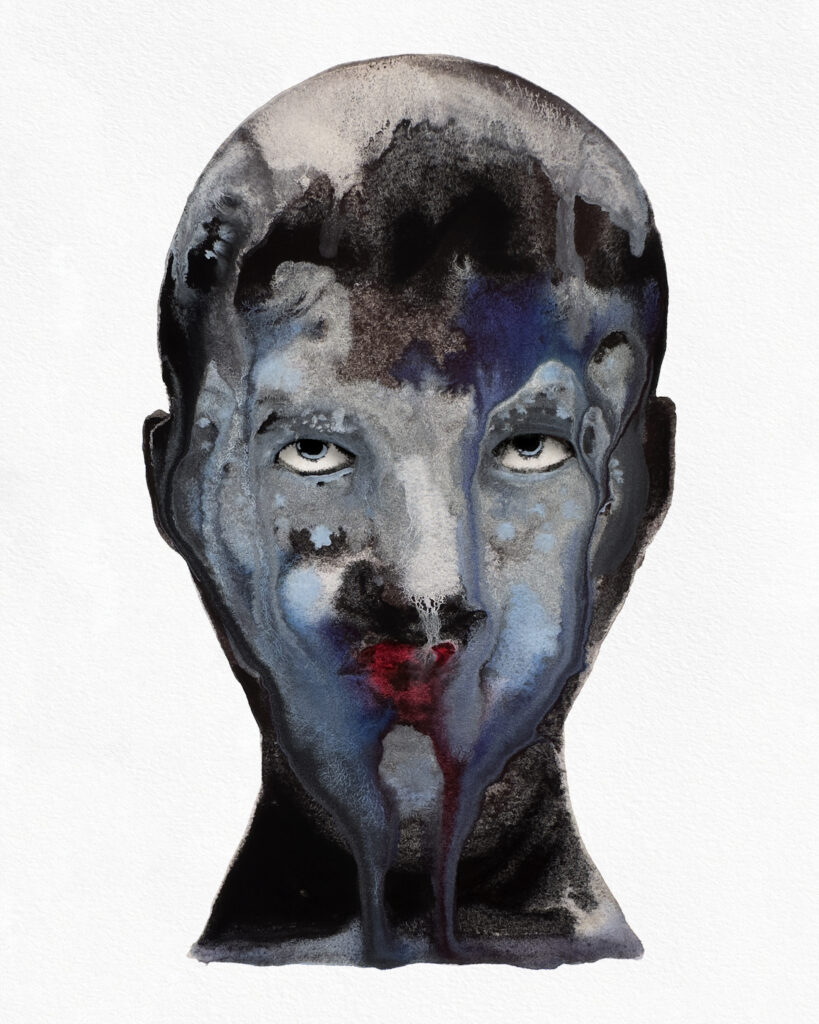
David Bailey Ross explores the human psyche, aiming at mirroring the diverse moods humans can convey whether directly or through a more abstract representation.  Characterised by their beautiful transparency, Ross’ works seem transformative. Watercolour pools form in unexpected areas, providing more intuitive distortions. Ross shares here the behind the scenes of @galeriephantom .

@galeriephantom on Instagram is the account on which you publish your ongoing watercolour series ‘Head’, an exploration of the human psyche. Could you tell us more about the title choice and the manifesto behind this series? 

I title the works ‘Head’ as they are not portraits and there is not a manifesto as such, but ‘an exploration of the human psyche’ is the simplest way to summarise the series. I am interested in the different moods or symbolism the human head can convey, sometimes in simple and obvious ways and in others I am looking for a more internal or abstract representation.

Your artworks are characterised by their beautiful transparency. It feels like we have a direct access to what lies beneath the surface — a poetic surgeon almost. Wet on wet watercolour painting means that you should be working quickly to be able to choose where you want the colour to mark the most. How did you master the technique? 

It was through a lot of trial and error with materials and timings. Part of what happens with wet on wet watercolour is by chance, and I like to let the image develop whilst working. Pools form in unexpected areas, distorting marks I had laid down and opening up new possibilities. Watercolour does allow you to create delicate transparencies and there’s something organic and tactile about this.

Do you start from a photograph, or a drawing, or is it more of an intuitive outburst? 

I often use references of photographs that have been manipulated as a starting point — mainly as a reference for shadow and light. At a certain point the reference is discarded and I let the flow of the paint influence the final outcome. Some of the Heads are more literally referenced than others and I do like mix things up and work intuitively as well.

Your artworks are seen digitally through our screens. Do you think the feeling would be the same if we were to see the artworks tangibly? Was that a conscious choice of yours to make your work available through a device? 

Have you had any intention of holding an exhibition of your work and bringing Galerie Phantom into a physical gallery space?

I put a lot of thought into how I would digitise the work for online, but they are physical things that are best viewed in person. I use a lot of metallic paints and subtle textures that you can’t really appreciate on a screen.

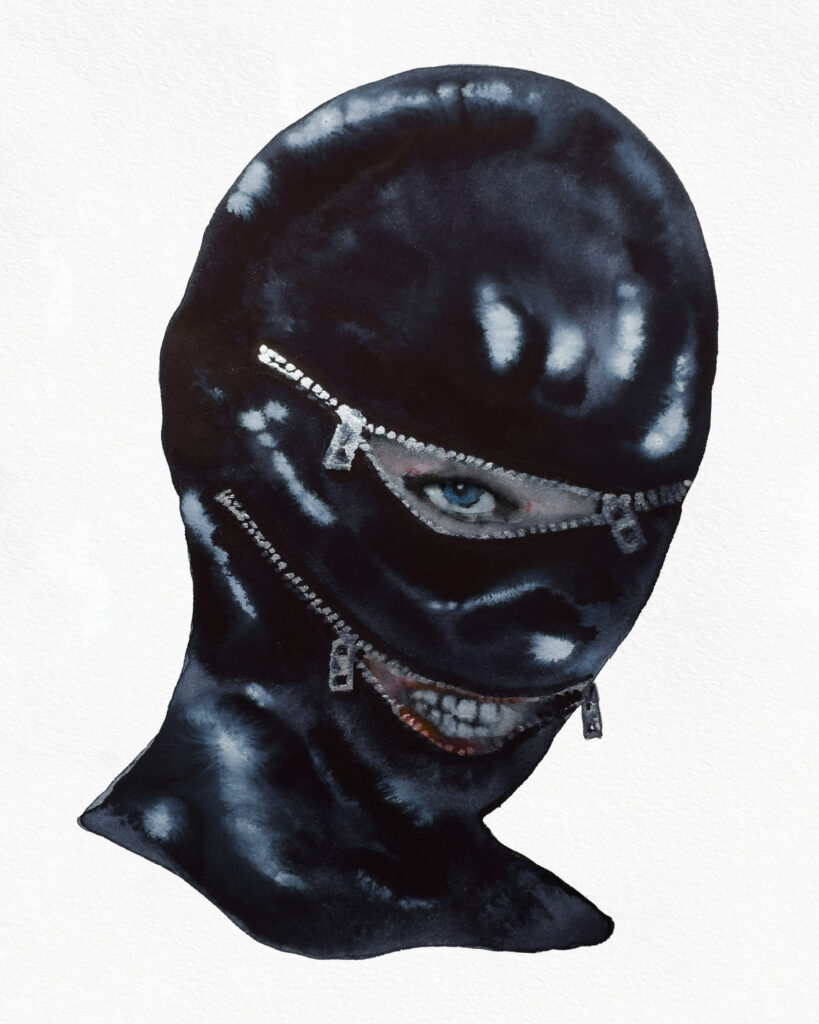
BDSM gear is featured too in your work. Where does this interest for masks derive from?

I was interested in the idea of the wearer hiding their identity whilst using the mask to signify a particular role. Some of the gear is more functional, almost treating the head as an object which makes it an interesting subject. On another level, I just think BDSM gear is striking and fun to look at. I want to have fun with what I am doing and allow freedom to explore.

I see there is often a new post from you every day, even though the feed remains with 36 posts. Are you drawing every day and then archiving as you publish?

When I post a new Head I archive another, leaving at the moment 36 on the grid at any one time. I do try to be disciplined and paint everyday although it’s not always possible. There are many more Heads than what I publish, but generally I publish the newly completed ones. The @galeriephantom account is a pinboard for my progress. 

Will we be seeing other types of series? Which other realms would you like to explore? 

There are lots of things I still want to explore with the Heads — I feel like I’m just getting started. There is so much more that can be done with watercolour as well, so stay tuned.

Credits

Artworks · Courtesy of the artist

Jon Rafman

Counterfeit Poast, 2022 4K stereo video 23:39 min MSPM JRA 49270 film still

Artificial bestiary for a collapsing present 

The Seventeenth-century Italian philosopher Giambattista Vico argued that history unfolded in cycles, with every period of decay being succeeded by one of growth. According to his view such transitions were guided by the hand of God. Fast forward 300 and counting years and, despite the latter statement sounding rather outdated, this conversation still sparks when contemplating the works of Jon Rafman. 

Although the Canadian-born artist, videographer and essayist is an illustrious face of what, since 2009, has been labelled as Post-Internet art, his works retain a powerful Medieval aura. The same shared by the bestiaries of the Middle Ages, by the haunting dreamlike visions of Hieronymus Bosch, of Dante’s Divine Comedy or Luigi Serafini’s Codex Seraphinianus. But also the street scenes of Flemish paintings, punctuated by a cornucopia of characters sampled from real life and rearranged with moral meanings. As a matter of fact, Rafman recently hosted a performance in which organist Hampus Lindwall live soundtracked one of his films in the evocative setting of the 11th century Swiss Church of Rougemont, as part of Gstaad’s Elevation 1049. 

Rafman’s long-lasting fascination with such iconography actually stems from the present and from his consideration that we’re living through Medieval times. As a society — according to the artist — we are helplessly heading back to a neo-feudal culture in which ‘It feels at times as if the social contract is about to rip apart.To quote Brecht: “Indeed I live in the dark ages! A guileless word is an absurdity”’. 

His oeuvre does no doubt retain an anguishing and disturbing visual element shared by much Medieval art, in which life blended with the realm of fantasy, religion and oral tales. The internet is indeed the closest expression now existing to that approach to world-building and vernacular storytelling, of which one of the greatest examples is Rafman’s Dream Journal, 2016-2019

The occasion to meet the artist comes on the occasion of his exhibition 𝐸𝒷𝓇𝒶𝒽 𝒦’𝒹𝒶𝒷𝓇𝒾 — which reads ‘abracadabra’ — at London Sprüth Magers. 

He is wearing a suit, which may look unexpectedly refined for someone otherwise associated with an iconography made of internet-era American kid bedrooms, with computer keys encrusted with dirt and crisp crumbs, the same he uses to communicate with the press. It is a boxy suit, with cropped wide trousers, as you’d picture an artist in his early forties wearing. 

Despite a broader audience may at first dismiss Rafman’s work as superficial — or even childish — as a consequence of its memetic stance, his words encompass a depth as profound as his carnet of references. They flow with the rapidity of the internet language, and as copious as the amount of work he produces. 

His art is, first of all, rooted in an observation of society, which the Canadian analyses with the critical spirit of a philosopher.
The most stringent issue that seems to equally fascinate and concern him is the fragmentation of contemporary culture and consciousnesses, which since his early works Rafman has been exploring through the creative potential of machine learning processes. His Instagram bio reads, ‘Rarely has reality needed so much to be imagined’, which is exactly what his artworks do. 

AI is the tool that enables him to observe society, like a camera. 

‘I believe that similarly to how photography liberated painting from factual representation, AI image-making has the potential to do something equally revolutionary by forcing art to push itself beyond its own self-perceived boundaries.’ 

Rafman jokes quoting Renoir. ‘Photography freed painting from a lot of tiresome chores, starting with family portraits.’ However, although AI image generation can foster a new culture, he hopes that ‘questions about the broader historical implications on these developments are raised’. 

When looking at some of his latest works — like the Club Angels II and Club Angels III series or Technocrats II — one is left wondering where the line of demarcation between the real and the hyperreal lies. The pieces, which at first appear like painted canvases, feature print AI-generated images to problematise ‘the expected sterility of algorithmically generated images, bringing their abstract digitally into physical materiality’. 

‘That space is where I seek the most interesting territories to explore,’ says Rafman. ‘The virtual and the real represent a dichotomy, but in the world we live in it no longer exists.’ 

According to the artist, the German word aufhebung, which contains opposites, meaning abolition, transcendence, cancellation or fulfilment, informs his practice. ‘In my work, I try to reach a state of aufhebung between bathos and pathos, the ironic and the romantic, the physical and the virtual, and so on. That tension is mobilised in my media choices in the paintings as well.’

This theme emerges in Counterfeit Poast, a film composed of a series of character profiles where AI-generated images are animated using face-tracking iPhone apps, resulting in plausible stories that escalate into the realm of the hyperreal, equally disturbing and witty. To stand out is that of a single man obsessed since his childhood with teen idol Jonathan Brandis, to the point he ends up mystifying reality by forging the actor’s otherwise missing suicidal letter and psycho-physically morphing into Brandis himself. The opus encapsulates all of Rafman’s fascination for all things gravitating between the alienation of the individual and the sense of communal belonging of his chosen iconography. 

In Rafman’s view, the opus ‘paints a portrait of a world where the very grounds of reality have become destabilised, a world where everyone has their own algorithmically tailor-made Reality fed to them.’ 

One can’t truly grasp whether such impossibility to trace a sociologically valid universal theory of present culture concerns Rafman, or whether he thrives on this chaos. Surely, the progressive fragmentation of universal symbols and icons and the increasing ‘niche-isation’ of culture is a reflection at the core of his practice. Especially for someone whose artistic research has been widely based upon permutations of appropriated content, spanning from fine art to mass marketing material. One of his most praised and extended works, 9 Eyes (2009-ongoing), systematically used Google Earth screenshots, for instance. 

‘In the past we had the Church, the Bible, Greek myths and a set of languages that every educated person could understand. Even Andy Warhol’s symbols of language, the post-’50s mono-culture icons of Hollywood, are not available to us anymore. Now you have Twitch and Tik Tok stars, who can make millions but nobody has heard of them. Music is fragmented, every fetish, and every little thing is fragmented. So, I use the Internet language which I think is the closest to universal language we have.’ 

With the frequent sampling of elements of Internet and pop culture, the ethical dilemma of copyright and appropriation may open a multi-faceted debate. However, Rafman’s attitude towards the topic demonstrates how, despite the contemporary relevance of the work, his approach comes a long way. 

‘I’m most curious about the social effects and the revelations they contain about our expectations of art both individually and as a society. When you take a bunch of things and put them together in a new way, that’s not even appropriation; it’s some new hybrid. That’s how culture works, through miscegeny, that’s how new musical genres emerge. Every nationalistic artist movement, for example, would go out into the countryside and look for folk culture and pull from it to elevate it to high culture. These days, it is slightly different because the whole high and low has collapsed. The internet flattens everything. You have 4Chan-style shitposts existing alongside a Renaissance masterpiece without hierarchy.’

In this tension between meta-narratives and lore lies Rafman’s freedom. It is very evident in the Egregore series, three 4k video suites in which images found on the internet are triptychally animated, juxtaposing elements as diverse as a wall clock filled with canned beans and the Garden of Bomarzo. Once again, the vastness of Rafman’s archive of found content echoes the breadth of his references, revealing an artist with many things to say and burning to expand his already immense world-building process. Rafman’s restlessness in giving birth to new works is somehow reminiscent of the overwhelming amount of content daily stratifying on the internet. 

Questioned whether the choice of using a 16:9 screen ratio (the same of the ever so popular Instagram stories and Tik Tok videos) for the series was an attempt to evolve and update his register to the sharing and consumption of content, Rafman replies that, instead, the aim was that of taking a detour from what we associate with movies. ‘My idea was to treat them [the screens] like paintings, whereas when you see a 9:16 monitor you think of it like a film. I constantly have to deal with how to portray popular culture in my work. If you want to depict the present honestly, you have to confront the banality of living life in front of a screen. How do you depict a world dominated by screens, from computers to smartphones? How do you show screens within the screen-space of a film and keep it exciting and engaging? How do you make moving, cinematic work if so much of life takes place inside the impoverished space of the screen world? An exciting challenge as an artist is how to make screens interesting.’

Making Rafman’s art even more fascinating is the fact it unfolds over a highly conflictual field, which is that of the Internet and social media. On one hand it has been used — like in the case of 4Chan — as a countercultural tool to go against the status quo, on the other, the censoring policies of Meta have sanitised the medium, to borrow a Foucault expression. In the eyes of the Canadian, the problems lie in the platforms themselves which become a tool to observe and automatise modern subjectivity. 

‘The internet is not new in these respects, but it exacerbates and reflects all humanity’s worst and best traits. Humans have been ostracising and dividing each other in power struggles for a long time. This condition is being made very transparent on the internet. 

‘The only new system I have seen emerging is the Web3 crypto, which is still very tenuous. We still need to figure out how much influence and power it will have on culture in the long term. I’m curious, though.’ 

The use of elements coming from the culture of the deep web, of shitposting and trolling has nonetheless, over the years, put a stigma over artists like Rafman. This especially happened during the rise of Trumpism, which social media 4Chan and its most notoriously associated meme Pepe The Frog allegedly contributed to. 

‘It is very clear there was a desert period during the Trump era,’ bitterly affirms Rafman, ‘the conversation within the art world shifted, focusing more on identity and portraiture, and now that trend has been exhausted.’ 

‘Just because something is problematic and a challenging subject matter, it doesn’t mean that it shouldn’t be investigated and taken seriously, especially if its effects on culture are so profound and create the language of the Internet. Throughout history, artists have explored dark aspects of humanity, but that doesn’t mean they promote them. Instead, they are trying to be truthful and represent the human condition. Some much great art could have never been made if artists weren’t allowed to confront the horrors of existence.’ 

The curatorial status quo, though, seems to have now shifted. What used to be defined as Post-Internet has at last acquired a dignity that it was long stripped of. Rafman is radiant when commenting on the increasing amount of shows his colleagues are having. 

Born in 2009, the movement never truly had a coherent ideology one could associate its artists with, nor a manifesto, although it is explicit the mutual sharing of certain themes and stylistic traits which are both a consequence of and limited by the Internet. Labels can be equally problematic and useful, as they nonetheless offer a source of reflection and a springboard to eventually combat them. Certainly, Rafman’s oeuvre captures the zeitgeist, both in its form and content. After all, its disorientating and thought-provoking element isn’t mere mannerism, but only a consequence of the brutal, conflicting and socially crumbling times we’re experiencing. 

Today’s cancel culture does indeed strike another resemblance with the Middle Ages: the practice of pillorying people to expiate and punish their moral sins. This partially happened to Rafman and the other Post-Internet artists. Will we, at last accept, their social commentary, whether critically savage or disenchanted, or will their art continue to trigger us? That, perhaps, is the question we’re still left with. 

Works

  1. Counterfeit Poast, 2022 (video still) 4K stereo video
    28:20
    © Jon Rafman
    Courtesy the artist and Sprüth Magers
  2. Counterfeit Poast, 2022 (video still) 4K stereo video
    28:20
    © Jon Rafman
    Courtesy the artist and Sprüth Magers
  3. Counterfeit Poast, 2022 (video still) 4K stereo video
    28:20
    © Jon Rafman
    Courtesy the artist and Sprüth Magers
  4. Counterfeit Poast, 2022 (video still) 4K stereo video
    28:20
    © Jon Rafman
    Courtesy the artist and Sprüth Magers
  5. Counterfeit Poast, 2022 (video still) 4K stereo video
    28:20
    © Jon Rafman
    Courtesy the artist and Sprüth Magers
  6. 𐤒𐤓𐤀𐤁𐤟𐤀𐤍𐤂𐤋𐤟𐤚
    (Club Angel II), 2022
    Inkjet print and acrylic on canvas
    186.7 × 134.6 cm
    73.5 × 53 inches
    © Jon Rafman
    Courtesy the artist and Sprüth Magers Photo: Robert Wedemeyer
  7. 𐤒𐤓𐤀𐤁𐤟𐤀𐤍𐤂𐤋𐤟𐤚
    (Club Angel II), 2022
    Inkjet print and acrylic on canvas
    186.7 × 134.6 cm
    73.5 × 53 inches
    © Jon Rafman
    Courtesy the artist and Sprüth Magers Photo: Robert Wedemeyer
  8. Punctured Sky, 2021 (video still) 4K video, sound
    21 min © Jon Rafman
    Courtesy the artist and Sprüth Magers

Subscribe to our
Newsletter