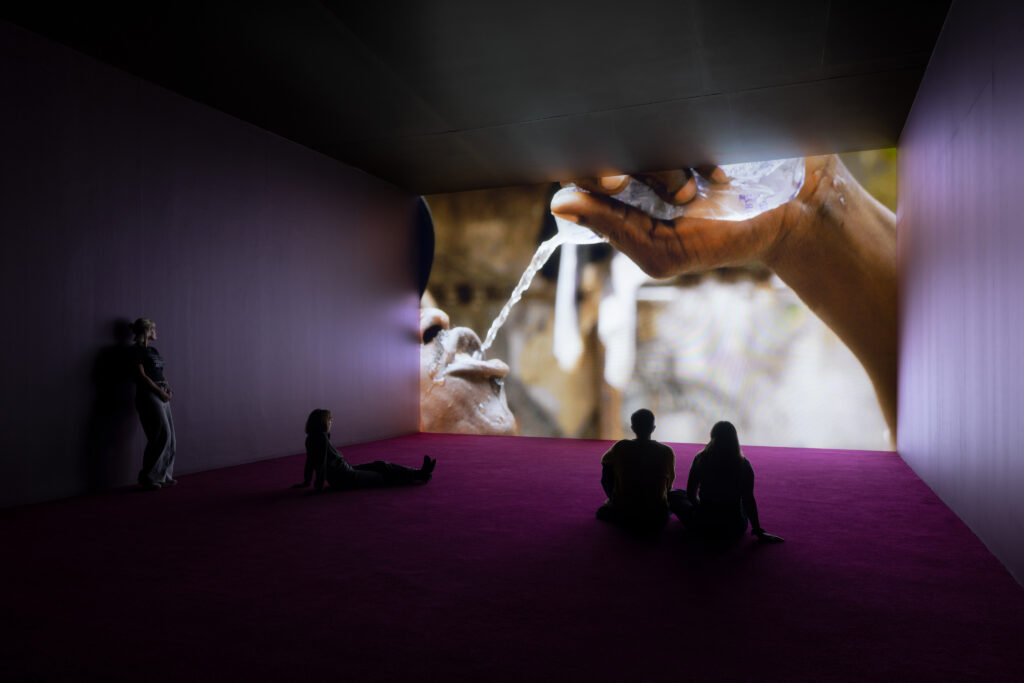
Credit: © Karimah Ashadu. Courtesy the Artist, Fondazione In Between Art Film,
Sadie Coles HQ, London and Camden Art Centre. Photo: Andrea Rossetti
From Within
Karimah Ashadu’s work begins with the body. Before turning to film, she trained in painting and spatial design, developing a way of thinking grounded in surface, scale, and physical presence. That foundation continues to shape her moving images, where cameras are often attached to bodies or custom-built mechanisms, and motion becomes not a visual effect but a method of inquiry.
Living between Lagos, London, and Hamburg, Ashadu’s films move across geographies, economies, and identities. Her work engages labor, masculinity, migration, and autonomy, particularly within informal systems that exist beyond regulation yet sustain everyday life. Rather than offering explanation, her films construct encounters. They ask the viewer to feel position, proximity, and imbalance, and to recognize the conditions under which looking itself takes place.
Recipient of the Silver Lion for a Promising Young Participant at the Venice Biennale, Ashadu reflects on painting as a foundation for filmmaking, the role of physicality and installation, the politics of direct address, and why her films function less as statements than as self-portraits shaped by lived experience.
You began your practice in painting and spatial design before moving into photography and film. What did painting teach you about surface, scale, and attention that still shapes how you compose moving images?
What painting teaches you, fundamentally, is composition. How you want the work to feel, the kind of emotion you want it to engage in the viewer, and how you achieve that through shape, texture, and surface. Painting creates a visual language that stays with you. For me, it is completely fundamental to how I make film.
Your approach to film seems to emerge through the body, through position, balance, and movement. How did working physically influence the way you first understood motion on screen?
When I was painting, I was very interested in performance painters and artists who worked directly with their bodies. The body was always at the center for me, and that is what drove my entry into filmmaking.
I started by building mechanisms, structures where I would give control to the device itself. I placed my camera inside the mechanism, and over several years that process evolved. What I loved was not knowing exactly what I was going to see, and how movement could influence narrative. The physical relationship between the camera and the body, and how that is experienced, became central. The way the film moves physically contributes to the narrative.
You have lived between Lagos, London, and Hamburg. How does moving between these places shape your sense of framing, duration, or where the camera is allowed to be?
Moving between these places influences me on many levels. It makes me aware of myself, my body, and how the world interacts with me as a Black woman, as an African, as a European woman.
It also makes me think about space, where I am allowed to be, and how I move through environments. One moment I might be filming in the slums of Lagos, and the next I am sharing that work in an art space across the world. That movement is key to what I do.
For me, moving between these places is essential to my practice.
Many of your films are encountered by audiences far removed from the conditions they depict. How do you think about the distance between lived experience and its reception through the image?
I am not naive. I know what I am doing. It depends on how open the audience is. If someone is guided only by what they have absorbed through the media, they will view the work through a specific lens. If the audience is open minded, has traveled, reads, and is culturally engaged, then there is space to see from a different perspective.
I am not trying to educate anyone. I am not trying to be an activist. I am simply showing the world as I experience it. I cannot control how the work is read. I can only present it honestly.
Speaking about Makoko Sawmill, you have said that your methods make closeness felt. What concrete choices create that closeness, and where do you intentionally hold back?
Making Makoko Sawmill happened during a period when I was figuring out my place in Nigeria. I grew up there, then left for the UK, and this was a time of return, of re-learning the culture and understanding where I fit in the landscape.
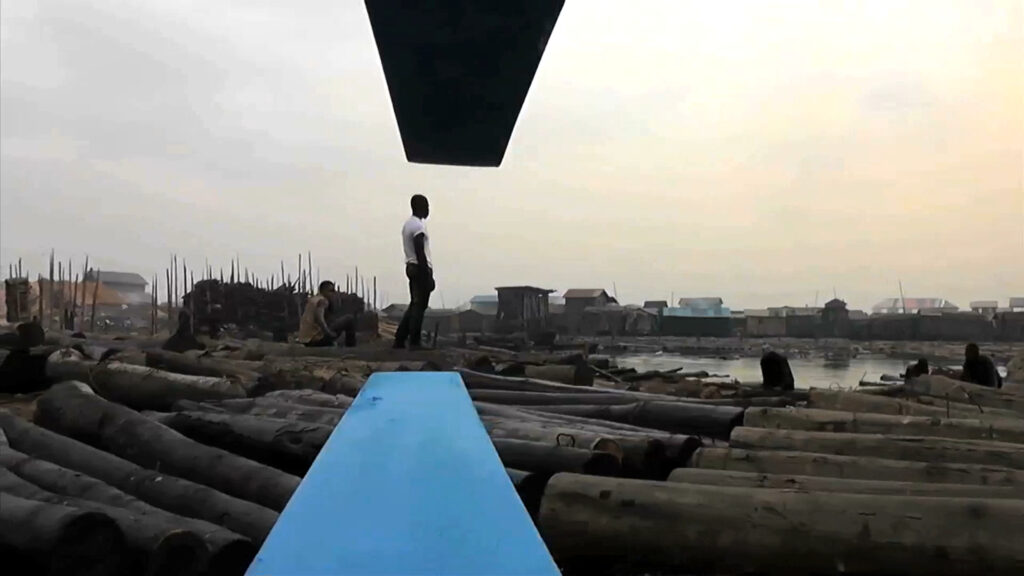
Makoko Sawmill, 2015 [Still]
HD digital film, colour with stereo sound
20:00 mins
Credit: © Karimah Ashadu. Courtesy the Artist and Sadie Coles HQ, London
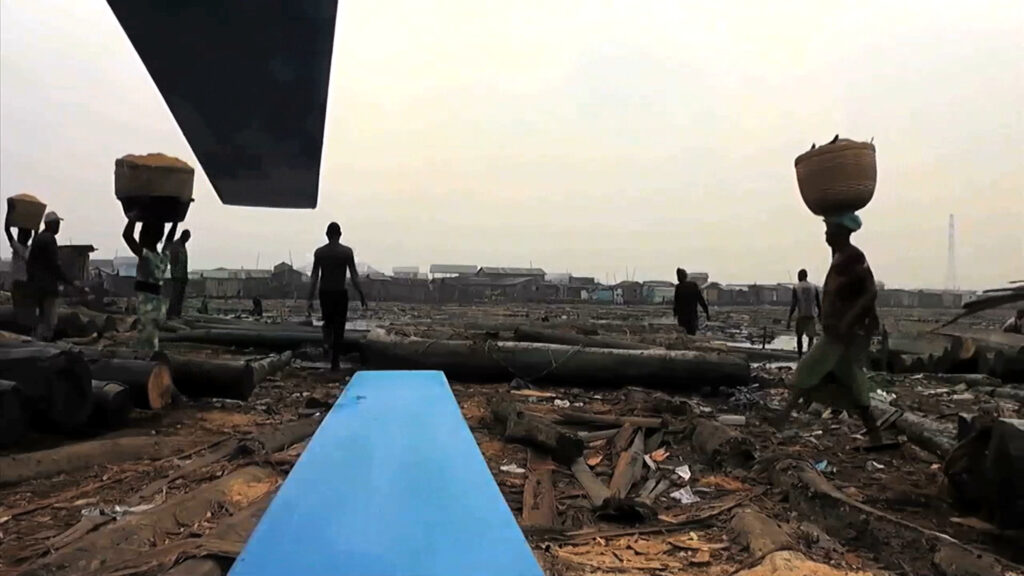
Makoko Sawmill, 2015 [Still]
HD digital film, colour with stereo sound
20:00 mins
Credit: © Karimah Ashadu. Courtesy the Artist and Sadie Coles HQ, London
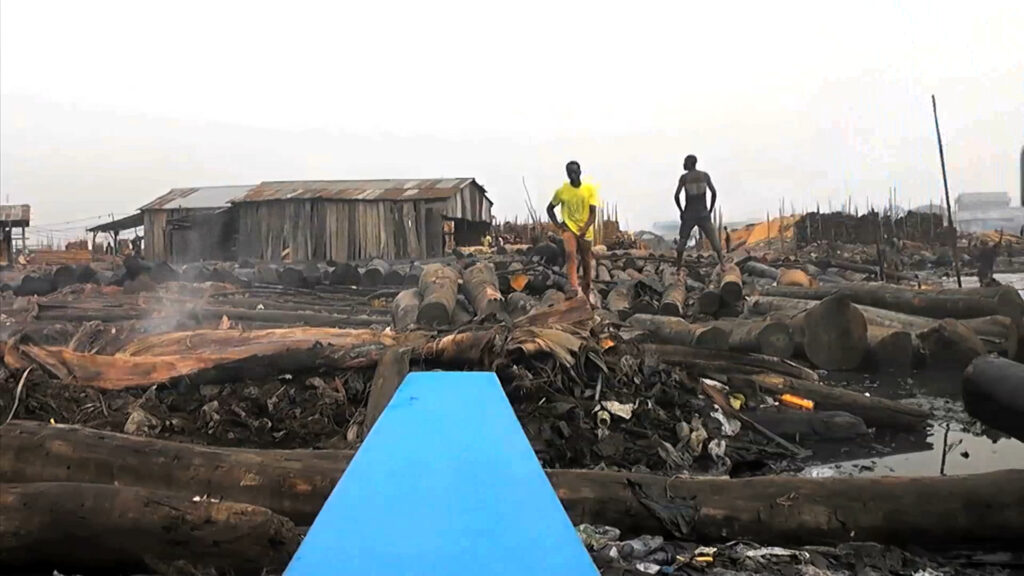
Makoko Sawmill, 2015 [Still]
HD digital film, colour with stereo sound
20:00 mins
Credit: © Karimah Ashadu. Courtesy the Artist and Sadie Coles HQ, London
The mechanisms I was using allowed me to work through that process. The audience accompanies me on a journey of reconciliation, and that is intimate in itself. Making art is intimate. You are sharing parts of your process and parts of your emotional world, parts of your “soul”, really.
With my films, I am creating a world and inviting the viewer into it, framing that experience very specifically. It is about opening a dialogue. It is an invitation rather than a declaration.
In several works, your subjects look directly into the camera. What does this direct address ask of the viewer, and how does it shift the balance of looking and being looked at?
On one level, you are watching a film and become hypnotized. That direct look interrupts that state and makes you aware of yourself as the viewer.
It is about the subject meeting you directly. That moment becomes one of reclamation and empowerment. Often this is a Black body, frequently a Black male body, onto which so much history and projection is placed.
You often attach the camera to your body or to custom-built devices, allowing movement to generate the image. What kinds of understanding emerge from this method?
It comes from having a physical approach to filmmaking. For me, anything is possible. I think about the image I want to achieve and then find a way to achieve it.
The movement of the camera works hand in hand with the subject. Over time, I have learned what works for me and what does not. It has been a process of discovery.
In Cowboy, the camera moves with the rider, sharing speed and rhythm. What changes when the image moves alongside its subject instead of observing from a distance?
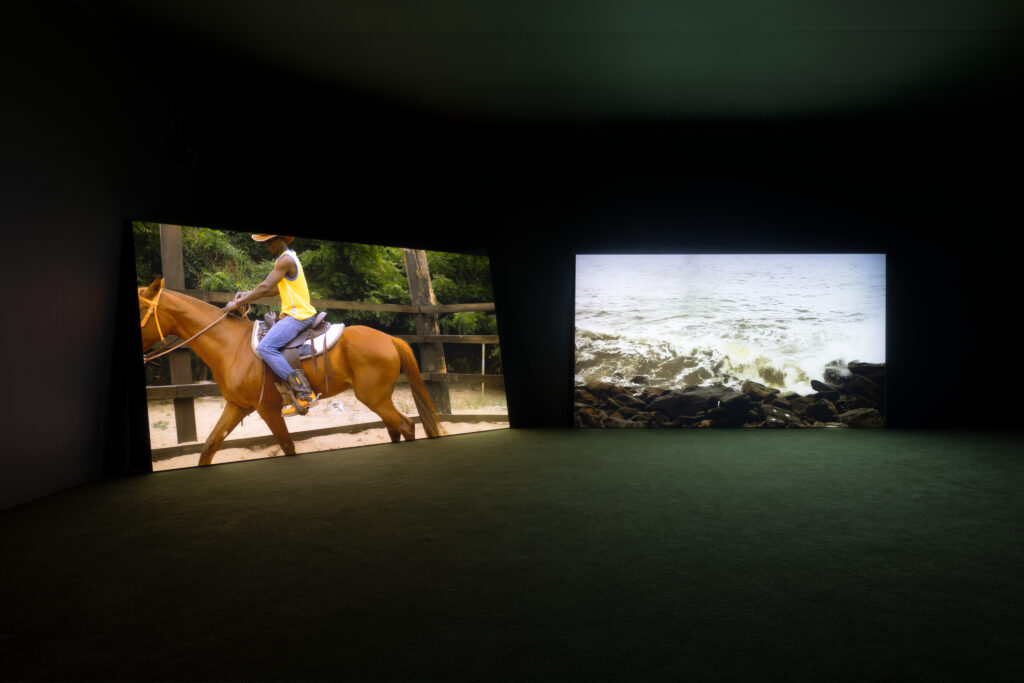
You follow this African cowboy from behind, and he leads you through his environment. Historically, that act of following a Black person in this way, carries meaning.
He takes you to the shore, to the Atlantic, and charges toward it without entering. The ocean becomes a site of historical violence for Black people, through slavery and contemporary undocumented migration. It represents the unknown.
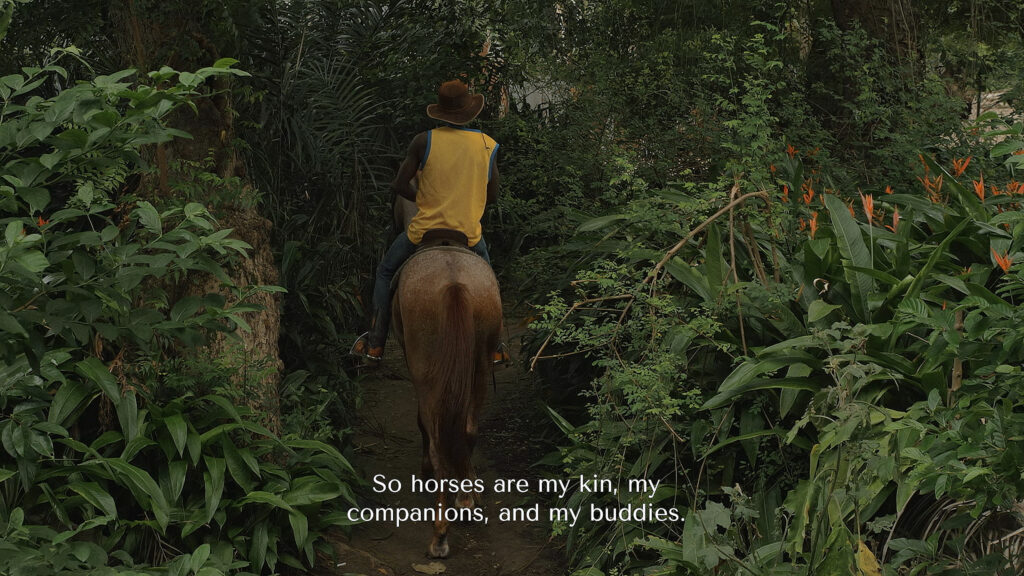
HD digital film, colour with stereo sound – two channel
10:40 mins
Credit: © Karimah Ashadu. Courtesy the Artist and Sadie Coles HQ, London
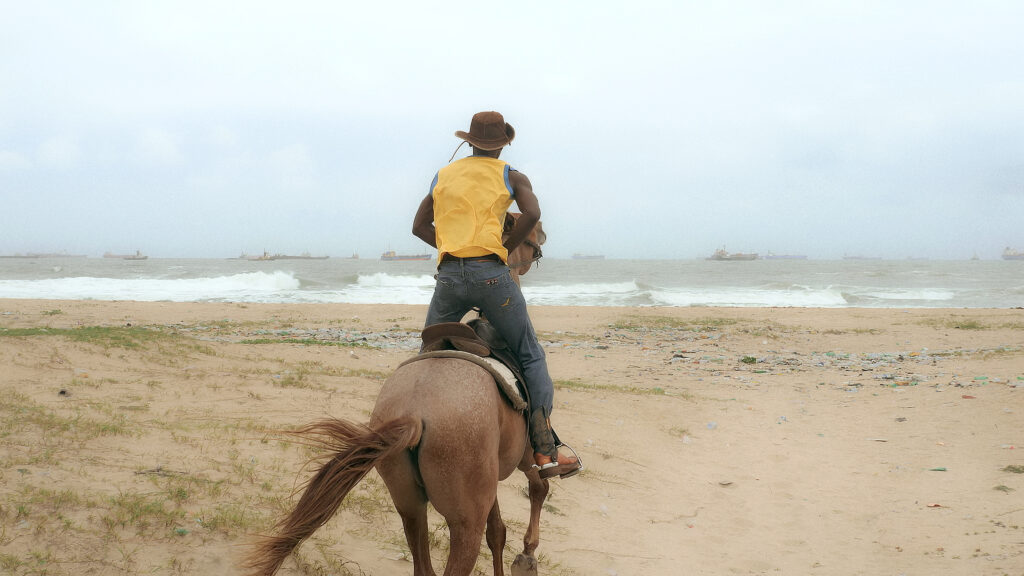
HD digital film, colour with stereo sound – two channel
10:40 mins
Credit: © Karimah Ashadu. Courtesy the Artist and Sadie Coles HQ, London
There is a lot of symbolism woven in. The palm tree, for example, is a symbol of peace in West African history and was used as camouflage during times of war. On a surface level, these details might be missed, but they are deeply woven in with meaning.
From sawmills and tin mines to motorcycle taxis and makeshift gyms, your work repeatedly engages with labor carried out in informal or unregulated conditions. What draws you to these spaces of work?
When I think about Nigeria and independence, I think about how independence was taken from us. We were always independent. Labor becomes central when thinking about rebuilding autonomy.
Labor in Nigeria is extremely physical and often harsh, very raw. But for me, it is also a pathway to autonomy, not only individually but collectively. It connects to history, social structures, and the body itself. The way the body moves through labor has always fascinated me.
In MUSCLE and Machine Boys, strength is constantly displayed, yet it never appears stable. What interested you in filming masculinity at the moment where effort becomes visible?
I was thinking about representations of masculinity, what it means to be a man and how manhood is performed. Amateur bodybuilding became a space to explore that.
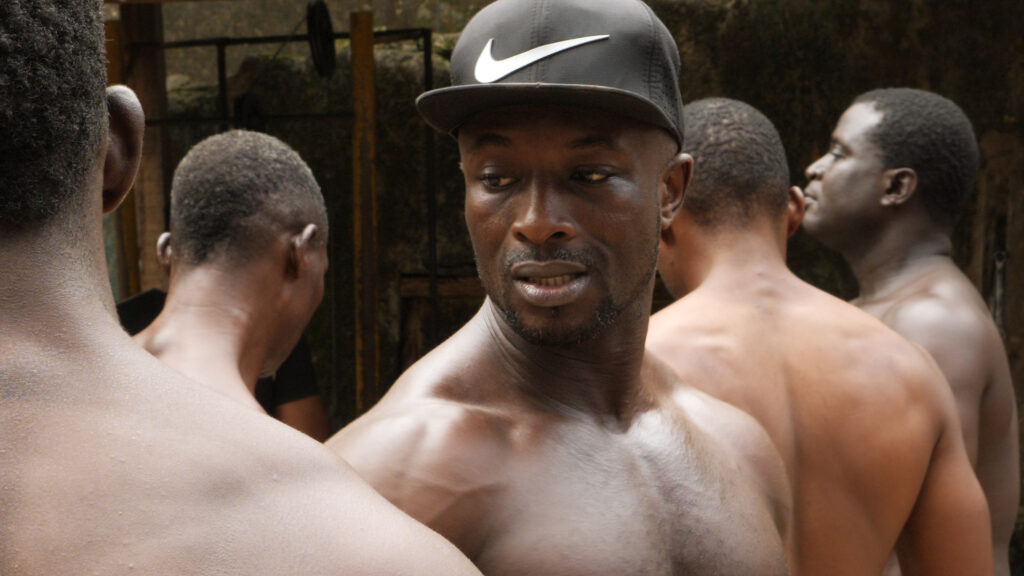
HD digital film, colour with stereo sound
22:20 mins
Credit: © Karimah Ashadu. Courtesy the Artist, Camden Art Centre, Fondazione
In Between Art Film, Renaissance Society, and Sadie Coles HQ
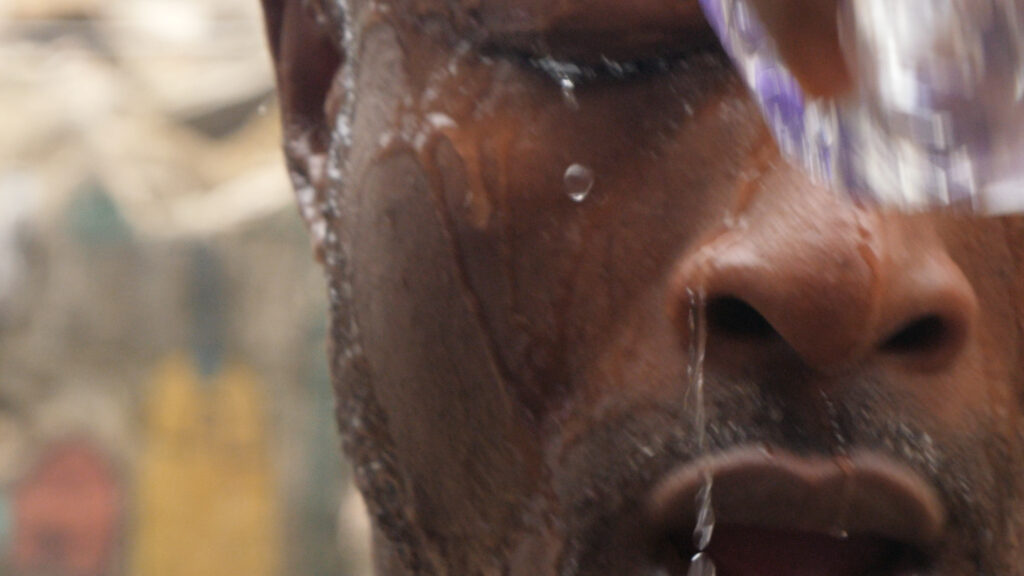
HD digital film, colour with stereo sound
22:20 mins
Credit: © Karimah Ashadu. Courtesy the Artist, Camden Art Centre, Fondazione
In Between Art Film, Renaissance Society, and Sadie Coles HQ
By getting very close, you see how vulnerable the pursuit is. Muscle is temporary. It requires discipline and constant effort to maintain. In the Nigerian context, masculinity carries heavy stereotypes, particularly around the Black male body. I wanted to fragment that image.
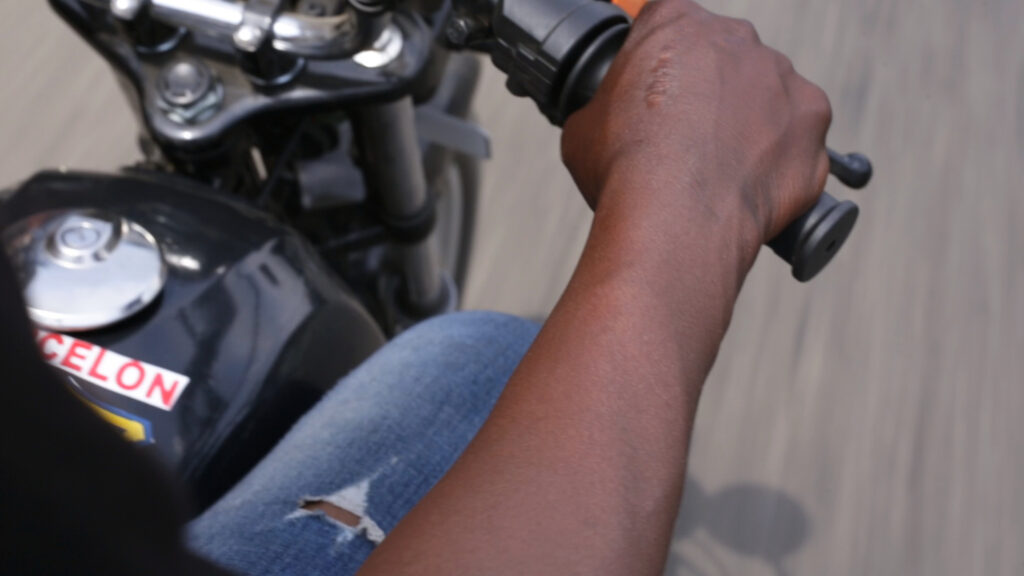
HD digital film, colour with 5.1 surround sound
08:50 mins
Credit: © Karimah Ashadu. Courtesy the Artist, Fondazione In Between Art Film,
and Sadie Coles HQ, London
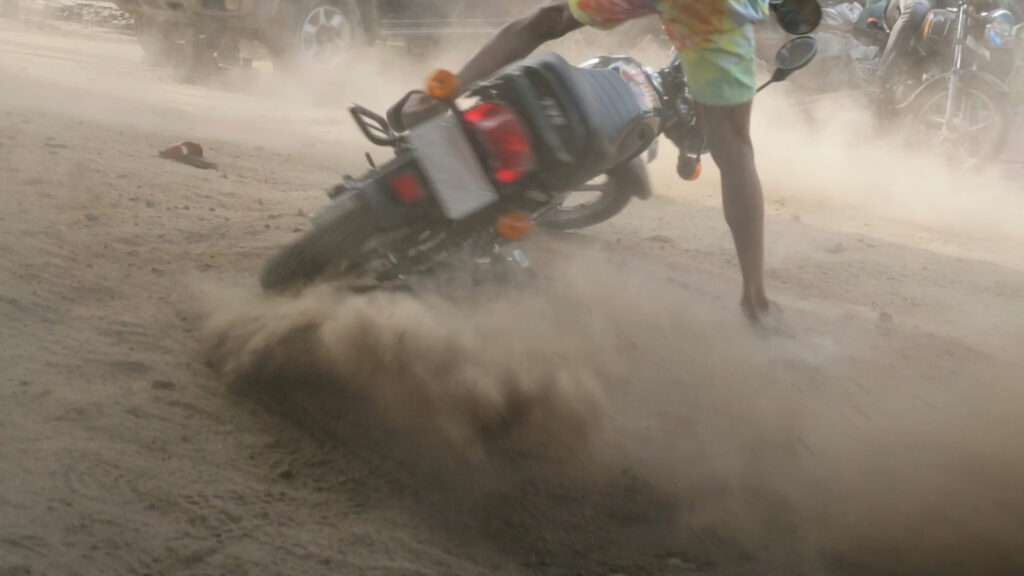
HD digital film, colour with 5.1 surround sound
08:50 mins
Credit: © Karimah Ashadu. Courtesy the Artist, Fondazione In Between Art Film,
and Sadie Coles HQ, London
The film has no clear beginning or end. It inserts you into a moment. Sound, repetition, and strain build discomfort. The sounds themselves are abstract. You feel unsettled, but you cannot look away.
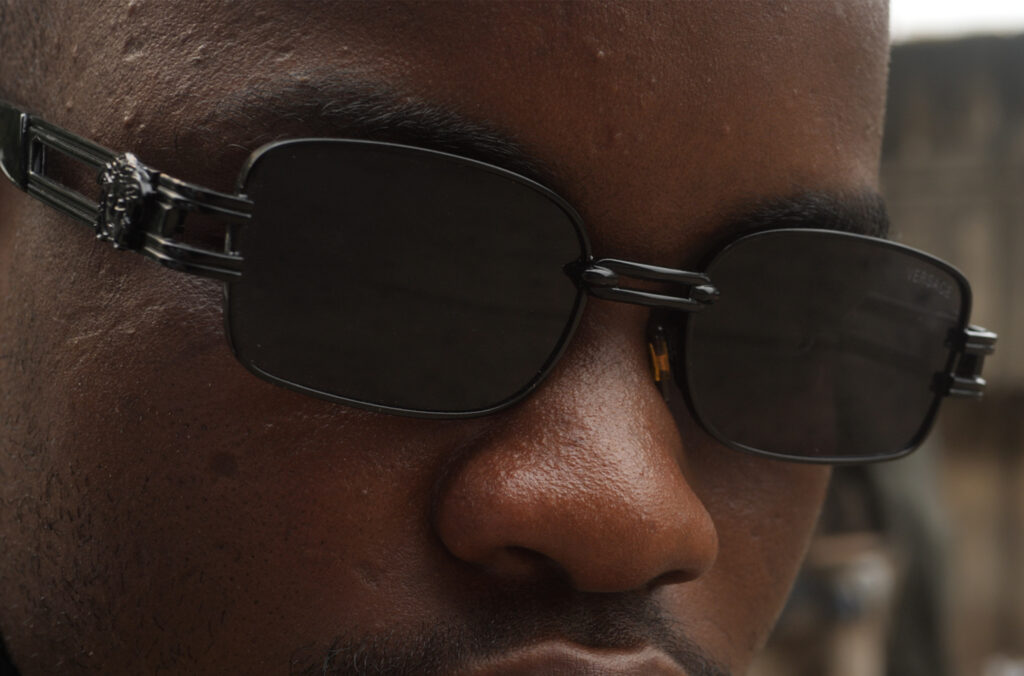
HD digital film, colour with 5.1 surround sound
08:50 mins
Credit: © Karimah Ashadu. Courtesy the Artist, Fondazione In Between Art Film,
and Sadie Coles HQ, London
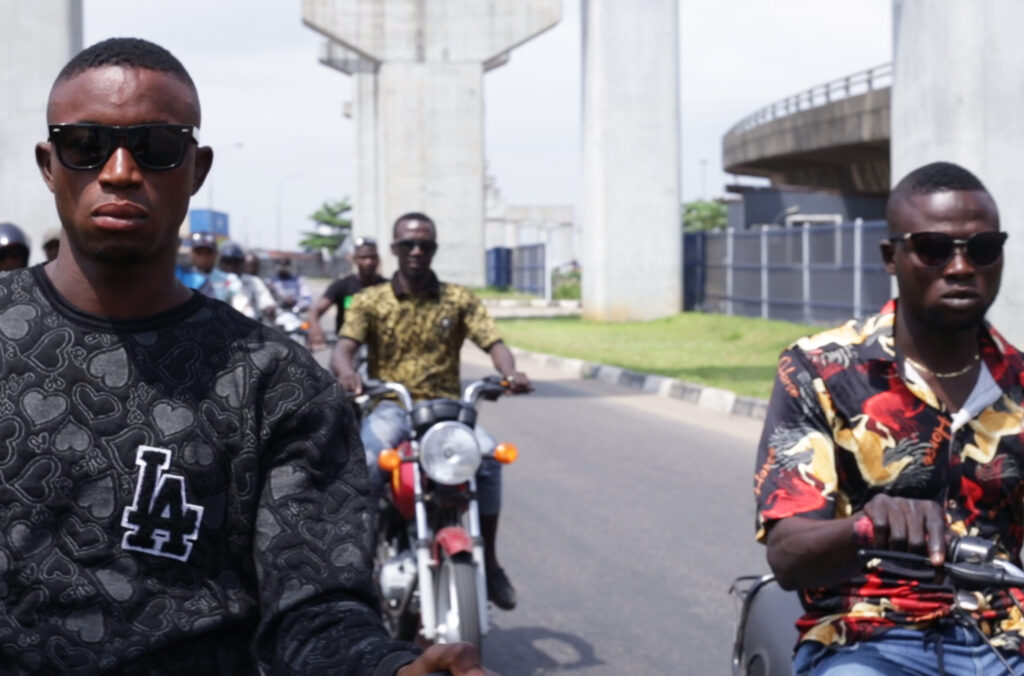
HD digital film, colour with 5.1 surround sound
08:50 mins
Credit: © Karimah Ashadu. Courtesy the Artist, Fondazione In Between Art Film,
and Sadie Coles HQ, London
Brown Goods approaches migration through circulation, trade, and value. What led you to focus on movement and exchange?
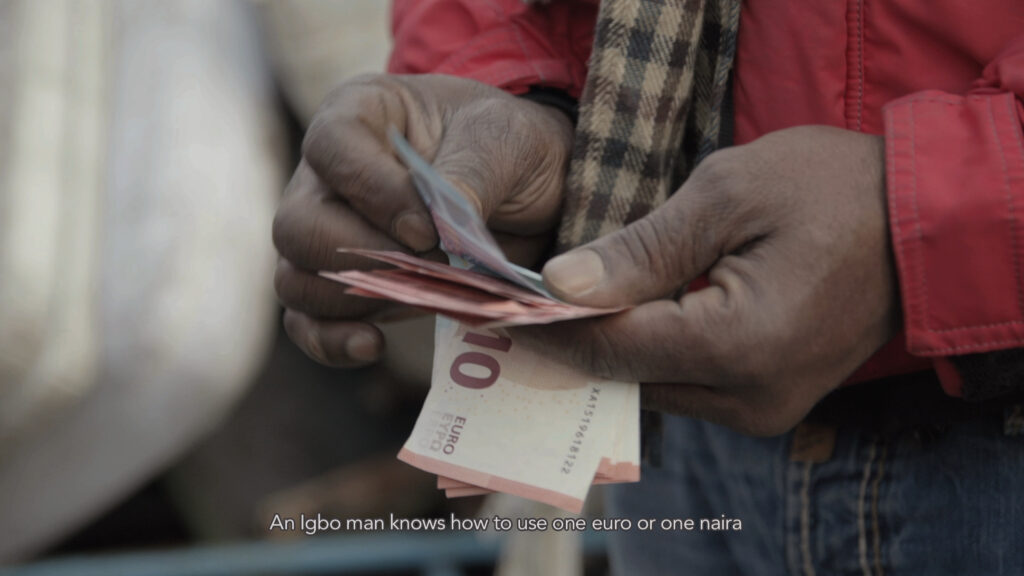
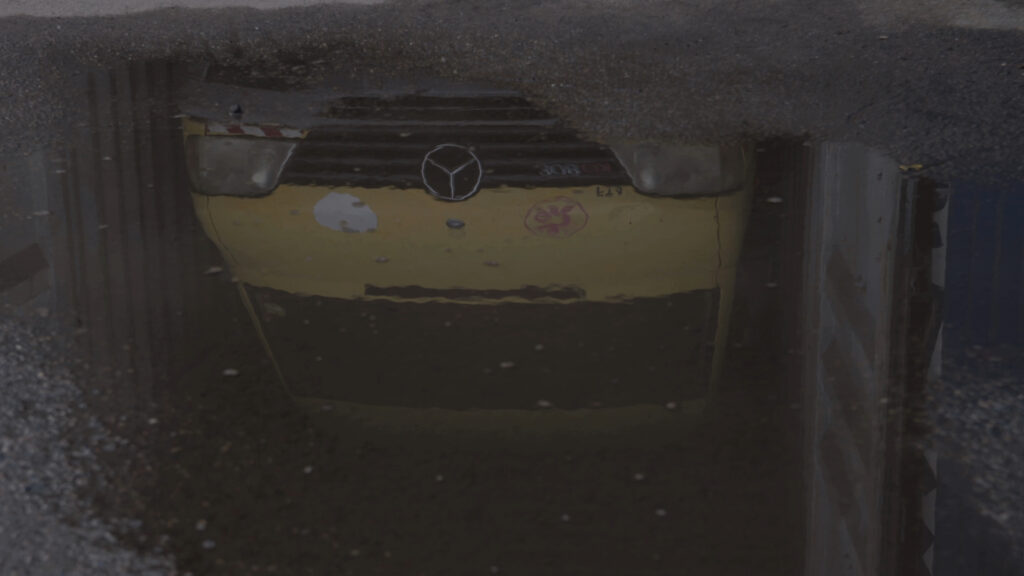
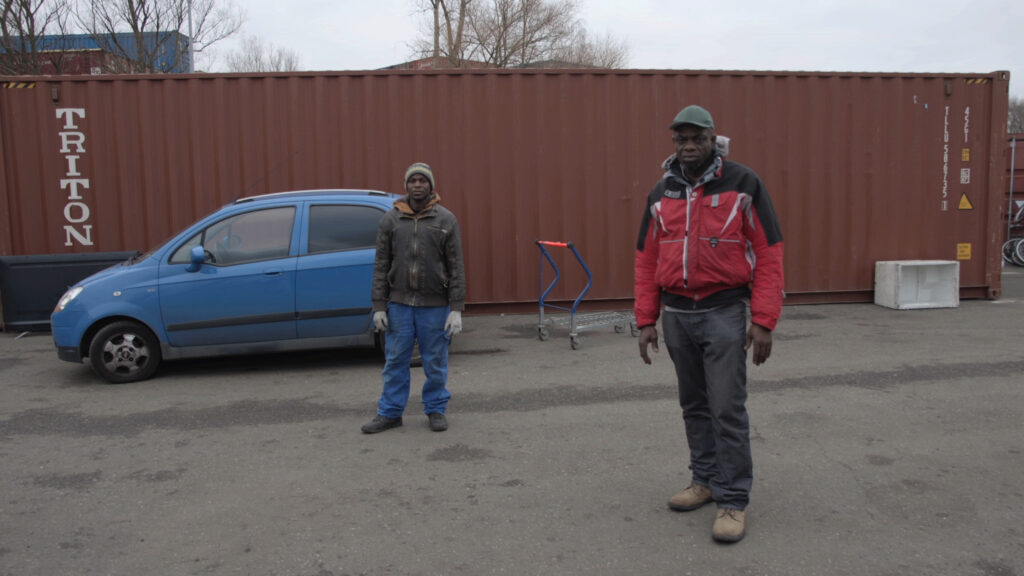
I was living in Hamburg and did not speak the language. I was trying to understand the city and its layers. I discovered an informal trade network run largely by West African migrants, importing and exporting second-hand goods.
HD Digital film, colour with mono sound
12:00 mins
Credit: © Karimah Ashadu. Courtesy the Artist and Sadie Coles HQ, London
HD Digital film, colour with mono sound
12:00 mins
Credit: © Karimah Ashadu. Courtesy the Artist and Sadie Coles HQ, London
HD Digital film, colour with mono sound
12:00 mins
Credit: © Karimah Ashadu. Courtesy the Artist and Sadie Coles HQ, London
The protagonist, Emeka, left Nigeria through Lampedusa. As an asylum seeker, he was not allowed to work officially, so he found a niche to earn money by trading second hand goods to Africa, effectively earning African money in Europe. That cycle fascinated me. The film follows his labor and his thoughts on autonomy and identity, being African and European at once. My films are self-portraits. I find situations that reflect my own questions and experiences.
You have spoken openly about the fact that once a film is completed, you leave, and the relationship often ends. How does that awareness shape the way you film intimacy?
Life happens in moments. You do not enter a relationship thinking about its end. You enter it openly. That is how I approach filmmaking.
I am clear about my intentions, and the people I film know why I am there. There is an exchange, including a monetary one. These are moments of connection. You do not know how long they will last. You just know that you want to connect.
22 March 2026
Credit: © Karimah Ashadu. Courtesy the Artist, Fondazione In Between Art Film,
Sadie Coles HQ, London and Camden Art Centre. Photo: Andrea Rossetti
Across your work, movement becomes a way of thinking rather than simply a way of seeing. What, at this point in your practice, still resists being fully understood, filmed, or held in form?
I always want to feel challenged. The moment I get comfortable, I pivot. That is true in my work and in my life. I want to feel like I am on the edge of something I do not fully understand.
My practice is about questioning. The work becomes an answer to those questions. Right now, I am thinking about how film can expand and influence painting and sculpture. I am working across installation, public art, and developing a feature film. I am always seeking growth. That is the point.
Credits
All images courtesy the Artist, Fondazione In Between Art Film, Sadie Coles HQ, London and Camden Art Centre.
Discover more on karimahashadu.com


