Archive page:


Todd Hido

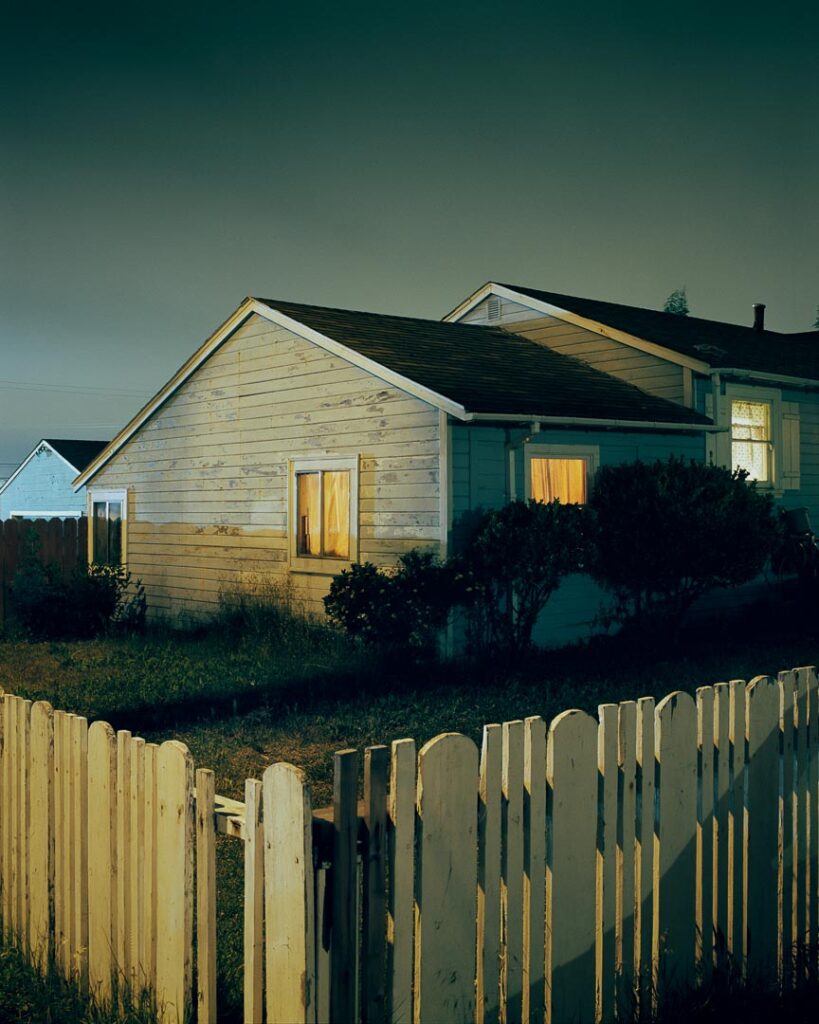
Todd Hido, Untitled #2690, Homes at Night, House Hunting Series (2001)

The Trace We Leave in the Dark

The work of Todd Hido captures the held breath of a moment, a cinematic suspension where the past seeps into the present through the soft glow of a television screen or the blur of a rain-streaked windshield. To look at a Hido photograph is to confront a specific kind of American solitude, one that feels less like an absence and more like an active, breathing presence.

In this conversation with NR Magazine, Hido reflects on the long arc of his practice, from the fast-paced BMX culture of his youth in Ohio to his current preoccupation with the changing global landscape. What emerges is a philosophy of the trace: the belief that an image is a physical artifact of human existence, quiet evidence that we were once here, peering out from the light of a window into the dark.
Youve said that wanting to capture a second or two of something cool” is what first pulled you toward photography. Coming from the world of BMX and street culture, how did that instinct evolve into the slower, more deliberate way of working we see today?

My first experience with photography came from racing BMX bikes as a teenager in Kent, Ohio. Back in 1984, if you wanted to capture something—much like a kid with an iPhone and a skateboard today—you had to use a real camera. That is how I learned the craft, and it simply stuck with me.

I discovered the darkroom in high school. I feel incredibly lucky to have bridged the gap between the analog world I started in and the digital world we occupy now. Those early experiences absolutely inform my process. Because my first serious camera was a medium-format camera, I only had ten pictures on a roll and I worked on a tripod. You had to be very deliberate and slow because you did not want to waste those ten frames. To this day, I still do not “snap” my photos; I learned the analog way.

There is a sense that your lens acts as a form of reconciliation. Does the camera provide a way to revisit those early environments? 

I had a difficult childhood growing up in suburban America. When I was in school learning photography—eventually assisting in Boston and then moving to California—I found many photographers I admired who were photographing their families, such as Sally Mann or Nan Goldin, who created her own community as family.

When I moved to California, I became a student of Larry Sultan. That is when I first discovered that photography could be a whole lot more than just making beautiful pictures. There was a personal content to the work. For me, the exploration of homes at night is very much about retracing and re-figuring parts of my childhood. It is a way of meditating on the concept of home as a psychological space.

There is something deeply instinctive in the way you see. Do you think that perspective comes from maintaining a certain kind of childhood curiosity?

Curiosity, definitely. It is that constant questioning that stays with you. I see it with my own kids—that relentless “Why?” they ask until they get to the very bottom of something. As an artist, you have to keep that. You have to keep asking why a certain light being lit in a home matters or why a certain house draws you in. You never stop being that curious child.
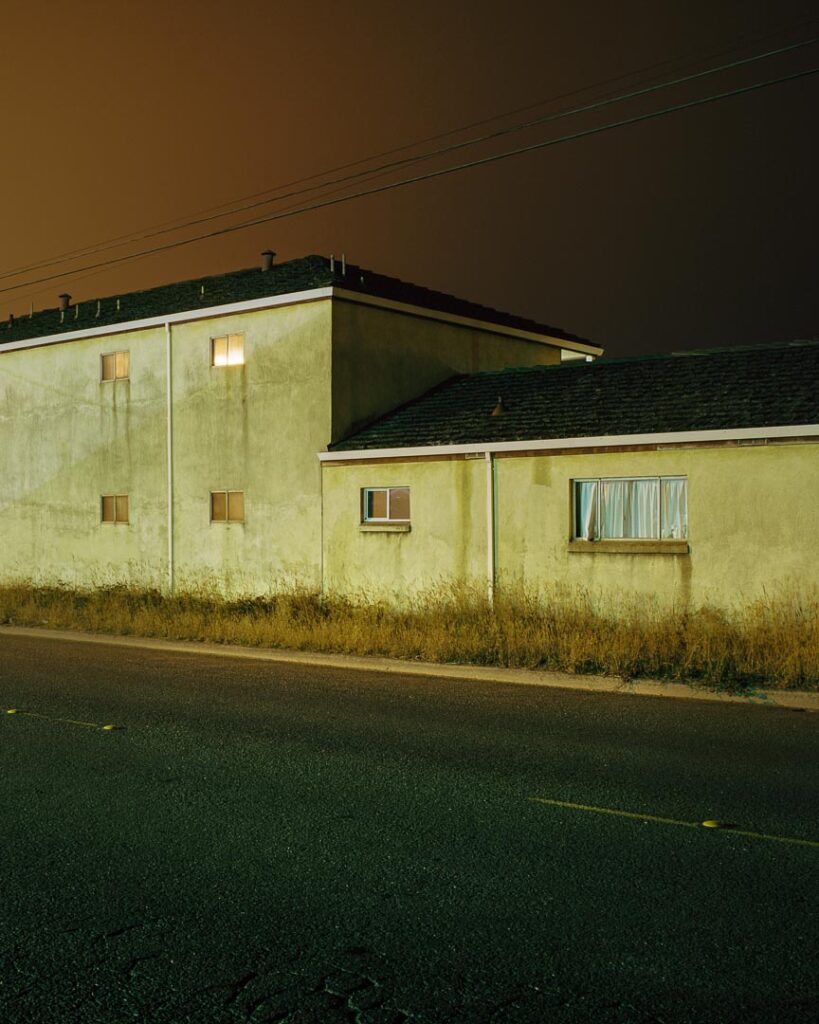
Todd Hido, Untitled #2750, Fort Bragg, CA, House Hunting Series (2001)

Your work often feels like the “middle” of a story, where the beginning and end are absent. Why are you drawn to the power of the unresolved?

I feel like my images are open-ended narratives that do not have a fixed meaning. I believe the meaning of the image resides in the viewer. We complete the stories when we look at them, and everyone does that in their own way. In that form, they are like short, ambiguous stories. I feel ambiguity is an important thing for art, at least for me. I do not like to be told exactly what something means. I prefer to perceive things in my own way, and that is how I treat the people who view my photographs.

This narrative impulse extends to your collecting of found imagery. How does the act of recontextualizing the anonymous past shape your own narrative?

In the beginning, I had an assignment called the narrative workshop with Larry Sultan and filmmaker Lynn Kirby. We had to create a story out of images without using any words. That was a pivotal moment for me. I realized I could use photographs I did not make—from an old family album or things found from the past—and pair them with my own images to make the story deeper and the plot thicker.

Now, my wife Marina and I actively look for those things. If we are out shooting and waiting for the light to get better, we will drive through a town and stop at an antique store or a thrift shop. We frequently find photographs that are deeply meaningful. I especially love school-day portraits. My grandfather once put together an album of his children that I used and there is one of my mother at different points of her life, covering six or seven years with a new photo for every year. I love the idea of seeing someone change through photography like that.

There is a specific kind of solitude at night that feels more like a presence than an absence. What is it about standing in the dark that allows you to focus?

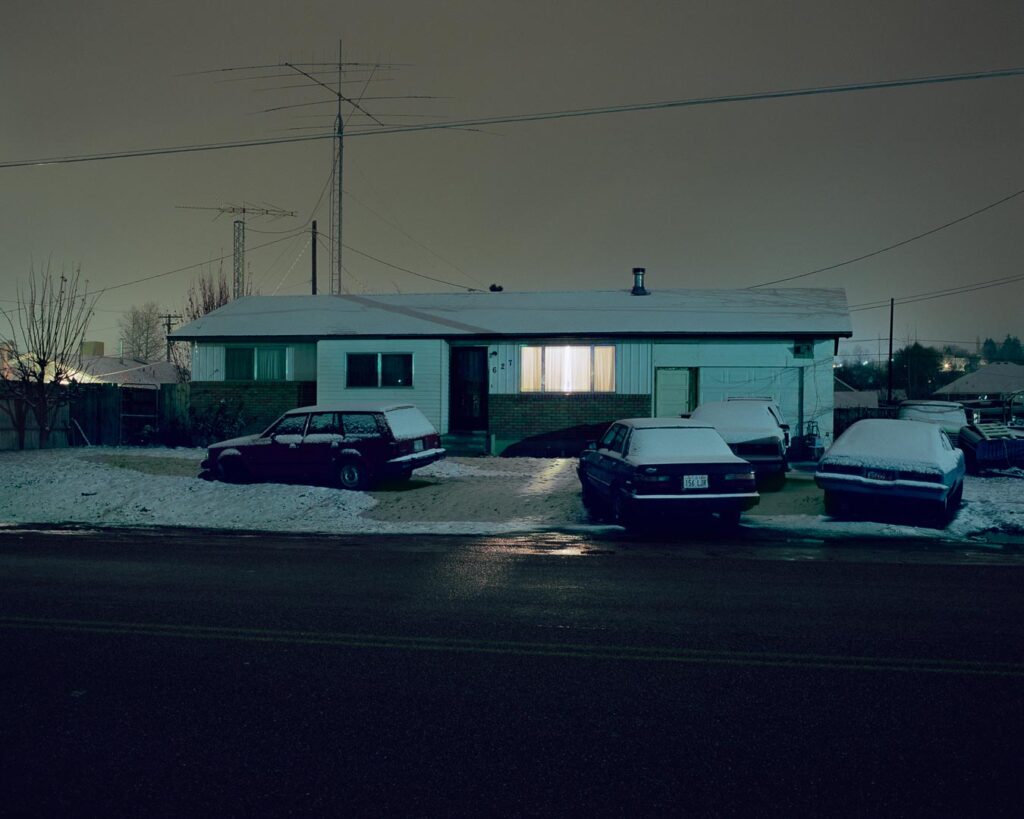
There is something about the mystery of the night. It provides a quiet time to work with a sense of solitude. The busyness of the day has passed, there is nobody emailing you, and you can truly focus. I also love that the night does not always look the same. As you notice in my photographs, there might be a green glow from a fluorescent light. I love mixing those colors together, which does not really happen so clearly during the day. You have to wait for the dark to arrive to receive the different ways light works.
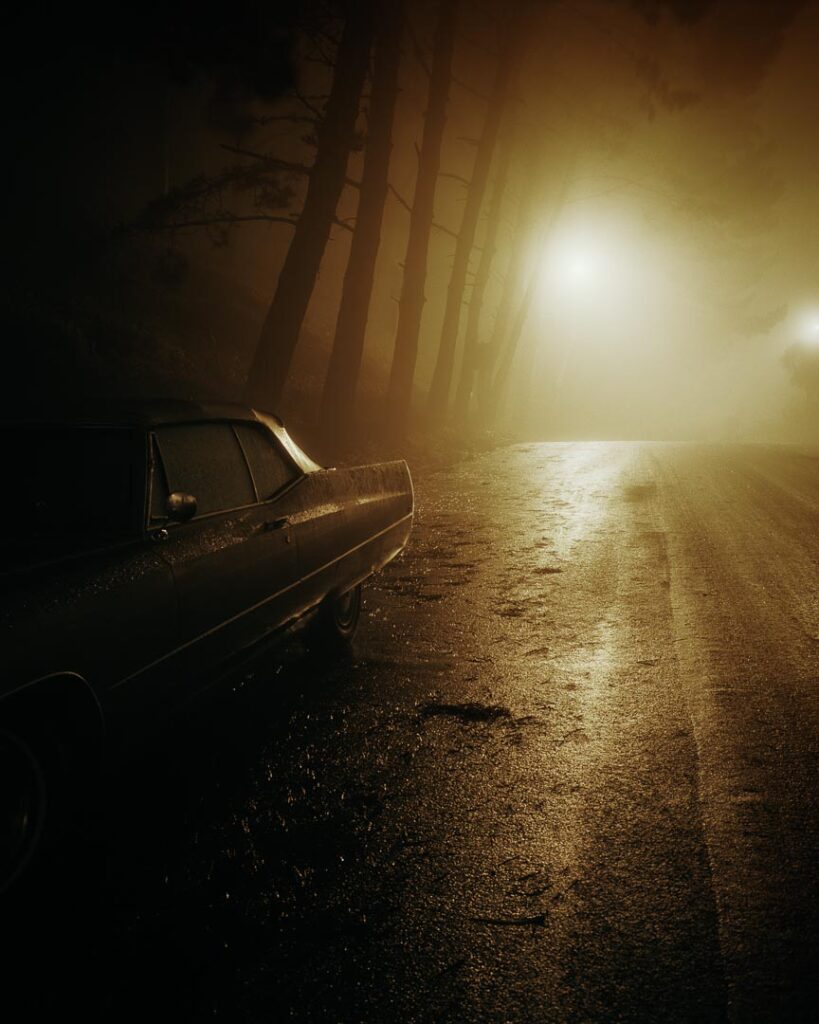
Todd Hido, Untitled #3737-12, House Hunting Series (2001)

In your house images, you’ve mentioned interiority. Is the light in the window a signal of life, or a barrier between the observer and the observed?

I learned early on that you could make a picture of something that is actually about something else entirely. For instance, I wanted to work with the theme of family, but I did not want to photograph my own family. They lived in Ohio and I live in California.

I made one photograph of a small house with two TVs on—one upstairs and one downstairs. Back then, blue light in a window meant someone was watching TV in the dark. I could not help but wonder why they were not watching TV together in such a small house. I realized that the image might say something about their relationship or a desire to be apart. It is the idea that a home is about interiority, not architecture. When the lights come on, the inside seeps to the outside.

You once mentioned that the first time you photographed through a car windshield, it was a mistake. Do you find that these “accidents” are actually the moments where memory is most accurately captured?

My influences are always shifting. The first time I photographed through a windshield, it was raining and the wipers were not working properly, so the image came out fuzzy. However, I realized it felt like memory. Sometimes memory is sharp, and sometimes it is distorted or unclear.
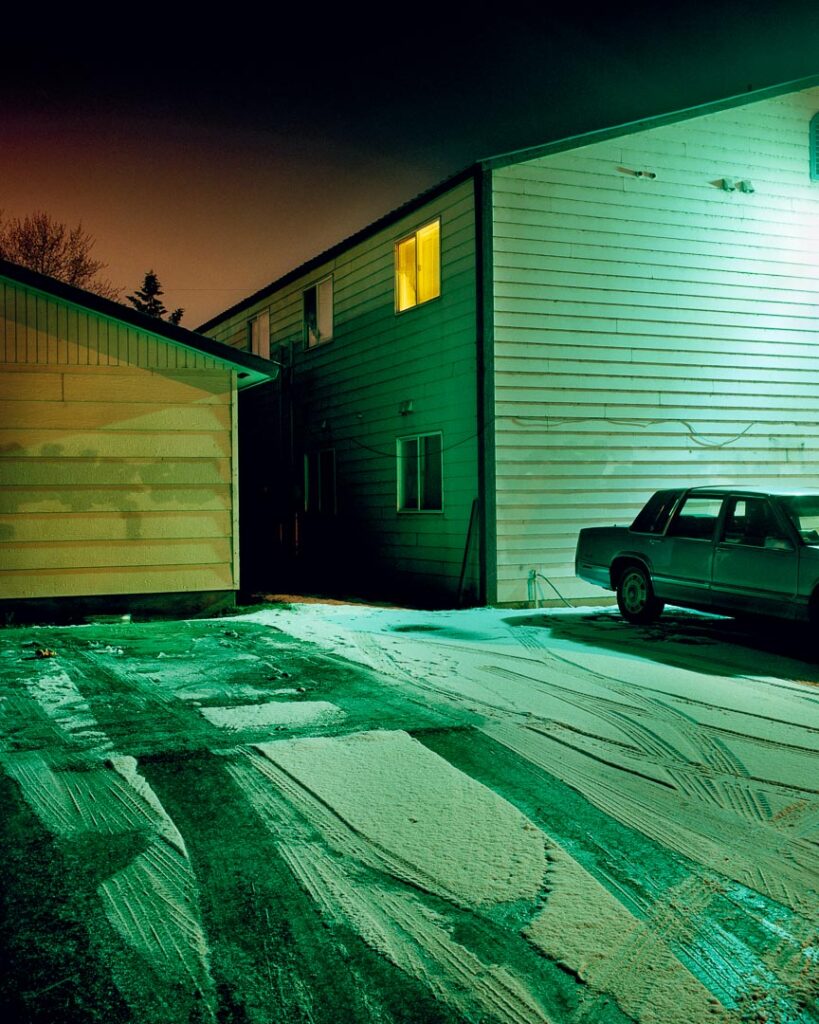
Todd Hido, Untitled #7373, House Hunting Series (2001)

I decide what to release very carefully. I have shot at least 11,000 rolls of film, creating a vast archive that is starting to age beautifully. It is almost like the aging of wine or cheese; it reaches a point where it finally becomes ready. Something I disliked in a photo before, such as a part of the inage being out of focus, might be exactly what I find interesting now. Even after 35 years, I still set up the tripod to see what happens. Photography is unpredictable. There is a reason people used to say, “I hope it turns out.” That is where the pleasure is.

Digital photography offers an instant, disposable gratification, yet you speak about the “trace” of existence. How do you view the modern disconnection from the physical image?

It is fascinating to watch how people photograph now. I recently saw a young woman and her boyfriend at the Duomo, and earlier at the Shibuya Scramble in Tokyo. They were snapping hundreds of throwaway images for Instagram, deleting whatever they did not like. I believe there is something fundamentally important about being deliberate.

However, your generation is seeing the value of slowness again. The fact that Kodak returned to 24-hour film production is remarkable. Seeing people shoot motion pictures on 70mm film is very exciting. I feel lucky to have started with analog because I understand color. I used to produce all my own prints in a color darkroom, and I still print my own work today. I work hard to capture that exact analog feeling I remember with a digital camera and printer.

How has your understanding of privacy shifted as the “expectation of solitude” in public has diminished?

The expectation of privacy in public has diminished because everyone has a camera now. My book, Intimate Distance, carries that title for a reason. When I make those pictures, I never want to encroach on anyone’s space. I always stayed across the street in a public area, being very obvious with my tripod.

If anyone ever asked me to stop, I would simply pack up and leave. I remember the very first time I photographed a home at night. There was a light on in a window, and after I had been there for ten minutes, the person turned it off. That light actually was the point of the picture, because I was photographing the imagined presence of someone inside a space. When that light goes out, the picture disappears. To avoid that—sometimes when I am making an exposure I will point my camera one way but pay attention somewhere else—because I’ve learned people can truly feel the gaze of someone looking their way.
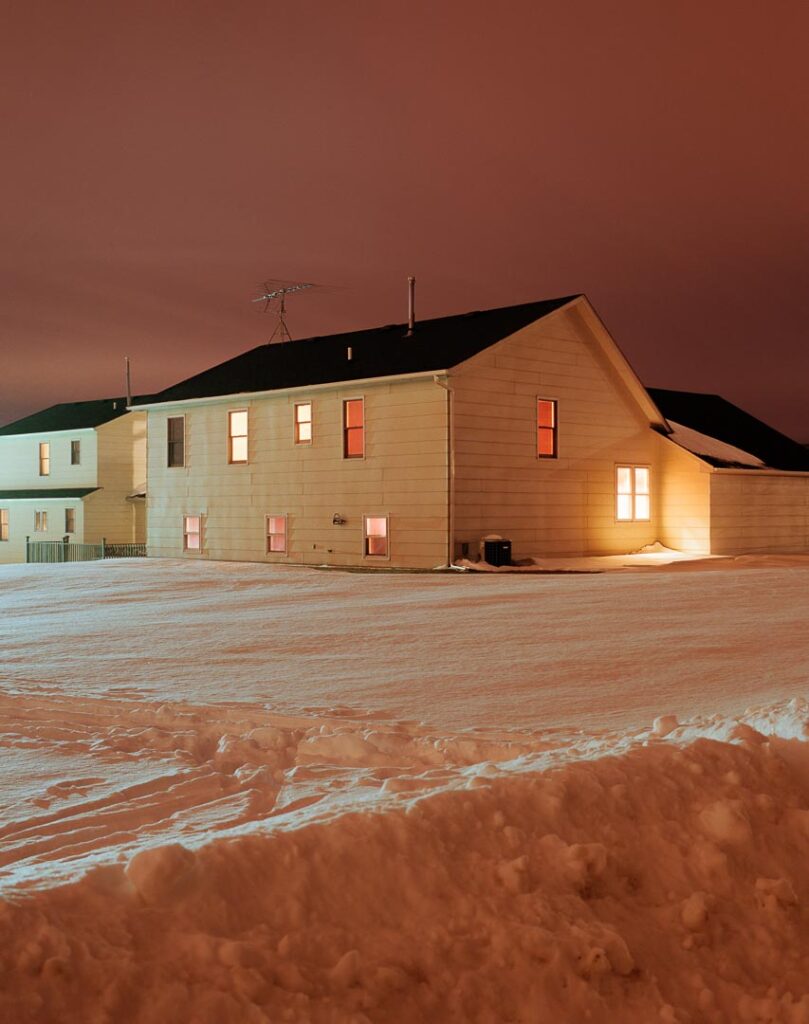
Todd Hido, Untitled, House Hunting Series (2001)

That brings us to Bright Black World. How did your focus shift from the domestic American suburb to a more global, climatic landscape?

My earlier books, House Hunting and Outskirts, were focused on houses at night. Bright Black World was the first time I focused on landscapes outside of the United States. After publishing my mid-career survey, I realized I wanted to move beyond my previous boundaries and respond to the world more broadly.

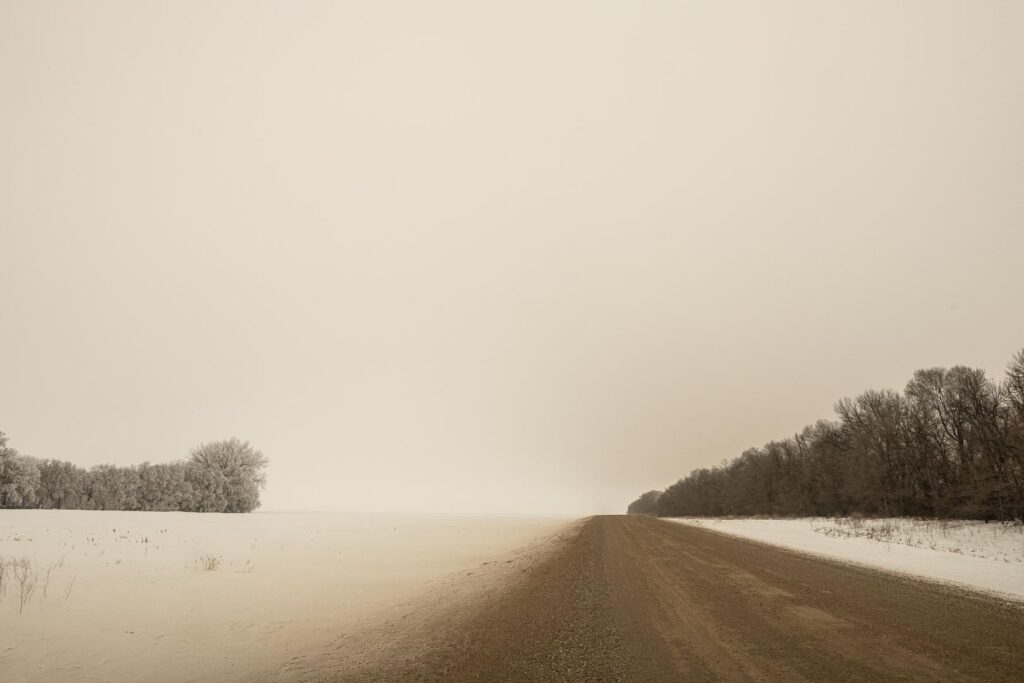
Marina and I began traveling to Iceland, Norway, and the Sea of Japan. I became very interested in weather, specifically preferring rain or snow over clear skies. It is very poetic. At the same time, the world was changing climatically and politically. Marina was reading a book called Ragnarok, which describes an endless winter called Fimbulwinter. The description of that “bright black world” stayed with me. Because I am dyslexic, I connect strongly to certain words, and that phrase became the anchor for the book. That work moves from darkness toward light because you cannot remain in darkness. You need to hold onto hope.

Looking back at your start in Kent, Ohio, did you realize then that photography would be your way of documenting your own trace on the earth?

I was not good in school, and photography felt like the only thing I could do. I was likely in my junior year of high school. I knew it could take me out of my small town. There was a local Ohio magazine shop called International News and Tobacco that was my access to the world. I would read Andy Warhol’s Interview when he was still involved. That was my internet. My father was a plumber and my mother worked in a drugstore, and I knew I wanted something different.

In a world where memories are increasingly ephemeral, what is the risk of losing the photograph as a physical artifact?

You cannot control how a viewer feels, but seeing the work physically as a print and an object is important. My advice to emerging artists is to follow your passion, but be realistic. You need to sustain yourself. Most importantly, make things yourself. To start making a book you do not need a publisher; you can make your own small editions.
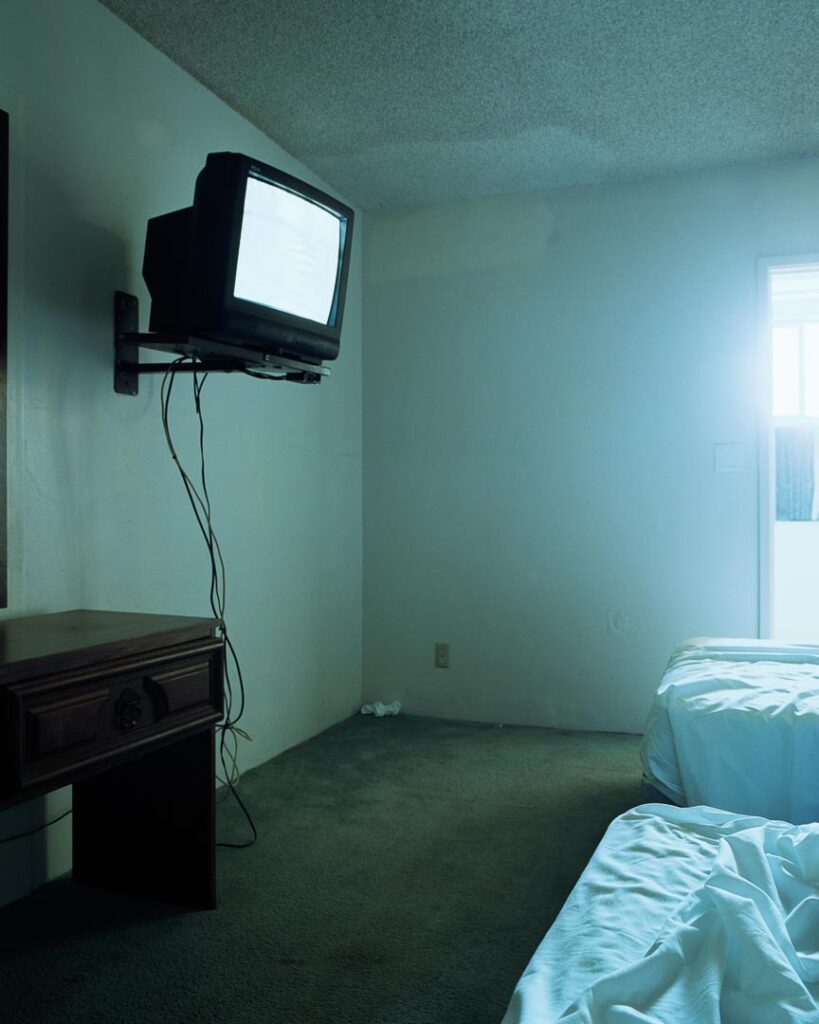
Todd Hido, Untitled #2551, House Hunting Series (2001)

And print your pictures. It saddens me when you find a family album in a thrift store where the lineage is gone or nobody cared for it. Prints are a lasting record of your existence. They are a trace of who you were. In a world where everything is digital, that matters. Not as legacy in a grand sense, but as a trace of your existence upon the earth.

That feels like a deeper kind of legacy.

I feel that too.

Credits

All images courtesy of Todd Hido.
Discover more on toddhido.com

Mesura

Mesura and architecture that returns to genius loci 

Heritage is the guiding force behind Mesura’s work. Inspired by the Roman concept of genius loci, the Barcelona-based architecture studio is drawn to places rich with history—UNESCO heritage sites, towering castles, or even the discarded stones of Gaudí’s Sagrada Família. Working within the spaces history has left to modernity, Mesura brings together fragments of the past with contemporary techniques, creating projects that span the globe.

The studio emerged during a turbulent time in Spain’s architectural landscape. In the early 2010s, amid the recession, a few university friends with a shared design philosophy began to work together in a small space in Barcelona. Their turning point arrived when they entered the EUROPAN 2011 competition, choosing the historic walls of Dubrovnik as their site. What started as an experiment soon became a defining moment—designing with history, rather than just around it.

That realisation shaped Mesura’s identity. Rather than following the traditional model of a singular architect at the helm, the studio’s co-founders— Benjamín Iborra, Carlos Dimas, Jaime Font Furest, Jordi Espinet, and Marcos Parera Blanch—built a space for collaboration, research, and a reimagined approach to design.

In conversation with NR, Mesura co-founder and partner Benjamín Iborra discusses some of the studio’s defining projects. 

Were you always called Mesura?

We just started doing stuff together, but then at some point we said, ‘okay, there’s a little money coming in. So, we need to have a name just to receive the money.’ So, we first used the name of the street that we were based on. It was just a number: a pre-name without any thought behind it. We were called 311 … something ridiculous like that. 

In 2015, the name Mesura was born. The word ‘mesura’ has a lot of meanings. For us, the first important thing was a name that could be understood in many languages. Next, it had to make sense in terms of being something specific to measurement: working in architecture is very technical. 

Nevertheless, what’s most important is what it means to work ‘with mesura’ in Spanish! It means to work with respect. It’s not about doing whatever comes to mind; it’s about taking the time to think things through—twice, three times, even four times. 

Your research is very visually oriented, almost like a pictorial collage of your thinking and the resources you encounter. Walk me through how you start this process: Where do you first go for references? Who are some of the people you interact with to immerse yourself in the environment?

We believe it’s much more interesting to see the process and not just the final result. We really enjoy it! We have this passion for using graphic design and narrative to explain process. At the beginning, we did it just for pleasure. In fact, it happens to be pretty unprofitable because it takes a lot of time. But eventually, we realized that when we spend to genuinely show what we do, the money comes back. 

We like to focus on our communication, but we actually do this in our daily life— we look to research, to investigate, to make models, to try things out.  It’s an atmosphere that we’re generating at Mesura. You’re not just seeing a result: you’re seeing research, trials, and a mix of things that go beyond architecture that are related to design and to culture.

The people that work in-house have great abilities and are very cultured.  We’re involved in universities and there’s always people coming in and out of the studio.  We do these things called ‘Tuesday Talks’ where we bring people that are not architects to the studio every Tuesday to talk about whatever they want. It’s ideas that are totally crazy that contribute to the culture of the people in Mesura. It gets us thinking beyond architecture and to have an open mind in all our research.

To create the Aesop Diagonal store in Barcelona, Mesura sourced KM0 (Kilometer Zero) stones, originally from the Montjuïc quarry.  You describe deploying a “pseudo-archaeological effort” when found the stones that eventually would make its way into the final design. What does “pseudo-archeological” mean and what did this process look like?

We ended up calling this process ‘creative anastylosis:’ I’m going to explain more later. And we’re not just using zero-kilometer stone, we’re reusing zero-kilometer stone. 

For Aesop, we started from [Barcelona’s] local identity. We learned that, whenever they create a stone for La Sagrada Familia that’s not perfect, they throw it back into the mountain. Our first idea was: let’s use these discarded stones to represent the identity of the city. But obviously, La Sagrada Familia, in the name of Gaudi, said, ‘no, this is not possible. You cannot use stones from Gaudi to do your shop.’ 

At first it was a pity, but it opened up another opportunity. La Sagrada Familia was initially done with stone from the Montjuïc quarry in Barcelona: here, a lot of stones were extracted to create buildings in the city. This quarry was closed 60 years ago because it wasn’t possible to extract more from the little mountain. La Sagrada Familia was originally started with these stones, but in the sixties they also stopped. 

We called a lot of people who worked with stone in Catalonia to ask if they had stones from Montjuïc. We ended up finding a family business that, for the past 30 years, had been gathering Montjuïc stones from all the buildings that have been demolished and gathering them in their quarry. 

They said, ‘come to our quarry and just see whatever we got!’ That was amazing. Here is the part about ‘creative anastylosis’. After a historical building has been demolished, anastylosis is the art of gathering those pieces and remaking it in the exact same way. For us, it’s a creative anastylosis, because what we’re placing the stones in a unique, creative way for new purpose. 

It was very interesting because I think we found about 100-200 stones in this quarry. We didn’t need that much so we decided to be more ambitious and use the ones that have memory.  Not just a square block, but one with a shape that you recognize because it has been in another building before. 

The pieces that had some “memory” of an architectural past was a striking choice. It’s interesting to hear that the first approach involved The Sagrada Familia. It has such a strong architectural language—it’s extremely recognizable and particular. 

You’re right. We saw the thrown-out Gaudi pieces, modelled them, and then arranged them for the store. In the end, we had a proposal for a concept. It was really powerful. It had a lot of shape, color, and character… maybe too much. But we’ll never know!

Regarding the Sundial House, given its unique location in the parks of AlUla in Saudi Arabia, what was the client’s motivation for building here? Has it been built?

Our first project in Saudi Arabia was done maybe more than 10 years ago. It was a retail shop in Riyadh. It was one of our very first projects. Since then, there have been many paths that have taken us back to Saudi Arabia. It’s a country that’s changing a lot and we want to be part of this change. They are developing projects in a good way while being respectful to the space. 

One of the projects Saudi Arabia proposed was to create 100 houses. This was a competition, where the result was 100 designs created by all different architects in different places within Alula. We won and received an amazing site: it was a mountain carved out from the inside. With it, we proposed a house that made the niche into a unique courtyard within nature while working with raw materials like the sand and the rock that surround the space. 

We hope that this is going to be done in the future, but we still don’t know. It’s in standby at the moment.

This house in Alula touches on how privacy and protection are two essential aspects of Saudi houses. How did these values end up in the architecture?

Our approach goes back to that initial project in Dubrovnik. Our first intuition was to create respectful design. This meant not competing with the space but observing it. Also, often working on tight budgets taught us to work with what’s available and appreciate vernacular architecture. In the north, buildings invite sunlight in; in the south, they protect against it. There’s some very basic and logical decisions that modern architecture has moved away from. In the end, these logical decisions can greatly reduce the energy that the building should consume. 

Protection from sand and heat often results in enclosed, private, inward-facing spaces, which then influence cultural norms. There’s a deep connection between architecture, environment, and lifestyle. We believe in the concept of genius loci—the Roman idea of a place’s protective spirit. Not every project needs to follow this path, especially in urban settings without a lot of historical context. But in places like Jeddah and Riyadh, where we work alongside heritage architecture, respect for the environment is essential.

Ultimately, we’re continuously learning from the past, seeking the right balance between contemporary design and vernacular traditions. That middle ground is where we find meaningful, sustainable architecture.

In terms of preservation, when describing the Peratallada Castle project, Mesura said: “While, like the artwork, architecture has aesthetic and cultural value (it makes us reflect concepts and see things differently), it can never escape its functionality.” I’m interested in a moment during this project where you felt this tension most—between historical preservation and modern utility.

I’m glad you asked about this project—it was one of our first. What was realized was the landscape project with the swimming pool. Although there were concepts made, we didn’t end up touching the castle itself which held the historical parts.

Functionality in this project started with material choices. “Peratallada” comes from piedra tallada—literally “carved stone.” The village was built from the very quarry where the castle’s stone originated. We went to a specialist to understand the castle’s history. From the outside, everything might look equally old and worth preserving. Nevertheless, the expert revealed some stones dated back to 200 BC, while others were just 50 years old. 

Our initial approach to the landscape project, considering the budget we had, was to work with local stone. We went to people in a nearby town that worked with the material. Like we discovered later on, they had a lot of leftover stones in their quarry from a previous project. 

In Casa Ter, located in Baix Empordà, you built a “Catalan vault.” Why did you choose this typology of structure? What were some of the technical challenges you encountered while working on it?

The site is incredibly beautiful, so we wanted the project to feel calm, grounded, and not aggressive. To do this, we created a single-story structure, with long, extending horizontal walls that connected to the landscape. But the client was set on having a second floor to capture views of the sea.

The Catalan vault became the perfect solution for two reasons. First, it allowed for a smooth transition between the ground and the next floor up—rather than a stark, boxy structure. Second, it honored the idea of genius loci, protecting the spirit of the place.

This project made us realize how important of a decision the vault was, not just in terms of its form, but also in its techniques. It’s the kind of thing that will be lost if architects stop pushing to have them used in their projects. When we saw an old, expert artisan executing this vault technique, and alongside him was a young kid learning the craft, we understood that by incorporating this method, we weren’t just building—we were helping this skill get passed from generation to generation.

Technically, the vaulting process is a highly specific local tradition, typically done by layering locally made ceramic pieces in a way that creates structural integrity. However, we pushed it further by using an atypical shape. Instead of the conventional vault, we created a half dome. It was creating something new while still rooted in tradition.

The materials were equally important. From the start, we committed to using local ceramic and stones from the nearby River Ter—hence the name, Casa Ter. The entire process was beautiful, balancing the old with the new in a way that felt both respectful and innovative.

Credits

  1. Mesura, Vasto Gallery. 2023. Photography by Salva López.
  2. Mesura, Aesop Diagonal. 2024. Photography by Maxime Delvaux.
  3. Mesura, Sundial House. Photography by Beauty & The Bit / Alba de la Fuente.
  4. Mesura, Peratallada. 2016. Photography by Salva López.
  5. Mesura, Casa Ter. 2019. Photography by Salva López.

All images courtesy of Mesura

Subscribe to our
Newsletter