Archive page:


Palazzo Tafuri

Poetics of Spatial Experience 

Bachelard once wrote that a room is a living organism, its walls the skeleton of imagination. Architecture, in this sense, is a structure of perception. A hotel, rigorously conceived, is an orchestration of presence, movement, and attention. To inhabit it is to enter another register of consciousness.

Palazzo Tafuri in Nardò is a record of adaptation, a layering accumulated over centuries, an archive of necessity and invention.

When Vincent De Cat  and Claudio Colaci first encountered the palazzo, its scale was imposing and its presence commanding. “As soon as we laid eyes on the palazzo, its potential became clear. The palazzo began to reveal its character. You feel small in a space like this, yet also enchanted. The palazzo demands patience, attention, and respect — it speaks, if you’re willing to listen.”

The nineteenth-century construction unified several pre-existing buildings, forming a complex spatial organism. Floors, staircases, and courtyards still bear traces of prior inhabitation. “The building revealed a kind of urban poetics,” Colaci notes. “Each part had its own energy. Some areas were a disaster, with new materials clashing with the historic fabric, but its narrative guided us. It taught us where to honor history and where to introduce modern interventions.”

The restoration was charged by Count & Countess Antoine and Ghislaine d’Espous, unconditional lovers of Italy. Their desire to create a place of hospitality set the project in motion, yet it was conceived as a carte blanche—offering architect Claudio Colaci and project lead and interior designer Vincent De Cat  remarkable latitude in shaping the palazzo’s transformation while honoring its layered memory. Colaci and De Cat  engaged with the Tafuri sisters, whose ancestors had carried out transformative works in the late 1800s and evoked as well the long-standing presence of the Zimara family. The subsequent Mera ownership, spanning from the 1970s to the early 2000s, was acknowledged as part of the palazzo’s more recent history. This layered approach informed interventions across the noble floor, the ground level, and the stables, where the equestrian past was carefully retained: the original stable names were preserved and integrated into communal spaces, extending the palazzo’s narrative into the present.

A collapsed roof revealed arches on the second floor, prompting a more open arrangement for suites, while the largely intact first floor became the measure of fidelity. “The fallen wooden roof revealed beautiful arches,” De Cat  recalls. “They allowed us to imagine lofty, modern suites while respecting the historic floor. The dialogue between past and present became the core of our approach.”

The principle was selective adaptation. Preserved elements were restored; altered areas treated with restraint. Original openings were reopened, and new apertures introduced only where proportional logic allowed. Technical systems, including mechanical infrastructure and elevators were concealed, absorbed into the structure. The design team sought to avoid the hallmarks of a hotel; “Spaces should not feel staged or transient. Instead, the spatial experience should reveal the soul within.”

Restoration demanded close collaboration with local craftsmen, many still working with traditional techniques. “At times it felt impossible. The building required solutions that were both structural and narrative. Techniques preserved memory while ensuring stability. With the craftsmen, we maintained the old walls, mimicked their original plaster, and gave continuity to the story.”

At the center of the palazzo, the courtyard orchestrates circulation. Daylight enters from above, shaping hierarchy and rhythm. “Opening the ground floor was transformative,” Colaci explains. “Previously closed off by stables and service areas, it now communicates, invites guests and becomes the center of gravity. You inhabit the present but sense the palazzo’s accumulated recollections beneath the feet.”

Olive trees, climbing vines, and regional herbs connect to Salento’s cultural and domestic past. Some species were selected for their resonance with plants once cultivated by the Tafuri family. A trace of accumulated recollections embed the rhythms of past inhabitation into the present.

The pool follows this logic. “We didn’t want the pool to feel like a new imposition. The idea was to rediscover hidden infrastructures and adapt them so that contemporary comfort remains part of the building’s narrative continuity.” The pool reactivates historic infrastructure, integrating modern use with its original technical function.

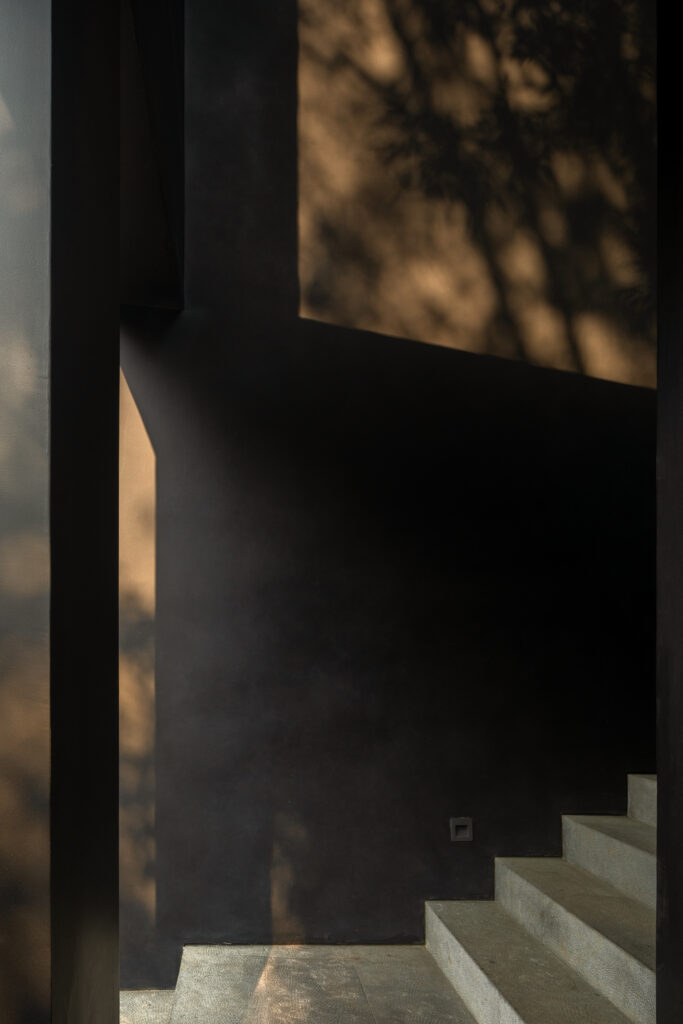
Inside, the palazzo engages as a living presence, allowing materials, light, and proportions to shape experience. Plaster walls, stone floors, and wood surfaces were restored, layers of lime plaster applied using historic techniques. Surfaces remain porous, textured, and responsive to light, with a neutrality of modern finishes. Oak, walnut, and linen recall the humility of Mediterranean. Bespoke elements crafted by local artisans amplify the ethos. Chromatic choices derive from traces uncovered during restoration: muted ochres, pale stone, and grey-green washes, anchoring the present to a palette inscribed in the building’s essence.

The interior exudes rare serenity, a subtle emotional cadence. Spaces feel simultaneously intimate and expansive; quiet corners invite reflection, while double-height rooms convey presence and scale. Here, the palazzo’s soul becomes palpable—a delicate intensity.

“Guests should feel comfortable, as if inhabiting a home,” De Cat  observes. “The atmosphere is calm and natural, connected to the place’s character. We wanted warmth in dialogue with the elegance of the past owners.”

Even the bathrooms. Generous proportions echo elongated service spaces of earlier centuries. These volumes, often overlooked in hospitality design, extend the building’s narrative into the contemporary.

Lighting and signage follow the same principle. Illumination reveals texture and produces varying atmospheres across day and night. Signage was applied with a tattoo-like technique, respecting the building’s patina.

The result is understated. “Reading guest reviews, people often remark on authenticity,” De Cat  observes. “Understated elegance. A living structure.”

Transformative, the project shaped the team profoundly. “It taught us lessons no formal training could offer. Integrating the building’s demands with client needs and contemporary function was intense, but the result endures, a dialogue between history and inhabitation.”

Palazzo Tafuri is both residence and record: a structure of memory and imagination that continues to evolve through use. Its intelligence lies in precision, proportion, and light.

Tafuri endures as a space of narrative density. Its poetics in sentiment, and how movement as well as the measured silence orchestrate an experience simultaneously contemporary and historical. neither preservation nor novelty, but the capacity to choreograph memory. Architecture’s most lasting effect.

Architect · Claudio Colaci
Project Lead and Interior Designer · Vincent De Cat commissioned by the owners Count & Countess Antoine and Ghislaine d’Espous.
Hotel Director · Athanase de Joussineau
Find out more on palazzotafuri.com

Cinna Peyghamy

Auditory Matter as Ritual Form and the Space Between

What does it mean to truly listen, not as a passive gesture but as a radical, embodied act of attention? In a culture shaped by speed and spectacle, listening offers a slower kind of presence. One rooted in care, intimacy, and transformation. One that moves beneath language.

Cinna Peyghamy brings us into contact with the spatial texture and weight of sound. Moving between percussion and electronics, field energy and sculptural precision, his work challenges the idea of listening. Here, sound is force. It’s matter. It’s ritual. With a background in science and a commitment to improvisation, Cinna treats sound as a phenomenon to be shaped, inhabited, and released. In this conversation, he speaks of silence as suspension, of performance as a state beyond thought, and of listening as a sensual, even sacred act.

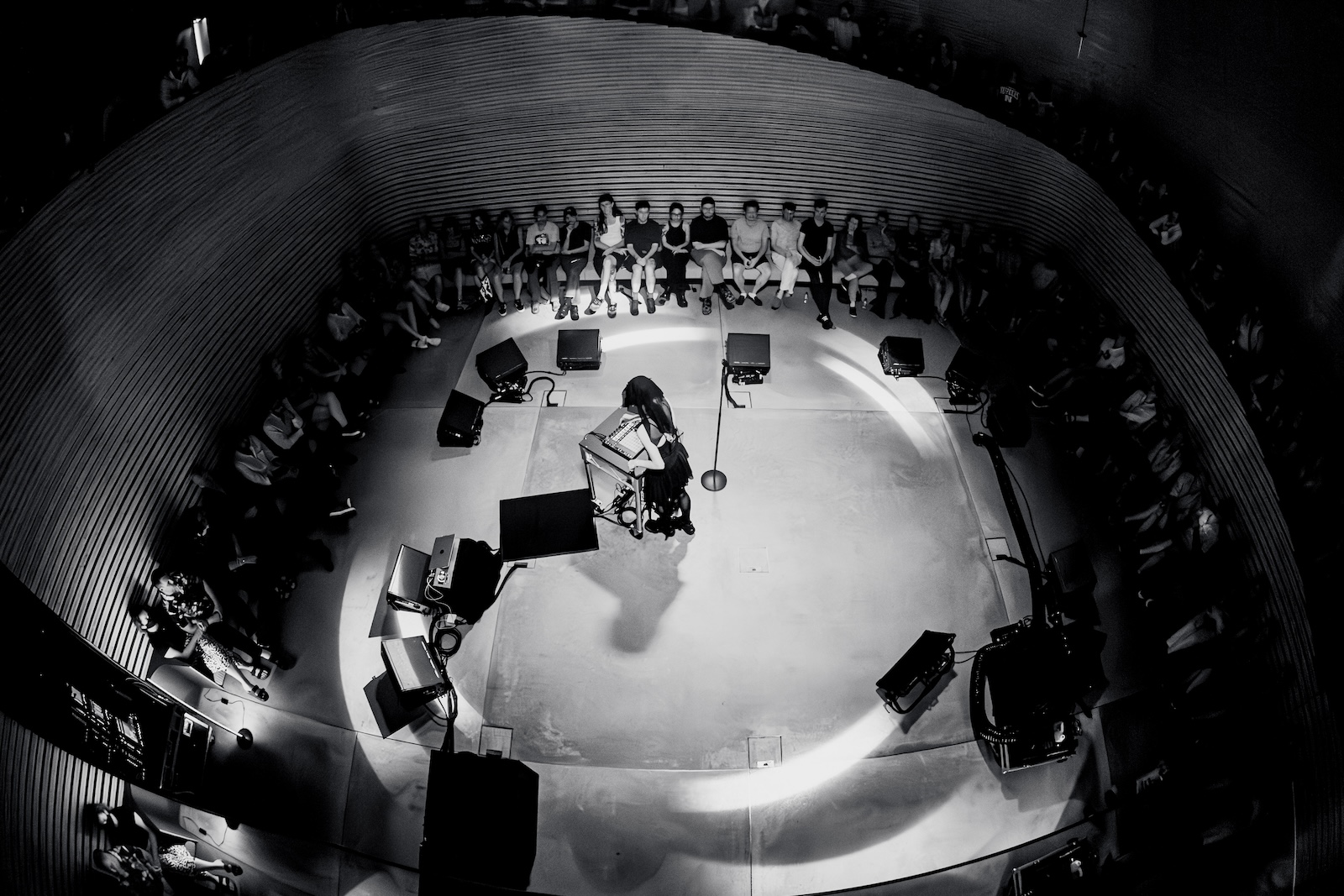
This conversation coincides with the presentation of Cinna Peyghamy’s spatial sound work within the AEF x SNFCC x MONOM program in Athens. Developed in collaboration with MONOM and originally conceived for the 4DSOUND system, the piece deepens Peyghamy’s exploration of vibration, resonance, and embodied sonics. Here, sound is not treated as discrete, rather as a sensorial continuum to be entered, absorbed, and metabolised. The work resists the notion of performance as delivery; instead, it unfolds as a durational ecology of attunement, shaped by presence, porosity, and mutual transformation.

What happens when we reopen the ear , not only as a site of perception, but as a threshold for memory, identity, and transformation? How might deep, embodied listening allow us to access the invisible architectures that shape who we are , internal time, ritual, spiritual resonance , and reorient us toward a more fluid, post-human understanding of self? In a world saturated by visual dominance and extraction logics, can listening become a quiet form of resistance, a way to transmit emotion, reimagine presence, and dissolve boundaries between body, landscape, technology, and the unknown?


That’s such a deep and fascinating question. I always like to start by saying that sound doesn’t need images to be understood. Hearing is one of our most fundamental senses, but it’s also a way of perceiving the world across different timelines and intensities. Whether you’re in a concert hall or walking through a forest, sound is something you can feel. It surrounds you, it moves through you. It’s not abstract—it’s physical.

In French, we use the word matière to describe sound. It means material, something tactile. And I treat it like that—as something I can shape, mold, and work with like clay. Unlike vision, which we can close off easily, we can’t simply choose not to hear. You can close your eyes, but you can’t close your ears. That makes sound uniquely intimate, but also inescapable. It reaches you whether you invite it or not.

Orson Welles once said something about how we’re addicted to images, and I think that’s still true. We live in a visual culture. But sound is older. In nature, it’s how animals protect themselves. It’s how a child cries for its mother. It’s primal. And yet we tend to treat it as background. I’m interested in what happens when we bring it back to the foreground.

How do you see sound as a source of transformation?
Sound is transformation. It is energy in motion. A wave doesn’t move matter, but it transfers force. It literally reshapes the space around us. It changes how the air behaves. When a wave hits the ear, it gets translated into electric signals in the brain—and that translation becomes emotion, memory, sensation. So even before you attach meaning, sound is already doing something to you. That’s the level I’m working on. The invisible level that still leaves an imprint.

When you’re composing, how does that sense of energy and space influence your creative process?

I often describe myself as a two-faced musician. I play acoustic instruments, but I also compose electronic music. My work lives in the space between—electrifying the acoustic and bringing acoustic resonance into the electronic world. That duality is everything to me.

The way energy feels is completely different depending on the source. When I’m playing percussion, I’m the source. I create the sound. My hand hits the skin, I feel the feedback in my body. There’s a direct, muscular relationship to the sound. But when I’m composing electronically, I’m working with machines and software. The speaker becomes the voice—but it’s designed, manufactured, mediated. It’s a different intimacy.

At the computer, I’m focused on texture, weight, spatial balance. How do the frequencies sit? Where does the bass fall in the room? But when I’m performing live, it’s almost athletic. I think about posture, hand coordination, physical stamina. It’s about staying attuned to the space and what it’s asking for. One is psychological, the other is fully embodied. Both are necessary.

Silence and decay seem as present in your work as tone and rhythm. What is the function of absence in your compositions? Is there a kind of sacredness in withholding sound?

Absolutely. There’s a quote often attributed to Chopin—”Silence is music”—and I believe it. But silence is difficult. Most people are afraid of it. Even outside of music, silence in conversation can feel awkward, like something you need to fill. But I think silence is also peace. It’s immobility. It slows things down. It invites reflection.

Silence functions very differently depending on the space. If I’m performing in a church, silence has weight. It echoes. You can use it to stretch time, to create tension, to let something land. In a club, it’s trickier. Silence exposes the background—the bar noise, the chatter, the bodies. It’s more fragile. But even then, it can be powerful if you trust it.

When I’m composing, I often return to a track and realize I’ve said too much. Why is there so much happening? Did I really need that many layers? Maybe not. Subtraction is a tool. You remove until you’re almost at silence—but not quite. That in-between space is where I try to live. That equilibrium, where presence and absence are in dialogue. It’s a place of heightened listening.

How did your collaboration with MONOM influence the way you think about resonance, space, and performance?

I worked with MONOM in May 2024. Usually, artists do a residency and create a fixed piece using their 4DSOUND system. But from the beginning, I knew I didn’t want to compose a finished work. My practice is rooted in improvisation. I never go on stage knowing exactly what I’ll play. That’s what makes each performance alive.

The MONOM system is incredibly complex—more than 50 speakers in a multidimensional space. With the spatial sound engineer, we adapted my usual stereo live set into a format that could move through that environment. I didn’t write anything in the traditional sense. I treated the space as an instrument and trained myself to play it.

Every day during the residency, I practiced, improvised, tested gestures. How does a frequency move across the room? How can I shape it in real time without hiding behind a screen? We developed a system that let me perform the room. The final show was fully improvised, like always. But it felt different. I had to react instantly to what I was hearing. That concert was recorded and will be presented at Subset. It’s a piece made entirely of live responsiveness.

What does it feel like to perform in that way?
When I perform, I enter a very specific state. I’m not thinking. I’m not planning. It’s like a small inner sphere—me, my drum, my synth. My hands are doing the work. I let them think for me.

It doesn’t matter if there are ten people or a thousand. The focus is the same. It’s not about control. It’s about attainment. The performance reflects the space, the mood, the temperature, the breath in the room. Everything affects everything. I like to compare it to walking a tightrope. You can’t lose balance for even a second. That’s what keeps it alive.

Questions from Christina Vantzou:
Is there a sound you
ve always wanted to hear but havent been able to?

I’ve always wanted to hear the sound of an earthquake. Not buildings falling, not the aftermath. I mean the sound the earth itself makes when it moves. That ultra-low frequency that we can’t quite access. It’s probably more of a vibration than a sound. But I hope one day we’ll find a way to hear it.

Would you say sound exists more on a cosmic level or a sensual one?

Sensual, definitely. What we talked about at the beginning—sound goes through you. It wraps around you. It touches you. That’s the core of it. It’s bodily. It’s intimate. It’s a feeling.

Photography · Payram
Discover more on aefestival.gr

Christopher Puttins – Arkadiusz Swieton

Team Credits

Photography · Christopher Puttins
Styling · Arkadiusz Swieton
Hair and Makeup · Mariana Colemenares
Model · Tory (Modelwerk)


Designers

  1. Tie and shirt SOJI SOLARIN and tights WOLFORD
  2. Shirt and shorts SOJI SOLARIN, tights FALKE and shoes Stylist’s archive
  3. Top DOMINIK BITTMANN, shorts MAISON MARGIELA and shoes Stylist’s archive
  4. Dress and bra SARA SPENNER, skirt COMME DES GARCONS and shoes Stylist’s archive
  5. Headpiece SARA SPENNER

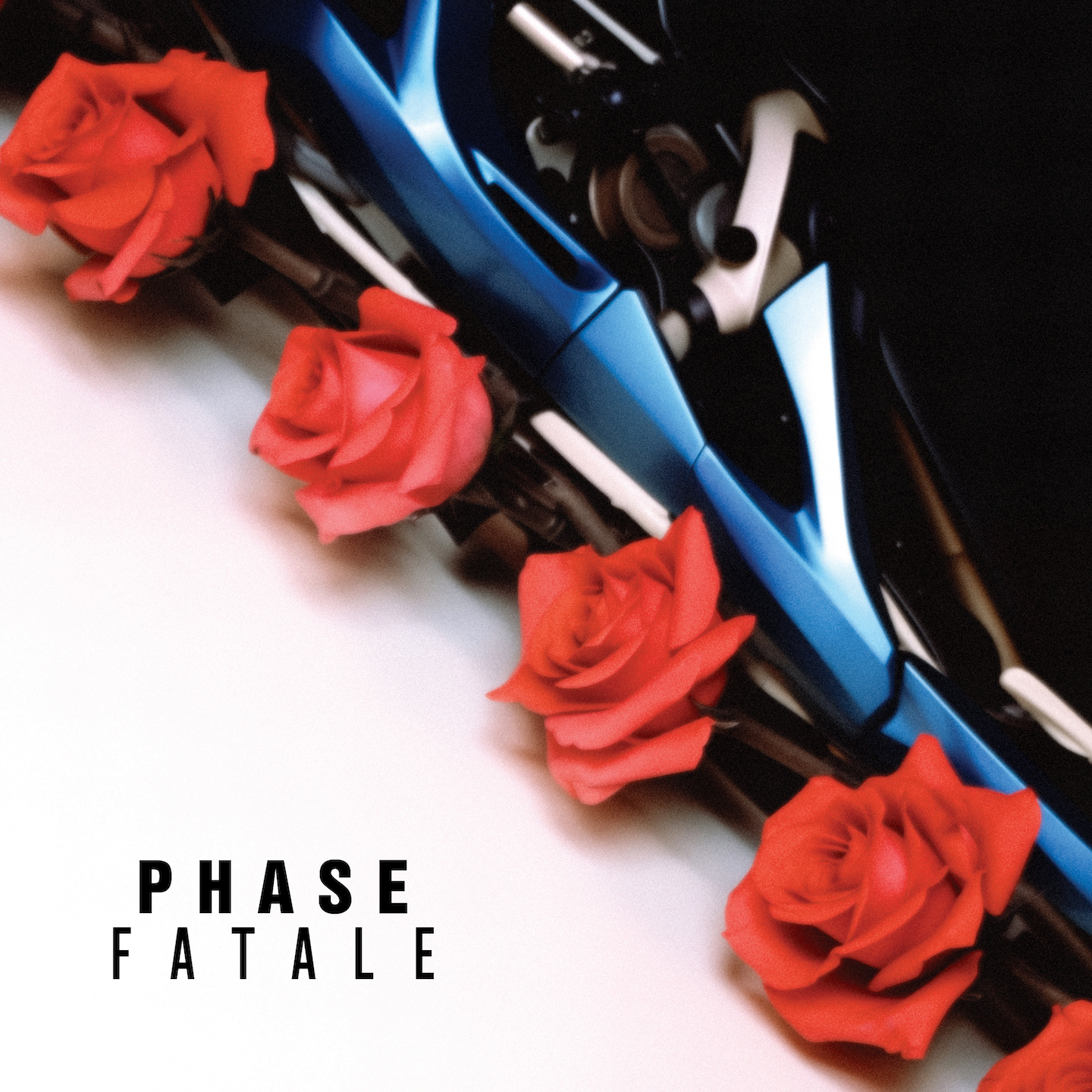
Phase Fatale

Introjection

NR presents Track Etymology, the textual corollary to nr.world’s exploration of contemporary soundscapes: A series of short interviews delving in the processes and backstories behind the releases premiered on nr.world’s dedicated platform.

Hello Hayden! It’s a pleasure being in conversation with you. How are you feeling about the release? 

With this record, I pushed forward my techno side reflecting the direction I’ve been heading towards the past few years, where I want to take myself and the label. I explored new production methods like broken beats and using more digital instruments to create a future leaning dance floor sound. 

It seems that lately you have been dedicating yourself a lot to the production-side of your practice. Last year, it had been 5 years since your last solo EP, and now we’re already getting Love is Destructive. What changed? did you feel the need to build more upon your personal take on music and get in a more narrative mood? 

I never really stopped producing. I also released my last album in 2022 and the one previous on Ostgut Ton in 2020, combined with many collabs, VAs, and remixes. So while there was a gap in EPs, there was never a gap in the music. However, I definitely enjoy working on a more dance floor 12” again as it’s more concise and to the point, serving the purpose to work in the club. I feel like I needed to create my take on current techno elements used and push it forward with this EP which makes more sense in this format. 

‘Ambivalence’, ‘Love is destructive’, ‘Introjection’ – Titles of your new production seem to be quite closely thematically linked. How do these titles reflect the conceptual landscape of the album, and what narrative or emotional journey do you aim to guide listeners through with each? 

These titles link to a journey of love lost and love found. I believe uploading the music with meaningful titles combined with the artwork provides a more cohesive package for the record itself. But it’s open to the listener’s interpretation at their will. 

What were the influences and core elements that have shaped your project, and how do they intersect with your journey as a DJ and producer? 

The main influence is the cross-pollination of producers such as Regis, Silent Servant and Function and my roots in guitar music like My Bloody Valentine, Godflesh and The Cure. What I like in these bands is the combination of harsh noise with a musical structure palatable to a larger audience. This balance I also try to achieve in my own music.

“In techno in general, I look for this balance of sonic experimentation and boundary pushing which is all locked in by repetitious and danceable rhythms. The heaviness is subliminally inserted into the music itself.”

The relationship between sound and embodiment has been a recurring theme in your work, with references to the corporeal experience of rhythm and resonance. How do you explore the tactile dimensions of sound in your compositions –What is your relationship with audience perception, and how does your knowledge of audience response to tracks inform your compositional process? 

When producing club music, I always imagine how it works on a dance floor I’m familiar with such as Berghain, and it’s usually inspired by moments performing or dancing there. I look to accentuating different frequencies as means of controlling the body while also keeping the spectrum well-balanced. There is only a finite amount to store within the music, and it’s also important not to overdo it. In terms of composition, I arrange with the notion that the tracks are used within a DJ set. So they are composed in such a way that the changes hit at the right time creating more drama in the mix. 

As an artist deeply embedded in the underground electronic music scene, you occupy a unique position at the intersection of countercultural resistance and mainstream appropriation. How do you navigate the tension between subcultural authenticity and commercial viability, and what strategies do you employ to maintain artistic autonomy while engaging with broader audiences? 

I grew up playing in post-punk and synthwave bands so that’s my background. I always look for new sounds in those worlds and combine them together in my techno sets as well as carry that influence into my production. I think it’s important to still acknowledge how these sometimes seemingly disparate genres are actually very connected since their beginnings and subconsciously weave that notion together in sets. I listen to myself in how I want to approach my music and only work with likeminded labels and artists who I connect with in their approach rather than being influenced by temporary trends that urge others to change their sound at a whim. 

This record is dedicated to Silent Servant, your mentor. Grief finds expression in various artistic forms, including music. In techno, a genre often associated with its pulsating rhythms and immersive sonic landscapes, the exploration of emotions like grief may seem unconventional. However, some artists have managed to infuse their music with a sense of melancholy, loss, and introspection. How do you perceive the role of grief in techno music, and how do you approach incorporating or evoking such emotions in your own compositions? 

Juan made the artwork for this record, and I think it’s probably one of the last ones he made. We never had a chance to talk about the new technique he used for it even. It makes the whole record combined with the titles and images of roses and cold machinery quite mournful. So many steps and movements of my production, DJing and music in general are somehow connected to Juan so it was very heavy to go through with this release to say the least. Even in techno, it’s possible to make room for grief because the genre lends itself to create other worlds and paint a picture of an alternate reality with the use of certain atmospheres and melancholic melodies taking the listener to another dimension to reconcile with it. 

In the era of algorithmic curation and streaming platforms, the role of the DJ as a curator and tastemaker is evolving. How do you perceive the evolving nature of DJ culture, and what strategies do you employ to maintain a distinct artistic voice and ensure your creative output remains innovative and boundary-pushing? 

It’s true that more than ever people look to who the DJ is and what defines them beyond just their music. Which on one hand I understand, as someone more into bands, usually the image (or lack thereof) played a role into how we perceive their music whether that was through artwork, photos, music videos or performances on stage. So I think the same can be applied to techno as it evolves. On the other hand, what should still remain most important is the DJ’s selection and their ability to technically mix them together while reading the vibe of the space they’re in. I’m a musician because it is the creative way to express myself so it inherently stays true to me, while I constantly search for new or old sounds to inspire me and broaden my sonic palette. 

The notion of “genre” in electronic music is both a unifying force and a constraining factor, often shaping audience expectations and critical reception. How do you negotiate the boundaries of genre in your own work, and to what extent do you see yourself as a boundary-crossing artist pushing the limits of categorization? 

Unfortunately, some people like to cast artists into one genre and leave them there, thinking categorically, no matter if they evolve, instead of just listening and updating their preconceptions. I’ve always defined my project as techno but perhaps with different influences, while others try to pigeonhole my sound based on my background or what other artists around me think to play. I think the best way to redefine and push the limits is just to constantly showcase your sound with releases and sets, hence why I’ve been saying ‘techno’ all the time like a broken record. 

Your label BITE has been instrumental in showcasing emerging talent and pushing the boundaries of experimental techno. How do you envision the role of independent labels in shaping the future landscape of electronic music, and what criteria do you use to identify artists who embody the ethos of innovation and experimentation? 

Labels play an important role in defining their own aesthetic in music through the sound as well as its visual concept and the way they present their art to listeners. I want to show my connection to dance music and what I find cool and interesting while hopefully building up new artists in who I believe. When releasing someone, I usually listen if their music is also influenced by genres outside of techno itself and somehow combines it all together into a sound that is definitively them, so that one could tell it’s them in a blind listen. 

I wanted to close on a lighter note..I want to peep a bit behind the curtain: How do you approach the creative process when producing new tracks? Do you have any specific rituals or routines? 

I usually get an idea while DJing or just listening to music for a song I want to make, whether it’s a sequence, rhythm, melody or just a general mood or style. Then I translate that idea in my head to reality with either hardware or software which usually somehow changes or evolves in that process. Because I’m on the road so much now, I’m learning new ways to work on the computer but still retain the spontaneity and rawness of the hardware I’m used to working with all these years. But this learning process is cool because it lends itself to new sounds and methods. The most difficult part is understanding when the track is finally finished, to stop playing around with it, and let it go. That all comes from just doing it over and over again. 

Team

Interview · Andrea Bratta
Artwork · Silent Editions
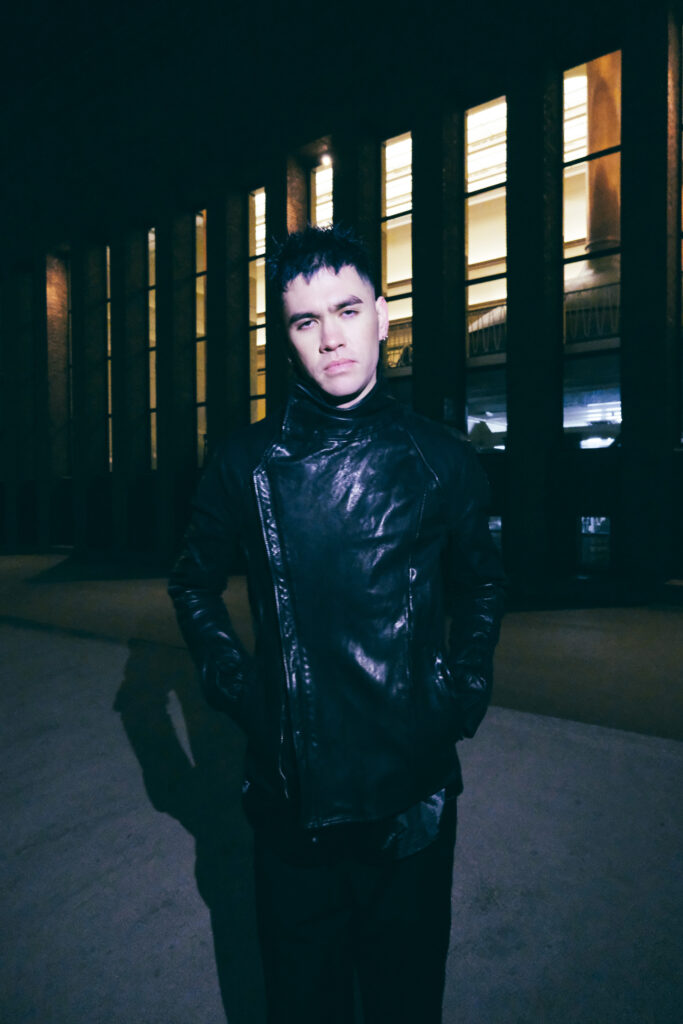
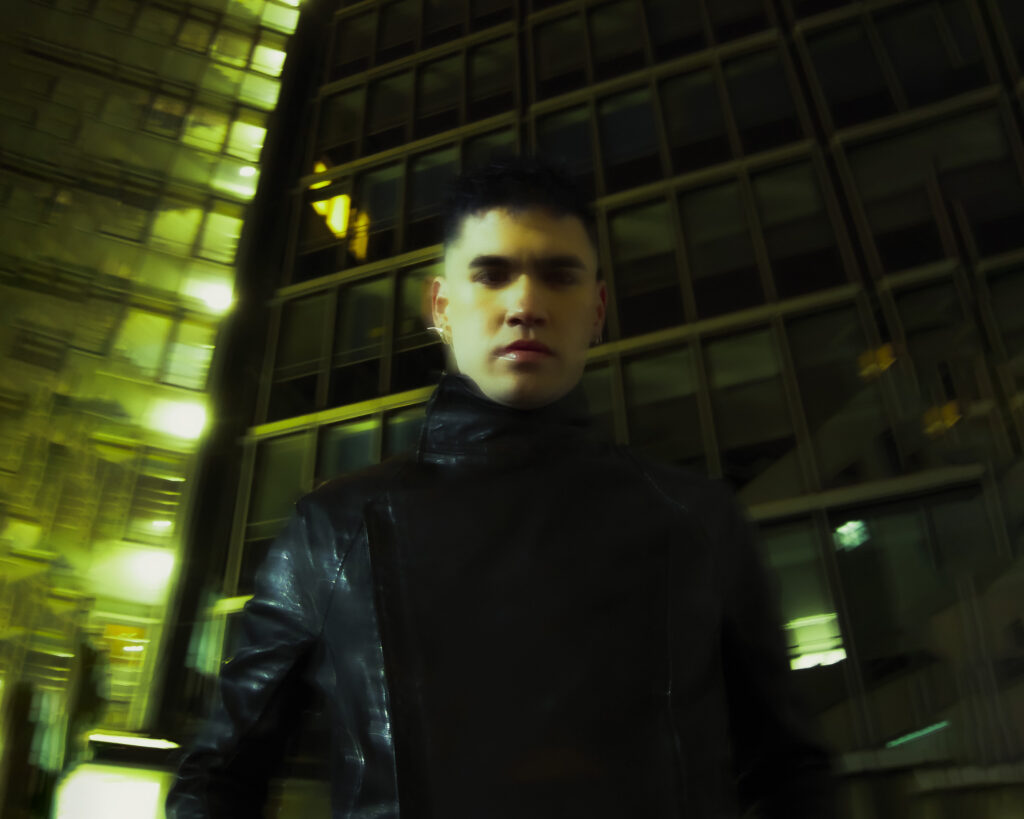
Photography · Shuto
Pre-order the digital album here
Follow Phase Fatale on Instagram and Soundcloud
Follow NR on Instagram and Soundcloud

Plebeian

Ephemerides

NR is excited to announce the premiere of ‘Ephemerides’, a track by New York City-based producer and sound engineer Plebeian aka Andrew Nerviano. Plebeian is quickly becoming one to watch on the scene for his “acutely detailed and explorative bass productions reminiscent of Objekt and Djrum.” 

The artist’s track ‘Ephemerides’ is featured on the newly released Various Artists EP by Berlin wax label Isabelline alongside other avant-garde compositions from artists such as Corell, Gaul Plus, and Undveld. In addition to this Plebeian’s upcoming solo EP titled ‘Contrast’ will be released via Grid Records on February 16th. NR joins Plebeian in conversation.

What was your creative process when working on your new track Ephemerides?

It originally began as a eurorack jam and was developed into an arrangement in Ableton. I wound up making an unusual amount of revisions, so the end result is essentially a remix of a discarded track. Thankfully David, who runs Isabelline, pushed me to take it further and now I’m super proud of the track.

How do you think your music aligns with the other artists on the Various Artist EP?

The A and B of the comp are divided between two different moods. I am on the lighter side and wound up contributing the most straightforward dance number. I think there’s a dissociative thread that runs through all of them despite having pretty different energies.

Tell me more about your beginnings in music and how you progressed to where you are today?

I began writing and recording music at around age 14. I was primarily a guitarist playing in bands but began making electronic music early on. A close friend of mine was a really gifted electronic artist, so I was fortunate to have someone to learn from. 

My early influences came from IDM and pop of the time. It wasn’t until I attended Unsound while studying audio engineering abroad that I heard dance music in the right context and something clicked. I switched entirely to dance music after moving to NY in my early 20s. I also began engineering records for other artists and ran a label with a group of friends for a number of years.

What would be some of your dream collaborations and why?

I have been listening to several of Valentina Magaletti’s projects lately and they’ve made me really drawn to live drum sounds again. Everything she does is amazing.

Pete Namlook is another prolific collaborator I would have loved to have seen work. His music is so patient and in the moment, unlike my own stuff which is very ADD and overly arranged. 

Where did you get inspiration for your upcoming solo EP Contrast on Grid Records?

The tracks were originally written for a live set at Dripping Fest in New Jersey, just a few miles from where I grew up. I was really motivated to not bomb in my hometown! And of course, make something special for the occasion.

I was also greatly inspired by a new drum machine just constantly in awe of the sounds it was able to create. Most of the EP was written on one machine.

What advice do you have for young creatives looking to work in the music industry?

As someone that doesn’t really work in the industry, all I can say is stay on your grindset, never log off, become a DJ, and don’t let anyone stand in your way.

Buy the digital album here
Interview · Nicola Barrett
Follow Plebeian on Instagram and Soundcloud
Follow Isabelline on Instagram and Soundcloud
Follow NR on Instagram and Soundcloud


Sara Pavan

En Plein Air

Team

Photographer · Sara Pavan
Art Director · Flavio Crespi
Styling Assistant · Giovanni Tricase
Supported by FUJIFILM, Shot with FUJIFILM GFX100S


Paris Texas

Going Left

The engine is off and the streaked windshield faces away from but towards. The faded parking stall lines of the empty lot are blanks waiting to be filled in by old habits, starved but undying. Between the spaces where things fall, the seat and the idle transmission, things get lost and lose their edges, soft callused hands reach for absent haunts, memories of. Then the pedal is released. Other cars whiz by, towards, but away from. 

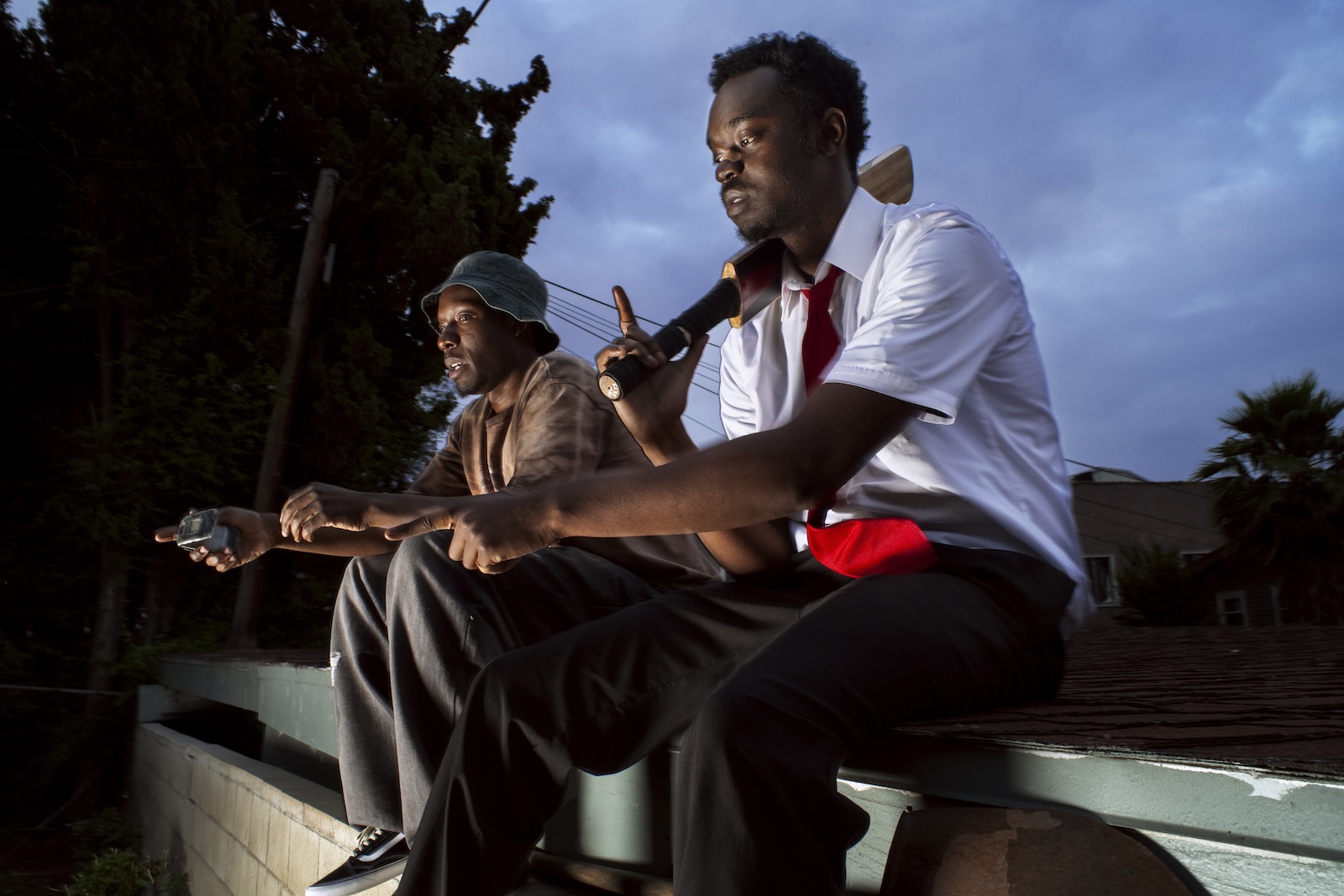
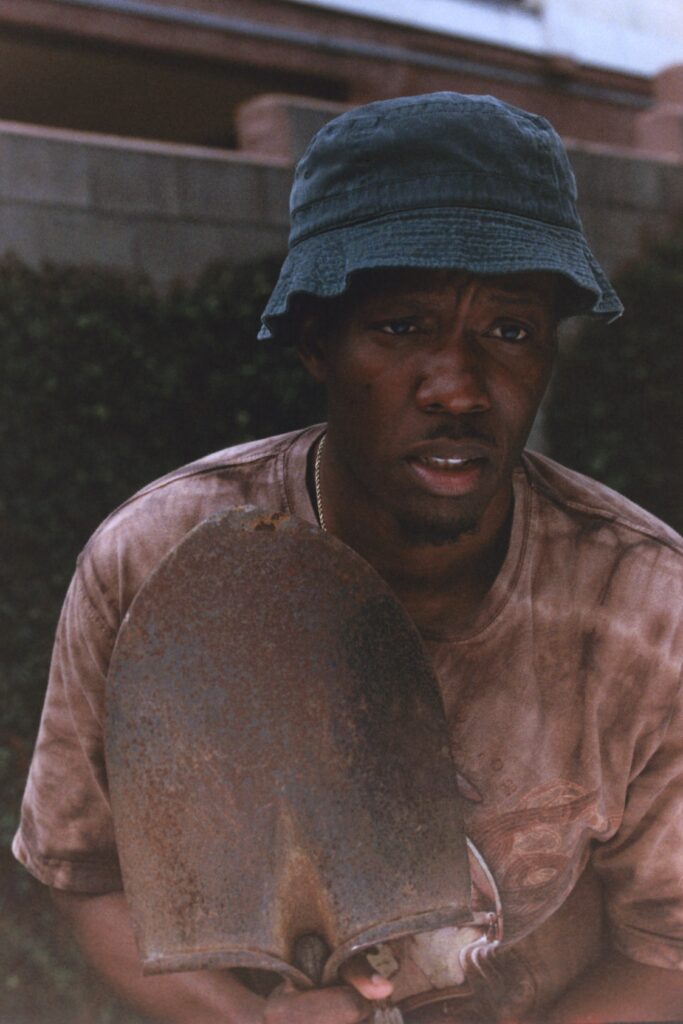
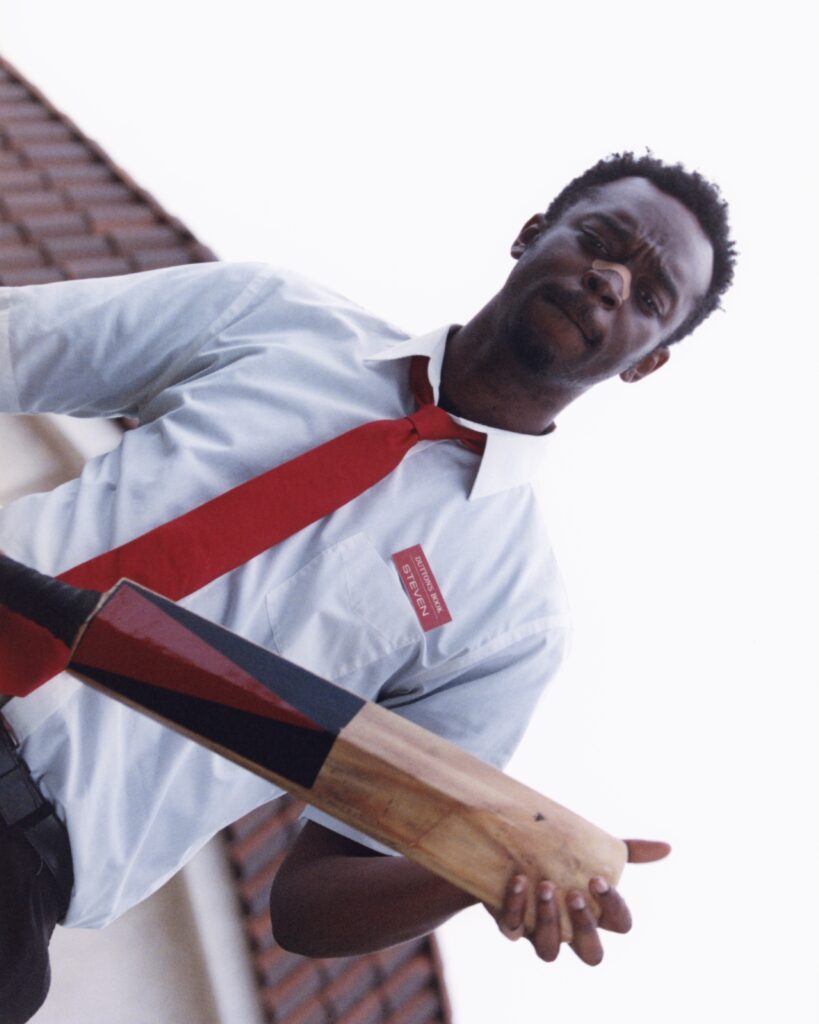
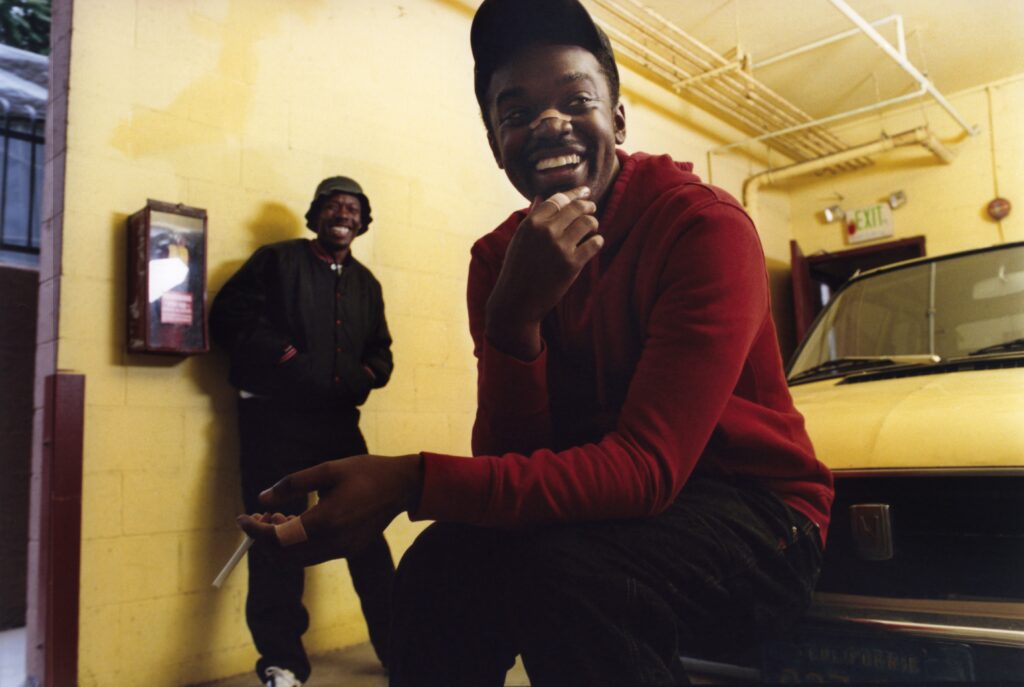
Louie Pastel and Felix, members of Paris Texas, take this call from their respective driver’s seats parked somewhere in Los Angeles. The sounds of the road muffle their voices and we leave our cameras off so instead I stare at circles – Felix appears as a grizzled Michael Jackson and Louie’s as the Mekhi Phifer Smoking Reaction meme, his name appearing as “That Guy”. Felix comments on the persisting gloom, a never-before setting in the City of Angels they call home. But as is often the case for Louie and Felix, there is something more to glean from circumstance. As if the gathered clouds were mirrors for the fires of this enduring retrograde, the smoke of cynicism, nihilism, all the -isms, burning holes in the things we hold dear. In this altered atmosphere, dystopia is rendered a collective emotion, we define “connection” by the amount of bars we have versus the feeling of having someone walk you home. Felix and Louie absorb this energy, observe the shifts and translate them into radical honesty reflective of the cultural climate today – can we run that back?

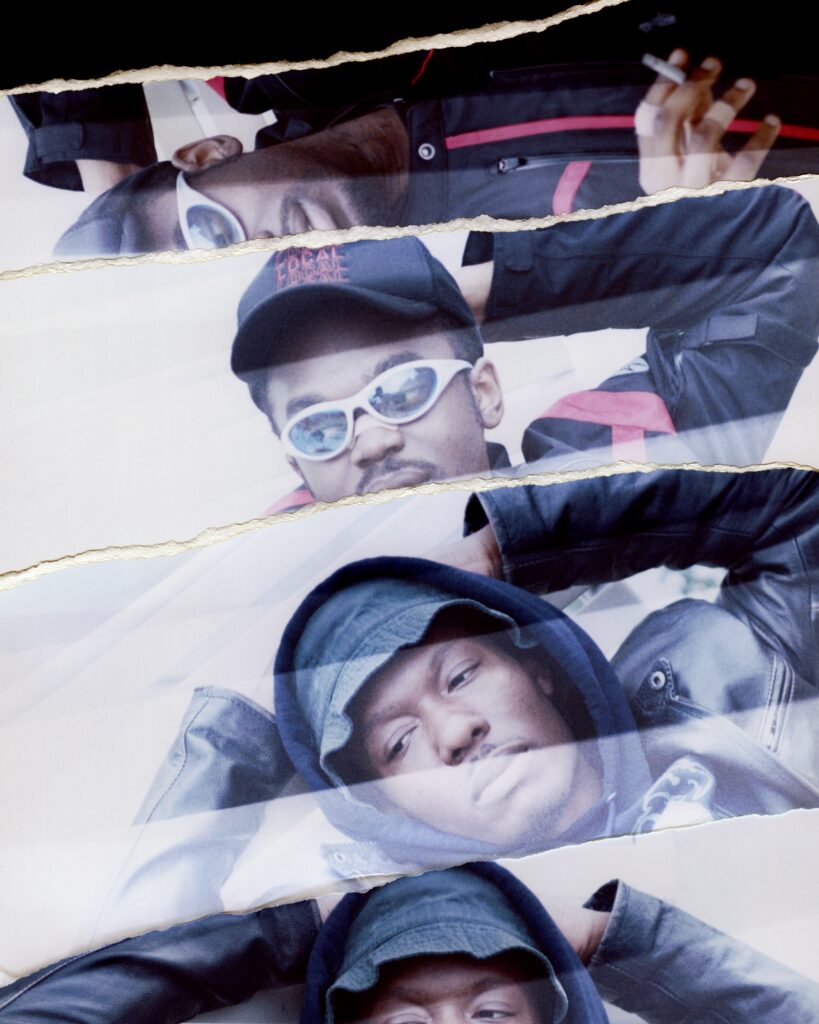
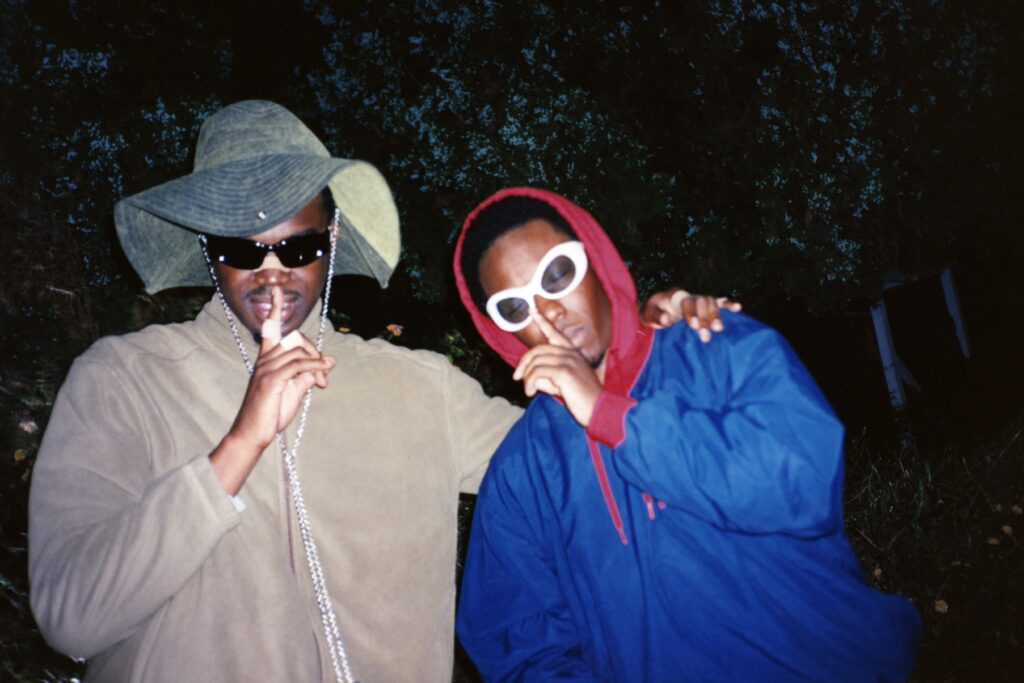
Paris Texas as a group, as a sound, is unbridled, an act of distortion perceived. Fans have likened them to delivering the unexpected, they’re “different” and hence, “refreshing” – unzipping musical genres while asking us to let go as part of the experience. As they gear up to release their full-length debut album Mid Air this August, they crank the steering wheels to the left, beckoning us towards the godforsaken – vulnerability, singularity, and self-awareness. Though the guys see themselves as “silly,”  through the intersections they’ve built between sound and visuals, reality and delusion, id and ego, it becomes glaringly evident that they aren’t just on the map, but are making it. 

Lindsey Okubo: I know you guys just released your debut album titled Mid Air and I was taken aback by the last two tracks, Ain’t No High and We Fall because they seemed to embody a new level of vulnerability lyrically. If Boy Anonymous was about y’all figuring things out and the mystery that comes with actualization, this one feels buoyant, sanguine and ultimately, assured.. 

Louie Pastel: Yeah I felt like two years ago when we really came out, it was like, damn, we got the attention on us really fast but the lyrics were kind of just fun and we weren’t really talking about anything. We tried here and there but we didn’t give people a lot. This time we gave people a little bit more and practiced the vulnerability part so our audience could get to know us. 

Felix: We don’t always publicize our business. However, it was important to give people an update within the music. It’s a lot more therapeutic this way and there are different avenues for that but this one just feels better.

L: Right and I like the way you phrased it in calling it “the practice of vulnerability” too because it is something that you have to be cognizant of. What’s given you the courage to own your artistry more as you step away from relative obscurity?

F: We don’t take ourselves too seriously, we’re not pretentious but we can be meticulous in certain ways. Anonymity requires a way bigger team and series of events in order to execute it in a way that feels successful. We live in such a time now where everything is unveiled and people are finding things out all the time whether you want to call it research or not. 

L: Yeah and tangentially, visuals have always been a huge part of what you guys do, allowing you to develop a whole other language and sensory medium to be understood through. There are elements of horror, nostalgia and surrealism that mirror this wave of escapist and nihilistic predispositions that our generation has been riding. Any thoughts?

L: Yeah it’s interesting because everybody’s kind of incentivised to be performative, especially in this online era, and we’ll get rewarded by this positivity most of the time. It’s really eerie, really dystopian and I see that and I’m like damn, if this changes in 20 years we’ll look back and ask, what the fuck was everybody on? I just try to give my perspective where I’m not pretending to be ultra-tough or extra flashy, I just want to paint a real picture of certain things. The first video, HEAVY METAL, was just us having fun and after that we wanted to show this parasocial relationship between men and women like we did in Girls Like Drugs. Men have this access into women’s lives so much and it’s in such a nasty way that we have a relationship with them.  Guys be looking at girls all day, being actually horny about it. It’s like you don’t know this person, why are you sexualising them this much? We’re constantly watching and creating a fantasy in our heads that numbs us to any actual connection you can have which is why we depicted ourselves in the video as being behind the mirror or under the bed. We see her but she can’t see us. It’s doing shit like that instead of smiling, dancing and putting on a show for people.

F: It’s a satirical take on things for sure. Whether Louie comes up with an idea and I’ll piggyback off it, or we bounce things off each other, the ideas feel natural. It’s this weird, intuitive thing that happens because not every idea is always hyper-intentional in the moment. But when we start to refine it there are important messages that are revealed to us. Our subconscious has been holding onto what’s been going on us and it always just so happens to align with what’s been going on in the world around us. Even in these past few years I’ve seen a shift in how people were on top of self-care, on top of being conscious and aware and that was glamorised for a long time. Now you have people glamorising being depressed but also tying that to whatever their libido is on. The only stimulant or dopamine, if it’s not drugs and indicting yourself in that, are sexual pursuits. 

We were in New York last week and that was a funny situation especially with the wildfire smoke and even in Los Angeles, it’s been gloomy for the past two weeks. This is the longest it’s been gloomy ever, with no rain, it’s just been cloudy. It’s interesting how that’s playing into our concept for the new project and is reflective of the climate of everything and how dystopic everything is becoming. 

L: Yeah and you guys used the word “connection” and it’s ironic because in victimising oneself, people are often closing themselves off from attaining the very thing they want by claiming that. With music, obviously, it’s an emotional thing, there’s nonverbal nuance, lyrics as conversation, chords as language and I’m wondering how you guys define connection in and through your music? There’s also so many different styles of communication, what kind of communicators are you?

L: I think we’re really good at connecting sonically, me and Felix relate to each other so well. I don’t make music and worry about how it connects to people lyrically because we’re not that pretentious, we’re silly dudes. I think the way we present our shit to people is just inspiring people to keep pushing for something different. I don’t know if my story is that relatable to everybody and if you’re not an artist it is hard to relate to as well. Sonically and lyrically, I think it’s about pushing the weird shit, the different shit because the best thing you heard this week isn’t the best thing forever. Don’t stop, let’s keep going left with it. I want to keep connecting with people who want to keep going left as opposed to staying in a certain pocket. 

L: Where does going left lead? To freedom from performativity? 

L: I think it allows people to just think differently and I think that that’s the only way we can evolve as a people, is doing that. I think if they see two fun, silly guys keep doing the thing then people will know that it’s okay to think differently, it’s okay to move differently, and not in a performative weird way but the actual way. The more that people like us succeed, the more confident people will feel about not being so bland.

L: I feel like “difference” is ultimately about honesty and even with the name, Paris Texas, it’s about distorting perception and y’all are two Black kids who didn’t really feel like you belonged but found outlets that warranted connection. It’s an important reminder to have that ultimately connection isn’t just made but found. How much of where you guys are is due to that sense of lack – whether it was belonging or means and how present is an active sense of rebellion in your minds?

L: Like are we practicing being different? No, it’s something that already was and it’s not something I have to try to do, it’s what I am naturally. When I was younger, I had friends and family who conformed, were more straight and narrow and it worked for them, it’s not wrong but they thought getting me to conform would make my life easier but every time I tried, it just didn’t work. Going back to what we said earlier, I know there are a lot of people like me who are having a hard time and sometimes you just need somebody to show you how to move, you need to speak for those people. 

L: Who are you guys speaking for? And for the straight narrow folks in our lives, how much of that is rooted in a sense of safety or stability and what driving force if any are those things in your lives? 

F: A lot of the time it’s being able to follow the trail of your curiosity and having the space to think about things, that’s really what it is. No matter if you’re someone who is extremely fortunate or not, you’re trying to find ways to make it out of something. People are a lot more complex overall but they don’t always have the time to understand their identity or things about themselves that can benefit them and what they want to do. I think that’s what safety is really because it’s not necessarily relaxing but in having the time to entertain parts of yourself, you find out who you are. 

L: It’s also about even being self-aware enough to want and need that time and space because life moves so fast and one of my biggest fears is waking up and being one day and being like, how the fuck did I get here? I feel like with the way things have happened for you guys, you understand these notions of speed, time and change which are such existentialist concepts and I’m wondering what your relationship to change is in general? 

F: It’s just life bro, change is gonna happen. Hopefully you’ll be lucky enough to be like damn, I remember when it was so crazy. Everybody figures out a way to adapt one way or another.

L: You just live through the time and you can’t control it. What I struggle with too with change is that even when you want to change, you still can’t control it. It’s like saying I want to be this person tomorrow but you can’t control how that happens, you just roll with the punches.

L:  Felix, I know you have especially talked about having faith in what you guys were doing and Louie, you had your like scumbag era and maybe that notion of having faith in something is maybe the only way to “control change”. Can you guys speak on self-doubt and on the flip side, what faith really looks and feels like?

F: I feel like it’s understanding that it’s just always going to be a thing. The mirror of yourself is constantly overlooking and overshadowing and you’re always going to think about what other people are gonna think. A lot of people say that it’s usually a good thing and it lets you know that you obviously really, really care. Faith and self-doubt complete each other because you’re only doubting yourself so hard because you want it to be so great, you love the process and you want it to be as good as possible. 

L: Self-doubt and faith often get combined and they play with each other and become self-awareness at some point. I never have self-doubt really, it’s more so wondering where I’m going to fit into doing this thing and if people are gonna like it. You need the community, you can’t make music and be like, I’m the greatest. The community around you has to make you what you are so anything that would be considered self-doubt for me is just being realistic. I’ve never really doubted us at any point, I knew that shit can was going to be hard but it was gonna happen eventually. I never had impostor syndrome, I’ve just had this is where I belong type energy.

L: You guys were talking about those moments where you recognize yourselves in the music and moments where you don’t and therein lies this suspension of belief almost. I know sometimes artists see their artistry or practice as separate from who they are as individuals and I’m wondering where you guys draw the line? 

F: When it comes to music it’s so weird because you always listen to yourself and you’re like, oh my god, that’s me, okay cool. The best moments are when you take a break from it and you’re like, I don’t know who that guy was that was on the song – and I know it’s me – but it’s like that was crazy. I don’t even care that it was me, it’s just like, oh shit. 

L: I love making a song and it’s like dang, I’m listening to this as if I’m listening to one of my favorite artists.

F: Yeah like I’m listening as a listener. I don’t have the pressure of being like my voice sounded weird or the beat is fucked up here, it’s like like whoa, what an experience. [laughs]

L: If I make a song and I don’t feel like it’s me personally on there then my job is complete because I’m hearing it as a fan would hear it. Sometimes I’ll make a song where I’m like, oh, they’re gonna fuck with this because I fuck with this. I’m listening to it like, oh who the fuck is this? It doesn’t feel like government name, grew up here, did this, it feels like who is this guy? I’m a fan of him.

L: Yeah and these notions of legacy are also tied to music where you have this ability to live on far beyond your time or after you’re gone. What is your relationship to the word legacy? 

L: It depends, legacy is cool but I’m not a legacy guy, I don’t even want kids. It’s what the people decide to do with it but to have an impact on one person’s life is enough. I’ve had bands that no one’s ever heard of before in their life, 10,000 views dropped the song in like fucking 2006 but I still love them and they have an impact on me. If one person who is not a friend or someone you’re related to is like, I fuck with this thing, that’s so importantIt’s a crazy thing to make something and somebody is like I resonate with that. People take legacy as a means of saying your impact was huge but that’s some industry shit, it’s a game you have to play. 

F: We’ll see man, it won’t matter, I mean it will matter but we’ll just see what happens.

L: Also thinking about the nuances between pop culture versus art. With pop-culture you’re measuring impact with virality and inferring that it equates to emotional resonance or understanding but I think there’s a difference between those things. In pop-culture, the message often exists in a watered down version of itself, it’s digestible to the masses and with music or art, you have an opportunity to create something truly singular. 

L: Yeah for sure, it’s a whole different thing. Pop culture is interesting, we need it but I think a lot of people don’t want to invest the time to connect with their feelings. I remember this one person I was talking to told me that she wasn’t a fan of music, which was crazy to hear. There is a majority of people who are not fans of shit. Meanwhile, we like all these weird little things and can argue all day about them. Even the question of pop culture versus art, the average person doesn’t really care. They’re like, does it make me want to dance for five seconds? They don’t even care if the creator disappears, being popular is a matter of the now, looking kid and if the kids like it? Fuck it. Pop culture can just go away. Like Picasso isn’t pop culture, people who make art aren’t pop culture. He’s popular, but he’s not pop culture. 

L: Yeah everyone’s lost in the sauce. Do you guys believe in true love?

L: It’s funny, I think sometimes people think that true love is from person to person but I don’t think it’s black and white as that, sometimes you can love something and you truly love it, it could be art, a hobby, a smell. I believe in it, truly. 

F: It’s almost like a nirvana state in a sense, there are just so many ways to go about it. Love in itself, a lot of people see it as a limitation but it’s a word that can contain so much more than what it is that it becomes malleable but somehow we’ve reverted it down to a shape. 
Team

Photography · Lindsay Ellary
Styling · Shaojun Chen
Grooming · Arlen Jeremy Farmer
FX · Emily Taylor Hirsch
Special thanks to Orienteer


PPAA

An Open Process of Idea’s Rather Than Forms

PPAA Pérez Palacios Arquitectos is an architecture firm based in Mexico City that focuses on “the architecture of ideas and not forms”. Heavily influenced by nature, be it by inspiration or practical site locality, PPAA seek to create projects through an open creative process. Pablo Perez Palacios founded PPAA in 2016 after over a decade-long architectural journey. This journey began with an interest in architecture sparked during his time living in Florence. NR Magazine joined Pablo Perez Palacios in conversation. 

Nicola Barrett: You stated about Infinite Openness that architecture needs to recover the idea of presence, of being part of a place and time. What do you mean by that?

PPAA: When we do architecture, we really put it to the test. Once it’s finished, at least while we’re still doing architecture for humans, you allow the passing of time to become the real judge. The project only starts when it’s finished. So that’s what I meant by that. I have this saying that I believe that really good architecture is one that, with time, it dignifies itself. I always say that there’s nothing more horrible than a new building. You need to allow life to go through the building. It’s really about having an open process that allows multiple actions to happen inside that built environment.

Nicola Barrett: You also said with this project that architecture has lost its connection with nature. Do you think there are ways to regain this connection in pre-existing buildings/spaces/homes? 

PPAA: Architecture has become a fight between artificial and natural. What I believe now, especially for the new generation, is that architecture needs to connect with nature. A very simple example is, developing an office building that has a glass facade with an air conditioning system. It works because there’s the sun outside and you are cool inside. But that’s no longer the way to approach it, because if we keep doing that we end up with the issues we have now. So architecture needs to come back to the basic principles and a primitive way of doing things. That is what has been lost. We can still develop whatever technology we can, but in the long term, we’re messing up the natural environment.

 Also, one thing that I don’t know if I mentioned, as important as the space we build, is the space that we leave behind. The void, the empty space is even more important than the built one. And it was super evident during the pandemic, people were in desperate need of a balcony or a terrace. 

We have to come back to the primitive way of understanding that nature is always better than architecture or the artificial. The more we develop buildings around that idea, the more consciousness and the more sustainable they are going to be.

Of course, it’s harder to do with pre-existing architecture and it’s harder to adapt. But with pre-existing cities or structures that are already there, we can start thinking about the space between those buildings. I don’t think you can possibly change everything that is already there. But there are a lot of things that can be done in this empty space, the void between things. I would think about it as a way to connect things, rather than transform the things that are already there. So it’s more about the space in between or how you deal with the space in between the existing buildings rather than the buildings themselves. When you start connecting all the little abandoned spaces into something, that brings more value to the existing works.

Nicola Barrett: What were some of the challenges you faced when working on the Echegaray project and what was your process when deciding to flip the ‘conventional layout’?

PPAA: The biggest challenge was to try to communicate to the clients the idea that it’s on a rocky slope, it really doesn’t make sense to bring a machine and tear it down. It’s much more appealing than just getting rid of it. So once they understand that the rock has a beauty in itself, then the second challenge was to make them understand that due to the slope of the plot, it’s much cleverer to have the social area at the top. The house itself is in this black rock, then you discover this openness and this view for the social spaces at the top. I think in the end, they bought into the idea and were super happy with it.

Nicola Barrett: So the biggest challenge was getting them to agree with it, not the construction?

PPAA: Of course, if you don’t fight against natural elements, like you don’t need to get rid of all this rock, then it’s easier. Structurally speaking, you use the rock as a support. Yeah, it makes a lot of sense. But besides that, the social area at the top has this super light wooden pavilion and we just brought in the structure. Like it doesn’t weigh a lot. Everything starts to align once you understand the natural conditions.

Nicola Barrett: In Moliere the space can be divided by sliding doors. How does this work exactly with people living in this project, or rather how has it worked?

PPAA: You normally have this idea that, okay, this is a living room and this is a kitchen and this is a dining room or whatever. With the possibility of multiple configurations, there’s really something that happens in the natural way of using space. When we did this project, their children were very small, so the houses changes with the user as well. If you want to have an open kitchen facing the dining room, or you want to have it closed because you have small children you can do that with the sliding doors. That they really understood from day one because it just gives you a lot of ways to personalise the space. 

Also, something worth talking about, is that architects have this idea that we kind of control everything. We design and specify, from the door handle to the curtain or whatever. But in the end, people personalise houses, they end up doing what they want, so it becomes a home. In Moliere the possible configurations just give you multiple possibilities on how you make it your own. It’s a very simple approach because it’s just literally a sliding door. But with that simple gesture, you have a lot of ways to inhabitant that space. 

Nicola Barrett: In Las Golondrinas the house is divided into three independent volumes with free space between. Do you think this idea of separate spaces and then communal gathering spaces could really benefit people who can’t afford the current housing market?

PPAA: In that specific case, what we’re separating is the moments of how you exist in the house, like sleeping time or social. So that idea of configuring the house around how you use it, would be something super good to do on a large scale. You can definitely take advantage of sharing more of a public space. At the moment people cannot afford a house and it’s bad because developers are trying to squeeze everything that you need into a smaller space. Before you used to have separate rooms for everything. So the idea of separating the use of the space is much cleverer than rather than minimising everything into one single space. 

And I think that the way to approach the housing of the future should be, okay, we give you the essential spaces that need to be enclosed. Like you need a private room, of course, and a bathroom. But maybe the social area can be something that is shared and adaptable. So, yeah, I think people need to really understand, especially developers, that the answer to the housing problem is not just making everything smaller.

Nicola Barrett: Juan Cano I was designed to blend in with the environment. Do you think that this is something important to consider in projects, partially when building amongst older local buildings?

PPAA: I think this idea that it should blend with the natural environment is not very formal in terms of the way it’s done. It’s more conceptual. It has to be something that really blends not only in terms of architecture and what colour it is. If it’s in an urban location, we have to stop thinking that every single project has to advertise how new and extreme it is. The value is how it blends with the surroundings. It’s about doing an architecture that’s value is not in the formal aspect, but the concept behind it. 

Also, Cano is a townhouse and there were not a lot of townhouses in Mexico City. In the city, there were a lot of houses, the urban sprawl, all over. So they have these huge kilometres of city that is just single homes and then the nicest areas are starting to have flats, one on top of the other. A townhouse is something that is in between. People still want to have their own house with their own garden, but the point is maybe you cannot do that because there’s not enough space. But we can’t just have one flat on top of the other. So by introducing the townhouses in Mexico is something that we believe, in terms of urbanism, is a way of addressing this. It’s about being honest and doing architecture, and it’s about ideas rather than forms. The formal aspect of architecture is something that shouldn’t be the number one priority.

Nicola Barrett: What was the process behind building La Colorada?

PPAA: That’s a super good example for the previous question. La Colorada has this typical a-frame which is a structure that has existed throughout the ages. It’s a shape that is found in every construction from around the world The first part of this project was an a-frame that was brought to the site, and then our clients asked us to make it into a larger home. So we extended the a-frame and we created these covered terraces and put the rooms underneath. So basically here we really forgot about the architecture ego and said, we’re just doing an a-frame.

There’s no point trying to do something extreme in the middle of a nice forest. An a-frame made out of wood really blends with the nature. Forget about the architect’s ego. Just do something that really disappears. Of course, we needed to make the client understand that when you’re going down to your room, you go through an outdoor space. You’re going to go from inside to outside and then inside again. But it’s also a way to disconnect, you force the user to be outside, put on a jacket. It was a simple gesture that allowed us to create a space that really blends in.

Nicola Barrett: What are some upcoming projects you’re particularly excited about?

PPAA: We have a few. We’re doing this electric charging station for cars, like a system of gas stations for electric cars. It’s really interesting because we’re doing a system that can be replicated many times. It’s freestanding, and it has this solar-powered system. 

We’re also working on a project that’s kind of our first high-rise building in Mexico City, that’s actually a preexisting twenty-five-floor building. Instead of just pulling it down and doing another one with a glass facade and central air conditioning, we’re actually changing the concept of how we do something that is literally one floor above the other one. We are making it public so you can go to the restaurant on the seventh floor and the public bath house that we are doing at the top of the building, like old Russian public baths. We’re very happy to be working on that project.

We are also doing a project in Mexico that is made out of the earth from the site. So that’s really nice. It’s this compressed earth with very thick walls. And we have a lot of things going on.

We’re looking to get one amazing public project, that would be our dream to do. Something that really has a public character, like a library.

And the more we do things the way we believe it should be done, the more happy we are. We need to avoid trends in life. Because when you start doing things by a trend, it becomes almost like fast fashion. It gives a temporality to the architecture and it gives a value that is valid only for a small period of time. We believe there are people out there who value our ideas. I believe that the more time passes, the better the architecture is.

It come to a point that we avoid having architectural references or books or magazines inside our office because we don’t want to see them. Once a year we take all the physical models and break them. It’s like we can have a clear mind afterwards. 

Nicola Barrett: So where do you get your inspiration from?

PPAA: It sounds like a cliche but from nature. I still haven’t been in a place that can replicate having a nap underneath a tree in the park. Our biggest aim is to try to do something as nice as nature. And also to give the exact same value to the space that we left as to the space we built. A simple example of this is a house and a patio. The patio is as important as a house. The empty space or the void or what’s left unbuilt is really what gives value to what you build. We try to start from that openness. Forget about formal aspects, forget about if I want it to be round or square or black or white. It’s really about understanding that it has to be, ideally, similar to what you feel in nature and as open as possible.

Nicola Barrett: What advice do you have for young aspiring architects and creatives?

PPAA: Yeah, definitely do something that is personal. Of course, you need to read about everyone, but the more you try to find your own way of expressing yourself, the better. Of course, you need to learn basic strategies, but study everything else around it. Like, for example, if you study architecture, but at the same time you study medicine or anatomy, then you have a better understanding of how to do things. A very straightforward example, if they ask you to do an aquarium, then of course you need to know a lot about whales and fish. Don’t worry too much about trying to do something like someone else. If you try to get ideas from other architectural examples, you’re going to end up doing things the same way. Worry a lot about finding your own personal way of doing things and dedicate as much time as possible to reading, studying, and learning everything that is not related to architecture.

Credits

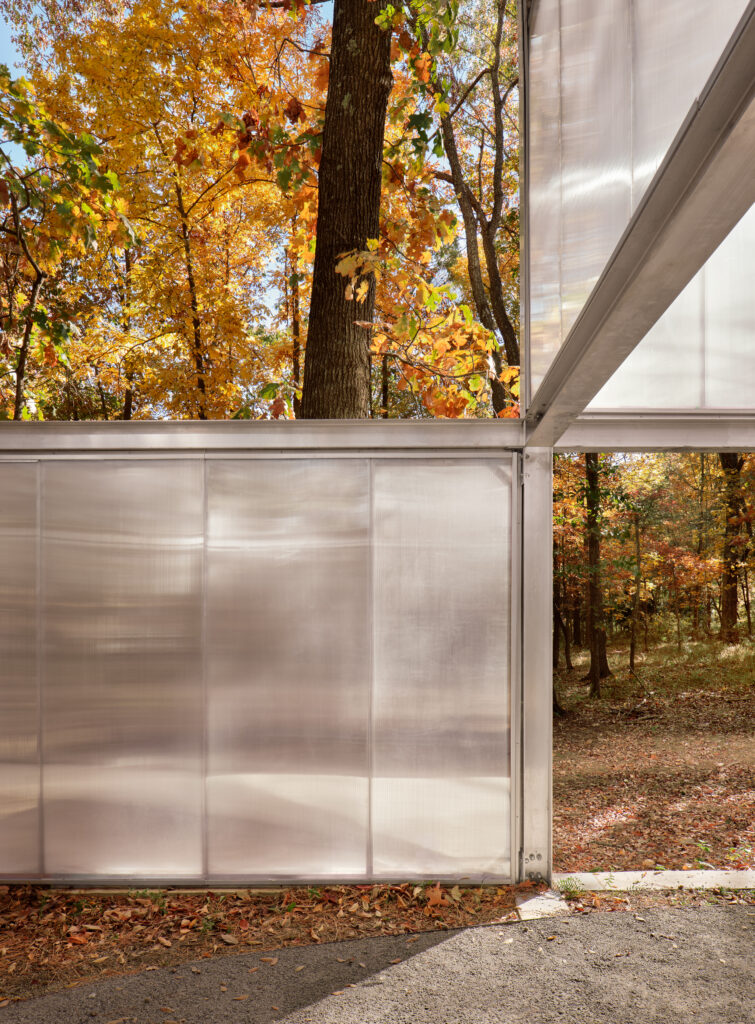
CLOUD designed by PPAA. Photography by Maureen M Evans
INFINITE OPENNESS designed by PPAA. Photography by Rafael Gamo
MOLIERE designed by PPAA. Photography by Rafael Gamo
LAS GOLONDRINAS designed by PPAA. Photography by Rafael Gamo
LA COLORADA designed by PPAA. Photography by Rafael Gamo
CLOUD designed by PPAA. Photography by Luis Garvan Located in Crystal Bridges Museum of American Art, Arkansas, USA

Primavera Sound Festival Madrid 2023

When we think of European summers and the festivals that define each month, drenched in sunlight with the heat on our skin, one such festival that joins ranks beside the northern titans like Dekmantel and Glastonbury is Primavera Sound. Initially beginning its legacy in Barcelona in 2001 and now for the first time in Madrid, the festival has become a pioneer in the events space, becoming one of the largest and most-attended festivals in Europe. Boasting headliners such as The xx, Tame Impala, Kendrick Lamar and Patti Smith, but also spotlighting smaller, local artists, it’s a place where creatives big and small come together and revel in the Barcelona heat.
With a focus on gender equality and their role in the sustainability of the location, this year’s Primavera Madrid debut is an opportunity to reexamine their track record of eco-conscious achievements and active gender equality efforts. In this interview, I chat with festival curator Joan Pons about the music scenes of Spain, TikTok-era festival etiquette and the broader subjects of inclusivity and sustainability at Primavera.

Is there a specific moment in time or influence from the music or creative scene that inspired you to get into the curation game? Were you an experienced raver or partygoer all along, or rather somebody more behind the scenes?

Of course. We have always explained (almost taking on legendary dimensions) that the idea of the festival was born from four friends, who at the beginning of the century wanted to bring the alternative and electronic music artists of that time who were not touring in our country. We believe that this initial idea remains: we still consider ourselves music fans and we still want to bring our favourite artists of our present to our home. More than a raver, personally, I consider myself what I said before: a music fan who has been to many festivals, of very different music styles and each one of them is enjoyed in a different way. Some are for dancing, others for sitting and relaxing, others for a singalong, others to surprise you and others to provoke new sensations. I think Primavera Sound, in the end, is a festival where you can find all these kinds of possibilities. In other words, we have made the festival in our own image and likeness.
When considering the rave and music scenes, Madrid and Barcelona might not immediately spring to mind for many. What is it about these cities, specifically the Spanish and Catalan music scene, that might draw more people to these places to rave? Is there a stark difference between the two?

I would like to politely disagree with the apriorism from which this question arises: Barcelona and Madrid are two cities that, at least in this century, have been very important places on the map through which almost all relevant artists and tours have passed. Proof of this is our own history – if we did a festival, it was because there was demand from the public, artists and industry. Also, international interest – for years now, more than 50% of our audience has been from abroad, and 30% from the UK. So we understand that if you say Barcelona, for some people, the first thing that will come to mind will probably be the football team, but for music fans or those with cultural interests, it will probably be Primavera Sound. Obviously, this cultural vibrancy and musical life make cities a hotbed of club scenes, concert halls, music scenes and important artists. Some of them were maybe born around the festival, performing their first steps and finally being headliners, like this year’s Rosalía.

You’ll often see on platforms like TikTok the discussion of festival etiquette, and that many partygoers have ‘forgotten’ how to behave or act respectfully during concerts and events. This was most likely borne out of the Covid lockdown, with a lot of Gen-Z’ers experiencing their first nights out and festivals without the ‘practice’ of partying in their later teens. With Primavera focusing on sustainability and inclusion at its core, how does the festival foster the environment of making people feel free to experience the music in their own way, while also recognising the need for respect and care of the artists and organisers?

The Primavera Sound public is very abundant and diverse, and there will be both aware and escapist people – you can’t tell. What we can say is that the festival is aware and doesn’t want to be a bubble detached from reality, and if some of our gestures, decisions and actions in this sense can help the public that attends the festival to be so too, then that’s perfect. We have done visibility actions and we’ve been involved with both Open Arms and Greenpeace. We also believe that by moving forward on the path of sustainability we are raising awareness among our public (such as the reusable cups, with the almost total elimination of plastics), with tarpaulins explaining the UN programme of 17 sustainable development goals, of which we have been part of since 2019, because the organisation itself made us aware that we were complying with many of them.  There are also pioneering initiatives such as Nobody’s Normal, which was born as a protocol to prevent, inform and act in the face of sexual aggression and is now a plan for the promotion of sexual and gender freedom. 

Finally, there are our identity decisions, which may seem artistic, and also speak of the reality surrounding us with an inspiring and transforming spirit: the parity poster, increasingly inclusive and diverse because reality is also increasingly inclusive and diverse, not by chance. We believe it is a duty to our time and our reality, and this is what our assistants have told us with very positive feedback that we did not expect after the first year of implementation. They said that they were finally at a festival where they felt free, safe and comfortable to show their sexual identity. So in the end, maybe we do have an aware public.

Primavera boasts a 50/50 gender and pronoun lineup from 2019. With the fact that many bigger industry names feature in Primavera each year, how do curators ensure that smaller artists, some of whom might be LGBTQ+ or gender non-binary, also get the spotlight, as well as financial support? What is the process for research there?

We believe that there is no small print at Primavera Sound and that every name on the line-up matters. If it’s at Primavera, it’s because we love his/her/their music, that’s for starters. Each artist fulfills their function, whether in terms of artistic balance or diversity. The truth is that there is not much mystery in creating an inclusive and gender-balanced line-up, you just have to want to do it – once you have that in mind, it almost works itself out. We also feel that the smaller names actually get the same exposure as the big names because the line-up comes out with all the artists at the same time. They share the spotlight with each other. Also, we create individual assets for each and every one of them and promote all of them equally. It would be disrespectful if that weren’t the case.

I would like to think that this year we have made progress in the gender-balanced lineup, because it’s no longer 50%, and we have taken into account 10-20% of artists who do not identify with a binary separation of gender. We believe that percentage will get higher and higher because, in reality, it will also be higher and higher. If in some way we manage to make this aspect visible through our artistic programming, we can only be proud.

The festivals obviously draw thousands of partygoers each year. In cities like Madrid, where there are issues with heavy tourist flows and the pollution and impact on the local residents that come with it, how does Primavera ensure that the residents of Madrid are not negatively impacted by this large presence of festival-goers?

We believe that our impact on any city that hosts Primavera Sound does not have to be assumed to be negative. In fact, in economic terms, it is highly positive for many sectors (public transport, restaurants, hotels, museums and leisure). In more intangible terms, it brings a cultural value to the life of the city, which during the days of the festival becomes more vibrant and with the eyes of the whole world on it. 

On the other hand, we don’t believe, based on our studies and attendance data, that Primavera Sound festival-goers are an annoying type of visitor to the city. In fact, when we talk about it with the institutions of each city, we tend to consider them as cultural tourism.

Primavera has renewed its partnership with the UN Sustainable Development Goals Campaign. With pledges like gender equality and education on the docket, does this alliance inspire Primavera to become a leader in this sustainability and inclusion space – what are you hoping to inspire with this alliance? Do you see yourself as an example in the festival scene?

We like to think that if we are really so insistent on the issue of inclusion and gender equality, it is because Primavera Sound is such a popular festival with so much media attention that we believe in and defend this policy. With this, it can be inspiring for others and ultimately transformative. Whether it really is, I can’t say. But it definitely would NOT be if we didn’t do it. About sustainability – although we received the A Greener Festival award, we know that it is a long road, a process which we will improve little by little. So, if we are an example to anyone, it is to ourselves: each year’s progress should be a benchmark to be beaten in the next edition.

Credits

More info · Primavera Sound Festival Madrid
Special thanks to Chris Cuff (Good Machine PR), Joan Pons and Henry Turner (Good Machine PR)

Tommaso Montenesi Posch

We suck young blood

Team

Photography · Tommaso Montenesi Posch
Art Direction · Luca Paolantonio and Tommaso Montenesi Posch
Styling · Luca Paolantonio
Casting · Morfosi Studio
Hair · Dominique Ascione at Blend Management
Makeup · Raffaelle Tomaiuolo at Blend Management
Set Design · Giulia Zollet
Models · Samuele C, Ko Eun Woo and Paul
Photography Assistants · Marcello Raguso and Maria Luisa Zoccoli
Set Design Assistant · Elisa Grumi
Poster Design · Pierfrancesco Gallo
3D Artist · Michele Ciniero

Designers

  1. Coat, Shirt and trousers VAIN, top MAINLINE:RUS/Fr.CA/DE and shoes SONORA
  2. No credits
  3. Shirt and tie GEORGE WENDELL, skirt JOHANNES AHLFORS and shoes SONORA
  4. Shirt and trousers ARTTU AFELDT, top MAINLINE:RUS/Fr.CA/DE and tie E.MARINELLA NAPOLI
  5. Full look PRADA
  6. Suit ALEXANDER MCQUEEN, top MAINLINE:RUS/Fr.CA/DE and shoes OUR LEGACY
  7. Full look FERRAGAMO
  8. Full look ARTTU AFELDT, shoes GEORGE WENDELL, shirt and shorts ARTTU AFELDT and leggings stylist’s own
  9. Coat and Trousers XIMONLEE, shirt JOHANNES AHLFORS, gloves VAIN and shoes SONORA

Subscribe to our
Newsletter