Archive page:


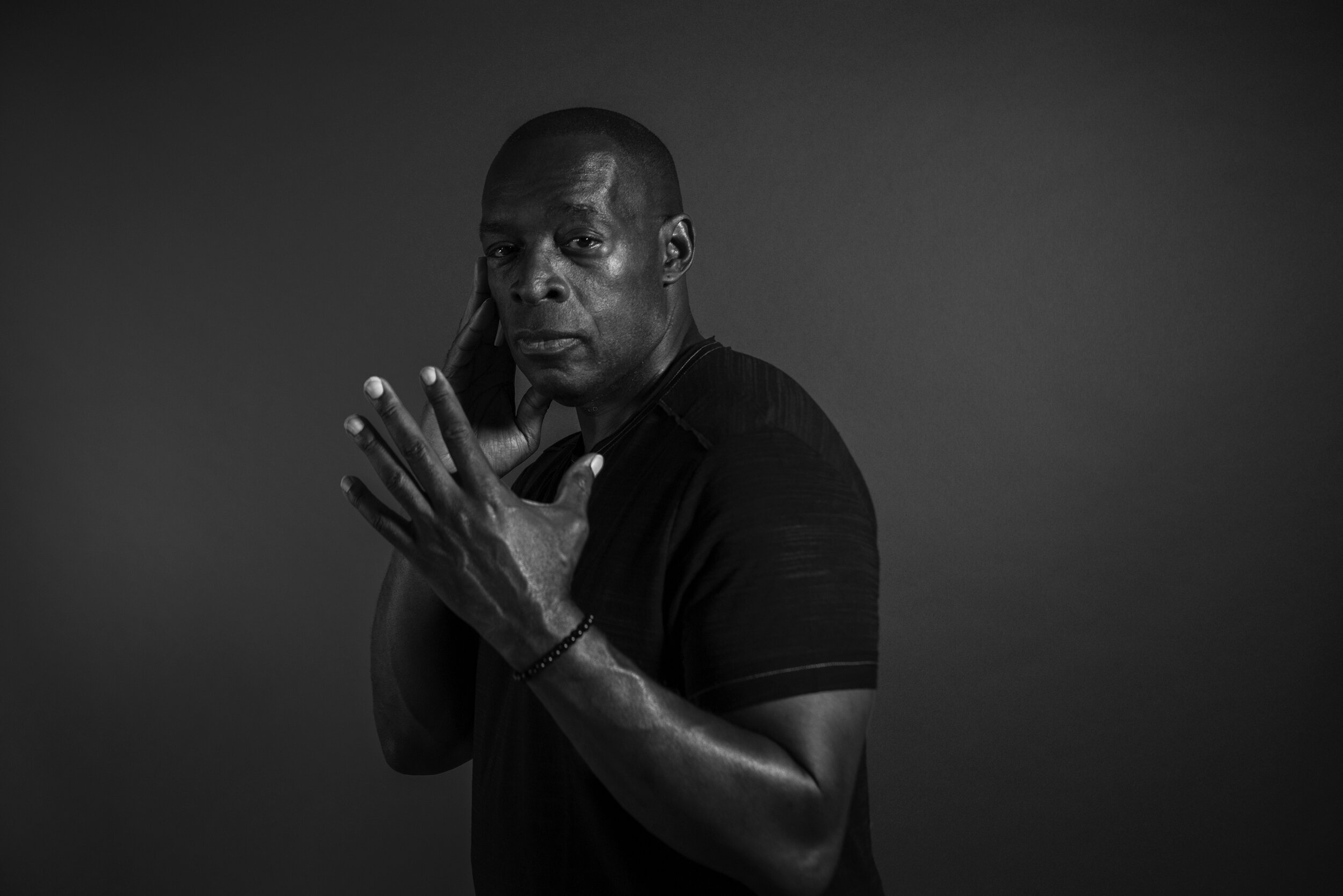
Kevin Saunderson

“no matter how big we became, it was always a struggle back home”

Back in June, Kevin Saunderson of Inner City made headlines when he claimed, in an interview with Billboard, that the music industry had failed Black artists. And he’s got personal anecdotes to back that up – recalling, over the phone to NR, the time himself and fellow Detroiter, Derrick May, played a festival in Australia almost ten years ago. The pair found themselves playing a stage with around 200 capacity; the Canadian EDM producer, Deadmau5, was on the main stage, playing to an audience maybe 20, 30, 40 times the size. 

It’s a story that captures dance music perfectly in a nutshell. Back in the 1980s, it was Kevin, Derrick and their high school peer, Juan Atkins, who pioneered and popularised techno in Detroit; young, Black producers making music for people like them. ‘Our crowd was 90% Black,’ Kevin explains – sure, the crowds were smaller than they are now, but that’s because EDM music exploded into a billion-dollar industry. An industry whose most well-known faces are male and white; Deadmau5, Skrillex, Diplo, David Guetta, and so on.

What’s the solution? Kevin thinks that it starts with promoters, agents and general management because, at the end of the day, ‘they’re who put music in front of you.’ There needs to be more Black management in the industry to ensure that people of colour are getting more opportunities and not being ‘taken for granted’; he sees it as a collective responsibility to bring other artists up. All that said, Kevin sees the scene as being in a good place, pandemic aside; there’s a more diverse sound coming through the next generation, much more so compared to back in the day. 

Kevin was born in New York, before moving to Belleville, a suburb in Detroit, as a teenager. It was there that he met Derrick and Juan, and it was also there that, together, the three would define the sound that became Detroit techno. The 1980s provided the perfect environment for a new genre to grow; in Chicago, there was house – pioneered by the likes of Frankie Knuckles and Marshall Jefferson, and in New York, there was disco (and later, garage). Though the scene in New York pivoted around gay culture, Kevin would travel back and forth from Detroit to New York for the music, going to legendary clubs like Paradise Garage to see Larry Levan play. It was an inclusive scene in an otherwise segregated music world;

“I was always inspired to make music for everyone because I was inspired by New York where it didn’t matter who the music was for.”

When Kevin formed Inner City in 1987, he brought that inclusive nature of the disco scene to the techno sound he’d found in Detroit. 

At the time, music by Black artists was regarded with hostility in America – something Kevin and Inner City found ‘no matter how big we became, it was always a struggle back home.’ It was when the band’s first hit single, Big Fun, recorded with vocalist Paris Grey, was included on British DJ, Neil Rushton’s compilation album, Techno! The New Dance Sound of Detroit (1988) that Inner City found success. And though Inner City’s second hit single, Good Life, is now recognised as a definitive anthem of the era, Kevin notes that no amount of global success changed their prospects back home. Artists who’d found success in the UK and beyond were met with doors slammed in their face back in the States; ‘they’d hear that agents are full up, “our rosters are full.”’ 

It never put Kevin off. Since those early days, he’s produced under many different names, from E-dancer to KS Experience, and in 2019, he brought Inner City back from retirement with the help of his son, Dantiez, and the singer Steffanie Christi’an. Back in August, the band released their first album as a new formation (and Inner City’s first in almost 30 years). We All Move Together is a celebration of dance music, from its formation in Kevin’s early career, to the present day. After being shown a clip of the actor and DJ, Idris Elba playing Big Fun by his friend Dennis White (Inner City’s original tour manager), the idea was floated to bring him into the mix for the album. ‘When I saw that, it sparked something to contact Idris.’ The result was the album’s opening track of the same name, in which Idris provides a spoken word history of the dance music industry. The album plays like a crossover between old and new, sidestepping the otherwise white-washed EDM scene. 

Working with Dantiez and Steffanie has given Kevin the chance to shape Inner City for a new audience, whilst being able to also keep its legacy going. When it comes to Steffanie’s vocals, it’s been great to create new songs that are shaped around her voice; ‘at the beginning, it was just previous stuff and that’s always difficult for anybody trying to sing someone else’s song.’ Kevin’s also open to using technology differently to the first-time round.

“Technology back then was more hands on, more hardware-based – you had to touch something. Software imitates what was done in the past, it’s recreating what I created.”

It was because of the technology that he got into producing in the first place, using sequencers like the Squarp, and drum machines like the 909, 808, 727. 

Kevin ‘appreciates both ways’ now – sure you ‘had to put the work in with the old ways,’ but newer software, like Logic and Ableton are shaping the future. It’s clear that Dantiez’s influence has rubbed off on his dad; it’s something Kevin has been sure to emphasise since Inner City reformed. And it makes sense because, at the heart of his music and the philosophy that underpins it, is a desire to push forwards. It was the futuristic sound of the German band, Kraftwerk, that had a huge influence on Detroit techno. How did a band from Dusseldorf end up on the radar of a teenager living in the suburbs of Detroit? Via the radio station of the Electrifying Mojo, who had a profound effect on Kevin, Derrick and Juan.

“Kraftwerk used technology to make music and it was so future sounding”

—Kevin explains. It provided the tools to create a definitive sound of the era, one that was able to reach a global audience without interference from the music industry guard. Risen from the ashes of a city decimated by the decline of the car industry that revolutionised the twentieth century, came a genre of music that would change the world once again. And, as Kevin points out, the legacy remains; ‘Detroit is Detroit – DJ’s always want to come to Detroit to play.’ 

Credits

www.instagram.com/kevinsaunderson
www.kevinsaunderson.com
Words · ELLIE BROWN
Photograph · Scott Sprague
Thank you to the Prizm Network

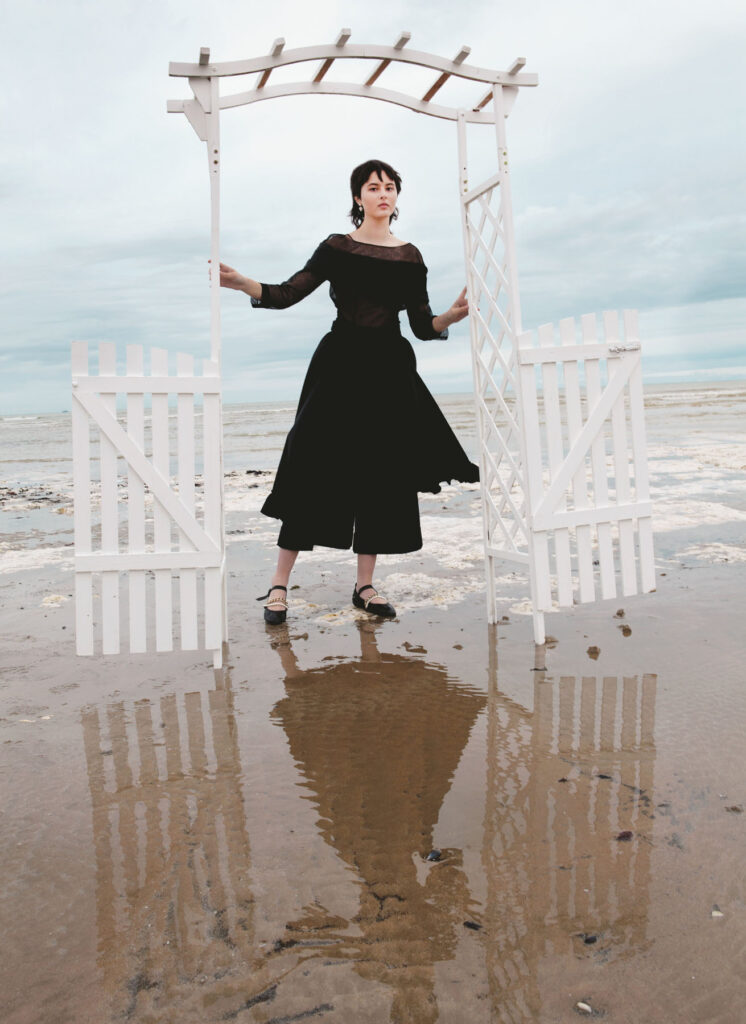
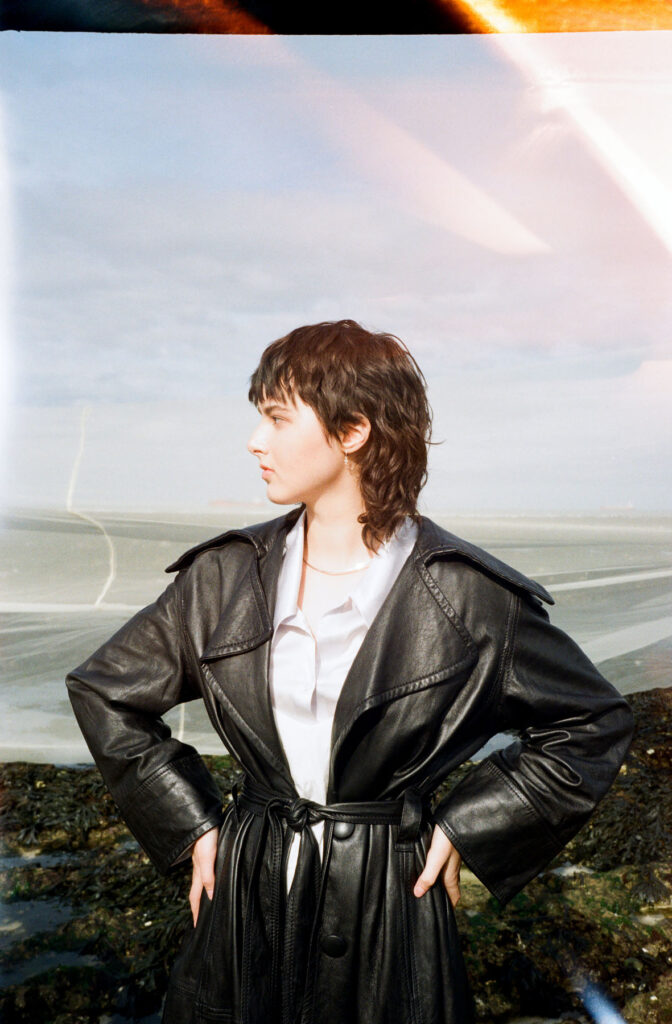
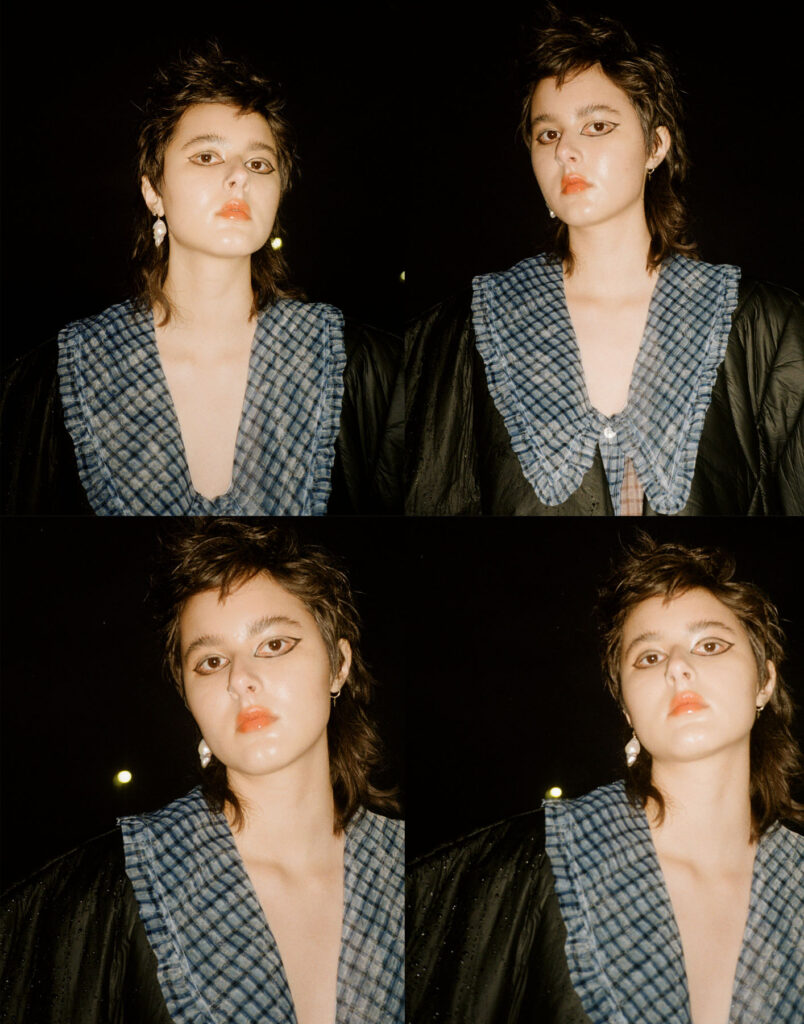
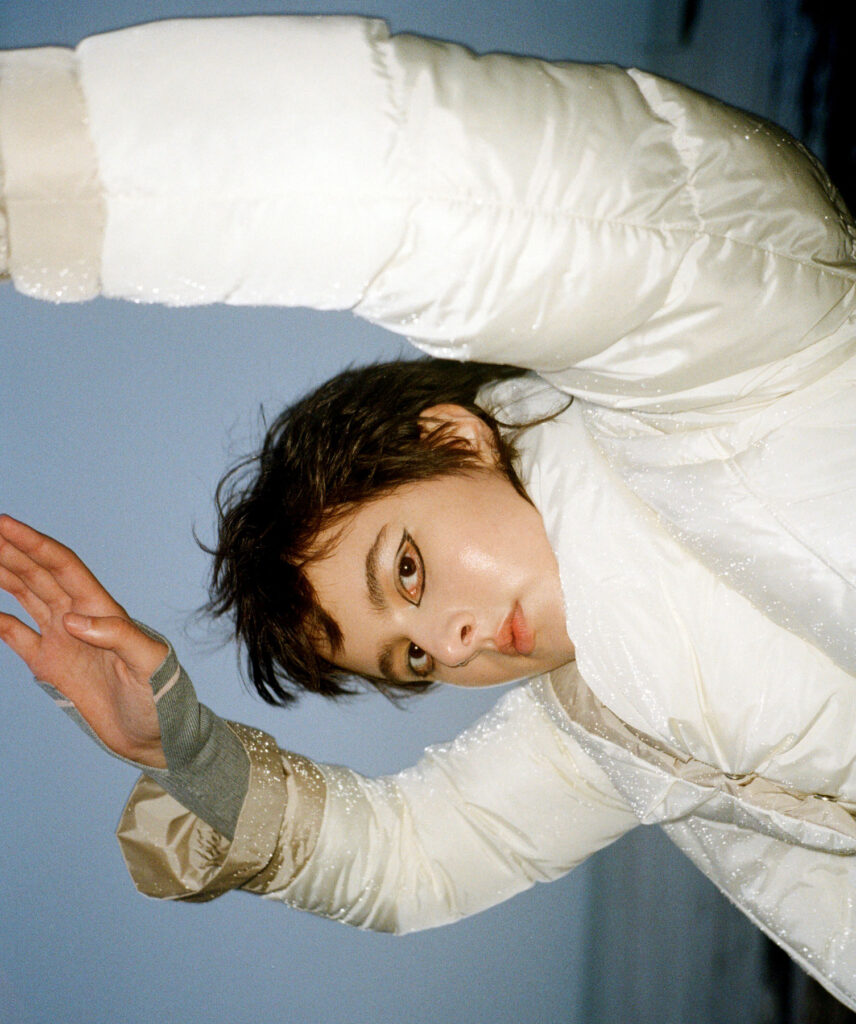
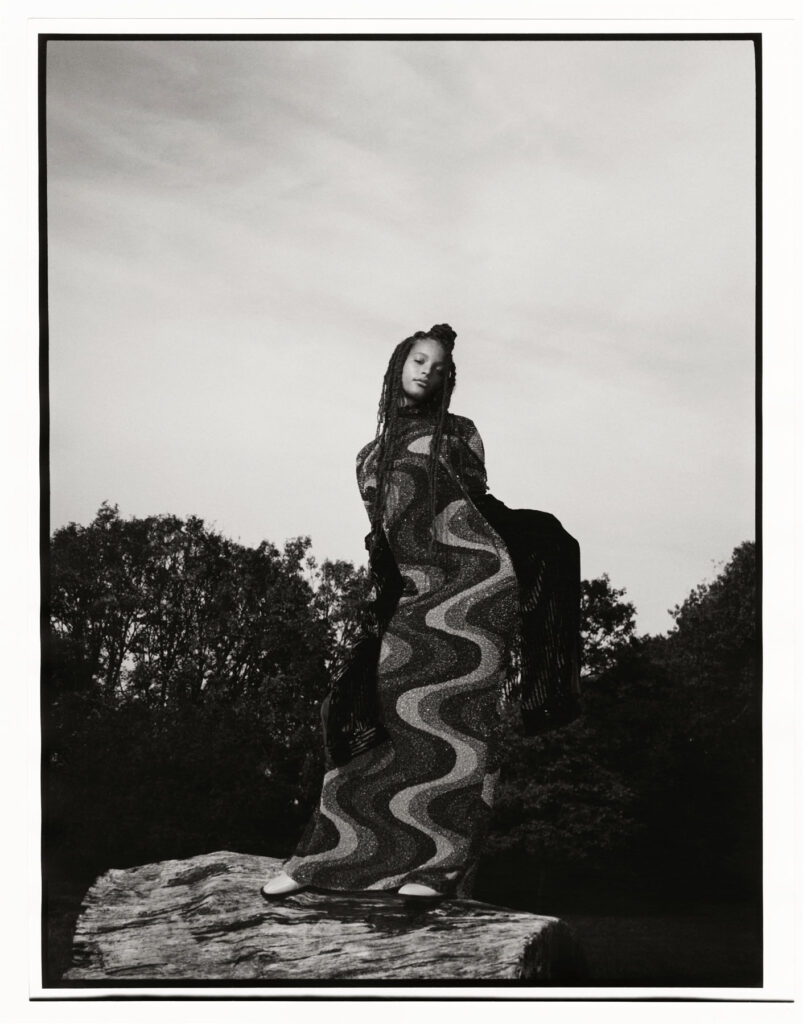
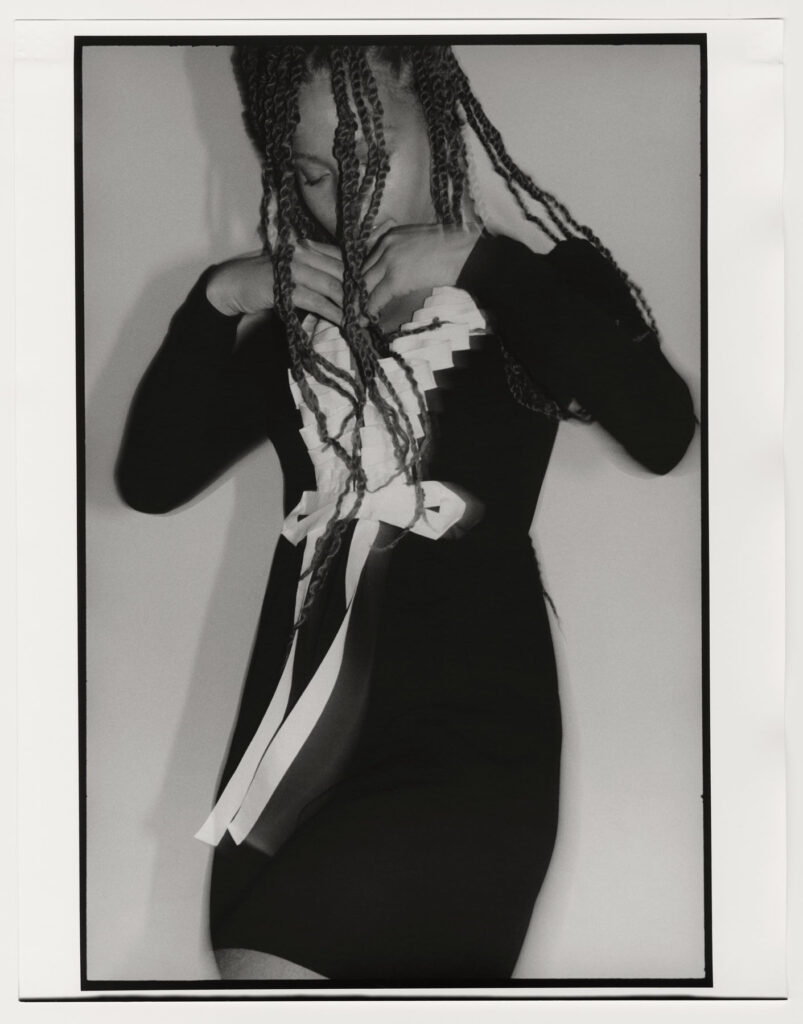
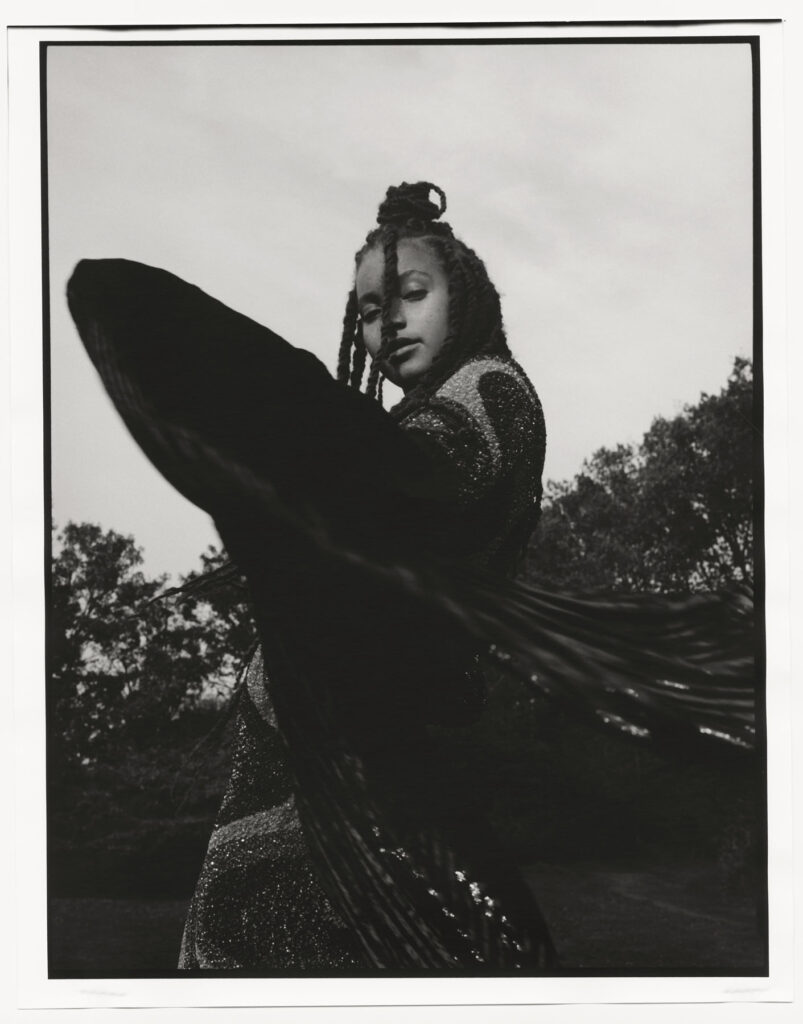
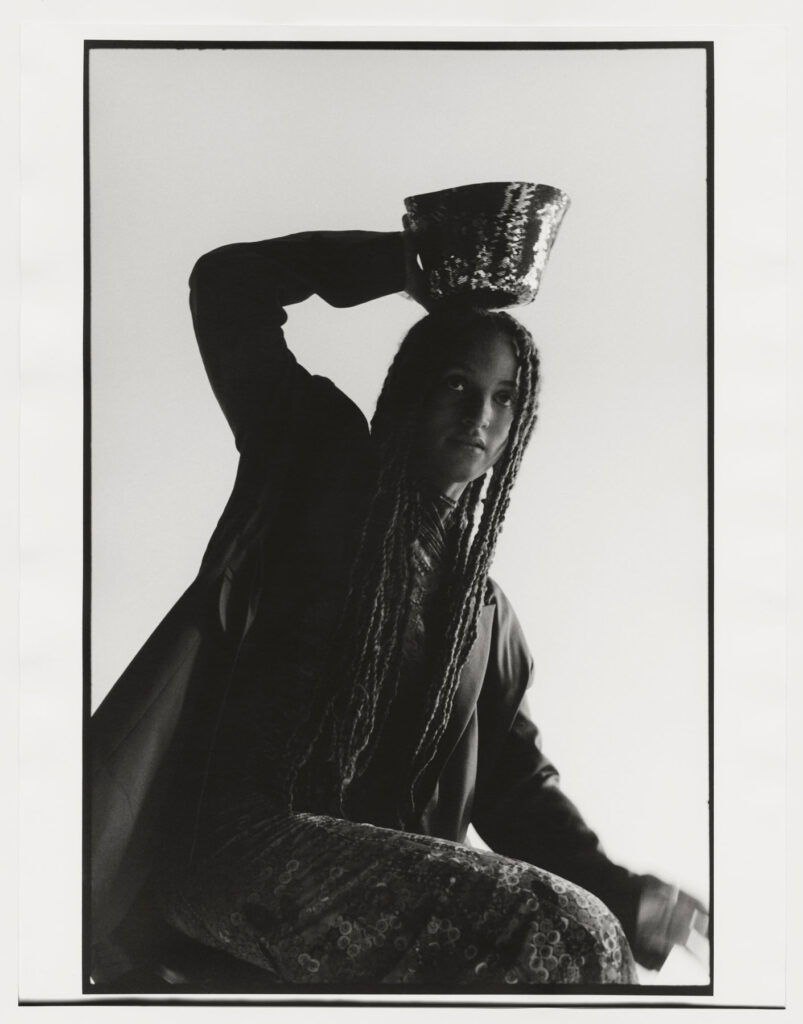
Simone Steenberg

Sea Oddity


Team

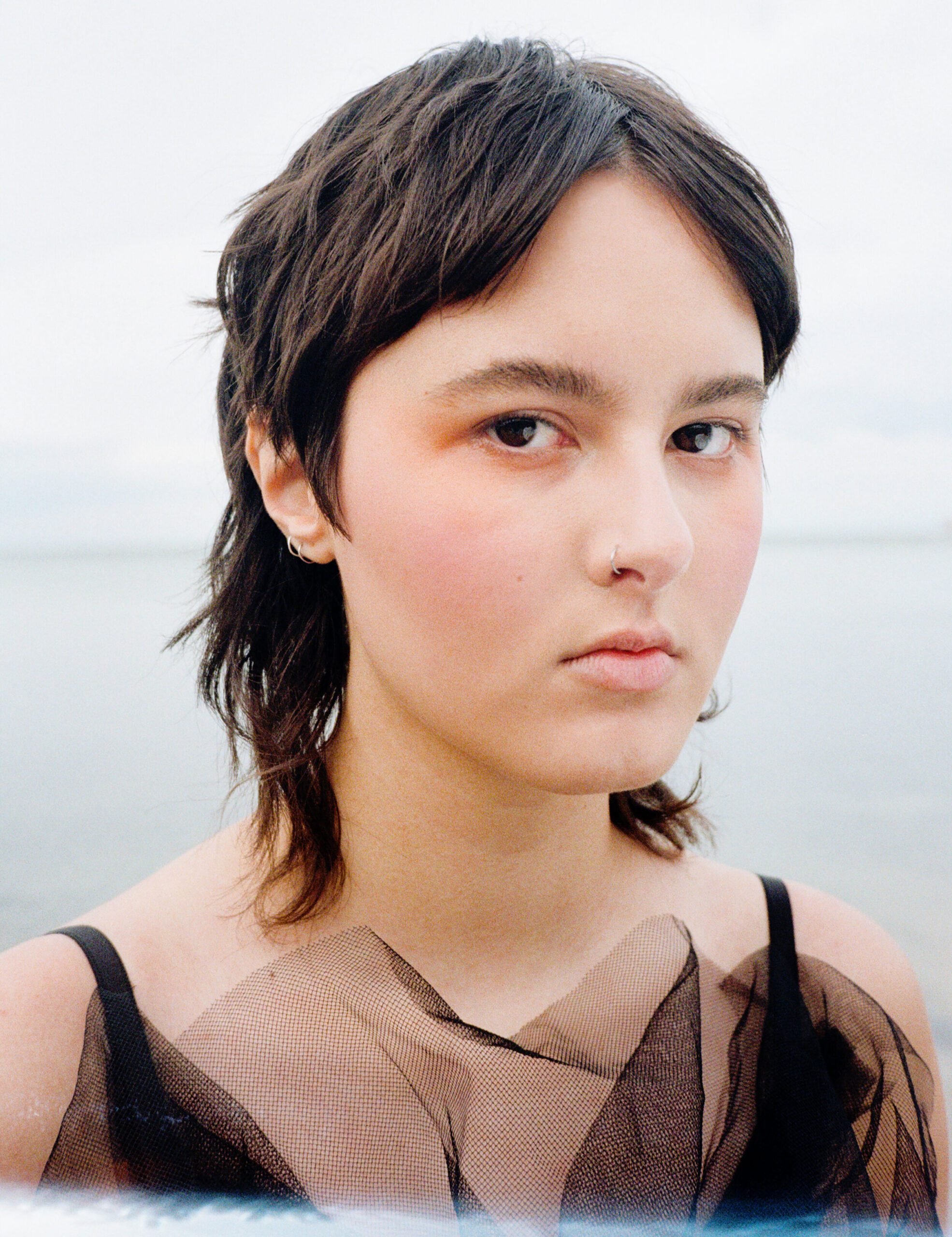
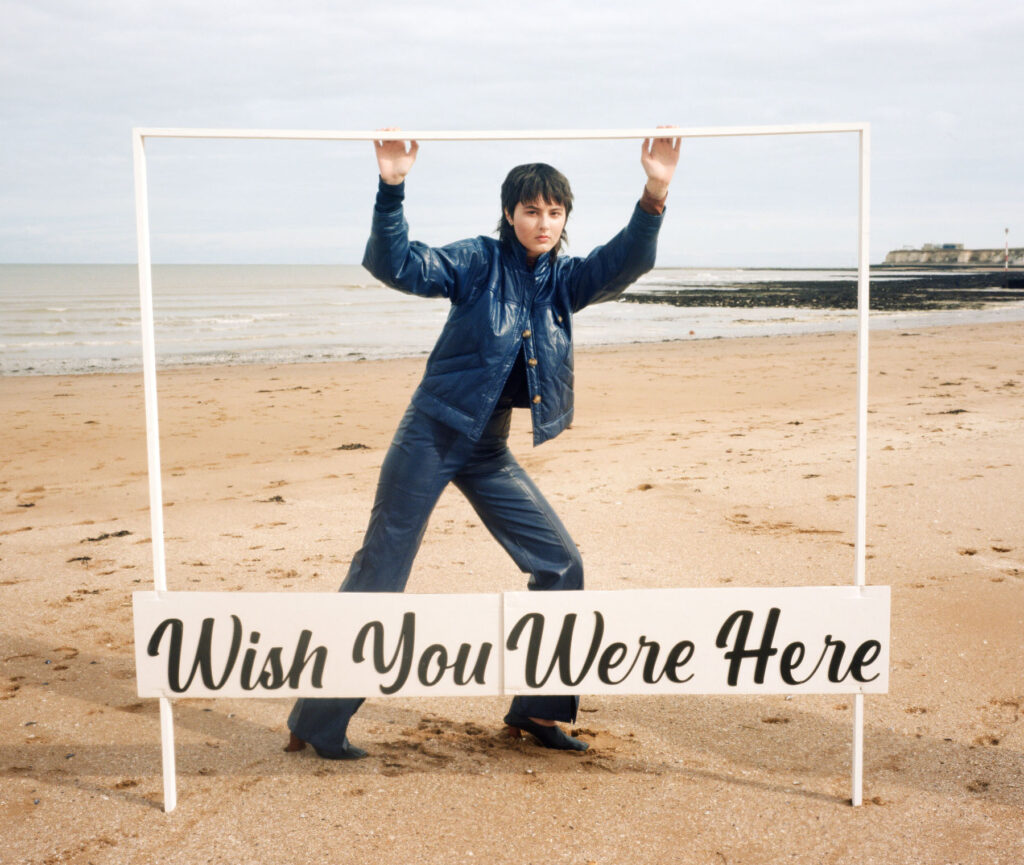
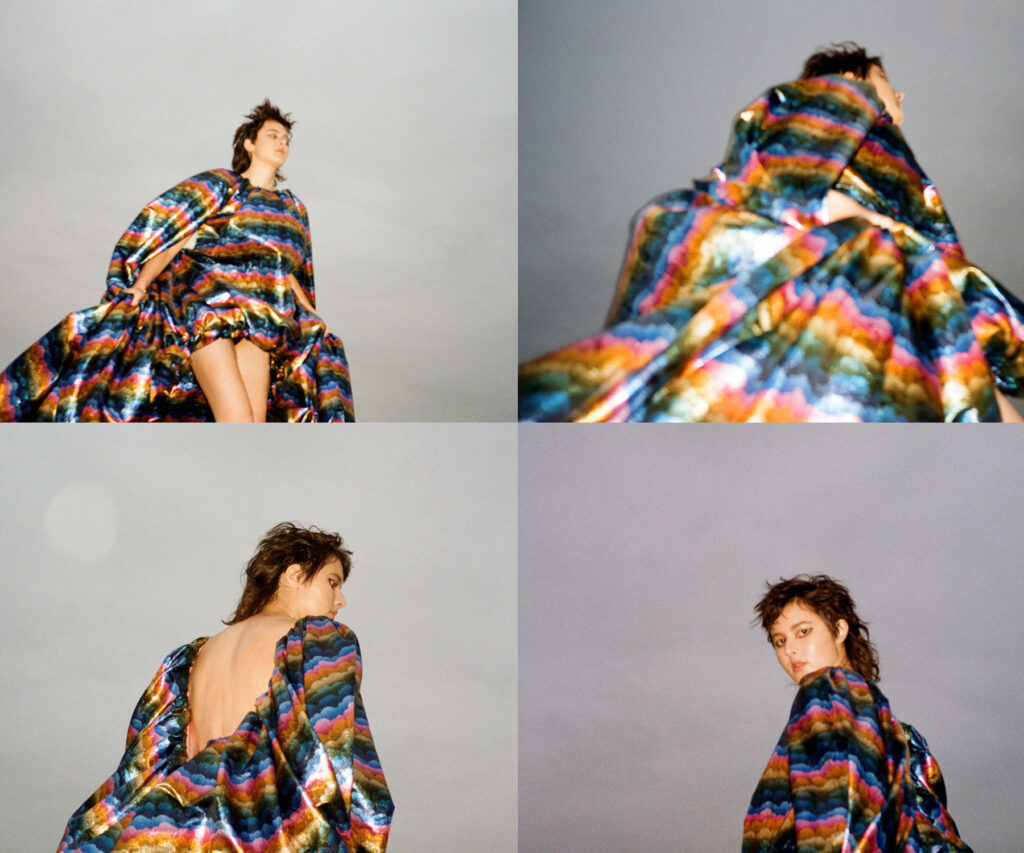
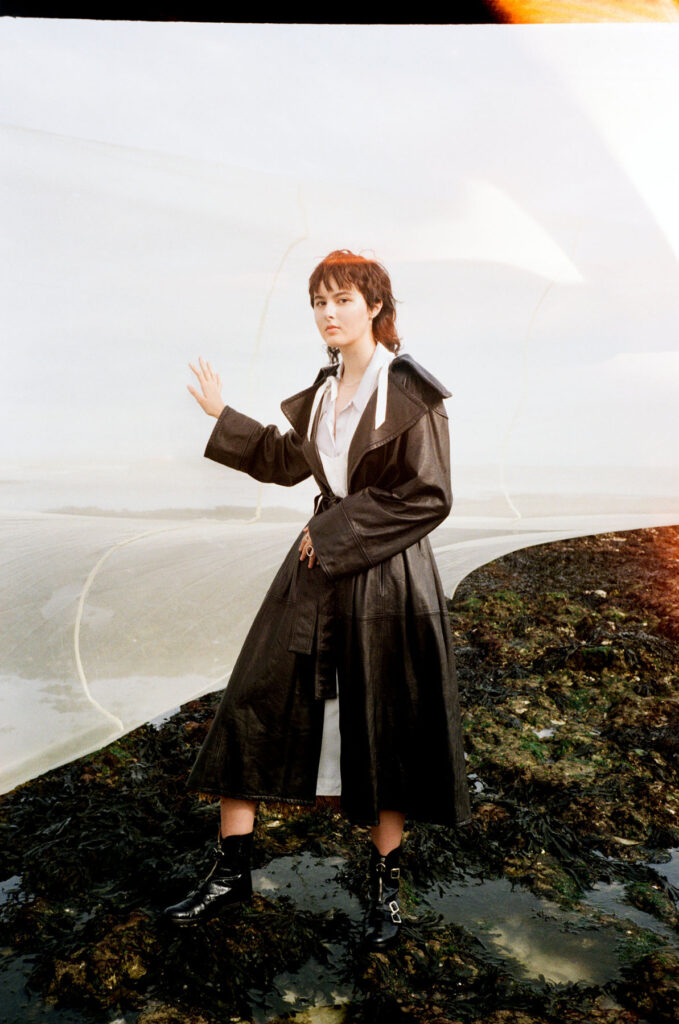
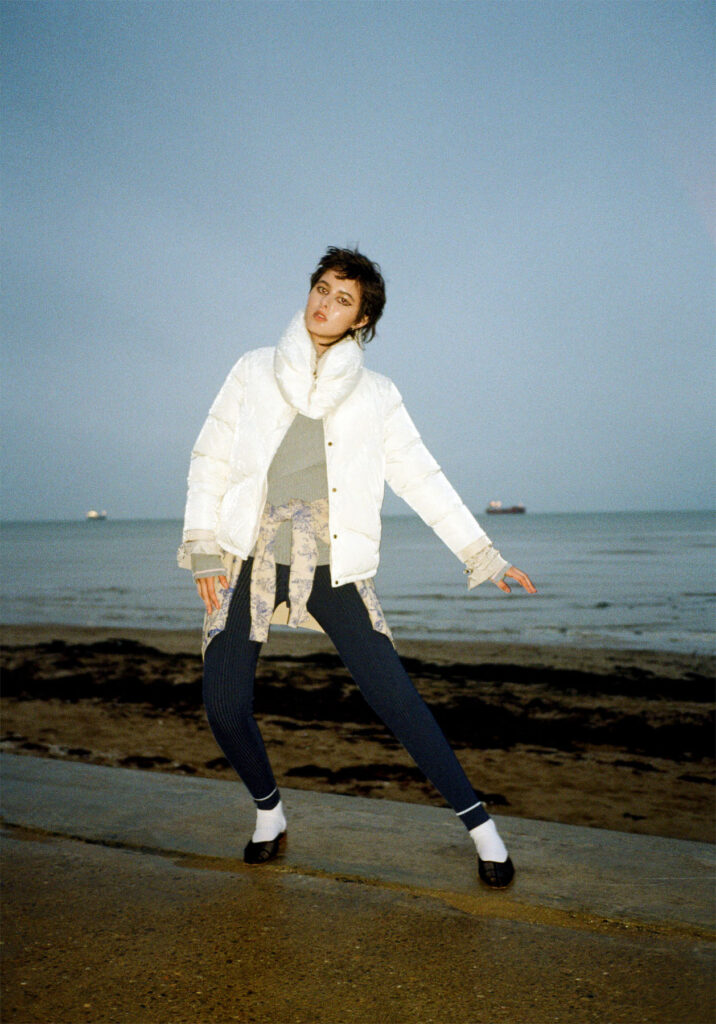
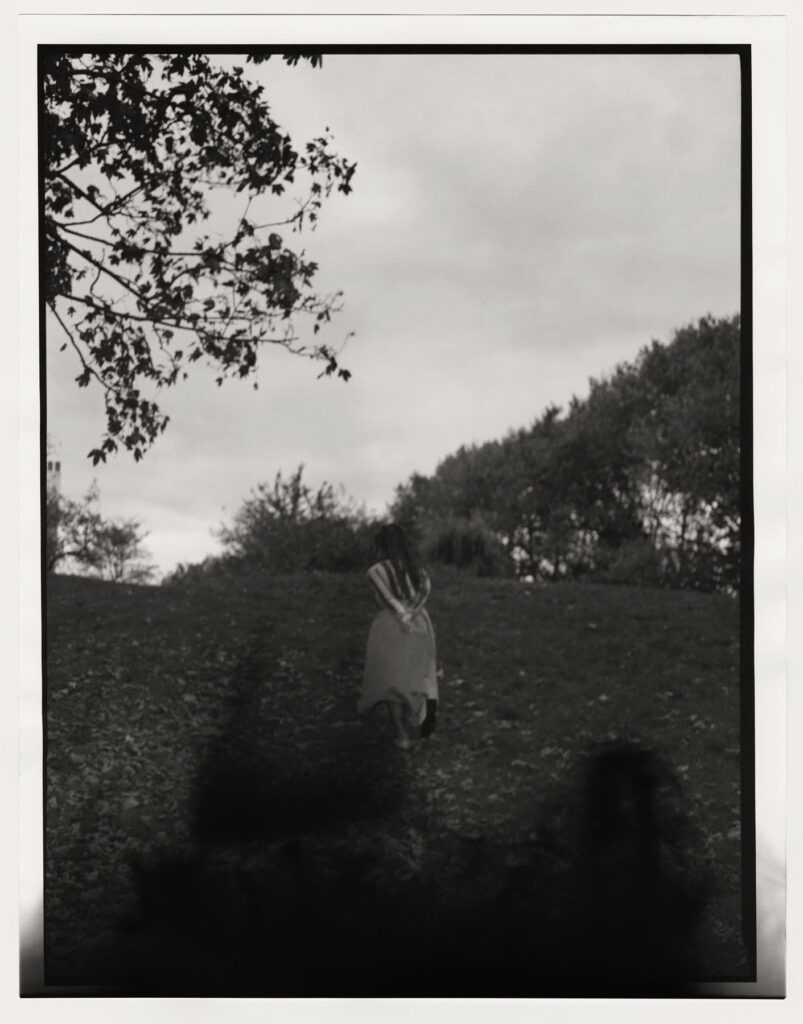
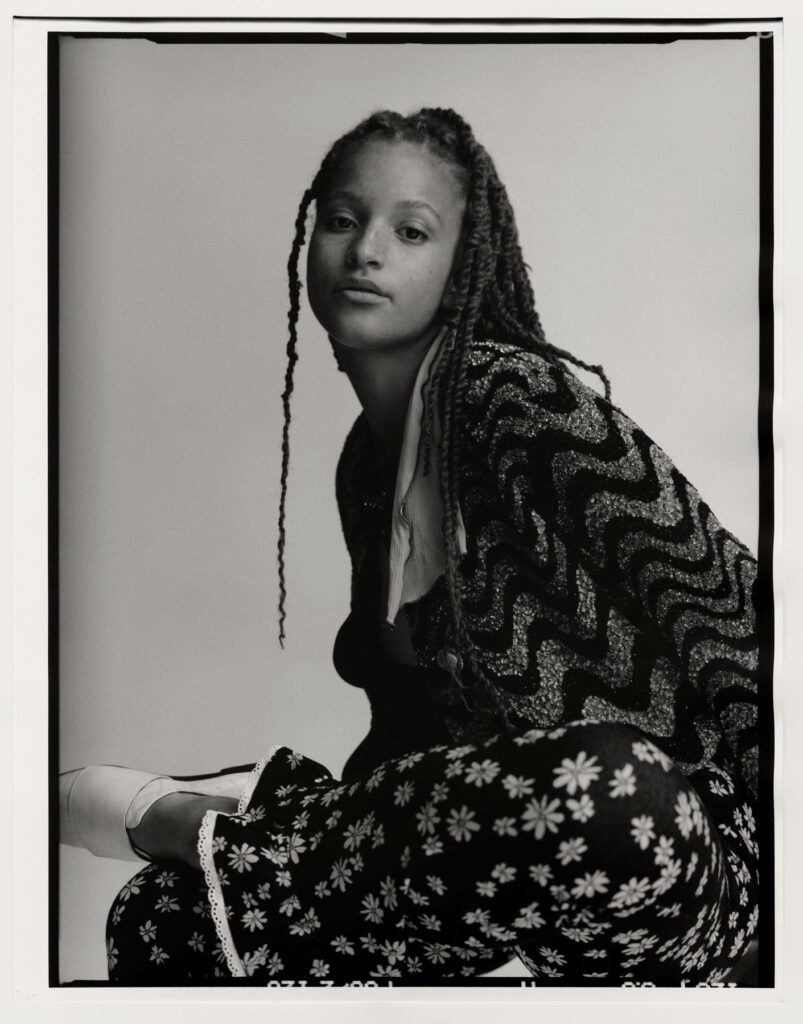
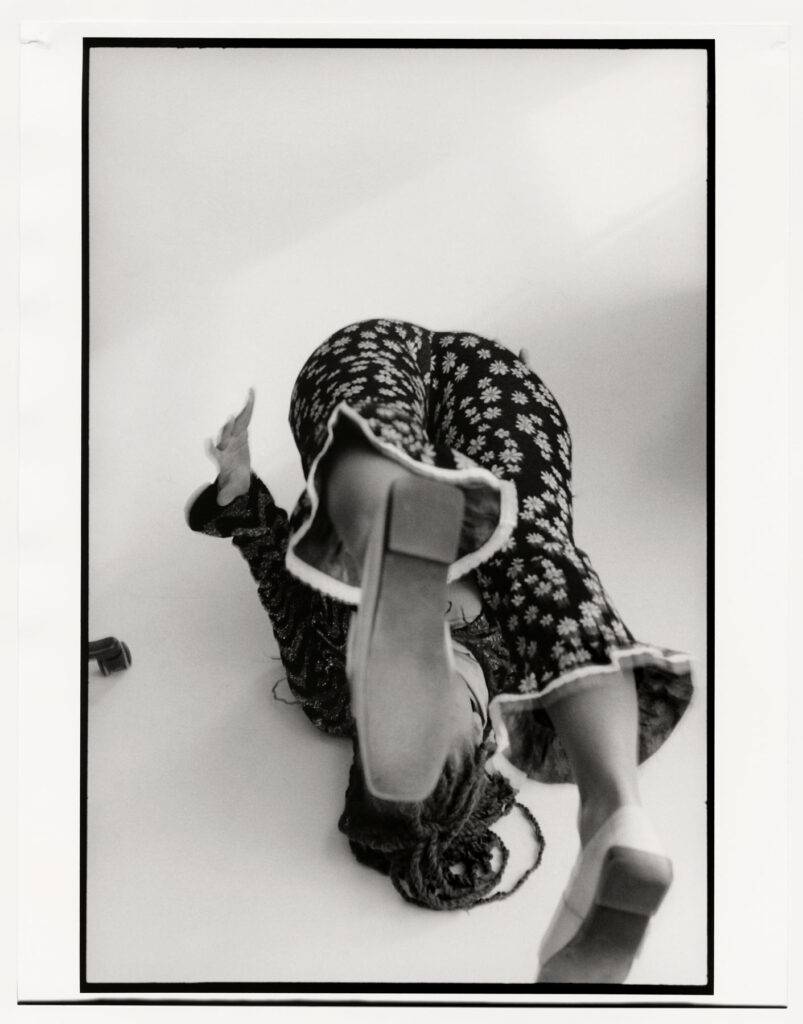
Photography · SIMONE STEENBERG
Fashion · ALDENE JOHNSON
Creative Direction · SIMONE STEENBERG Set Design · AMY FRIEND at GARDEN
Make-Up · NANCY SUMNER at EIGHTEEN using Les Chaînes D’Or de CHANEL and Sublimage L’Extrait De Nuit
Hair · WILSON FOK at EIGHTEEN using ORIBE Model · TABBY at IMG
Photo Assistant · LUCY DAVIE Fashion Assistant Francesca Russo
A special thanks to · The Walpole Bay Hotel, Margate, Kent


Designers

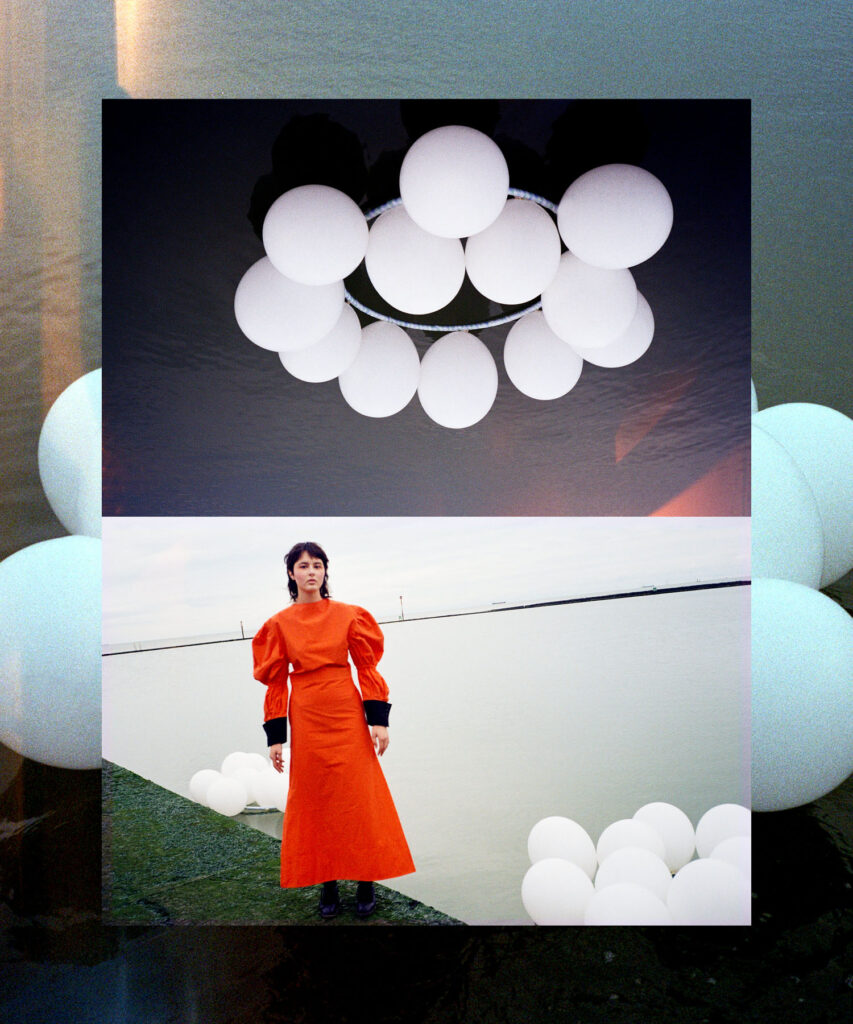
  1. Full Look GUCCI
  2. Full Look REJINA PYO
  3. Dress HALPERN
  4. Trench and Shirt NYNNE Dress TOGA Boots MULBERRY Necklace and Ring JAKHU STUDIO
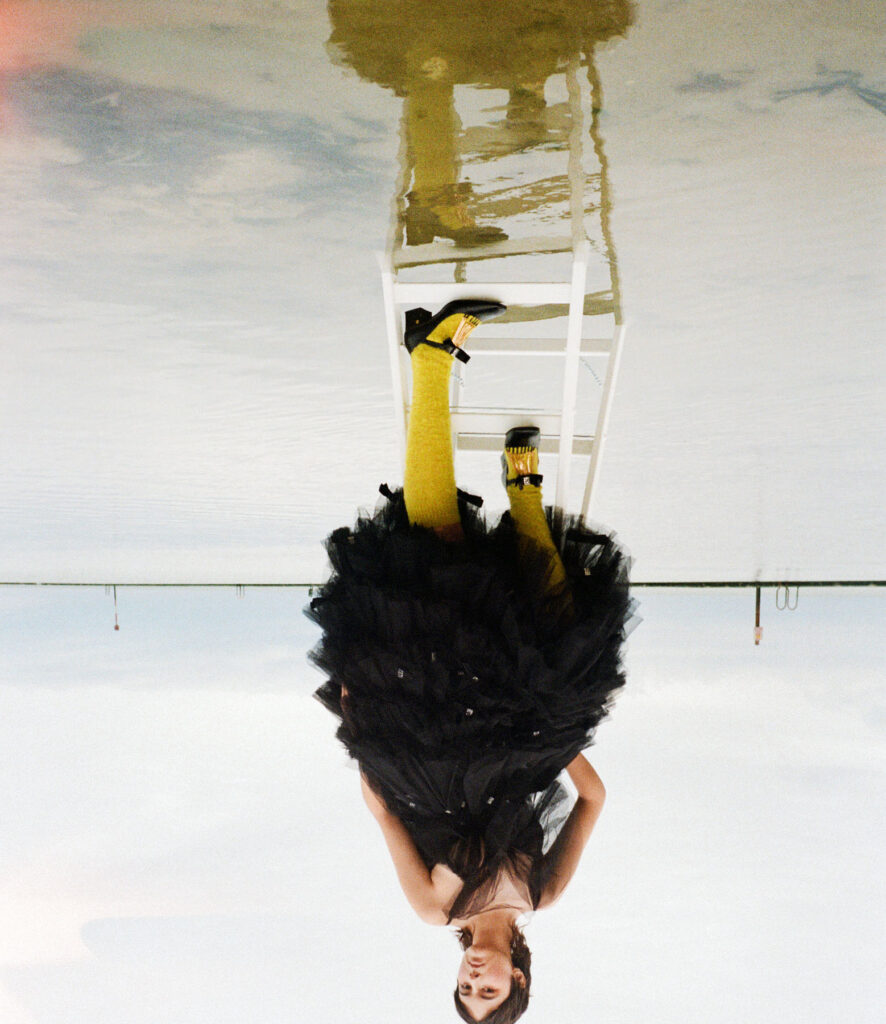
  5. Jacket NAYEH Cardigan TOGA Top and Leggings LIVE THE PROCESS Socks FALKE Shoes MALONE SOULIERS
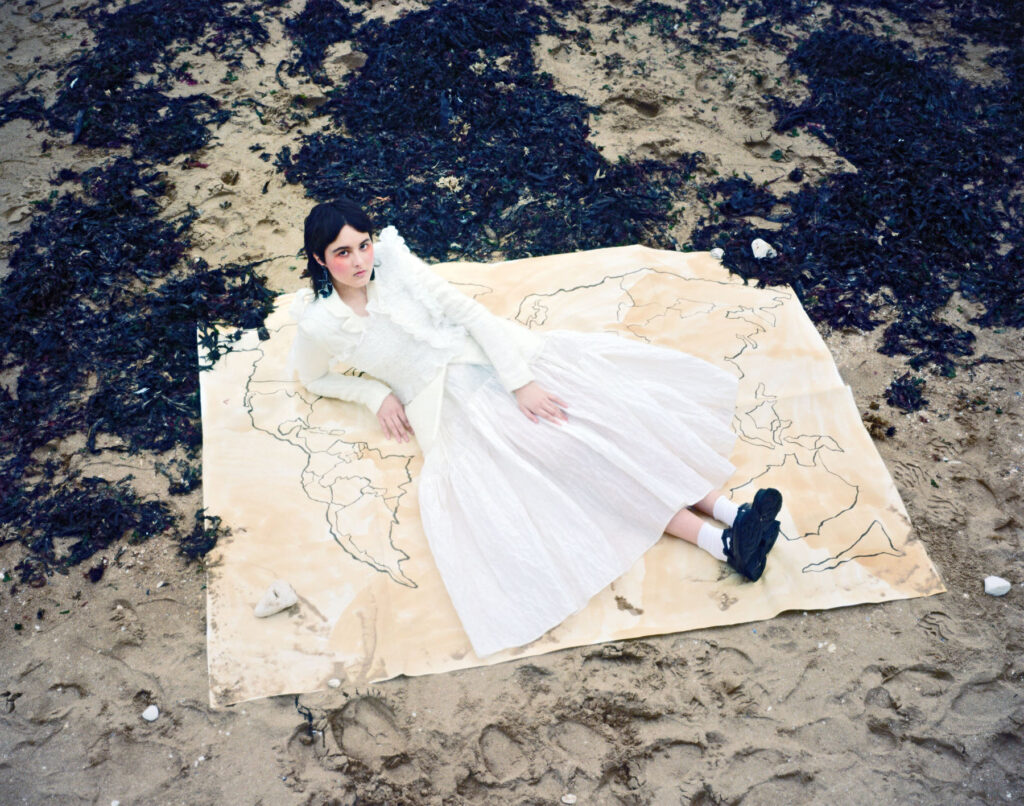
  6. Top, Skirt and Shoes SIMONE ROCHA Earrings SOPHIE BILLE BRAHE
  7. Trench and Shirt NYNNE Dress TOGA
  8. Jacket A-JANE Top GANNI Earring ALICE WAESE
  9. Jacket NAYEH Cardigan TOGA Top LIVE THE PROCESS
  10. Dress A-JANE Socks FALKE Shoes RENLISU
  11. Full Look GUCCI
  12. Jacket and Skirt CECILIE BAHNSEN Shoes HEREU Socks FALKE Earrings JUSTINE GARNER

Mark Shearwood

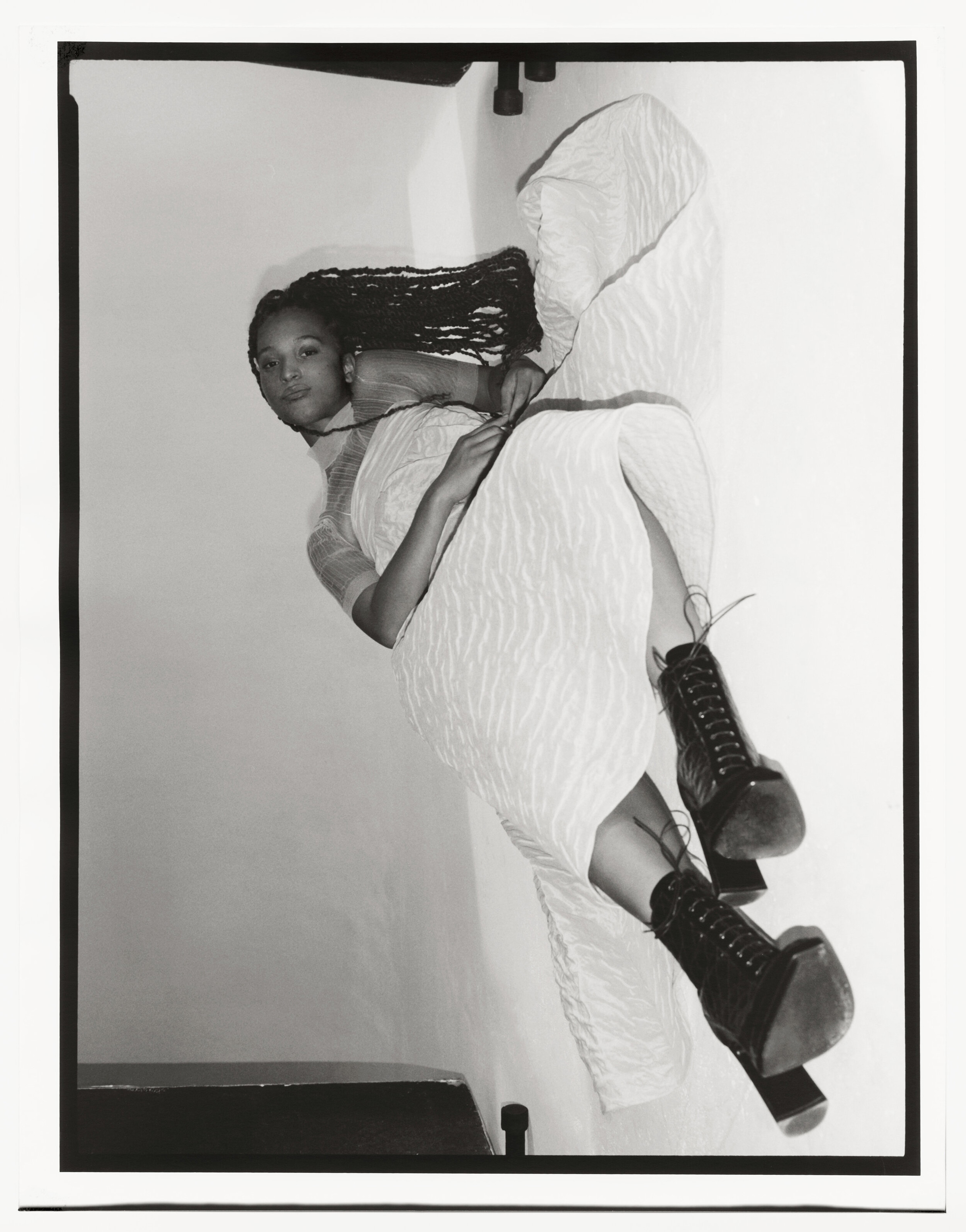
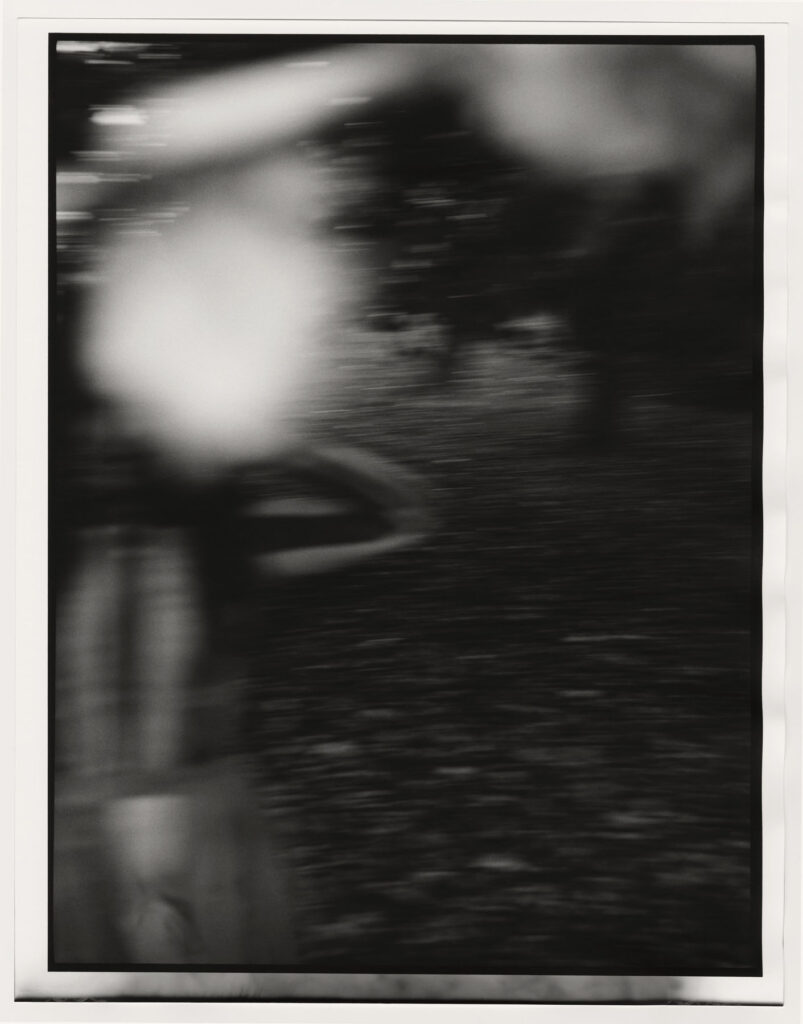
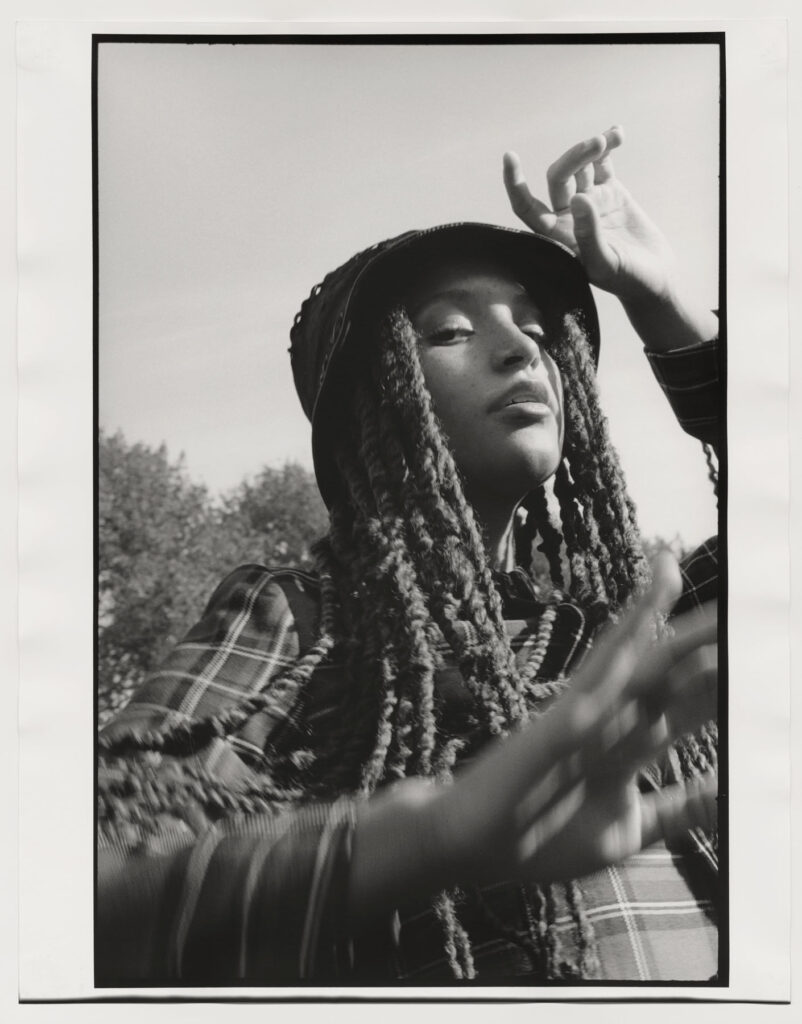
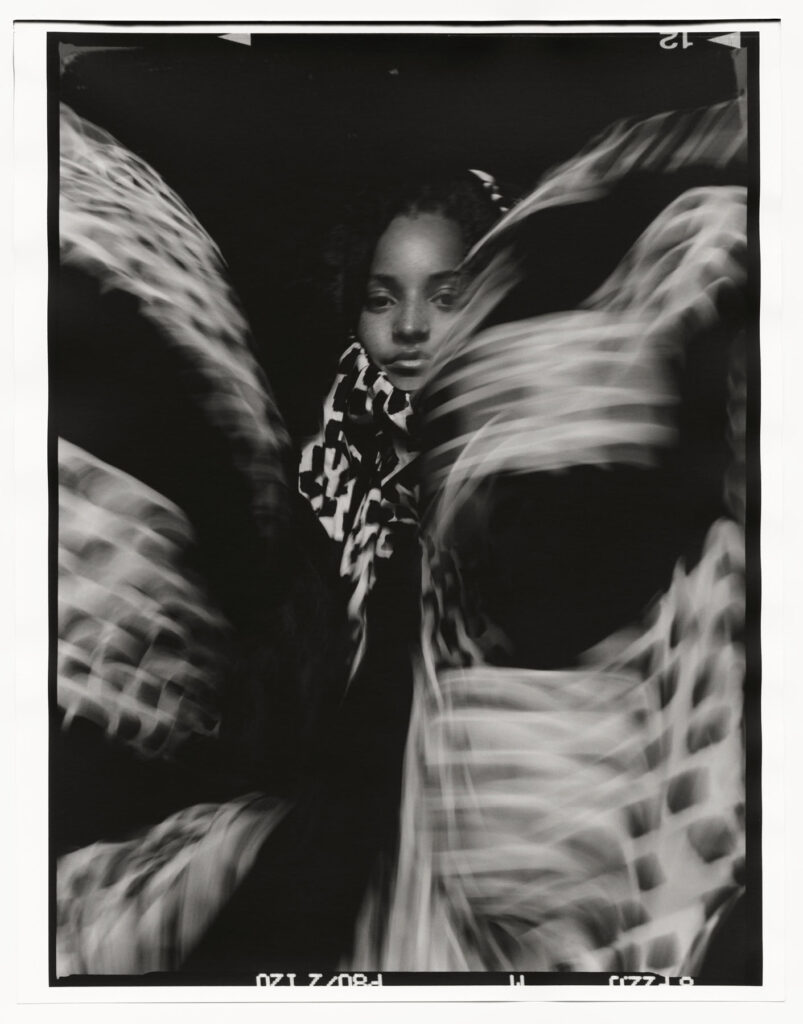
Precious

Team

Photography · MARK SHEARWOOD
Fashion · RACHEL CAULFIELD
Hair and Make-Up · NADIA ALTINBAS using REN SKINCARE, ARMANI MAKE-UP and BUMBLE AND BUMBLE
Model · PRECIOUS at NEXT

Designers

  1. Full Look CECILE BAHNSEN
  2. Dress A JANE
  3. Dress ASHISH
  4. Dress REDVALENTINO
  5. Dress ASHISH
  6. Top ALEXA CHUNG Top worn over Top HILDUR YEOMAN
  7. Jacket A JANE Dress HILDUR YEOMAN Hat MAISON MICHEL
  8. Trousers MIU MIU Jacket ASHISH
  9. Trousers MIU MIU Jacket ASHISH

Squidsoup

“We want people to suspend disbelief, to go with it and experience the work”

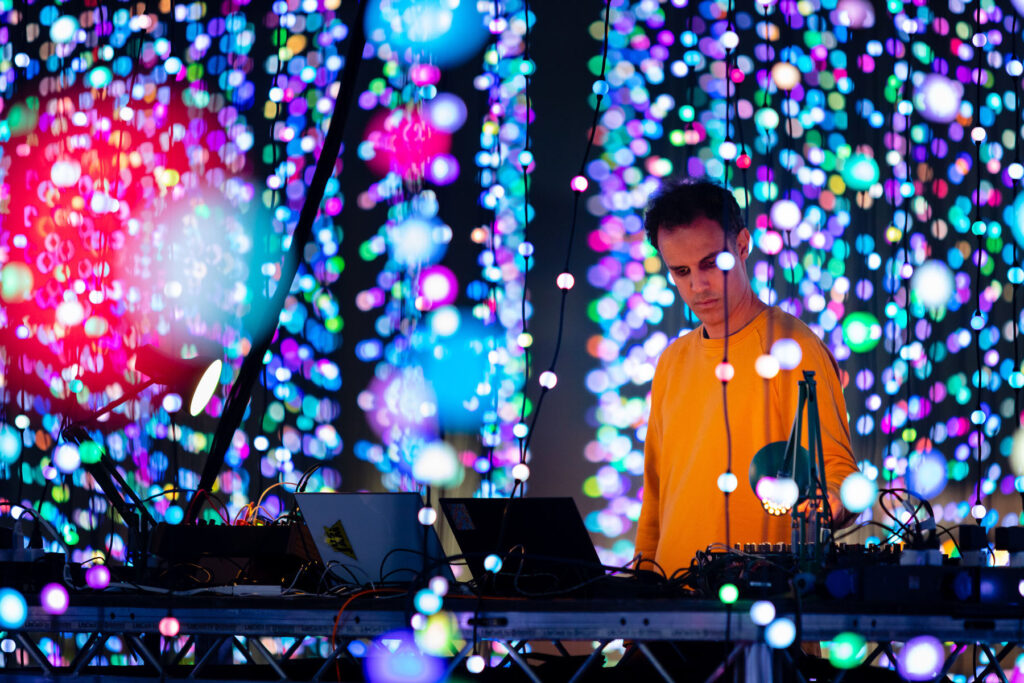
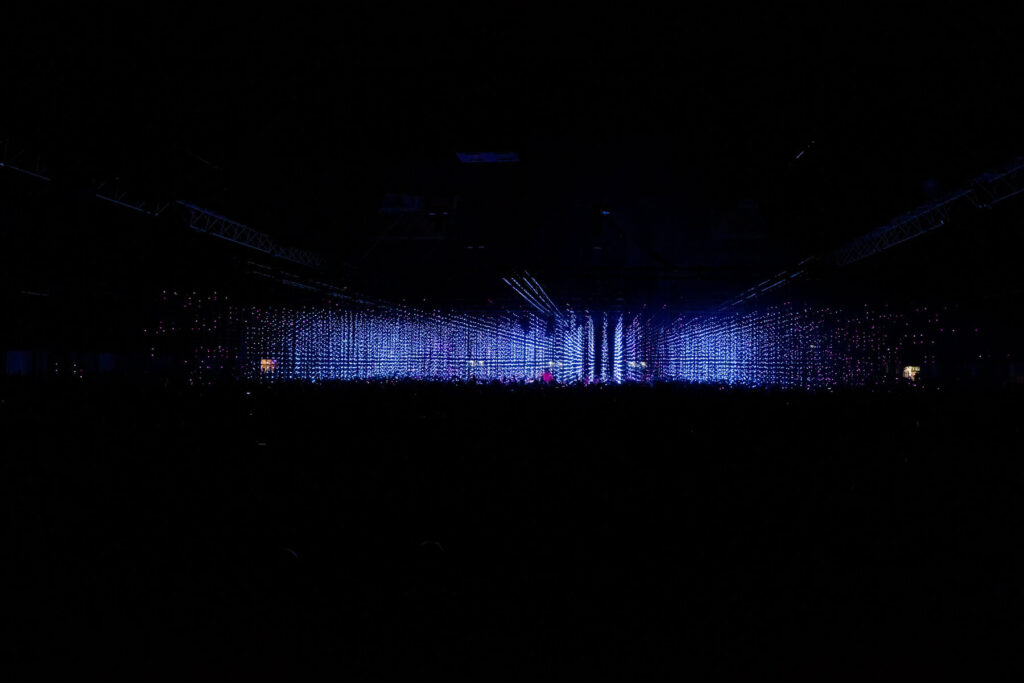
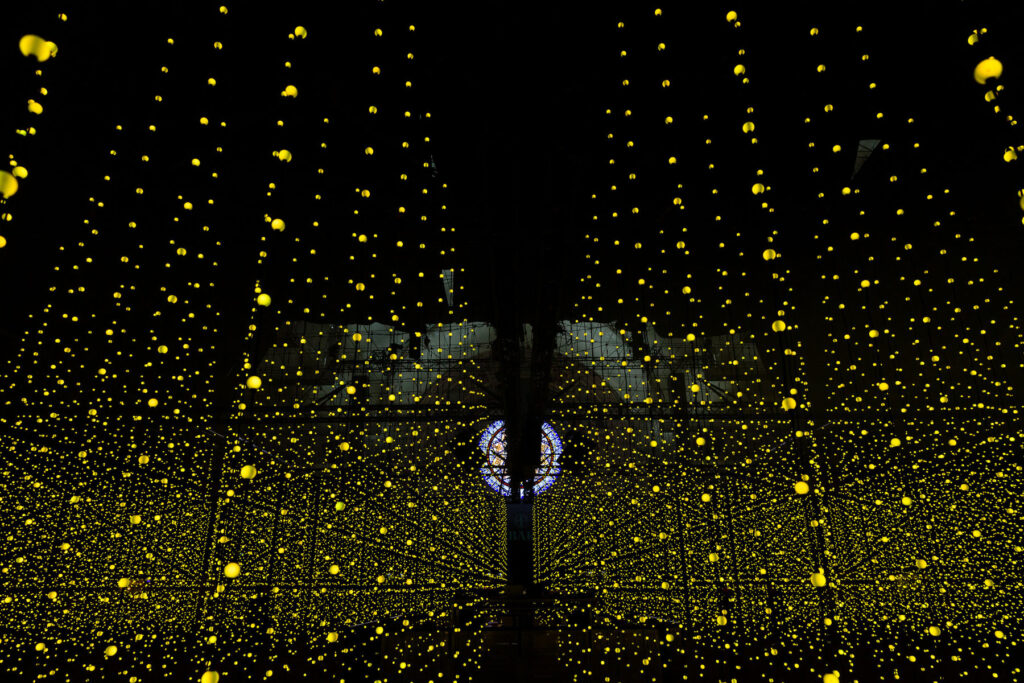
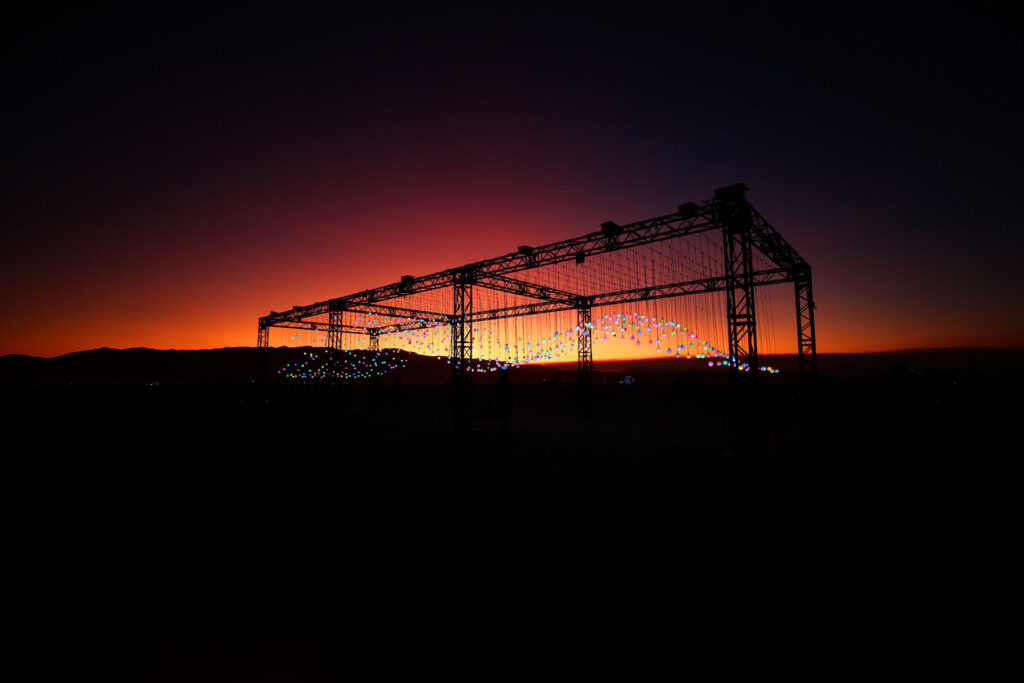
If you saw, or heard about, Four Tet’s string of dates at London’s Alexandra Palace last year, you’ll be familiar with the light installation that immersed the crowd for the duration of each show. The group behind this feat is Squidsoup, whose work for Burning Man in 2018 and again in 2019, you will likely have seen, like those Four Tet performances, via social media – if not in real life. Characteristic of Squidsoup’s work are visually and sensorially-arresting experiences, where light and digital art responds to physical space and the people who populate it. Yet, behind and beyond the ethereal qualities of Squidsoup’s work lies the technological and logistical realities that makes an installation of over 40,000 individual lights amongst a crowd of 10,000 people (as was the case for Four Tet’s Alexandra Palace shows) possible. Formed in 1997 by the artist and designer, Anthony Rowe, Squidsoup defines itself as an ‘open group of collaborators’ working across (digital) art, design, technology and research. Alongside Anthony and the group’s six core members, there is a team of full-time and part-time staff, freelancers, as well as a warehouse, workshop, studio space, and fabrication facilities. With Squidsoup’s trajectory corresponding more-or-less alongside the major digital advancements of the past 20 years, the group has been continually successful in bringing technological innovations into the realm of art, performance and the material world. 

As Anthony explains to NR over email, without the level of digital connectivity we experience today (such as 5G, the Internet of Things and “ever smaller processor sizes”), much of Squidsoup’s work would not be possible. Being able to adapt and change alongside the progression of technology and the digital realm is only one part of Squidsoup’s story, however. As Anthony notes, “interesting ideas are normally [those] pushing the boundaries of what is reasonably possible – either in terms of materials, software, engineering or logistics. Originality and novelty are highly-prized attributes in this kind of work; to achieve that, you need to be pushing the boundaries.” Now, as Covid-19 alters the ways in which we experience and use digital and physical space – perhaps, in some ways, irreversibly – Squidsoup are learning to adapt again. In response to the pandemic, the group have unveiled Songs of Collective Isolation, a piece which reconceptualises the larger, immersive installations that Squidsoup are known for on a more intimate, or individual, scale. “This is not a piece for massive social interaction,” Anthony outlines – rather, it’s a “contrast, a parallel track to our larger public artworks.” And as much as it is evidence of Squidsoup’s ability to respond and react to the world that their work is shaped by, it’s not the end of those bigger works: “Perhaps it is also in part a memento to those larger projects, and a sign of hope that those days will soon return.”

How did the idea for Songs of Collective Isolation come to fruition, and how will this piece work in real-life settings?

Songs for Collective Isolation emerged from a series of explorations, looking at the possibilities of minimal, slow-paced sound- and light-scapes, free from the need to think about practicalities such as people flow, visitor experience and dwell time. We wanted to create a piece that would slowly draw you in, using natural and unadorned sounds, and exploring the effects of layering multiple iterations of the same sound, each from its own speaker suspended in space. The result is a raw set of sampled sounds (a violin recorded very close up, played by Giles Francis) that gains depth and breadth when played independently through multiple speakers – it fills out; becoming an orchestra, rich and deep, from such simple beginnings. We also saw a parallel with the current global situation – social distancing, lockdowns and so on. The potential of what we can achieve together, and the fragility of isolation that we were suddenly confronted with, seem to resonate within the piece. The piece starts with a solo note that, only after quite a while, begins to build in strength and variety.

The work uses a hardware and software system we have been developing in-house for the past few years, that we call ‘AudioWave’. It is the same system that was used at Scottsdale Museum of Contemporary Art in Arizona to create a piece called Murmuration (2019-20) that comprised over 700 individual speakers and orbs of light, suggesting the movement of light and energy around the outside of that building. It builds on earlier iterations such as Wave at Salisbury Cathedral, Desert Wave at Burning Man and Canal Convergence, and Bloom, first commissioned for Royal Botanical Gardens Kew. This piece is much smaller, more intimate, with just 18 light/speaker orbs. It is designed to be seen in quiet, private or controlled spaces – again resonating with the current situation.

The footage of Where There is Light is poignant to watch; How was the work, with light responding to the stories of refugees and asylum seekers, developed?

From the outset our goal was to create an abstract space in which people could listen to some real stories from real people; refugees within their midst in Gloucester. It was also important, I think, that this was done in a positive way, as part of a non-lecturing experience. And finally, we wanted to bring attention to the amazing work of GARAS (Gloucester Action for Refugees and Asylum Seekers). An opportunity arose to show the work in Gloucester Cathedral, and we worked with Everyman Theatre and Music Works, two local organisations, to put  the piece together. 

Visually, we wanted each of the four testimonies to have a different feel, a different visual reference. And finally, there is a musical crescendo where we took the opportunity to let rip with the lights a little! The project was a collaboration with a refugee organisation local to the studio in Gloucestershire UK called GARAS. We all hear stories of refugees, but the enormity of their ordeals is so outside of our experience, that attempts to represent their lives becomes mired in the discussion of guilt, responsibility, economics and race.
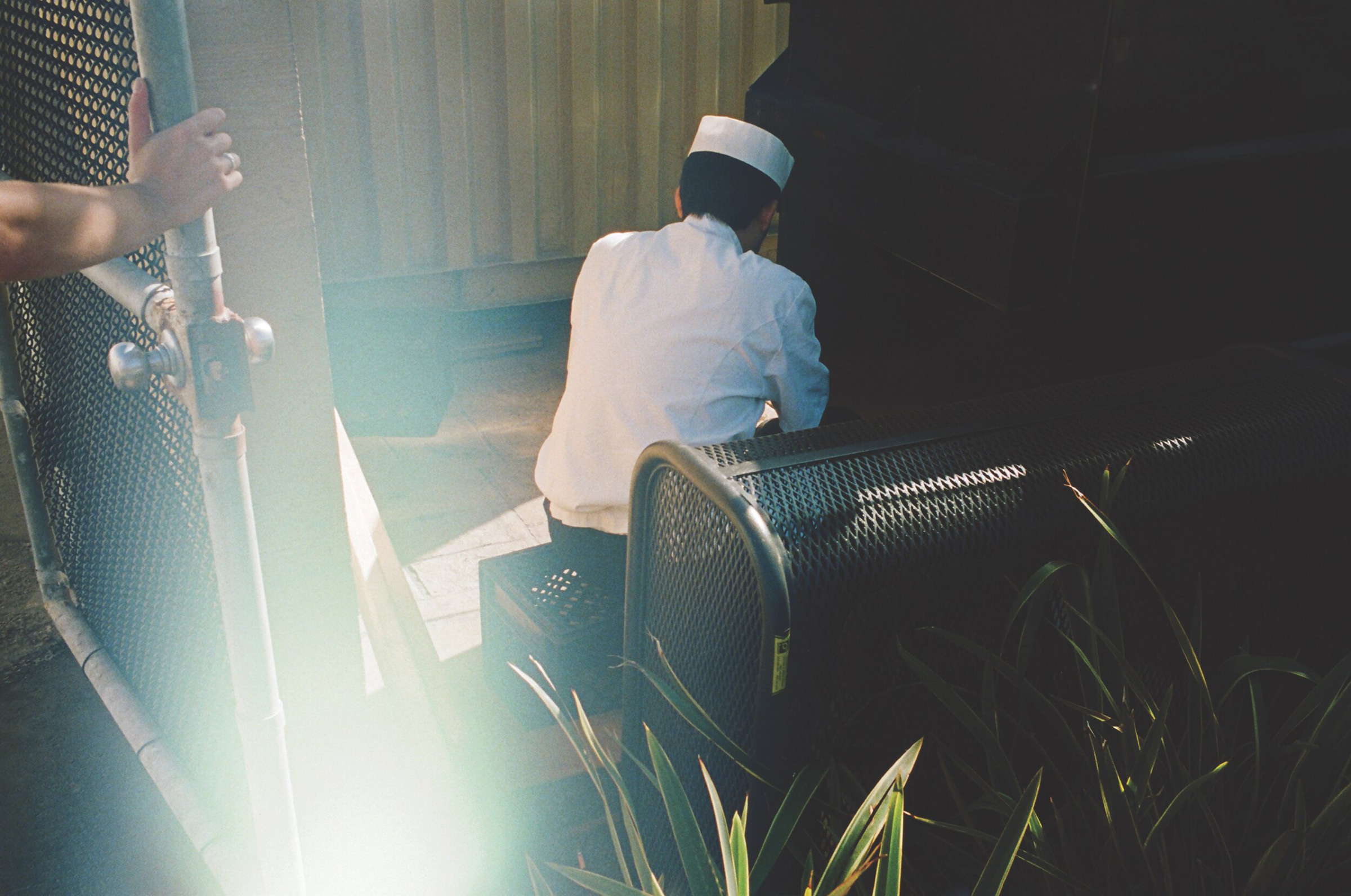
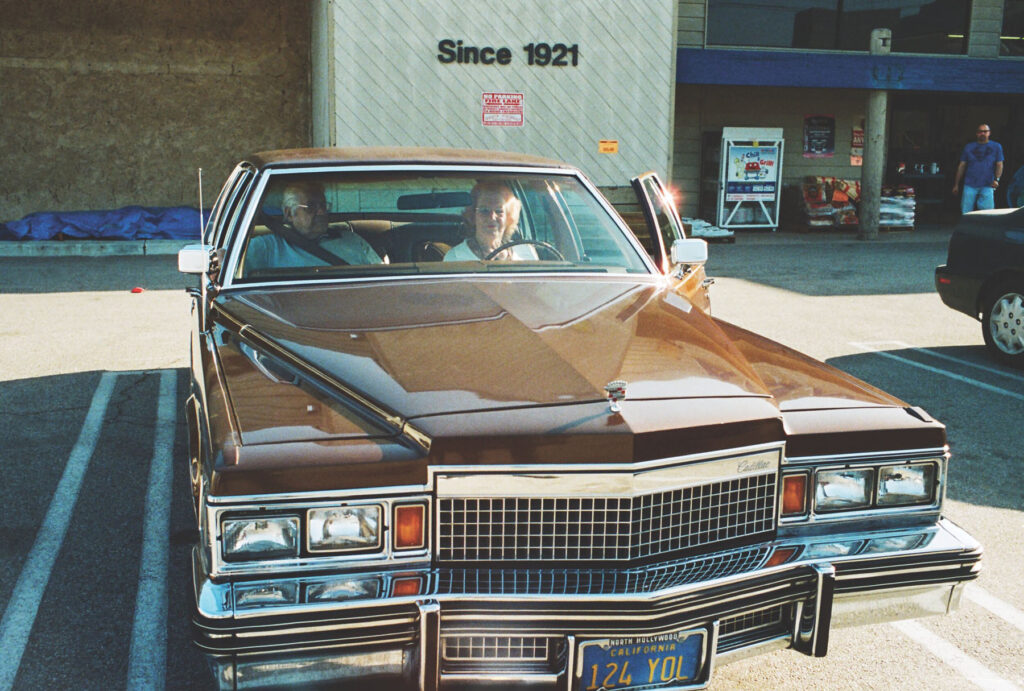
How did Squidsoup’s work with Four Tet come about? 

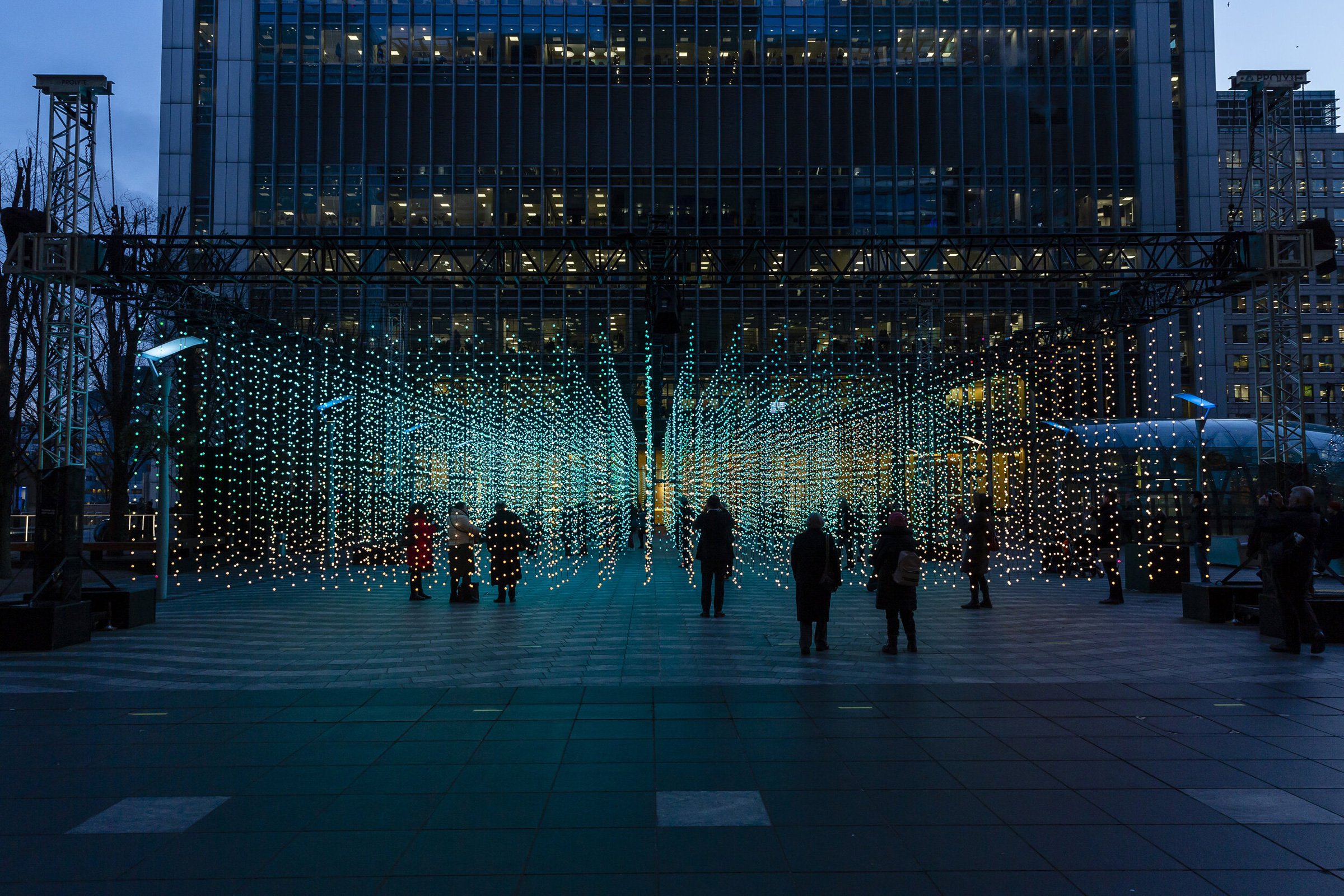
Having created indoor and outdoor versions of a project called Submergence and shown it numerous times in various types of spaces and events, we felt that the approach of the work, using a walkthrough 3D array of points of light (controlled in real time) to create the impression of movement and presence in a shared physical space, could be adapted for use elsewhere, in particular in live stage performance. In 2015, Kieran Hebden of Four Tet was finishing the album Morning/Evening, that was, for him, something of a stylistic departure consisting of two long, meandering, Indian-inflected tracks, and was wondering about a live set. A mutual friend connected us.

“The plan from the start was to search out serendipities; happy coincidences where two working processes coincide, creating – hopefully – more than the sum of their parts.”

The first shows (Manchester International Festival, Sydney Opera House, Roundhouse) had a conventional stage layout, with our volume of lights behind Kieran on stage. For a gig at the ICA in London in 2016, Kieran suggested placing himself in the centre of the room, on a low riser, in the middle of the lights. The audience, also within the installation, surrounded him, effectively breaking down the wall between audience and performer – placing them in the same space and creating a different kind of audience experience. A hybrid of performance and installation; a blurring of boundaries between stage and audience space; plus, of course, the mixing of physical and digital inherent to the original idea of the work. The ICA had an audience of 300, as did National Sawdust and Hollywood Forever, US, which we then expanded to some 6-to-700 at the Village Underground (Shoreditch, London, 2018), and eventually the 9,000 plus at Alexandra Palace. Upcoming events in Berlin and the USA are currently on hold due to the COVID situation.

Has the collaboration with Four Tet changed the possibilities of experiencing live music?

New possibilities for experiencing live music are emerging in many ways, as technology improves and becomes more available. None of what we do would be possible without a myriad of technical innovations. We have been pushing the relationship between performer and audience, performance and immersive installation experience as described above, aiming to deliver new types of experience. But we are not alone in doing this. The collaboration with Four Tet is an example of a creative partnership looking for new ways to engage audiences and expand performance – to create novel kinds of experiences. In one key sense, this has been a rare opportunity. The relationship Four Tet has with his audience is unique: they are cerebral, with high expectations, but they do seem up for new things. Not every audience can be trusted to treat the work with the physical respect it needs: the LED strands dangle in among the audience – a different audience could easily pull and break them. 

What informs the ways that Squidsoup responds to different environments? 

Most of our larger commissions are awarded, so we respond creatively to a specific space or cultural brief, and we also use these commission as an opportunity to advance our own agendas and work. In effect, this means that we use the space, location, community/audience, and any brief we are presented with as a canvas, and the systems and technical approaches we have developed are the paint (or medium) to create a new piece. Enlightenment, a project we installed in the North Porch of Salisbury Cathedral, was informed and inspired by the symbolic importance of the cathedral, its history and presence, and was also a response to the nature of the space. At a practical level, we needed to take into account people flow into the building, and to consider how the light and sound bounced off walls, and so on; the affordances of the location. The Polaris work at Burning Man was almost the opposite in terms of approach and experience. The first time we did it, we had no idea what we were getting into; we just liked the idea of an LED cube driving around the desert. We were invited out by Cyberia, one of the camps at Burning Man, to give it a go using an ex-army truck. What could possibly go wrong?

“It was a baptism by fire, and the answer is pretty much everything went wrong (generators failing, dust getting literally everywhere), but we learnt what needed to be done for kit to survive out there.”

We were lucky to be invited to return the following year, where we both re-ran the Polaris project and were also commissioned to create a new work for Burning Man 2019: Desert Wave.

It’s fascinating to see Squidsoup’s progression from the early works to some of the large-scale bespoke commissions. Is there a direct connection between these earlier pieces with the present day? 

Definitely. Our work has always been about immersion – working to create beguiling trance-like experiences and making the tech an invisible enabler, rather than a prominent component. Visually, our works have moved away from using screens, as the screen is a boundary; a barrier between the viewer and what they are looking at. We wanted to break down that barrier, either by placing the viewer inside the content, as with VR, or by letting the media spread into our shared, physical world. For us, VR felt too lonely an experience, where you leave this world behind, so we looked for more hybrid approaches, eventually landing on the various approaches using arrays of lights (and sound) in physical, walkthrough, shared spaces.

As our work has developed, it has become more abstract. This is partly due to the nature of the media we now use, but it also feels right for us, as it allows for quite a primal, visceral form of engagement. It also allows each person experiencing the work to decide what it means for them. That, in itself, is an interactive and creative process. What is consistent throughout our work is a will to remove the technology from one’s conscious experience. We’re not pretending it’s not there (our work is quite technologically ambitious), but we don’t want people feeling that they are engaging directly with ‘computers’. This is partly because they are a means to an end, not a focus in themselves in our work, but we have noticed that people change their approach when confronted with digital/binary decisions. They start to think about how it all works, which is absolutely not what we are looking for.

“We want people to suspend disbelief, to go with it and experience the work with all their senses, rather than their intellect.”

What can people learn from Squidsoup’s interdisciplinary approach to combining technology and research with music and art?

Interdisciplinarity is increasingly necessary in our work, but I’m not sure that we actually see it that way. We see it more as collaboration between people with different skills, as we need a range of skills and expertise in order to make real our artistic visions. Learning advanced computer, materials, robotics, music, design and architectural skills, and so on, takes time and, if you’re not working with a trained professional, there will be a lot of learning by trial and error. Even when you are using a trained professional, we often end up asking them to do things that are out of their comfort zone anyway – so trial and error, and iteration, are the order of the day. Connected with this is communication. We often work remotely, even more so these days, by necessity due to current movement and social distancing restrictions, so getting an idea across clearly but accurately is vital when working with people from various disciplines. Although our projects generally start with a fairly clear concept and idea, there needs to be a degree of pragmatism involved during the development phase. Some aspects of an idea may be impossible, or better approaches may be uncovered along the way. Being able to see these and work around or with them when they arise, is crucial – and also down to communication. The flip side to that is that it can also be tempting to dilute an idea for the sake of practical expediency. Any changes of direction are carefully thought through to ensure that the core concept is not compromised.

Squidsoup is described as something that can ‘be experienced online […] and in shared spaces’; how do you anticipate the different ways in which participants might engage with the work, either in real life or via online footage? 

In mid-2020, the variety of ways that people can engage with our work are significantly compromised by social distancing, travel restrictions and other knock-ons from the current pandemic. Our best-known works are experiential physical spaces, in galleries or outdoors at festivals and other events. But we do also create permanent exhibitions, and smaller artworks that straddle the area between installation and art object. Currently this is a main focus; to make smaller works that can be experienced in private and smaller, more controlled, public spaces. Although our works have been shown many times, the world is a large place and the most effective way to speak to global audiences is through the web and social media. We have not made a web-based artwork for many years, but we try to document our work in an honest and truthful way, so that people who can’t actually make it to an installation can still get some understanding of what the works entail. However, most of the online content associated with our work is generated by visitors. Social media users have been kind – many of our projects are very selfie-friendly. There is a definite irony there, as one of our stated aims (as mentioned above) was to move away from screen-based experiences to physical ones. And yet here we are, with many more people knowing our work from digital content than from encounters with the physical work.

Credits

Find out more about GARAS at www.garas.org.uk

www.squisoup.org

Designers

  1. Submergence, 2019, Canary Wharf image by Rikard Österlund
  2. Four Tet, 2019, Alexandra Palace image by Rikard Österlund
  3. Four Tet, 2019, Alexandra Palace image by Rikard Österlund
  4. Four Tet, 2019, Alexandra Palace image by Rikard Österlund
  5. Desert Wave, 2019, Burning Man image by Travis Cossel / Black Label Films

Jamel Shabazz

“The creative eye is more important than the camera”

The acclaimed street photographer, Jamel Shabazz, first picked up a camera as a teenager at school in Red Hook, Brooklyn, in the mid-1970s, set upon making images of his friends and classmates. Shabazz was no stranger to the medium; his father was a professional photographer whose collection of photobooks were made available to his son. Black in White America (1968) by the photojournalist Leonard Freed, was one such book that had a profound impact on the young Shabazz.

After a stint in Germany with the US Army in his late teens, he returned to find the New York he left behind in a very different state of mind. Racial tensions and violence were on the rise, and crack cocaine was just beginning to seep into the foundations of daily life. In that moment, the impression that had been made on Shabazz by photographers, like Freed and Gordon Parks, became clear, as he turned his camera onto the people that he’d grown up around in Brooklyn and New York. By making images of the people that weren’t usually photographed, Shabazz sought to heal growing divisions – countering animosity by taking the time to talk to the people he stopped with his camera; giving them the chance to express, and be, themselves. Shabazz refers to himself as a conscious photographer, using his practice to enrich and improve the lives of those around him. And as he explains over email, this has made him acutely aware of his ‘personal responsibility as an image-maker, [creating] images that shed light [on the communities he documented], while combatting the negative stereotypes that were often being presented in the media.’

There remains a critical importance to the images Shabazz made from the 1970s through to the 1980s, of a city, and its communities, lost to racist policy-making and rampant gentrification; in 2020, it’s not difficult to make the case for why. But for all the social injustice that underpins Shabazz’s work, there’s something else of equal importance that the photographer has long been commended for. A casual glance at the photographer’s work and it becomes clear that the subjects he turns his camera on have one thing in common: style. In that moment that the photographer clicks the shutter, his subject become all that matters in the world, regardless of what’s going on behind the scenes. ‘Time and motion is frozen,’ Shabazz notes; and the poses, the gestures and the dress of the people he captures become take centre stage. As he explains of the editing process, Shabazz looks for ‘images that speak to the soul, inspire joy, or simply provoke thought and reflection.’ 

You refer to your work as being the positive medicine to counterbalance negative stereotypes of the Black community; how do you feel that you have been able to achieve this? 

There has been much grief and anger since the start of the Covid-19 crisis, as well as the endless incidents of racial injustice and police misconduct. My daily postings on my various social media feeds have provided me with a great space to share images that bring joy and reflection to the viewer. I receive numerous responses on a daily basis to these posts, from people around the globe, writing to tell me that it brings them joy and hope when my images appear on their feeds. It is in that process that,      

“I feel that I am able to counter negative stereotypes, while also providing a form of visual medicine and relief from the daily stress of life in 2020.”

How did becoming a street photographer change your relationship with the cityscapes of New York? 

During my stint in the military overseas in Europe in the late 1970s for three years, I read Claude Brown’s book ‘Manchild in the Promised Land’. His depictions of, and personal experience navigating through, New York, intrigued me and informed my interest in exploring the vast landscape of my city. As a result, I was inspired to come home and venture out into the city to document what I saw, and that is exactly what I did upon my return, in 1980. During the first half of that year, I travelled throughout the five boroughs, seeing first-hand the beauty and diversity of one of the greatest cities in the world, all while documenting it with my camera.          

In 2018, you received the Gordon Parks Foundation Award. How did it feel to be recognized as continuing his legacy? Did that recognition change how you perceive your work? 

Receiving the Gordon Parks Foundation Award for documentary photography was one of the highlights of my career. The accolade served as an indicator that the work I have been doing for so many years had been recognized. For me, the award was a symbolic being passed on to continue to work in the spirit of Gordon Parks; to use my camera as a weapon to fight against injustice and the misrepresentation of images that harm communities of colour along with those who are struggling around the world.  

The camera is your weapon of choice, but what determines the type of camera you use? 

At this stage of my life, any camera that has the ability to record an image is fine with me. I generally carry a basic Fuji X100 with a fixed lens and my iPhone. The creative eye is more important than the camera. 

In an interview from last year for Afropunk, you mentioned your aspirations about being a curator; what does this role involve for you and how do you intend to realise this?   

“During my travels, I have met countless aspiring photographers who have created amazing imagery, but never had an opportunity to showcase their work in an art gallery.”

Having had my own work in a gallery, I felt it was my responsibility to aid those photographers I’d met, to help them gain traction. In 2008, I got such an opportunity, when Danny Simmons asked me to curate a group show in his space at Corridor Gallery in Brooklyn, New York. I was honoured by the invitation, and gathered around 20 photographers for a show that was called ‘Positivity’ – the theme being centred on positive imagery and how artists can come together using the global language of art to make a difference in the world. The exhibition was a success and helped set the stage for the next generation of image makers. Just last year, I was granted another opportunity to curate an exhibition – this time at Photoville in Brooklyn. I reached out to my good friend and comrade Laylah Amatullah, who served as co-curator, and we produced an exhibition entitled ‘Perspectives’. That show consisted of 12 gifted documentary photographers from diverse communities, all with important work and voices. The images that were selected dealt with issues ranging from Albinism to various protests. The objective of the exhibition, like the previous one I curated, was to bring new visions onto the scene whilst also addressing pressing social issues. Presently, I am working with a curator in London to bring the concept there, with the inclusion of 12 European artists that share similar concerns. 

Do you look at your photography through the context of the present day or through the eyes you took it at the time? 

Considering the challenging times we are living in, where life as we once knew it has changed, I find myself revisiting a lot of my earlier images and reflecting on a time period when life was very different. For me, there was a time before both the crack and AIDs epidemics and then the war on drugs, which opened up the flood gates to mass incarceration. As a witness who documented the early 1980s I saw a lot of hope and promise. 

Your work is inherently social; how has the coronavirus pandemic affected your ability to take photographs and connect with people on the street?  

When the Coronavirus hit this country, I had to re-evaluate my whole approach to the craft. Even just having to contend with wearing a mask has had some challenges, and the mandatory requirement for everyone to wear one has led me to fall back and redirect my energy towards revisiting my older work. For the past few months, I have been scanning thousands of negatives from the 1980s and 1990s, reliving moments that are long gone. That whole experience has rekindled a flame inside and brought me great joy. However, I do miss connecting with ordinary people on the streets, but today I am embracing Zoom and using that as a platform to bridge the gap and maintain some degree of normalcy during these uncertain times.   

Your photographs capture people’s legacies within an image, especially those who often go without recognition or acknowledgment in society, and especially within the context of New York during the crack and AIDs epidemics. In light of the coronavirus pandemic which has disproportionately affected poorer, unprivileged communities, and also as the BLM resurgence has provoked us to recall the names of those whose lives have been taken, how do we, going forward, meaningfully capture the legacies of those who are no longer with us? 

The struggle continues and we need all hands on deck like never before to be proactive in the fight for freedom, justice and equality. I am greatly concerned with, not only the future of this country, but the world itself, in these very troubling times we are living in. I also feel that the larger global artist communities must raise their voices, along with their level of creativity in order to address the ever-growing problems that are facing the world.

Photos

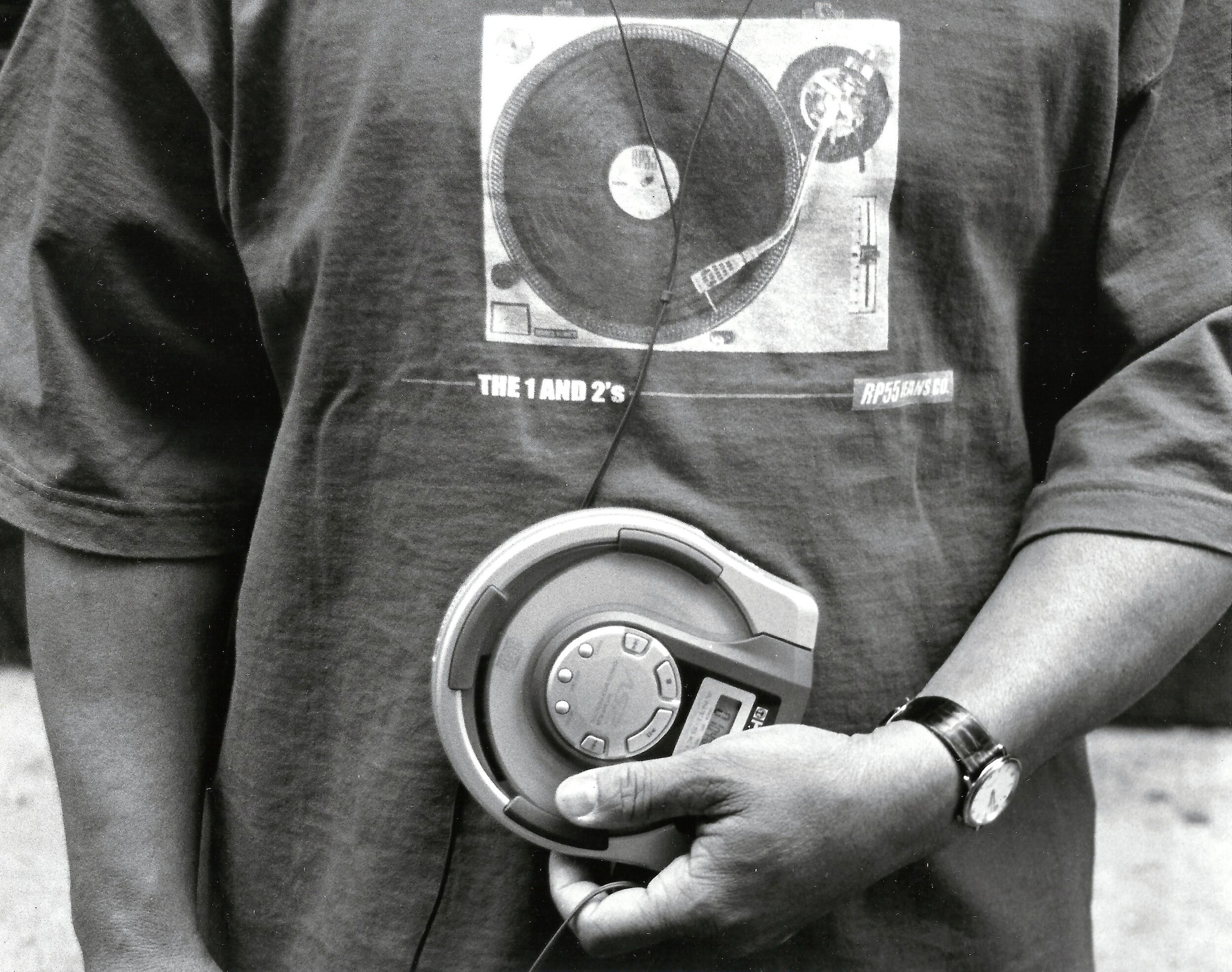
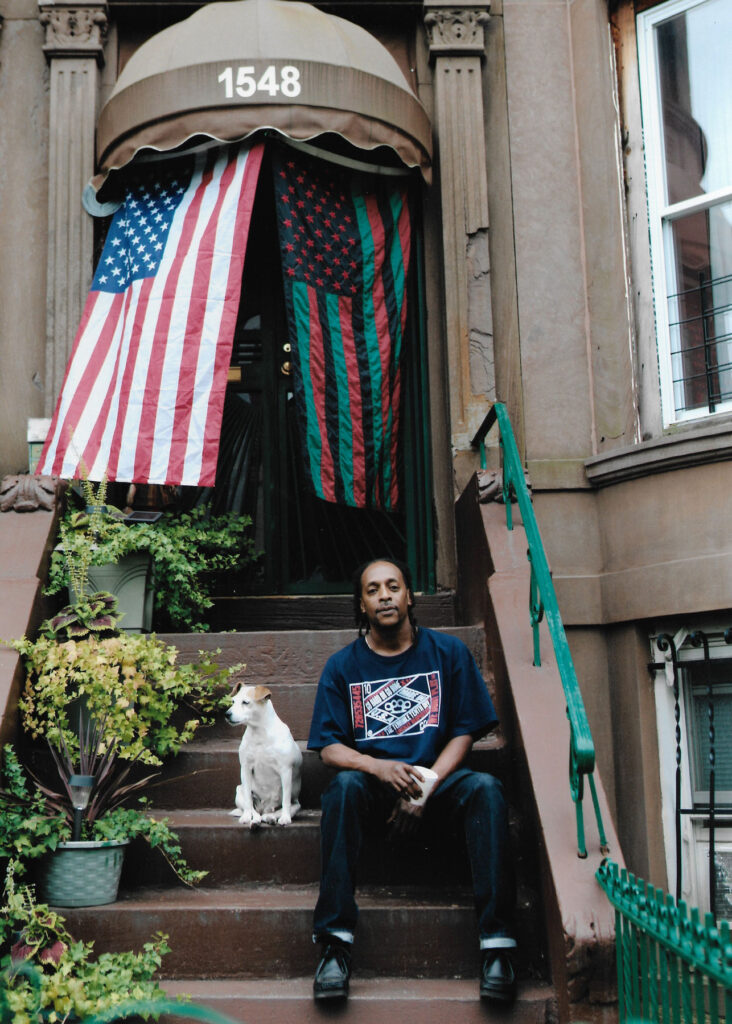
  1. A time before change
  2. Black in White America
  3. The Gatherings

José Javier Serrano

Yosigo

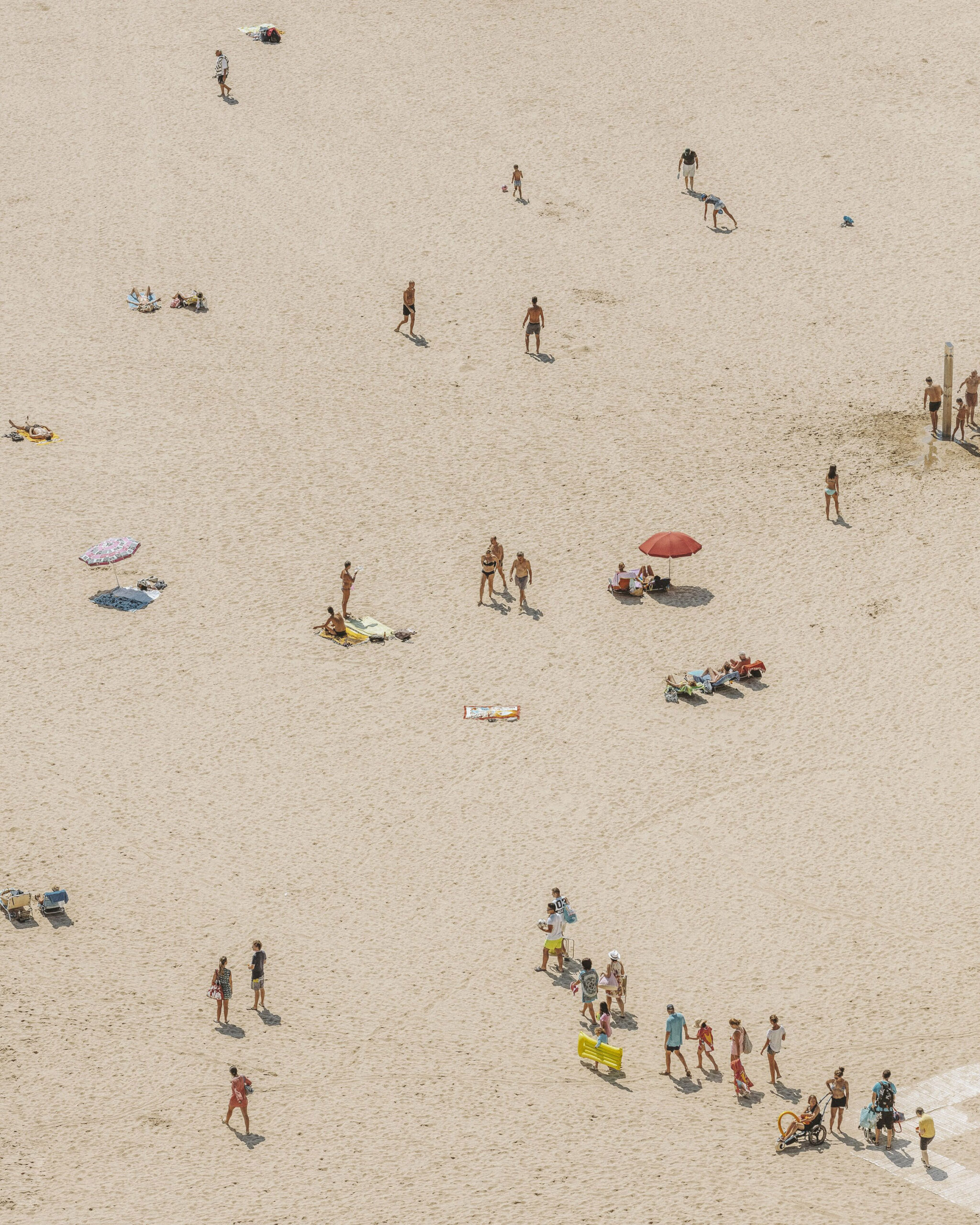
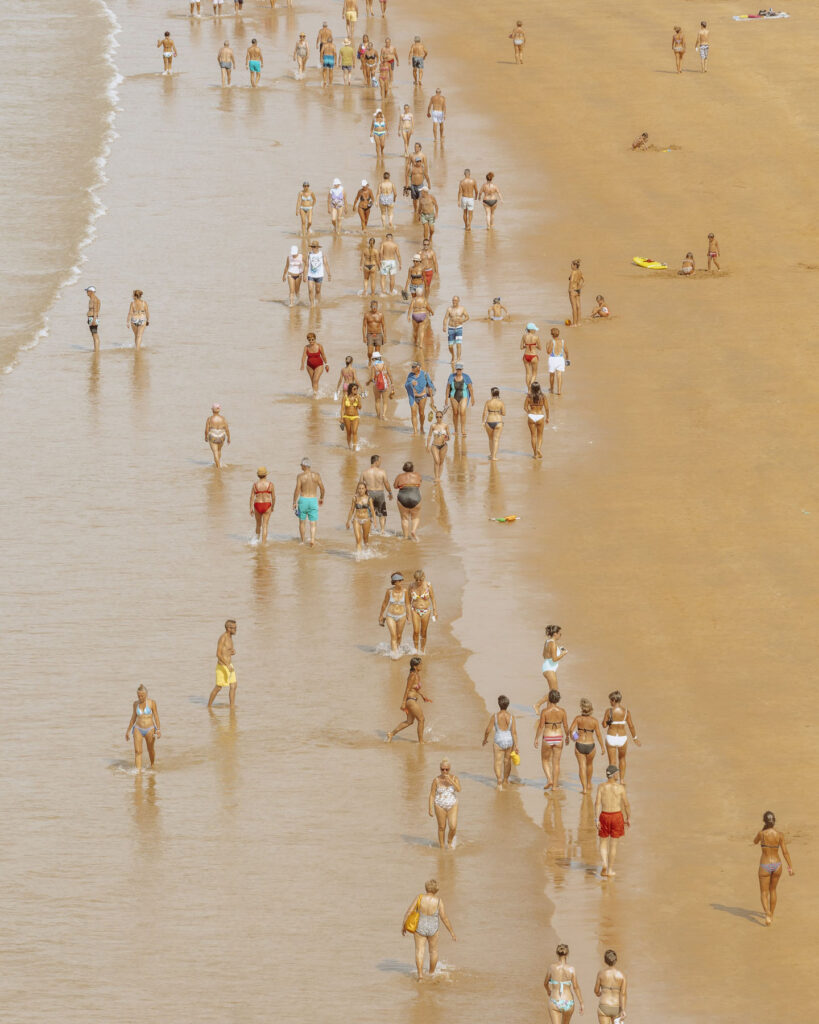
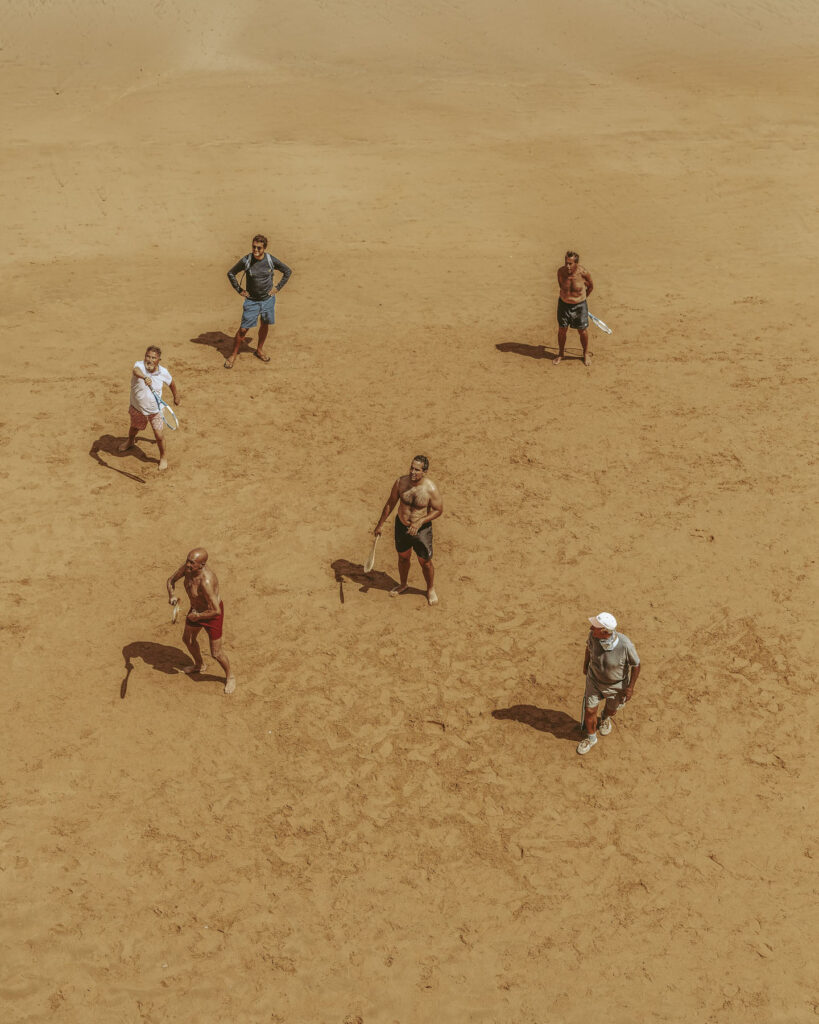
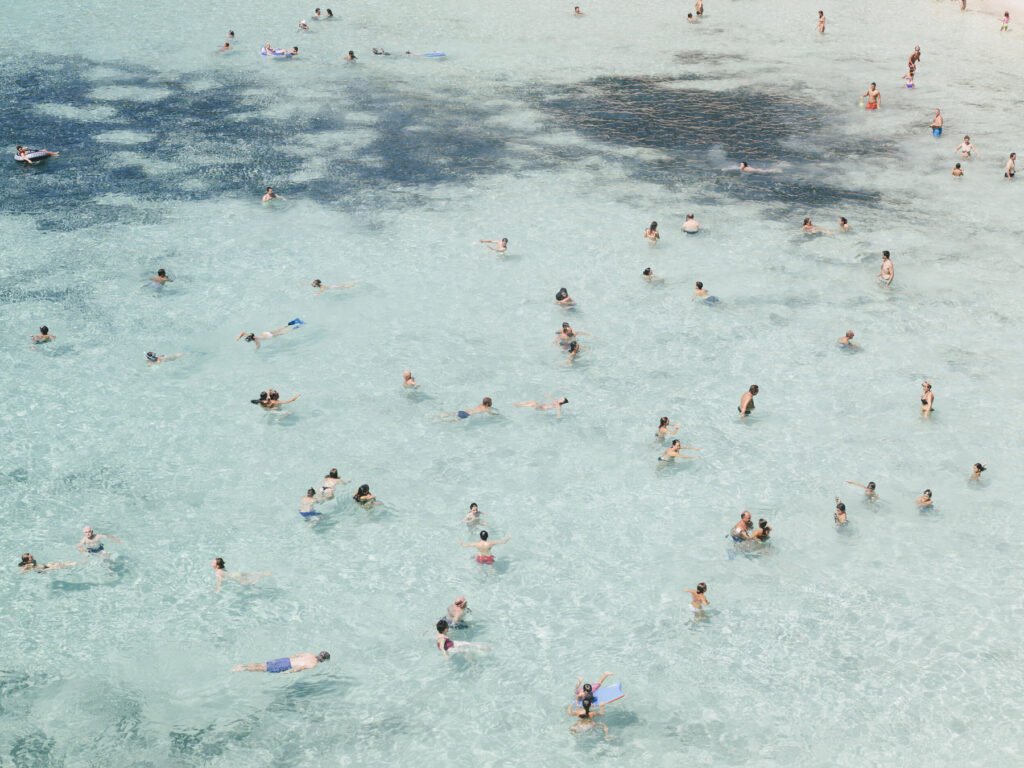
The photographer and designer José Javier Serrano (Donostia, 1981), better known artistically as Yosigo, is a young artist from San Sebastian who has achieved a new way of looking at and facing landscapes and places that we inhabit everyday but are often unable to take away his value and aesthetic strength – or if we do, we do it conventionally.

Yosigo manages with his photographs to give a turn to what “normally we see” and to take us to its unmistakable terrain and particular vision of its surroundings.

The look of Yosigo (composition, chromatism, chosen elements …) is what gives his proposal a nontransferable personality, completely recognizable by his way of doing, which is without doubt one of the indispensable requirements to differentiate himself from the rest of the artistic proposals and get what is so petulantly used in the literary field and defined as “own voice.”

In addition, his passion for photography does not hide another of his passions (also his form of sustenance): graphic design. He himself has recognized in some interview that this taste for graphic design has influenced, at least to date, how to face the composition of many of his photographs, where straight lines and symmetry are part of his photographic personality and that directly influence when composing his photographs and in the same design of his exhibitions. Undoubtedly, we are dealing with the work of a singular and very personal photographer.

Credits

Photography · YOSIGO
www.yosigo.es
www.instagram.com/yosigo_yosigo

Caleb Stein

Down by The Hudson

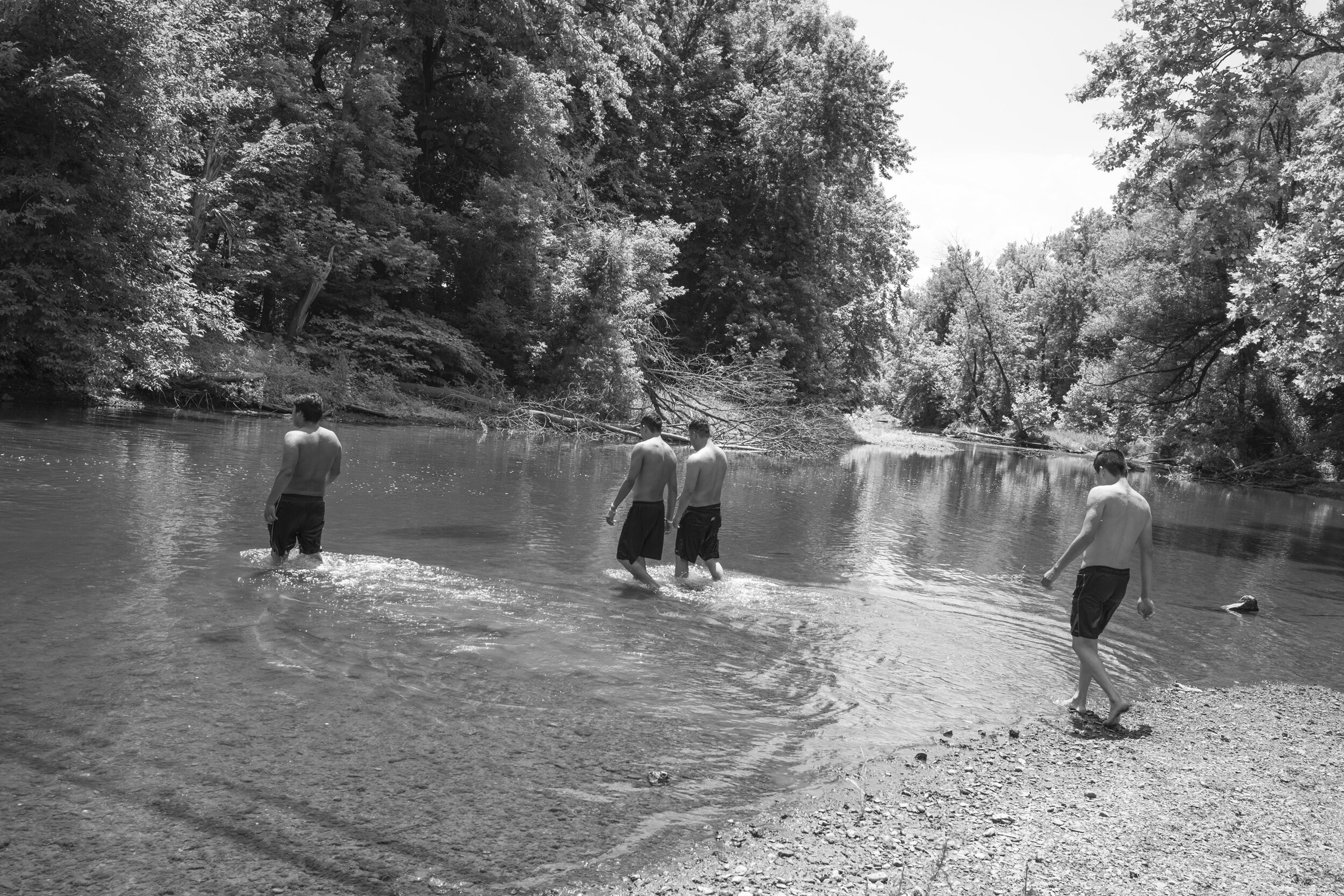
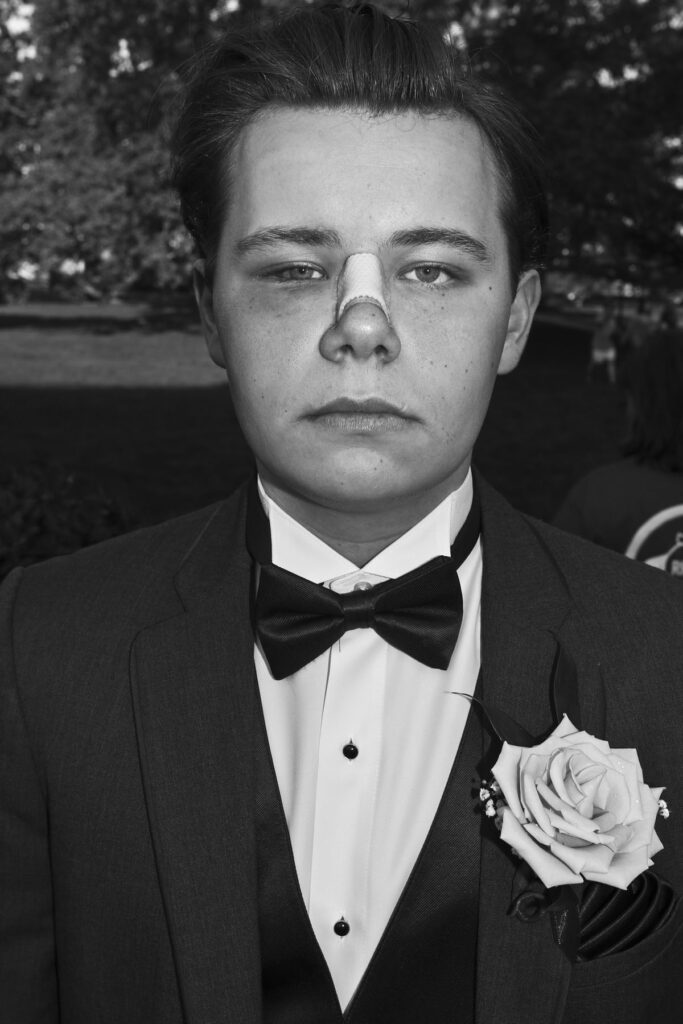
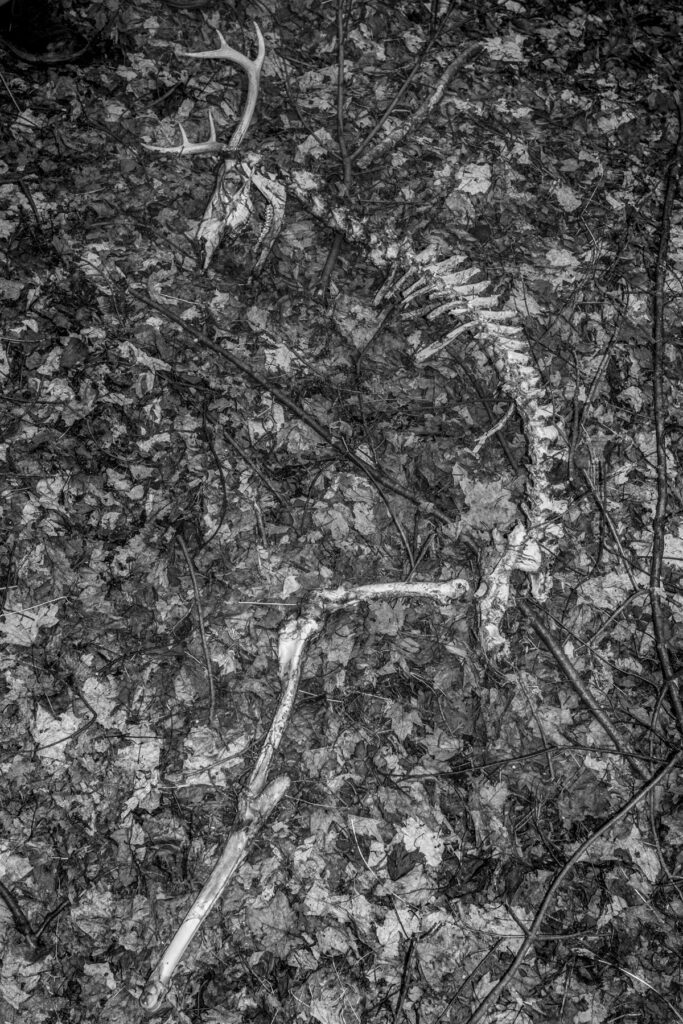
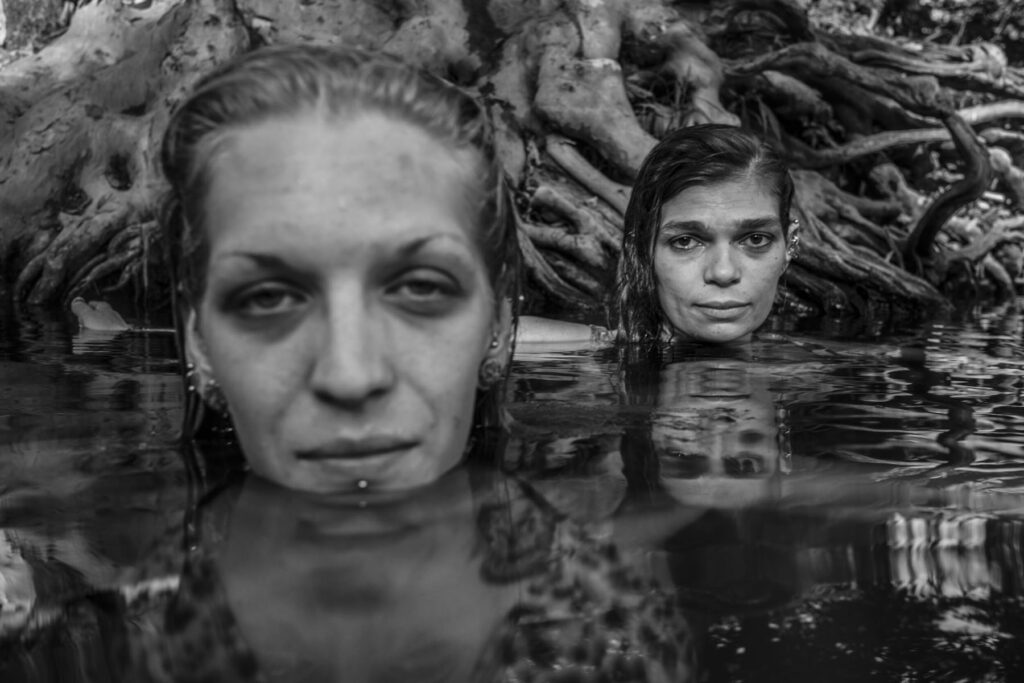
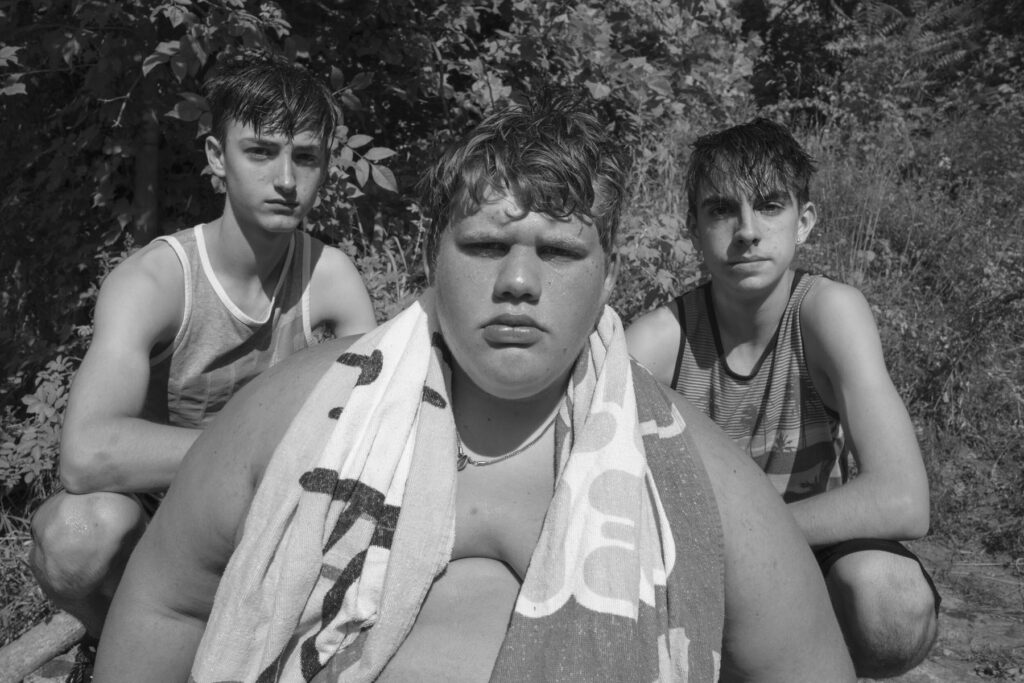
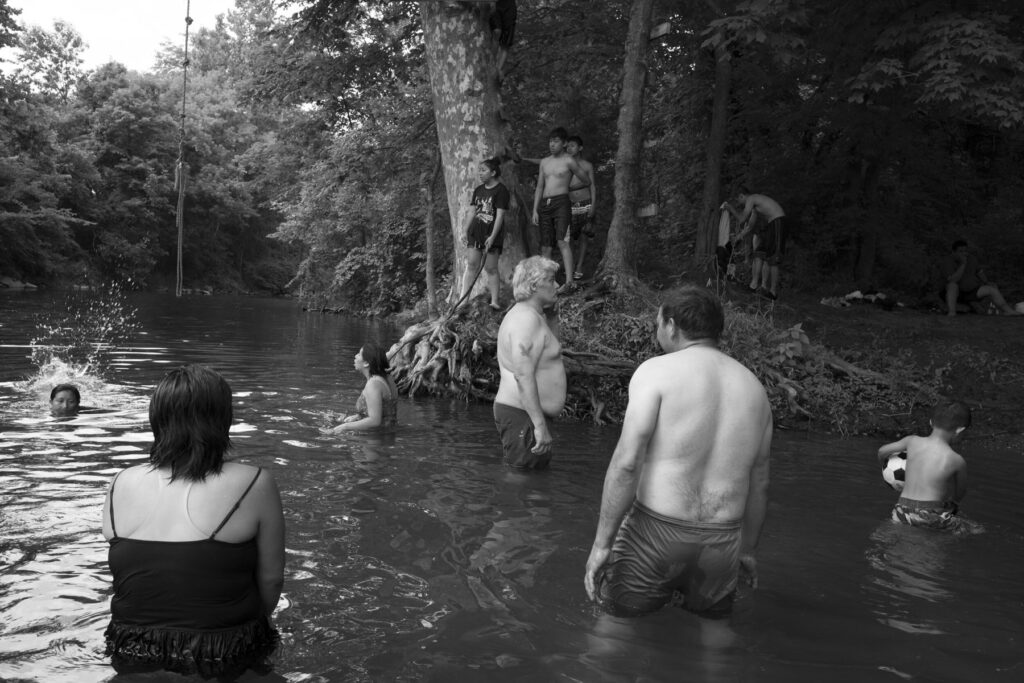
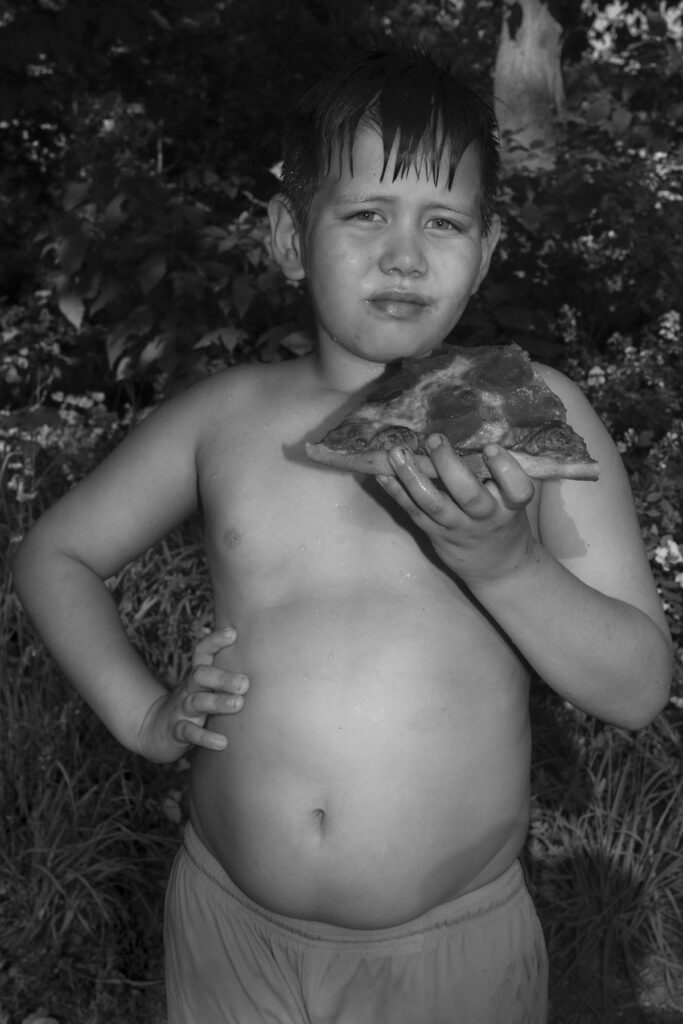
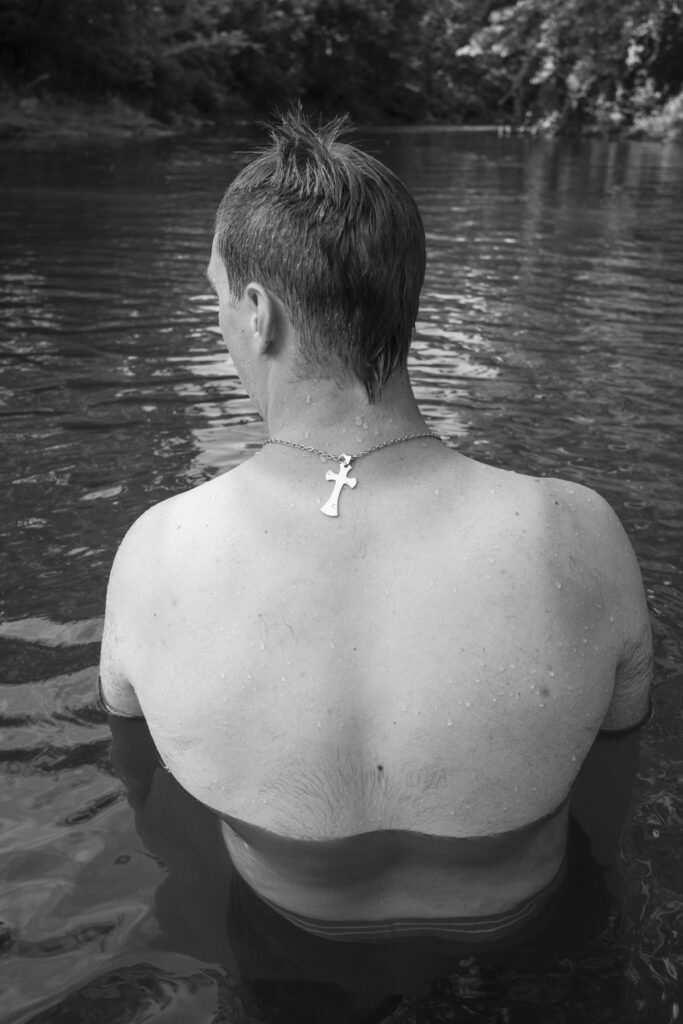
‘Down by the Hudson’ (2016-2019) is my ode to Poughkeepsie, a small town in upstate New York. For years I walked obsessively throughout Poughkeepsie, in particular along a three-mile stretch of its Main Street. I grew up in big cities and my conception of small American towns came from things like Norman Rockwell illustrations, so I wanted to see how my photographs matched up with those inherited, almost mythologized ideas of Americanness.

Poughkeepsie used to be home to one of IBM’s main headquarters, but in the early 1990’s they downsized and left thousands of people unemployed. Today there are still several buildings which remain abandoned. In this way Poughkeepsie is like countless other small American towns that have struggled with deindustrialization and outsourcing. After the 2016 elections, there was a palpable tension as I walked along Main Street. The elections were almost neck and neck in Dutchess County, to the point where you could have practically fit the difference into a crowded bar on a Saturday night. This heated political moment marked a turning point for this project. It wasn’t only about understanding this mythologized conception of America, but it was also about grappling with this conflict through photography.

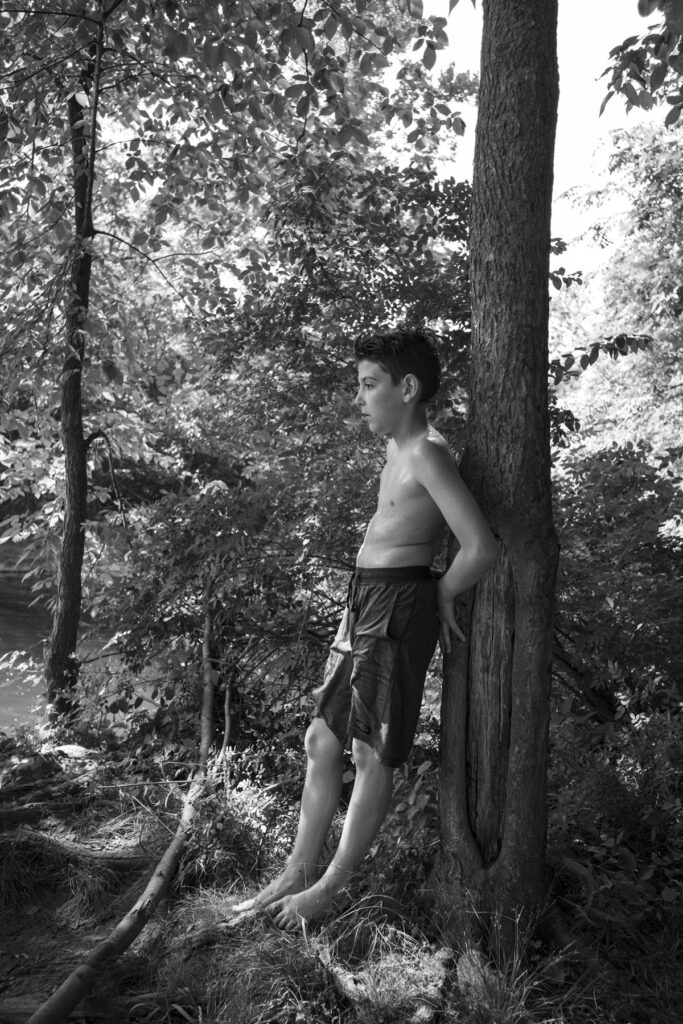
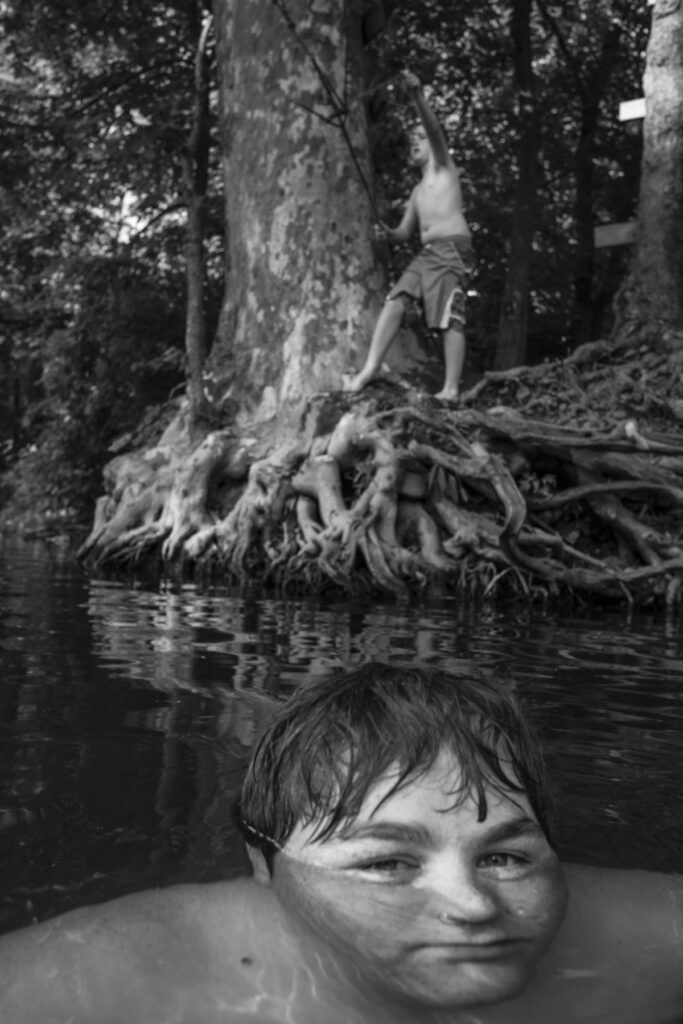
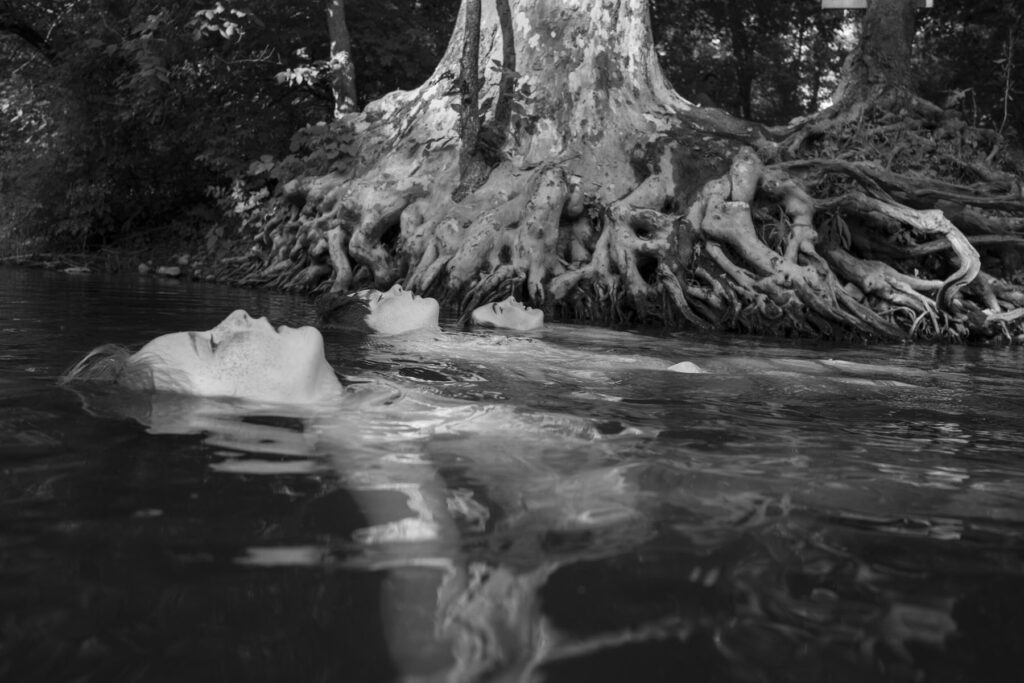
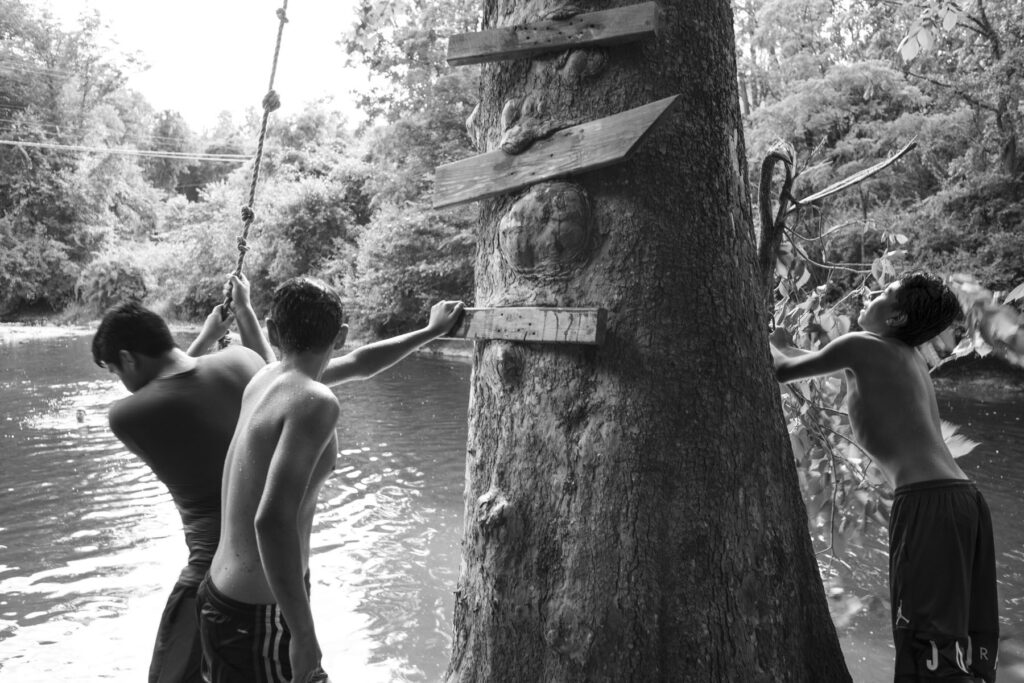
It was during this time that I started going to the watering hole, an Eden tucked away behind the local drive-in movie theater on the outskirts of town. The watering hole became a central component of the project because it represented an idyllic space where people from all walks of life came together and let their guard down. The more time I spent at the watering hole, the more I wanted to convey the struggles and beauties of this town with care and tenderness.

Credits

Photography and Words · CALEB STEIN
www.caleb-stein.com
www.instagram.com/cjbstein

Noémi Ottilia Szabo

Aoife

Team

Photography NOÉMI OTTILIA SZABO
Fashion LYLA CHENG
Hair and Make-Up PETER SCHELL
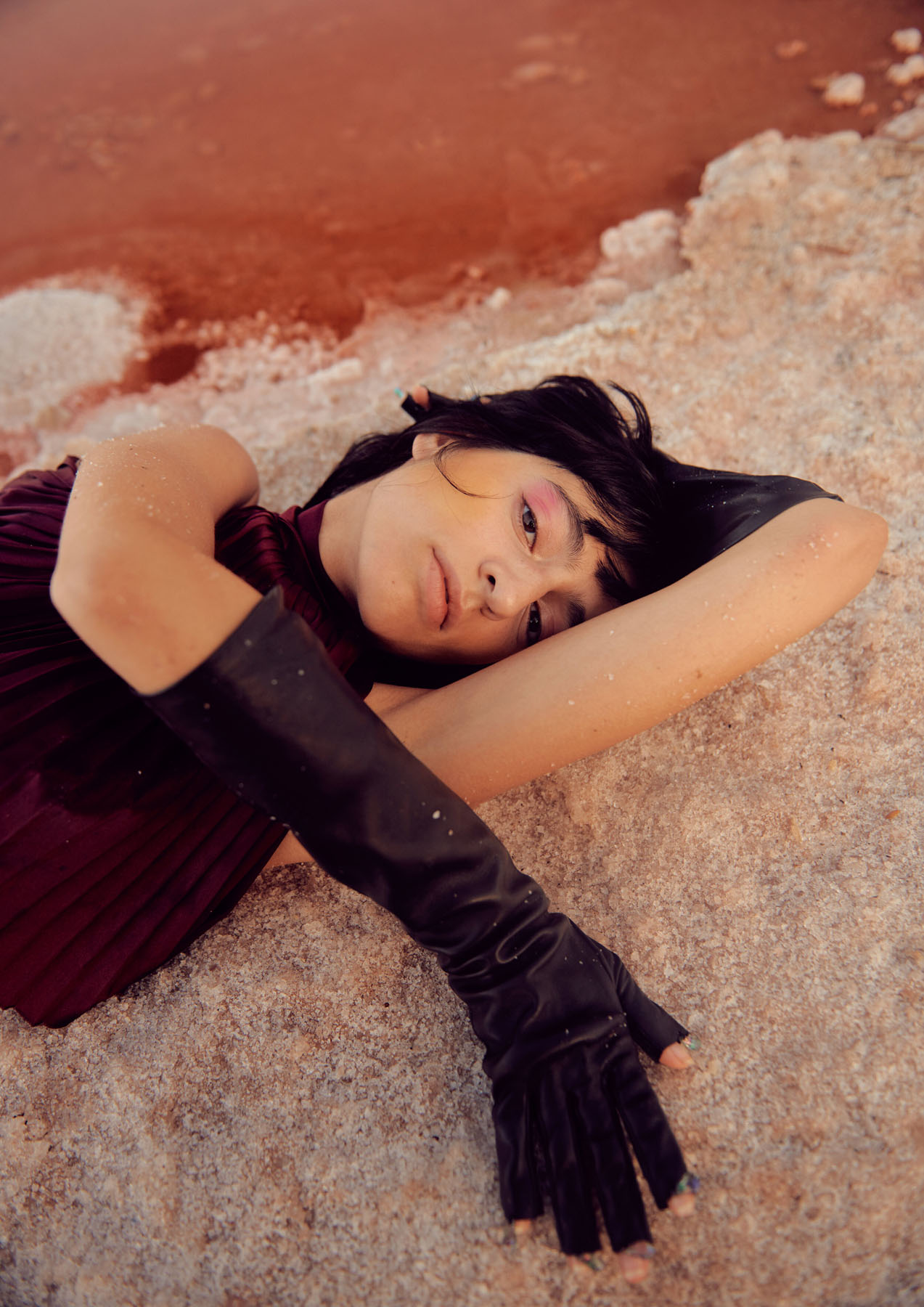
Model AOIFE LOU from Le Management


Designers

  1. Earrings BIIS Vest DAMOWANG
  2. Gloves LOU DE BETOLY Top and Trousers DANIELA HARSH
  3. Dress T LABEL
  4. Earrings BIIS Blazer, Shirt and Trousers PALOMA SPAIN
  5. Swimsuit JULE WAIBEL
  6. Earrings BIIS Gloves T LABEL Top and Skirt A.W.A.K.E.
  7. Shirt, Trousers and Necklace AALTO Shoes WANDLER
  8. Earrings BIIS Vest DAMOWANG
  9. Gloves LOU DE BETOLY Top and Trousers DANIELA HARSH
  10. Earrings XENIA BOUS Shirt AALTO Trousers PALOMA SPAIN Dress CHRISTOPHER KANE Shoes AALTO
  11. Earrings BIIS Blazer, Shirt and Trousers PALOMA SPAIN
  12. Swimsuit JULE WAIBEL
  13. Earrings BIIS Shirt A.W.A.K.E. Trousers DANIELA HARSH Shoes WANDLER
  14. Earrings DANIELA HARSH Shirt PALOMA SPAIN Skirt A.W.A.K.E. Shoes AALTO
  15. Shirt, Trousers and Necklace AALTO Shoes WANDLER

Paul Mpagi Sepuya

“I know every fragment, sliver of space or edge of a table that relates to a figure not present”

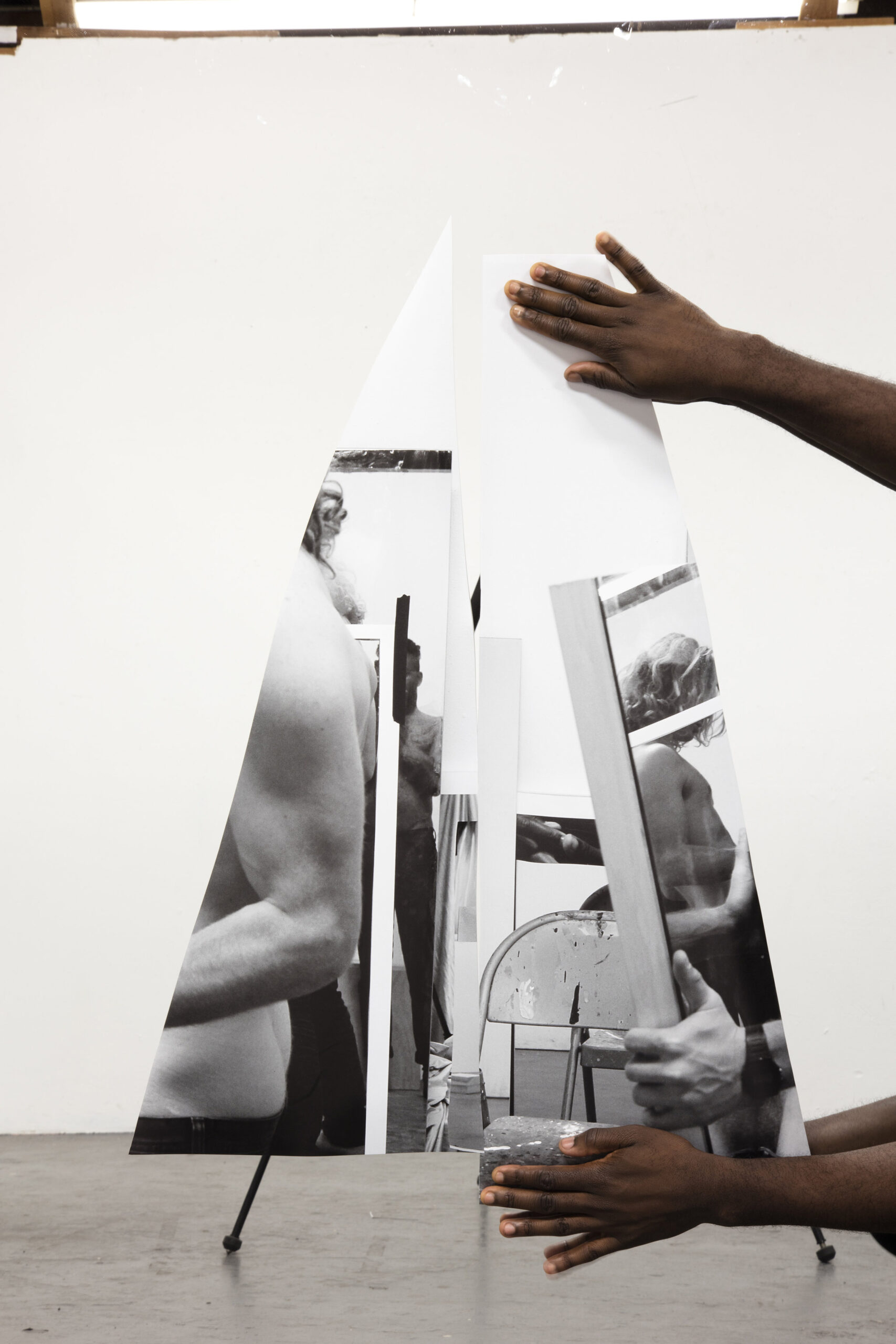
It’s the small details that capture attention in the work of Paul Mpagi Sepuya – the evidence and lasting presence of human encounter, finger prints and smudges on glass, for instance. Though the photographer works only with a digital camera, there’s a certain tactility that lingers in his work. 

Relationships come to the forefront; Sepuya’s work centres around friendships, intimate encounters, muses and himself. The notion of the ‘dark room’ (which has been referenced both in titled works and in solo installations) lays claim to ambiguity – it both refers to the place in which the photographer creates, documents and develops, and it is also the space of homoerotic sexual exchange. The lines are, at once, blurred and clearly demarcated. In the absence of interpreting the dark room in terms of its analogue definition and purpose, Sepuya ‘develops’ his photography through a process of collaging, layering and re-production. A photograph becomes a multi-layered image, further distorted by the presence of mirrors that are often the focus of the camera. It’s difficult, at times, to ascertain what is what: within a single work, fragments of figures and moments in time are often combined. None of which is accidental; such an amalgamation of displaced aspects come together as a multifaceted study in portraiture. 

Throughout Sepuya’s work there’s a critical awareness of the role that his camera plays in capturing time and its implications on human interaction – something that is quantified by the inclusion of his work at MoMA’s distinguished ‘New Photography’ exhibition under this year’s theme ‘being’. 

NR: Some of your photographs address individuals by name in the title, others refer to a figure or figures; is there a logic behind the distinction?

Paul MPagi Sepuya: My earlier portrait projects, beginning with Beloved Object & Amorous Subject (Revisited) from2005 – 2008, and the other portraits up until 2014 were all titled by the name of the individual or subjects. I don’t photograph models and there are friendships, collaborations and at minimum social acquaintances with everyone at the beginning of or working together, it was important for me to ground the work in that social space. As the individual portraits moved into the world, and into various studios I was working in (the earlier works were photographed in my home), the titles came to include the date and location of the photograph. Those photographs could be portraits, or me re-photographing materials in my studio which gave way to a “collage” type style, though the work was never collaged.

Figures came into the work when I returned to Los Angeles for grad school at UCLA. Reconstituting materials through arranging them on the surface of mirrors that I would photograph in front of my tripod-camera allowed me to create compositions *about* subjects more loosely, and so the number of figures noted corresponded to the number of subjects in the fragments that made up the complete picture. Currently, I have left behind names from my titles. Each work is titled by the project that it inhabits (Mirror Study, A Portrait, Studio, A Ground, etc…), and the name given the file capture in camera.

“I’m interested in emphasizing the inside-outside aspect of recognition within this ‘dark room’ space where, like all of my work has been positioned, it is the meeting points of queer and homoerotic creative, social, and sexual exchange.”

NR: How do you relate to the people in your photos, when their bodies appear fragmented and abstracted?

PMS: I know every fragment, sliver of space or edge of a table that relates to a figure not present. That’s to say, they are never fragments or abstractions because, indexed alongside them in a larger project, are the notations that tie them to the full portraits. I make a point of saying that;

“no subjects are left to fragmentation and abstraction in my work; there is always a full portrait of each subject.”

NR: What is the appeal of digital photography for you?

PMS: It’s efficiency for my process, that’s it. I am strongly against the digital manipulation of my pictures, or creating/assembling pictures through digital collage, etc. The material that is arranged, cut, and affixed on the surface of the mirrors comes from the in-process materials in my studio. So to be able to photograph, print and re-photograph within a single space is important to me. It’s a method that began during my residency at the Center for Photography at Woodstock in 2010, and I have used in various forms since then. 

NR: If taking a photograph can capture a specific moment in time, how does your practise (from taking a photograph to reworking and collaging it) relate to notions of time and memory?

PMS: I am less interested in moments in time (which I associate with the outside world) than with the “collage of compressed time” –  or something to the effect that Brian O’Doherty speaks of in Studio and Cube: On The Relationship Between Where Art is Made and Where Art is Displayed. He describes studio time as placing all material in the present, within the reach of revision and remaking by the artist’s hand. That is how I associate the process of portrait-making with the real-world relationships that make that production possible. 

NR: Can the context of viewing your work as part of a wider exhibition influence the way the pieces are perceived? And add to their development as ‘works in progress’?

PMS: Yes, indeed. All of my work is made toward the consideration of a grammar and visual rhythm, whether it’s content, formal elements or scale, in relation to my larger body of work.  

NR: What is the allure of the physicality of photography (when it’s printed out to be used for collages, or when it’s featured in zines or books)?

PMS: Images can’t just free float. I am invested in the handling pictures, having to contend with them physically. I started by making zines and books, and with the current “collage” works,  

“it is important that I am inherently a part of the image during the process of their making.”

While I work, I am within the reflected space of my studio. 

NR: What, if anything, do you want the viewer to take away from your work in regards to queer and black identities?

PMS: Absolutely nothing as far as identity may be proscribed. But everything as far as the materiality and sociality of queerness, homoeroticism, and blackness as requisites for a kind of knowledge and experience otherwise obliterated by whiteness and heteronormativity.

NR: Your photographs often allude to the presence of people no longer present in the frame, from fingerprints in the mirror to abandoned orange peel; what is the significance of the documenting these aspects?

PMS: Whether a subject is represented through pictorial representation in a straight-up portrait or not,

“I want the images to include an indexical mark of the social world from which it comes.”

These traces of real people can’t be faked. They are like smoke to fire. Funnily (or frustratingly?) enough, someone once asked me about the “smoke” in the photographs and I had to correct and say, no they are *another* kind of trace. They are the smudges of bodies – my own and others – as we work to make the images. 
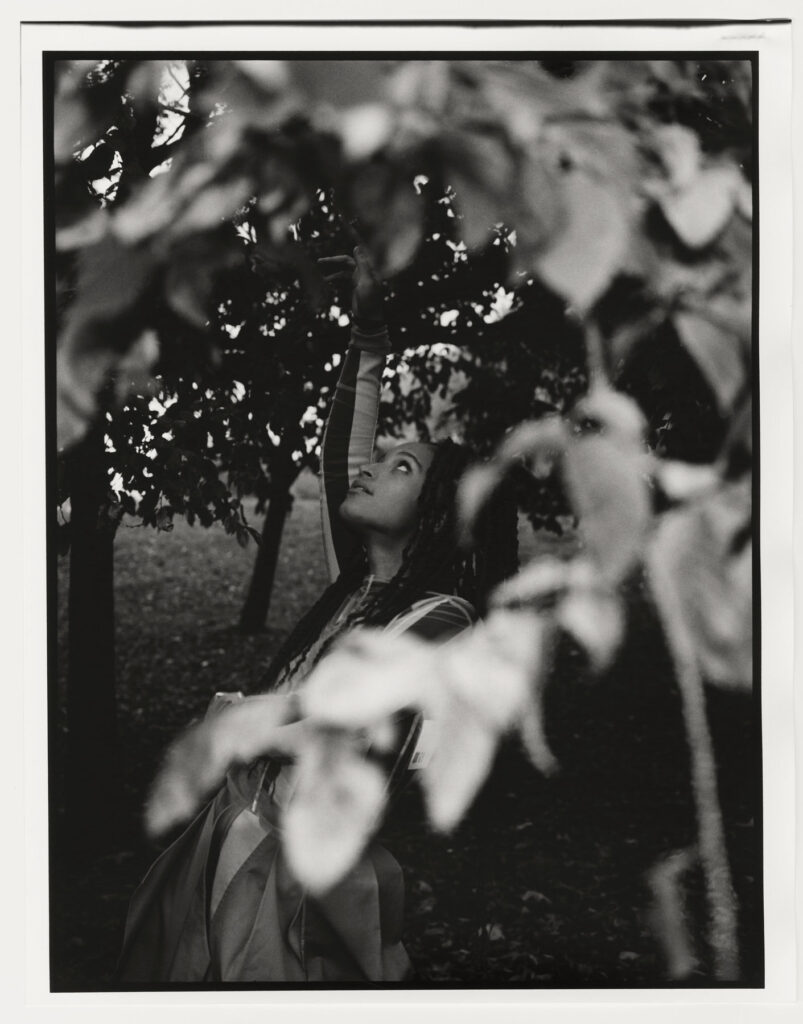
NR: The photographer’s studio connotes a sense of purpose and control over the subject and the outcome, is this something that you consider or navigate through your work? 

PMS: Since I first started working in a studio and became fascinated by the possibilities therein, it’s become a site for me that really amplifies my presence, in thinking about the history of that control asserted by the artist along with the loosening of social and sexual morality that becomes permissible in that space. The permission that, within the world of the artist, is given to re-arranging and representing desire. 
Photos

  1. Mirror Study, 2016
  2. A Sitting For Matthew, 2015
  3. Dark Room Mirror, 2017
  4. Figure Ground Study, 2017

Moses Sumney

“Maybe because the sun is not shining, people are more moody, they’re more in their feelings”

“I felt like all my career I’ve been waiting in the wings,” Moses Sumney tells me over the phone from Paris. “And it’s really nice to see the music get out there and reach people that aren’t just me.” While the 28-year-old American artist has been quietly making waves with his live performances and material for some time, putting out self-recorded Mid-City Island in 2014 followed by Lamentations in 2016, it wasn’t until September last year his first full length album, Aromanticism, finally brought his talent fully into the limelight. Born in San Bernardino, he moved with his parents to Ghana at the age of 10 before returning to the US to study. He recorded in his bedroom, taught himself guitar and first performed at the age of 20. For Sumney, releasing his debut album marks the culmination of a long process of overcoming shyness and being “diligent and persistent” to bring his songwriting out into the world: “There have been a million challenges. I have so many even now. But I felt this was always what I was meant to do, so nothing was going to deter me from doing it.” The persistence certainly paid off, with Aromanticism being launched to great critical acclaim, including being named one of the best albums of 2017 by the New York Times and Rolling Stone.

Characterised by Sumney’s haunting vocals and searching lyrics, the album purposefully meditates on a central topic, something he felt would be important to “make the project feel cohesive”: “I decided sonically it needed to feel intimate but expansive. And lyrically and thematically it needed to be about one thing, which ended up being Aromanticism.” The cryptic title alludes to a personal sense Sumney had of his own experience and understanding of love lacking in mainstream representation: “I wanted to explore broader definitions of the word love but also the cracks and crevices of loneliness as well as lovelessness and, more specifically, the absence of romantic love. Most literature, art, music felt like it was engaging with love in a two-dimensional way and I wanted to explore how complex it was.” As he outlines in an essay published at the same time as his album, discussing Greek mythology and the origins of love, he doesn’t see his reflections as rooted only in the contemporary: “These feelings around love don’t start here. People have felt lonely essentially since the beginning of time, there are records of people wanting to be married and not getting the chance to for as long as we’ve had the ability to read.” Rather our modern condition, propelling us inexorably to seek out and find contentment through love and coupledom, and fear our failure, is further exaggerated by the internet: “One of the hallmarks of being a young person alive presently is you think that everything that is happening to you or to your generation is incredibly unique. We tend to navel gaze a lot. But it’s important to recognise our prevailing feelings around love and romance are pre-existing.”

“It’s just the internet era tends to heighten everything, to amplify and augment feelings, cultural movements and observations.”

Informed by his time spent studying literature and writing, there’s an equally academic and poetic approach to delineating emotions that plays out through the album and constantly subverts expectations, each track forming an exploration of a distinct but connected topic to his central thesis. This he feels is best captured in Doomed on which he asks: “If lovelessness is godlessness/Will you cast me to the wayside?” On Plastic he takes aim at how impressions can be out of kilter with reality: “Funny how a stomach unfed/Seems satisfied ‘cause it’s swell and swollen.” His personal favourite Indulge Me meanwhile finds a moment of reconciliation in the wake of bitterness and torment: “All my old lovers have found others,” accepting his past loves have moved on and finding peace in solitude.

Sonically the album is no less idiosyncratic, resisting any easy shoe-horning into a neat genre. Beautifully evocative falsetto and harmonies reach to the rafters with delicacy and calm yet hold a melancholy in their yearning for answers and are pulled back from optimism by a dark undertow of strings and synths. Hypnotic sounds that ebb and flow, crescendo and fall lull the listener deep into what Sumney calls his “sonic dreamscape.” He notes influences stretching back to his time listening to and performing choral music in a high school choir in his late teens. He draws inspiration from jazz via the likes of Ella Fitzgerald and soul from Aretha Franklin and Stevie Wonder. But he also loves folk and indie rock: “It is an amalgamation of different things. The primary tenets of my music are soul and folk and then sprinkle a bit of indie rock, sprinkle a little bit of experimental, sprinkle a little bit of jazz.”

Crucial to his creative output are his otherworldly videos, though he confesses he initially had no interest in the medium: “I never wanted to make music videos, I really hated them growing up and in my early career because I thought they were so boring. Pop videos have so many jump cuts. I have ADHD so it’s really unrelaxing to see all the different ideas flash in front of you.” That all changed on meeting Brooklyn-based Allie Avital, who has now directed or co-directed with Sumney all of his videos – and also convinced him to be in them: “My process is largely attached to her. For at least two of the videos, she came up with the ideas, and for the other two Quarrel and Doomed I did. I have images that flash into my head when I listen to a song, whether an associated colour or an associated scene, so usually I take those ideas and talk to her about them and just flesh them out with her. It’s been an amazing process.”

Now the visual aesthetic is increasingly important to Sumney: “Even when we’re not able to make official videos I try to make a little visualiser for each song on YouTube just so there’s some kind of visual world just attached to it. Listening to the song can give you one meaning of it but then making a visual that can seemingly be semi-detached can help complete the story.” Now there is also a generation often consuming new music for the first time via video: “It’s kind of a great propaganda tool honestly because you can inseminate an image into someone’s mind when they’re hearing something for the first time. You get to control their response to it or at least to an extent their conception of what that music is and what it means. It’s kind of fucked up,” he adds with a laugh. In contrast to the attention-deficit-inducing videos he so hated in pop, his slow-burners each take a seemingly simple concept and execute it in stunning and moving ways. Lonely World takes us to a surreal black and white scene of Sumney coming across a female fish-like creature on a beach. Quarrel is an alternately dreamlike and nightmarish abstract vision of horses. Doomed has Sumney floating in a tank, no mean feat considering Sumney doesn’t know how to swim and had to spend eight hours in the water: “It was nerve wracking but the emotion I was supposed to communicate was one of terror anyway so it was kind of appropriate for me to be scared and uncomfortable.” Sumney further explained the concept, “as a song it is about speaking to God or speaking to the universe and being like, ‘what is the meaning if nobody loves me or if I don’t love anyone.’ It’s engaging with the idea that life sometimes feels like a cruel joke and there’s some higher power or design looking down on us like, ‘Ha ha, that’s funny.’ So I wanted to communicate in the end with the birds eye view, just the idea of looking down at these little rats. It feels like often we’re just like test tube babies with someone vaguely experimenting with us all.” Unexpectedly a seed for the idea was sewn from the final scene in the first Men in Black: “There’s a shot at end where they do this huge zoom out and you see each planet is actually just a marble and there’s these aliens playing with the marbles.”

“It really fucked me up as a child, like ‘oh my god, is someone just playing with my life?’ I wanted to tap into that in Doomed.”

Collaborations have formed a key part of Sumney’s career, including co-producing and singing the opening track on Beck’s covers compilation Song Reader and holding a guest spot on Solange’s A Seat at the Table album. Last year he performed at the Oscar’s alongside Sufjan Stevens and St Vincent on Mystery of Love from Luca Guadagnino’s Call Me by Your Name, nominated for Best Original Song, an experience he live Tweeted to hilarious effect. He tells me: “From the stage I could see Meryl Streep, I could see her. So that was cool, you know, not unnerving at all…” Since Aromanticism’s release he’s also hit a packed schedule of festival and gig dates worldwide including London’s Field Day and Germany’s MELT!, as well as the US’s Coachella and Pitchfork Festival and he sold out Sydney Opera House in February.

Coming out of his shell and putting his work on the stage is something he is still challenged by. On the one hand seeing tracks he wrote and practised in his bedroom move and connect with people who don’t even share his language has been exhilarating, yet hitting new cities every few days has also left him feeling “unbalanced”: “It’s a pretty unnatural thing for a human being to do. So it’s incredibly euphoric but maybe I would better describe it as manic. Sometimes you feel really high, sometimes you feel really low: my mood changes every five minutes. It’s a pretty wild ride but I love singing and I love performing so it feels really good.”

It’s London though that Sumney admits is his favourite place to be and play: “People on this side of the world tend to embrace experimentation a lot better than where I’m from, better than Los Angeles especially which seems beholden to commercial music tropes often, even in the indie scene. I appreciate in London I have room to be weird, I have room to experiment, I have room to be soulful. Maybe because the sun is not shining people are more moody, they’re more in their feelings,” he says, only half-jokingly.

A move away from his home country he also reflects is to do with a detachment from the political situation there, one he sees has been deteriorating for much of his adult life: “It feels pretty futile to let it upset me. Since last year I’ve been spending most of my time in Europe and most of that in England. I think I’ve been through so many phases of being enraged that sometimes I take a little break, which I’m doing now, and then I just focus on music which helps me feel better, balanced, cleansed, sane. Maybe it is a bit escapist.”

Cognisant of the fact that the industry doesn’t allow complacency, since the album’s launch he has also released extended version Make Out in My Car: Chameleon Suite with various reimaginings of the original track, including a duet with Alex Isley, a James Blake remix and a new song based on the original by Sufjan Stevens. Most recently in August came three-track EP Black in Deep Red, 2014 including Rank & File which holds a fresh energy, with fingers clicks and marching beats reminiscent of military protest. And he’s already been cooking up his next record: ‘It just takes a long time to make an album, you kind of have to get right back in if you want to do it again.” The next one he says, “is going to be louder and crazier, a little bit more experimentation but also a little more focus on the songwriting. I think it will just feel like another step or another chapter to the same book. I feel I have a lot of freedom and can do whatever I want so I’m really just trying to challenge myself to make music that doesn’t sound like everything else.”

He recognises however this is perhaps not the case across the industry: “There could be more room for weird music in the general dialogue. Sometimes I feel like now is a really free moment and then other times I feel the internet is making everything be one big amalgamated sound. It has opened things up more so that you don’t need to be backed by a huge record label. But I don’t feel things are diverse enough.”

“Even when weirdos come into the mix there has to be an element of familiarity to what they do in order for it to connect or be shared and pitched to the masses. I think that blocks diversity from being genuine.”

In particular, he warns that an impression of greater diversity can hide a lack of true progression: “I feel this current moment, this generation is a little bit too like, ‘let’s pat ourselves on the back, there’s a black person singing.’ Like, ‘cool, good on us.’ And I think that self-congratulatory attitude has a tendency to stifle growth. I’m not ever really going to be the kind of person that’s going to say ‘there’s enough women playing guitars.’ I’m like, ‘there’s two. So let’s calm down.’”

Credits

Photography · Aaron Sinclair
Photo Assistant · Brandon Bowen
Fashion · Phil Gomez
Talent · Moses Sumney
Words · Sarah Bradbury

Designers

  1. Hat CANDICE CUOCO Sunglasses and Coat Artist’s own
  2. Coat CAMOUFLAGE Vest and trousers RESURRECTION

Subscribe to our
Newsletter