Archive page:


Studio Hagen Hall

“identity is subtle and evident in the design more than anything else”

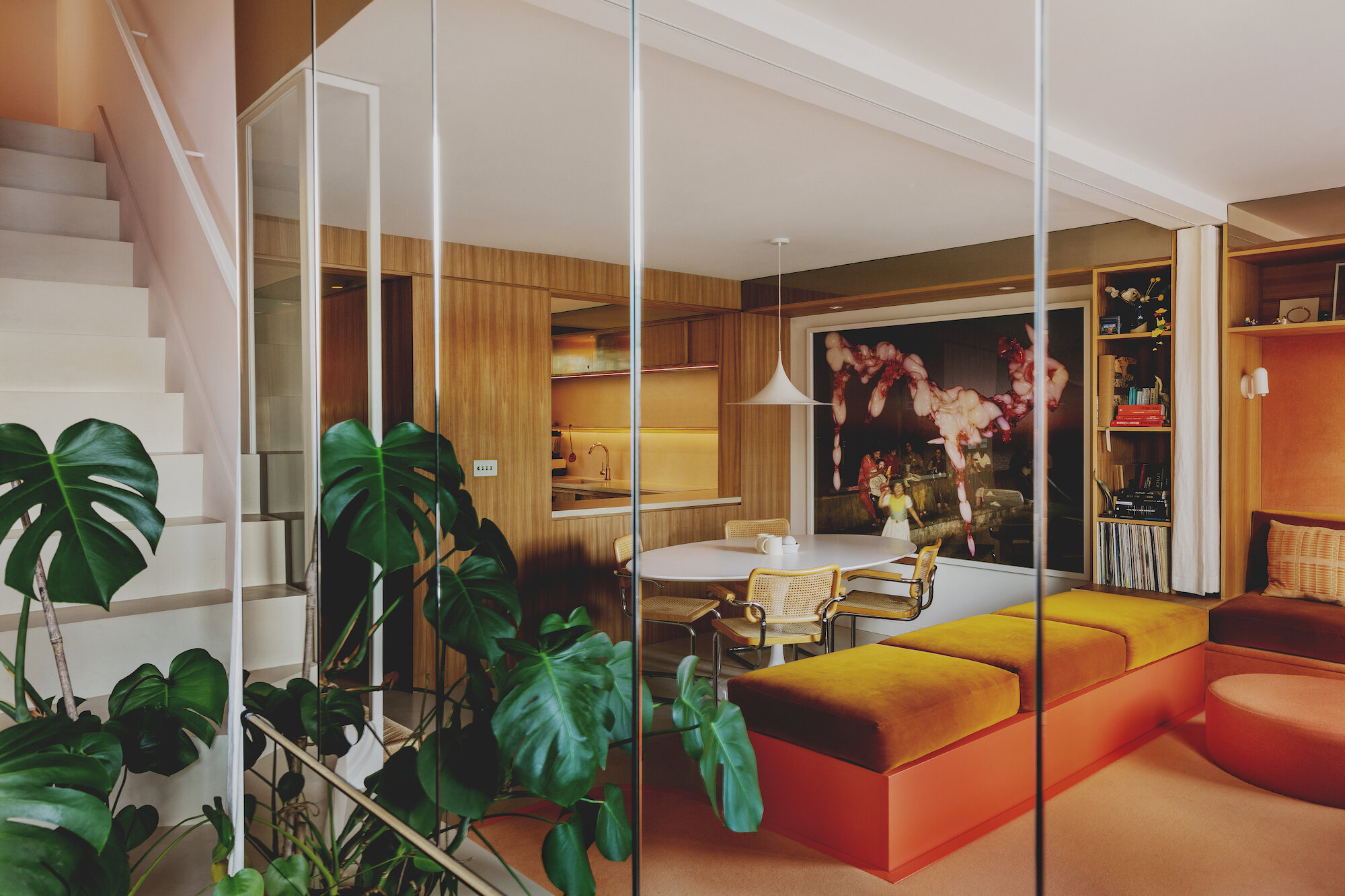
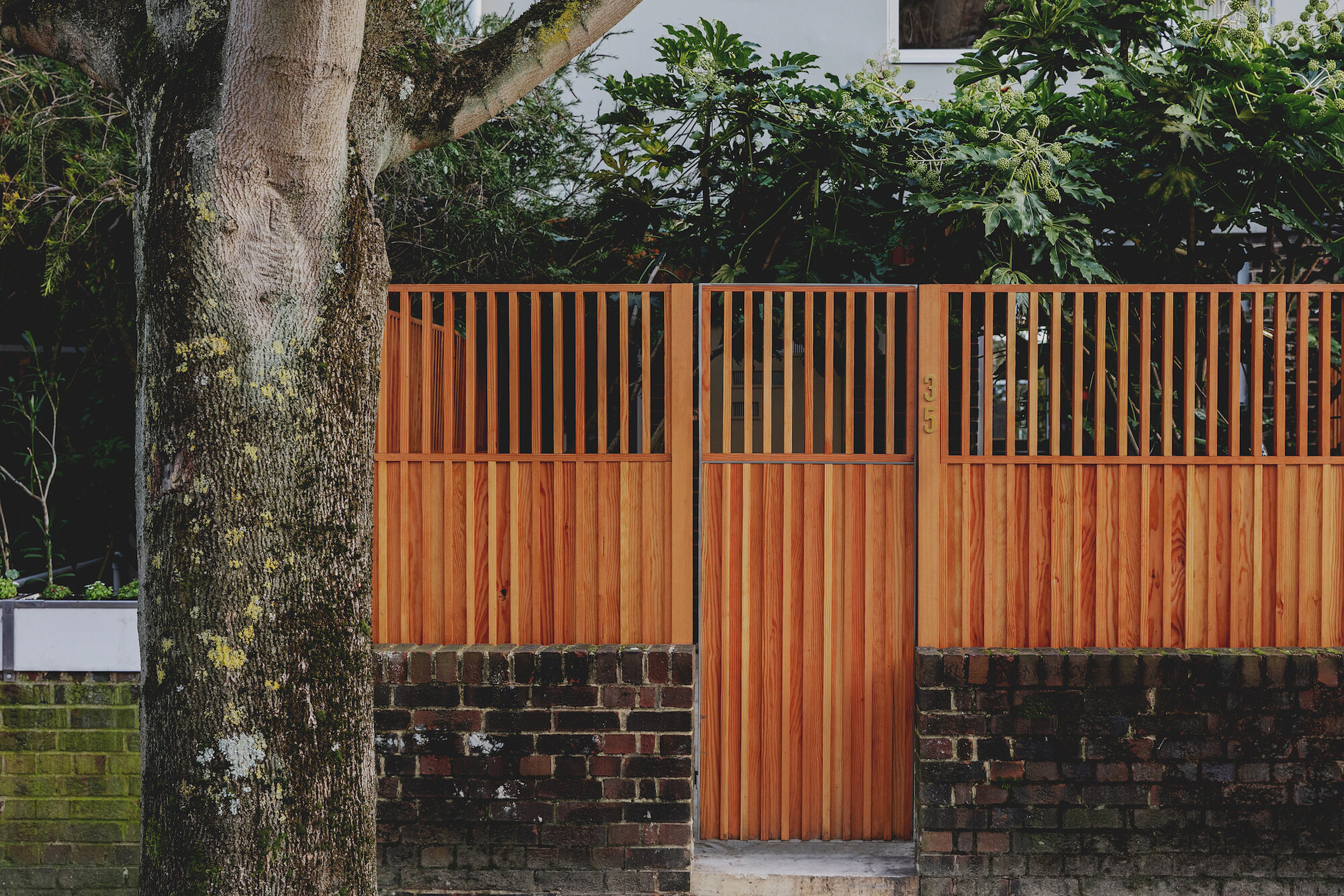
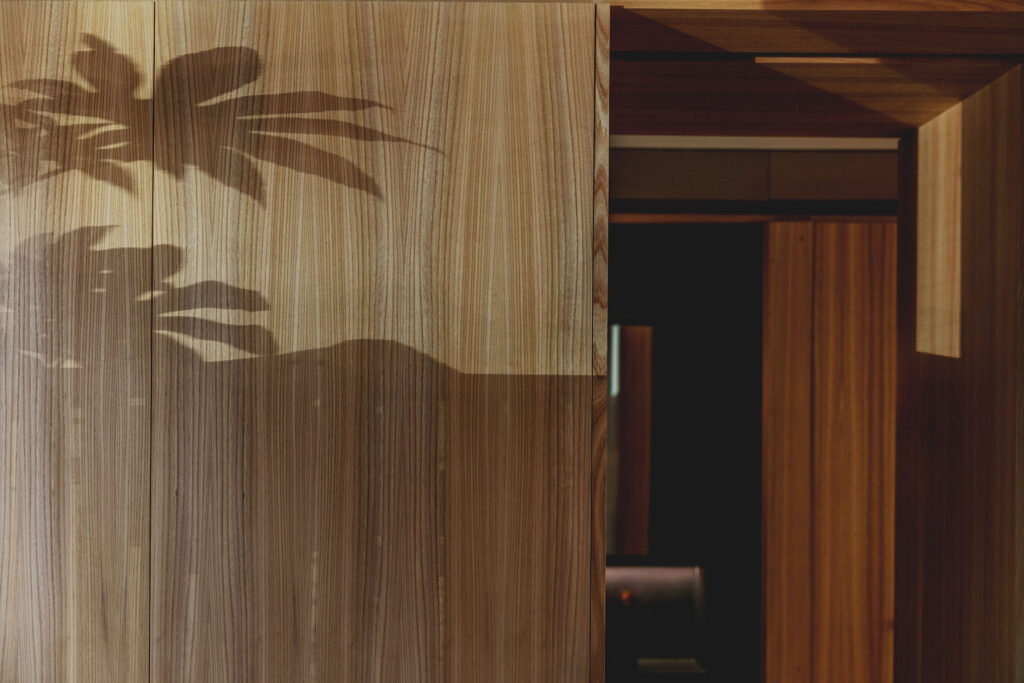
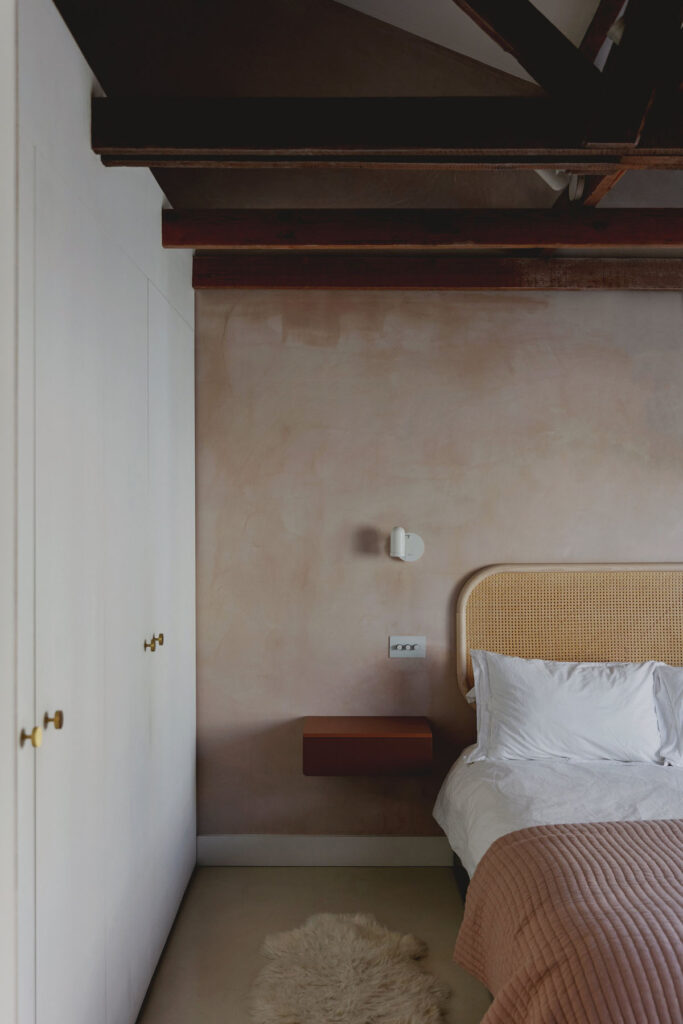
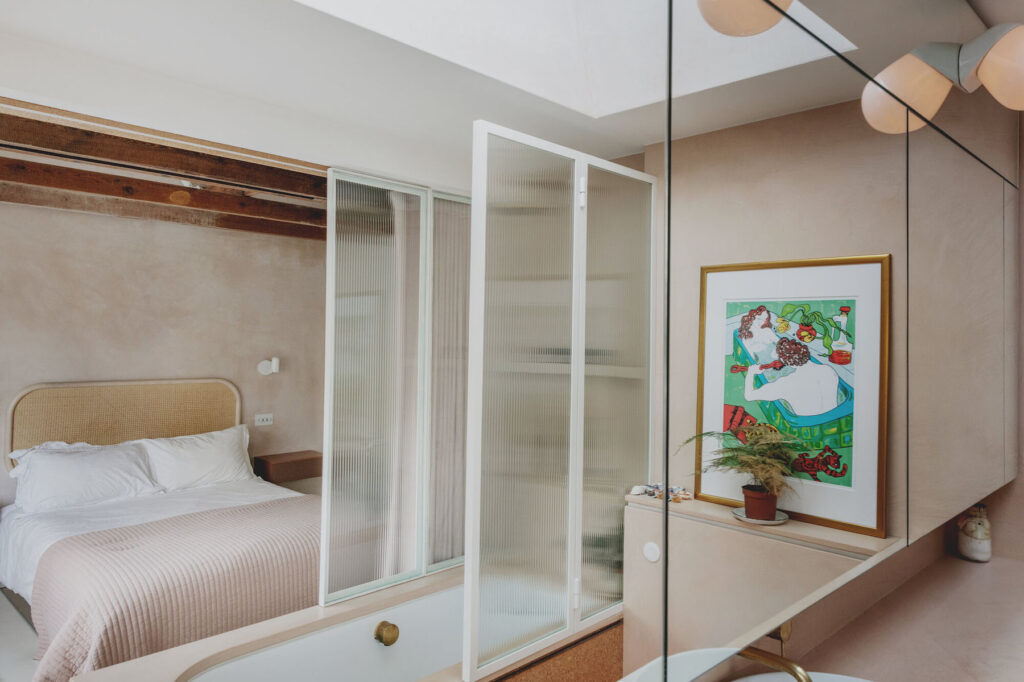
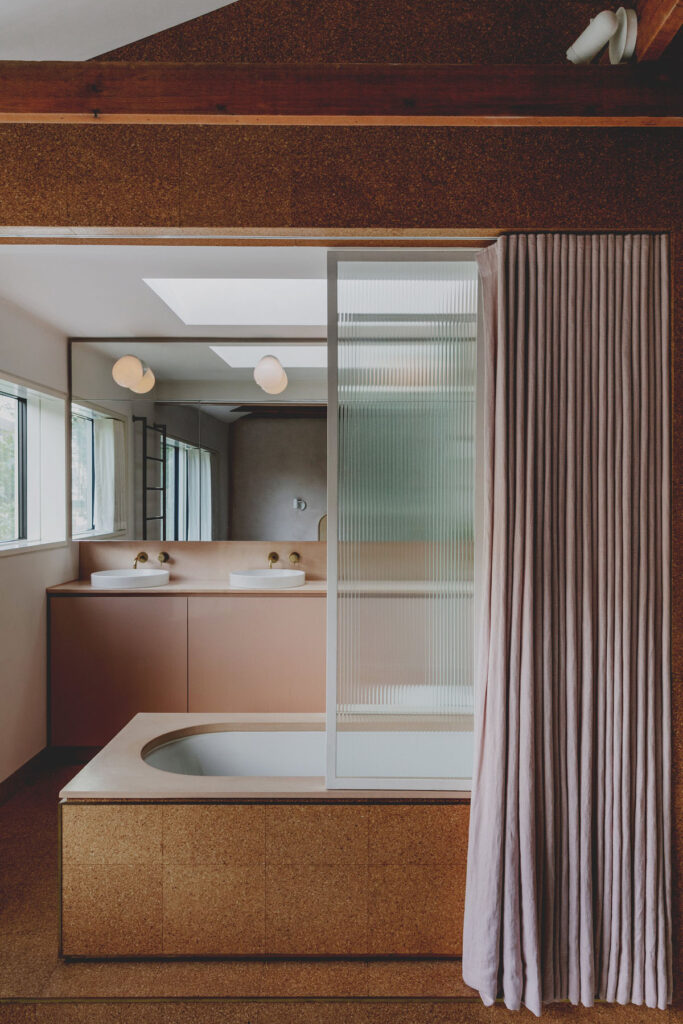
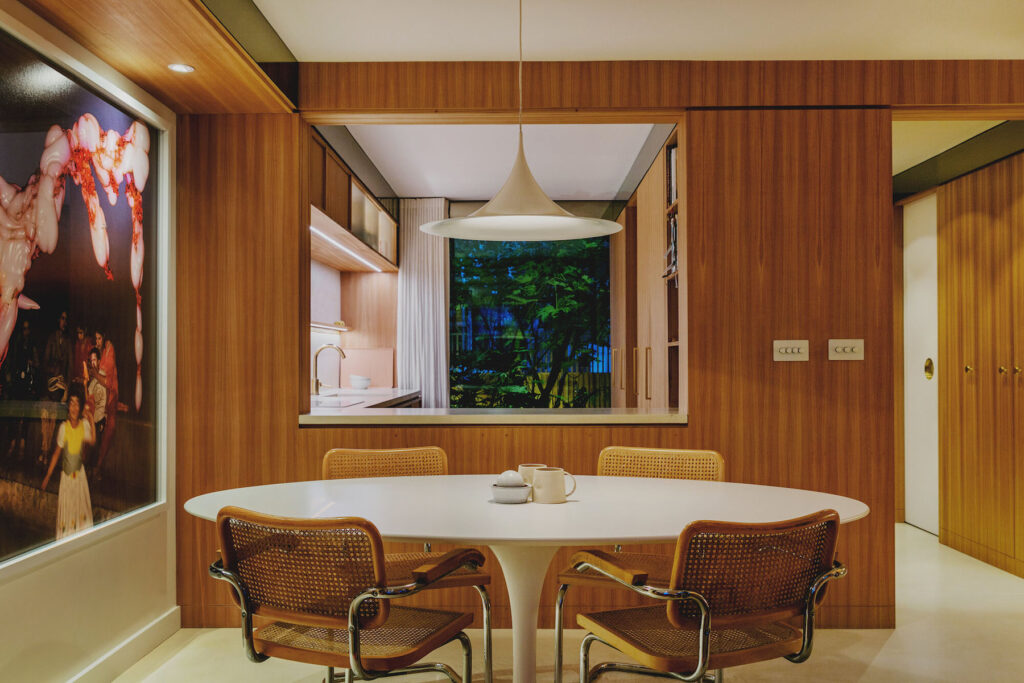
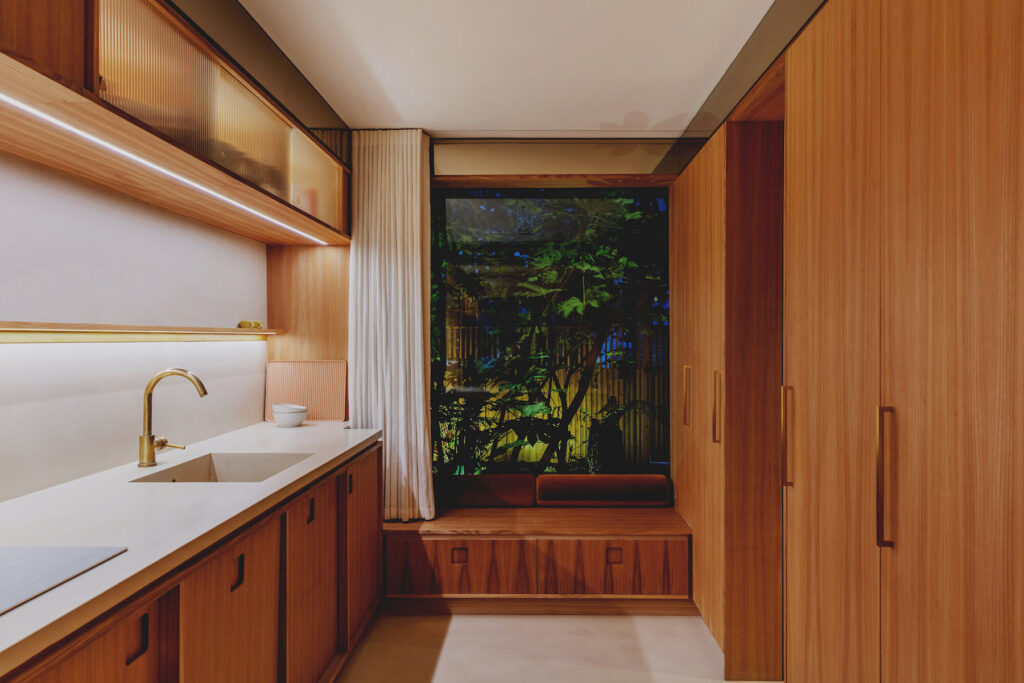
North London townhouse Canyon House has been transformed from a bedsit into a stunningly vibrant 70’s Californian-inspired home by Studio Hagen Hall, “a multidisciplinary architectural and interior design studio that focuses on crafting exceptional spaces.” The clients, Ben Garrett and Rae Morris are both recording artists and while they fell in love with the essence of the house, including the well-established garden and good location, much work was needed to enliven the place.

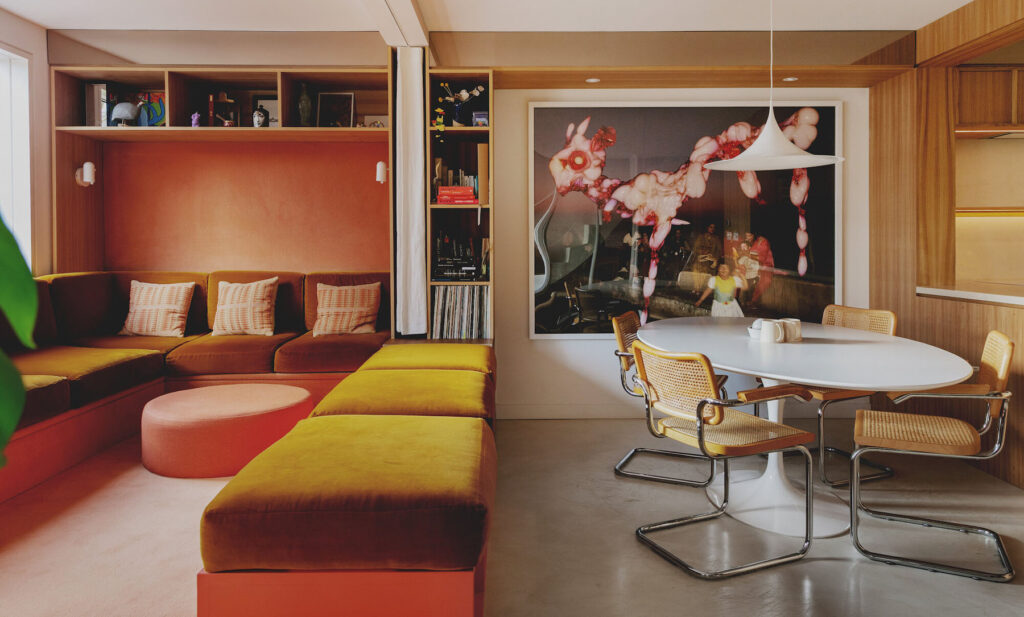
Originally the property had been divided into three separate bedsits with the use of awkward partitioning that split the house. The entire interior needed to be gutted and Studio Hagen Hall used digital modelling to reimagine how the space would be used allowing the clients to use a VR headset to experience the design ideas. A recording studio was also incorporated into the new design of the interior. Drawing on 70s influences the intro design is a mix of warm wood, lush mustard velvets and vibrant peaches. NR Magazine joins Louis Hagen Hall, founder of Studio Hagen Hall, in conversation.

What key elements would you say create the 70s atmosphere and design of Canyon House?

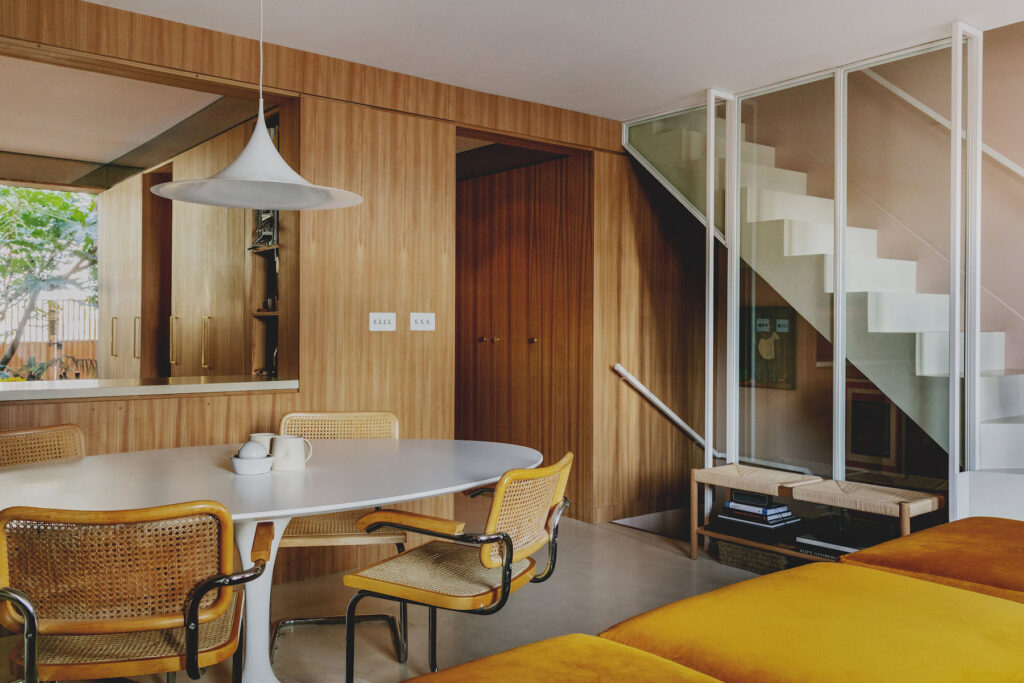
I’d say it’s the combination of design features and materiality. We made a conscious decision to try and evoke a 70s atmosphere by means of reinterpretation rather than creating a pastiche of that era. To that end, there are nods to popular features of that era (such as the “conversation pit”, the “kitchen/dining serving hatch” and “open stair”), which we adapted to suit the house. Materially, we used typical materials from that period, such as Elm, velvet, and fluted glass, and chose colours with a particular 70s feel to them. Even the live/work form of the house pays homage to Ray & Charles Eames (the clients are musicians who collaborate and work together).

Are there any new technologies in architecture and design that you are particularly excited about? 

We’re particularly interested in new materials – both re-cycled (for example “Smile Plastics”) and organic (particularly mycelium & hemp, which are starting to become more prevalent in the construction industry).

The re-emergence of old technologies as “new technologies” is also fascinating – such as the use of clay and lime renders and natural insulation (eg paper & wool).

From a design-process point of view – easier and cheaper access to Virtual Reality has made it a very powerful tool. We can now walk clients through a space to better explain it, and even test out designs ourselves and leave annotations in the model in real-time.

What was the most challenging aspect of this project? 

Boiling it down to one sentence – the biggest challenge was trying to make what is essentially a relatively small British terraced property feel like a large free-standing Californian canyon house!

Ultimately we achieved this by spending a lot of time working out how to best reconfigure the house as a whole. We spent a great deal of time working on creating a natural flow throughout the spaces (both visual and circulatory), while also improving the relationship between the interiors and exterior spaces. When it came to the decor itself, we were all very much on the same page – so once we had cracked the layout of the house, the rest came relatively easily.

You stated that people who spend time at Canyon House don’t want to leave, why do you think that is? 

It’s a particularly comfortable, relaxing and sociable space to spend time in, and there are often people coming and going either for work (musicians coming to work with the client in the studio) or friends and family dropping by for a cup of tea. I think it also has something to do with how the light is always changing. Just when you feel like it’s time to leave, the sunlight will shift onto a different surface, changing the mood, or evening will fall and the lights will come on, completely transforming the house again.

What does identity mean to you as an architect?

Obviously, there is a visual identity – which can be hard to maintain across a wide range of projects and clients – although we try to maintain some consistency through the use of details and materials (which in turn relates to our stance on sustainability).

But I think there is a practical identity as well – creating usable, functional spaces, which isn’t always obvious through images. I will often try and show new clients around past projects (luckily I have very supportive clients) to experience this for themselves.

There is also identity in methodology and process, which I think can be apparent through displaying work in progress, drawings, models, etc.

“For us, identity is subtle and evident in the design more than anything else, rather than a case of branding or deliberate market positioning.”

Canyon house was originally separated by awkward partitions into self-contained bedsits and the house had to be stripped back to its shell. Do you think this is a common issue in London and if so does it affect the quality of living?

It is a common issue in London, especially as people try to exploit high rental charges here. And it absolutely affects the quality of living in a negative way – houses are divided up into spaces they were not designed for, resulting in cramped conditions, and quite often bedsits will pose serious fire risks (often due to kitchens being squeezed into bedrooms and hallways).

The ONE positive thing you could say about bedsits is that they do (in an unintentional, ad hoc way) form a sort of cohabitation/communal living typology – something that is being explored more and more these days. But this needs to be designed deliberately to be successful.

How does sustainability fit into your work with Canyon House?

We try to adhere to two main sustainability principles:

1. The principle of ‘embodied energy’ (which is the energy consumed to manufacture, transport, and assemble building materials to construct a building) – so we try to use as few processed materials as possible (eg clay render onto plywood rather than plaster onto plasterboard), as many renewable materials as possible (eg timber – always FSC certified – instead of steel and concrete), and we try to have any off-site items (joinery, fittings etc) produced as locally as possible to cut down on transport and shipping. We are also trying to integrate more and more natural and recycled materials into our projects, which cuts down on overall energy and resource consumption.

2. Re-use or ‘retrofit’ rather than demolish + re-build – renovating an existing building is almost always more environmentally beneficial than demolishing an existing structure and building a more energy-efficient one. So we try to encourage re-use by upgrading and extending structures rather than demolishing and building anew. And where this is not possible, we encourage our clients to work with as much of the existing building fabric as possible. For example, we are working on a new-build house in Dungeness, and while we are having to remove the existing building (because it is completely unsalvageable), we are designing the new building to match the footprint of the existing foundations, which is far more sustainable (and also cost-saving).

 How has the pandemic affected your work practice? 

On the practical side of things, we had to give up our studio as it was part of a large co-working space and it was closed for long periods of time. We eventually got into the swing of working from home, which has had the long term benefit of making everyone (including clients) more comfortable with communicating via video call. This can be very beneficial to a small design practice as it can be hugely time (and therefore cost) saving.

In terms of surviving during the downturn in work – we lost a few new commercial jobs, but we used the downtime to re-brand, re-build websites and social networks, and even launch a new kitchen/joinery practice called “b y s s e” with our long time collaborator and friend, joiner Tim Gaudin.

When things began to open up again, we started working in a smaller co-working space called Benk & Bo (in East London) a few days a week, and now we are working together with them on their new venues! So where some doors closed, others have opened.

Do you have any advice for young creatives looking to work in architecture and design?

I can only speak from experience – but knowing what I know now, I would say don’t rush anything! Take your time to find your creative space and let things happen to you, or you might find yourself going in a direction you didn’t want to. When there are natural breaks (particularly in the case of the time between Undergrad and Masters Degrees for architecture students) take the time to work in, or with, other fields. Volunteer for charities and meet people from all different aspects of life. Travel if you can. Teach if you can. Oh, and make friends with people outside of your field of interest!

I never used to be one for networking, but it turns out interesting things can come out of it. This doesn’t have to mean typical “networking events” – I have met like-minded collaborators at all kinds of different talks and evenings (even things like wine tasting!) Good Architecture and Design comes from experience – not just practical, but cultural.

Also, I feel quite strongly that a lot of students and young creatives feel pressured into qualifying or breaking onto a scene as soon as possible, partly because it takes a long time to qualify and/or become established, but also because we tend to glorify “young achievers” with awards for “best young designer” and publications like the “40 under 40”. Age is irrelevant – take your time, find your own space, and try not to compare yourself to your contemporaries!

Lastly,

“when you need help and advice, don’t be afraid or shy to ask for it. And if someone asks you, don’t hesitate to give it!”

Are you working on any projects at the moment and what plans do you have for the future? 

We are just finishing off three residential refurbishments in East London, then we will be beginning a new cycle of very exciting and diverse projects…from a new-build coastal house in Dungeness, to a fashion house showroom and office, to the restoration of a mid-century masterpiece, to a Japanese inspired victorian townhouse, and a multi-purpose community-driven wood and craft workshop.

We have also just launched a kitchen & storage-specific studio & workshop together with our long-time collaborator and friend, Tim Gaudin – called “b y s s e” (www.bysse.co)

And we’re finally planning on adding to our team of architects and designers after a long wait, which is hugely exciting! Ultimately we would like to open a second studio in Europe.

Credits

Images · STUDIO HAGEN HALL
https://www.studiohagenhall.com/
Isamu Noguchi

“to be hybrid is to be the future”

The art world, unfortunately, has a certain reputation for snobbery. Everything that is deemed as ‘art’ must, of course, be well thought out, aesthetically intriguing and completely unaffordable for anyone who isn’t part of ‘the rich’. Anything that is actually affordable for people who aren’t part of that income bracket is deemed as ‘low art’. Low art is defined as “for the masses, accessible and easily consumable.”

Over the years this definition has often been criticised alongside the common phrase “art for art’s sake” which was born from definitions like these and “is so culturally pervasive that many people accept it as the “correct” way to classify art.” Thus, it is rather surprising to see such definitions being alluded to in reviews of Noguchi’s exhibition at the Barbican as the artist himself was not a proponent of “art for art’s sake” according to Barbican curator Florence Ostende.

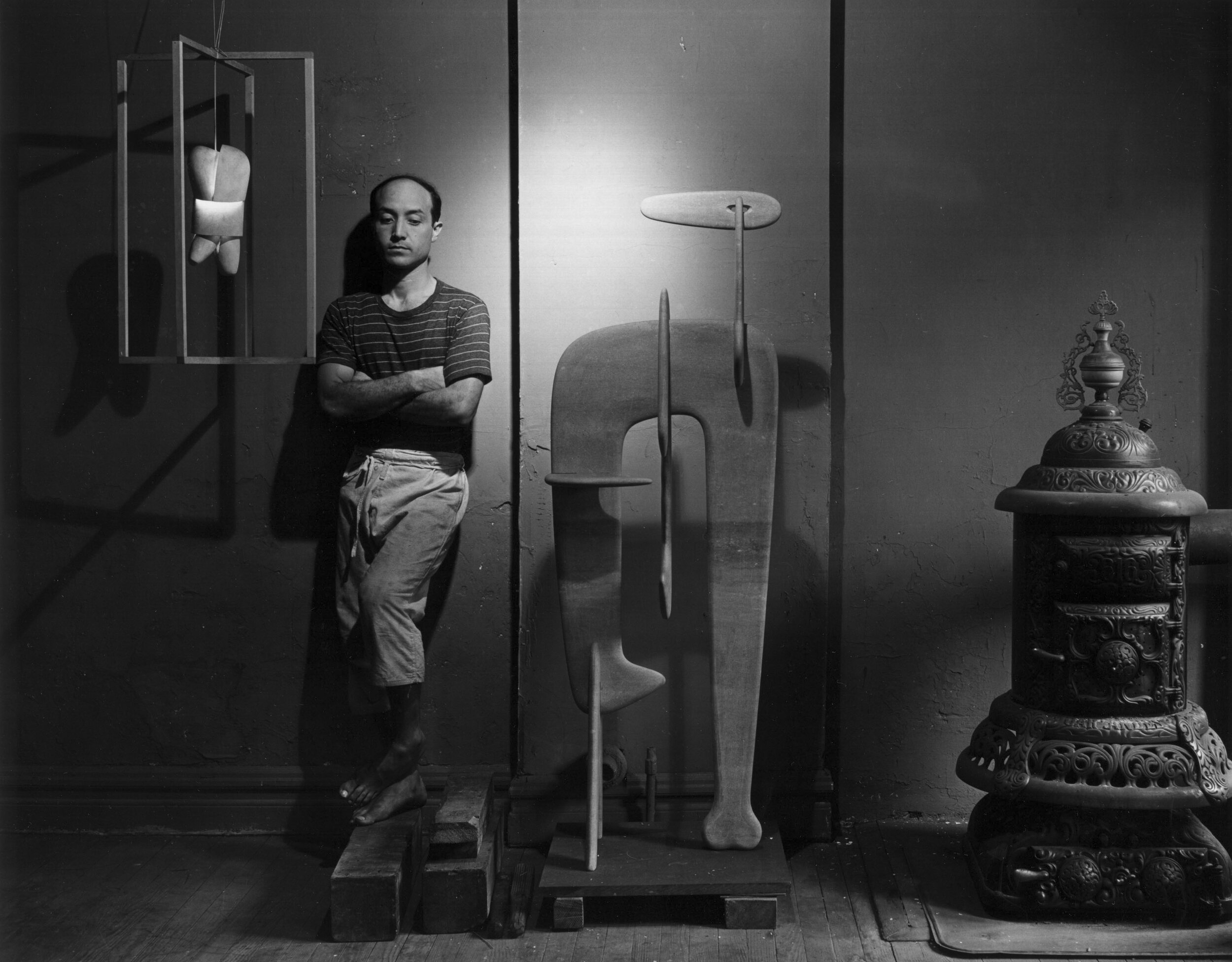
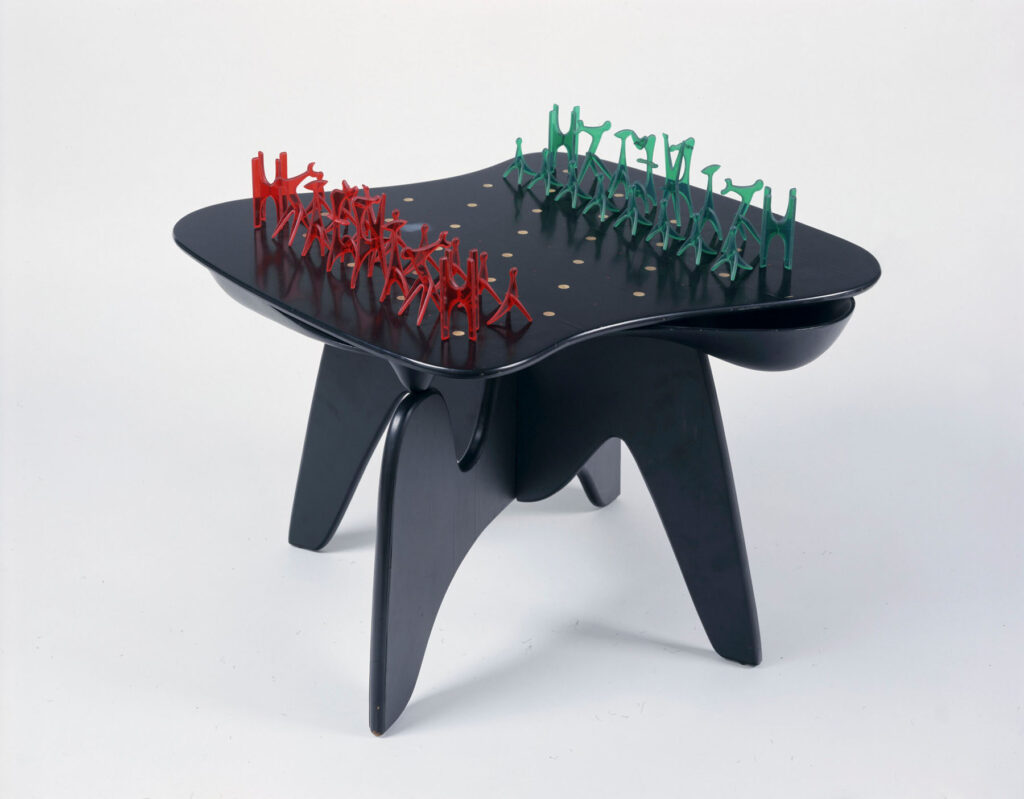
Japanese American designer and sculptor Isamu Noguchi was of “the most experimental and pioneering artists of the 20th century”. His exhibition at the Barbican displays over a hundred and fifty works from his career which spans over six decades and explores his life, work and creative method. The best way to describe him is a ‘creative polymath’ as his work straddled a multitude of disciplines.

The exhibition itself is on two levels and upon entering the space you are directed upstairs. This first section is divided into spacious alcoves and display different periods of the artists work. There is a slight feeling of disconnect here and one finds oneself peering over the railing to the floor below, which appears from above far more engaging. However, this part of the exhibition provides an important overview for those who are not so familiar with Noguchi’s work. It maps the artist’s collaborations with the likes of Brâncuși, Martha Graham and R. Buckminster Fuller, in addition to charting Noguchi’s activist work, protesting racist lynchings, America’s internment of its Japanese American citizens during World War II, and fascism.

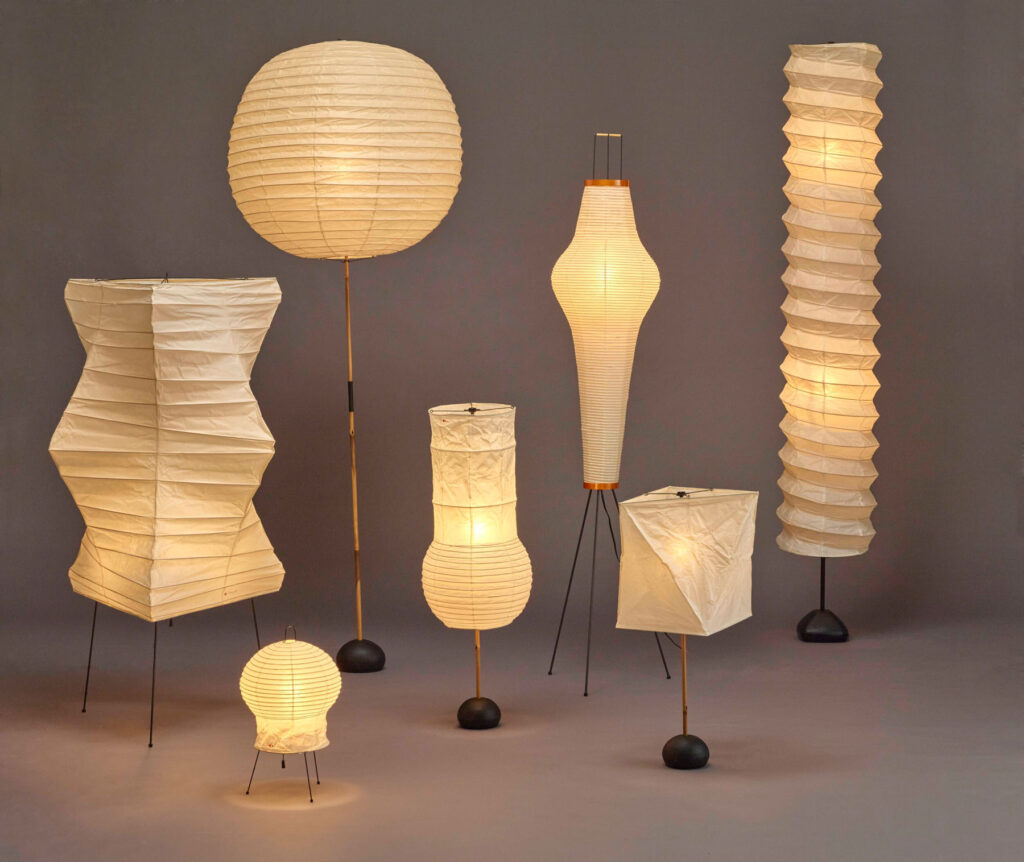
However, it is on the first level that the exhibition becomes a real delight, a rambling hodgepodge of stone and metal sculptures and his world-famous Akari lamps that makes one itch to play amongst this minimalist wonderland. Noguchi was committed to creating accessible public art and playgrounds, or playscapes, were a fascination for him. He designed these playgrounds as a way to “encourage creative interaction as a way of learning.” Indeed this interest in play and playfulness is echoed in the exhibition’s main space.

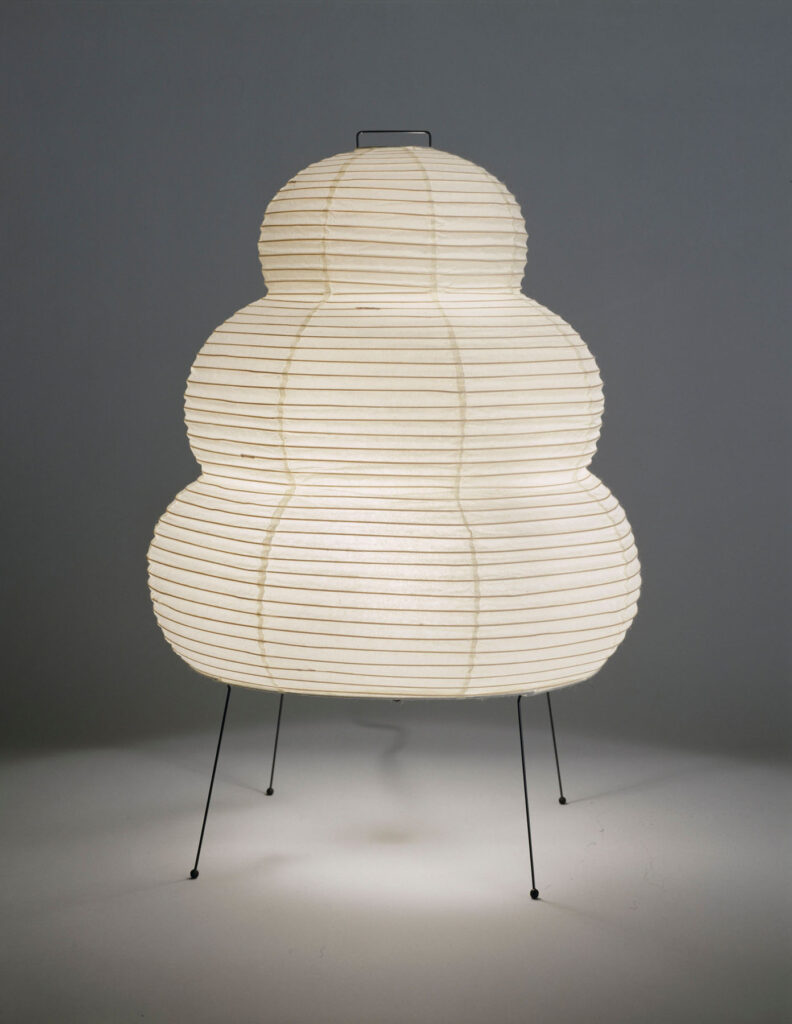
The star of the show is certainly the Akira lamps handing like softly glowing space ships, seemingly emerging from the floor like some strange luminous creature and arranged in clumps like brightly coloured mushrooms. Noguchi designed them after visiting struggling post-war Japan as a way to revitalise the economy. He took the Japanese bamboo and rice paper lanterns and modernised them as a way to bring industry back to the war-torn country.

These lamps became popular in Britain in the sixties and are still available, albeit in a slightly changed form, in IKEA. Because of this they are instantly recognisable and have led to some likening the Barbican exhibition to a ‘high-end lighting showroom.’ However, this brings us back to the discussion of ‘art for art’s sake.’  As I wandered around the exhibition I was drawn back to childhood memories of visiting B&Q with my parents, (they were the only shop in my hometown that had escalators and thus was an infinitely entertaining playground). Playground is the keyword here, I was allowed to roam the aisle alone in delicious freedom and explore this wonderland of light, metal, wood and a multitude of other textures, shapes and materials. To my childlike understanding, all of this was art. Interestingly Noguchi’s philosophy was rather similar. In creating the Akari lamps he aimed to “bring sculpture to everyday households”.

In our current environment of late-stage capitalism, Noguchi’s quiet and thoughtful philosophy’s on purpose, sustainability and environment are perhaps exactly what the art world needs. He saw commercial forms of design “as a way of escaping the art market and working with more freedom and fewer constraints.” While we might criticise the society we live in unfortunately we must still exist within it, however Noguchi “believed in the idea that even in mass-production, individuality is still possible.”  We must adapt and innovate within the framework we have because after all, to quote the artist, “to be hybrid is to be the future.”

Credits

Images · Isamu Noguchi
Noguchi at the Barbican is open from Thu 30 Sep 2021 —Sun 9 Jan 2022. For more information visit https://www.barbican.org.uk/whats-on/2021/event/noguchi
 

Photos

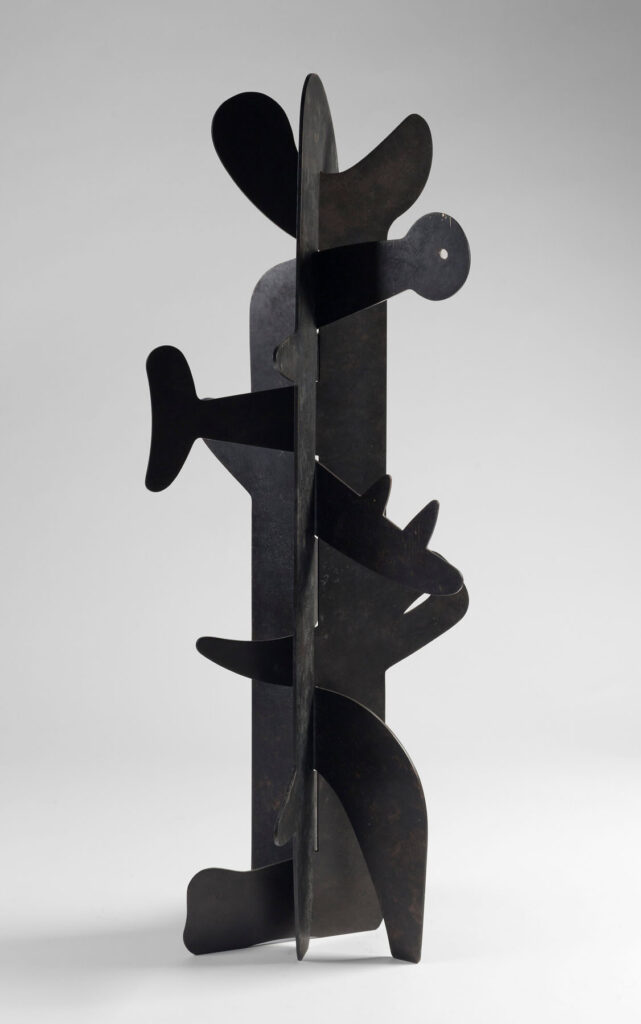
  1. Portrait of Isamu Noguchi, American sculptor, the latter’s special assistant planner, July 4, 1947 in New York City. (Photo by Arnold Newman Properties/Getty Images)
  2. Bronze plate
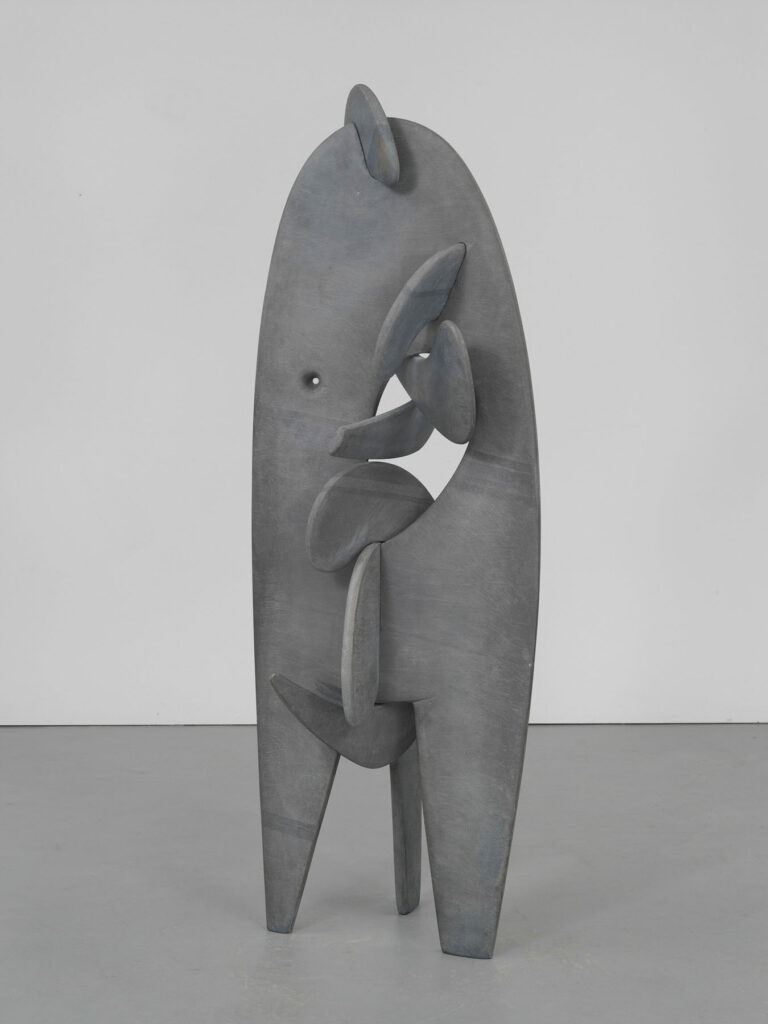
  3. Noguchi, Isamu (1904-1988): Humpty Dumpty. 1946. Ribbon slate. Overall: 59 ◊ 20 3\4 ◊ 17 1\2in. (149.9 ◊ 52.7 ◊ 44.5 cm). Purchase. Inv. N.: 47.7a-e New York Whitney Museum of American Art *** Permission for usage must be provided in writing from Scala.
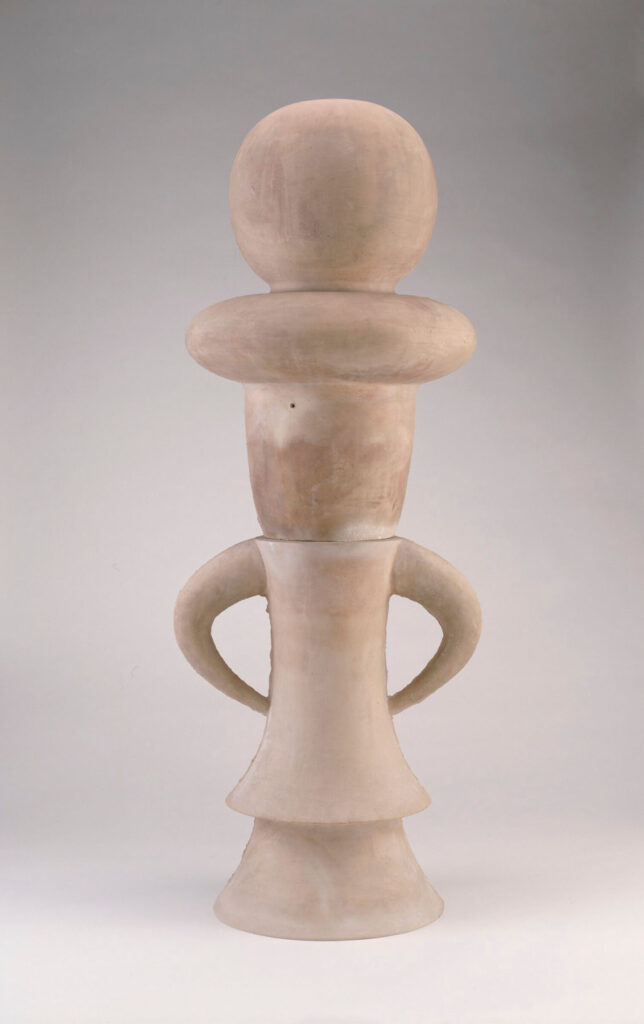
  4. Terracotta and plaster

Hugo Huerta Marin

Seven years in the making, ‘Portrait of an Artist’, visit the homes, studios, theatres and galleries of an iconic cast of female artists

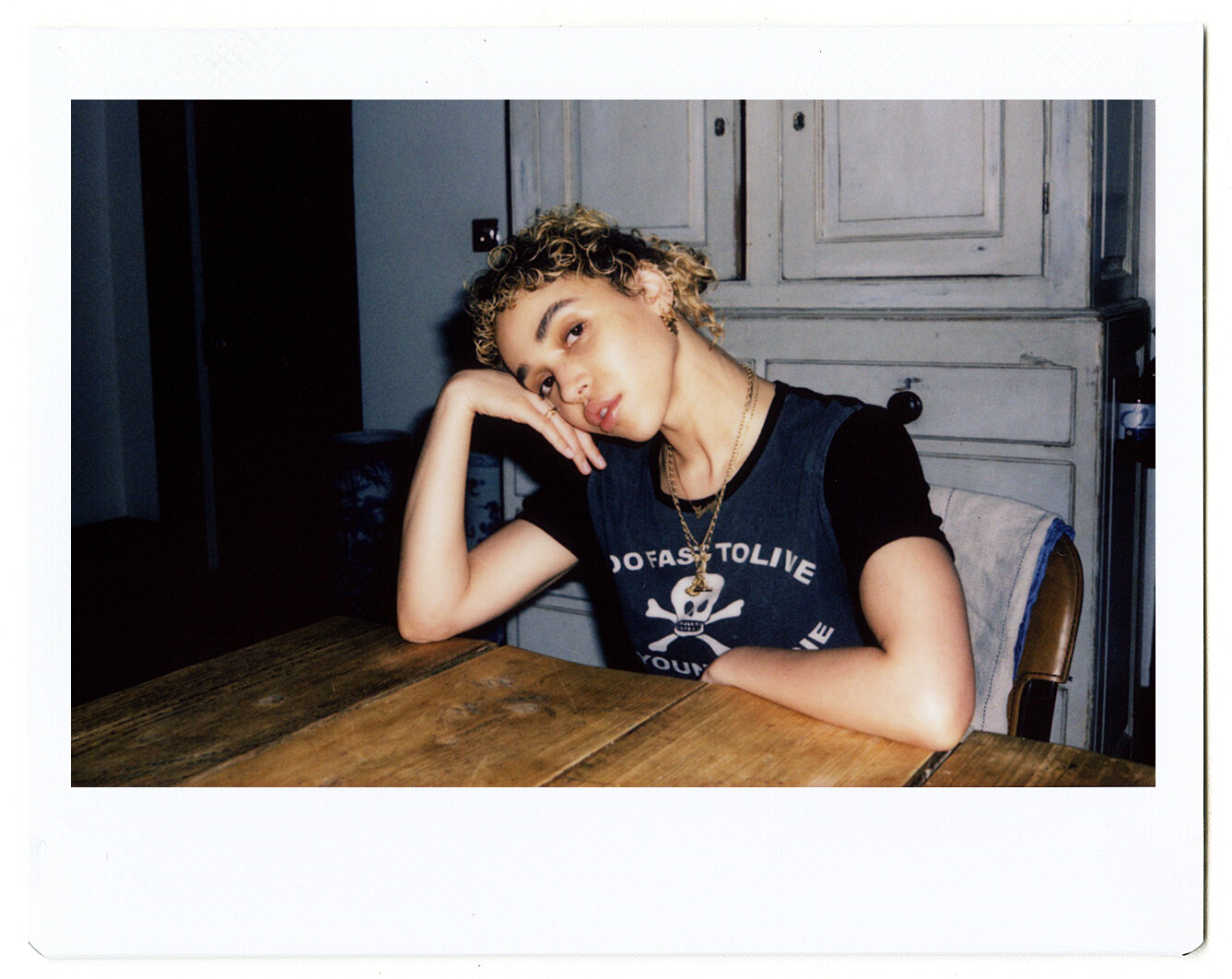
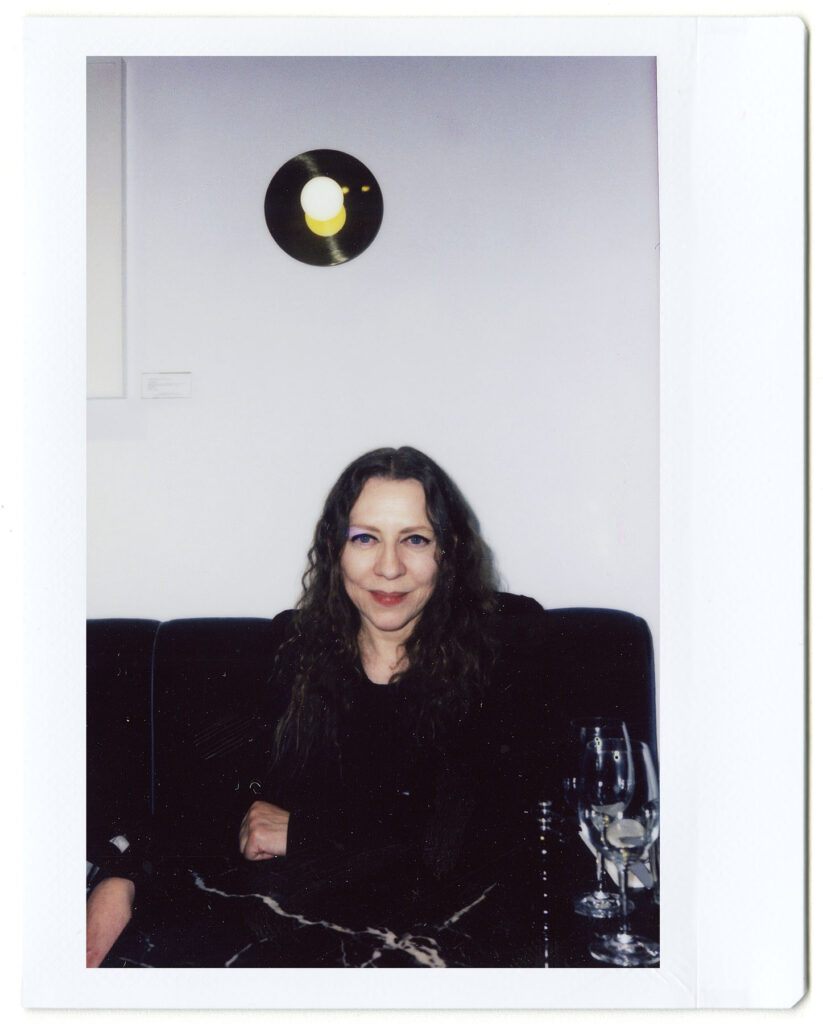
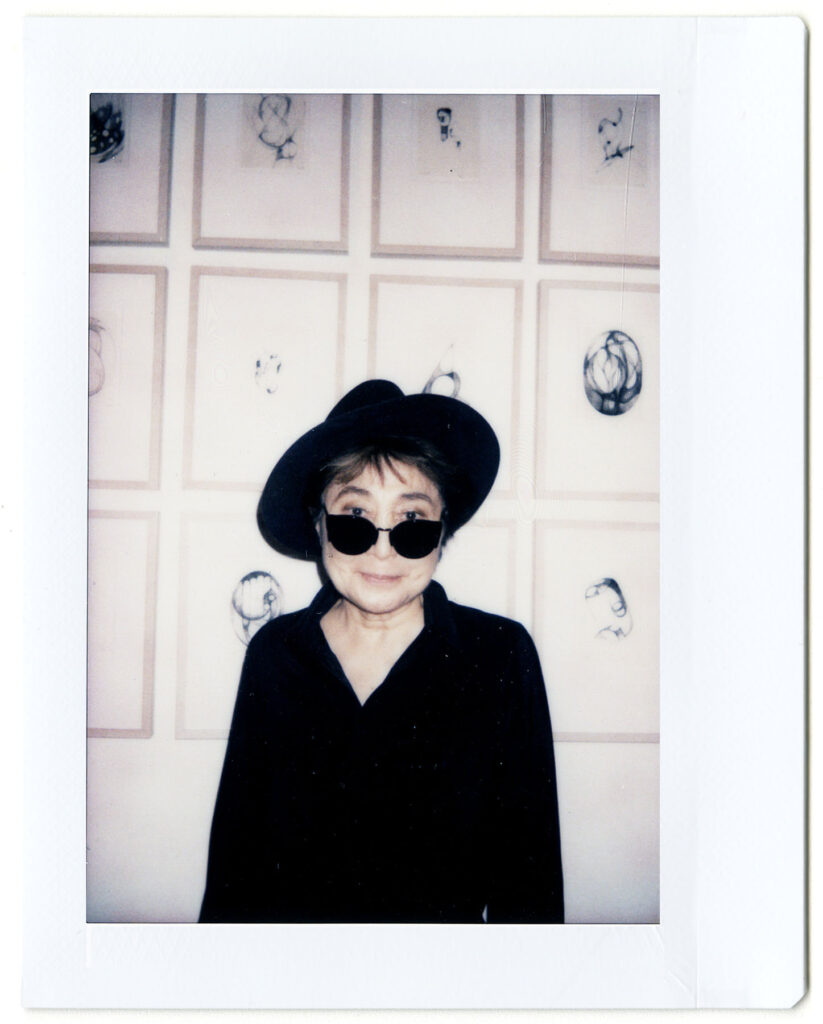
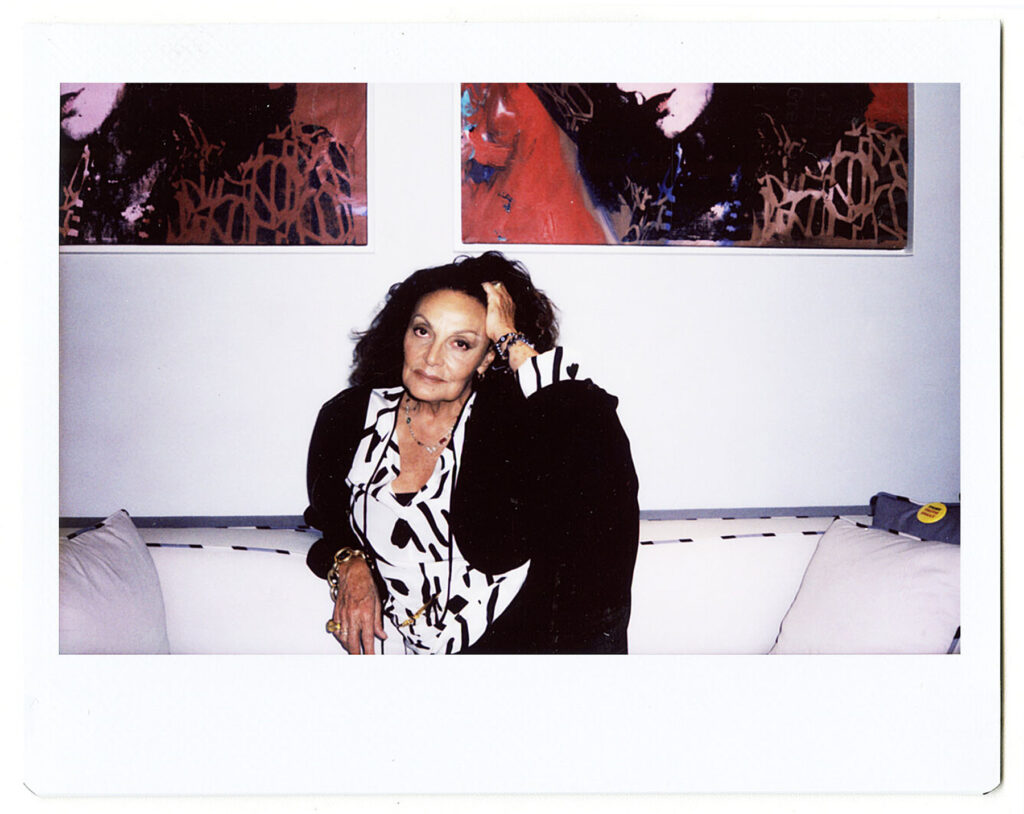
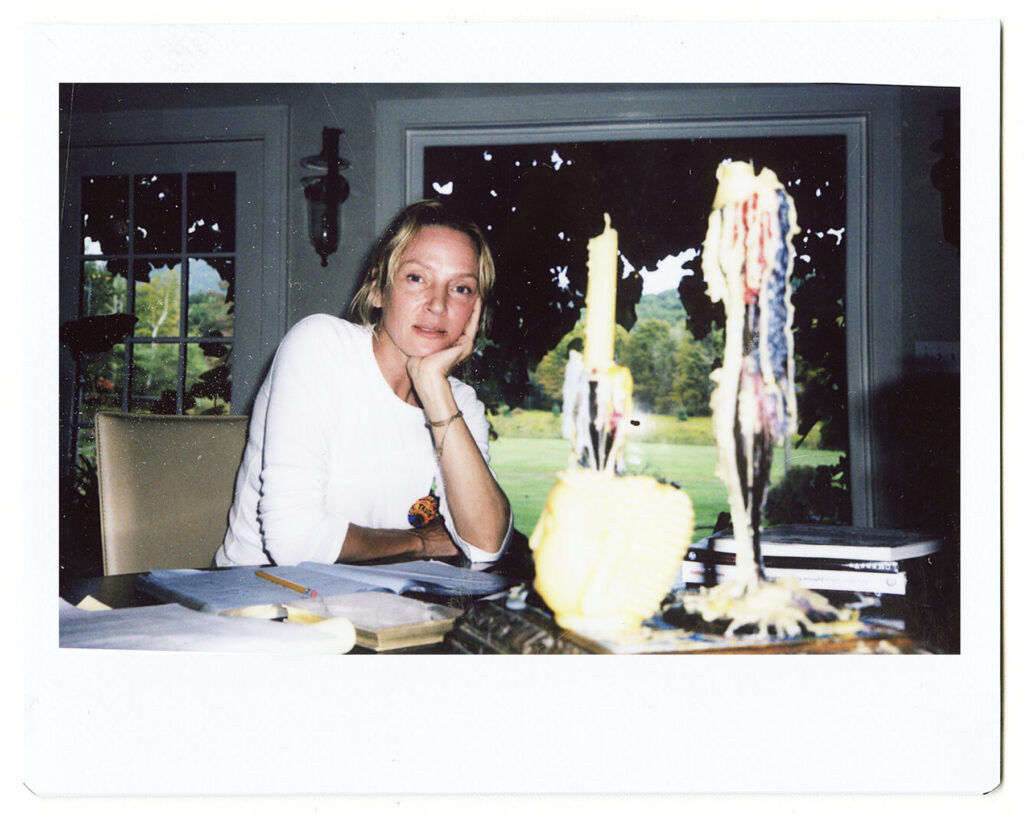
Multi-disciplinary artist and graphic designer Hugo Huerta Marin has released ‘Portrait of an Artist: Conversations with Trailblazing Creative Women’, an exceptional new book offering an intimate insight into a stunning selection of pioneering women who have reshaped the creative industries. The Prestel published book brings you face-to-face with a diverse range of figureheads and icons from a spectrum of creative practices, all photographed and interviewed by Marin. In an unseen candid nature we’re introduced to these women in a way like never-before.

The collection of original interviews and Polaroid photographs of almost 30 trailblazing women spans creative industries, nationalities and generations, from legendary visual artists Yoko Ono and Tracey Emin to groundbreaking musicians like Annie Lennox and Debbie Harry, and fashion giants such as Miuccia Prada and Diane von Fürstenberg. Each compelling conversation discusses a range of un-spoken topics, exploring their innovative and ground-braking nature and how their voices resonate throughout the new generation of artists and women around the world.

‘Portrait of an Artist’ shines a light on unique individuality in the arts, adding FKA Twigs, Rei Kawakubo and French actress Isabelle Huppert to the already iconic cast. The book creates both a portrait of each individual woman and collectively a powerful portrait of the impact of women on the creative industries.

Hugo Huerta Marin has spent the last seven years, interviewing, writing and curating ‘Portrait of an Artist’, visiting the homes, studios, theatres and galleries of these incredible female artists, capturing their portraits and stories in environments they felt comfortable and creative. Marin is a multi-disciplinary artist and designer whose work centres on the topics of gender and cultural identity. He works as an art director to Marina Abramović, with whom he has collaborated internationally. Hugo’s solo exhibitions have been featured at The Hole Gallery in New York, Never Apart Gallery in Montreal, and MUAC museum in Mexico City. He was part of the 2019 Casa Nano art residency in Tokyo.

Credits

Discover ‘Portrait of an Artist: Conversations with Trailblazing Creative Women’ here

Aude Le Barbey

Songe À La Douceur

Team

Photographer · AUDE LE BARBEY
Fashion Stylist · PAULINE GROSJEAN
Models · JEANNE GODIN AND CHAN DUTEIL

Designers

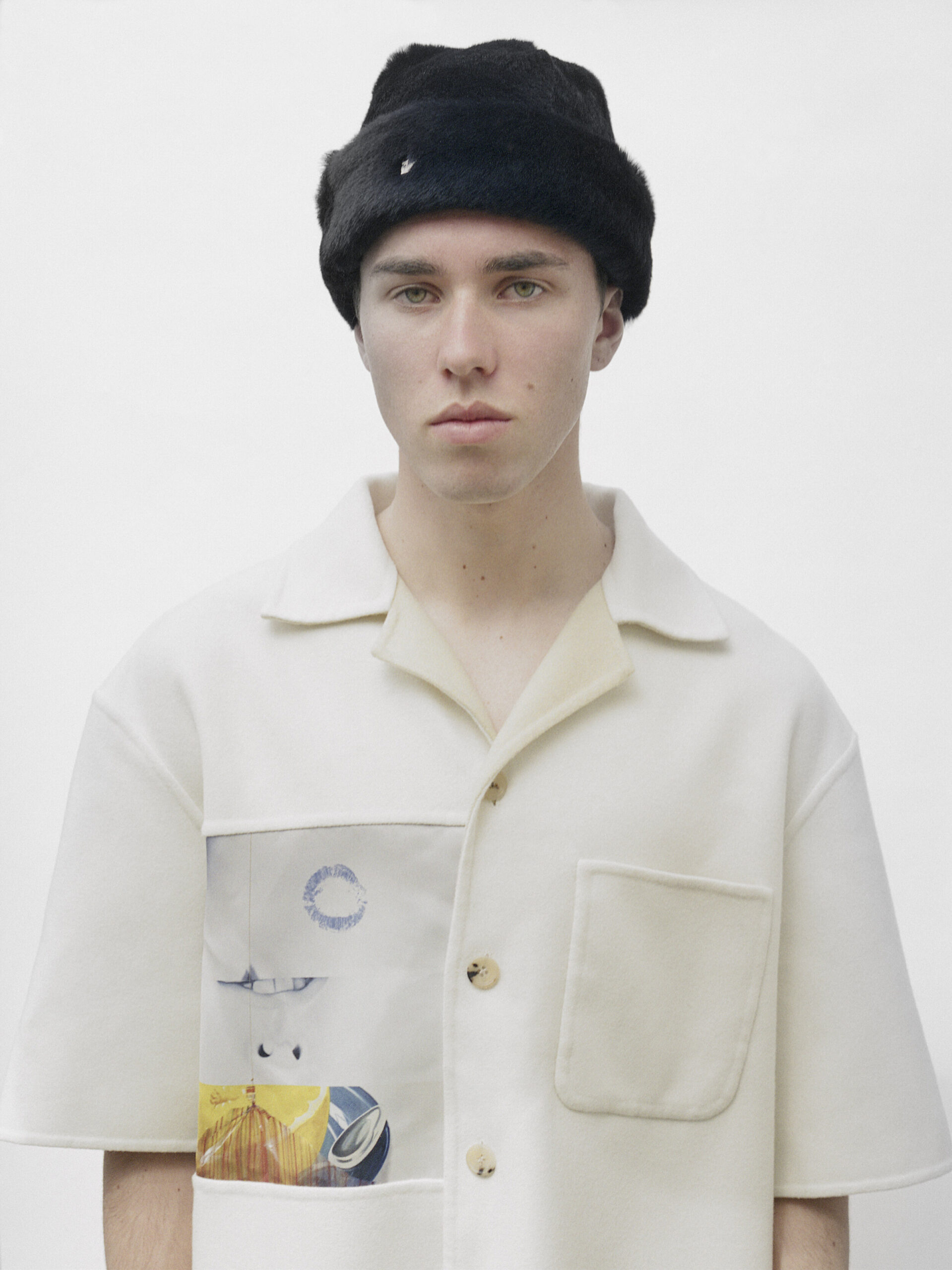
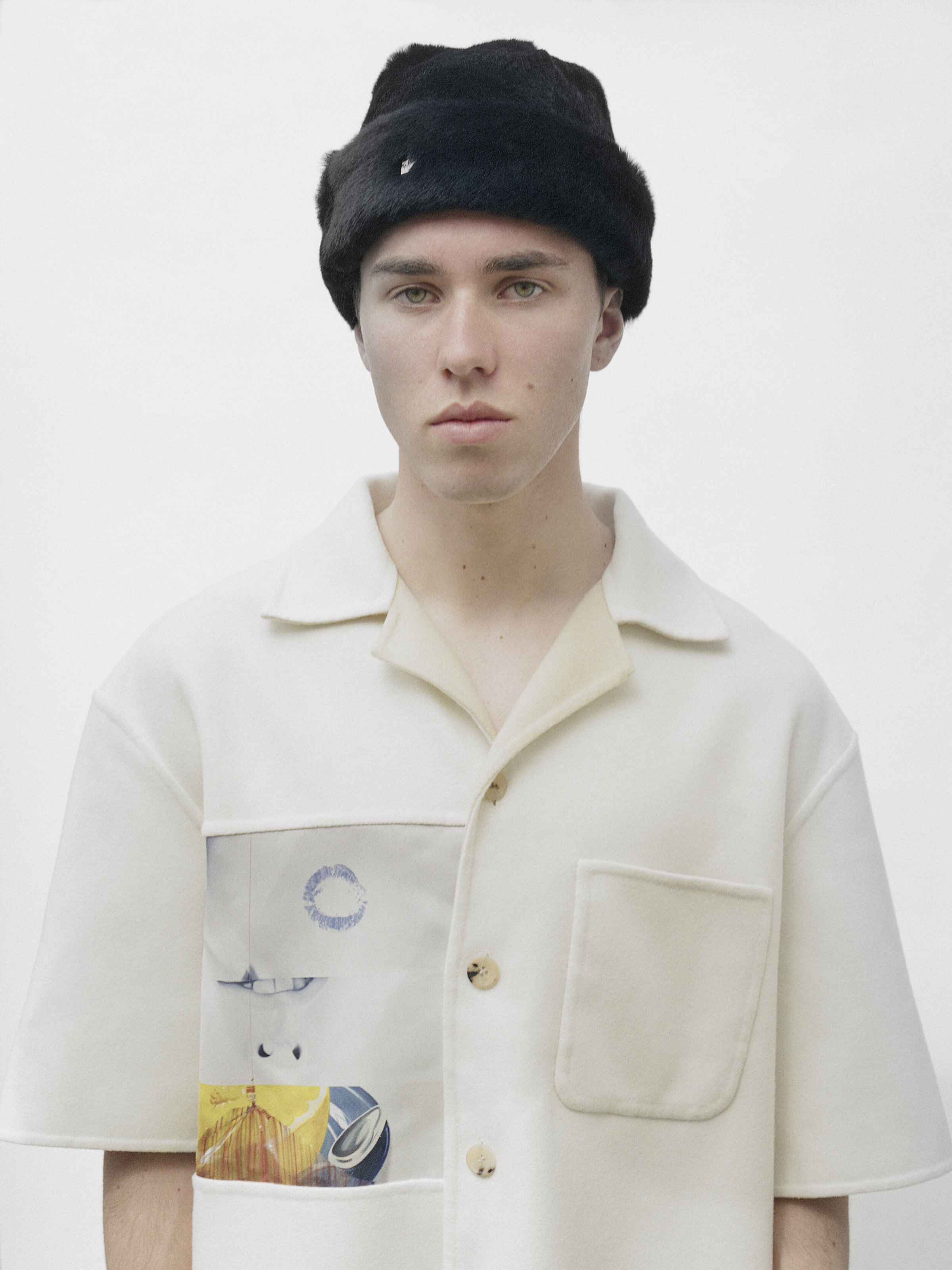
  1. Overshirt and Hat LANVIN
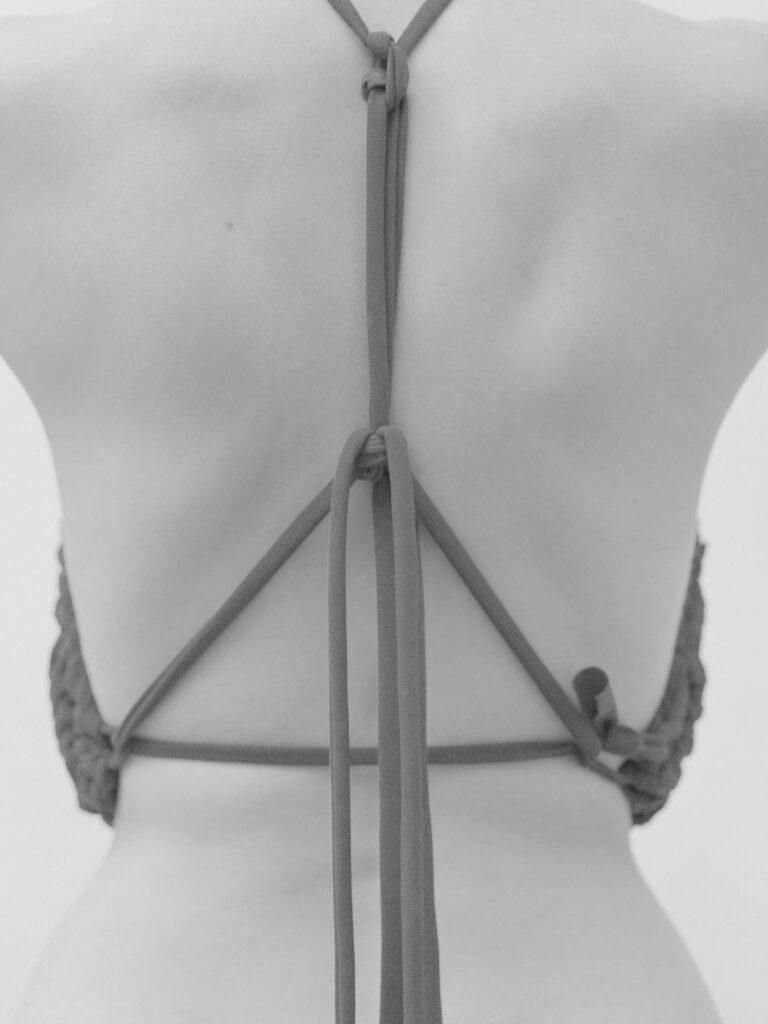
  2. Top GAMUT
  3. Bomber jacker DIOR
  4. Sock with zip LARUICCI
  5. Dress ALEXANDRE BLANC
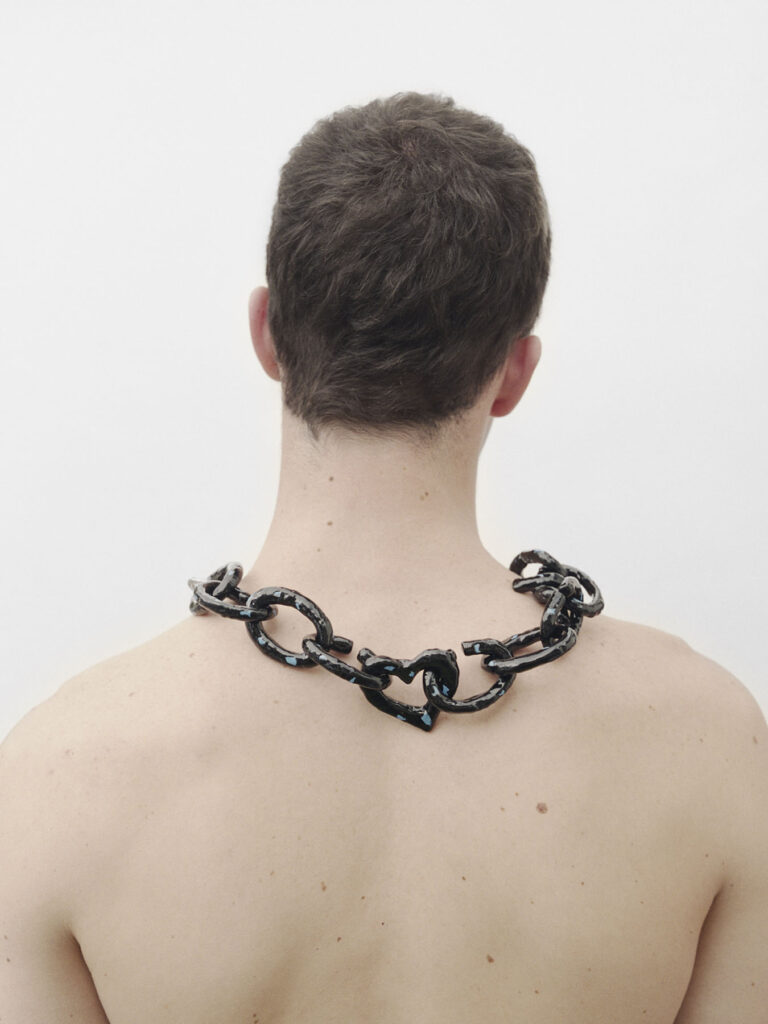
  6. Necklace ACNE STUDIOS
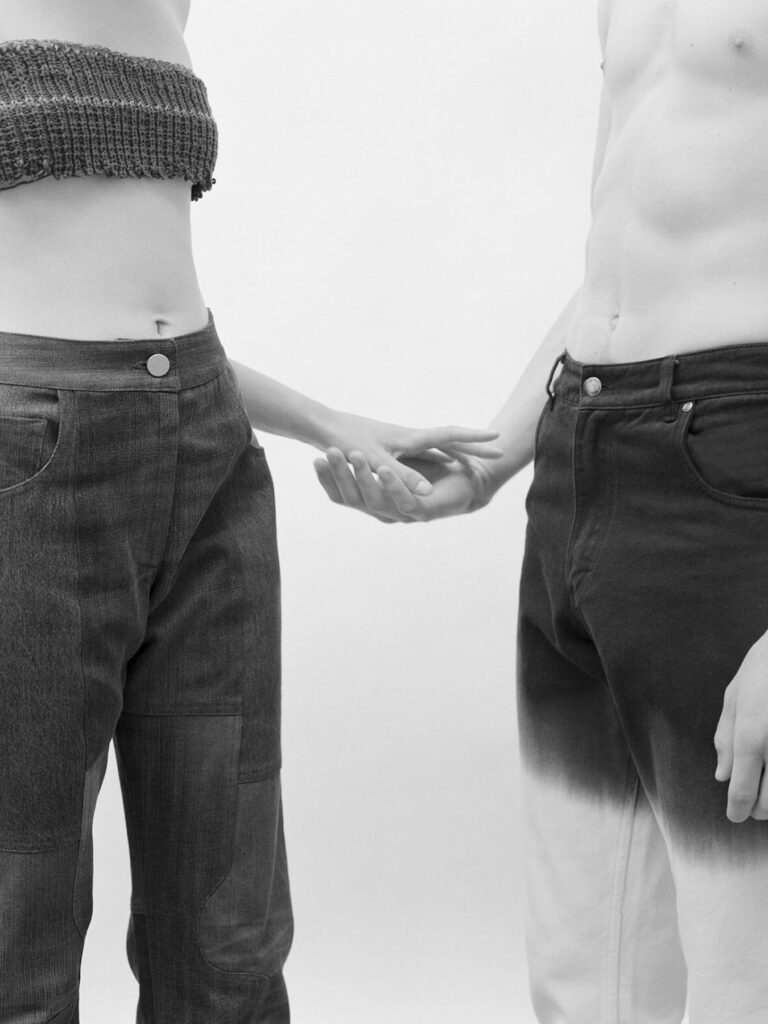
  7. Left Top VITELLI Trousers VAILLANT STUDIO Right Jeans ARTHUR AVELLANO
  8. Top LARUICCI
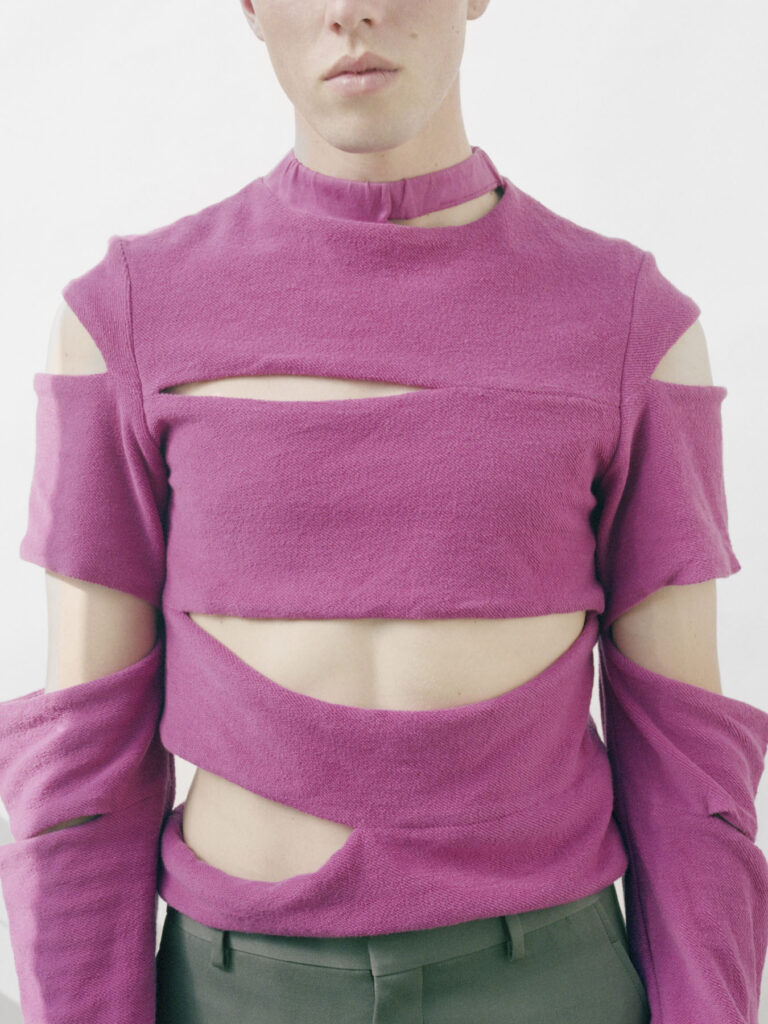
  9. Sweatshirt LARUICCI

Ottavia Di Leo

Team

Photographer · Ottavia Di Leo
Fashion Stylist · Lorenzo Chiara
Casting Director · Silvia Macchioni
Models · Maria Baza AT Elite Model Milan AND Paola
Makeup and Hair Artist · Manuela Balducci
Nail Artist · Maria Fernanda
Fashion Stylist · Assistant Domiziana Donghia

Designers

  1. Jumpsuit ROBERTO CAVALLI Jacket VERSACE Earrings ROUSSEY Shoes Stylist’s archive
  2. Jacker VERSACE Bag ABRA Top, Turtleneck and Culottes OH CARLA Shoes VERSACE
  3. Dress KENZO Earrings ROUSSEY Boots ABRA
  4. Blazer and Leggings NO DRESS Necklace VERSACE Shoes Stylist’s archive
  5. Top NO DRESS Skirt DIESEL
  6. Shirt DIESEL Top OH CARLA Bag VERSACE Earrings ROUSSEY Shoes Stylist’s archive
  7. Full Look OH CARLA Bracelet VERSACE
  8. Skirt DIESEL Bag and Shoes VERSACE Top NO DRESS Jacket OH CARLA
  9. Top NO DRESS Bag and Boots LANVIN Earrings and Bracelet VERSACE Bikini Stylist’s archive
  10. Blazer NO DRESS Necklace VERSACE
  11. Coat LANVIN Necklace ROUSSEY Boots ABRA
  12. Coat LANVIN Necklace ROUSSEY
  13. Top NO DRESS Bag and Boots LANVIN Earrings and Bracelet VERSACE Bikini Stylist’s archive
  14. Coat LANVIN Necklace ROUSSEY
  15. Full Look VERSACE Bag ABRA
  16. Dress KENZO Earrings ROUSSEY Boots ABRA
  17. Coat LANVIN Necklace ROUSSEY
  18. Shirt DIESEL Top OH CARLA Bag VERSACE Earrings ROUSSEY Shoes Stylist’s archive
  19. Coat LANVIN Necklace ROUSSEY Boots ABRA
  20. Jumpsuit ROBERTO CAVALLI Jacket VERSACE Earrings ROUSSEY Shoes Stylist’s archive
  21. Blazer and Leggings NO DRESS Necklace VERSACE Shoes Stylist’s archive

Yis Kid

Dance!

Team

Photographer · Yis Kid
Fashion Stylist · Saik Gonzalez
Makeup Artist · Elle Mcmahon
Hair Stylist · Asahi Sano
Photography Assistant · Lara Metcalf Fashion Assistant · Alice Secchi
Studio Gas Studio Production Hire
Models · Lara Mcgrath at Nevs Model Agency, Yannis Koba, Emilien Rabin, Hannah Vincent at Diverj Management, Nick Chan, Amphibian, Erin Perise and Margherita Boffetta at Select Model London, Tyreece Daniels at Other Boys Agency and Byul Kim at Img Models


Designers

  1. Top and Trousers DRIES VAN NOTEN
  2. Coat and Trousers VALENTINO
  3. Coat and Trousers STELLA MCCARTNEY
  4. Full Look EMPORIO ARMANI
  5. Dress ERDEM
  6. Jacket and Skirt SIMONE ROCHA Boots LANVIN
  7. Shirt and Trousers DUNHILL
  8. Dress JAIME MORALES CORTES
  9. Dress VALENTINO Boots LANVIN
  10. Dress KENZO
  11. Dress MM6 MAISON MARGIELA Scultpure ‘Orbit’ HENRY GALANO
  12. Full Look MM6 MAISON MARGIELA
  13. Shirt and Trousers EMPORIO ARMANI
  14. Full Look LANVIN

Aude Le Barbey

Clarity

Team

Photo AUDE LE BARBEY Fashion PAULINE GROSJEAN
Models Aline Jan and Adèle Trévilly 


Designers

  1. Ring VIBE HARSLOEF
  2. Body MARIANNA LADREYT Earrings SEBASTIEN JOFFREY MONFORT
  3. Trousers and Turtleneck AWS Bra LOU DE BETOLY Shoes FLAT APARTMENT
  4. Top MARIANNA LADREYT Earrings Stylists Own
  5. Dress MARIANNA LADREYT Knitted Dress GAMUT Boots LE MAUVAIS GARCONS
  6. Dress JOHANNA IMBACH Bangle VIBE HARSLOEF
  7. Earring VIBE HARSLOEF
  8. Turtleneck A/RAISE Jewellery VIBE HARSLOEF

Nicolò Parsenziani

Bottega Veneta

Team

Photographer · NICOLÓ PARSENZIANI
Fashion Stylist · MARCO DRAMMIS
Make Up and Hair Stylist · CLARISSA CARBONE
Casting Director · ISADORA BANAUDI
Fashion Stylist Assistant · DOMIZIANA D’ONGHIA
Make Up and Hair Stylist Assistant · CHIARA VIOLA
Studio Assistant · SARA GIORCELLI Photography Assistant · DAVIDE LIONELLO
Models · LESLYE HOUENOU at WOMEN MILANO and ALEKSANDR GUDRINSH at CREW MODEL MANAGEMENT


Designers

  1. Bottega Veneta

Antonio Dicorato

Credits

Models · LOUISE MENARD at GIRL MANAGEMENT, KESTELMANN TOUSSAINT at SUCCESS MODELS, SARAH DAOUI at OUI MANAGEMENT
Photography · ANTONIO DICORATO
Art Direction · LAURA GAVRILENKO BURMAN
Fashion · MIREY ENVEROVA
Casting · REMI FELIPE
Hair Stylist · ASAMI MAEDA at WISE AND TALENTED
Make up · AURELIA LIANSBERG at WISE AND TALENTED

Anastasia Korolkova

Tears and Cheers

Team

Models · IULIIA SAVINOVA
Photography, Art Direction · ANASTASIA KOROLKOVA
Fashion · MARIA BARBAYANOVA
Make up · FARIZA RODRIGUEZ
Hair · EKATERINA POKORNAYA
Photography Assistant · GENNADIY MELKOZEROV
Fashion Assistant · KIRA VASIL’KOVA

Designers

  1. Turtleneck JIL SANDER Dress MARIIA ERSHOVA
  2. Dress JIL SANDER Necklace J.KIM
  3. Sweater Stylist’s archive Skirt OTOCYON Clogs KHAITE
  4. Shorts Y/PROJECT
  5. Turtleneck JIL SANDER Dress MARIIA ERSHOVA
  6. Shirt VERTIGO
  7. Shirt VERTIGO Trousers Stylist’s archive Boots LOEWE
  8. Sweater Stylist’s archive Skirt OTOCYON
  9. Blazer Stylist’s Archive Top STROGOVINTAGE
  10. Dress JIL SANDER Necklace J.KIM Shoes Stylist’s archive
  11. Blazer Stylist’s Archive Top STROGOVINTAGE Leggings Stylist’s archive Clogs KHAITE
  12. Polo Shirt Y/PROJECT

Subscribe to our
Newsletter