Archive page:


Georgina Starr

“I rebought forty of my favourite destroyed singles and had them played simultaneously on forty record players.”

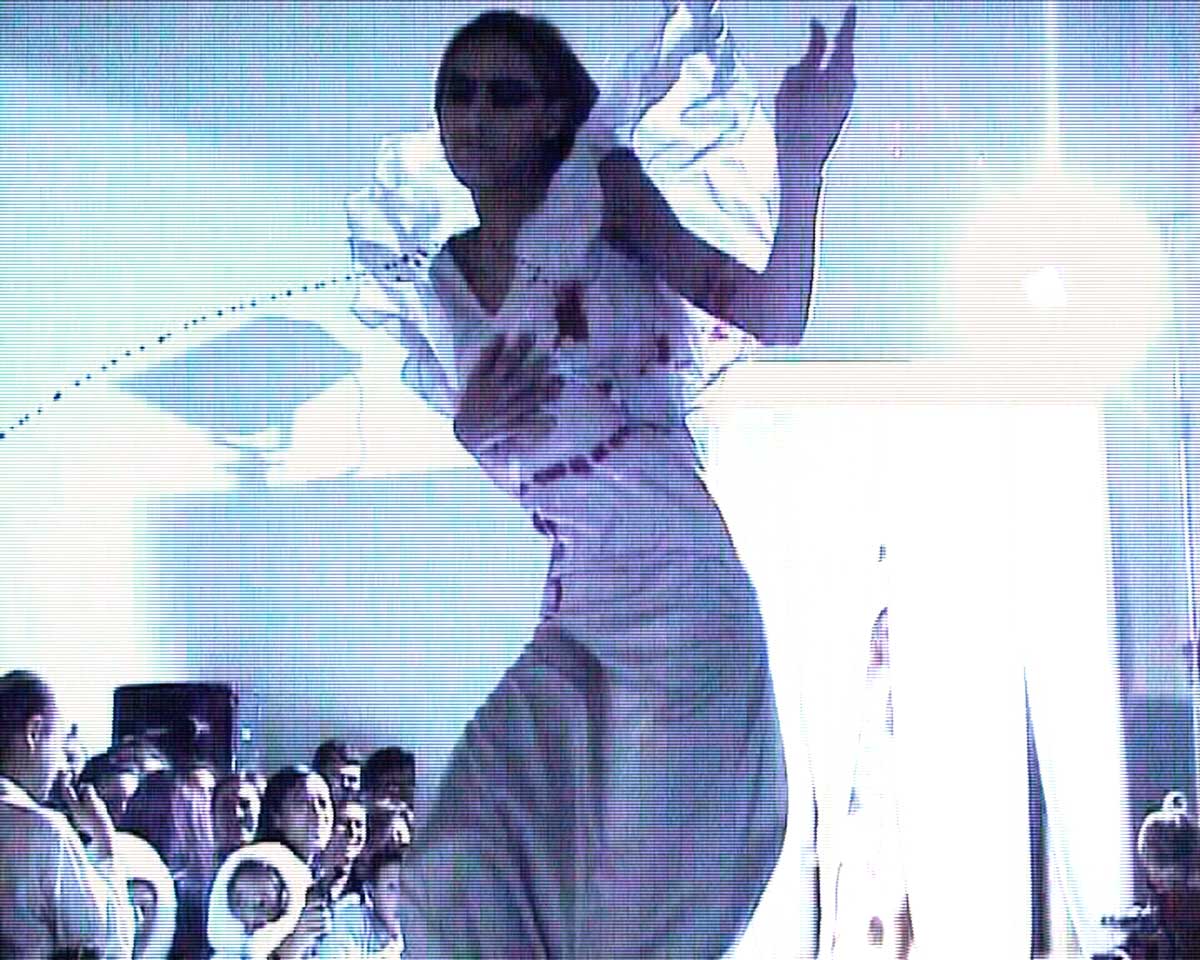
It’s difficult to summarise the art of Georgina Starr. Since the early 1990s, the artist has made use of the array of tools (video, sound, written word and live performance) at her disposal to create a rich and varied body of work. In early works, Starr engaged a cast of miniature paper figures as stand-ins for real life conversations the artist would covertly record in public spaces. Later, Starr appears in her work – though the extent to which she was performing as herself is itself part of her practice. In The Party (1995), a 25-minute video installation, Starr takes on the role of Liz (a character whose advances are rejected by another character in a previous film). As Starr tells NR below, though the role was fictional, the process of making the film instils it with autobiographic elements. Characters, motifs and themes recur throughout Starr’s work, which enable the artist to rework and reimagine earlier ideas. But it isn’t just Starr’s own oeuvre that she recreates, with much of her work taking inspiration from existing film and literature. The breadth of reference points throughout Starr’s work are demonstrative of the extent to which the artist employs a process of meticulous researching to inform her practice. 

Aspects of Starr’s work recall a childhood spent watching tv; the object in the corner of the living room which, she explains in The Voices of Quarantaine (2021), became her “gateway to another world”. Indeed, the blurring of reality and imagination, autobiography and fiction are common features of her work. Starr’s film, Quarantaine (2020), is not, as you might think, a response to the pandemic. Rather, the artist began working on Quarantaine before COVID; the film’s title referring to the French word for forty, historically also the term for a period of enforced isolation over forty days. The film tells the story of strangers who are transported to an alternative universe which the two women must navigate their way through. Across the breadth of Starr’s work, the body – the female body and feminine identity in particular – are (re)investigated. In her later works, including Quarantaine, Starr is no longer in front of the camera, with a cast of performers enabling the artist to realise her practice on a larger scale. Most recently, the artist orchestrated a live performance in collaboration with French fashion house, Hermès, which in true Starr style, is a dazzling display of colour – flawlessly synchronised and splendidly surreal. 

NR: What have you been working on recently?

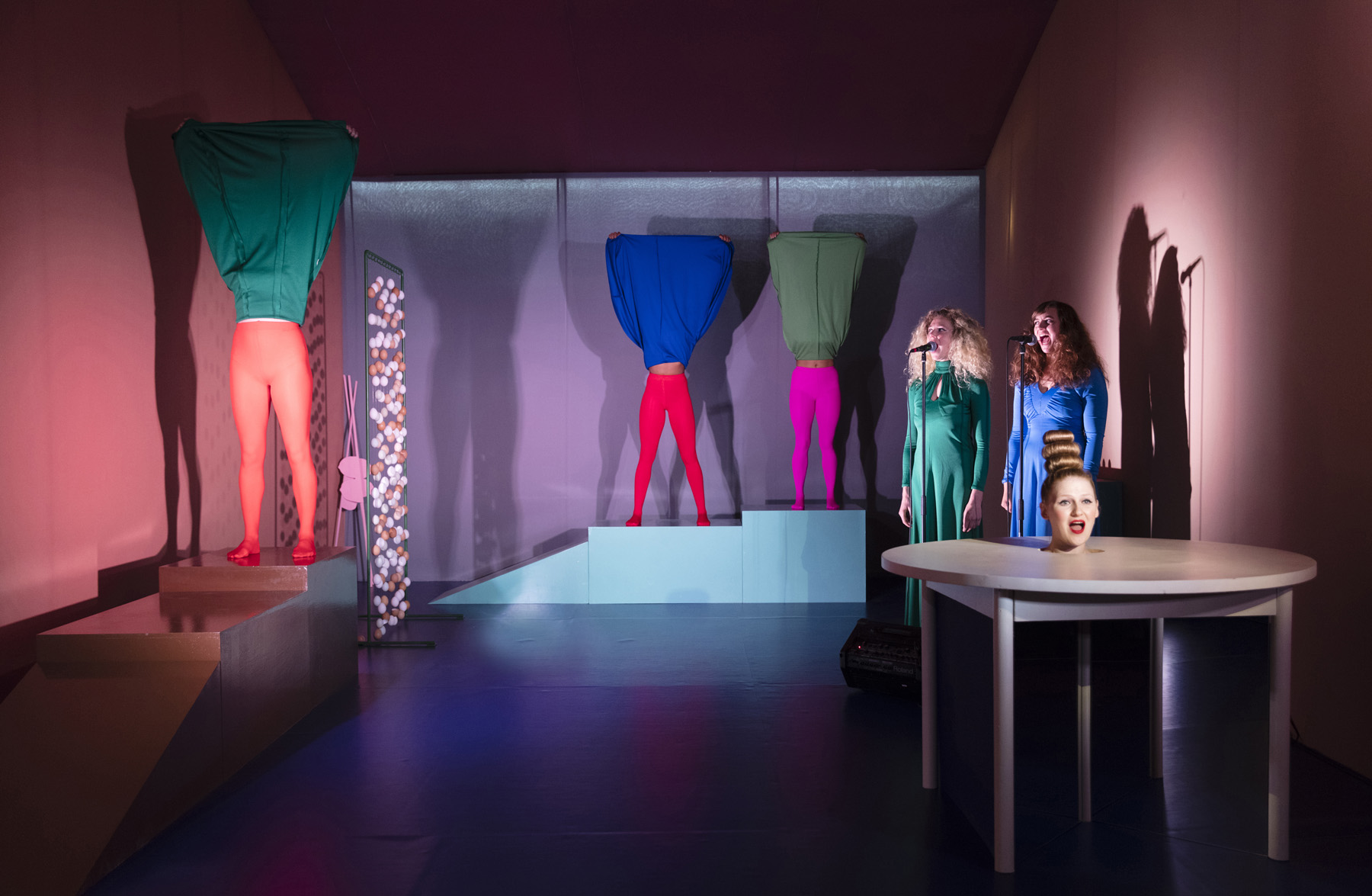
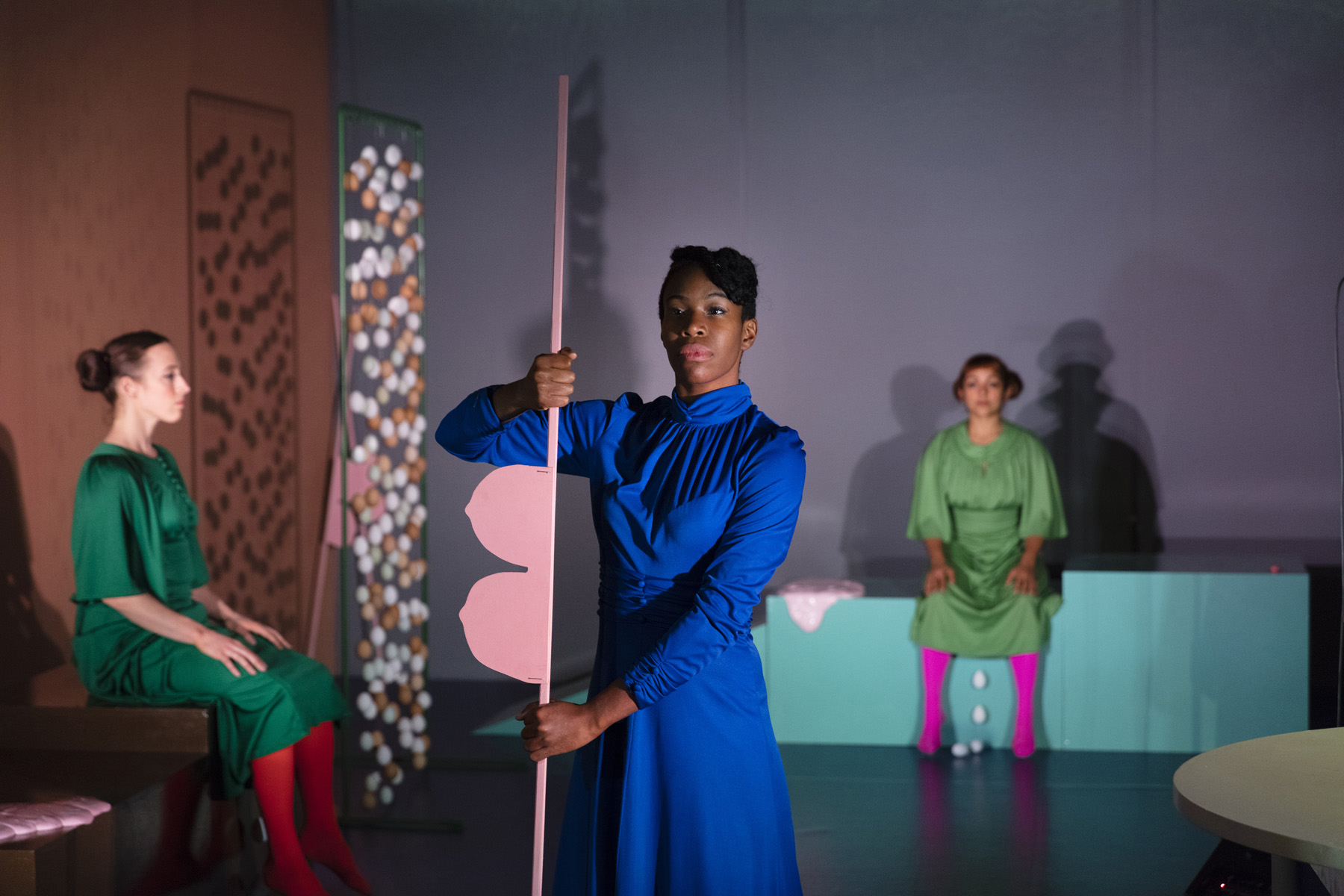
GS: I have been working on a new performance artwork in collaboration with Hermès to showcase their SS22 collection designed by the brilliant Nadège Vanhée-Cybulski. We performed it on 3rd February at a one-off special event titled ‘Gelato!’ at Old Sessions House in Clerkenwell. It incorporates a large set—a huge pastel coloured mountain sculpture, a new musical score for percussion which I developed together with composer, Thomas Haines, and is performed by four female percussionists, nine dancers and eight models all wearing Nadège’s designs. It was quite epic—a cross between a theatre play, a sculptural installation, opera, dance and fashion show. The collection is really joyful and screams summer, so I began by thinking about what ‘gelato’ would sound like. I imagined metallic sounds and warmer sounds of fabric on wood—glockenspiels, triangles, drums, wooden percussion, vibraphones, and I had a vision of a magic mountain which the performers, wearing these amazing clothes, would emerge from moving in synchronization with the sounds—this was my starting point.

NR: What does the process of rehearsing or being in workshops involve? 

GS: With live performance works, the rehearsal period is more intense. I always script and storyboard, and it was the same for Gelato! There are spoken word poems in this piece as well as the music and choreography. By the time we went into workshopping in mid-December we were at a really good stage with the musical composition, and I had choreography ready to show to the dancers. We were working with four incredible percussionists who were able to immediately play the working score so that the dancers could start to interpret the live instrumentation and we could adjust the score as went, which was a brilliant way to work. The music starts out very minimally and gradually builds up as the percussive mallets are handed to the musicians. Some instructional elements were built into the score, so everyone’s movement was highly choreographed, and I had constructed my own mallets using coloured threads from the collection – so these were woven into the piece. The workshopping days were crucial to figure out if the movement and vocals I had imagined alone in my studio could even work on a grander scale! I had props too, as I wanted the performers to all begin from inside a ‘mountain’ and emerge with large circles like musical notes transforming the whole picture into a giant score. There were twenty performers to direct, so it was pretty intense. We went into full-on rehearsals for six days at the end of January and had the first dress rehearsals at the venue the day before the show. I loved this collaboration with Hermès, it was wild.

NR: How does working with performers compare to playing the role of other performers (alongside) yourself? 

GS: The casting process is always really complex as I have a very clear idea of how I want the performers to look and what voices they bring. For both the Hermès piece and my last film Quarantaine (2020), it took a long time to find the right people, months of searching and meeting people. When I perform inside my work it’s a very insular and personal process, often just me and the camera. For my film THEDA (2007), I built all the sets in my studio and worked for a year filming myself in the various Theda Bara inspired roles, so became totally absorbed into the character. The way I work with a bigger cast definitely has some connection to this, I feel the need to demonstrate rather than just describe, it’s quite mediumistic, transferring my movement and voice into them. I like to work with a mix of professional and non-professional performers as the non-pros bring something magical and otherworldly. It often feels like the less experienced person is a stand-in for me in some way—I relate to them more strongly as they are working things out on their feet and negotiating this strange environment they find themselves in. 

NR: There are characters, themes and motifs – the brain, the bubble – that reoccur in your work; did you always attend to develop your practice in this way? Or did it just occur over time? 

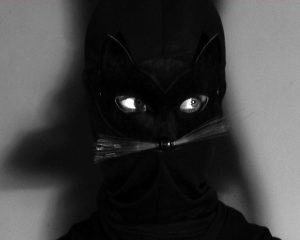
GS: All the pieces I’ve made from the very beginning are completely interlinked. It happens naturally that one work leads to the next, so the themes and motifs overlap and merge. Sometimes an element in a work I made twenty-five years ago might suddenly appear in something new. A performance work I made at the Stedelijk Museum Amsterdam in 1995 called The Hungry Brain suddenly started to inform a work I was developing in 2013 which eventually became Before Le Cerveau Affamé a new performance and installation piece. In this work I created an illustrated set of predictive cards (Le Cerveau Affamé), the suits were the bubble, the hand, the brain and the cat. These cards found their way into my film Quarantaine. The cards appear in a critical scene in ‘The Grey Room’ where a group of waiting women are chosen for a card reading—the cards selected guide them to the next level of the journey in the film’s narrative. Sometimes it seems like one big Gesamtkunstwerk!

NR: As an extension of that, in The Voices of Quarantaine you make reference to De Quincey’s The Palimpsest of the Human Brain which seemed to be an apt description of your work. Would you say that your work is palimpsestic?

GS: I think my last answer definitely describes a very palimpsestic way of working. I enjoyed making the performance lecture, The Voices of Quarantaine (2021), as I got to reveal some hidden details at the heart of my film Quarantaine. There are so many layers of meaning in my work it can baffle some people, so it’s useful to be able to unpeel these for the viewer. Although the lecture itself was something of a palimpsest too. While I was reading De Quincey, I realised that his essays had directly inspired Dario Argento’s 1977 masterwork Suspiria which in turn had inspired the forest wall-mural I had painted in a scene in Quarantaine. At the very beginning of Quarantaine we follow two women through an arboreal portal in a city park which leads them into a school of instruction—the first room they encounter has the eerie wall painting. The mural in Suspiria had always haunted me so it became an ominous character within my film—it holds another portal to take the initiates onto the next stage of the voyage.

NR: How much of your work is grounded in the idea of autobiography, and to what extent does the notion of autobiography become a way to introduce (fictional) narrative?

GS: There is quite an even mix of the fictional and factual, but it’s so integrated that I often lose track of which is which. I made fictional works in the past which I performed in and people presumed they were autobiographical. An early video The Party (1995), for example, was a piece about a lonely female character who throws the perfect party for one. It began as a fictional narrative, but I did spend two days alone having a party in my studio—constructing a bar, making food, dancing, drinking elaborate cocktails. When I look back at this work it’s part of my history and feels almost autobiographical, it’s a perfect merging of the two. There are personal stories within Quarantaine, which I discuss in the lecture, these stories begin from a ‘real’ place or at least a memory of something real and gradually become so entwinned within the world I’m creating that they drift away from reality and become something totally new. 

NR: How do different mediums lend themselves to a particular work? What informs whether you use audio, film or a live performance?

GS: The idea usually informs what the piece will be.

“A memory I had about my parents burning all my records when I left home for example ended up transforming into a live sound performance piece called Top 40 on Fire (2010).”

I rebought forty of my favourite destroyed singles and had them played simultaneously on forty record players. It created a cacophonous sound at first that sounded like fire, but as each track petered out you started to hear the voices of the singers coming through and the final vocal lyric was quite profound. If I’m commissioned to make a work then it’s slightly different, although sound always plays a huge part of every work. Live works are the most difficult for me as it’s impossible to control exactly what will happen on the night. I’m pretty controlling about all the details so this can drive me insane; the uncertainty—at some point you have to let a performance live without you. When I made Androgynous Egg (2017), a live piece for Frieze a few years ago, it took me ages to let the performers just own the piece. It was performed four times a day for the whole of Frieze and it was only on day two when I realized that I didn’t need to sit in all the performances—they had it, it belonged to them now and I had to set it free, like releasing a child into the world. Quarantaine was really borne out of Androgynous Egg. I knew that I wasn’t finished with some of the subjects—the eggs, the Pink Ursula Material, the instructional poetry, even the choreography, and that I needed to make a film. Writing and making the film was my way of taking back the control I had relinquished with the performance. It meant I could close-in on the action and focus on the important details. Filmmaking is more my natural medium. I love editing with image and sound, it’s where the magic happens.

NR: In relationship to the magazine’s theme – celebration – how does your work celebrate, and explore, womanhood?

GS: I would say that it does this in every sense. I began in the early ‘90s by working with my own body and voice to create video and sound works. These works gave me an actual voice. I was suddenly able to articulate something within the work in a way that I felt I couldn’t in real life. It was a celebration of my inner world. Over the years I’ve gained the experience and confidence to transfer this and to share the ideas with performers, musicians, singers and composers so that the world becomes bigger, more complex and intense. THEDA was the last work I performed in front of the camera. It was a very physical work where I was on screen the whole time for forty minutes. Each time I screened the work at a cinema I invited different musicians to accompany it and perform a live soundtrack. I had done it a few times in London and New York when I realised that it was predominantly men that were playing the music; by some strange fluke it had worked out this way. I was invited to screen it in Berlin at an old silent movie theatre and decided that this time it should be a woman accompanying it. I tracked down this amazing soprano Sigune von Osten—diva der neuen musik, who had worked with John Cage and Luigi Nono, and she agreed to compose a new soundtrack and perform live to the film. There was something incredible about the combination of a woman (me) attempting to dissect and enact the lost films of another woman (silent movie star Theda Bara) while being interpreted and accompanied by the extraordinary vocals of a third woman (Sigune von Osten), it was a metaphysical experience—a total celebration and exploration of the female body and voice.

Credits

Images · Georgina Starr
http://www.georginastarr.com/
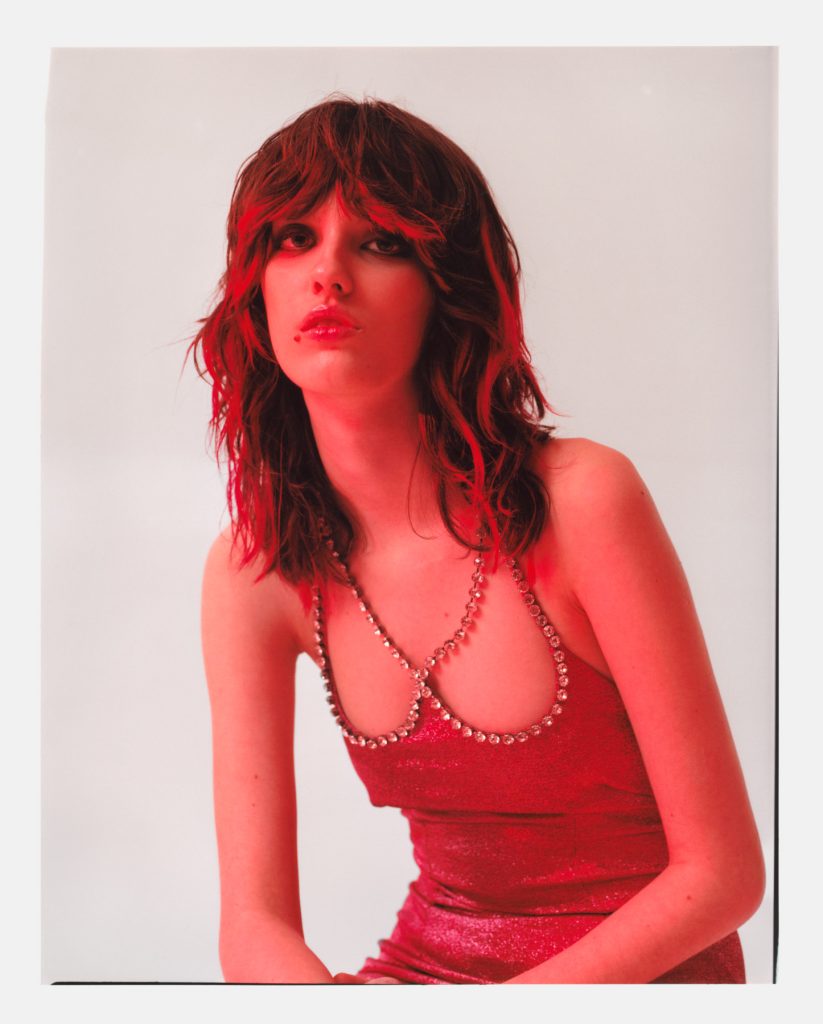
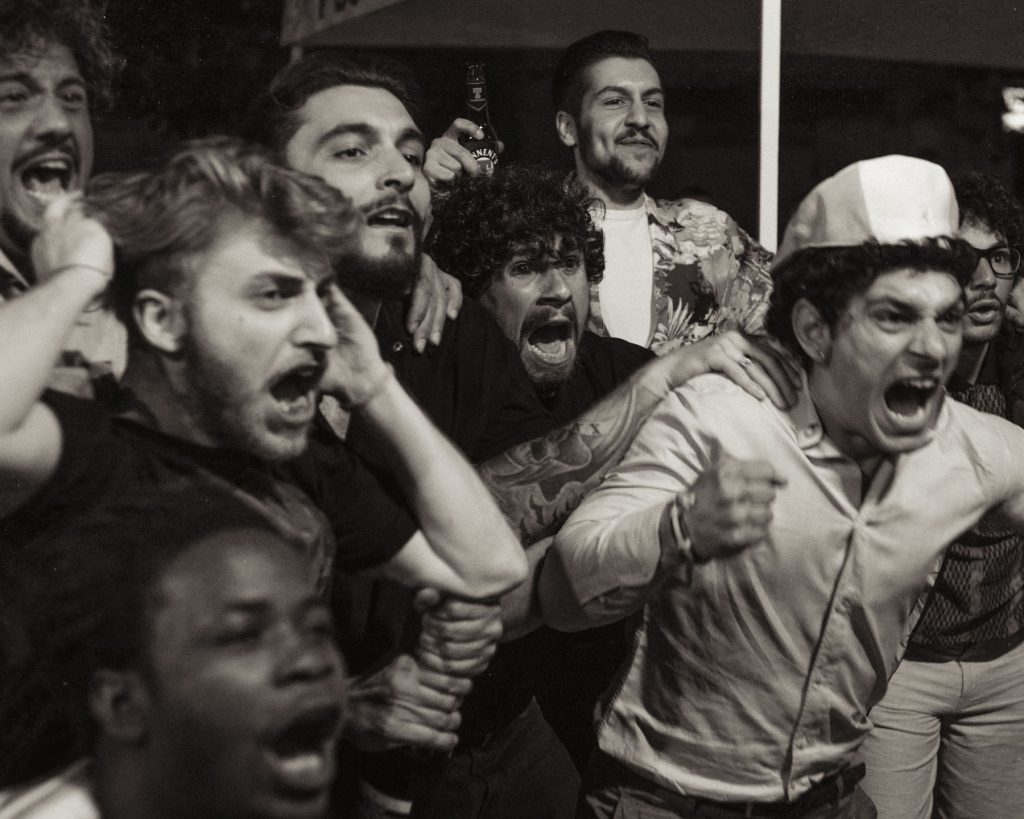
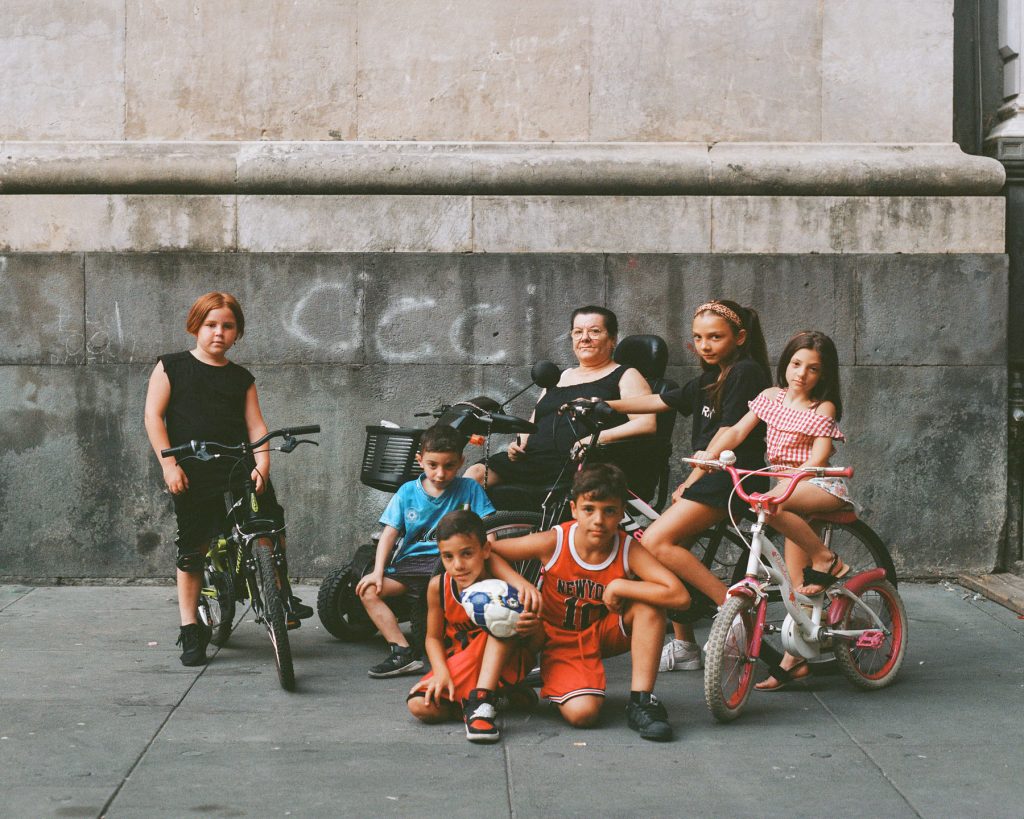
Carmine Romano

Staying behind the camera to capture the rawness of emotions

A man of few words, photographer Carmine Romano prefers to hold the camera and point the lens to his subjects rather than be the subject himself. In doing so, he captures the rawness of the Italian lifestyle and living, often becoming an observer of a scene rather than the participant. His images overflow with the nuances of serendipity and home, charged with liberation and a promise of self-expression. With NR, the photographer displays the exclusive space he has carved for himself, a realm where his clipped sentences weigh a thousand ideas.

NR: There is a documentative sense in your photography. Do you view your style the same way – a documentary? Whenever you capture the images of people, it feels as if you are photographing their real selves. Is the rawness of people the emotion you want to capture?

CR: Yes. I feel that my style leans more towards a documentary-like photography than fashion photography. My goal is to capture people the way they are at the moment, trying to seal their authenticity.

Going back to your roots in photography, what was the first photograph you captured? Do you still have this image with you? Do you keep tabs on the development of your photography?

The first image that I always keep in mind is a picture that I took when I was ten. I took a photograph of the oldest man in my neighborhood in Napoli, who was an artisan that repaired old shoes. I do not know if it was the first pics I ever captured, but of course, it is that one that I  have always treasured with me.

The influence of family seems alive in your photographs. How essential is family to you? Do you believe in the phrase blood is thicker than water?

In my photography, the influence of my family and the good values that my parents taught to me are always essential to me, so yes –

“I think we should never forget where we came from.”

Carmine Romano

Aside from family, the essence of community comes through your images. From gatherings to sharing stories over meals, you seem to have a penchant for togetherness. What lessons in life have you learned from your community? Is it important for you to belong in a community? 

Nowadays, it is important to me to interact. In a society where everyone is behind a digital screen, meeting people, sharing moments and emotions with them, and having conversations with them are important. I think that we do not have to forget that we are humans, and we need to keep our contact solid, perhaps doing it over lunch or dinner for instance.

For you to capture portraits, I can imagine that you have to form a bond with the person you are photographing. What do you tell them before, during, and after the shoot? Who has been the most memorable subject so far? Also, do you believe you chance upon the emotions, settings, and looks of your photographs, or do you instruct and arrange them before the shoot?

Exactly. Before shooting a person, I always try to learn and understand them; to be with them in order to comprehend who they are. I try to establish a relationship with them, and I love listening to them and trying to understand how they feel.

I prefer to do it before, without a camera, and then come back to shoot. The most memorable subject to me was Rita, an old woman in my neighborhood who, after few meetings, she showed me her best, meaning who she is, in the picture.

From here,

“I think there is always a scene to capture for those who know where to seek and how to find it.”

Whenever you feel like taking a break from photography, how do you recharge? How do you celebrate your life outside the camera? Then, how do you celebrate la dolce vita through photography? Is there a place in Italy that you have not yet been to before but would love to visit soon?

To recharge, I travel to different cities and often go to the sea to watch the horizon and the waves. La dolce vita through photography has to be celebrated from a vision – a personal interpretation even. In Italy, I love going back to Sicily. 

Would you say that you are a private person? I am only asking because I wonder if you will allow another photographer to capture what your everyday life looks like.

Yes, I am a very private person. Usually, I only post overviews of my private life, not its entirety. I do not like the idea of being on the other side of the camera.

Credits

Images · Carmine Romano
https://www.carmineromano.com/

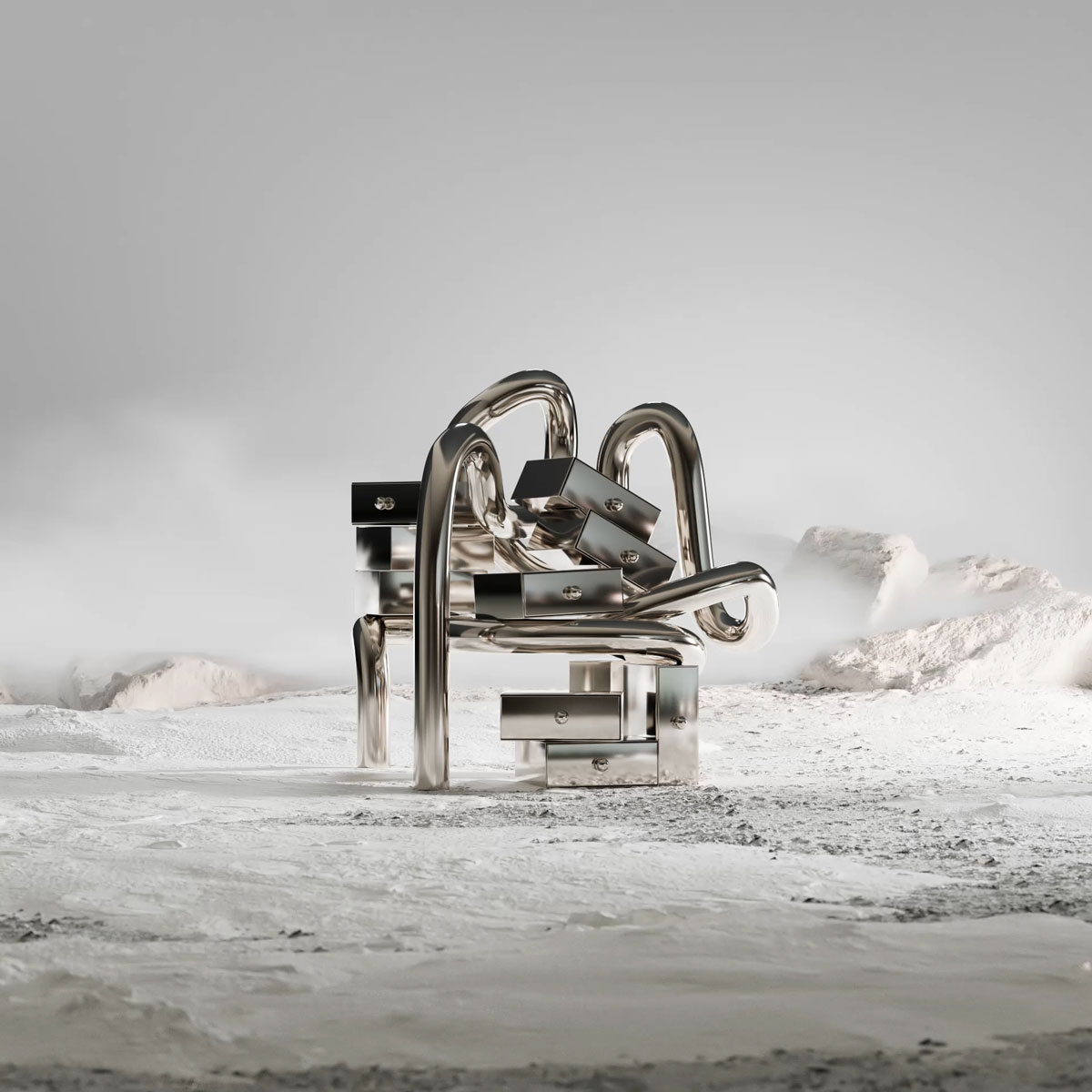
Andrés Reisinger

Experimenting with boundaries until the intangible becomes tangible

Testing the limits of the boundaries communities and self impose shapes the utopia Andrés Reisinger aspires to manifest. His visual artistry intersects art, design, music, architecture, fashion, and beyond, always moving along the waves of culture and never settling for anything marked as conventional. The results give birth to the manifestation of a hybrid reality, one where the intangible becomes tangible. The duality of the physical and digital realms, the fruition and transition from a blueprint to reality, the faces of strangeness and their unearthly appeal, and the celebration of a newborn: everything moves in and out of Reisinger’s creative ethos.

NR: The first thing that caught my attention was your title on Instagram: Unclassifiable Artist. Does this indicate the millions of ideas you want to test and of creative endeavors you want to venture to?

AR: I would agree with that. I have been inspired by the Argentine writer Borges, who was also Unclassifiable. I am focused on constant self-improvement, constant experimentation, constant development; wherever it takes me.

My task is to keep discovering and introducing new mediums of work and ways of experiencing art and design. So, my practice cannot be easily classified, because it is not something that I can fully classify yet, and I probably never will.

As an artist, how essential is it to be multidisciplinary? Do you think a creative should focus on a single discipline in art?

My work is based on pushing the boundaries between the digital and the physical realms to achieve hybridity. In this sense, I consider and love visual culture as a whole, essential in all of its  declinations. There are incredibly interesting intersections that we are seeing and can be further developed between art, design, music, architecture, fashion and so on, and my work is heavily focused on context rather than by piece. Only by mixing different ideas and connecting them will we create new ones.

From Argentina to Barcelona, how do the cultures and communities in these countries – and the others you have been to – influence the way you conceive your works? Can your viewers see the nuances of these cultures in what you create?

Most of the places I have lived in are in South Europe, so my works are heavily influenced by culture from the countries here. These places, for many reasons, have been central social territories, which is something that has influenced my approach to creation and the way I have been sharing my journey on the internet since the very beginning of my career (approximately 15 years ago when I started with digital art and design). I have always felt the need to share the way I see the world.

Let us talk about your works. I want to start with An Essay Before Meeting my Daughter. Congratulations, first of all! How do you feel about being a father? How did you celebrate it? Did you feel worried or excited?

I felt all sorts of emotions. It is an experience that cannot be truthfully described or translated. It feels like I am flourishing. It is a novel way of looking at the world. It is an excellent way to cultivate perspective. The way you manage your time, your ideas, and your instincts: they all grow. It is a great challenge in life. It is amazing, and I love it.

Continuing this, you wrote: Anxiety, nervousness, happiness, fears, beloved moments, all that are absorbed and expressed through my artistic lens. Could you guide us on the metaphors of this piece, from the rolling apples to the flipping pages of the books?

The piece was the result of a long reflective process. I wanted to gather and somehow express all the feelings and thoughts that guided these moments of my life, and the piece came very spontaneously as the emotions naturally channeled themselves into form.

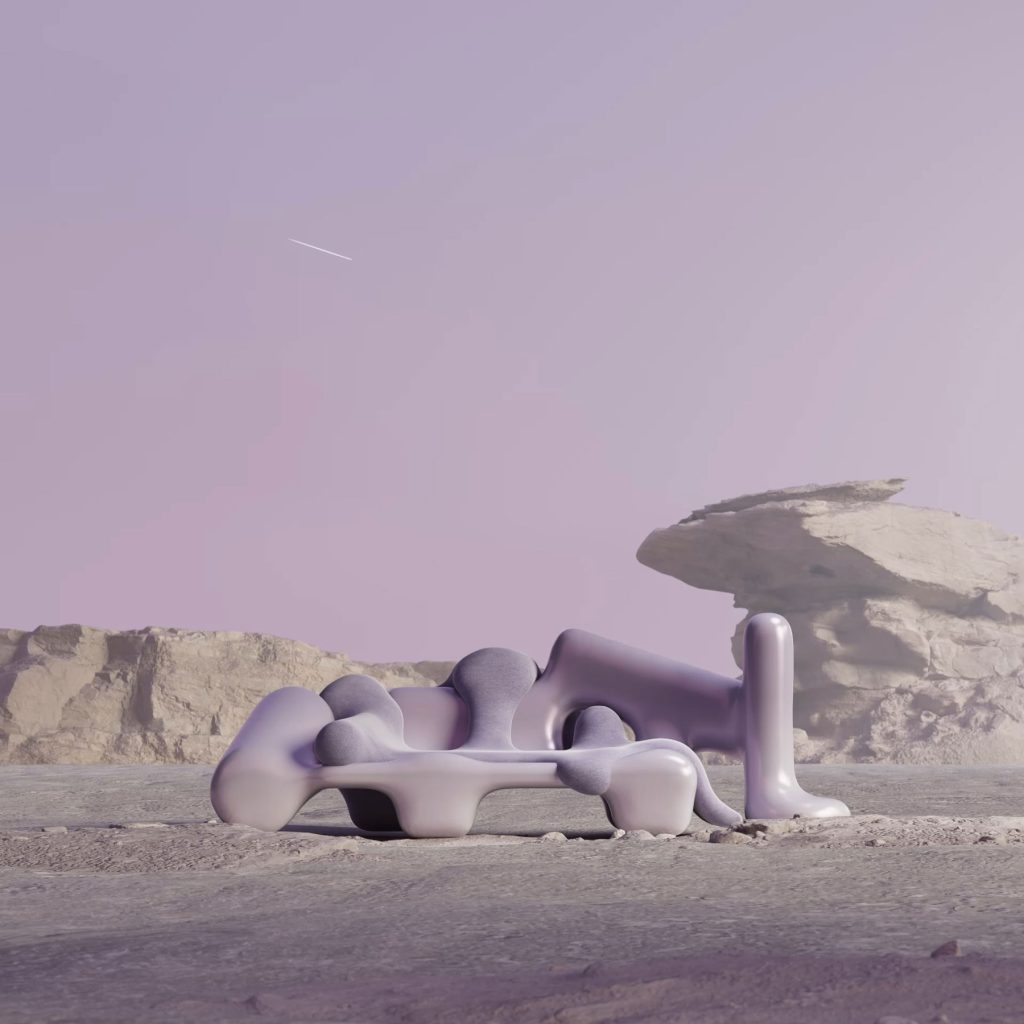
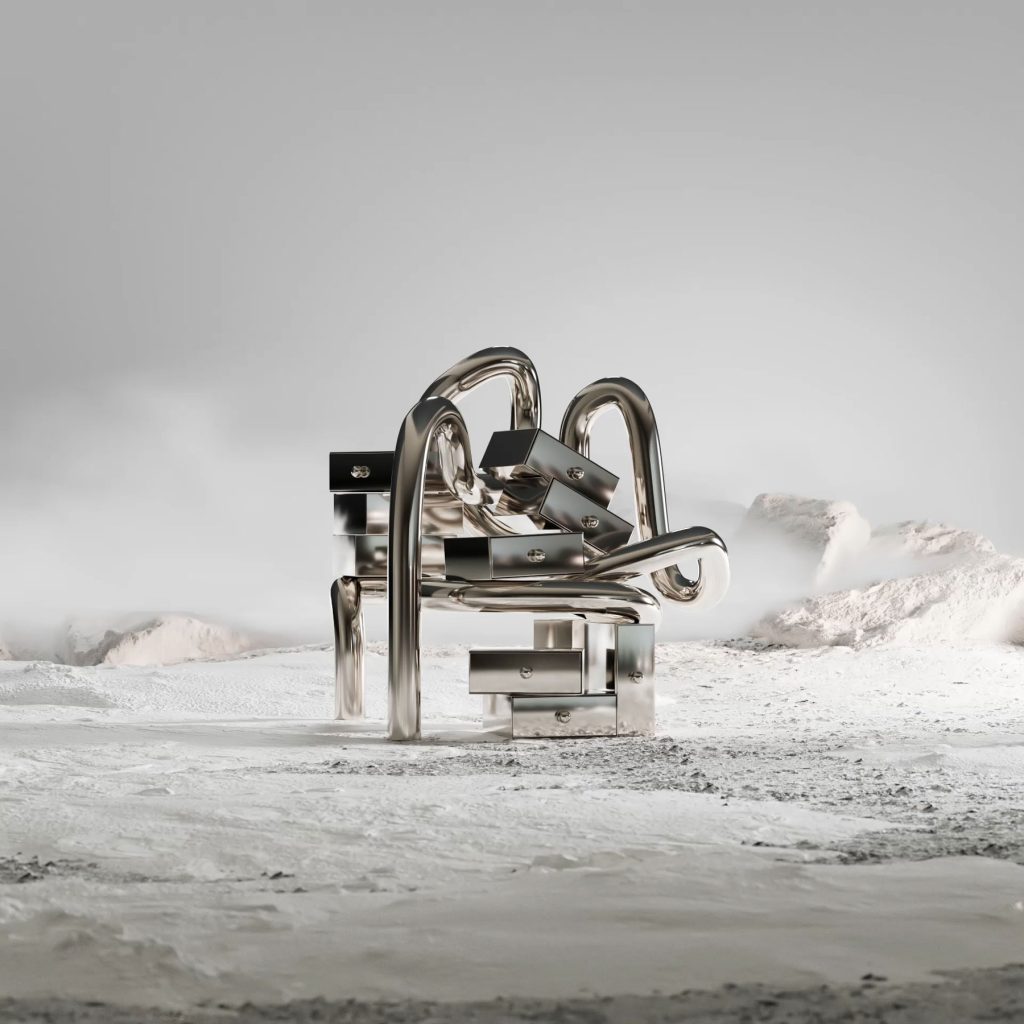
With The Shipping, it is the manifestation of a new hybrid reality concerning furniture. How do you envision the future of design in furniture? Would technology replace manual labor?

“I see it as a hybrid of digital and physical; the encounter between the two is already offering an overwhelming amount of possibilities.”

And although it might seem a very futuristic scenario to some, we already spend a third of our days connected to any device screen. We are undoubtedly living in a time where our physical lives are and will continue to be more and more integrated with the digital realm. And as we get more comfortable living in these different spaces, we will get more and more used to owning things and living there.

There are of course differences between the two realities that will never compensate each other. Technology will make things earlier in production, that is for sure, although I cannot say which mode is easier. One thing I can say is that creating a digital chair – such as Hortensia, Tangled, Complicated Sofa, or Crowded Elevator – was the most difficult thing I have ever attempted. Technology can help us do more creative work and less mechanical procedures. Artisans will always exist, and they will benefit from new technologies.

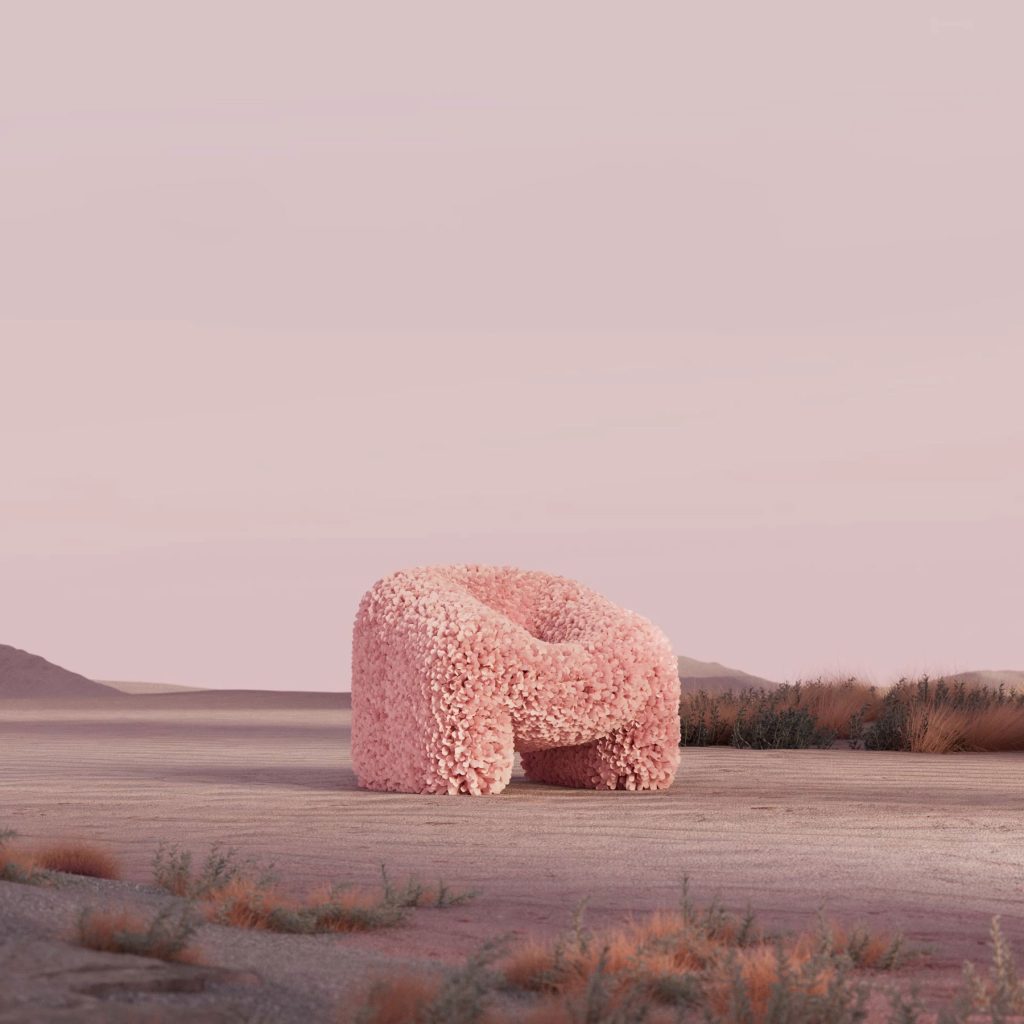
I love the backstory behind The Hortensia Armchair, from having been a concept to a real seat! What made this project challenging? How did you take on the challenge? Did you learn anything from this experience life- and design-wise?

Because it was such a complex design to realize, I was doubting whether to invest time and money to bring the chair to life, so I guess the challenge was against myself. I am incredibly glad that I decided to go for it.

What I am most proud of is that the Hortensia Chair created digital demand before the supply, which is a total disruption within the design industry. We were able to build an interest around a digital object that seemed almost impossible to realize and gave life to it first through a limited edition and then with Moooi in a more affordable version.

It was an interesting phenomenon to witness, with regards to sustainability, most especially. We did not launch another project, hoping for the market to accept it. We created the need first digitally. It showed to design and other companies that this is definitely a possibility.

Continuing the previous question, what do you do when you want to make the impossible possible? Have you ever felt like dropping a project halfway? What made you continue it?

I work with context and try to, in part, deform reality to achieve a surreal atmosphere. That uncanniness between reality and fiction, digital and physical is to make the impossible possible. I do not want my work to be too explicit, or it would defeat its purpose. If it is too blatantly strange, it is instantly dismissed, but if it is not so strange but just enough, it is instantly absorbed into everyday reality. I strive for a slight strangeness leaving the viewers disoriented.

Generally, challenges inspire me, so I have rarely thought about dropping a project halfway.

“If I recognize the possibility of discovering a new production methodology, a pioneering approach within the physical and digital, I will strive to see it through as I know I will learn a lot during the process.”

As we focus on Celebration for this issue, how do you feel about what you have achieved so far in this lifetime?

I am proud, I am humbled, and I am projected into my practice.

Is there anything that we should be celebrating with you in the upcoming weeks?

In mid-January, I presented Winter House, a residential project in the metaverse inspired by the frosty season. It is an important one I would  like to celebrate as it represents the preliminary project of an architecture studio for the metaverse I am establishing with other partners. There will be more – a lot more – but 2022 has just started.

Credits

Images · Andrés Reisinger
https://reisinger.studio/

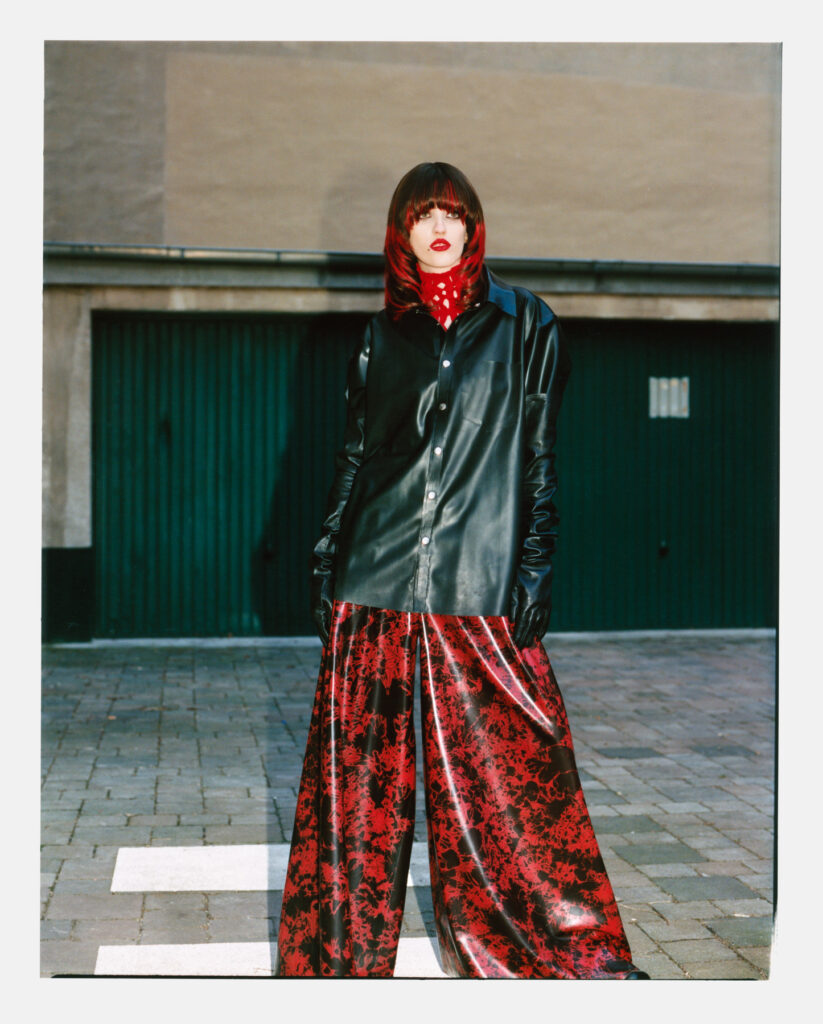
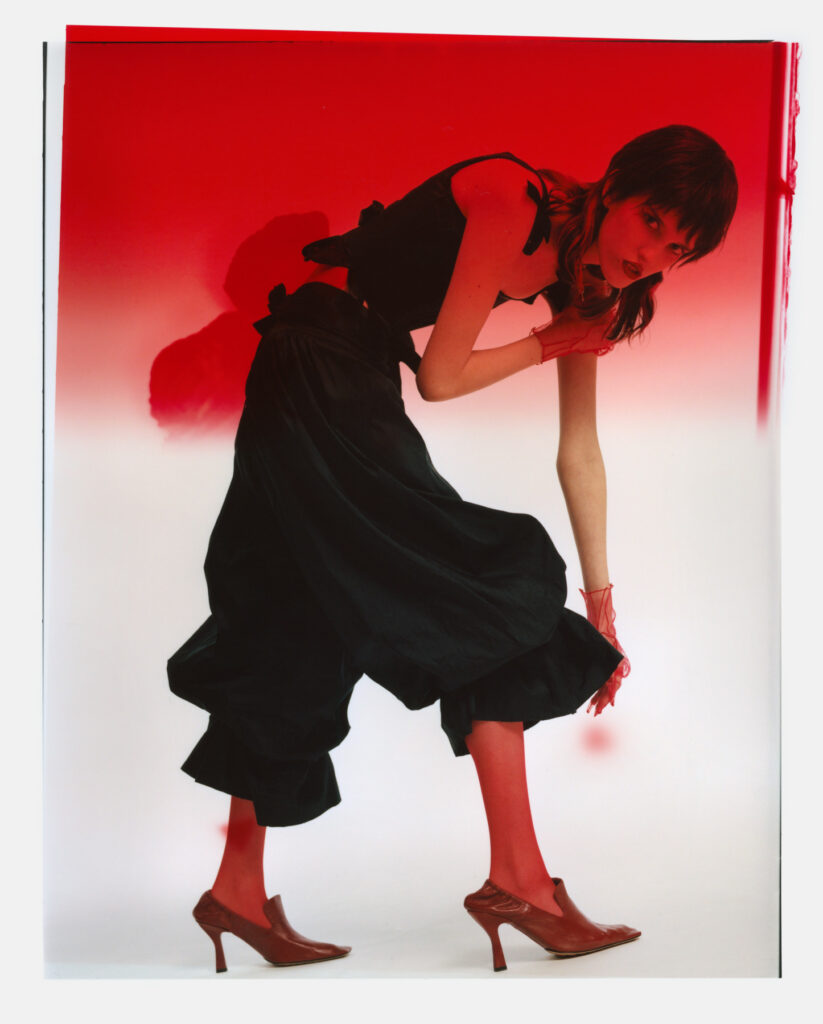
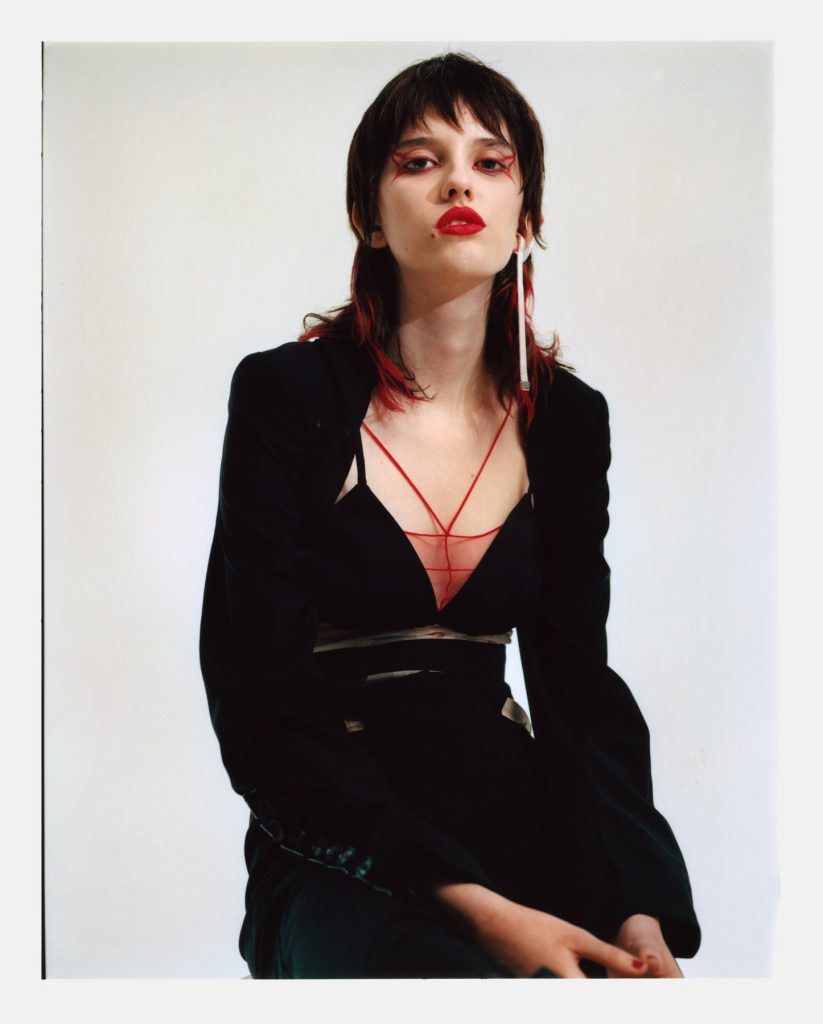
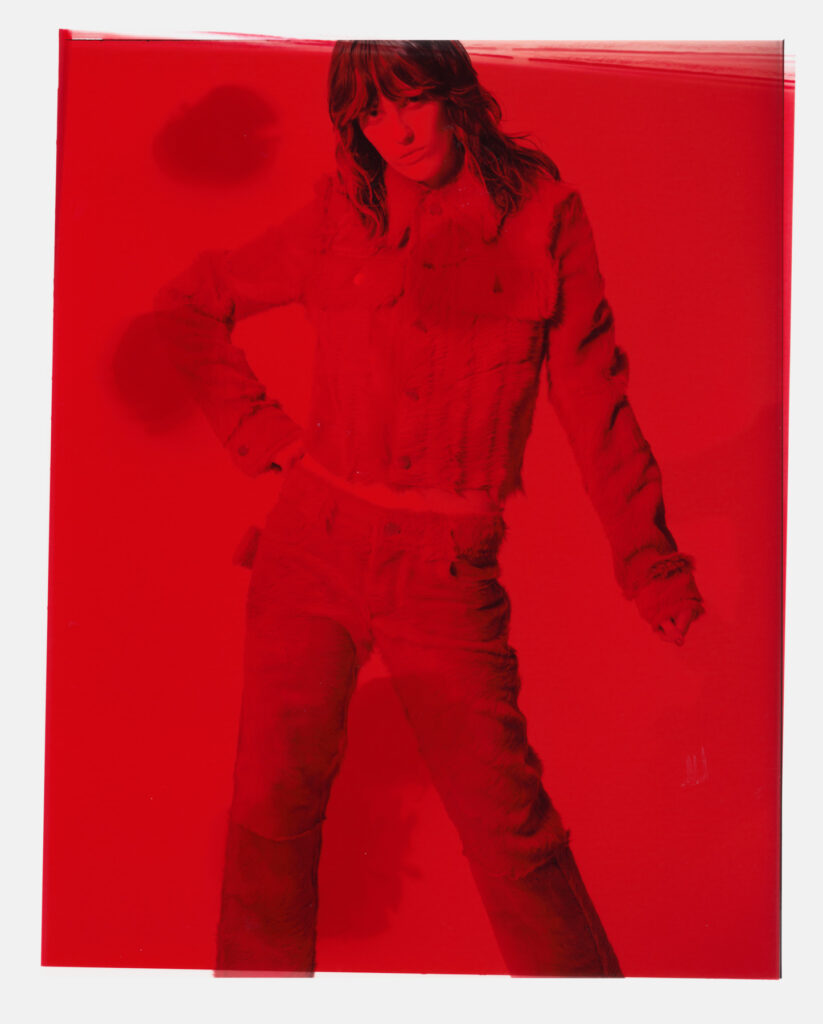
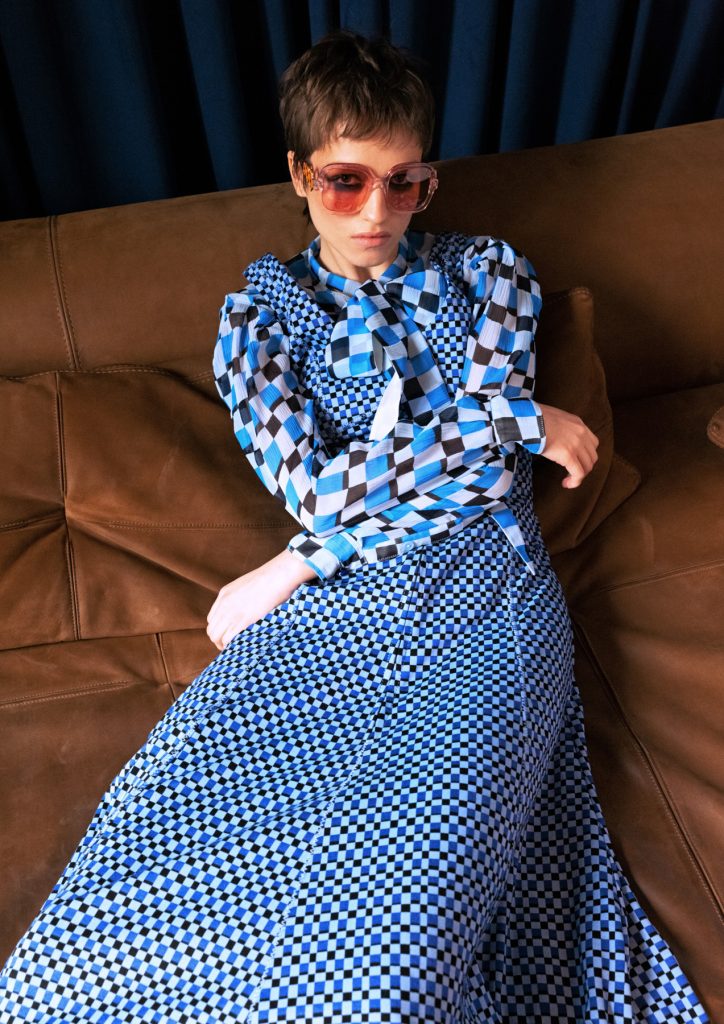
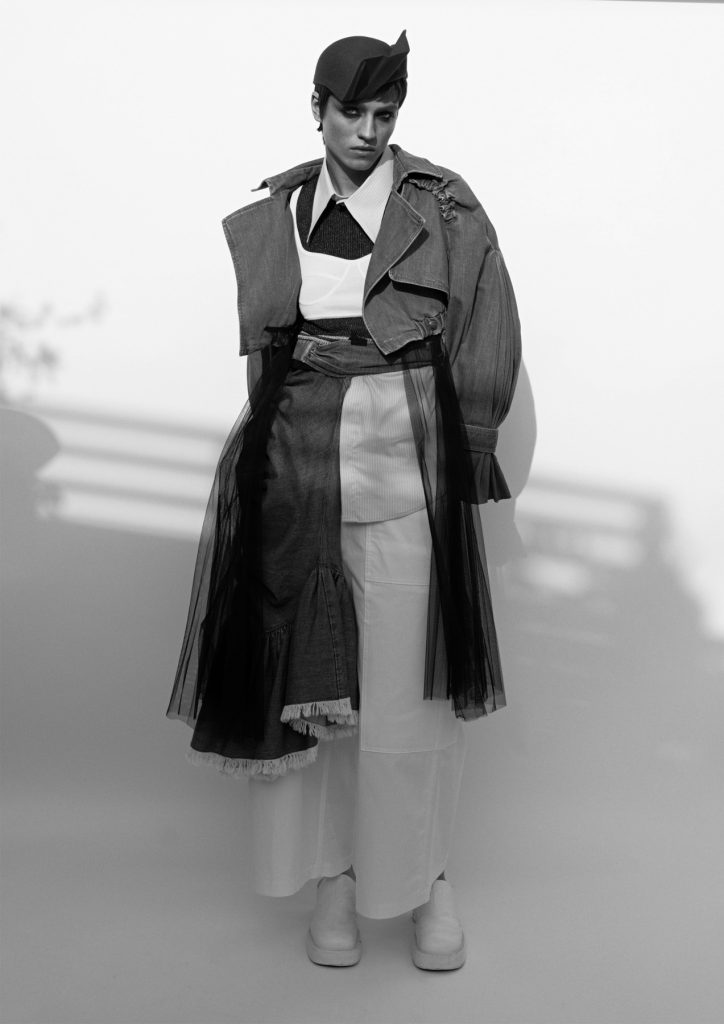
Nina Raasch – Fabiana Vardaro

Credits

Model · STAN at FORD MODELS PARIS
Photography · NINA RAASCH
Fashion · FABIANA VARDARO at COLLECTIVE INTEREST
Casting · ELI SCHERER
Makeup · SABINA PINSONE
Hair · DIEGO FRAILE
Fashion Assistant · FILOMENA IANNICIELLO

Bettina Pittaluga

“I find my inspiration in reality, so usually everything is already there.”

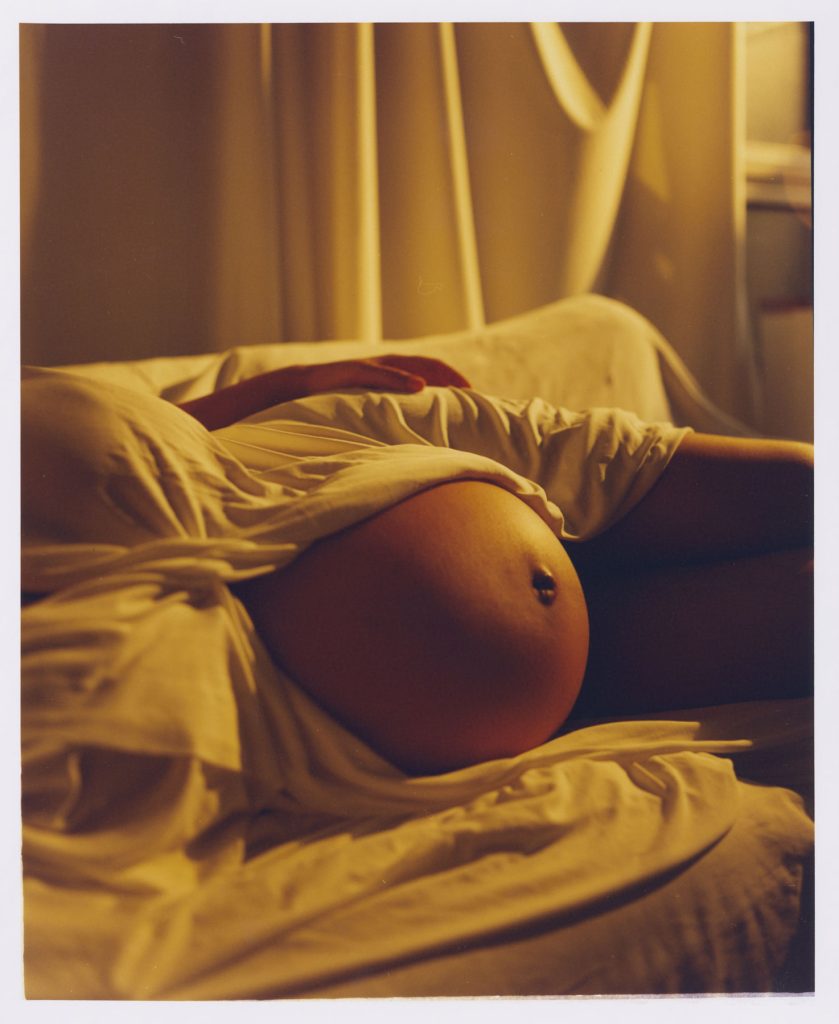
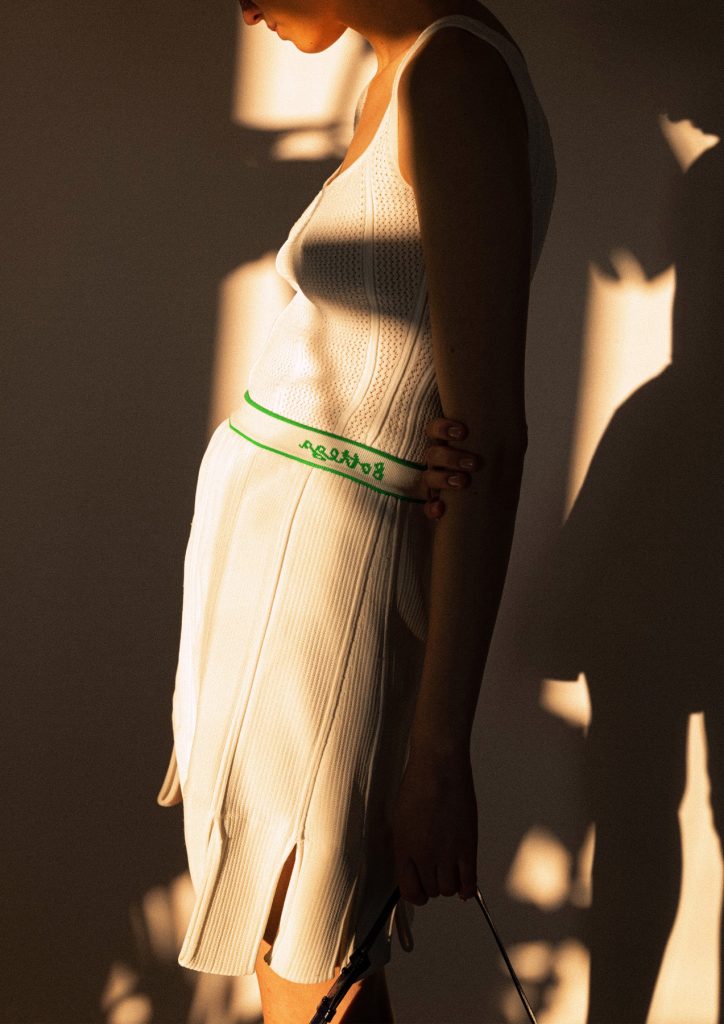
When photographer Bettina Pittaluga talks about developing film, she describes it as painting a picture – retrieving the details within the image, matching the exact skin tone of her subject. If the photographer finds joy in the technical processes of her work, it’s equally joyous to look at the final result. It is evident in Pittaluga’s photography that she approaches the development of each photograph in the context of its individual circumstance, ‘painting’ colour as it is most appropriate. In the broadest sense, her photography evokes a warmness, which Pittaluga communicates in different ways. Sometimes, her images are so dark that it’s only in the contrast of illuminated features that we see the subject, as in Pittaluga’s portrait of Dior’s Maria Grazia Chiuri for Le Monde’s M magazine. Elsewhere, her work highlights barely the curves of an upper arm, the contours of a profile, or the soft glow of a pregnant stomach. But other images can feel like an explosion of colour – a vivid red, or a minty green. It just depends on the natural lighting that the photographer finds herself working with. 

Pittaluga’s photography is defined by the moment that it captures; natural lighting plays a part in that, but so does the emotional bond that the photographer forges with her subject. Regardless of whether she is working on commercial and personal projects, Pittaluga maintains that having a connection to her subject is essential. “My way of communicating does not change,” she tells NR, “I will always be looking for what the person wants to give me.” In a way, Pittaluga is sharing with the viewer what the person, or people, she photographs wanted her to see in the first place. The issue’s theme of celebration is an apt opportunity to contemplate Pittaluga’s work (or, rather, celebrate it) because every image is a celebration of some kind. Whether photographing a milestone – birth, love, and so on – or just capturing a moment that becomes immortalised by her camera, Pittaluga’s work is always a celebration of being human. 

NR: There’s a warmth and intimacy to your work and the way you photograph people; is this an approach that you’ve always had in your work, or something that you’ve adapted over time?

BP: I don’t think I could take a photograph in another way. I think the way I photograph is intrinsically linked to the way I communicate; I need to communicate with the other person in order to capture them, in every sense of the word.

NR: You’ve previously mentioned the importance of forging a relationship with the person you’re photographing, whether that’s over a couple of minutes or much more established over time. But besides that, are there any other fundamentals that are important to a good photograph?

BP: I would say that the fundamental thing in a good photograph is to convey a truth; the reality of the moment. Of course, I need intimacy too, but I am always looking for truth. That’s the thing that want me to take a photo.

NR: When it comes to a composition, how much of the staging is a collaboration with the subject?

BP: I find my inspiration in reality, so usually everything is already there. I don’t prepare the set; it’s much more about lighting – natural light – which give me an idea of what I want. I also look for the shape and the form that I see with the light; the colours; the way the person is sitting or looking. Suddenly, it’s like I see something – I don’t know how to describe it because it’s very instinctive.

“When I am looking at the picture [afterwards], I can recognize the composition, but I would not be able to explain it when I am taking them.”

NR: What’s so compelling about your work is the fact that it doesn’t, as you say, look staged. It looks very natural. 

BP: I love to shoot people in their own home because of that. I know that I will find something very intimate, not because of the intimacy, but because you can really learn about the person. Usually, I don’t know where I’m going to [shoot], so the only thing that I will ask is whether there is natural light that I can play with. But then it’s also a conversation. Sometimes people are like, “what should I wear?” and I always respond by asking, “how do you want to be represented?” I really want the person to feel comfortable and to be represented like this. And then it’s just about materials and colours – because the lighting is not the same with silver, or it’s not the same with pink or green. But again, it’s about the moment – it’s a feeling actually.

“The detail is the most important thing, it’s the emotion, which I cannot prepare in advance.”

It depends on the person in front of me. I’m following [them] in a way, I’m following what they want to give.

NR: You mention how different colours can affect the photo. Over the course of your time as a photographer, have you learned different techniques for using colour and how it will affect a photograph? 

BP: I started photographing in black and white at first because I wanted to develop the film myself. I wanted to know how it works, so it was very important for me to oversee the whole process from beginning to end, when you have the pictures actually in your hand. People [had] said that it was very complicated to develop colour. And it’s really not the same process, it’s very long. But I learned how to develop colour two years ago. I think it’s true that I can see the evolution in my work [when] colour suddenly had more importance. Developing colour is like painting, it’s amazing. You have something neutral, and you can add the colours that you saw. At first, I spent, I don’t know, like seven hours on the same picture, just playing with colours, getting the exact colour of the person’s skin. By developing yourself, you can get great reds, or a really great yellow – so it’s true I am more obsessed by colours now than before. And it’s also about seeing colours with light – it’s a completely different world. Before, maybe I was seeing in black and white without knowing it, and now I can see colour. 

NR: When you do the whole process yourself, it changes the way you feel about it – you don’t just press the button and wait, it’s the whole thing.

BP: I don’t take that many pictures because, with analogue, I only have ten pictures per roll.

“That’s why I love this process because it’s about taking time, I’m not in a hurry. “

Well, sometimes I only have one minute to take a photograph, but sometimes you can be really in the present and one minute feel long, so it’s how you take the time. That’s why I really love it also, it’s about taking time. 

NR: It’s interesting that you describe developing colour film as being almost like a painting and it made me think, do you see your work as more being about reportage? Or is it more art? 

BP: I don’t like labels and I don’t see my work as just one thing, but maybe I’m a portraitist? It’s more this way that I see my work, but it can be a lot of different things. It can be a portrait for press [work], or it can be more artistic. But I always feel poetic. No matter what the project, at the end of the day, it’s about human beings so, that’s why I think I identify more as a portraitist because most of my work is about human beings. 

NR: The theme of this issue is celebration and I guess what’s lovely about your work is the way that it celebrates people, it celebrates the human form and the diversity of what it means to be a person. How do you feel celebration comes across in your work?

BP: Actually, I’m so glad you asked that. I think it’s one of my favourite questions ever and this is the first time that someone has asked. To be asked as a photographer to photograph a celebration of any kind – celebrating a child, love between two people, a transition: any kind of celebration. To me, it’s truly an honour. I think it’s the most beautiful thing about my job to be given this extraordinary trust and to be there together, to celebrate, because in a way, I am also celebrating that moment, you know? 

NR: I think that ties in with something I wanted to ask you, which is that you’ve spoken previously about the concept of beauty and authenticity, whether that’s a relationship, or of a moment. How much of your role as a photographer is about being there, in that moment, and how much of it is just about pressing the button and waiting for that one shot?

BP: I don’t think you can separate one from the other. And maybe that’s what’s magical in the end – to be able to share the present together and look at it later in pictures. Usually now, with social media, we can take pictures all the time. [So as a photographer], it’s also about the fact that you cannot look at [the photographs] because it’s analogue.

“I cannot look at it straight after, so in a way, I continue to be in the moment.”

NR: As an analogue photographer, does having access to instant photography, with a phone and on social media, does it make you appreciate film more?

BP: I feel lucky to live in a moment of time when it’s so easy to take pictures. My cameras are very big and heavy, so I cannot have them [on me] all the time. To be able to take pictures anytime – and I film a lot because I like that an instant can last more than just a second, it can be longer. I love being able to record a long moment of softness or a long moment that I found beautiful. So, I’m always recording with my phone, and I love it so much, it’s amazing to be able to record so many things that inspire me in the day. No kidding, I think I have 30,000 videos [on my phone] and I buy a lot of memory. As a human being, it’s my way to express myself, to take 100 pictures of a flower in front of me if I want. It’s freedom. But with analogue, like I said, I really draw a portrait of someone, so it takes time and I love that. 

Credits

Images · Bettina Pittaluga
https://www.instagram.com/bettinapittaluga/

Nicolò Parsenziani

Nicolò Parsenziani

Spring has Sprung

Credits

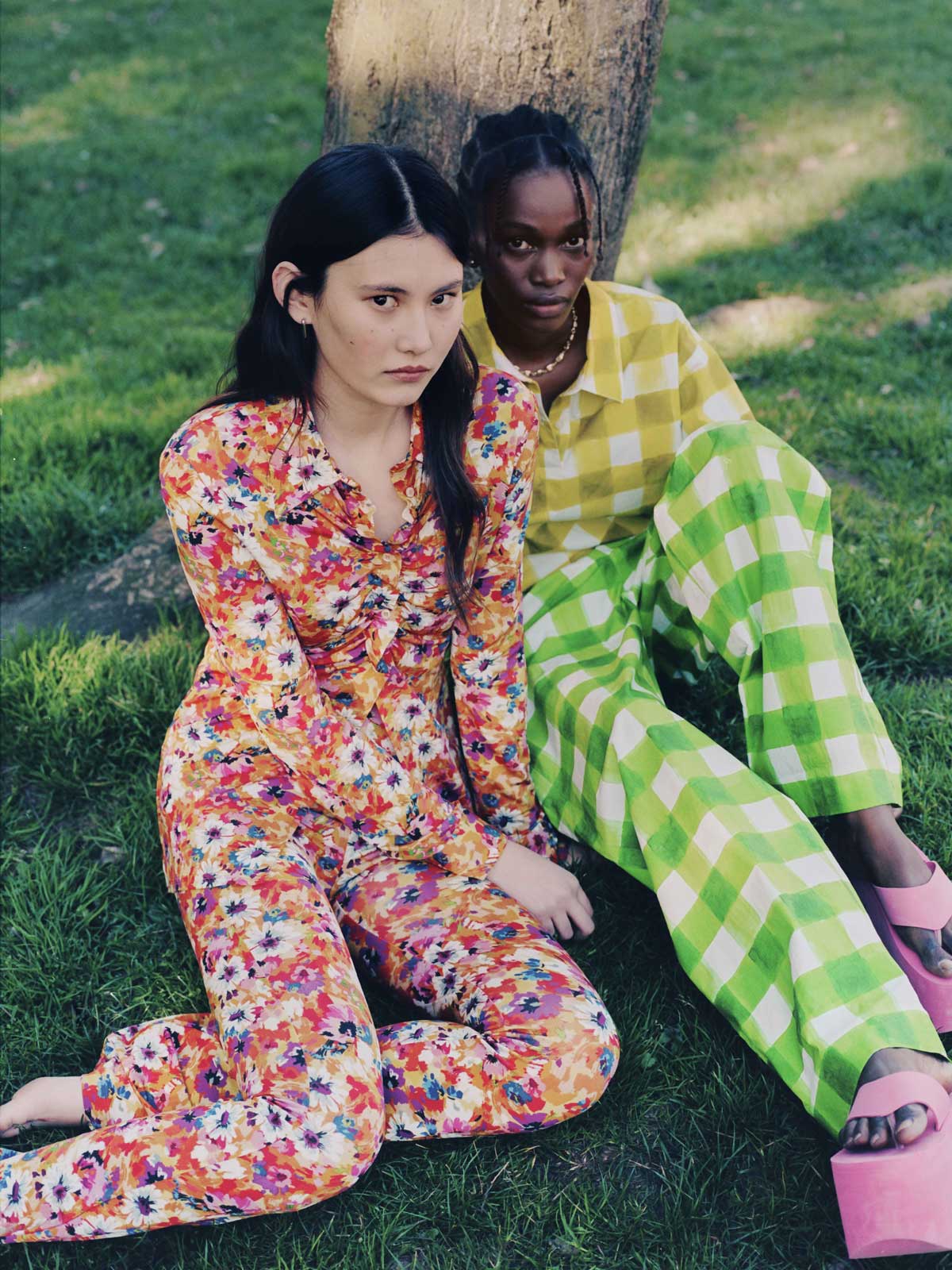
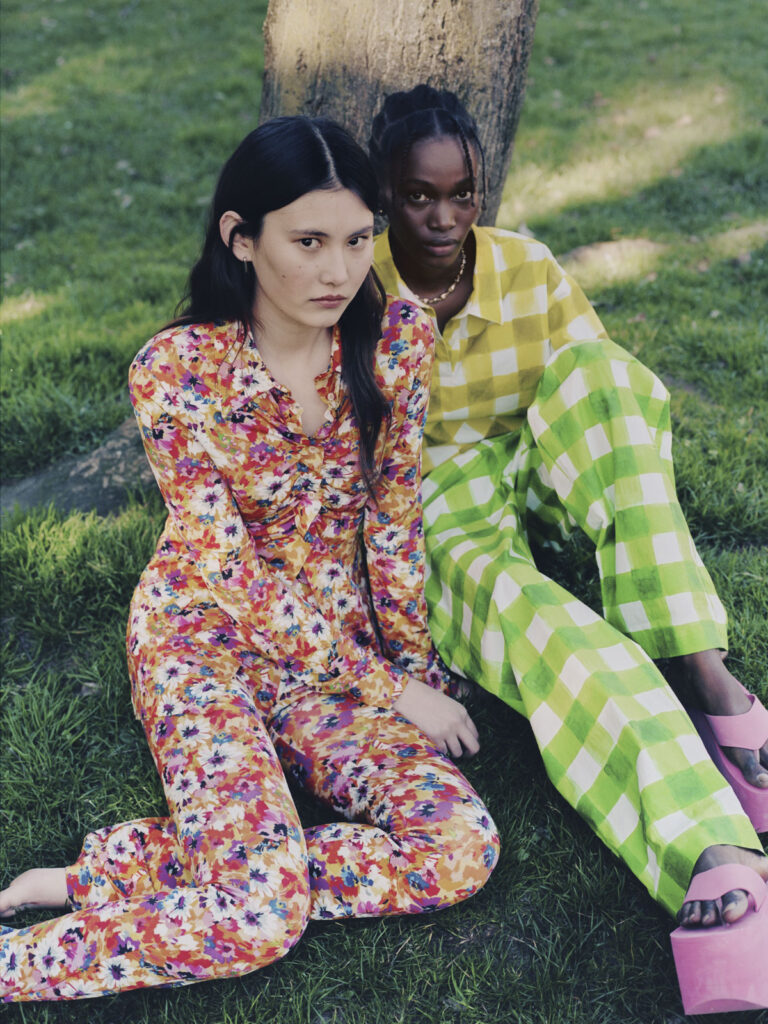
Models · DAMI ADERONKE and CECILIA GIGLIO TOS
Photography · NICOLÒ PARSENZIANI
Fashion · DILETTA ARIANO
Casting · MATTIA MARAZZI
Set Designer · ALICE ARIANO
Makeup · CLARISSA CARBONE
Hair · ERISSON MUSELLA
Digital Assistant · DAVIDE LIONELLO
Fashion Assistants · DILETTA RIVIERA and ANNA BIANCHI

Raffo Marone

After Party

Credits

Photography · RAFFO MARONE
Models · DIANA SKOWRON at NEXT MODELS and HANNA KOBIALKA at FASHION
Fashion · MIRKO DE PROPRIS and VITTORIA ROSSI PROVESI
Casting · MATTIA MARAZZI
Set Design · VERONICA FERRARI
Makeup · FRANCESCA GUERRA using LORD&BERRY
Hair · PIERA BERDICCHIA at WM MANAGEMENT using BUMBLE&BUMBLE
Fashion Assistant · PIETRO CAVALLARI, REMI VANACORE and MORGAN DILDAR

Malerie Marder

Malenie Marder

“We only have a short time on this planet and it’s impossible for me not to be in touch with people’s pain… So maybe I’m celebrating people’s vulnerability and softness”

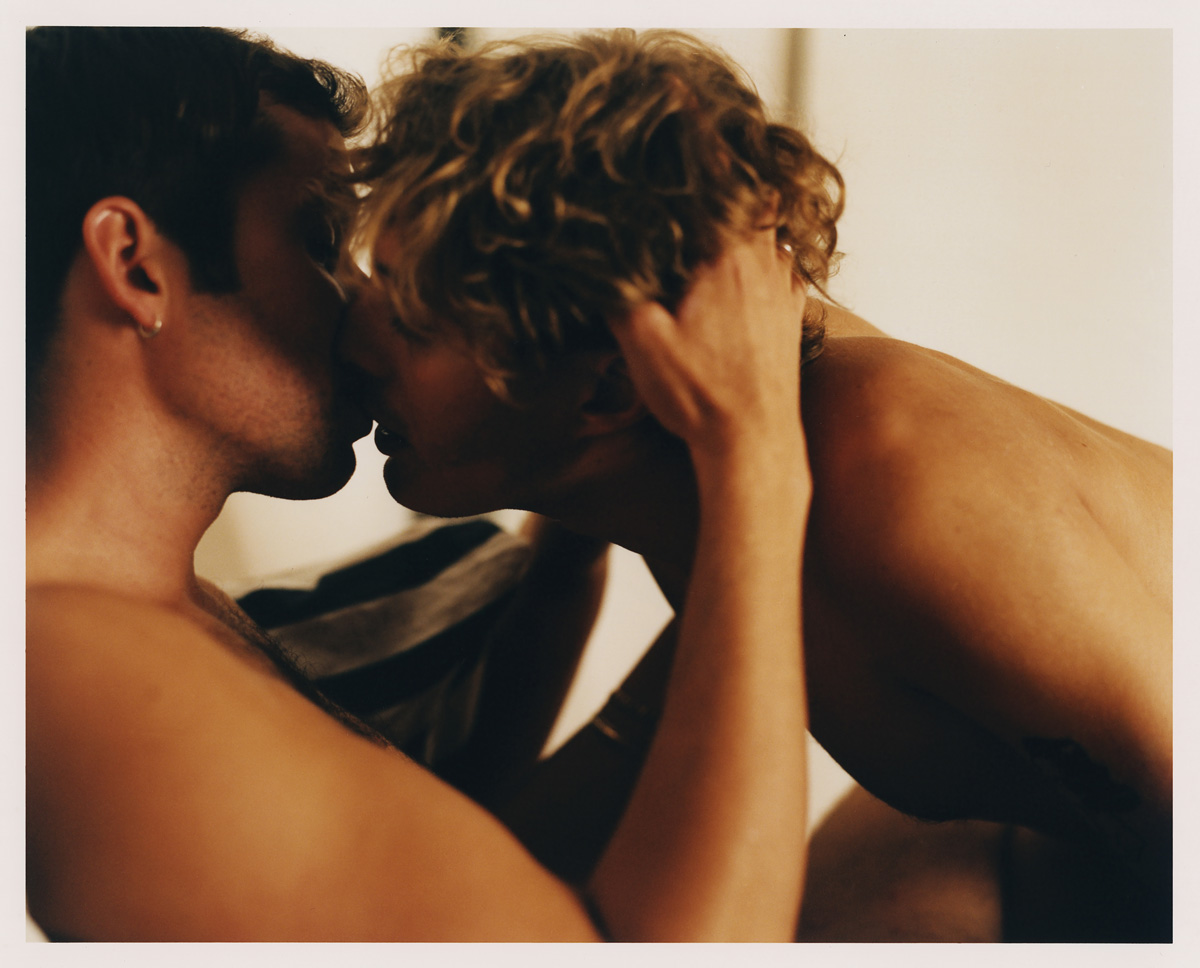
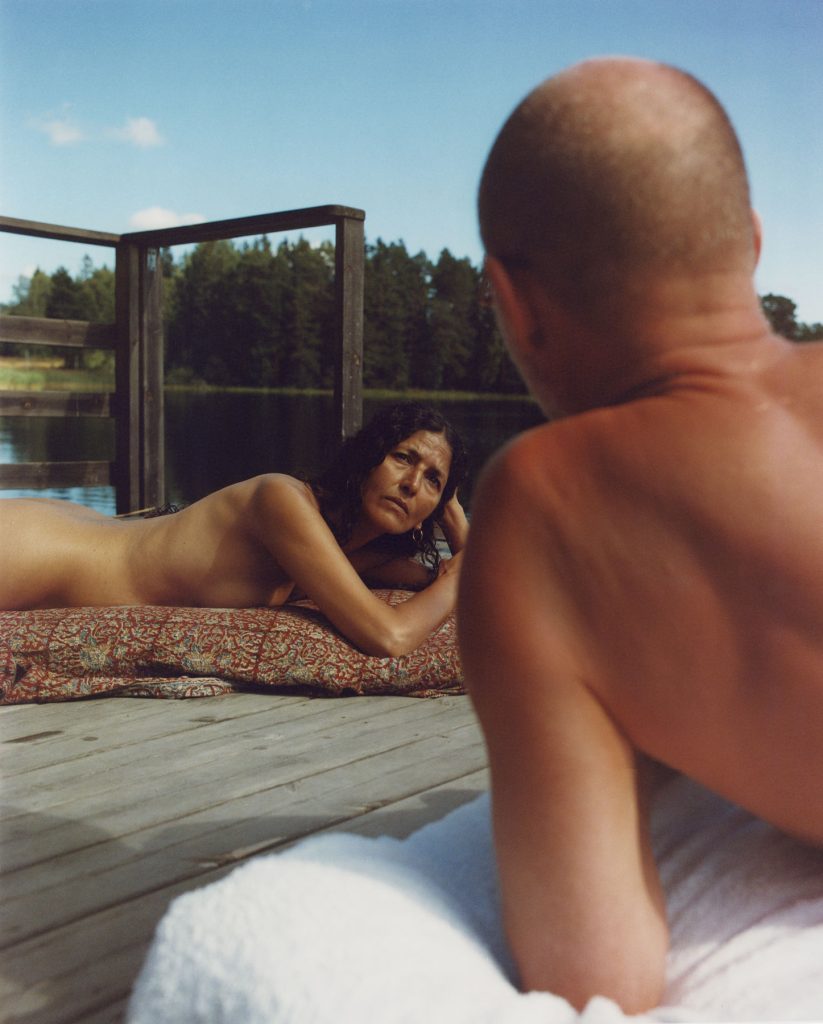
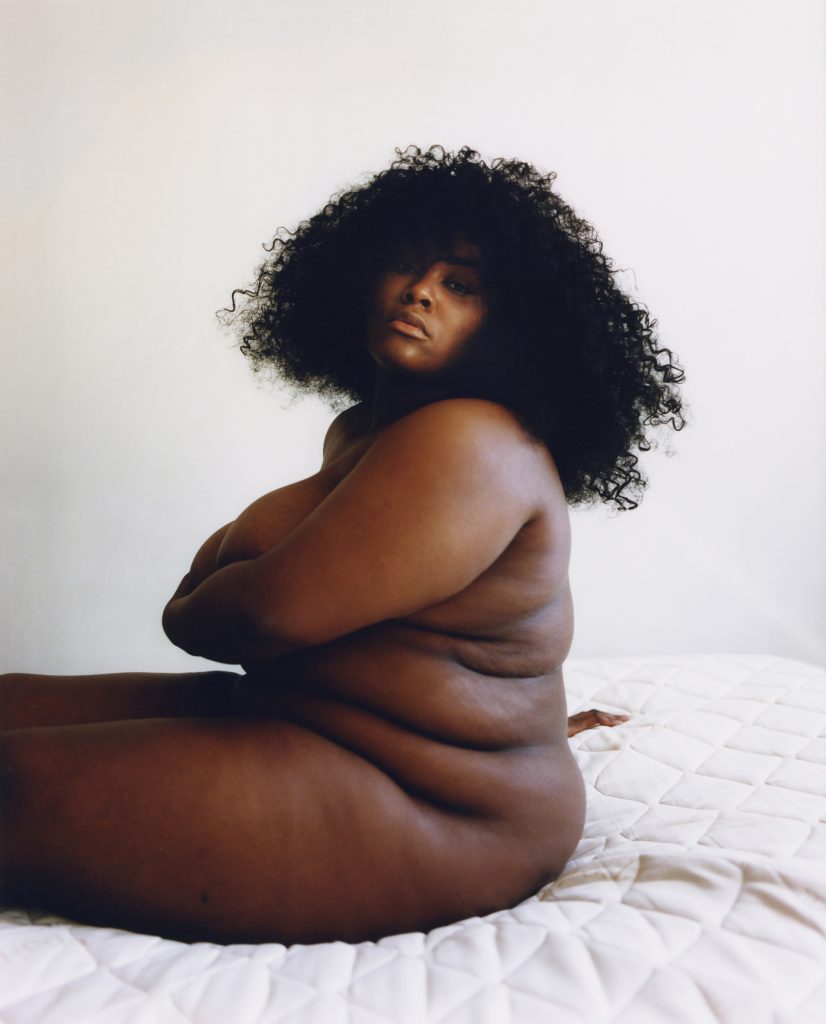
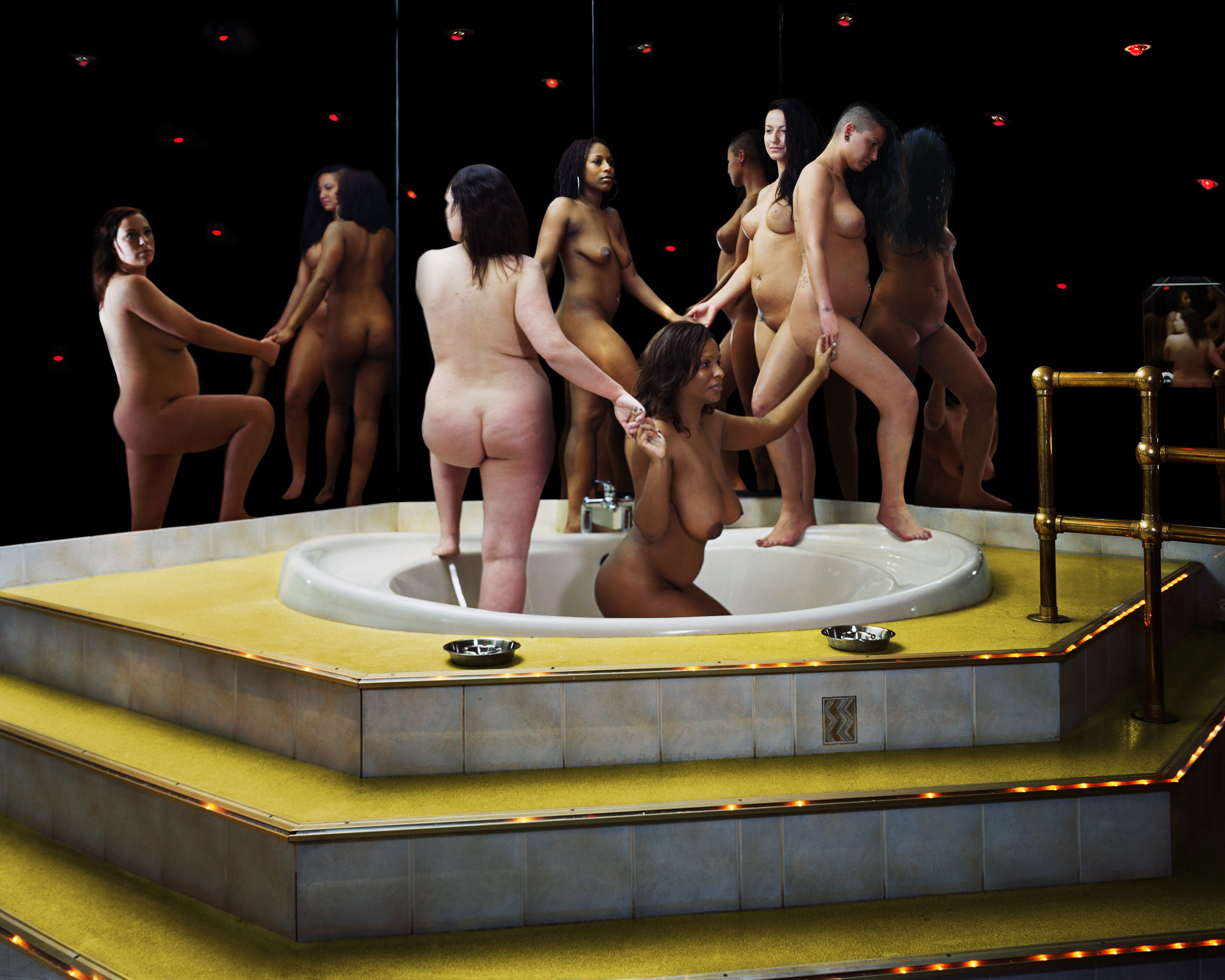
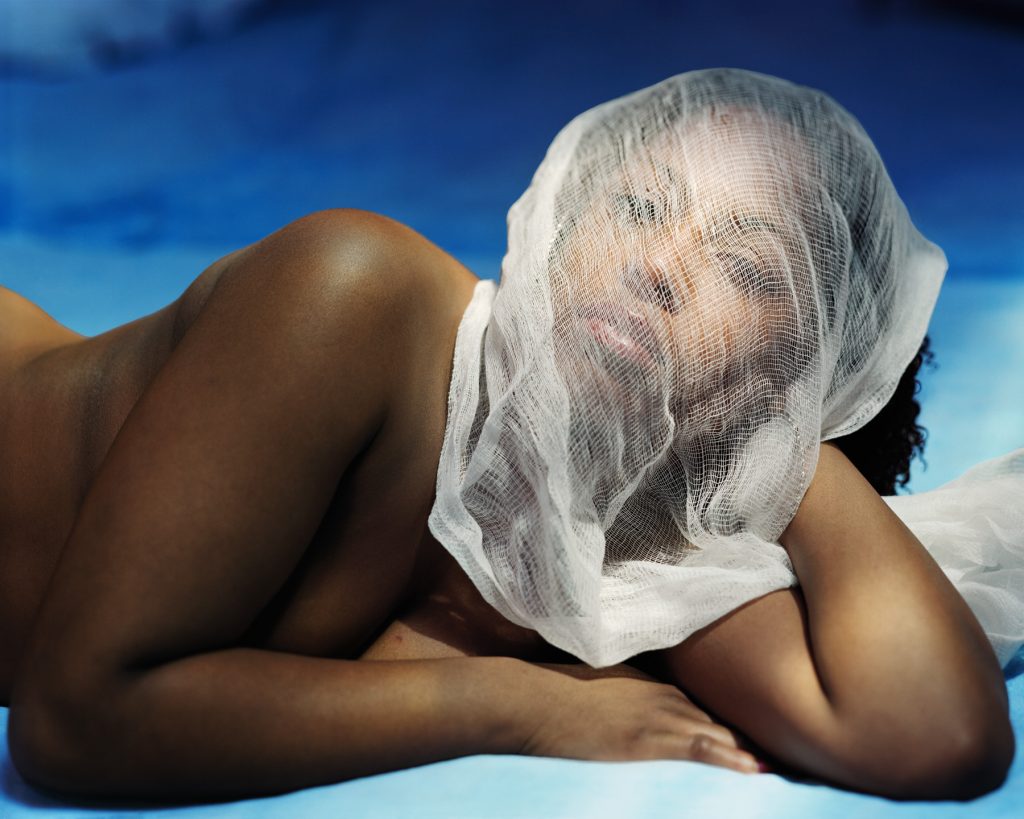
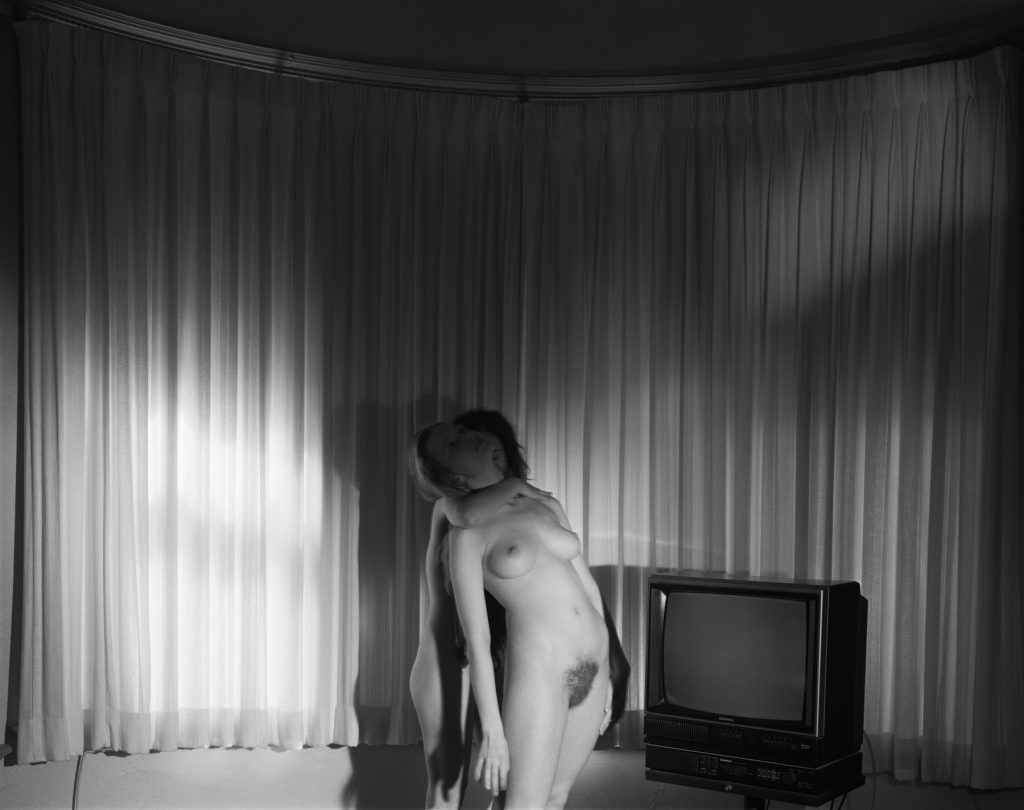
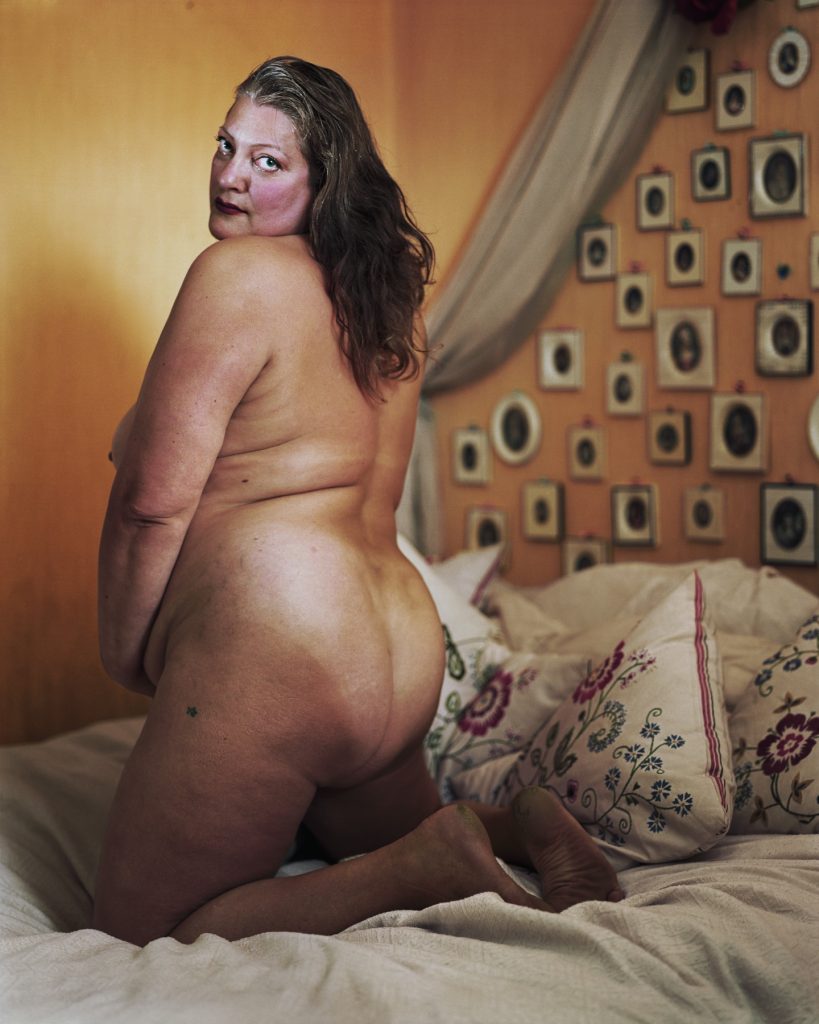
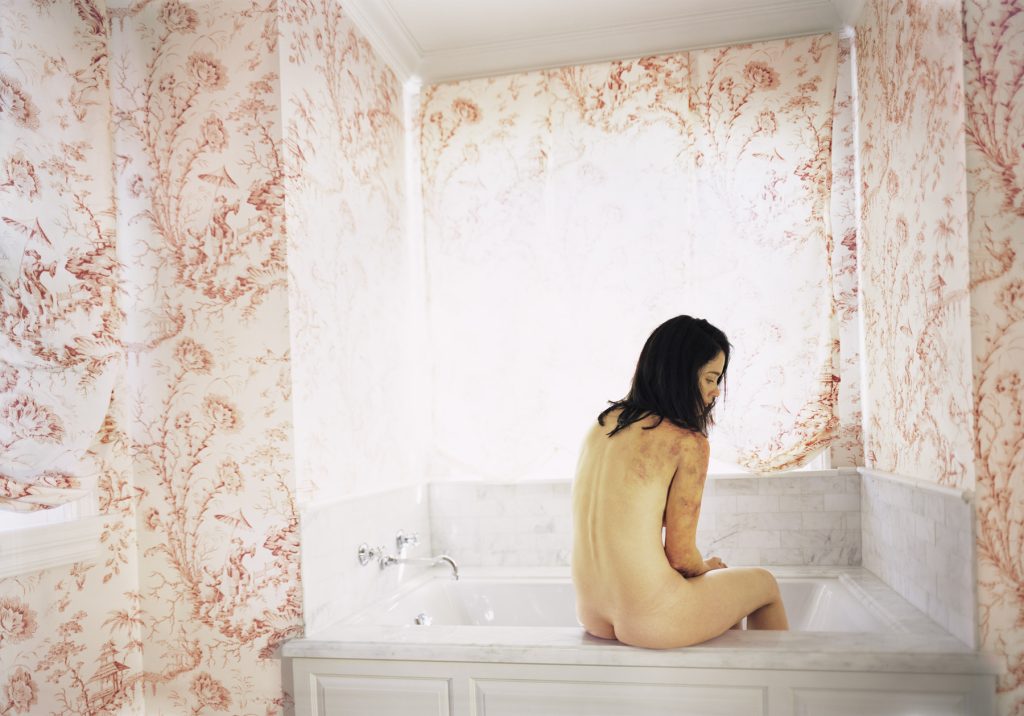
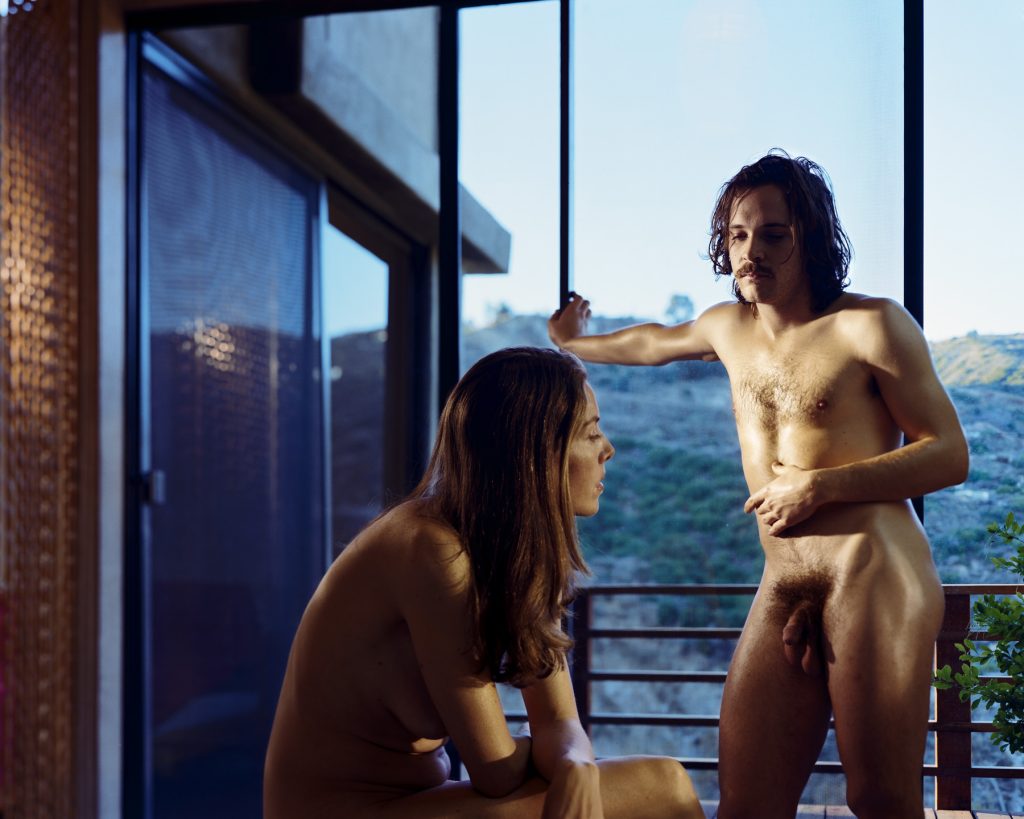
If Malerie Marder is something of a voyeur, her subjects are never unaware that they’re being viewed by the photographer, her camera and us, the audience. In fact, the subjects of Marder’s intimate work often know the photographer intimately herself. In Carnal Knowledge, a body of work published in 2011 spanning ten years, Marder photographed family, friends and herself – usually in a state of total undress, often in seedy motel rooms or within the interiors of suburban Middle America. Despite the voyeuristic quality that exudes in her work, Marder somehow pulls back from an overtly sexual image. Perhaps this is because of a mundane, yet alluring, encounter the young Marder had, as a photography student under Stephen Shore’s direction at Bard College in the early 1990s – one which would define her future practice. Marder was invited to photograph a family friend engaging in an illicit affair with a married lover in a hotel suite, using the techniques she’d just been learning at college. But if the lasting impact of that first commission speaks to the mise-en-scène of the photographer’s work now, so does the fact that the lover, after the affair ended, demanded for the negatives afterwards. “I’ve been trying to re-create those pictures ever since,” Marder told Artforum in 1999, “simply because they were worth burning.” Naturally then, some of Marder’s images verge on the erotic – capturing a moment that feels, as the viewer, like an intrusion. As the photographer tells NR, there’s always something of a mystery within her work, where it’s not always quite clear what is going on.

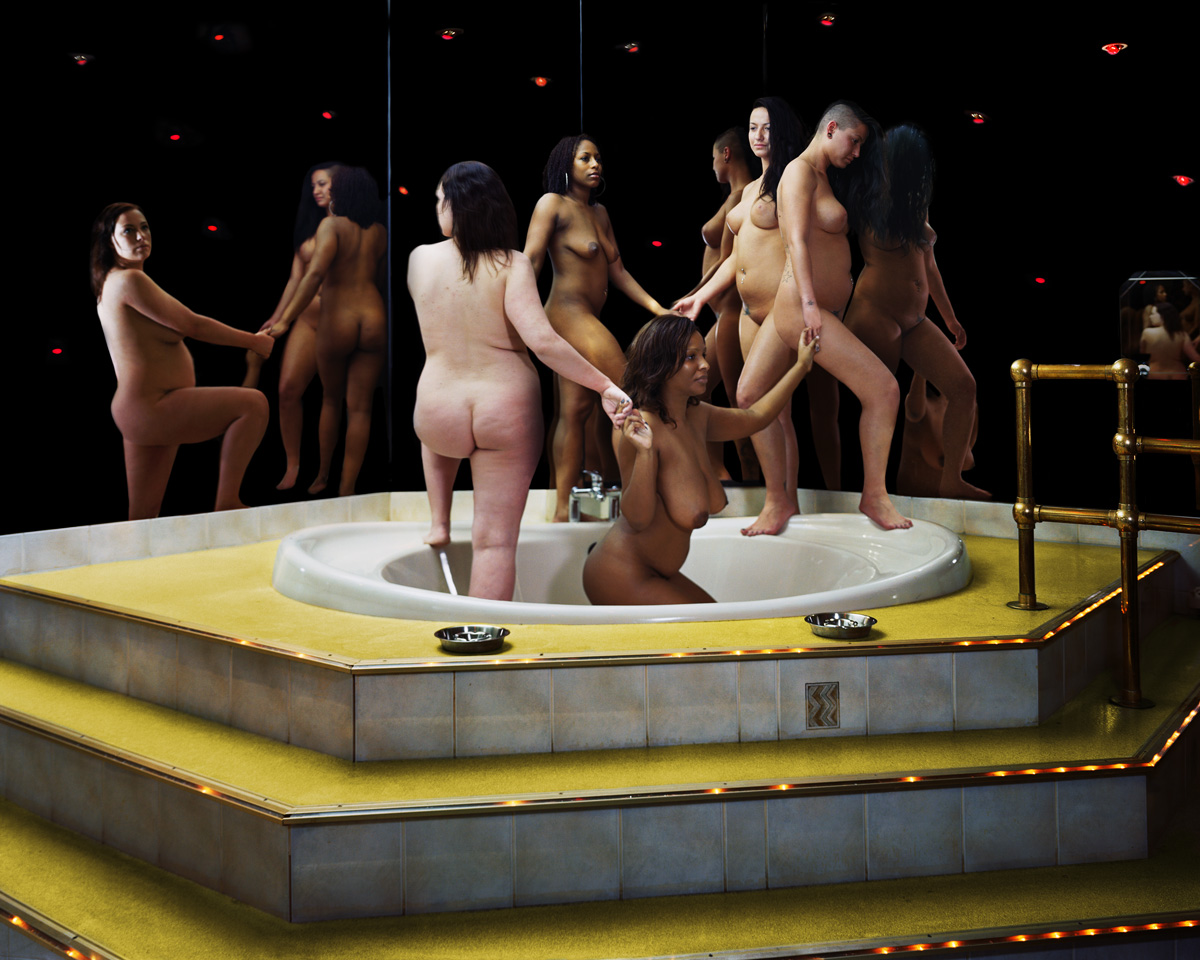
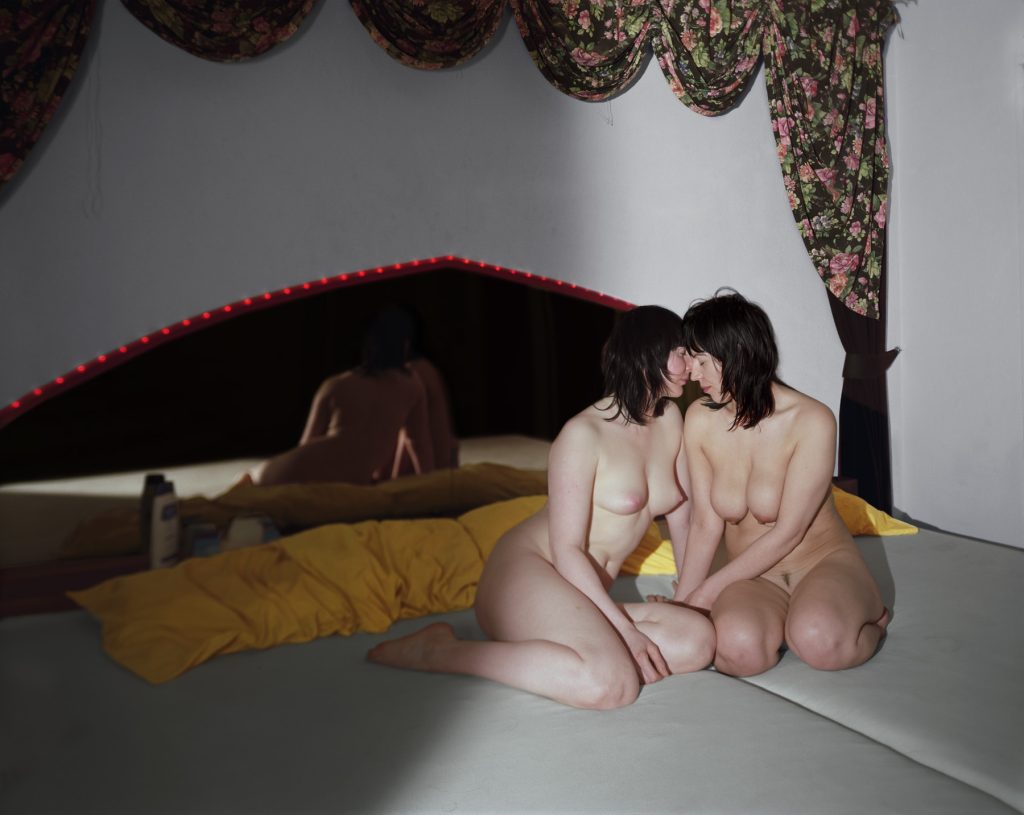
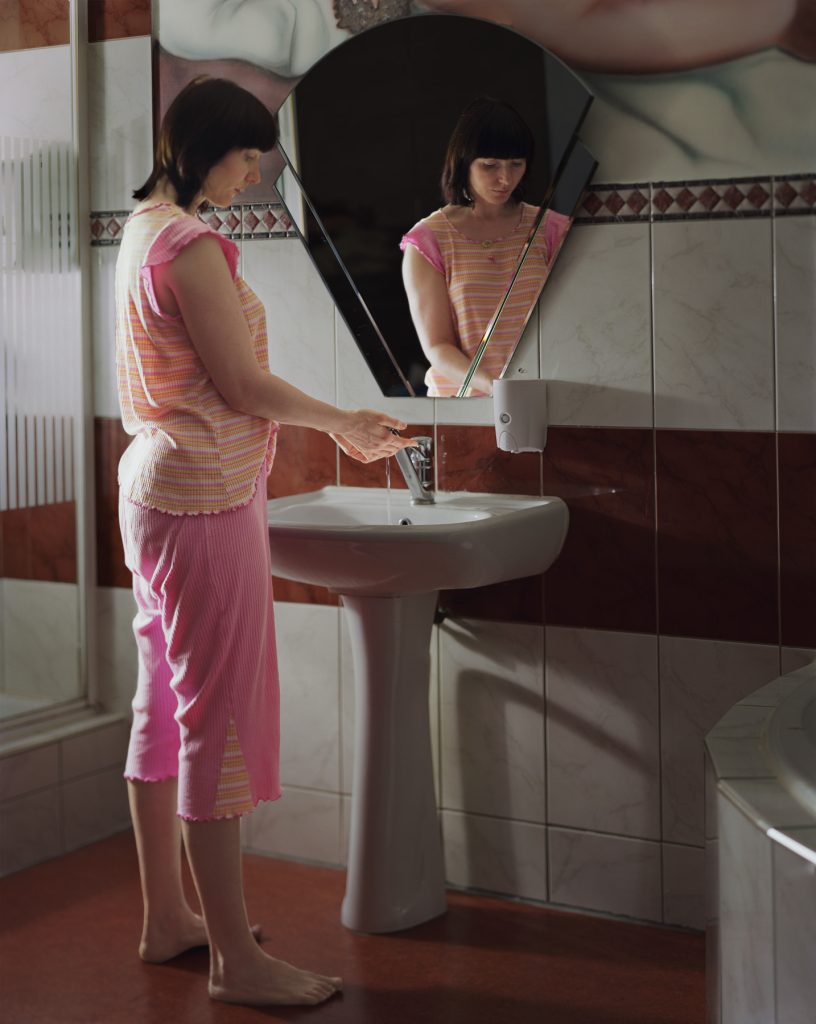
But Marder’s work is never accidental, and often staged. This is most obvious with pictures that seem to make direct reference to art history; take Bath House (2001), for example, in which a scene of (majority male) nude bathers are positioned in such a way to recall one of Paul Cezanne’s paintings of bathers from the late nineteenth century. More recently, Marder’s second body of work, Anatomy (2013), plays with art historical references for different effect. The series, taken over four years, sees Marder photograph sex workers in Rotterdam, positioned in different settings within the private spaces in which they work. If Anatomy captures an intimacy like Carnal Knowledge, it’s less the fact that we feel like we’re intruding on a private scene, than a behind-the-veil glimpse into the lives of these women – the spaces they occupy, the relationships they make with one another, Marder, and the camera’s lens. In one image, Marder’s subjects are positioned in a way that recalls Henri Matisse’s La Danse (1910) – but if that painting has a joyful lightness to it, Marder’s photograph, in response, is more grounded. And perhaps that’s where the essence of Marder’s work lies; between the emotion that the sight, or the thought, of the nude body evokes, and the candid nakedness that we really see.

NR: Since that first encounter, shooting a family friend and her partner, (how) has your approach to photographing changed?

MM: I think that first encounter showed me what an illicit affair actually looked like. Those are the moments I centred on – the explosion of emotions, the secrecy, the desire — the fact that I was actually able to capture that when I was in the whirlwind of what was unfolding showed me I could perform under pressure. I think my set ups have become more tactile and I can more easily identify what I’m looking for, but the more comfortable I become, the more I push myself. I try to transcend what I’ve done. There’s always resistance, both externally and internally, but this is universal. This is not just endemic to me. 

NR: How do you negotiate with your subjects when taking their photograph? How much is staged by you, and by the subject themselves?

MM: I decide on the setting and then we both figure out what comes next. Some of it is more choreographed by me, but usually I end up capturing an aspect of them that is revealed.

“It’s like writing — you have a sense of what you want to say but you haven’t yet written the words.”

NR: What informs the setting in which your subjects are photographed? Do you choose a location depending on the subject, or vice versa?

MM: Both — sometimes I’ll see a place and wait for the perfect person to match that character, or I’ll meet someone and try to hone in on where I should photograph them. I find people are more fascinating than most places, so settings are harder to procure. 

NR: How does ‘celebration’ tie into your work; if you were to ‘celebrate’ something, what would that be?

MM: That is a genuinely a fascinating question. I like the idea of celebrating people’s beauty. I’m a fanatic about light and I like there to be a certain mystery — I feel both create a kind of romanticism, even if it’s on the melancholy side. But that does not mean it is any less of a celebration. We only have a short time on this planet and it’s impossible for me not to be in touch with people’s pain… So maybe I’m celebrating people’s vulnerability and softness…

NR: Something that has been said of the Anatomy series is the lack of ‘you’ being in the work; how important is it to have a relationship with your subject, and is it important that there is an element of “self-portraiture” in your photography? 

MM: It’s only important when I’m purposefully playing a part in the picture. Often times, I end up being in the picture and I’m just part of the shadow… helping the image along, but then there are times where it is more compelling for the viewer to know it is me.

“Self-denial plays a large part of what I do; I sincerely doubt I am in any of my pictures.”

NR: In terms of creating an image, how does colour (or its absence) play into your work?

MM: It plays a big role. For me, black and white is more like a sensual memory and colour is closer to present tense. So, when I try to create a dream-like state, I find it easier to say it in black and white. I still attempt to do this in colour as well. I group images by colour, and certain colours mean certain things — or elicit certain emotions or feelings. I try to saturate as much colour into an image as possible even if it borders on garish. A little like how Douglas Sirk filled his compositions in “Imitation of Life” with flowers — one long funeral. I am not sure what the saturation of colour means, but I think it is my attempt to overwhelm reality with as much beauty as possible — otherwise the darkness creeps in. You can still see it, of course. 

Credits

Images · Malerie Marder
https://maleriemarder.com/
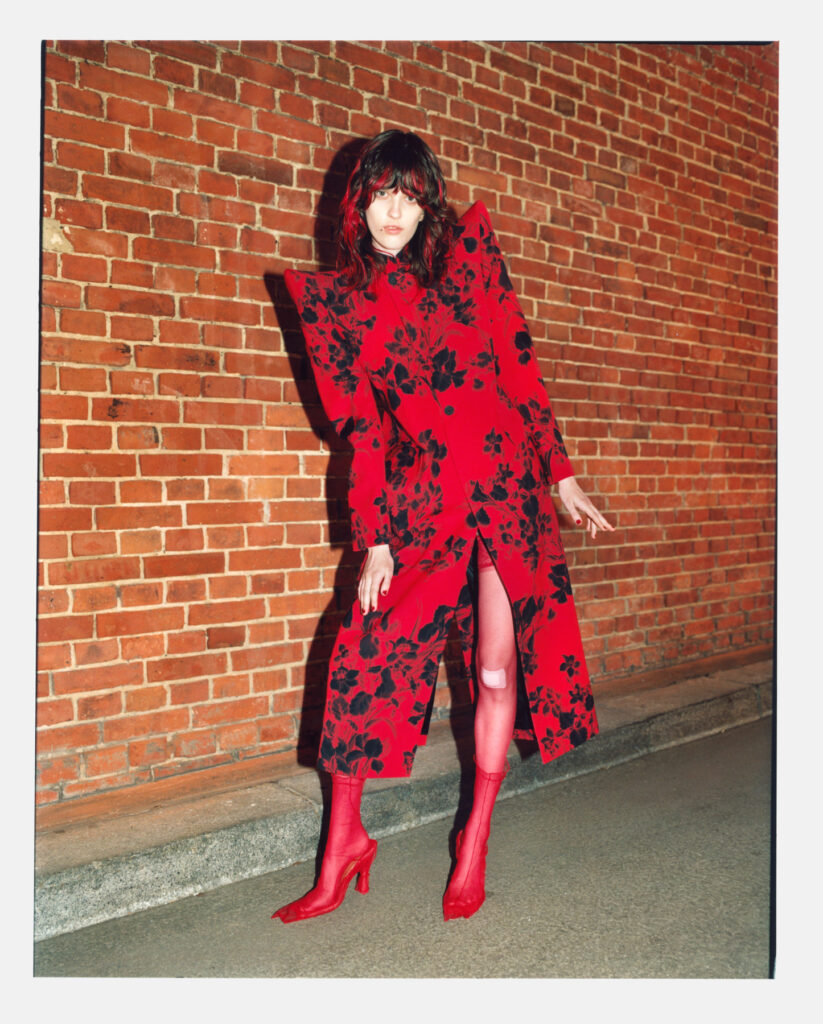
Alessandro Mannelli

Credits

Models · Ara Ha (Fabbrica Milano), John Godswill (The Claw), Igor Szymanski (Why Not Models), Rashida Mamudu (Select Model Management)
Photographer · ALESSANDRO MANNELLI
Stylist · MARCO DRAMMIS
Makeup · ALESSIA STEFANO
Hair · ALESSIA BONOTTO
Casting Director · IRENE MANICONE
Stylist Assistant · ROCCO COLLAZZO
Stylist Assistant · GIULIA BASILE

Laila Majid

“I’d like to situate my work within a moment like that, one which teeters on an edge between oppositions.”

For the artist Laila Majid, exploring the relationship between materials and the body is a recurring theme. Her artwork, Rosie (2019), for instance, is a close-up shot of the imprint of a trainer on the calf of a friend’s leg having been sat cross-legged for a period of time. The markings of the shoe and stitching of the fabric are punctured by the ever-so-slight presence of hair regrowth – the effect is an almost surreal investigation of the similarities between the two surfaces (the now-absent trainer; the skin after wear). Rosie was exhibited as part of the Nude show at Fotografiskia, Stockholm, as well as being selected for the prestigious Bloomberg New Contemporaries show in 2021, with Majid explaining in an interview for the exhibition’s platform that, by “morphing [the body] into a new and unfamiliar form” what we think of as being real is destabilised. That much is apparent in Crease (2021), exhibited at the Slade School of Fine Art MA degree show, in which a black and white photograph of what appears to be a fairly innocuous antique chair, on closer inspection, features erotic mouldings.

The artist is now studying Film Aesthetics at the University of Oxford. It’s a logical step for Majid, who often turns to video and film in her practice – “I’ve never studied film in such a focused way before,” she tells NR over email, “so it’s also helped me to dig deeper into current interests.” In particular, the artist has been “looking into the close-up shot, and the relationship that this sort of shot has to both intimacy and abjection (as facilitated by the camera’s proximity to that which is being filmed).” In previous video works such Macro (2020) and concave/convex (2018), Majid furthers her investigation of the body – animal and human, respectively. In both pieces, the natural surfaces of Majid’s surface (fur, saliva, tongues) take on an almost unnatural quality, creating an interesting counterpoint to the way in which the artist grants synthetic fabrics, by contrast, an organic quality. By turning to a range of materials, mediums and methods throughout her practice, Majid’s work challenges, or distorts, the boundaries of that which we might think of as being diametrically opposed: to that end, how concrete, and how different, are what we think of, or see, as being ‘real’ or ‘alien’?

NR: Am I correct in thinking that Rosie is printed on latex, which makes me wonder how the layering of material features in your work?

LM: Rosie is actually printed directly to vinyl, the printer however uses latex inks (commonly used to produce banners, outdoor signage, etc.) Although the work isn’t printed onto latex, this is a material which I frequently use in my work, and one that I always seem to come back to. I’m interested in the close relationship between latex and the body. It is a stretchy, skin-like material that, in its use as a material of fetishwear, sits directly on the surface of the body, fusing to the form of the wearer in a moment of sweaty skin-on-skin contact. I think this speaks to a layering of surfaces that you bring up. Latex definitely operates in this way; as a non-porous material often used to craft tightly fitting garments, it effectively sticks to and becomes an extension of the body of the wearer, and an extension of the skin itself. Layering, in this case, works to facilitate transformation through dress (change in appearance and physique/sexual release/role play etc.)

NR: What is your process of working with, and sourcing, different materials? And how do you navigate working in different mediums?

LM: Sometimes this is quite an intuitive process, of feeling seduced by the physical properties of a given surface. I also think that it’s important to pay attention to what an image or object may need, be it a specific surface or printing ink. With Rosie, for example, I knew that the image needed to be printed on vinyl given the connection that this material has to window displays and advertising.

“I’ve always felt it important to approach image and surface in such a way whereby they feel bonded or dependent on one another.”

NR: You recently had a joint exhibition, not yet, with your on-going collaborator, Louis Newby at the San Mei Gallery – what does the process of collaboration, more generally, look like for you?

LM: I’ve always been drawn to collaboration given the potential to enrich one’s work through the inclusion of new voices. This was much the case with the video piece in not yet, where we worked with different collaborators who were able to contribute to and elevate the work in various ways, through animation, sound design and AI programming. 

NR: And, in terms of your work with Louis Newby, how do you navigate your separate artistic practices to create collaborative work, and a joint show?

LM: Our collaborative practice truly sits in the space between our separate practices. Louis and I have spoken before about the idea that our collaborative work depends on our own practices/individual interests to take shape in the way that it does, and yet does something different to each of our practices as it sits between the two.

Laila Majid

NR: Found objects (film, comics, journals) feature in not yet, whilst your Instagram account combines your work, personal photography and other imagery – does the concept of the archive, and the act of archiving, feature in your work? 

LM: Instagram is tricky, I can never really figure out how to use it. For now, it exists as a combination of different sorts of images, as you’ve described. I also struggle with the app given its harsh terms and conditions and censorship rules. Instagram aside, images have always been important to me. They feed directly into the work I make and are an invaluable source of research (found images, pixelated screenshots, scans of images from magazines, my own photographs). I enjoy the process of collecting images, perhaps this act of collecting can be thought of as archival. Louis and I also have a shared archive of found images pulled from a vast array of sources which we use to generate print works.

NR: How do you negotiate the human body and other animal forms (real, imagined) in your work? 

LM: One thing that immediately comes to mind is the undifferentiated body – a form that points to a potential growth/change/development. I find it interesting to think about how one could present a moment of transformation— how a still image, for example, could hold this moment.

“When does one body morph into another, or suggest a form exterior to its appearance?”

This is something that you often see in science fiction/supernatural horror – for example, at which point does the arching of the spine/contorting of the body tip into an anatomical language that suddenly becomes unfamiliar? I’ve been thinking a lot about [Soviet film director and theorist, Sergei] Eisenstein’s idea of ekstasis in this way, which he explores as a transition ‘to something else’, from one state to another (‘to be beside oneself’).

NR: You’ve spoken previously about seduction and repulsion in relation to beauty – how do these two, supposedly opposing, concepts feature in your work more generally? 

LM: I think I focus more on how the two come together, in such a way that they rely on one another to produce a specific effect/affect. I suppose that seduction and repulsion go well together in that their marriage can be used as a tool to reconsider beauty. Pushing oppositional forces together within the same pictorial space also creates tension; it’s a combination which unsettles. I don’t think this is necessarily specific to the seduction/repulsion relationship, but in broader terms I’m reminded of the movement of the body during pleasure- contorted, arched, muscles clenched on the one hand, and giving into total pleasure and bodily sensation in a moment of release on the other. I’d like to situate my work within a moment like that, one which teeters on an edge between oppositions.

Credits

Images · LAILA MAJID
https://lailamajid.net/
Subscribe to our
Newsletter