Archive page:


Elsa Peretti

Elsa Peretti
x
Tiffany & Co

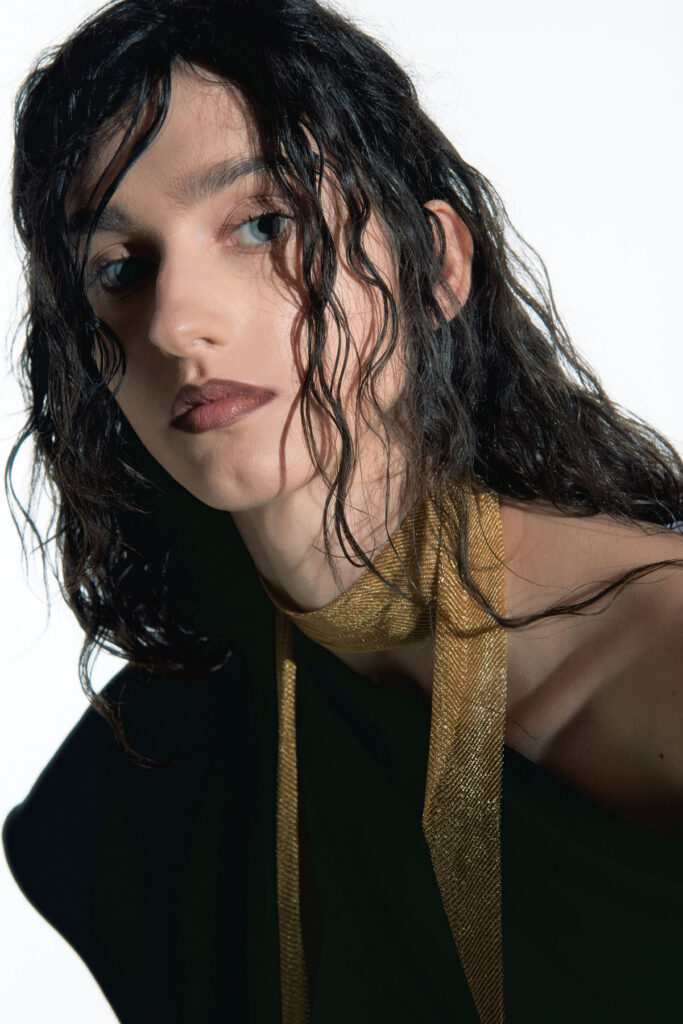
The designer behind some of Tiffany’s most iconic pieces, Elsa Peretti, died at the age of 80 on 18th March 2021. Somewhat unintentionally, this editorial becomes a tribute in her honour.

Born in Italy, Peretti moved to New York in the late 1960s, finding work as a fashion model (a job that gave her financial freedom, having previously been cut off from her eye- wateringly wealthy, but inwards-looking family in Florence). In New York, she became a regular at Studio 54, accompanied by a posse including Warhol, Liza Minelli and the designer, Roy Halston Frowick. It was the through the latter that Peretti’s career blossomed; she designed jewellery for Halston’s eponymous line, and it was him who introduced her to Walter Hoving, CEO of Tiffany & Co. in 1974. By Peretti’s own telling, she was “hired on the spot,” and so began a collaboration that would last until her death. A few years ago, when Peretti threatened to quit the partnership, the company were quick to renegotiate a contract for a further 20 years – which would have lasted until what would have been her 92nd birthday.

With only a few years off celebrating half century of Peretti’s designs for Tiffany, her pieces are icons for a by-gone era. The mesh scarf necklace, for example, which debuted on the runway of Halston’s fall collection in 1975, is evocative of the disco age. But Peretti’s designs remain unequivocally timeless. Peretti reintroduced silver as jewellery to a world in which it was confined to use for accessories and homeware.

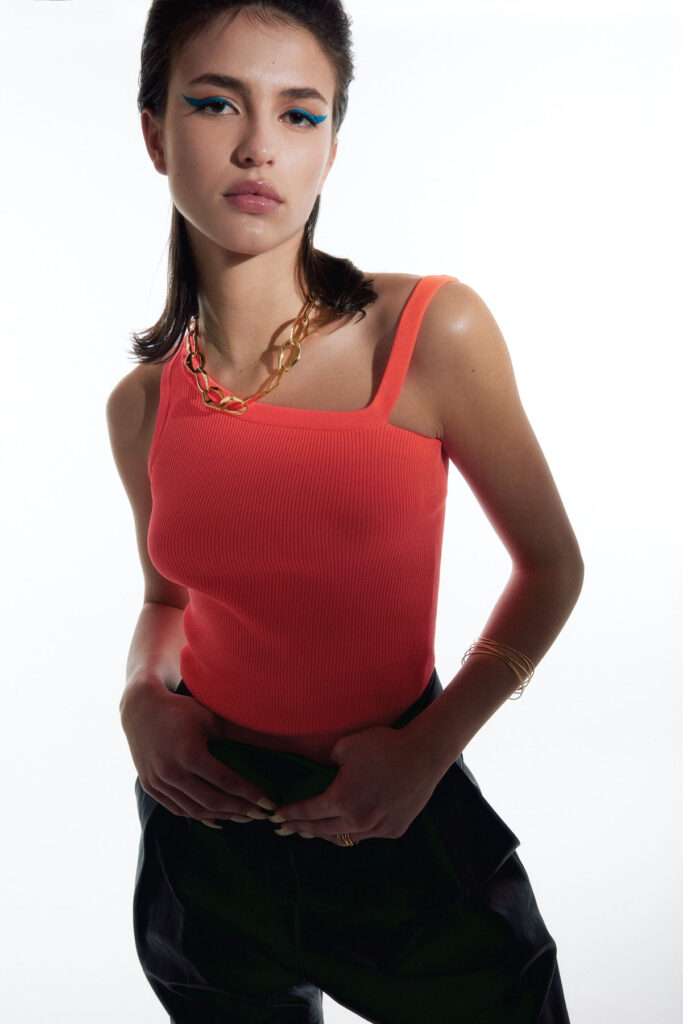
Her appointment at Tiffany came as the brand was looking to reach a broader audience – a woman who couldn’t afford to buy herself gold or diamonds, and a woman who wouldn’t necessarily rely on a man to do so for her. The necklace, Diamonds by the Yard (its name coined by Halston), made diamonds affordable by spacing small stones out along the chain. Peretti designed for the modern woman, and was herself, a modern woman. Tall, intimidating (by all accounts) and famously short-fused, Peretti retained the rights to her designs and name. Designs like the Open Heart, Bean and Bone capture the fluidity of form that defined Peretti’s designs.

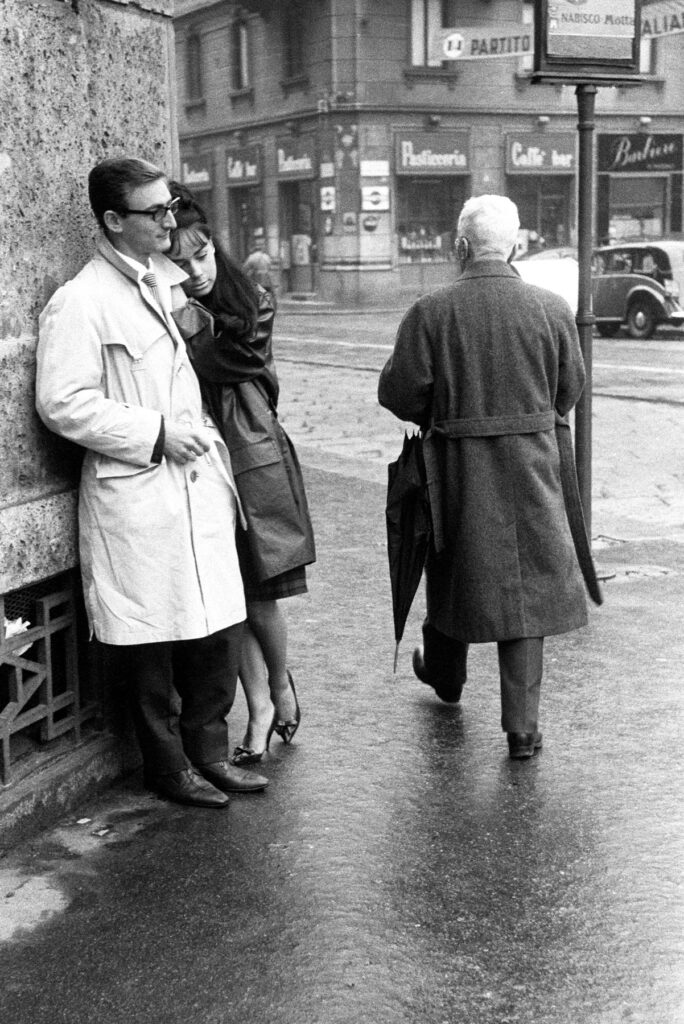
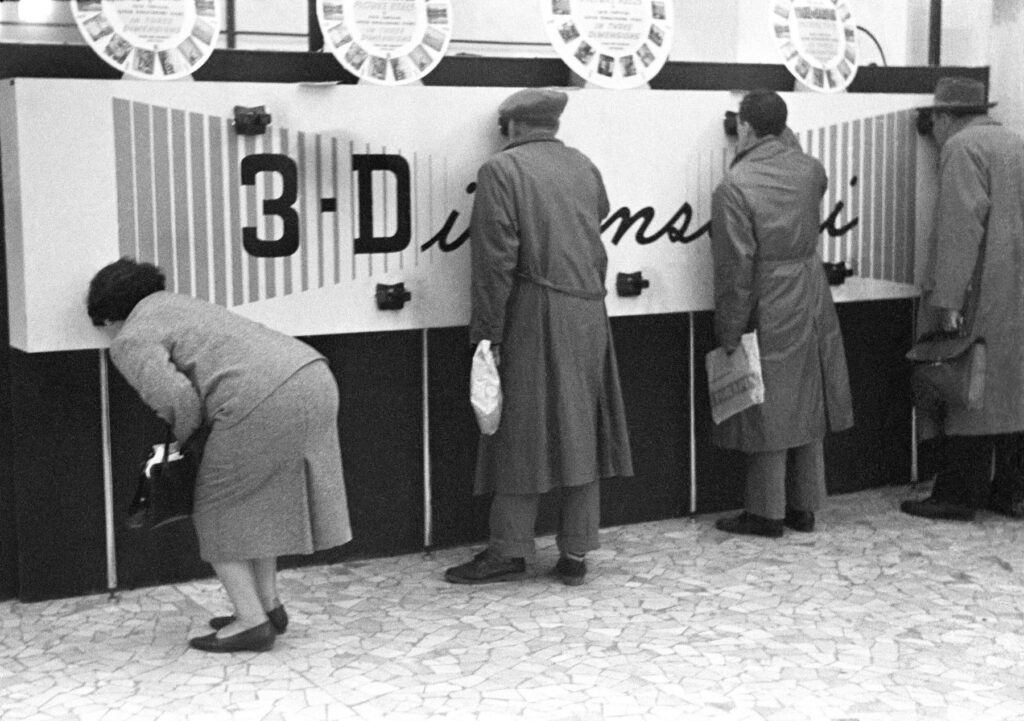
Her work coalesced organic forms with sophistication and elegance. In the 1980s, the designer escaped the chaos and debauchery of New York to Sant Martí Vell, a small village in Catalan – where, since her early modelling days, she had gradually been buying up the abandoned houses there. She would spent most of the rest of her life there, working with artisans around the region, restoring her own private village, and continuing to design for Tiffany. Like her work for Tiffany, Peretti herself has remained something of a lasting icon. Photos of the designer at work in her New York apartment from the 1970s capture the essence of what makes Peretti’s designs so alluring. The ease with she fuses the natural world with luxury are demonstrative of a designer’s natural instinct for shape, composition and the beautiful things in life.


Team

Photography Teresa Ciocia
Fashion Oana Cilibiu
Make-Up Manuela Renée Balducci
Nails Roberta Rodi  
Casting Isadora Banaudi
Models ADELE aldighieri and VIKA yakimova at Fabbrica Milano and Margot hubac at THE LAB Photo Assistant Jacopo Contarini
Fashion Assistant Mathilde ProiettI
Production Thirteenth
Production
Words Ellie Brown
Discover more on tiffany.com


Designers

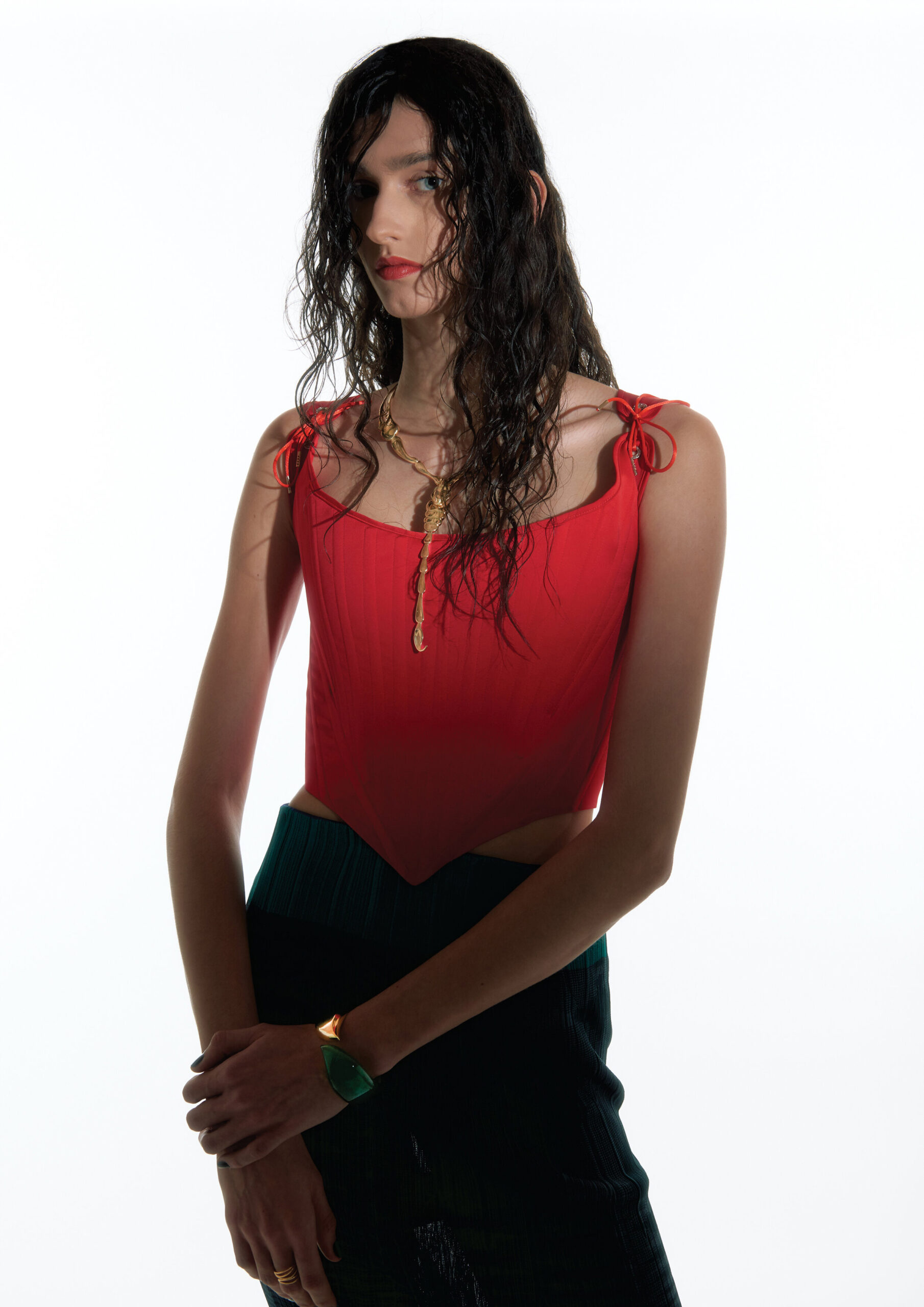
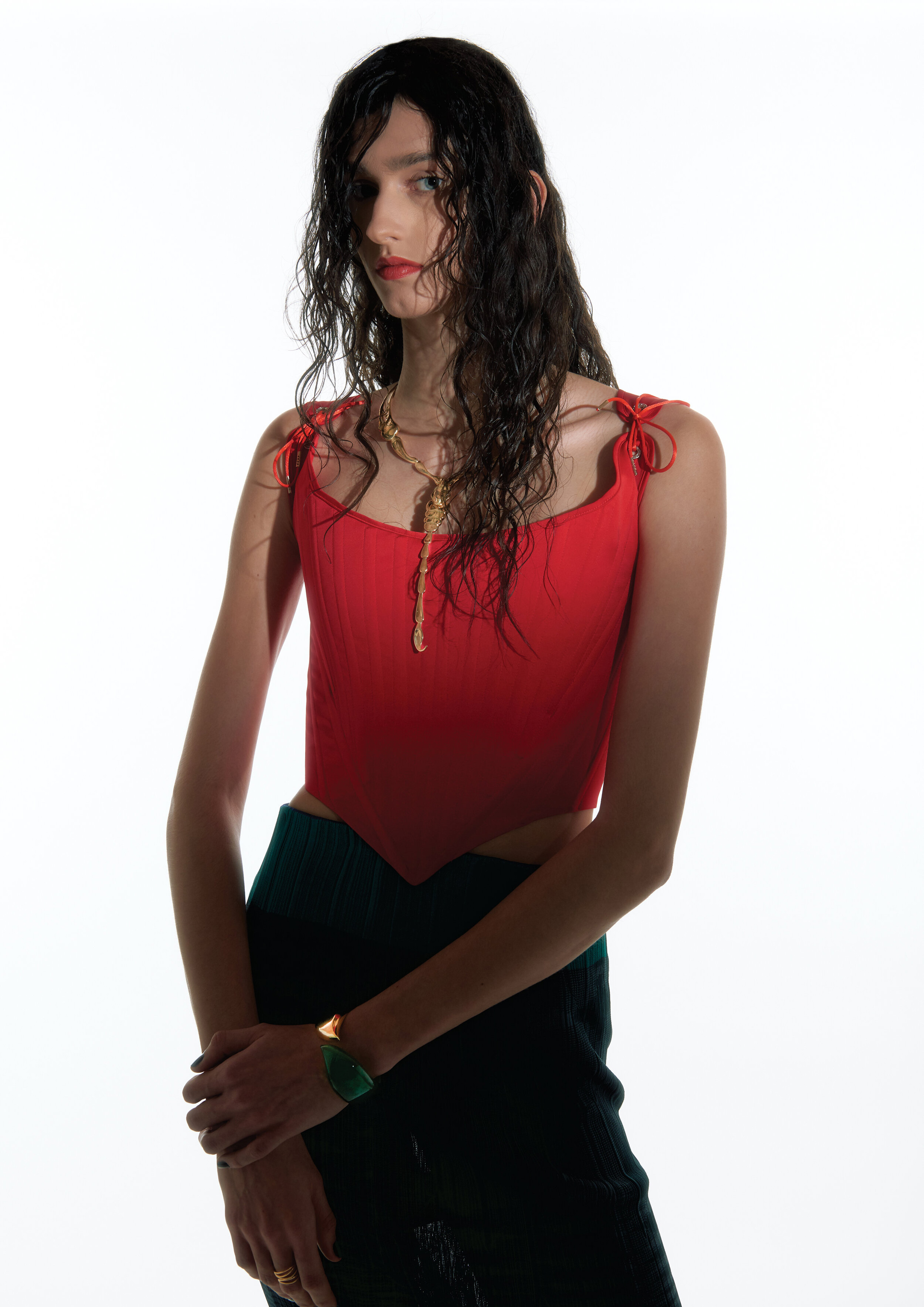
  1. Corset ALICE PONS Skirt MISSONI Necklace ELSA PERETTI® SCORPION NECKLACE in 18K yellow goldBracelet ELSA PERETTI® FEATHER GREEN JADE CUFF in 18K yellow goldRing ELSA PERETTI® WAVE ring in 18K yellow gold
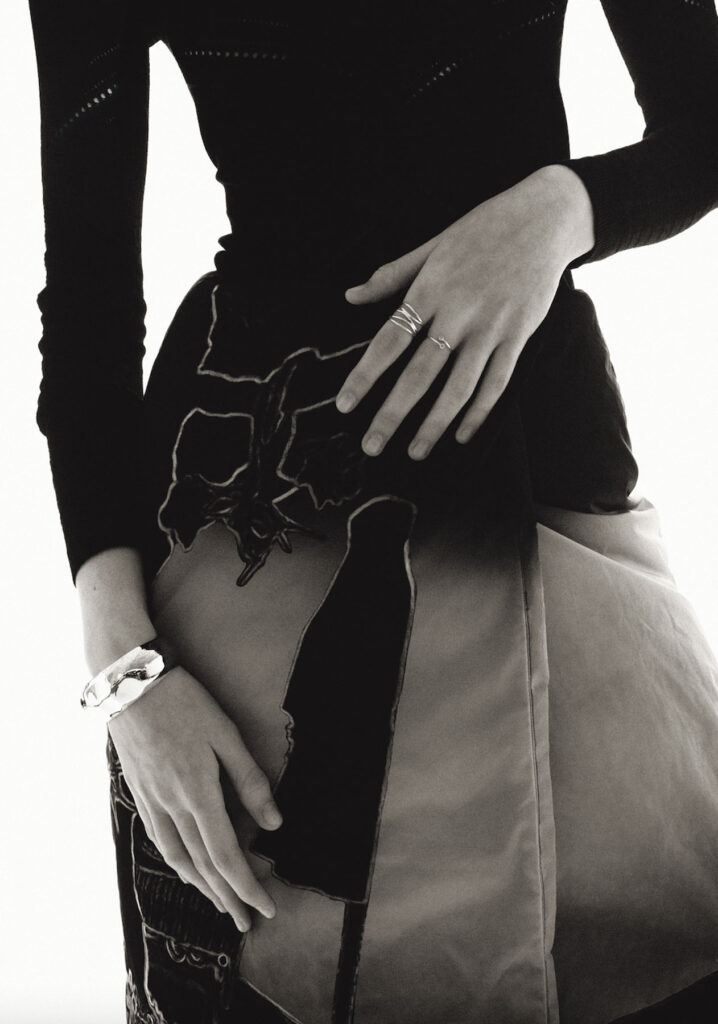
  2. Top ROBERTO CAVALLI Skirt PAULA CANOVAS DEL VASRing ELSA PERETTI® DIAMOND HOOP RING in 18K yellow gold with diamonds Carat total weight .10Bracelet ELSA PERETTI® FACETED CUFF in 18K yellow goldRing ELSA PERETTI® WAVE RING in 18K yellow gold
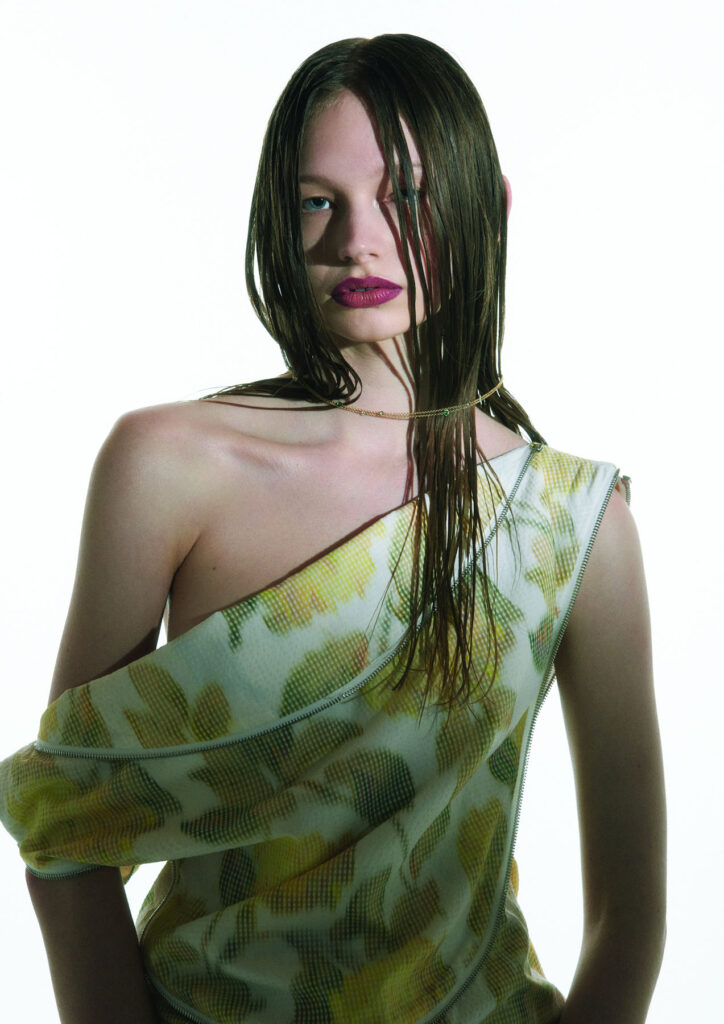
  3. Dress KENZO Necklace ELSA PERETTI® COLOR BY THE YARD in 18K yellow gold with emeralds and diamonds
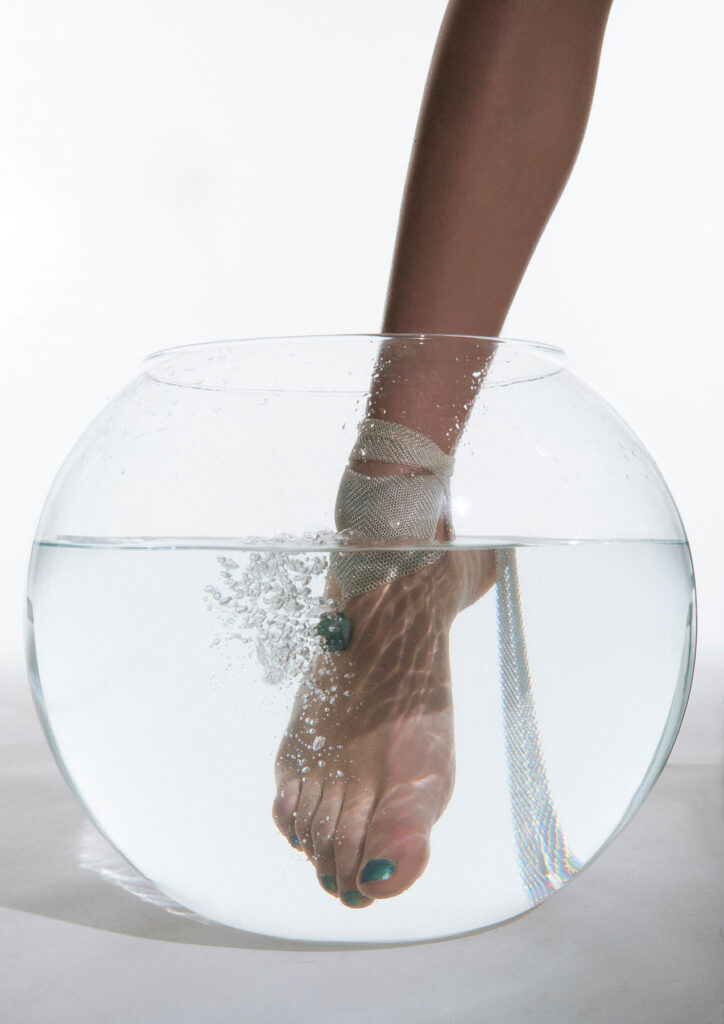
  4. Necklace ELSA PERETTI® MESH SCARF in Sterling Silver with Keshi Pearl
  5. Dress THE ATTICONecklace ELSA PERETTI® MESH SCARF NECKLACE in 18K yellow gold 38 inch
  6. Top SPORTMAX Trousers JIL SANDER Necklace ELSA PERETTI® AEGEAN TOGGLE NECKLACE in 18K yellow gold 20 inch Bracelet ELSA PERETTI® WAVE FIVE ROW BANGLE in 18K yellow gold Ring ELSA PERETTI® WAVE RING in 18K yellow gold
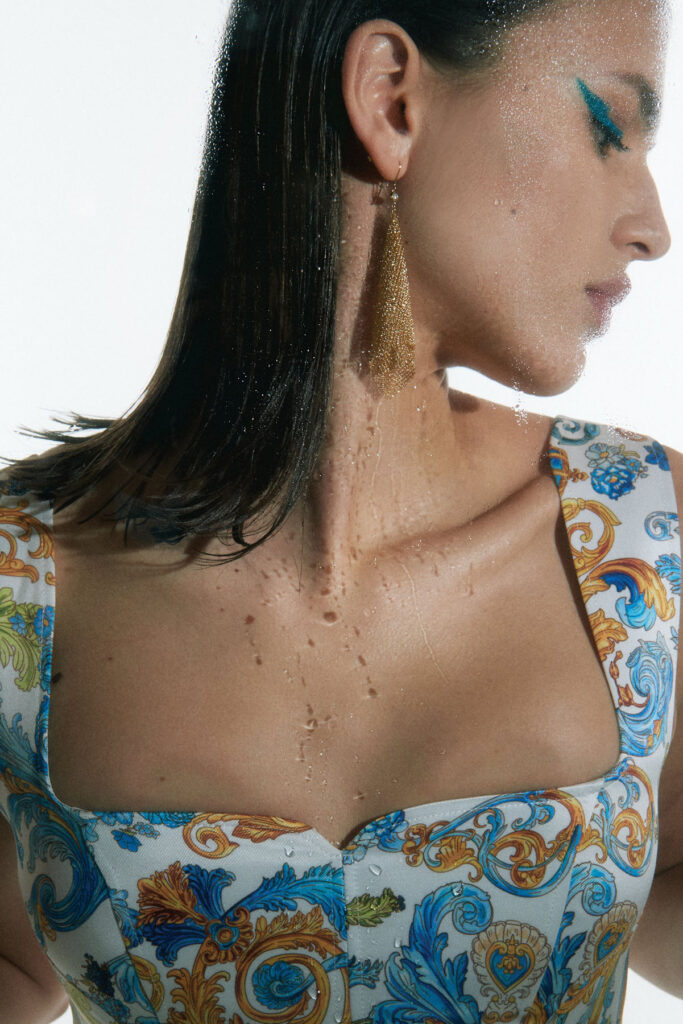
  7. Dress VERSACE Necklace ELSA PERETTI® MESH EARRINGS in 18K yellow gold with round brilliant diamonds Carat total weight .14
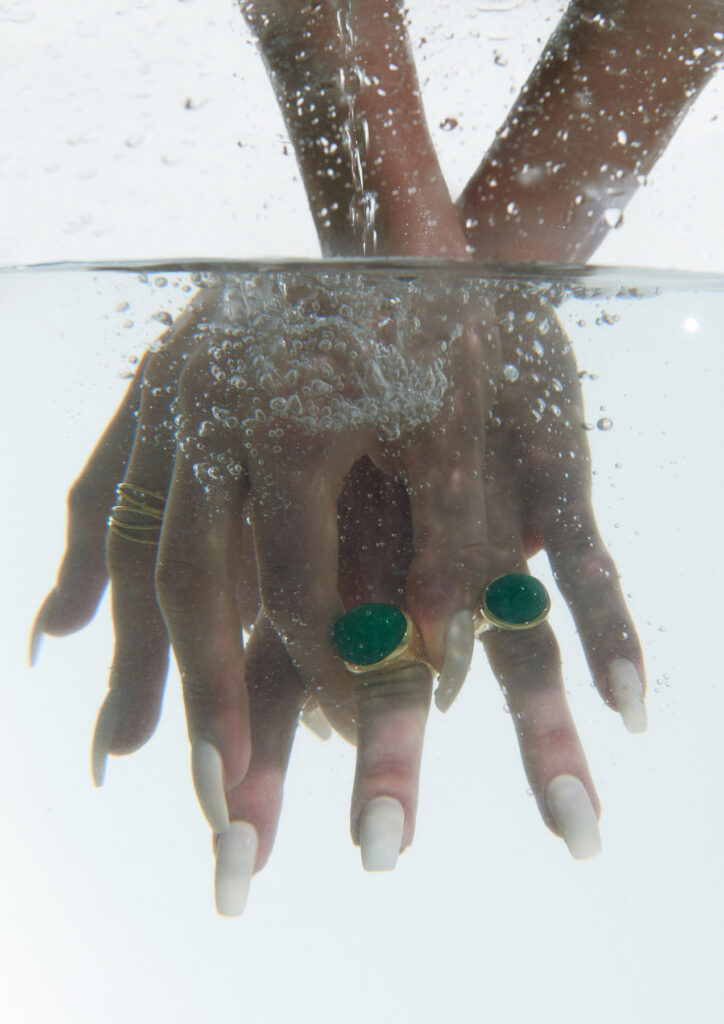
  8. Ring ELSA PERETTI® CABOCHON RING  in 18K yellow gold with green jade, 19 mm wideRing ELSA PERETTI® CABOCHON RING in 18K yellow gold with green jade, 15 mm wideRing ELSA PERETTI® WAVE RING in 18K yellow gold

Denisse Ariana Pérez

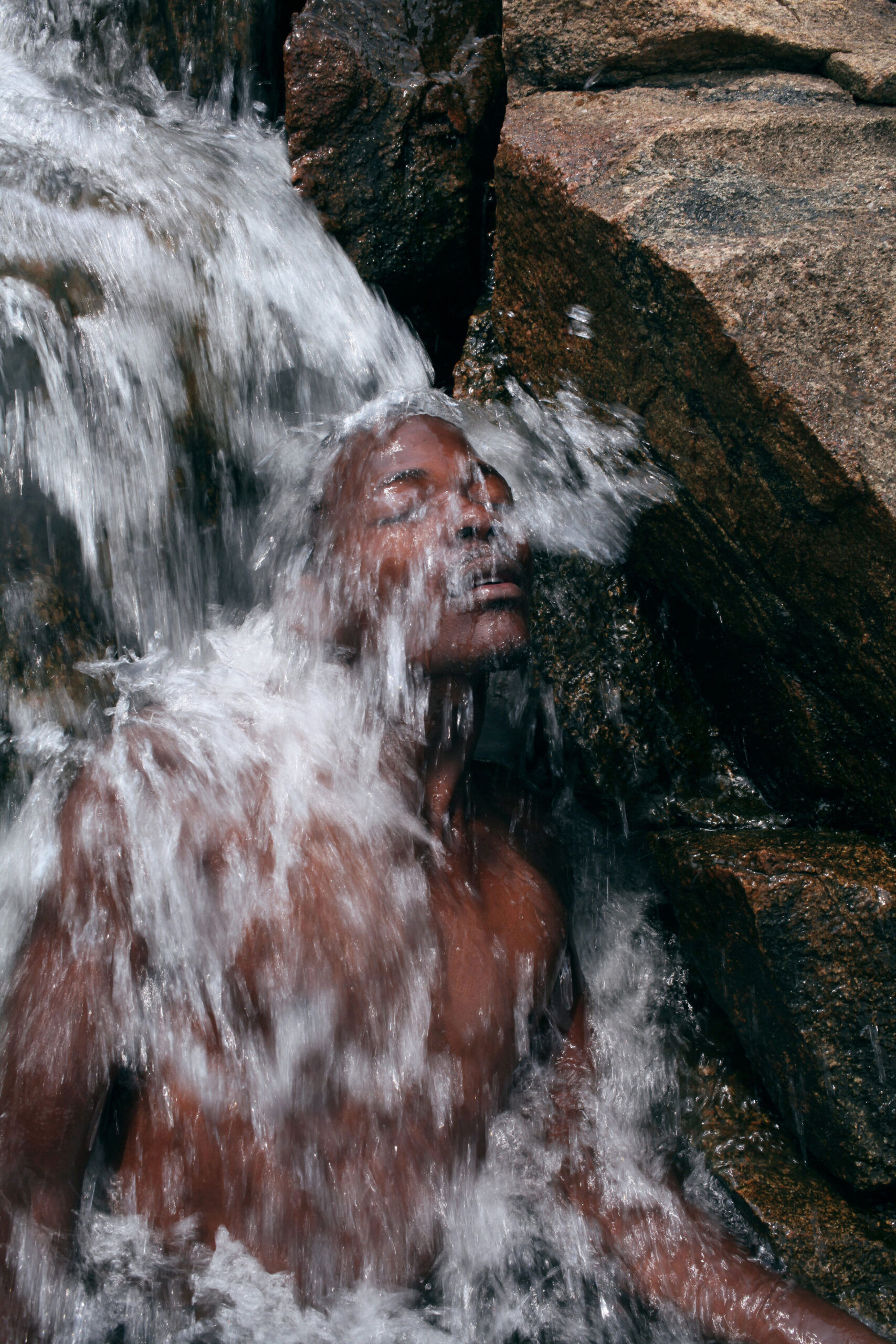
“I keep coming back to water scenes. I keep coming back to rivers and lakes. I keep coming back to oceans. I like to explore the interaction of people, particularly of young boys and men, with water. Water can disarm even the most armed of facades. Becoming one with water is not about rushing but rather about flowing. And flowing is the closest thing to being.”

Denisse Ariana Pérez is a Caribbean-born, Copenhagen-based  copywriter, author and photographer. She is obsessed with words, people and imagery and finding ways to make them speak to one another.  Her photographic work has been featured on It’s Nice That, The Guardian, El Pais, VICE, Afropunk, Dazed, Ignant,  Marie Claire,  Hunger,  Atmos,  Sand Magazine, Paulette Magazine and Accent Magazine. 


Credits

Photography and words · DENISSE ARIANA PÉREZ
www.denissearianaphotography.com
www.instagram.com/denisseaps

John Pawson

“I have always thought that a house should be a collection of spaces in which to dream”

John Pawson CBE has spent over thirty years making rigorously simple architecture that speaks of the fundamentals but is also modest in character. His body of work spans a broad range of scales and typologies, from private houses, sacred commissions, galleries, museums, hotels, ballet sets, yacht interiors and a bridge across a lake. His method is to approach buildings and design commissions in precisely the same manner, on the basis that ‘it’s all architecture’, incorporating minimalism and rigorous simplicity mixed with function.

NR discusses with the renowned British architectural designer about his career, some of his key works, his most recent project Home Farm, a space in which family and friends can gather, as well as his future plans for 2021.

John Pawson, it is an absolute pleasure to be interviewing you. Thank you for taking the time to be a part of this issue. How are you doing in those strange times we are all living in?

My wife Catherine and I have spent most of the various lockdowns at Home Farm in Oxfordshire.  I am used to being pretty much constantly on the move and being still for so long has been a revelation.  At any one time, some or all of our three grown-up children have also been here. One of the few upsides of the current situation has been the opportunity to live alongside one another again for extended stretches as a family, when normally we are scattered.

You have always been revered for your taste for minimalism and rigorous simplicity mixed with function in your design approach. 30 years ago minimalism would not be used as much as it is now, by architects and designers. Although some like Louis Khan do talk about ‘a society of spaces’ and about how the rooms not solely accommodate specific uses and functions but they create spaces and places encouraging chance encounters and unplanned meetings. This is something we can find to some extent in your work as it shows that a building is intrinsically linked to the quality of life within it and enriches experience. Do you think about that a lot when you start working on a project? About enriching or bettering the visitor’s or the inhabitant’s interior experience and engaging all of our senses, almost like a tactile reality?

When I start working on a new project, my thoughts are focused on the place – the immediate site and its surroundings – and on the people that will use the spaces I am designing.  A huge amount of thought goes into refining the function and the choreography,  but in the end it’s about making atmosphere and about ensuring a quality of sensory engagement.

Minimalism has now become a life style which is something we can all thank you for as you have helped coined this new phenomena. In your body of work can also be found a certain inclination for idealism and purism rather than materialism. 

When and where did you find your attraction for simplicity and how did your search for it, began?

I think that my interest in simplicity was always there, even as a child. My parents’ values and the treeless landscapes of the Yorkshire Moors where I grew up helped reinforce these innate preferences.

Who or what inspired you to start creating and designing?

What are some architects’ works or designers’ works that you really like?

It had been at the back of my mind for a long time, but the person who gave me the final impetus to pursue a career in architecture when I was in my late twenties was the Japanese architect and designer, Shiro Kuramata.

Alongside Kuramata, the people whose work I have always admired include Mies van der Rohe, Donald Judd and Dan Flavin.

I studied Interior Design at the Royal College of Art in London and your name came up frequently during my research as I was very interested in spaces that have a positive influence on the spirit and mind, spaces in which one is able to daydream and contemplate without any distractions. I am sure you know of Poetics of Space by Gaston Bachelard. I find some similarities between your manifestos most specifically in relation to day dreaming, thinking, imagination and presenting the space we inhabit as a cosmos of its own. What are your views on Bachelard’s philosophy? 

Like Bachelard, I have always thought that a house should be a collection of spaces in which to dream. The potential for dreaming comes when the mind and body are at ease.

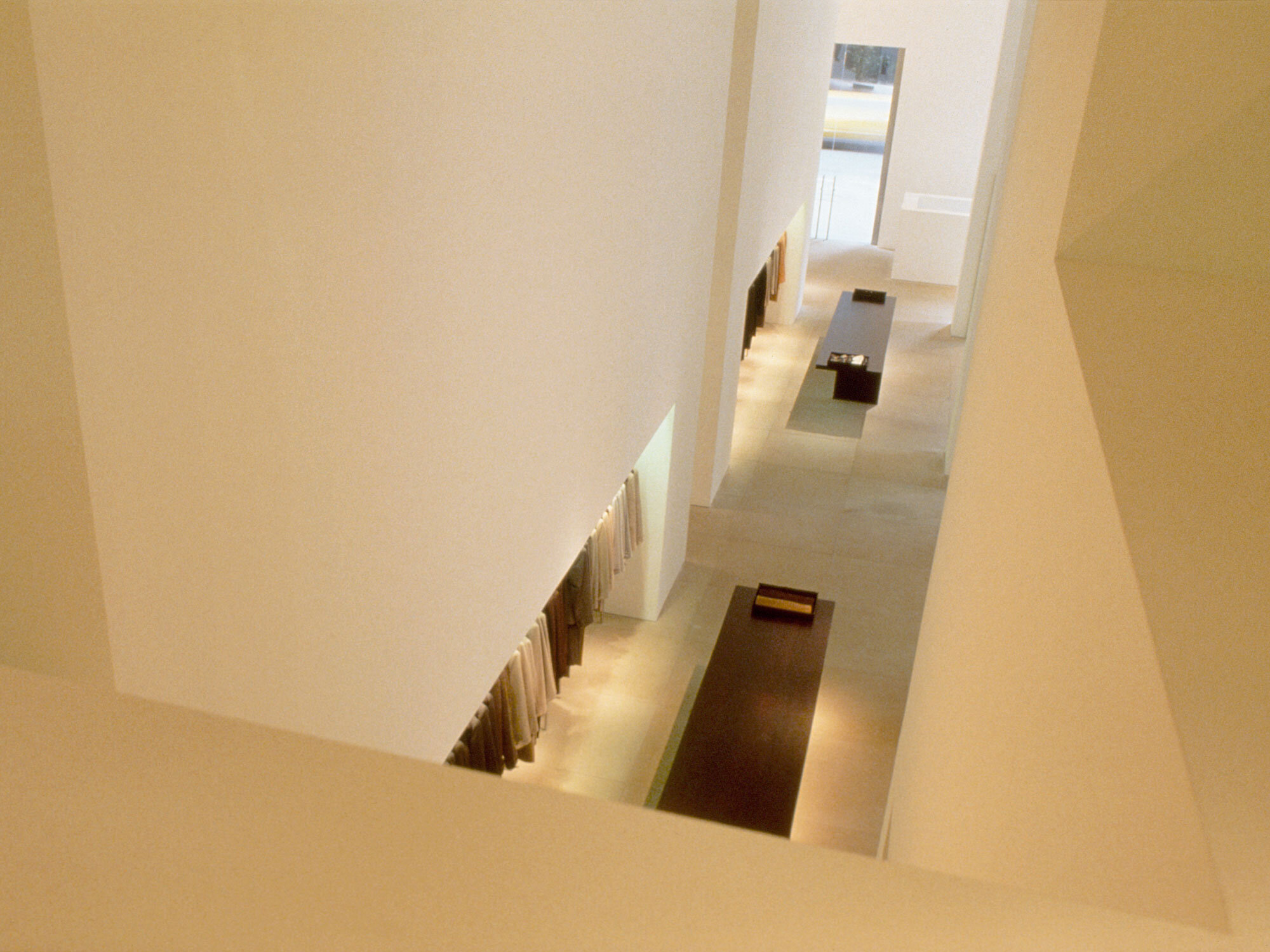
The Valextra store was not your first retail project. You had been commissioned before to design stores for Calvin Klein in previous years. Could you tell us a bit about your decade-long relationship? How do you feel the world of fashion collide with the one of architecture and interior design? If you could pick one contemporary fashion designer that you would want to work with, who would that be?

The first store I designed for Calvin Klein actually opened more than two and a half decades ago. I think that the relationship between fashion and architecture is a naturally resonant one, even though the creative timeframes are so very different – the cycles of fashion are measured in weeks and months, where a single building can take many years from conception to realisation.

For me, it’s ultimately very simple: I’ve always tried to make stores where the clothes look good and people feel comfortable. Since Calvin, I have designed stores for Christopher Kane and Jil Sander’s creative directors, Luke and Lucy Meier, with whom the architectural collaboration is ongoing.

Obviously I imagine that it would be quite difficult to provide a short answer to how you find ways to approach fundamental issues revolving around space, proportion, light and material. But could you give us an insight into how you achieve such balance between those elements? 

The balance between the defining elements of my work – light, space, proportion, surface and scale – is always the result of a long, slow process of paring away.

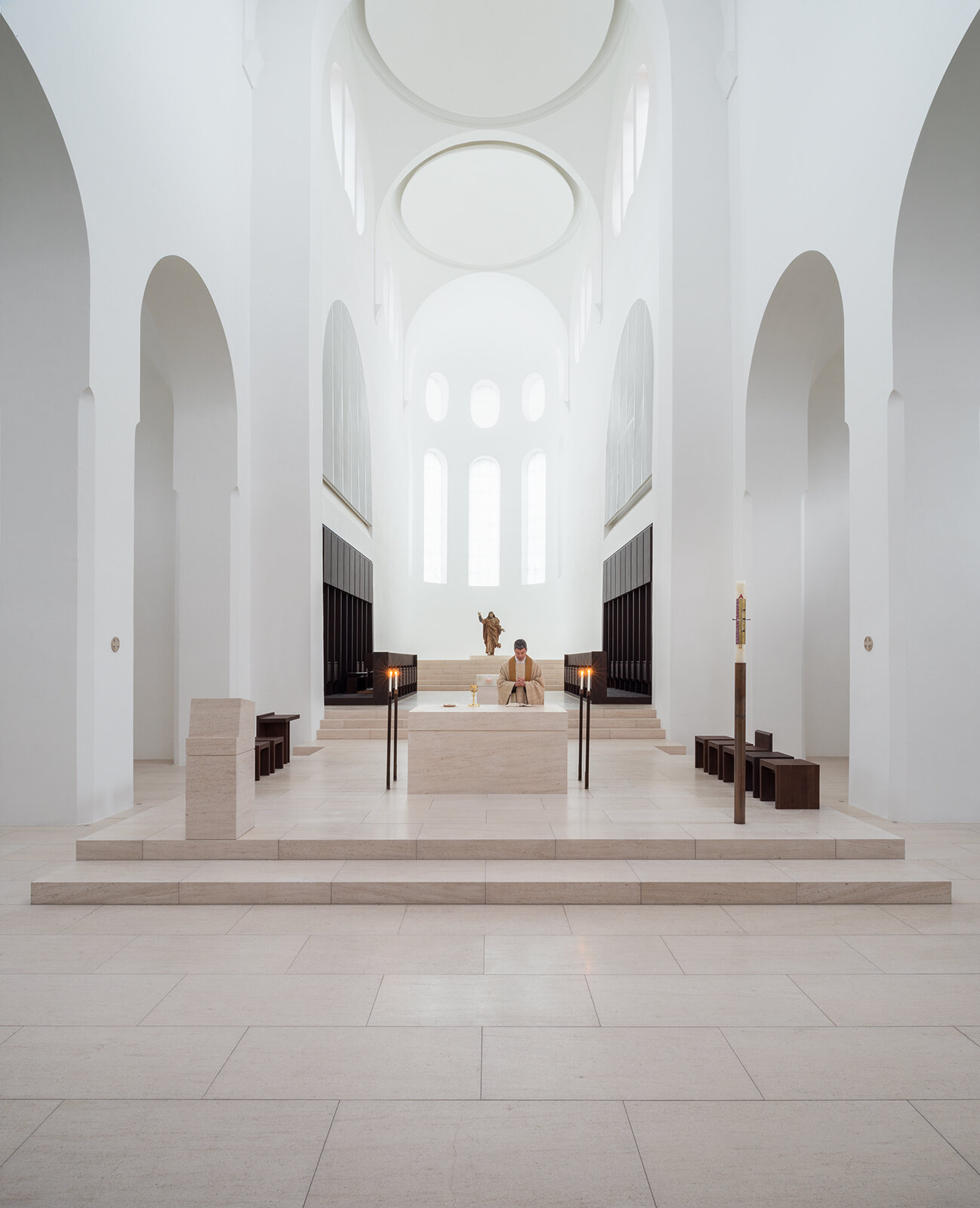
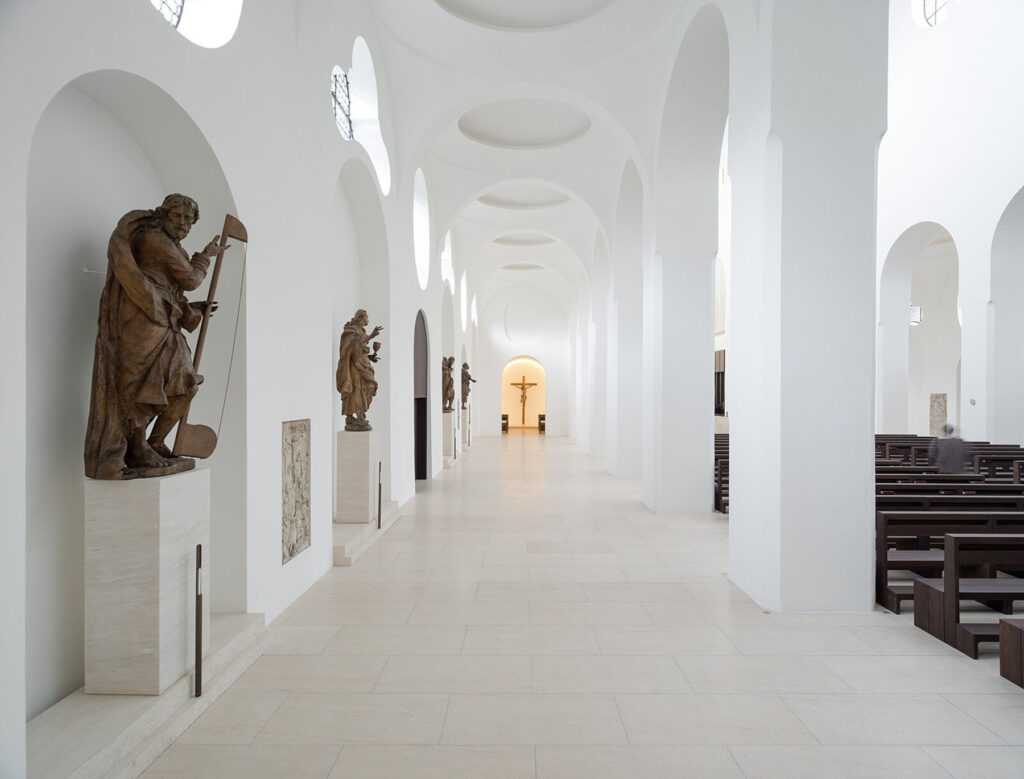
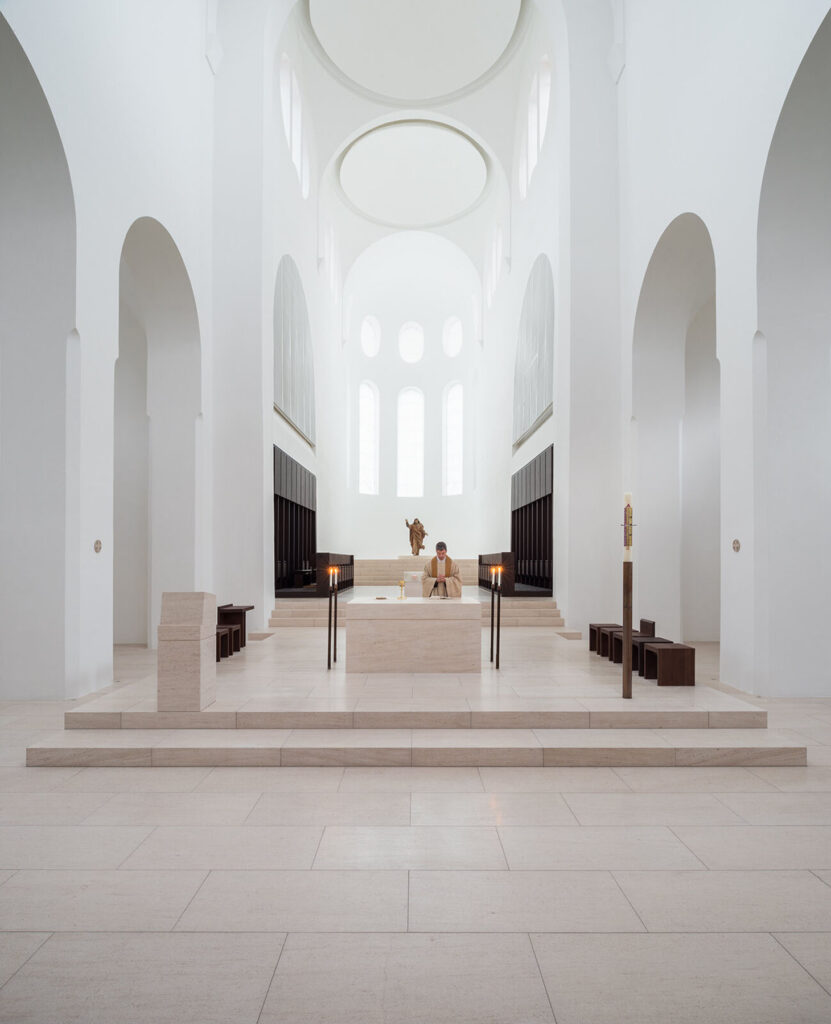
The St Moritz Church in Augsburg is a standout example of bringing out the inner beauty of a space, a sort of humble beauty. I have not visited it in person (not yet) but I can imagine from the photos that the visitor would feel sheltered and protected. Could you tell us about the process of refurbishing such place? 

With the St Moritz church we inherited a building that was already the product of many earlier interventions, over the centuries. My intention was to simplify things a little –  to achieve a clearer visual field, where the primary physical experience for people entering the building would be of light and space.

What places around the world have been particularly inspiring for you and your craft? You have cited Milan for example as one of the most influential cities in terms of craftsmanship, manufacturing and culture. What are some other places you have really enjoyed visiting and that have nurtured and influenced your work?

I am always energised by visits to quarries, to choose stone for a project. I’ve gone deep underground in marble quarries in Vermont and the north of Italy, where you find yourself entirely surrounded by a single material. For someone interested in the condition of seamlessness, it is utterly exhilarating.

You’ve mentioned in interviews before that you use photography as a tool alongside your sketches which to me highlight how architecture can be a multidisciplinary field. You have also released a photography book titled Spectrum through Phaidon a couple of years ago. Could you tell us what other mediums you have used before to complement your work process?

Photography is a critical design tool for me. I use my camera in the same way that other designers use a pencil and sketchbook. I also find physical models very helpful as a medium for exploring ideas – both in the early stages of a project and later on in the architectural narrative, when it’s more about understanding the impact of the details.

You must get a lot of different reactions to your work. Do you rely on how the exterior world perceives your work and if so how do those perceptions inform your future projects?

My work is never going to appeal to everyone. I have been fortunate that there have always been people for whom my architecture makes sense and that some of these people are in a position to commission me to make more of it.

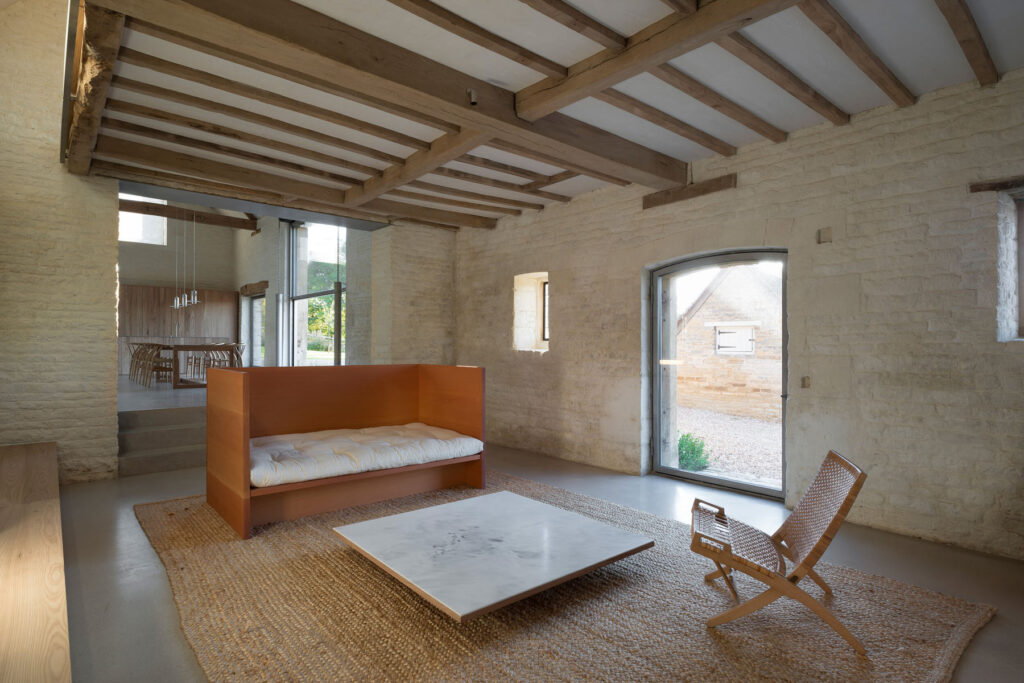
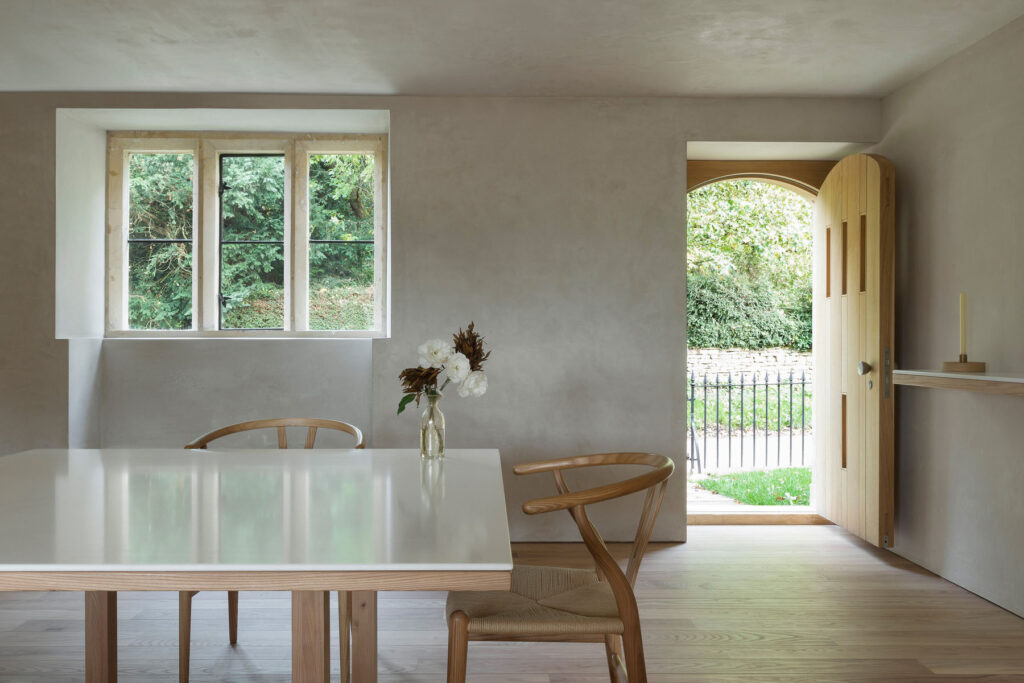
The theme of this issue is Growth and your countryside retreat, Home Farm in Oxfordshire is a project I felt resonated with it as you have successfully created a space that enables peace and tranquillity. How did the idea come about? 

Do you spend a lot of time there?

It was really Catherine, my wife, who was originally keen to find a place in the countryside. Now, of course, I could not imagine life without Home Farm.  The idea was to make a home with space for the wider family and friends to gather through the year, but also somewhere Catherine and I could live in a slightly different way than is possible in the city. In normal circumstances we move back and forth between London and Oxfordshire, but over the past twelve months I’ve relished the chance to immerse myself in the place – in the architecture and in the surrounding landscape.

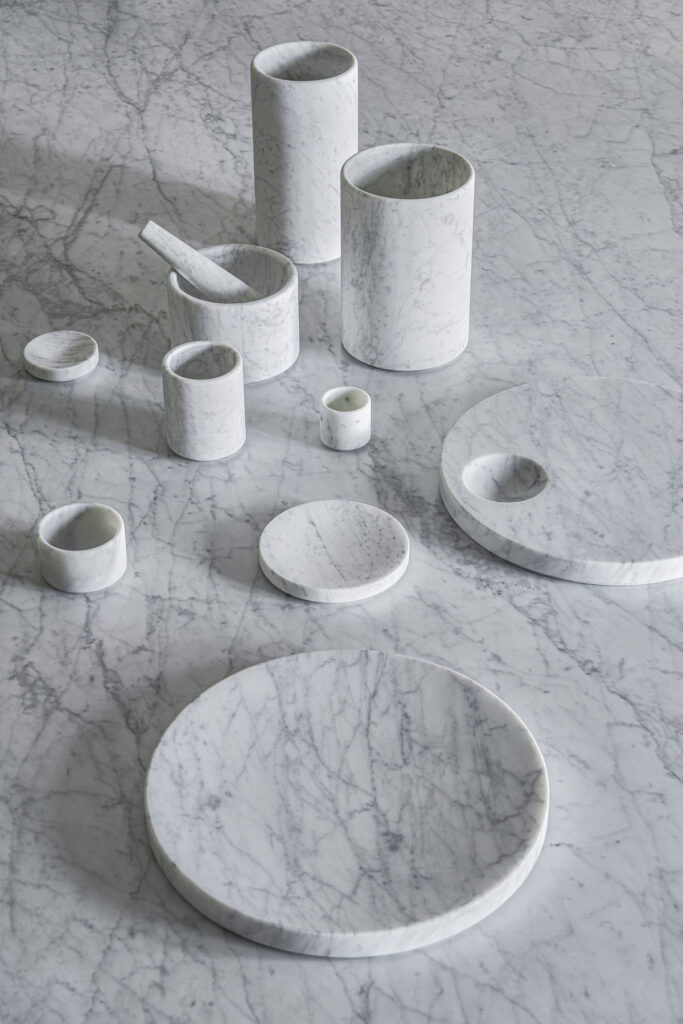
We have a number of architectural projects on the drawing board and on site, but one of my ambitions this year – fuelled by this immersive period at Home Farm – is also to develop the inventory of domestic objects.

Any book recommendations?

A book I never tire of is ‘Architecture of Truth’, Lucien Hervé’s black and white photographic essay of Le Thoronet, a twelfth century Cistercian abbey in the south of France.  Hervé captures the different spaces and surfaces of the architecture across the passage of a day, inspiring Le Corbusier to write at the beginning of his preface to the book, ‘Light and shade are the loudspeakers of this architecture of truth, tranquility and strength’.

What will you be working on this year?

We have a number of architectural projects on the drawing board and on site, but one of my ambitions this year – fuelled by this immersive period at Home Farm – is also to develop the inventory of domestic objects.

Any book recommendations?

A book I never tire of is ‘Architecture of Truth’, Lucien Hervé’s black and white photographic essay of Le Thoronet, a twelfth century Cistercian abbey in the south of France. Hervé captures the different spaces and surfaces of the architecture across the passage of a day, inspiring Le Corbusier to write at the beginning of his preface to the book, ‘Light and shade are the loudspeakers of this architecture of truth, tranquility and strength’.

Primavera Sound Festival Barcelona 2022

After a two-year hiatus, Primavera Sound returns to the Parc del Fòrum in Barcelona this weekend. That, in itself, is a reason to celebrate. For sure, the very idea of a live festival is music to the ears of many after the coronavirus pandemic saw the cancellation of summer events in two consecutive years. Last year would also have marked the twentieth anniversary since Primavera Sound launched back in 2001. In its first edition, the festival was a much smaller ordeal and took place at Barcelona’s Poble Espanyol. But the likes of Sonic Youth, The Kills and The White Stripes all performed there – setting the precedent for the festival’s line up each year, as music icons and legends from around the world return descend upon Primavera’s stages each summer. Of course, the festival has grown considerably in size, popularity and reputation since then, whilst managing to retain something of a “local” festival feeling. But perhaps there’s no greater testament to Primavera’s global influence within the music world than the fact this year’s iteration has been promoted to a two-weekend line up. Whilst Massive Attack, Tame Impala, The Strokes, Gorillaz and Tyler, The Creator (to name just a few) are set to headline this weekend’s events, the likes of Dua Lipa, Lorde and Megan Thee Stallion will also perform next weekend. 

The addition of this second line up to Primavera’s programming is part of the festival team’s response to the pandemic. As Marta Olivares, Primavera’s affable Head of Communications, tells NR over Zoom, COVID was a moment for pause and reflection – especially as, she says, it was a time when the “whole ecosystem proved to be so fragile.” For Primavera co-founder, Pablo Soler, this couldn’t have been more apparent; the pandemic didn’t just reaffirm the importance of live music, he says, “it has revealed it;”

“Without festivals, we realised that we were missing a part of our lives that was the collective experience.”

The communal aspect of a festival goes without saying – it’s about the excitement and the emotions that are experienced with other people that, Pablo says, is crucial for creating a state of happiness. The idea that the festival is nothing if not for the people is crystal clear, as Marta explains that having this year’s events spread out over the course of two weekends (with a week of indoor performances in Barcelona in between, no less) was made possible by the fact that last year’s ticketholders “overwhelmingly” decided to keep their tickets. As a result, Primavera 2022 is an amalgamation of three years’ worth of acts in some ways; Beck and Pavement, scheduled to headline in 2020 will, for example, make a much-awaited appearance in Barcelona this weekend. But over the course of the pandemic, Marta says, we’ve witnessed;

“so many artists creating amazing stuff, working so hard and releasing incredible records.”

In that sense then, Primavera 2022 is an ode to music in the lead up to, and over the course of, the pandemic – especially when popular acts from today might have flown under the radar back in 2020. 

Given that the festival will be a de-facto twentieth birthday celebration, this weekend’s events will be both a moment to look back on Primavera’s journey so far, whilst also looking towards the future. In fact, part of the festival’s events will take place at Poble Espanyol – something that Pablo thinks the team can be justifiably sentimental about. “Over the years, we have played concerts at this venue outside of the festival,” he notes, “but going back there with Primavera Sound is even more emotional.” It will be, Marta says, a kind of homage to that tiny festival that was first unveiled. But as much as Poble Espanyol is part of Primavera’s legacy, the festival team’s outlook is to keep moving forward. In fact, in the midst of the pandemic when the Primavera team were figuring out their bid for survival, the answer was, perhaps surprisingly, to grow bigger still – though “sustainably” as Marta puts it. “It felt weird to stay put,” she recalls adding that there was a need to pivot somehow. As in previous years, the festival will head to Porto for the weekend (which will occur at the same time as the Barcelona edition’s second weekend). But satellite festivals will also take place in Los Angeles, Santiago, Buenos Aires and São Paulo later on in the year. “It was [a case of] go home or go big,” Marta notes of the decision to grow the festival in this way. “Definitely we’re going big.” For Pablo, the new locations explain the festival’s future-facing outlook in themselves: “we are a festival that any country would want to have.” And with an insatiable international appetite for Primavera as it’s staged in Barcelona, it perhaps makes sense to take the music to the people. So how does the essence of Primavera translate to these new locations? Marta notes that the festival’s Barcelona location is part of its draw – close to the city, near the sea, and with a lot of cultural pull as well as music. “That’s something we want to be careful with,” she says of the other locations – noting, for example, Porto’s luscious green backdrop near the coast at the festival’s site in the Parque da Cidade. But as Primavera looks outwards and globally, it’s also turning back inwards, too. Earlier this year, Primavera Sound Madrid 2023 was announced – a way for the festival to continue its newly-established tradition of two back-to-back weekend events in Spain. There is, it seems, an exciting path ahead for Primavera over the coming years, but first: this weekend. 

“We are always the first festival of the season,” Marta explains, adding that this particular edition means that the weekend will be something of a test run for the string of European festivals that follow on.

“I want people to come to Barcelona and celebrate life, to express themselves and to feel safe and alive again”

Marta says. Pablo concurs; “seriously speaking, we have learned that we have to live in the moment – seize the day – because we are all more vulnerable than we thought. If we should take this twentieth anniversary party as the party of our lives, then so be it.” But what should Primavera punters expect when they’re there? For Marta, it’s the unexpected – recalling Arcade Fire’s impromptu performance on a boxing ring-esque stage at the 2017 festival. This is, of course, not an indication or confirmation that such an event might occur this year, but possibilities and chance encounters are certainly part of the Primavera fabric. To that end, Marta describes the ideal standard that the Primavera team strives for: “at the perfect Primavera;”

“you would be able to enjoy a show from your favourite band; you would go to something that challenges you; you would see someone you don’t yet know will be your next favourite act; and the fourth would be something you really had fun at.”

And with a line up as glittering as Primavera’s is this year, it’s almost guaranteed to be perfect.

Credits

More info · Primavera Sound Festival Barcelona
Special thanks to Chris Cuff and Henry Turner (Good Machine PR)

Marleen Pennings

I started with painting portraits. I learned how to mix colours, how to paint skin, fabric and hair. I have always been drawn to abstract painting, though. I experimented, but it felt like it was too soon, I didn’t know how to begin such a process. There’s so much in it. I like the confrontation in abstract work. It’s a good change of focus for me. I like both, very different, processes and techniques. I can get lost in both just as easy. At the moment I’m more focused on abstract work, because I want to explore more, it inspires me to not know where it’s going. For me, painting is the most obvious way to translate an ongoing pace, the world, its people and environment. It’s my language at the moment, it’s always there.

Designers

  1. Follow the Green (2015)
  2. Copper (2016)
  3. Germany Series (2016)
  4. Melon (2017)

Nicolò Parsenziani

Subscribe to our
Newsletter