Archive page:


DJ LOSER

One must imagine Sisyphus happy with DJ LOSER

Everyone is a loser, according to Magdalena’s Apathy label head Pantelis Terzoglou, and that might actually be something quite liberating. For Terzoglou ego is not in the picture, only music. You might know him as the experimental ambient project Angel’s Corpse, or underground club legend DJ LOSER. NR spoke with him about creative needs, the importance of isolation in creation, and how to remain true to yourself without sacrificing your career, whatever that term means, today, for an artist.

As we were speaking off the record, you mentioned curating a soundtrack for a brand? Could you tell me more about that?

Yeah, it’s for a brand from Oslo, run by EriK Spanne, Duy Ngo and Tomas Silva. They’ve got this emerging brand called 1313 Selah, and their fashion show happened in late August. Me and Erik have been collaborating since before the brand officially started, mainly through music. They’ve connected with one of my sub-projects, Angel’s Corpse, which is more ambient, with elements of gabber and hardcore. It fits perfectly with their vision for their current collection.

Is this something that you’re really interested in, given that it’s a bit different from your usual, more club-oriented work?

Definitely. My initial drive was just to produce music and create audiovisual art, which is why I also started my label. My approach isn’t limited to club music, though that’s the most recognizable project of mine. My creativity spans different genres and styles, depending on where my inspiration takes me. Like, five or six years ago, I was into slower BPMs and more industrial soundscapes inspired by the late 80s.

So, while DJ Loser is club-oriented, my broader artistic vision goes beyond that. Projects like Angel’s Corpse let me explore those other sides. I’m not actively chasing career opportunities for this ambient direction, but if opportunities like this come my way, and I feel inspired, I’ll follow them.

Would you say that’s the same philosophy behind how you run your label?

Exactly, it’s a natural flow. When I started the label, it was just an outlet for a noise-industrial sub-project of mine called Magdalena’s Apathy. I was doing a few tape releases and eventually decided I wanted more control over everything — not just the music, but also the visuals and narrative around the releases.

I’m very much into world-building, so creating an all-encompassing aesthetic for my projects became essential. I even brought back CDs, because they fit my generation’s vibe and aesthetic. The label was initially just a personal project, but it’s expanded as more people connected with it. Now, I treat it like a platform for friends and people who resonate with what I’m doing.

So it’s more of an artistic platform than a business operation?

Exactly. I’m focused on being an artist first, rather than a ‘label owner’. Of course, I know how to handle the distribution and promotion side, but I don’t want to force anything or break the natural flow of the project. That’s how I’ve managed to make a living through music, by following what truly inspires me, rather than chasing trends or commercial success.Feels more fitting to my ways.

Where do you start when building a world around your music?

Most of the time, it starts with an emotional or aesthetic vision. I maintain focus for music that is about conveying feelings, not genres or styles. I aim to translate the way I feel & see things into sound, and then build the visuals around that. When I curate releases from others, I give them total creative freedom and then try to match their music with a fitting visual narrative. It’s about giving people an emotional and aesthetic experience, not just music.At least that’s my opinion on what a release should be doing. I think emotions and aesthetics connected in a personal direction lead to an impactful experience. A trance track can evoke the same feelings as an ambient track, a trap track or whatever. For me, it’s all about conveying those emotions, and that’s why my label and platform are not limited to a single genre. I want to capture the raw human experience in its many forms, whether it’s through club music, experimental sounds, or something more ambient.

What emotions would you say drive your music?

The need to express oneself is the biggest one. I’ve always felt a need to, and connect with people and society afterwards on a deeper level, beyond just words. Music allows me to express emotions and experiences that are hard to put into words. It’s not about social commentary for me; it’s more about creating a shared emotional space through sound. It’s my way of overcoming isolation and finding companionship too I suppose.

That resonates with me too. There’s an Italian saying that translates to “every translation is a form of treason,” meaning words can never fully capture the original meaning. Music, especially instrumental pieces, often conveys emotion more directly, without the barriers of language. How do you feel about talking about music — your own or in general?

Talking about music can be difficult. I can do it, but it’s tricky. It almost feels like betraying the core of what I’m trying to express or what music exists for. If I wanted to say what I mean in words, I’d probably be a writer, not a musician. Music is my language for things that can’t be fully expressed with words,or words distort the point.

I get that, I guess it’s also why even though I am an avid listener, I could never write music. Switching gears a bit, how do you view DJing in comparison to producing? Is that also a form of communication?

DJing is definitely different from producing, but it’s still a form of communication. It’s less introspective and more about connecting with people in the moment. When I DJ, I’m responding to the crowd and creating a shared experience. It’s like setting the vibe and guiding people through a moment together. I love the challenge of reading the crowd and helping them lose themselves in the music. It’s a great way to feel connected to others, in a more social way than producing music alone in the studio.

How’s the electronic music scene in Greece, particularly in your city? I visit Greece often—my aunt married a Greek guy and lives in Patras, so part of my family is there. But Patras is very different. I’m curious about Thessaloniki and whether growing up there influenced your approach to music, or did you feel more inspired by what was happening elsewhere? I grew up in Bari, which had a somewhat decent music scene, especially for Techno, but I was still more attracted to what was happening outside. So I was always online, searching and nerding out, and maybe that’s why I ended up doing what I do today.

Yeah, so I’m in Thessaloniki, not Athens, and there are definitely differences in both the quality and quantity of what’s happening culturally in the two cities. Thessaloniki has always had some presence of electronic music during my years here. It used to be bigger when I was a kid, based on what people told me, but from my experience, it was more about one big commercial event—your typical stereotypical, generic tech sound. At the same time, there’s always been an underground culture, which happens mostly in university spaces, raves, or small basement parties. I used to attend those places before I became a producer, and they definitely inspired me in terms of the nightlife. But when it came to the identity of the sound, I didn’t always connect with what was going on in the city. For example, when I was into more industrial and desolate sounds, Thessaloniki wasn’t offering that, so I had to go online to find what I needed. Now, the city is growing faster, especially because younger generations are more open and online, bringing new ideas. I’ve been to some gigs recently, and compared to 8 or 10 years ago, people are more open and much more up-to-date. But the biggest problem in Thessaloniki is the lack of good venues, and that’s what holds me back from being more active or bringing in artists. We just don’t have proper clubs with decent sound systems that can support creative ideas. So you either do something in a small bar that occasionally acts like a club, or you take the risk of throwing an underground rave—renting equipment and doing it illegally. But in Greece, it’s easy to get caught, and i’m not in the mood or age to jerk around honestly. Thessaloniki is a beautiful city, though. Honestly, Andrea, I’ve thought about moving to bigger cities like Berlin, London, or Copenhagen. But whenever I visit those places and stay for a few days, I find myself pulled into the social scene more than I might need to. My creative needs are fed in terms of input—there’s so much going on and lots of inspiration from people. But the downside is, I lose that time for myself, that alone time where I can focus on my own production and rhythm. My creativity thrives more when I’m isolated. I’ve come to realize that, as a producer, I work best as a hermit. When I’m in an environment that doesn’t necessarily feed my creativity, it forces me to search for inspiration from within more naturally. That isolation allows me to produce more original ideas. Does that make sense?

Absolutely. Living in Milan and working in Paris, I get it. I’m constantly moving between these two big cities, working with artists, musicians, and fashion brands. So I’m always in social contexts, bringing people together, meeting new people—but it’s not always real or deeply felt. Our conversation now feels more open and honest than many social interactions I have. My job requires a lot of writing and thinking, and I always feel this sense of fatigue, like I’m being pulled in different directions. It’s something I’m learning to embrace as part of maturing, while for you, it’s more about finding your own spaces. I think we’re both figuring it out, in different ways. How do you navigate the online world? On one hand, we have all these platforms where we can research and get inspired, but it’s easy to get lost because there’s so much content. How do you keep your identity online, especially as a label head or someone who curates for others?

For me, I’m very comfortable with the online lifestyle. I’ve always been into it. I grew up in internet cafes and was part of online communities from a young age, whether it was for video games or music. So navigating the online world for inspiration—whether it’s music, art, films, or games—doesn’t feel disorienting to me. I know how to find what I need and how to navigate it all. But social media is different. It’s much more distracting, and it creates this spiral of ego battles, comparing yourself to others. When I’m online in general, I feel fine, but after spending 5 or 10 minutes on Instagram or Twitter, I’m like, “What am I doing here?” It’s not about content; it’s about ego. So I don’t spend much time on social media anymore. I post what I need to post, read my messages, and then get off. Instagram, in particular, feels like a necessary evil—it’s important for people in our line of work, but it’s also incredibly distracting and can kill your creative flow. It feeds ego more than ideas, so I try to stay away as much as possible. People know they can reach me through other platforms, and I communicate more through email than social media regarding music and art. I find that’s a much better way to protect my creative energy and avoid distractions.

You’ve always tried to control your ego, right? How has that been, especially with the surprising success you’ve had?

Yeah, it’s been a journey. In the beginning, I didn’t get any ego boost from it—I was genuinely shocked that people were even interested in my music. I’m self-taught, no formal music education, just learning by ear and experimenting with software on my own. My first setup was literally in the same kitchen I live in now, with these basic Logitech speakers. So when my first tapes and vinyl releases came out, I was like, “What the hell is happening?” It felt like the endgame dream, but I never expected it. The tricky part nowadays is social media. When I’m out, meeting people, or navigating social circles, I don’t have any sense or thoughts of comparison. Whether I’m interacting with someone less known than me, someone much more famous, or a fan, there’s no ego clash. That’s just how I am in person. But social media, man—it makes you behave differently. Its made up this way that everyone ,even for a few moments, end up subconsciously judging people’s work based on their follower count, like giving more attention to someone’s work with 15k followers over someone’s with 500. It’s messed up. That’s why I actively try not to get caught up in it. I don’t want to let my ego be influenced by this false narrative.

Speaking of ego, what’s the story behind the ‘DJ Loser’ moniker?

Because I think that everyone is a loser! [laughs]

What do you mean by that?

Yeah, in my philosophical view, everyone is a loser because people spend their whole lives running, trying to create a life and memories centered around themselves—their experiences, emotions, all of it. But in the end, we die, and we forget everything. Nothing matters because of this absence of personal remembrance , but not in a nihilistic way. It’s more like, if you live with yourself consciously,, there’s a kind of inherent futility to it.

That reminds me of the Sisyphus myth.

Exactly. Both the actual ancient Greek myth was a lesson, and the Camus’ The Myth of Sisyphus’ was one of my favorite books when I was younger. It helped me deal with my thanatophobia—my intense fear of death. Camus talks about ‘philosophical suicide’ and that idea really helped me navigate my fears.

Thanatophobia? That’s fascinating. How does that impact your life?

It’s the root of all anxieties, honestly. Fear of death is the mother of all anxieties. It’s the only absolute truth, you know? Everything else—stress, worry or even ambitions—is just masking that fear.
And when you actually grasp it, it’s mind-blowing. You reach this point where you’re like, “What the fuck?” I get what the Stoics were saying, like “Death is where you aren’t, so why care about it?” But for me, that’s the literal problem. It’s about the absence of consciousness and memory. It can feel like torture technique, honestly, to live, enjoy life, then have it all erased. That’s the crux of my fear—not death itself, but the idea that I will cease to think,feel, everything, even the things I value most.

So your fear of death is more about losing memory than losing life?

Exactly. I’m pretty much convinced that death is like a dreamless sleep—there’s just nothing after. So what’s the point of experiencing life if I won’t remember any of it? It’s not about it being pointless, it feels almost cruel. We’re biologically wired to keep living, to pass on our genes, but in the end, none of it matters because we won’t even remember.

Does this outlook inform your creative process? Does art help you deal with that fear?

It definitely does. Trauma and personal experiences shaped me into who I am, and they’ve pushed me toward art as a form of expression. Music was never a conscious career choice—Doing music was a need and I’m lucky enough to be able to live the life I’m living. Music was Something I had to do to boost the need of trying to make sense out of everything. And it helps. I try to live as authentically as possible, even in this capitalist system. I know what I have to do to push my career faster, how to market myself better, but that’s not true to who I am. I want to live my life in a way that’s honest to me, without selling out or losing my identity in the process.

Let’s forget death for a moment. I think we might get into a downward spiral that, albeit extremely interesting, I would avoid for our readers. What’s next for you? Any projects or upcoming gigs you’re focused on?

Right now, my focus is on my side project, Angel’s Corpse. It’s less club-oriented,based on the traditional sense, and more esoteric, diving deeper into themes like thanatophobia. It makes me feel more comfortable with those heavy ideas. As for gigs, I had my second label night in Berlin in August with a lineup that’s pretty hot—Brodinski, Evit Manji, Van Boom, and 0111001101110100. Berlin’s nightlife scene gives me the chance to curate a night with my vision in mind, and that’s a big deal for me.There are more gigs coming in Europe this fall both under DJ LOSER & Angel’s Corpse projects.

On the label side, we’ve got releases lined up—some from U.S. and European artists, ranging from experimental ambient to what I call “emo trance.” I don’t force a strict release schedule though. Creativity needs space, so things will drop when they’re ready. My main goal is just to keep doing what I love and help others express themselves too.

For your label nights, do you aim to create a fully immersive experience? Like curating thewhole aesthetic?

That’s definitely the goal—to create a 360-degree experience from the venue design to the sound. Right now, I’m focusing on curating the lineup and sound, but eventually, I want to control every aspect of the night. I could see that happening easier somewhere outside of Greece,but it’s one of my goals to be able to hold a night like that here though.

Looking forward to seeing how it evolves. And perhaps meeting you over drinks so we can spiral a little bit more. [laughs]

Sounds like a plan!

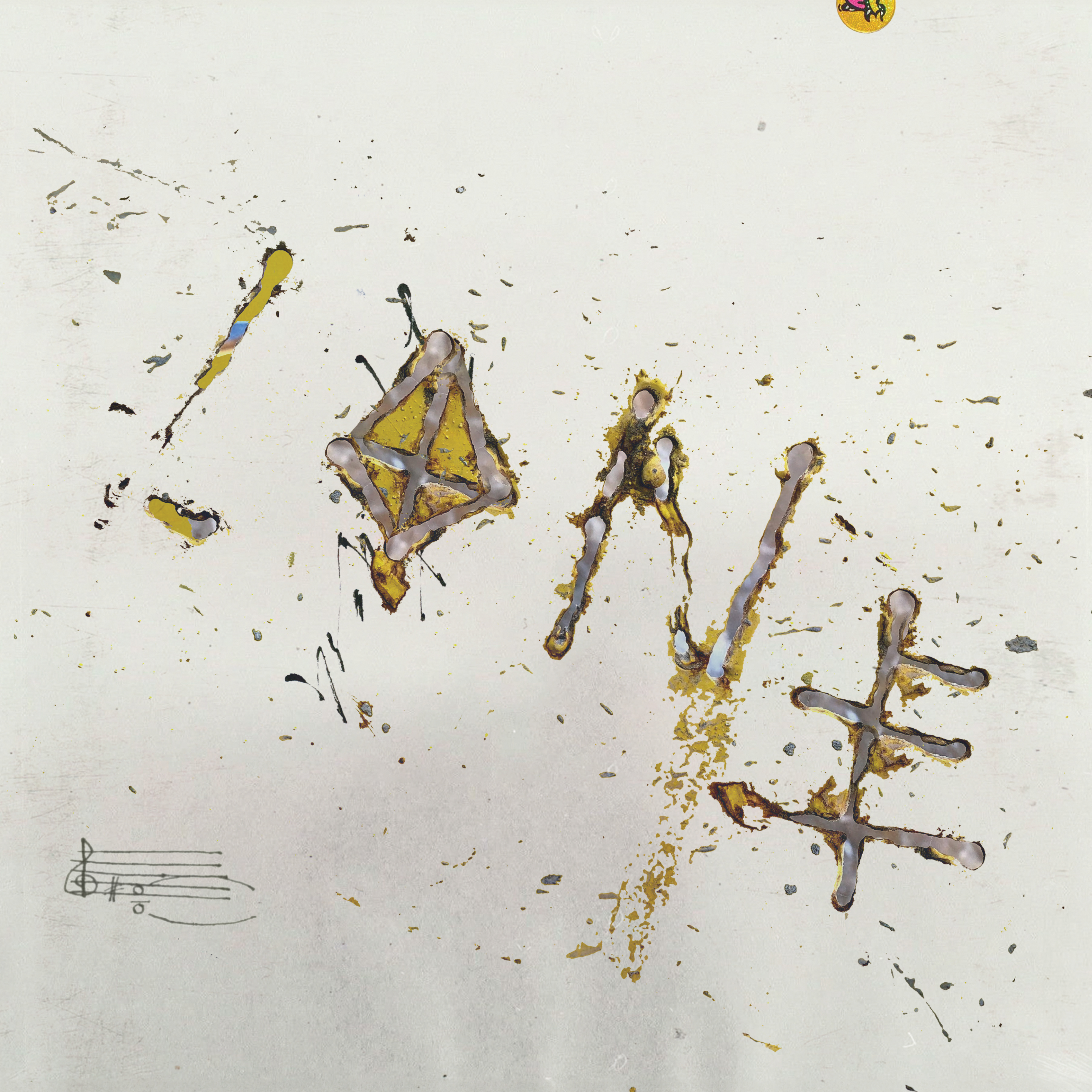
All artworks courtesy of DJ LOSER.

CS + KREME

Sonic Sceneries

It is an almost safe assumption to say that backgrounds are important while tracking down an artist’s output. When it comes to Conrad Standish and Sam Karmel’s –the duo behind CS+Kreme– such taxonomies are as interesting to perform as they feel superfluous. During the summer leading to their upcoming New LP ‘The Butterfly Drinks the Tears of the Tortoise,’ NR spoke with the Melbourne/Naarm based duo to retrace an incredibly rich history of sonic experimentation in and out of different scenes, resulting in an almost chameleonic approach to their signature interplay between registers and sounds.

I wanted to begin perhaps in a bit of a classic fashion with this one –I’ve been digging a bit about you, and there’s not much information out there, which seems intentional. 

Conrad Standish: It’s not really intentional, yeah. I think people might see us as more mysterious than we are. The truth is, people don’t usually ask us for interviews, so we don’t do them. But when we’re asked, we’re happy to.

Mmmh. I guess it’s their loss. I’m all the more excited to dig in and uncover a bit of unwilling mysteries. How did this project come about? Conrad, we were chatting a little bit off the record while waiting for Sam to join, and you mentioned Melbourne and the challenges of building something culturally there. Was CS+Creme born out of you guys being part of the same scene?

CS Yeah, Sam and I knew each other a little from the Melbourne scene. One good thing about Melbourne is that different groups mix. The techno scene overlaps with other scenes, probably because it’s a smaller city. We knew each other from parties, and at the time, the band I was in had just ended. Sam emailed me, asked if I wanted to jam, and that’s how it started. We jammed in his bedroom— I brought my 808 over, and we had surprisingly strong chemistry. That’s how it all began, and over the years, we just got deeper into it.

Going through your releases, I had the impression of being confronted with a very heterogeneous mix of elements and influences, which seems to evolve from record to record – A pronounced sense of experimentation, if you like. Could you talk about your process? How do you approach composing?

Sam Karmel Sure. We usually start with sketches, often born from jams. If we like something in a sketch, we play with it until we’re happy. There’s a lot of experimenting—adding, removing elements, and trying unexpected things. We push ourselves but keep it natural. Sometimes new equipment helps us explore new areas, but it’s a playful and fearless approach, where we throw ideas around until we get somewhere that feels right.

CS Yeah, that’s pretty accurate. In the early days, everything came from improvisation or jamming, and we’d zero in on the good parts to refine them. But now, we’ve expanded. Sometimes we work individually, bring ideas together, and refine them. There’s no fixed process, but the end result is always quite different from the initial idea.

That unpredictability is fascinating. It’s like the process takes you somewhere unexpected, which brings to mind how sometimes writing starts with a concept but ends up in a completely different place. But your output still feels very coherent. When I listen to one of your records I can really tell it’s a collection of songs that belong together, you know what I mean? Do you consciously aim for that level of cohesion when you create an album?

CS No, not consciously. We don’t start with a clear idea or feeling in mind. It evolves naturally. As we’re halfway through, we start to see a pattern or shape in the record. We just let things unfold and guide them later when we start to understand what the album is becoming.

It reminds me of discussions about surrealist music—how it emerges from spontaneous juxtapositions that form a coherent aesthetic in the end. You seem to have a broad range of influences. Could you talk about your musical backgrounds and how they come together in your sound?

SK Yeah, over the years, we’ve traversed different areas of music. I grew up with classical music, then got into metal, and later Detroit techno and electronic music. Conrad has a different story.

CS Yeah, for me, it was hip hop when I was younger, being part of the graffiti scene in Melbourne. Then I played in rock and punk bands. We have broad tastes but share a lot of common ground. Our different backgrounds come together naturally.

I’ve got to say I am very curious about the Melbourne scene. You’ve mentioned also how much they usually overlap. Did growing up in such an environment influenced the experimental quality of your processes as musicians?

CS Well, I wasn’t as involved in the Melbourne scene as Sam was. I moved to Berlin and London for a while, so I can’t say I’ve been deeply embedded here. But Melbourne is cool; it has its own scene, though I’m not sure how amazing it is compared to other places.

SK Yeah, when I moved to Melbourne in the early 2000s, there was an underground experimental band scene that I was part of. The scene has changed a lot since then. Right now, it’s very dance-music-oriented, especially with a focus on psychedelic techno.

CS Exactly. It’s gone through different phases, and it’s hard to pin down what it’s like right now.

You come from such different backgrounds and scenes, and you’ve both performed in various settings— from the Bourse de Commerce to festivals, passing from proper clubs, and concerts. Does the setting where you perform influences how you compose or alter your live sets?

SK More and more, we’re thinking about how the music will translate in different environments. The sound system has become something we’re particular about now. As we’ve played on some amazing sound systems around the world, we’ve realized that when the system is good, our ideas translate the way we want them to. So, to some extent, this does affect how we write music, even for things that haven’t been released yet. And when it comes to live sets, we’re treating them as a unique entity, separate from the records.

CS Yeah, I agree. I’d love to treat the live experience as something completely separate from the records. It doesn’t have to just be us playing songs from our albums. I almost want to create something that’s 100% for the live experience and never recorded. But the setting can change things every night—sometimes you have a great sound system, sometimes a small room. In the past, we might have just pushed through, but now we’re trying to be more flexible and adapt to different situations. We both want the live set to be treated very differently from our recorded material.

CS Our upcoming record, for example, is quite gentle, but for live shows, I personally don’t want to be that gentle. We’re working on a new live set for our tour, and it’s going to be interesting to see how it evolves.

Why do you feel the live performances need to differ from the record’s nature?

CS I think it’s important to have a dynamic range in live performances. Sure, there’ll be gentle moments, but I don’t want to just play songs from the record. It’s a different experience being in the room, where the energy can change based on how we feel or the space we’re in.

SK Yeah, emotions always come into play during live performances. There’s room for improvisation, so how we perform can vary depending on our mood that night. It’s part of what keeps things fresh and exciting for us.

Could you tell me a little bit about the new material you’re working on? You mentioned a new record coming in September.

CS Yeah, we’ve written a new full-length record coming out in September on The Trilogy Tapes. It’s our most concise work so far, with some very gentle, minimal moments. But we don’t want to talk too much about it—it’s better to listen when it’s out.

SK We’re still pushing into different areas, but it feels like a natural progression. It’s very different from our previous records, yet it still sounds like us.

I understand it can be hard to describe music in words. Sometimes you just have to listen to it to understand.

CS Exactly. Describing music is difficult, especially for us, but there’s a chemistry between us when we know we’re getting it right. I think this record has a lot of those moments.

Speaking of live shows, do you ever think about incorporating visual elements into your performances?

SK We’ve thought about it recently. Sometimes visual elements can be overdone and come off as corny, but when done right, they’re amazing. We’re open to exploring it but haven’t found the right person to collaborate with yet. For now, our shows are minimal—just us playing in the dark with minimal lighting, no big showbiz elements.

Final question—when composing, is there something specific that inspires you, like a particular sound or image, or is it more of an organic process?

SK It changes. Sometimes it comes from an emotional place, other times from an interest in abstract sonic ideas. So the writing process depends on where we’re at emotionally or sonically at the time.

Listen to CS + KREME mix here.

Credits

Photography · Louis Horne

Bloody Clip

Through Clip’s looking glass

She loves music and making friends. Clip’s IG bio could very well encapsulate her attitude. But that would mean remaining on the surface level of what the NYC rapper and artist is all about. NR interviewed her back in (month) to learn more about her world. into her world —after all, what better guide could we ask for, if not herself?

I’ve seen a lot of media coverage, web exposure, and you just teased lots of big and very interesting collaborations. You came firing straight out the gate.

Oh, honestly, I’m really thankful for how fast things are evolving and how packed my year has been so far, but it’s kind of been weird to adjust because there’s been so many life changes. We kind of had to find the best way to navigate through all the madness. Luckily I have my team, and the people who are close to me –they really make it easier. But I still sometimes don’t really know how to navigate everything..I just try to make it work!

How’s all of this, a new team, more exposure, a bigger community, impacting you?

I still try to just do my thing, but at the same time I’m obviously trying to be more of an artist, really honing in on my craft without changing too much of myself. It’s the same energy I’m putting in, I guess only in a more professional way –less like a girl with just her phone doing whatever, and more structured.

Less DIY?

That’s the perfect word for it. I was so DIY for so long, and I still kind of am. Only now, I have amazing help around me!

It feels like your relationship with your fans and the people that your music speaks to is very important in what you do.

It’s everything.

Even the way that you interact with them, It makes you think that it somehow translates in your process. What sparks you?

Tying back to you mentioning communities, I always was longing to be a part of something growing up, and I found that through music. It makes me feel so privileged. I really just want to own that and make sure everyone that supports me feels as seen as I do right now. It’s something I hold close and try to remember everyday: making everyone feel like they’re accepted, because life is just crazy and we should try to make things better for everyone, in our small ways –But I’m getting a bit sidetracked. Back to my process; I like to say that I don’t really have one –It’s like the beauty behind the madness: Whatever comes to me, comes to me in the moment. I try not to overthink things, because overthinking is my biggest enemy, something I’ve always struggled with. Sometimes my friends will say that when I create, it’s like I’ve been possessed by a music entity or whatever. My old music really used to reflect a lot of emotions and situations that I was experiencing at the time because my life was just so crazy, changing so fast –I just used my music as a way of coping. Nowadays I’m trying to have more fun with everything. As I started going out more to parties I was like “okay, I would love to turn up to my shit in a club.” But I couldn’t! I only had sad songs out! [laughs] So lately, I have been trying to make more, let’s say, happier club bangers.

Things around you and what your experience is changing. The recipe might be seemingly changing, but it really isn’t, right?

Exactly! This is myself, and my music reflects that just, naturally, you know?

I read about how it’s very important for you to be a mirror for other people to see themselves in. However, your music is very personal and intimate. There’s this sort of contradiction, but you still manage to create something that feels open to the listener. They can project their own meanings onto it while still enjoying it. I wanted to ask you about this, but I think you’ve already answered it in a way.

It’s literally just like that. So yeah, that’s a cool and beautiful way of putting it!

You know, I was trying to find ways to pinpoint and define your sound, but somehow it eludes me. One word I would use to describe it is ‘cool.’ But ‘cool’ is a very elusive term. You’ve been associated with the fashion world, magazines, runways —all things that exude cool. So now, I wanted to ask you, since you describe things very personally, what would be your definition of what coolness is today?

That’s a good question. I think coolness is…owning it, your raw inner self. I like people that are vulnerable and are afraid to show the world who they are, but they still risk it and express themselves. The coolest people that I know are so real to the point where it might even be detrimental for them. But that’s what makes it cool, you can’t really replicate those things. And maybe that’s kind of a cliche, but I think not being an asshole is also very cool.

Do you have plans moving forward to further build on your personal brand of coolness, maybe reinforce your presence in different mediums other than music?

[Laughs] Anytime I used to get asked this, I would be like “Oh, you know, I’m just floating, I don’t know my plans.” But now I finally have a very precise idea about it! I want to be the face for people like me, that’s the masterplan. And, obviously, music is my priority. I love music, that’s my everything. I have this quote I always use “Music is why hearts have beats.” Music really is my life, and I never want to lose sight of that, but also I don’t want to box myself in it. I want to keep experimenting with different mediums, especially visual, and continue to show people like me that If I can do it, then you can too, because I’m literally the most normal person ever.

And what are some hidden references or elements that might have influenced your music, your overall artistic expression –something that we couldn’t pinpoint just by listening to your music, but that is there and embedded in what you do?

There’s a whole grunge era of me growing up in middle and high school that played a big part in shaping who I am. Everyone was kind of emo, but I really identify as a grunge girl. I am maybe still living in that era, you can feel it in my music. I loved alternative, experimental, sad boy music –Yung Lean, Lil Peep, Drain Gang. I was a little weirdo in class, listening to bands like The Neighborhood, Title Fight. Emotion is a big factor in everything I do. I think it’s cool to feel so intensely because a lot of people seem like walking zombies with no emotions, just going through the motions of life –I call them NPCs. I feel bad for those people who aren’t living life the way they want to. But getting back on track, the grunge era, rock, emo, and fashion all influence me. Growing up, my parents never really got me clothes because they believed school wasn’t a fashion show, going all the time like “all you need is like the essentials.” They were also conservative Jamaicans, so I wasn’t allowed to express myself the way I wanted. Once I was free from those restraints, it felt really good to be myself, and clothes played a big part in that. The whole fashion world is a big inspiration for me, and while it might not be directly felt in my music, it works hand in hand with it. And then again, now I’m walking runways and shit all over the world, you know?

How does that feel?

Pretty fucking cool! [laughs]

Being able to not only express yourself through clothes and music but also fully embrace your personality while being a professional adds a different dimension. The references you mentioned, such as Yung Lean or Drain Gang, are all artists who took subcultural and aesthetic elements and made them their own. They repurposed these elements, which is something you do as well; You are part of a new generation of artists that are both subcultural and have some mainstream elements in how they present themselves on the web. You have your own niche and audience, while rapidly moving up. This is something I think a lot about, and you are living it in a way —So, I wanted to ask you: Do you think that the way underground and mainstream used to be very separate entities is now changing? Are they colliding, or do you still think there’s a distinction between them?

People have their various opinions on this topic, mine is that the meaning of the term “underground” definitely has changed as a whole, especially after COVID, a period where a lot more people just started trying to make music, alone in their homes with nothing to do, just creating. I feel like that whole moment really shifted the underground as a whole and now it’s more saturated, but not necessarily in a bad way. On the internet, the underground is becoming the modern day mainstream, which is really cool. Maybe I’m biased because I’m so in the scene, but most of the people I know are not listening to the radio, they’re going on SoundCloud. They listen to their friends, they discover their favorite artists on Instagram, or Reddit. There’s a lot of artists that are maybe not having real commercial success, yet, but they’re getting a lot of streams, and they’re doing well, they have a proper fan base! Also, there used to be a lot of negativity in the underground, but everything now is just so broad, and so many people are just having fun with it. I’m meeting new friends because we’re doing shows together, going to parties together. Everything became really wholesome. We can breathe, relax.

Since there are now more platforms and more space for everyone, as you said, people are starting to let go of, perhaps, jealousy over a space they feel the need to protect.

Exactly. And it made everything less toxic because of that.

And how do you feel about collaboration? It seems like you are open to it, but also very selective. That’s what I’m getting from how you’re talking. Your music is very personal, and your relationship with your fans is personal too.

I think that my opinion is never gonna change on this, ever. And I’m satisfied with that. But, like you said, everything I do is extremely personal to me. So, it’s like, you can’t just give your baby to a random babysitter; you have to get to know them and find the right fit and vibe. That’s how I see it. If I do a collab, it’s because it was genuine. It wasn’t planned, it wasn’t for money. Even if I was down to my last cent, I would never sell a feature like that. I feel like I’m selling myself short, giving away a part of me, selling out. Everything I do has to have meaning; it has to be personal and authentic. I tie that in with collaborations. I’m not opposed to them, obviously—I have some out, and some more on the way. It just has to make sense and be with the right people. Not that anyone is the wrong person or doesn’t make sense, but something has to really click.

Have you got a record coming out later this year? Give us some spoilers!

Definitely! I’m gonna drop a really good album. I can’t wait for that, I’m really happy with it because, honestly, all my sad stuff is cute, but I’m over it. I don’t really want to dwell on it. I’m really excited for my new stuff and looking forward to sharing it because it feels like a whole new phase for my sound. More mature. As I said earlier, I’ll never lose sight of who I am and what I represent, and everything I’ve built to get here. But I’m definitely treating this more as a job rather than just a fun hobby that’s getting me attention. I really want to keep pushing out things for people and keep creating, involving everyone in what it means to be in CLIP’s world.

Backing up a bit on the coolness stuff, I’ve read that you’ve been associated with the status of a new “it girl.” Sometimes defining someone, even with something very positive and cool, like ‘it girl,’ can feel cagey.

I don’t know. I love the term and everything about it. Growing up, I was so obsessed with what it meant to be an ‘it girl.’ But I realized that anyone can be that, It’s something you embody; it’s how you carry yourself as a person. I value my authenticity more than being boxed in as an ‘it girl’ because that label comes with so much behind it. It reminds me of people in school who tried to chase that status and play into someone they’re not. You know an ‘it girl’ when you see one, and that’s not something you should be labeled as. It’s about what you’re doing for the community, how your art is helping people. I think that’s what really matters: being a figure and a voice, using your platform to help people feel heard and feel good.

This really feels like a CLIP manifesto.

I’m so anti-labels.

Even regarding music genres?

Yeah, exactly. That’s why I don’t want to choose a genre for what I do. I hate being boxed in, it suffocates me. Like when I was living in Texas, I was suffocating. I hate that feeling, anything that makes me feel like that, I just tend to stay away from.

You lived in Texas, LA, and now New York, right?

Yeah.

How has each city influenced your experience? Is this journey and evolution through the places you’ve lived reflected in your sound? I feel like there’s maybe a New York phase in your music and another that feels more like Texas. Or maybe I’m just overcomplicating things and projecting.

No, honestly, that’s very real, even if perhaps it’s something that unintentionally reflects in my music and sound. You’re not the first person to tell me that. I’ve had personal friends say things like, ‘Oh, this vibe is really Texas,’ or ‘This reminds us of Texas underground music.’ I don’t do it intentionally. Despite how I feel about certain places or experiences, they define me, and my music is me. It just naturally reflects without me even thinking about it.

Team

Photography · Lea Winkler
Styling · Zoey Radford Scott
Hair and Makeup · Jeanette Williams

Chanel Beads

The Feeling Remains

What is a feeling? neither us nor Shane Lavers from Chanel Beads might have a correct answer for it. That being said, NR spoke with him about navigating fleeting emotions through music, internal contradictions, and what drove —and bothered— him one week prior the NYC band’s debut album Your Day Will Come would see the light.

Hi Shane, how’s it going?

I just woke up, I’m in the middle of moving, so it’s been.. chaotic, but I am good!

And, most importantly, your first LP is on the way! How do you feel? How have the last weeks leading up to it been?

Yeah, it definitely feels like something new, but I try not to have any expectations, really. And then everything’s a happy surprise.

I’ve known about your work since fairly recently, actually. I’ve gotta come clean. I listened to your music for the first time in Paris, around November.

You were at the Bagnolet show, right?

Attending that show was a great moment for me, as it had been more than a couple of months since seeing someone play live –I came there being so curious about the whole thing..Your setup, and the way you guys performed felt refreshingly different. One thing I am wondering ,now that things are maybe starting to change, is about the shift from smaller, intimate venues to larger ones, like the recent gig you did at SXSW. What I loved about your show was its intimacy, and maybe some of it might be lost in bigger settings. How do you feel about this potential change in how your music is experienced? Are you adapting to it?

Settings like SXSW are complicated –We played a couple of outdoor daytime shows, and that’s just not a great fit, at least for what I’m trying to do. That show you just mentioned, if i’m not mistaken, the place was almost a gallery or a studio, it didn’t have a stage, but was still loud enough: That felt like an ideal place to perform. I’m uncertain about adjusting to formats where there’s a significant distance between me and the audience. Most of the live performances I’ve done are just kind of this weird act. It’s not acting per se, but it’s a really naked moment –Me trying to embody my music really plainly, really close to people. So yeah, I’m kind of nervous, and I don’t really know what to do if there’s like a gate and, you know, 20 feet between me and people. But I guess we’ll cross that bridge.

You maybe lose that conversational element that your music possesses.The Bagnolet show was the first time ever I listened to your music –I didn’t know anything about your work prior to that. A friend invited me to the show telling me it would be a good one so I decided to go in blindly, without listening to anything beforehand. I just wanted to be surprised by something new. Maybe that’s why I perceive this presence of a conversation between you and your listener, and that is something that an intimate live experience embodies better. Do you consider the relationship between your music and its audience, allowing space for their interpretation alongside your own narrative? Or do you primarily focus on expressing your own story, regardless of the presence of a stage or audience?

It’s kind of complicated. I mean, it’s definitely closer to the latter. It is always a bad idea to try to imagine what other people are thinking, and that is sometimes because you can never really picture a stranger’s mind. I don’t purposefully try to not-think of what other people will think, and I feel very lucky at the moment because that kind of distinction doesn’t even cross my mind because I am too focused on myself as the listener, or trying to have a conversation with myself.

It feels very insular, though, and sometimes after a songs’ made, I’ll kind of notice that I think that I’ve written something very specific and detailed, but then I am like “wait, there’s only like four or five lines in this song and not that much of a context for them.” Even I may not fully know what the song is about as it shifts as you write it. However, as long as it means something to me, I’m happy, I am excited. 

Your songs often present two distinct voices or perspectives, a sense of internal conflict or contradiction. This duality seems particularly pronounced in some of the songs from your upcoming record, especially now that yours and Colleen’s singing alternate and layer more substantially, perhaps reflecting this conversation or dialogue within yourself you just mentioned. I had a question in that sense, but I guess you’ve already touched on this aspect, acknowledging the presence of two voices conversing or two parts of yourself engaged in dialogue –An interplay between different perspectives allowing abstract feelings to resurface and attempting to give them tangible expression.

Yeah. Context always changes in what I write, but it’s almost like..the feeling remains the same, there’s a consistency of an emotion lingering through and through. It’s akin to moving from one scene to another, seemingly unrelated, yet still connected by a common thread despite the shifting of time and space.

Without the need of a specificity.

Yeah. [pauses] The feeling remains.

It’s intriguing how your composition process seems to mirror this idea. I’ve noticed a very distinct style, and sound, in your music, even from the first time I encountered it. Despite this being your debut LP, your consistent approach to composing and shaping sonic palettes over the years has been evident. Was this new record an opportunity to crystallise and refine that style further, or was you just going for an experimental take on longer narrative possibilities or a more cohesive output of material?

It’s both of those things really, it kinda just felt like, “Okay, now I’ve got an album.” But I definitely was trying to match an emotional and lyrical sentiment with the sonics. I always felt kind of frustrated with the way I composed in the past and I know that a lot of musicians or artists might feel like they’re aspiring to something, but they’re kind of stuck making something else. It’s kind of a cliche, so I try not to think about it too much, like the one of sitting down with the guitar and then getting really into it, making beats or something like that. I think such things are kind of boring, and self mythologizing in a weird way.

Industry tricks 101: The creative journey’s sentimentalisation..

I’ve been talking about this with friends a lot. I felt really free with this project, I finally was able to let the floodgates open and release stuff because I felt in a position where I’m not interested in distinctions anymore, and whatever i do is just gonna exist as it is and I’m not gonna give a shit If people think it’s rock music, electronic music, or whatever. I’ve been having interviews where people keep asking me about Coffee Culture, because it’s kind of the record’s outliner, but I actually feel like I make more music similar to it than, let’s say, Police Scanner. And I guess this kind of feels like a cliche too –To be like “Fuck the listener, I don’t even care about the listener.” But yeah, I didn’t really like thinking about distinctions like “who’s listening to it? Am I listening to it or is someone else listening to it,” I am kind of practicing ignorance almost as a virtue, lately, in that regard. [laughs] 

Have you been putting things out because you just finally felt really like it?

Yeah. And I try to stay away from distinctions and intellectualising stuff. It’s way more interesting to go back before those lines were drawn.

I get it! Sometimes, as I interview people, it’s almost weird because when I come there, I have all my stuff prepared, questions, notes. I’ve been reading, listening, informing myself on the artists’ work, weaving narratives around and intellectualising it. It all feels a tad funny sometimes, because I think of myself first and foremost as a listener and sometimes I think that maybe I should just focus on enjoying the music and, as you said, it is simpler, and maybe more interesting. How do you feel then when talking about music, your music specifically? 

Well, I think it’s fun to over intellectualise things, I just don’t want to do it to myself. [laughs] It’s flattering to talk about your music with people, but it also feels weird sometimes –And don’t get me wrong, I’m getting good at PR training. If someone asks me a question, I’ll just be like “next question,” if I don’t want to say anything about it– The strange thing with talking about my own music is that, often, the whole point of it is that I’m not able to just talk about the things i want to communicate with it. If I could, just talking about them would have been fine, but because I don’t feel like I can do that via simple words, I resort to music. Whatever you’re trying to express, I feel it has to come out via the best channel you can express it through, so a complicated feeling or a complicated thought can come out with all the nuances it deserves. What I like about the way I’m approaching music is that it allows me to work with stuff that I’m still parsing through –It’s me trying to figure out how I’m feeling, and what I’m thinking or what the world is, in an external and internal way at the same time. 

How long do you feel this record has been growing within you? A part of you may still be processing the themes woven into this record, and while you may have physically composed the record recently, it feels listening to you like its inception and development may have been with you for much longer. 

A lot of what I do, not only with music but with visuals too, I approach it with a “waiting to strike” attitude, kinda like getting really prepared for something that is going to happen so that you can move quickly about it. It’s not improvising. It’s more like operating in real time, that’s why maybe I am so fond of playing live shows. Things always happen quickly and impulsively, but at the same time thought out and prepared. I’m not really interested in super constructed music, but rather in quick bursts that then are shaped from there. I have this kind of motto, “Never let them see you sweat,” which is like..You can think about stuff and prepare it, but ideally you shouldn’t be in control of all the variables, so then you can kind of discover new stuff in that moment. I don’t know if that answers your question, but that’s a complicated answer to give you, because I wrote the album pretty quickly, but there’s one song on it called Urn that I wrote, like in 2018, and it kind of came out way different when I finally recorded it again, so timelines are, let’s say, variable.

Like with Idea June, you released two different versions, very similar in their underlining, both songs’ sentiment feels the same, but they still are very different, maybe two sides of the same narration? It’s interesting that you decided to release both. The bit about not wanting the artifice behind things to be seen really resonated with me. When I saw you live, it felt..digital, electronic maybe, in a way. Your setup was hybrid, a computer playing the record and you playing over it, singing over it and adding vocal and sonic layers to it..but it felt very different from listening to the record versions of your tracks, because you don’t just execute the song, i feel it varies from set to set and is closer to what you said about doing the prep in order to be ready to change things on the fly.

Zach and Maya make their own guitar parts, and we just play the whole song front to back, they improvise a little but usually just once, and we get stuff like 90% locked in. As we refine it, especially during tour runs, it becomes less about improvisation and more about solidifying the structure. Still, there’s always this sense of recreating the song each time we perform it, even though the tracks remain consistent. It’s like discovering how the song should function anew with each rendition. Also, we’re not the type of band that heavily engages with the audience too much, like I’m not trying to crack jokes too much, which is what I do when I get nervous. I tend to funnel any nervous energy into the performance itself, though it’s more of an internal dynamic rather than trying to rile up the crowd. The live show is crucial because it feels like an ongoing dialogue with the audience about the sound and atmosphere of the music. We’ve encountered various venues with unique setups, like a show in Seattle held in an old drugstore, where our sound ended up heavily distorted due to the setup. It was mostly just kind of like shoegaze and punk bands playing, technically, like a festival –You just weren’t supposed to hear the vocals anyway, so they had a setup that was really not ideal for what we usually do. Rather than fighting against it, we embraced the challenge and improvised, adapting to the space on the spot. There was no respect or adherence to how the songs sounded initially, we just blasted the sound, fully screamed our lungs out and got over it, using it to our advantage. It’d be such a nightmare to just try to be like “Oh, this is not supposed to sound like this,” and fight with that. It’s way more interesting and compelling to just try to adapt to the room on the spot.

Are you aiming to maintain the same approach when performing in more standardised venues or supporting bands like Mount Kimbie? It’s a different dynamic, with different expectations and preparations for the show. How do you plan to stay true to your style and maintain some level of absence-of-control in these more controlled environments? It’s an essential aspect of what you do. Initially, when I saw you play, I found myself wishing for a full band and a more elaborate, proper, setup. But as I became more familiar with your work, I began to appreciate your approach to live music more and more. It really started to make sense and felt refreshing, new. How do you plan to maintain this chaos-theory approach to live music as your career progresses?

Our current approach is highly adaptable and, despite occasional suggestions to add a drummer –mostly from drummers themselves –I’m intrigued by its current possibilities. I’m not focused on delivering what people expect, so I’m not inclined to follow traditional paths. Mount Kimbie are an amazing band, they’re fantastic musicians, but as for myself, I’m currently not interested in playing an instrument onstage. Singing without any other responsibilities allows me to fully immerse myself in the moment, embracing any awkwardness that may arise. I’m just going to go with it and enjoy the experience.

Fuck it we ball.

It’s nice talking about the live shows and setup so much in this interview because it really provides a lot of the backstory behind our process. Most of the songs were written specifically for the way we play live right now –So many of the songs have multiple layers of singing in them because I got really into melodics and rhythmics that are fun to reproduce and alter during a live show. It’s compelling when we’re like in SXSW, a real, proper capital-R Rock festival..we’re in the belly of the beast, the beast being people telling us we need a drummer and stuff like that, but we still come out and do the show regardless and win people over.

It can be a great selling point, you have your way of doing things, that’s what won me over anyways. If you get, you get. If you don’t, you don’t. I think you don’t need a drummer, personally..for all that matters. [Laughs] A slight detour towards intellectualization: What served as the primary inspiration or driving force behind this record? Was it a specific narrative or theme you wanted to explore through your writing, or were you more focused on crafting a particular sonic palette and incorporating specific musical elements? 

It’s definitely about the sound. While I was writing the lyrics, I did worry that I might end up with similar songs. Ideally, they all serve as cohesive glue, but I understand if someone were to criticize that aspect. When I begin a song, it’s usually because I have a particular sound or energy in mind. Then, I sit down and think about what’s been bothering me.

What has been bothering you?

I often think of the inability of things, or maybe myself, to change. I’m kind of in a pessimistic era these days. I mean everybody is, so..

It’s not like the world is in a great state, pessimism makes perfect sense. But your record still feels full of hope, in a way. It has mixed feelings and even tender undertones at its core –Like being very pessimistic about certain things, but still hoping to be wrong about it.

Well, I think there’s freedom in acknowledging how fucked things are, because then you are not deluded, but then you don’t wanna delude yourself about thinking that you are more fucked than you actually are. That’s maybe the real frustration for me..trying to find a point that feels good enough between these two extremes. 

Maybe, life is just a pendulum swinging between deluding yourself and bringing yourself back towards a sense of reality. Chanel Beads’ take on Schopenhauer’s pendulum.

I guess we’ll find out.

Credits

Photography, Art Direction and Styling · Jack Pekarsky
Featured Artworks · Michal Alpern
Special thanks to Matthew Fogg and Olivia Larson.

Snow Strippers

Like for Andy on The Merv Griffin Show in 1965, silence is sexy for Snow Strippers. NR explores the US band’s universe, one made of sound, images, and few words.

You just got back from your very first European tour, and have ahead of you the NA one.. Are you currently recharging the batteries or went straight back into work mode?

We’re always working cause we love what we do.

During the last couple of months you had an incredibly upward trajectory: Media coverage, web exposure, some pretty big collaborations, and the tours and dates are bringing your music to a wider-than-usual audience. How are you handling it?

Doesn’t feel that much different honestly we are grateful though.

You always describe your ethos as free styling. Now you are quickly moving away from the underbrushes and more towards the spotlight: are you planning on keeping things “DIY” or are you thinking of scaling? I’ve read that you were thinking of releasing clothes, which you started doing by now, curating other artists’ images and artistic direction, and dropping films via your Label, Nice Bass Bro.

Everything we do will always be our own vision and yes we said we were going to and we did.

You seem to have a very dedicated fanbase! I did a reddit check: it was impressive, and very informative –Loads of very interesting threads deep-diving on the Snow Stripper lore. It is almost as if your fanbase aliments your myth, how’s your relationship with them? Do you think of it in terms of image-construction?

We love talking to our listeners cause we like our music too and they changed our life and we are forever grateful.

Speaking of reddit: I quote “It’s just banger after banger after banger… never knew anything like it ..Is it just me that feels that this band has more hits than any other artist ?” Which is very true, your sound is very consistent and your production very cohesive, even though you’ve been around from relatively little..You drop a lot of music, but it always stays fresh and coherent. What are your plans moving forward? Keeping the recipe as it is or thinking of experimenting in new sonic territories?

I think we’ll always experiment or try fresh shit that just kinda comes naturally why wouldn’t we wanna try and make some new shit.

Since we mentioned hits: what defines a hit, today, for you, in the midst of infinitely available content?
A song a lotta people can fuck with or even a few people fuck with it a lot idk.

I am curious to hear your take on sped up Tik Tok songs, remixes and mash-ups. There’s a parallel between the controlled-chaotic nature of your sound and how the platform allows users to sample and repack aesthetics and sounds. It is by now, becoming almost industry-defining, with some mainstream powerhouses adapting to it. Thoughts?
I love the sped up and slowed down tik tok songs

You have experimented with different stylistic coordinates and made them yours, to the point where one cannot subtract your aesthetic stances from your sound..what comes first? Music or Visuals?
We like both !


Fave style icons?
Tati

Credits

Photography · Marc Souvenir
Creative Direction · Aina Marcó, Marc Souvenir
Art Direction · Marc Souvenir, Rita de Rivera
Hair and Makeup · Venus Hermitant
Special thanks to Good Machine PR

Mount Kimbie

Before Sunset

On the eve of Sunset Violent’s release, Mount Kimbie’s fourth studio album, the first one featuring Andrea Balency-Béarn and Marc Pell to join the band, founding members Dominic Maker and Kai Campos discussed with NR new beginnings, shared languages, rediscovering ways of being artistically together, and The Sunset Violent’s genesis.

Tomorrow is the day The Sunset Violent will finally be out in the world, how are you feeling?

Dom: We are very excited about it. Later tonight we’ll have a listening party with a few friends but it’s still all quite surreal when it finally comes down to the album release day, and it’s always a special feeling. It marks the beginning of an exciting and active time for us. So, yes, we are pumped up and very excited. We’re just gonna have some beers and, and take a second to actually, like, I don’t know, enjoy it. 

This is the first record produced by the new Mount Kimbie. Did that feel different, writing and recording with Marc and Andrea officially on board? 

Kai: It didn’t feel completely new, as Marc and Andrea previously worked with us on Love What Survives live adaptation and tour. We performed together for several years, morphing the songs from previous albums into something quite different on stage, imbuing them with a different energy. The Sunset Violent is really the result of those years of collaborating with Marc and Andrea and performing extensively on stage. It’s been a gradual process, it didn’t happen overnight..but we feel fortunate to work with them because we have been able to develop excellent chemistry as a group –each of us brings something different and complementary to the table, Marc and Andrea have unique perspectives on music that blend well with ours, and together we’ve developed a shared language that works seamlessly for us.

I mean, over these seven years, both of you experimented and pursued your own mediums —Kai with DJing and electronic music, and Dom with producing in more classically-mainstream environments, while Andrea is a trained classical composer, and Marc has vast experience as a sound designer. What felt particularly interesting to me was the record’s cohesiveness despite coming from such a diverse set of experiences and possibly very different musical inputs. You just mentioned a shared language: How did you manage to find it?

D: We’ve been unable to get into the same room together for quite a few years, because of COVID, travel restrictions, US Visa issues, and all that kind of stuff. So there was a lot of outside interference happening. Finally, when all the outside-noise ceased, we found a moment to do a short but very focused writing session. I guess we kind of rolled the dice a little bit with it, we weren’t sure if it was going to work, we were wondering if maybe we just didn’t have anything to say together anymore, or maybe our paths weren’t crossing in a certain way anymore..so we traveled to the desert with an open mind and, as with our previous records, everything started falling into place. We both became excited about guitars as a primary focus, Kai sending me riffs and me focusing on writing lyrics and vocal melodies on top of those. We spent about five to six weeks in the desert, just churning out initial sketches and ideas without a specific goal in mind. Kai returned to England and shared with Marc and Andrea the material we produced. They rented a studio intending to refine and re-record the demos with better equipment, but the essence of the demos was lost in the process, so I would fly over for extended periods, and we’d work tirelessly on the album day in and day out. Gradually, the album took shape and gained cohesion. We brought in Andrea and Marc as needed and also worked at Press Play in South London, Andy Ramsey’s studio. These sessions were insightful. Dilip Harris served as the executive producer, guiding us with optimism and openness, curating our ideas. From there, the record neared completion.

It’s interesting that you were initially dubious that you’d be able to find a way of meeting each other again, artistically, after both have branched-out. In some ways The Sunset Violent feels close to Love What Survives but in some other ways, it goes very much beyond that and how it sonically played out. Were there elements that you consciously wanted to keep of what Mount Kimbie has been up until this point for a record that still signals a new era for the project? And, conversely, what were some things that maybe you wanted to leave out and move past?

D: We always consider the elements we want to retain from record to record. Over the years, we’ve noticed that finished pieces often have a certain characteristic that sounds like us. While we may attempt to move away from it, there are aspects that always seem to come back. With Love What Survives, I was particularly drawn to 80s influences in production, such as cold wave and post-punk aesthetics, an interest carried into our latest record. However, there was a significant shift in our approach to songwriting. Previously, I focused on production first, letting the songs emerge naturally. This time, we started with the songs themselves and made production decisions afterward. During the demo phase, we used limited equipment like the Linndrum and a Casio CZ 1000 synth. The idea was to ensure the songs stood strong on their own, with production details to be refined later. Surprisingly, the sounds we created in the desert became the backbone of the record. While we intended to replace them later, we found the simplicity of the equipment appealing. This approach resulted in a different type of record, although it still fits within our sonic journey.

It feels like a very warm record, at least to me, which I think is characteristic of Mount Kimbie’s sound. I’d say that, after revisiting your entire catalog, I find a consistent warmth and melancholy in our sound, accompanied by a tenderness underlying it all –But maybe it’s just my personal interpretation. Did you ever think about what defines your style and sound, after 15 years of career, or are you really not that much preoccupied with it?

K: I don’t think we consciously think about style in that way. It emerges from the decisions we make, sure, but it’s not pre-planned. You’re right about the feeling of tenderness in our music; it seems to come through regardless of our intentions. Generally, when you’re working on something, feeling surprised or even slightly embarrassed about what comes out can be a sign that you’re expressing your true self. It’s like you don’t have a choice in what you put out; certain pieces just resonate on a deeper level. It’s akin to describing your personality or appearance—it’s something that develops naturally over time.

Yeah, I get it, It’s something you can’t really control, in a way. And were there, particularly from a lyrical standpoint, any specific influences shaping the songs? Did you aim for an overarching narrative, or were you going for more of a freeform approach?

D: It was definitely more freeform. Each song and instrumental piece inspired something different, I let the music dictate the direction, while drawing inspiration from short stories, something I’ve been obsessing over lately. One particular influence was the lyrics of “Where Is My Mind” by the Pixies. I always loved the song, but never paid much attention to the lyrics until I read an interview where they described a scene of scuba diving in the Caribbean. There was something about the simplicity and playfulness of describing a scene that resonated with me. It helped me realize that I was overthinking my approach and inspired me to be more playful with my words. Naturally, many of the more emotional lyrics are more personal, reflecting the struggle to find happiness and maintain stability in life, touching on aspects of my upbringing and personal growth. Overall I’d say I went for vivid imagery and painting a picture with as few words as possible.

Another interesting narrative element are the visuals accompanying each single release. You’ve always collaborated with various artists across different mediums, including past collaborations with Tom Shannon, or the ever-evolving collaboration with Frank & Tyrone Lebon. Are visual elements an integral part of the Mount Kimbie world-building and storytelling? 

D: Every visual project we’ve undertaken has involved placing our trust in talented artists we believe in. The directors we collaborate with are highly accomplished and have a wealth of incredible work behind them. Duncan [Loudon], the Lebon brothers, are deeply embedded in a network of creative individuals they trust. Tegen [Williams], who worked on the Fishbrain” visual, and Duncan, who created our latest Shipwreck visual, are examples of this. We have full confidence in their abilities, knowing whatever they produce will be exceptional. Tegen, in particular, had to work under tight deadlines, yet managed to produce incredible work with intricate charcoal drawings. She brought her own unique vision to the project, taking it in directions we had never imagined. This is precisely what we hope for from the creative collaborators we engage with—a fresh perspective and interpretation of our ideas.

K: The beauty of working with smaller budgets is that the quality of each person’s contribution becomes more apparent. Great work doesn’t necessarily require a large budget; it stems from good ideas. While ample funding can sometimes compensate for a lack of creativity, without good ideas, you’re at a disadvantage. Everyone we collaborate with is motivated by a genuine interest in the work rather than financial gain. We typically work until we feel we’ve created something compelling, then reflect on the overarching themes of the project: Through conversations with our collaborators, we uncover surprising elements that enrich the story.

And how are you guys approaching the upcoming tour? Prepping something special?

D: I mean, in a similar vein with what we’ve been doing with the videos, we’re collaborating with Duncan on something special for the stage. We’ve just finished four weeks of rehearsals as a band, and we recently did a pretty terrifying live session two days ago. It was our first time performing live as a five-piece, playing the new songs, and it went really well. It was a high-pressure situation, but we came through. We’re always focused on the music, but we also have this exciting project with Duncan that I won’t spoil.

K: Shipwrecks video itself was a result of our discussions with Duncan about stage design. We’ve been closely working together on stage setups, tackling budget constraints and logistical limitations.. And I gotta say we’ve arrived at an exciting concept that we’re eager to bring on the road –It complements the music and the album’s themes well. You can find some hints in the Shipwreck video, as both are part of the same conversation.

The way you approach things feels extremely personal yet open..

D: It’s like having a good conversation with a friend –Sometimes, you allow yourself to realise things that have been there all along. For us it’s always been like that: You need to have a back-and-forth for things to reveal themselves. 

Team

Photography · Angelo Dominic Sesto
Movement Direction · Sem Osian
Styling · Meja Taserud
Hair · Chrissy Hutton
Grooming · Tina Khatri
Photography Assistant · Cameron Pearson
Styling Assistants · Johanna Crafoord and Ella Coxon
Location · Indra Studios

Credits

  1. Marc is wearing knitwear and bracelet OUR LEGACY, trousers MSGM, shoes Marc’s own. Dominic is wearing shirt TOOGOOD, trousers BRAIN DEAD, shoes BRAIN DEAD x OAKLEY FACTORY. Andrea is wearing shoes REJINA PYO, dress, tights and belt Andreas’s own. Kai is wearing trousers OUR LEGACY, shirt TOOGOOD, jacket and shoes Kai’s own
  2. Marc is wearing hooded jacket JAMES MONTIEL, trousers MSGM, shoes Marc’s own. Dominic is wearing shirt TOOGOOD, trousers and shoes BRAIN DEAD. Andrea is wearing top, jewellery and tights her own, pedal pushers stylists own, shoes REJINA PYO. Kai is wearing jacket and trousers OUR LEGACY, shirt TOOGOOD, shoes JAMES MONTIEL
  3. Dominic is wearing shirt TOOGOOD, trousers BRAIN DEAD, shoes BRAIN DEAD x OAKLEY FACTORY
  4. Kai is wearing jacket and trousers OUR LEGACY, shirt TOOGOOD, shoes JAMES MONTIEL
  5. Marc is wearing hooded jacket JAMES MONTIEL, trousers MSGM, shoes Marc’s own
  6. Marc is wearing hooded jacket JAMES MONTIEL, trousers MSGM, shoes Marc’s own. Domininc is wearing jacket OUR LEGACY, trousers BRAIN DEAD, shoes BRAIN DEAD x OAKLEY FACTORY
  7. Andrea is wearing shoes REJINA PYO, dress, tights and belt Andrea’s own. Kai is wearing jacket and trousers OUR LEGACY, shirt TOOGOOD, shoes JAMES MONTIEL
  8. Marc is wearing knitwear and bracelet OUR LEGACY, trousers MSGM, shoes Marc’s own. Dominic is wearing shirt TOOGOOD, trousers BRAIN DEAD, shoes BRAIN DEAD x OAKLEY FACTORY. Andrea is wearing shoes REJINA PYO, dress, tights and belt Andreas’s own. Kai is wearing trousers OUR LEGACY, shirt TOOGOOD, jacket and shoes Kai’s own

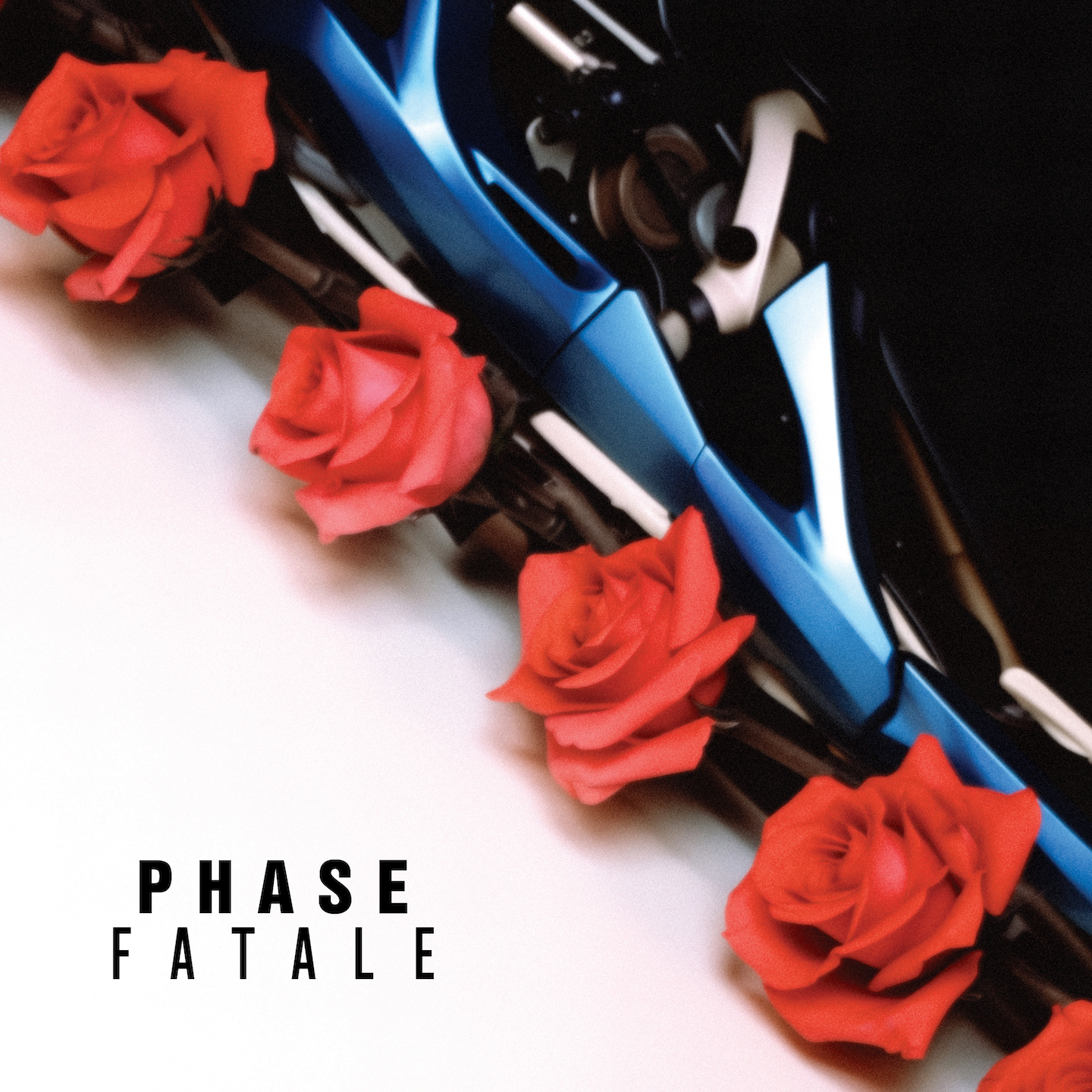
Phase Fatale

Introjection

NR presents Track Etymology, the textual corollary to nr.world’s exploration of contemporary soundscapes: A series of short interviews delving in the processes and backstories behind the releases premiered on nr.world’s dedicated platform.

Hello Hayden! It’s a pleasure being in conversation with you. How are you feeling about the release? 

With this record, I pushed forward my techno side reflecting the direction I’ve been heading towards the past few years, where I want to take myself and the label. I explored new production methods like broken beats and using more digital instruments to create a future leaning dance floor sound. 

It seems that lately you have been dedicating yourself a lot to the production-side of your practice. Last year, it had been 5 years since your last solo EP, and now we’re already getting Love is Destructive. What changed? did you feel the need to build more upon your personal take on music and get in a more narrative mood? 

I never really stopped producing. I also released my last album in 2022 and the one previous on Ostgut Ton in 2020, combined with many collabs, VAs, and remixes. So while there was a gap in EPs, there was never a gap in the music. However, I definitely enjoy working on a more dance floor 12” again as it’s more concise and to the point, serving the purpose to work in the club. I feel like I needed to create my take on current techno elements used and push it forward with this EP which makes more sense in this format. 

‘Ambivalence’, ‘Love is destructive’, ‘Introjection’ – Titles of your new production seem to be quite closely thematically linked. How do these titles reflect the conceptual landscape of the album, and what narrative or emotional journey do you aim to guide listeners through with each? 

These titles link to a journey of love lost and love found. I believe uploading the music with meaningful titles combined with the artwork provides a more cohesive package for the record itself. But it’s open to the listener’s interpretation at their will. 

What were the influences and core elements that have shaped your project, and how do they intersect with your journey as a DJ and producer? 

The main influence is the cross-pollination of producers such as Regis, Silent Servant and Function and my roots in guitar music like My Bloody Valentine, Godflesh and The Cure. What I like in these bands is the combination of harsh noise with a musical structure palatable to a larger audience. This balance I also try to achieve in my own music.

“In techno in general, I look for this balance of sonic experimentation and boundary pushing which is all locked in by repetitious and danceable rhythms. The heaviness is subliminally inserted into the music itself.”

The relationship between sound and embodiment has been a recurring theme in your work, with references to the corporeal experience of rhythm and resonance. How do you explore the tactile dimensions of sound in your compositions –What is your relationship with audience perception, and how does your knowledge of audience response to tracks inform your compositional process? 

When producing club music, I always imagine how it works on a dance floor I’m familiar with such as Berghain, and it’s usually inspired by moments performing or dancing there. I look to accentuating different frequencies as means of controlling the body while also keeping the spectrum well-balanced. There is only a finite amount to store within the music, and it’s also important not to overdo it. In terms of composition, I arrange with the notion that the tracks are used within a DJ set. So they are composed in such a way that the changes hit at the right time creating more drama in the mix. 

As an artist deeply embedded in the underground electronic music scene, you occupy a unique position at the intersection of countercultural resistance and mainstream appropriation. How do you navigate the tension between subcultural authenticity and commercial viability, and what strategies do you employ to maintain artistic autonomy while engaging with broader audiences? 

I grew up playing in post-punk and synthwave bands so that’s my background. I always look for new sounds in those worlds and combine them together in my techno sets as well as carry that influence into my production. I think it’s important to still acknowledge how these sometimes seemingly disparate genres are actually very connected since their beginnings and subconsciously weave that notion together in sets. I listen to myself in how I want to approach my music and only work with likeminded labels and artists who I connect with in their approach rather than being influenced by temporary trends that urge others to change their sound at a whim. 

This record is dedicated to Silent Servant, your mentor. Grief finds expression in various artistic forms, including music. In techno, a genre often associated with its pulsating rhythms and immersive sonic landscapes, the exploration of emotions like grief may seem unconventional. However, some artists have managed to infuse their music with a sense of melancholy, loss, and introspection. How do you perceive the role of grief in techno music, and how do you approach incorporating or evoking such emotions in your own compositions? 

Juan made the artwork for this record, and I think it’s probably one of the last ones he made. We never had a chance to talk about the new technique he used for it even. It makes the whole record combined with the titles and images of roses and cold machinery quite mournful. So many steps and movements of my production, DJing and music in general are somehow connected to Juan so it was very heavy to go through with this release to say the least. Even in techno, it’s possible to make room for grief because the genre lends itself to create other worlds and paint a picture of an alternate reality with the use of certain atmospheres and melancholic melodies taking the listener to another dimension to reconcile with it. 

In the era of algorithmic curation and streaming platforms, the role of the DJ as a curator and tastemaker is evolving. How do you perceive the evolving nature of DJ culture, and what strategies do you employ to maintain a distinct artistic voice and ensure your creative output remains innovative and boundary-pushing? 

It’s true that more than ever people look to who the DJ is and what defines them beyond just their music. Which on one hand I understand, as someone more into bands, usually the image (or lack thereof) played a role into how we perceive their music whether that was through artwork, photos, music videos or performances on stage. So I think the same can be applied to techno as it evolves. On the other hand, what should still remain most important is the DJ’s selection and their ability to technically mix them together while reading the vibe of the space they’re in. I’m a musician because it is the creative way to express myself so it inherently stays true to me, while I constantly search for new or old sounds to inspire me and broaden my sonic palette. 

The notion of “genre” in electronic music is both a unifying force and a constraining factor, often shaping audience expectations and critical reception. How do you negotiate the boundaries of genre in your own work, and to what extent do you see yourself as a boundary-crossing artist pushing the limits of categorization? 

Unfortunately, some people like to cast artists into one genre and leave them there, thinking categorically, no matter if they evolve, instead of just listening and updating their preconceptions. I’ve always defined my project as techno but perhaps with different influences, while others try to pigeonhole my sound based on my background or what other artists around me think to play. I think the best way to redefine and push the limits is just to constantly showcase your sound with releases and sets, hence why I’ve been saying ‘techno’ all the time like a broken record. 

Your label BITE has been instrumental in showcasing emerging talent and pushing the boundaries of experimental techno. How do you envision the role of independent labels in shaping the future landscape of electronic music, and what criteria do you use to identify artists who embody the ethos of innovation and experimentation? 

Labels play an important role in defining their own aesthetic in music through the sound as well as its visual concept and the way they present their art to listeners. I want to show my connection to dance music and what I find cool and interesting while hopefully building up new artists in who I believe. When releasing someone, I usually listen if their music is also influenced by genres outside of techno itself and somehow combines it all together into a sound that is definitively them, so that one could tell it’s them in a blind listen. 

I wanted to close on a lighter note..I want to peep a bit behind the curtain: How do you approach the creative process when producing new tracks? Do you have any specific rituals or routines? 

I usually get an idea while DJing or just listening to music for a song I want to make, whether it’s a sequence, rhythm, melody or just a general mood or style. Then I translate that idea in my head to reality with either hardware or software which usually somehow changes or evolves in that process. Because I’m on the road so much now, I’m learning new ways to work on the computer but still retain the spontaneity and rawness of the hardware I’m used to working with all these years. But this learning process is cool because it lends itself to new sounds and methods. The most difficult part is understanding when the track is finally finished, to stop playing around with it, and let it go. That all comes from just doing it over and over again. 

Team

Interview · Andrea Bratta
Artwork · Silent Editions
Photography · Shuto
Pre-order the digital album here
Follow Phase Fatale on Instagram and Soundcloud
Follow NR on Instagram and Soundcloud

LOREM

SEAGULLS

NR presents Soundsights, Track Etymology’s sister column: An inquiry into the convergence between sound, its visual expressions, investigating music’s intrinsically visual narrative quality.

I wanted to start by delving a bit into the past. As I was researching your work, I found myself amidst an incredible journey down memory lane when I realized you were part of Aucan! I was 14 when Black Rainbow came out, and I remember that record being one the first passages I encountered toward two things: the more experimental side of electronic music and the world of music writing – online reviews, music theory, blogging. It was when I started to be conscious that a discourse around music existed, one beyond “simply” listening to it. At what point in your career did you decide to move towards different mediums, or rather, why did you feel the need to build upon music and annex to it a different, transdisciplinary narrative and experiential dimension?

Haha! I’m glad to hear you listened to Black Rainbow! Aucan was a seminal experience for me – we really shared everything for many years, and developed something which transcended the individual level. After nearly 10 years and over 300 live shows and we finally took a pause, I felt the need to find a place where I could converge various priorities. I studied philosophy, and then arts & design. During that time and along with friends, I co-founded what would become Krisis Publishing. I realized that to discover a new and authentic language, I needed to integrate the diverse, often conflicting, elements I was engaged with. Adopting a multidisciplinary approach to the project thus came naturally.

The pandemic, in a way, further propelled me in this direction. Until then, following Adversarial Feelings (2019), LOREM was predominantly a sonic project. However, the inability to tour for live shows forced me to explore new expressive avenues. I started producing AV live sessions in the studio designed for home viewing, aimed at audiences to experience them as they would a Netflix series—this format seemed most fitting given our confined livelihoods at the time. This shift led me closer to what is now the project’s narrative aspects, which today remains one of my primary interests. It was during this period that I conceived the idea to create several installations, such as the first iteration of Distrust Everything, which I introduced at Graz’s Elevate Festival in 2021.

“The limits of my language mean the limit of my world.” The opener of Wittgenstein tractatus that rings exceptionally true for AI and language models. Musical language and computational language have long been intertwined in LOREM production, and, as your press release states, Time Coils is “imbued with global cultural correspondence and reimagined connections sourced from a wide range of references.” I don’t want to spoil the fun of discovery, but I’m curious to hear from you about some of the influences and central elements behind this project and how they concurred to form its language/world.

The relationship between language and our experience of the world is indeed one of the fundamental aspects I aim to explore with LOREM. Significant influences for Time Coils, as well as for my practice, come from authors like Franco Bifo Berardi, Federico Campagna, Jacques Derrida and Timothy Morton, among others. Today, machine learning provides advanced statistical tools for working on data corpora (texts, images, videos) from an inter linguistic perspective:

“I am interested in building archives of samples (and texts), and interpolating them to examine the interstices… to hear a hybrid sound between a voice and a guitar, to see a face that is also a tree, to read a text that lies between Thomas Pynchon and Franz Kafka.”

This approach was actually the starting point for writing Time Coils. I employed this method both on my samples and on those collected from a wide range of sources. The datasets include traces of soundtracks from early Walt Disney films, old school dubstep tracks, re-synthesized rap acapellas, and Italian prog music. Often the references are completely unrecognizable and become something else, but I like the idea that an attentive listener might discover traces of other works in a completely new form.

Did you have more of a narrative-oriented approach to the record or were you more interested in atmospheres and leaving sonic and visual traces for the listener to follow?

While the narrative dimension has become essential for LOREM, with Time Coils I felt compelled to refocus on purely musical exploration. Working with images and especially texts means that the music must always complement the overall experience. This requirement doesn’t weaken the music per se, but it does confine it within a specific framework. Over the last couple of years, I’ve attempted to differentiate my compositional approach depending on the consumption context. On one side, I am keen on advancing an inquiry into states of consciousness through texts and large-scale audiovisual narratives and installations. On the other, I’ve chosen to pursue a strictly musical path with my audio releases.

“Time Coils, therefore, departs from the concept of crafting a narrative and is instead an opportunity to create a sonic landscape, a sort of auditory swamp that results from a continuous process of self-digestion.”

Back on the AI Language-music adjacency, how do the two processes intertwine in your approach to composition? What do you think composing an algorithm and composing sounds have in common?

I would say that in this case, algorithmic writing is a part of the musical writing project. Perhaps for a “classic” programmer (or should I say a “real” programmer), the code is the true product of creative intervention. In my case, however, the output of the algorithmic processes is never the end result. Ultimately, it’s always me who picks up the pieces, trying to fit them together organically, sometimes without hiding the flaws.

Over the past few years, I’ve been developing methods to integrate machine learning into my musical production processes. These involve sampling, time-stretching, granular synthesis, and recorded instrumental music. I started in 2016 by using simple LSTM (Long Short-Term Memory) systems to generate percussive MIDI files, which reinterpreted beats from my jam session recordings. Later, I began recording the automation I applied on samplers via SysEx to create datasets that would help train other models. Recently, I have also started to focus on audio manipulation, including simulating microphone re-amping, blending completely different types of instruments (such as analog instruments with synths, or percussion with vocals), and generating synthetic rap vocals that I can control with my own voice.

Throughout your work I find that the concept of interaction is a central one: machine-man, man to man, the individual and the group, visual and sonic languages. AI is not only generative but also perceptual, much like ‘real’ audiences. It simulates neural networks through mathematical abstractions in order to perceive inputs and register them. What is your relationship with audience perception, and how does your knowledge of audience response to an art piece or a live exhibition inform your interactions with machines?

Certainly, the hybridization of various disparate elements greatly interests me. I’m not particularly keen on framing AI as a generative tool. It seems much more intriguing to view it as an agent of transformation and hybridization.
When interacting with the audience, however, I generally do not seek a direct exchange.

“In designing live performances and installation, I always aim to create a significant asymmetry between LOREM and the crowd. I want those who listen and observe to be overwhelmed with stimuli, to force them into an experience that allows for only one possible point of view.”

The work of artists like Kurt Hentschläger or, in some way, Sunn O))), is an example of what I mean, I believe. At the same time, I enjoy embedding hidden references, “encrypted” messages, and correlations, to open questions and reflections through ambiguity. This approach can lead to profoundly deep interactions post-experience. Occasionally, an audience member may approach after a show to inquire about an insight they had or to propose new interpretations. For instance, I once spent an entire evening discussing the script of Distrust Everything with a scenographer who had come to see the work, and with whom I have stayed in contact ever since. Those moments are particularly rewarding, as they allow me to connect deeply with people…

Since we’re discussing languages and interactions, I’d like to make a digression. I began this interview by mentioning the early 2010s: a time of peak music media and blogging. I recall reading Deer Waves (shout-out to Italian hipsters worldwide), Pitchfork, and all the usual suspects. Your work is deeply intertwined with technology and the nature of media(s) itself, with music being one of its key components. I’m curious if you’ve ever considered how platforms and the circulation of music actually influence the composition of music itself. Think about “MySpace Bands,” or SALEM and the emergence of Witch House with its Web aesthetics. We’ve witnessed the era of SoundCloud rap, which is self-explanatory, and nowadays, and nowadays TikTok is shaping how mainstream labels function and the pop songs structures. I’d be really curious to pick your brain on this particular matter.

Distribution platforms and modes of consumption undoubtedly play a crucial role in shaping our aesthetic experiences, and they certainly influence artistic languages, probably as they always have. As I mentioned, the experience of the pandemic and the subsequent changes in consumption habits heavily interfered with the evolution of the project. I doubt I would have moved so close to the narrative dimension if we hadn’t all been in lockdown for months.

That being said, I’m uncertain about the direction that the music industry will head in the coming years. Frankly, it looks like a colossal mess… There are numerous factors at play in regards to that: the need for fairer and more inclusive distribution systems, the emergence of new technologies based on decentralization, the critical role of algorithms in shaping musical trends, and the emergence of “instant” platforms like TikTok, as you mentioned, among others.

Speaking of the evolution of media, I recently read about “neural media,” which K Allado-McDowell has theorized as developing out of network media in the mid-2010s amid increasing human-AI interaction. K’s description of neural media’s mechanics posits the concept that our ideas of individuality and identity formation, as well as what itmeans to communicate as a human (among other living beings), are about to be majorly recalibrated. What role do you think audiovisual expression, a language that is already forward-oriented and one you have been experimenting with for years now, plays in such futurable socio-cultural landscapes?

I can’t give you a general answer. What I try to do and what I recognize in the artists that I admire, is an attempt to produce aesthetic experiences that have a strong emotional impact while simultaneously “showing the scars”, so to speak. Their works create a space of ambiguity useful for recognizing the artifice, and without hiding it. This way, to use a phrase by Hal Foster, “…artifice, the Utopian glimmer of fiction, can be placed in the service of the real.”

Why did you choose SEAGULL as one of the two singles anticipating the full-release? What drove you towards the concept of flocks and shared-perception, and how does it relate to the record’s structural narrative?

I began working on the video with Karol Sudolski, a friend and collaborator on the LOREM project from early on in the creation of the Album. Karol is one of the people who inspire me to think of LOREM as a hybrid identity, which sometimes speaks in my voice but other times expresses itself as a collective, a chorus. We simply felt that the track was perfect for the flow of the video, which features a single continuous shot within this swamp of organic and inorganic forms.

Are you thinking of other outlets for the Time Coils narration to be experienced? Something transmedial like what you did for Adversarial Feelings, out on the publishing house you co-run, Krisis.

The first is a large-scale AV installation, ARC, which features a walkable dual-channel large LED wall that displays visualizations of contradictory states of consciousness. I created it with Visioni Parallele, and it will debut on Saturday (April 13th) at the Mattatoio in Rome. The work is based on the idea of intertextuality that I mentioned earlier… here, the question might be, for example: what a morph between excitement and boredom might look like? Perhaps something akin to me scrolling through Instagram on the toilet.


In early May at L.E.V. Festival in Gijon, there will be a new iteration of the Distrust Everything project; an immersive chamber that narrates a speculative dream emerging from Mirek Hardiker’s Dream Report Archive. These projects are in dialogue with the album, in a vague way, because they share the same approach, but they are also related to it as I continue to reuse the same datasets, which keep expanding.

What is Krisis role in the economy of your varied and intersectional practice? Is that a place where you focus more on curating others? Taking a step back from “your” own work and constructing bridges for others?

We founded Krisis Publishing in 2009, and I manage the editorial direction of the project alongside my friend and fellow researcher, Andrea Facchetti. The main focus of our project has always been and remains the politics of representation: we are interested in examining, through various lenses, the impact of media cultures on contemporary societies.

Both of us have academic backgrounds in philosophy and design/arts, which makes Krisis the platform to formalize and disseminate both our research and the works of pivotal authors. We typically handle the editing of the books we publish ourselves, and this has enabled us to connect with artists, theorists, and researchers we respect and admire. Among the notable authors we have published are James Ballard, Timothy Morton, Simon Reynolds, Kate Crawford, Hal Foster, Vladan Joler, Sofia Crespo, and also friends like Silvio Lorusso, Luca Pagan, Filippo Minelli, Corinne Mazzoli, Ryts Monet (just yesterday we launched the pre-order for the book we developed with him).

In recent years, we have begun to move beyond the borders of printed paper. Krisis functions not only as an independent publisher but also as a curatorial platform, producing audiovisual projects, music albums, events, installations, exhibitions, public talks, etc.

Certainly, there are parallels between my research, that of Andrea’s, and the editorial line of Krisis. In recent years, we have intensely explored the theme of the relationship between language, reality, and identity, the political implications of AI’s emergence, and the articulation of ecological perspectives. In a way, Krisis serves to me both as a source of input for LOREM and an opportunity to translate into theoretical language the issues that concern the project.

Last but not least..Nomen Omen. Why LOREM? A nod to unfinished but in-itinere linguistic forms?

Lorem is a model for extracting correlations within corpora of unstructured texts.
When I started working with texts and machine learning to enhance the emergence of intertextual correlations, I began by removing all character names from the literary texts in the datasets. I wanted the machine to confuse the characters, thereby overlapping the information pertaining to each. I have now started to group different types of characters using different letters (L, M, D, etc.), but initially, all characters in my datasets were named LOREM. When it came time to name the project, all these LOREM’s were already there…

Interview · Andrea Bratta
Photography · Omar Golli (ARC Installation)
Time Coils out on 26.04.24 via Krisis Publishing Pre-order the album here.
Follow LOREM on Instagram and Soundcloud
Follow NR on Instagram and Soundcloud

Didi Han

Didi Han is a prominent figure in South Korea’s blooming electronic music scene, her career marked by a fusion of diverse influences and innovative sonic explorations. With a background in textiles and fashion and a love of electronic music production, Han brings a unique perspective to her compositions, blending elements of tradition and experimentation. Her EP ‘In The Zone’ garnered widespread acclaim for its immersive soundscapes and evocative atmospheres, showcasing Han’s ability to craft compelling narratives through music.

Having established herself in South Korea’s electronic music landscape, Han has witnessed the scene’s rapid growth and evolution firsthand. She is now based in Paris and draws parallels between the current scene in her native country and the French capital a decade ago. She envisions a future where South Korea’s electronic music scene attains similar global significance. Han is fuelled by a passion for music and a commitment to pushing creative boundaries. NR joins the artist in conversation. 

As a musician who traverses various electronic music genres, how do you approach blending different styles and sounds in your compositions?

There are so many artists that inspired me. These include Four Tet, Skrillex, or many producers from the 90s. I try to practice something new, and bring inspiration from past projects as well. This approach can bring some new sounds, I guess. But even when the music has something new, the fundamental elements in there can’t be new. All music genres share similar fundamentals, even if the sound differs. I try to understand the basics of music as much as possible. It’s like cooking, how you combine familiar ingredients. 

Your EP In The Zone” received acclaim for its innovative sound could you walk us through your creative process and inspirations behind the EP?

At that time I bought a TR 8s and I started to compose with this machine. I often begin by sketching ideas with this machine, even though I later replace the samples. I concentrate on how these beats could drive movement. Living near a busy street in Paris, I was constantly exposed to sirens, which contributed to a sense of anxiety within me. I believe this EP reflects that period of my life. I incorporated sounds from vintage synthesizers to evoke a 90s vibe.

Having been a part of South Koreas electronic music scene how do you think the landscape has evolved over the years and how different is it to working in Paris now?

I’ve noticed that South Korea’s electronic music scene has been rapidly growing. I heard this is similar with the scene in Paris about ten years ago. I think that in another ten years, South Korea’s electronic music scene will be as significant as France’s. Good thing in Korea, people are more excited about these kind of events because it’s rarer than in France. However, working in Korea as DJ is quite hard because Seoul doesn’t had proper DJ booking agencies so many artists are managing themselves and facing challenges. But I heard there are some company starting managing this so I guess it will be better and better. 

You trained as a textile and fashion designer, how does this influence your music?

After I started being into music production, I realised the similarities in the creative process between fashion design and music. Both involve finding inspiration and developing it into a form of art to share with the world. This process has helped me develop ideas for EPs and express myself through music and show myself to people.

What advice do you have for young creatives looking to work in the industry?

Do whatever you want and follow your heart with your pure passion.

Credits

Photography · Adam ZM
Styling · Pierre-Alexandre Fillaire
Hair and Makeup · Angie Marqueton

Tadleeh

Seekers

NR presents Track Etymology, the textual corollary to nr.world’s exploration of contemporary soundscapes: A series of short interviews delving in the processes and backstories behind the releases premiered on nr.world’s dedicated platform.

Hi Hazina! Should we back up a little bit? When did you first get in touch with music?

I started with music when I was young. In my house, we always had music playing. I really liked how music could affect people. I started learning guitar when I was seven. Playing an instrument let me express myself in new ways. I loved practicing, trying new music styles, and making my own songs.

Now I’m into electronic music. I really like old hip hop, liquid, and drum n’ bass. I got my first vinyl, a Liquid mixtape, from a market in Camden Town.

I read about your background in Cinema Studies, and of your fascination with the evolution of both diegetic and non- diegetic sound in film. How does this translate in your writing process?

When I write, I listen for sounds in my scenes just like I do for the visuals. I think about the noises in a quiet forest or a busy city to make my stories feel real. I want to make readers feel like they are really in the world of my stories. I am excited to keep using these ideas in my work and to find new ways to connect with readers both in their minds and hearts. The movie style is in ‘Lone’ and will be in my next work too. It’s my way of making things. The cinematic field is present in ‘Lone’ and it will be present in my next work as well. It’s an automatic composing style from my side. 

What was the overarching narrative behind your new record, ‘LONE’?

‘LONE’ is a musical journey that delves into the depths of introspection, exploring the intricacies of solitude and the profound moments of clarity that arise from it. Each track is a chapter in the story of a solitary individual navigating the complexities of their inner world, grappling with introspection, and ultimately finding solace in self-awareness.

I’ve started composing it during 2020, just one year after my debut release Ep as my new moniker Tadleeh. The album begins with a sense of isolation and uncertainty, reflecting the protagonist’s journey into the unknown. As the narrative unfolds, themes of resilience, growth, and empowerment emerge, driving the protagonist to confront their fears and embrace their true self. 

Speaking of diegetic and non-diegetic..It’s interesting how context determines the reception of music. A record like ‘LONE’ could work in several frameworks. During your career you held numerous residencies in radios, played in clubs.. In which settings do you mostly present your music? Does the context influence your presentation?

I’m used to play my EPs, former productions and album during my live performances. My presence in Radio is connected to dj sphere, that I also love a lot! During my entire career I did both, spacing between club events, festival, radio show or residency as well as galleries. I don’t think my personal works fit well in a proper club, where I actually prefer to dj. ‘LONE’ sounds better in an intimate place. 

Yours is an extremely varied and experimental career — different labels, different medius, different settings. How did you approach ‘LONE’, considering it is your first LP? Is it a crystallization of your journey up until this point as an artist?

I started making music when I was a teenager, and starting my very first project Petit Singe in 2013, releasing on Haunter Records (Milan). From that point on i’ve released many different  works in many different support (12’’ vinyl, 7’’, tape etc).

Approaching my first LP was a deeply introspective and transformative process. I saw it as an opportunity to distill the essence of my artistic evolution and present a cohesive narrative that reflects the multifaceted experiences and influences that have shaped my musical identity. I’m already processing some new work for a new album. 

As per Sarah Thornton, club culture presents “Three principal, overarching distinctions which can be briefly designated as: the authentic versus the phony, the ‘hip’ versus the ‘mainstream’, and the ‘underground’ versus ‘the media.” This was in her seminal book “Club Cultures”. The year was 1995. I often ask producers and DJs their perspective on the contemporary clubbing landscape. You were the creative mind behind the now retired, forward-thinking events series Sine Confine in Milan, so I assume you had a first-hand experience of how these categories interacted in a unique setting such as the one you were curating. Do you feel those distinctions are a bit outdated or do they stand the test of time?

I believe that the experiences of club culture cited by Sarah Thornton can be all present, only in part, or even all absent even if we are talking about the same event or context. As a DJ and as a curator of musical events – therefore as a “victim” and “perpetrator” -, I can honestly say that the “underground” aspect is the most questionable and difficult to respect. The public doesn’t trust: they always need digital context to ensure the “who, how and why” of a specific event. Curators themselves don’t have many sponsorship choices these days, other than the obvious one on social media.

These mechanisms, in my opinion, arise from a public that is absolutely wary of what it doesn’t know, of being surrounded by “offline” people. Unfortunately I think that the artistic proposal is downgraded.

Neither on the part of the organisers nor on the part of the participants is there a desire to be false, not to be fashionable or not to be underground enough. But I think that this discussion can be broadened to an anthropological, rather than musical, in-depth analysis. They are status quos that human beings have, regardless of club culture. Sine Confine – which is not completely finished, I hope – had – and has – the same purpose as any other organisation: to enhance the work of artists who consider themselves in line with their own tastes.

The underground scene often has difficulty finding funding, and is forced to finance itself. Those who move in this field often know the risks, in terms of turnout and economics. And this is where social media comes in handy. So, who is right and who is wrong? The ordinary citizens who do not finance niche events, or the organisers themselves who, for fear of losing out financially, rely on mainstream social media? It is a war that is too deep-rooted and sees many active participants: the public, organisers, urban spaces, institutions, financiers…

As for my personal Sine Confine project, I hope that one day it can restart and become operational again, far from the consolidated sexist and chauvinist gazes in this country.

Sine Confine was an “art and music platform.” You also produce sound-based installations and commissions, most recently for Munich’s Haus der Kunst —there’s a clear trans-disciplinary component to your practice, could elaborate a bit on that?

Yes, I think that an artist can flush out art everywhere, in every discipline and places. 

I’m really happy of being part of Tune program – curated by Sarah Miles -. My music is absolutely open to any spaces and situations. Me personally, I love being involved in different artistic contest: curating (Sine Confine), listening, viewing… I love to merge multiple opportunities and people.  

Your music feels heartfelt but liminal..It has this intimate but detached feeling to it, almost like an invitation to enter a conversation but only to be left on its doorstep, stuck between its reflexive moments and sonic implosions. How is your relationship with the listener? Is it something you think of while composing?

I want to make songs that feel close and personal, using heart songs and thoughtful music to bring people into the feelings of the songs. The in-between feeling you talked about is what I aim for, making a place that is both close and wide, known but also mysterious. I do think about how people will feel and connect with the music when I write it. But, I focus on sharing my own feelings, experiences, and creative drive in an honest way. I think that if I stay true to my own vision and am open in my expression, I can make music that deeply connects with others. I hope to evoke emotions, provoke thought, and inspire introspection in those who choose to journey with me through my music.

There’s this quote I obsess over by James Joyce, it was part of an essay on Wagner’s Tristan und Isolde, “This music smells like sex.” I think it sums up perfectly the drama’s themes and overall sensorial experience. We often tend to associate music to visual metaphors, but I think smell is an underrated sense —What would your music smell like?

Wow! I didn’t know about this particular Joyce’s quote, and I have to say that I definitely agree, even if I never thought about this interesting connection between them. I mean, smell is also proper of music. And come to think of it, I have a certain smell in my mind linked to the theatre halls. The seats, the main wood stage, the “waiting smell” for the show to start. 

That being said, since I’ve never deeply reflected about this, I’d rashly associate my music with the odor that’s in the air when something has been set on fire. 

Interview · Andrea Bratta
Artwork · Visio
Pre-order the digital album here
Tadleeh will be performing on April 5th at Rewire Festival. Find out more here.
Follow Tadleeh on Instagram and Soundcloud
Follow NR on Instagram and Soundcloud

Subscribe to our
Newsletter