Archive page:


Collectif Scale

“We don’t have the pretense to guide people younger than us, because we can also learn a lot from a new generation, born « connected »”

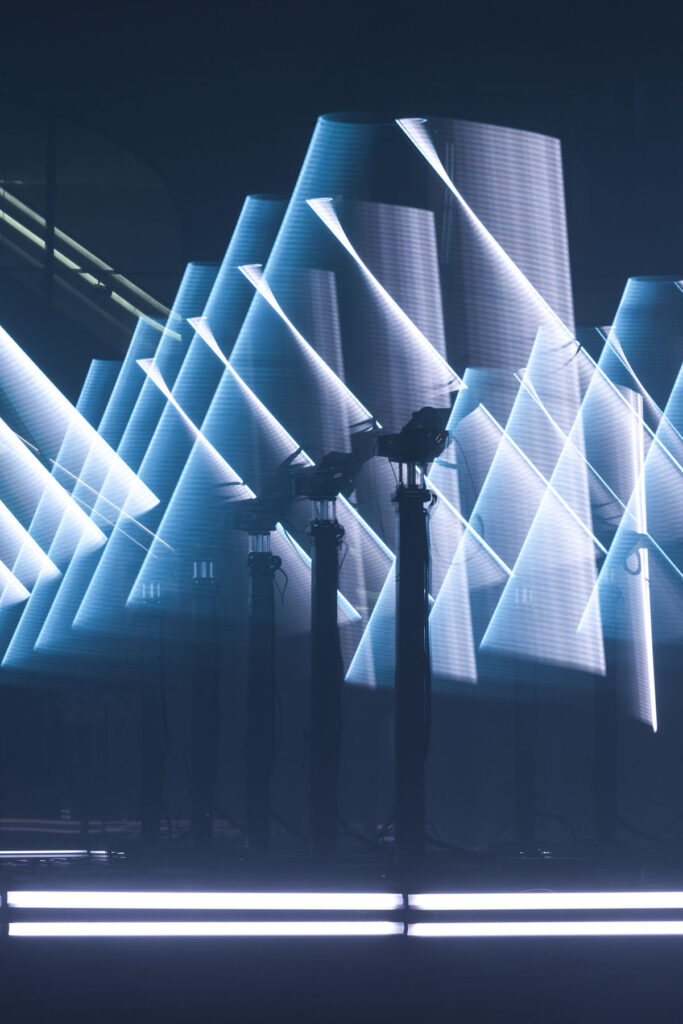
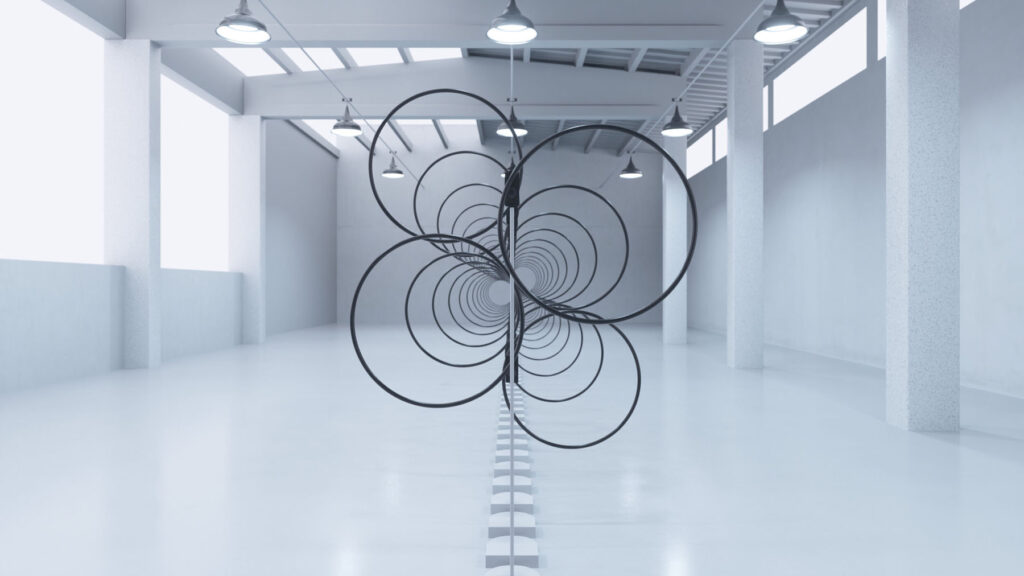
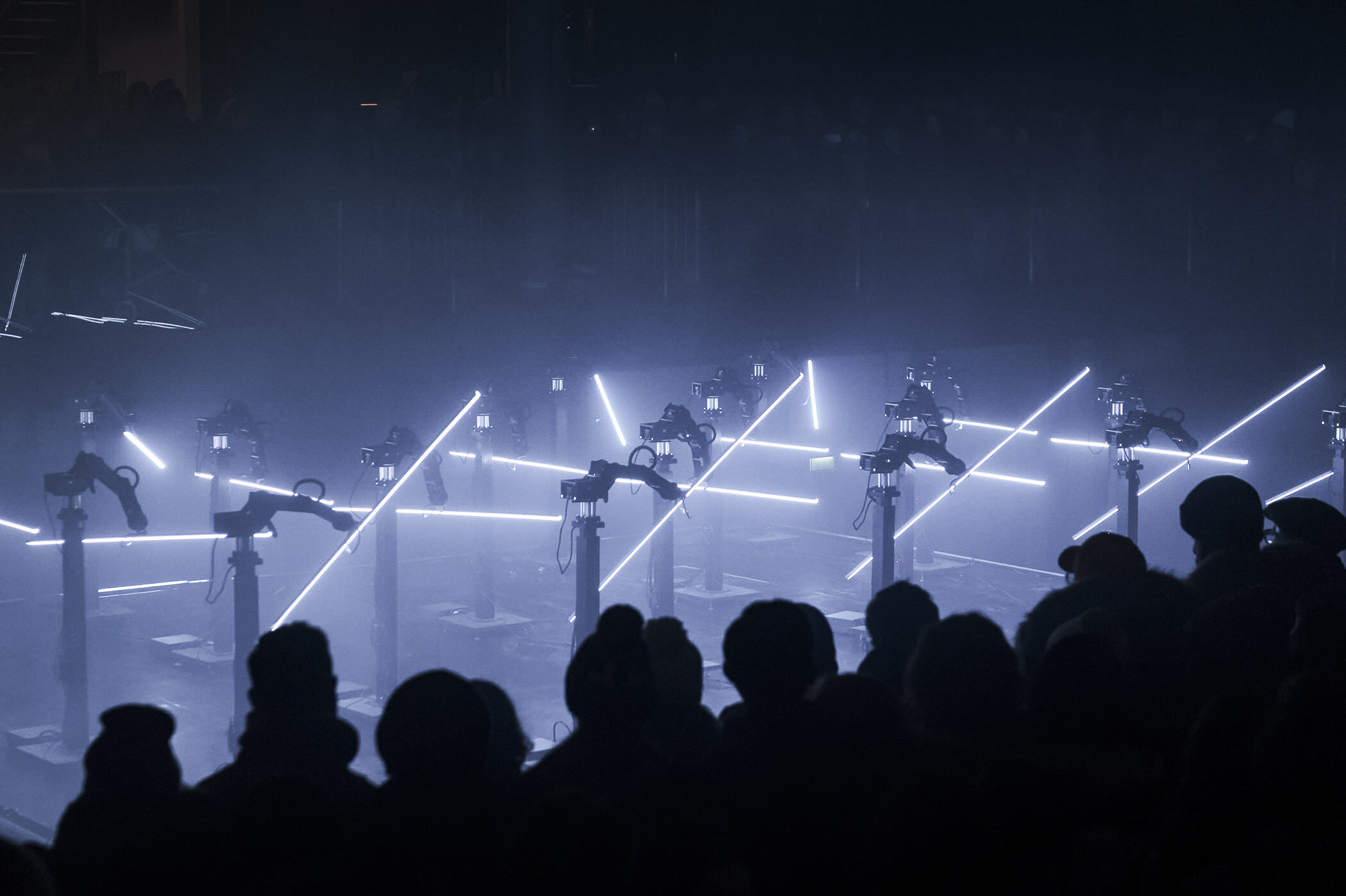
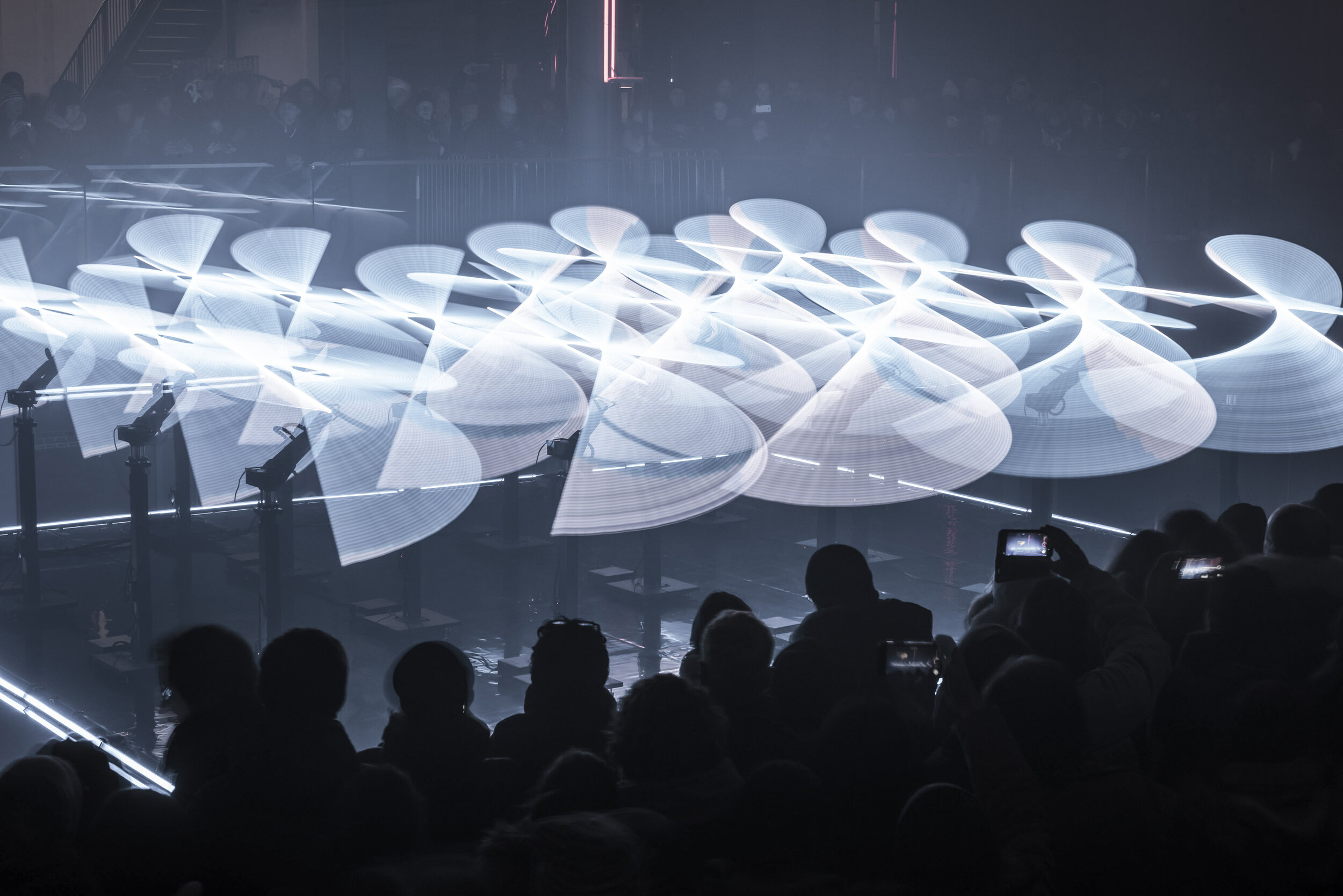
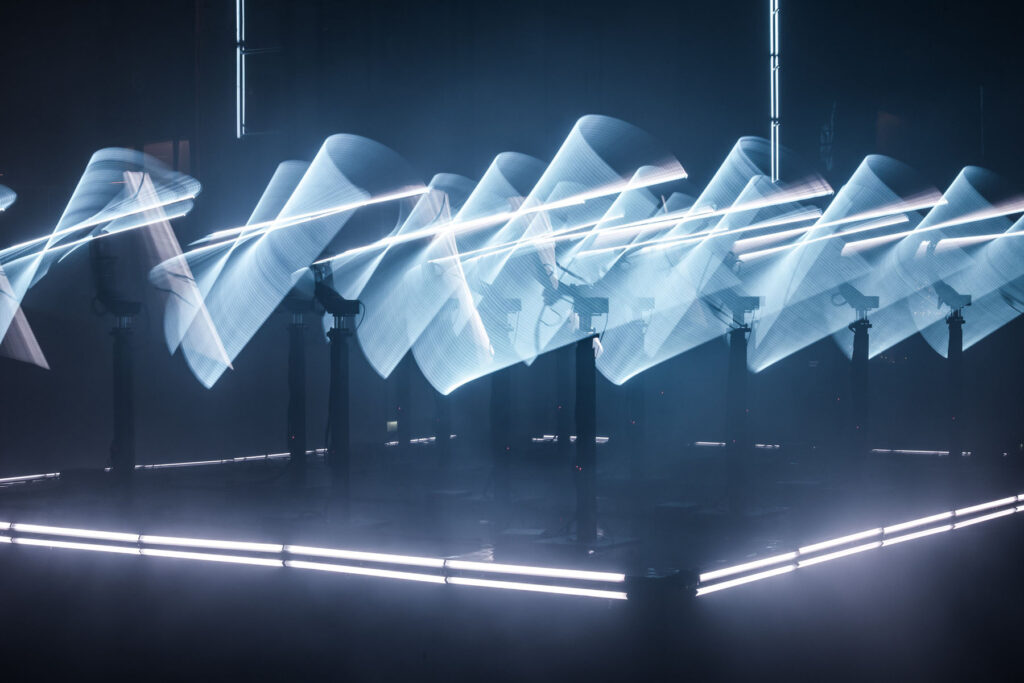
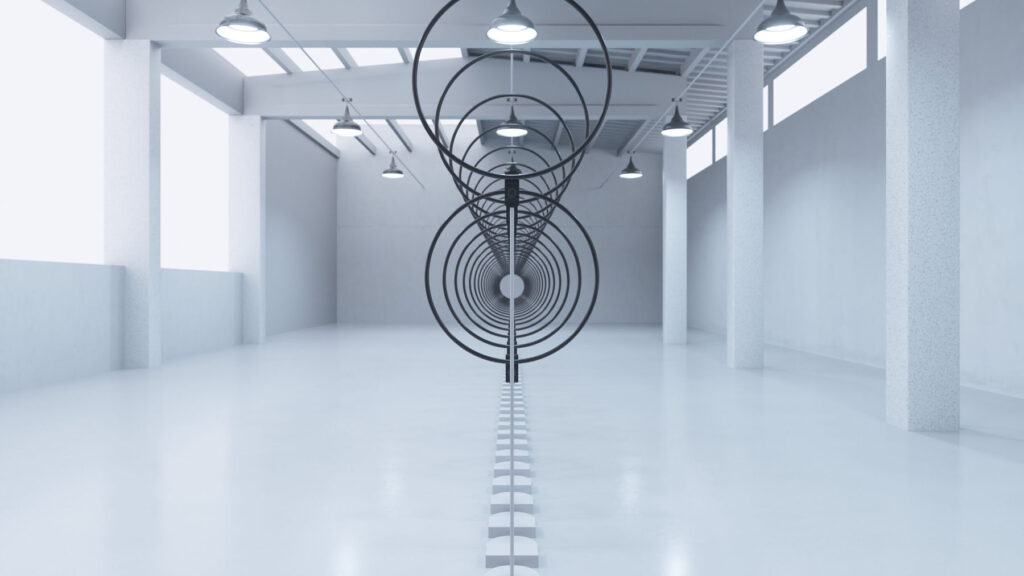
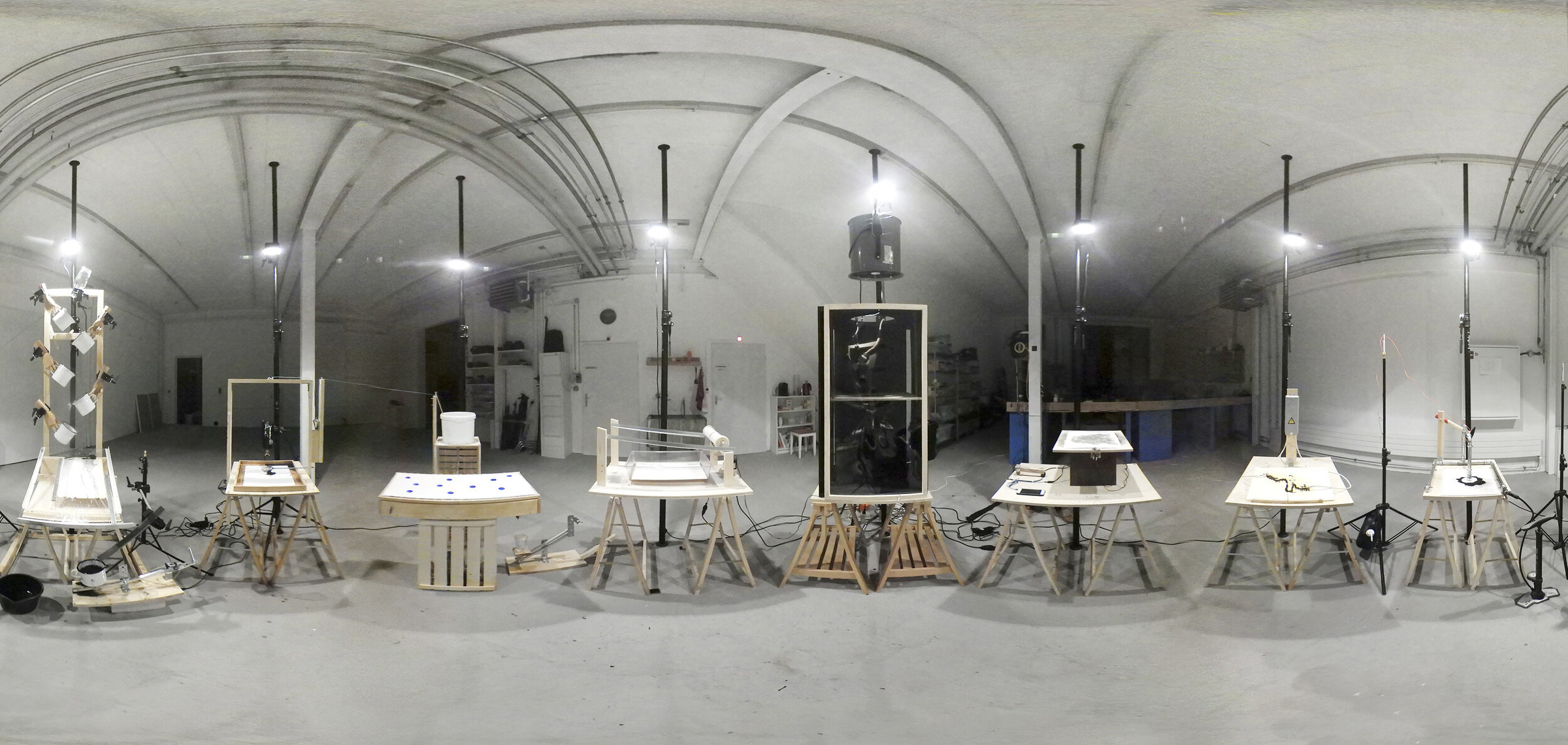
Rods of light twirl and twist, a line of hula hoops loop around each other in a mesmerisingly technical dance, a gallery space is transformed into a kinetic universe of projected images, all to hypnotic soundtracks of electronic and classical music. Collectif Scale is a group of artists and technicians based in Paris who pool their respective knowledge and experience to create cutting-edge augmented installations. Since their beginning, they have “questioned the links between music and the visual, light and architectural design, entertainment and contemporary art, nature and the future, man and machine.” They seek to provide the answers to these questions through their installations. NR Magazine spoke to the collective about their practice.
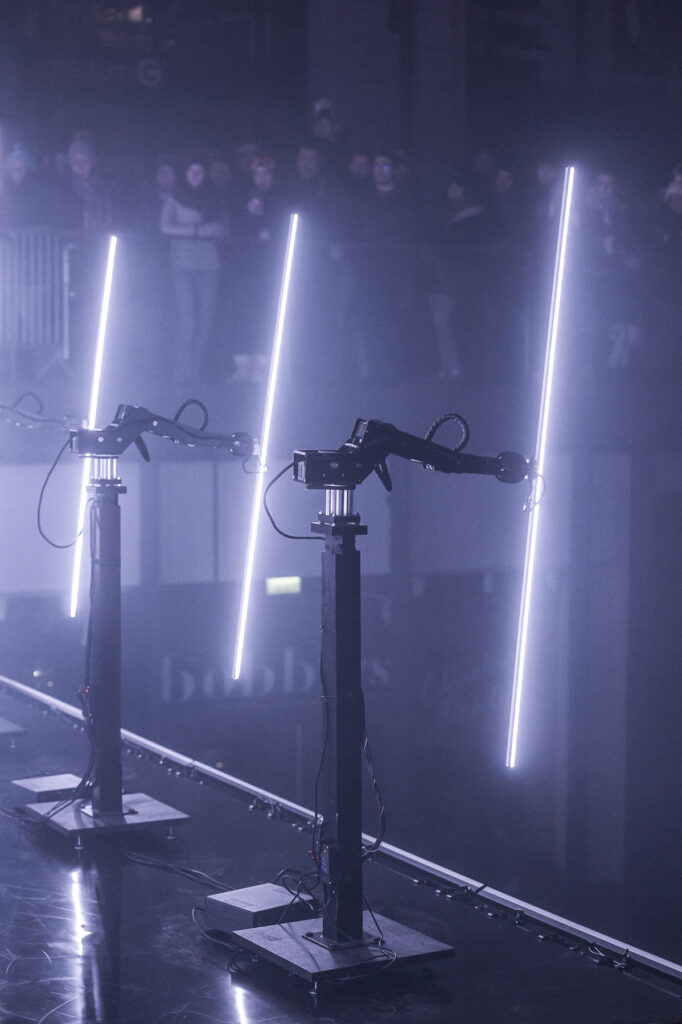
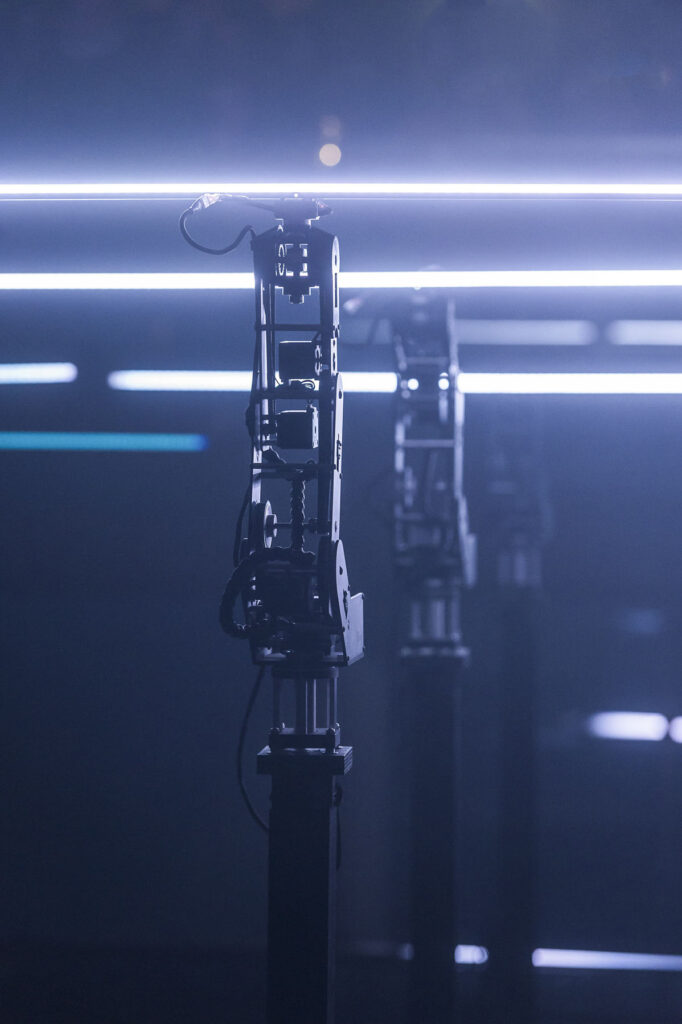
Your CODA installation has been described as ‘the ballets of robots’. How do you feel about this description and do you think it’s accurate. 

The starting point of CODA was to work around with the idea of a choreograph of lights and create a piece like a dance show or a ballet, where we would replace the body of dancers with robots and light. But even if many people see in CODA a reference to pop-culture, such as Star Wars or video games, our first idea was to produce a ballet of lights, more than a ballet of robots.

You state the collective does not individually define themselves as artists. What do you define yourself as?

Scale is just the pseudo of a visual designer and this designer happens to be a collective of friends.  As we produce different kinds of installations, from scenic scenography for live shows to pieces for art exhibitions, we don’t like to describe ourselves as artists but prefer to consider ourselves as creative technicians or just scenographers.

You have said that the current health crisis has complicated presenting to the public. Would you consider making outdoor installations? 

Since the crisis, most of the festivals or productions try to match with some new rules (outdoor exhibition, outdoor festival, etc…) In order to continue showing installations, we have just finished our first outdoor and waterproof installation. We also have decided that our future installations must be outdoor compatible in any case.

Do you draw inspiration from other artists or creatives when conceptualising your work? 

Not really. Most of the artists and collectives are connected, like us, to these social networks, so we can see what is produced all around the small world of new media art. When we are looking for a new idea, in general, as much as possible, we try to imagine something that has never been produced. In the end, we can say that the work of the others allow us to create new things because we don’t want to reproduce something existing.
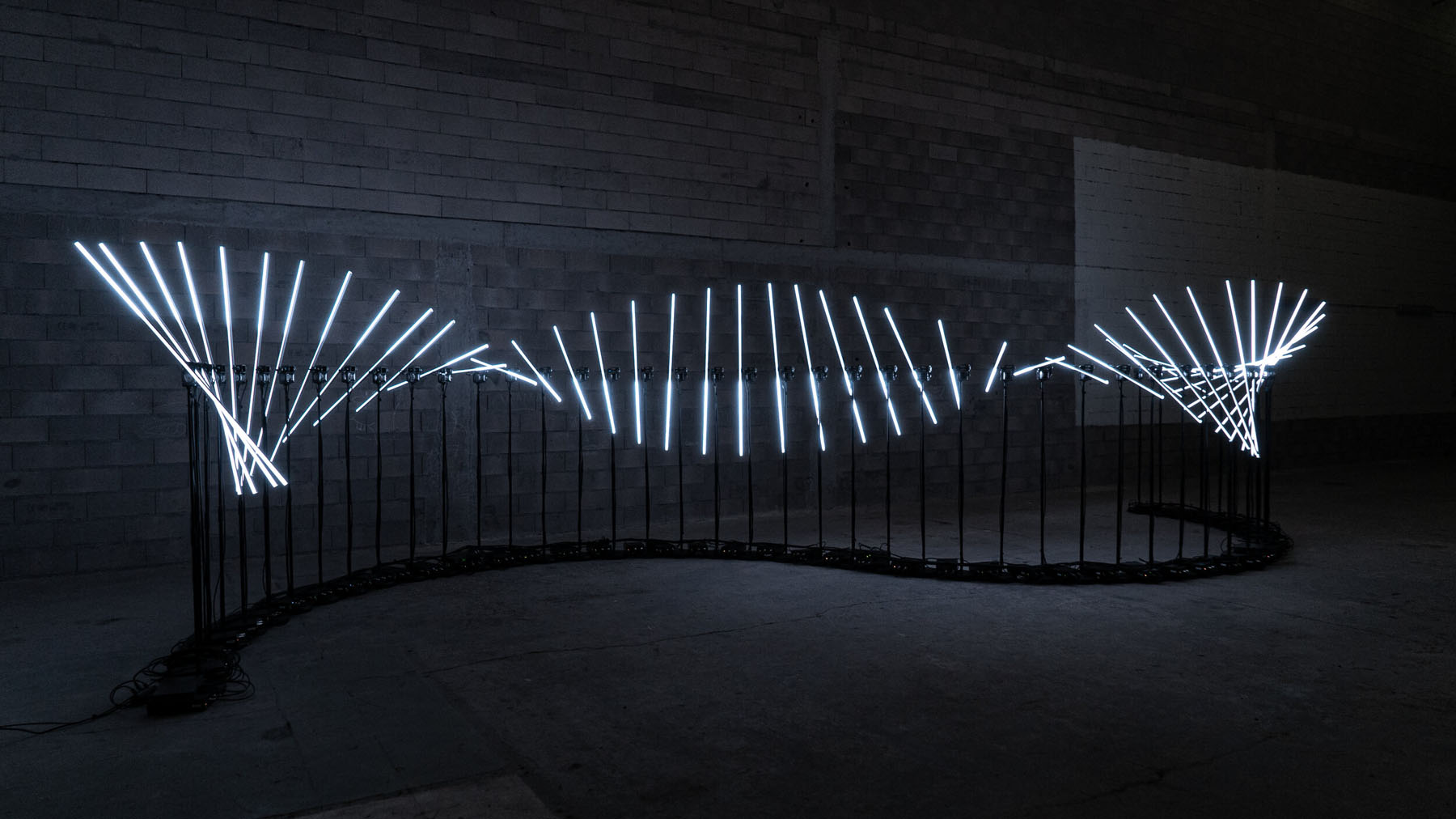
What was the most difficult project you worked on, what are some of the challenges you faced and how did you overcome them? 

CODA was probably the most challenging project because it was our first project using motors. After 10 years of using video and LEDs, it was quite difficult to appropriate a new medium. Using motors, bots and mechanics involved a lot of physical constraints (torques, gravity, collisions, kinetic, etc..) We had to work and learn a lot to produce CODA and be able to control robotic arms in real-time and on stage. It reminded us of when we were in school. You open a book, you read, you learn, you try, you experiment, etc…

In the end, CODA is a perfect synthesis of the last 10 years of learning and experimenting. Even if we had the idea 3 years ago, we could never have produced it before, because of our lack of skill and the accessibility to those robotic technologies. We are happy because it really marks the end of a period and the start of something new and very exciting. CODA is maybe our best cocktail of poetry and technology.

You have said it is possible to live with technology but not nature. Are there particular patterns or structures in nature that you reference in your work? 

When you’re using robotic arms like CODA, it’s a reference to nature because a robotic arm is a bad copy of the human body’s mechanics. Beyond this idea, we think that nature is, in any case, very inspiring. From an artistic point of view, nature always produces the most beautiful things one can see: a dancer will always be more beautiful than a robot, an eclipse will always be more impressive than a projector.  From a technical point of view,  physics, mathematics and sciences are there to explain and decode to us how nature works, because nature is always more advanced than human knowledge. We feel it’s natural to draw inspiration from nature more than other artists, and also there’s no problem with copyright.
You mention the group’s love of video games and that there is a level of interactivity between your work and the public. Do you have any plans to create fully interactive, game-like works in the future? 

For many years, we’ve talked about the idea to produce an art piece that looks like a game, including levels, gameplay, etc… We still haven’t found the right idea but we’re working on it. More than video games, we are also very inspired by roller coasters and amusement parks. It would be a dream to customise a roller coaster, to make it interactive and for it to become an art installation.

What was the most exciting project you worked on as a collective and why? 

In the beginning, each new project seemed more exciting than the previous one haha. It’s only after several months that we realise if that one project was really exciting or not. The most exciting one was probably when La Gaité Lyrique, a famous place for digital art in Paris, asked for us to produce an entire exhibition, our first one, in 2014.

Do you have any advice for young creatives looking to create ‘augmented art’? 

We are still young ;). We don’t have the pretense to guide people younger than us, because we can also learn a lot from a new generation, born « connected ».
Are you working on any projects at the moment and do you have anything planned for the future? 

We have just finished a new installation the last week. The tours, festivals and exhibitions seem to be starting again in few weeks so we will probably be on the road once more, and will try to show something in real life.
Fabian Oefner

“discoveries in science and technology have always been a catalyst for the arts”

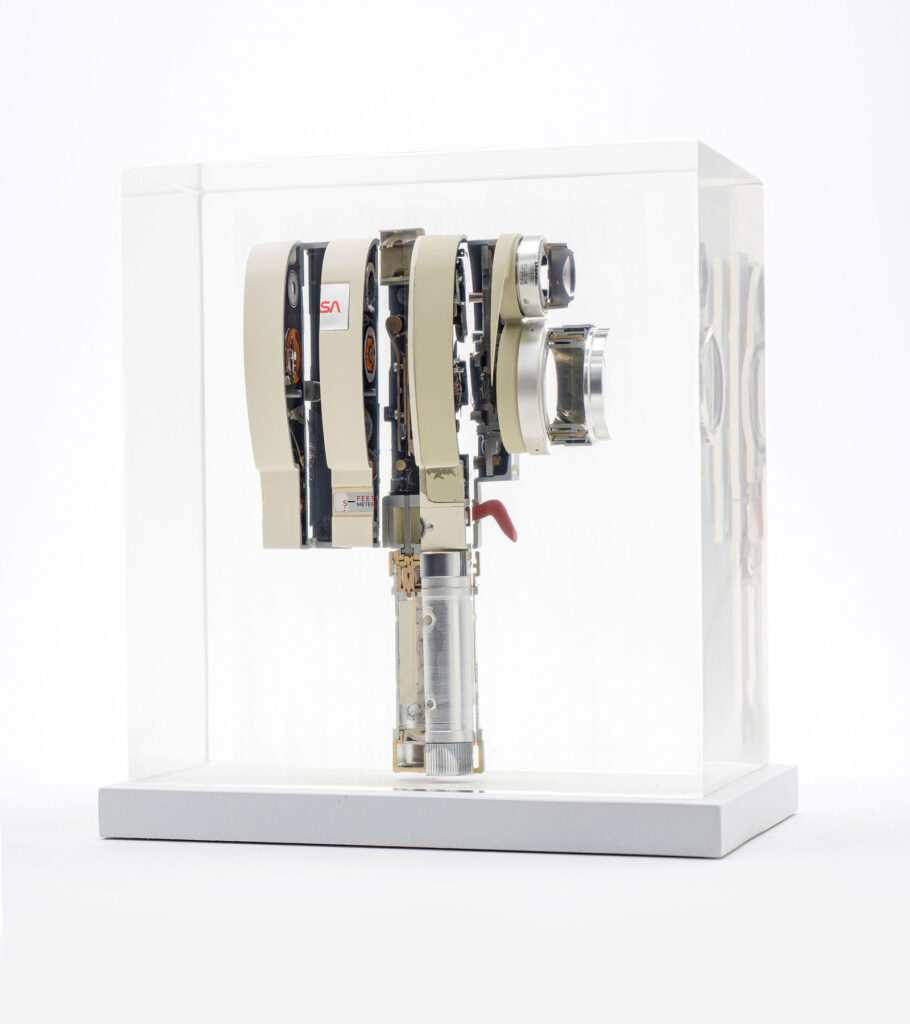
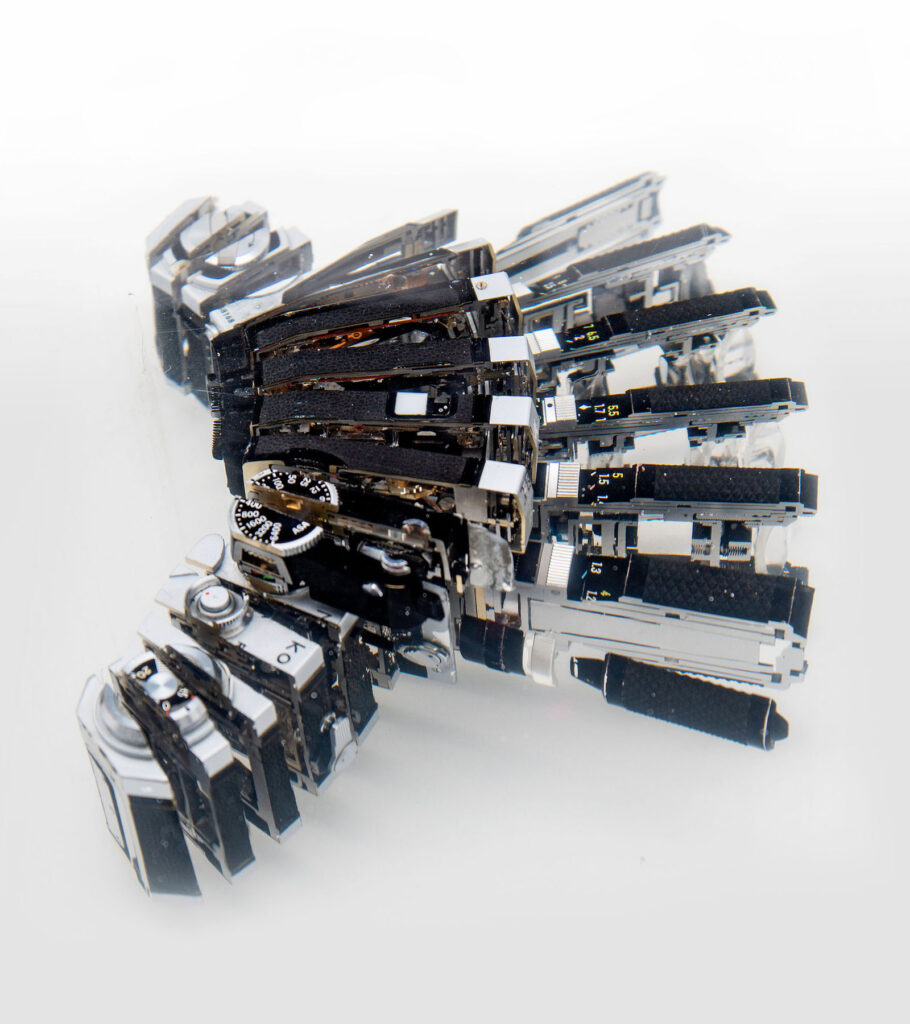
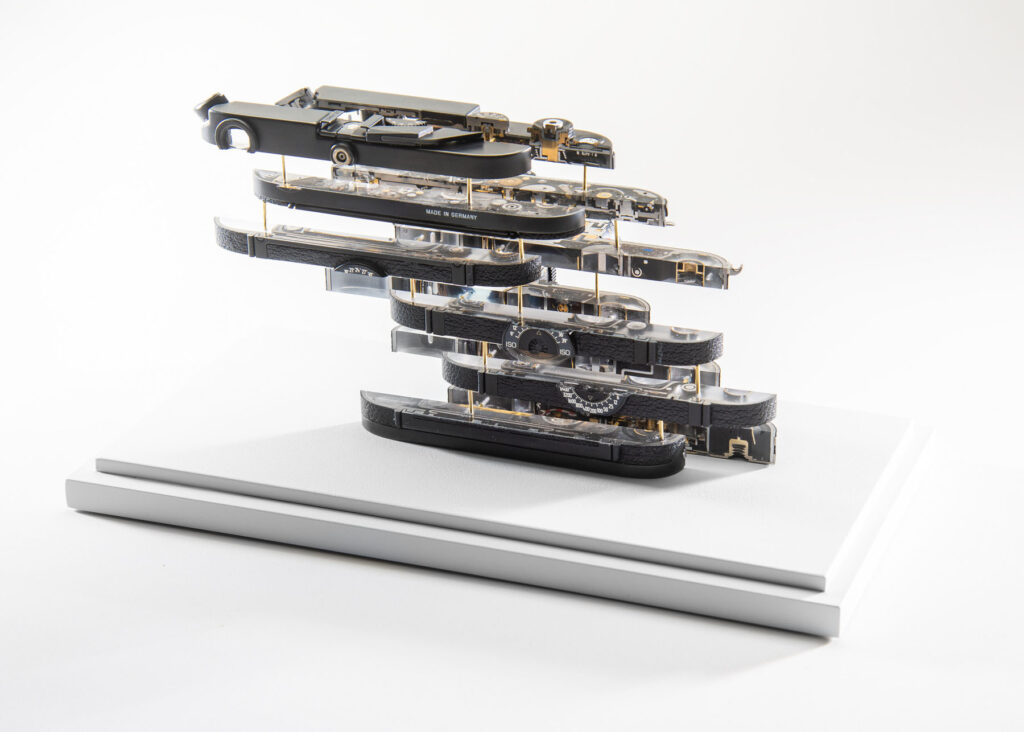
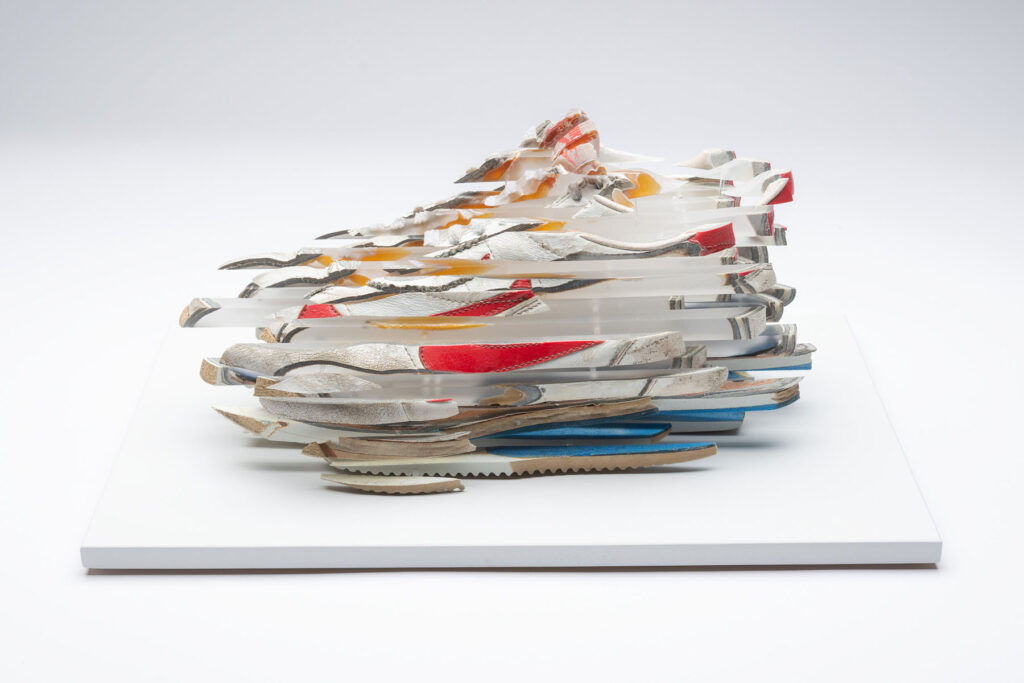
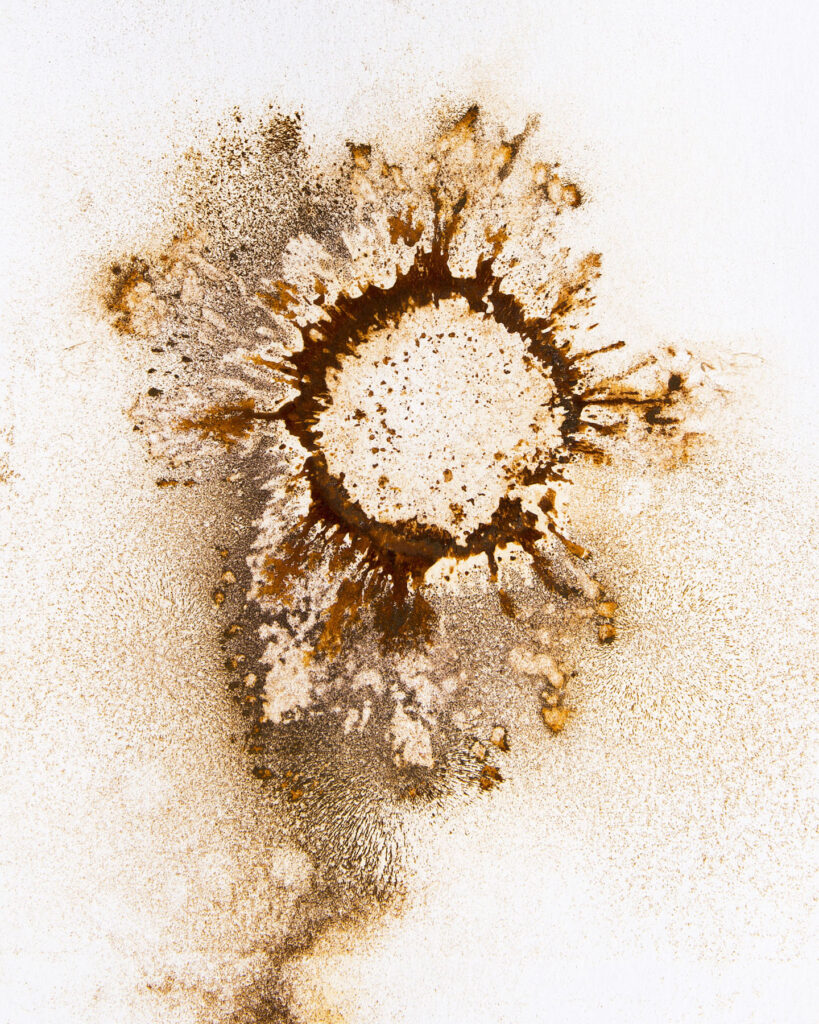
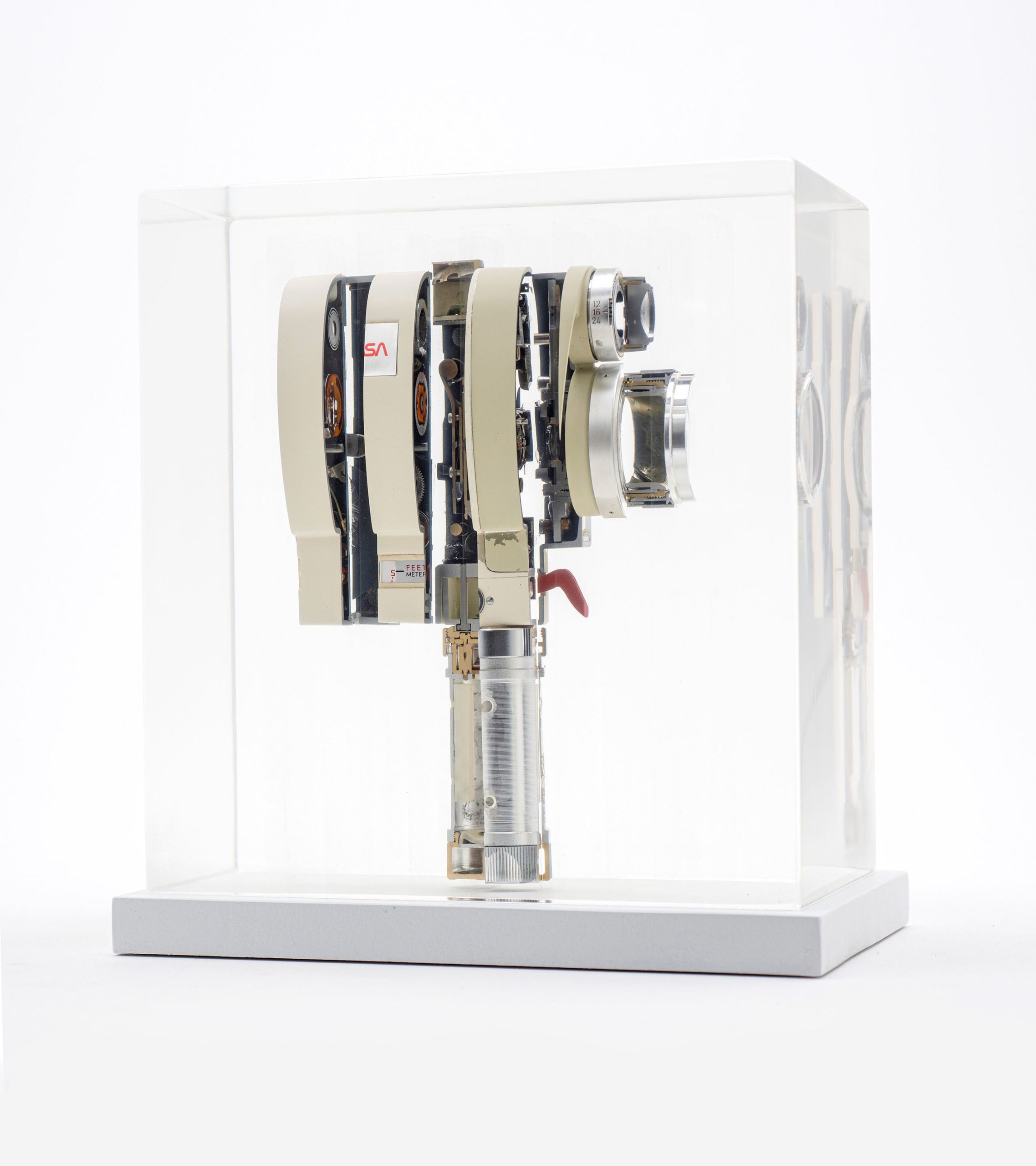
Destruction and creation go hand in hand in Swiss artist’s Fabian Oefner’s work. Everyday objects are sliced up and then reconstructed in resin or placed between the pages of a book, allowing the viewer to see the secret inner workings of a Nike shoe, a voice recorder, a camera and so on. Sports cars appear to have been caught mid-explosion, with cogs, gears and screws floating in chaotic unison, but are instead the combined product of hours of individual photographs. Drones map out the changes to a glacier over the last hundred years in eerie long exposure photographs. Oefner’s work straddles the so-called divide between art and science highlighting the interconnectivity of the two subjects.

You are most well known for combining science and art in your work, but do you not think that all art requires an element of science and vice versa? 

Absolutely. To be quite honest, I always found it strange to be identified by combining art and science. To me that’s the most natural thing. If you look at the history of art, the combination of art and science has always been there. Da Vinci and Michelangelo’s close studies on the anatomy of the human body allowed them to create their masterful paintings and sculptures, Vermeer’s use of a camera obscura resulted in these marvellous compositions of his, etc. The list goes on and on.

“I believe that discoveries in science and technology have always been a catalyst for the arts.”

How did you decide on the objects you used in Heisenberg, you mentioned that they were all connected to memory but was there any other criteria you used to select them? 

Memory definitely has been the most important deciding factor. But I also have to add that the series is not done yet, those are just the six initial objects. I would love to expand the series to about 12 sculptures. Objects that might be included are typewriters, a violin, the first Mac computer and a Moog synthesizer.

Much of your work requires hours and hours of time to complete. Do you consider the lengthy process part of the work, a kind of performance art as it were? 

That’s an interesting thought…one of my favourite quotes about art is one by Yves Klein who said: “My works are only the ashes of my art” I can relate to that. To me, the art is hidden somewhere in the process. But

“I think to a certain degree that process is manifested in the final sculpture.”

With your exploded car series you had the opportunity to work on a real life-sized car, have you ever considered working with something even bigger? 

I have, yes. I would love to create a Disintegrating image of a Blackbird SR-71, the fastest plane ever created. Since this plane is more than 30 feet long and the few surviving examples are all in museums. So the challenges to create the image are tremendous. But I guess that’s one of the reasons I want to and eventually will create this image.

What’s the most challenging project you have worked on and why? How did you overcome those challenges?

“Timelines”, my work on the changing landscapes in the Alps has been very complex. The technology to create these images is still in very early stages, so you have to be very flexible in adapting to what’s possible and what is not. Also, the environment in which these images were created was a challenge, high up in the mountains, during the night, with wind gusts at 100 km/h and snowfall. At this point, you sometimes question yourself why not choosing something simpler to do.

But in the end, those projects are always the most rewarding, the ones, where it’s just one obstacle after the next. But

“if you persevere and keep that vision of yours in front of you, then eventually you will succeed.”

What advice would you give to young creatives who have an interest in both art and science? 

To believe in their work. That it means something to the world, that you are creating it. And to not look left or right, worrying about whether their work is Instagramable or not. Sooner or later, you will find the right people, that will appreciate what you do.

You consider your practice as a form of modern archaeology and you mentioned finding a note in one of the cameras you deconstructed. Have you ever found anything else like this? 

I cannot think of something tangible right now like the note, but I often wonder about what the story of all those objects is, for example, the cockpit voice recorder. How many parts of the world has it flown over, what conversations between pilots it has recorded. It would be fascinating to know the answer to these questions.

Much of your work involves deconstructing and examining man-made objects, have you ever considered doing the same with forms found in nature? 

No, this is something I haven’t considered for my work. I use a different iconography than objects from nature to convey my ideas.

What was the artwork that you felt the most connection to and excited you the most? Why that one in particular? 

It’s the series of sculptures I am working on now, which are called “Momentum”. The objects will be published later this year. 6 sculptures that depict a moment in time in three dimensions. I loved them so much because they are taking everything I learned so far to the next level. I cannot wait to share them with you.

Credits

Images · STUDIO OEFNER
https://fabianoefner.com/

Danny Augustine

“I’m guilty of having quite a short attention span”

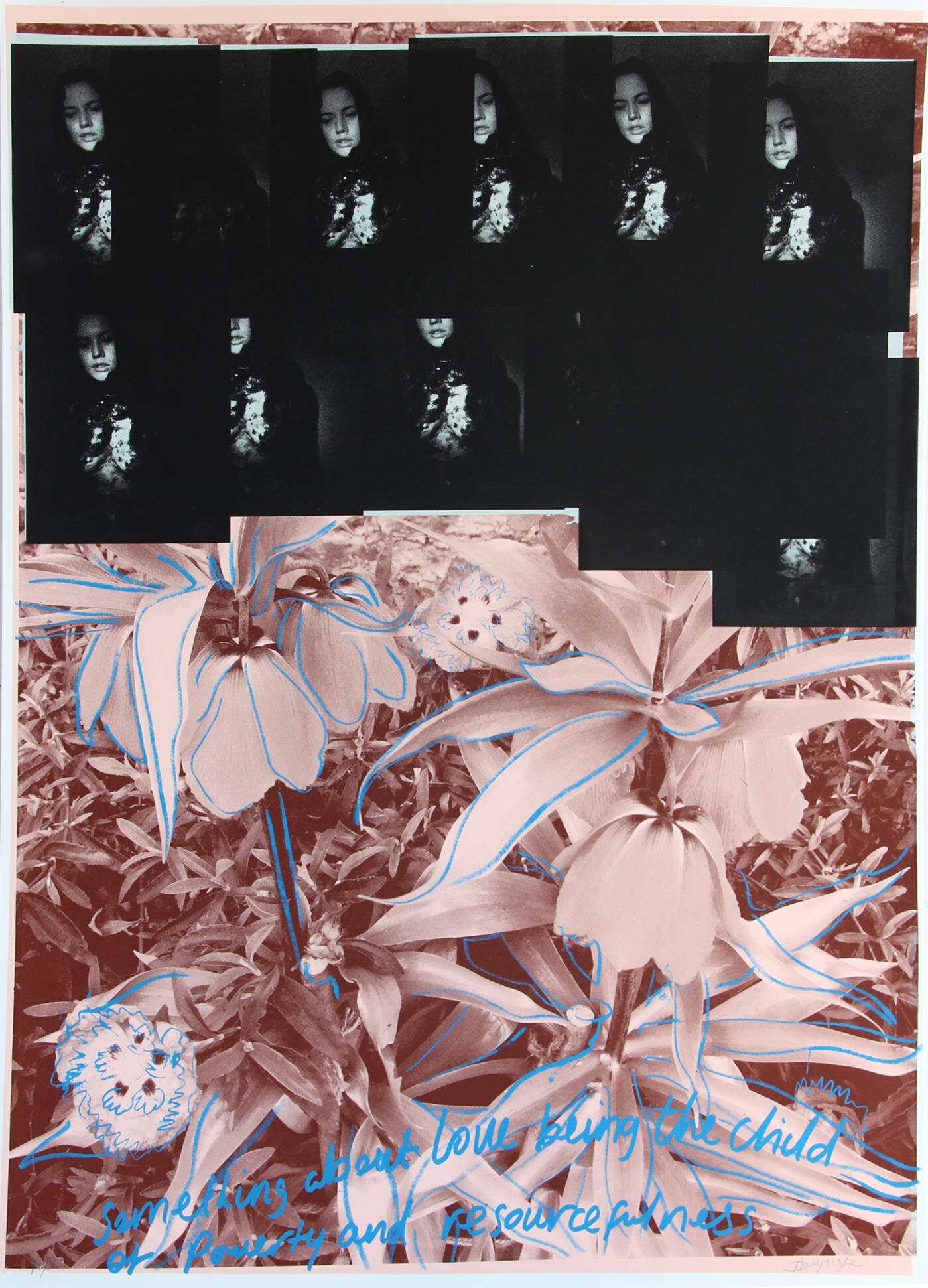
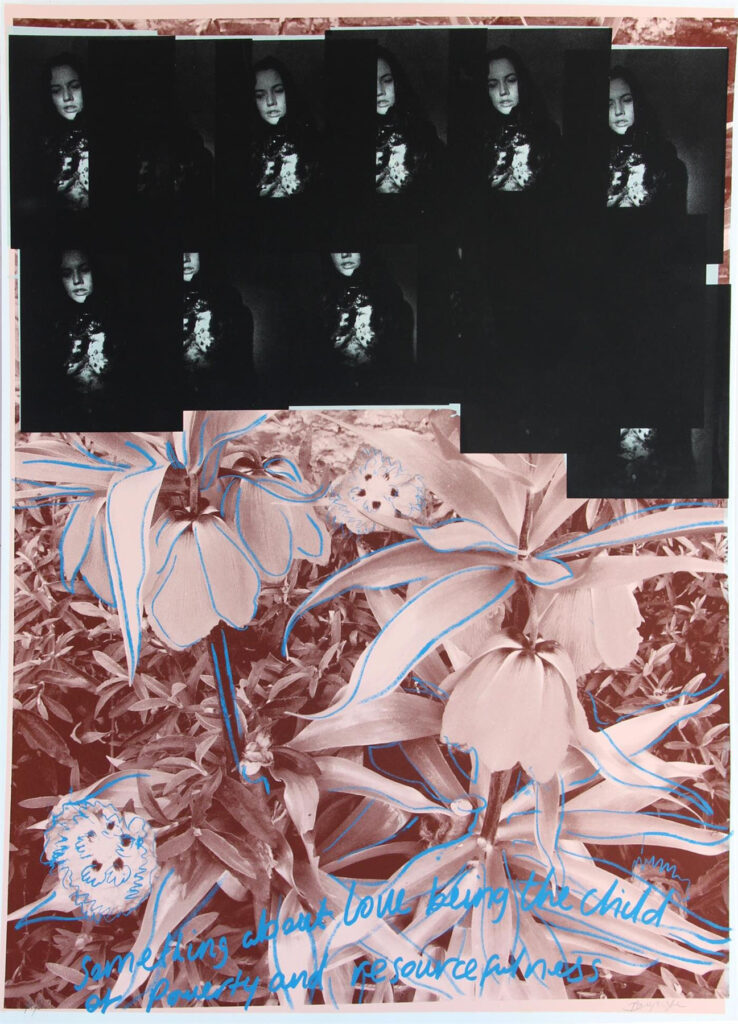
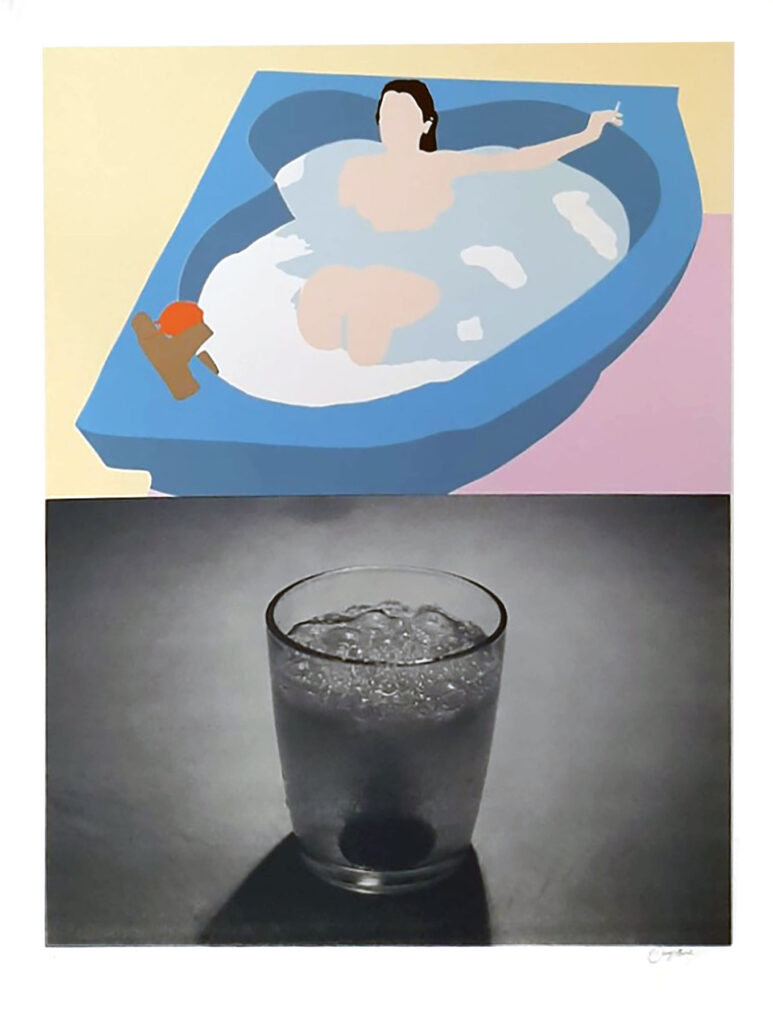
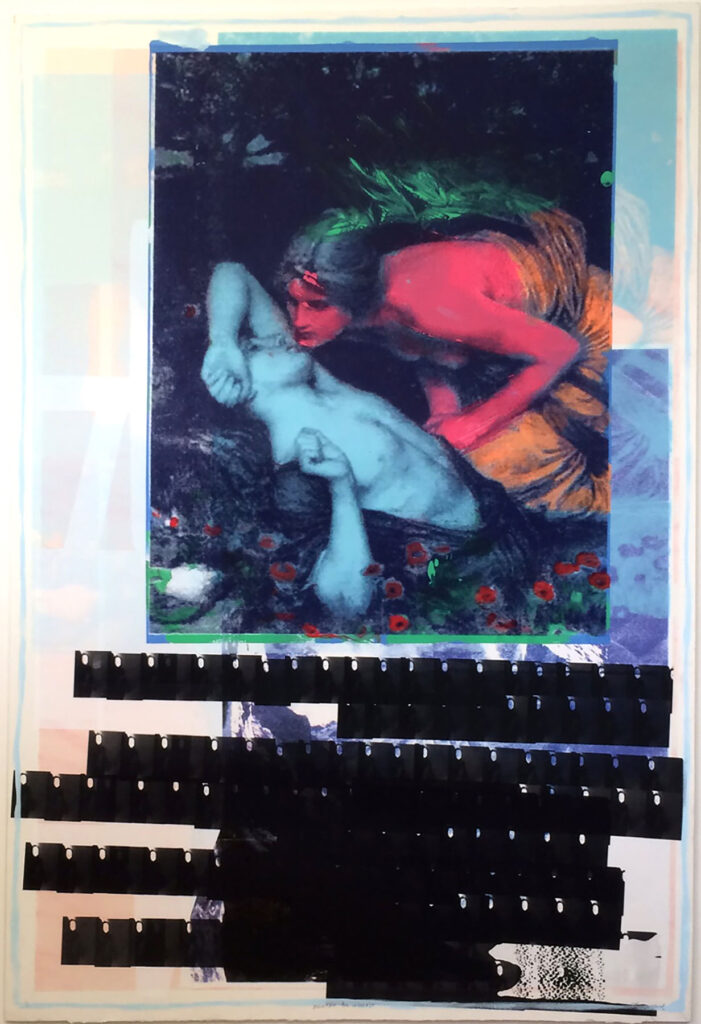
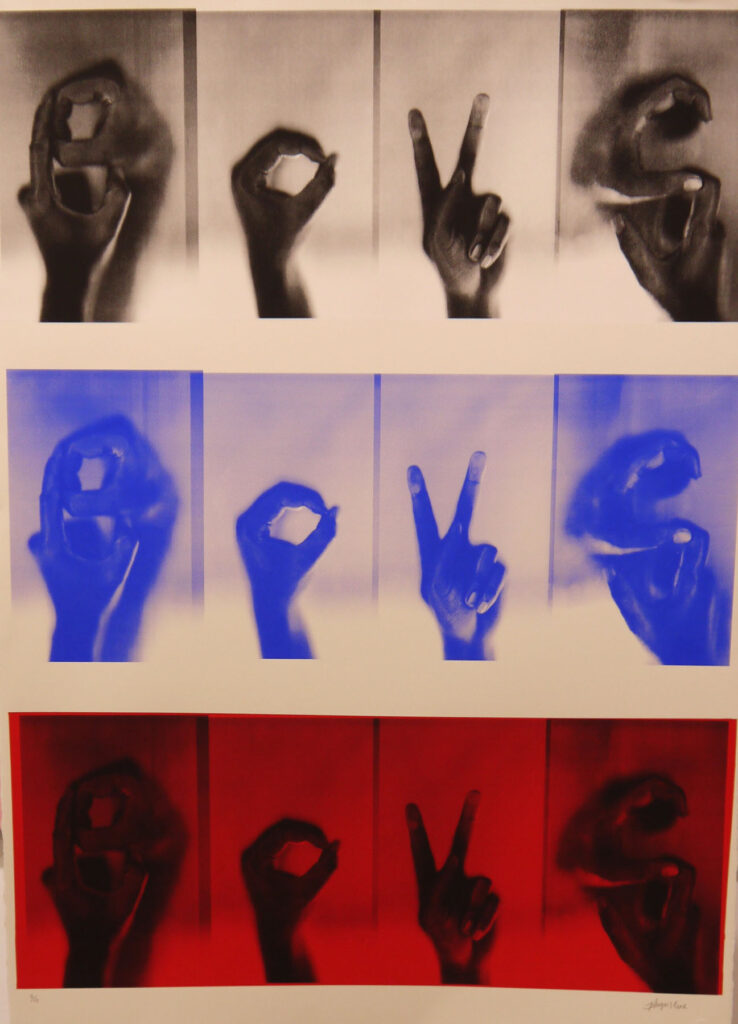
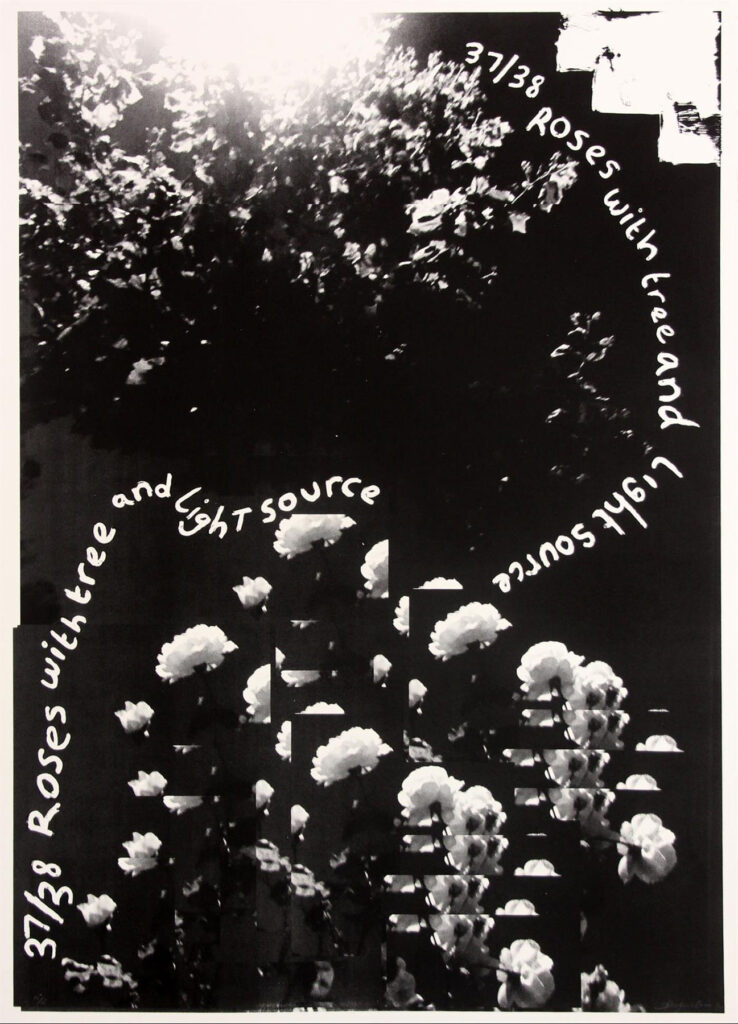
Raised in East London, artist and printmaker Danny Augustine explores ideas of identity in his work, primarily addressing topics of race and gender politics. Danny works predominantly with the medium of print but has a unique and painterly approach to his projects, toying with different narratives that prompt his audience to think about modern society’s views and obsessions surrounding race, gender and sexuality.

NR speaks with Danny, discussing his background, influences and how he has navigated his artistic career.

What attracted you to first start working with print?

First, I wanted to be a fashion designer, then a photographer, then a filmmaker and then finally a painter. The problem was that I wasn’t great at any of those things. I’m guilty of having quite a short attention span. I always want to work big, and I want instant gratification, so print works really well with appeasing those traits.

You grew up in Hackney, how has living in East London impacted your work and you as a creative individual?

I’m of the generation where I ever so slightly missed or was too you young to realise what was going on in regards to the YBAs, but the water mark was clearly visible. Coming from a Caribbean family and growing up in Hackney I felt gave me the licence to push and become an artist – there’s never been a doubt in my mind.

Are any other locations inspirational to you?

Berlin and Venice – those places rock me every time I visit.

Your work deals mainly with ideas about gender and identity, does exploring these narratives come naturally to you, or is it a struggle to express them creatively at times?

I think my work ends up talking about or outlining those points on its own. I didn’t realise it was happening until I had a bit of hindsight. I think it’s pretty natural still.

“I’m not sure why it’s like that but I’m happy that the work walks out on its own and is what it is.”

What’s your usual process when designing and printing a piece?

I usually start with an idea and instantly start to build a collection of works that explores that. I like to think about it like how a fashion designer builds a collection for a new season. I hardly ever just make a singular piece.

What other artists inspire you?

Tim Mara, Eduardo Paolozzi, Frank Bowling, Cy Twombly, Francis Bacon, Kate Gibb, David Hammonds, Billy Childish. I have loads more: Hockney, Louise Bourgeois, Lucien Freud. We’re in an incredible time because so much has passed and there’s a lot to look back on for inspiration.

How have you navigated the past year in the pandemic as an artist?

Minus the horror stories that people went through during this time, I found I was able to concentrate on making loads of small prints and send them to people who wanted them, no charge.

“Knowing when it arrived and how it cheered people up, I felt happy that I was able to connect with people for no reason other than being able to make something and then send it out.”

Have there been any seminal experiences that have impacted your work or your practice?

Having my son was an incredible thing. When he was born, I knew I wasn’t going to make anything as beautiful as him (cheesiest thing I’ve ever said). My work has changed since having him – I think it’s possibly more grown up, but I won’t know until I start working more.

What does your body of work aim to say in terms of confronting issues about gender and identity politics?

I don’t think it aims to say anything, but perhaps it prompts the viewer to possibly say something.

What was it like transitioning from studying Fine Art to specialising in your printmaking MA? 

It was nuts, I probably wasn’t ready for it. Maybe I should have had a year between them rather than going straight in, but at the same time I think I had to be thrown straight in after university. I had to learn the language pretty fast.

Are there any particular figures you draw the most inspiration from?

I think probably Cy Twombly and Lucien Freud. As soon as I open a book my brain goes crazy and thoughts and ideas start flooding in.

Are you working on any projects at the moment?

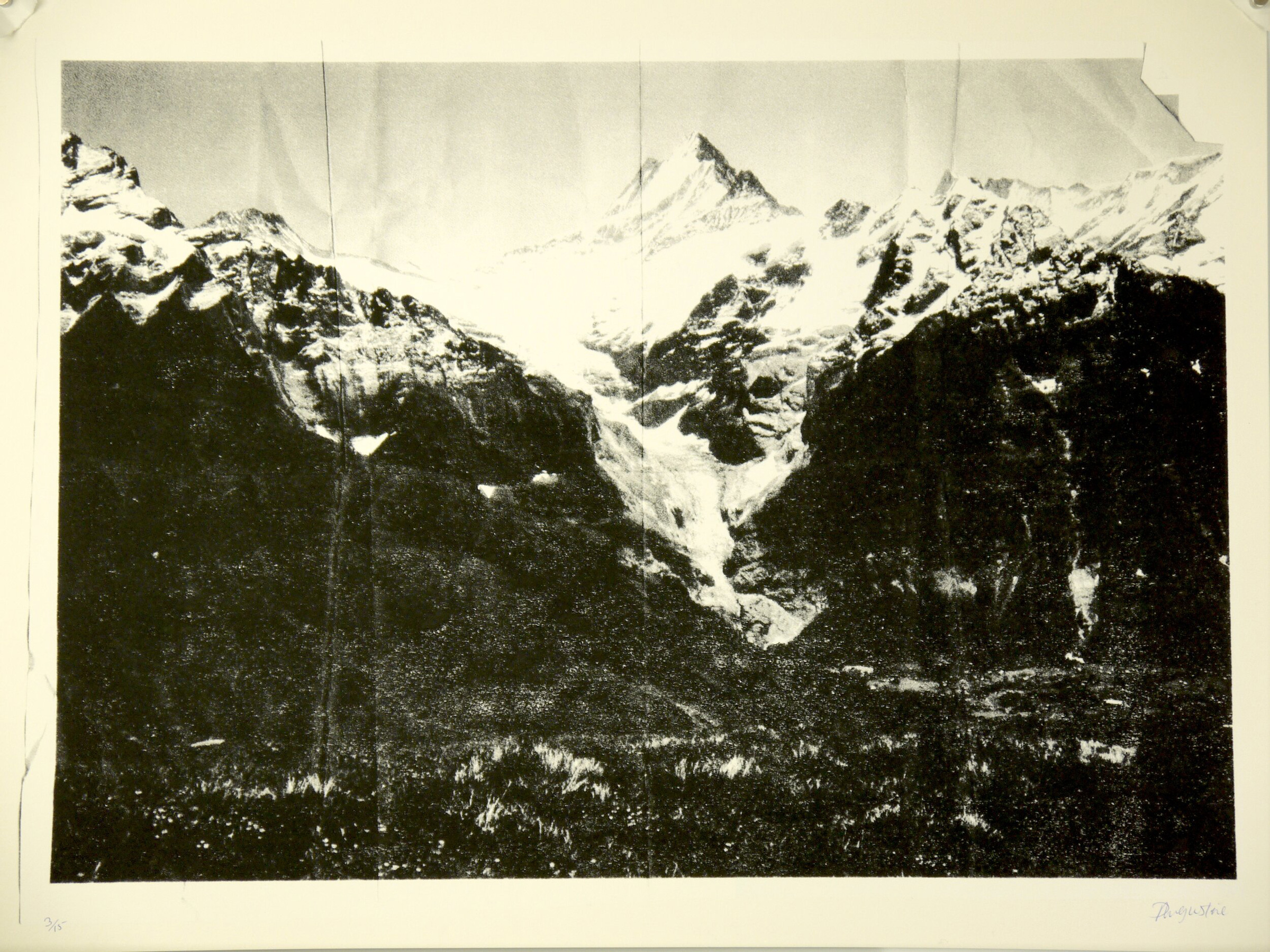
Yes, I’m working on a few large screen prints mainly dealing with colour and abstract forms leaning heavily on a specific way of printing.

Credits

Images · DANNY AUGUSTINE
www.jealousgallery.com

Virginia Arcaro

“I learned to rediscover myself, my body and my mind through photography”

Virginia Arcaro is a visual artist whose work spans the realms of painting, collage and photography and explores personal connections with contemporary culture, art and high fashion. Working with the likes of Dior Homme, Acne Studios, Arcaro’s editorials integrate elements of fashion and art history with her own personal vision. The result is an impressive and authentic body of work that is sleek and carefully considered. Arcaro’s practice draws inspiration from a range of subcultures and the limitless potential of photography as a medium.

NR looks into Arcaro’s influences and creative process across both her personal and editorial work to learn more about their artistic production. 

You have a really interesting body of work that ranges from high fashion to more intimate, personal pieces. What have been some of your favourite photography projects to work on? 

Definitely the projects in which I had the freedom to express myself and my creative vision without many boundaries and limits. And those in which I tried to simultaneously blur and establish the lines between art and fashion.  

How did you start getting into photography? 

Since I was very young, I’ve always had my camera with me. I was constantly shooting. It has always been a passion. On a professional level, I started immediately after graduating from the Academy of Fine Arts, collaborating with my boyfriend at that time, shooting the collections of his brand and also curating the creative direction of every photographic project with him. Soon after, I started working as a backstage photographer during fashion shows in Milan, Paris and London, and at the same time I was shooting editorials for magazines and commercial works for various luxury brands.  

How much does fashion influence your work and creative process? 

Fashion is both a means of expression and a source of inspiration. It definitely affects me a lot, but not so much to overwhelm my creative process. When I started working in fashion, I was quite clueless about how complex the industry was. Working in the field and having had the opportunity to meet and collaborate with so many different people helped me learn a lot. I feel honoured and will forever be grateful to have had the opportunity to document the incredible work of designers I love and admire. 

What has impacted your creative vision the most? 

My background and cultural experiences, music, my love for rebellious youth cultures and subcultures – when they could still be defined as such. And having studied art history for years, I can’t deny that traditions and classical references also played an important role in impacting my vision.  

What people and places do you draw the most inspiration from? 

From authentic people, radically different people, confident outsiders. I’m inspired by any place I have a connection with – a connection that is not only physical but also mental. From all the places I’m sentimentally attached to for some reason. 

How have you managed to stay present and creative during the past year? 

Last year was surreal, but I think it had a positive impact on my life and it helped me a lot on a creative level. My job has always led me to travel continuously, and I’ve always loved traveling in my free time too. I had to learn to stop and be in one place for months, so I had time to recharge, time to reflect and time to develop new creatives projects. I learned to rediscover myself, my body and my mind through photography, immersing myself deeply in the essence of art.

How do you choose your subjects and the people you photograph? 

Each person is unique, and I choose them for different reasons. There’s no rule. I understand immediately when I like a subject. 

Is there a main message you want to say with your more personal photographs, or do you find it’s more of a relaxed and natural process? 

It’s a combination of both. I feel it’s a natural process for me to shoot something with a meaning, or a plurality of meanings. Each image contains messages and symbols that lead to a different dialogue. Interpret as you will. 

Virginia Arcaro’s work has been featured in Dazed Digital, AnOther Magazine, Vogue Paris, Vogue Italia, Vogue UK, Harper’s Bazaar UK, Highsnobiety and more.

Arcaro’s work can be found here virginiaarcaro.com

Fernando Livschitz

“Take a camera or computer and do things that motivate you. Do, do, do and do, that’s the way.”

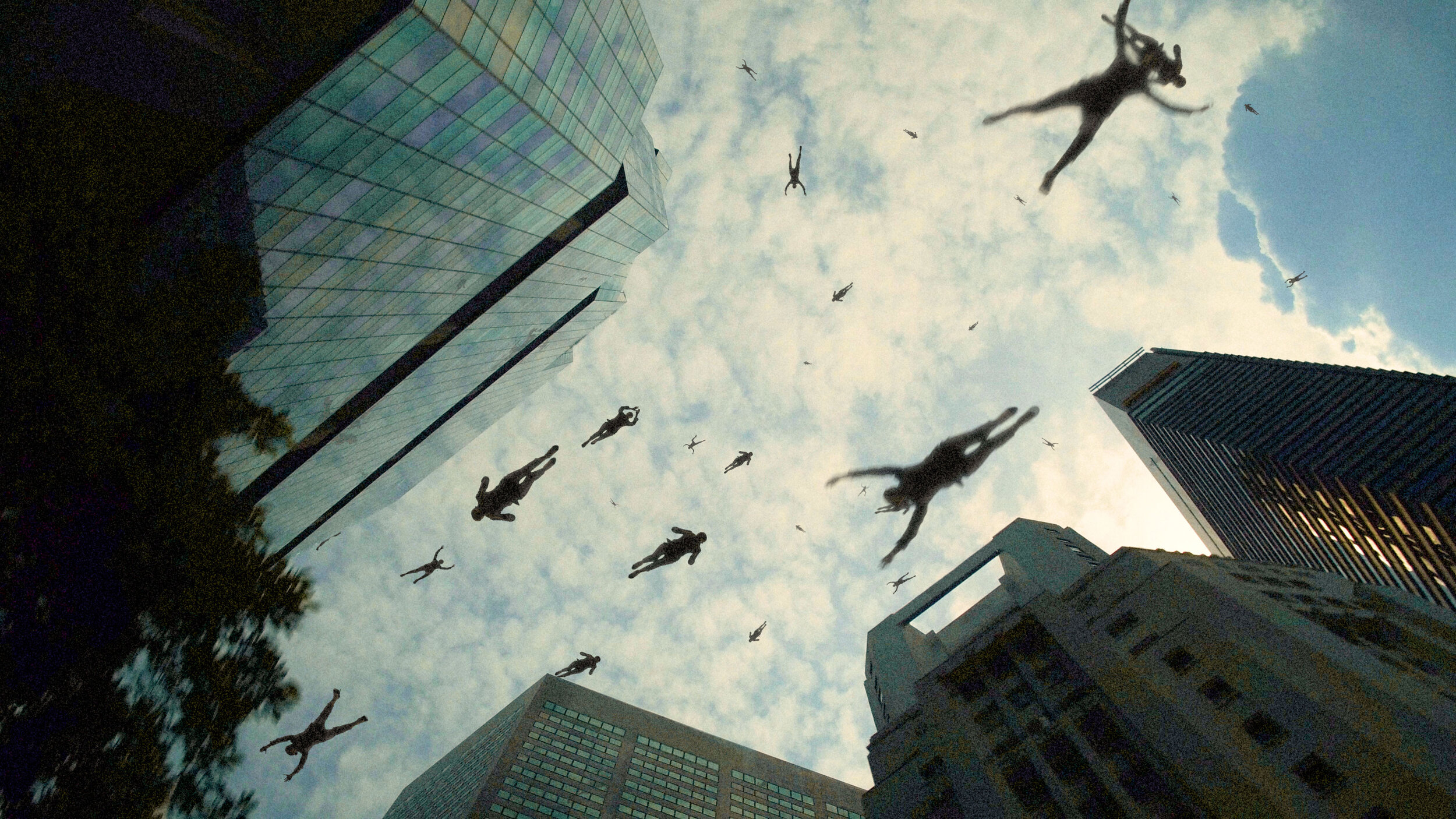
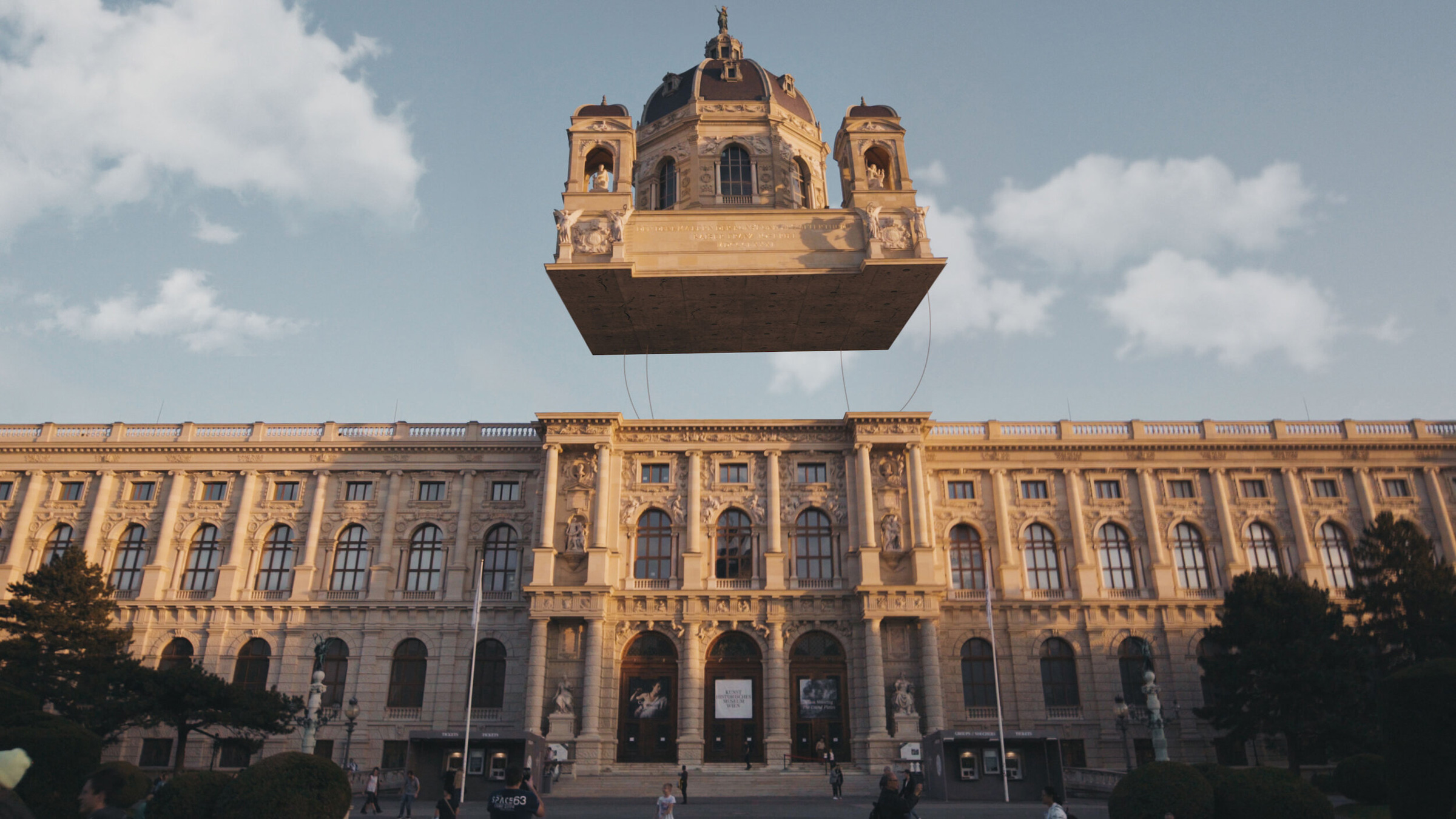
A whale splashes about with its calf in a garden swimming pool, a speed boat spins in circles upon a galaxy of stars, and famous buildings just up and float away. These are just some of the worlds Argentine filmmaker Fernando Livschitz brings to life in his short films. “His stories unfold organically showing the extraordinary as something ordinary and common. Going deeper into reality through the wonder that is in it by creating a charming and mind-boggling mood.”

Indeed, his works are inherently surrealist by nature, incorporating the mundane with the absurd, but there is an inherent youthful playfulness to them that offsets their obvious technical conception. They invoke all the innocent creativity of a young child, who has been set loose in reality and has been given the power to make it their plaything. In doing so they remind us all of the freedom of childhood imagination, unconstrained by adult worries such as gravity or logic.

Livschiz’s films are viral by nature and have been seen by over a hundred million people. He has directed all over the world, winning The Young Directors Award at the Cannes Lions and worked with well-known brands including creating the opening credits for CBS’s The Late Show with Stephen Colbert.

How long does it take for you to make each project/video and what’s your artistic process when coming up with ideas for your work? 

It could take one day or months to make a project. there is no logic there.

Usually, I start from a small idea or concept I want to show and then the process can lead in other directions.

Which is your favourite project and why? 

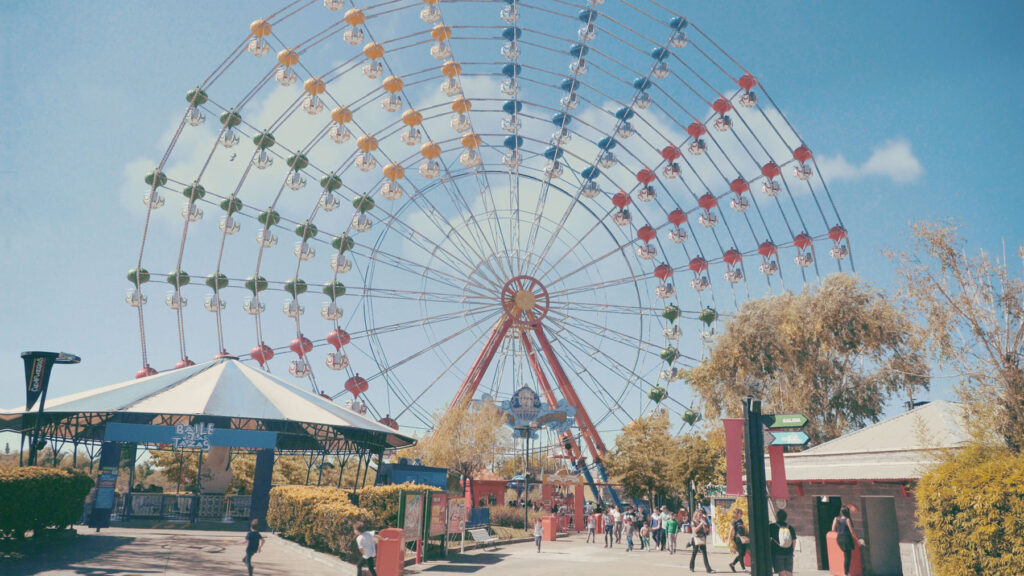
I’m not sure, maybe “Buenos Aires Inception Park”. This project is 10 years old, and it has opened all kind of doors in my career.

You stated that during lockdown you didn’t feel very positive because of the current situation, is that what inspired you to make Anywhere Can Happen, which is a very uplifting and positive work. 

Well, I’m not sure if it was the lockdown period. Life is complicated beyond this crazy time. I feel we can see things as different, more positive.

Which was the most difficult project you worked on and how did you overcome the challenges you faced while making it?

Each project has its complications. When I start with a project I’m not sure how I’m going to do it. As I progress, I discover the complications. Sometimes I feel that my work is based on gradually solving the problems that arise.

Is there anyone/anything in particular that you draw inspiration from (ie, literature, films, artists, creators etc) 

Yes, lot’s of artists: Slinkachu, Michel Gondry, David Lynch, Tim Burton, Leandro Erlich, Pablo Rochat, Fubiz, Vimeo Staff Picks, Nowness.

How do you think working on an international level affects the creation of your work? 

I think it affects it in a positive way. The greater the knowledge, the greater the possibilities.

What advice would you give to young creatives looking to work in animation and film? 

Do not wait for things to come from outside. Take a camera or computer and do things that motivate you. Do, do, do and do, that’s the way.

In the BTS of Lost in Motions, I saw your daughter helping you to spray paint the individual pieces you used to create the stop motion. Do you often include her in your creative process? 

Yes!, she has an innocent view of things and life and I love her opinion. She has great ideas.

You have a background in photography and design how did you transition into creating these kinds of works? 

I think in my work, everything is connected. Photography, animation, analogue, digital, design, music. What I do now came from all those backgrounds.

Are you working on any projects at the moment? What can we look forward to seeing from you in the future? 

Yes, I am working on several projects. But shhhhh. I can’t talk about them yet.

Ekow Eshun

An Infinity of Traces, a selection of work from eleven Black women and non-binary artists

Walking into the airy gallery space from a quiet London side street, one is immediately struck with a powerful sense of joy, exuberance and pride in an exhibition that discusses incredibly serious topics surrounding Black identities in the UK. An Infinity of Traces, which showcases a selection of work from eleven Black women and non-binary artists, was originally planned to open shortly after a summer of intense discourse surrounding the Black Lives Matter movement and subsequent protests but was delayed due to Covid restrictions. The delay is not a bad thing as the exhibition serves as a compelling reminder of the ongoing nature of this discourse. There is always work still to be done. 

Immediately Jade Montserrat’s series of work draws the viewer into a discussion of Eurocentric beauty standards and colourism and how Black women are forced to navigate their bodies and thoughts within these structures. 

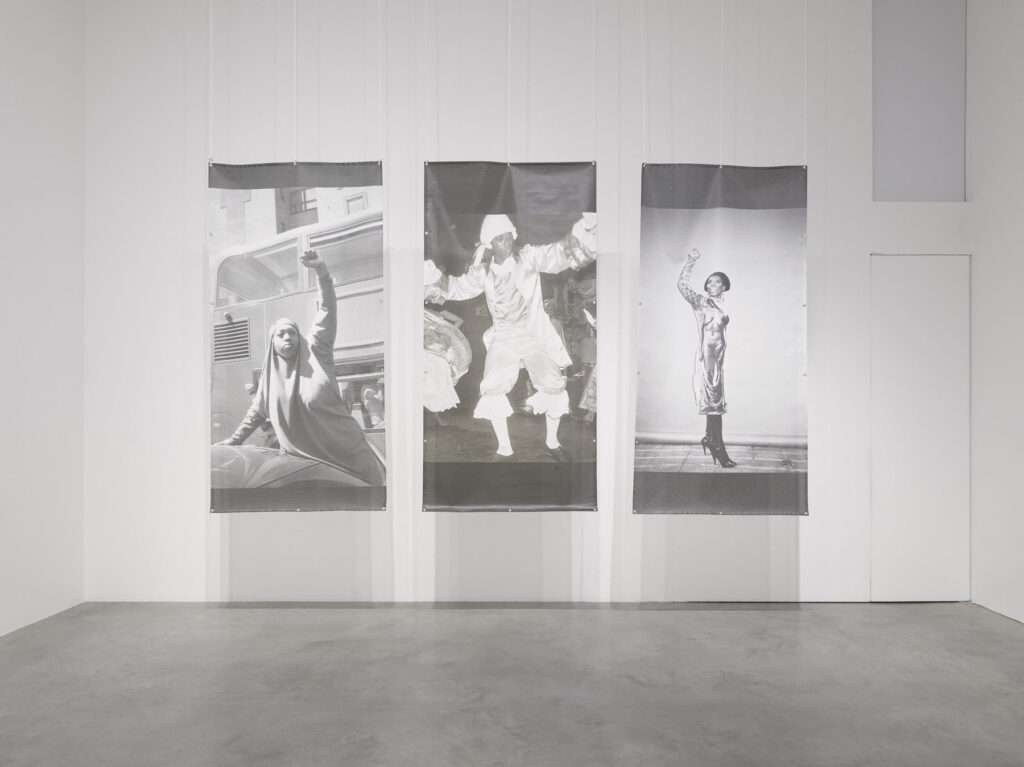
Across from this stretching line of mixed media drawings is Liz Johnson Arthur’s work, Spring… Times, which dominates the space. Three images from Johnson’s archive are blown up in black and white on banners that hang above the viewer. Anyone who took part in the BLM protests in London last summer will be immediately drawn to the image on the left. A Black Muslim woman stands on the seat of a car, holding on to the frame for support with the door flung open behind her, her fist raised in salute. 

During the London BLM protests, there was often a buildup of traffic due to the sheer amount of protesters that filled the roads. However, this traffic became a part of the protest as motorists would blast their horns and raise their fists in support. This sense of powerful community and strength was both incredibly touching and a potent motivator, something this particular image encapsulates perfectly. 

An Infinity of Traces contains a large number of video works, a medium which is often overlooked by gallery visitors who tend to briefly pause in front of the screen before zipping off to the next artwork, seemingly unwilling to commit to placing earphones over their heads and immersing themselves in the artwork. In the case of this exhibition it would be a mistake to do so as, with the exception of the forty one minute film by Alberta Whittle, it is quite possible to watch the entirety of all the video works in under half an hour. 

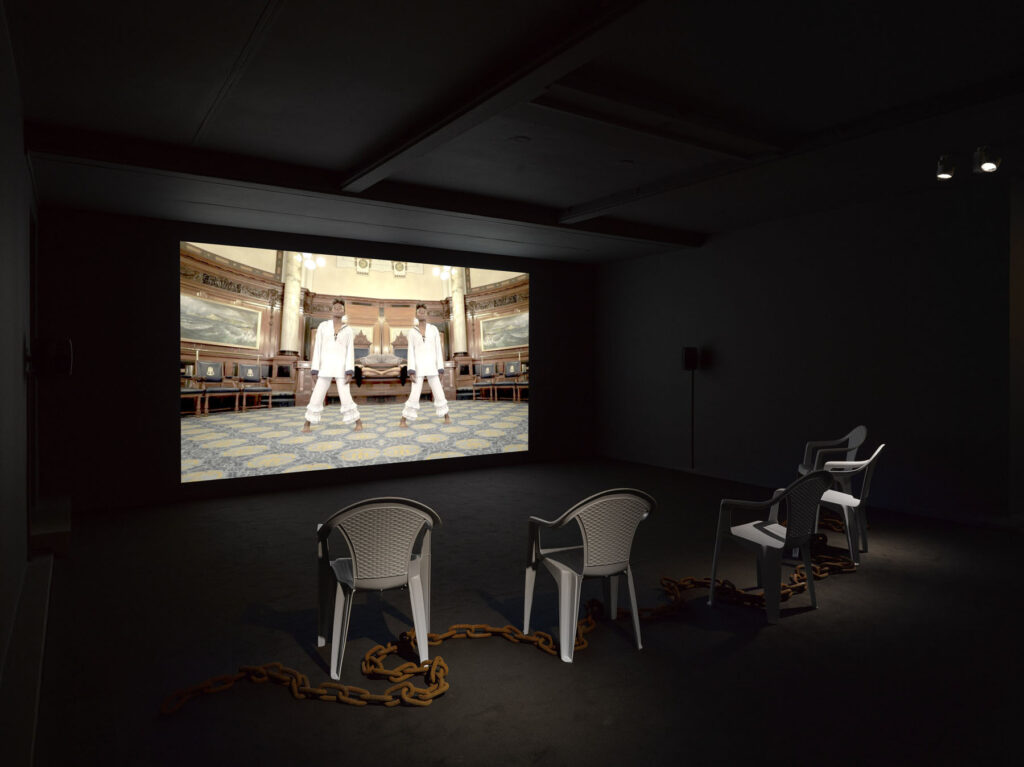
Alberta Whittle’s work, Between a Whisper and a Cry, is well worth the extra time though, exploring, through the mariner’s rhyme: “June too soon, July stand by, August it must, September remember, October all over,” Britain’s historical, cultural and political relationship with the Caribbean. Whittle’s practice is rooted in the history of the transatlantic slave trade, however, one is reminded of Britain’s treatment of Caribbean immigrants, in cases such as the Windrush Scandal, which is still an ongoing issue. 

Ayo Akingbade’s Tower XYZ film is full of bright colours and youthful hopefulness, following three young women around London neighbourhoods and featuring 1970s Brutalist landmark, Trellick Tower. A young female voice raps the words “Let’s get rid of the ghetto.  I hope I don’t die for a long time. I still got things I want to do and look at and boys to talk to. I wanna see an African spirit or like sleep on top of a volcano.” The work simultaneously invites you in, as an older Black man, holding a sign saying ‘All is well’, smiles welcomingly at the camera but then pushes you away, as the camera follows three young Black women into a lift and they turn to stare, making the viewer feel like an unwelcome voyeur into their private lives and thoughts. 

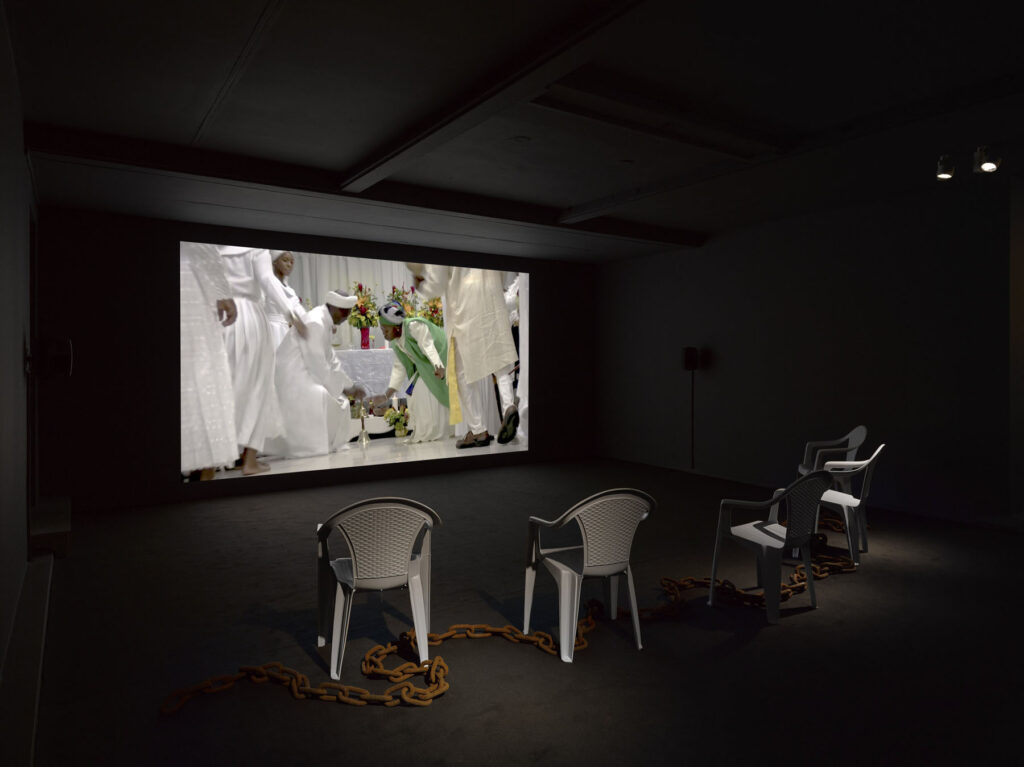
The last artwork in the exhibition is a film by Rhea Storr titled Here is The Imagination of the Black Radical. Exploring the Bahamian Junkanoo and recontextualising it as contemporary art Storr’s work discusses ideas of Afrofuturism and radical imagination alongside such practicalities as what happens to carnival costumes and floats after the event. Interspersed with these discussions  is archival footage of carnival, with performers in elaborate costumes dancing to infectiously upbeat Afro-Caribbean music.

The exhibition will run from the 13th of April to the 5th of June at the Lisson Gallery on Bell Street and visits can be reserved here

Neue Nationalgalerie Museum

NR · WORLD
Published · Online

Feature · Neue Nationalgalerie Museum
Words · Nicola Barrett


1014_10_SM_210400_high.jpg

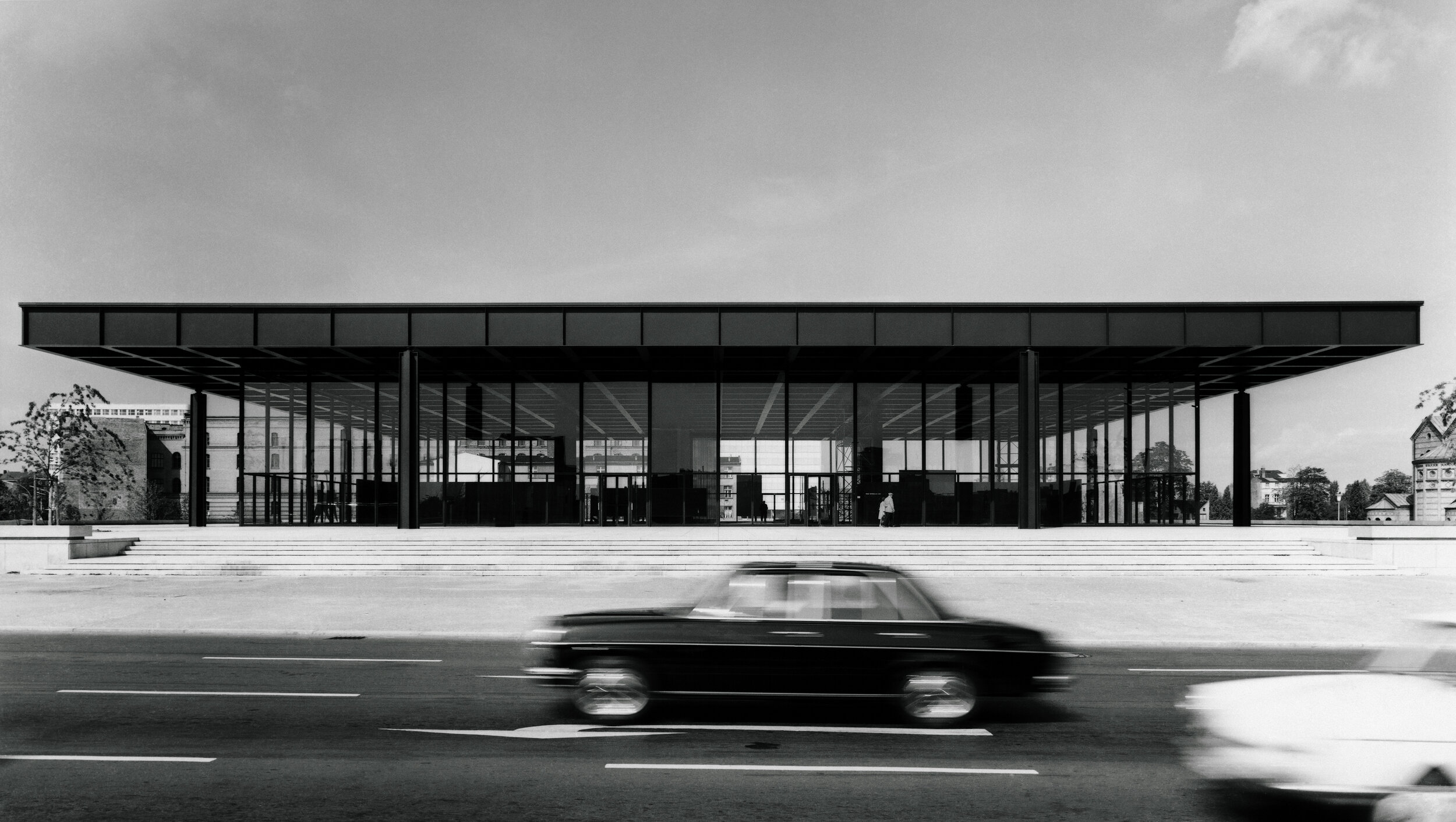
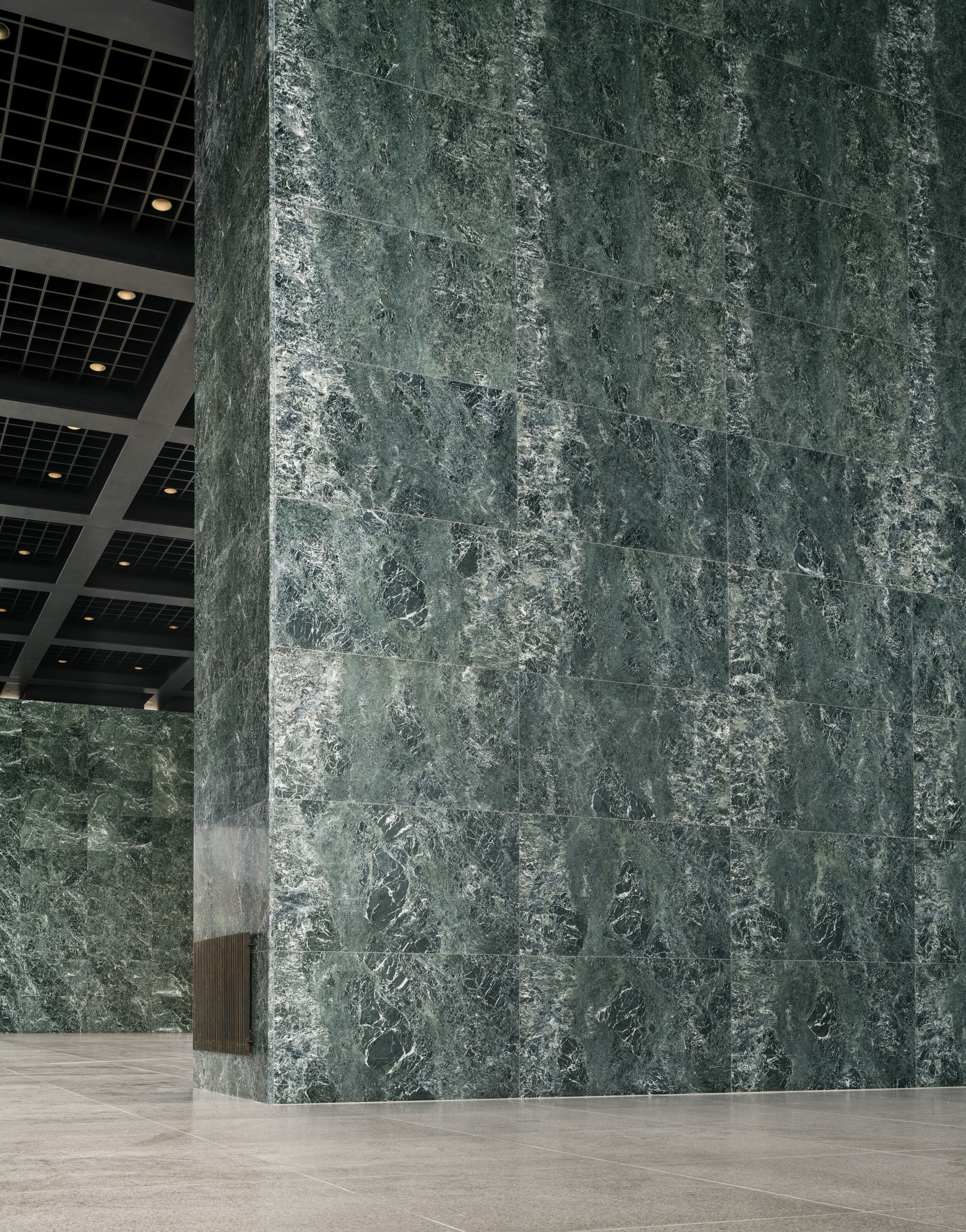
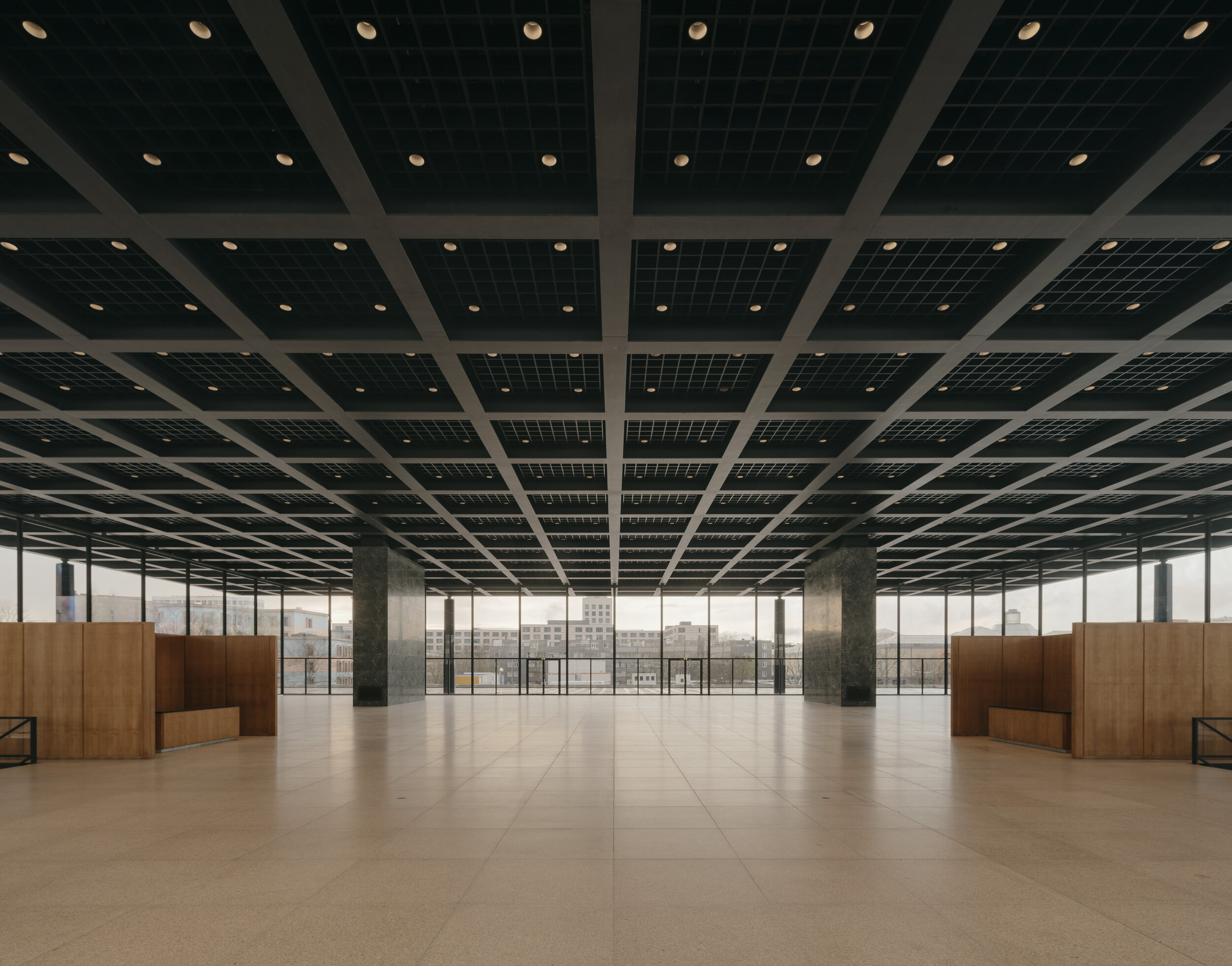
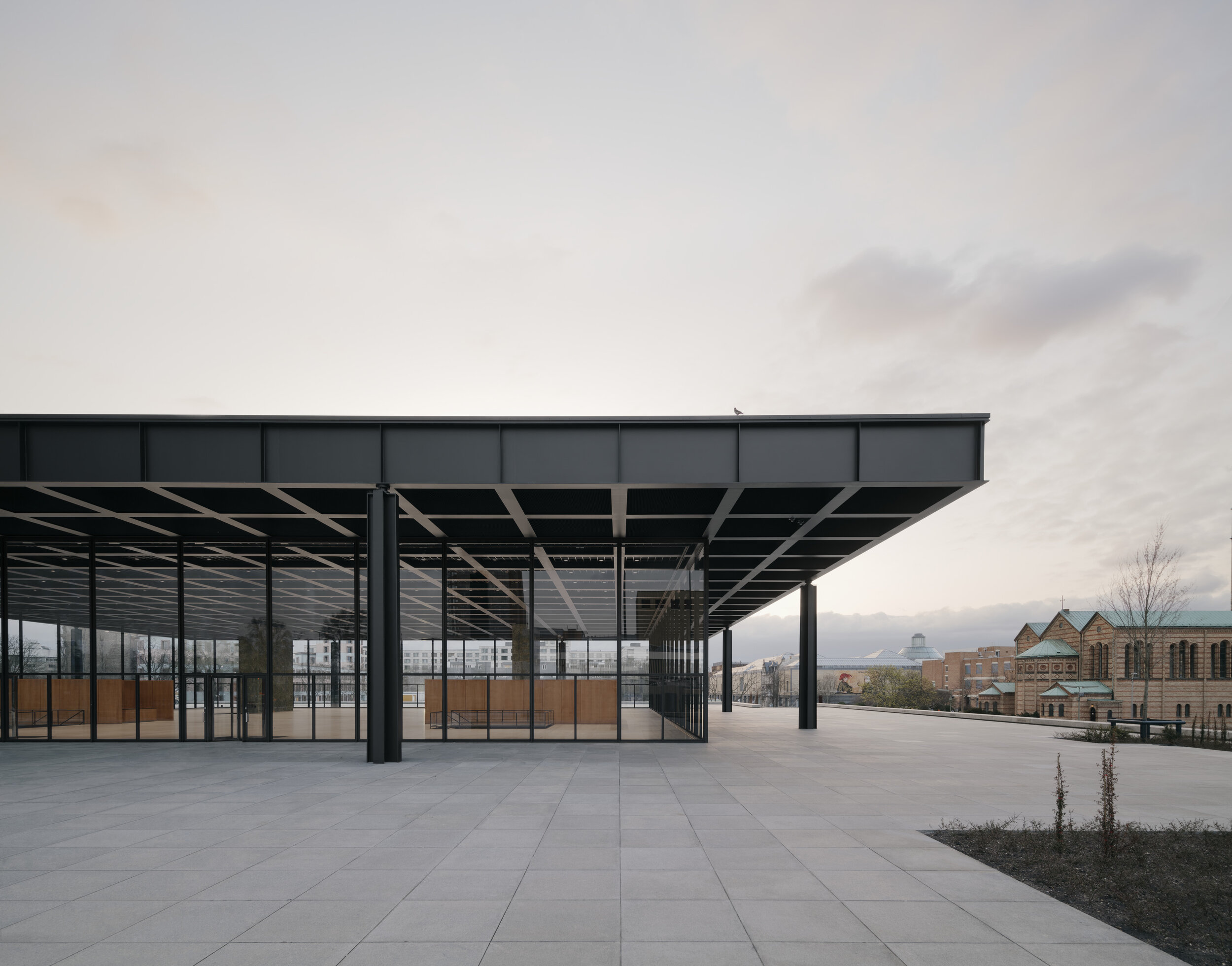
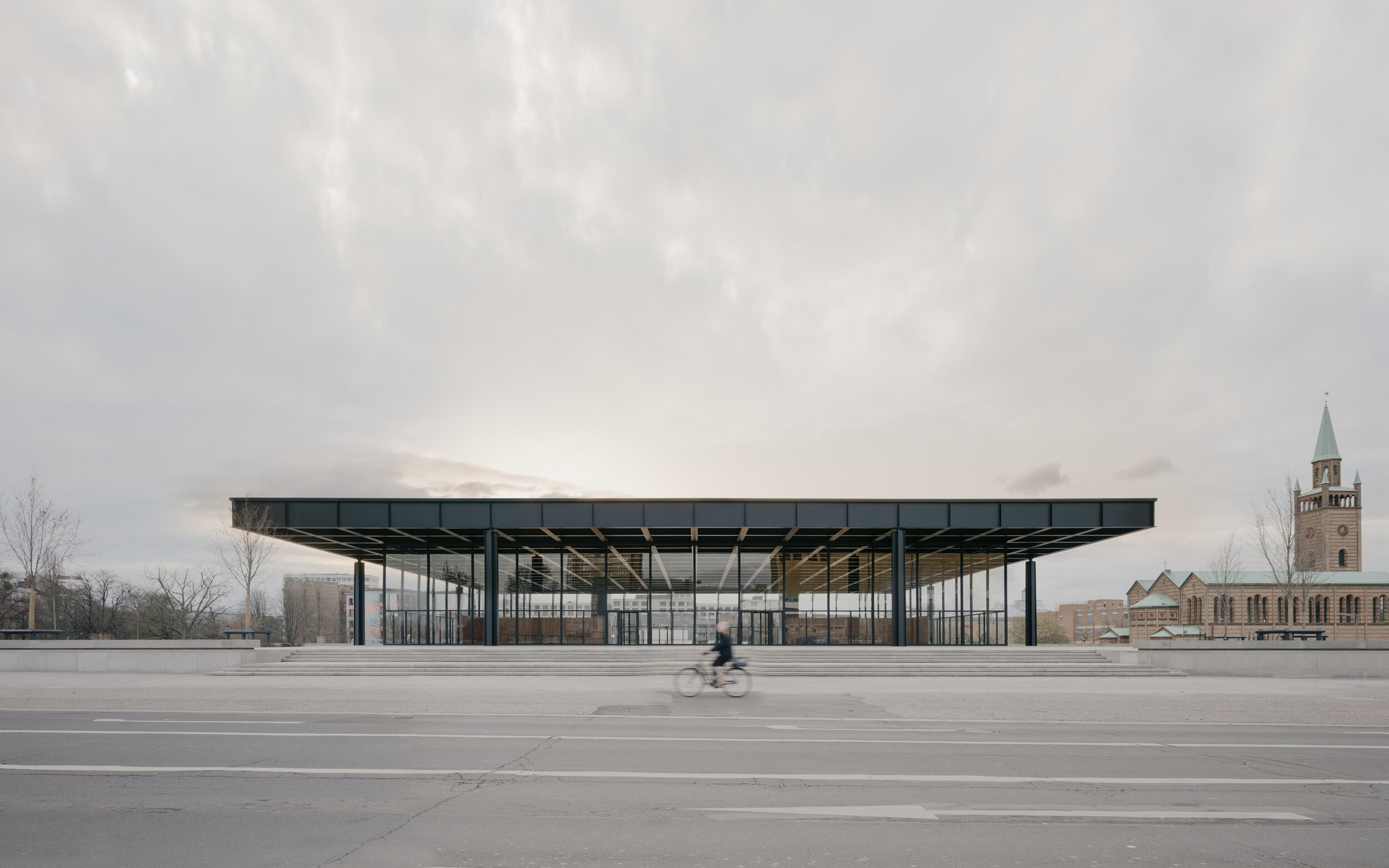
After years of refurbishment the Neue Nationalgalerie museum in Berlin has shed its cloak of scaffolding and has emerged into public view. At first glance it seems not much has changed, which is exactly the intention of David Chipperfield Architects who were commissioned to take charge of the first major renovation of the building since it was built in 1968. The practice has a diverse international body of work and has ‘won more than 100 international awards and citations for design excellence.’ The team at David Chipperfield Architects in charge of this project describe themselves as ‘invisible architects, striving to keep ‘as much of Mies as possible.’ 


They are referring to Ludwig Mies van der Rohe, one of the last directors of Germany’s famous avant-garde design school, the Bauhaus, and the architect who designed the Neue Nationalgalerie. Mies sought to establish his own style of architecture to represent modern times and the advancement of technology in the early twentieth century and embraced the aphorism ‘less is more’. The Neue Nationalgalerie is the only European building Mies designed after leaving his native Germany and emigrating to America before the Second World War. 


Historical photograph by Reinhard Friedrich

Historical photograph by Reinhard Friedrich

Speaking on his practices’ refurbishment of the museum, the firms founder David Chipperfield stated, “Taking apart a building of such unquestionable authority has been a strange experience but a privilege.” He went on to describe the refurbishment as “surgical in nature” as they addressed technical issues whilst protecting Mies’s vision. 


1014_10_SM_210400_N15_high.jpg


David Chipperfield Architects practice is characterised by  ‘meticulous attention to the concept and details of project’ and their ‘relentless focus in refining design ideas’ and this was evident in their aim to produce, not a new interpretation of the Neue Nationalgalerie, but a respectful repair. They accepted signs of ageing in the fabric of the building as long as it didn’t not impair visual appearance or usability.


 Mies often described his work as ‘skin and bones architecture’ and this Miesian principle is something Martin Reichert, Partner and Managing director of David Chipperfield Architects Berlin, uses to describe the renovation process. Calling the original surfaces the skin, and the shell construction the bones, he stated that these were kept, as they were ‘the most important characters of material heritage’. However, much of the ‘meat’ of the building, such as plaster, wire ceilings and porous concrete, was lost, aside from a small amount that was retained as evidence in preservation zones. 


1014_10_SM_210400_N20_high.jpg


1014_10_SM_210400_N7_high.jpg

Issues such as condensation were addressed by bringing the building closer to Mies original design. The original underfloor heating, which had been taken out of service at an early stage due to steel pipes becoming corroded and leaking, was restored making ‘an essential contribution to stabilising the indoor climate.’ In the case of unavoidable interventions, such as adding previously non existent disabled access, the changes are described as only ‘discreetly legible’. 


1014_10_SM_210400_N8_high.jpg

 The museum is expected to reopen to the public in August 2021 and more information on the restoration and opening details can be found on the Neue Nationalgalerie website .

IMAGES SIMON MENGES

INTERVIEW NICOLA BARRETT


LATEST PLACES AND DESIGN FEATURES

Ishiuchi Miyako

“Photography is the work of evoking time using light”

The photographer, Ishiuchi Miyako, grew up in the Japanese port city of Yokosuka in the aftermath of the World War II. Yokosuka is one of the largest overseas US Naval base, and it was against this backdrop that Ishiuchi Miyako grew up. She went on to study textiles and weaving in Tokyo in the late 1960s, and whilst there, discover a passion for photography. Ishiuchi Miyako returned to Yokosuka in the 1970s to confront the place that brought joy (in the form of American exports like jeans and pop music), fear and anger, as a city overrun by the – sometimes sinister –  pleasures of the military occupation. Once there, Ishiuchi Miyako began documenting the city in grainy black and white images that capture a place shrouded in confusion surrounding its identity. Her images are scenes of a Japanese urbanscape, that much is clear, but the lingering presence of Americanisms here and there in oftentimes deserted scenes feels alienating and menacing. Ishiuchi Miyako titled this body of work Yokosuka Story after a hit Japanese pop song, and its release as a book in 1979 launched her career in a male-dominated field. 

Ishiuchi Miyako would later create a series of work around the time of her 40th birthday, in which she contacted women of the same age to photograph their hands, feet and bodies up close. The work, 1∙9∙4∙7, captures imperfections, wrinkles, and scars as evidence of the life’s impression on the human form, not quite young but not old either. What is striking about Ishiuchi Miyako’s photography is that many of her projects seem to inform the next body of work. After the book publication of 1∙9∙4∙7 in 1990, Ishiuchi Miyako turned her attention to another series, Scars – a tender exploration of scarred bodies. One particularly striking image, Scars #13 (Accident 1976), shows a woman’s torso in soft focus; a lengthy scar etched into the natural dip of her stomach. ‘While a person hopes to remain unblemished through life, we must all sustain and live with wounds, visible and invisible,’ the photographer explains in the afterword of the 2005 book, Scars; ‘It is an imprint of the past, welded onto a part of the body.’ 

In 2000, when Ishiuchi Miyako had been working on the Scars series for almost a decade, she persuaded her mother to take part – hoping to document scars from a cooking accident that left their mark on a large part of her body. Unbeknownst to both Ishiuchi Miyako and her mother however, the latter would be diagnosed with liver cancer not long after the photographs were taken and died within a short space of time. Left with her deceased mother’s belongings, Ishiuchi Miyako began working on her next series, Mother’s. In attempting to grapple with the grief she was experiencing, coupled with a complicated relationship with her parent, Ishiuchi Miyako turned to photographing the shoes, underwear, dentures and make up left behind. A hairbrush is captured with strands of her mother’s hair still entangled in its spokes. In one image, Ishiuchi Miyako photographs a snapshot of her mother from the 1940s stood in front of a vehicle. Her mother drove an ammunition truck during the war; another reminder of Japan’s fraught history.

Mother’s was shown in the Japanese pavilion at the 2005 Venice Biennale; it was after that that the photographer was approached by the Hiroshima Peace Memorial Museum to photograph clothing and accessories belonging to the victims of the atomic bomb. Without the familial connection to the belongings of a parent, in hiroshima, Ishiuchi Miyako forges a relationship with the objects themselves. For the series, the photographer carefully positioned each item of clothing – sometimes talking to them, the curator of the museum told Getty in 2015. The images are beautiful, affording an almost anthropomorphic feeling to a dress or a blouse. But these images are hard to look at too; after noticing the detail of a collar, intricate needlework or the vividness of a print, the eye turns to the tears and charring in the fabric. As Makeda Best, Curator of Photography at Harvard Art Museums, wrote in 2015, ‘These “scars” on the fabric serve as metaphors for the bodies of bomb victims and of a nation.’

Following hiroshima, Ishiuchi was commissioned by the Museo Frida Kahlo in 2013 to photograph 300 of the artist’s belongings, sealed in the bathroom of her home in Mexico until 2004. The result is a body of work that both forms a bond with the clothing of someone the photographer never knew, and begins to build an impression of a woman’s life. Over the course of her career, Ishiuchi Miyako’s photography has worked to leverage an intimate portrayal of women and womanhood, of time, suffering, loss and memory, into a world of brutality and hardship. 
Has your outlook as a photographer changed over time? 

Photography has always been a product of its time, and has always changed with the times. My photographs may change in superficial terms, but what I am basically expressing and my mentality remain unchanged.

You mention that it was photographing your mother’s lipstick that led you to take colour photography. What difference is there between shooting in B&W and colour, and what impact does this have on the final image? 

I can do every step by myself when I’m working in black and white. My ideal here has been to take full responsibility for every stage: shooting, developing, printing. When I’m working in colour, I just take the photographs and have the rest of the work done at a lab. When I started doing this, it was very refreshing to have the works be out of my hands and be able to look at them more objectively.

With black and white, I felt like I was clinging to the photographs throughout the entire process. When I started working in colour, I felt in a way as if I had been liberated from photography. Black and white is a world of artistic creation, while colour is the world of everyday life. At the same time, both black and white and colour are just approaches, and it doesn’t matter which you use.
The photographs of Yokosuka are commended for their grainy texture. What are the attributes that make a powerful image? 
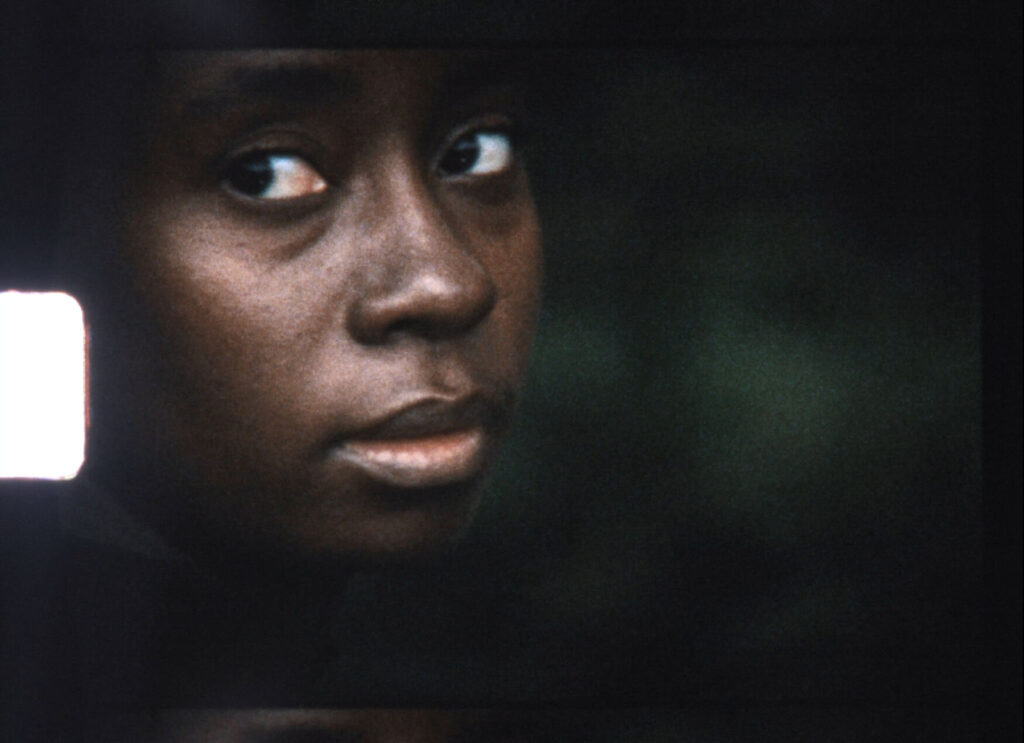
The Yokosuka photographs are not intended to have a powerful impact. When I printed my first photograph, I realized that a photograph is a collection of ink grains on paper. I wanted to print those particles properly, so I developed the film at a high temperature. Grains are like units of time, and I tried to make prints as if I were counting them one by one.

I like the analogy between your background in weaving and the process of photographic development.

Do you think there’s something similar with the photographs themselves; weaving moments of time into history? 

Photography and textiles are very similar – they are both water works. It was a revelation to me that the colour-fixing liquid used for dyeing yarn and the stopping liquid used for photography are the same thing. Making textiles is very labour-intensive work. Photography is the work of evoking time using light. Both of them are jobs done by hand.

A lot of your work involves photographs of objects and possessions. Do you see photographs as being objects and possessions too? 

“A photograph is a narrative that documents and renders memory visible in two dimensions, transcending objects and possessions.”

Photographed subjects are given new value and meaning, and by becoming part of a photograph they become almost eternal.

Did you take a different approach photographing the possessions of your mother and Frida Kahlo, compared with the clothing of Hiroshima victims (whose identity we might not know)? 

/hiroshima, Mother’s, and Frida all share the same intent in that they focus on what has been left behind. I took the same approach to photographing these three subjects, but Mother’s began as my own personal project, then after being shown at the Venice Biennale it became a photographic work that transcends my own personal concerns, expanding from the private to the public. This later shaped the specific development of /hiroshima and Frida.

I find it interesting that you don’t attach messages or captions to your photographs. How does that relate to the objects (clothing/possessions) that you photograph? Do you try to interpret the meaning that their original owner gave them? 

I consider my photographs to be creative rather than documentary, and I take them from my own point of view and with my own values. I believe that adding a message or caption to my photos would take away the viewer’s freedom of thought. I want people to be free to see my photos from their own perspectives, and to attach their own words to them. 

I cannot photograph the past. My work is based on encounters with things left over from the past, but which are in front of me, in the same space and time, in the reality through which I am living in now. In particular, the bombed artefacts of Hiroshima cannot become part of the past.

/hiroshima is very different to Yokosuka Story – how do they capture the aftermath of the war in Japan and the country’s relationship with America? 

I made my debut with Yokosuka Story, a series that is kind of a personal sentimental journey.

“I was born in the post-war era and spent my adolescence in a community with an American military base, and I enlarged these prints to exorcise emotions like scars I felt I had received from the Occupied Japan city of Yokosuka.”

There is a connection between Yokosuka and the history of the atomic bomb dropped on Hiroshima, which played a huge role in ending the war, and which I documented about 30 years later. Yokosuka still serves as the home port for Asia’s largest nuclear-powered aircraft carrier. The post-war period is not yet over, and the reality is that Japan is still under US control. My photographic work, which started in Yokosuka, inevitably turned toward Hiroshima, and /hiroshima is still an ongoing project.

Credits

Images · ISHIUCHI MIYAKO
Special Thanks · THE THIRD GALLERY AYA

Ewe Studio

“A horizontal approach of mutual learning, to promote and to translate a skill or knowledge into new meanings and possibilities”

Based in Mexico City, EWE is a design studio that celebrates the country’s rich history of artisanal practice. Tradition is interwoven with new ideas, combining innovation with heritage. The studio was started in 2017 by the Estonian curator, Age Salajõ, Mexican designer Héctor Esrawe, and Spanish industrial designer, Manu Bañó, whose varied backgrounds and expertise allow for their creative approach.

Their work falls somewhere between furniture and sculpture; beautifully-crafted objects that are also technically functional. By amplifying the skill of craftsmanship and the craftsman, their work is inherently collaborative – working with Mexican specialists to create ornate, yet organic, objects. The forms, shapes, colours and textures of their pieces recall the natural elements, something that is reflected in the studio’s approach to using four main processes – glass, stone, foundry work and wood.

EWE Studio’s limited-edition collections are part of a move in recent years to put Mexico on the world stage of design. Here, they explain how their process works and the inspirations that inform the studio’s approach to craft, heritage and their objects.

How do your different backgrounds and experiences influence the work of EWE Studio? 

What has made EWE a unique project is that combination; our origin, the skills, our individual knowledge and sensibilities. Our background and experiences are reflected in the way we approach everyday solutions, and through an open dialogue where those individual differences work towards a solution. 

How does collaboration tie into your work as a studio, and also with artisans in Mexico? 

Collaboration is an essential part of our philosophy, it is the axis of our project. A horizontal approach of mutual learning, to promote and to translate a skill or knowledge into new meanings and possibilities.

How do the four main processes you use (glass, stone, foundry, wood) individually and collectively represent the ethos of EWE Studio?

Those four have, so far, represented the expression of EWE, which by being a young company has created an aura focused on those materials. [That said] we are experimenting with many more materials.

What inspires the form and textures of your work at EWE Studio?

The forms and textures come from many angles; our heritage, the material itself, the sensibility to understand new possibilities out of a “found” moment or expression during visits to the workshops. We forge our inspiration from Mexican history and create new meanings and languages from that inspiration point. We love to mix raw and pristine textures and often keep parts of the stone surfaces as we found them. 

Since the studio began, have you adapted your processes for working together? How do you see the studio progressing and growing?

We have maintained the same creative process, with a deeper understanding of the soul of EWE. The studio has evolved, allowing us to integrate a small team in our everyday life besides design activities. We have assigned the efforts of production, administration, sales to each one of us. 

The three of us work very tightly together and with our team. We communicate throughout the day and are very much in the loop with different aspects of the studio. We regularly hold design meetings to create new work, but after that we all have different roles we play. EWE is a young studio but we have been fortunate to work with different galleries from around the world who are promoting and selling our work. 

Your pieces are a mix of sculpture and object – how do you see them being used?

They are pieces with an iconic and strong expression – pieces with character. Most of them are reinterpretations of an utilitarian background or a reminiscence of it. Many of our clients use them; some of them have them for contemplation. Even though we aim to create sculptural design, they are all functional. Even if the line between design and sculpture is blurry.

And how do you distinguish these pieces between art and design – does that matter?

From the start, EWE has been focused on promoting the skills of the artisans and create a dialogue with our heritage. Most of our inspirations comes from a utilitarian background, from elements that were used in ceremonies and/or worship.

Credits

Images · EWE STUDIO
https://ewe-studio.com/

Rina Yang

“the pandemic happened, and I think the drama world struggled more than commercials”

When she was younger, Rina Yang would keep in contact with her best friend in London by making, editing and sending ‘video letters’ from her hometown in Japan. Rina later moved to London to study and while there, saw an ad for a film school. The course was mostly theory with very little practical work, she told Lecture in Progress in 2017, but nonetheless gave her a reason to remain in the UK. Rina’s first roles in the industry involved working as a camera assistant on short projects. ‘I only did it properly for a couple of years,’ because as she tells me over the phone, it was a stressful role. But she did find common ground talking to directors during breaks about the creative processes behind the work. ‘I was better at that, than looking after the camera.’ And so, she pivoted – cutting her teeth in music video and short films jobs that her friends would ask her to work on. ‘One thing led to another,’ Rina adds – and she was able to carve out a space for herself as a director of photography (DP), a notoriously difficult role to break into and succeed in.

As a DP, Rina has worked on music videos for artists including Kamasi Washington, Vince Staples, Björk and FKA twigs (including the “controversial” and “risqué” ‘do you believe in more’ advertisement that twigs directed and soundtracked for Nike in 2017). Rina regularly balances projects across music videos, commercials and narrative work, a crossover she tells me is quite uncommon. And though her approach may differ depending on the project, her work consistently demonstrates an aptitude and eye for capturing the people and characters in front of the camera. A scene from the BBC’s Windrush drama, Sitting in Limbo, from last year, or the third series of Top Boy (for which Rina shot a number of episodes) are as beautiful and captivating as, say, a Rimowa commercial with Adwoa Aboah or her work for Sephora. 

Rina’s talent and vision as a DP have made her a sought after name in the industry – even at such an early point in her career. She was named by British Vogue as one of the 14 rising stars in the creative industries back in February, described as a “New Wave of boundary-breaking visionaries bringing fresh, exciting perspectives to the creative industries”. Her portrait to accompany the piece was shot by Campbell Addy who, like Rina, is part of a new vanguard of young talent. Last year, Rina was also included in the BAFTA Breakthrough list for 2020. Being recognised by organisations like BAFTA is great, Rina tells me, but it’s not something she’s had much time to think about, ‘I haven’t properly got my head around it.’ But, she adds, she definitely feels as though she’s at an interesting point in her career. That said, having faired the storm caused by the pandemic, Rina is now remarkably well-placed to continue to grow and nurture her skill. 

You’ve done a lot of commercial work with the likes of Nike, Rimowa and many others, and TV work for shows like Sitting in Limbo and Top Boy. How do you balance the different projects you work on? Is there something specific that draws you in?

I think the selection of the projects really comes down to your personal taste and what you find interesting. When I do commercials, I’m less selective because it is a very short commitment, and it’s a good opportunity to meet new directors and new collaborators. So I’m less picky and I’ll take the risk to work with new people. When it comes to narrative, it’s a whole different conversation. There’s a lot more boxes to tick to see if it’s the right project to do. It’s a different process, but I do like doing both. With my narrative work, you get paid less but I think it’s more of a romantic thing.

With that said, I love that your commercial work don’t just feel like adverts. They’re like short stories in their own way.

The directors and all the creatives I’m drawn to tend to have that kind of style. I don’t find the very straight up advertising that interesting. I mean, to be honest, sometimes we just do very boring commercials. You just don’t shout about it. But I think the ones that I get to shoot, they tend to be creative ads with slight narrative threads. And I’m grateful that I’ve been able to shoot some of them. You kind of flex your narrative muscle a little bit, but it’s a very different working environment in commercial compared to narrative. 

You’ve got a very distinctive use of colour, texture and lighting. How did you develop that style? 

When I started out my style was a bit more documentary because it’s hard to afford to do a big lighting setup. But even with documentary style, I don’t want it to look like what it looks like with the naked eye. So I try to heighten what you see, by using different lenses, or how you expose the sensor or the film – to add your take on the reality you see. 

As I progressed in my career, I could afford to have a good crew with me and all these big lights. And I guess that’s when I started using a bit more colour. I did go through a period of using a lot of colours because I kept getting asked to do that. I think with any artist or DP, we’re versatile so it’s nice not to get pigeonholed into one look. In general, I like to heighten the reality of a scene, and I think, “what if I did this” – I talk about a lot of what ifs, and still do some colourful lighting here and there.

So as a DP, how do you tell a story and create narrative?

How would I tell a good story? First of all, there has to be a good script, and there has to be a good director to execute that. I can only advise how I think we could shoot things, or collaborate with the director. In the beginning when I started out, it was quite hard to find directors on that level. One the hardest things in the beginning is to find a director who can execute the narrative in the way you see it, or better than how you imagined it. So I think I really collaborate with my directors, talk about how we see it. 

I guess it’s such a collaborative process; you’ve got to be able to work together well.

Yeah, definitely. The level of collaboration is different in music videos, commercials and narrative. With commercial, they tend to come with already established ideas –  with exactly how they want it to look because they’ve gone through a lot of chats with the clients and agency, and they tend to have have every exact visual references that I will need to execute. So there’s no huge room for us to create the look from scratch. And then music videos, you can be a little bit more funky with it. And with narrative, if it’s a TV show and you’re the first block DP, you can create the look with your director and showrunner. If you’re coming into the TV show in the middle of it, then you have to replicate what’s been established. And then if it’s a movie, there’s a lot more room to experiment. That’s why a lot of DPs prefer to do movies and the first block of TV shows. 

Has the pandemic changed your work process and schedule much over the past year?

Before the pandemic, I was going to shoot TV shows or films in 2020. I was shooting a lot of commercials early in the year because I was going to work hard on commercials until the spring, so I could afford to do a film or TV show that I like. But then the pandemic happened, and I think the drama world struggled more than commercials, so they’ve been on pause for a lot longer than advertising. Now, I’m reading scripts and trying to decide what narrative projects I should do next. This past year has been an interesting switch I think, because I was going to shoot a drama this year, and after doing commercial for a year, I’m really ready to shoot another long project, TV show or movie. 

Does it help having the balance of both commercial and narrative work, and being able to fall back on one or the other?

For sure – I take influence from both commercial and narrative. But, you know, I do switch my brain; if I’m pitching for a film, I’ll switch my brain to a narrative aesthetic and approach. My visual references would be quite different from what I would put in for commercial work because I think the commercial world is more like eye candy. It has to be catchy because we only have a minute or so to tell something. You have to say something in a very short amount of time. But when it comes to narrative, there’s a lot more room to grow and develop.

Credits

Images · RINA YANG

Subscribe to our
Newsletter