Archive page:


Nonotak

“what drive us was the experience, the moment, to feel physically connected with a space”

NONOTAK was born from the collaboration between architect musican Takami Nakamoto and visual artist Noemi Schipfer back in late 2011. The duo embodies that merge of architecture, spatial design, music and sound. From creating dreamlike environments to performances using light and sound installations, NONOTAK present their own format of art to the world.  Combining Noemi Schipfer’s experience in kinetic visual and Takami Nakamato’s approach of space and sound, the studio creates ethereal environments immersing the viewer.

NR discusses with the duo about the creative process behind some of their works, how the Covid crisis impacted the arts and music industry but how also it gave the two artists time to reflect on themselves and on the meaning of creating art and ultimately the studio’s plans for 2023.
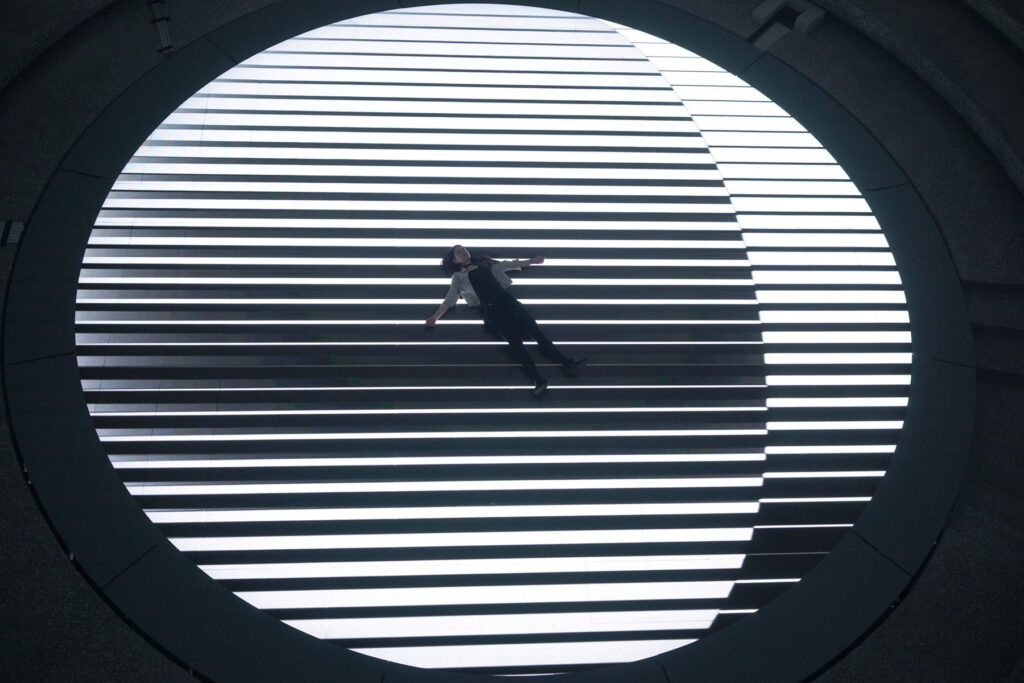
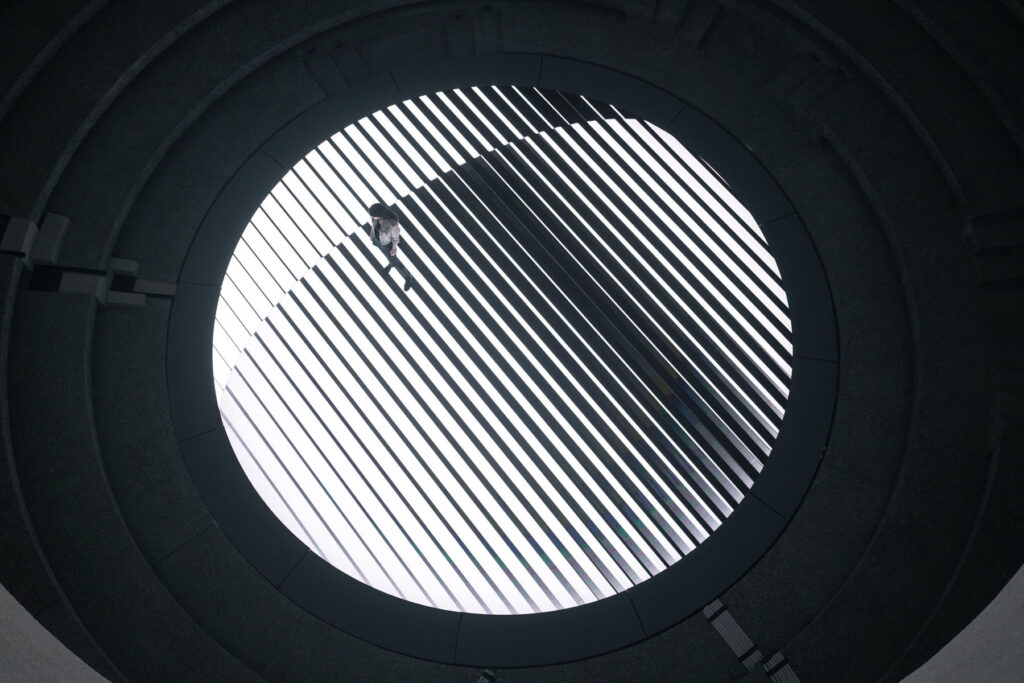
Noemi and Takami, you both come from different creative paths, respectively illustration, visual arts, architecture and music. It is always very interesting and inspiring to see how two worlds merge. How did you meet and what inspired you to start Nonotak Studio in 2011? 

Noemi Schipfer: We first met in highschool in Paris at the Japanese class ( Tak have both parents Japanese and I’m half Japanese half French so it was a way to have good marks at school. Then we lost sight for few years and we met back in Tokyo during summer holiday. Tak was studying Architecture at that time and I was already graduate from Art school. We spent time walking in Tokyo and it was really inspiring to listen to his approach on Architecture and Space.

Tak was also playing in a metal band and I had the chance to follow them on few shows to take tour footages. In the late 2011 Takami was working in an Architecture studio called Bigoni-Mortemard in Paris and they were looking for an illustrator to do a mural painting in the entrance hall of a new building in Paris. To work on this project was intense & fun and it give us the will to do more together and to create our own space. We wanted to merge our backgrounds all together : visuals, space and sound. The installations format came pretty naturally and the first idea was to develop an immaterial space were everything would be intangible and in motion.

Takami Nakamoto: As Noemi said, we have known each other for a long time and the purpose of collaborating together was mainly because we had the same vision on what format of art we wanted people to experience, and how we were going to merge our backgrounds in order to create a particular environment where light, space and sound collide all together.

ISOTOPES V2 is a light installation experience that was inspired from Fukushima’s nuclear disaster. Could you tell us more about the creative process behind creating a dematerialised space? I love the concept of making something tangible out of a feeling or something that disappeared and that no longer exists, making it almost part of something fictitious. It is also a way to sort of immortalise the individuals that had and have been affected by Fukushima and it adds a commemorative and contemplative feel to it. Is that something you consciously wanted to convey?

NS: Fukushima’s nuclear disaster is something that personally really touched me.  I was in Paris at this moment but I remember I was shocked and afraid about the news. Japan is my second country, it is a place that I used to go since I’m born and I have so many memories there and part of my family. When the nuclear central exploded I thought I would never be able to go back there again so it was heart breaking. At this moment I felt really strange how one part of your life could feel like it was almost just a fiction. Everything could change or even worth, just disappear.

Time is a notion that fascinated me a lot even when I was a student in art school. Memories are a notion that is so immaterial but so strong at the same time. When we develop our first installation ISOTOPES V2 we wanted to represented this different notion of immateriality by creating a space that is constantly changing and where the audience would be able to travel through.

TN: I think this project is special to us as long as it was our first piece being exhibited in an international exhibition like the Mapping Festival in Geneva. First time we were able to share the experience of our work to unknown public and it felt like a new chapter in our career. It also made us look at our work in its actual scale, as long as we have been working on small scale models to work on the composition. This really brought another dimension to the purpose of our hard work.

LEAP V.3 at Wave Of Tomorrow Festival 2019 in Jakarta, I loved this piece which I thought was such another great work of yours in terms of translating feelings or emotions into sounds and lights. Could you tell us a bit more about this piece? 

NS: The first time we developed our installation LEAP was in a festival called Electric Castle in Cluj Romania and the exhibition space was really specific and historic. It was in an old stable of a castle, so the space itself was really atypical and the celling had beautiful bricks arcade. It was important for us to keep this strong architecture so we decide to invest the ground as the canvas. We wanted to deploy the installation in the maximum surface of the space and the light to cover every corner of it. That’s how we design those custom panels where 4 indirect lights are hidden behind and pointing 4 different directions. Light is a very flexible medium that has a huge impact on it’s environment. By controlling lights it’s not only the source itself that is moving but the entire space gets affected and painted by the shadows it creates.

LEAP V3 in Jakarta is the biggest version we did of this installation. We wanted to keep the massive volume of the space and highlight the length of it with the speed of lights and sound.
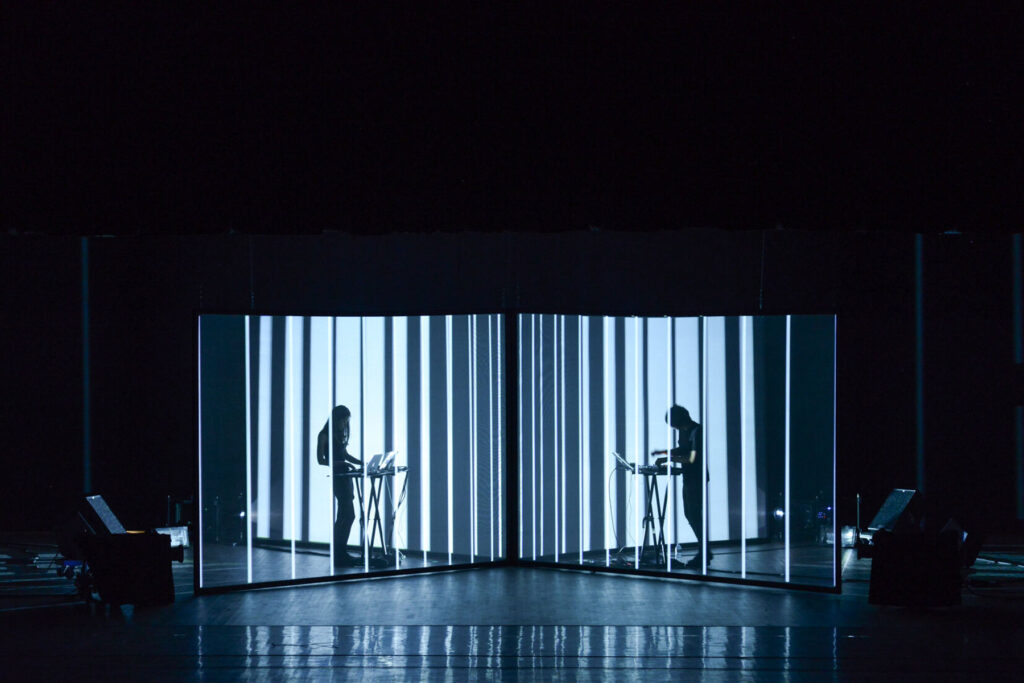
TN: In fact it was important to actually stay and program the installation on site, considering this unique context in Jakarta we were immersed in. We like the fact each site specific installation is about experiencing it through the build of it, the space itself, the people who are helping us with construction with the same goal of looking at something special at the end.

Last spring you revealed a large-scale installation in Porto Alegre, Brazil, titled GIANTS. The audio visual light and sound installation was set inside the Farol Santander building which was reminiscent of Nonotak’s first commissioned project in the lobby of a public housing building in Paris. Exploration of sound and space is at the core of GIANTS. Was also being in Brazil informative as to how you wanted to conduct this piece? It feels like a lot of your pieces are connected to the spaces they inhabit and are quite site specific like LEAP V.3. The interactions from the visitors in some of your pieces such as PARALLELS with the lights and by walking through the space, adds a very important element to that connection.

NS: When we get commissioned for an art installation, the starting point that drive us is the space that will host the piece. When we got the floor-plans and pictures of Farol Santander building we were struck by the verticality of the space and the massive columns. We wanted to accentuate this characteristic by adding more columns with light. The space offer a 360° view so it was important for us to include this specific in our piece as well. The columns included lights in the 4 directions, like LEAP installation concept. This space was also really interesting because there was two floor levels. You were able to see it from the ground levels, but also from above at the second floor. The rhythm of GIANTS is really contrasted. You have the first part were the ambiance is really dreamy, light dots are floating like fireflies are dancing together and then suddenly the sound get more violent and solid lines appear and move in the entire building like an army.
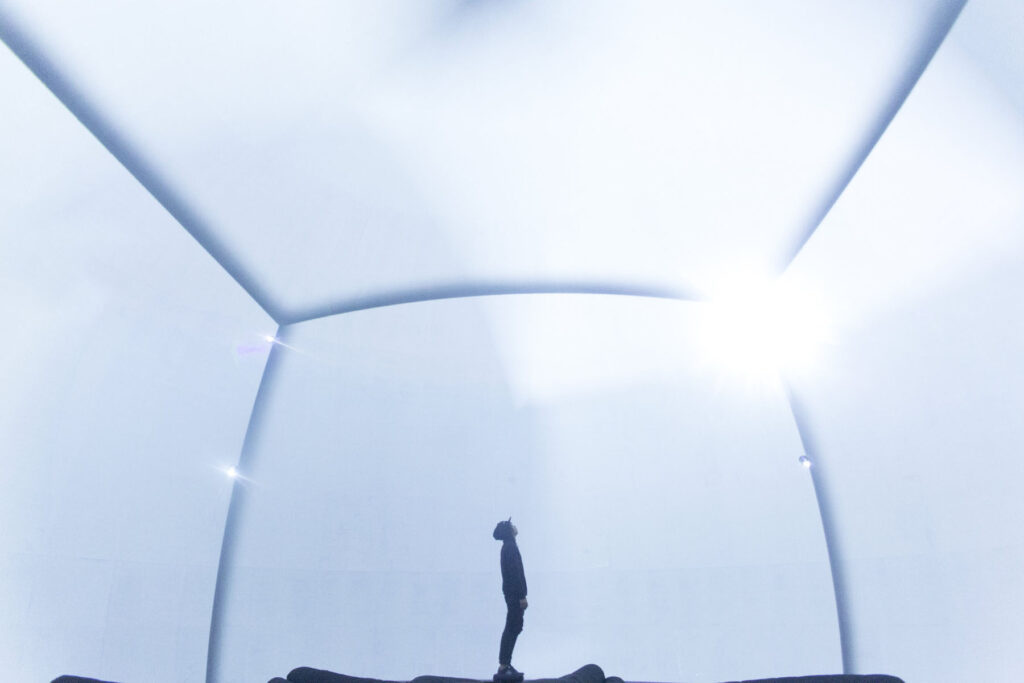
TN: I think the way we named the installation also speaks by itself in a way. When we saw the spatial context of the exhibition space, we immediately thought about experimenting with verticality and create an experience where people would feel like these massive totems of lights are taking over the space like Giants. The scale of these totem gave us the possibility of affecting the space with light so much that we could both create a feeling where we felt both “compressed” by it. The fact they are deployed along the whole space made these totems feel like they were ruling it.

Your work revolves around making visible, moving objects, forms, large-scale AV installations and spatialized sound. For instance with Parallels at STRP Biennale, you have used the whole space as a canvas for light which must also be quite difficult technically. That must result in a lot of experimentations and research behind each piece. Could you both tell us a bit more about that process? 

NS: At the beginning of NONOTAK we were a lot exploring light through projections and semi-transparent screens.

The semi transparent screens allow us to catch the visuals but also letting passing through the light and create duplication of the same visuals into several layers. It was our way to materialise the light at this moment. We develop few installations and a performance using this concept and explore different set up to see how we can create illusions playing with the positions of the projectors etc.

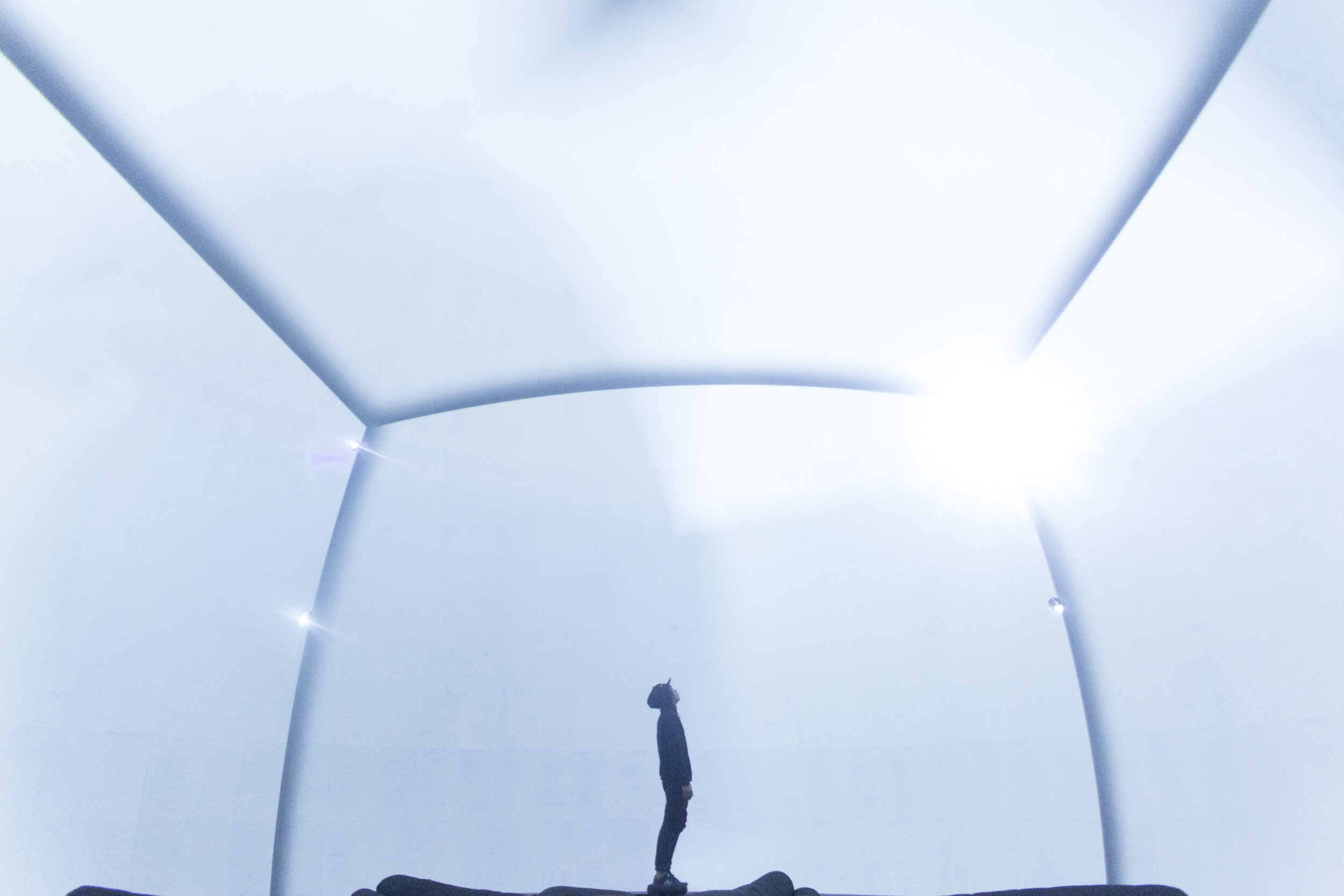
When we get commissioned for STRP Biennale, the theme of the exhibition was “Outside the screen”. We were working on the concept of the piece we wanted to present and at some point of the night we just realise why not just take literally the theme of the exhibition and get outside of our screens. That’s how we develop a concept that would materialise the light through space itself by using haze and would only have the space as a limit of the installations.
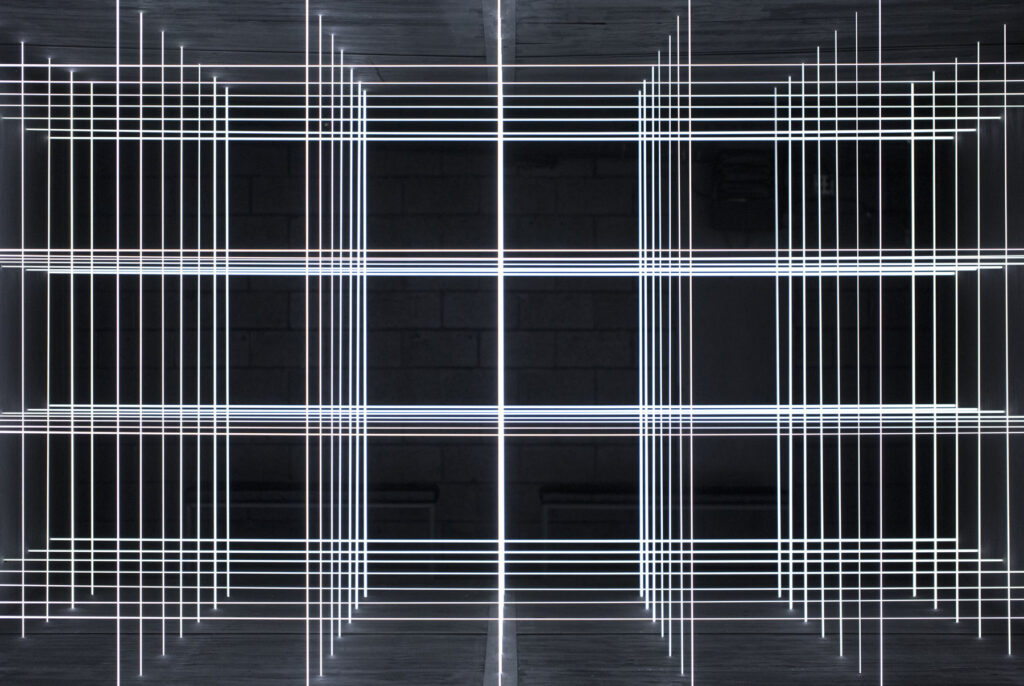
The first time we were able to experiment on this new concept was during the few days we had to set it up before the opening of the exhbition. We had preparations and expectations in our mind before coming but the first day we were there we just realise the effect wasn’t working as planned. We had to change everything, move completely the position of the projectors inside the room and start from zero all the composition of the visuals at the last minute. It learns me how important it is to be in front of the piece when you program it and how dangerous it could be to work on something by simulation when it comes to something as sensitive than light.

TN: This is actually one of these projects that really drew a line on the approach and the personal relationship we have with the work we create.

We realized that imagining projects in small scale or simulating them was helpful to visualize projects but nothing felt more real than getting to our exhibition space, spend time with our new piece and work on the composition in relation to the space. Living within the project and make it an intense experience. That’s how we like to experience our installations, and we should never forget that the reason we started all of this was because of our love for materiality in light, and we do think this can’t be replicated virtually and we treat it as a material in itself.

Your 40 minute audio visual piece SHIRO was ranked by the New York Times as one of the top 15 performances at Sónar Electronic Music Festival in Barcelona in 2017. I could not find the whole performance online but watched various extracts from it. In contrast to your other works, you both are taking part on stage so to speak in the performance. How did that feel? Would you want to do more of those kind of perforrnances in which the public get to actually see you? 

You have performed this piece in different places over the years, was there any in particular that you keep a fond memory of and if so, why? 

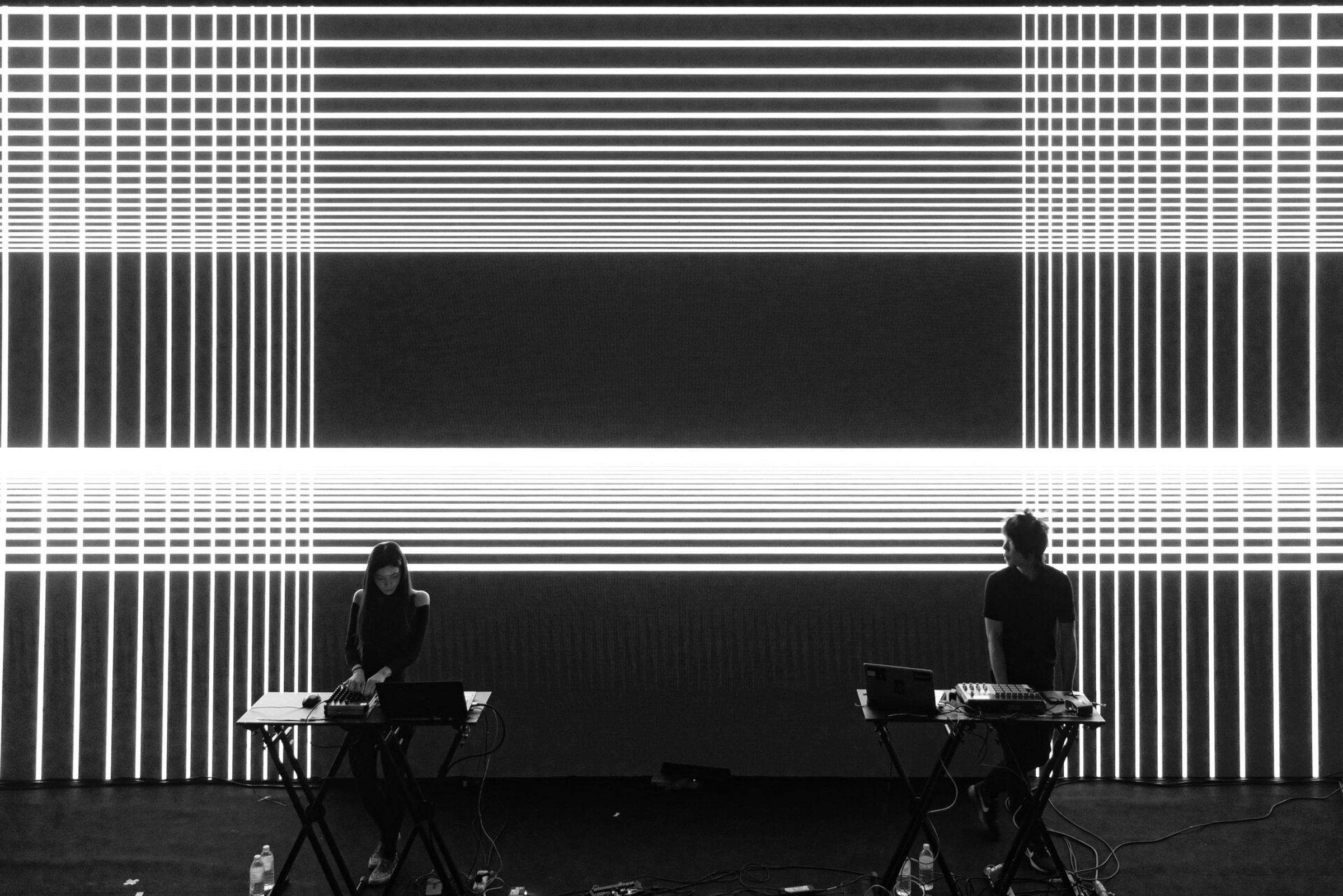
NS: When we were working on our installation we also realise it was cool to see people silhouette passing through it. The relationship with the human body scale and the installation was interesting. Tak as a musician was interested to extand his background in electronic music. That’s how in summer 2013 we worked on our first performance called LATE SPECULATION. The concept was us performing inside a translucent structure with 2 projectors and use our silhouettes as part as the visual effect. One projector was placed from the front and the other one in rear. By alternate which projector was on, we were making a visual illusion of us appearing or disappearing. SHIRO is our second performance in continuity with LATE SPECULATION.

Installations and performances are really different experiences. The first big difference is the fact that we are sharing the same moment with the audience and have a direct reaction from them. The dynamic is really different. It’s really powerful to hear the audience during the show.

TN: In addition to Noemi’s answer, I think we simply like the fact to not really limit ourselves to installation artists but also performances where music takes another dimension and also the way we directly interact with the audience and experience something in real time with them.

Stage is a special and unique place to express yourself and we enjoy switching from installation projects to live performance projects.

The 2019 pandemic in which we are still in, has obviously impacted quite harshly the arts and performances industry. The past year has definitely been difficult and for some more than others but I feel like we have all in some sort and in different capacities being able to plant the seeds for the present year. It feels as though there has been a lot of self-reflection and introspective work done at an individual level which will then enable growth, which is the theme of this issue. How do you both feel with this? How does Growth resonate with you? 

NS: During 7 years we had the chance to be able to live for our art and been able to showcase it in so many extraordinary places. I would be for ever grateful for this. The rhythm of our travels, exhibitions, live shows was intense and we never really had breaks at all. When we had our first show cancelled and the first lockdown was announced I was a little bit puzzled but at the same time for the first time since years, I would have a break and time to step back about NONOTAK.

Now that it’s been a year we are in this situation and seeing how it evolves I’m more than sad and anxious about the future. With NONOTAK what drive us was the experience, the moment, to feel physically connected with a space, exchange emotions with an audience, share a stage with people. And when I see the art scene going more and more only online it deeply depress me.

TN: That “covid” crisis really affected the touring dynamic of our collaboration and it is pretty sad, but we know it is also reflecting in many other people’s lives. That crisis gave us the time to reflect on ourselves, the meaning of creating art especially in this type of context. But it also gave us the time to reflect on society and the power the government has over people’s lives and their freedom but more importantly, the way they are able to fragilise culture and normalize it out in the open.

Questioning the narrative became politically incorrect, aspiring for freedom makes you feel guilty and this is the society we allowed ourselves to live in. What kind of future does Art expression have in this “new normal” we are submitting to? I don’t really know about that.  But it seems to me that being a sovereign individual is the starting point of any form of expression and we feel like we are totally losing the value of what it means to be free. It is pretty scary to me and I guess it is for many other people.

I think growth is still possible in this context. being adaptive is key to finding a path you feel comfortable with in terms of creating and growing. Since “covid” started we got ourselves in projects that required lot of learning and we at least feel like we took advantage of this a little bit.  We don’t know when we would have stopped touring without any interruption if this did not happen as well.

We are doing this interview during the first few months of 2021 and the issue will be released this spring. Are there any projects you are looking forward to be taking on and that you could share with us? 

NS: We are working on permanent installations that will take place in 2023. It’s a different challenge than working for events or temporary exhibitions but really exciting about the idea that the piece will last for ever.
Cassi Namoda

“I think colour brings so much energy and vibration”

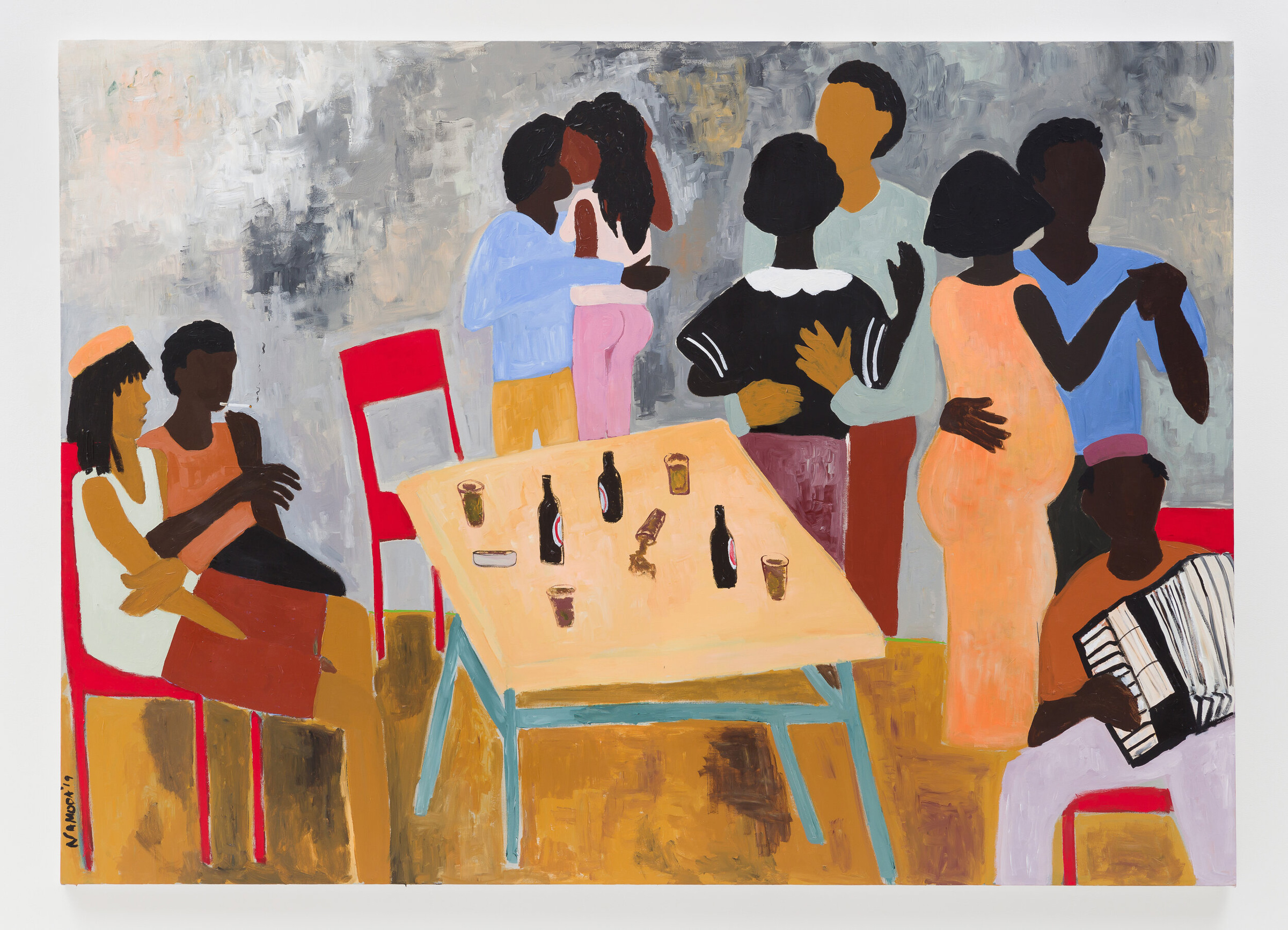
Cassi Namoda takes archival images, memories and ruminations, and transforms them into vividly rich paintings, weaving an overarching theme throughout. Sometimes, there’s a clear narrative that informs her work, but at other times it can be a looser concept that has been on her mind.

Though many of the scenes and the characters within her paintings are imagined, they are drawn from concrete anecdotes. Take, for example, the character of Maria who often appears in her paintings. Maria embodies the way in which Cassi confront the history of her home country, Mozambique. Cassi saw a similarity between Ricardo Rangel’s photographs of downtown Maputo in the latter half of the twentieth century, and the work of European expressionists in the 1920s, where artists like Edvard Munch and George Grosz depicted scenes of a ‘very fucked up Europe’ at a period of turmoil and debauchery. Maria became a way for Cassi to explore this moment in Mozambique’s history, at a time when the country was going through revolution and dealing with its colonial past. Through the Nightly Bread series, Cassi depicts Maria’s navigations through the seedy underbelly of the city in a way that felt personal to her, given its proximity in recent history. There’s humour in these works too, in which, like Grosz, Cassi deliberately adds a twist on a serious scene – where, for example, Maria has spilled a glass of wine.

Those subtle, but carefully considered, symbols are also evident in the cover Cassi painted for Vogue Italia’s sustainability issue in January this year. The magazine commissioned eight artists to each design a cover for the issue, as a statement against the huge impact that fashion shoots have on the environment. Maria appeared on the cover, with a mosquito hovering sinisterly above her head; a symbol of how disease is an undeniable implication of the climate crisis that is not often contemplated. These issues have been preoccupying Cassi for a while, and as she explains below, the darkness that our future may hold is something that informed the work for her recent exhibition at the Pippy Houldsworth Gallery in London. The show’s title, Little Is Enough For Those In Love, was derived from an East African proverb, and its exploration of the polarities between ‘joy’ and ‘pain’ have taken on new meaning in the context of the current global pandemic we now find ourselves faced with.
In light of what’s currently happening, your recent exhibition at the Pippy Houldsworth Gallery touched upon the balance between joy and suffering, which is something that we’re all suddenly forced to confront. 

Totally, and it’s fascinating to see how the West is adjusting, in relation to the rest of the world. At the end of 2019 and the beginning of this year,

“I had this sense of anticipation that we were entering biblical times.”

It felt as though the Pippy Houldsworth show was preparing for this. As artists, we might be okay or not, depending on how the market swings but, ultimately, it’s just art. I’m very aware of that, and for me, art isn’t about the currency. Instead, it’s about expressing a narrative so, in that sense, nothing’s really changed for me. But, it’s more a case of the impact it’ll have on daily negotiations – like, do I need this expensive yellow ochre, or should I just get this other cheaper one? I hope that this might become something beautiful, in terms of a discovery process. The Pippy Houldsworth show healed me in a way, so that I could be prepared for something to happen.  

Did you anticipate this change when you were making the work for the show? 

Well, I had my show, The Day A Monkey Is Destined To Die All Trees Becomes Slippery, at the François Ghebaly Gallery earlier in 2019, and there was an ominous presence in those paintings, with bold black lines and colour blocking. But, when it came to the Pippy Houldsworth show, it felt as though we needed something else. I wanted to be very sensitive. There were two directions my work took in the lead up to the show. There was the work I made while I was in East Hampton in early Autumn; I would take walks around 7am with my dog, and

“what I noticed was this slight melancholy that comes when seasons change, and I think, a part of human nature is having trouble accepting change.”

So, it felt quite cathartic to massage in the new season – and so, my work was more compositionally about the landscape, with a more detached gaze upon the figures. And then, in November, I did a residence in Oaxaca, Mexico, and there’s something so vibrational about the earth there. I was faced with challenges, logistically, where I was out of the comfort zone of being able to call people to deliver canvases or paints. Also, I mainly paint with acrylic, but it’s very dry in Oaxaca, so my paint was drying on the brush; intuitively, I’d brought a retarder with me, but I still needed to work in an immediate way. So, in the show, there’s these two styles of painting. There’s the very magical, illusive paintings – so you have the beach scene with the couple getting married, and then you might have something like the Mimi Nakupenda painting, with couples dancing and a lot of energy in the air. 

You’ve got two upcoming exhibitions (one at Nina Johnson Gallery in May, and the other at the Goodman Gallery in the Autumn); do you know what you’ll be doing for these shows? 

Yeah, I do. The Nina Johnson show most likely won’t open up in a physical sense, but it will still hang. There will be 8×10 inch paintings, and the show is called Dog Meat, Cat Meat, God Knows What Meat – it’s a little bit humorous because I wanted to do something that was dark, funny and also random. There’s no real narrative behind it. I want to do paintings of women that are in my life, so I’m using this time to do something that I’ve always wanted to do. I can’t paint them in the flesh now, but I’ll get friends from all around the world – Kenya, South Africa, New York – to send photos of themselves to paint from. And then, I’ve also been exploring medical imagery, in the sense that black bodies have been sold under the gaze of medical research, that never actually served the female body, but was instead a form of slavery. I’ve been researching Millie and Christine McKoy, who were these conjoined twins born into slavery in 1851 and were, by the age of 2 being exhibitioned around the world. I wanted to give them a renewed agency, so that they can now be part of the black community so that we can remember them in a more intimate way. And, then, I might also paint a random scene from a Djibril Diop Mambéty film that is special to me – so, the process is really open with this show, it’s more communicative of everything I’ve been thinking about. 

As for the Goodman show, it will be a lot more narrative based. The show’s called To Live Long Is To See Much, which is very much about what we’re going through right now. I want to call my elders and ask for advice – like, what do we do in this situation? It’s such a strange time we’re living in. So I thought about this Swahili proverb, to live long is to see much, and I wanted to take an archival approach,

“looking at everything that I’ve found so fucking bizarre in slavery, in colonialism, and in the projection that black is bad. I thought about how the Christian epistemology of the world that we live in is actioned through a white gaze, and I want to question that.”

Why hasn’t that been challenged? I’ve also been looking at Pointillism, and then, after spending some time in Kenya, I realised that there’s this African Pointillism here too – it’s called Tingatinga, and I grew up with that type of painting! So, I am ruminating now on how I can combine some sort of folklore with a classical aspect of painting, because I love painters like Joaquín Sorolla and Paul Cezanne. But,

“there needs to be some duality; I want to make these beautiful paintings but also tell the truth.”

Do you consciously group series of paintings together with certain colour palettes? 

I think colour brings so much energy and vibration. I definitely think I work with colour more consistently when I’m working on a show, much more so than when I’m painting in my studio for painting’s sake. I think there’s something spiritual in the process of negotiating with the paint that exists in a body of work. So, yeah – it’s something I’m very aware of and it’s super intentional. With the Pippy Houldsworth show, I wanted to convey healing through soft yellows, light blues, violets and pale greens – and then maybe some stronger colours like red. I feel like red is a very religious colour, and I’m relating colour to John Mbiti’s writings, where he talks about religious objects, like for example, a rock, in traditional African culture. And to me, a chair can be a religious symbol, so when Maria is sitting on a red chair, that’s her religious object. The red chair has become an ongoing symbol in my work. More recently, the symbol I’ve been using is this orange, reddish circle that ends up in the upper right of the canvas – sometimes the left depending on the composition – and that was there in a lot of the Pippy Houldsworth work. It’s a tool that draws you to the upper right corner and it’s a symbol that feels warm. When it comes to narrative, I think about the palette in its totality because, for me, I feel like it’s part of the story.  

Photos

  1. Little is Enough for Those with Love/Mimi Nakupenda, 2019 acrylic on canvas 167.6 x 233.7 cm, 66 x 92 in Photographer Mark Blower
  2. Family Portrait in Gurué, 2019 acrylic on canvas167.6 x 121.9 cm, 66 x 48 in Photographer Todd-White Art Photography
  3. Sasha And Zamani’s Fruitful Earth, 2019 acrylic on canvas 188 x 152.5 cm, 74 x 60 in Photographer Mark Blower
  4. Visit From Ancestor, 2020 acrylic on canvas 101.6 x 76.2, 40 x 30 in Photographer Thomas Mueller
  5. Young Woman makes a dress in Quelimane, 2020 acrylic on cotton poly 101.6 x 76.2 cm, 40 x 30 in Photographer Mark Blower

Frederik Nystrup-Larsen

“Say no: say no the market, say no to people, not just following along”

Growing up in Copenhagen, Frederik Nystrup-Larsen was surrounded by the principles of design. ‘I thought I was going to be an architect because that was the most prestigious and important thing you could do’, he explains. But, when, as a young teenager, he realised that this would involve a lot of technical drawing and ‘sitting in an office’, his ambitions shifted towards becoming an artist. An awareness of the uses of space, and the ways in which users interact with their surroundings, nonetheless underpins Frederik’s work. The installation of much of his work, whether sculptural or more performance-led, is shaped by its siting and the ways in which people respond. Those factors are no more present than in last year’s Off Licence – Cash Only, a project with long-term collaborator, Oliver Sundqvist, in which sculptures of everyday objects were made out of found trash and papier-mâché, and sold at a pop-up shop, priced according to their retail value at that moment. If Off Licence – Cash Only was, as Frederik suggests, an ‘analysis of consumerism’, the importance of having a critical approach is key. And, on the day we speak, the innerworkings and underlying motives of the art world is something that has overshadowed the importance of integrity that appears to push Frederik forward. Last year’s installation, How to Build a Blanket Fort, designed in collaboration with Sundqvist for the Tuborg Lounge at Roskilde Festival, presented Frederik with an unfamiliar set of challenges  – mainly, designing a space from London, to be installed by a team in Copenhagen. ‘It becomes about communication; how good are you at saying what you want to have made and what is the result of that?’ But, it seems, the result was more than he bargained for,  where the reality of commercial involvement (and ensuing ulterior motives) have jaded his view of an otherwise well-received project. The tensions between art and critique are extended to the materials that Frederik uses; the Eros Torso vases, repurposed single-use plastic containers, have been latched upon by certain fashion brands keen to champion the importance of ‘sustainability’. Yet, as Frederik maintains in our conversation, neither he nor Sundqvist vocalise the fact that most of the materials they use are recycled; ‘it’s not a selling point’. Rather, he continues, ‘I think it’s irrelevant, I think it’s something that is necessary and everybody should just do it.’ Across the various mediums that Frederik’s work takes, there’s a  quiet emphasis on organic matter, which in turn, translates into a necessary critical engagement with the world around us. 

How do you anticipate the way people might interact with your work?

I think I’m quite open to it, for sure. I mean, a lot of the work is made for interaction; that’s an important part of it. But it’s also always quite interesting to observe how people act around things. When we did the Off License – Cash Only project, when people started coming in, there was a line for the opening of the store and, in the beginning, people would go up to the counter and say, ‘I want that piece’, and the store clerk would say, ‘Just take the piece and come pay for it’. Then, people in the shop realised that that was the whole point, so people just started to grab things, and they would just be holding like five, six pieces to reserve them so nobody else could take them. That whole thing was kind of funny, and interesting, and it obviously worked as a critique of consumerism. People bought the cheapest stuff first, and then it went from there. So it was this analysis of consumerism. 

I read that you were planning on doing Off License – Cash Only in other cities as well, is that still your plan?

Yeah, for sure. I mean, I don’t think it’s going to be in the near future – maybe next year. The work was extremely fun to make – I really enjoyed it – but it was also a case of, when you sell a piece of work for £1, you don’t earn any money. So, it’s more of a fun project, that you can’t do all the time, because you can’t really live…

I read too that you bought fake followers for the Off Licence Instagram account: How did having an Instagram account for something like that work? Did people realise what it really was, or?

No, I don’t think anyone really noticed it. I mean, I had a couple of people asking like, ‘How did you get so many followers?’ But what I saw was that, when the Instagram had so many followers, a lot more people started following it just because it had a lot of followers – which is obviously how things work, with algorithms and stuff like that. But I was like, really? That that amount of followers becomes this signifier of authenticity – like, ‘like, ‘Oh I need to follow this as well because there’s a lot of other people following it’, but’, but it would take you five seconds to realise that all the followers are fake. When you go through the process of buying followers, you also realise how many people buy them – and I started to realise how many people actually do this, and it’s incredible. I don’t remember the number, but it’s something like 60% of all influencers have bought followers, so it’s a big thing.

How did you get involved with the kind of materials that you use in your sculpture? 

To be honest, it probably begins with the fact that, if you want to make big things and don’t have any money, how can you actually do something for nothing? Especially with the Off Licence – Cash Only project, which is made from trash found around London – we weren’t going to spend any money on that because we were going to sell it for nothing. The Eros Torso vases was a similar situation, using found plastic barrels. I mean, I’m not saying I’m going to do this forever, but I like to think about where stuff comes from. It’s also about the concept of the work, and that the concept fits together perfectly with the materials. 

You’re in your final year at the Royal College of Art – has that experience impacted on the work you’re doing outside of the Masters? 

Yeah, quite a lot I think. To be honest, I haven’t been to school a lot because I’ve been busy, and I’ve been sad about that because the whole point of going was to have time to reflect and develop my practice. So for this past year, I’ve been spending a lot of time thinking and not necessarily producing, which is good because I came to the MA confused about what to call myself, in terms of the work and myself as a title. I think doing an MA in sculpture makes it easier because that’s sort of the label; sculptor. Also, London is extremely different to Copenhagen, and that’s been great. Coming from a place that has zero diversity, it’s amazing to be in London and seeing the way people work. In Copenhagen, it’s the easiest place to live – everyone’s has the same sort of ideas. So I think it’s extremely interesting to be involved in a community like RCA to see how other people are working.  

A lot of your work is in collaboration with Oliver Sundqvist, have you got anything that’s in the pipeline?

Not anything I can really say anything about. I mean, I had a long talk with the V1 Gallery that I work with a couple of weeks ago, and we agreed that I will focus this half year on my Masters. For the moment, I’m really into saying no, and I think that’s going to be playing a big part in things coming up. Say no: say no the market, say no to people, not just following along… 

As a young artist, being able to say no is quite a bold thing to do. 

Yeah, for sure. And I think everybody should do the same because I feel like commercial partners take advantage of young artists, using them as figures that they can put their commercial work up against. For the artist, it becomes sort of like peeing in your pants – it’s really nice when it happens, and warm, and then after, it’s a reality check: you showed yourself up and nobody else of value will probably want to work with you anymore. When I started out, I was having a hard time dealing with this. And, after a couple of bad situations, I’m not going to do that again. That’s not why I’m in this game, it’s not about that. 

Credits


www.frederiknystruplarsen.com
www.instagram.com/ok.international
www.instagram.com/offlicense_cashonly
Words · ELLIE BROWN

Designers

  1. Artemis Tears
  2. Floor Standing Pedestal Champagne Bucket Cooler
  3. Folding Electric Scooter
  4. Firechief Pressure Water Fire Extinguisher
  5. Gold Plated Family Portrait Frame
  6. Japanese Army Sword

Simon Nicoloso

Katsu Naito

“People on the edge of society have hidden beauty in their heart”

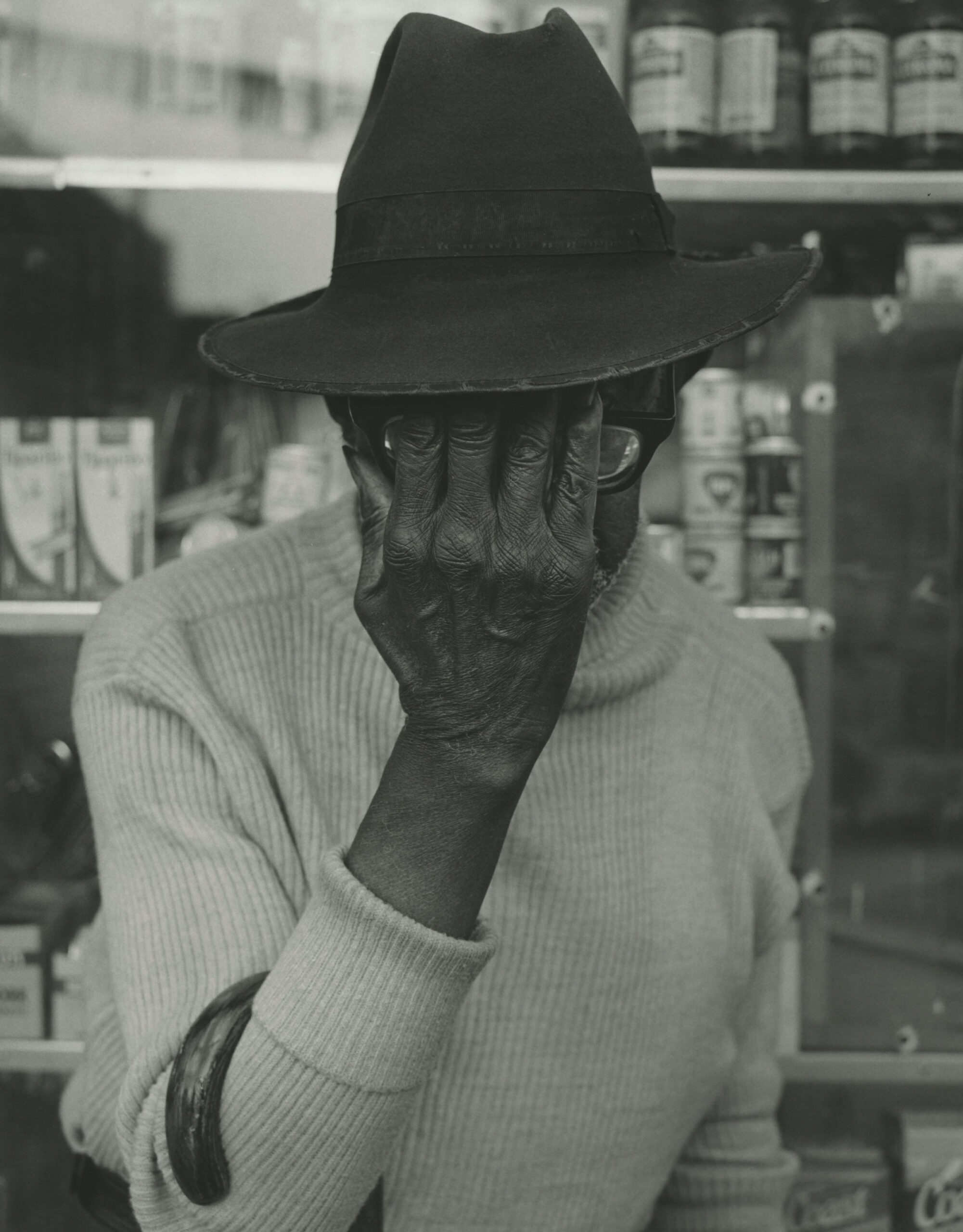
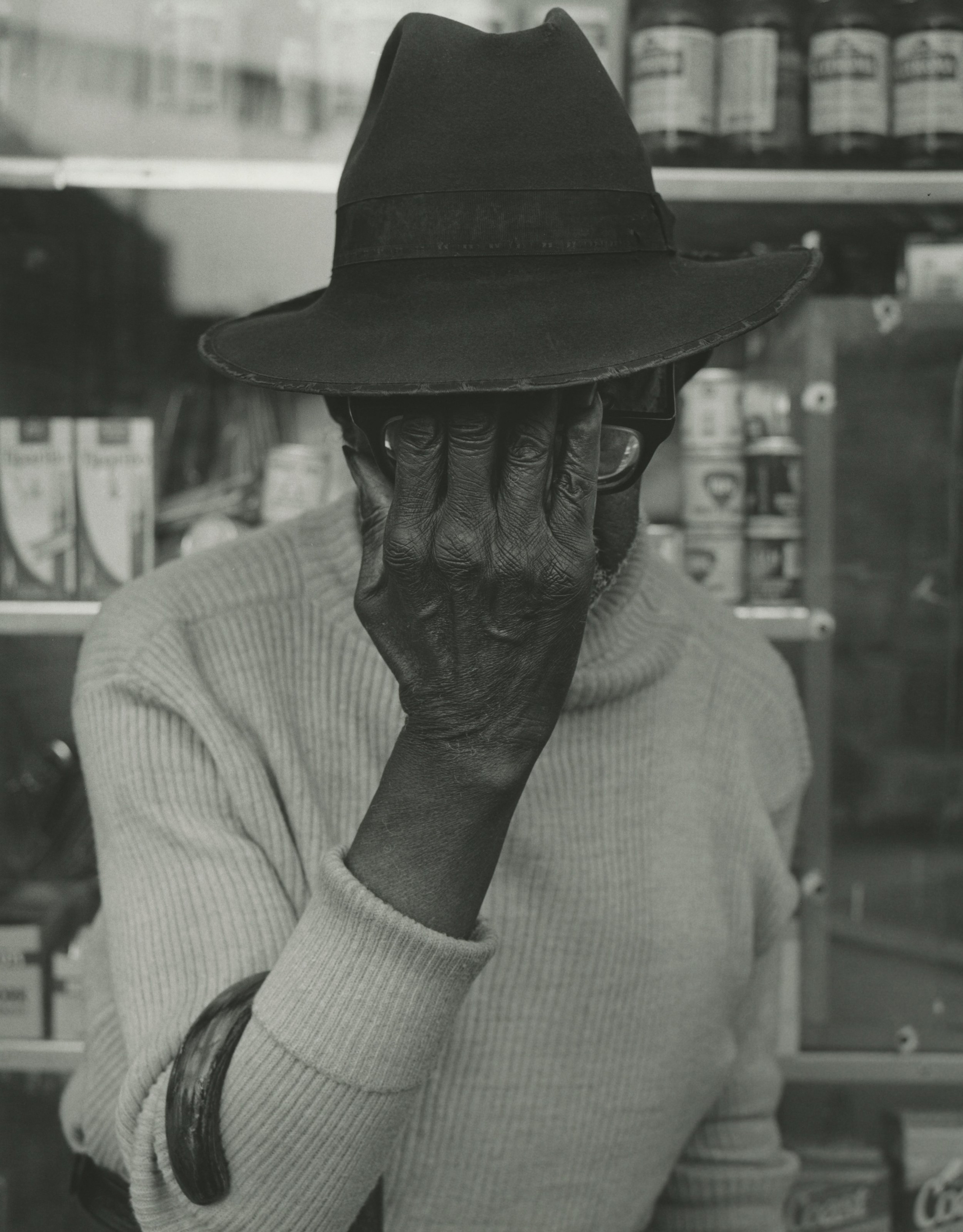
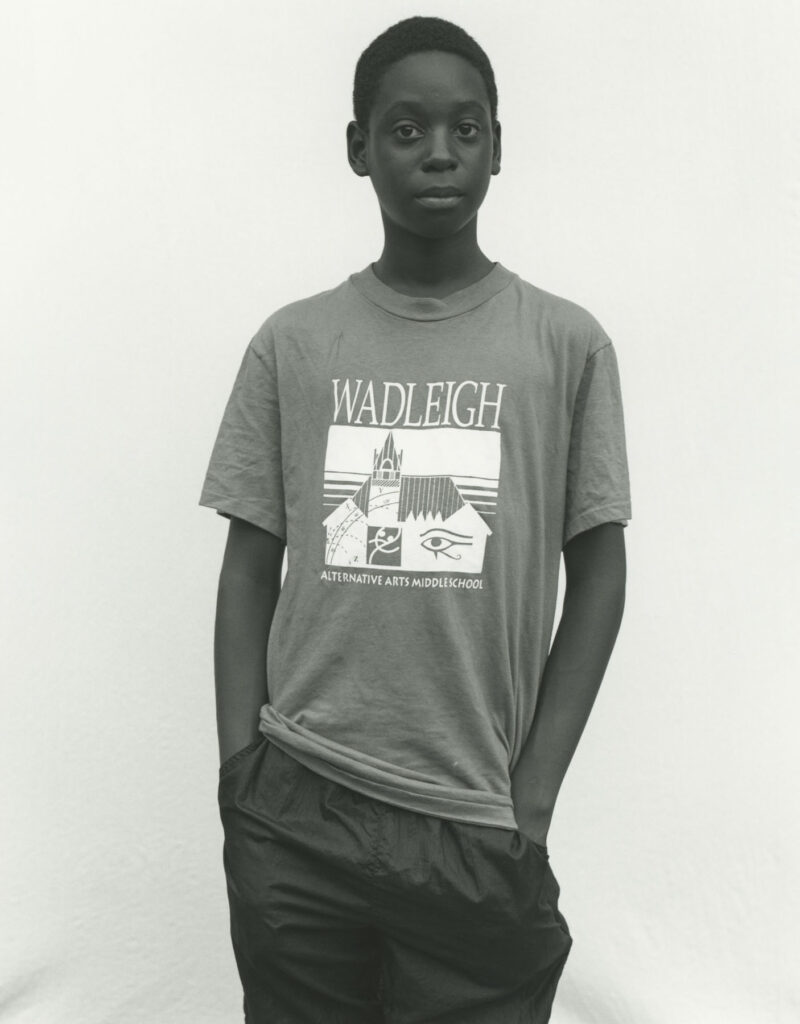
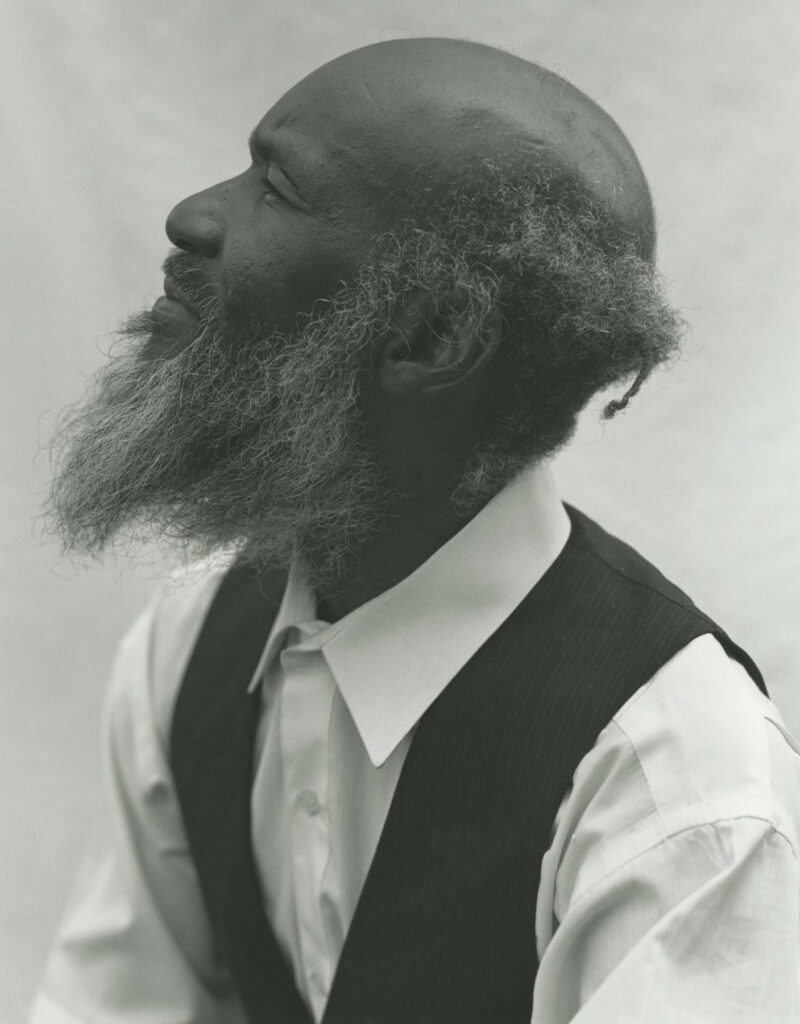
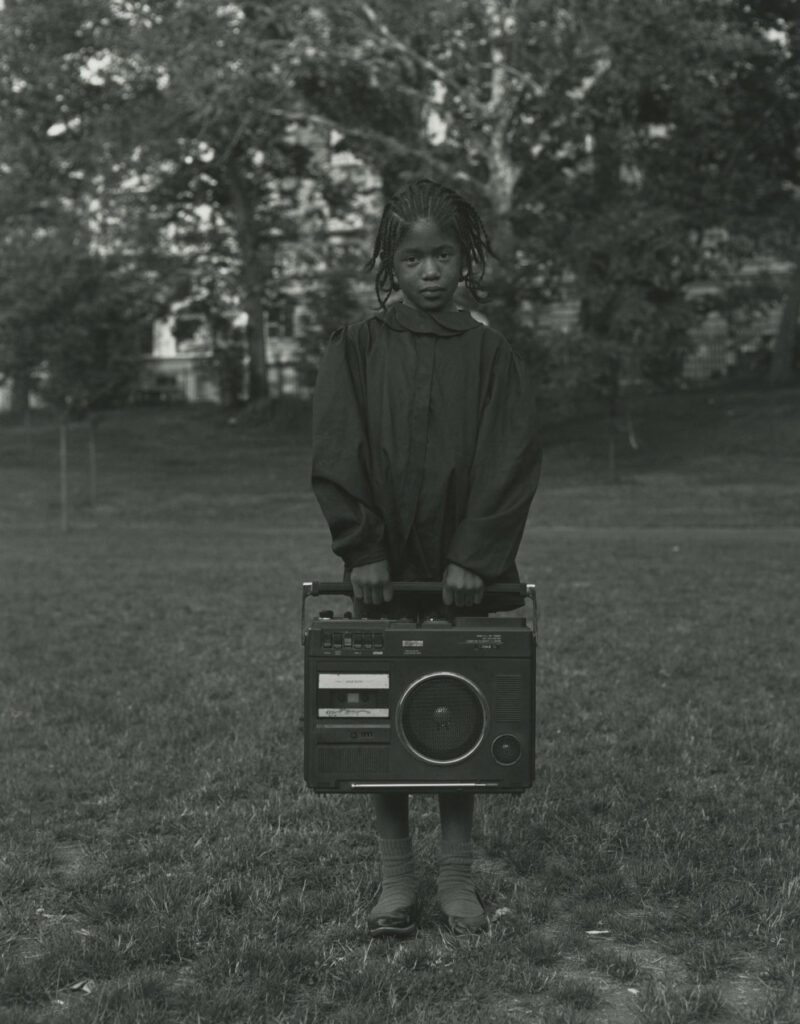
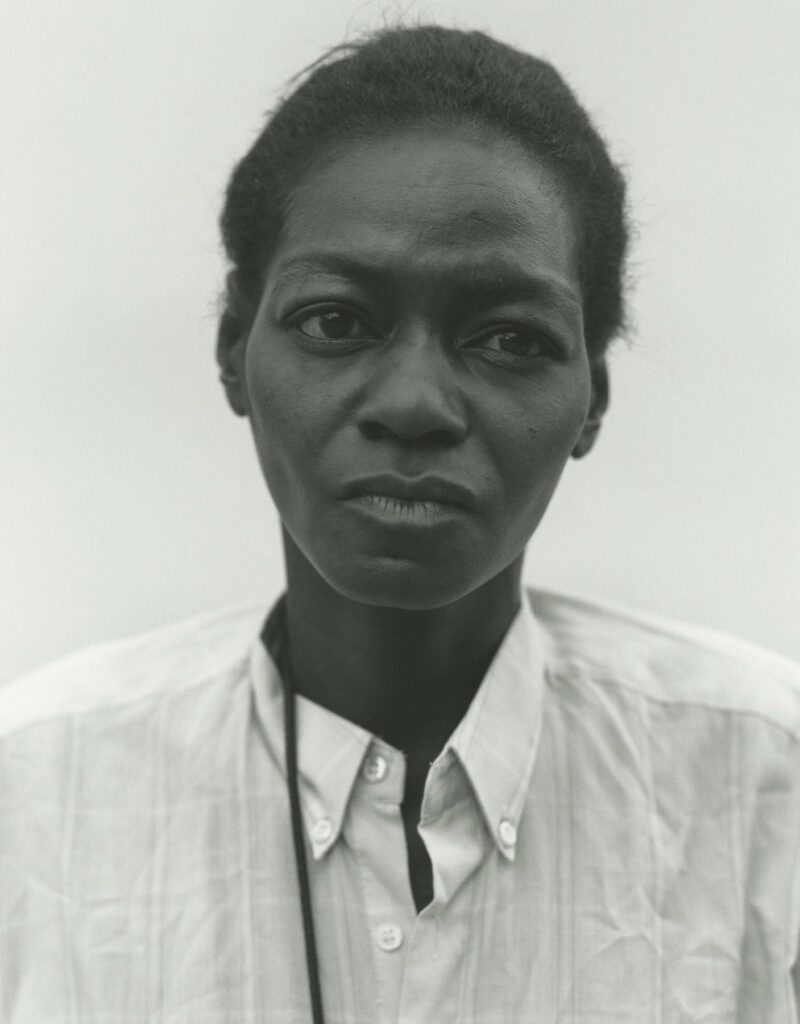
When Katsu Naito arrived in Harlem in 1988, it took him two years before he would begin taking photographs of its residents. It would take him a further twenty years to develop the negatives – a decision he consciously made. The photographer was cautious to build up the trust of the community before pointing his camera in their direction – demonstrating a careful consideration and tenderness that radiates from his work. Sensing that Harlem, which was still recovering from economic devastation from the 1970’s, was in the midst of unprecedented change, his body of work from the nineties offers an insight into a lost neighbourhood. These images make up ‘Once In Harlem’, which captures an extraordinary level of trust between Naito, as photographer and, ultimately, ‘outsider’, and the people who stand in front of his camera. Similarly, the body of work ‘West Side Rendezvous’, published in 2011 but taken around the same time as the Harlem work, evokes the emotive quality that make Naito’s images so compelling. The mutual respect between Naito and his subjects – in this case, transvestite and transsexual prostitutes in New York’s meatpacking district – is timeless, even if the run down backdrops have long been replaced by gentrification. Naito moved to New York from Japan in the mid-1980’s, having secured a job as a chef. Inspired by the street photography of Diane Arbus, a colleague introduced him to his first Leica camera – to this day, Naito explains, he still shots in black and white analogue format. 

NR: The photographs from your book ‘Once In Harlem’ are all from the early nineties, but were only recently developed; why did it take so long to develop them, and what surprised you the most from seeing these images for the first time?

Katsu Naito: There were a few reasons it took so long to be published. I worked in Harlem as part of a personal assignment between the late ‘80s and early ‘90s – and I always knew that I wanted it to be published in years to come. Harlem had started to change; towards the end of the ‘80s, abandoned buildings were being given a second lease of life, as parking lots or renovated buildings. I was living through all of this, and I wanted to share these images of Harlem when people had forgotten about it. This was the main reason that I kept the negatives in a box in the corner of my darkroom. I started working towards printing in 2013, going through many test prints in order to find the right quality for the final print – this took a long time.

“I try to put life into the print, as I think it’s important to seal emotional quality into it.”

I really felt the power of photography after printing this series – seeing how these plastic negatives could bring back to life an image after twenty years. As the images started to show in the developing tray, tears dropped onto my cheek, from the surprise. 

NR: As a photographer, do you feel it is your responsibility to document the lives of groups of people who can get forgotten amongst society?

KN: I feel strongly about that. People on the edge of society have hidden beauty in their heart, a quality that’s hard to draw out – but it’s something that I wanted to capture with my camera. 

NR: Having moved to New York in the 1980s from Japan, did photography give you a sense of control over being in a foreign environment?

KN: Carrying a camera gave me a license to be on the street; it can break language and cultural barriers. It can give control, but I do also believe that it’s necessary to have trust between both parties.

NR: When taking someone’s photograph, what do you look for in their self-presentation?

KN: I only ask the person to stand in front of my camera and communicate through their composure, I often ask myself “how close can I get?”

“There’s a moment of unawareness towards the camera; when I feel that, I start taking photographs.”

NR: What role do the people in your photographs play; are they a part of the composition, or does the act of taking their photo establish a connection with them as a person?

KN: It’s both; the composition and an emotional connection with the person is very important for me. But this must happen in an organic way – a connection with them must come first. 

NR: Has the way people respond to being asked to have their photograph taken changed at all over the years?

KN: I don’t expect people to accept my offer of being photographed. In the instances when the answer is no, I wouldn’t chase them for a photograph. This doesn’t happen often though – for some reason almost everyone would say yes to my camera.

NR: As for the way you approach taking a photograph; has that changed over time?

KN: I must be comfortable enough to walk the area. If I’m not comfortable, I can’t make my subject comfortable, so location scouting and understand the atmosphere in the area is the first thing I do. It can take an hour, or months, depending on the project.

“This is the way I have always approached the way I take photographs, ensuring I respect my subjects. This hasn’t changed, and it will never change.”

NR: Why is shooting in black and white important to you?

KN: I only work with black and white film, that I process in my darkroom. It’s necessary to have total control over every step of the process – and I think, most of all, shooting in black and white is the only medium that really emphasises three dimensional reality in a two dimensional format. 

NR: What is the most valuable thing you have learnt from taking people’s photograph over the years that you have spent photographing New York?

KN: Living in New York City can be like riding an emotional rollercoaster every day. The fundamental aspect of it, though, is simply the human element. 

NR: There is a timeless quality to your work; is this deliberate? And if so, is it a crucial aspect of the photos you take?

KN: Yes. Something that is always on my mind is making photo sessions simple. The person is in front of my camera and they are the main subject. I wouldn’t want to add any meaningless props unless they are already there, and the person has a natural relationship to them. I wanted pull out what they have inside of them.

NR: In terms of having control over an image, how does the process of analogue photography compare with the instantaneousness of digital photography? 

KN: There is a quality that I can’t describe with words that can be seen in a gelatin silver print. I often call it “capturing the air”, or “capturing the temperature”. I think it’s is difficult to see this type quality in digital photography. 

Credits

Photographs · Katsu Naito from his Once In Harlem series
https://www.katsunaito.com/
Words · Ellie Brown

Tiffany Nicholson

Subscribe to our
Newsletter