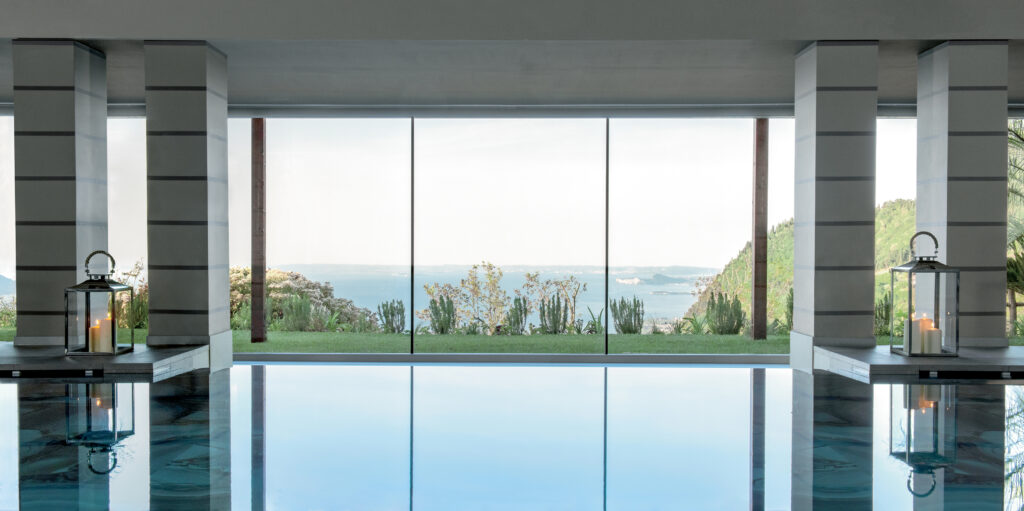
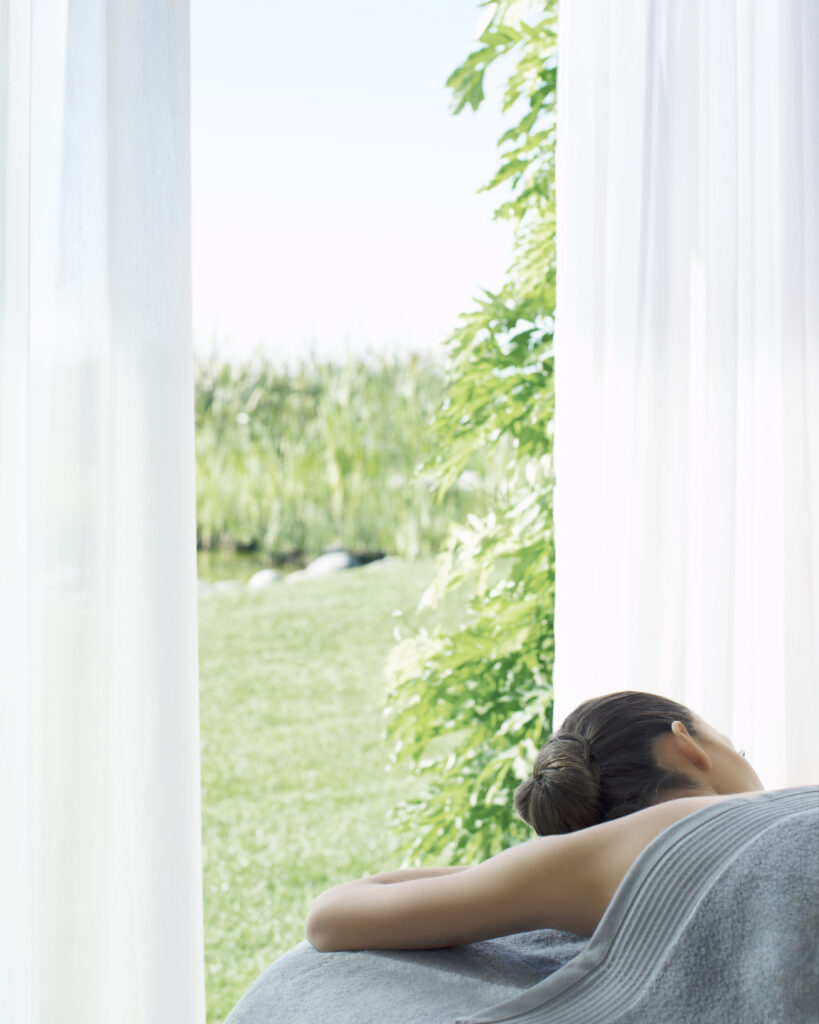
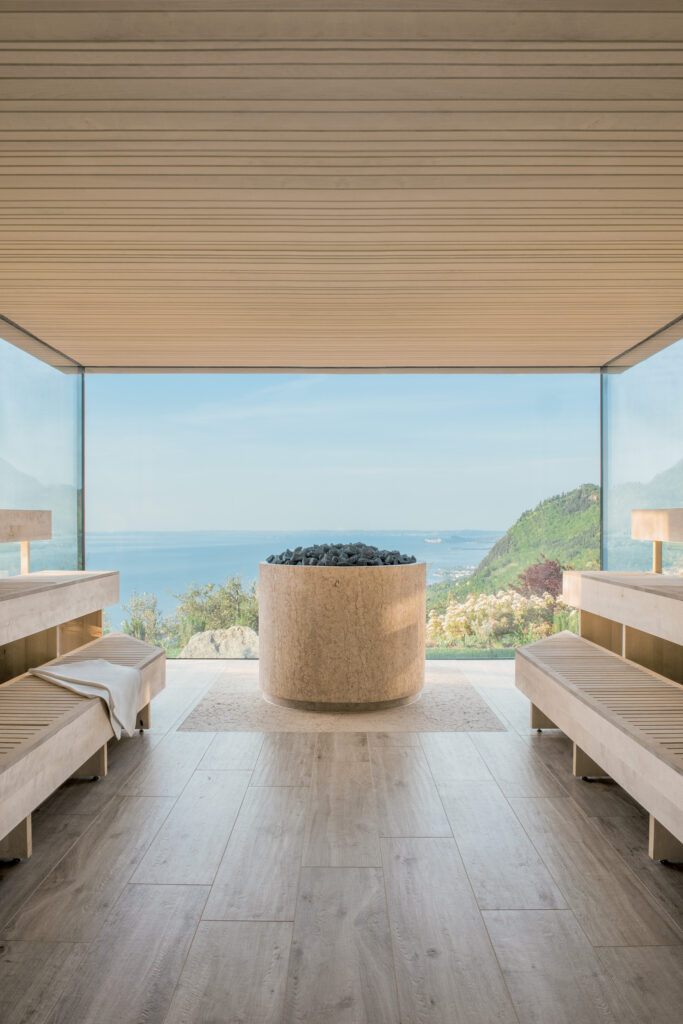
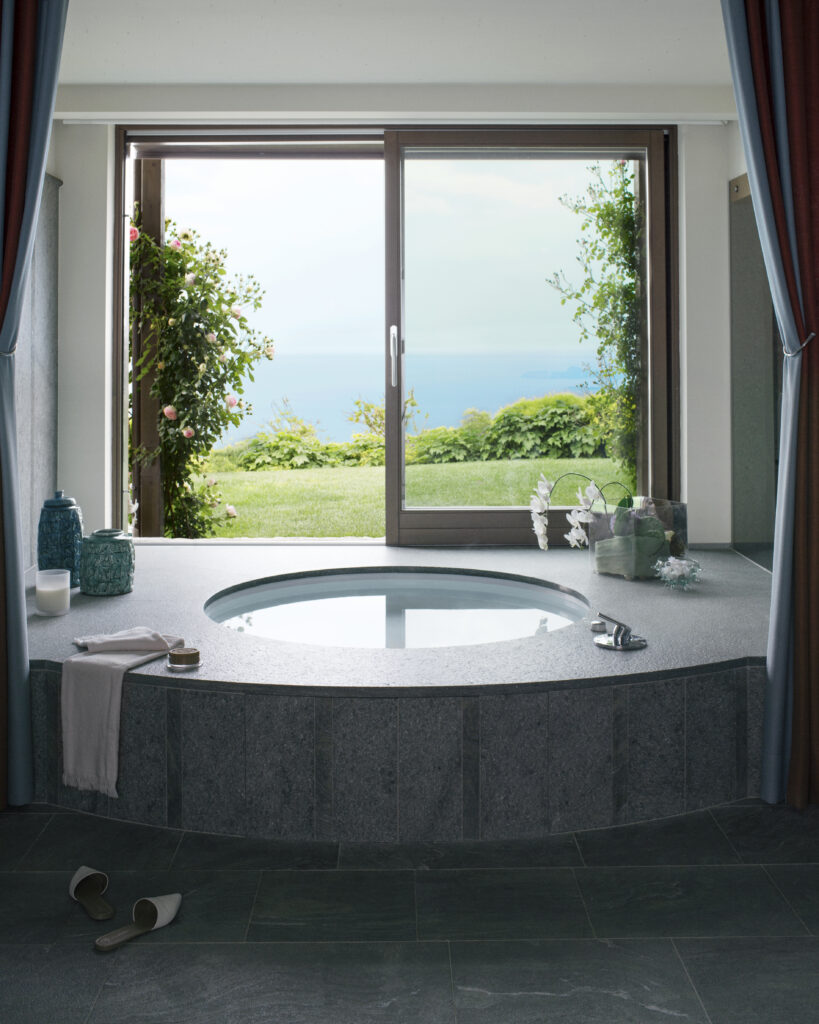
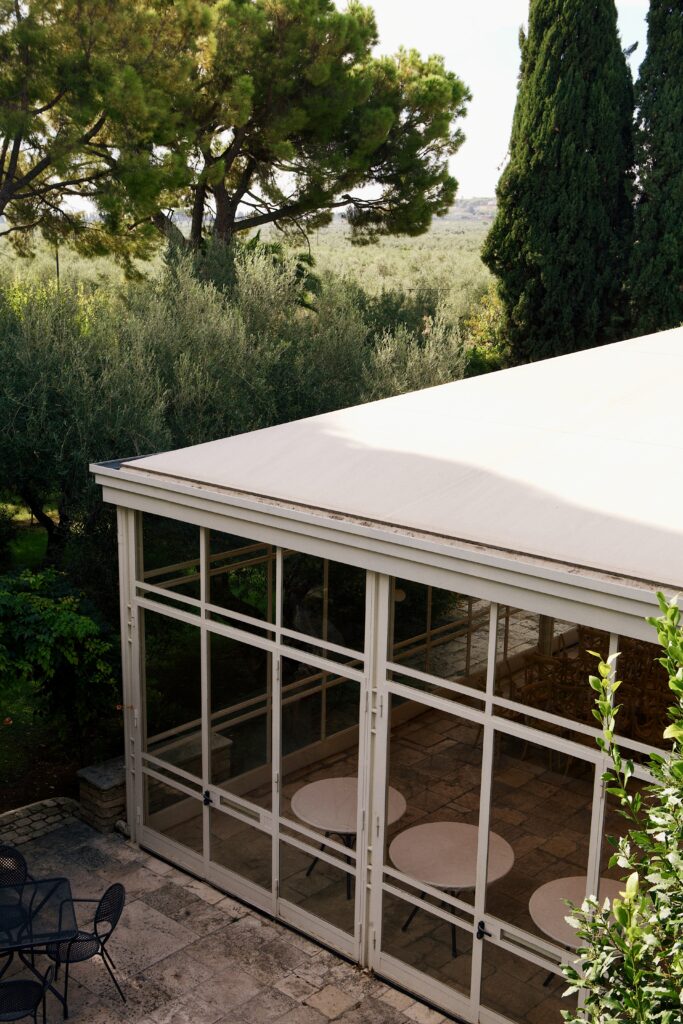
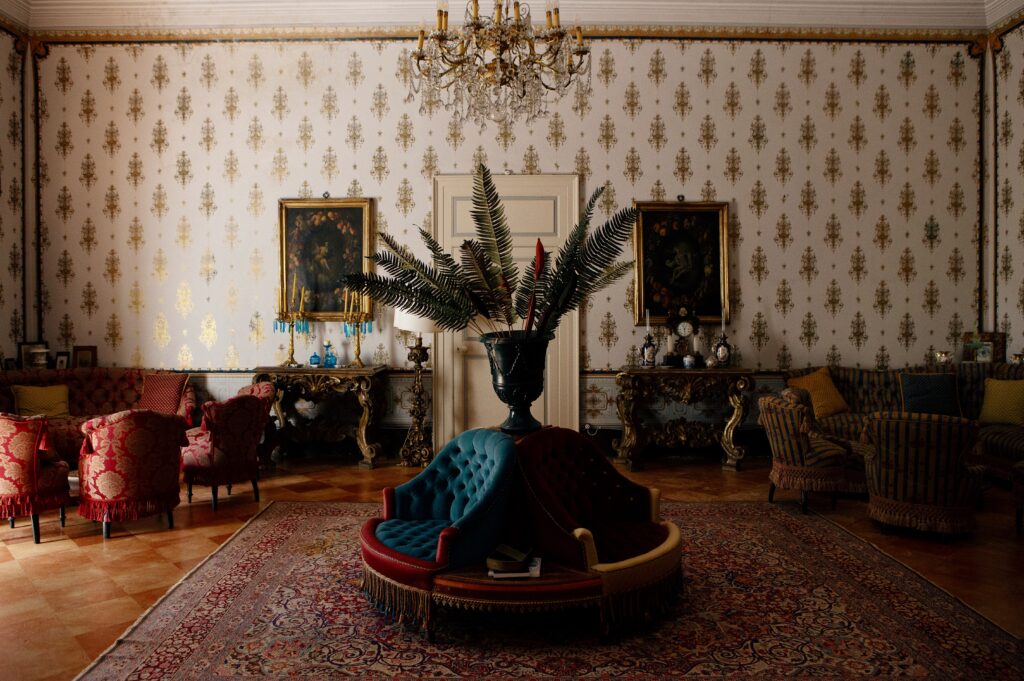
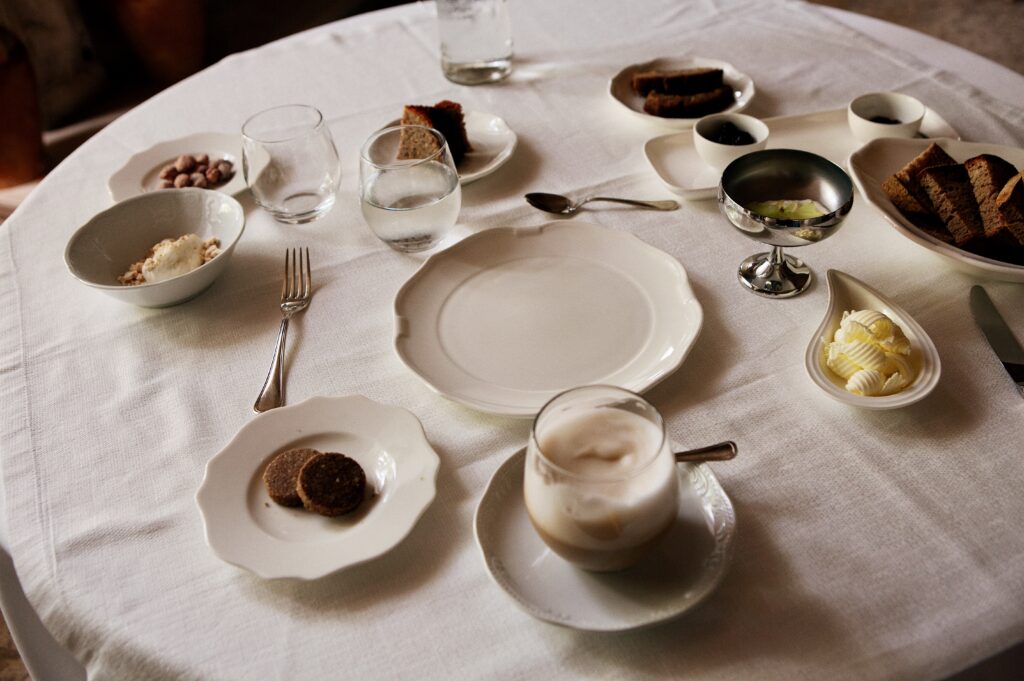
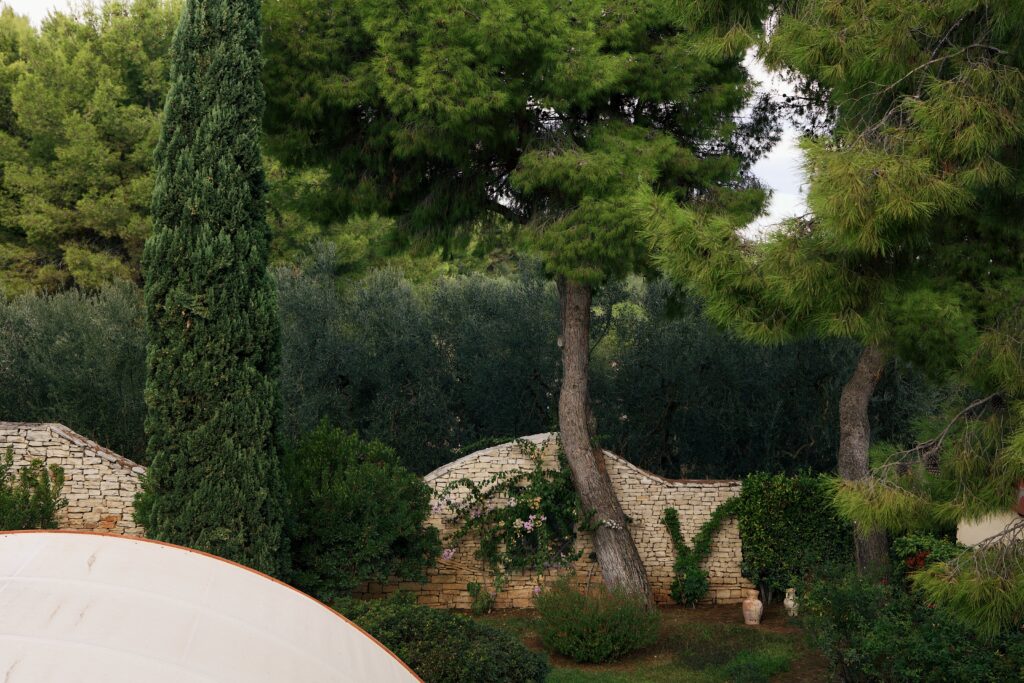
At Lefay Resort & SPA Lago di Garda, wellbeing extends beyond the treatment room, taking shape through a deeper relationship with oneself, the surrounding landscape and the rituals of everyday life. Founded on the belief that true luxury lies in the quality of this experience, Lefay brings together the principles of Classical Chinese Medicine and Western scientific research with an immersive connection to nature and a considered approach to nourishment.
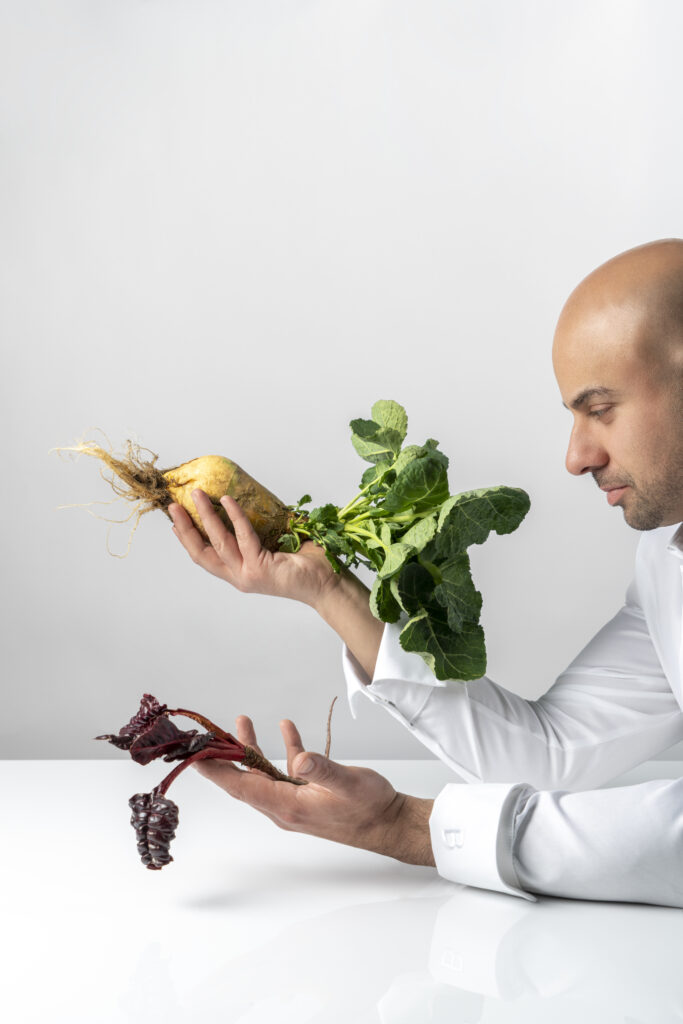
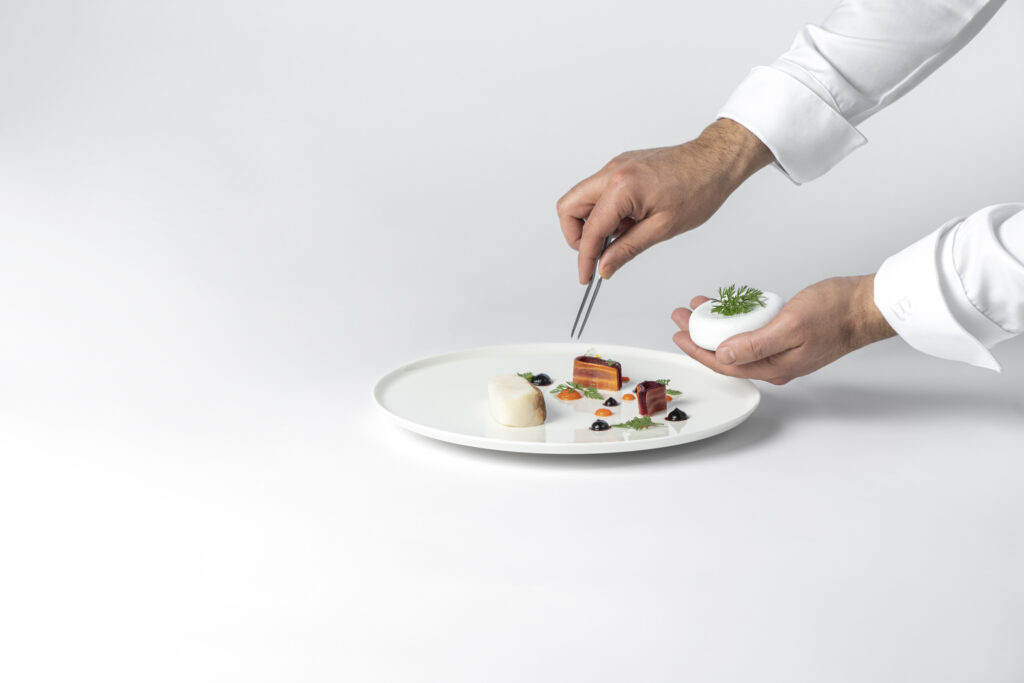
To explore the philosophy behind the resort, NR spoke with Monica Mescoli, Spa Manager at Lefay Resort & SPA Lago di Garda, about the Lefay SPA Method and its understanding of individual wellbeing, and Michelin-starred Executive Chef Matteo Maenza, whose work at fine-dining restaurant Gramen translates the Lefay Vital Gourmet philosophy into a cuisine rooted in seasonality, creativity and respect for ingredients. Their perspectives reveal an approach to hospitality in which wellbeing is not a prescribed formula, but a personal experience shaped by the interplay of science, nature, space and the pleasure of living well.
Lefay was founded on the idea of redefining luxury through a deeper understanding of wellbeing. After almost two decades of developing that philosophy, has your understanding of what it means to truly feel well evolved? And, looking at the guest experience today, what do you feel Lefay offers that goes beyond the traditional notion of a wellness retreat?
Our understanding of what it means to truly feel well has certainly evolved, and it must continue to evolve. Our idea of wellbeing always reflects the evolution of everyday life: the more life pushes us in a repetitive, almost alienating direction, the more the concept of wellbeing will point the opposite way. Lefay offers programmes designed to guide guests towards defined goals, but it does so while allowing those goals to be reached in perfect harmony with the rhythm of a holiday, recognising that wellbeing must never become a paradox in which the very pursuit of it turns into a source of stress. Instead, wellbeing should find its place in the small things of everyday life. Living the simplicity of life, together with contact with nature and being at peace with ourselves, is the gateway to truly feeling well.
The Lefay SPA Method brings together the principles of Classical Chinese Medicine with Western scientific research. From your experience of working within the Lefay SPA Method over many years, what have you learned about the relationship between these two different systems of knowledge? And what do you think this dialogue can offer that neither approach could necessarily achieve on its own?
Bringing together East and West inevitably leads to a sense of balance born of opposites. Classical Chinese Medicine teaches us about the depths of the human soul and, above all, about the root cause of a disorder, which is very often emotional. Western scientific research contributes to the treatment of symptoms and to more immediate solutions that support our wellbeing. Both approaches serve wellbeing, but each addresses only one aspect of it. For a truly complete approach, bringing these parts together leads to a deeper awareness of one’s own psychophysical wellbeing, activating the mental strength to move in the direction that is best for oneself.
Wellness can often be reduced to a series of treatments or services, whereas Lefay seems to approach it as a process of greater self-awareness. What do you think people are really looking for when they arrive at Lefay, and what can a wellness experience offer when it begins not with a prescribed solution, but with an understanding of where each individual is in their own life and wellbeing journey?
For Lefay, the approach to wellness is shaped by a whole range of factors. It is not just the treatment, nor just a whirlpool bath: it is the world in which one becomes immersed. The generous spaces, the views of nature that almost seem to flow within us, the materials, the colours, the sounds and the care of our team all allow guests to feel completely at peace, free to let their guard down. Letting go and feeling at ease opens us up to a process of “healing”, including healing from stress itself, and allows us to accompany each guest, hand in hand, towards a personalised experience of what is right for them at that precise moment.
The landscape of Lake Garda is such an integral part of the experience at Lefay. Beyond its obvious beauty, how does the landscape actively shape the way you think about wellbeing? Is there something about this particular environment, its light, vegetation, climate, relationship with water and sense of space, that has influenced the philosophy of the resort itself?
“The ability to see things from above”: this is what a Lefay experience at Lake Garda offers. The landscape, the nature and the sweeping views allow our minds not to fixate on single points, which narrows our thinking and makes us dwell too much on detail. Instead, they allow us to range freely, to rise above things, to put life’s events into perspective and to discover the infinite possibilities that life can offer.
From its beginnings, Lefay has approached architecture as something that should exist in dialogue with its surroundings rather than apart from them. At Lago di Garda, the resort was deliberately integrated into the hillside, drawing on the language of the traditional lemon houses of the Upper Garda and allowing the “building system” to interact with the “nature system”. Do you believe this way of designing a place, where the boundaries between architecture, landscape and indoor and outdoor life become less defined, can itself contribute to a deeper sense of health and wellbeing? And, looking back at the original vision for the resort, how do you feel this relationship continues to shape the way guests experience Lefay today?
We need to feel part of nature. It is where we come from, and it is the only place where we can find peace and understand the rhythm of nature, which is the rhythm of life itself. Designing a place in perfect balance with its surroundings respects both people and the environment. From this respect comes the first true condition of wellbeing.
Gramen is described as the ultimate expression of the Lefay Vital Gourmet culinary concept, bringing together ethics, respect and balance. How have these principles shaped your approach to the restaurant and to the idea of food as part of Lefay’s wider philosophy of wellbeing? In creating cuisine that is nourishing and rooted in the Mediterranean tradition, how do you reconcile health and sustainability with the pleasure, creativity and emotion that are essential to the experience of dining? And how do the landscape of Lake Garda and ingredients produced by Lefay itself, particularly its extra virgin olive oils, inform the identity of Gramen and your relationship with the territory?
My approach to plant-based cuisine is not the result of a contemporary trend. It has always been an intrinsic part of my culinary identity.
I come from Puglia, in southern Italy, where the connection with the sea, seasonality and the extraordinary richness of vegetables is deeply rooted in our gastronomic culture. I grew up with a tradition in which fish and vegetables played a central role, and I have carried this philosophy throughout my professional journey.
Long before plant-based cuisine became so widely appreciated, our menus already featured entirely vegetable-based and vegetarian dishes, conceived not as alternatives, but as gastronomic creations in their own right, with the ingredient itself as the true protagonist.
Gramen represents the natural evolution of this vision.
When I create a dish, my first objective is always pleasure through flavour. I believe the plant world offers extraordinary gastronomic possibilities. Through technique, creativity and a deep understanding of ingredients, we can achieve complexity, intensity and depth of flavour without relying on meat.
For me, wellbeing should never mean sacrificing pleasure. Rather than starting from nutritional restrictions, I begin with a gastronomic idea and the search for the best possible expression of an ingredient. Balance and lightness then become part of the experience, supported by a cuisine centred on vegetables and fish, with limited use of dairy products.
Seasonality is fundamental to my creative process. Each dish begins with an idea inspired by the season, and I then seek out the ingredients that best express it, giving priority to local producers whenever possible.
Lake Garda, with its distinctive microclimate, vegetation and agricultural traditions, provides a rich source of inspiration.
The extra virgin olive oils produced by Lefay are particularly important to our culinary identity. I don’t see olive oil simply as a finishing touch, but as an ingredient that becomes part of a dish from the beginning. Its aromatic character, bitterness and vegetal notes must interact with the other elements, contributing to the overall balance rather than overpowering the main ingredient.
Ultimately, my ambition at Gramen is to create a cuisine where ethics, sustainability and wellbeing coexist naturally with creativity, technique and emotion. A cuisine that respects its ingredients and its environment, but above all, one that gives genuine pleasure to those who experience it.
Lefay has spent almost two decades developing its own interpretation of wellbeing, while the wider conversation around health, longevity and wellness is changing rapidly. Having established such a distinctive philosophy, what do you think Lefay still has to discover? And when you imagine the next ten years, what do you hope the future of holistic hospitality will look and feel like?
Lefay simply needs to continue nurturing its great sensitivity in understanding human beings in depth: studying them, understanding what is happening around us and what truly makes us happy, or better still, what allows us to be moved. I am convinced that it can only remain at the heart of its founding concepts, which were far-sighted and pure in their essence. Over the next ten years, we may see wellness working closely alongside technology, with cutting-edge equipment and intensive therapies focused on prevention, together with ever deeper immersion in nature and in our connection with ourselves. As it moves forward, I believe Lefay will need to take care of the art of pausing.
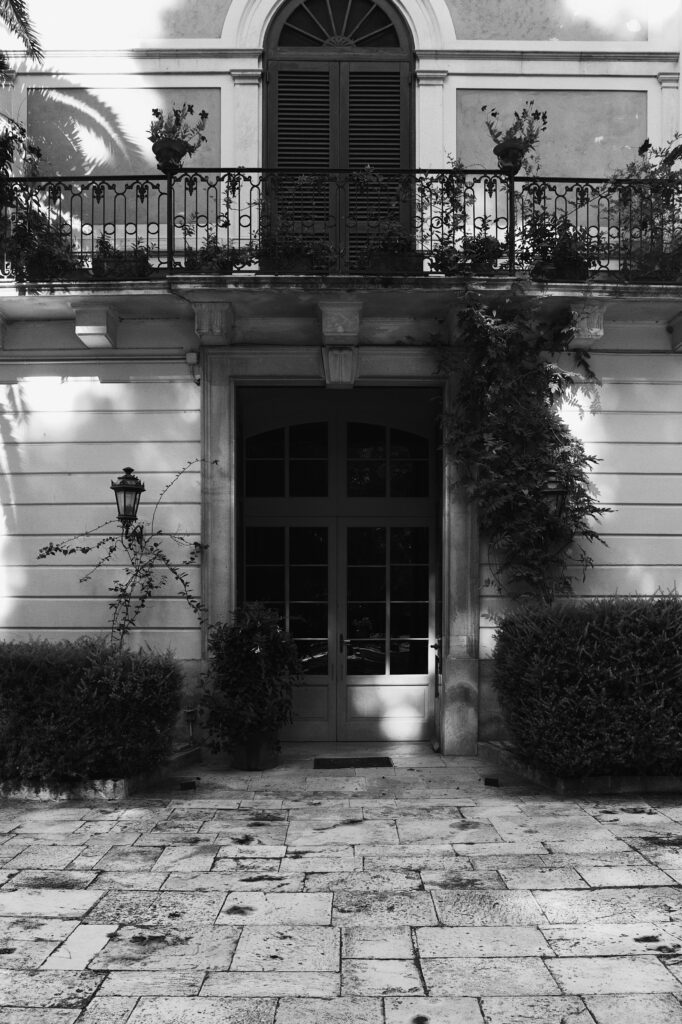
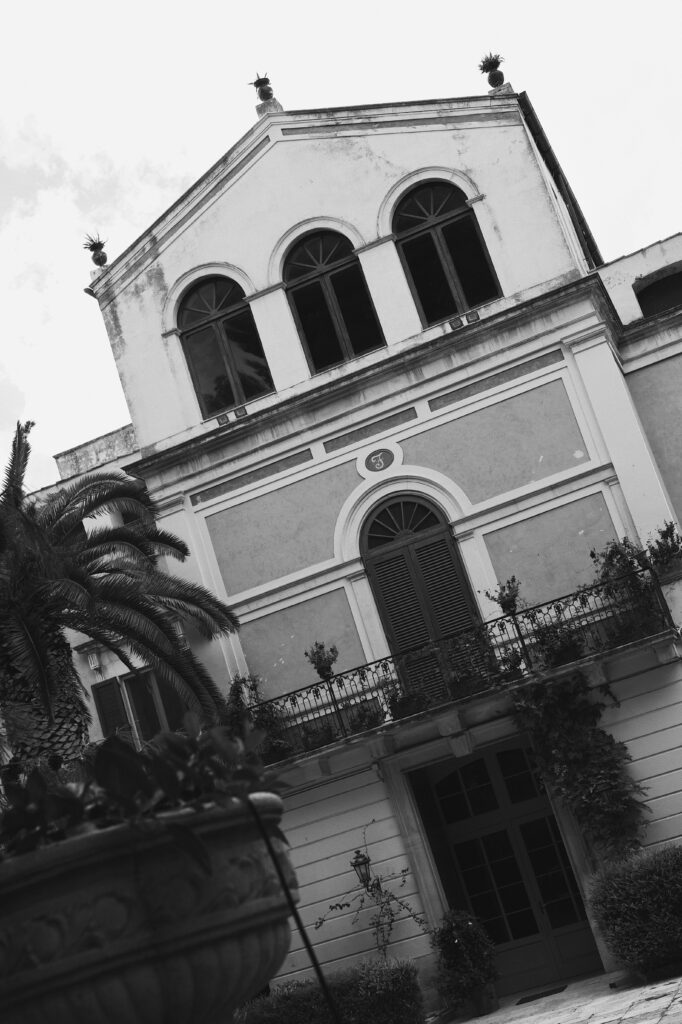
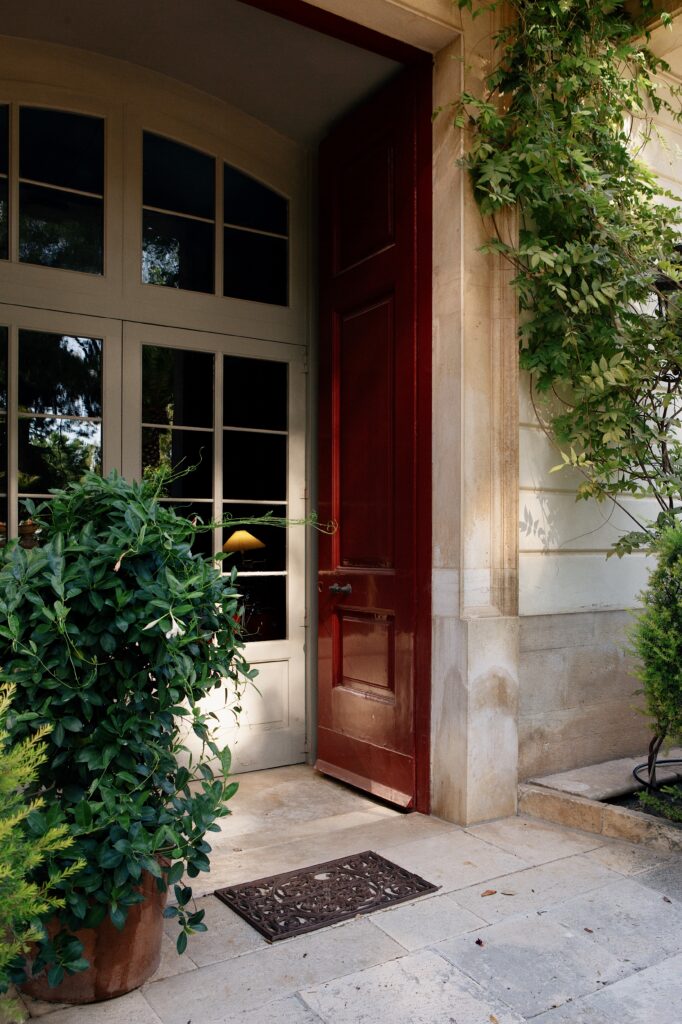
In the Puglian countryside, on the outskirts of a small town called Ruvo di Puglia, a centuries-old family estate continues to evolve without losing the layers of history that made it what it is. At Villa Fenicia, restoration is less an act of reinvention than one of care, a philosophy that extends from the house and its gardens to the kitchen, where the landscape itself dictates what reaches the table.
There is a tree in the gardens of Villa Fenicia that is exactly as old as Federica Fenicia.
When she was born, her father Antonio Fenicia planted a Vallonea oak specifically for her, grown from a single acorn taken from the centuries-old Vallonea oak of Tricase. Today, the tree continues to grow within the estate, quietly marking the passage of the years alongside the woman who grew up here.
It is an almost perfect metaphor for Villa Fenicia itself: something living, rooted in place, shaped by generations and continuously changing, yet never severed from what came before.
For Federica, Villa Fenicia was never a property she discovered later in life. It was home. She lived there until she was fifteen, growing up among olive and grape harvests, accompanying her father to the olive mill and winery, and watching the restaurant and wedding business develop around her. Her childhood memories oscillate between the noise of celebrations and the quieter rhythms of the land. Weddings, she recalls, made the Villa feel almost permanently festive; her father, meanwhile, would take her around the estate to gather whatever the season was offering, whether it be cherries, persimmons, almonds, peaches, figs, wild rocket, sivoni and wild chicory.
“The land has its own rhythm,” she remembers her father teaching her, without ever turning it into a formal lesson.
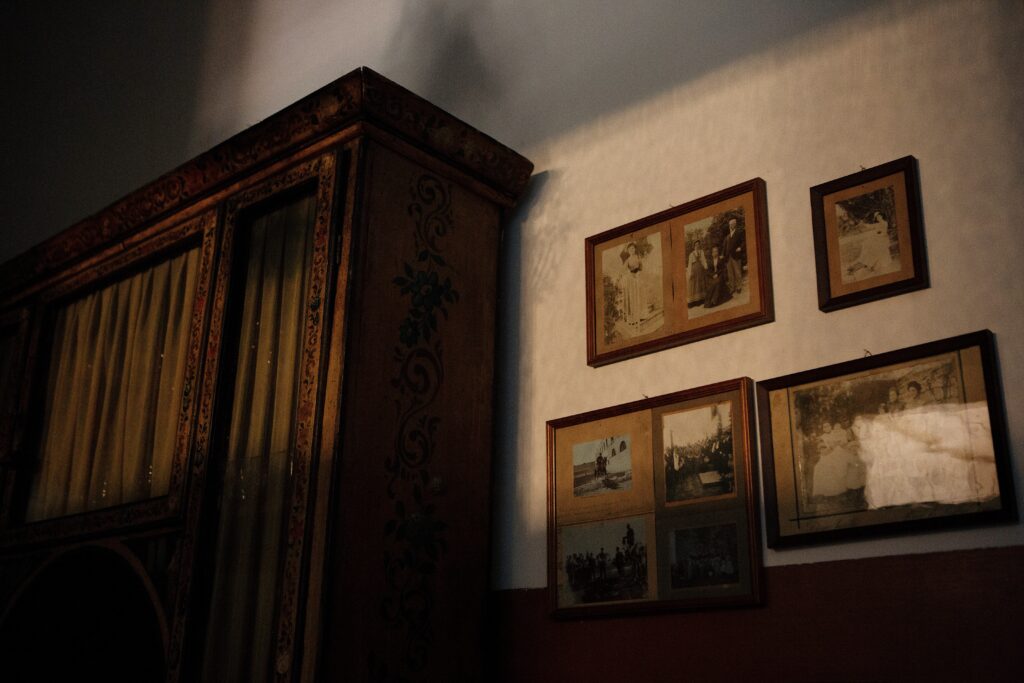
Her favourite place in the house was, somewhat unexpectedly, the attic. Filled with photographs, furniture and objects belonging to different periods and generations, it became, in her words, almost “the unconscious memory of the Villa.”
That sense of accumulated memory is fundamental to understanding Villa Fenicia.
The story of the estate begins long before it became the place it is today. The Fenicia family originally came from Ravello on the Amalfi Coast, before members of the family began travelling through southern Italy during the seventeenth century. A marriage to a woman from Ruvo eventually established their roots permanently in Puglia.
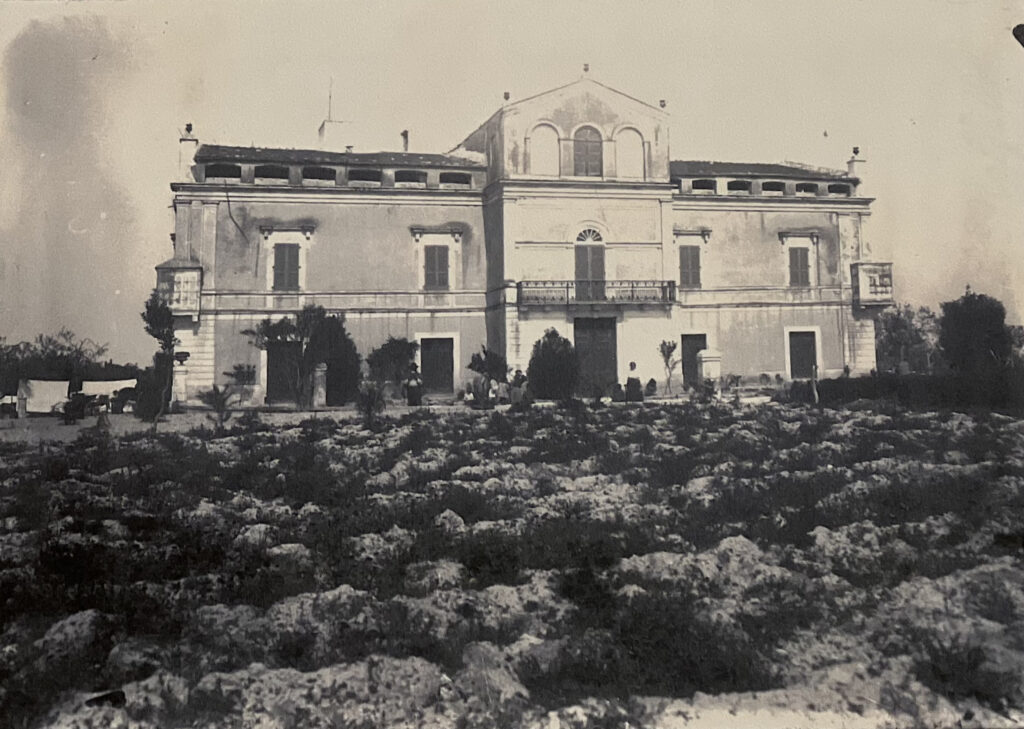
The estate itself was originally known as Gigliano. Parts of the structure may date to the sixteenth century, while Roman remains, including stone masks, have also been found on the property. It began as a fortified masseria, where domestic life and agriculture existed alongside one another.
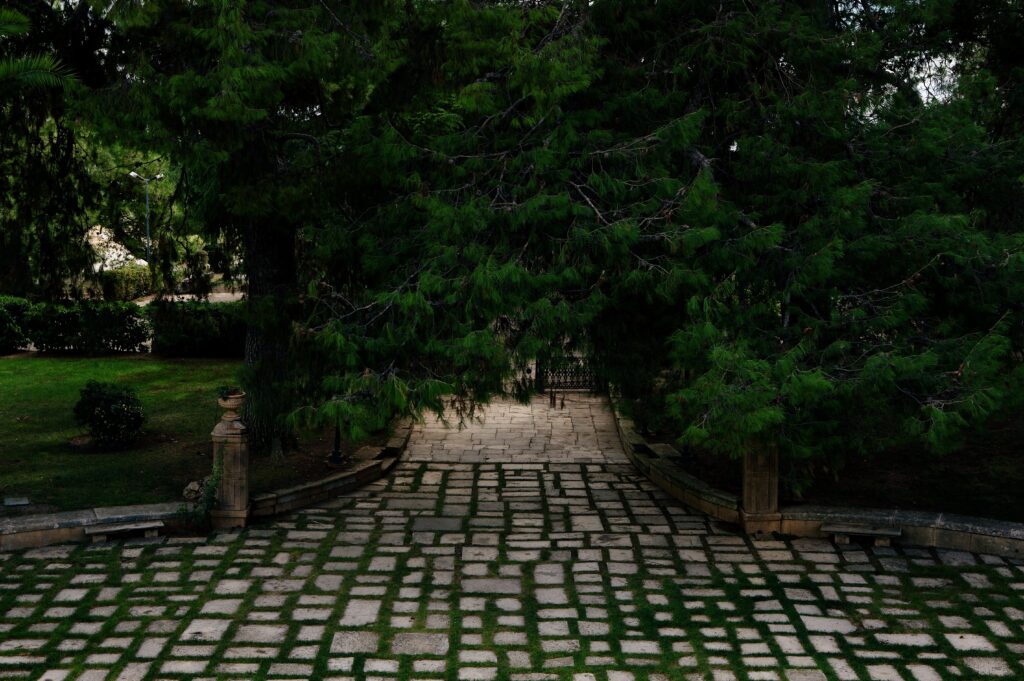
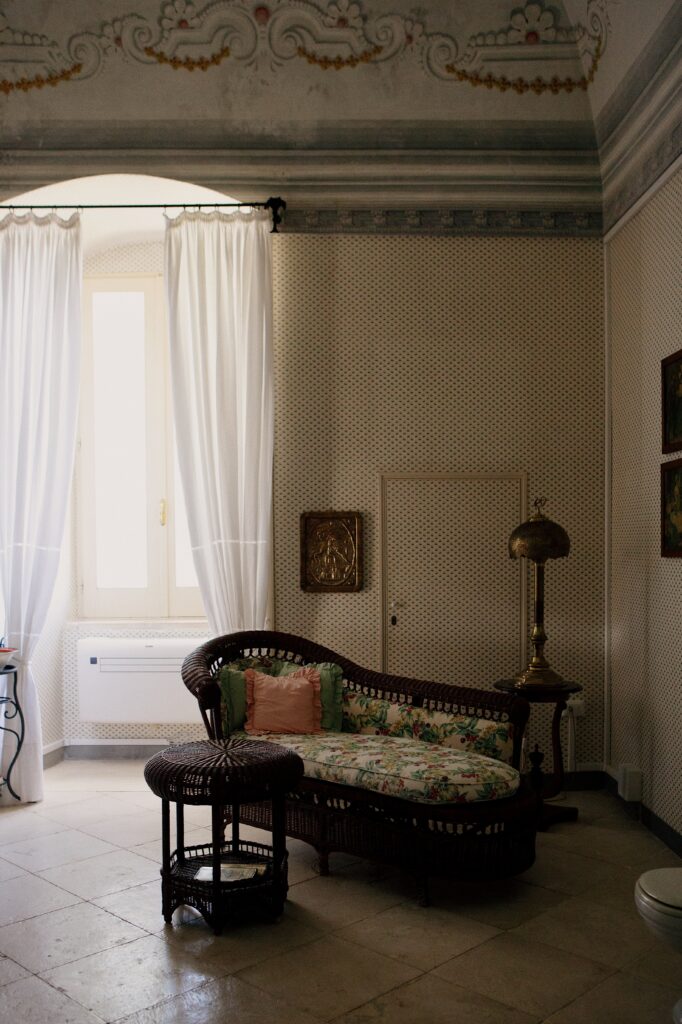
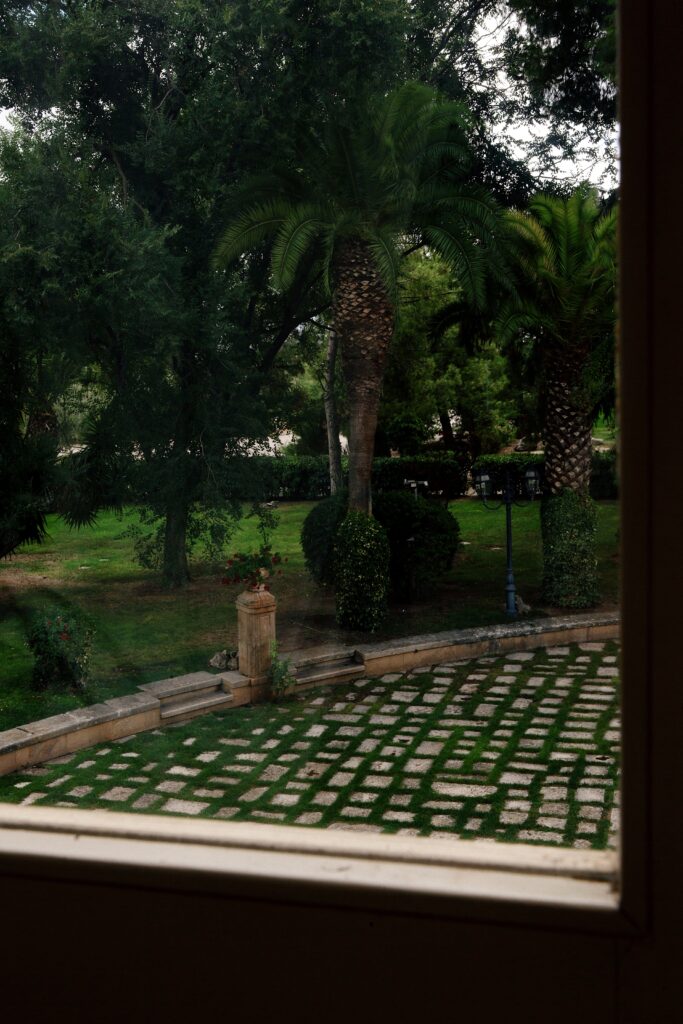
Its defining transformation came much later. Between approximately 1870 and 1880, architect De Judicibus extensively redesigned and enlarged the property, creating the nineteenth-century summer residence whose character remains visible today. Frescoes, furniture, interiors and the surrounding park emerged during this period, while the garden was conceived almost as an extension of the house itself, planted with Lebanese cedars, pines, palms and Mediterranean vegetation.
Yet agriculture never disappeared.
Olive groves continued to surround the Villa, and today the estate remains home to approximately fifty hectares of olive groves, alongside two and a half hectares of vineyard, fruit trees and gardens. The Coratina olive, indigenous to the area, is cultivated organically, continuing an agricultural relationship that has existed across generations.
Villa Fenicia has therefore never had a single identity. It has been a fortified farm, an agricultural estate, a summer residence and a family home. Today it welcomes guests, but, as Federica puts it, “all of those previous lives are still present.”
Perhaps this is why she resists describing it simply as a historic property. “Its history is not something we only preserve in documents. We have lived inside it.”
The restoration of Villa Fenicia began with Federica’s father, Antonio Fenicia, who inherited the property from his father.
The house was not in ruins when he took responsibility for it. Rather, it remained largely in the condition of a nineteenth-century country residence, used by the family at particular moments of the agricultural calendar, during the summer, cherry and almond harvests, and later the olive harvest. To make it genuinely habitable again required something more complicated than cosmetic restoration: electricity, plumbing, drainage and the infrastructure of modern life all had to be introduced into a building never designed to accommodate them.
But Antonio’s instinct was never to modernise for the sake of modernity.
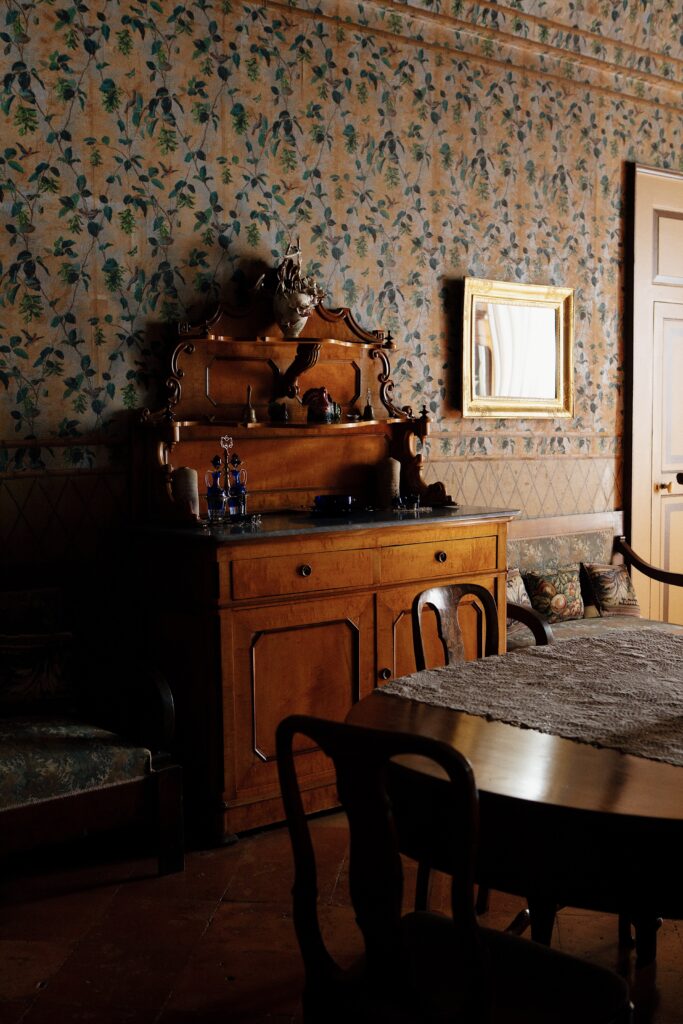
Where frescoes had been damaged by time and humidity, originals were restored wherever possible; where this was no longer feasible, decorative work was recreated according to the nineteenth-century scheme. Throughout the house, nature remains a recurring decorative language, with botanical motifs appearing across the frescoes and even on the original hand-decorated cotton curtains. As Federica recalls,“His objective was never to reinvent Villa Fenicia. It was to make it live again.”
It is a distinction that defines the restoration.
The technical infrastructure was modernised, but the intervention was deliberately made almost invisible. The purpose was to introduce contemporary comfort without allowing contemporary life to become the identity of the house.
In fact, Federica believes the greatest achievement of the restoration is precisely that it is not immediately visible. “You do not immediately perceive the restoration itself. You perceive the house.”
This philosophy continues today. Villa Fenicia has evolved, first through the introduction of modern services and spaces for the restaurant and events, and later through the creation of four suites but every addition has been required to respect the character of what was already there. “Change only what is necessary for the house to continue living.”
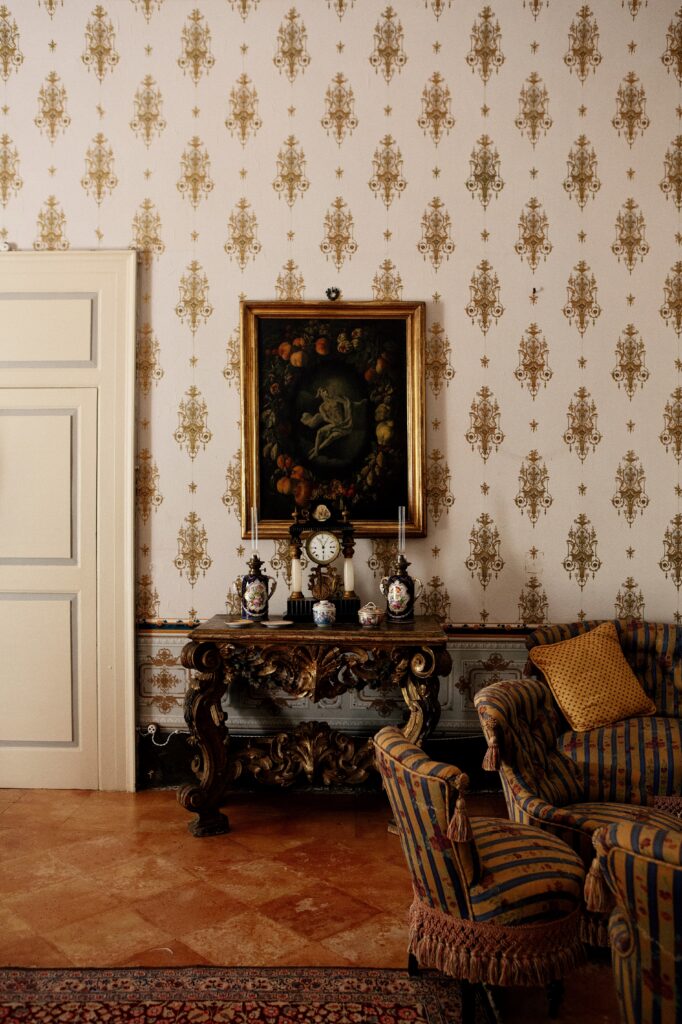
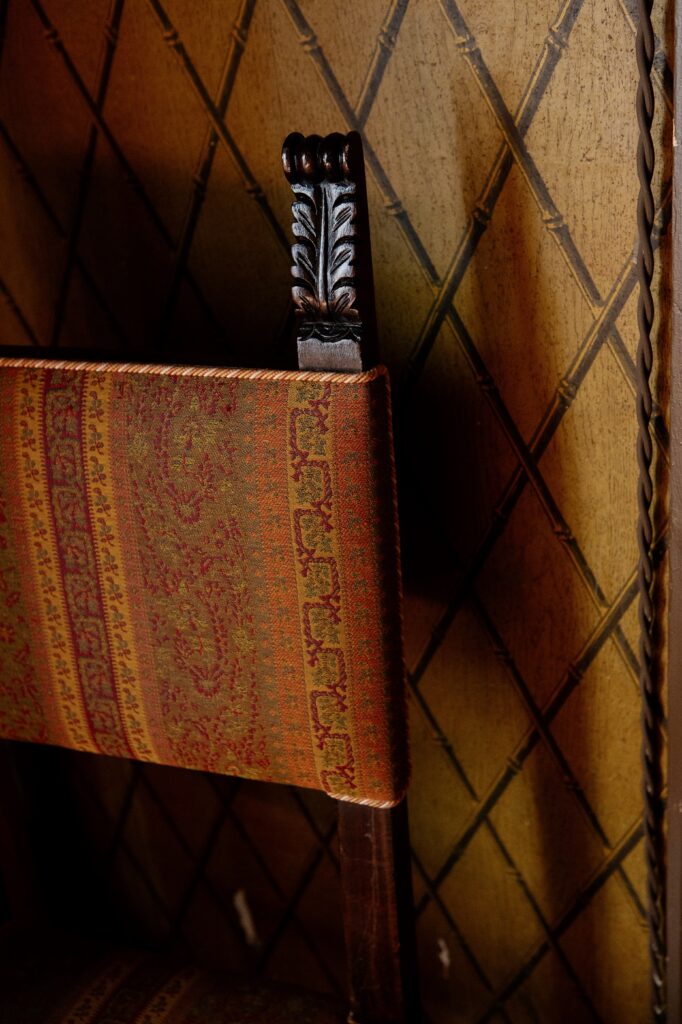
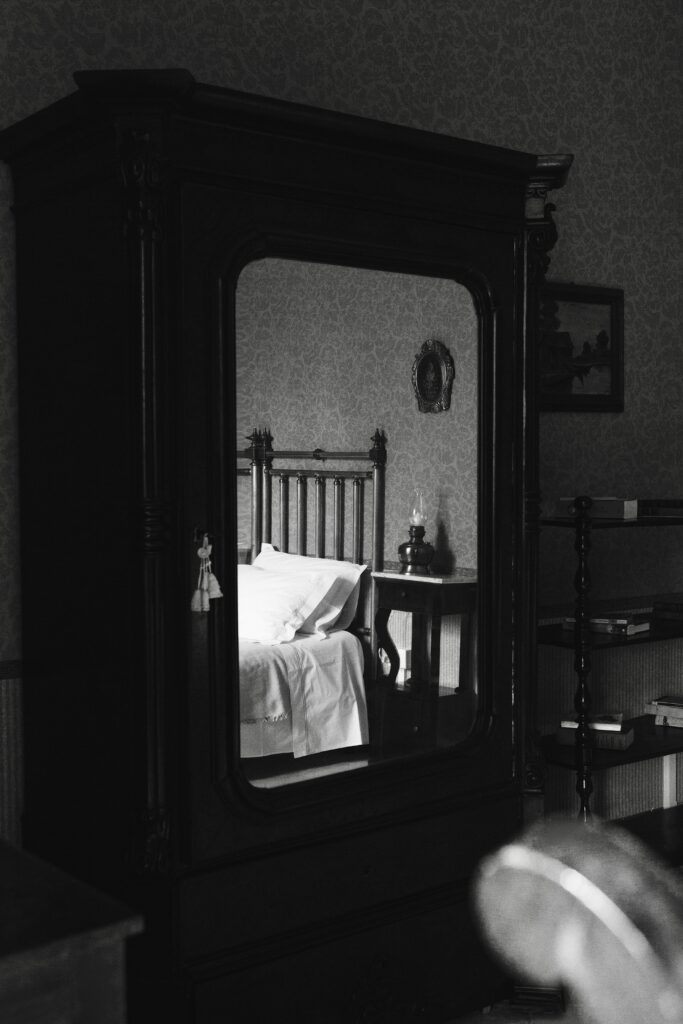
It is perhaps the simplest way to understand the estate. “Every new function has had to adapt itself to the Villa, rather than forcing the Villa to adapt to it.” The result is not a house stripped of the traces of time, but one in which those traces remain visible. The local chianca di Trani limestone and antique terracotta floors have been preserved; nineteenth-century furniture has been restored rather than replaced; family crests remain on pieces of furniture; photographs and objects continue to occupy unexpected corners.
Nothing, Federica explains, has been arranged simply to create an aesthetic effect.
These things remain because “somebody used them, loved them or decided they were worth keeping.” And this accumulation is what makes the Villa feel personal.
“Agriculture is not the landscape around Villa Fenicia. It is part of Villa Fenicia itself.”
The distinction matters.
The olive trees are not simply picturesque elements surrounding the architecture; they are cultivated land. The gardens are not merely ornamental. The fields produce, require work and change with the seasons. Historically, the estate was far more self-sufficient, with animals also kept on the property, the current restaurant occupying what were once the old stables.
The surrounding Puglian landscape operates according to the same logic.
For Federica, one of the region’s greatest qualities is that beauty and usefulness have never been separated. The olive trees, dry-stone walls and wild herbs are simultaneously beautiful and practical, shaped by generations of agricultural knowledge.
The Murgia, in particular, asks to be observed closely. Its austere landscape of limestone soils, dry grasslands and spontaneous plants may not immediately reveal its richness, but with attention comes an extraordinary biodiversity, and a culture built around knowing how to read what the land provides.
Villa Fenicia therefore does not seek to separate its guests from this landscape. “The Villa should be a starting point for discovering this landscape, not a barrier separating guests from it.”
The decision to open the Villa’s four suites was, in many ways, a continuation of this philosophy. Before the suites existed, Villa Fenicia was already open through its restaurant and events, particularly weddings. But an event is inevitably temporary: you arrive, celebrate and leave.
The suites offered something fundamentally different. The possibility of inhabiting the Villa. “To wake up here. To have breakfast slowly. To walk through the garden without having anywhere particular to go. To watch the light change. To hear the silence after everybody else has left.”
Federica returned from Milan to help her father with this new chapter. And perhaps what Villa Fenicia offers its guests is ultimately less about adding another destination to an itinerary than removing the pressure of having one.
“In a world in which so many of us live according to increasingly frantic rhythms, perhaps one of the greatest luxuries we can offer is simply the permission to stop.”
Villa Fenicia is deliberately not a hotel in the conventional sense. There are only four suites, and Federica believes this scale is essential to preserving the intimacy of the experience. “The greatest compliment somebody can give me is not that Villa Fenicia is beautiful. It is that they felt at home here.”
It is fitting, then, that the culinary project occupying the former stables should follow the same philosophy.
Federica was already a customer of Francesco and Vincenzo Montaruli at their restaurant Mezza Pagnotta in Ruvo. When the decision was made to open Villa Fenicia to overnight guests, she felt that food had to form part of the experience. The brothers’ approach to cooking, rooted in wild herbs, spontaneous plants, inherited knowledge and the biodiversity of the Murgia, seemed to speak the same language as the Villa.
The restaurant became Cucina Villana. Rather than inserting a restaurant into a hospitality property, Federica describes it as the meeting of two projects that were already philosophically aligned.
At the heart of the brothers’ cuisine is what they call an “archaeology of taste”, a recovery of knowledge that was once essential to everyday life but is increasingly disappearing.
They learned to recognise and gather wild plants through their father, grandfather and Ciccillo, the forager who introduced them to many of the Murgia’s secrets. Ingredients once associated with poverty are reconsidered not as symbols of deprivation, but as part of a sophisticated cultural and ecological inheritance.
For Federica, the connection with Villa Fenicia is profound. “Neither project is about recreating the past nostalgically. It is about asking: what is worth carrying forward?” A recipe. A wild plant. An old floor. A photograph. An agricultural practice. A story passed from parent to child.
All survive only if someone decides they still matter.
“In that sense, Cucina Villana and Villa Fenicia share the same responsibility: preserving knowledge by allowing it to remain alive.”
The kitchen therefore begins not with a fixed menu but with observation. Wild plants appear when conditions allow; vegetables follow their seasons; harvests and producers change. What reaches the table depends on what the territory is willing to give at that particular moment.
The result is a meal that cannot be perfectly reproduced. And perhaps that is precisely the point.
There is something reassuring about the permanence of Villa Fenicia.
Human lives move quickly around it, Federica says, while the house, trees and land remain comparatively stable. Yet her relationship with the estate is not one of possession.
The older she becomes, the less she thinks of Villa Fenicia in terms of ownership. “You are simply passing through.” Her hope for the future is not to make the estate bigger, but to deepen its relationship with the land, to dedicate more energy to agriculture, cultivation and protection. And ultimately, her ambition is remarkably modest. “I do not feel that this place is mine. In some way, it has been entrusted to me, and I have to earn the right to pass it on. My ambition is actually quite simple: to preserve something meticulously enough that it survives me.”
To leave a trace, a mark that says that, for a brief moment in the long history of the estate, someone was here and cared for it.
Perhaps this is ultimately what makes Villa Fenicia feel so different. Its philosophy does not ask to be admired as something frozen in the past.
It asks to be lived in, listened to and carried forward.
And for a place that has already lived so many lives, perhaps that is the most meaningful form of preservation there is.
Ici ces drapeaux n’ont pas pu exister Here, these flags could not have existed
Rome, 1666. The scaffolding is still up in front of St Peter’s, where the last columns of Bernini’s colonnade are being hauled into place, and the carts keep coming up from the travertine quarries at Tivoli. The city is in the middle of remaking itself: new fountains, new façades, new piazzas opening where there were lanes a decade ago. Beyond the basilica it runs downhill through gardens and ancient stone, and above it all stand the hills where the cardinals have built their villas to look out over one of the finest views in Europe.
A thousand kilometres north, in a room at the Louvre, Jean-Baptiste Colbert has been making an argument for years. He runs Louis XIV’s finances and most of his cultural ambitions besides, and he believes French artists deserve better than copies of copies. Charles Le Brun, the king’s first painter, agrees with him. Everything they want their students standing in front of is in Rome, and since none of it can come to Paris, Colbert sends the students to it. The Académie de France à Rome was founded.. Charles Errard, a painter who had already spent much of his life in the city, is sent back as its first director with a dozen young men in his charge, and they go south by road, the better part of two months of it.
Then the years start moving. The pensionnaires keep arriving, one cohort after another, and what they send home transforms the royal collections. David comes, then Ingres, then Berlioz and Debussy. Monarchies fall and the Académie outlasts them. The idea of forming an artist by giving him years abroad becomes a model other countries adopt outright.
Since 1803 the Académie has occupied Villa Medici on the Pincio, and time is at its most legible there, in the garden façade. Ferdinando de’ Medici had his Roman bas-reliefs set directly into the wall, so that the marble is fifteen hundred years older than the brick around it and the institution behind it is younger than both. Seven hectares of umbrella pine and clipped box run back into the hill. The city opens out below the terrace, more or less where those carts once came up from Tivoli. Entry was by the Prix de Rome until 1968. The Académie belongs to the French Ministry of Culture now and selects through an annual international competition.
What it offers is twelve months for creation, experimentation and research.
Curators, Roberto Pontecorvo and Imma Tralli met in Brussels, at BOZAR, and in 2021 they moved south to start the Marea Art Project, on the Amalfi coast. Tralli is an art historian from Matera, with cultural associations and museum years in Brussels and Madrid behind her. Pontecorvo grew up in Praiano and read international relations. Their gaze reveals a rigor that extends beyond the curatorial practice. These two seem to carry, almost in a single sentence, in the quiet force of their gaze, something of all the values we seek. Every idea they put into the world is worked through with extraordinary care, considered down to its finest grain, felt, questioned, and lived. Pontecorvo and Tralli found at the Villa an institution willing to keep the dialectic of the perspectives embodied by the fellows. “At a historical moment when a plurality of perspectives does not always manage to coexist”. At Villa Medici they meet. “This is profoundly rare. And perhaps, precisely for that reason, especially precious today.”
Sixteen fellows arrived in the autumn of 2025, from architecture, art history, art theory, literature, curating, musical composition, photography, cinema and the visual arts. Each applied alone. Each proposed something connected to Italy. Nothing has to be finished. The residency does not ask for production, and the exhibition that closes the year is not compulsory. For some it becomes a turning point. Some of the fellows spent the year working in mediums they had never used before. A maze can take shape in the mind— Around them the Villa runs: guests, screenings, book launches, workshops, short-term residents passing through.
The institution invited them into a group already assembled, which reverses the way they normally work: at Marea Art Project, their own residency in the Italian south, now in its fifth year, they choose the artists and build the process around that choice. Here the process was accompaniment. Sixteen practices, sixteen geographies, sixteen political positions, and a year of listening. Many of the fellows embody their research rather than conduct it. For the fellows, the curators state, certain practices and certain positions are not simply important. They are vital. “For some of them, a personal life becomes not just a personal life. It becomes political, and at the end it becomes collective.”
Late in their year with the fellows, after the studio visits had ended, the curators visited in Ramallah the Palestinian artist Vera Tamari. They had gone to meet her. As they leafed through a catalogue, Tamari showed them a work she had made in 1998: clay faces modelled on her ancestors, mounted on metal rods and planted along the shore at Jaffa, the city her family had been forced to leave in 1948. Left exposed to the wind, sand and sea, the faces would gradually wear away. She had called it Oracles from the Sea.
On the journey back, Pontecorvo and Tralli discovered that the work had stayed with both of them. Its title, they felt, could also name the closing exhibition. The exhibition’s title became both a tribute to Tamari and a return to November.
The idea of the oracle became a framework through which to offer audiences an entry point into the works, suggesting possible connections and resonances without imposing a single interpretation. It is an invitation to embrace visions, omens, and questions, and to cultivate the critical awareness needed to navigate the complexity of the present. Oracles Beyond the Sea therefore names not a subject shared by the sixteen fellows, but a condition of looking: a set of practices gathered without being reduced to a single meaning. The sea, too, had already begun to surface across their work, appearing independently in projects that had started without common ground. What emerged was not a theme imposed from above, but a resonance discovered along the way.
The night of 27 November 2025, two months into the residency: From six in the evening until midnight, the Villa opened its gardens, loggias, and studios to anyone who walked up the hill. That night, the front of the building went dark. Then the flags began to appear. Countries that had disappeared, been partitioned, or been denied recognition were projected one after another across four hundred years of brick and marble, each holding the façade for a moment before giving way to the next. Across the same wall ran a line of text: “Ici ces drapeaux n’ont pas pu exister.” Here, these flags could not have existed.
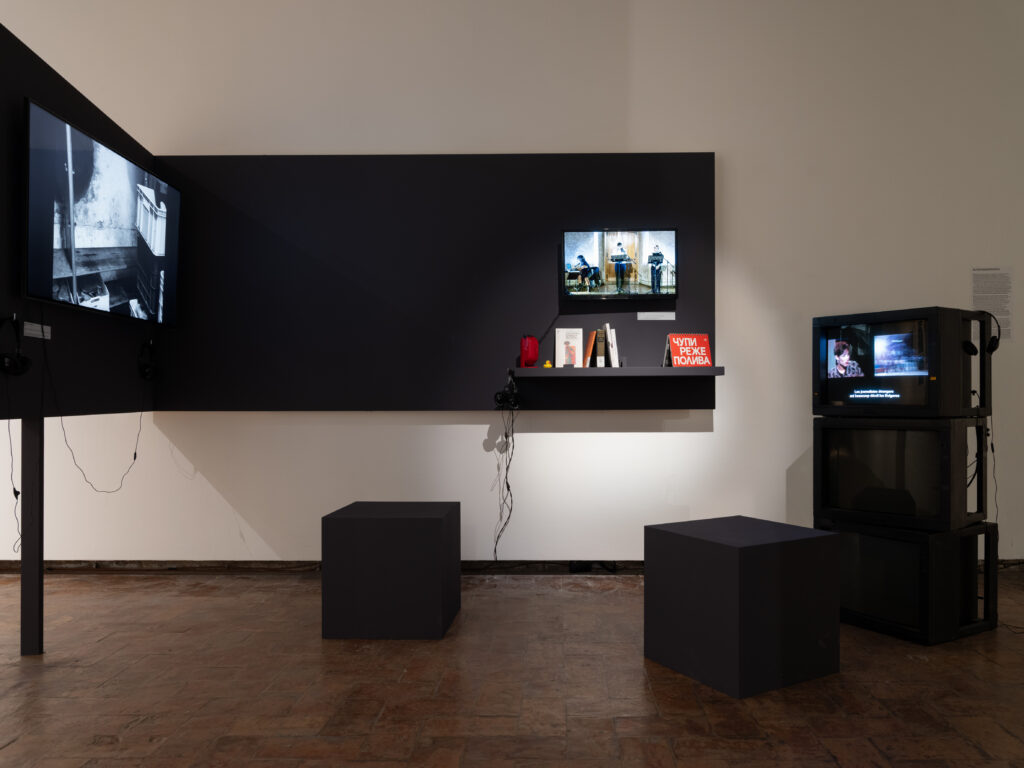
Inside the Neviera, voices were arranged like a chorus, entering over one another until the room could hold several at once. Poems by writers from Gaza played in the recorded voices of residents, among them Refaat Alareer’s If I Must Die. Marin Fouqué performed with the Roman boxer Adriano Tramontozzi and with Husam Maarouf, a poet in Gaza who joined from a distance. Elitza Gueorguieva read with the Palestinian writer Karim Kattan from texts including those of Heba Abu Nada, accompanied by music from Giulia Lorusso. The fellows issued a collective statement—“a white night can be spent celebrating, or trying to survive bombardment”—and transformed the Villa’s annual Notte Bianca into Nuit noire, working with Palestinian artists through Ma’an for Gaza.
It was the first thing the sixteen fellows did together. Months later, when the curators encountered Tamari’s Oracles Beyond the Sea, they recognized in its title something that had already begun that night: not a prescribed theme, but a way of gathering disparate voices without silencing their differences. The title of the final collective exhibition became, in that sense, both a tribute to Tamari and a return to November—a name for the questions the residency had opened, and for the meanings the sixteen practices would leave for others to interpret.
Pontecorvo and Tralli leave the portraits to us. What follows draws on NR’s conversations with Ben Russell, Paul Maheke and Elitza Gueorguieva— reflections on the year at Villa Medici.
Ben Russell is wary of the words people use for him. He came to the name of the artist late and reluctantly; filmmaker he rejects outright, because his films are largely non-narrative and not character-driven and the word tells an audience to expect something he is not going to give them. Five features, around forty short films. Programmes he made fifteen years ago come round regularly and he does not always recognise the self who made them. What he recognises is the boldness — the obligation, as he puts it, to be as radical as he can inside whatever framework he is working in.
BEN RUSSELL, Le fantôme souriant, 2026
He came out of an American underground where everyone had a second job and the work was determined by what could be reached, and he has never pretended the practice floats free of its costs. He left teaching in 2011 and moved to France. He shoots 16mm; film costs forty euros a minute; a twenty-minute film means exposing between sixty and two hundred. It is not possible to make a feature a year — raising the money takes years, while shooting and editing do not — so everything in between is waiting, and the waiting has to be filled. The curatorial work came out of that, and the performances, and now the music. The Villa gave him somewhere to live and a space to film.
Russell’s interest in psychedelics and surrealism has always been an interest in perception itself; he remembers watching a bird while tripping and seeing three points of its flight at once. Perception is a language. Cinema offers another manipulation of time — the lens is a different kind of eye, and duration makes a spectator increasingly aware of the body doing the looking. Rome makes the same argument in fresco: trompe l’oeil, perspectival experiment, and in every church the impossibility of representing heaven. Cinema, he thinks, wants the same thing, to produce what cannot be experienced in the present world.
He walks through the decorative gardens each day to reach his house and watches the sun go down over a city that has existed in various states for a very long time. He calls the feeling awe, then corrects it into something more useful: recognising how relatively unimportant his presence in this moment is. The people on the street are descendants of people who have walked there for two thousand years, and he is another iteration of the visitors who have always come to look. “We don’t have ruins of ruins that have been shifted and changed.” Understanding that takes time, and the danger of working quickly is arriving at the wrong thing: react to your first impulses and you are only reacting to surfaces.
He had arrived with a proposal that connected a sacrificial myth from 362 BC to contemporary anti-fascist militants and occupied social centres; he went to Acrobax and to Angelo Mai. It did not survive contact with the city. He had expected Rome to be a place where the past lies in pieces and the present walks over it. Instead he found a city that assumes its material history, carries it structurally, keeps using it. Following it took the rest of the year. The proposal became a question about layers rather than about parallels, and the work reorganised itself accordingly: a two-channel installation, sound experiments, a short film, material for a feature, sixty minutes edited down. No single object arrives out of it, which he considers the point. The research residency meant learning to let himself write with the camera.
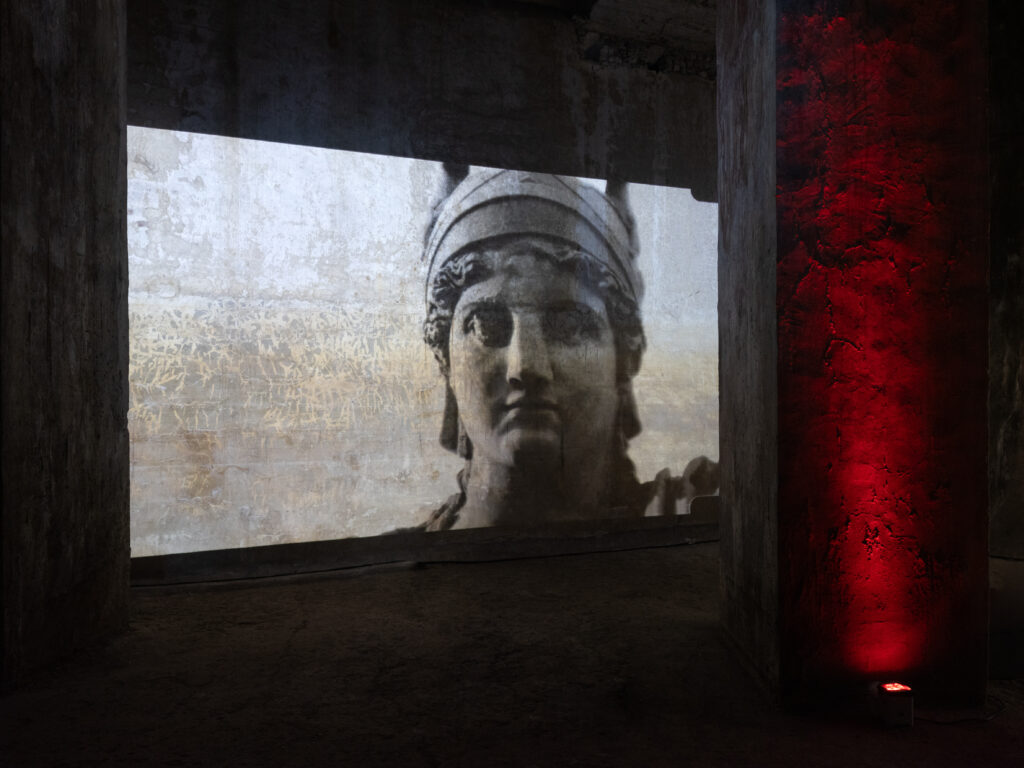
What accumulated is a practice of stratification. His installation at Villa Medici, Le fantôme souriant, places five moments spanning roughly two and a half thousand years beside one another, held together by a ghost, because a ghost is not subject to ordinary human time: a day is a decade, is a century. It is projected inside an ancient Roman cistern, onto walls carved two thousand years ago, so the room itself passes through the image.
The layers refuse to stay aligned. He recorded aqueducts and discovered that an aqueduct makes almost no sound; what the microphone picked up was trains, birds, cars, people. The image could remain in antiquity. The sound could not. Marble carried a chronology of its own — geology, quarrying, transportation, labour, empire, museum — and at the Capitoline he built competing sound waves around the statues so that what a visitor heard changed according to where the body stood. He recorded aqueducts, but an aqueduct makes almost no sound. The microphone picked up trains, birds, cars and people. The image could remain in antiquity. The sound could not.
If you begin at your loudest sound you cannot scale back, and whatever the audience sees first is what they will expect from that point on. So a film opens in a way that persuades people to be present. The installation loop swaps its screens at the end, left to right and right to left, so an hour is needed to see everything from one position. Nobody is obliged to stay. It is the cut between the parts that gives meaning to the whole. And once he has explained the work he relinquishes the explanation almost immediately — once it’s gone, it’s not his.
You see because you have eyes. The perception produces you in the act of it. There is the author, there is the subject on screen, and there is the viewer, who in a room where nothing much is changing is made into a subject as well. “People are afraid of losing themselves, but in fact what’s happening is that they’re becoming so wholly embodied that it’s terrifying.” The brain filters, because feeling everything is not useful. “When in fact, it would be beautiful to feel and see everything.”
Paul Maheke is a French-Congolese artist whose work moves between dance, sculpture, sound, and installation, often treating the body as something that can be sensed through weight, rhythm, and resonance rather than only through image. Trained as a dancer at the Paris Opéra Ballet School and with a background in philosophy and performance, he has developed a practice that asks how bodies—especially Black, queer, and diasporic bodies—leave traces in space and time.
Speaking of Villa Medici, “I see in this a way to maintain the dead in our existence as living bodies,” he says.
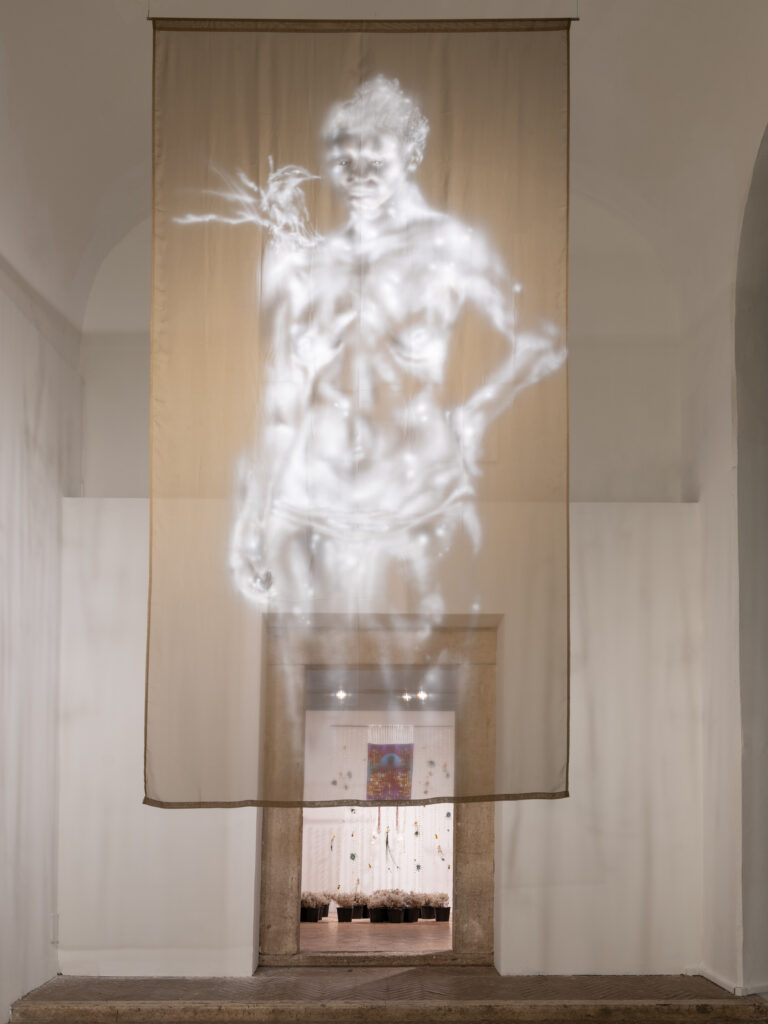
His own The Rise remakes the sarcophagus in smoked plexiglass, filled with water calibrated to the weight of an average human body. The body is present as weight without needing to appear as an image.
The year pushed Maheke unexpectedly toward painting, but his understanding of research resisted a distinction between investigation and making. “For me, research doesn’t end once the making begins.”
It also resisted another expectation surrounding contemporary art: that knowledge should become completely available to whoever encounters it.
“What is lost in the effort of translation? What is left incomplete does not mean it is powerless.”
Elitza Gueorguieva was a child in Bulgaria when the regime ended. What she remembers is the set being struck: precise objects leaving daily life, adults beginning to behave differently. “I didn’t understand everything, but I could see how the décor was changing.” The change reached children’s dreams before anyone explained it.
Black humour arrived with it. Countries that have not been lucky in their history laugh at themselves in order to get through the day. She quotes Beckett: nothing is funnier than unhappiness. Misfortune is good material for comedy, and comedy is a good way of speaking about misfortune. It is also how she argues. She contests by parodying rather than denouncing. Writing is what keeps the intimate from collapsing into a private joke. She spent part of her year confronting an absence.
ELITZA GUEORGUIEVA Nos langues maternelles chantées dans un jardin, 2026, 7’
Her novel draws on archives, migration and naturalisation, but she is careful about what historical research promises. “I’m not a historian, and I’m always afraid of being submerged by too much information.” She describes her method through tâtonnement: feeling her way through material without allowing information to close every uncertainty. What she is after is not documentary accuracy but a certain truth about the condition of the people she is writing, arrived through a gaze that stays novelistic and sometimes exaggerates.
She travelled to an Italian village looking for the trace of a woman at the centre of her research. She did not find her. What emerged instead were the conditions around the disappearance: migration histories, local memory, a very large family, people who had known its members, the circumstances surrounding departure.
The conditions of the residency were material before they were intellectual. The grant meant she did not have to work beside the book. Being abroad, without full command of the language, closed her in, which suits writers. She arrived with the beginning of the novel and is finishing it as the year ends.
The research changed again when Gueorguieva performed part of the novel at Villa Medici, in a register closer to political cabaret, with two artists she knows. People in the audience had experienced administrative procedures similar to those she was writing about. They challenged parts of the work and supplied experiences outside her own. She had wanted out of the profile of the foreign artist. The archive could no longer be the only thing answering back.
Hearing the text in other voices changed the writing. What survives aloud is not what survives on the page, and music delivers an emotion a sentence cannot. She calls it almost magic, and has been writing the ending with those voices in her head. The novel is built as a braid rather than a testimony. It is not exhaustive and it is deliberately not centred on her own experience.
One expression remained particularly charged: the “useful woman.” In the archival material, usefulness becomes entangled with nationality, merit and service to the state, and foreigners are pressed hardest to prove it. For women it attaches to reproduction, and to expectations placed on the body. Gueorguieva connects it to her own French naturalisation procedure, where an abstraction such as liberté, a word in the Republic’s motto, becomes an administrative question asked across a desk. Reading the documents was also a way of putting distance between herself and something that had happened to her. The novel takes the vocabulary of the prefecture and turns it toward the trajectories of women who moved in order to be freer.
She felt free. She sets that against the period: the rise of the far right, a sense of ending around art. She describes being protected by people who were benevolent, and a year that left her more solid when she arrived.
The three practices approach research from different directions: Russell makes material that may disappear; Gueorguieva searches and fails to find; Maheke refuses the assumption that incompleteness constitutes failure.
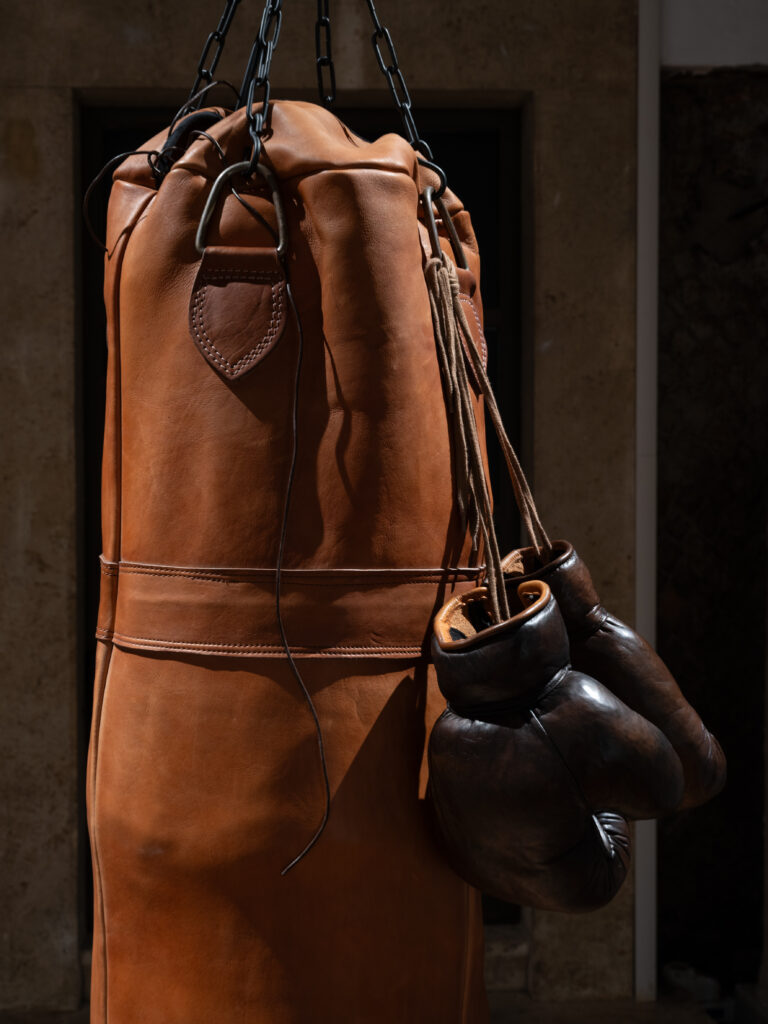
For Marin Fouqué, that meant deciding what literature could become in a room. A writer publishes and reads aloud; exhibiting is not part of the form. After spending time in Roman boxing gyms in the popular neighbourhoods, he recorded texts with the boxers he had met and placed the voices inside a punching bag. A visitor had to move towards it to hear them. The exhibition did not simply display the outcome of his research. The difficulty of exhibiting it generated another form.
The show carried other traces of the year. Fellows recorded videos for one another and wrote texts for one another. Some brought in artists from outside the Villa to work inside their rooms. Pontecorvo and Tralli consider mediation part of curatorial responsibility, at Villa Medici and before it: how does somebody without the codes of contemporary art enter the work? At Marea the question is literal. The public there includes shepherds and fishermen. He and Tralli test decisions against one of them by name: if that person walked in, could he understand what was going on.
Visitors to Villa Medici arrive expecting an exhibition. Some of what they find is finished work. Much of it is a moment inside a process, or an experiment that has not been resolved. Saying so without saying everything is difficult. Maheke leaves a question beside that ambition: what disappears when something has to become legible?
Sixteen fellows arrived at Villa Medici with separate practices. They challenged boundaries and definitions together.
Perhaps this is exactly what the oracle stands for. Sometimes the future begins with making visible what the present insists cannot exist. Or refuses to leave undefined.
Ici ces drapeaux n’ont pas pu exister.
All images courtesy of the artists and Villa Medici. Discover more on villamedici.it