On the Nature of a Getaway
These slopes carry human traces: centuries of seasonal passage, stone houses, oratories. Walking here is to share time with those traces: feet on stones set by other hands, narrow tracks between walls and bracken, an electronic pulse arriving, dissolving, arriving again. What seems remote becomes immediate in a new register.
For a few days, a sense of shared tending pervades the valley.
There was no coherent type at Nextones, only a temporary convergence of people whose reasons for being there were not necessarily commensurable. Some had crossed borders for a single artist; others arrived with little knowledge of the programme. Some came alone and acquired company almost incidentally. What held them together was maybe the sunburn of a summer that hadn’t fully claimed them yet. Maybe it was simpler than that, the need to get far enough. Nextones pressed people back into a different measure of living.
July, Thursday 16th. First day at Nextones. Set in the Antigorio Valley, at the entrance to Val Formazza, the Premia thermal baths are fed by an underground hyperthermal calcium-sulphate spring. Bodies settle chin-deep in the water, mist across the valley where the mountain drops from view.
Encircled by an almost underwater-y framework, Michela de Mattei and Palm Wine’s Hydromantique settled the audience inside the thermal water, Followed by Miriam Adefris’ arpeggios and glissandos refrained by and against the baths’ own acoustics.
Underwater, hearing operates under different acoustic conditions. Sound travels through water at roughly four times its speed in air, while the directional cues the human ear relies on above the surface become harder to read. Sound occupies the water around the listener. With the ears submerged, vibration reaches the body. A sense of being held emerges within its transmission. Frequencies seem to travel through, producing an experience that reaches down to the bone.
Friday 17th. By day, the festival dispersed. There was no single site to arrive at, only a route, between Ghesc, the Orridi di Uriezzo, and the Oratory of San Marco in Veglio, a place set by rock, incline, and the water crossing the path.
Between the stone buildings and the vegetation, sound checks from elsewhere in the valley occasionally reached the trail before their source could be seen: electronic frequency arriving ahead of image, the way thunder used to arrive ahead of rain. Groups climbed together, separated, waited, reformed. The festival happened in these transitions as much as it happened on any stage.
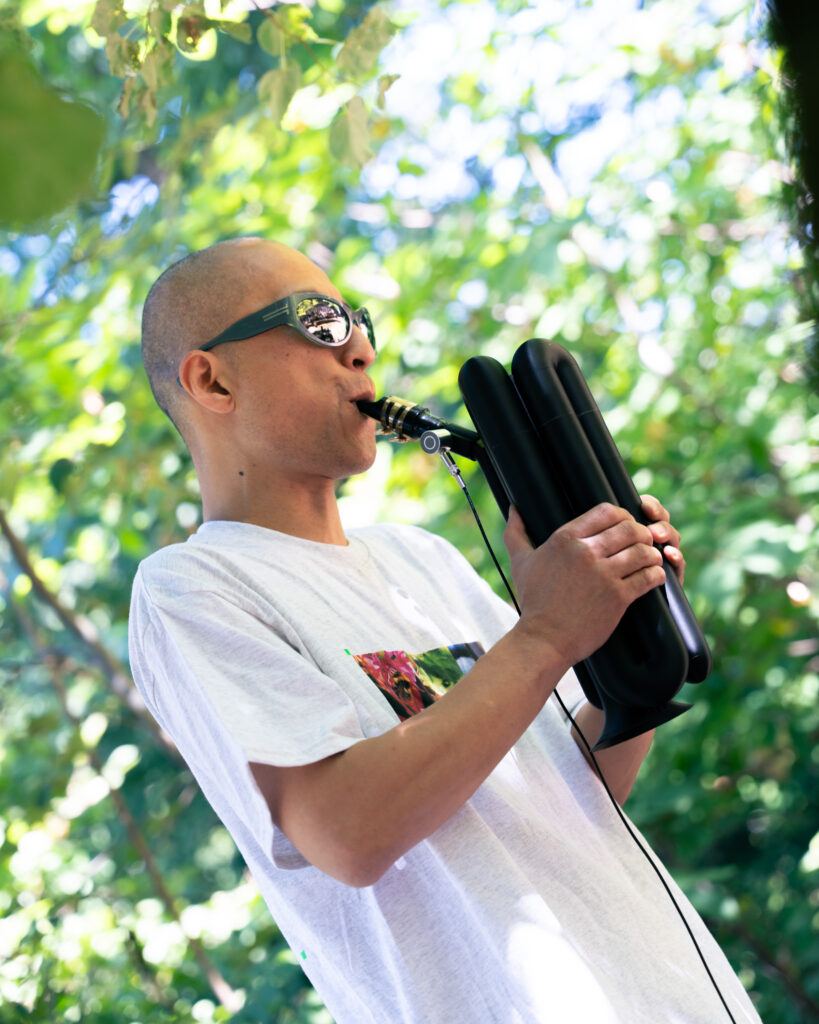
At Ghesc, one of the valley’s abandoned maggienghi, Kenichi Iwasa elevated breathing, the most elementary human mechanism, to a compositional element. His two improvised interventions, PONERE+, drew on wind instruments gathered across different geographies, alongside hybrid horns built with artist Charlie Hope. But the inventory misses what happened between instrument and site. Iwasa’s material was air: taken into the lungs, pressured through an object, released into an architecture already capable of answering. A note travelled, struck a wall, returned altered. For several minutes, an abandoned settlement became, again, an acoustic body.
In a culture organised around prediction — recommendation systems predicting desire, platforms predicting attention, models predicting language — improvisation keeps a specific charge; It permits the next moment to remain genuinely unknown. There is a particular vertigo in watching someone commit to a sound before knowing where it leads: no draft, no undo, no version to return to. A rhythm lodged beneath language, a silence that has changed its weight. What disappears here does not vanish without trace but, paradoxically, becomes impossible to discard.
Iwasa’s improvisation refuses the economy of preservation. It cannot be owned because it never stays identical to itself: it exists once, among these bodies, in this air, under these conditions, and then withdraws. Its disappearance is the completion of the work. Performer and listeners are drawn into the same instability, neither certain where the sound is going, both required to follow anyway. What emerges is a tight knit order that harnesses the audience’s responsiveness to staged chaos without commanding it.
To improvise is to meet the world without first reducing it to expectation. A form of attention rare enough now to feel radical.
When place meets improvisation we have what transportation planning refers to as “desire lines.” Nextone’s ones lead us from the Premia baths to Orridi di Uriezzo; Woods. Then the ground opens.
The path drops. Trees thicken. The passage narrows between walls of stone carved by the Toce glacier’s meltwater. Holes drilled into stone, debris, a thousand year old trace.
The gorge has already solved acoustics. Sound gets there first. Voices come back translated. Leaves do more than shade; they edit the air, a strip of sky overhead.
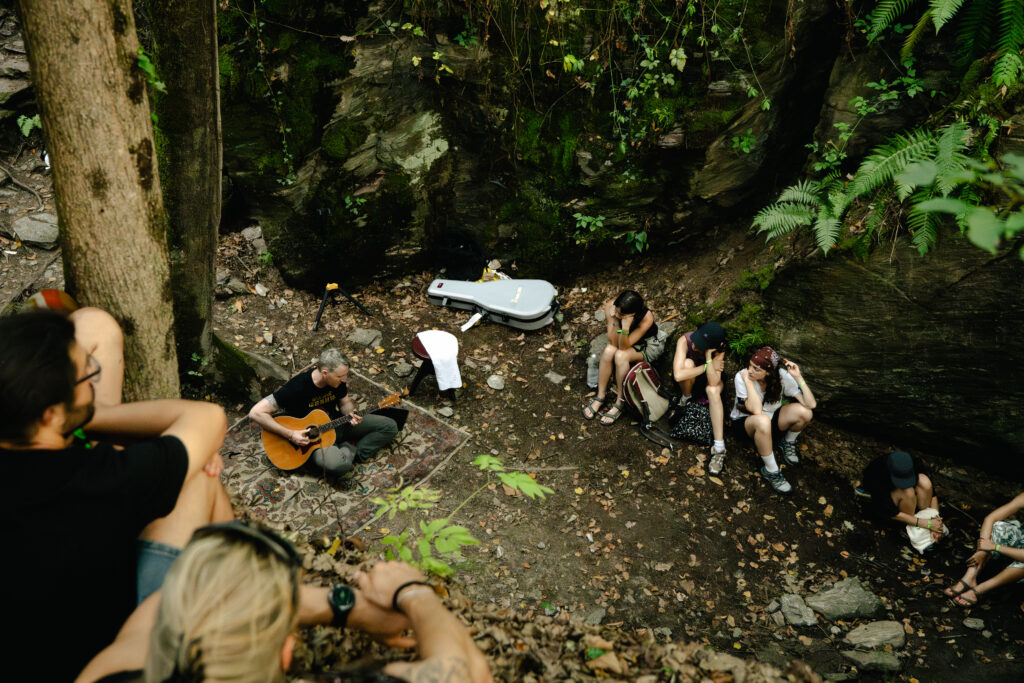
Shane Parish entered with one acoustic guitar and an almost absurd premise: Autechre, whose music seems to belong to systems more than hands, played by fingers on strings. The contradiction held because it wasn’t one. Machine logic, it turned out, could survive without the machine. Precision isn’t proprietary. The scale mismatch did the work. One body. One wooden instrument. A landscape with no author and no audience. Then the music stopped pretending to be separate from the place. Silence wasn’t empty; it was the thing joining everything together. Rocks, roots, breath, resonance; less a collection than a condition. Intimacy arrived as synchronization. Not closeness. Pulse.
Across all three sites, the same inversion kept recurring: the archaic made newly audible through contemporary means, the contemporary made suddenly ancient by contact with stone.
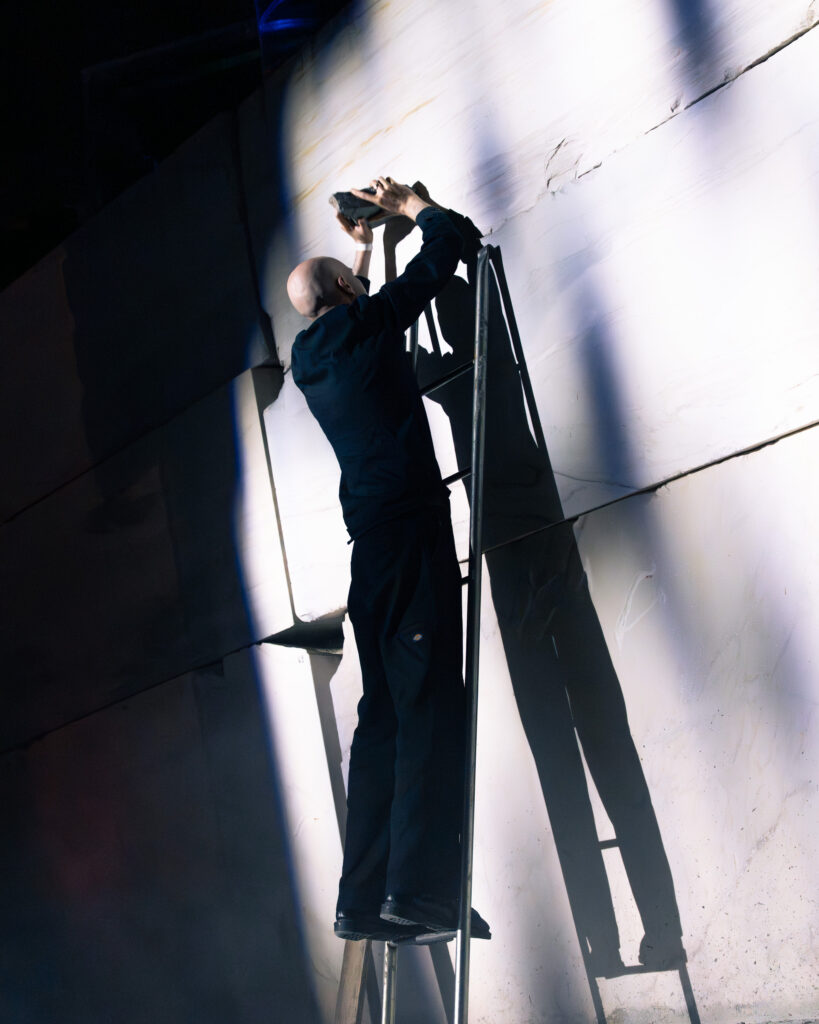
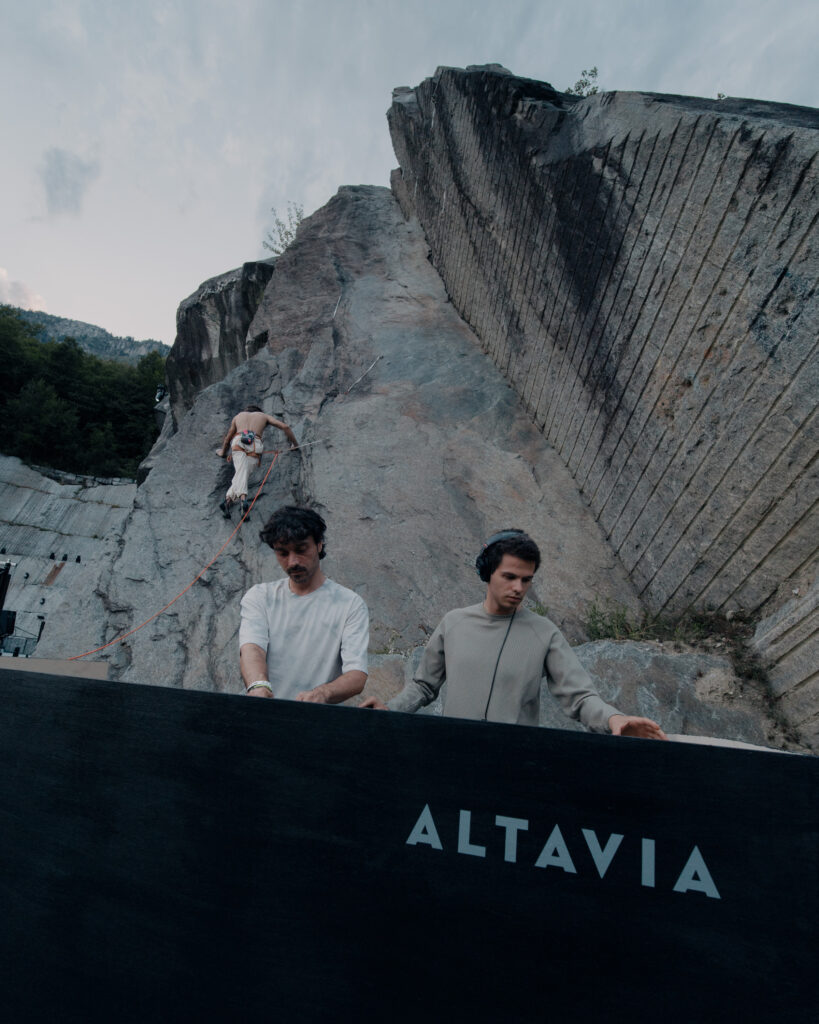
Flash forward to Friday night, and Tones Teatro Natura, a former granite quarry, tells a story that should not be softened into scenery. Rock was once removed from this mountain by force; the vertical walls still carry the record of that extraction. During the pandemic, the site was redeveloped into an open-air theatre, a place made through subtraction now gathers people. That history changes what the stage means. Sound entering these cuts returns, amplified, to a wound the mountain has not closed.
There, Alessandro Adriani and Ariella Vidach’s Koppelia introduced dance to the Nextones programme for the first time, and its lineage carries its own unease. Delibes’s Coppélia already concerns the instability between a living body and its mechanical imitation, behind it E. T. A. Hoffmann’s automaton, whose apparent humanity disturbs the boundary between person and object. An old anxiety meets its contemporary descendant: a human body sharing the performance space with a robotic quadruped, movement passing between organism and machine, gesture captured, translated, returned. What already feels exhausting is the question of whether a machine can convincingly imitate a person. What feels more disturbing is what happens when a person begins adjusting their own movement to a system built to read it.
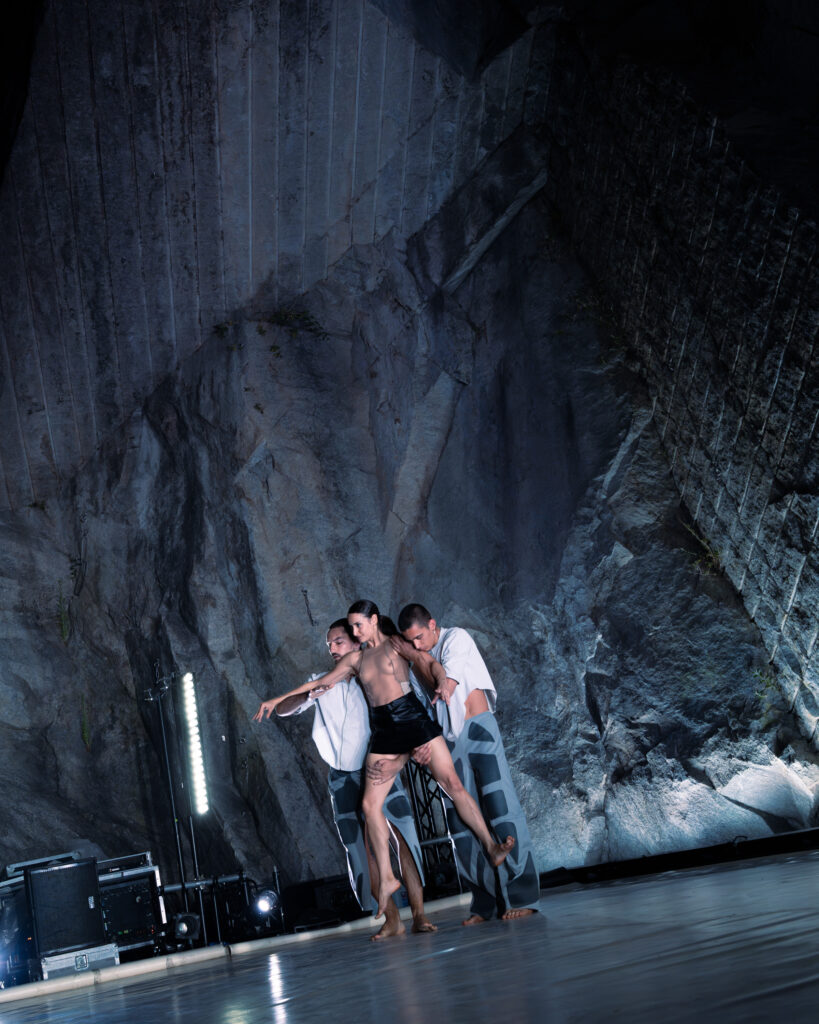
In a quarry bearing the marks of one technological transformation of the mountain, body, machine, and extracted rock briefly occupied the same frame, each carrying their own traces.
Traces are one of the, perhaps too many, ways we examine and mediate the world around us. Follow enough traces and you have made yourself a path. Piece enough information together and you can dabble in the sweet art of categorization. Daniel Blumberg worked to dismantle mediation rather than examine it, a practice built from improvisation, abrasion, and contingency, searching for sound at the point before it settles into category. Instruments accumulated. Notes destabilised.
That uncertainty changed register with Abdullah Miniawy and Simo Cell’s Dying Is the Internet, Miniawy’s voice set against Cell’s dub and electronic constructions, a project built from a contemporary contradiction: digital systems promising limitless connection while producing exhaustion, surveillance, and isolation. Inside the quarry, voices returned to a body standing before other bodies. Words travelled through air rather than a feed. Bass requires no interpretation; it never does. Much of contemporary life reaches the body only after passing through representation, an image of a place, a recording of an event, an application measuring sleep or distance or intimacy. Low frequency bypasses most of that. It touches before it signifies.
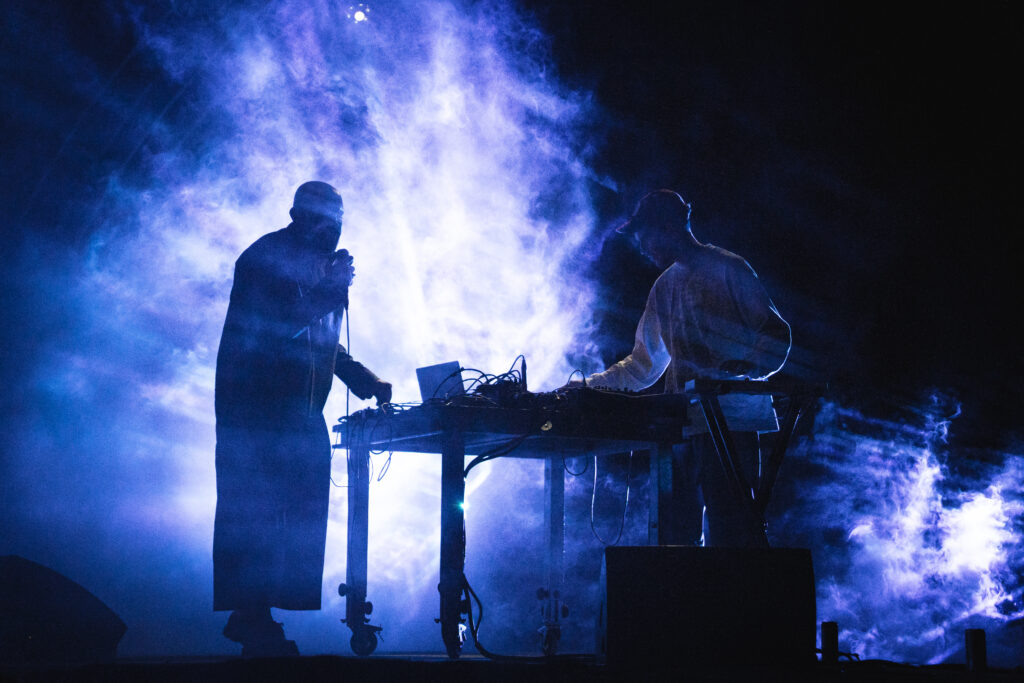
Simo Cell’s rhythms fracture underfoot. The release feels damaged.. Then Abdullah Miniawy’s voice enters – wounded, ancestral, unmistakably alive.
Dying Is the Internet leaves the listener mourning what connection once promised. It also raises the question of whether we can still reach one another without turning the encounter into content. Club music for the collapse of the virtual frontier. The album’s existential force lies in that paradox: the internet may be dying, but we do not know where it ends and we begin. And beneath all the machinery is an ancient human terror – not that our technologies will outlive us, but that they have already taught us how to disappear while we are still alive.
Saturday 18th. At the Oratory of San Marco, Laura Masotto’s The Spirit of Things felt like a resurrection. Masotto filled a once-gathering place with violin, electronics, and instruments associated with ritual, held in a state suspended between composition and invocation. A violin is wood until a body activates it; an oratory is stone until people enter it with a shared reason for being there. Ritual is exactly this conversion, matter acquiring consequence through repetition. Masotto’s set continued the oratory’s original purpose, the small movements of an audience trying not to disturb the silence between sounds. Outsiders followed the frequency into this chapel too. The chapel had called its own congregation into being.
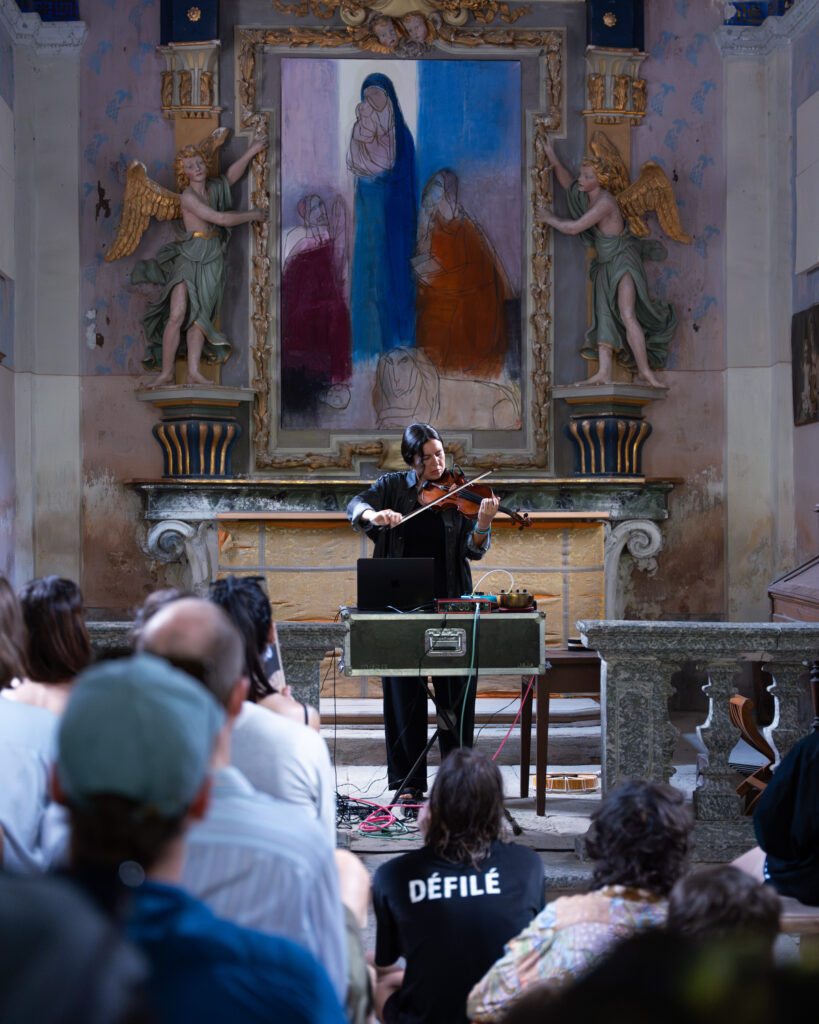
Given the chance, the experience would be repeated every day. Silence gave rise to sensations beyond explanation – otherworldly, almost elemental.
Imagine an oratory at the summit of a hike: impossibly small, nearly abandoned, holding an almost contemporary painting of Jesus, an old wooden piano pushed to one side, and only a handful of places to sit. Outside, silence. The earth. An invitation to listen beneath the human world.
It was one of those rare moments when the body feels anatomically close to the earth – close to nature, to place, and to itself. Tears become possible. So does elevation: the sense of crossing to another side and returning. Here, spirits seem to seize the body and carry it inward, deeper than language can follow.
Masotto confronts the listener with the oldest and most violent fact of existence: being alive. The human, the natural, and the historical collapse into one another. Those who have passed and those who remain are suddenly present together. A vibration passes through the soul, binding bodies to one another and, more urgently, to the earth by an invisible thread. In that vibration, existence seems to recognise itself.
Masotto creates a calling – a summons from the universe she brings into being. Leaving becomes unthinkable, then physically impossible. Everyone remains seated, as though something long lost has been recovered and cannot be released. The vibration is so powerful that one longs to inhabit its frequency every second of every day. Rarely does existence feel so near.
The body draws close to its own origin and, strangely, disappears. A threshold opens between matter and spirit, presence and disappearance, life and whatever preceded it. Identity loosens. Every spirit, every form of existence, seems to arrive at once. The universe, the listeners, and the dead become momentarily inseparable. The body is carried away; then, slowly, it emerges into existence again.
Have you ever watched the body from elsewhere? Have you ever felt the soul move beyond it while remaining impossibly close? What lingers is an unsettling, addictive sense of having touched something that existed before the idea of being human.
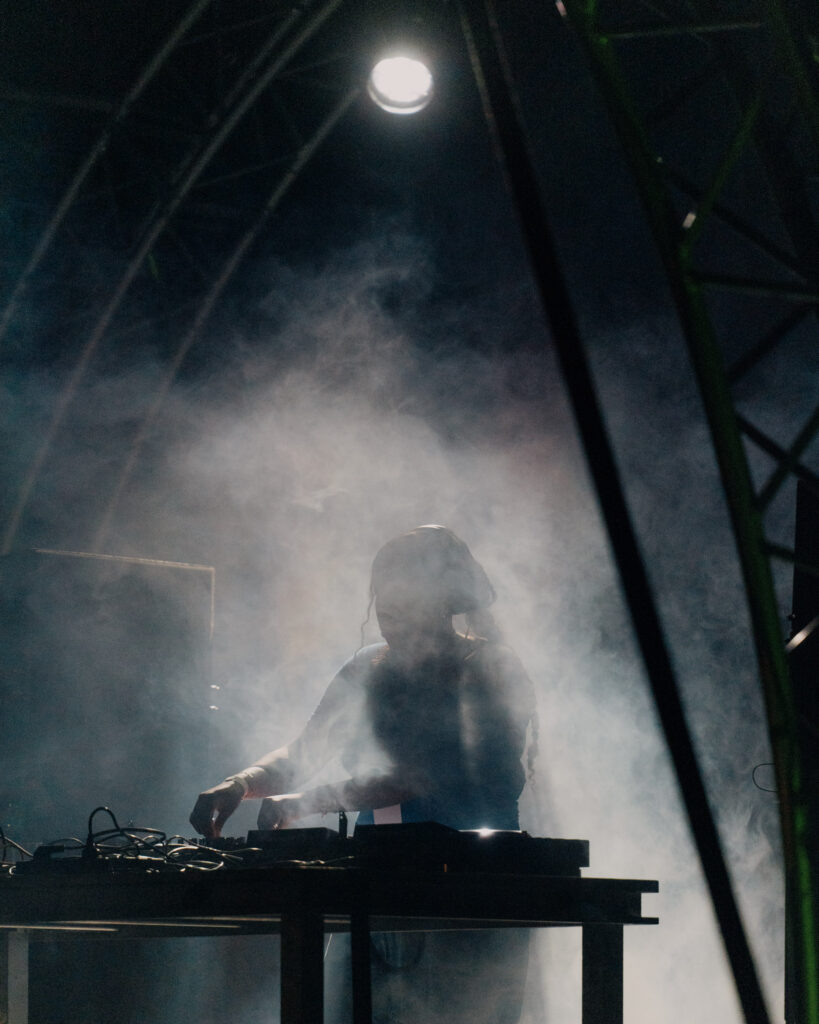
By night, candles burned around OKO DJ as she opened a book and read. Words entered the quarry, into voice, rhythm and electronics. Carrier’s Rhythm Immortal, performed with Riyo Nemeth’s moving image, carried that dissolution further. John T. Gast drove that pulse into the body.
Helena Hauff’s signature blend of acid, electro and percussion cut through the quarry; beneath an open sky, a deep in the night sensuous release. Hours of jaws set, eyes locked in and spines pulled. Breaths accelerated. Somatic Rituals carried the final hours through bass and percussion beneath bodies that had long stopped needing to know where one set or one state ended.
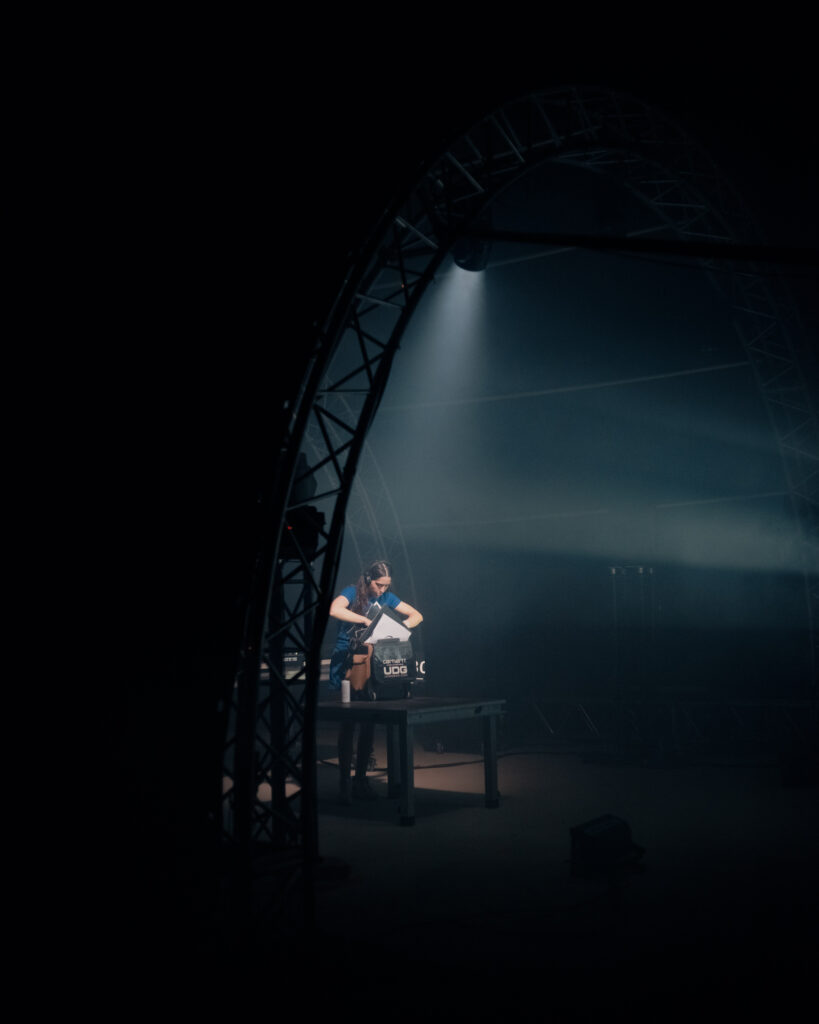
Four a.m. The drive back cut straight through the mountain’s spine, a tunnel, black and stone-cold, boots echoing off the walls, and then the valley cracked open again: the chapel, candlelight and scripture, bass climbing through granite like it belonged there, bodies still swaying under an open sky.
Exhaustion had sanded everything down: breath, motion, cold skin, the first grey edge of dawn.
By the final day, it had become difficult to separate any single performance from the condition produced across the previous three. The audience is repeatedly required to move, wait, climb, enter, listen, and reassemble ; a structure that resists the frictionless logic governing most contemporary cultural consumption. On Sunday the Nextones Camp, animated by Radio Banda Larga’s stage, hikes, workshops and talks, closed the festival with the unglamorous, essential labour of staying together for one more day.
Long before any festival occupied this valley, other communities organised their lives through these mountains.. The mountain simply imposed terms on their relationship to the terrain. Historical subsistence and a contemporary cultural festival carry different stakes, and it would be dishonest to claim otherwise. Something structural survives the centuries between them: the knowledge that a landscape can organise a body, and that bodies moving through it together can become something other than an audience.
For four days, electronic music entered this existing field of vibration and amplified it into something several hundred people could gather around. Nextones made its audience physically present enough to hear that the valley already had a voice, and asked what other tones might enter it. Body, still here. Alive, and changed by it—hunger. Already wants it back. What we couldn’t anticipate. Perhaps that is what leaves the deepest trace.