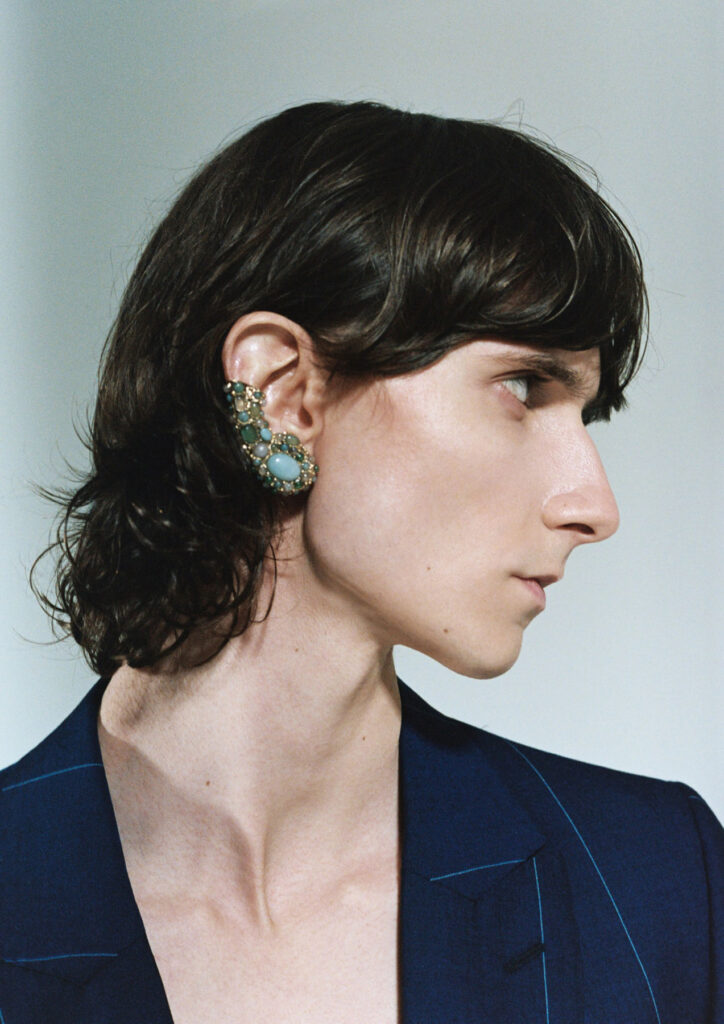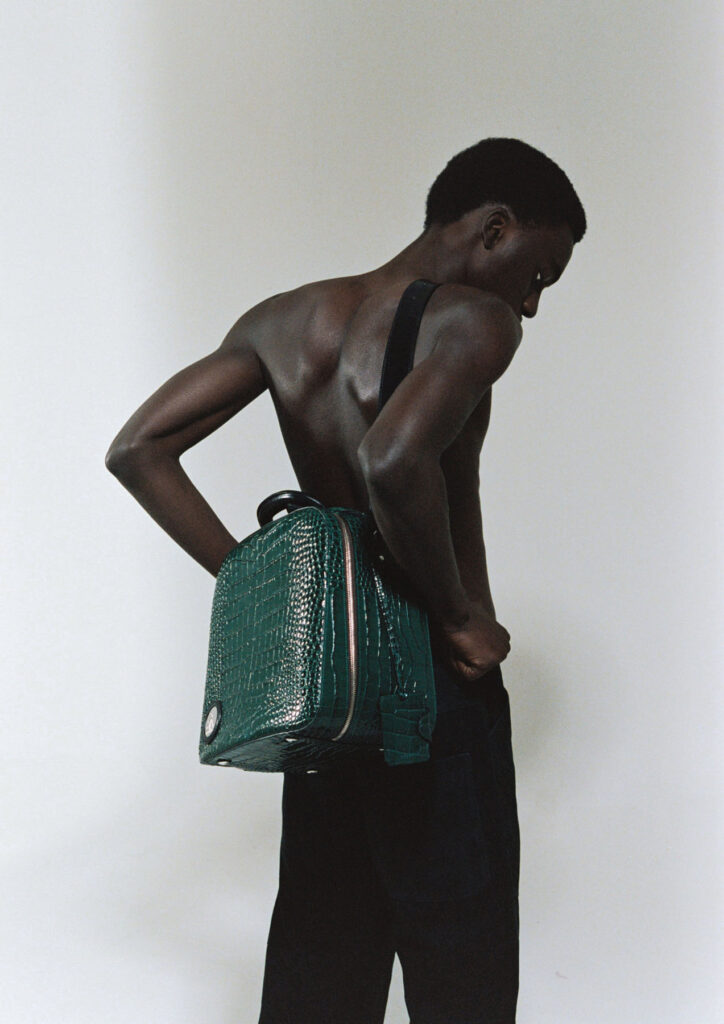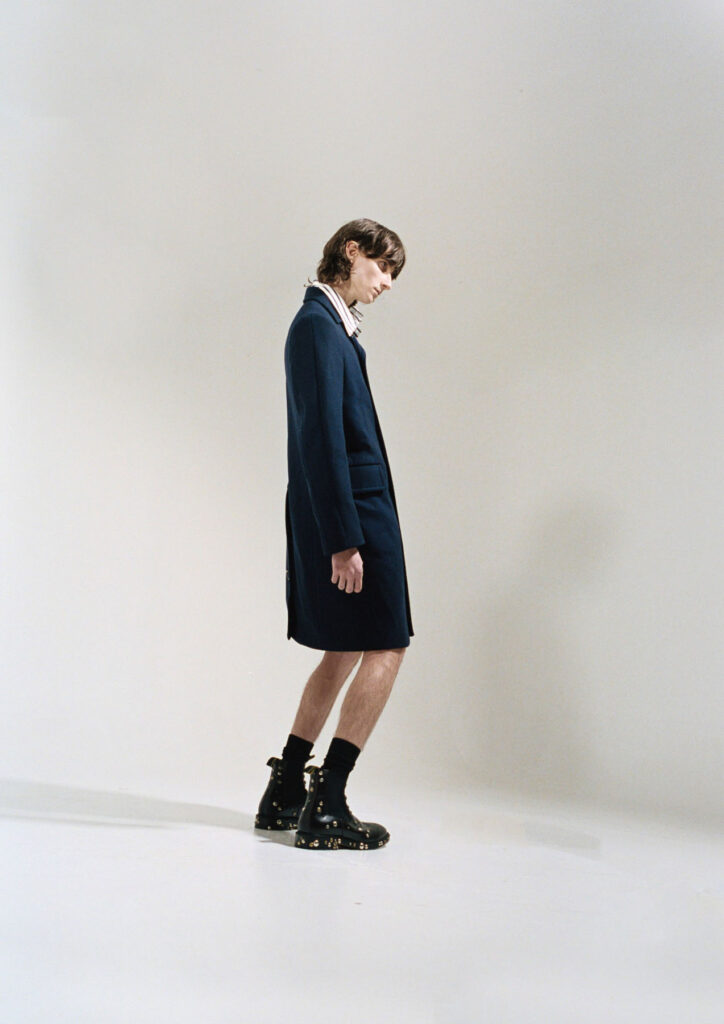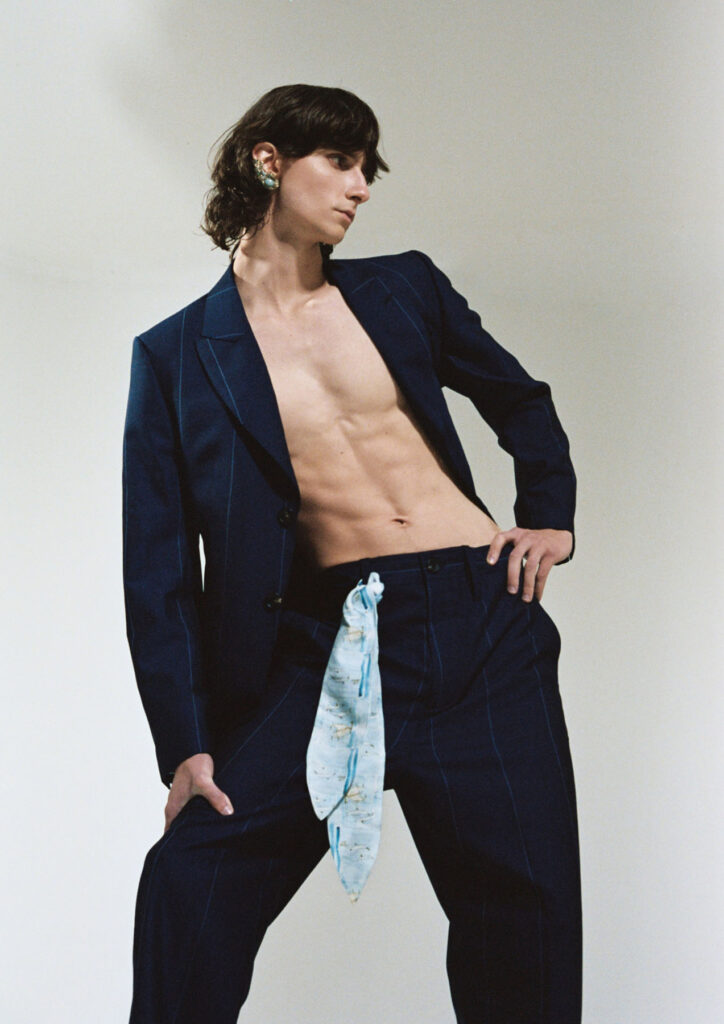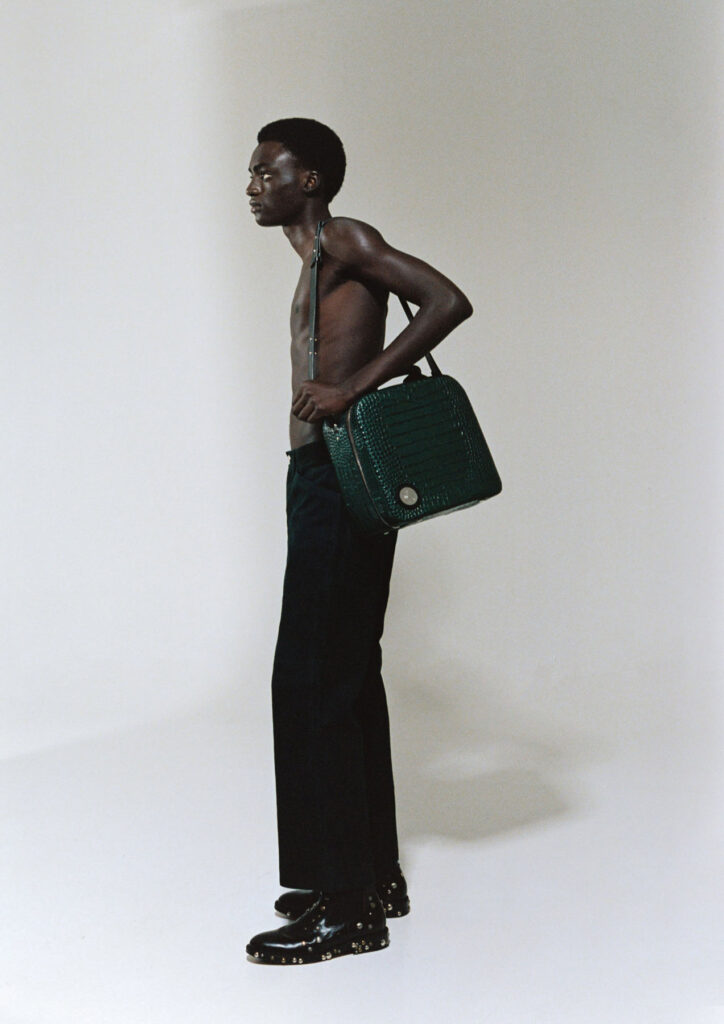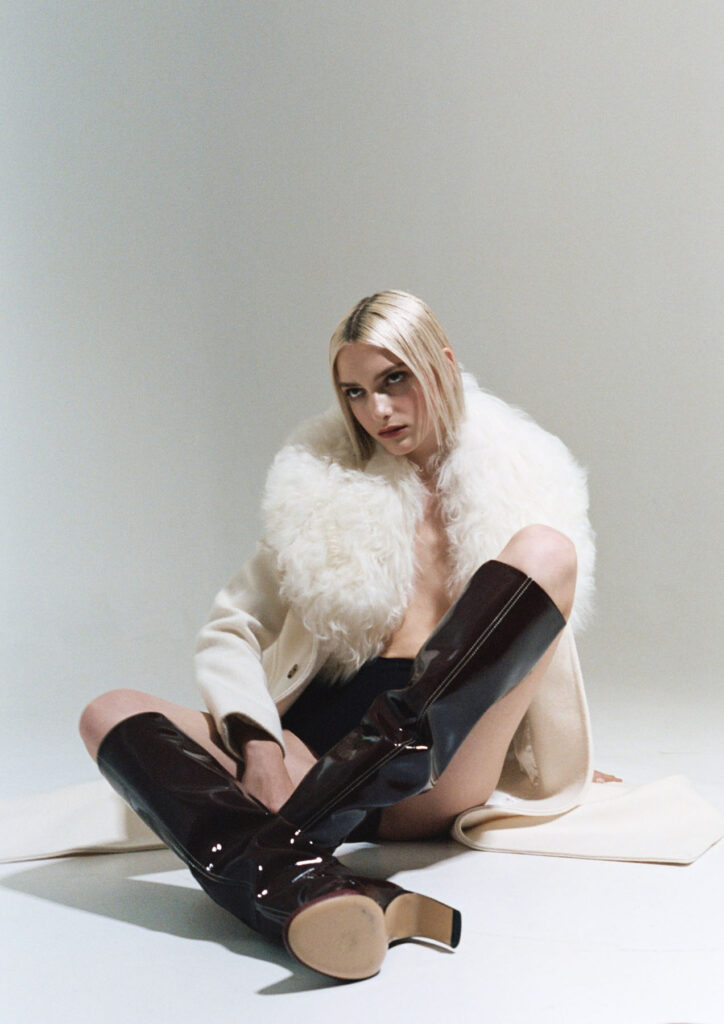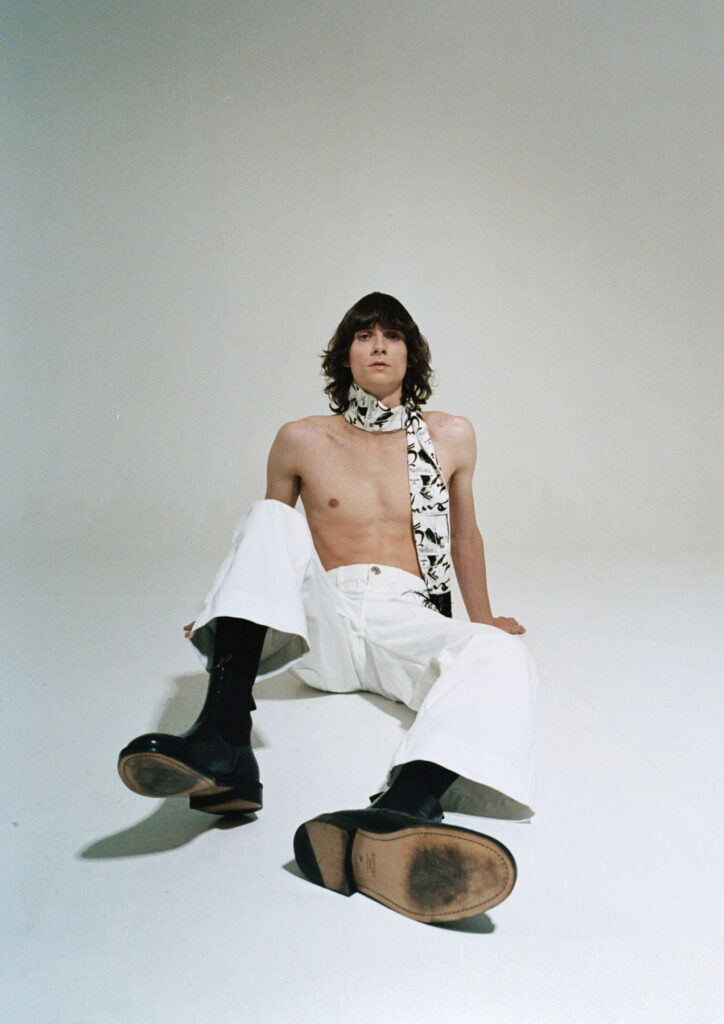
Archive page:


Collard

“I think it’s okay to just be easier on yourself now”

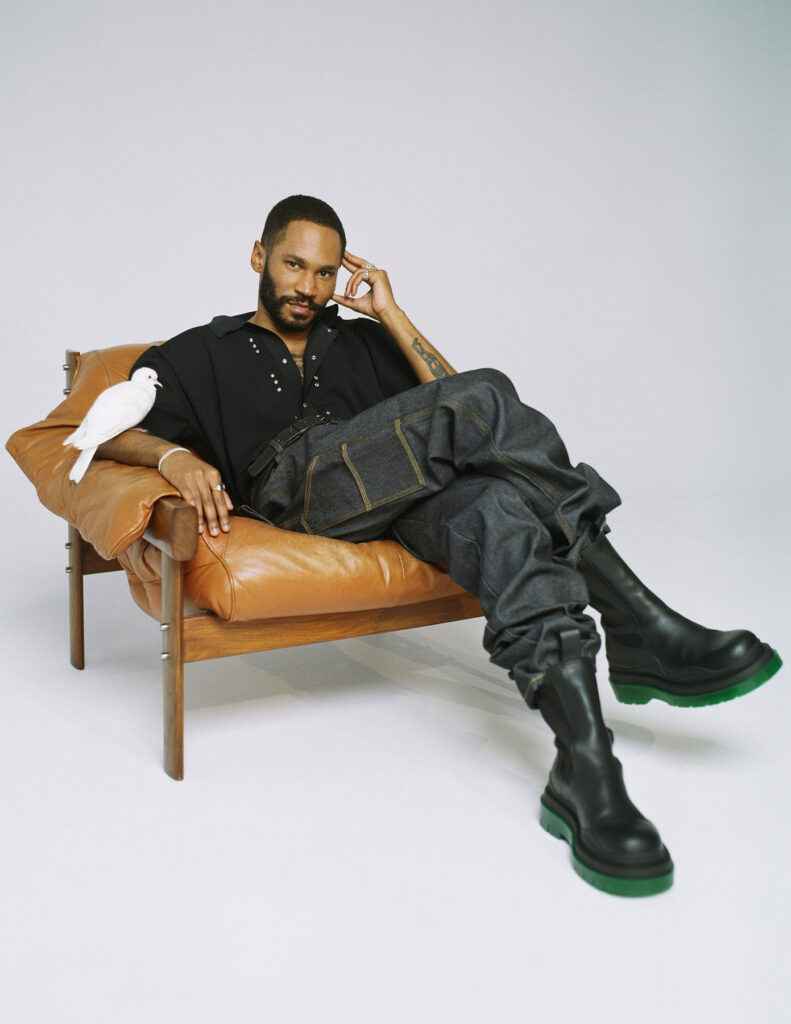
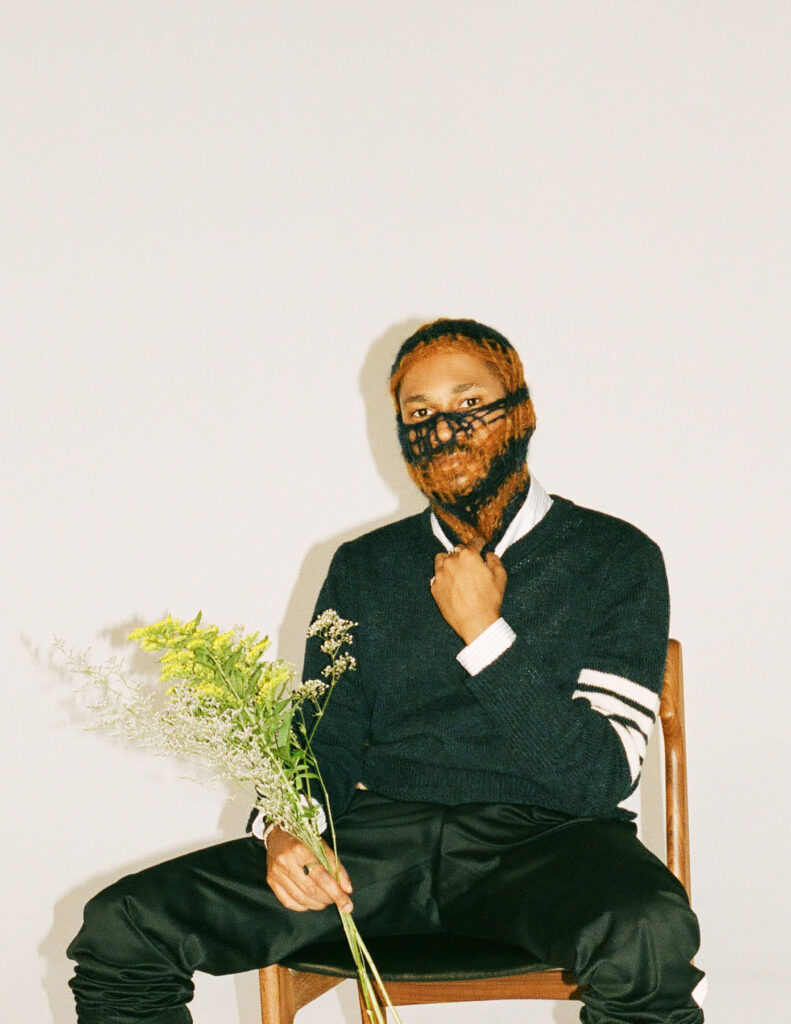
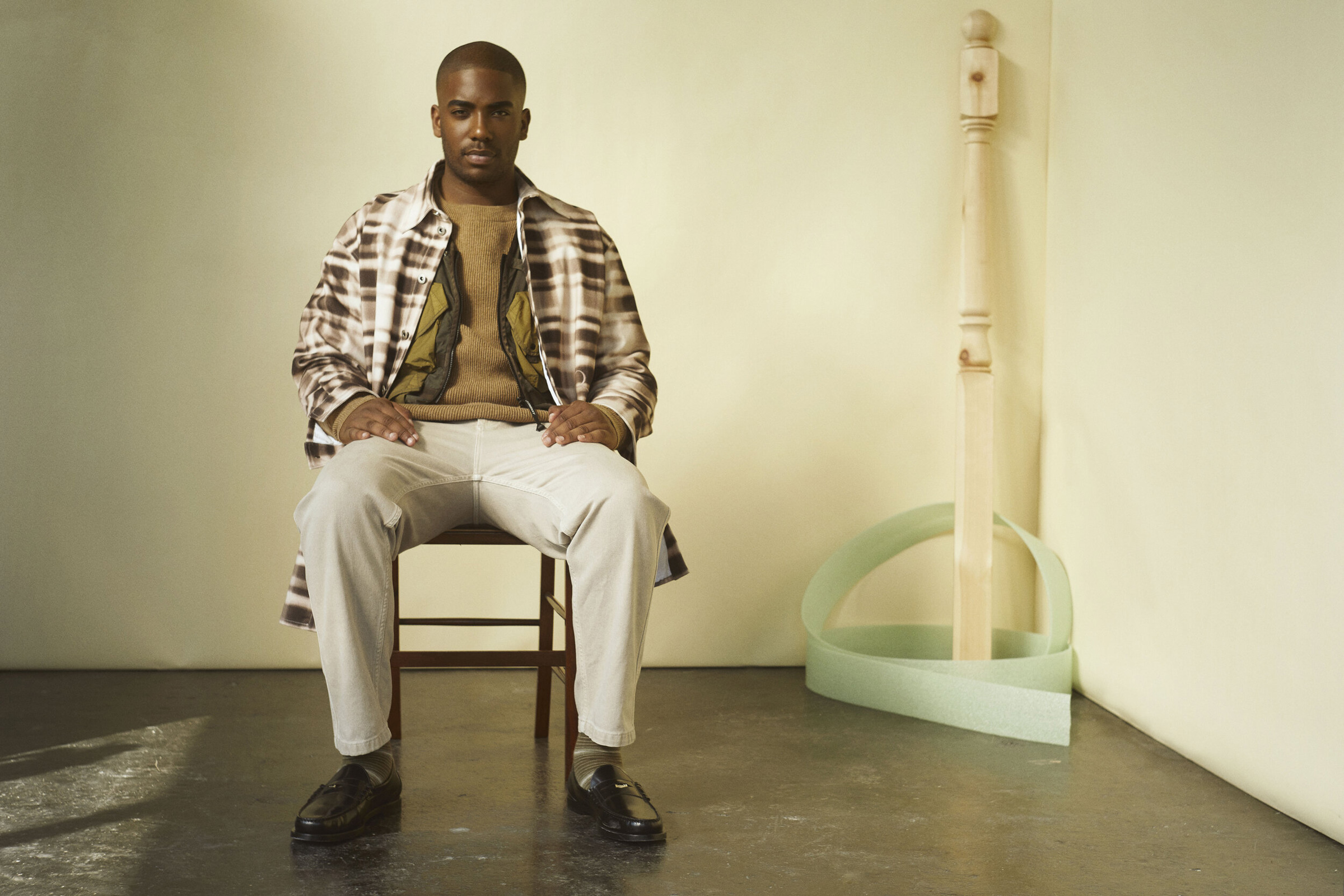
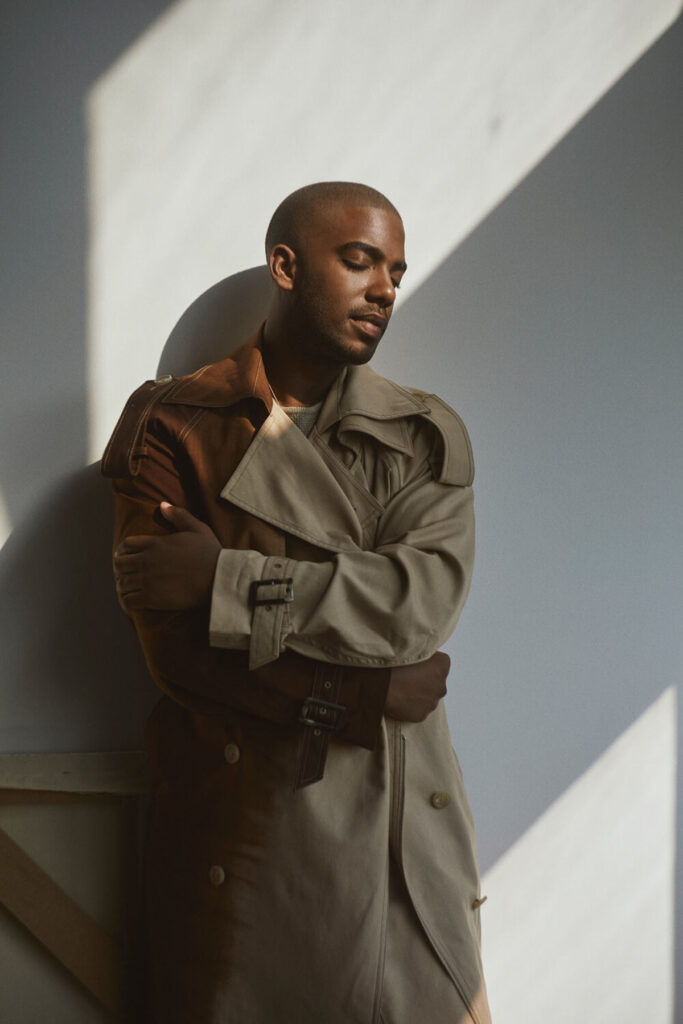
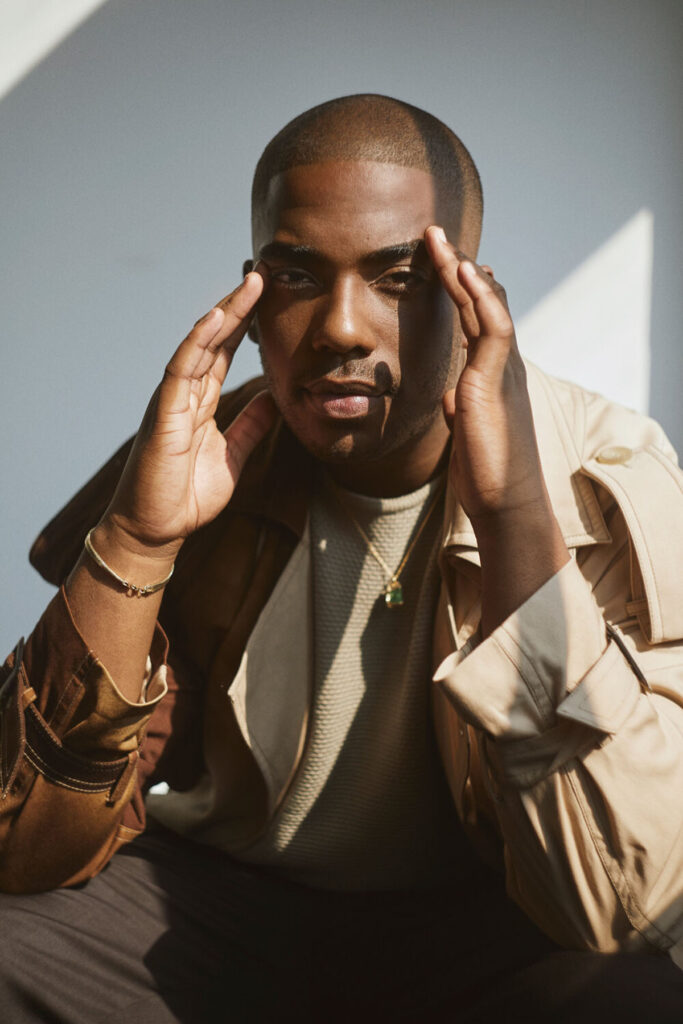
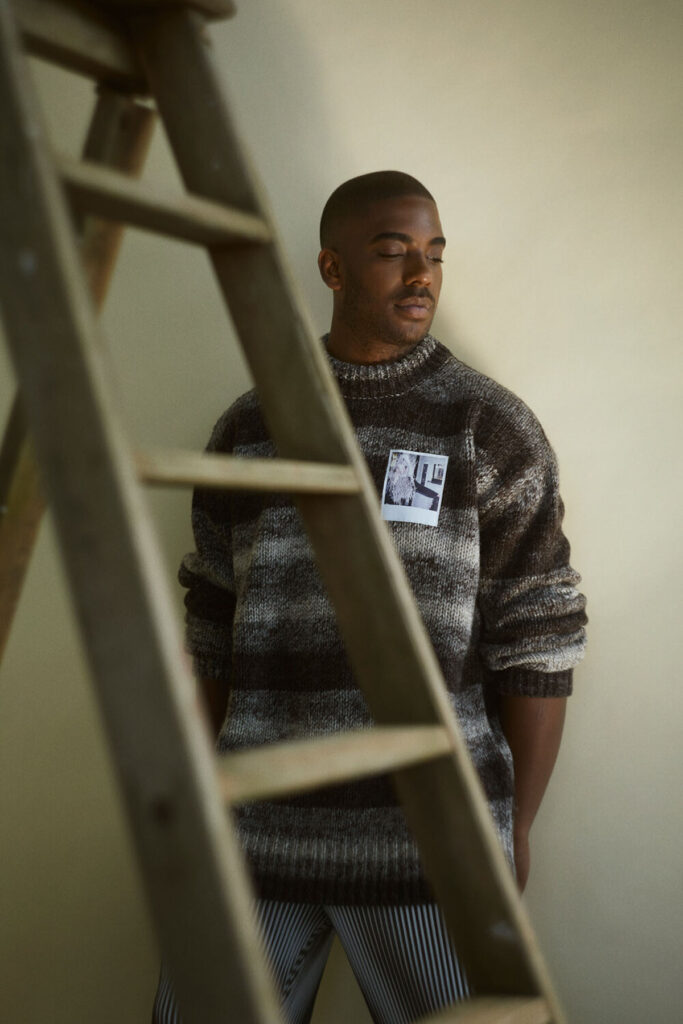
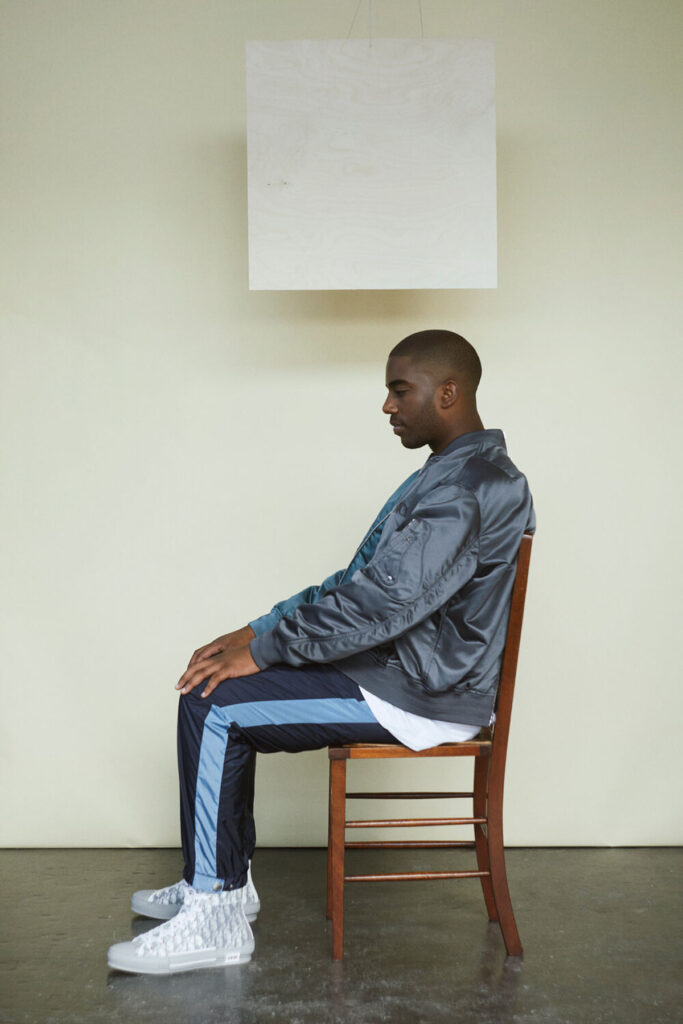
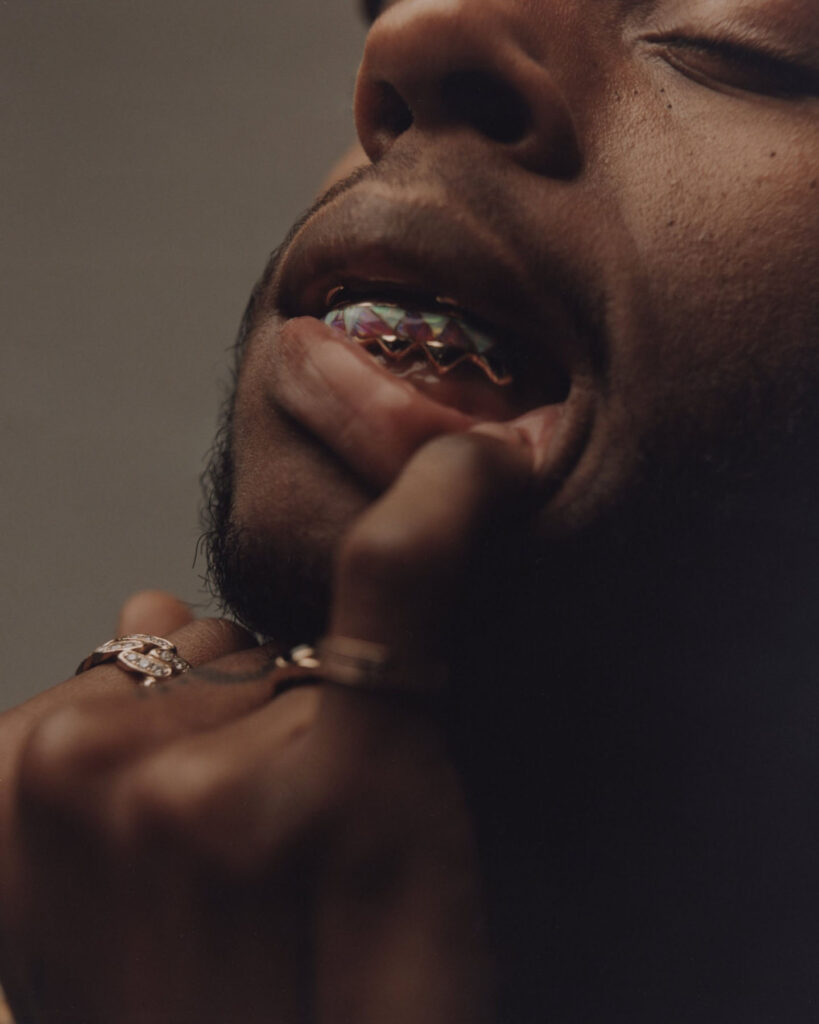
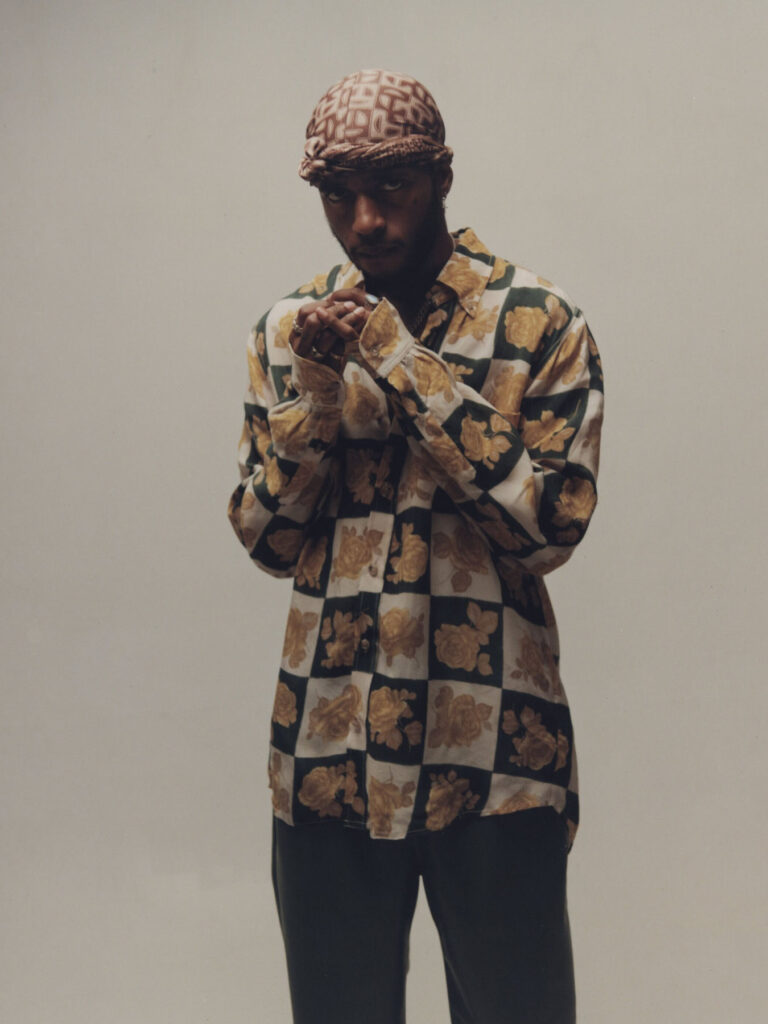
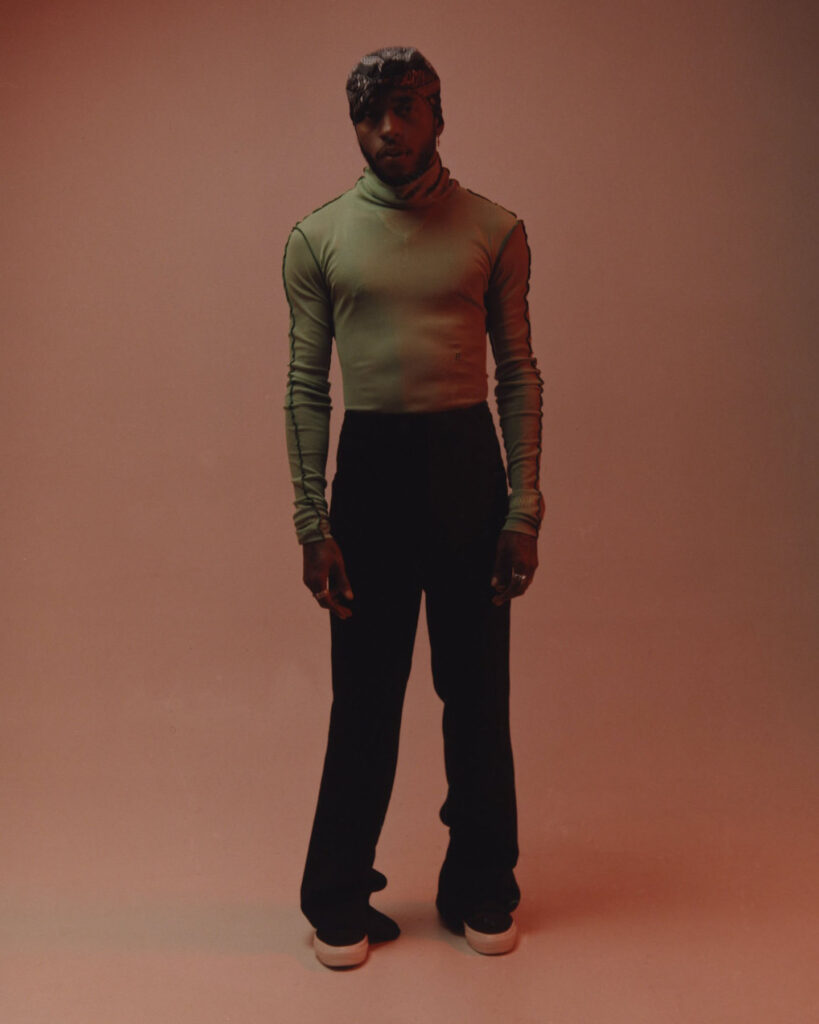
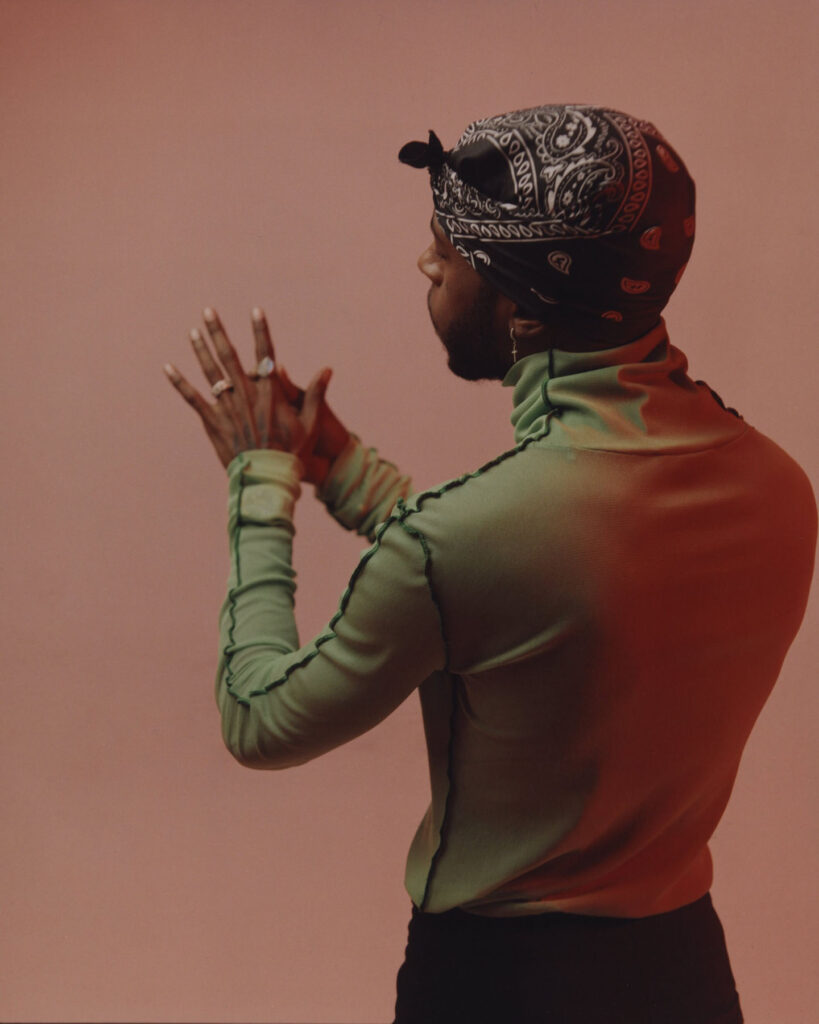
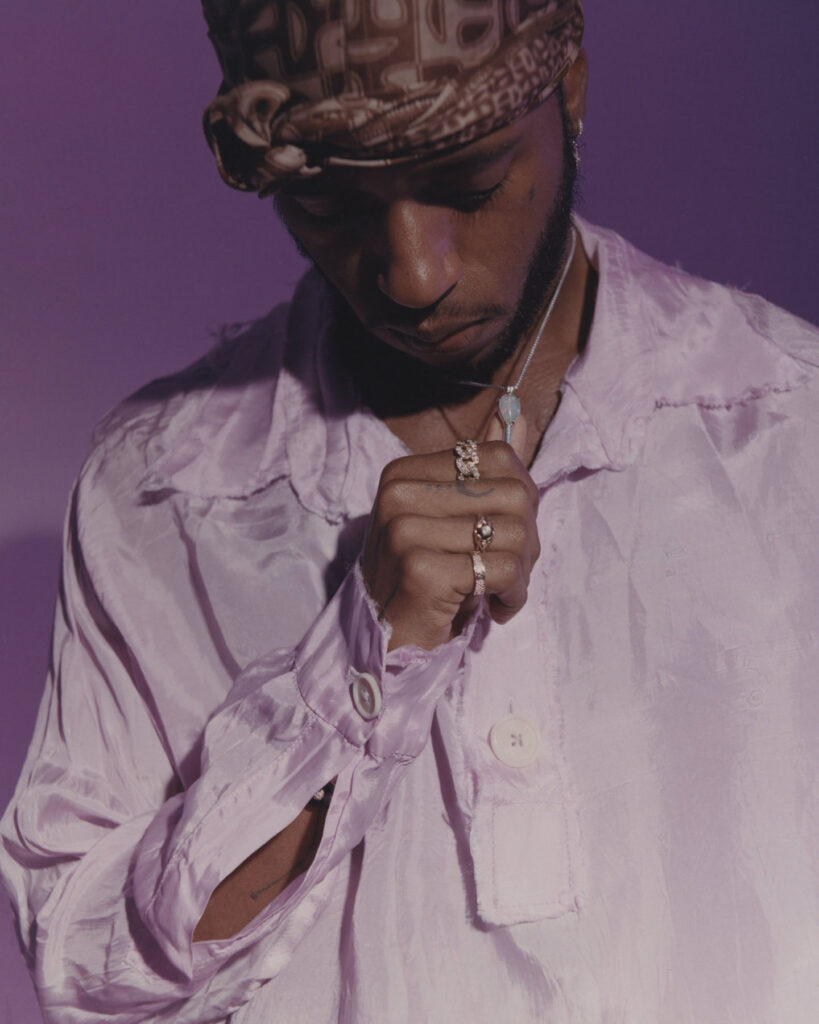
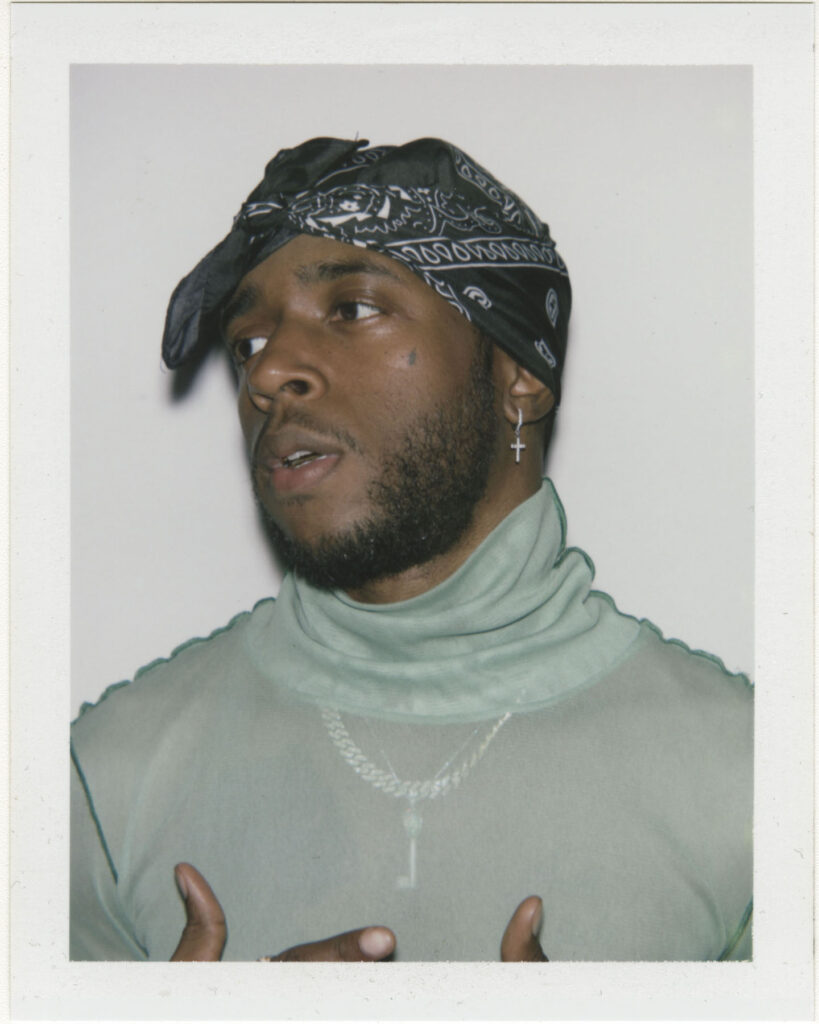
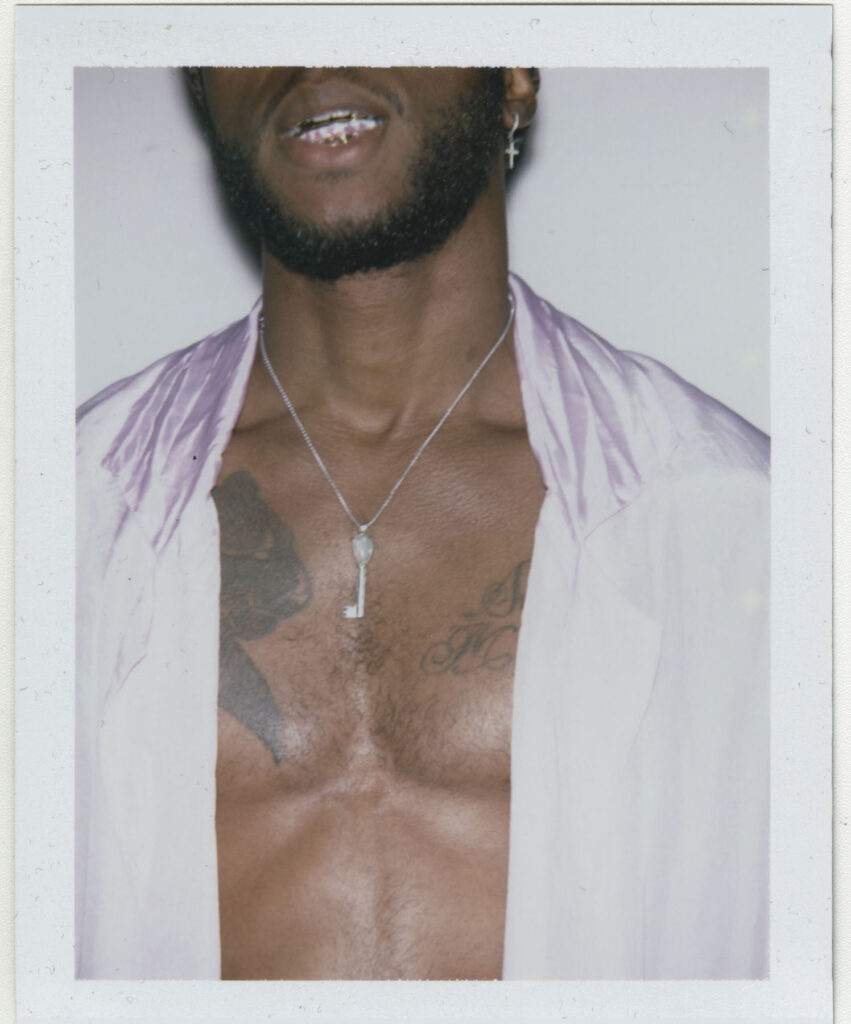
Josh Collard, the singer from South London better known by his alias, Collard, has just returned from Milan when we speak via video call. He’d been flown out to perform at the Bulgari event for MFW. It was the first time he’s been able to play live since lockdown hit, and though it may not have been the dream show – ‘I only got to do three songs, it was great but, you know, no one knew who I was really except the people that booked me.’ It was, he says, a tough crowd, but it was also likely the first time in half a year that the fashion set would have been able to see each other. He had good fun though; ‘it was just nice seeing my guitarist again as we’ve not had a reason to be face to face yet.’ 

Collard’s upbringing is one of the first things you’ll find when you Google his name; brought up in a strict Mormon household, too much of a troublemaker to be baptised at the age of eight (then becoming convinced he was a sinner), surrounded by music by the likes of Janis Joplin, James Brown and Prince. He joined the hip-hop collective Last Night in Paris at the age of 19, but it wasn’t really him. ‘I was doing crazy performances that I didn’t enjoy, that didn’t feel was a direct reflection of me. I felt like I was always up there emulating something else. I’m not a jump about person – there was a lot of jumping about and rapping. I’ve got asthma; I’m a two-stepper slow grinder, that’s what I do.’ And so, he left.

‘I didn’t have my own intense love creatively for a genre,’ he recalls, rather a ‘love for different genres and different music that just felt like a hobby.’ He was just recreating what was popular, musically, at the time and not really pushing the limits of his potential. That changed on a trip to LA with his producer, Zach Nahome, where he began to experiment more and veer away from the realm of hip-hop and into the territory of a more eclectic mixture of soul and smoother R’n’B. ‘It wasn’t until LA that I let the shackles go a bit.’ And 2019’s Unholy, Collard’s debut release, encapsulated his new sound perfectly. The album received rave reviews, and comparisons to a modern-day James Brown of sorts – James Brown with the addition of a feature with rapper, Kojey Radical.

When listening to Unholy, it’s possible to hear all the different elements that come together in Collard’s current sound; the influence of Motown, the references to religious themes, and the inherently twenty-first century twist. He speaks about creating something that takes from the past, with a modern outlook – something you can propel forward and make completely your own. That, Collard notes, is how music changes to reflect a new era, through exploration and design. He has a keen eye for detail, appreciating the visual side of making music as much as the sound – which is apparent in the way he enthuses about scrolling through albums on his phone, being visually stimulated by seeing the artworks, condensed and filed. 

When it comes to the visuals that supplement your music, is there anything you gravitate towards?

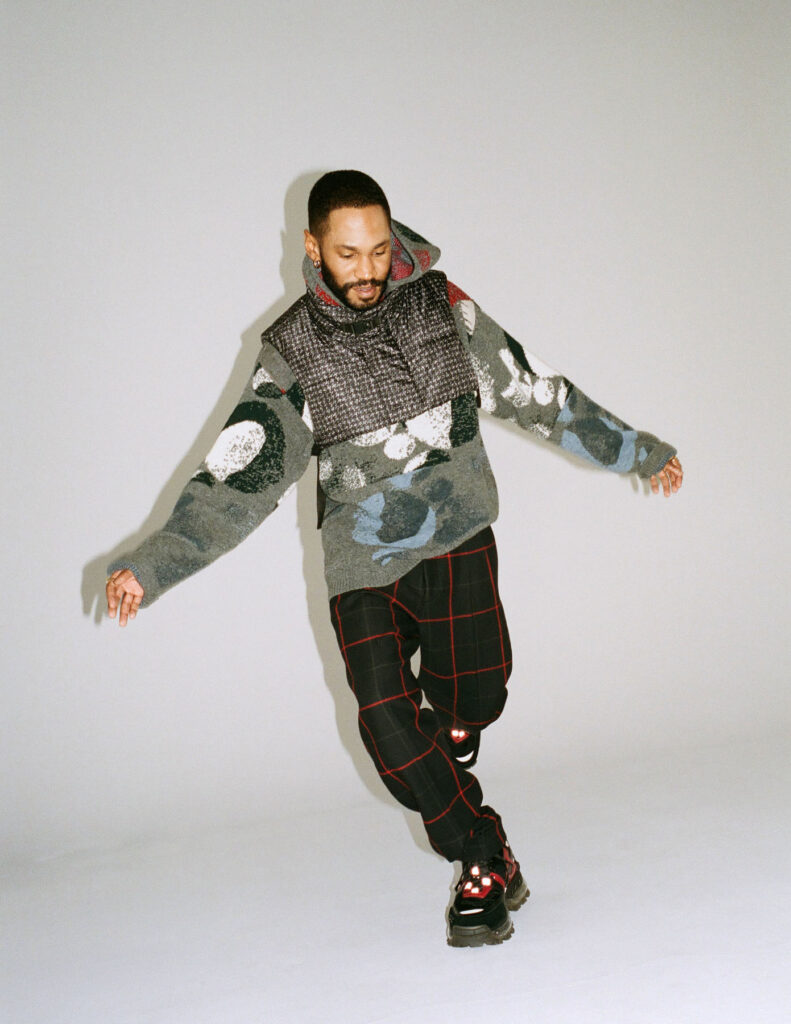
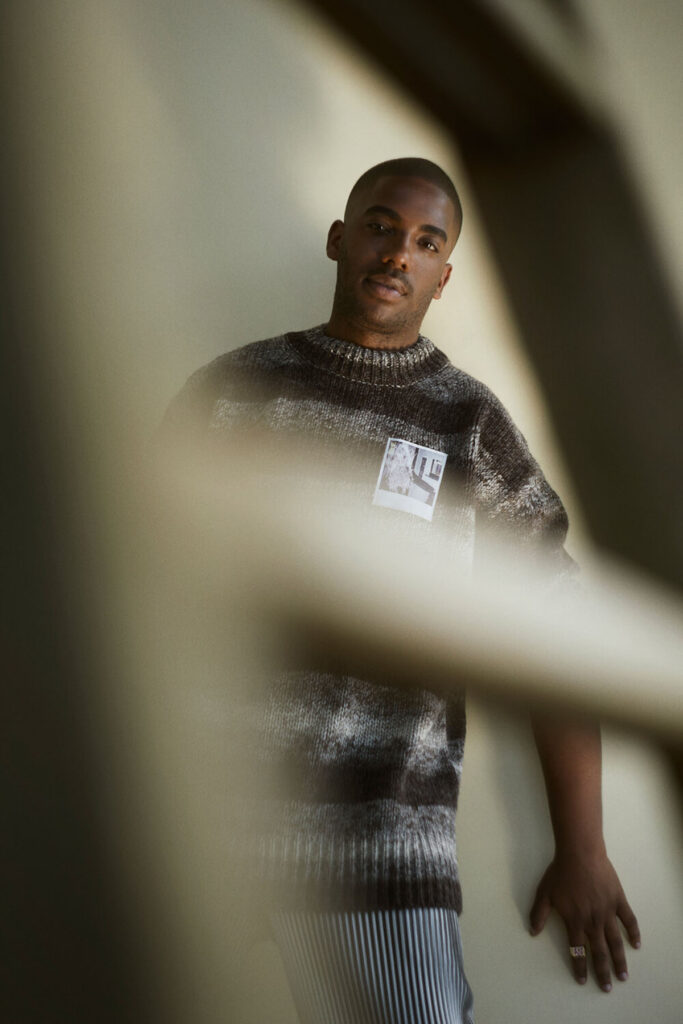
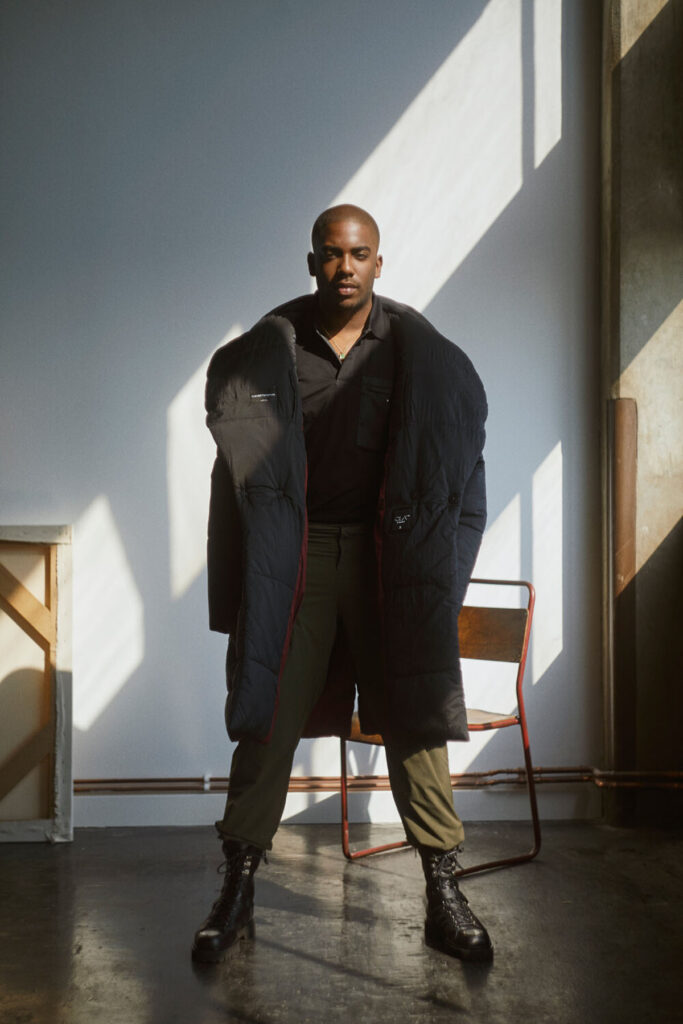
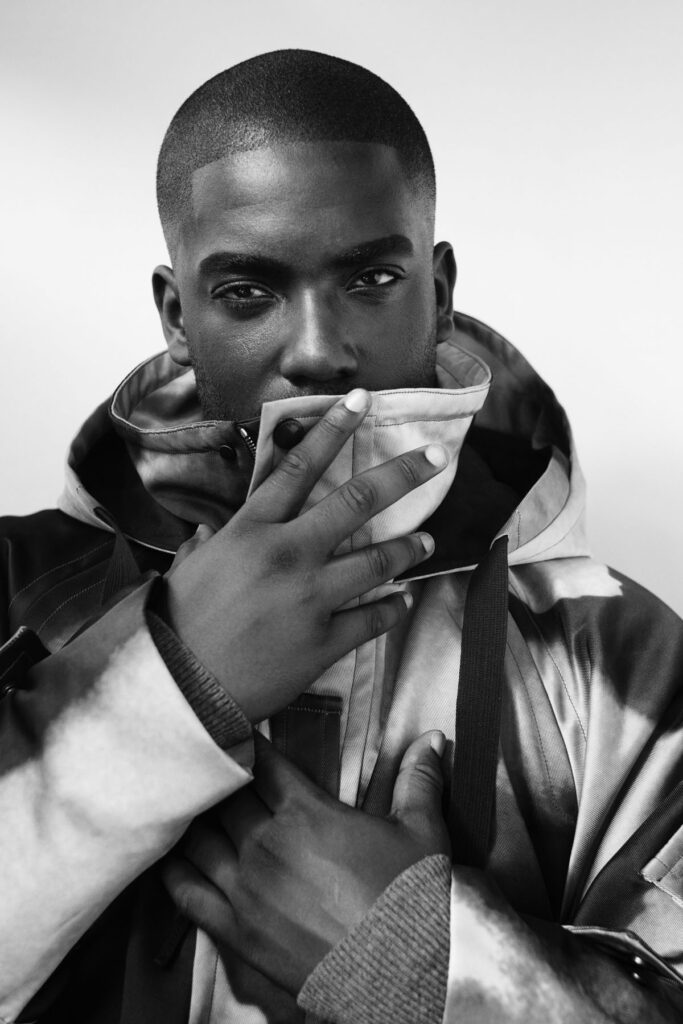
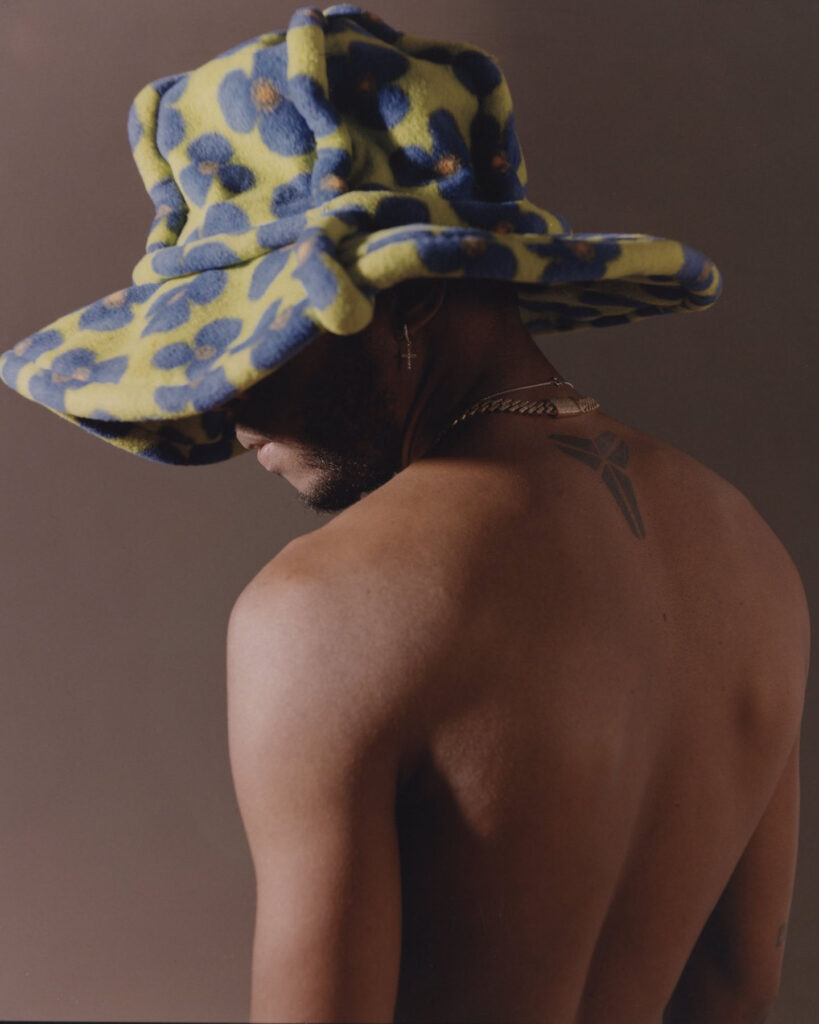
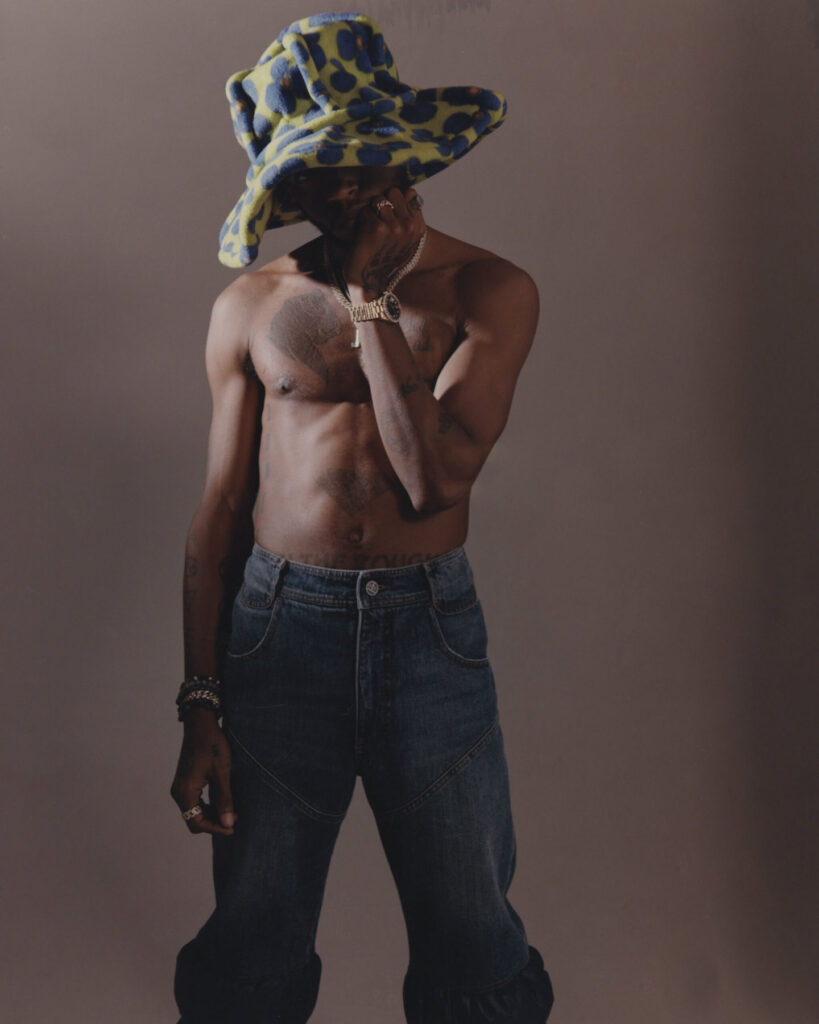
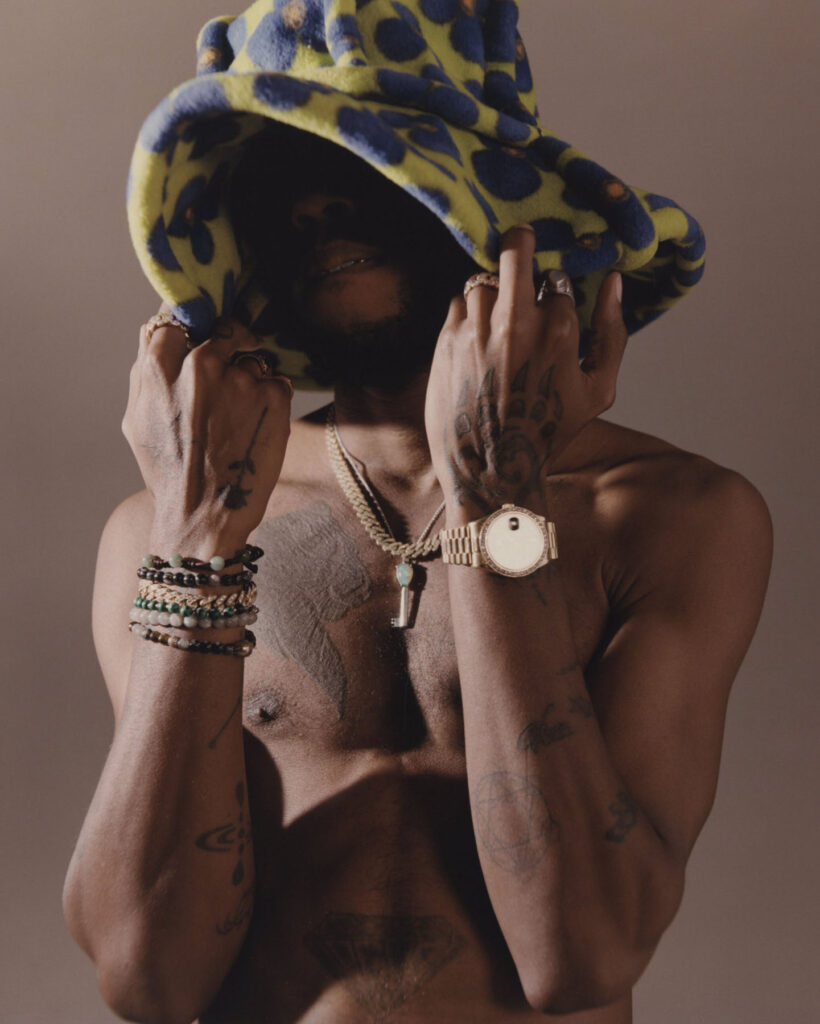
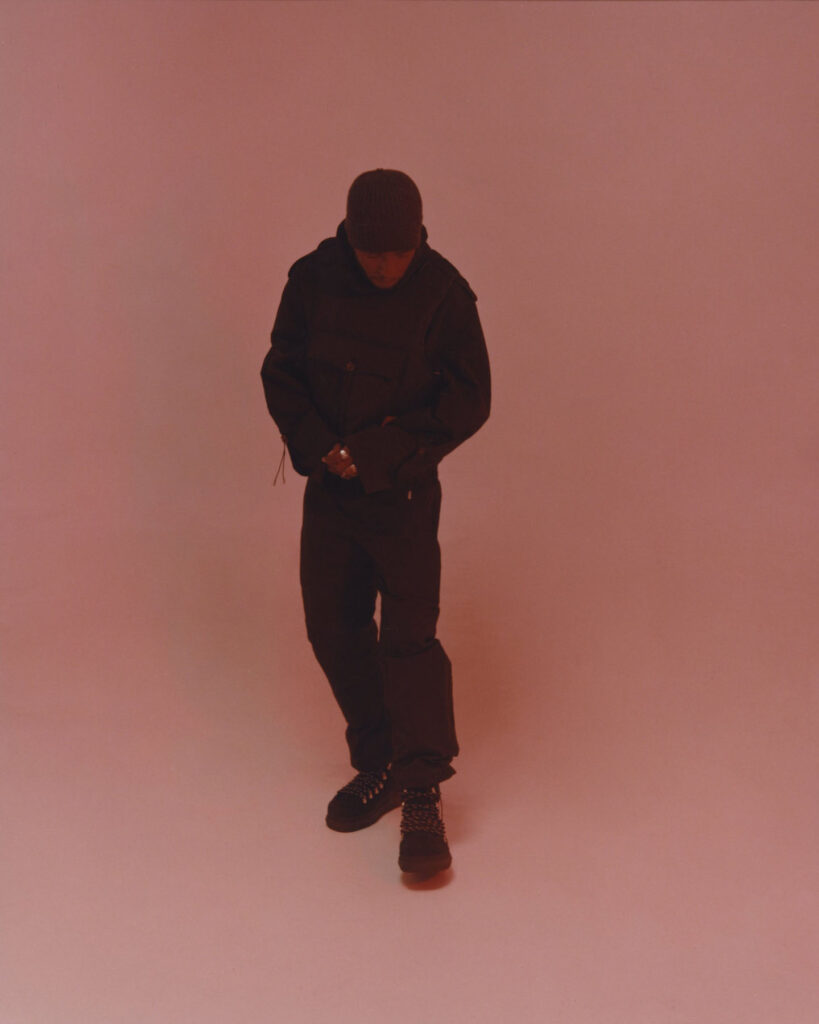
I like uniform, order, structure. I like the kind of Wes-sy Anderson aesthetic, or Stanley Kubrick, where everything’s got a purpose; all the colours have got a purpose, it all makes sense and it’s all uniform. I liked the shoot [for NR, at Purpose: The Archives in Tottenham] because I think it worked with my creative direction; the colours were pretty uniform, the backdrop was pretty uniform, the grey, the cement, everything. It looked pretty futuristic in a way. My favourite city is Stockholm – that place feels like a glimpse into the future. I’d say that visually, that’s my thing: with my creative directors, everything is about accentuating my love for uniformity and the need for things to make sense and kind of mesh. That’s what I’m visually attracted to.

Do you apply that same logic to making music, or are they quite separate approaches?

Yeah, no – it’s not chaotic at all. It’s actually very uniform in terms of my layout. What I think about might be chaotic, or the situation might be chaotic, but I like to get it into a neat form so I can contain myself, you know? I like to start with the chorus – I always go with the chorus first – and once I’ve got the drift of what I’m really piecing together, that’s when I get into the verses. And I still love a uniformed 3:20 song. I love it you know; when it sounds like it could be at the end of a movie, or something like that, and you’ve got to fit within the constraints of that, which is beautiful. That you can fit something so wild, so personal, and you know, say the most out of this world things (which I sometimes say in my tracks), but fit it into this orderly fashion – that’s how I create for sure. 

A lot of stuff has happened this year, and in light of that, it would be interesting to know if the past seven-eight months have changed how you make music and your outlook on things?

I think my outlook has changed because I realised I wanted to be more present in music. I do like uniformity; I do like creating catalogues, but I think it made me want to explore different ways of presenting myself and my music. Not so rigid, and not so time-consuming. I’m excited to do another album, but I’m also dreading it, you know? I can’t speak for other people but, for me, it’s such a – it’s a positive, but positively-draining process that I don’t know if I want to dive back into. So, having the quarantining time and then not having to release anything [at that moment], I got into a thought process where I was like, this doesn’t need to be for a catalogue, maybe it can be just a theme. Just two songs; you love it, just put it out. Every artist’s thing is that they won’t make anything as good as the last song that did well, but I think if you get caught in that loop, you really stop yourself from just putting your art out there. Not that you should be hitting it all the time with “content, content, content,” but I think it’s okay to just be easier on yourself now. I think that was a big thing for me to learn, so I think that’s my plan in future – I’m going to fall into making an album, but my releases are just going to be fluid and what feels right.

Have you been able to making anything in the past couple of months? 

So, I didn’t get into the studio for a while because I work really closely with Zach and, at the time I was like, if I’m working, I’m only working with that guy because I know him and he’s a very hygienic man – you know what I’m saying. And we waited because he’s got a household and I’ve got asthma so we chilled for a while, but since we got back in, we’ve been able to actually make quite a few songs. We haven’t stopped. That’s just the way we work though; we get in, make three-four songs, you know – so we got right back up to speed at least. I’ve been working with him for a decade – nearly a decade now – so the process is always easy to get back into. I mean, it was the same as how we always work: just me and him, so with social distancing, I mean, maybe I spent a bit more time in the booth while he was in the control room, but that’s about it. 

You mention being a bit more fluid when it comes to making music now, but the sounds and themes of Unholy were quite specific to that album, so are you likely to consider veering off to explore other topics or inspirations? 

Yeah, I think that’s the bit I’m trying to protect right now and not force. It’s not the continuation of the sound, but the continuation of the narrative; I don’t want to force the narrative on the next album. So, it’s about figuring out what will fit for this one, what I want to talk about. I think, in terms of organisation, I don’t want to see myself swaying from a 10-track album: and the timings, I love an interlude dead in the middle. I don’t think I’ll change from that format, it’s a nice “Collard” format. But who knows? Sometimes, I’m two songs in, like with Unholy, it was after one and a half songs that I realised what it would sound like. Once I’ve found those one or two songs and the narrative for the next album, I’ll know what to do and what direction to go in. And obviously I’m not trying to make a carbon copy of Unholy, but in terms of musical components – a live sounding album will never leave me; I just love instruments too much. 

So, when we eventually get back to live shows that aren’t just a one-off like Bulgari, what will you be looking forward to? 

The whole band getting back together; I love my band. Signing with a major label [Virgin], I was lucky enough to get what I wanted in terms of my live set up – so I have the whole works. But, the drum solos, the guitar, hearing new music live, even just being able to rehearse and perform that. There’re talks of a show at Jazz Café next year, so I’d be super excited about being on that stage. Headlining would be amazing because that’s the first place I ever performed. I’m looking forward to that, hearing new songs and performing new songs, just even rehearsing new songs cos everyone in my band’s so good. Sometimes, I don’t even want to sing I just want to hear how it all falls together – I’m excited for it.


Team

Photography DAVID REISS
Fashion SAM CARDER
Interview ELLIE BROWN
Creative Direction NIMA HABIBZADEH and JADE REMOVILLE
Grooming EMILY PORTER  
Set LUCY WHEELER
Photo Assistant TAYO NELSON Fashion Assistant Harley O’Connor
Discover more of Collards music on Apple Music
Listen to Collard’s curated playlist for NR


Designers

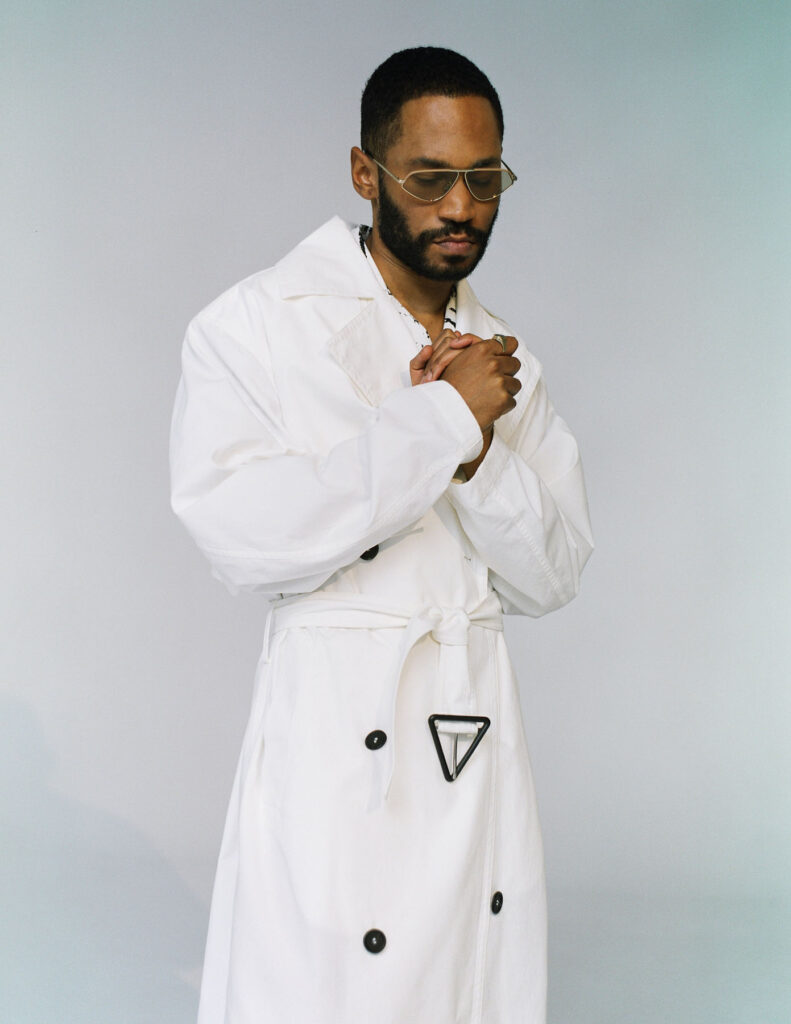
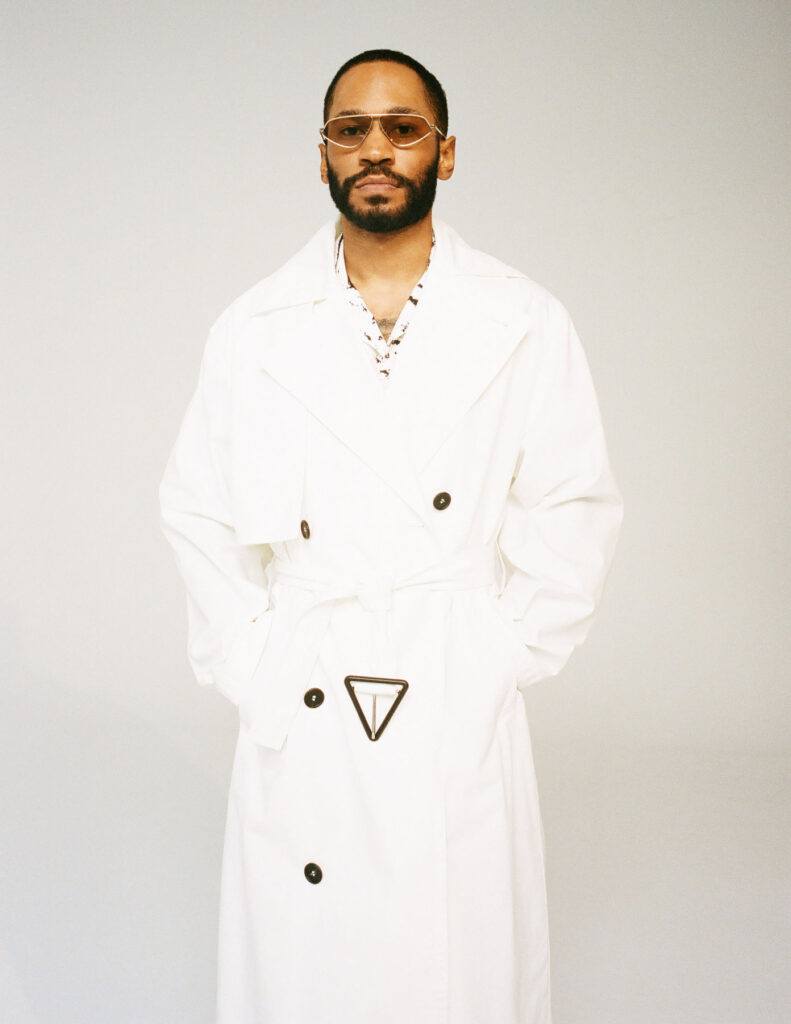
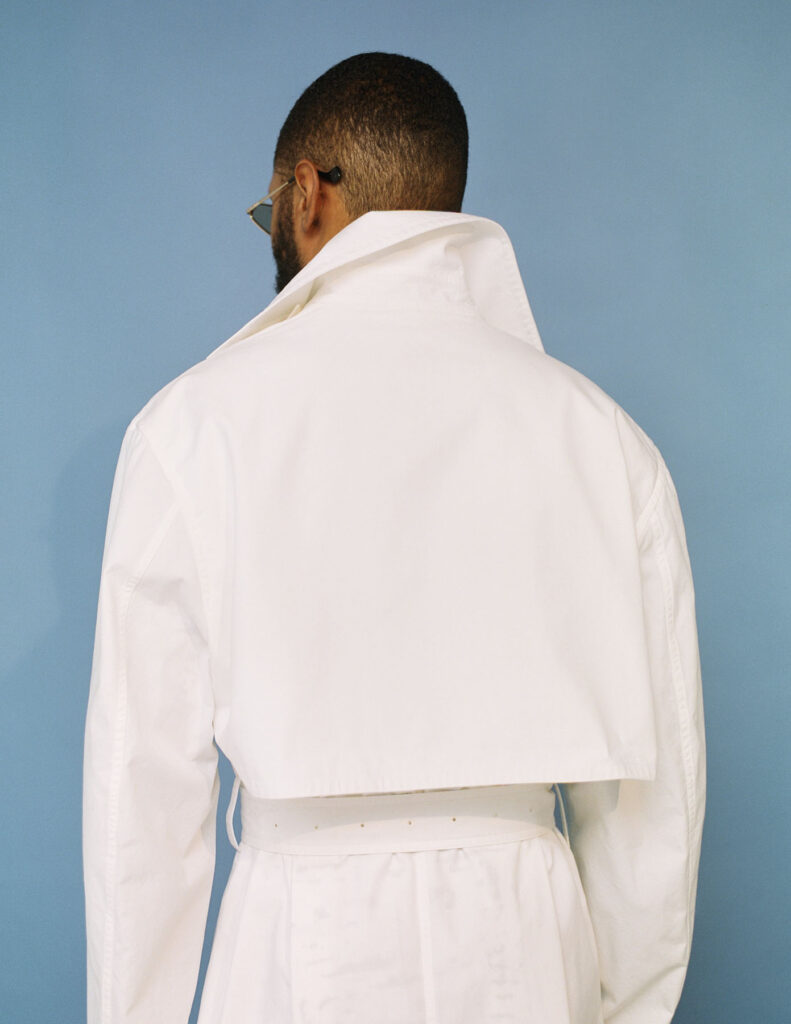
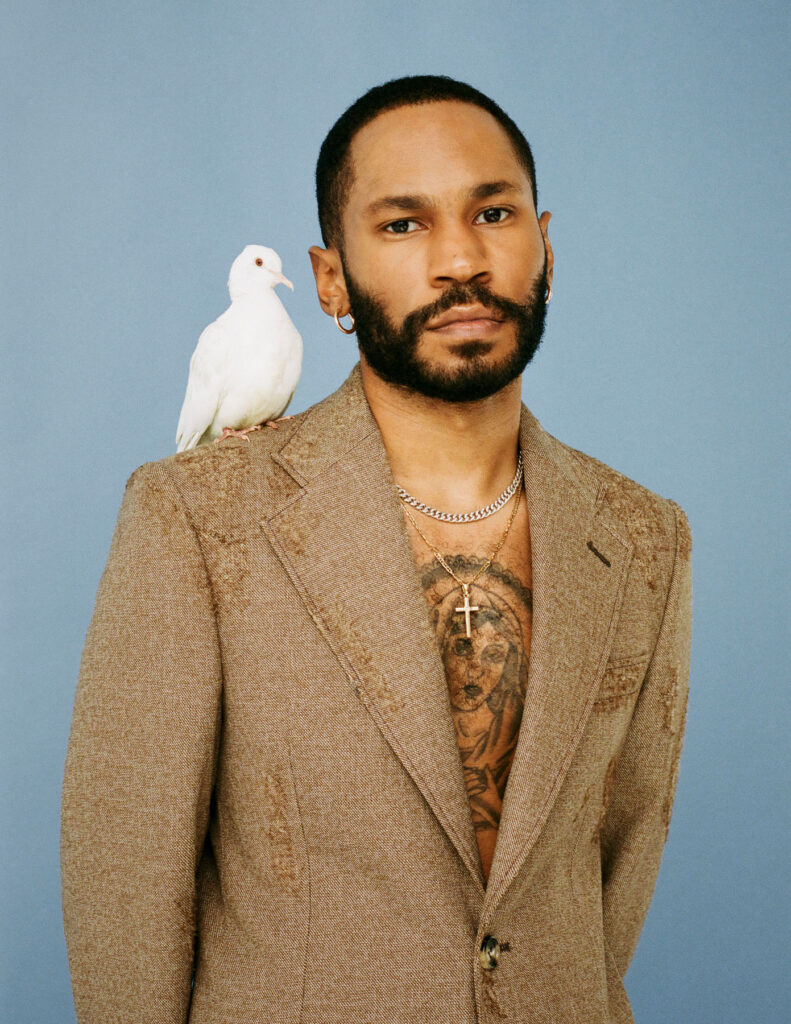
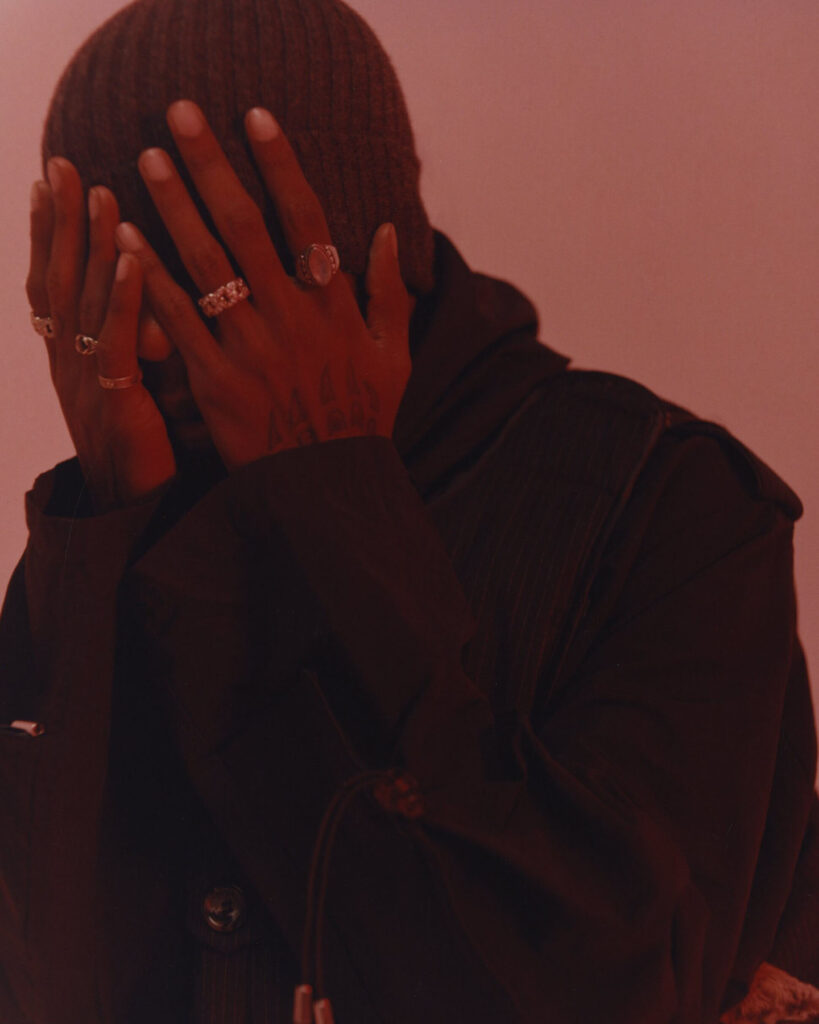
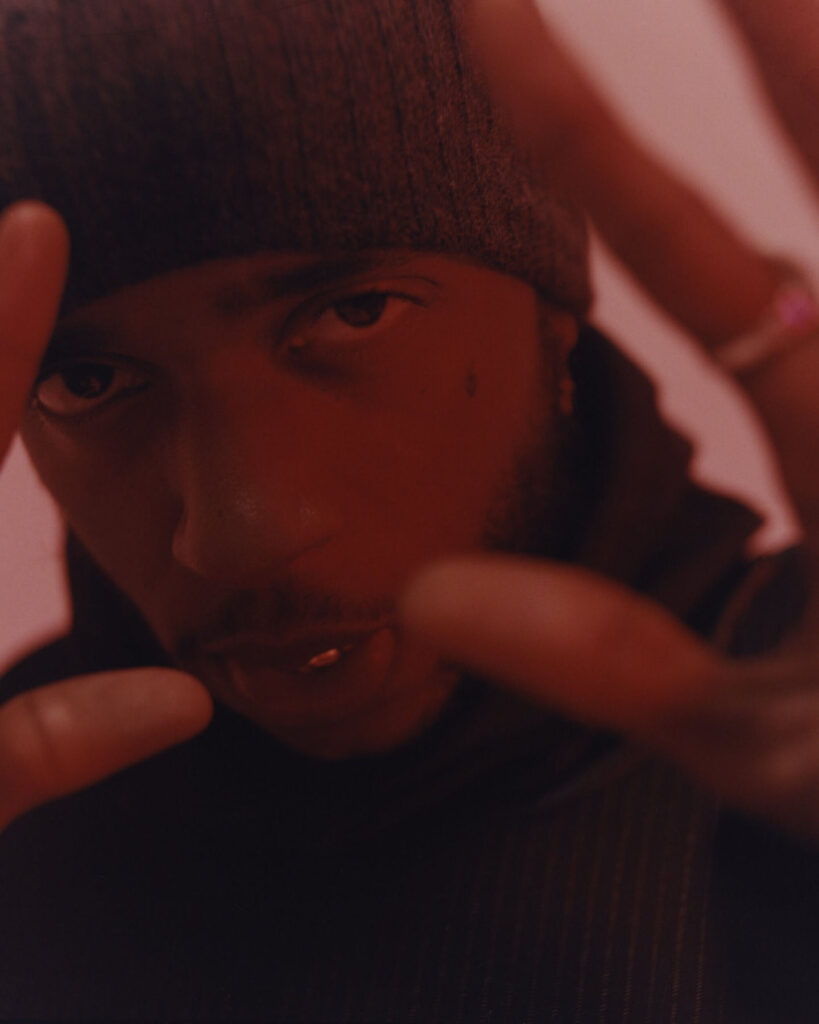
  1. Jumper and Shirt QASIMI Gilet CP COMPANY Chinos NAPAPIJRI Shoes JIMMY CHOO
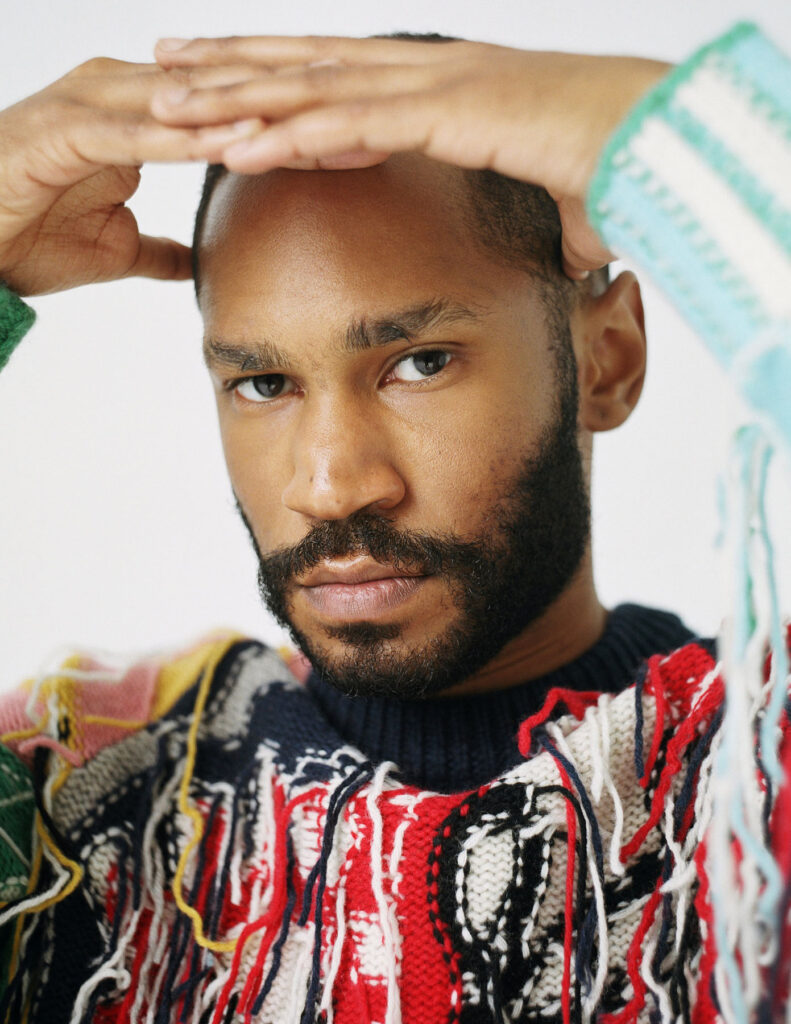
  2. Jumper MARNI at MATCHES FASHION Trousers EMPORIO ARMANI Earpiece RATHEL & WOLF
  3. Coat EMPORIO ARMANI Hooded Shirt LANVIN Trousers PRADA at MR PORTER Boots JIMMY CHOO
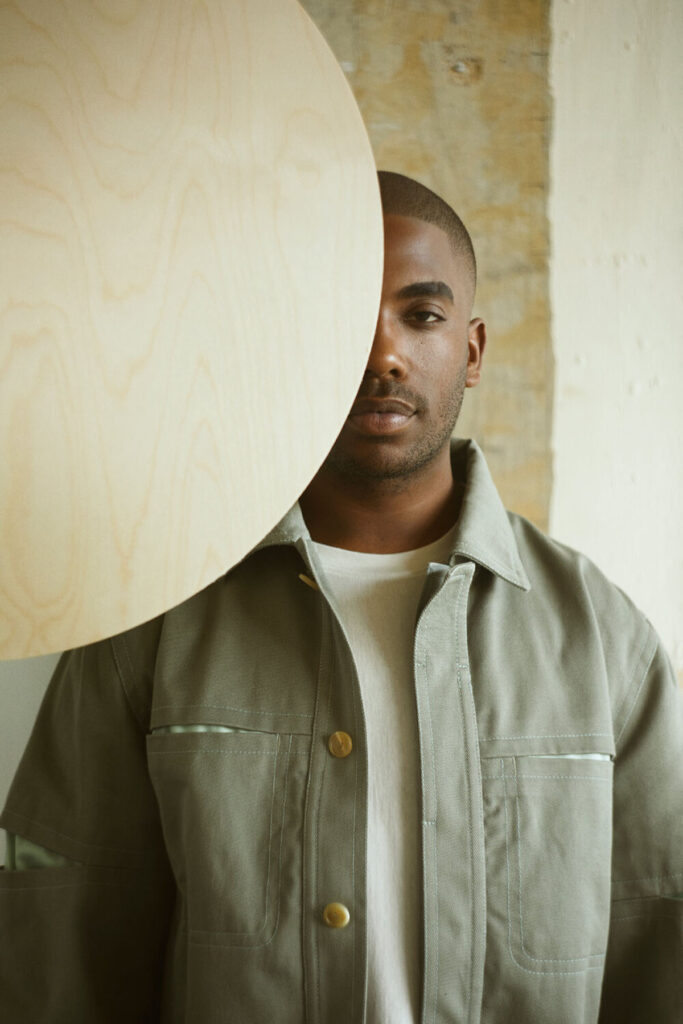
  4. Shirt Jacket JACQUEMUS at BROWNS FASHION Long Sleeve T-Shirt HOMME PLISSE ISSEY MIYAKE
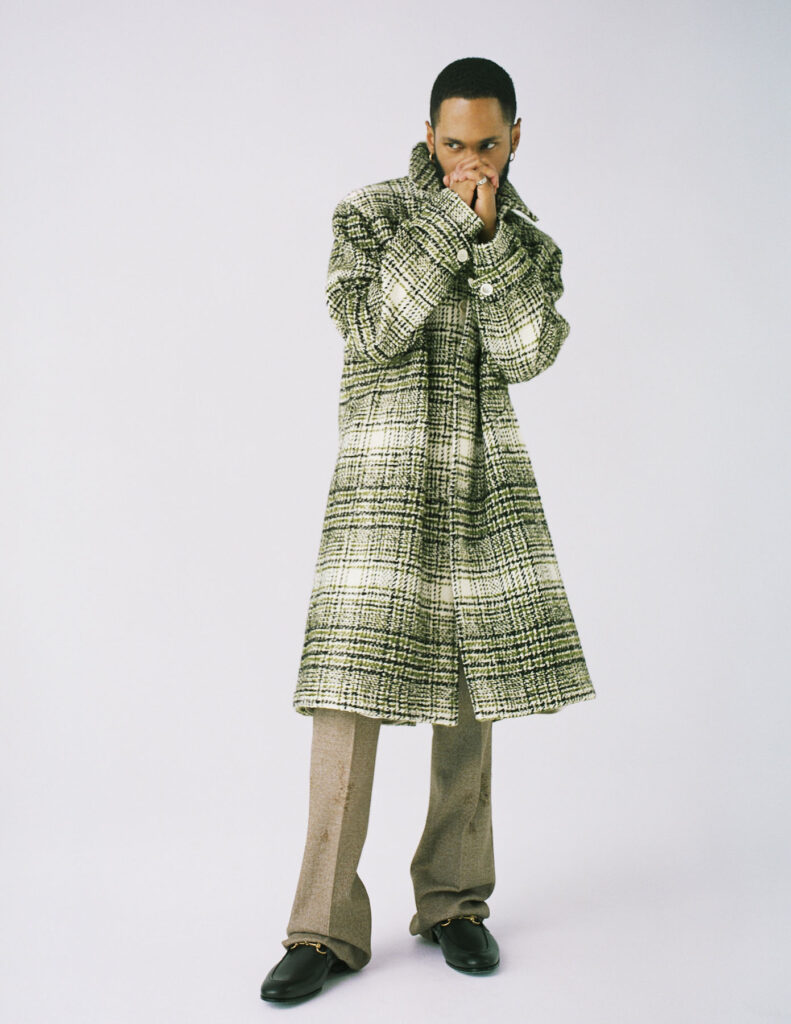
  5. Trench Coat FENG CHEN WANG
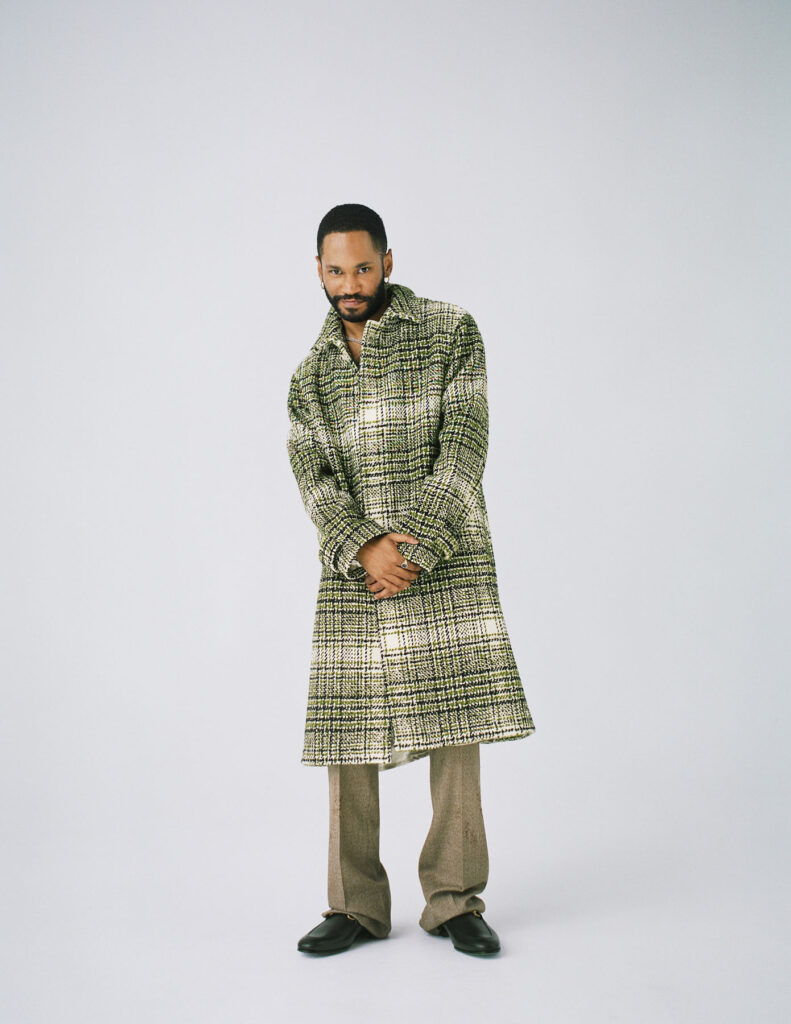
  6. Trench Coat FENG CHEN WANG Necklace BLEUE BURNHAM Jumper HOMME PLISSE ISSEY MIYAKE
  7. Jumper RAF SIMONS at MATCHES FASHION Trousers HOMME PLISSE ISSEY MIYAKE Ring BLEUE BURNHAM
  8. Bomber Jacket and Trainers DIOR T-Shirt Y/PROJECT at MATCHES FASHIONTrousers PRADA at MR PORTER
  9. Jumper RAF SIMONS at MATCHES FASHION Trousers HOMME PLISSE ISSEY MIYAKE Ring BLEUE BURNHAM
  10. Coat and Boots EMPORIO ARMANI Polo Shirt PRADA at MR PORTER Trousers CP COMPANY

Sigurdur Gudjonsson

“Too much analyzation can kill the work, there has to be some mystique and some danger or risk you take along the way”

An old glasshouse stands but continues to shatter as the wind runs through it. From its corroding rafters hang hair-like strands of organic matter, draped in entangled troughs that no longer grow but choose to speak in muffled rustles, envious of the birds that idle overhead, they are filled with longing. They are like exposed roots, barefaced and all out of tears, they sway in the breeze and pretend that they are flying. Gravity hums, its vibrations oscillate between remembering and forgetting what it is to be defied.

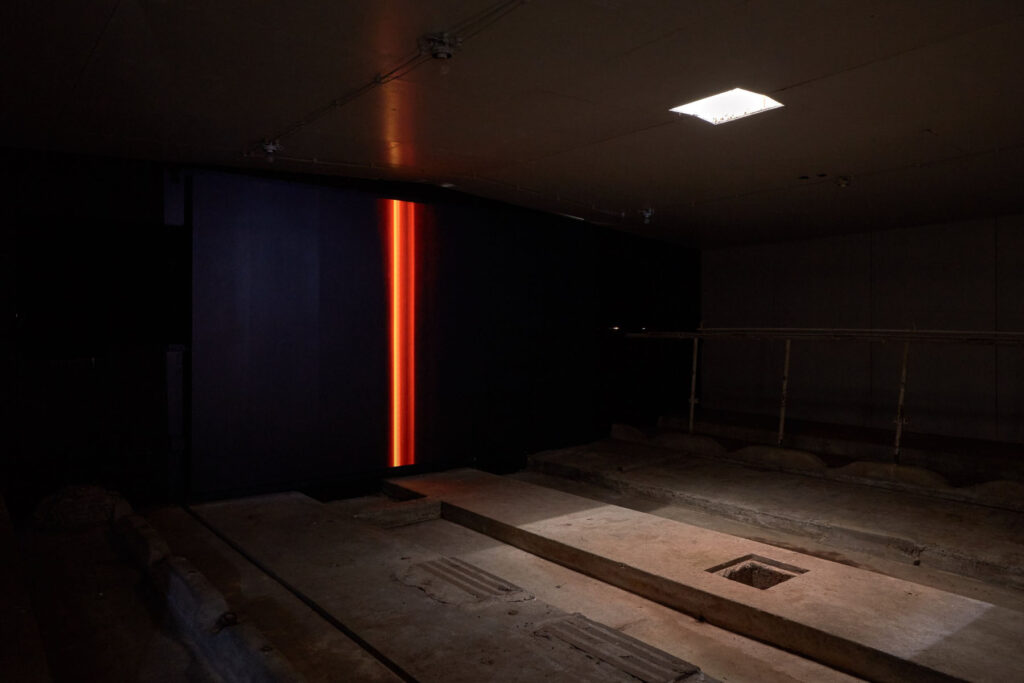
The Glasshouse sits at the edge of each of our individual ideals. Sometimes waves crash beneath it and within its walls we are surrounded but not safe. Others remark at its fragility but when I reach out to touch it and slide my palms down the old wood, I say that it is strong. I wrap my arms around myself and say that it will hold me like you used to, pulling at my shoulders for a tighter embrace. Defiance doesn’t always look like a lie. I learned to protect myself from within these walls, I tell you that I trust you but speak through them. I want to build a home with you but I don’t know how to leave this house without burning it down.

These sentiments are presumed, coaxed out of my subconscious as I press “Play” on a video that displays the work, 

Glasshouse created a decade ago by the Icelandic artist, Sigurdur Gudjonsson. I was watching a screen, from my computer screen, with no tangible distance between perception and reality. This is Sigurdur’s strength. As the recipient of the 2018 Icelandic Art Prize as Visual Artist of the Year for his 2017 exhibition, Inlight, and the selected artist who will represent Iceland at the 59th Venice Biennale to be held in 2022, Sigurdur is a master of the senses. Utilizing moving imagery, synchronized soundscapes and installation, the viewer is dropped into an emotional fragment, engineered through layers and loops that create an immersive world numbed by specificity where feeling is not a derivative of direct experience. Having installed his projections in locations like morgues and churches, Sigurdur first sets the scene by taking the viewer out of his or her respectively normal settings and then transports them into his projections where the metaphysical becomes an invitation to surrender. Whether it is the innards of the Glasshouse, a lone pillar erect in the sea, or an electron-microscope’s magnification of carbon, the contours of these incongruous visuals become hyper-narratives that the viewer projects meaning onto as if reaching to reclaim a shard of something broken and without genesis, like a memory evading recall. 

The footnotes of our innermost psyche are lured to the fore as viewers ascribe meaning to Sigurdur’s often poetically abstract works.

You’ve said about yourself that you’re often “quick to come home” when you find yourself abroad, what does home mean to you and how has it shaped your work?

I have been lucky enough to both travel, live, study, and work abroad and that has been very important for me. I currently live in Iceland so you could say that it is my home now, although I might choose to live elsewhere temporarily later. There has always been fascinating energy in the Icelandic art scene which has always fascinated and inspired me, both in visual arts and music and I think I can say that it has shaped my works in many ways. However, I think it’s incredibly healthy for every artist to stay abroad for some time and broaden their perspective and build new relationships. This is something I try to do every year, whether it be in connection to working or exhibiting.

What does Iceland provide that has made it a place that you have decided to stay and find success in your work?

Reykjavík is a small city when it comes to population and you are quite close to the sea with a view over to the mountains, it’s also only a short drive into the wilderness which I count as a blessing. I guess you always take some inspiration from the environment and the people you meet on the way and all of it somehow weasels its way into the subconscious, which I guess must be reflected in the works I make. At the moment, Iceland suits me well as I am focusing on a large-scale project for the Venice Bienniale in 2022. I work with a great gallery here in Reykjavík named BERG Contemporary and I have a nice studio close to where I live with my family.

How were you and your community in Iceland affected by COVID19? In a place like New York for instance I think it really altered the ways in which we were actually connecting with people. We’re always moving at lightspeed, often with a set of priorities that aren’t our own and it was a way to be forced into introspection.

COVID19 has been handled quite well over here. In March almost everyone stayed mainly at home for a few weeks and then we managed to get rid of COVID19 during a large part of the summer so people could enjoy each other’s company without worrying too much for a while. But now we are facing the third outbreak over here and I really hope for an international solution soon. If we look at Iceland specifically it has been affected by so many things, apart from the obvious and most serious effect on those that became ill. Iceland has been a popular destination for travelers over the past few years, so the travel industry is struggling. Theatres just opened again for the first time since March, but there are only half or one-third of the usual numbers allowed into the auditorium. Musicians haven’t been performing and of course, art exhibitions have been postponed as well. But I am lucky as I’m working in my studio all day at the moment so it doesn’t affect my everyday life too much at the time being.

The perceptive experience is an anchor in your work where emotional fragments can be strung together to mirror something whole in its potential for universality. What do you want people to experience when they come across your work? Is the desired result always a certain emotional response and do you want that response to be singular?

I’m interested in creating a surrounding experience for people, multiple layers of perception, a world you can immerse yourself in, not only an emotional one; it can also be strong visually or physically and hopefully it moves something within the audience.

It’s interesting because we all experience life as individuals, but when you put us in this context where the individual is surrounded, their perception is controlled in a way that almost forces them to confront something more subconscious. Are the frames you build mirrors for humanity almost?

I hope so. That would be amazing. I guess it’s easier for an outside viewer or audience to answer these questions, it’s rather difficult to know what impact one’s work has on others.

For me, it’s created from within but often also it’s a way to express what my eyes have caught when I walk through life.

So my work stems from an inner drive and sometimes a need to put focus on things that have caught my attention, which can be anything from machinery, man-made construction, or technical relics for instance. I hope that the audience experiences their read of the different layers of the narrative within each piece and that the whole space comes together simultaneously, combining different elements

You use the word narrative, do you consider yourself a storyteller?

No, I think I’m always trying to hide the story.

In what way?

I like it when a narrative becomes more of an undercurrent.

You mean it’s something that you want your viewers to bring out of themselves to fill the piece?

Exactly. It’s always a pleasure when that happens. Perhaps we could say hyper-narrative.

The creation of a narrative through perception is interesting. You often work with musical composers and sometimes there are inherent narratives present within sound, especially when things are instrumental and there are no lyrics to guide you in terms of emotionality. Where do you find those nuances?

When I’m in the process of doing work, it’s sometimes a very unspoken process because it’s not a specific path that I’m following. It’s almost like wandering around until I feel that I have reached an area of interest. Then I start to make different implementations and play around with it. This process is sometimes like tuning an old radio back and forth until you catch the frequency you like.

Normally I think we assume that the ways of working are like, okay here’s a video and we need to engineer a sound for it, but how is it working in the inverse, like making videos for sound? What is the dialogue that you’re having, not only with yourself, but with the other artists that you’re collaborating with?

It’s a different process with different artists. 

Like with Anna Thorvaldsdottir, a composer I worked with on my latest work, Enigma, it’s a very intuitive process. We almost don’t have to speak. I know her quite well and she knows my aesthetic, and vice versa and the outcome is somehow always interesting. We throw ideas back and forth for a while and then they start to take form.

A lot of your work is time-based and in tandem, it seems that the relationships you’re cultivating with your collaborators also work on this scale. Do you feel like the collaborations themselves are also like time-based projects?

In a way, yes. Some of these projects are unique and created in the moment, while others have evolved further and manifested themselves into longer partnerships. But it can be said that the works themselves take care of how they develop, whether they grow or not. If that happens, it’s always a pleasure.

Right and inherently there is a level of intuition that comes with relationships that allows for a deeper level of empathy and perceptiveness that becomes activated through collaboration. What do you think is the connection between creativity and intuition and to what extent are both tools for society?

I think the process of all artists is a combination of intuition and knowledge and it is important to trust it and follow it.

When I look at a piece, the experience engendered seems quite universal and that’s a rare thing because it signifies that you as the artist, have been able to trigger someone’s emotional response without knowing anything about their experiences or their personal narrative. It’s like the work is looking outwards somehow and sees us individually, is this your intent?

Thank you. Those are big words. My answer is maybe.

How do you know when a work is completed per se? Is it because you feel a certain way after you look at it or how do you know?

You never know. It’s usually defined by the moment when the piece goes away, you have to stop at one point. I like when the piece gains its own life somehow and starts to grow inside a space; when it becomes possible to play with the video in a performative way where its surroundings activate the video somehow and the reading of the work becomes completely different due to its placement.

Locations are so interesting for you. You’ve done exhibitions in a morgue and church and when you take your pieces out of these settings and into a museum for instance, how do you think that changes the piece? Is its intent or means of communication ever impacted in a negative way?

I am very inspired by the space I work in each time. So very often the environment influences my work.

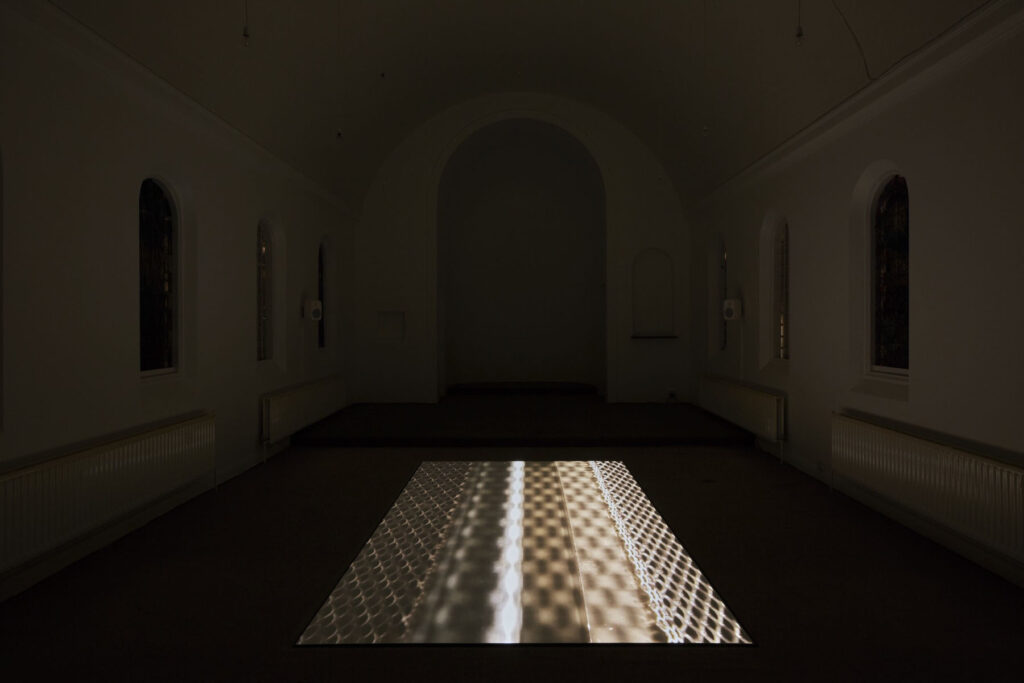
Fuser was deeply influenced by the old chapel in Hafnarfjörður which I found when I worked a project for ASÍ Art Museum in Iceland and later the work was also screened in an old barn in a farm in the North of Iceland. Even though it was created in a chapel it works well within a gallery, so that’s not to say that even if a work can be created and inspired from a house or a raw space, there’s always a new layer that is added to it when it enters a gallery or even a museum.

Do you think you lose anything though when you take it into the museum space or a space other than what you created a piece in?

It can happen, but at the same time the focus on the work can become clearer, which sometimes makes it better.

Do you think a work should always be malleable? You’re actively having to change a piece that you thought was “complete” so is that exciting for you as an artist to have to rethink something that you thought was finished?

No, I don’t really change pieces after they ́ve been performed unless it ́s another score that I write for it. It can be interesting to reflect on an exhibition in two different locations and reshape it.

Do you consider your work to be accessible? Is this something that is important to you?

It’s hard for me to say. I’m rather in search of nuance or something that clicks rather than thinking too much about what happens when the work is ready. I guess it would be risky to think too much about how people receive the work. For me, it’s about taking on the journey of creating the piece and challenging myself in the process. It has to be risky somehow otherwise it would be boring. You have to take a risk and make the most of the ride, the rest is up to the receiver.

We think that people exist outside of their work as if it could be separated, but for you, do you think your work is a reflection of your inner psyche?

I guess it’s influenced by what I see and explore and what I choose to show to others and in that way, it’s very much so related to who I am. Some videos I create from images that I have imagined or an idea that comes from within but in other cases, I choose to show to others what has caught my attention. I guess art can have its own soul or psyche as well. It becomes its own character. My work is fuelled by my inner psyche without me being able to explain that further or analyze it. I’m not aware of how. Too much analyzation can kill the work, there has to be some mystique and some danger or risk you take along the way.

How does your work make you feel? How has it changed who you are?

I ́ve never thought about that. It’s more about expressing an idea in my mind and finding the right form for it. I tend to be thinking and focusing on the next project rather than dwelling on the ones that have already been produced.

The names of your pieces are rather poetic. Ranging from the idea of a veil, connection, even a deathbed, are your titles meant to guide the viewer?

For me, the title is always a kind of trigger that possibly poetically expands the work.

Sigurður Guðjónsson is an Icelandic visual artist based in Reykjavík. Working with moving imagery and installations, his works carry carefully constructed synchronized soundscapes, and provide organic synergy between sound, vision, and space. His works often investigate man-made construction, machinery and the infrastructure of technical relics, in conjunction with natural elements, set within the form of complex loops and rhythmic schemes. His all-immersive multi-faceted compositions allow for the viewer to be engaged in a synaesthetic experience, that seems to extend one’s perceptual experience beyond new measures. Sigurður has often collaborated with musical composers, resulting in intricate work, allowing the visual compositions, to enchantingly merge with the musical ones in a single rhythmic and tonal whole. His newest work, Enigma (2019), is produced in partnership with Anna Thorvaldsdottir (composer) and comprises of a string quartet and video. Created for an immersive, full-dome theatre experience, Guðjonsson broadens a fragment seen through an electron microscope into an extensive 360-degree video, exploring scale, perception and the poetic notions of the-in-between. Recently on tour with four-time Grammy nominees, TheSpektralQuartet, it is due to be presented at The Adler Planetarium, IL, Carnegie Hall, NY, Kennedy Center, DC, The Reykjavík Arts Festival and among other exhibition places in 2020. In 2019, it was announced that Guðjónsson had been selected to represent Iceland at the 59th Venice Bienniale, to be held in 2022. The artist was awarded the 2018 Icelandic Art Prize as Visual Artist of the Year for his 2017 exhibition Inlight, which featured video installations set within the defunct St. Joseph’s Hospital in Hafnarfjörður, Iceland and commissioned by Listasafn ASÍ. His work has been featured in numerous solo and group exhibitions around the world, in such institutions as the National Gallery ofIceland, Reykjavik Art Museum, Scandinavia House, New York, BERG Contemporary, Frankfurter Kunstverein, Germany, Arario Gallery, Beijing, Liverpool Biennial, Tromsø Center for Contemporary Art, Norway, Hamburger Bahnhof, Berlin, and Bergen Kunsthall Norway.


Credits

www.instagram.com/sigurdur_gudjonsson
www.sigurdurgudjonsson.net


Photos

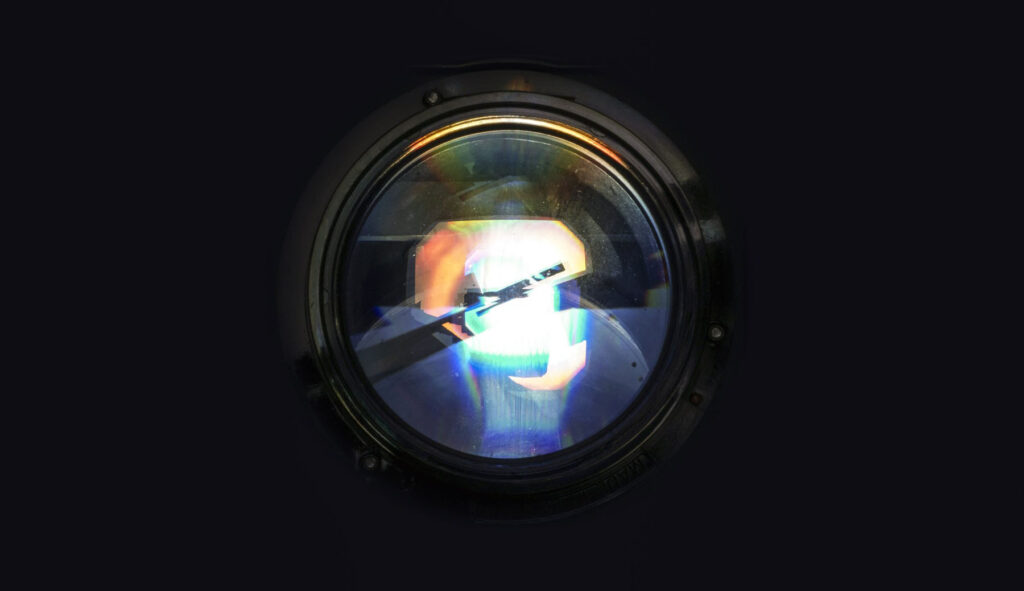
  1. Enigma, 2019 4k video, 27 minutes 49 secondsImage courtesy of the artist and BERG Contemporary
  2. Lightroom, 2018 HD video, stereo sound, 9 minutes 27 second Image courtesy of the artist and BERG Contemporary
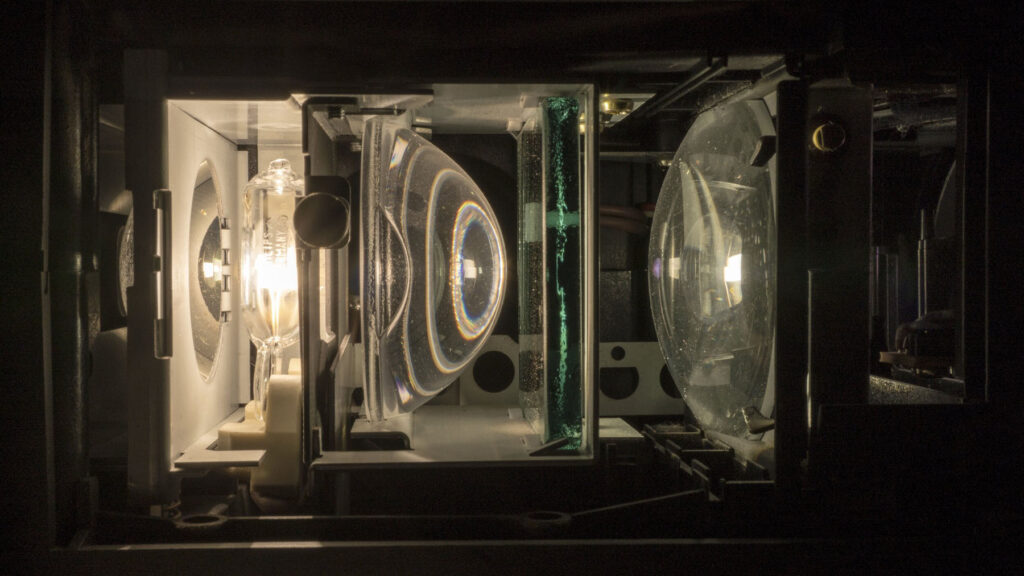
  3. Mirror Projector, 2017 HD video, stereo sound, 16 minutes 10 secondsImage courtesy of the artist and BERG Contemporary
  4. Scanner, 2017 HD video, stereo sound, 40 minutesInstallation view: ASI Art Museum, exhibition in the outbuildings of Kleifar farm, Iceland Image courtesy of the artist and BERG Contemporary
  5. Fuser, 2017HD video, stereo sound, 38 minutes 45 seconds Installation view: ASI Art Museum, exhibition in the chapel and morgue of the former St. Joseph’s Hospital in Hafnarfjörður Image courtesy of the artist and BERG Contemporary

Goldlink

“It’s just that algorithm of life, greatness takes time”

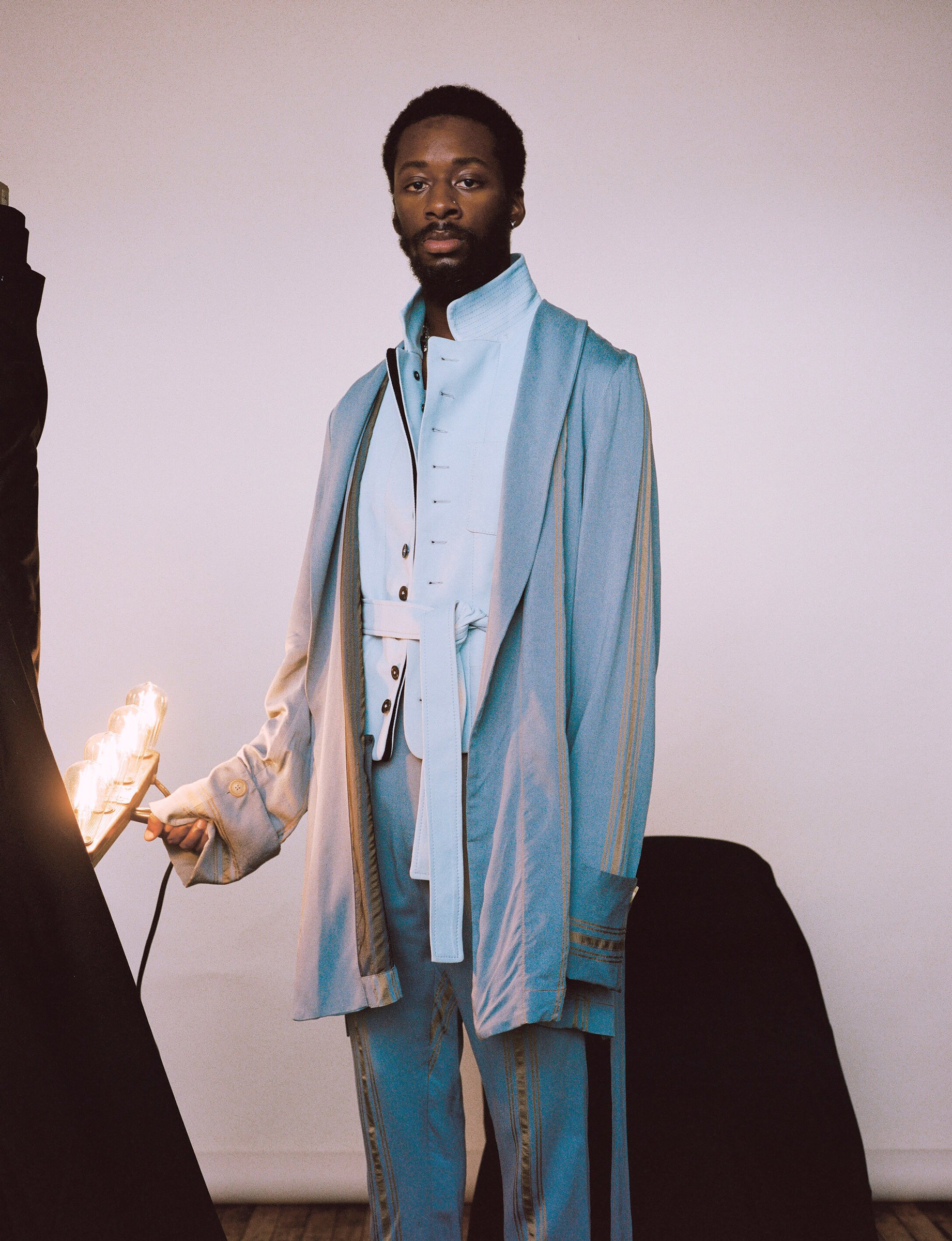
Nostalgia knocks on D’Anthony Carlos’ front door with branlike knuckles. Memories materialize into wispy shapes and heavy eyelids flutter conjuring the fading, fluorescent pink lights reminiscent of discos past. Blink twice and the heavy strobes from sold-out shows and basement parties alike flash as he drifts in and out of jet-lag induced sleep still hours before dawn. The DMV (meaning places accessible in Washington DC, Maryland and Virginia by the metro) native is better known as the Grammy-nominated rapper, Goldlink. He’s home for a few days between touring with Tyler, The Creator on his US Igor tour and gearing up for his personal biggest tour to date of the European continent to promote the release of his newest album Diaspora, and he’s trying to recalibrate. Having become a household name in the hip hop industry having birthed sans uterus a genre of his own called “future bounce,” Goldlink splices thumping house, eyes-wide-open club and silky R&B, to create an auditory landscape solid enough for his hometown to call a foundation. An identity turned dance floor. 

When Goldlink’s home, he doesn’t leave the house. Success becomes clear when he returns to standing in front of his bathroom mirror, where his reflection remembers and exhales on its own. If the shower’s running the steam gathers to spell out retribution. He’s come to understand the rest of the world by first understanding his city and considers comparison to be a fruitfully empathetic lens. The DMV’s rich culture is steeped in its “Chocolate City” roots, wrought by fables of the American Dream, gentrification and dancing feet that echo the drum snare. He strives to preserve the city’s original vibrance by coloring sound with feeling and you can bet that it evinces in shades of brown. Having grown up as a product of divorced parents in the District’s darkest years as the grim reaper plucked lives with outstretched hands and eyes closed, Goldlink turned to music as his forever sensei. Through it he’s been able to find the answers to the lingering questions of ‘why me?’ as his path is hand laced with perseverance. This unwavering dedication to his community has in turn grown to understanding that sometimes to love home, means having to leave it. Growth is not only an open wingspan, it is the flight itself, a reinvention without reincarnation. 

Whether it’s from reading previous interviews or dissecting the verbal homages that live between the bars of your lyrics, it’s no surprise that home and the DMV, not only mean a lot to you but it’s a defining factor of your identity.

Home for me is the space that you’re most comfortable being in. A place that you can reset yourself you know. That’s really it, I’ve been a lot of places that feel like home but there’s no place like home really. 

When you’re kind of talking about resetting yourself I think it’s this idea of like holding up the mirror per se. I don’t know if it’s this way for you, but for me and being from Hawaii, it’s going to my grandma’s house or something like that. What does resetting yourself look like? 

Yeah it’s chopping it up with the homies, seeing my son, seeing my family, resetting in that. It is the mirror aspect you were talking about and being able to look at and see yourself clearly in that mirror. It also allows you to see all the things that you’ve been able to accomplish while you were away and it’s the perfect time to do that. 

Right and I feel like it’s also this level of honesty that you’re forced to face and it causes you to question what your personal definitions of fulfillment and success are. For you, you’re an artist, a musician and pioneer per se but you’re also a father, a son, a friend. Have your definitions of success and fulfillment changed at all?

It hasn’t changed much. It’s changed a few times throughout the course of my career but it’s kind of stayed the same recently. I think it’s as simple as focusing on something, accomplishing that task and that’s generally what succeeding means to me. Success can be anything really, it doesn’t have a linear definition as in like, oh this is what it is. I feel like I’ve just set certain goals for myself, accomplished them and then reset new goals and then I try to accomplish those things next. 

Right and it exists in tandem with a level of perseverance. In regards to your music you’re always striving to have people understand how you grew up, your home, things like that but where does this need to be understood come from?

Being understood is a basic human need because it’s what we need to be supported. I also know that there’s a balance to it. People won’t understand everything, let alone understand it right away so I never really look for the acceptance of understanding immediately depending on what it is that I want to do. When I released Diaspora, I understood that it would come with delayed gratification. I ask myself if what I’m doing serves a purpose immediately and then if it will continue to serve that purpose in time.

What do you what do you mean by delayed gratification? 

I am much a delayed gratification person because I understand where music is going, I understand the trajectory of things and I make it a point to do a lot of research to remain ahead of my time. Sometimes you need to be ahead of your time to serve a purpose in the landscape of today. We need those unsung heroes and I try to be that as much as I can. 

And with Diaspora too I feel like you know obviously At What Cost from 2017 was so much about home, life in the DMV, creating that sound and then with Diaspora it seemed like you were extending outwards. Was it more so about just taking the next step in your career?

Yeah, it felt like the next step. It was like I tried to find myself locally and then was able to travel internationally to understand myself and my home even better. 

Yeah there’s something to be said about leaving home and what it does to your own understanding of yourself. 

I mean I still haven’t left but I’m okay with leaving because you have to grow as a person. I don’t feel like people should stay somewhere if they feel like they can grow somewhere else but you just stay where you’re needed. I’m never going to leave home entirely and I’m not confined to the definition of what leaving is, there’s multiple definitions of what leaving can mean. If you really love your home, you have to leave it to make it better. If I left and go around the world and compare my home to things that are happening in other cultures to understand and get a better read of why my home works the way it does. You know in order for you to change something entirely, you have to understand it from an external point of view. 

Right. What does growth mean to you and is it always synonymous with change? 

Yes. Like in order for me to grow I have to change so I think change and growth are like the same thing, not always but they should be. 

How are they different?

Growth and change? Well, in order to grow you have to change. In order to change, it doesn’t mean you have to grow. It’s not like backwards compatibility, it’s not like it works only one way.

Yeah but it’s interesting in conjunction thinking about this idea in tandem with the concept of diaspora and the array of experiences that both differ from and are similar to our own. What does diaspora mean to you? 

To me now, it really just means that everybody and every community is experiencing the same social economic problems and are dealing with it in the same way but they’re just different things. That’s really what diaspora means and we’re very much connected. You might do a Harlem Shake but in Hawaii you call it something completely different thing and in DC, we’ve got our own version too but we can understand each other and empathize through our own lenses. 

You’ve mentioned having to deal with survivor’s guilt and the inherent inequalities of the American Dream and now that you’re in the spotlight it must feel like it’s been magnified. I think it doesn’t really necessarily go away, maybe it changes but I think it sticks with you.

Yeah it just kind of changes. Instead of being weird about it and feeling guilty, that guilt grew into me doing something about it, whatever that may be. It’s asking yourself, “that’s how you feel, now what do you want to do about it?” My answer was that, I’m going out and trying to make it fair for kids like me to be able to find a place to make it feel like they’re a part of something.

“I want to create the necessary stepping stones to making sure that that guilt continues to transform into something positive really.”

This issue is obviously called the reinvention issue and I think it’s interesting to think about reinvention in relation to sacrifice. 

Ultimately it just depends on what you’re trying to accomplish in everything because everything is some sort of sacrifice and we all make sacrifices. I sacrifice my time, often my social life, to make sure that I accomplish my goals. I don’t feel any guilt anymore, I felt it at the time, just because I felt like “Why me?” I found all the answers to those questions. So it’s like I don’t feel that anymore and it doesn’t make sense to feel that way anymore actually.  If you want to succeed, you decide to make the necessary sacrifices to get to that goal and you keep working through that goal indefinitely, and when you succeed where is the guilt? What is the guilt? 

Right but it’s also perhaps also having to feel guilty for your success sometimes right? 

Right, it’s just knowing that I’ve done everything I’m supposed to do to succeed. I knew what I wanted. I went to go get it by any means necessary and I worked really hard. I don’t smoke. I don’t drink, I’m not fucking, I’m just working and trying to be great. But what happens? You succeed at writing poems.

I felt guilty because it was so surreal, I’m going back to the community, writing the song, but why me? Why me? I have to tell myself it’s because you fucking tried and you cared. You did everything right. So you just succeeded. 

Yeah. And I know you also talked about this whole idea of taking the slow road versus the fast road.

“Reinvention takes time but in a world of instant gratification we don’t give ourselves the time to process things.”

A lot of great people take the slow road. It’s just that algorithm of life, greatness takes time. Nothing and I mean nothing in the world comes fast and works forever. I don’t care what, who, and how you are, it’s never going to work. Things need to balance and things need a base. When you go too fast, you’ll miss it all. You’ll miss the hard part of things. You’ll miss the important thing that create sustainability. That’s why you can’t just be the greatest pianist overnight. You don’t know what it feels like to not be great. You don’t know what it feels like to lose. You don’t know what it feels like. Or, Steve Jobs is a perfect example of that, people like Jay-Z and Kanye West are good examples of people who take their time, every time they did something it felt like it was the first time but then when you look up it’s been 20, 30, 40 years, they take their time to learn something new. To continue to grow is a hard thing to do. There are certain things you can’t cheat, the universe you can’t cheat. If you think of anything that’s worked immediately, it never works forever, ever. It’s like a rule of thumb. I just always make sure that I’ll take the right road. 

I think the misconception about me is that I could have blown up a really long time ago but I didn’t because that’s not what I wanted to do. It’s not that I can’t get on a track with Beyonce — granted that’s a hard thing to do. But it’s just like how am I going to enjoy being on Beyonce’s song if I’m one or two tapes in? That’s not smart.  Beyonce has been making it for 25 years and that’s because she’s doing something right consistently and it still feels like she hasn’t dropped the biggest album of her career because she continues to grow, it’s amazing to see. It only feels like she can only get better. So that’s why a lot of the greatest people told me to take your time, so I take my time.

Yeah. And I’m wondering do we go through multiple reinventions or just one turn of the tide?

You go through multiple reinventions throughout your career, you can reinvent yourself as many times you want as long as you decide to grow. You’re not going to be the same person as you were when you’re 20, you’re going to be different when you’re 25, 32, you should decide when to be different, to reinvent. It’s nothing changing. It’s just adapting.

Team

Photography · BRENT CHUA
Creative Direction · NIMA HABIBZADEH and JADE REMOVILLE
Fashion · LUCAS CROWLEY
Grooming · MARCO CASTRO
Interview · LINDSEY OKUBO

Designers

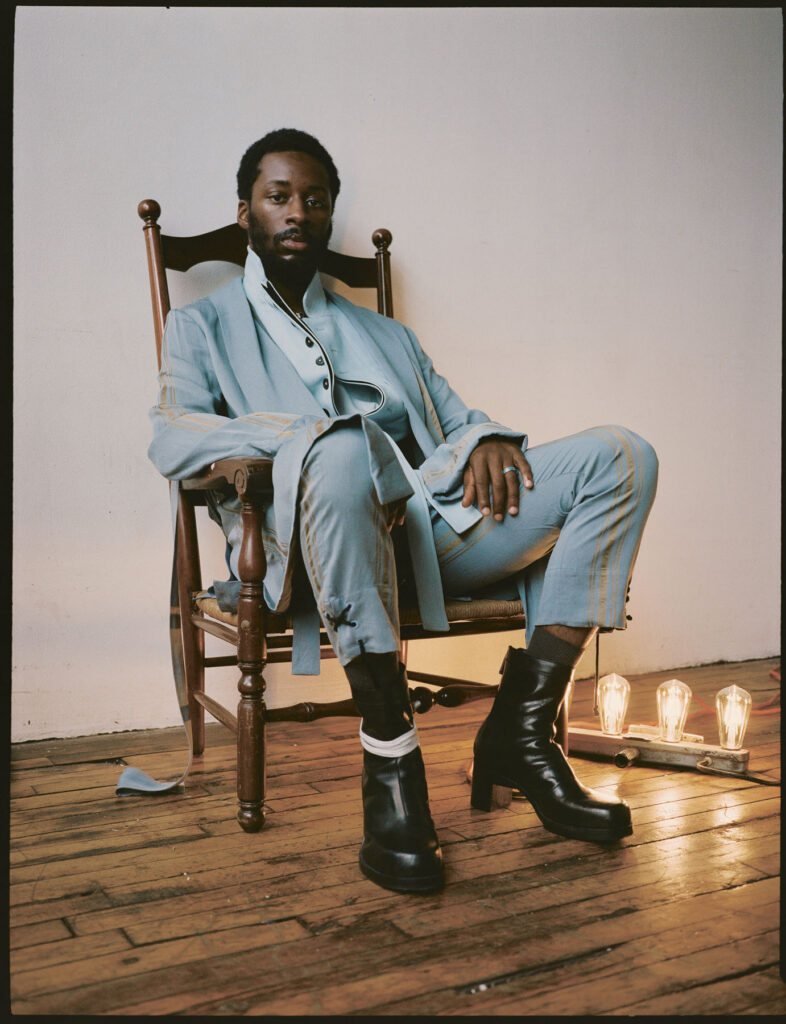
  1. GoldLink wears custom pieces made for his current tour through- out.
  2. Full Look ANN DEMEULEMEESTER

6lack

“I’ve made some of my best music and had some of my best moments from being resilient, pushing through, getting through the struggle”

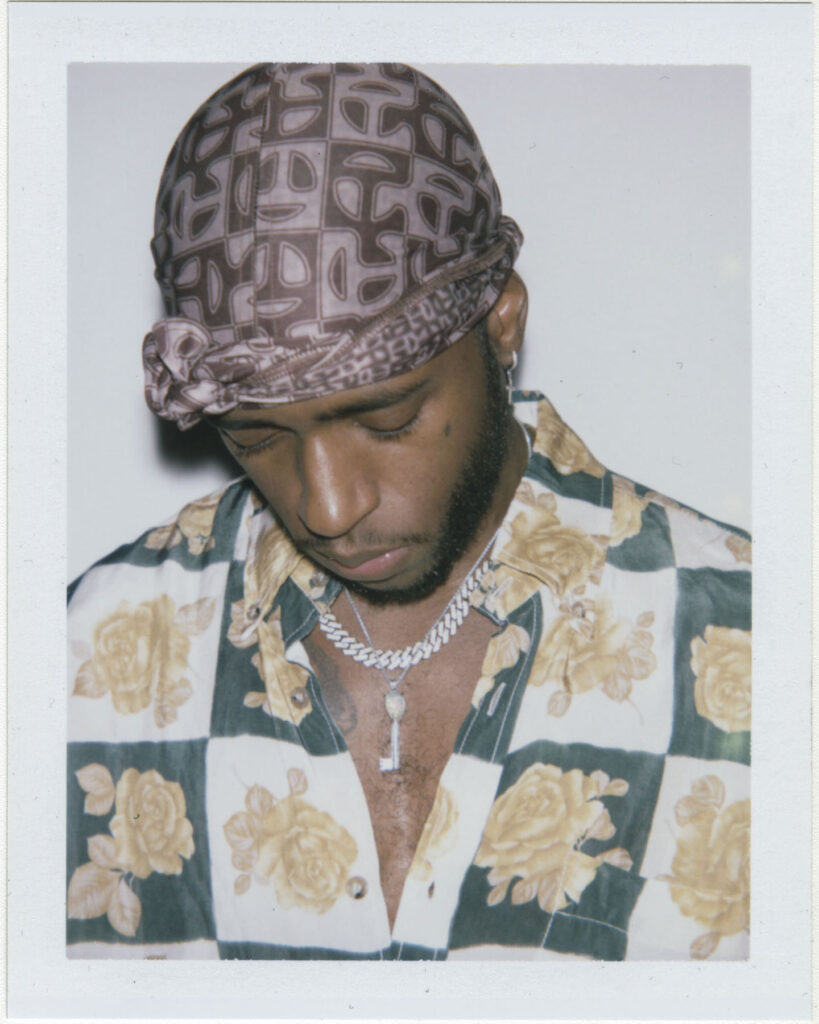
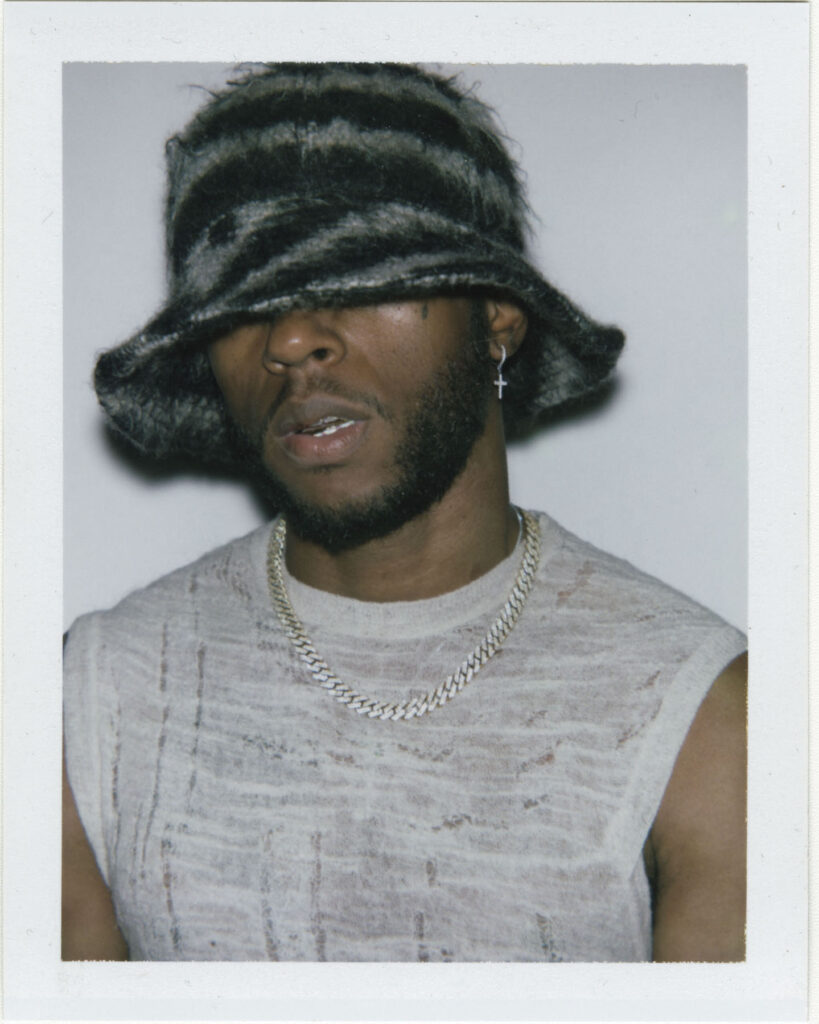
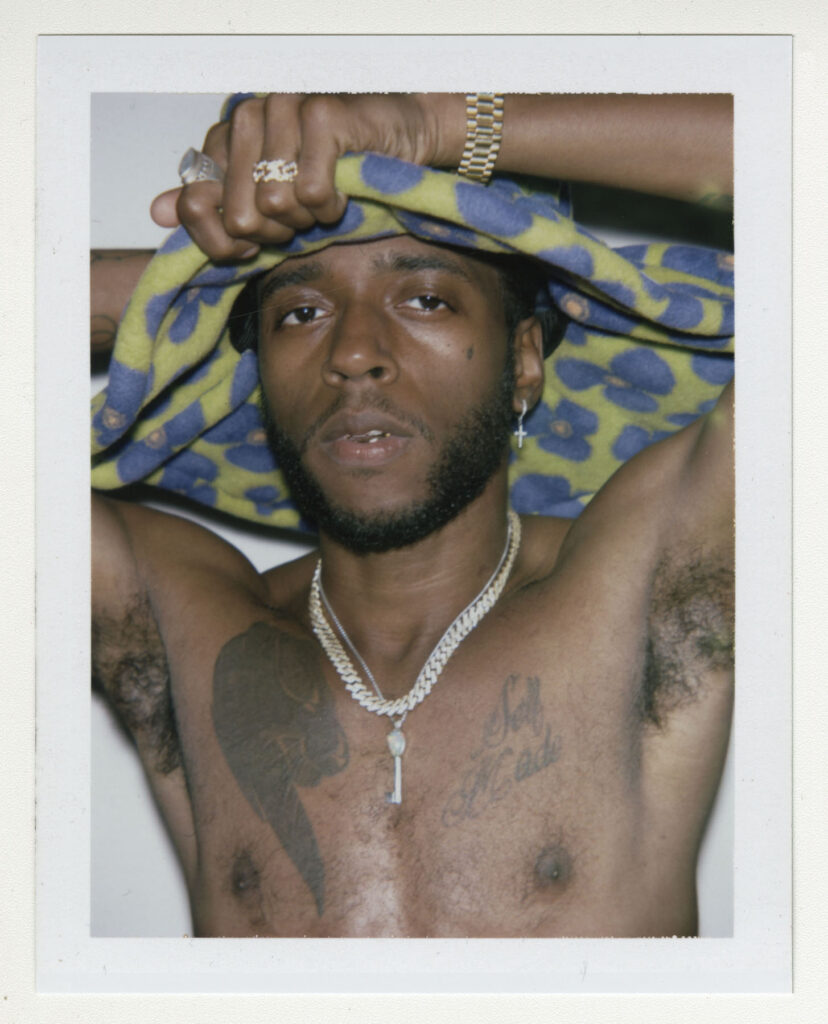
Speaking with a cadence that lends itself to the kind of familiarity one feels at the turn of a season, Ricardo Valdez Valentine, better known as 6LACK, holds no reservations when it comes to speaking about change. As it moves him, with the wind when the feeling is right, he finds himself peering over his shoulder. Flitting between Los Angeles and Atlanta, 6LACK has become a resident of the in-between, a finely cast shadow that dances upon reflection itself. As presence and absence oscillate, a sense of introspection grows and calls forth the demons from 6LACK’s own mind so that one day he may address them as angels. Would you recognize insecurity if it told you its name was now faith? Having released his latest EP 6pc Hot in June of this year, the recording artist and recipient of 3 Grammy nominations who has collaborated with heavyweights like Future, Young Thug, Offset, Sir Elton John via The Gorillaz and Selena Gomez to name a few, has begun to adopt a different approach to his career and life itself. Utilizing his emotional candidacy and the art of conversation, 6LACK ruminates on his own transgressions, projections and desires in the pursuit of total clarity. He wears no halo but the latter has given him wings.

6LACK has always made music with the intention of resonance but instead of weaponizing his own vulnerability and using resilience to romanticize strife, we see him walk away from these sad boy fantasies laced with martyrdom and move towards a crossroads in which utopia begins to look like the life he already has. The foundations of this new outlook have been cemented by his role as a father and committed partner, bolstering his identity with a sense of purpose and directionality There now exists a healthy dynamism to his person and artistry as he continues to untether himself from the experiences and sounds that once defined him. Having gone on to create initiatives like 6lackbox, a platform that provides an array of tangible and affective resources for his community, 6LACK is letting go but remains held. All roads lead home.

The Irish playwright, George Bernard Shaw, famously once said, “the single biggest problem with communication is the illusion that it has taken place.” You had mentioned previously that it was easier for you to communicate via music than in real life. Taking that into account and coupling it with quarantine and the collective growth that occurred through time for introspection, voluntary or not, what kinds of conversations were you having with yourself and what are you telling yourself as you emerge?

I think that in the beginning of quarantine, I was going through something similar to what everybody else was going through where we started off relatively strong and as time dragged on, we got a little bit dry. I reached a point where I was trying to figure out what I needed to do for myself before I even began to make music, just to be able to express myself, communicate, grow, learn, I felt super stagnant for a second. I realized I had to get back to myself, get back to being curious, get back into reading, get back into doing other things that sparked my creativity because I didn’t realize that I had stopped. I had put everything into music for so long and the setting and meeting of every goal only had me looking at the next one. It became a matter of okay, what do I do now? What do I do now? This way of operating ended up becoming a block of other parts of my life and that was one thing that I identified and began to do something about. I recently started therapy too, so that’s been cool to talk to an outside person who can give me advice or tell me what I’m thinking is cool, or not cool, or is me, or not me. So therapy, self-reflection and creating new routines has helped me to feel a lot better now versus how I felt at the beginning of quarantine.

Totally and with therapy in general, there’s a lot of trust involved. Do and would you say that you’re someone who trusts people easily or are you known to put your walls up? 

I’m not too bad on trust, I give people a lot of chances and benefit of the doubt so I’ve never really struggled with that part of it. I guess really it’s more so just trusting myself in a lot of different situations.

Right and in terms of trusting yourself, how much of that is synonymous with being honest? There are ugly truths inherently wrapped up in self-reflection and we often don’t want to see ourselves as we are. 

Yeah I think it’s a tough thing, I feel like most people will kind of look at that and think it’s automatic, or an easy, or natural type of thing but I’ve learned over the last few years that honesty, even with myself, is embarrassing. Sometimes it feels shameful, sometimes it’s humiliating, it’s not always my favorite stuff to talk about but being able to resolve situations that have transpired from those things has been one of the toughest things I’ve ever had to do in my life. And it’s not because I don’t like to be honest or anything like that but when you go through a lot of things that aren’t necessarily favorable, why would you want to shout that out? Why would you want to tell somebody? Why would you want to trust somebody else with that information? So I’ve learned to speak on it more and every time I do a new album or get into a cycle of making music, I have to stop, I have to reevaluate everything, I have to see how I feel about where I am and where I want to be. I have to get to a point of being honest with myself before I start writing because otherwise, I would just be writing from the viewpoint of the last album.

Right exactly, there’s a certain voluntary vulnerability that is hard to give access to even with yourself, it becomes a question of how do you get there? We all arrive “there” differently, can you give us more of a window into your thought process? Put us in the room with you as you’re starting to write and come upon a closed door per se. 

Definitely, recently this year I spent a lot of time in a studio just sitting there. I wasn’t being hard on myself but I didn’t want to walk if I was going to walk the same way I walked last year. I would go there thinking I was going to work, I’d fire up a beat or flip through like 20 beats and eight hours would go by, ten hours would go by and then it’d be time to go. I’d be sitting there the entire time because I was sorting through my thoughts, trying to figure out what specifically is going on and what I needed to get myself going. I really just needed to be brave enough to sit down and have all the conversations that I needed to have with the people in my life because naturally, when you hear things that you don’t like especially pertaining to your person, you want to deny or fight or reply in a way that isn’t always reflective of who you truly are. I had to remember that those feelings aren’t natural and it’s more so about getting it out there and allowing other people to make the decision of what to do for themselves, giving them a choice versus choosing for them.

I can imagine you being in the studio, sitting there and feeling maybe a bit unfulfilled and obviously there’s this idea of success and respective markers of it like putting out a new album, garnering press, outside validation etc. But I’m wondering for you, as someone who is more so an artist than an entrepreneur or performer, how do you differentiate between fulfillment and success? 

I’m honestly just trying to keep a gauge on just how grateful I am. This year, I had to check myself and look at what I was doing and realize if you want to feel fulfilled, if you want to feel clear, if you want to feel creative, if you want to feel all the things that you want to feel, you have to remember to do things in your everyday routine that echo and practice that. Otherwise you’re going to find yourself in a daze or at a point where you’re not in the driver’s seat, miles from where you want to be. I had to get back into practicing, whether it was waking up and eating something right for myself, writing something down in a journal, reading something out of a book, or watching a documentary, I had to refocus myself to get back to that. I got so far away from those things because mentally, with music and my career, it’ll engulf you. It’ll make you feel like this is all you have and those thoughts start to take up space in your mind alongside your personal life and in order to stay clear and fulfilled, I had to remember to be super thankful. Gratefulness created balance for me. No matter what your intent is, every single day, you keep running into problems because you are explaining your intention instead of making them clear through action.

Preach, good intentions are too often used as the scapegoat for shortcomings! What are those things that you want to be more intentional with?

Primarily the relationship that I’m in and making sure that I’m giving the equal amount, if not more than, what someone is giving me especially if they’re a source of positive reinforcement in my life and are there to teach me things where I need to learn. I was in a space where I’ve always been the mentor to everyone else, so transitioning to have somebody else to do that for me was out of the ordinary and a bit difficult. It’s hard to let go of the reins because I was just so used to doing things by myself, sorting through my thoughts by myself, dealing with my emotions by myself — so when somebody else is there and they’re like, “you don’t have to pull the weight by yourself,” you just have to be willing to let go.

Wow yes, and so often we think that love never asks us to change who we are but why can’t change be synonymous with adaptation for the better? Why does sacrifice have to hold a negative connotation? Love is a difficult thing, it forces you to face things about yourself that you might not necessarily want to see or be willing to see. To what capacity has she held up the mirror per se and made you see? 

I would say that the biggest thing is letting go of that feeling that I had to do so much on my own. You kind of go through life in the neighborhood, in the classroom, and studio, all these different rooms that I’ve been able to live in, change and adapt to and teach people and when I got to a point where I met someone who could teach me instead, I had to be able to stop myself. I had to think about what I’m saying or not saying, what I need to listen to, what I can actually learn from the situation versus continuously trying to be on this mission to teach everybody else.

Yeah and if you’ve always been in this position as the teacher of sorts, to what extent is it kind of like being a martyr? How comfortable do you allow yourself to get with excess weight on your shoulders? You’ve said you’re someone who trusts people easily but I feel like, if you’ve been carrying that torch around for people, you’re not really letting people in or exist in your life in the ways that they might want to. 

That’s another thing that was pointed out in therapy too, these effects might not show up in the form of you breaking down or crying but all those things stick with you. As time goes on, the requests, the demands, the advice that you give, flows out of you and you keep moving and more things stick on you but you keep moving and eventually, you get to a point where you’re like, I’m tired and I don’t know why. It’s because you either haven’t mourned, you haven’t let it go, you haven’t actually solved it, you haven’t given yourself a minute to just focus on you because you’re carrying a torch or pulling the weight of doing the work for so many other people.

And I think in doing so, you don’t really open yourself up to being vulnerable. We want our men, our partners, to be strong but half the time they don’t even commit time to addressing the ongoing internal battles within themselves, let alone even recognizing that they exist. Your platform 6lackbox is a resource for so many people and I don’t know if this is something you’ve envisioned but I can also see it existing as a space to normalize mental health issues? 

Yes, it’s definitely something that we’ve been trying to put more energy and planning into. However we can get more people involved so that it becomes a community thing and not just a me-to-them situation because I have created different communities with my fans and developed a lot of long-term relationships with them. It’s always been cool to figure out a way to let them know that beyond the music that y’all aren’t in this shit by yourself. If you got shit that you need to figure out, or if you have something that you’re going through, that’s what the music was made for, that’s literally what we’re here for. One day we’ll figure out how to specify that and nail down an actual plan.

There’s been so much talk around this whole idea of community recently and for you, what does that really look like? Is it a utopia of sorts? 

I think it’s just a collective group of people who have a purpose towards something specific. A lot has been going on, in the country, in the world in general and I don’t think that the primary way that we fix that is by focusing on like the higher ups, or what’s going on on TV all the time. I think we really need to narrow it down and get back to home, our neighbors and the people around us and remember that if we create a stronger community and a stronger bond with each other than everything else will be in a better position to find resolution. This past election is a good example of people coming together because they felt something and wanted to do something about it as a whole. However, we can continue to do things like that on a smaller scale, everything on a larger scale will start to iron itself out.

Speaking of small scale, home is also something that maybe you’ve been thinking about recently? It’s such a subjective word, you find home in people, you find home in your music and we’ve all been inside, in our homes, in our own head spaces. Is home a place or is it a  feeling? 

Home is definitely a feeling right now. Physically, I live between LA and Atlanta and I have really great reasons to be in both. When I go to Atlanta and I get to be with my kid, I feel like I’m at home, no matter who’s around, or what I’m doing. When I’m out in LA and I get to spend time with the person I love, I feel like I’m at home. That’s the best version of home that I could ever really ask for in just having something to look forward to, having something to have fun with, having something to learn from.

You mentioned fatherhood briefly and I grew up with a single dad too. He’s my rock and not always the most vocal person but he recently told me that he thinks we’re pretty similar which was shocking and endearing for me to hear. What have been some of the unexpected lessons of fatherhood?

It’s taught me a lot of clarity, not even to compare it to music but everything that I did album wise before that point was a lot of I don’t know, I don’t know, I don’t know, I’m trying to figure it out. Since then, I’m closer to figuring it out because somebody’s watching me. Other than that, it’s been a really good opportunity to express myself fully, to be a kid again, to be an adult, be every single thing that I am because you get to practice it with somebody who doesn’t know anything bad about you necessarily, who doesn’t judge or have any predetermined thoughts about you. They just are happy to see you and want to be fulfilled in some other way. My thing with her is just making sure I give her the stuff that I didn’t have, which was constant reassurance. I want her to know that she can be herself, she can express herself. I was talking about that the other day in therapy, how at some point in my life that reassurance disappeared and I didn’t realize it until I was able to say it out loud. When that disappeared, my life started to shift a little bit, I started doing different things, my grades started to shift, my personality started to change, my insecurities started to form and these were all things that were a result of my relationship with my parents changing.

Right and thinking about the word reassurance, I think especially in relationships, whether that’s with another person or with yourself, it is sometimes something that we seek for the wrong reasons, out of insecurity and that’s a hard thing to admit. .

It’s definitely a hard thing to gauge. I think knowing the specific kind of reassurance that was missing for me, I know that it’s not doing too much to just let your kids know that hey, you look like me and those are good features, or you remind me of so and so and that’s a great thing, or that they’re doing good. It’s about spending time with them and being the type of energy and person who they’ll want to have a conversation with. I think that reassurance can be a tricky slope. I also just learned about myself that I move, act and think in a way where I know that the people around me know who I am but that is not to say that I can go without making the effort to clarify something for them. I am aware that this is something that I can work on for myself and the people in my life. It’s something that I want to make sure Syx doesn’t have to think too much about you know, it’ll be just enough.

Right and thinking about what’s enough, that word itself can be such a trigger for so many people. We’ve all had to recontextualize our own definitions of what’s enough, especially, when we’re not doing all these external facing things anymore as of late. 

I think that has been an interesting thing to figure out too because something can definitely be enough to you and not be enough to somebody else. That’s the fun part and not so fun part to figure out that subjective definition in all of your relationships. The easiest and the best way to do it is by being able to sit down and have conversations where you detach your personal needs or ideas of who you want somebody to be and adopt an open standpoint.

Yeah and thinking about ideals and needs, resilience has also been a word that we’ve seen pop up again and again but to what extent is it sometimes overrated? To what extent are we expecting people to “bounce back” when certain services should be civic priorities instead of difficult circumstances? Why are we coloring struggle with promise?

I think it’s like a 50-50 type of word in feelings, situations and energy. I’ve made some of my best music and had some of my best moments from being resilient, pushing through, getting through the struggle, fighting through this, crying through that. It definitely creates a pressure makes diamonds type of moment where you’ll definitely get something out of it but it is most definitely also overrated because you don’t want to be working from that space, you don’t want to be doing more than what you necessarily have to do. You don’t want to become infatuated, obsessed or interested in that process to make it feel like it’s the only place that you can work from because I definitely have fallen into spots, consciously and subconsciously, where your back’s against the wall and you feed off of that.

Right and being an artist or someone who writes in general, it’s often easier to write when you’re sad and that can be a bit toxic. 

Absolutely. I had to check myself and just make sure that I was not holding on to that because that’ll always be there. If I ever need it, it’s something I know how to do but there’s no reason why I should be putting that first or to be writing songs with that in mind when that’s not where I am or where I want to be.

How do you write about things that are happy then? It sounds kind of like a dumb question but I feel like it’s hard to transition to even create from a different mental place?

That was a conversation we had in the studio and Childish Major helped me put the initial words to it. In order to be able to write about the happy stuff, the good stuff, I had to sit down and practice the shit that made me feel good. Since then, the music has grown into me talking about my growth. I still have the ability to be able to tap into the other side, the sad side, or the side that people recognize or remember but it gives me the range to be able to say more, do more, express more and help people get through more. I don’t want to just be a pacifier for somebody when they’re going through some tough shit. I also want to share in a moment where they can celebrate, have fun or feel good.

It’s allowing yourself to be a dynamic artist because when people begin to create and become known for something, they begin to become defined by that and it becomes hard for them to reclaim agency from the external validation. They compartmentalize who they are from the work they create. 

It’s definitely challenging. That was one of the first reasons why I cut my hair immediately because people off the bat were like, oh, he’s this, he’s that and I was like let me just reset because I felt myself becoming like a figurehead of whatever that was on the first album cover. As soon as I cut my hair, my life started to change. I started to make more eye contact, I looked up and moved on stage. I just had to realize what was going on but I didn’t realize what was going on because I was just too busy living  it.


Team

Photography · RICKY ALVAREZ FASHION SHAOJUN CHEN
Interview · LINDSEY OKUBO
Creative Direction · NIMA HABIBZADEH and JADE REMOVILLE
Grooming · DARONN CARR


Designers

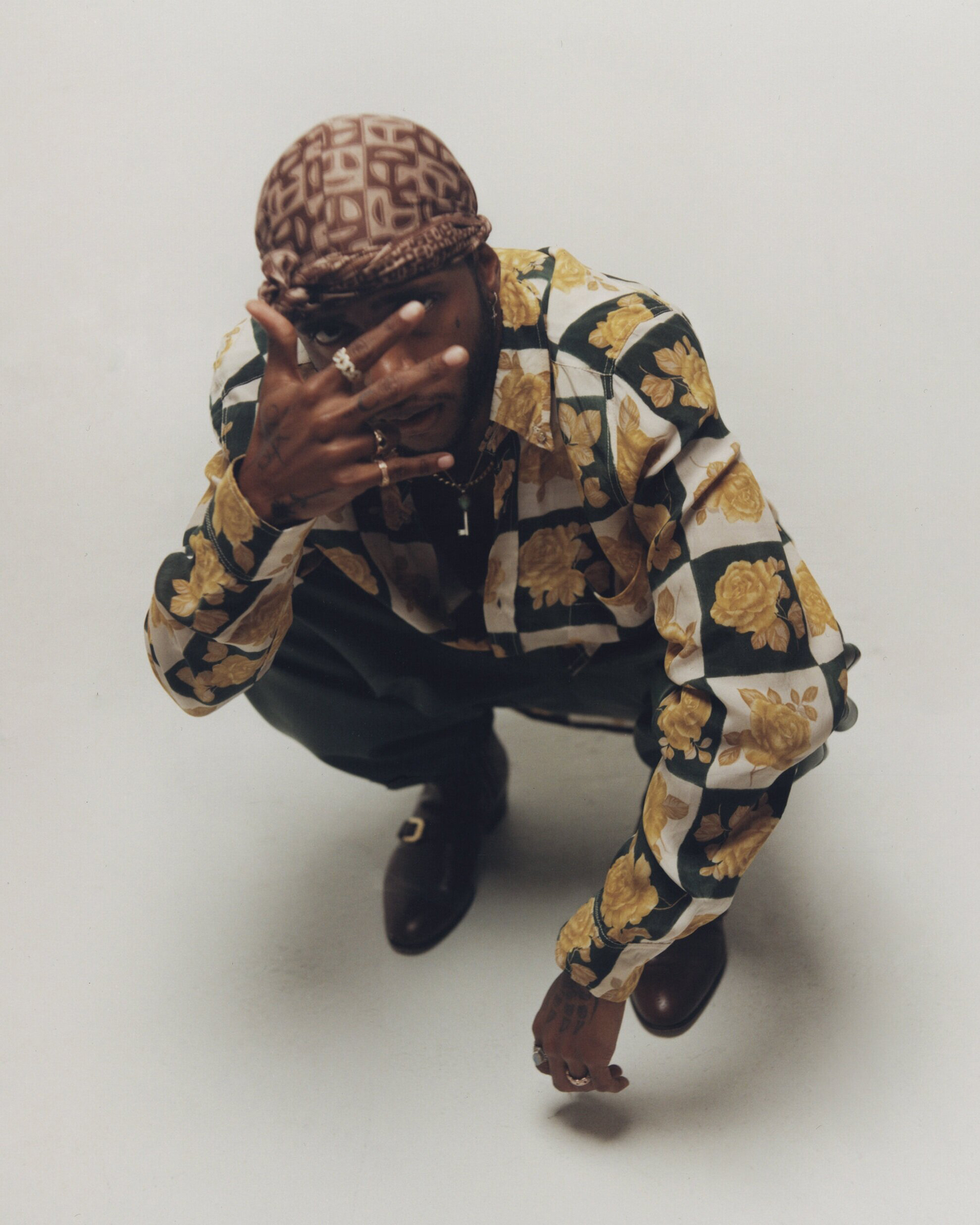
  1. Shirt and Trousers NANUSHKA Boots GUCCI
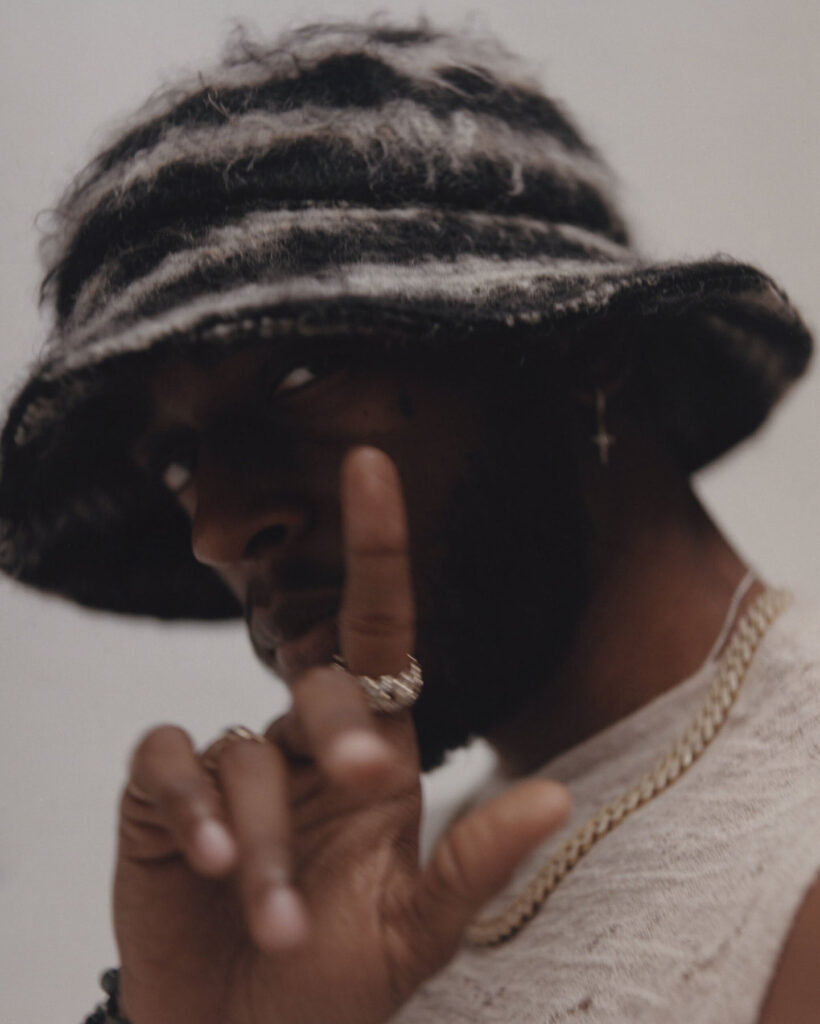
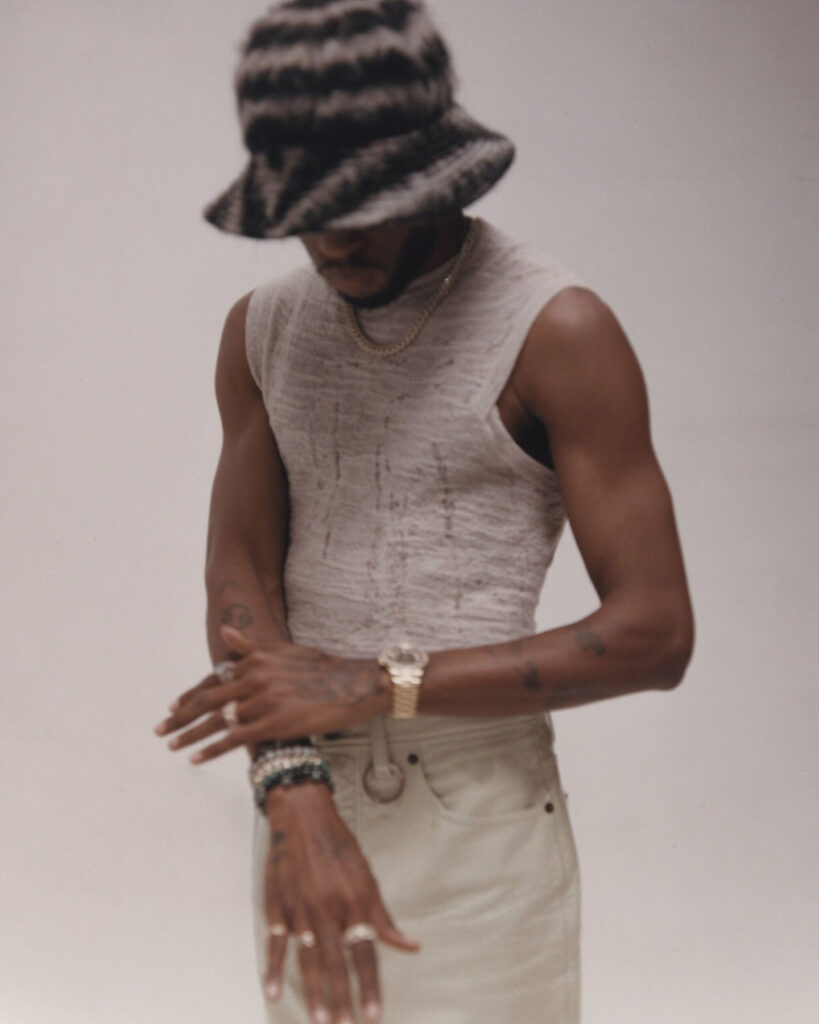
  2. Hat SONG FOR THE MUTE Top ACNE STUDIOS Jewellery Talent’s Own
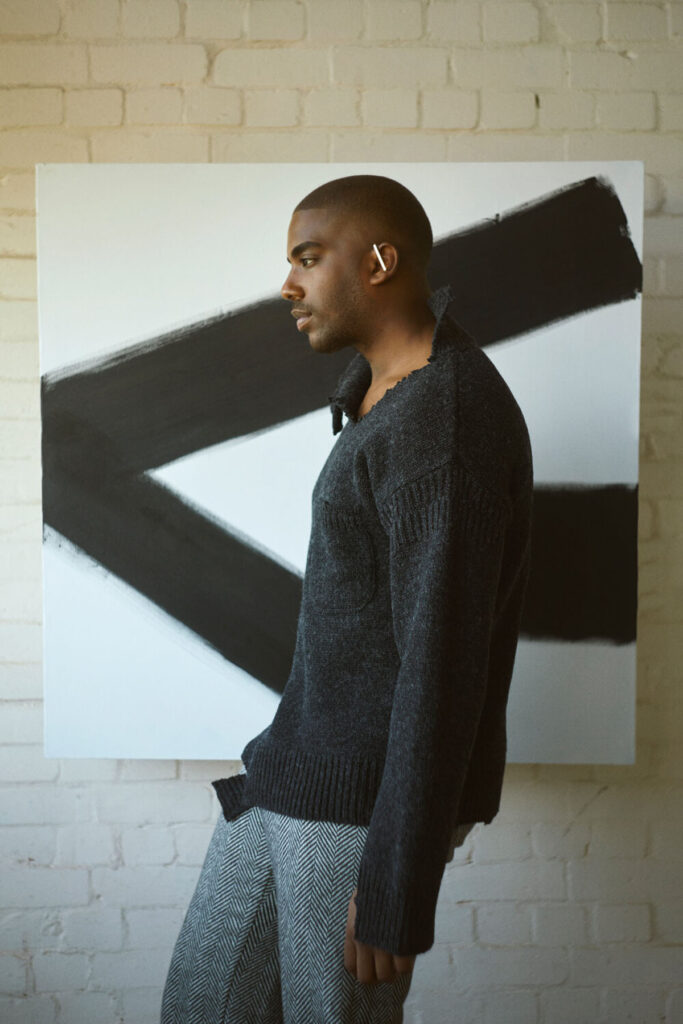
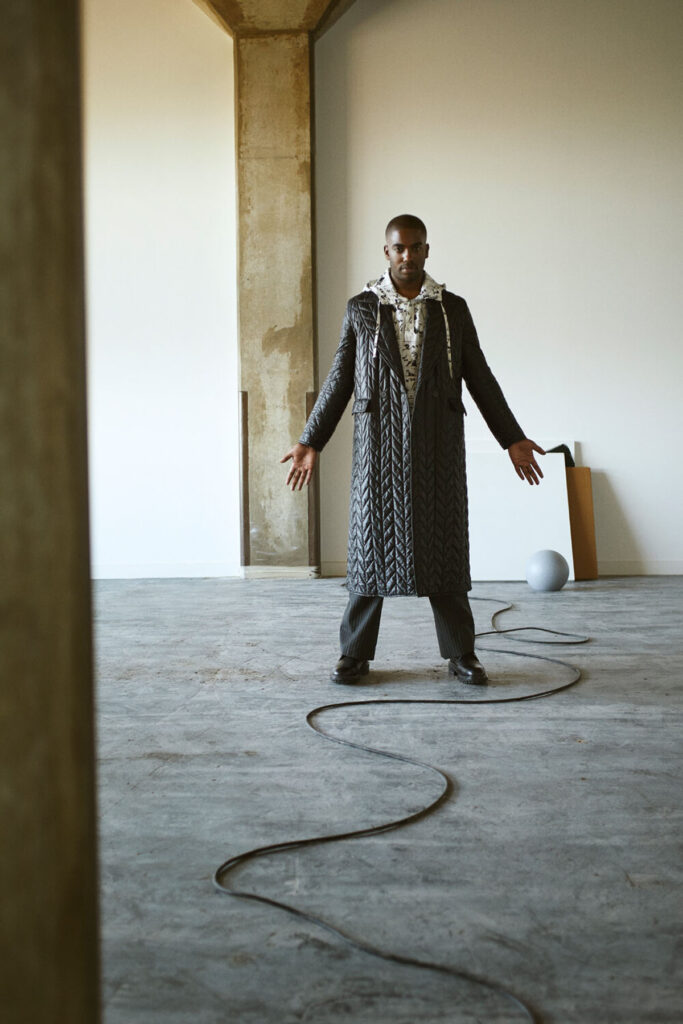
  3. Hat SONG FOR THE MUTE Top and Trousers ACNE STUDIOS
  4. Hat BENNY ANDALLO
  5. Hat BENNY ANDALLO Trousers TELFAR
  6. Hat BENNY ANDALLO
  7. Shirt and Trousers NANUSHKA
  8. Vest and Jumpsuit BORAMY VIGUIER Boots SACAI
  9. Vest and Jumpsuit BORAMY VIGUIER Boots SACAI
  10. Vest and Jumpsuit BORAMY VIGUIER
  11. Turtle Neck HELMUT LANG Trousers MAISON KITSUNE
  12. Turtle Neck HELMUT LANG Trousers MAISON KITSUNE
  13. Shirt EDWARD CUMING
  14. Shirt EDWARD CUMING

Diego Mur

“dance is my guide – it’s how I find meaning in life and my existence”

Behind the Mexican dance company, Nohbords, is Diego Mur, a dancer who, as he explains below, came to the profession by coincidence. And Nohbords is perhaps better described as a project than a dance troupe. Founded in 2014 in Mexico City, Mur wanted to create something that would be dedicated to the study of the body – its movements, its existence in relation to the surrounding environment. He also set out to provide an alternative approach to dance; underpinning Nohbords is the importance of collaboration, whether with photographers, filmmakers, artists, musicians or architects.

No more is Mur’s vision for Nohbords clear than in Ecos (2018), a performance in which dancers explore the potentials of the body’s ability to move, and filmed within the grounds of the iconic Casa Estudio, constructed by architect Luis Barragán in 1948. The vivid colours of Barragán’s design paired with the dancer’s motions – and scenically captured by director Andres Arochi – encapsulate the collaborative effort Mur aims to instil in his work. An acute awareness of, and response to, the environment in which Nohbords’ performances are presented transcends the dances themselves.

For Mur, Nohbords isn’t a bid to appeal to the established dance community in Mexico; rather, it’s an attempt at defying the odds. It is more likely that you’ll find Nohbords working with local folk dancers in Oxaca (as a residency at the Casa Wabi Foundation, aimed at exploring different forms of expression and dance, was), than attempting to impress dance connoisseurs. The alternative approach Mur has taken with Nohbords is as political as it is practical; by connecting and engaging with dancers, creators and audiences outside of the established community, his work is, in turn, inspiring a new generation of dance and performance.

How did your career in dancing and Nohbords start out?

I started pursuing contemporary dance in January 2010, as a student at Antares, which is one of the most important dance companies in Mexico, directed by Miguel Mancillas and Isaac Chau in Hermosillo, Sonora – a city located in the north of the country. It was quite accidental; I was visiting the school because a friend of mine was taking classes there, and one of the directors invited me to try the class. I said yes and took the class, and I did pretty well – I hadn’t taken a dance class before. I was offered an 100% scholarship, so I stayed and decided to dance professionally. After four years of studying, I travelled to Brussels in Belgium for an artistic residency and there, I [decided upon] directing my own project. In Belgium, I also started my movement investigations and created my first duet in collaboration with the Taiwan dancer Hong-Lin Cheng for an art festival. Going back to Mexico, I moved to Mexico City, where Nohbords is based. 

Could you explain what Nohbords is?

Nohbords is a project dedicated to the research of the body and movement in order to create dance pieces. One aspect of the project is that we are a self-managed group; instead of relying on government support or subsidies, we focused on creating and funding our own production.  We are a project that understands the importance of collaboration [more than anything], so we look to present our pieces in alternative presentation spaces and at the same time, we value the work of each artist or professional that we work with. 

Is there anything in particular about the body and its movements that interests you?

I have a big interest in the body, the mind and their connection. I am interested in the body’s transformation; I visualize my dance as a sort of meditation that leads us to uncover complex physical and psychological states. The circle is one of the main movements we work with because it represents eternity; something that has no end, something cyclic, which is something I really relate to. I am also interested in the ‘control’ of the body as a principal tool in dancing. A smart dancer is someone who has a connection between their body and mind. They respond to their environment strategically and through the use of their emotions, being vulnerable, understanding the importance of the energy and how to communicate that experience on stage; breath in, breath out, breathing.

How do you approach choreographing?  

Since I was a child, I have been particularly interested in symmetry, order, synchrony, uniformity. When I saw Mexican folklore and traditional dances for the first time, I really enjoyed watching the bodies moving in the space with a particular rhythm and exactness, and I had the ambition to make that someday. Choreography is something genuine in myself, it happens without overthinking it, in an organic way. I am in love with creating.

What do you seek to achieve through dance?

I like thinking that we create parallel universes that allow us to elevate our consciousness to another level. There is an implicit mysticism in my work because dance has taught me the power of the mind, the imagination and transformation. I believe that that magical and exceptional lands [at the feet of] the audience. On a personal level, dance is my guide – it’s how I find meaning in life and my existence, and this makes me feel that this is my path, my motivation and my entire world.

Is there a big scene in Mexico for contemporary dance? And what is the reception in Mexico to Nohbords?

It is a complicated subject, but I will try and explain it as this: There is a contemporary dance scene in Mexico, but we are not part of it. The main scene relies on government support and subsidies, and for me, that scene represents everything that I am not that interested in and everything I don’t want my work and my art to be perceived as being. Politics in Mexico is full of corruption and genuine apathy towards art and art practices, but at the same time, the work coming out of the [government-endorsed] art scenes continue to represent the system itself. Nohbords is established from a different place, away from that scene, and the response has been marvellous. As a project, Nohbords has been recognised, loved and admired by a new generation of dancers who are looking to establish a more open dialogue and to shape a different understanding of what dance is. 

Collaboration across disciplines is an important part of Nohbords. How do you bring in different disciplines into dance?

We love, and always seek, to collaborate with other disciplines, rather than just integrate them into our work. I visualize other disciplines as a part of the team that helps create the concept of the piece. We have worked with movie directors, architects, sculptors, fashion designers, lighting artists, writers, graphic designers, musicians, etc. The pieces are conceived entirely as a whole; we create the dance pieces through this process of collaboration.  

How important is music to dance? And does music come before dance, or vice versa?

It’s a complex question. We regularly work with original music because I believe that the creation of a unique universe can’t be achieved by using something that already exists, like a soundtrack of a movie for example. Music is vital to the creation of the ‘world’ that shapes each piece, and it helps us in the development process, but learning the rhythm and time isn’t something that I necessarily consider that crucial. Some of our pieces happen in total silence, or we conceive of the music as being generated through the rhythm of the sound of breathing or the natural percussion of the body through movement.

What impact does recording have on your dances? And how do the dancers respond to the camera? 

Videoing brings big exposure, which is important for an independent project like Nohbords, especially as sometimes it’s hard to gain access to spaces to present our work. There are differing ideas about seeing bodies through a camera, or how dance happens on camera. For me, my vision focuses on the dialogue between the dance and the movie directors we collaborate with. It’s been a learning experience, and we’ve been able to develop an approach that works for us.

Designers

  1. Image by Sena Studio
  2. Image by Pablo Astorga
  3. Image by Paulo Garcia
  4. Image by Jacobo Rios
  5. Image by Pablo Astorga
  6. Image by Miguel Galo

Chela Mitchell

“I love things that make me feel small”

Ever since she was a child, the New York-based art advisor Chela Mitchell has loved beautiful things. ‘I just was in awe of the world,’ she tells me over a video call. Growing up in Washington DC, her exposure to art came via the Smithsonian Museums and there, it was the large-scale works she was, and still is, drawn to; ‘I have a very strong and dominate personality and I love things that make me feel small.’ Vast artworks, towering architecture and huge fashion gowns are what catches Chela’s eye; ‘the drama, the theatrics – everything – that’s where my love for art stems from.’ Art, in whatever form it takes, is a ‘supreme form of self-expression; one of the most important things we get to exercise and experience. You can put something on and tell people who you are without saying a word – and that’s art.’ 

Chela has been an art advisor for the past two and a half years, launching her company, Chela Mitchell Art, in August 2018, after a career change from luxury e-commerce. It seems quite a leap, but it’s not the first time she’s taken a big decision on a bit of a whim. A couple of years ago, Chela had been working as a personal stylist in her hometown, DC, a city far better known as the bedrock of American politics than a fashion hub. She was styling local politicians and high-level executives, but it lacked the drama and the theatrics that she craved. But when it came to making the shift to more editorial styling, Chela found that she wasn’t getting call backs. ‘I did some research and was like, “Oh – I need to intern!” And I don’t think I’ve ever shared this before,’ she explains: ‘I did the craziest thing ever, and I took an internship in New York for three days, and then had a part-time job at the mall for four days, and I would travel back and forth from DC to New York weekly.’ This continued for a year – a year she remembers well for the B&Bs she’d stay in and crying, a lot. 

Ever since she was a child, the New York-based art advisor Chela Mitchell has loved beautiful things. ‘I just was in awe of the world,’ she tells me over a video call. Growing up in Washington DC, her exposure to art came via the Smithsonian Museums and there, it was the large-scale works she was, and still is, drawn to; ‘I have a very strong and dominate personality and I love things that make me feel small.’ Vast artworks, towering architecture and huge fashion gowns are what catches Chela’s eye; ‘the drama, the theatrics – everything – that’s where my love for art stems from.’ Art, in whatever form it takes, is a ‘supreme form of self-expression; one of the most important things we get to exercise and experience.’ 

“You can put something on and tell people who you are without saying a word – and that’s art.”

Chela has been an art advisor for the past two and a half years, launching her company, Chela Mitchell Art, in August 2018, after a career change from luxury e-commerce. It seems quite a leap, but it’s not the first time she’s taken a big decision on a bit of a whim. A couple of years ago, Chela had been working as a personal stylist in her hometown, DC, a city far better known as the bedrock of American politics than a fashion hub. She was styling local politicians and high-level executives, but it lacked the drama and the theatrics that she craved. But when it came to making the shift to more editorial styling, Chela found that she wasn’t getting call backs. ‘I did some research and was like, “Oh – I need to intern!” And I don’t think I’ve ever shared this before,’ she explains: ‘I did the craziest thing ever, and I took an internship in New York for three days, and then had a part-time job at the mall for four days, and I would travel back and forth from DC to New York weekly.’ This continued for a year – a year she remembers well for the B&Bs she’d stay in and crying, a lot. 

She persevered.

“I just really don’t believe in the word no. ‘No’ might mean ‘not right now,’ or ‘not this way,’ but it doesn’t mean you’re not supposed to do this.”

Chela says this with the confidence of someone whose sheer determination to break through into a notoriously difficult industry paid off – securing an internship with Vogue Japan under the stylist, Giovanna Battaglia’s first assistant, Mecca James-Williams. That led to a promotion as second assistant, before she later moved on to work at Net-A-Porter for two years. Looking back on that period, Chela exclaims that it gives her a headache just thinking about; ‘I was 27, you know, it’s pretty old to be interning’. 

Why make the transition from styling into art advisory, after all the hard work it took to get to a coveted position that many can only dream of? To Chela, it was simple;

“You know, when the universe wants you to change, it makes you uncomfortable – and that happened to me.”

She was feeling marginalised, underappreciated and was being subjected to racism at work. ‘Every day was a battle, and I just decided it was a battle I didn’t want to fight.’ The industry revealed its true self, and as Chela succinctly puts it, Black women are on the moodboard, but not in the boardroom. 

And so, she did something crazy – again – resigning from her job, with nothing lined up other than the belief that she’d work it out. ‘I just kind of jump and figure out the parachute as I’m falling,’ Chela explains. Two days later, she was offered a freelance styling gig out of the blue, enabling her to continue supporting herself and her family. At the time, she had a dream to open a gallery space – an idea that a friend dissuaded her from, suggesting instead to make use of the connections she’d built up in the fashion industry and start off in art advising. ‘That was a Thursday; I had the logo and my website up by the Sunday.

Taking the decision to launch Chela Mitchell Art was, without a doubt, the right one – but it hasn’t always been easy. Chela found herself experiencing imposter syndrome, and questioning who would take her seriously as an art advisor. People don’t listen to Black women, and ‘people don’t listen to dark-skinned Black women, especially.’ In the early days of CMA, when she hadn’t yet gained any clients, Chela was able to appreciate her time as a stylist with a fresh perspective. Where she’d felt so uncomfortable and unwelcome in the fashion industry, she now knew that being in the art world really was where she was supposed to be. And so, when it came down to it, her approach was thus;

“I had to put myself out there, which was hard for me but like, you don’t want to be the advisor that no one’s ever heard of.”

In the two years since the launch of CMA, Chela’s built up a clientele of artists and collectors; clients whose identities she’s very protective of. She tells me of a famous actor that she met at an art event who, after hearing about CMA, asked to use her services; my introduction to Chela came via an Instagram comment left on the feed of a luxury brand, noting that it was through her that the client collected art. I daren’t ask and she’d never divulge, but this much is clear: she’s now had enough exposure to the ins and outs, ups and downs, of the art world and market to sniff out its bullshit.  

Central to her practice is transparency; it’s important that everyone’s needs are being met. ‘I have to make sure that artists aren’t being taken advantage of, and to make sure collectors aren’t being taken advantage of as well.’ There’s the risk that a collector’s net worth is only a Google, and a potential price gouge, away – or that a collector may ask for heavy discounts from an artist. Either way, Chela finds it disrespectful, and attributes her maternal instinct to ensuring nobody gets short-changed. In an episode of the Cerebral Women Art Talks Podcast in early 2020, she mentioned not being driven by the money side of the art market; but isn’t the art world more driven by the financial worth of a piece than its artistic value? ‘Now listen,’ she tells me, ‘I like beautiful things. I like luxury and I think it’s very important to know what my ancestors didn’t have, so I’m very honoured to know what it’s like to travel, to eat the best, to wear the best.’ But she’s not driven by money to the point of fucking people over. ‘It’s not my currency at all.’ 

By virtue of working with emerging artists, as an art advisor, selling is part of the territory. A lot of advisors get into the business to sell one piece for, say, $40 million and call it quits. ‘I think it’s very disgusting and that shit repulses me – I feel good when I know an artist has a wire transfer coming their way’. Especially when that’s a Black artist or an artist of colour – even more so when they’re breaking into the art world without the support, or understanding, of the people around them.

“There are a lot of artists whose families don’t believe in their practice or what they’re doing and so, when they’re paid for it, they’re validated.”

To those who think being an artist is not a “real job”, Chela has only one thing to say; ‘it’s a real job, I’ve seen the funds, okay, it’s a real thing. They’re living, they’re sustaining themselves, and what they’re doing is important.’

My call with Chela happened in early August, when the reverberations of the resurgence of the Black Lives Matter movement in the United States, and globally, were still being felt. And the genuine heartfelt anguish that was being vocalised and shared throughout the world was met, in various instances, by individuals, institutions and corporations across the art and fashion industry who sought to deflect responsibility by jumping through a series of damage control media campaigns. How did Chela feel to watch the reaction in the art world? ‘I haven’t heard the conversations per se, where people were scared – I don’t think I’d be privy to that information – but I can feel it.’ Or, see it happen in real time: ‘You know, to wake up one day and 30 white women in the art world are following you – are you glad, or are you confused? The number of apologies I’ve received via DM from people I work with is another thing like, should I be happy or am I confused? Even though George Floyd died this year – guys, where have you been? Where were you when Trayvon Martin died? This has been going on since the inception of slavery!’ There is uncertainty in the art world – that much, Chela is sure of – and it’s a good thing.

“I’ve really been enjoying watching the art world have to rethink the way that it operates and ask some uncomfortable questions and explore uncomfortable truths.”

Now, she thinks people feel safe enough to speak out against a gallerist or an institution for being racist or discriminatory in a way that, even a year ago, they’d fear for their career or the threat of being blacklisted. She’s pragmatic though; ‘if it took years and years to build this behaviour, it’s going to take a long time to dismantle it – but we’re starting.’ Chela believes that the real change comes from within ourselves. 

If you want to be treated fairly, make sure you’re treating people fairy every day; if you want to be respected, make sure you respect people every day.’ It’s a matter of re-evaluating the way we look at art, and artists – and acknowledging the fact that art is treated as a commodity the same way that Black people were, and are to this day, through the prison-industrial complex. With mass-incarceration, comes free labour.

“When you sell art at auction, do people think about the fact that 400 years ago, Black bodies were sold at auction?”

Chela’s found one way to challenge the stability of the gilded cage that the art world has built for itself – or rather, it found her. As a female, Black art advisor, she’s regularly contacted by young people on Instagram who want to get into the profession. How does that feel? ‘I did not anticipate that, and it just feels wonderful.’ It’s an honour, she says, that people feel comfortable to reach out to her and for that, she’s especially grateful, considering she didn’t have anyone there to guide her into the space she now occupies. One thing she’s keen to address is the mentality that there is only ever enough room for one Black person operating in a space at any time. That’s something she’s witnessed as an art advisor – and she deconstructs the absurdity of that concept by likening in to the ice cream aisle in a shop. No matter how many varieties and brands of ice creams there are in one freezer at any given time, they all have something valuable to offer; ‘Ben & Jerry’s ain’t worried about Häagen Dazs! We’re all put on this world to give something different, in a different way.’

A short profile on Chela and her art advisory was featured in Forbes at the end of last year. In it, she mentions reading an article in the New York Times on the history of a small, but dedicated number of Black art dealers and gallerists who’ve been pushing back against the toxically-white art world for the past 50 or so years. Their contributions to the art community are important, but still, not much has changed; Chela herself only knows around five Black advisors. The article includes an anecdote in which art dealer, Joeonna Bellorado-Samuels, recalls attending an industry dinner where the daughter of a well-known collector presumed she was an artist – the palatable (or profitable?) role that a person of colour can have in the art world. “Art dealer” was her fourth and final guess, compounded by confusion and, perhaps, a tremor of fear. 

Earlier this year, Chela launched Komuna House, an art club for people of colour that is everything that membership clubs like The Wing are not. The millennial pink, Instagram-friendly inclusivity espoused by The Wing has, in recent years, been exposed as a distraction from the regular racist, classist and discriminatory conduct that its employees and, alas, many of its paying members, are subject to. ‘I just wanted to create a place where we wouldn’t have to deal with that,’ Chela explains – the programme of events is centred around artists and collectors of colour, and though anyone’s able to join, she wants to be ‘very, very clear’ that Komuna House will exclude the white gaze. She hopes to use the platform to build a community, to foster professional networks between artists and buyers, and ultimately, to ‘weaponise’ members with the knowledge and power necessary to transform the art world for good. Komuna House launched in March, and so it predates George Floyd’s murder; ‘I didn’t know the importance of what I was doing – I mean, I did – but I now understand it differently as the year has progressed.’ 

To Chela, the artist of our era whose work embodies the powerful potential that art can have is the painter Kerry James Marshall. She describes his work as being ‘brilliant beyond measure,’ in terms of its technical and cultural significance. She recalls walking around his 2017 retrospective, Mastry, with her mouth wide upon, unable to speak the whole time. ‘I’m from south-east DC, and there’s so much shame from being from there’. Through Marshall’s work, marginalised and impoverished communities, like the one Chela grew up around, are given agency. The projects are often depicted as scary places where drugs use, crime and violence are rife; and while Chela contends that those things may be true, there’s a sense of community that’s hard to find elsewhere – communities that come together with all they’ve got to make it work for everyone. Chela’s original plan to open a gallery is something she still dreams about every day, and she knows exactly how the space would look. Of course, 2020 has thrown any short-term plans up in the air for the foreseeable future – but that’s no bad thing. She hopes to have conversations with artists, to get a real understanding of what an ideal gallery should be. As she points out,

“if I open a gallery with the industry’s current business model, how am I creating change?”

What she does know, is that it will be a space for everybody, free from the fear of judgement. There are only so many times you can walk into a ‘very well-known gallery’ for an exhibition of a Black artist, ask for the price list and be made to feel like you’re crazy. At Chela’s gallery, you can be, and do, what you want. ‘And I think that’s why I have to make a space because that’s the kind of energy we need now more than ever.’ 

Chela Mitchell Art (CMA) provides art advisory to private, public and new collectors looking to navigate the contemporary art market. With experience as a collector and a deep understanding of the industry, Chela is able to assist clients in all aspects of building a fine art collection.

Research and knowledge of the contemporary art world is the core of our commitment to our clients and positions us to help collectors acquire works of art from emerging and established artists. From artist studio visits to auctions, Chela Mitchell Art is able to secure the pieces that our clients need to build their collections.

Credits

Chela Mitchell Art is a member of the New Art Dealers Alliance (NADA).
www.instagram.com/chelamitchellart
www.chelamitchellart.com

Designers

  1. Lunga Ntila
  2. Alanna Fields

Daniel Farò

The Cyclades

PAROS, Aegean Sea — The typical hot summer day only allows for laziness and refreshing plunges into the water. 

This photographic essay was shot on the island of Paros, in the Aegean Sea.  

What at moments feels like boredom, can be a great reminder of what slowing down from frantic urban centres can be like. I want to visualise the feeling my travel companions and I had during our stay. 

The recharging trip on the Cyclades now feels like a dream leaving a sense of nostalgia and excitement for the next escape to the next island.

Daniel Farò is a German–Italian Graphic Designer & Photographer based in Berlin. He works in all areas of design and photography within the cultural and commercial field focusing on editorial, travel and lifestyle work.


Credits

Photography and words · DANIEL FARÒ
www.instagram.com/daniellfaro
www.daniellucasfaro.com

Kennedi Carter

 Soon as I get Home

NORTH CAROLINA, UNITED STATES OF AMERICA — A Durham, North Carolina native by way of Dallas Texas, Kennedi Carter is a photographer with a primary focus on Black subjects. Her work highlights the aesthetics & sociopolitical aspects of Black life as well as the overlooked beauties of the Black experience: skin, texture, trauma, peace, love and community. Her work aims to reinvent notions of creativity and confidence in the realm of Blackness.


Credits

Photography · KENNEDI CARTER
www.instagram.com/internetbby
www.ken-carter.com


Simone Steenberg

Sea Oddity


Team

Photography · SIMONE STEENBERG
Fashion · ALDENE JOHNSON
Creative Direction · SIMONE STEENBERG Set Design · AMY FRIEND at GARDEN
Make-Up · NANCY SUMNER at EIGHTEEN using Les Chaînes D’Or de CHANEL and Sublimage L’Extrait De Nuit
Hair · WILSON FOK at EIGHTEEN using ORIBE Model · TABBY at IMG
Photo Assistant · LUCY DAVIE Fashion Assistant Francesca Russo
A special thanks to · The Walpole Bay Hotel, Margate, Kent


Designers

  1. Full Look GUCCI
  2. Full Look REJINA PYO
  3. Dress HALPERN
  4. Trench and Shirt NYNNE Dress TOGA Boots MULBERRY Necklace and Ring JAKHU STUDIO
  5. Jacket NAYEH Cardigan TOGA Top and Leggings LIVE THE PROCESS Socks FALKE Shoes MALONE SOULIERS
  6. Top, Skirt and Shoes SIMONE ROCHA Earrings SOPHIE BILLE BRAHE
  7. Trench and Shirt NYNNE Dress TOGA
  8. Jacket A-JANE Top GANNI Earring ALICE WAESE
  9. Jacket NAYEH Cardigan TOGA Top LIVE THE PROCESS
  10. Dress A-JANE Socks FALKE Shoes RENLISU
  11. Full Look GUCCI
  12. Jacket and Skirt CECILIE BAHNSEN Shoes HEREU Socks FALKE Earrings JUSTINE GARNER

Brent Chua

Rebirth

Team

Photo · BRENT CHUA
Fashion · JUNGLE LIN
Editors · NIMA HABIBZADEH and JADE REMOVILLE
Hair and Make-Up · TAKANORI SHIMURA
Model · ALISSA SUGAWARA at THE SOCIETY

Designers

  1. Shirt ZIMMERMANN Dress TIBI
  2. Dress and Boots HAN WEN Coat ISSEY MIYAKE
  3. Shirt TORY BURCH Bra GUCCI Trousers and Shoes BALLY Belt CHANEL
  4. Shirt ZIMMERMANN Jacket BALLY Skirt SALVATORE FERRAGAMO Belt CHANEL
  5. Shirt BALLY Dress GUCCI Boots DR MARTENS
  6. Dress BAJA EAST Shoes BALLY
  7. Turtleneck BALLY Dress CLAUDIA LI
  8. Full Look HAN WEN with GUCCI Bra
  9. Full Look GUCCI

Subscribe to our
Newsletter