Archive page:


Silt

‘Silt’ a 35 minute documentary film produced by Iida Jonsson, Ssi Saarinen and Ona Julija Lukas Steponaityte, is an exploration into the post-soviet landscape following the formation of rapidly occurring lakes in Lithuania, one of which, rests on Lukas’ family land in Likanciai. The newfound body of water is a by-product of a failed multi-decade soviet drainage project, aimed at making wetlands more suitable for agriculture. Following the collapse of the regime, the Lithuanian municipality gained responsibility of such drainage systems, but high maintenance costs resulted in the prioritisation of farmland and infrastructure. As time passed, the drainage systems started to clog and what was once a drainage pipe, became a vessel for a lake to emerge on the family’s backyard.

The documentary demonstrates the group’s interests in the rendering of landscapes and is a response to the embedded narratives within it that influence our understanding of ecological emergencies, and the relationship between the landscape and systems of maintenance. The visuals are accompanied by a sculptural sonic landscape produced by composer Alexander Iezzi, referencing the historical interrelationship between landscape and sound. The dissonant harmonies, polyrhythms and metallic growls, coupled with foley and field recordings are almost reminiscent of musique concrete styles of music, providing the perfect soundtrack to the unnamed, unmapped lake.

Following their most recent exhibition ‘November’ at Inter Public and the screening of ‘Silt’ at the Danish Film Institute in Copenhagen, I had the pleasure to talk to them about how their collaborations and inspirations inform their approach to the creative process and their relationship to the entangled landscape.

I noticed you all completed your MFA degrees at the Sandberg Instituut in Amsterdam, is this where you first met as collaborators? How did this shared experience help you grow in your individual creative practice’s and come together with a shared artistic vision?

SSI: Iida and I were already collaborating, so we are used to sharing a project and practice. But yes, all three of us were studying the Master of Fine Art programmes at the Sandberg Instituut and this was the starting point for our collaborations. We had shared interests, and we just admired each other’s work. We were all interested in this idea of an accumulation of knowledges and bringing in our own experiences to our collaborative practice and approach. We were already working with similar topics, so for us, working together, was a way of making the work more rich, opening up shared discussions and accumulating these pools of knowledges.

LUKAS: We know each other’s aesthetics well and we know what we are interested in. There is definitely a process of building a shared library of references and a vocabulary of shared aesthetics that has a big impact on the work. We also have similar tastes and sensibilities, so we have a lot in common which creates a good basis to develop a shared language together.

S: We are also coming from similar professional backgrounds, but we still have different perspectives and skills we can bring into the work. For example, Lukas was working as a professional colourist, and Iida and I used to run a production studio, and I have also worked as an editor and cinematographer before. So when we talk about collaboration, we are bringing in our different skills and knowledges to our practice.

I’ve noticed that you don’t work under a collective name, but instead, you use your own individual names to credit the work. Why do you feel this is important to you and how does this impact your collaborative processes?

I: I think there is a certain openness and honesty to it which is interesting. Maybe there is a fourth or fifth name added to the collaboration in the future? So I think it allows us to expand and change shape to become different things.

S: I think to a certain degree, there is still a sense of separation within the work as I can recognise myself in the work and see the parts that have been touched by Lukas or Iida. Additionally, there is an entanglement in this; where our individual expressions are also informing each other, and we are benefiting from one another. So, there’s this intersection of aesthetics and ideas which becomes how the group work is ultimately presented.

I: We are also not crediting our individual roles within the work. It is still a shared process where we are all involved in the conversations and the various tasks that need to be executed. As Ssi mentioned before, it is really useful to bring together our individual, extensive research and knowledge that has been accumulated over several years.

You have worked together before to create the works ‘Terranium / Greywater’ and ‘June’. What do you enjoy about working together and what is important to you when collaborating? How has this facilitated the creative process for your recent exhibition ‘November’ and the production of ‘Silt’?

I: Being a fan of the people you work with is really important. You can really encourage and support people to invest in their work and their ideas by being a true fan of your collaborators.

L: A big part of our work as a collective, naturally comes down to talking. We need to find common ground on an idea or a vision which happens through communication. We spend a lot of time talking, understanding and approaching the shared vision in various ways. This also always comes with challenges, because communication is often one of the most challenging things when it comes to people.

It is also interesting, when working in a collective to see how your own individual expectations towards your production, expands. For me, collaboration allows me to do things that I would not necessarily be able to do alone. So maybe it is also about feeling more brave when you are working with people.

I: Yes I agree, because ‘Terrarium’ was a film using found footage and ‘Greywater’ was an installation, so ‘Silt’ finally gave us the opportunity to create something from start to finish, using all of our interests and skills in a complete way, giving us the opportunity to do everything we had talked about.

I’ve noticed your works are often inspired by the environment, exploring sites of environmental or urban decay. What is it about ‘landscapes in depression’ that inspires you artistically and what draws you to these kinds of landscapes?

S: I think this idea of the landscape and landscape depiction is very essential to our collective practice. Our research expands way back into landscape depiction in the 16th century, looking at the political intentions in mappings and topographies. We are especially interested in the use of landscape depiction to exercise power, focusing on how embedded ideas of nature dictates the way we should experience and interact with the landscape, creating this very essentialist view of an unchanged or static image of the environment. So I think we are working with complexifying this image and contributing to the discourse around it.

L: We aren’t looking for places where urban meets nature. For us the relationship is so entangled, there is no point in finding where one starts and the other ends. We want to talk about this crazy entanglement between the two, and the messy consequences of it.

I: What is also interesting, is, when you constitute the landscape, you also sign up to a variety of infrastructural injections such as, building bridges, maintaining trenches and constructing hiking trails. So there is an enormous number of resources and effort going into maintaining the static image of the landscape. This is specifically interesting for us, the landscape always comes with intention.

Often times, the landscape is undergoing constant change; people throw trash in the street, they create new footpaths in a field, but the government often intervenes to counteract these events, creating an interesting dynamic and tension between the ever-changing landscape and systems of maintenance.

How have your experiences, growing up, studying and living in different cities, shaped your relationship and understanding of the entangled landscape and how has this influenced your artistic process as a result?

L: We tend to work with stories and images that are accessible to us, so naturally this leads to working with images and ideas that we are surrounded by. ‘Silt’ is the most literal example of that, the film is about the sudden formation of a body of water in my family land, where I grew up. The land has been with my family for generations and naturally because of that, there is a story to tell about the soviet occupation in Lithuania and its impact on the nation and the landscape.

I: It wouldn’t have been possible to make ‘Silt’ without Lukas having this really personal relationship to the land. It is important to have a person in the process that has a strong cultural relationship to the site at hand because only they can see the various nuances that you can only understand through spending a lot of time with this culture and space.

S: Iida and I come from rural Finland, so we have a tendency to relate to those types of spaces and images. I think aesthetically this is the language that feels relatable to us because we understand it. The subjects of our films are about the entanglement of environments, and I think we are more asking the questions; what is shaping our experience and what are the signs that are given to us to navigate? We are interested in understanding and complexifying these signs.

In ‘Silt’ we were influenced by a landscape painter called Petras Kalpokas, who made a series of paintings depicting Lithuanian rivers defrosting after winter as a symbol of resistance against the soviet occupation. We were also looking at painters from the Finnish Golden Age spanning from the late 19th Century to the early 20th Century.

I: What is interesting about these artists, is that they both existed in a time of resistance, through the independence movements of Finland and Lithuania. So there is a clear inspiration for us in these two examples of how you can use art as a political mediator.

For your most recent exhibition titled, ‘November’ and the production of ‘Silt’, I have noticed that you have worked with the found materials within the landscape and incorporated these into your pieces. There’s a certain level of transparency and honesty between the subject and its representation within the art. What role do these materials play in the meanings of the pieces?

L: In ‘November’, we used disused solar panels and silt from the water, a found material that is like dust of the water. We were interested in thinking about the landscape as an event and the solar panels as ambassadors of such event, almost like how photography film is the ambassador of its subject when it is exposed to light. So, the found objects are almost like canvases, we develop them into something new as we respond to the found materials.

I: There is a honesty to it but there is also a dishonesty to it. The ways the objects are re- arranged and dealt with always becomes an interpretation of the space and the material itself. Any kind of documentary, painting or photograph is always altered and dramatised by the author. For us, there is sense of liberty in this; When we start to acknowledge the individual’s interpretation of a subject, we can start to critically analyse the tools used, start to construct narratives and create art that might have seemed untouchable before.

You often use film within your works. Why did you feel film was the most appropriate artistic medium for ‘Silt’, do you feel that film can portray something else that other mediums cannot? What is it about film you enjoy working with?

L: There is something beautiful about film being a container of many different skills and tools that can be used to tell a story. It has a duration and demands time of attention, more time than a still expression and it is important to sometimes ask for time from the viewer.

I: There is also a sense of accountability in this because you are taking someone’s time. I like the duality in this, you demand time from your own practice as well as the viewer’s.

S: We also all have previous experience making films. So it is a medium we all feel we can be very precise with and it is a medium we know how to use to our advantage. It is a craft we have invested a lot of time into learning, and we enjoy it because it creates an experience for the viewer.

I: I think it is important to embrace the crafts and the skills that you have. I don’t want to be an interdisciplinary artist, I want to be a disciplinary artist. It’s like when playing an instrument, you play the instruments that you can play. I think this is when you have the potential to say something really sharp, in a precise way that resonates with people. With film, we all have that close at hand.

Do you feel film, offers you a sense of freedom through creating limitations as it provides you with a framework to work within?

I: I think working together is a lot about this, establishing various frameworks that you can collaborate within and film has been one of those frameworks for us, like a playground.

L: There is also something very nice in letting the tools and materials you have dictate the content of the work. It creates a sense of openness which is developed through practicing the skill.

S: There is a text that compares the control over an artistic medium to weaving a basket. The shape and form of the practice is coming from the precise application and strength that you put behind each knot being weaved. It takes multiple attempts to know how much pressure to apply to a certain part and where you should be more careful. It takes time to be able to understand how to emphasise parts and how to portray a narrative through the work. When making a film, I enjoy how you can direct the way you narrate the story and you know how to guide the viewer through the narrative, when you want to do that.

What was your thought process behind the composition, script writing and assembly of the scenes within ‘Silt’ and how did this serve the narrative you were wanting to tell?

S: The film is basically divided into three different parts, and they all come from the videography styles of television broadcasting and documentation of sudden events. The first part of the film is filmed from the point of view of the cameraman. When we were devising those scenes, we were looking a lot at how sudden events are filmed by the by-standers, we were inspired by the sense of intimacy and immediacy portrayed in handy-cam footage of real-time events.

I: There is something beautiful about the ‘vlog’ video format because often, the cameraman and the cinematographer have discovered something simultaneously, so the encounter captured is very immediate.

L: In ‘Silt’ we are portraying this new body of water that has suddenly appeared as a result of a failed drainage system. Through borrowing languages from broadcasting videography, we are able to visually translate the speed at which this new lake has emerged. As a child I could run on this land, but now I can only swim there. So there is something also quite sci-fi-esque about the speed of this event occurring.

S: For the second part of the film, we approached the lake with more of a forensic lens. Focusing on what is happening under the water through the leeches and floating algae. During this part, we wanted to draw attention to the bottom of the lake, which was once part of the land. You can see the trees that were once emerging from the ground and growing on the field as if it were only yesterday. We are creating these clear images of a field that has been flooded and showing the new life that has started to emerge in this new lake. When we were writing these scenes, we were drawing inspiration from forensic discoveries of shipwrecks.

The last part of the film uses visual languages displayed in television broadcasting footage, taken from a helicopter view. We imitated a lot of camera movements from footages of volcanic eruptions, and we used these tools to portray the vastness and the scale of the lake, giving the viewer another perspective of the event.

I: A question we were exploring in our process and method was, ‘how can we capture something so serene and still while also showing the violence and rapidness of the emerging lake?’

The aesthetics of the film are cold and dark referencing the decay of the soviet infrastructure in the ‘depressed landscape’. What were you aesthetically inspired by and how did this influence the production process in ‘Silt’ and help you communicate the narrative you wanted to tell?

L: Digital colour grading possibilities are endless but at the same time the image is often dictating its own rules, so you are always adapting to the rules of the existing image. Sometimes it offers its own solutions and so, it is about attuning your eye to what the shot already has and then interpreting it further.

I: We have also talked about the false pretence of the documentary as a style, discussing this false idea of the neutral documentation of an event. Many people ask for neutral colour grading for a film, but there is no such thing, the footage and the image is always reinterpreted.

There’s also this element of horror in the film, I was reading about gothic literature at the time and I was inspired by the separation of terror and horror. Terror being something you anticipate and horror being something that’s already happened. I think the film holds a little bit of both; with horror being in the emergence of the lake and terror in the potential scale of this lake. I think the colours also help reflect this tension and emphasise the depressive state of the land.

The film music is composed by artist, Alexander Iezzi who releases music under the alias ‘33’. What was it about their work that inspired the collaboration? How did you feel their work and sound design complimented the aesthetics in ‘Silt’?

S: We work very sculpturally when we make film, drawing inspiration from a variety of sources such as 16th century cartographies, romanticist and modernist landscape paintings referencing different parts of art history and political ideologies that have dictated how spaces have been perceived. In a similar way, Alex’s work draws inspiration from a variety of genres, from metal punk to baroque music and is also assembled in a very sculptural way as these inspirations are collaged together creating both abstractions and figurations of the music. So, we could definitely see ourselves in their way of working, we could resonate and relate to their musical productions.

The textures and sounds used in the soundtrack of ‘Silt’ are also very sculptural. Do you think this style of sound design lends itself to the themes of horror and terror Ida described? How does the sound design help deliver the narrative you wanted to tell in ‘Silt’?

I: Creating a composition that embodied the history of the lake was important to us. This is a new lake, very few people know about its existence, and it is also a tragedy for the people that live with it. We worked with alarm sounds and bended them into violins and used the helicopter sound from the television broadcast footages we had used for visual inspiration for the film. So I think the textural layering of these different sounds and the sculpturing process behind the composition helped us narrate the story of the lake.

S: As with landscape depiction in painting, there is also a long history of landscape depiction in music. In Finland one of our most famous composers, Jean Sibelius, is known for having created this piece called ‘The Spruce’ about the Finnish forest. So it is interesting to relate the making of music to the portrayal of the landscape and understand how music can also feel like a painting or a portrait.

Do you think the piece almost challenges the traditional way music has interpreted the landscape in the past?

S: I think it is a response to it. Our work is also speculative, and it is a subjective interpretation of the landscape. We are interested in the traditional methods, but we also want to inject our own perspectives into the discourse. I think the landscape and our urban environments are so much more entangled and dynamic than they once were, so it feels natural that they are interpreted and represented differently.

Yes, I felt that through the dissonance of the music which seemed to reimagine the harmonious romantic way landscapes were portrayed traditionally.

I: Yeah, I think this is what is interesting about Alex’s practice. He works a lot with dissonant sounds and polyrhythms which, in the context of landscape depiction, challenges the rules and orders the classical representation of landscapes present. Especially as many landscapes we know today have been established through classical painting and music.

Credits

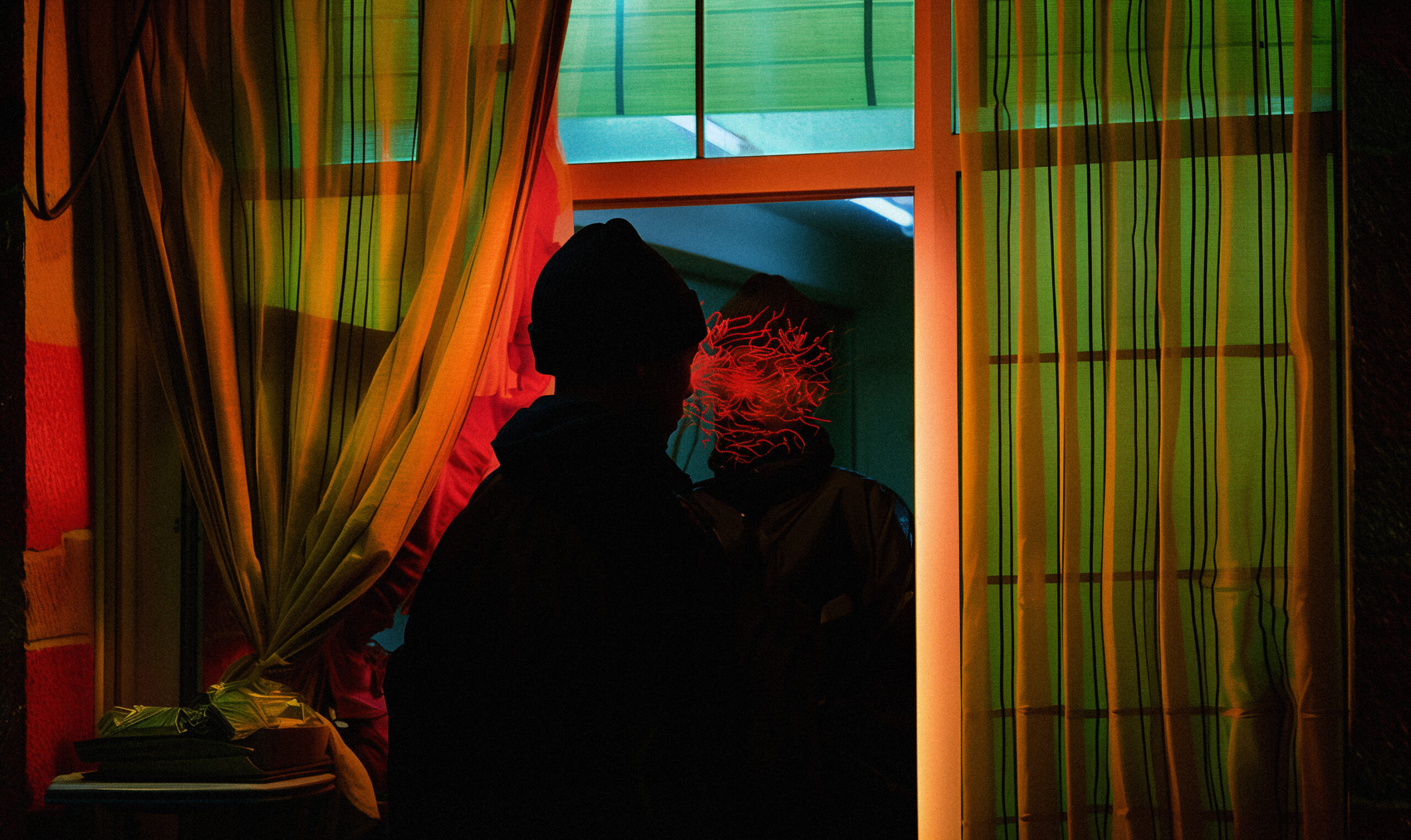
Silt Stills. Courtesy of the artists.
Order ‘silt ost’ here

Julia Kowalska

The importance of figuration

Julia Kowalska (b. 1998 Warsaw, Poland), lives and works in Warsaw, Poland, where she graduated with an MFA from the Painting Faculty at the Academy of Fine Arts in in 2022. Her work intensely interrogates the importance of figuration: beginning by looking inward, she produces paintings that exctract the physical from the subconscious, in delicately devised dreamscapes.
The result is a simulated subconscious from which ephemeral performances present themselves in the foreground, before fading again into the recesses of a restful or restless psyche.

Julia, can you tell me about your work in general? How would you describe it to someone who has never encountered it?

I engage with painting, mostly figurative, centred around the human, although there are single deviations from this. I depict figures in ambiguous states and mutual relations. Most often my focus falls on intimate and subjective experiences.

Looking at your paintings the figures always seem to be extracted from the background, an effect that is not only due to the contrast of color (light vs dark) but also to the blurred lines of the bodies, which seem to suddenly materialize in front of us like characters emerging from a foggy environment. This stems from your desire to depict a scene that is abstracted from space and time, becoming a symbolic dreamscape. Can you tell me where your fascination with the oniric stems from?

It comes from my interest in dream poetics, with the concept and aesthetics of the uncanny. I am inspired by the enigmatic quality of dreams, in which it becomes possible to have lucid and tame experiences in a way that allows them to be both familiar and strange. Dreams push the boundary between imagination and reality, from something familiar and accessible into something peculiar, striking and unexpected. These qualities allow me to explore the fluid, shifting perspectives of Self. And just as Self includes both consciousness and unconsciousness, in dreams unconsciousness comes to the fore, systematic and chaotic collide. This opposition allows for the simultaneous existance of ambivalent meaning, which remains the core of my exploration, because I believe it says the most about ourselves. No matter what I happen to be focusing my research and painting on, whether it concerns dichotomies related to the body, the complexity of relationships or the complexity of desires, the common link is always ambivalence and the tension arising from ambiguity. I love such qualities because they challenge our relationship to reality and destabilise the Self, and in this way they are the best means of realising that Self means otherness.

Your main body of work consists of paintings. You have, however, experimented with other media, specifically sculpture and installations. Can you tell me how you translate your research differently according to the distinctive techniques and materials you use?

When I work with an object in space, I find it easier to think about the form abstractly, as about an isolated tissue, closer to defragmentation or hybridization. This simply shifts some conceptual emphasis. During my first solo exhibition, I experimented with wax sculptures imitating skin-like, carnal tissue. At the time, I exhibited an object – a chandelier in which I replaced the clear crystals with wax forms resembling flesh-like, meat wastes, – and an abstract sculptural form which materia and shape suggested a carnal origin, only without any indication of its interior or exterior. Both forms were associated with the body, but remained abstracted from it, unidentifiable. They could evoke associations with the abject, in places resembling subcoutenous biology causing anxiety and repulsion, while staying visually attractive, pinkish, smooth to the touch. Using a wax imitation of the body, its crafted form, I tried to find corporeality in another context, or rather, to locate it in all the contexts in which the body exists – in a kind of conflict – organically, naturally and culturally. I am currently in the process of working on my fourth solo exhibition, where I plan to juxtapose wax sculptures with painting. I think that conceptually the sculptures will similarly oscillate between meaning and divergences around the body.

In a previous interview someone asked about the way you imagine your shows, and you talked about the fact that you think of a singular work always in terms of its relationship with others. I find this very interesting, because it relates to the construction of meaning. Instead of seeing it as intrinsic to the single painting, you seem to believe that it is gradually built through a relational aspect. Could you tell me a bit more about this?

The relationship of the images is important to me and I take care to ensure that they maintain a dialogue with each other and act on each other. This works for me rather intuitively. Of course, it helps to build or complement contexts. I can duplicate certain meanings and at the same time contradict or undermine them in the next painting. This allows me to intensify, for example, the impression of confusion.

In our conversation it emerged that this belief is also translated in your actual working method: you work on multiple paintings at the same time, carrying impressions and fragments of each of them with you as you paint, therefore almost scattering traces in all of them. Is this link amongst all of your paintings something that you see once you visualize them finished, all together in a space?

Yes, more or less. When constructing an exhibition, I have all or most of the paintings in my mind and on sketches, although it is never a finished idea. A great deal happens in the process. I think that working on multiple formats at once allows for this dynamic of work, where I can navigate the relationship of paintings with each other on the fly. It’s just easier to gather thoughts and put a concept together.

This approach towards meaning and the relevance given to the relational aspect of the works stems also from the acceptance of change (and transformation), which is seen as a constitutional element of your working method. I am curious to know how you see, for example, the role of the public in relation to your work.

I do not yet have a formed view of this relationship, although I do indeed often consider the viewer and imagine the potential trajectory of the reception of my work. I deliberately work with attractive, visually pleasing figuration, using an aesthetic that may flirt with patriarchal sensibilities. Attractive, pinkish, soft bodies, often female, and nudity – subtle and erotic, not obscene – are meant to seduce with the promise of endless viewing pleasure. The image triumphs when the consuming gaze stops confused at an ambiguous detail or, questioning the initial impression, begins to presume the ambivalence of the whole scene. Perhaps in such viewing dynamics I find the potential for realizing ever-present patriarchal sentiments and clashing dichotomies related to communing with the body.

When looking at the overview of your works the blurred effect of your paintings- but also the choice of your materials, such as wax, as we already talked about – I can’t help but thinking about the non-finito. The wax sculptures of Medardo Rosso, for example, were often left unfinished or with features partially incomplete: this was a deliberate choice aimed to suggest continuity. Or, better said, possibility. Is that something you consider in your practice?

Absolutely! The susceptibility of wax to heat and to touch, this plasticity means that the sculpture is never final. The process of molding and solidifying liquid wax is easy to associate with this. Once during my studies, while forming a wax sculpture, I spontaneously recorded my hand massaging and stroking the slippery, fleshy surface of the wax, which while still warm yielded to the pressure of my touch and changed shape, just like living tissue.

To conclude, I would love to know what excites you about your research and how you see it developing in the future.

Well, I have no idea. Each exhibition results in new insights into the subjects I explore. I guess that’s what excites me the most.

Credits

  1. Julia Kowalska, Milky Blind Eye, 2022. Courtesy of the artist.
  2. Julia Kowalska, To give to eat or to allow oneself to be eaten, 2023. Courtesy of the artist.
  3. Julia Kowalska, Flash of a smiling heart, 2023. Courtesy of the artist.
  4. Solo exhibition Pleasant touch, like talc powdered inside, 2022. Sklep Galeria Karowa, Warsaw, Poland. Courtesy of the artist and gallery.
  5. Julia Kowalska, Untitled, 2023. Courtesy of the artist.
  6. Julia Kowalska, Unseen, an animal, 2023. Courtesy of the artist.

Monika Gogl

Monika Gogl’s architectural poetry: the story of Reethaus

In a challenging era dominated by the relentless race against time and the cacophony of voices that makes it difficult to discern individual expressions, Berlin gives birth to a truly unique space. This place pledges to redefine the value of time and space, placing a distinct focus on the act of listening. Beyond a gate, across a courtyard, stands a pyramidal tower almost entirely covered by a thatched roof of reeds. This building, known as the Reethaus, is a novel cultural space described as a “modern temple” for performances and rituals.

The structure is the brainchild of Austrian architect Monika Gogl and serves as the focal point of a campus named Flussbad. To fully immerse oneself in the experiences offered by Reethaus, visitors are required to leave their phones at the entrance – a ritual I, too, observe as I prepare to interview Monika Gogl.

Hi Monika, thank you for being here with me. I would love for you to guide us through the essence of Reethaus. How did the concept of slowness influence the architectural design of the Reethaus, considering its focus on reframing the way people live?

In a time when everything is getting faster due to digitality and development, where we have almost, to use Virilio’s words, reached “a racing standstill”, the task was to make the visitor aware of a transformation. The entire spatial concept is aimed at feeling energetic calm. The path, the special lighting, the simplicity of the material, the green atriums, the reed roof and the landscape are the elements. For example, the long entrance ramp (reminiscent of Walter Benjamin’s flaneur and the associated small, slow observations in peace) causes you to slowly immerse yourself in “another world”.

Could you provide more insights into the vision behind describing the Reethaus as a “modern temple”? And, how did your childhood fascination with temples inform the conceptualization and design of this cultural venue? Furthermore, how did you balance this homage to ancient temples, caves with the need for modern functionality?

I think our understanding of the term temple is rather exaggerated, since the term means sanctuary and functioned as the seat of the gods in ancient times. In relation to our new way of life, the thatched house probably fulfills similar criteria and functions as a temple used to. It should be a place of transformation.

In my childhood I was very impressed by all sort of churches and temples because of their enormous space, their smell, their sound, their light and their energy. I have admired quantum physics since my time at the university, and I was also able to enjoy some of Mr. Zeilinger’s lectures there and delve deeper into it. I believe that spaces imbued with faith, a sentiment often experienced in my childhood, resonate with the principles of quantum physics. 

Just as all spaces carry the energy of their construction and use, it was important for me to incorporate these phenomena into the design of the Reethaus. The lighting from above, which completely changes the mood of the room at different times of the day and plays with the materiality and with the color of the materials. This creates very different spatial atmospheres (for the flaneur) over the seasons. Diving down into the earth via the ramp. The entrance situation, the arrival. How heavy is the goal in your hand? The exciting moment of stepping from the rather low, light-flooded foyer into the central, high room. Which door do I enter through? Narrow and high from the side or generous from the front. What does that do to me? I think the desired functionality is fundamentally to be fulfilled in every architectural intervention, the experience is the artistic and creative aspect. Every building should be sexy in a certain way. 

The use of “pure materials” like concrete, wood, stone, is a consistent theme in your projects. Can you elaborate on the significance of these materials in your architectural language and how they contribute to creating a harmonious and meaningful space?

Basically, naturalness is very important to me. Natural materials age beautifully, acquire a patina and are imperfect like everything in nature and like every living creature. You can play with any of these materials, with its surface, its grain, its color – it opens up an incredibly diverse field of possibilities. I think there is the right material for every spatial requirement. My actual favorite material is nature. A harmonious space concept not only includes materials, but also light and love. Love is a very important ingredient. 

The collaboration with Cédric Etienne for the Reethaus interiors aims to create a “sanctuary of silence” through the Still Room concept. Can you discuss how this concept influenced the design of the interior spaces and the choice of materials, such as cork blocks, meditation cushions, wooden seats, and woven tatami mats?

 The entire concept was aimed at “the immediate pure” in order to focus on the user’s awareness and subtle observations with little distraction. Since the Japanese culture in particular is very appreciative of crafts, tradition and simple things and the tatami mat is a great invention, the seating was also subordinated to the basic concept mentioned above and the low seating and the bench theme in the central room were celebrated . Cork is generally a very impressive natural material and Cedric creates inviting formations with these simple blocks.

The main idea is “simple , beautiful and convincing”.

The emphasis on maximizing natural light in the Reethaus is evident. Can you elaborate on the architectural strategies employed to optimize natural light, especially in the inner room, and how does this contribute to the overall atmosphere of the space?

Light is the real theme of architecture and of every space. Light and material create the appearance and atmosphere of the space. The light from above is unpredictable, but incredibly exciting.The result remains a miracle.   In the central room, at certain times of the day, the light can make the actually dark attic space appear very light and bright  or opposite . When the doors of the space are closed, an intimate, sacred feeling of space is created.  When the doors are open in connection with the façade to the outside, the inner space merges with the river and the landscape. The artificial light for the night and the performance also comes exclusively from above – it is an important part of the concept In principle. The artificial light should be positioned in the same way as the natural light. In the foyer, the light acts as a band from above and reflects the time of day and the position of the sun on the exposed concrete wall of the ritual room. The atria reveal ever-changing plays of light.

Collaborating with Monom suggests a focus on cutting-edge audio technology. How do you see advancements in audio technology influencing the future of architectural design, particularly in spaces dedicated to performance and immersive experiences like Reethaus?

For me, music is the most beautiful of all the arts, because it touches you directly. Sound creates incredible space and I was fascinated by how the new technology was able to produce such a full volume, or a sound that flies through the space like a bee. I think it’s great and I’ve learned a lot working together with William Russell of MONOM.  When you sink into a sound image, almost everything disappears. Here in the Reethaus it is also variable. The loudspeakers are hidden behind the wooden cladding of the dome,thats why it is a pure sound experience.  The live musicians or poets can be plugged into a special detail on the floor bar around the space . Comparable to a play by Antonin Artaud you can play anywhere. I think audio in this form is very fascinating and in combination with a harmonious space it creates a unique overall experience.

The Reethaus is described as an ideal venue for the combination of art, sound, and performance. How did you balance the aesthetic and functional aspects of the space to create an environment that seamlessly accommodates these diverse elements?

I think the spatial formation offers space for a variety of uses with different qualities and the materiality does not impose itself, but rather forms a wonderful stage.

In a challenging era where discussions about anxiety prevail, finding true calmness and disconnecting from daily pressures becomes especially difficult. Your objective of creating a space that aids individuals in gradually calming down is distinctive. How do you manage to strike a balance between the functionality of a space and its emotional and psychological impact, particularly when designing a ritual room?

That is a difficult question . Basically the idea is transformation, contemplation, calm and learning. Of course, many aspects of a design arise intuitively. I always design with the aspect of what I would like, how I would like to feel, what could irritate me and thus trigger my consciousness. There is never only one ingredient. In the Reethaus  is a path, a heavy door that leaves everything outside, a domed space that exudes security and full opening to the river and nature.

As we look forward, how do you foresee the architectural and cultural evolution of Reethaus over the next five years? Have you considered the notion of Reethaus as a nomadic architectural experience, and have you envisioned its potential setup in diverse environments or contexts?

I believe Slowness and the operators will develop it into a wonderful place for art and culture and tegetherness. When the entire campus is finished, the Reethaus will assume its central position in the ensemble.

Basically, the idea itself has the potential for reproduction, but in a design sense the Reethaus should remain unique, as it was designed in this form precisely for this location. So it remains a nomad. I think there are typologies that can, in principle, be reproduced. But the origin of every building is a site and since places and cultures are always different, reproductions generally fail.

Monika, I extend my heartfelt gratitude for generously sharing your visionary insights during this interview. I am eagerly anticipating the evolution of the Reethaus project and the transformative experiences it will continue to offer. I genuinely hope for the opportunity to meet you in person in Berlin and to partake in a captivating performance at the Reethaus. 

In order of appearance

  1. Photography by José Cuevas
  2. Photography by José Cuevas
  3. Photography by Daniel Faró
  4. Photography by Daniel Faró
  5. Photography by Daniel Faró
  6. Photography by Daniel Faró

Miles Greenberg

Navigating Space and Body in Contemporary Art

In the realm of contemporary art, Miles Greenberg stands as a Canadian-born artist and sculptor whose work unfolds as a dynamic exploration of space, movement, and the intricate interplay between the physical body and its surroundings. 

Unraveling his history, we progressively revealed the intricacies of his artistic approach, prompting a more profound question: who is Miles Greenberg in the present moment? As we journey through his narrative, we seamlessly move between the Amsterdam and Paris presentations of “TRUTH” and the impending showcase at the Venice Biennale.

To kick off our conversation, I’m curious about the profound influence New York holds in shaping your artistic expression. How does the dynamic environment of the city contribute to the thematic elements woven into your work?
Louise Bourgeois once said, on New York, “I love this city, its clear-cut look, its sky, its buildings, and its scientific, cruel, romantic quality.” I think that sums it up for me too. Something about it allows me to think and breathe – in the exact opposite way that my other home, Reykjavík, allows me to think and breathe. It’s important to be able to think and breathe in the place(s) you call home.

As you ventured beyond Montreal to explore diverse cities like Paris, northern Italy, and Beijing, could you share the insights and experiences you garnered during these residencies? How did the unique characteristics of each location shape and enrich your artistic perspective?

I grew up with a very ambiguous sense of origin. My mom was adopted by Canada to a Jewish family, but is biologically Ukrainian and Brazilian (something we only learned last year after the passing of her mother) and my father’s never been in the picture so much and I never met his family, so feeling like I’m from nowhere gave me permission early on to be from everywhere. I didn’t use to have a studio, so every time I’d travel with a pocket folder pregnant with scraps of paper and drawings and printouts that i’d pin up on the wall of every residency, airbnb or hotel room i’d stay in for days, weeks or months and commit wholeheartedly to being of that place. It’s taught me to switch in and out of the worlds I create very fast, which I think helped me do all these shows in such rapid succession.

I’m fascinated by the four-year period of independent research you embarked on, delving into the realms of movement and architecture. Can you elaborate on the nature of this research and how it played a pivotal role in shaping the evolution of your artistic practice during that time?

I left school very young to start working. After a year of performing in nightclubs and doing various experiments in DIY artist-run spaces in Montreal, I went to work for a Canadian choreographer in China. I was doing extra night classes in various languages throughout high school, so by the time I dropped out at seventeen, I was proficient in Mandarin, Italian, Spanish, German with a base in Russian, in addition to my native French and English. By the time I finished the two months interning at the dance academy, I got an artist residency and stayed on in Beijing a bit longer. Shortly thereafter, I moved to Paris to start doing classes and workshops at École Jacques Lecoq in movement and space. I did that for about nine months with intermittent workshops in butoh, sculpture, and artist residencies in Italy and the US. I did the Watermill Center summer programme with Robert Wilson two years in a row, and intensive workshops with Marina Abramović in Greece. By the time I moved to New York in summer of 2019, applied to Cooper Union and got rejected, I basically already had a pretty substantial education. But because I never really had adequate closure on my academic career, I really still feel like a student. I was always a decade or more younger than everyone around me. I’m only now at 26 starting to feel like my age is beginning to catch up with me.

How do you utilize the physical body as a sculptural material in your performances, and what significance do this approach hold within the context of your larger body of work?

I think of all of my work as sculpture, whether it’s performance, video or sculpture. It’s all designed to be looked at like sculpture; the duration, the pace, the role of the audience, I want you to feel the same as when you’re looking at classical statuary. It’s just the most accessible form of art to me, the relationship between a viewer and a statue is something I understand, so it’s what I make.

“TRUTH” seems to challenge conventional boundaries between performance art, sculpture, and installation art. What inspired this interdisciplinary approach, and how does it manifest in the viewer’s experience?

I wanted to make the audience feel implicated in the show by suspending them in some liminal, inaccessible vacuum between the worlds of the performers and the spectators – two worlds which are visibly radically different; banality or fantasy. I was going for a “sunken place” à la Get Out and/or Under The Skin.

The interplay of mediums feels natural and necessary to me. I secretly kind of hate the term performance artist, to be honest. Performance is something I’ll come back to constantly for the rest of my life, it’s my centre, but I do a lot more than just that.

Chino Amobi’s original soundtrack is mentioned as part of the immersive experience. Can you elaborate on the collaborative process between you and the composer, and how the music complements the visual aspects of the installation?

I’m a gigantic Chino Amobi fan, I’m so glad he said yes to this; I was listening to him a ton in the studio while working on the show and it just felt logical. We haven’t even seen each other IRL since the project began; I sent him one or two quick WhatsApp voice notes with the premise and he concocted exactly what was in my head right from the first draft within like ten days, it was insane – It felt like one of those really effortless telepathic collaborations, I’m super grateful.

The term “reflective landscape” is intriguing. Could you share more about the symbolism or metaphorical significance of the reflective pool in “TRUTH” and its relation to the overall concept of the piece?

I like making works with no beginning or end, and I like making pieces with no top or bottom. When you put a piece on a reflective surface, the bottom becomes the middle and the top becomes its extremities – It just feels better to me. I also love working with water because it ripples at the slightest movement and it makes the public sensitive to microscopic movements that they’d otherwise miss.

The 7-hour duration of the battle in “TRUTH” is quite unique. What inspired the decision for such an extended performance, and how does the duration contribute to the overall impact on the audience?

All my work is that long, sometimes longer. Duration is transformative for the performer, yes, but on a more practical level, I find it’s more accessible to the public. There’s no expectation of the public to watch a seven or eight hour performance in full, there’s no format – the viewer is responsible for their viewership experience. If they’d like to be very serious and monastic and watch every minute of it seated with their phones off, they can. If they’d rather take pictures and chat about it while strolling through, that’s also welcome. Again, think of it as sculpture.

Knowing you’ll soon grace Venice’s premier contemporary art event, the anticipation must be palpable. How do you ready yourself for the reveal of your work, and what emotions do you navigate in the lead-up to the performance?

I’m in Montreal right now training about six hours a day with an ex-Cirque du Soleil physical therapist and movement coach. I try to be very rigorous. I probably shouldn’t even be on my computer right now.

Can you offer a sneak peek into what audiences can expect from this particular showcase?

Saint Sebastian and robots.

Credits

  1. Miles Greenberg, 2020. Video by Adrien Bertolle. Courtesy of the artist.
  2. Miles Greenberg, Etude pour Sebastien, 2023. The Louvre, Paris, France. Courtesy of the artist.
  3. Miles Greenberg, Etude pour Sebastien, 2023. The Louvre, Paris, France. Courtesy of the artist.
  4. Miles Greenberg, Water in a Heatwave, 2021. BOCA Lisbon, Lisbon, Portugal. Photography by Bruno Simao.
  5. Miles Greenberg, Water in a Heatwave, 2021. BOCA Lisbon, Lisbon, Portugal. Photography by Bruno Simao.
  6. Miles Greenberg, Lepidopterophobia, 2020. Courtesy of the artist and Sky Arts.
  7. Miles Greenberg, Truth, 2023. Powerhouse Arts, Brooklyn, New York. Courtesy of the artist
  8. Miles Greenberg, Truth, 2023. Powerhouse Arts, Brooklyn, New York. Courtesy of the artist
  9. Miles Greenberg, Sebastian, 2024. Palazzo Malipiero, Venice, Italy. Courtesy of the artist, Museum Berggruen and Neue Nationalgalerie. Photography by Francesco Allegretto.

LOREM

SEAGULLS

NR presents Soundsights, Track Etymology’s sister column: An inquiry into the convergence between sound, its visual expressions, investigating music’s intrinsically visual narrative quality.

I wanted to start by delving a bit into the past. As I was researching your work, I found myself amidst an incredible journey down memory lane when I realized you were part of Aucan! I was 14 when Black Rainbow came out, and I remember that record being one the first passages I encountered toward two things: the more experimental side of electronic music and the world of music writing – online reviews, music theory, blogging. It was when I started to be conscious that a discourse around music existed, one beyond “simply” listening to it. At what point in your career did you decide to move towards different mediums, or rather, why did you feel the need to build upon music and annex to it a different, transdisciplinary narrative and experiential dimension?

Haha! I’m glad to hear you listened to Black Rainbow! Aucan was a seminal experience for me – we really shared everything for many years, and developed something which transcended the individual level. After nearly 10 years and over 300 live shows and we finally took a pause, I felt the need to find a place where I could converge various priorities. I studied philosophy, and then arts & design. During that time and along with friends, I co-founded what would become Krisis Publishing. I realized that to discover a new and authentic language, I needed to integrate the diverse, often conflicting, elements I was engaged with. Adopting a multidisciplinary approach to the project thus came naturally.

The pandemic, in a way, further propelled me in this direction. Until then, following Adversarial Feelings (2019), LOREM was predominantly a sonic project. However, the inability to tour for live shows forced me to explore new expressive avenues. I started producing AV live sessions in the studio designed for home viewing, aimed at audiences to experience them as they would a Netflix series—this format seemed most fitting given our confined livelihoods at the time. This shift led me closer to what is now the project’s narrative aspects, which today remains one of my primary interests. It was during this period that I conceived the idea to create several installations, such as the first iteration of Distrust Everything, which I introduced at Graz’s Elevate Festival in 2021.

“The limits of my language mean the limit of my world.” The opener of Wittgenstein tractatus that rings exceptionally true for AI and language models. Musical language and computational language have long been intertwined in LOREM production, and, as your press release states, Time Coils is “imbued with global cultural correspondence and reimagined connections sourced from a wide range of references.” I don’t want to spoil the fun of discovery, but I’m curious to hear from you about some of the influences and central elements behind this project and how they concurred to form its language/world.

The relationship between language and our experience of the world is indeed one of the fundamental aspects I aim to explore with LOREM. Significant influences for Time Coils, as well as for my practice, come from authors like Franco Bifo Berardi, Federico Campagna, Jacques Derrida and Timothy Morton, among others. Today, machine learning provides advanced statistical tools for working on data corpora (texts, images, videos) from an inter linguistic perspective:

“I am interested in building archives of samples (and texts), and interpolating them to examine the interstices… to hear a hybrid sound between a voice and a guitar, to see a face that is also a tree, to read a text that lies between Thomas Pynchon and Franz Kafka.”

This approach was actually the starting point for writing Time Coils. I employed this method both on my samples and on those collected from a wide range of sources. The datasets include traces of soundtracks from early Walt Disney films, old school dubstep tracks, re-synthesized rap acapellas, and Italian prog music. Often the references are completely unrecognizable and become something else, but I like the idea that an attentive listener might discover traces of other works in a completely new form.

Did you have more of a narrative-oriented approach to the record or were you more interested in atmospheres and leaving sonic and visual traces for the listener to follow?

While the narrative dimension has become essential for LOREM, with Time Coils I felt compelled to refocus on purely musical exploration. Working with images and especially texts means that the music must always complement the overall experience. This requirement doesn’t weaken the music per se, but it does confine it within a specific framework. Over the last couple of years, I’ve attempted to differentiate my compositional approach depending on the consumption context. On one side, I am keen on advancing an inquiry into states of consciousness through texts and large-scale audiovisual narratives and installations. On the other, I’ve chosen to pursue a strictly musical path with my audio releases.

“Time Coils, therefore, departs from the concept of crafting a narrative and is instead an opportunity to create a sonic landscape, a sort of auditory swamp that results from a continuous process of self-digestion.”

Back on the AI Language-music adjacency, how do the two processes intertwine in your approach to composition? What do you think composing an algorithm and composing sounds have in common?

I would say that in this case, algorithmic writing is a part of the musical writing project. Perhaps for a “classic” programmer (or should I say a “real” programmer), the code is the true product of creative intervention. In my case, however, the output of the algorithmic processes is never the end result. Ultimately, it’s always me who picks up the pieces, trying to fit them together organically, sometimes without hiding the flaws.

Over the past few years, I’ve been developing methods to integrate machine learning into my musical production processes. These involve sampling, time-stretching, granular synthesis, and recorded instrumental music. I started in 2016 by using simple LSTM (Long Short-Term Memory) systems to generate percussive MIDI files, which reinterpreted beats from my jam session recordings. Later, I began recording the automation I applied on samplers via SysEx to create datasets that would help train other models. Recently, I have also started to focus on audio manipulation, including simulating microphone re-amping, blending completely different types of instruments (such as analog instruments with synths, or percussion with vocals), and generating synthetic rap vocals that I can control with my own voice.

Throughout your work I find that the concept of interaction is a central one: machine-man, man to man, the individual and the group, visual and sonic languages. AI is not only generative but also perceptual, much like ‘real’ audiences. It simulates neural networks through mathematical abstractions in order to perceive inputs and register them. What is your relationship with audience perception, and how does your knowledge of audience response to an art piece or a live exhibition inform your interactions with machines?

Certainly, the hybridization of various disparate elements greatly interests me. I’m not particularly keen on framing AI as a generative tool. It seems much more intriguing to view it as an agent of transformation and hybridization.
When interacting with the audience, however, I generally do not seek a direct exchange.

“In designing live performances and installation, I always aim to create a significant asymmetry between LOREM and the crowd. I want those who listen and observe to be overwhelmed with stimuli, to force them into an experience that allows for only one possible point of view.”

The work of artists like Kurt Hentschläger or, in some way, Sunn O))), is an example of what I mean, I believe. At the same time, I enjoy embedding hidden references, “encrypted” messages, and correlations, to open questions and reflections through ambiguity. This approach can lead to profoundly deep interactions post-experience. Occasionally, an audience member may approach after a show to inquire about an insight they had or to propose new interpretations. For instance, I once spent an entire evening discussing the script of Distrust Everything with a scenographer who had come to see the work, and with whom I have stayed in contact ever since. Those moments are particularly rewarding, as they allow me to connect deeply with people…

Since we’re discussing languages and interactions, I’d like to make a digression. I began this interview by mentioning the early 2010s: a time of peak music media and blogging. I recall reading Deer Waves (shout-out to Italian hipsters worldwide), Pitchfork, and all the usual suspects. Your work is deeply intertwined with technology and the nature of media(s) itself, with music being one of its key components. I’m curious if you’ve ever considered how platforms and the circulation of music actually influence the composition of music itself. Think about “MySpace Bands,” or SALEM and the emergence of Witch House with its Web aesthetics. We’ve witnessed the era of SoundCloud rap, which is self-explanatory, and nowadays, and nowadays TikTok is shaping how mainstream labels function and the pop songs structures. I’d be really curious to pick your brain on this particular matter.

Distribution platforms and modes of consumption undoubtedly play a crucial role in shaping our aesthetic experiences, and they certainly influence artistic languages, probably as they always have. As I mentioned, the experience of the pandemic and the subsequent changes in consumption habits heavily interfered with the evolution of the project. I doubt I would have moved so close to the narrative dimension if we hadn’t all been in lockdown for months.

That being said, I’m uncertain about the direction that the music industry will head in the coming years. Frankly, it looks like a colossal mess… There are numerous factors at play in regards to that: the need for fairer and more inclusive distribution systems, the emergence of new technologies based on decentralization, the critical role of algorithms in shaping musical trends, and the emergence of “instant” platforms like TikTok, as you mentioned, among others.

Speaking of the evolution of media, I recently read about “neural media,” which K Allado-McDowell has theorized as developing out of network media in the mid-2010s amid increasing human-AI interaction. K’s description of neural media’s mechanics posits the concept that our ideas of individuality and identity formation, as well as what itmeans to communicate as a human (among other living beings), are about to be majorly recalibrated. What role do you think audiovisual expression, a language that is already forward-oriented and one you have been experimenting with for years now, plays in such futurable socio-cultural landscapes?

I can’t give you a general answer. What I try to do and what I recognize in the artists that I admire, is an attempt to produce aesthetic experiences that have a strong emotional impact while simultaneously “showing the scars”, so to speak. Their works create a space of ambiguity useful for recognizing the artifice, and without hiding it. This way, to use a phrase by Hal Foster, “…artifice, the Utopian glimmer of fiction, can be placed in the service of the real.”

Why did you choose SEAGULL as one of the two singles anticipating the full-release? What drove you towards the concept of flocks and shared-perception, and how does it relate to the record’s structural narrative?

I began working on the video with Karol Sudolski, a friend and collaborator on the LOREM project from early on in the creation of the Album. Karol is one of the people who inspire me to think of LOREM as a hybrid identity, which sometimes speaks in my voice but other times expresses itself as a collective, a chorus. We simply felt that the track was perfect for the flow of the video, which features a single continuous shot within this swamp of organic and inorganic forms.

Are you thinking of other outlets for the Time Coils narration to be experienced? Something transmedial like what you did for Adversarial Feelings, out on the publishing house you co-run, Krisis.

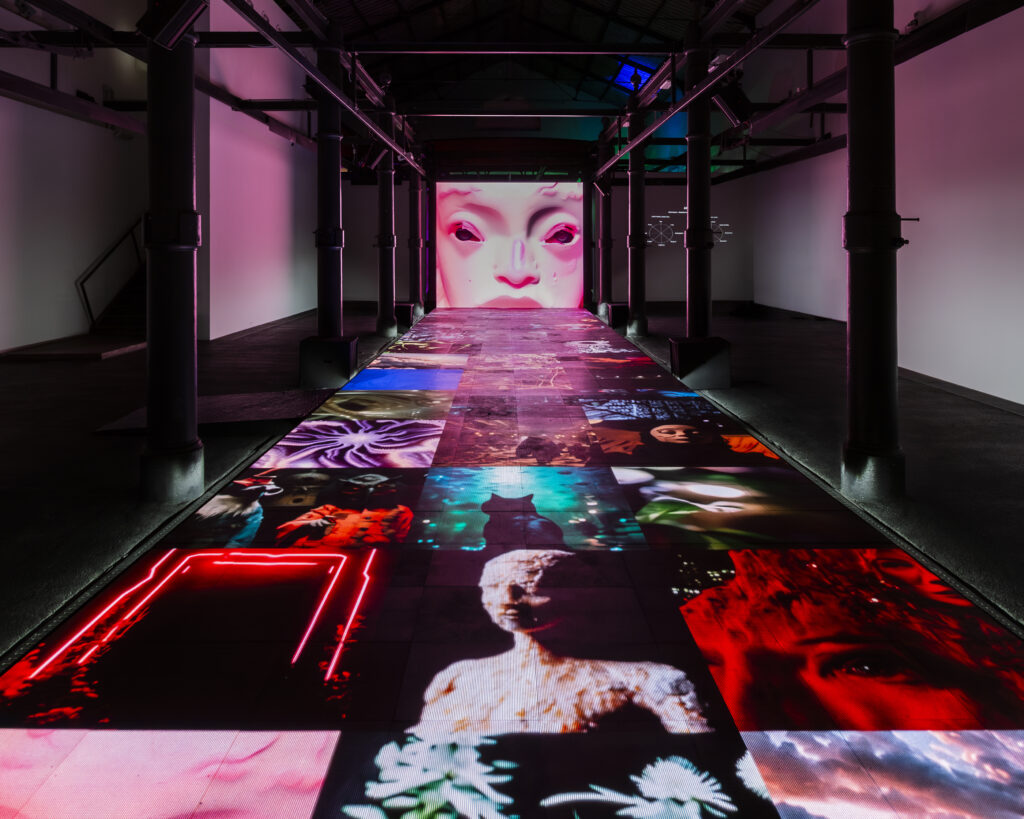
The first is a large-scale AV installation, ARC, which features a walkable dual-channel large LED wall that displays visualizations of contradictory states of consciousness. I created it with Visioni Parallele, and it will debut on Saturday (April 13th) at the Mattatoio in Rome. The work is based on the idea of intertextuality that I mentioned earlier… here, the question might be, for example: what a morph between excitement and boredom might look like? Perhaps something akin to me scrolling through Instagram on the toilet.


In early May at L.E.V. Festival in Gijon, there will be a new iteration of the Distrust Everything project; an immersive chamber that narrates a speculative dream emerging from Mirek Hardiker’s Dream Report Archive. These projects are in dialogue with the album, in a vague way, because they share the same approach, but they are also related to it as I continue to reuse the same datasets, which keep expanding.

What is Krisis role in the economy of your varied and intersectional practice? Is that a place where you focus more on curating others? Taking a step back from “your” own work and constructing bridges for others?

We founded Krisis Publishing in 2009, and I manage the editorial direction of the project alongside my friend and fellow researcher, Andrea Facchetti. The main focus of our project has always been and remains the politics of representation: we are interested in examining, through various lenses, the impact of media cultures on contemporary societies.

Both of us have academic backgrounds in philosophy and design/arts, which makes Krisis the platform to formalize and disseminate both our research and the works of pivotal authors. We typically handle the editing of the books we publish ourselves, and this has enabled us to connect with artists, theorists, and researchers we respect and admire. Among the notable authors we have published are James Ballard, Timothy Morton, Simon Reynolds, Kate Crawford, Hal Foster, Vladan Joler, Sofia Crespo, and also friends like Silvio Lorusso, Luca Pagan, Filippo Minelli, Corinne Mazzoli, Ryts Monet (just yesterday we launched the pre-order for the book we developed with him).

In recent years, we have begun to move beyond the borders of printed paper. Krisis functions not only as an independent publisher but also as a curatorial platform, producing audiovisual projects, music albums, events, installations, exhibitions, public talks, etc.

Certainly, there are parallels between my research, that of Andrea’s, and the editorial line of Krisis. In recent years, we have intensely explored the theme of the relationship between language, reality, and identity, the political implications of AI’s emergence, and the articulation of ecological perspectives. In a way, Krisis serves to me both as a source of input for LOREM and an opportunity to translate into theoretical language the issues that concern the project.

Last but not least..Nomen Omen. Why LOREM? A nod to unfinished but in-itinere linguistic forms?

Lorem is a model for extracting correlations within corpora of unstructured texts.
When I started working with texts and machine learning to enhance the emergence of intertextual correlations, I began by removing all character names from the literary texts in the datasets. I wanted the machine to confuse the characters, thereby overlapping the information pertaining to each. I have now started to group different types of characters using different letters (L, M, D, etc.), but initially, all characters in my datasets were named LOREM. When it came time to name the project, all these LOREM’s were already there…

Interview · Andrea Bratta
Photography · Omar Golli (ARC Installation)
Time Coils out on 26.04.24 via Krisis Publishing Pre-order the album here.
Follow LOREM on Instagram and Soundcloud
Follow NR on Instagram and Soundcloud

Didi Han

Didi Han is a prominent figure in South Korea’s blooming electronic music scene, her career marked by a fusion of diverse influences and innovative sonic explorations. With a background in textiles and fashion and a love of electronic music production, Han brings a unique perspective to her compositions, blending elements of tradition and experimentation. Her EP ‘In The Zone’ garnered widespread acclaim for its immersive soundscapes and evocative atmospheres, showcasing Han’s ability to craft compelling narratives through music.

Having established herself in South Korea’s electronic music landscape, Han has witnessed the scene’s rapid growth and evolution firsthand. She is now based in Paris and draws parallels between the current scene in her native country and the French capital a decade ago. She envisions a future where South Korea’s electronic music scene attains similar global significance. Han is fuelled by a passion for music and a commitment to pushing creative boundaries. NR joins the artist in conversation. 

As a musician who traverses various electronic music genres, how do you approach blending different styles and sounds in your compositions?

There are so many artists that inspired me. These include Four Tet, Skrillex, or many producers from the 90s. I try to practice something new, and bring inspiration from past projects as well. This approach can bring some new sounds, I guess. But even when the music has something new, the fundamental elements in there can’t be new. All music genres share similar fundamentals, even if the sound differs. I try to understand the basics of music as much as possible. It’s like cooking, how you combine familiar ingredients. 

Your EP In The Zone” received acclaim for its innovative sound could you walk us through your creative process and inspirations behind the EP?

At that time I bought a TR 8s and I started to compose with this machine. I often begin by sketching ideas with this machine, even though I later replace the samples. I concentrate on how these beats could drive movement. Living near a busy street in Paris, I was constantly exposed to sirens, which contributed to a sense of anxiety within me. I believe this EP reflects that period of my life. I incorporated sounds from vintage synthesizers to evoke a 90s vibe.

Having been a part of South Koreas electronic music scene how do you think the landscape has evolved over the years and how different is it to working in Paris now?

I’ve noticed that South Korea’s electronic music scene has been rapidly growing. I heard this is similar with the scene in Paris about ten years ago. I think that in another ten years, South Korea’s electronic music scene will be as significant as France’s. Good thing in Korea, people are more excited about these kind of events because it’s rarer than in France. However, working in Korea as DJ is quite hard because Seoul doesn’t had proper DJ booking agencies so many artists are managing themselves and facing challenges. But I heard there are some company starting managing this so I guess it will be better and better. 

You trained as a textile and fashion designer, how does this influence your music?

After I started being into music production, I realised the similarities in the creative process between fashion design and music. Both involve finding inspiration and developing it into a form of art to share with the world. This process has helped me develop ideas for EPs and express myself through music and show myself to people.

What advice do you have for young creatives looking to work in the industry?

Do whatever you want and follow your heart with your pure passion.

Credits

Photography · Adam ZM
Styling · Pierre-Alexandre Fillaire
Hair and Makeup · Angie Marqueton

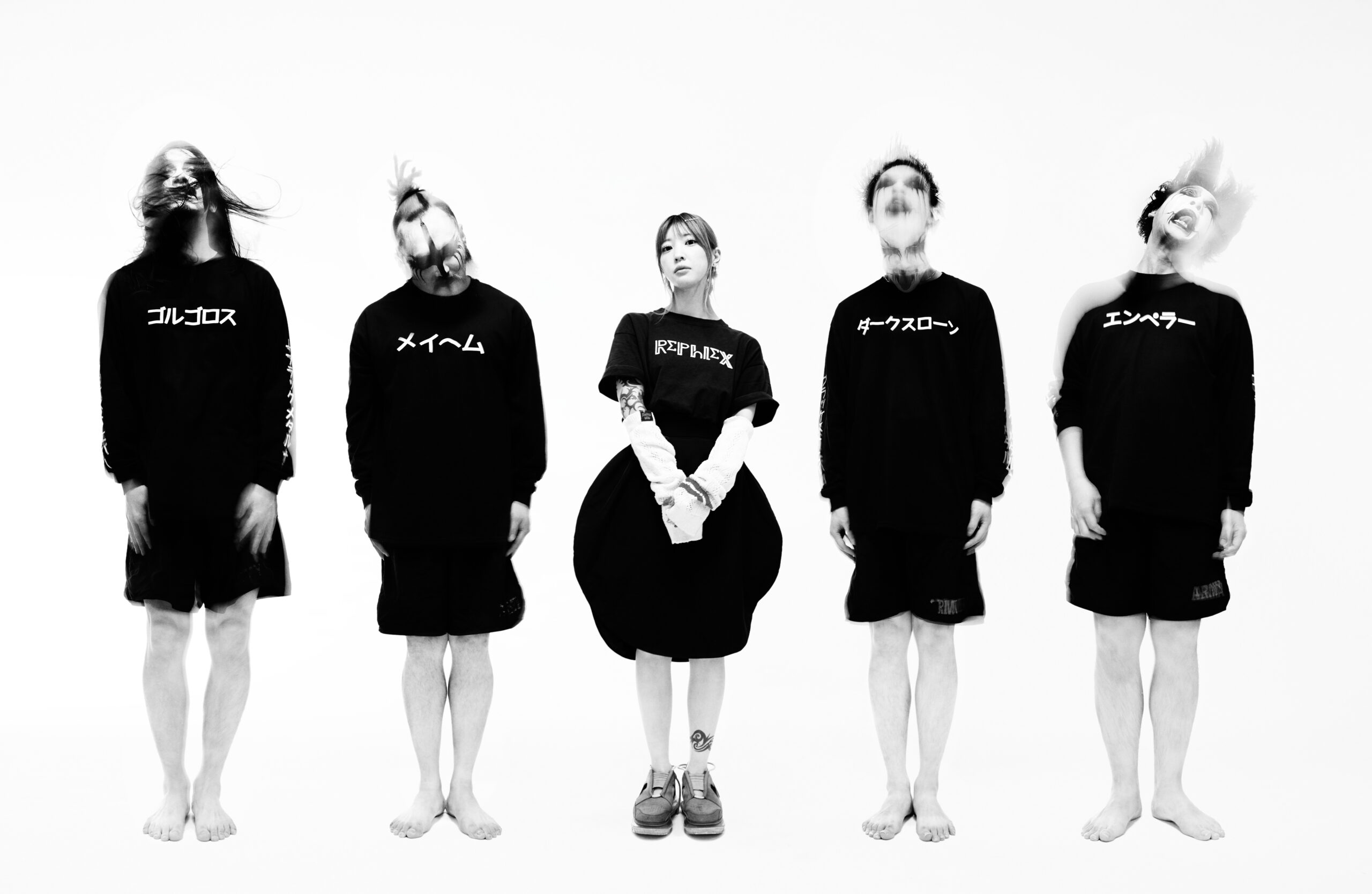
Violent Magic Orchestra

WARP

NR presents Soundsights, Track Etymology’s sister column: An inquiry into the convergence between sound, its visual expressions, investigating music’s intrinsically visual narrative quality.

Hello guys, thank you for being here, it must be pretty late now in Japan. How are you feeling about the upcoming release? It is your first LP since 2016! It’s been quite a journey! Global tours, several collaborations, a lot of experimentation. There is this restless component to your work, always evolving and shifting both sonically and conceptually. Is this record your way of crystallizing what you’ve been up to these last 8 years? What made you finally settle down?

Our music has always flirted with genre-bending, but for this record in particular, we aimed to incorporate various genres into our sound more than ever. Perhaps what has changed the most is that this time, we aimed to capture what we think is the essence of our live shows, rather than focusing on a specific sound, having toured a lot since the release of our previous album —Our main inspiration for this record stems from physicality and the ways our audience interacts in a live setting with our sound. Of course, Techno and Black Metal are still our two sonic compasses, but this time we drew from a wider plethora of music genres like hardcore, noise, and industrial. It is also the first record where we have a female lead vocalist, Zastar, the last member to join us!

The experiential referentiality of your music is definitely felt in the new record, and its presence makes even more sense considering that you describe yourselves as a performance art collective. I was listening to Warp while watching the visuals Rafael Bicalho created for it, and I almost felt like I was in a 3.0 musical drama. There is a sort of lingering quality to it, those almost fading vocals mixed with the track’s physicality and the alternating moments of calm and soaring. It was as if I was listening to source music for a film. What was the concept behind it? Is it one act of a longer narrative that continues throughout the whole record?

Self-consciousness is definitely a recurrent theme throughout the record, at least in its narrative aspects. In “Warp,” we depicted Zastar swimming in an abstract, undefined space, searching for objects to anchor her sense of reality and body. The goal we had in mind was to convey the feeling of a mind and body that had been separated and are now attempting to reunite in a quest to reinstate a feeling of individual wholeness. Rafael is one of the many visual artists we collaborate with; it is very important to us working with these incredible artists who help us give a visual body to our ideas.

I am very curious about the artistic direction of the release. There is an incredible emphasis on the aesthetic component of all your projects, your live gigs, the way you communicate online —All these visual elements seem to form a unicum with your sound, and, as you said, you collaborate a lot in order to achieve it. What fuels this curatorial approach that you have?

We always check Instagram! Scrolling, exploring all the time. We usually brainstorm a lot so that very precise images of what we want form in our minds. Those will then inform our research, and down the rabbit hole we go. The same thing applies to our collaboration with other musicians; we want to keep aesthetics and sonics parallel, informed by the same general idea.

You describe VMO as a multimedia performance art project. How do you approach creation? Does music come first or Is it about feeling and aesthetic rather than songwriting?

We operate precisely as an art collective, only our media is primarily music, trying to aggregate conceptual structures to sonic palettes. Visual and music, concepts and sounds. Everything usually starts with a visual idea of what we want to portray, and then from there, we work it into a sound and choose the people to work with on that overarching concept, musically and visually.

Interesting. Considering the multitude of influences you have and the collaborative nature of VMO, how do you function as a collective?

We work, well..collectively! [they laugh.] We usually gather inspiration from a variety of sources, books, poetry, films, music, nature..anything really. K, who functions as a sort of “chief curator” explains his influences and what he wants to do to all of us and then we work together to achieve the final result we want to go for.

You mentioned movies, literature, poetry. What were some of the extra-musical references for this particular record? 

Each of us has his own individual inspiration, of course; we have a lot of different interests and media, drawing from various inspirations that manifest in our work. There are numerous histories occurring around the world all the time. For instance, Black Metal is influenced by Christianity, Afrofuturism is deeply ingrained in Detroit Techno —Different histories influence each other and are simultaneously distant yet close. Cross-pollination might very well be another of the main themes of the record. Think of “Stranger Things’ ‘; An incredibly pop show presenting a clear 80s aura, but mixing it with horror tropes in a quotational yet twisted manner.

There’s an almost reassembled-collage quality to how you operate, exploring sonic dichotomies, musical and visual tropes, featuring elements  that are at the same time disorienting but familiar —Yours is an almost unheimlich sound. How do you manage to keep all these different inputs together in a coherent result?

In a sense, it’s almost complete experimentation, and there’s a lot of trial and error. We take the time that we need to create something we believe its worthwhile, mixing focused work and abstraction. We try to convey abstract idea in precise sonic and visual coordinates, mixing the two up from time to time.

Another very important element in your work is saturation, both musically and visually. Your music challenges the listener, and I mean this in the best possible way. What made you gravitate towards such a confrontational sound?

We always were drawn to the physicality of certain music genres. Metal, gabber, techno: It’s kind of a natural thing for us to seek abstract ideas expressed through “violent” music. It is what we have always liked as listeners and artists. 

Before we say goodbye, I wanted to ask: What’s a VMO live experience? Prepare us for the upcoming world tour!

We aim to create an environment that everyone can enjoy, almost like a theme park. However, we also improvise a lot, as every crowd is different and reacts differently, and we always try to go with the flow. It’s curious that we have this very, at times, complicated sound. However, what we want is to present and offer our performances to audiences in the most accommodating way possible. We aim to provide people with the easiest way possible for them to enjoy the experience itself.

Interview · Andrea Bratta
Photography (in order of appearance) · Genki Arata and Tatsuya Higuchi
Follow VMO on Instagram and Spotify
Follow NR on Instagram and Soundcloud

Evita Manji

Phoenix Central Park in Sydney, AU

Grief, the Human Condition and Live Performance

Greek musician and vocalist Evita Manji is part of a new wave of underground club music producers that began her career in Athens and since then has performed in multiple countries across Europe. Her music is a mixture of contemporary club music, baroque pop, and experimental sound design which she uses to explore themes of death, grief, climate change and the human condition. 

Manji launched her platform myxoxym in 2021 and has collaborated with multiple artists, across various medias. One of her most recent collaborations with the artist duo dmstfctn was at HQI in London at the Serpentine Gallery, where she performed a live soundtrack for a interactive audiovisual performance titled, Waluigis Purgatory which follows an AI sent to purgatory. NR joins Manji in conversation about her practice and recent performances. 

Phoenix Central Park in Sydney, AU

You mentioned that your process has involved you locking yourself in your apartment for long periods of time to work on your music. What does the day-to-day process of this look like?

It includes the necessary human functions, eating and such. Also a lot of silence and thinking. The thinking gets out of hand at some point and that’s when the music-making begins. Small breaks here and there for cuddles with Heidi (my cat), a cigarette and herbal tea refills until I get sleepy and crawl back to bed.

Phoenix Central Park in Sydney, AU

You stated that your experiences with loss and grief have influenced your creative process, is that still the case and do you draw on any other emotions and experiences to create your work?

It still is the case. However, if you imagine grief as a city, I was only hanging around the center when I was making Spandrel?. I’m more into exploring the suburbs and the countryside these days. Travelling to other cities too but always staying within the country of uncomfortable emotions.

You were part of a church choir for many years, has this had any influence on your music and if so how?

It has influenced the way I understand and create music a lot, especially when it comes to singing. But in the way I compose my melodies too, though the effect is more abstract in this case. It’s not always there but it’s like a solid part of my identity I can return to when I’m not sure which way to go.

Phoenix Central Park in Sydney, AU

Considering your father’s involvement in music production and songwriting, do you believe this has provided you with certain advantages or unique opportunities in pursuing your music career?

Being surrounded by music and encouraged to pursue it from a young age is definitely an advantage I wouldn’t have if it wasn’t for my dad but if we’re talking about actual career opportunities then no, it hasn’t played a role.

Your live improv style debuted at the Aurora Live Ambient Show, in September 2023, in Berlin. How did you feel before the performance, and did the experience meet your expectations? Did the spontaneity of the improv provide a sense of freedom, and is it something you would like to explore further in your music career?

I was excited but very stressed and seriously lacking sleep. It was such a last-minute request, I sketched out the live set on the plane on my way to the show, I was still editing 10 minutes before performing. I did enjoy the performance very much though, it was very special, I felt fully immersed in the music and sort of lost touch with reality.

Aurora Live Edition in Berlin

You recently performed at Londons Cafe OTO with artist Sarahsson. What were your hopes and expectations for this performance, and do you think you achieved them in the show? 

I was initially planning to present an elaborate version of my Aurora set but my hopes and expectations changed pretty much 2 days before the show when I decided to create a whole new live set. I wanted to play something not entirely related to Spandrel? , so I put together a bunch of music I made in the last few months and a couple of new versions of songs from Spandrel?. I was just hoping I will have it ready on time and I did manage to.

What advice do you have for young creatives looking to work in the music industry?

“To walk backwards and enter the circle looking outwards.”

Interview · Nicola Barrett
Photography · Clément Beaugé and Ruby Boland
Follow Evita Manji on Instagram and Soundcloud
Follow AURORA on Instagram and Soundcloud
Follow PAN on Instagram
Follow NR on Instagram and Soundcloud

Oldyungmayn

Strike

NR presents Track Etymology, the textual corollary to nr.world’s exploration of contemporary soundscapes: A series of short interviews delving in the processes and backstories behind the releases premiered on nr.world’s dedicated platform.

I did some digging on your previous releases while preparing for this interview. One aspect that I was immediately drawn to was connecting the threads between Strike and your earlier productions. Should we go over shared specifics and differences between this new EP and your previous works? I think it would make a great starting point for us to introduce and contextualize M.A036

I’ve been DJing for many more years than I’ve been producing, so my inclination  towards creating a track comes largely from the desire to play and mix it. Like many  DJs, I am always looking for new interesting sounds that I think will fit with my  ever-growing collection, and to discover tracks (and producers) that impress and inspire me. Learning to produce using software was equally an individual learning experience for me (initially instigated by the pandemic when I was still living in UAE), as it was an experience I shared with friends. Across the Middle East, there’s not as many people pursuing this sort of music production – for various reasons – and those that are, I probably know them. It’s a very small scene that extends across the whole region, and there’s a lot of collaboration by necessity as a result. My previous efforts, for example, with my close friend and producer Van Boom, channels much of our shared interests in experimental noise and power electronics, but shaved down into tracks we both enjoy playing during our DJ sets. My earlier solo productions are a good example of many hours of imposed isolation and experimentation – it takes time to learn how to produce a signature sound and really bring the final product to a point where you’re happy with it. In the most recent EP I’ve done with estoc, there’s a few factors at play and what made it what it is…firstly, she’s a friend, and we’ve spent many hours just chatting and getting to know about each other’s lives…this year has been very pivotal for both of us, and I think it has reaffirmed certain relationships with other artists. Like my previous collaborations, there was a lot of back and forth, but also a lot of trust and compromise.  B2B DJ sets are pretty common these days, but working on tracks together and  releasing them as well is much more challenging – it requires you to trust someone else  with your sound, it’s very intimate, but the results speak for themselves. I think this EP with estoc is different than my previous releases as we took our time and it was less impulsive. 

Since we are already speaking of connecting threads, your bio states that ‘your identity is layered through both productions and performances, navigating away from a Eurocentric focus, mixing a 90’s era rave musical lexicon and a wide spectrum of music from fellow Middle Eastern producers.’ How do you find balance in an approach that feels both respectful of its influences and liberating from those same traditions and sonic stereotypes?

I think that I play what I like listening to, and therefore my sets are genuine expressions of my tastes, first and foremost. I don’t play music that’s ‘trending’, and I certainly don’t do people favors either. Some DJs opt to play based on the (expected) tastes of audiences, which is fine, but for me that leaves little room for surprise. Not that my sets are totally unpredictable, but I like to throw in unfamiliar tracks, edits, unreleased stuff from people that otherwise would never be played in European clubs. 

“For me, getting away from the Eurocentric focus isn’t only about the sounds or tracks themselves, or where the producers are from, but actually avoiding the pressure to perform and operate as a DJ with these aforementioned ‘European’ standards.”

There’s quite a bit of pressure to conform and play what people might expect, and I don’t want to do this, because I am not European, I just live here. 

Is it a mindful process, a specific sound design choice, or more of something almost unconsciously ingrained in your process, a natural approach you have towards mixing sounds, pun intended, and expressing yourself through them? 

I think DJing, and really delivering a fun, energetic performance to your audience is experiences on and off the dancefloor. Some people have very acute skills, such as a very good ear for beatmatching and blends, where some people have simply spent so much time organizing events, listening to longer sets from start to finish, and dancing themselves that they just know what works for the crowd. It’s so important that people who are DJing can relate to the audience on a very intimate level, otherwise you’re left with this very obvious disconnect. I feel my audience is usually varied, and so are there tastes, as is mine. It’s really about making everything work together, and skillfully matching things up in unexpected ways. I’m mindful about it, but most of my decisions are made ‘in the moment’, so a lot of it stems from risk-taking and experimenting, largely tied to intuition, and that’s something which becomes sharper through your own.

The sense of self-exploration and experimentation behind your music reminded me of Underground Resistance and their ethos: relating early Detroit Techno aesthetics to the social, political, and economic circumstances they were facing. 

Music and its dissemination is situated. It resonates differently depending on who’s playing it, to whom and where, and when played in club settings, that extends to what it’s mixed with and why. Most people don’t pay attention to these questions when they are going out, and I don’t blame them…it’s not always a consideration that everyone has when they want to just go out and have a good time. Although, I think audiences these days are much more conscious and inquisitive, especially given the current climate…I think this sense of affiliation to common goals and social objectives is becoming more present, especially in regards to breaking down categories. 

Do you think that nowadays, as electronic music culture has become a global mass movement and club music has generally shifted from the underground’s hazy light into the media spotlight, such stances are still possible? Do you believe that creating sonic communities on the periphery of mainstream culture is still a viable form of sonic resistance? 

Is it really a movement? I’m not sure that’s the best word to use, as when I think of movements, I think of selflessness and fading individualism for the greater good…with club culture today, I still see a lot of self-centering, egoism, choices and strategies based around economic growth at all costs. As its popularity increases, so do its misinterpretations and its easy to lose sight of the bigger picture.

“Club culture, to a large degree, feels quite co-opted at the moment, so supporting smaller, independent spaces and promoters is more vital than ever.”

I touched on the concept of resistance because I feel that it is a central theme of our contemporary world, and I imagine it being especially, and painfully, close to you as a Palestinian. 

Many, if not all, Palestinian people both in Palestine and around the world would say that resistance is a tenet of our existence, if not a vital theme of how we get through each day.

“In the same way that all marginalized people suffer under oppression, Palestinians are resisting more than just occupation and violence – we are resisting our miscategorization, as individuals, as a population and as a culture, and of our being viewed as less-deserving of our humanity.”

Club music has always positioned itself on the thin line between pure hedonism and almost political defiance. How do you feel about this dichotomy during such complicated times? 

This is a very poignant question, and one which I’ve thought about a lot these days as someone living in Berlin. On one hand, this is both my passion and my preferred source of income – neither of which I want to give up, and this is requiring me to actively pursue and accept gigs. There’s been many occasions since relocating to Germany where I wanted to give up on DJing, simply because the hostile climate towards Palestinians (or Arabs, or POC, for that matter) was so present in the scene.

“It’s not like we are never booked, but it feels we are almost always optioned last, or doubted, or tokenized.”

With this in mind, my choice to continue playing and my presence is in itself political, even if it’s sometimes just a random booking. There are events which still cater to the hedonistic crowd (evidently in Berlin), but I wouldn’t say that it’s the only kind of events I like playing for. I’ve been lucky to play a handful of gigs in the last while which center around solidarity, community and togetherness – pretty much the opposite of hedonism, or at least these events offered various / multiple reasons for people to show up. I think at the moment, balance is key. Audiences, and people in general, are just becoming more aware and conscious of the world around them, more informed, and I think club spaces should also be operating in a more informed manner, and engage with their audiences who are ultimately the ones keeping their businesses running. 

Do you think this contradiction is something that needs to be resolved, or perhaps it is something we need now more than ever to internalize as both consumers and creators, to help us better navigate the contradictory landscapes we are facing today in music, culture, and social life? 

We all still must operate within capitalism and consumer habits have infiltrated everything. Consumption is engrained now to such a degree that value is attached to everything. I hate to say it, but I don’t really know if all of this will last very long if things keep going this way.

“I think we need to have a reassessment of ‘real’ values, and create more events, spaces and projects which operate away from economic motives.”

This is something that needs to be said, at this time especially, because it is really leading to a very watered down culture overall. Social media, I feel, has greatly harmed dance music and clubbing as an experience. Connection and responsibility feels short lived. Of course, it goes without saying, it has helped to platform, amplify and support many artists and their careers, but there’s a downside as well. Attention spans are so short and people can easily take an apathetic stance while making it seem like they truly have a position.

“I think at present, DJs should use their platforms to speak for those who can’t, and use their influence positively.”

One last question to complete this release backstory’s picture: what were some of the influences behind it? Musical and not. 

I really wanted to approach this in a totally freeform way and just have fun. Working on this with estoc let me take my mind off a lot of things… estoc is such a multifaceted artist and producer; she does tons of remixes and collaborations, and I felt inspired to be pairing up with her, and especially being able to get this EP out just before she will have her FFS*. It took a while going back and forth, as she was already back in the US when we really started to hammer things out. It was really a pleasure to get the remixes back as well from 3Phaz and Brodinski, and we’re really pleased with what they came up with. Both her and I have an obsession with punk and noise, and I think together this came through in the end. We like that it’s merging so many things all at once, and also fits to the label as well, which we’ve both been huge fans of since its inception. Myself and DJ LOSER really wanted to invite her out to Berlin to play at the showcase we’re doing at Ohm next week, but unfortunately the timing wasn’t right, so I am really looking forward to meeting up with her when she’s recovered and touring again in a few months. 

Order the digital album here from 01.02.24
Interview · Andrea Bratta
Photography · Mike D’Hondt
Follow Oldyungmayn on Instagram and Soundcloud
Follow Estoc on Instagram and Soundcloud
*You can contribute to Estoc’s fundraiser here
Follow DJ LOSER on Instagram and Soudcloud
Follow Magdalena’s Apathy on Soundcloud
Follow NR on Instagram and Soundcloud


Elpac & Grove

Talk Small

NR presents Track Etymology, the textual corollary to nr.world’s exploration of contemporary soundscapes: A series of short interviews delving in the processes and backstories behind the releases premiered on nr.world’s dedicated platform.

Hi guys! Thank you for doing this! The EP is titled An Ode To Brentry Road. I am curious to know the title’s backstory! Was the goal for the record a canonical Bristol take on Bass music? How much of the city is ingrained in your sound?

Elpac: So I moved to Bristol just over 3 years ago with my mates that I run Amity with (Camalot & Mulholland). The first house we moved into was on Brentry Road, this place became almost venue-like where there didn’t seem to be any noise limits nor a capacity on how many people we would have over for parties hahaha, it was a special place and it was also the place in which I made all of the tracks for the EP. I’d go out on a limb and say the whole street happened to see us go.  

I think with my production I’ve always been heavy on bass-focused music. Originally I was going to just put pen to paper and write the EP with the EP always in mind but it ended up with me making a lot of tracks and then overtime thinking about which would fit best for our label. I’ve constantly been inspired by music that is very weird and wonderful and this is where Bristol has had a massive touch on my sound, I’ve heard so many mad sounds in places like Strange Brew and The Island since moving here and I think if anything, this has become the most motivating and inspiring for my production. Parties such as accidentalmeetings, Normcore, psychotherapysessions have just blown my mind over the last few years to be honest, shout out the crew !

What were you thinking while laying down the Talk Small sonic palette?

Was there a certain sound you were going for, a certain vibe? What are the influences behind it? Walk us a little bit through the process.

E: I mean when Grove reached out I was like jumping around the house, you can ask the Amity boys hahahah. I’ve always wanted to work with a vocalist/mc, with my style and approach to music, there was nobody better than Grove. I think it was the same night we got in contact: I went on my laptop and smashed out like 3 tracks in 4 hours or something stupid, Talk Small was the first idea that I had.

“I wanted to encapsulate that kind of raw aggressive dancehall sound to work alongside groves vocals.”

I’ve always been influenced by that weird kind of slow-fast sounding music, producers like TSVI, Equiknoxx, Low End Activist all really push this sound that doesn’t seem to have any boundaries and I find that really interesting and enticing.

Grove: Dark and sexy is my favorite approach to club music. Proper waist-whine sweatbox riddims. I’ve been heavily in love with the combo of bashment and darker tech-leanings since listening to that Mr Mitch Techno Dancehall mix from 2019.

I’ve loved Elpac’s tunes since hearing in a TSVI mix and we got chatting and realized we crossed over strongly with the stuff we like listening to.

Ended up linking for a session in my little ex-police cell studio (big up The Island in Bristol) and this was the tune he brought to it –massive weapon.

Session flowed like mad, and we laid down some big phat extra synth layer(s) and the vocals.

Listening to Talk Small made me wish I had better speakers at home and think of how the way club music circulates and is experienced changes accordingly to the place and support it is experienced upon. How do you approach producing tracks intended for club use knowing that they will circulate digitally before ending up where they belong: Played in a dark club, on a proper sound-system?

E: I’m always making stuff with the idea of it being what I would want to be hearing, I don’t care too much about the thought of what others would want to hear from me. I think I benefit from this as it doesn’t limit what I’m doing. Obviously at times I’m like okay I want to make something hard for the clubs but I can always find myself overdoing it and overcomplicating the track. This is where me and Grove worked really well together because we didn’t spend too much time on it and we managed to get exactly what we wanted in one session.

G: With making bass-focused music, I used to worry about half the song being “missing” but now I honestly don’t think about it too much –

“I trust it’ll connect with the people it’s meant to, when it’s meant to.”

Was this your first collaboration? Should we expect more?

E: We actually made two tracks in the session but Talk Small was the one that made the cut, you can most definitely expect more from us.

Last but not least, a touch of synesthesia: What would your sound look like? Paint us a word picture.

E: A strobe-y smoked out tunnel of bodies.

Pre-order the digital album here
Interview · Andrea Bratta
Follow Elpac on Instagram and Soundcloud
Follow Grove on Instagram and Soundcloud
Follow Amity on Instagram , Soudcloud and Bandcamp
Follow NR on Instagram and Soundcloud

Subscribe to our
Newsletter