Archive page:


Frederik Fialin

From Denmark to Berlin: Frederik Fialin’s Unique Approach to Furniture Design

Today, we have the pleasure of sitting down with Frederik Fialin, a designer hailing from Denmark but based in Berlin, specialises in crafting bold yet whimsical minimalist furniture using durable, frequently recycled materials. He enjoys playing with contrasts, blending elements like sturdy construction steel with vibrant velour upholstery. Despite his traditional training as a cabinet maker, Fialin consistently challenges conventions and explores new possibilities in his work.

Frederik, your furniture pieces are characterized by their bold yet playful aesthetic. Can you tell us more about your creative process and what inspires your designs?

I’m usually content with my work when it makes me laugh and wonder at its oddness. I aim for it to be disproportionate or unexpectedly shaped, yet maintain a clear and simple structure. I find great beauty in simplicity and honesty, and I strive to infuse these qualities into my furniture. I often make only minor tweaks to the original concept, mainly to address functionality and overcome technical hurdles. I enjoy exploring extremes and using the full range of sizes available, whether from ready-mades or custom fabrications. Why stick with a 50mm pipe when you can use a 270mm one? It might be unnecessary, but it’s decorative and adds a touch of humour.

How does your background influence your approach to furniture design and craftsmanship?

Clearly, my background as a classically trained cabinetmaker must have some importance, but never in any directly noticeable way. If anything, not having a theoretical background has probably benefited me in some ways and has potentially given me a more naive approach, which I think is clear when you look at my furniture. Starting out not knowing design history, theory and the mere fundamentals has both been challenging and rewarding. I think not taking it all that seriously is probably the main one. After all, it’s just furniture, and theorising on a particular piece or subject is generally pointless. Either you like it or you don’t.

Your pieces often challenge the notion of industrial design. What other design categories or influences do you draw inspiration from?

Do they? I don’t see it like this at all. My furniture makes use of very well- known and often basic materials. I usually try to simplify as much as I can and remove all unnecessary elements. I don’t take inspiration from anyone or anything in particular and I work based almost solely on gut feeling, but almost always to make myself happy. I like the framework that using mainly common geometric shapes gives me though. For me, it’s about combining these well-known shapes and placing them in unusual ways, adding or decreasing thickness, changing the diameter, or something else that can turn a simple circle or cylinder into something interesting, aesthetically pleasing, and most importantly, a functional piece of furniture.

How has Berlin’s dynamic cultural scene influenced your creative process and the development of your designs?

I doubt that Berlin has had any particular influence on my work. It’s more a place I happened to be while maturing and realising how I want to spend my time professionally.

Could you tell us about any specific challenges you’ve encountered while experimenting with materials or pushing the boundaries of design?

As with everything; finding the balance between beauty, functionality, humour and self-interest.

What role does sustainability play in your work, particularly considering your use of recycled materials?

I haven’t used recycled materials in quite a while; instead, I try to make use of materials that are not transported thousands of kilometres and should they eventually be thrown out, it would probably be aluminium (which is infinitely recyclable) or wood. I don’t believe that what we do in my studio has any particular influence on the status of the world. We produce furniture in very small quantities, sometimes in exotic materials, sometimes not. It doesn’t matter in the greater scheme of things and is not something I worry about.

Looking ahead, what are your goals or aspirations for your furniture studio, and how do you envision the evolution of your designs in the future?

At the moment, we are planning the next year. There will be some shows and design festivals as well as further developments of already existing pieces and new ones. I simply hope to be able to continue doing what I do and have fun with it.

In order of appearance

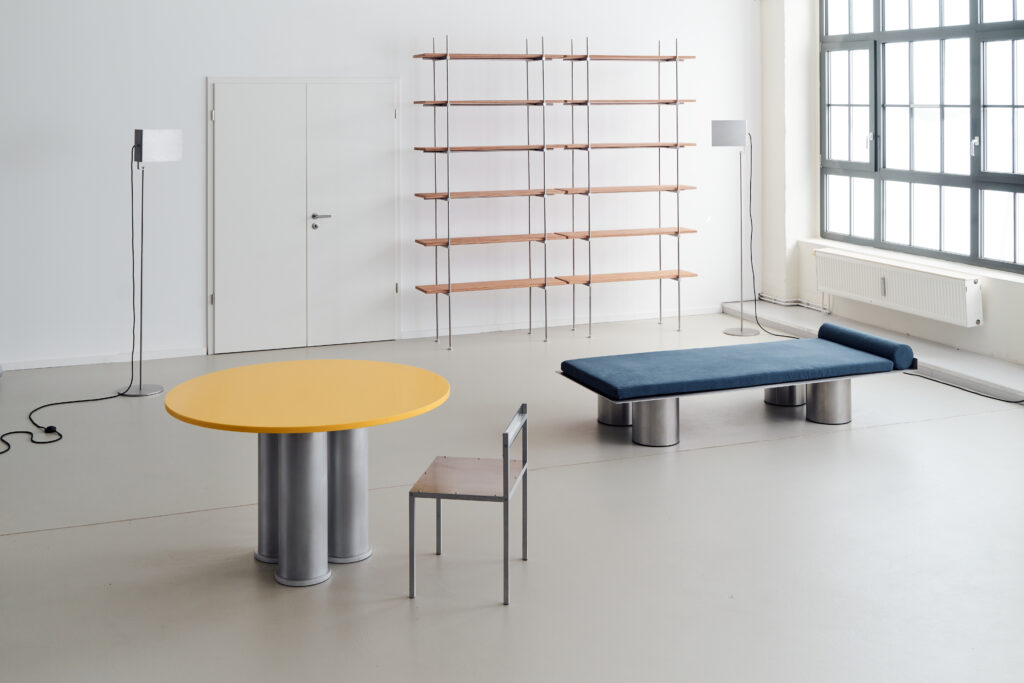
  1. Flagpole Lamp, Elephant Tripod Table, AC01 Dining Chair, Spaghetti Shelf System, Monteverdi Daybed. Courtesy of Frederik Fialin.
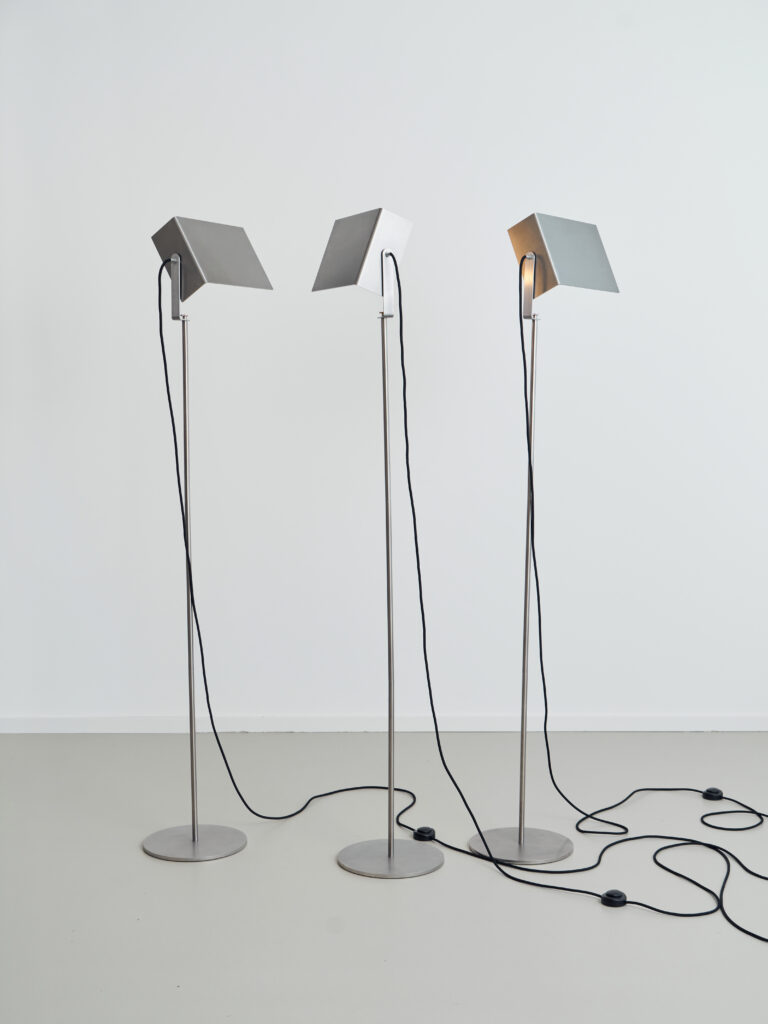
  2. Flagpole Lamp, 2023. Courtesy of Frederik Fialin.
  3. Elephant Tripod Table, 2023. Courtesy of Frederik Fialin.
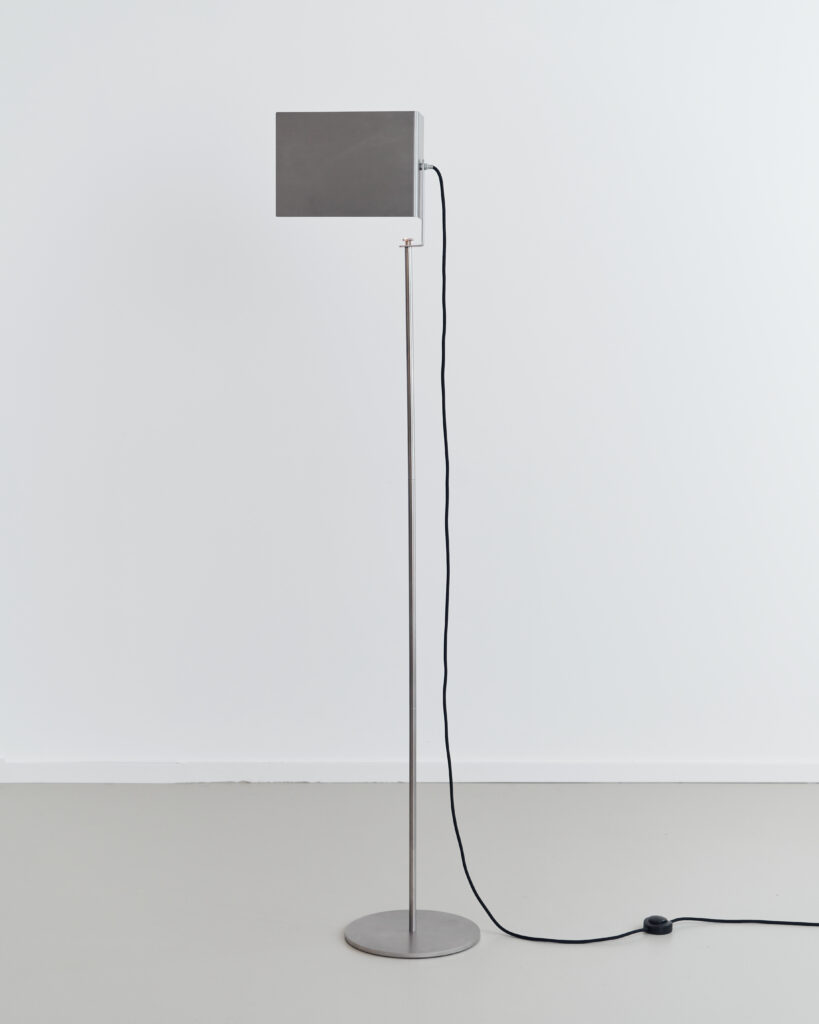
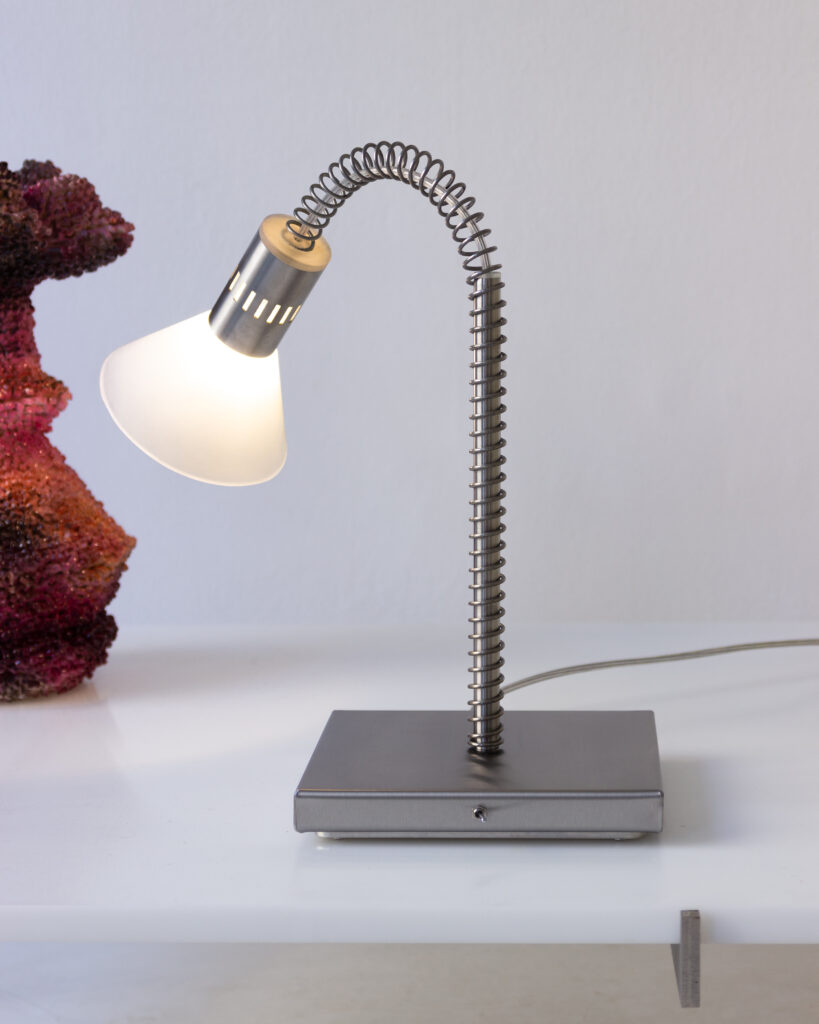
  4. Springloaded Light, 2024. Courtesy of Frederik Fialin.
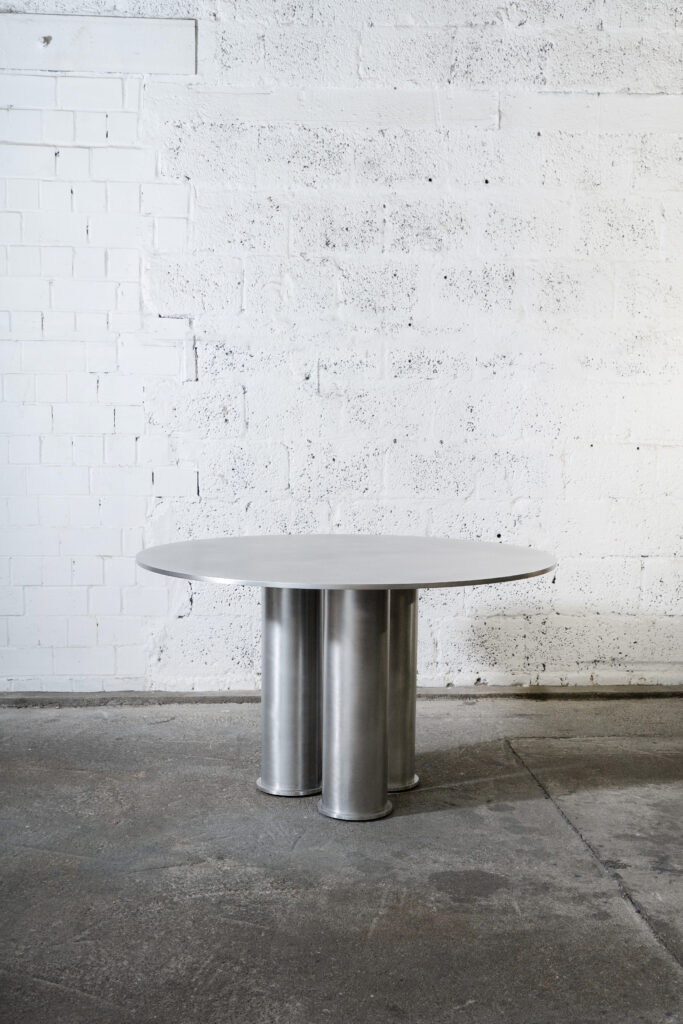
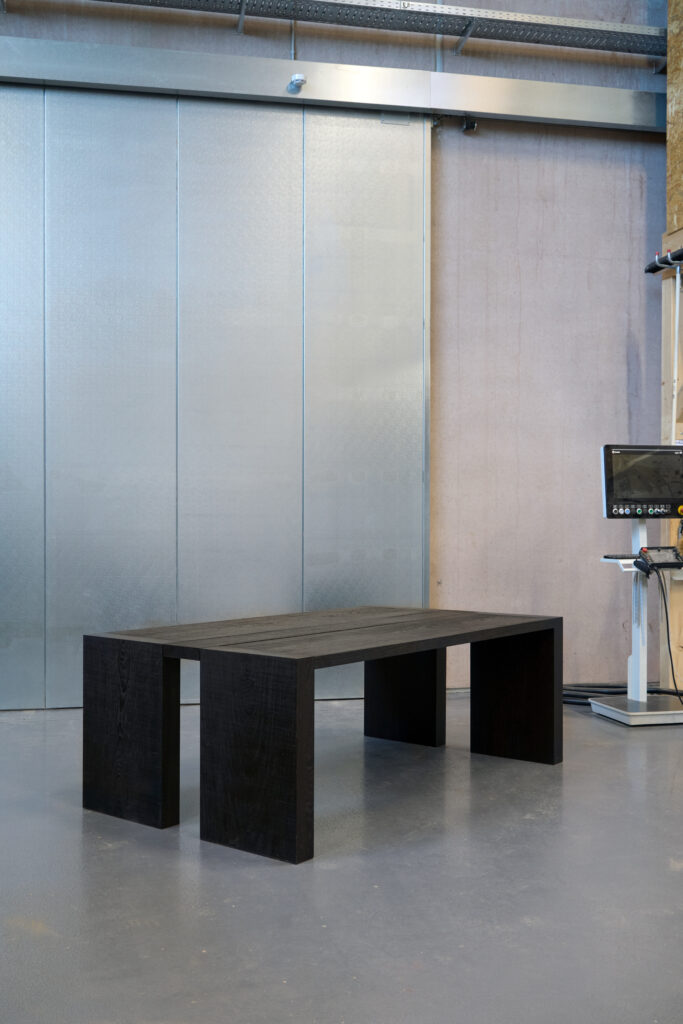
  5. Hefty Table, 2024. Courtesy of Frederik Fialin.

Isaac Chong Wai

Performance, Politics, and Perception: The Art of Isaac Chong Wai

In the midst of a changing world, Isaac Chong Wai brings his unique artistic vision to the Venice Biennale. Born in 1990 and working between Berlin and Hong Kong, Chong’s art transcends borders, exploring themes of power and human vulnerability. Through various mediums like performance and photography, he captures the essence of our interconnected world. As he prepares for the Biennale Arte 2024, curated under “Foreigners Everywhere,” Chong’s work promises to inspire reflection and unite us in our shared humanity.

Memories seem to be a recurring theme in your work. I’m curious, are there any specific memories or moments from your childhood that continue to inspire your artistic process today.

In Hong Kong, it has been common for kids to learn art in some sort of centre. When I was 3 or 4 years old, I took drawing classes. I still vaguely remember drawing a stuffed animal resembling a rabbit, a mouse, and a monster. The tiny stuffed animal stood still in the center of the table while all the kids sat and drew in a circle of chairs. I patiently drew every hair on the stuffed animal. The teacher was amazed by my work. That was the first time I felt like a small famous artist. This practice of drawing has stayed with me. I often draw to articulate ideas. Meanwhile, I see drawing not only as using a pencil to outline a stuffed animal but as a gaze through which an object, a movement, or a feeling maintains its familiar form but is altered.

How do you manage to strike a balance between drawing from personal experiences and delving into broader conceptual explorations within your work?

Sometimes, certain personal experiences lead me to create works. In 2015, a stranger abruptly hurled racial insults and then bludgeoned my head with a glass bottle in Berlin. I went to the hospital afterward. In the same year, I was sexually assaulted by a man on the street in Berlin who forcefully kissed me at a tram station. I pushed him away, shouted at him, and ran away. I then remembered that I was in a running team in middle school. I ran fast. You know, it’s like the bad luck all show up at the same time without advanced notice. All these violent incidents happened in a blink; it feels like it’s less than a second of human interaction. The speed of violence makes me think, if there would be a way to slow it down through artistic practice.

I really needed to do something. I felt bad and useless. I then created a series of works looking into the moments of falling and if by any chance, support can be there when one falls. I don’t think my personal experience has to connect to broader conceptual explorations, but things often happen within a system. By looking into the problematic system, I imagine, through my artistic practice, and my imagination sometimes finds ways to resist those inherent violence.

How do you push against conventional limits of the body, both in terms of physicality and theoretical frameworks?

I would say that I imagine the impossible, and I question why it is impossible? For example, in Falling Carefully (2020), a sculptural piece, I created three copies of myself capturing a simultaneous fall. When the sculptures fall at the same time, they get stuck and freeze the moment of falling.

Sculpture has the quality of stillness. Integrating stillness and the collective body as a means to stop time and fall, I was interested in looking at the external forces that create the choreography of many fallen individuals in our societies and how falling myself, or “repeatedly” making myself fall could be a way to rehearse in order to prevent or resist dominant powers. It is impossible to duplicate myself in order to get some help (I wish I could) when dangers come, but it is important to know that I am not an individual who might encounter violence, but someone who can offer help when others are in need.

How do you manage the equilibrium between individuality and collectivity in your artistic expressions? 

It is an ongoing question. Sometimes it is a struggle, but oftentimes it is natural. In a video piece that I created, The Silent Wall (2014), I used my hands to touch the bullet holes in Sarajevo and later tuned the volume of the city’s sound from loud to silent in every clip, every wall that I touched. It was my first time seeing bullet holes in my life. I remembered seeing the memorial Sarajevo Rose where mortar holes were covered by red resin resembling a rose.

I was with other master students from MFA Public Art and New Artistic Strategies led by Professor Danica Dakić at the Bauhaus University Weimar. During this research trip, I listened to stories about the bullet holes and how local people perceive them. I questioned my presence in the traces of the war. I was not there, but I should remember.

It was clear to me that I wanted to do it myself as my personal approach to remember and archive all those “insignificant” bullet holes, according to many locals. While it seems personal, it does lead me to think in a wider context, especially about what it means when it comes to the idea of collective memory.

Could you elaborate on how you view the importance of physical space in your site-specific performances? Additionally, could you share which performance you feel best utilised or complimented the space in which it was held?

When present at a site, one cannot avoid its history and context. In 2015, I invited numerous people to stand as “memorials” and talk about their personal stories in a square named Weimarplatz (previously Gauforum). This square was built by Hitler with the intention of people gathering there to live out Nazi principles. The square has been renamed several times in history and was called “Hitler’s Square” by some. Nowadays, it is an empty green area that looks out of place in the city, as it is large and rarely visited. The dominance of history often neglects the voices of individuals, including those whose houses were destroyed to build this square. I wonder how our personal stories could weave our voices together and write a new collective narrative consisting of different moments in time that we share from the past, contrary to the dominated discourse which actively silences people’s stories. It was a very special performance. Many people came to my studio to share what they talked about during the performance. (During the performance, we couldn’t really hear what other people were saying, as each of us was at a distance, and when speaking, we couldn’t hear the others). Some people cried, and some complained about the weather (it was very hot). It was both personal and collective.

Do you perceive your work as primarily reflective or proactive in its engagement with social issues?

They are often a reflection of experiences. Sometimes, I perceive my work as an autonomous body, a free being. The audience encounters the “body.” Those emotions and reflections might shape how we engage with social issues, but they might not as well.

Which recent social changes and global phenomena have you tackled in your artistic endeavours?

I often feel powerless when confronting social issues. For example, the anti-Asian racism that has worsened during the Covid-19 pandemic. There are so many emotions and tensions in public spaces. These years, the world is full of tears, with many deaths and much suffering. The profound sadness is so close that it sometimes leaves me speechless. I am not an activist, but I find my own way to tell my stories and help others. I always say that I hope I can help, because I might or might not be helpful. Recently, I have been looking into how mourning could be a way to deal with the powerlessness that individuals hold in everyday life. 

In 2022, I worked with composer and singer Dagmar Aigner, who has been working with mourners for over a decade. Her voice heals me. I collaborated with her to create a two-channel video piece where one can see a group of performers moving in a circle while singing mourning songs and lullabies in a loop.

The title of the 60th edition of the Biennale, ‘Foreigners Everywhere,’ conveys a distinct message. How do you interpret the concept of being a foreigner?

It is a celebration, but also a struggle at the same time. Working at the Biennale, there were “foreigners everywhere.” I encountered artists, technicians, specialists, assistants, and curators from different parts of the world. We sat at the same table, ordered the same food and drinks. It was a big celebration of our encounters in Venice.

Being foreign sounds objective, but in my opinion, objectivity is always a lie. It is important to recognize differences. I often say that if we are all the same, we are not okay. No one is the same. If we do not point out the differences, we lose them. Being different, being foreign, is something beautiful.

As we look forward to the upcoming Biennale, I’m genuinely excited about the chance to witness your project in Venice. Could you please share more details about the project?

Falling Reversely (2021/2024) is a seven-channel large-scale video installation and performance created specifically for la Biennale di Venezia, “Foreigners Everywhere,” curated by Adriano Pedrosa. 

I conceived the work Falling Reversely in 2021, during the Covid-19 pandemic, when many of my friends who are Asian diaspora living in the US and Europe, including myself, encountered verbal and physical assaults in public spaces. We shared our fear and told each other our stories, trying to find ways to protect ourselves and voice out against these attacks. 

Many individuals fall when an attack happens. Some of them were alone in public spaces. I then imagined, what if we could rewind those falling movements through artistic practice. This is an imagination possible in art but impossible in reality, as a fall cannot be reversed. 

I worked with Asian diasporic performers. We studied CCTV footage of Asian individuals who fell due to physical assaults in public spaces. In the large-scale video installation at the Venice Biennale, the screens are sometimes on and off, creating an immersive experience as if a performance or an event is taking place in the blink of an eye.

What upcoming projects or themes are you currently delving into in your artistic journey?

The past few years, I have been exploring how human interactions and emotions transform into bodily movements and materials. My current series of work is called Breath Marks. The idea originated from a video work of mine called Neue Wache, where I use my breath to leave traces on a window facing the memorial Neue Wache, in an attempt to cover/blur its image.

In the ongoing series Breath Marks (since 2022), I use my breath marks as a “paint brush” to depict images. In Breath Marks: Queen Elizabeth II and Crying Hong Kong Girl (2023), comprising a photographic print and a glass sculpture, I use my breath marks to depict an image circulated amongst Hong Kong social media, of a crying young girl holding a framed photograph of the late Queen Elizabeth II.

I believe I will continue following my works, as they always lead me to future projects.

In order of appearance

  1. Portrait of Isaac Chong Wai. Courtesy of Innsbruck International/ Mia Maria Knoll.
  2. Falling Carefully (2020) Isaac Chong Wai. Courtesy of Asia Society, Blindspot Gallery and Zilberman Gallery.
  3. The Silent Wall (2014) Isaac Chong Wai. Video. 10’43’’. Video still. Courtesy of the artist, Blindspot Gallery and Zilberman.
  4. The Silent Wall (2014) Isaac Chong Wai. Video. 10’43’’. Video still. Courtesy of the artist, Blindspot Gallery and Zilberman.
  5. Falling Reversely (2021-2024) Isaac Chong Wai. Venice Biennale 2024. Photography by Atsushi Kakefuda.
  6. Falling Reversely (2021-2024) Isaac Chong Wai. Venice Biennale 2024. Photography by Atsushi Kakefuda.
  7. Falling Reversely (2021-2024) Isaac Chong Wai. Video still by Isaac Chong Wai, Julia Geiß and Lana Immelman. Courtesy of the artist, Blindspot Gallery and Zilberman.
  8. Falling Reversely (2021-2024) Isaac Chong Wai. Video still by Isaac Chong Wai, Julia Geiß and Lana Immelman. Courtesy of the artist, Blindspot Gallery and Zilberman.
  9. Falling Reversely (2021-2024) Isaac Chong Wai. Installation view. Photography by Riccardo Banfi. Courtesy of Blindspot Gallery and Zilberman.
  10. Breath Marks: Queen Elizabeth II and Crying Hong Kong Girl (2023) Isaac Chong Wai. Courtesy of the artist and Blindspot Gallery.

Nicolas Schuybroek

Minimalism With Soul: A Dialogue With Architect Nicolas Schuybroek

In 2011, Nicolas Schuybroek started his own practice in Brussels, Belgium. His goal was simple: to design spaces and objects with great care, skill, and a warm feeling. Nicolas focuses on timeless minimalism and simplicity, using natural materials to bring his designs to life. His work is elegant and understated, appealing to those who appreciate subtle beauty.

Today, we have the pleasure of sitting down with Nicolas Schuybroek, the architect and designer behind the eponymous studio based in Brussels. Nicolas, thank you for joining us. What inspired you to start your own practice in Brussels in 2011?

The purpose was well defined: create and produce architecture, interiors and objects characterised by an acute sense of detail, craftsmanship and intuition, while retaining a feeling of warmth. The search for timeless minimalism and apparent simplicity have always been central in our work, as well as the love of unassuming, tactile, and raw materials. There’s no straining for effect, just a muted elegance. The essence is to conceive serene and pure, yet warm, comfortable, and authentic spaces. 

What is your perspective on the relationship between the socio-cultural system and design/architectural initiatives in Brussels? Could you share also a particular location in Brussels that holds a special significance for you?

Overall, Belgian architecture over the past few years has been enjoying a creative renaissance, thanks to a generation of talents who excel at blending earthy palettes, natural materials, and curated interiors. This philosophy has helped establish a contemporary Belgian architectural identity, which is more and more celebrated abroad.

Brussels is a city you need to discover, preferably with locals, due to the many gems hidden in a complex urban grid. Personally, I do enjoy most of the contemporary art galleries and love an early morning stroll through the royal galleries of St-Hubert in the city centre.

Your multicultural background and extensive travel seem to play a significant role in shaping your design perspective. How do these experiences inform your work?

International projects and the relationships which comes with it, deeply nourishes our work: it broadens our perspective in terms of cultural differences, languages, religion, local habits, craftsmanship etc. to name a few. Belgian remains a fairly mall country, and we feel lucky and humbled to be able to work on so many projects around the globe.

Could you discuss the inspiration and creative journey behind the Aesop Salone del Mobile project in Milan for this year?

The scenography is inspired by the Minimal Art movement from the 1960’s and 1970’s, including artists like Donald Judd, Carl Andre and Richard Nonas, whose works are reduced to the essential minimum. This movement has served as an inspiration for many years now and and shaped the base for this scenographic project for Aesop, known for its uniform and minimal packaging’s, accentuating the content of the bottles, rather than the bottles itself. The inspiration of Superstudio’s 1970s iconic grid structures is a hint to timeless Italian design. To emphasise the minimal character of the installation, we conceptualised a grid shaped screen wrapping the perimeter of the shop, only interrupted when needed for circulation.

Entirely built up with Aesop soap bars – used within a vertical brick pattern– the screen creates a soft, matte, and reflective installation. A strong serenity exhales from the design by limiting the walls to monochromatic materials and textures. The restricted use of using something simple as a soap bar – “a daily functional household item” – resonates yet to another art movement, the Arte Povera, which fits perfectly in this context. Within the screen, small rectangular cavities are shaped by removing soap bars, to generate viewing portals to small, intimate hidden boxes showcasing Aesop’s products at the centre of the installation sits a large silicon block, wrapped in a matte silicon envelope. The central island stands out without taking away attention of the soap wall and will be the centre stage to skincare performances and massages where spectators can gather around.

The structure takes its form from the regimented rows of Aesop products, following the formulation-first logic central to the brand’s philosophy. Within the assembly, small rectangular cavities are created by removing soap bars, generating portals through which to enter—via film—the sensorial world of Aesop’s products. This way of working is a good match between Aesop and my office. In our office we always kick-off with concept, context, and research before digging into designing. In that way we develop a clear formulation before creating. I think this is important to avoid losing yourself in later stages of design. Of course, this formulation can change during the process, which is another important stage. But for us formulation works as a compass during a project. 

What does “muted elegance” mean to you in the context of your work?

The essence of our work is to conceive serene and pure, yet warm and authentic spaces. Muted elegance is in my perspective the true definition of luxury today.

Few years ago premiered a Signature Kitchen for Obumex at Salone del Mobile. Can you tell us more about this project and your collaboration with Obumex?

In this first collaboration with Obumex, we designed a unique Kitchen which exhales a sense of profound serenity and yet, feels warm and authentic due the singular material used throughout the concept. It is also the first contemporary kitchen design finished with tin.

As a starting point for this design, we rethought the block-like typology of a kitchen island and transformed it into a dynamic shape, resulting in carefully proportioned shifts between the sculptural blocks. The design has been conceived as derivative of our studio’s architectural typologies and grants different views and perspectives around all four elevations, reinforcing the concept of a kitchen island as a functional sculpture.

The tin cladding, wrapping the entire volume, offers a high level of tactility paired with softness, which contrasts beautifully with the minimal geometry of the island. As tin gains a unique patina, the aesthetics of the kitchen will beautifully evolve over the course of time, resulting in every kitchen to be unique.

MM House in Mexico City, completed between 2014 and 2017, caught my eye with its intriguing design. Could you delve into the details of this project and share what inspired its creation?

While the main brutalist concrete structure was kept, we transformed it by adding new layers to the house: we came up with the idea of an interior patio with a small reflecting pool and a minimal spout to add a sense of calm to the space.

The sound of the water feature echoes throughout the house, linking the floors and rooms together, as is customary in many Mediterranean countries. We tried to create a very cozy and warm scale in a house for one and relied on the lessons of the potential found in augmenting a sense of balance through proportions. The placement of artworks, such as Terence Gower’s black-and-red steel sculpture The Couple that appears to float on a reflecting pool, provided a sense of drama that conceptually and materially resonated with other elements of the house, such the exposed raw steel staircase that created a similar juxtaposition of weight with a perceived sense of weightlessness. 

Through a great transnational collaborative process, we were able to transform the house from a closed-off heavy bunker into a home where air and inspiration could freely circulate. One way we achieved this was by leaving the ground floor partly open. Alberto had the brilliant idea to extend the concrete slab that was on top of the old entrance to create a garage and a suspended garden on the second floor, allowing us to close off the house from the street and create a small, secret, and secluded landscape within. The effect was similar to what we love in Belgium, where the exterior of a building can bely, the magic found within it. Alberto also added thoughtful landscaping to ground our project to the land of Mexico with a design scheme based entirely on native plants. A restrained material palette spanning the entire house, from polished concrete floors to cement finishes on walls and ceilings, Arabescatto marble for the kitchen and bathrooms, and locally sourced Parota wood for the millwork creates a sense of timelessness to frame a contemporary art collection that celebrates ruptures with tradition.

What are some upcoming projects or collaborations that you’re particularly excited about?

We are handing over three exciting projects right now, a private house/museum for an art collecting couple outside of Antwerp, a concrete “tropical” bunker on the west shore of Bali, Indonesia as well as an extensive townhouse renovation in NY (Larry Gagosian’s former house).

Finally, what advice would you give to emerging architects and designers?

Your education in architecture has hardly begun: work, stay curious, humble and most importantly by persistent and tenacious in all your endeavours.

In order of appearance

  1. NM House, Mexico City, Mexico, 2014-2017. Nicolas Schuybroek Architects. Photography by Nicolas Schuybroek Architects.
  2. Aesop, Lyon France, 2023. Nicolas Schuybroek Architects. Photography by Romain Laprade. Courtesy of Aesop.
  3. Aesop Salone del Mobile, Milan, 2024. Nicolas Schuybroek Architects. Photography by Romain Laprade. Courtesy of Aesop.
  4. Obumex Signature Kitchen, Milan, 2022. Nicolas Schuybroek Architects. Photography by Eric Petschek.
  5. NM House, Mexico City, Mexico, 2014-2017. Nicolas Schuybroek Architects. Photography by Nicolas Schuybroek Architects.
  6. NWJ House, Antwerp, Belgium, 2015-2018. Photography by Nicolas Schuybroek Architects.

    All images courtesy of Nicolas Schuybroek otherwise stated.

Snow Strippers

Like for Andy on The Merv Griffin Show in 1965, silence is sexy for Snow Strippers. NR explores the US band’s universe, one made of sound, images, and few words.

You just got back from your very first European tour, and have ahead of you the NA one.. Are you currently recharging the batteries or went straight back into work mode?

We’re always working cause we love what we do.

During the last couple of months you had an incredibly upward trajectory: Media coverage, web exposure, some pretty big collaborations, and the tours and dates are bringing your music to a wider-than-usual audience. How are you handling it?

Doesn’t feel that much different honestly we are grateful though.

You always describe your ethos as free styling. Now you are quickly moving away from the underbrushes and more towards the spotlight: are you planning on keeping things “DIY” or are you thinking of scaling? I’ve read that you were thinking of releasing clothes, which you started doing by now, curating other artists’ images and artistic direction, and dropping films via your Label, Nice Bass Bro.

Everything we do will always be our own vision and yes we said we were going to and we did.

You seem to have a very dedicated fanbase! I did a reddit check: it was impressive, and very informative –Loads of very interesting threads deep-diving on the Snow Stripper lore. It is almost as if your fanbase aliments your myth, how’s your relationship with them? Do you think of it in terms of image-construction?

We love talking to our listeners cause we like our music too and they changed our life and we are forever grateful.

Speaking of reddit: I quote “It’s just banger after banger after banger… never knew anything like it ..Is it just me that feels that this band has more hits than any other artist ?” Which is very true, your sound is very consistent and your production very cohesive, even though you’ve been around from relatively little..You drop a lot of music, but it always stays fresh and coherent. What are your plans moving forward? Keeping the recipe as it is or thinking of experimenting in new sonic territories?

I think we’ll always experiment or try fresh shit that just kinda comes naturally why wouldn’t we wanna try and make some new shit.

Since we mentioned hits: what defines a hit, today, for you, in the midst of infinitely available content?
A song a lotta people can fuck with or even a few people fuck with it a lot idk.

I am curious to hear your take on sped up Tik Tok songs, remixes and mash-ups. There’s a parallel between the controlled-chaotic nature of your sound and how the platform allows users to sample and repack aesthetics and sounds. It is by now, becoming almost industry-defining, with some mainstream powerhouses adapting to it. Thoughts?
I love the sped up and slowed down tik tok songs

You have experimented with different stylistic coordinates and made them yours, to the point where one cannot subtract your aesthetic stances from your sound..what comes first? Music or Visuals?
We like both !


Fave style icons?
Tati

Credits

Photography · Marc Souvenir
Creative Direction · Aina Marcó, Marc Souvenir
Art Direction · Marc Souvenir, Rita de Rivera
Hair and Makeup · Venus Hermitant
Special thanks to Good Machine PR

MOCK Studio

The Art of Furniture: Insights from MOCK Studio

Upon encountering the products of MOCK Studio, a palpable aura of tranquility enveloped me. The seamless blend of wood and aluminium spoke volumes of the meticulous craftsmanship behind each piece. Specialising in bespoke furniture and interior installations, MOCK Studio boasts a diverse portfolio that spans from individual items to entire interior environments.

What sparked MOCK Studio’s foray into crafting furniture and interior installations?

We are architects who wanted to create a furniture line for our commissioned projects that follows our design ethos, we simply wanted to extend our design thinking into furniture that was rooted in simplicity, proportion and material selection. Once we started making our own pieces we received an overwhelming response and so we decided to launch a furniture brand. Our focus has always been on accessible and easy to manufacture furniture.

MOCK: each letter an adjective.

Modest, Obvious, Clean, Kind

Could you walk us through the process of ideating and crafting your pieces?

We tend to start with a material we like and think of ways that it can be manipulated with the least amount of effort, our process is very intuitive but we are always striving for effortlessness. We are constantly questioning our processes and how they can be simplified to achieve the most satisfying results with the least amount of physical effort. 

Given the shifts in the human-home dynamic observed during the recent Milan Design Week, how do you foresee the role of furniture and interior installations evolving over the next 5 years?

We feel like this is both overdue and inevitable as the design community struggles with notions of sustainability and resource scarcity. Where it will go in the next 5 years is anybody’s guess however we can only hope that it only continues to grow in prominence because it is an ethos that really resonates with us and the way we approach design. 

If you had the chance to gather three influential personalities for a dinner soirée, who would you extend the invitation to, and what draws you to them?

Donald Judd because we are so inspired by his work and how it was able to make such simple things be so iconic. Dieter Rams because of his commitment to intentional design thinking, functionality and reason. David Attenborough because of his ability to engage our curiosity about the natural world. 

Could you spotlight a project that serves as a prime example of MOCK Studio’s guiding principles and ethos?

There are moments that embody our ethos on a project called TBSP and some more in our 2023 NYC X Design installation but we are still evolving as a practice and there is still a lot left unexplored which we are very excited about.

Peering into the future of MOCK Studio as it strides into 2034, what visions do you behold?

We behold a strong vision of life in the Mediterranean, we mean that both metaphorically and literally, as we are starting to shift our focus towards Europe, specifically Greece, and we are continuously drawing inspiration in the way we design from aspects of life in that part of the world.

Credits

Photography · Sean Davidson
Courtesy of MOCK Studio

Mount Kimbie

Before Sunset

On the eve of Sunset Violent’s release, Mount Kimbie’s fourth studio album, the first one featuring Andrea Balency-Béarn and Marc Pell to join the band, founding members Dominic Maker and Kai Campos discussed with NR new beginnings, shared languages, rediscovering ways of being artistically together, and The Sunset Violent’s genesis.

Tomorrow is the day The Sunset Violent will finally be out in the world, how are you feeling?

Dom: We are very excited about it. Later tonight we’ll have a listening party with a few friends but it’s still all quite surreal when it finally comes down to the album release day, and it’s always a special feeling. It marks the beginning of an exciting and active time for us. So, yes, we are pumped up and very excited. We’re just gonna have some beers and, and take a second to actually, like, I don’t know, enjoy it. 

This is the first record produced by the new Mount Kimbie. Did that feel different, writing and recording with Marc and Andrea officially on board? 

Kai: It didn’t feel completely new, as Marc and Andrea previously worked with us on Love What Survives live adaptation and tour. We performed together for several years, morphing the songs from previous albums into something quite different on stage, imbuing them with a different energy. The Sunset Violent is really the result of those years of collaborating with Marc and Andrea and performing extensively on stage. It’s been a gradual process, it didn’t happen overnight..but we feel fortunate to work with them because we have been able to develop excellent chemistry as a group –each of us brings something different and complementary to the table, Marc and Andrea have unique perspectives on music that blend well with ours, and together we’ve developed a shared language that works seamlessly for us.

I mean, over these seven years, both of you experimented and pursued your own mediums —Kai with DJing and electronic music, and Dom with producing in more classically-mainstream environments, while Andrea is a trained classical composer, and Marc has vast experience as a sound designer. What felt particularly interesting to me was the record’s cohesiveness despite coming from such a diverse set of experiences and possibly very different musical inputs. You just mentioned a shared language: How did you manage to find it?

D: We’ve been unable to get into the same room together for quite a few years, because of COVID, travel restrictions, US Visa issues, and all that kind of stuff. So there was a lot of outside interference happening. Finally, when all the outside-noise ceased, we found a moment to do a short but very focused writing session. I guess we kind of rolled the dice a little bit with it, we weren’t sure if it was going to work, we were wondering if maybe we just didn’t have anything to say together anymore, or maybe our paths weren’t crossing in a certain way anymore..so we traveled to the desert with an open mind and, as with our previous records, everything started falling into place. We both became excited about guitars as a primary focus, Kai sending me riffs and me focusing on writing lyrics and vocal melodies on top of those. We spent about five to six weeks in the desert, just churning out initial sketches and ideas without a specific goal in mind. Kai returned to England and shared with Marc and Andrea the material we produced. They rented a studio intending to refine and re-record the demos with better equipment, but the essence of the demos was lost in the process, so I would fly over for extended periods, and we’d work tirelessly on the album day in and day out. Gradually, the album took shape and gained cohesion. We brought in Andrea and Marc as needed and also worked at Press Play in South London, Andy Ramsey’s studio. These sessions were insightful. Dilip Harris served as the executive producer, guiding us with optimism and openness, curating our ideas. From there, the record neared completion.

It’s interesting that you were initially dubious that you’d be able to find a way of meeting each other again, artistically, after both have branched-out. In some ways The Sunset Violent feels close to Love What Survives but in some other ways, it goes very much beyond that and how it sonically played out. Were there elements that you consciously wanted to keep of what Mount Kimbie has been up until this point for a record that still signals a new era for the project? And, conversely, what were some things that maybe you wanted to leave out and move past?

D: We always consider the elements we want to retain from record to record. Over the years, we’ve noticed that finished pieces often have a certain characteristic that sounds like us. While we may attempt to move away from it, there are aspects that always seem to come back. With Love What Survives, I was particularly drawn to 80s influences in production, such as cold wave and post-punk aesthetics, an interest carried into our latest record. However, there was a significant shift in our approach to songwriting. Previously, I focused on production first, letting the songs emerge naturally. This time, we started with the songs themselves and made production decisions afterward. During the demo phase, we used limited equipment like the Linndrum and a Casio CZ 1000 synth. The idea was to ensure the songs stood strong on their own, with production details to be refined later. Surprisingly, the sounds we created in the desert became the backbone of the record. While we intended to replace them later, we found the simplicity of the equipment appealing. This approach resulted in a different type of record, although it still fits within our sonic journey.

It feels like a very warm record, at least to me, which I think is characteristic of Mount Kimbie’s sound. I’d say that, after revisiting your entire catalog, I find a consistent warmth and melancholy in our sound, accompanied by a tenderness underlying it all –But maybe it’s just my personal interpretation. Did you ever think about what defines your style and sound, after 15 years of career, or are you really not that much preoccupied with it?

K: I don’t think we consciously think about style in that way. It emerges from the decisions we make, sure, but it’s not pre-planned. You’re right about the feeling of tenderness in our music; it seems to come through regardless of our intentions. Generally, when you’re working on something, feeling surprised or even slightly embarrassed about what comes out can be a sign that you’re expressing your true self. It’s like you don’t have a choice in what you put out; certain pieces just resonate on a deeper level. It’s akin to describing your personality or appearance—it’s something that develops naturally over time.

Yeah, I get it, It’s something you can’t really control, in a way. And were there, particularly from a lyrical standpoint, any specific influences shaping the songs? Did you aim for an overarching narrative, or were you going for more of a freeform approach?

D: It was definitely more freeform. Each song and instrumental piece inspired something different, I let the music dictate the direction, while drawing inspiration from short stories, something I’ve been obsessing over lately. One particular influence was the lyrics of “Where Is My Mind” by the Pixies. I always loved the song, but never paid much attention to the lyrics until I read an interview where they described a scene of scuba diving in the Caribbean. There was something about the simplicity and playfulness of describing a scene that resonated with me. It helped me realize that I was overthinking my approach and inspired me to be more playful with my words. Naturally, many of the more emotional lyrics are more personal, reflecting the struggle to find happiness and maintain stability in life, touching on aspects of my upbringing and personal growth. Overall I’d say I went for vivid imagery and painting a picture with as few words as possible.

Another interesting narrative element are the visuals accompanying each single release. You’ve always collaborated with various artists across different mediums, including past collaborations with Tom Shannon, or the ever-evolving collaboration with Frank & Tyrone Lebon. Are visual elements an integral part of the Mount Kimbie world-building and storytelling? 

D: Every visual project we’ve undertaken has involved placing our trust in talented artists we believe in. The directors we collaborate with are highly accomplished and have a wealth of incredible work behind them. Duncan [Loudon], the Lebon brothers, are deeply embedded in a network of creative individuals they trust. Tegen [Williams], who worked on the Fishbrain” visual, and Duncan, who created our latest Shipwreck visual, are examples of this. We have full confidence in their abilities, knowing whatever they produce will be exceptional. Tegen, in particular, had to work under tight deadlines, yet managed to produce incredible work with intricate charcoal drawings. She brought her own unique vision to the project, taking it in directions we had never imagined. This is precisely what we hope for from the creative collaborators we engage with—a fresh perspective and interpretation of our ideas.

K: The beauty of working with smaller budgets is that the quality of each person’s contribution becomes more apparent. Great work doesn’t necessarily require a large budget; it stems from good ideas. While ample funding can sometimes compensate for a lack of creativity, without good ideas, you’re at a disadvantage. Everyone we collaborate with is motivated by a genuine interest in the work rather than financial gain. We typically work until we feel we’ve created something compelling, then reflect on the overarching themes of the project: Through conversations with our collaborators, we uncover surprising elements that enrich the story.

And how are you guys approaching the upcoming tour? Prepping something special?

D: I mean, in a similar vein with what we’ve been doing with the videos, we’re collaborating with Duncan on something special for the stage. We’ve just finished four weeks of rehearsals as a band, and we recently did a pretty terrifying live session two days ago. It was our first time performing live as a five-piece, playing the new songs, and it went really well. It was a high-pressure situation, but we came through. We’re always focused on the music, but we also have this exciting project with Duncan that I won’t spoil.

K: Shipwrecks video itself was a result of our discussions with Duncan about stage design. We’ve been closely working together on stage setups, tackling budget constraints and logistical limitations.. And I gotta say we’ve arrived at an exciting concept that we’re eager to bring on the road –It complements the music and the album’s themes well. You can find some hints in the Shipwreck video, as both are part of the same conversation.

The way you approach things feels extremely personal yet open..

D: It’s like having a good conversation with a friend –Sometimes, you allow yourself to realise things that have been there all along. For us it’s always been like that: You need to have a back-and-forth for things to reveal themselves. 

Team

Photography · Angelo Dominic Sesto
Movement Direction · Sem Osian
Styling · Meja Taserud
Hair · Chrissy Hutton
Grooming · Tina Khatri
Photography Assistant · Cameron Pearson
Styling Assistants · Johanna Crafoord and Ella Coxon
Location · Indra Studios

Credits

  1. Marc is wearing knitwear and bracelet OUR LEGACY, trousers MSGM, shoes Marc’s own. Dominic is wearing shirt TOOGOOD, trousers BRAIN DEAD, shoes BRAIN DEAD x OAKLEY FACTORY. Andrea is wearing shoes REJINA PYO, dress, tights and belt Andreas’s own. Kai is wearing trousers OUR LEGACY, shirt TOOGOOD, jacket and shoes Kai’s own
  2. Marc is wearing hooded jacket JAMES MONTIEL, trousers MSGM, shoes Marc’s own. Dominic is wearing shirt TOOGOOD, trousers and shoes BRAIN DEAD. Andrea is wearing top, jewellery and tights her own, pedal pushers stylists own, shoes REJINA PYO. Kai is wearing jacket and trousers OUR LEGACY, shirt TOOGOOD, shoes JAMES MONTIEL
  3. Dominic is wearing shirt TOOGOOD, trousers BRAIN DEAD, shoes BRAIN DEAD x OAKLEY FACTORY
  4. Kai is wearing jacket and trousers OUR LEGACY, shirt TOOGOOD, shoes JAMES MONTIEL
  5. Marc is wearing hooded jacket JAMES MONTIEL, trousers MSGM, shoes Marc’s own
  6. Marc is wearing hooded jacket JAMES MONTIEL, trousers MSGM, shoes Marc’s own. Domininc is wearing jacket OUR LEGACY, trousers BRAIN DEAD, shoes BRAIN DEAD x OAKLEY FACTORY
  7. Andrea is wearing shoes REJINA PYO, dress, tights and belt Andrea’s own. Kai is wearing jacket and trousers OUR LEGACY, shirt TOOGOOD, shoes JAMES MONTIEL
  8. Marc is wearing knitwear and bracelet OUR LEGACY, trousers MSGM, shoes Marc’s own. Dominic is wearing shirt TOOGOOD, trousers BRAIN DEAD, shoes BRAIN DEAD x OAKLEY FACTORY. Andrea is wearing shoes REJINA PYO, dress, tights and belt Andreas’s own. Kai is wearing trousers OUR LEGACY, shirt TOOGOOD, jacket and shoes Kai’s own

Nifemi Marcus-Bello

Crafting Contemporary African Design

Nifemi Marcus-Bello, a Nigerian designer based in Lagos, specializes in product, furniture, and experience design. Celebrated for his talent in crafting sustainable products that originate from local ecosystems while making waves in international projects, Nifemi is the creative force behind nmbello Studio. He is at the forefront of shaping Africa’s design landscape with his innovative and unconventional designs. His work seamlessly blends historical perspectives with contemporary influences, resulting in conceptual products that marry artistic expression with practical functionality. Nifemi Marcus-Bello’s approach to design aligns with the emerging trend that explores the intersection between producing individual pieces and small series. His creations are deeply rooted in culture and often serve as vessels for profound meanings.

Hi Nifemi, thank you for joining us for this conversation. Can you share more about your childhood experiences that sparked your interest in product design and manufacturing?

My story into design is a bit of a cliche to people who eventually chose a path of creativity. As a kid I was curious and got excited around dismantling any object I could, so at the age of 13 my mum introduced me to a welder who I would have an apprenticeship with for a few years after school. Even with all of this, I never thought of design as a career path, I gravitate more towards art and architecture because contextually, they were a lot more familiar at the time. After staying back home for a few years after high school, my mum eventually would be able to send me to school in the United Kingdom. Here I stumbled on to design as a practice and profession and it was love at first sight. 

Looking back, what advice would you give to your younger self as you embarked on your design journey?

I have been described to be a “cynic optimist”, a trait I had in my younger years and still have till now. For me I think all good designers possess an energy of optimism when creating any piece of work in the sense that you are presenting an idea into the world with the thought of changing what or how the world currently sees itself. So my advice to my younger self would be to remain optimistic and hopeful. 

In today’s society, what role do you believe design should play in addressing contemporary needs?

I think design is already playing a very important role in contemporary society and is helping to enhance experiences within technology and even the analogue world. I think it’s easy to forget that everything around us and that we use in our daily lives has to be designed by someone or people, from the chair you sit on, to the laptop you use, to the medical devices you use. So we as a people wouldn’t survive without design, it’s everything to us. I just hope that pushing forward design plays a role in the consideration of ethnography, where design solutions are culturally considerate to users and systems. 

In your view, how does the concept of “the society of fatigue,” as described by German-Korean philosopher Byung-Chul Han, manifest in contemporary design, where there’s a growing emphasis on hyper-productivity and efficiency?

I think that design as a practice is and will evolve within the coming years. I think a bigger shift (which is already happening) will see design and designers take greater consideration of systematic, ecological and human sustainability approaches to creating products and design solutions. A good example is a hyperlocal approach to manufacturing, scope of work and distribution. 

What initiatives or partnerships have you engaged in to promote African design globally?

I think the easiest thing to do is to be true to yourself and be as authentic as possible when it comes to your design approach and context. As the studio grows, with both a commercial and artistic approach and collaborations with brands in North America and across Europe. I sometimes have to educate clients that yes, the studio is based in Lagos and the work we do is contextual but we actually live in a global village, where everyone uses an iphone, practically see the same movies via Netflix so consumption of aesthetics and information has become global but with a hint of local context, for example, Kids love Stussy in Lagos, Nairobi, London and New York. 

What motivated the establishment of nmbello Studio, and how does it align with your vision for the future?

Before established nmbello Studio, I did my rounds as a junior and then lead designer for various companies, designing mobile phones, phone accessories, medical devices and furniture across the continent. I decided to start the studio for many reasons but the one that kept me curious was understanding and documenting material evolution and production availability of modern day Africa through a design practice. 

For me the future is in Africa, we have all the resources and with the youngest population in the world, we have the numbers so it is important for us to dictate our on futures and tell our own stories by creating our own products that will eventually dictate how we live and our future aesthetic.    

Can you provide an example of a manufacturing process or technology that has inspired your work?

As a lot of my work is contextual to availability I try not to have too much of an emotional attachment to one material. But one material and process that inspired my way of thinking approach to designing within my studio will have to be sheet metal and laser cutting. I know this might and usually comes as a shock for most designers but a great deal of this process is readily available in Lagos due to the production of electrical products such as generators, and they have become the norm in the streets of Lagos, a few indigenous manufacturers who need to produce casing for such items, popularised the process in the early 2000s.

Looking ahead, what aspects of your practice and the potential impact of your designs excite you the most?

I am very happy to be getting busier and being able to have work that resonates with a large audience. A great deal of the commercial work coming out of the studio sells on the continent and outside the continent as well. With this, I think there is untapped potential when it comes to strategic brand partnerships and special projects and a lot of discussion is being had around these possibilities.  With my artistic practice via the gallery shows getting a lot of museum acquisitions and discussions around the documentation of my work, I am deliberate in taking the right steps to communicate and archive my work effectively when it comes to the design process via mediums as film and photography, which has helped bring another layer into my design practice as a whole. 

In order of appearance

  1. Nifemi Marcus-Bello. Photography by Stephen Tayo
  2. Selah Lamp, nmbello Studio. Photography by Kadara Enyeasi.
  3. Friction Ridge, nmbello Studio. Photography by Kadara Enyeasi.
  4. Waf Kiosk, nmbello Studio.

All images courtesy of Nifemi Marcus-Bello

2050+

Designing diversity: a conversation with Ippolito Pestellini Laparelli and the transformative path of 2050+

An architect and curator thriving on diversity and multidisciplinarity, Ippolito Pestellini Laparelli honed his skills across various projects at OMA, ranging from the Fondaco dei Tedeschi in Venice to Monditalia, the expansive Arsenale exhibition at the 2014 Venice Architecture Biennale curated by Rem Koolhaas. Four years ago, he chose to return home to Milan from Rotterdam, taking a more independent stance to develop his own agenda. With a team comprising over 15 individuals, including architects, curators, researchers, and art directors, 2050+ has become a hub for diverse talents. We had the chance to catch up with him, delving into discussions about his agency, architectural practice, and vision.

In navigating the intersection of design, technology, environment, and politics, how does 2050+ function as an interdisciplinary platform, and how does the urgency embedded in the agency’s name, ‘+’, influence the nature of its projects and collaborations?

2050+ acts more as a platform than a traditional architectural office. Each project requires a different ecosystem of expertises and perspectives that are either present in 2050+ or are part of our network.

Through the past years we have worked with artists, filmmakers, writers, scientists, philosophers, technologists, etc. in order to dissect and reflect on today’s complexities. For us the only way to remain relevant is to multiply the point of views, to look at crucial and urgent questions from different angles, to constantly negotiate our position as spatial practitioners with other disciplines, while finding a common and actionable ground. We actively look for projects that allow us to remain political and to tackle urgent questions in line with our overall agenda. This is evident in our research work, often commissioned by cultural institutions, but it’s also a goal for the more commercial side of our practice.    

In what ways does 2050+ utilize spatial practices as a medium rather than a goal?

Often as an architect you are expected to imagine, design and build spaces to inhabit, but that is just a small fraction of what architecture means as a discipline. Anything we observe, from politics to technology, from science to policy making, from climate to fashion, etc. has spatial implications. Space is a lens to investigate and understand contemporary dynamics and the formats of such explorations range across writing, film making, performance, digital environments, exhibitions, installations and architecture. For these reasons we prefer the definition of “Spatial Practitioners” to the one of “Architects” as it reflects how expansive our definition of architecture is.     

Given your belief that emotional engagement has been the driving force behind your choice to embark on this new chapter, could you share which project from the last four years of 2050+ has had the most profound emotional impact on you?

It’s a difficult question and there is no straight answer. I develop different relationships with different projects and that depends on many factors: its political potential, the way it relates to bigger questions, its ability to speculate on alternative presents or futures, or simply its mere aesthetic qualities. If I need to really pick, I’m particularly moved by projects involving live performances, where narrative, space and time come together to deliver a powerful message. The recent scenography for Il Diluvio Universale by Gaetano Donizzetti in Bergamo falls definitely into this category.

Together with the duo of artists film-makers Masbedo, we worked on a version of the classic opera that reinterprets the traditional narrative structure of Il Diluvio Universale to give voice to the “unheard prophets” of today: through the trope of the flood, the opera urged us to face timely and urgent issues related to the climate crisis, social injustices and political instabilities. The imagery of the work was entirely based on climate activism and protesters.

It was a way for us to bring inside an institutional theater and through the medium of a classic opera  the instances of climate activists. That’s the reason why we collaborated with Sea Shepherd, a non-profit, marine conservation activism organization, which generously shared footage from their actions that was incorporated into the scenography.   

Which significant projects are currently occupying your focus and attention? 

We are about to open a research and installation at SALT in Istanbul focused on toxicity and the politics of air in Turkey and beyond. For this project we have collaborated with a local toxicologist and with an Italian AI artist, Lorem, who has produced the soundscape for the work. On the other side of the practice spectrum, currently we are also busy with a project of architectural transformation of the XVIII Palazzina dei Principi at Capodimonte in Naples, which will host the Marcello and LIa Rumma collection of Arte Povera. These are two examples of how schizophrenic life in 2050+ can be… 

Originally hailing from Sicily, you grew up in Milan, making your recent experience akin to returning home. A spontaneous question arises: as we look ahead, how do you foresee Milan evolving while maintaining its position in the central space between the Mediterranean and continental Europe?

Milan is a very dynamic city. It’s a relatively small metropolis with a global footprint, where creativity is truly multidimensional, combining design, fashion, art, photography, architecture into a unique social environment. At the same time I’m rather concerned about its recent development after the expo 2015. Milan is a place where real estate speculation is running wild, where inequalities are growing at escalating rates, where bigger and bigger sectors of society are being marginalized and pushed out of the city, where marketing has taken over and environmental policies are insufficient and very fragile. I’d like to live in a city that is open, inclusive, diverse, multicultural…but not just for the rich. Milan should look more to the south and not just to northern european or anglo saxon contexts. I feel Palermo or Naples provide far more interesting models than London in this particular historical moment.  

Discussing Milan, there has been a notable resurgence of interest in 10 Corso Como lately, piquing my curiosity to explore the project further. When considering the Project Room and the Galleria, you liken them to a flexible theater or a “transitory museum.” Could you provide insights into the modern significance of these analogies and explain how their flexibility addresses the ever-changing cultural and social demands that the space aims to fulfill?

“The Transitory Museum” is the title of an interesting book on Corso Como 10 by philosophers Emanuele Coccia and Donatien Grau. It argues that categories that have governed for long our modern lives, such as art, fashion and the museum are being redefined, and that clear boundaries between such categories are being dissolved. As the first ever concept store, Corso Como 10 embodies the notion of a transitory museum, or a space without a fixed role or identity, where the relationship between contents, audience, display and architecture is constantly reinvented. It’s a spatial manifestation of the current state of instability and uncertainty that our society is permanently experiencing – or of a “liquid society” to use the words of another thinker, Zygmunt Bauman – a condition accelerated by the continuous osmosis between our physical and digital interactions. 

Our approach to 10 Corso Como is not based on fixed categories – a retail space, a gallery, etc. – but rather on the underlying idea of a framework able to support a virtually infinite repertoire of curatorial configurations and experiences through a finite set of devices. In this sense, both the Gallery and the Project Room are vague spaces, ready to unlock any potential.      

Beyond their functional purpose, what narrative motivations led to the introduction of micro-architectures like the large pantograph tables in this specific space?

The pantograph tables respond to various needs and sets of inspirations: they refer to the subtle industrial character of the building and they give shape to the idea of machine or “flexible theater” that we had in mind for these spaces. These elements are adaptable, moveable, they can change height and configuration, or they can simply be stored away leaving an empty space behind. They are silent actors on stage, moving according to different choreographies. Like the moveable walls-units for the Gallery, they are tools at the service of our imagination.  

More in general, the entire project was premised on the idea to give a spatial translation to the interdisciplinary character of Corso Como 10, a place where fashion, art, photography, design, urban nature come together into an unicum. To do so we have operated following a principle of “selective archeology”, removing all the unnecessary layers and materials accumulated through time and bringing back the architecture to its original, gentle industrial character. This approach has allowed us to reconnect spaces which were once disconnected and to facilitate the osmotic flows of visitors across all its programs and experiences. In line with this attitude we have inserted a number of “micro architectures” – new stairs, service spaces, accesses, etc. This results in a system of new volumes marked with a different materiality (i.e. steel) that rationalizes the organization of each floor and connects all levels of the early XX building from ground floor to the newly renovated green terrace, through a continuous loop.    

Under the new leadership of entrepreneur Tiziana Fausti, 10 Corso Como appears poised to take a swift step into the future. If we were in 2050, how do you envision the gallery’s transformation?

I’d rather not say. The present is dense enough of challenges. Let’s focus on our time; maybe this the best way to address our future.

In order of appearance

  1. Nebula, 2050+
    Photography by Lorenzo Palmieri
  2. Synthetic Cultures, 2050+
    Photography Gaia Cambiaggi
  3. Henraux Foundation, 2050+
    Photography by Querceta
  4. Il Diluvio Universale, 2050+
    Photography by 2050+
  5. Il Diluvio Universale, 2050+
    Photography by G. Rota
  6. 10 Corso Como Project Room, 2050+
    Photography by Alessandro Saletta, DSL Studio
  7. 10 Corso Como Project Room, 2050+
    Photography by Alessandro Saletta, DSL Studio
  8. 10 Corso Como Gallery, 2050+
    Photography by Alessandro Saletta, DSL Studio
  9. 10 Corso Como Gallery, 2050+
    Photography by Alessandro Saletta, DSL Studio

All images courtesy of 2050+

b+

Prioritizing preservation: reclaiming cultural significance in the modern age

We currently live in an era where preservation often takes a backseat. Whether it’s deleting social media content after a season or neglecting human relationships and valuable spaces, we often fail to recognize the cultural significance behind our actions. It’s crucial to shift our mindset and prioritize gestures, people, and the environment around us.

bplus.xyz (b+), a collaborative architecture studio operating at the nexus of theory and practice, utilizes various mediums and approaches to tackle contemporary challenges, especially those concerning socio-ecological transformation and the adaptive reuse of existing buildings. With environmentally and economically sustainable solutions, b+ embraces the potential of our existing built environment and aims to unlock its latent possibilities. Through a collaborative model, b+ emphasizes working with diverse actors and stakeholders in project development.

To start our discussion, how does bplus.xyz (b+) practice address contemporary challenges like social-ecological transformation and adaptive building reuse with economically and ecologically sustainable solutions?

Jonas Janke: We as b+ understand architecture as an open process, and view buildings as part of larger systems that require a systemic approach. We see the given framework of existing buildings and legislation as an active design tool that carries the potential for transformation within. Thus, we celebrate the potential of the existing built environment, and aim to reveal and activate the latent potentials that lie within.

To do so we are working with different formats – films, political activism, campaigns, exhibitions, symposiums and of course our projects should serve as build arguments that represent an alternative approach and perspective towards the mentioned contemporary challenges.

Jolene Lee: Continuing on what JJ said, b+ engages in formats and fields “outside” of architecture or what is expected of architecture, especially legislation and politics because we understand how the decisions made on that level affect our built environment socially and ecologically. We strongly believe that to change the system is to work in the system. 

Therefore, our design projects are not unique design approaches to the reuse of existing buildings or structures, instead, they stand as built arguments, prototypes, models, and answers to our contemporary challenges (finiteness of resources).

I’d like to focus on the renovation of the Ernst Lück lingerie factory. How does the renovation of this factory in the former GDR extend beyond surface improvements, and what wider implications does this approach hold for architectural practice?

JJ: The Antivilla is a project where we were client, investor, developer, and architect all in one. The intention was to develop a case study that defines a new way of energy-efficient refurbishment.

The name “Antivilla” doesn’t protest against the concept and typologie of a villa, but critiques the resource-intensive lifestyle of villa dwellers. It raises the fundamental question about how comfort can be defined and redefined in the future.


For this reason, the energy demand calculation was applied differently than usual and off-standard solutions were also implemented – for which any other client would very likely have sued us, or at least wouldn’t be comfortable to accept this nonconformity. But we were confident and also couldn’t sue ourselves, so everything was possible.

The abandoned 500 square meter building was not appealing for future investors due to the high demolition costs. In addition, a regulation states that any demolished building could only be rebuilt with 100 square meters of living space, 20 percent of the existing volume. Demolition therefore would have caused a massive loss of gray energy in terms of both labor and material. The concept thus contains a number of selective measures that permit its new usage as a studio and a residential building and of course the aforementioned question how comfort can be defined or redefined in times of resource scarcity and climate-crisis. 

Furthermore a financing trick was applied: When buying the property from the former owner it was said: market price minus demolition costs will be the purchase price (what we pay), since the application for the new 100 square meter house was on the table. Towards the bank/credit institutions it was said: “Well, building-shell already stands, this is our own contribution, the transformation will be financed.” Interesting is that we gained value from something which is considered to have no value – a house which shall be demolished. Nice plot twist – right?

One widespread definition of architecture is: Architecture is everything that makes us humans independent of nature. Reyner Banham (architectural theorist) understands that we need to protect ourselves from certain extremes of the environment, but that the environment should be seen as a dialogue partner to architecture – as an integral rather than an external force.

The approach of Antivilla is rethinking Reyner Banham’s concept in The Architecture of the Well-Tempered Environment (1969) and combines his two distinct principles of space creation: Constructive- and Energy-supported Space Generation.

Constructive vs. energy-supported space generation: 

This can be explained quite simply with a short story, like Reyner Banham used to describe it: 

People, imagine for example scouts, are given wood to set up camp in the forest. 

One part of the group builds a roof and protecting walls with the wood > constructive space generation. 

The other part of the group takes the wood and creates a fire to warm themselves > energy-supported space generation.

The existing exterior walls are kept like they are – not insulated – comparable to the approach where the people used the wood to build a roof and walls > constructive space building.

The core acts like the central fireplace in a classical farmhouse.

This is comparable to the fire > energy-based space formation.

Around that core are translucent curtains installed. The curtains are a key element of the project – they allow different temperature zones to be set up without having to use permanent room partitions. In Winter, the heated room shrinks to an area around the core of about 50 square meters; in the Summer, it can expand and increase the usable area to up to 250 square meters. 

In this way, the curtains are allowing flexible climatic conditions. A temperature difference of 12-13 degrees is created because the curtains are not really insulating but they are stopping the circulation and loss of warm air.

The functional principle of the Antivilla could be described as the adaptation of “The Well-Tempered” to the “Differentiated Environment” through its adaptable climate zones but can also be described as: “New Primitivism” since it is actually following well-established traditional low-tech approaches.

The project gained widespread attention due to its visually striking architecture and its controversial but comprehensible approach. It was able to leave the architectural bubble, by being featured in publications like the New York Times Magazine. Only such projects have the potential to influence collective societal perspectives and raise a new awareness.

In the opening scenes of the film “Themroc”, Faraldo presents a society where strange creatures struggle to communicate amidst a cacophony of urban sounds—cars, horns, subways, doors, engines, coughs, and the bustling footsteps of commuters. How does Faraldo’s experimental film “Themroc” (1973) relate to the renovation project’s significance?

JJ: The creation of the holes in the facade was celebrated as a collective happening. Friends and collaborators were invited, food and beer was offered and sledgehammers were prepared to be used. As an Ad-Hock-Action, holes were punched in the face where needed – towards the lake and towards the forest. Logically, in a former production building, the focus was not on the view, so these window openings were missing.

Due to the new concrete roof which replaced the contaminated asbestos roof, a structural principle was created which allowed the freedom to punch holes in the facade wherever you want – the only requirement was to keep the corners of the existing perimeter walls. It was a celebration of the new acquired freedom to spontaneously shape views. Here again the processual thinking in a project can be recognised, which was mentioned in your initial question. 

But at the same time it raises again a question of standards and definitions – is an archaic hole in the facade also a window?  

So the spontaneous, archaic and rough celebration of this action can be also found in the movie Themroc, when he decides to live isolated like a caveman in his apartment and also punched a hole in the facade as an act of protest and liberation. 

Now I would like to talk about a project that in a way brings me back to my country. What inspired the idea of “San Gimignano Lichtenberg,” and how did it contribute to reshaping the narrative of the area?

JJ: For all those who don’t know the original “San Gimignano”. San Gimignano is a famous Italian village in Tuscany, which is known for its towers. Every year thousands of tourists travel to San Gimignano to visit the small historic village, which is situated on a hill, and experience “la dolce vita”. 

Now to our project “San Gimignano Lichtenberg” and why we had to borrow the image and history of the Tuscan mountain village with the towers. 

The two towers – one the former staircase tower, the other the former coal and graphite silo – are remnants of the state-owned company “VEB Elektrokohle” from the GDR era. After the fall of the Wall, the once divided Germany became one again. Many facilities and equipment were now duplicated, including the semiconductor factory in Lichtenberg. Its use became obsolete. Due to the high demolition costs of the two concrete towers, the properties were not very attractive to investors. The ruins remained unused and empty until 2010. 

Back then, one went to the bank with the idea of transforming the former silo tower into a prototype workshop and reported that these unbreakable concrete ruins in Lichtenberg were the starting point. 

This did not meet with much favor and funding was refused. 

But the invention of the story about the town of San Gimignano Lichtenberg brought the long-awaited success in a second attempt to acquire funding. The vision of San Gimignano Lichtenberg with its powerful words and images captured the imagination of the bankers and they began to believe in the place and the project. Financing was secured. 

The realization that a strong narrative, as the first non-architectural intervention in the project, was necessary and decided whether the project would fail or not, clearly showed us as an office that storytelling is a crucial tool for us architects. 

This led, amongst other things, to the reason why today the chair at the ETH in Zurich of Arno Brandlhuber “station+” does not teach how to draw floor plans, but how to do storytelling effectively and  convincingly – because this is a skill that is not usually taught as part of an architecture degree. 

How was the meaning of the two towers enhanced in order to shift away from the perception of them as mere ruins?

JJ: The towers, as they stand there today, embody more than a mere ruinous existence. Externally, they may have not changed significantly. Programmatically, however, they have. 

From the rooftop today, one ponders the future of architecture as a response to evolving needs and values, symbolised by the towers amid shifting political, economic, and ecological landscapes. Recent crises underscore the rapidity of change in local and global affairs. The imperative for fundamental change challenges the notion of no alternatives. Cultural values are embedded in the frameworks of daily life. Amidst zoning complexities and development pressures, the question arises: how will we live together? Architects must confront issues of speculation, segregation, resource use, and technology escalation, seeking strategies for a shared and improved future through adaptive reuse of existing structures.

The b+ prototype workshop is seen as a built argument and cultural capital. 

On the one hand, it is intended to highlight the potential of existing buildings and draw attention to the seemingly “useless”. The existing stock is a valuable resource – this we all need to understand. 

On the other hand, the site offers affordable workspaces for young up-and-coming practices and serves as a location for events and symposiums. 

Keller Easterling emphasises the importance of architects considering the broader cultural impact of their designs beyond their physical form. In what manner does architecture become an argument for the ongoing change in society? And, in your opinion, why is it crucial for architects to consider the broader cultural impact of their designs beyond their physical form?

Roberta Jurcic: We as architects have a complicit role in what is happening in the world around us, and often it feels like we have no agency and are forced to act based on the economical pressure. Therefore, our office’s main challenge, as architect and transformation scientist Saskia Hebert puts it, is to establish a self-sustainable practice in times of post-growth, where we engage with the projects that align with our agenda. Once you acknowledge your responsibilities, you understand that everything you do has a broader cultural impact – from window detail, to who is your client, to what competitions you partake in, and how you challenge the status quo. JL already mentioned, changing a sentence in the law often has bigger impacts on the built environment than a design for a freestanding family house. 

Speaking of social and cultural impact, I cannot fail to mention the Mäusebunker. How does the history of this building mirror broader societal perspectives on human engagement with nature?

RJ: Storytelling, symbolism, cultures, and society have a long, intertwined history. Is there a better story than converting a bunker-like former animal testing laboratory into a showcase for cohabitation between humans and non-humans?

What challenges does the Mäusebunker face in finding a new purpose, particularly in light of contemporary legislation such as the Climate Change Act, and how does the preservation and conversion of buildings like the Mäusebunker contribute to promoting climate neutrality by 2045?

RJ: The biggest challenge lies in finding a way to fit buildings that formerly had a different use into the building requirements of the new program. From the “unexpectedness” of the existing building to fulfilling basics like ceiling height, light, and air/ventilation requirements. This challenge can also be seen within the current topic of transforming office buildings into housing. The biggest contribution in terms of climate presents understanding that if we take these acts seriously, firstly, we don’t have enough “CO2-budget” to demolish buildings. 

Secondly, understanding that those buildings are massive storages of CO2, and their demolition can be compared to cutting down parts of forests. Finally, understanding that no matter how passive a newly built house can be, it can never compete when we count the invested energy into the existing building, the energy for its demolition, the energy for a new building, and then in the end comes the “maintenance” energy difference that is insignificant.

How does Germany’s commitment to reducing CO2 emissions align with the assessment of the existing building stock’s value, particularly in terms of invested energy?

JL: If we understand today the real price of CO2 emissions in terms of not only economical but also social and ecological values, then we know that our building and construction sector cannot continue business as usual – we need a radical change. Especially after the 2019 pandemic, we have seen what today’s world is capable of (pausing rapid consumption). 

We need to see our existing building stock as “storages of CO2” (Oana Bogdan, The Demolition Drama). Instead of the tabula rasa approach, we should regard our current urban fabric as the status quo, work with the existing, and take the challenge to “build on the built” (Herzog & de Meuron, The Demolition Drama). This is one of the ways we can contribute to the commitment of reducing CO2 emissions at a much lesser cost (if we assign values to material based on its finiteness and the catastrophic consequences of its depletion). 

JJ: Indeed and we should also see this as an opportunity for us as architects. You often hear fellow architects complaining that the enormous pressure from project developers, who have to keep within budget and cut costs, which in turn can only be done by saving on materials or labor, leads to the same architecture over and over again. 

You don’t want to design buildings for which plans just have to be pulled out of a drawer and applied to plots like stamps. 

That’s why I said that we have to see it as an opportunity to be creative with the existing and work within the context of the existing. The existing always holds new tasks and challenges in store – isn’t that great? 

HouseEurope! Tell me more.

Based on everything discussed, it is within the DNA of b+ to engage with the task of dealing with the existing, with something old, considered waste or valueless by coming up with creative solutions, both legislative and economic. This spirit has resulted not only in built projects, but as well in films and initiatives, namely, Legislating Architecture, The Property Drama, and Architecting after Politics as well as RGB 165/96/36 CMYK 14/40/80/20, and Global Moratorium on New Construction.

HouseEurope!, our latest initiative, is a non-profit organization which advocates for the preservation of the existing building stock against demolition by speculation. In the long run, building on the legacy of the investigations undertaken by b+ (formerly known as Brandlhuber+), HouseEurope! aims to be a policy lab in which the research on legislating architecture can manifest in different forms such as the upcoming European Citizens’ Initiative (ECI) campaign. 

ECI is a tool for direct democracy founded by the European Commission themselves since 2011. Inspired by Swiss referendums that allow a popular vote on new laws, the ECI enables EU citizens to propose new laws or suggest changes to existing ones. 1 million EU citizens from at least seven member states can invite the European Commission to consider their proposal and dedicate a working group to assess their submitted claim. This provides citizens a direct say in the EU policy-making process and a platform to raise awareness on important issues.

HouseEurope! is a growing team of citizens that brings together diverse perspectives and expertise from the fields of architecture, labor, and politics. Backed by industry leaders and educators such as Lacaton & Vassal, Herzog & de Meuron and Architectural Council Europe (ACE), we are committed to creating precedents for the social-ecological transformation of how we live together.

Subscribe to our newsletter or take an active role here.

How does the HouseEurope! initiative aims to address the issue of building demolition driven by speculation?

Theoretically, we understand that this issue can be made aware through a trifecta of social, ecological and economic factors. If we take seriously the aim of the EU to be climate neutral by 2050, we have a lot of work to do. Looking at our building and construction sector, we are contributing 35-40% to CO2 emissions. On the other hand, the finiteness of building land and material leads to rising construction costs where the same building costs more and more. Yet, we are still building, but more of the same generic buildings that we can still afford, which is a result of reducing material and labor as mentioned by JJ previously. With these two arguments in mind, we are also facing a housing crisis where we are running out of buildings to house people. How can that be? Some food for thought.

Concretely, we identified several legal levers to incentivize the keeping of existing buildings which can be submitted through the tool of ECI that can tip the scales for the greater good. We are currently drafting the legal proposals with EU lawyers and advisors to be submitted this year. Alongside, we are also collecting successful renovation stories to showcase best practice cases of social-ecological transformation of the existing building stock through measures focused on building preservation, adaptation, renovation, and transformation.

How can we effectively promote the socio-ecological transformation of existing building stock, particularly among younger generations who will play a crucial role in deciding where and how to purchase homes in the future?

JL: To answer the first part of the question, I believe that transformation starts with education and public awareness. We are already seeing movements from the younger generation such as Fridays for Future, demanding issues to be tackled within this generation and not postponing it to the next (and the next). Perhaps the harm on the planet caused by the vicious cycle of demolition and rebuilding driven by speculation is niche knowledge today but it will very soon be common sense like deforestation and ocean pollution. As a practice, we take part in this mission to raise awareness through our previously mentioned initiative, HouseEurope!.

As to the latter part of the question or more like statement, I personally am conflicted at the thought of promoting where and how to purchase homes in the future because maybe homes should not be a commodity to be bought and traded, instead, evolve into a common way of designing spaces for and by the society by challenging the current model of asset ownership.

JJ: We have all understood (at least I hope we have) that we should stop using plastic bags and reduce traveling by plane to a necessary minimum in order to reach or come close to the climate goals we are aiming for. All these campaigns to raise awareness are being passionately supported by and thanks to the younger generations.

I think we have to continue exactly as they are showing us. Make built arguments (realized projects) accessible as positive examples. We give free guided tours of our projects almost every week for students, other architects and generally interested people. In this way you become familiar with our way of thinking and approaches and knowledge and information leave the architectural bubble.

However, easily accessible media such as film and exhibition contributions should also be pursued further. 

HouseEurope! is really exciting and has a dimension of political activism that we have never done on such a large scale before. But we are motivated, confident and optimistic that we will succeed. Imagine that, as architects, we can directly influence the legislation that affects our own actions. 

Where and how to purchase homes in the future. Good question! Especially in times when the chance that we will one day be able to call a house our own is getting smaller and smaller. The question of alternative ownership models is justified.  Or whether we should pool our strengths and financial resources and work together with several parties and people who have the same interests. 

“Renovate, don’t speculate” serves as a powerful life philosophy. In an era where preservation often takes a back seat, it’s crucial to activate existing spaces, adapting and renewing them to meet our needs. Achieving socio-ecological transformation requires empathizing with the space and the stories it carries. Personally, I’ve embraced this motto by purchasing a small space in a refurbished 1800s cotton factory, which I now proudly call home. Living here allows me to connect with local history, reflecting daily on the actions of those who worked here two centuries ago.

Credits

  1. Antivilla, 2010-2014. Berlin. Photography by Erica Overmeer. Courtesy of Erica Overmeer.
  2. San Gimignano Lichtenberg, 2012- . Photography by Erica Overmeer. Courtesy of Erica Overmeer.
  3. Mäusebunker, 2022- . Berlin. b+. Film stills. Courtesy of b+.
  4. HouseEurope! Film stills. Courtesy of House of Europe.

Makoto Yamaguchi

Architectural evolution

Embarking on the architectural journey of Makoto Yamaguchi, our conversation explores the evolution of his approach across various projects, spanning commercial offices, private residences, and museums. A significant focus lies on the acclaimed “Villa / Gallery in Karuizawa,” unraveling insights into the flexibility of its spaces. Transitioning to the distinctive MONOSPINE project designed for a game production company, we delve into its unique architectural elements. Our dialogue extends to considerations for newer generations and delves into the prevalent challenges in contemporary workplaces, specifically emphasizing well-being.

Dear Makoto Yamaguchi, I’d like to begin by asking: How has your approach to architecture evolved, considering the diverse range of projects you’ve undertaken, ranging from commercial offices and private residences to museums?

My  approach to design is the same regardless of the size or type of project. It’s about creating a scenery. I was originally very interested in how to create scenery.

Scenery, to me, means the same as so-called natural sceneries, which don’t seem to have any purpose. This is common to past projects, but I feel like I’m more aware of this than in my early projects.

When we mention “Villa / Gallery in Karuizawa,” the first thing that comes to mind is its recognition as the best residential project in the world in 2004. I can’t help but inquire for more details about this remarkable project. Could you elaborate on the flexibility and adaptability of the spaces within the residence? What considerations were taken into account to integrate kitchen and washroom facilities seamlessly into the concrete floor of the villa?

The clients for this project were a couple of musicians. After talking with them, we realized that the villa could be an abstract, empty space with no defined purpose. In this way, the kitchen and bathroom became no longer just places for that purpose, but places where the activities could take place. As a result, equipment was buried on the floor.

Amidst the increasing yearning to reconnect with nature, what specific elements of the local biodiversity influenced the client’s decision to select that particular location as the ideal space to build their house?

They are very good at cooking and like to cook. Before the building was built, when they entered the forest grounds, they always found edible wild vegetables growing wild and large leaves that could be used as plates. I have often seen the couple using them to create truly beautiful and delicious dishes. They enjoy discovering and using different things in a place.

Now, I would like to learn more about MONOSPINAL. Considering the project was specifically designed for a game production company, how do you perceive the current significance of video games as a social, cultural, and technological expression in contemporary society?

The name was given by a novelist who writes stories for games produced by the company. The games created by them are probably different from the video games that are generally recognized, and are characterized by their excellent story-telling. They have fans all over the world, and you can see many animations by other Japanese companies that have been influenced by the settings, lines, and scenes of their works, and you can feel the magnitude of their influence. can. We are paying attention to how these artists, who have such great influence in media culture, produce works of even higher quality.

What inspirations led to the selection of the term “MONOSPINE” for the design of the company headquarters? 

This word is a coined word that combines the words “monochrome” and “spine.”

The architectural element that most characterizes the space is the repeating pattern of sloping walls. How does this specific design contribute to the functionality of the new building in terms of lighting, ventilation, and acoustics?

Facing the site is an elevated railway where trains pass every 1.5 minutes on average both ways. The site is also surrounded by small-scale buildings, each with a variety of tenants. While the slanted walls enhance environmental elements of light, wind, and sound, every wall height is optimized according to the different purposes on each floor. For example, behind the third-floor walls are studios for recording the voices of game characters. They are heightened as much as possible to reduce noise from the railroad. While the walls block the views of the surroundings, they reflect natural light to bring in indirect light, maintaining the world and ambience of games during the recordings. On the fifth floor, which is vertically further from and with a lessened sense of connection to the elevated railway, the lowered walls provide a cropped view of the cluttered cityscape and the sky. With a great balance between direct and indirect lights, while steadily taking wind into the interior, the room offers a relaxing dining experience.

The slanted walls protect the interior from the external gaze, making it impossible to tell what the building is for from the outside. Not being able to see the purpose is much the same for natural landscapes. The slanted walls are made of thin, ten-centimeter-wide aluminum plates, a material of relatively familiar scale to humans. Rather than constructing a large building with large modules, we brought small-scale things together to create a bigger scale. This approach echoes the way nature is formed and grows. By adopting such a method of creation and making the building an object that does not give away information just like the natural landscape, the architectural work becomes part of a new townscape.

Among the newer generations, there is a growing acknowledgment of the vital importance of nurturing intercultural and intersocial dialogue to foster emotional connections and stimulate contemplation on various aspects of life. The communal table on the fifth floor stands out as an ideal setting for these endeavors. Could you share more insights and details about this space?

This table is where they eat lunch and sometimes dinner. For the staff, this building is more like a home where people from a wide range of age groups who share common values ​​can gather, rather than a company. They all gather around this table, eat together, and play their favorite games (which were made by other companies). All of the top creators are fans of the games they create, and that’s why they’re here. It’s the place where people with shared values ​​can relax, be inspired, and gain inspiration.

In the current landscape, the central challenge for workplaces is the well-being of employees, characterized by ongoing discussions about burnout and architectural deficiencies that exacerbate this concern. In response to this, how does the design specifically target the improvement of overall well-being and job satisfaction for employees involved in creative operations?

This is aimed to become a place for the highest level of creation that captivates fans worldwide and for supporting the foundation of the game production process. As almost all employees engage exclusively in creative operation, we focused mainly on providing a balance between concentration and relaxation while significantly removing the burden of operational work. We strived to achieve them by introducing slanted walls that characterize the exterior and a system to control all facilities, including security, with tablets.

We placed the areas mainly used by visitors on the lower floors, while the level of privacy and confidentiality increase as the levels get higher. On the second and third floors that face the elevated railroad tracks, we placed programs that require isolation from the outside such as the theater and the studios. The slanted walls are higher on the lower stories surrounded by existing buildings, whereas they are lower on the upper stories offering more sense of openness.

The landscape design, interior and exterior finishes, and fixtures all incorporate the style of the game world (the period and region in which the game is set, characters, items, etc.) created by the company as metaphors, which can be deciphered if you are familiar with the game. In other words, the headquarters building itself is made of the game.

Credits

  1. VILLA / GALLERY, Karuizawa, 2003. Makoto Yamaguchi Design. Photography by Koichi Torimura.
  2. OGGI Apartment Building, Japan, 2013. Makoto Yamaguchi Design. Photography by Koichi Torimura.
  3. VILLA / GALLERY, Karuizawa, 2003. Makoto Yamaguchi Design. Photography by Koichi Torimura.
  4. VILLA / GALLERY, Karuizawa, 2003. Makoto Yamaguchi Design. Photography by Koichi Torimura.
  5. MONOSPINAL, Tokyo, 2023. Makoto Yamaguchi Design. Photography by Koichi Torimura.
  6. MONOSPINAL, Tokyo, 2023. Makoto Yamaguchi Design. Photography by Koichi Torimura.
  7. MONOSPINAL, Tokyo, 2023. Makoto Yamaguchi Design. Photography by Koichi Torimura.

Subscribe to our
Newsletter