Archive page:


Hania Rani

“Creating makes you free wherever you are stuck”

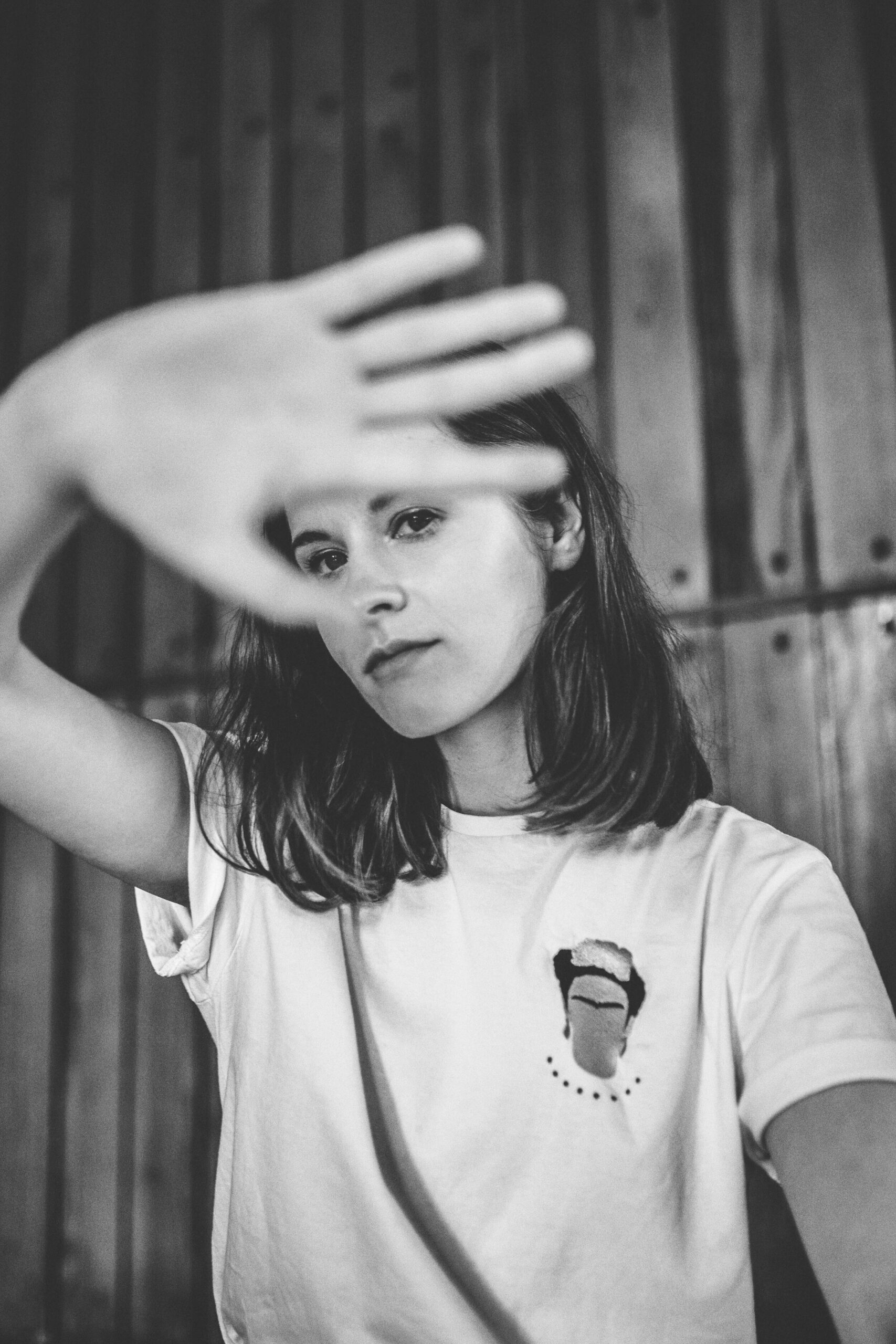
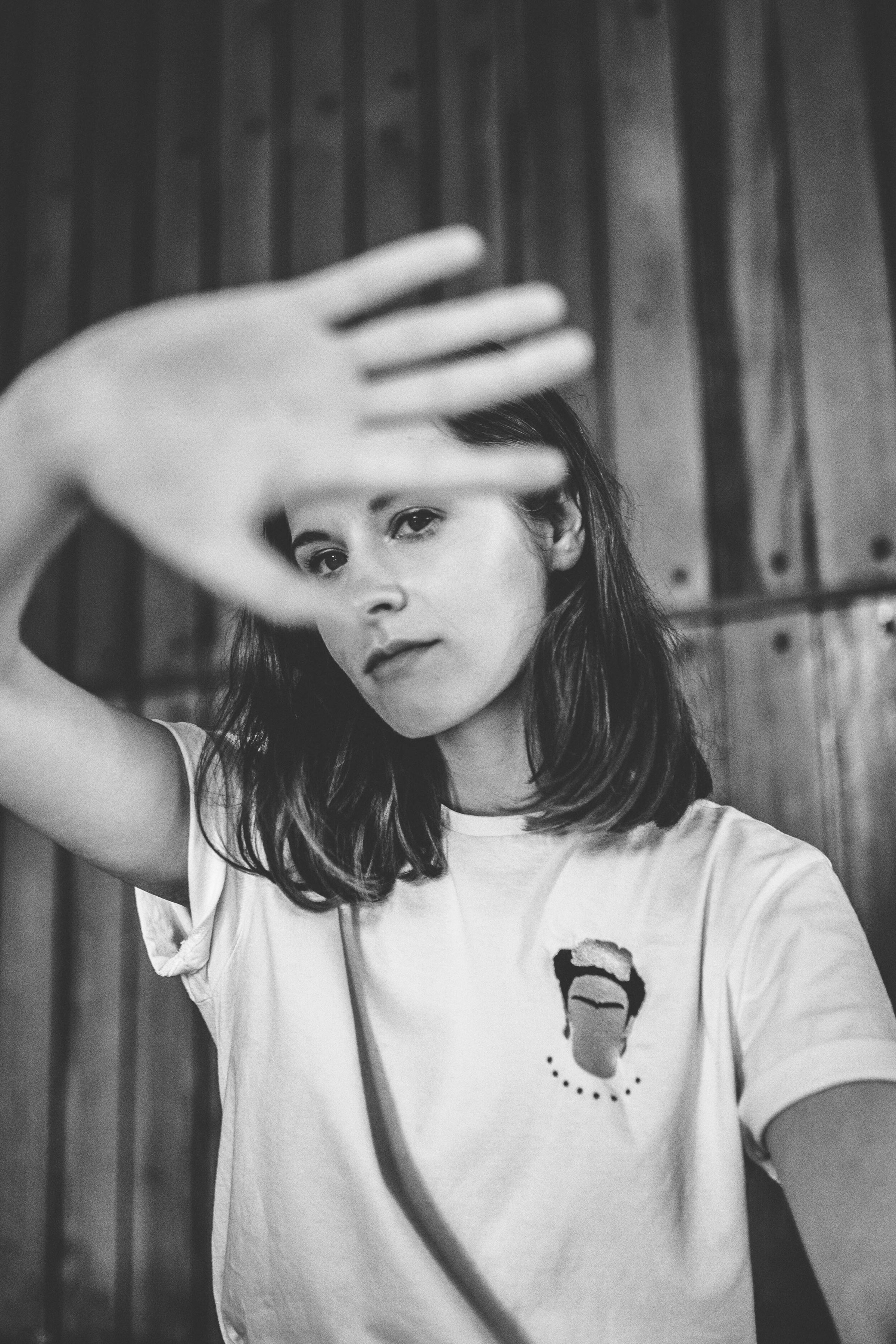
When pianist and composer Hania Rani’s sophomore album came out in May and in the middle of a global pandemic, its title, Home, likely took on greater significance than when it was conceptualised. The album has been described as a ‘metaphorical journey’ through notions of the home; about places that ‘become our home sometimes by chance, sometimes by choice.’ The ambiguity that comes with calling a place ‘home’ is something that Hania surely knows well, dividing her time between Warsaw, ‘home’ home, where she studied classical piano at the prestigious Fryderyk Chopin University of Music, and Berlin, where she now works. As a result of the pandemic, she explains, this is the first time since she was at school that she has stayed in the same place for a long period of time. Hania has been at her parents’ house in Gdánsk, where she grew up, and where she first took piano lessons. The return to her childhood home, during which Home was released has led Hania to re-evaluate the album; ‘I guess we have all changed a bit.’
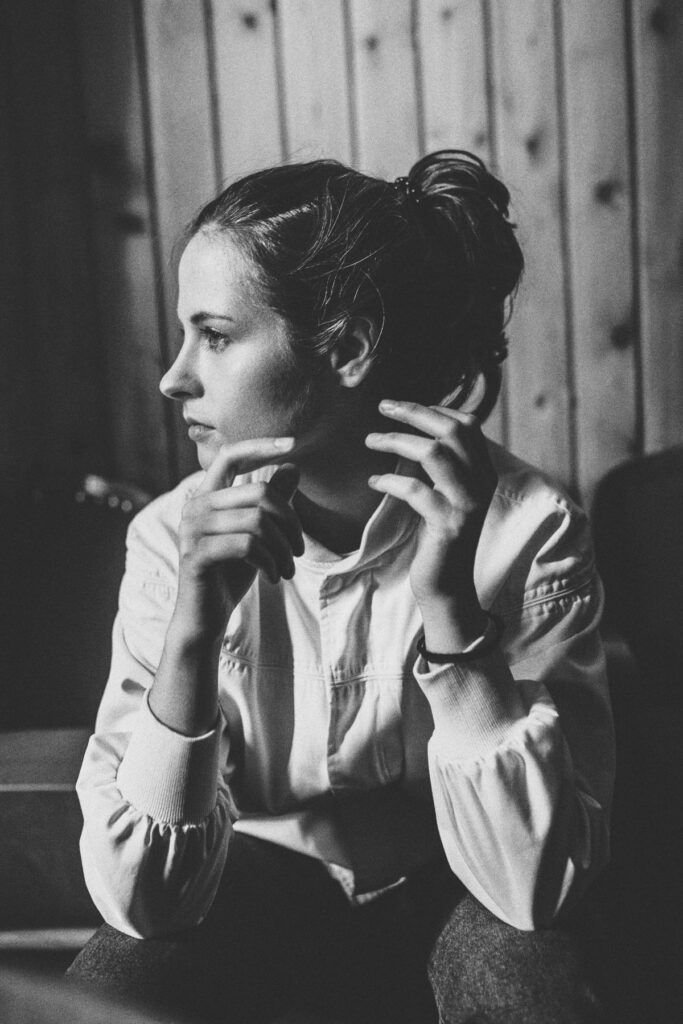
Back in late March, shortly after lockdown in the United Kingdom had been announced, the presenter Mark Coles profiled Hania for BBC Radio 4. ‘In difficult, troubled times I usually turn to music,’ he notes, ‘each night this week, at the end of the day in lockdown here at home, I’ve sat in the dark after everyone’s gone to bed, […] I’ve poured myself a drink and reached for [Hania’s first solo album, Esja], and lost myself in its simple, minimalist beauty.’ The gentle sounds of Hania’s music certainly provide a soothing experience at a time of upheaval and uncertainty, but also buried in both Esja and Home is a sentiment that allows you to be transported elsewhere. Esja, notably, is named after a mountain near Reykjavik, where Hania travelled in 2017 to record what would become this first album. The process of creating music, Hania explains, can ‘bring you to places that you could never buy a ticket to,’ no more so than when travel is largely not an option right now. ‘Creating makes you free wherever you are stuck at [that] moment,’ she adds, but it’s ‘not enough’ to use music purely as an escape. 

Hania came to prominence when Esja was released last April through Gondwana Records. Esja was not just a classical record – not even, strictly speaking, a classical record. A keen interest in the way the piano functions, as a mechanical object, and an appreciation for other genres, like jazz and electronica, gives Esja an ever so slight rawness. This surfaces in moments of sustained reverb, or in instances when the piano can be heard creaking beneath Hania’s craft. These subtle elements mark a deliberate distinction between Hania’s musical training and her role now; ‘As a classical pianist, I was just a performer. As a ‘neo-classical’ [pianist], I am a composer who also performs her own music.’ She likes the lack of limits imposed on neo-classical compositions, as it’s ‘[closer] to the values that I believe in.’ Those values, which begin to appear on Esja, take the forefront on Home. Hania has described her latest release as being the second part of a book, where Esja was the ‘musical prelude to a real plot.’ 
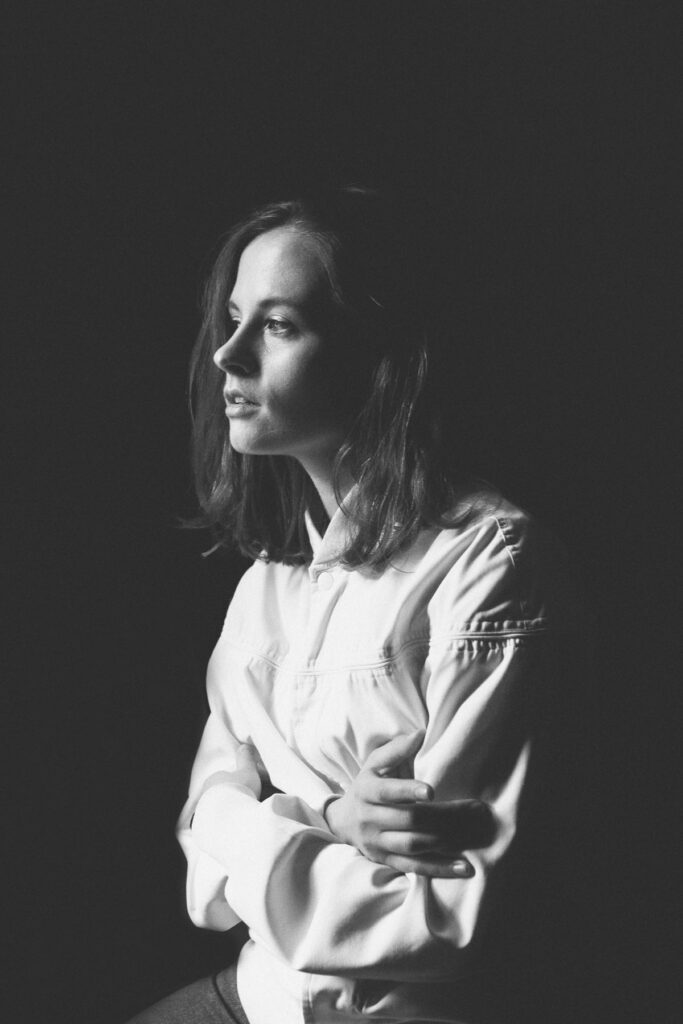
The transition from Esja to Home is immediately apparent on the album’s opening track, ‘Leaving’, where the piano makes space for Hania’s vocals. The addition of vocals and other elements that appear on the second album, including drums, guitar and synthesisers, confirms Hania’s transition away from classical music proper. It’s a shift that has been on the horizon for a while, too: ‘I have been experimenting with new things for years, but when I signed to Gondwana Records, we all decided to release a solo piano album first.’ The process of creating Esja afforded Hania the opportunity to try things out in the meantime, tracking her progress and maturing her style. Home is, therefore, a record that has been a long time in the coming. Hania describes the process of making Home as involving layers. For the opening song, ‘Leaving’, which was composed in 2018, she consolidated the piano composition and vocals into stems, ‘[editing] each layer a lot [until] I was happy with the result.’ This has become a familiar technique for Hania because of the endless possibilities it affords. Outside of this production process, the layering approach proved helpful in working out the sounds on the album more generally. ‘Each of the new elements came to me naturally,’ and each element was tried, recorded, and evaluated – from the double bass and the drums, to the string quintet that appears on ‘Tennen’ towards the album’s end.  

Credits

Photography MARTA KACPRZAK
www.haniarani.com www.music.apple.com/gb/artist/hania-rani
Primavera Sound Festival Barcelona 2022

After a two-year hiatus, Primavera Sound returns to the Parc del Fòrum in Barcelona this weekend. That, in itself, is a reason to celebrate. For sure, the very idea of a live festival is music to the ears of many after the coronavirus pandemic saw the cancellation of summer events in two consecutive years. Last year would also have marked the twentieth anniversary since Primavera Sound launched back in 2001. In its first edition, the festival was a much smaller ordeal and took place at Barcelona’s Poble Espanyol. But the likes of Sonic Youth, The Kills and The White Stripes all performed there – setting the precedent for the festival’s line up each year, as music icons and legends from around the world return descend upon Primavera’s stages each summer. Of course, the festival has grown considerably in size, popularity and reputation since then, whilst managing to retain something of a “local” festival feeling. But perhaps there’s no greater testament to Primavera’s global influence within the music world than the fact this year’s iteration has been promoted to a two-weekend line up. Whilst Massive Attack, Tame Impala, The Strokes, Gorillaz and Tyler, The Creator (to name just a few) are set to headline this weekend’s events, the likes of Dua Lipa, Lorde and Megan Thee Stallion will also perform next weekend. 

The addition of this second line up to Primavera’s programming is part of the festival team’s response to the pandemic. As Marta Olivares, Primavera’s affable Head of Communications, tells NR over Zoom, COVID was a moment for pause and reflection – especially as, she says, it was a time when the “whole ecosystem proved to be so fragile.” For Primavera co-founder, Pablo Soler, this couldn’t have been more apparent; the pandemic didn’t just reaffirm the importance of live music, he says, “it has revealed it;”

“Without festivals, we realised that we were missing a part of our lives that was the collective experience.”

The communal aspect of a festival goes without saying – it’s about the excitement and the emotions that are experienced with other people that, Pablo says, is crucial for creating a state of happiness. The idea that the festival is nothing if not for the people is crystal clear, as Marta explains that having this year’s events spread out over the course of two weekends (with a week of indoor performances in Barcelona in between, no less) was made possible by the fact that last year’s ticketholders “overwhelmingly” decided to keep their tickets. As a result, Primavera 2022 is an amalgamation of three years’ worth of acts in some ways; Beck and Pavement, scheduled to headline in 2020 will, for example, make a much-awaited appearance in Barcelona this weekend. But over the course of the pandemic, Marta says, we’ve witnessed;

“so many artists creating amazing stuff, working so hard and releasing incredible records.”

In that sense then, Primavera 2022 is an ode to music in the lead up to, and over the course of, the pandemic – especially when popular acts from today might have flown under the radar back in 2020. 

Given that the festival will be a de-facto twentieth birthday celebration, this weekend’s events will be both a moment to look back on Primavera’s journey so far, whilst also looking towards the future. In fact, part of the festival’s events will take place at Poble Espanyol – something that Pablo thinks the team can be justifiably sentimental about. “Over the years, we have played concerts at this venue outside of the festival,” he notes, “but going back there with Primavera Sound is even more emotional.” It will be, Marta says, a kind of homage to that tiny festival that was first unveiled. But as much as Poble Espanyol is part of Primavera’s legacy, the festival team’s outlook is to keep moving forward. In fact, in the midst of the pandemic when the Primavera team were figuring out their bid for survival, the answer was, perhaps surprisingly, to grow bigger still – though “sustainably” as Marta puts it. “It felt weird to stay put,” she recalls adding that there was a need to pivot somehow. As in previous years, the festival will head to Porto for the weekend (which will occur at the same time as the Barcelona edition’s second weekend). But satellite festivals will also take place in Los Angeles, Santiago, Buenos Aires and São Paulo later on in the year. “It was [a case of] go home or go big,” Marta notes of the decision to grow the festival in this way. “Definitely we’re going big.” For Pablo, the new locations explain the festival’s future-facing outlook in themselves: “we are a festival that any country would want to have.” And with an insatiable international appetite for Primavera as it’s staged in Barcelona, it perhaps makes sense to take the music to the people. So how does the essence of Primavera translate to these new locations? Marta notes that the festival’s Barcelona location is part of its draw – close to the city, near the sea, and with a lot of cultural pull as well as music. “That’s something we want to be careful with,” she says of the other locations – noting, for example, Porto’s luscious green backdrop near the coast at the festival’s site in the Parque da Cidade. But as Primavera looks outwards and globally, it’s also turning back inwards, too. Earlier this year, Primavera Sound Madrid 2023 was announced – a way for the festival to continue its newly-established tradition of two back-to-back weekend events in Spain. There is, it seems, an exciting path ahead for Primavera over the coming years, but first: this weekend. 

“We are always the first festival of the season,” Marta explains, adding that this particular edition means that the weekend will be something of a test run for the string of European festivals that follow on.

“I want people to come to Barcelona and celebrate life, to express themselves and to feel safe and alive again”

Marta says. Pablo concurs; “seriously speaking, we have learned that we have to live in the moment – seize the day – because we are all more vulnerable than we thought. If we should take this twentieth anniversary party as the party of our lives, then so be it.” But what should Primavera punters expect when they’re there? For Marta, it’s the unexpected – recalling Arcade Fire’s impromptu performance on a boxing ring-esque stage at the 2017 festival. This is, of course, not an indication or confirmation that such an event might occur this year, but possibilities and chance encounters are certainly part of the Primavera fabric. To that end, Marta describes the ideal standard that the Primavera team strives for: “at the perfect Primavera;”

“you would be able to enjoy a show from your favourite band; you would go to something that challenges you; you would see someone you don’t yet know will be your next favourite act; and the fourth would be something you really had fun at.”

And with a line up as glittering as Primavera’s is this year, it’s almost guaranteed to be perfect.

Credits

More info · Primavera Sound Festival Barcelona
Special thanks to Chris Cuff and Henry Turner (Good Machine PR)

Snoh Aalegra

Snoh Aalegra on signing to Roc Nation, her music making process and ‘Ugh, those feels again’

There was a moment last summer when it felt as though one song in particular was seeping from every open window on a warm day; it seemed to be the backing music to Instagram story capturing a stream of sunlight falling upon the interior of an airy apartment. ‘I want you around’, Snoh Aalegra sings on the song of the same name – velvety lyrics dabbling in the simultaneous thrill and uncertainty of a new love, above a pared-back beat.

In fact, the entirety of her most recent album, Ugh, Those Feels Again, felt like the soundtrack to the summer. And for Snoh, her music provides the soundtrack to her life; each album or project is a ‘mini movie’ of encounters, experiences and feelings. That Snoh speaks about her music through references to movie soundtracks is testament to a childhood spent watching, and falling in love with, the film scores of Walt Disney movies. ‘The big strings, the orchestras and the choirs,’ she enthuses, ‘they feel so grand; all these instruments and sounds that I love.’ Similarly, the layers and theatrics in the oeuvre of Michael Jackson had a significant impact of Snoh’s taste. It’s clear from the influences she has cited – Lauryn Hill; Nina Simone; Whitney Houston; Stevie Wonder – that Snoh follows in a long tradition of R&B icons. Somewhat fittingly, the album cover for Ugh, Those Feels Again has a touch of Sade about it – something Snoh’s been hearing a lot of.

The artistic direction behind the covers of her releases prior to this album, 2017’s Feels and 2016’s mini album Don’t Explain, took a different direction, however. Both covers were designed by the artist Joe McDermott; the pop art illustrations making reference to the movies of old Hollywood. When I first heard Don’t Explain, the combination of McDermott’s album art with Snoh’s smoky vocals over grand orchestral compositions felt timeless. In many respects, it’s only upon hearing features from rappers Logic, Vic Mensa and Vince Staples on Feels that bring Snoh’s music into the present day. It’s fitting, then, that she walked for Thierry Mugler’s A/W 2020 show in Paris earlier this year. ‘It’s a class brand that I’ve always loved, you know; it’s timeless and contemporary at the same time,’ she explains: ‘that’s what I relate to a lot.’ It’s something that she tries to do with her music, but progression is important too. In fact, the day before I spoke to Snoh on the phone, it was announced that she’d signed onto Jay-Z’s Roc Nation – a huge step forward if ever there was one. 

NR: First of all, it’s just been announced that you’ve signed with Jay-Z’s Roc Nation; how does that feel, and what does this mean for your music? 

Snoh Aalegra: Yeah, I mean, I’m very happy about it all. Me and my team, we’ve been working our asses off, doing everything ourselves for so many years. And I have a really small team of like three people, and at some point, we were like, ‘Ok, it’s time to expand.’ I mean, we work around the clock and we needed to delegate some of this insane workload. Talking to labels was a natural next step in my journey, and our journey as a team. I think choosing Roc Nation was just the most organic way to go; there’s a pre-existing relationship and respect there already, you know. No I.D. [Snoh’s producer] is close with Jay-Z, TY TY, Jay Brown and everybody, and I feel like no matter how big their company gets, they still operate like one big family. And I think that’s something that’s very important to have for me, in contrast to other cutthroat, hype-driven labels. I look at Jay-Z, his close circle of people and see the insane careers they’ve built for themselves and the help they’ve given so many other artists. And as far as my creative process goes, that will stay the same. I mean, I always strive to evolve and learn, but I definitely have a particular way of how I like things to be done and that will probably never change. 

NR: Something that interests a lot of people is that Prince was your mentor when he was alive; what do you think he’d say knowing where you’ve got to today? 

SA: Yeah, it’s interesting cos he really told me to never sign with a major label, and when I met him, I was with a major label. He was like, ‘Get out of this deal!’ and I did; I went indie. But, funny enough,

“I know one person that he [Prince] really respected and trusted, even with his own catalogue, was Jay-Z. So, I feel like I’ve made the right decision and he probably would have supported this too.”

NR: How do you find the space to create new music, and is having a certain space to work in important to you? 

SA: I think it’s important to live and to have something to write about; to take your time and have space. Like, I thought I needed more time to start making music again after this album, but I’ve already started making music and I think that’s because I naturally have things to write about. If I don’t, I’m not gonna force it, you know? I’m very real with what I say,  and not say, before I get into the studio. I go in with that mindset like, ‘Ok I want to write about this.’

NR: When it comes to the composition, where do you begin? Do you start with the lyrics, an idea or a sound?

SA: It really begins with me, walking into the room, knowing the mood – there’s always a mood. Sometimes, it’s just only me and an engineer, and I’m there writing the whole thing myself, either to a beat, or I make up melodies and lyrics – and then I have somebody come play for me. Sometimes I like to bounce off ideas with a co-writer or with a producer and work that way. I’m all for either ways. It’s really about myself and my life, so it’s super important that it’s all authentic to me. And if I bounce off with somebody, they need to know that it’s really personal to me. And that’s why I don’t really write with a lot of people. So, sometimes, I already have a lyric idea; sometimes it’s like, I’m jamming to a beat. My favourite is probably jamming to live music where I’m just jamming with live musicians. That’s probably my favourite way to work.

NR: Ugh, Those Feels Again was a year or so in the making: How do you know when something’s complete and ready to go?

SA: I think it’s just a feeling you have. Like, I’m ready to put this out; I’m ready for people to hear this. And it’s not always that it’s perfect, or that you feel like, ‘Oh I have a hit, I have this, I have that’. I had no idea how people would react to the album. All I knew was how it made me feel and that it was, you know, a good feeling. For me, it’s about what I want to have said on a project, and if I expressed these emotions. My projects are like time capsules of my life. So, this album that’s out right now, was the sum up of what happened after a break up and what I was going through – reminiscing back on why we broke up, how we broke up. Songs like Charleville 9200, Pt. II, songs like Love Live That and You, reflect on the break up. And then, I was single for a whole year making the album, experiencing new love or situations, so songs like Situationship and I Want You Around describe that feeling when you just met somebody new, and you want them to be around them, but you don’t really know where it’s gonna go. So, that’s a mix of a whole year for me. 

NR: Once you’ve put an album out there, do you move on, or do you look back at that period and remember how you felt? 

SA: Well, in real life I move on. I’ve moved on from those relationships and stuff, but I can never escape it all the way because I have to perform! But sometimes, I’ll channel another feeling, or I’ll think about something else. Every time I’m performing certain songs, I’m not standing there thinking about my ex, do you know what I mean? But some songs, like Time, every time I’m thinking about my dad. So, it can be hard because I’m always thinking about something – cos I really get into the vibe when I’m performing. 

NR: Your lyrics are very personal to you, but I think people connect to them because you really capture emotion. How does it feel that people might listen to your songs and put their own experiences and feelings onto them?  

SA: And they do, and I notice that they do, which is really surreal. I grew up listening to music as a fan, and I know what music does to me so, to be able to do that for other people as an artist is kind of unreal. But, I think that was a part of why I wanted to become an artist, you know. I want to inspire; that’s why we do music I think. But it’s kind of crazy; there’s been people come up to me saying I’ve saved their life, and that listening to my album has stopped them from doing something. That’s feels crazy to me – that that’s helped even one person. It just shows how powerful music can be, and how it can connect people at the same time. 

NR: In a similar way, you’ve previously mentioned some of the musicians that inspired you growing up. But, for you now, how does it feel that your music could inspire a young generation?

SA: I mean, it’s surreal because I just know how I was feeling as a little kid listening to artists I looked up to. I was inspired by Whitney Houston; when I heard her voice, that’s when I knew that I wanted to be an artist. So, it’s crazy if somebody feels that way hearing me. At the same time, I would feel nervous for them because I know how tough this industry can be, and what a tough journey I’ve had to get this far. It’s all been worth it, but I don’t know how much I would advise somebody else to get into this industry! But, you know,

“if I can inspire somebody to do their own thing- no matter what it is – if they want to be an artist, a lawyer, or a nurse, whatever they want to be; if I can inspire that, that’s a beautiful thing.”

NR: Being able to look back on the journey you’ve taken, is there anything you would have done differently – or something that you’ve really learned from that’s shaped who you are today?

SA: I’ve learned to not be a people pleaser; I used to be a people pleaser because, you know, I was signed for the first time when I was thirteen. And, I had a lot of respect for authority, listening to people telling me what to do, and what not to do. I didn’t have my own voice. Things were really different when I was thirteen, or even when I was eighteen, to being a teenager now. We’re way more educated, smarter, we have more access to information, to make music and to have a reach. When I was a growing up, there was no SoundCloud or Instagram. So, for me, I had to go through labels –that was the only option. I put a lot of trust in other people around me and I didn’t know what I was doing; I was a kid. So, I think yeah:

“that’s something I’ve learned – stop being a people pleaser. Do your own thing. Life’s too short to do something you don’t want to do.”

And, I stand up for myself more than ever and I don’t take things personal. It’s a whole big game for everybody in the industry; it’s not just about the artists – there’s a whole political game. For artists, nothing is set for us, basically. It’s crazy how it’s a whole world of politics, and artists get really affected by this. And now I work with family so I know that they would never fuck me over. 

NR: Finally then, if you were to work on a film score of your own, what would be the ideal project for that?

SA: James Bond. 007. That’s always something that’s been on the bucket list; if that were ever to happen, that would be super crazy. It’s been a goal of mine cos I’m a big fan of the James Bond soundtracks. License to Kill – Gladys Knight, Golden Eye – Tina Turner, or like, Gold Finger – Shirley Bassey: they’re some of my favourite songs and compositions. So yeah, that would be a dream cos I would want to make a song like that. 

Team


Photography EMMAN MONTALVAN
Photo assistants ANGEL CASTRO and PATRICK MOLINA
Fashion SHAOJUN CHEN
Make-Up CHERISH BROOKE HILL
Hair SCOTT KING   
Words ELLIE BROWN
Creative Direction NIMA HABIBZADEH and JADE REMOVILLE
Special Thanks to GOOD MACHINE PR

Designers

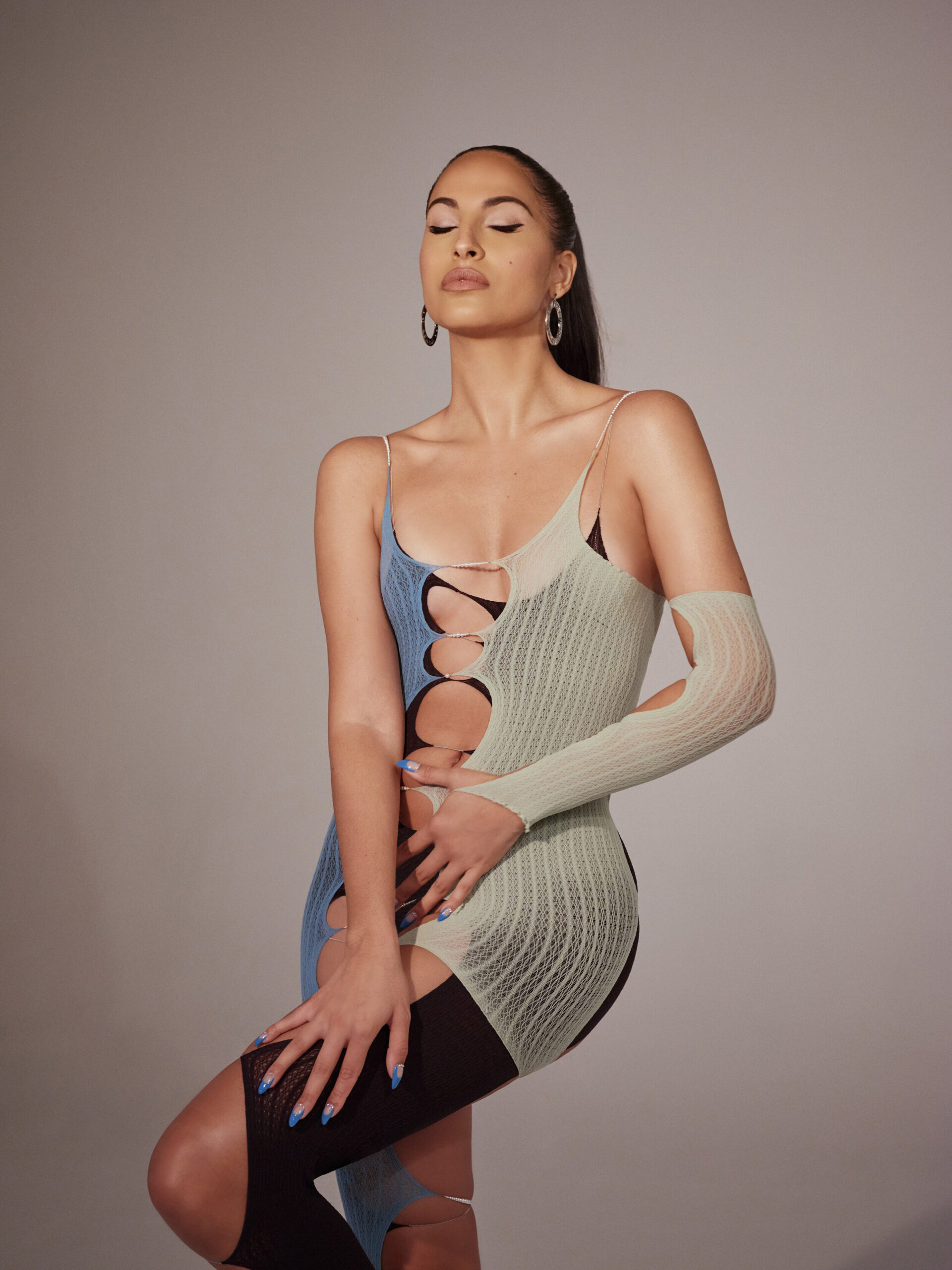
  1. Body Suit RUI ZHOU Earrings MISBHV
  2. Swimsuit RUDI GERNREICH Jacket VERSACE Shorts R13Boots PYER MOSS
  3. Swimsuit RUDI GERNREICH Jacket VERSACE Shorts R13Boots PYER MOSS
  4. Swimsuit RUDI GERNREICH Jacket VERSACE Shorts R13Boots PYER MOSS
  5. Body Suit RUI ZHOU Earrings MISBHV
  6. Bra, Jacket and Pants I LOVE PRETTY Shoes ALEXANDER WANG
  7. Bra, Jacket and Pants I LOVE PRETTY Shoes ALEXANDER WANG
  8. Dress PYER MOSS Earrings MISBHV
  9. Full Look HELIOT EMIL Earrings MISBHV

Daniel Caesar

“No one is really one thing, no one has a fixed identity. I think growing is moving from identity to identity.”

Since the release of his debut album Freudian in 2017, Daniel Caesar has been something of a [crooner redefining R&B and soul of the 1990s with elements of gospel, taken from DC’s upbringing, for a new generation. The album racked up a number of Grammy nominations at the 60th Grammy Awards, for Best R&B Album, Best R&B Performance for ‘Get You’ with Kali Uchis, before winning Best R&B Performance earlier this year for ‘Best Part’ with H.E.R. All by the age of 23 (24 now). Following the release of Caesar’s second album, Case Study 01, in June, he has been on tour since August in the US, and now in London ahead of UK tour dates (sell out) before Europe and Canada. 

Earlier this week you reached a billion streams on Spotify which sounds pretty crazy to me. How does that feel? 

It feels like good, I don’t think it’s something I ever considered. Like, a million, a couple of million, sounds doable, but a billion is outside of my range of perception. 

It’s fair to say you’ve achieved quite a lot of commercial success without being signed to a major label. So considering that, have you got any intentions to expand Golden Child Records in the future at all?

Yeah, there’s always more that can be done. I have lots of ideas, who knows exactly what those turn into, but it’s not going to stop here. 

Case Study 01 has a pretty distinct vibe to it compared with Freudian. Could you explain the process and the intentions behind the record?

With this one, I made a few beats first, and it was more about trying to get more complete ideas from my head out into the world, as opposed to writing on my guitar. So this time, some of the lyrics came long afterwards, which isn’t how it usually works for me. I had more to say also, so it’s a lot wordier; I was also being less practical in terms of ‘first verse, second verse’, etc. I was saying a lot more and doing a lot more this time around, and then, trying to organise all my thoughts when there’s more going on that usual. 

There was one video you posted on Instagram – a behind the scenes of the recording with an open piano… 

Yeah, that was for Too Deep To Turn Back. We got to explore a lot more this time. With the last album, we’d go in the studio and block out a week or less because we already knew what we were going to do. Whereas, with Case Study 01, we started creating the songs in the studio, so we had time to play around and discover new things. I liked that so much more because the studio recording process is when I get to do what I want, it’s like my favourite part. So, this time, we were at Abbey Road Studios and just fucking around with all the cool stuff, and we just stumbled across this sound we liked and found a part for it… 

You’re commonly referred to as a crooner, a romantic, or like a present-day D’Angelo, is that something you ever anticipated? Or is that a strange thing to be?

I mean, I guess, yeah. Singing was always my thing at school. I was always the crooner guy, that was my shtick or whatever… That was me, I could sing the emotional songs… 

Did you always want to pursue singing?

It was always one of the things I wanted to be, not the first thing, but one of. When you’re little and you tell adults, well-meaning adults, what you want to be, they try and help you manage your expectations… It’s like, chances are you’re not going to be able to do it, in the nicest way, and so you try and realign, and pick something more practical. So you try and fit into what you think you’re supposed to be doing, and then you’re just not good at that. And so, it always came back to singing. 

Something that is striking about the visuals for your albums and videos is of you as what seems like an isolated figure (especially in the spacesuit). Is there anything in that? 

When you say it, it makes sense to me, but I don’t think it was intentional like, ‘let’s do this’. I was just feeling isolated or, trying to connect, but being unable to, you know? I’d say one of the themes is about wanting love, wanting a connection, and it’s always fleeting or unrequited. 

There’s a moment in your conversation with Brandy where she remarks that you’re a great storyteller; How important is storytelling to you as a songwriter? 

It’s important, but I don’t think it’s the only tool necessary. I think the most important thing is conveying the feeling, whether or not you’re being descriptive and articulate, whether you’re retelling a story, or you’re just saying what’s need to be said to convey the idea or the feeling. I think storytelling is important; it helps make things more rhythmic. But the feeling is the most important thing, however it is you get that across. 

You mentioned that, with this album you didn’t write some of the lyrics until afterwards but, with songwriting, where do you start and what’s your process?

It usually doesn’t come ‘til I’m in a really good mood or really bad mood. Or, say, I have a conversation and I hear a phrase that I like, it’s usually something that sounds paradoxical. Just something clever. Then, chords might come and surround it. It always come through extreme emotion, energy and excitement. Usually, honestly, I’ll be in the shower and I’ll like, drop everything and do the voice note. Sometimes it turns into a song, sometimes it’s just a short little note and I’ll send it over to Jordan [Evans, Caesar’s manager] and, he puts it in a folder with thousands of others… 

What does ‘reinvention’ mean to you? 

Reinvention is death and rebirth. No one is really one thing, no one has a fixed identity. I think growing is moving from identity to identity. I mean like, what I’m doing is the extreme art version, where I’m an astronaut [for Case Study 01]. But, it’s about growing through your life, finding new parts about yourself and taking it on fully. 

How would you relate reinvention to something that you’ve gone through or that’s happened to you specifically? 

I think everybody is the way they are because of things that have happened to them, so there’s no one moment I can think of… But, through trauma, through the good things and the bad, these things chip away at the sculpture that becomes the final ‘thing’. 

Team

Photography · JACK JOHNSTONE
Creative Direction · NIMA HABIBZADEH and JADE REMOVILLE
Fashion · JAY HINES
Fashion Assistant · SERGIO PEDRO
Grooming · ELAINE LINSKEY
Manicurist · JULIA BABBAGE
Interview · ELLIE BROWN
Special Thanks to · Toast Press


Designers

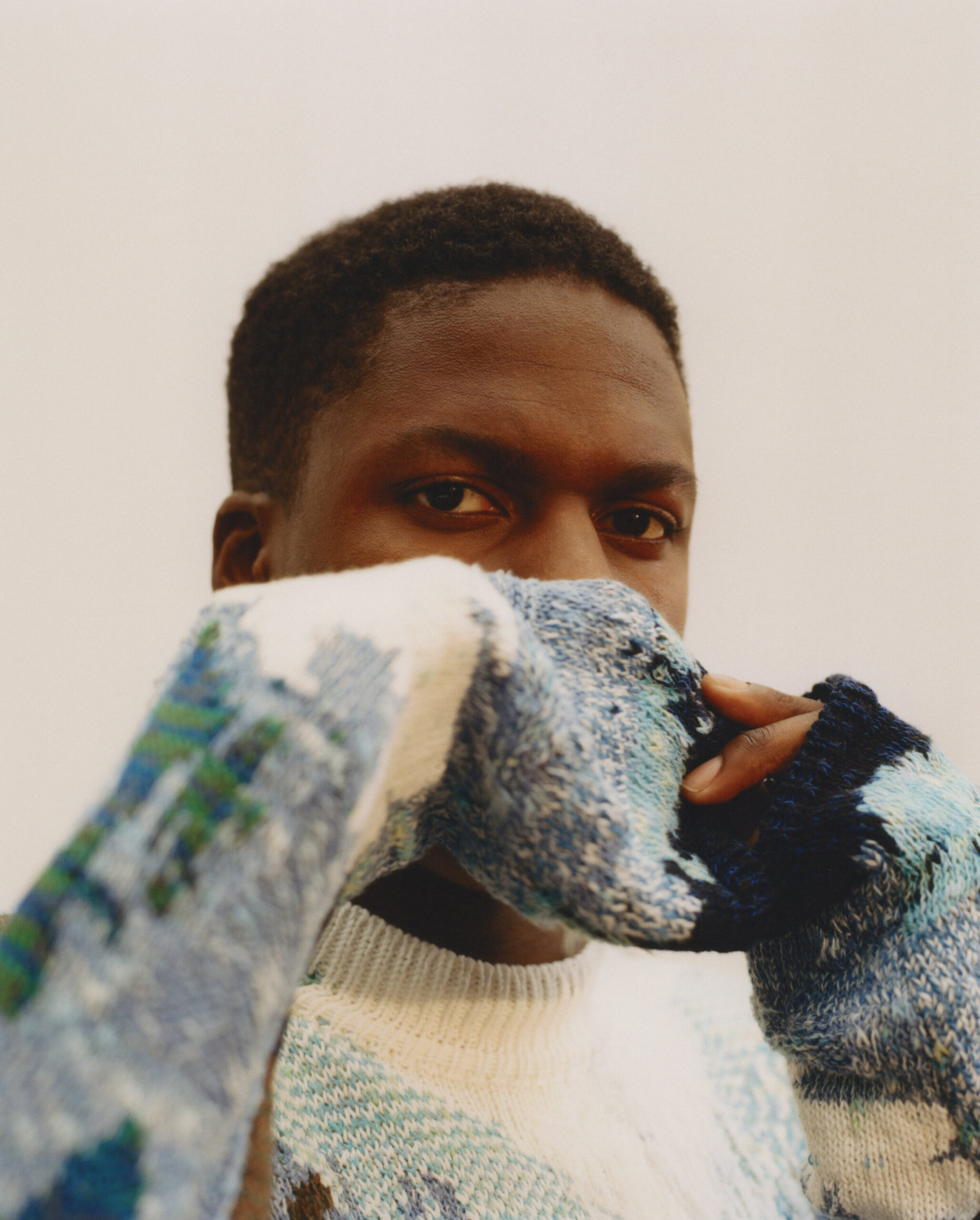
  1. Jumper OFF- WHITE
  2. Suit and Shoes GUCCI Shirt TOM FORD
  3. Suit and Shoes GUCCI Shirt TOM FORD
  4. Jumper OFF- WHITE
  5. Jumper OFF- WHITE
  6. Top and Trousers HERON PRESTON Shirt and Shoes OFF-WHITE
  7. Vest KHOZA LONDON Belt OUR LEGACY Trousers SAINT LAURENT Shoes COMMON PROJECTS
  8. Coat, Trousers and Shoes PRADA Shirt OUR LEGACY
  9. Coat, Trousers and Shoes PRADA Shirt OUR LEGACY
  10. Top and Trousers HERON PRESTON Shirt and Shoes OFF-WHITE
  11. Suit BURBERRY Shirt TOM FORD Shoes DRIES VAN NOTEN

Moses Sumney

“Maybe because the sun is not shining, people are more moody, they’re more in their feelings”

“I felt like all my career I’ve been waiting in the wings,” Moses Sumney tells me over the phone from Paris. “And it’s really nice to see the music get out there and reach people that aren’t just me.” While the 28-year-old American artist has been quietly making waves with his live performances and material for some time, putting out self-recorded Mid-City Island in 2014 followed by Lamentations in 2016, it wasn’t until September last year his first full length album, Aromanticism, finally brought his talent fully into the limelight. Born in San Bernardino, he moved with his parents to Ghana at the age of 10 before returning to the US to study. He recorded in his bedroom, taught himself guitar and first performed at the age of 20. For Sumney, releasing his debut album marks the culmination of a long process of overcoming shyness and being “diligent and persistent” to bring his songwriting out into the world: “There have been a million challenges. I have so many even now. But I felt this was always what I was meant to do, so nothing was going to deter me from doing it.” The persistence certainly paid off, with Aromanticism being launched to great critical acclaim, including being named one of the best albums of 2017 by the New York Times and Rolling Stone.

Characterised by Sumney’s haunting vocals and searching lyrics, the album purposefully meditates on a central topic, something he felt would be important to “make the project feel cohesive”: “I decided sonically it needed to feel intimate but expansive. And lyrically and thematically it needed to be about one thing, which ended up being Aromanticism.” The cryptic title alludes to a personal sense Sumney had of his own experience and understanding of love lacking in mainstream representation: “I wanted to explore broader definitions of the word love but also the cracks and crevices of loneliness as well as lovelessness and, more specifically, the absence of romantic love. Most literature, art, music felt like it was engaging with love in a two-dimensional way and I wanted to explore how complex it was.” As he outlines in an essay published at the same time as his album, discussing Greek mythology and the origins of love, he doesn’t see his reflections as rooted only in the contemporary: “These feelings around love don’t start here. People have felt lonely essentially since the beginning of time, there are records of people wanting to be married and not getting the chance to for as long as we’ve had the ability to read.” Rather our modern condition, propelling us inexorably to seek out and find contentment through love and coupledom, and fear our failure, is further exaggerated by the internet: “One of the hallmarks of being a young person alive presently is you think that everything that is happening to you or to your generation is incredibly unique. We tend to navel gaze a lot. But it’s important to recognise our prevailing feelings around love and romance are pre-existing.”

“It’s just the internet era tends to heighten everything, to amplify and augment feelings, cultural movements and observations.”

Informed by his time spent studying literature and writing, there’s an equally academic and poetic approach to delineating emotions that plays out through the album and constantly subverts expectations, each track forming an exploration of a distinct but connected topic to his central thesis. This he feels is best captured in Doomed on which he asks: “If lovelessness is godlessness/Will you cast me to the wayside?” On Plastic he takes aim at how impressions can be out of kilter with reality: “Funny how a stomach unfed/Seems satisfied ‘cause it’s swell and swollen.” His personal favourite Indulge Me meanwhile finds a moment of reconciliation in the wake of bitterness and torment: “All my old lovers have found others,” accepting his past loves have moved on and finding peace in solitude.

Sonically the album is no less idiosyncratic, resisting any easy shoe-horning into a neat genre. Beautifully evocative falsetto and harmonies reach to the rafters with delicacy and calm yet hold a melancholy in their yearning for answers and are pulled back from optimism by a dark undertow of strings and synths. Hypnotic sounds that ebb and flow, crescendo and fall lull the listener deep into what Sumney calls his “sonic dreamscape.” He notes influences stretching back to his time listening to and performing choral music in a high school choir in his late teens. He draws inspiration from jazz via the likes of Ella Fitzgerald and soul from Aretha Franklin and Stevie Wonder. But he also loves folk and indie rock: “It is an amalgamation of different things. The primary tenets of my music are soul and folk and then sprinkle a bit of indie rock, sprinkle a little bit of experimental, sprinkle a little bit of jazz.”

Crucial to his creative output are his otherworldly videos, though he confesses he initially had no interest in the medium: “I never wanted to make music videos, I really hated them growing up and in my early career because I thought they were so boring. Pop videos have so many jump cuts. I have ADHD so it’s really unrelaxing to see all the different ideas flash in front of you.” That all changed on meeting Brooklyn-based Allie Avital, who has now directed or co-directed with Sumney all of his videos – and also convinced him to be in them: “My process is largely attached to her. For at least two of the videos, she came up with the ideas, and for the other two Quarrel and Doomed I did. I have images that flash into my head when I listen to a song, whether an associated colour or an associated scene, so usually I take those ideas and talk to her about them and just flesh them out with her. It’s been an amazing process.”

Now the visual aesthetic is increasingly important to Sumney: “Even when we’re not able to make official videos I try to make a little visualiser for each song on YouTube just so there’s some kind of visual world just attached to it. Listening to the song can give you one meaning of it but then making a visual that can seemingly be semi-detached can help complete the story.” Now there is also a generation often consuming new music for the first time via video: “It’s kind of a great propaganda tool honestly because you can inseminate an image into someone’s mind when they’re hearing something for the first time. You get to control their response to it or at least to an extent their conception of what that music is and what it means. It’s kind of fucked up,” he adds with a laugh. In contrast to the attention-deficit-inducing videos he so hated in pop, his slow-burners each take a seemingly simple concept and execute it in stunning and moving ways. Lonely World takes us to a surreal black and white scene of Sumney coming across a female fish-like creature on a beach. Quarrel is an alternately dreamlike and nightmarish abstract vision of horses. Doomed has Sumney floating in a tank, no mean feat considering Sumney doesn’t know how to swim and had to spend eight hours in the water: “It was nerve wracking but the emotion I was supposed to communicate was one of terror anyway so it was kind of appropriate for me to be scared and uncomfortable.” Sumney further explained the concept, “as a song it is about speaking to God or speaking to the universe and being like, ‘what is the meaning if nobody loves me or if I don’t love anyone.’ It’s engaging with the idea that life sometimes feels like a cruel joke and there’s some higher power or design looking down on us like, ‘Ha ha, that’s funny.’ So I wanted to communicate in the end with the birds eye view, just the idea of looking down at these little rats. It feels like often we’re just like test tube babies with someone vaguely experimenting with us all.” Unexpectedly a seed for the idea was sewn from the final scene in the first Men in Black: “There’s a shot at end where they do this huge zoom out and you see each planet is actually just a marble and there’s these aliens playing with the marbles.”

“It really fucked me up as a child, like ‘oh my god, is someone just playing with my life?’ I wanted to tap into that in Doomed.”

Collaborations have formed a key part of Sumney’s career, including co-producing and singing the opening track on Beck’s covers compilation Song Reader and holding a guest spot on Solange’s A Seat at the Table album. Last year he performed at the Oscar’s alongside Sufjan Stevens and St Vincent on Mystery of Love from Luca Guadagnino’s Call Me by Your Name, nominated for Best Original Song, an experience he live Tweeted to hilarious effect. He tells me: “From the stage I could see Meryl Streep, I could see her. So that was cool, you know, not unnerving at all…” Since Aromanticism’s release he’s also hit a packed schedule of festival and gig dates worldwide including London’s Field Day and Germany’s MELT!, as well as the US’s Coachella and Pitchfork Festival and he sold out Sydney Opera House in February.

Coming out of his shell and putting his work on the stage is something he is still challenged by. On the one hand seeing tracks he wrote and practised in his bedroom move and connect with people who don’t even share his language has been exhilarating, yet hitting new cities every few days has also left him feeling “unbalanced”: “It’s a pretty unnatural thing for a human being to do. So it’s incredibly euphoric but maybe I would better describe it as manic. Sometimes you feel really high, sometimes you feel really low: my mood changes every five minutes. It’s a pretty wild ride but I love singing and I love performing so it feels really good.”

It’s London though that Sumney admits is his favourite place to be and play: “People on this side of the world tend to embrace experimentation a lot better than where I’m from, better than Los Angeles especially which seems beholden to commercial music tropes often, even in the indie scene. I appreciate in London I have room to be weird, I have room to experiment, I have room to be soulful. Maybe because the sun is not shining people are more moody, they’re more in their feelings,” he says, only half-jokingly.

A move away from his home country he also reflects is to do with a detachment from the political situation there, one he sees has been deteriorating for much of his adult life: “It feels pretty futile to let it upset me. Since last year I’ve been spending most of my time in Europe and most of that in England. I think I’ve been through so many phases of being enraged that sometimes I take a little break, which I’m doing now, and then I just focus on music which helps me feel better, balanced, cleansed, sane. Maybe it is a bit escapist.”

Cognisant of the fact that the industry doesn’t allow complacency, since the album’s launch he has also released extended version Make Out in My Car: Chameleon Suite with various reimaginings of the original track, including a duet with Alex Isley, a James Blake remix and a new song based on the original by Sufjan Stevens. Most recently in August came three-track EP Black in Deep Red, 2014 including Rank & File which holds a fresh energy, with fingers clicks and marching beats reminiscent of military protest. And he’s already been cooking up his next record: ‘It just takes a long time to make an album, you kind of have to get right back in if you want to do it again.” The next one he says, “is going to be louder and crazier, a little bit more experimentation but also a little more focus on the songwriting. I think it will just feel like another step or another chapter to the same book. I feel I have a lot of freedom and can do whatever I want so I’m really just trying to challenge myself to make music that doesn’t sound like everything else.”

He recognises however this is perhaps not the case across the industry: “There could be more room for weird music in the general dialogue. Sometimes I feel like now is a really free moment and then other times I feel the internet is making everything be one big amalgamated sound. It has opened things up more so that you don’t need to be backed by a huge record label. But I don’t feel things are diverse enough.”

“Even when weirdos come into the mix there has to be an element of familiarity to what they do in order for it to connect or be shared and pitched to the masses. I think that blocks diversity from being genuine.”

In particular, he warns that an impression of greater diversity can hide a lack of true progression: “I feel this current moment, this generation is a little bit too like, ‘let’s pat ourselves on the back, there’s a black person singing.’ Like, ‘cool, good on us.’ And I think that self-congratulatory attitude has a tendency to stifle growth. I’m not ever really going to be the kind of person that’s going to say ‘there’s enough women playing guitars.’ I’m like, ‘there’s two. So let’s calm down.’”

Credits

Photography · Aaron Sinclair
Photo Assistant · Brandon Bowen
Fashion · Phil Gomez
Talent · Moses Sumney
Words · Sarah Bradbury

Designers

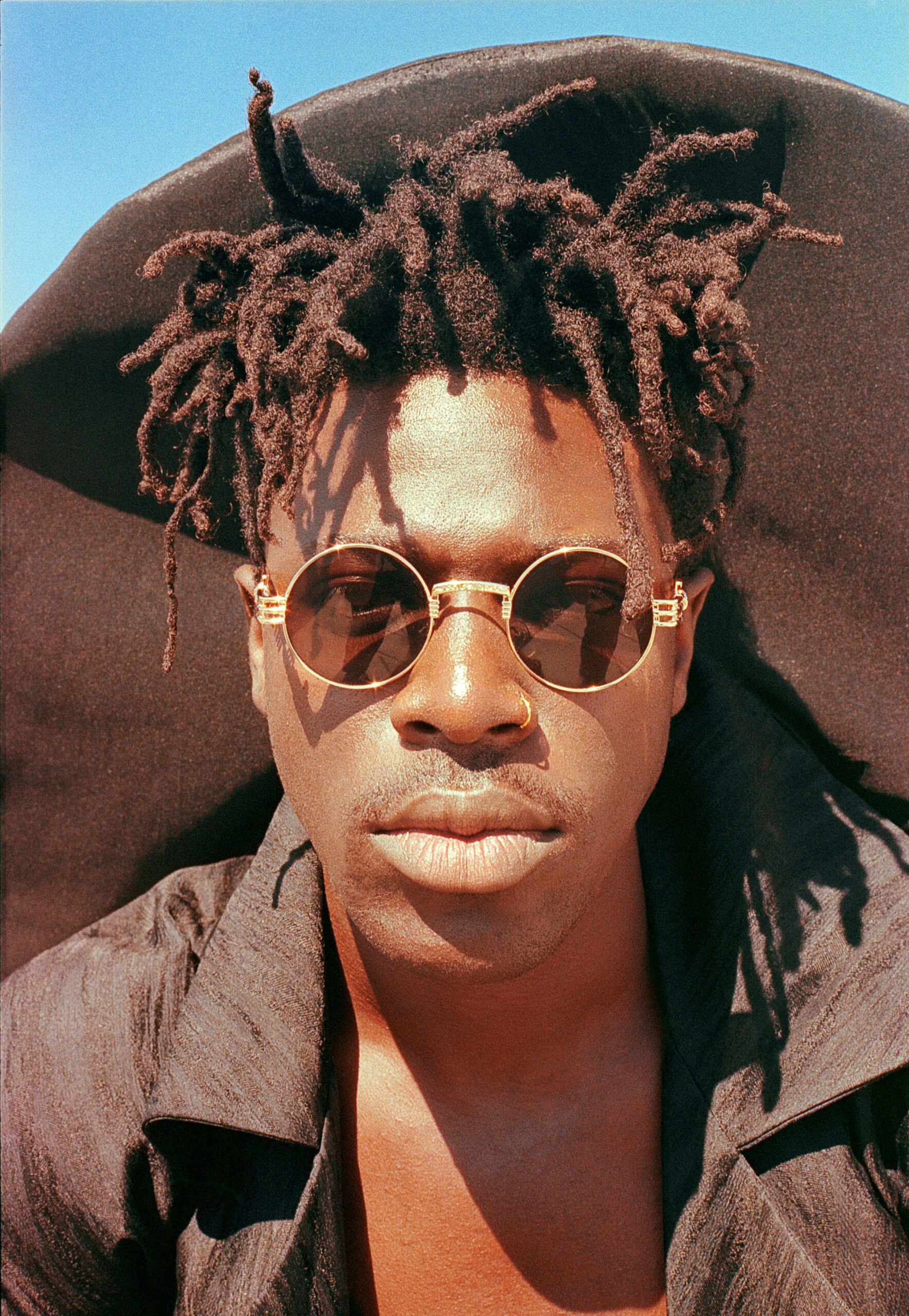
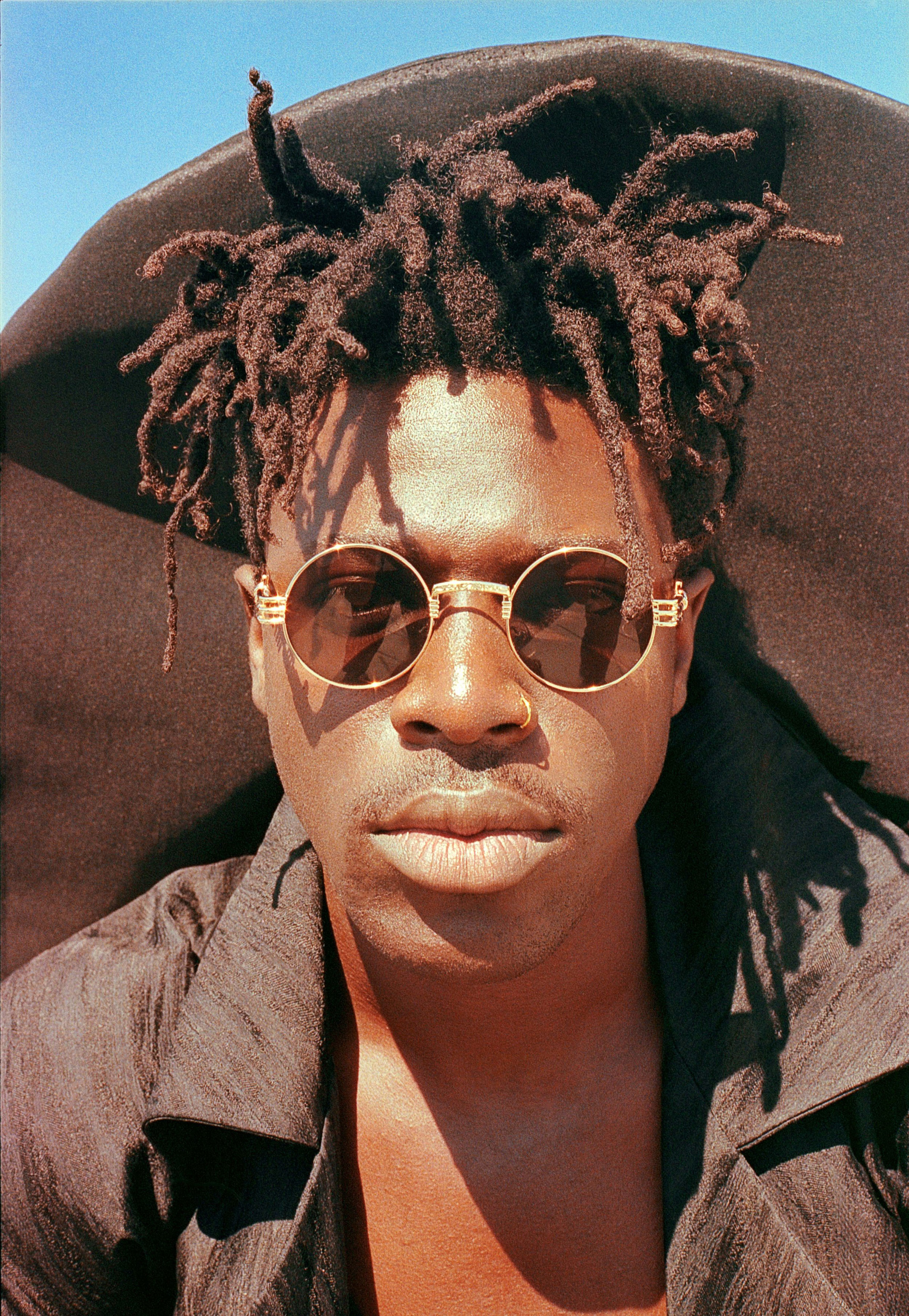
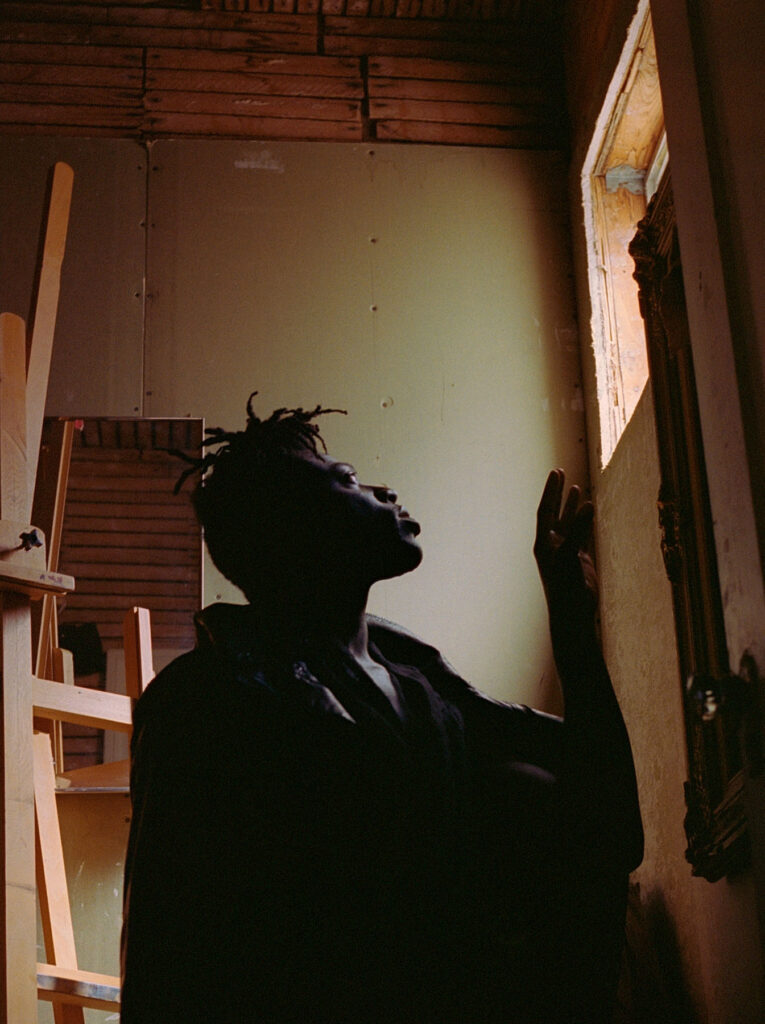
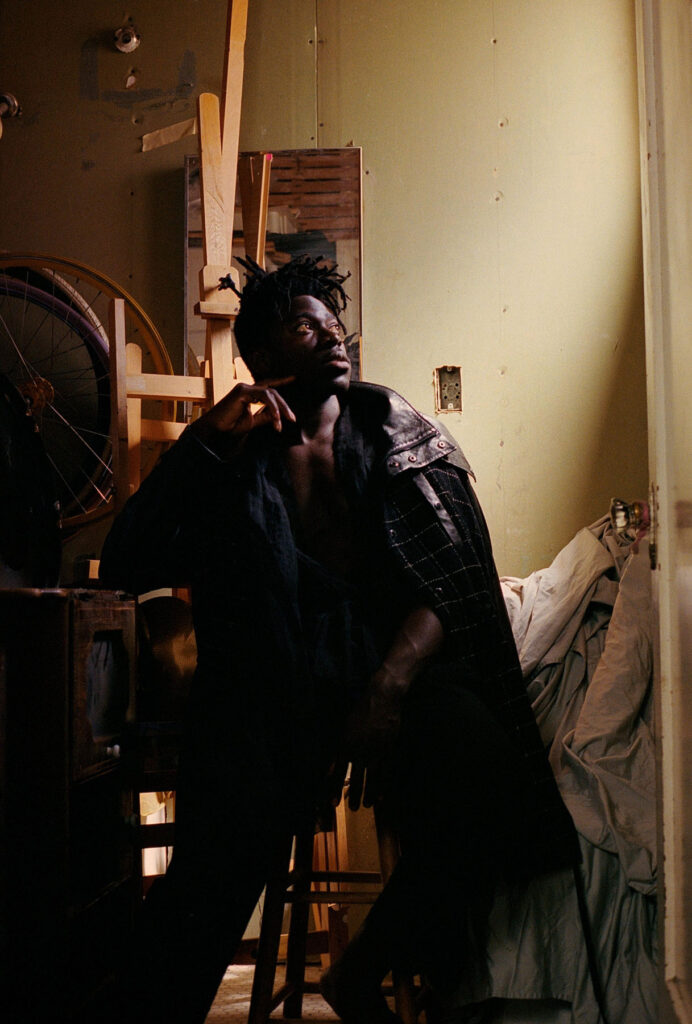
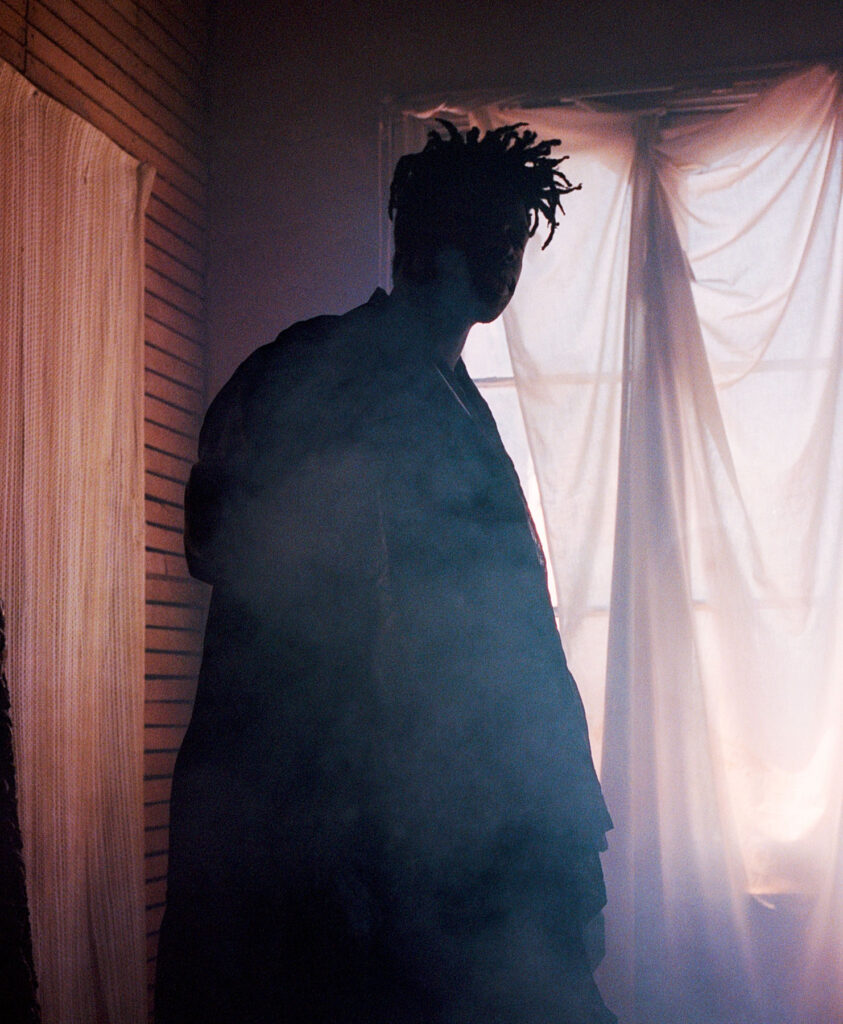
  1. Hat CANDICE CUOCO Sunglasses and Coat Artist’s own
  2. Coat CAMOUFLAGE Vest and trousers RESURRECTION

Subscribe to our
Newsletter