Archive page:


Vivien Canadas

«It began as a necessity, and quickly became a FUNdamental step of my process»

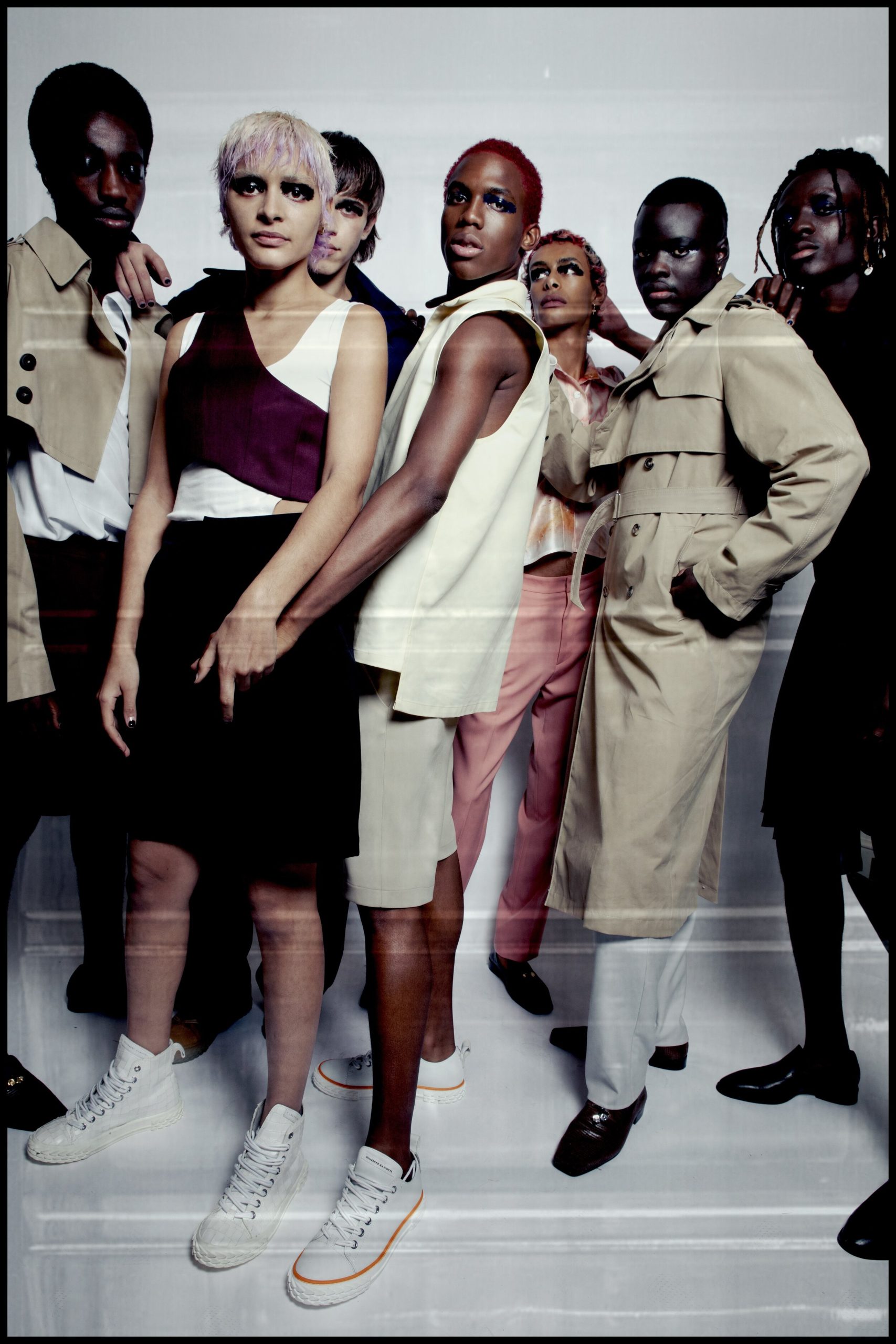
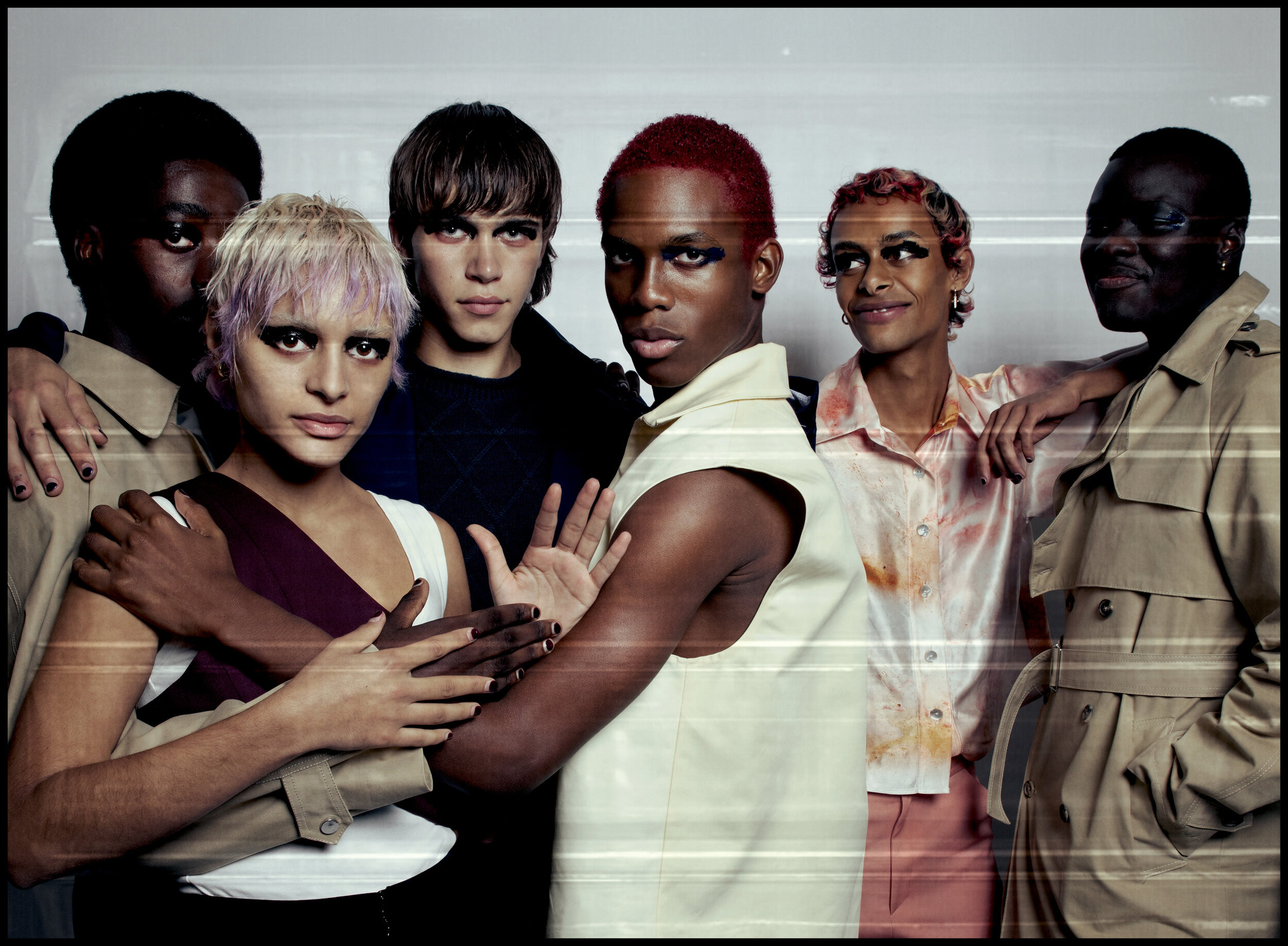
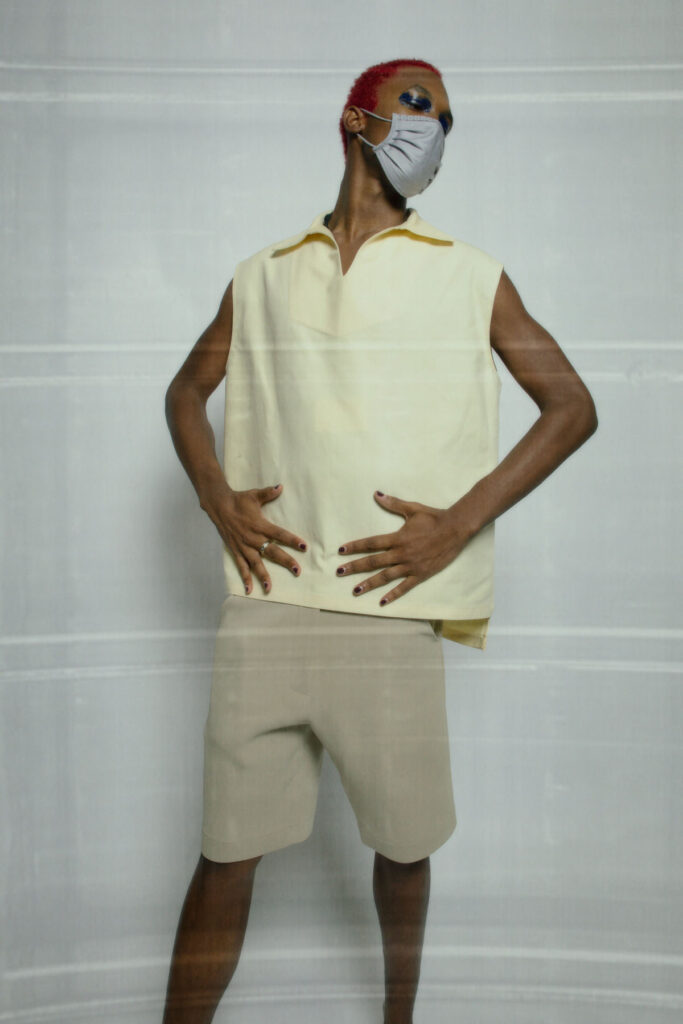
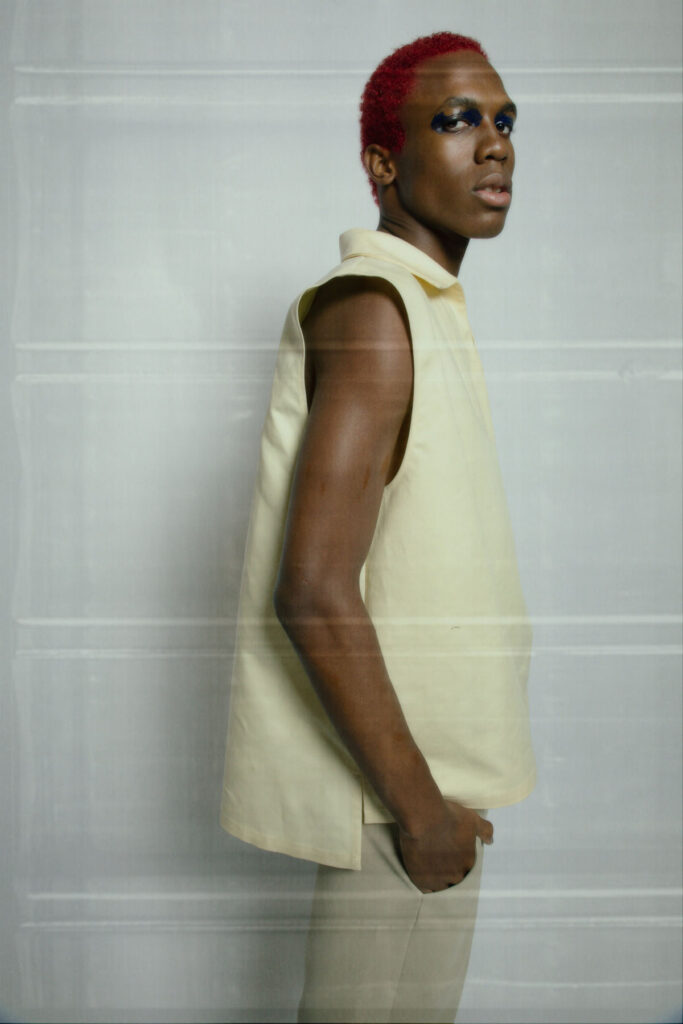
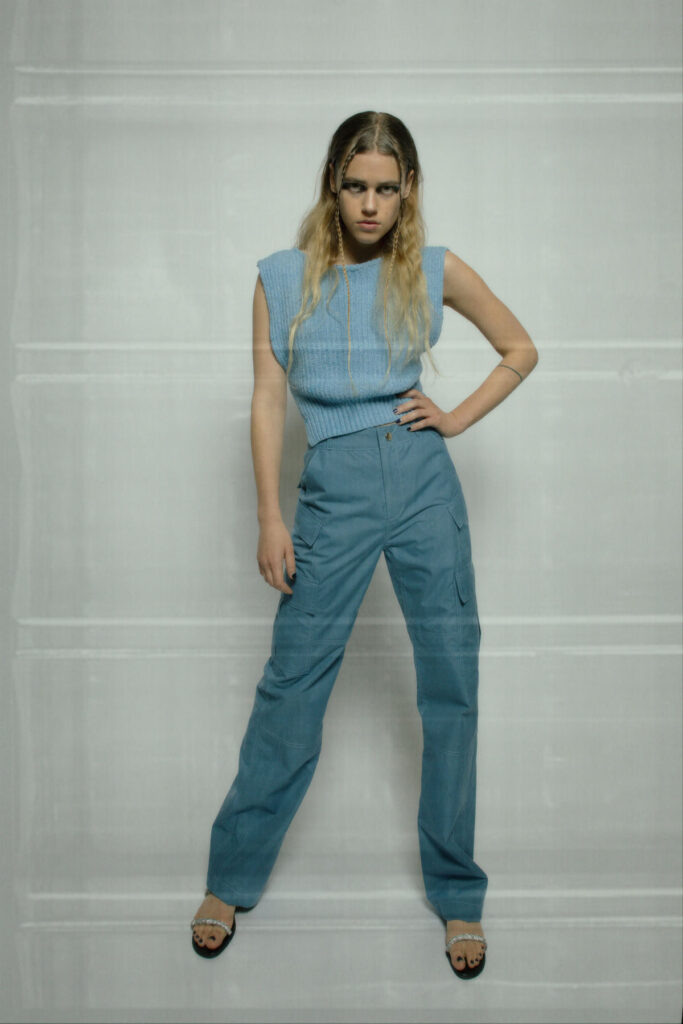
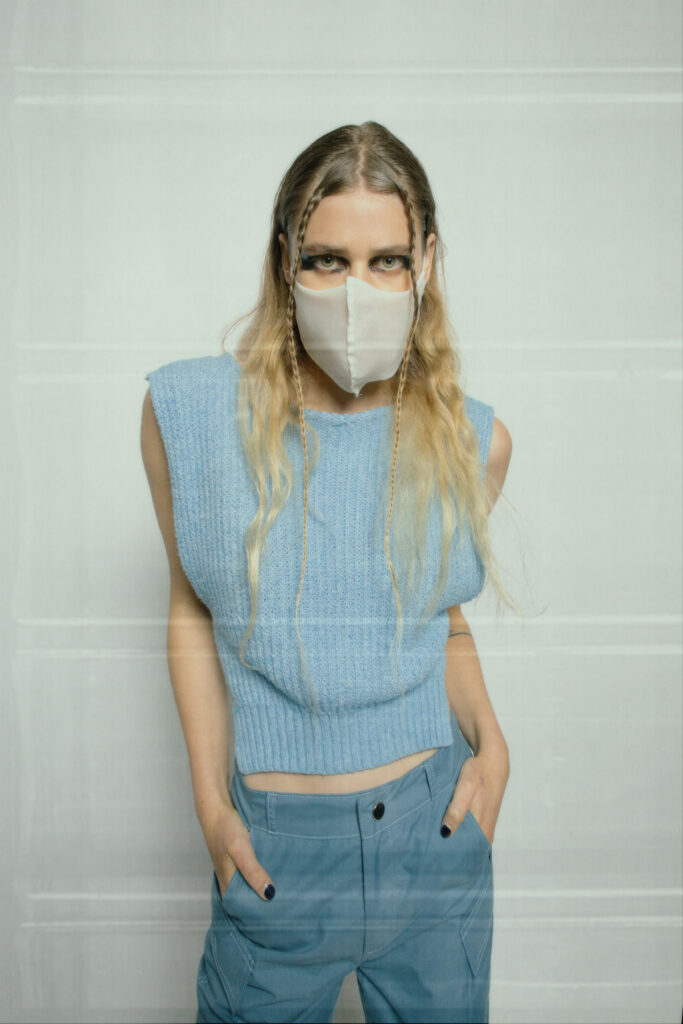
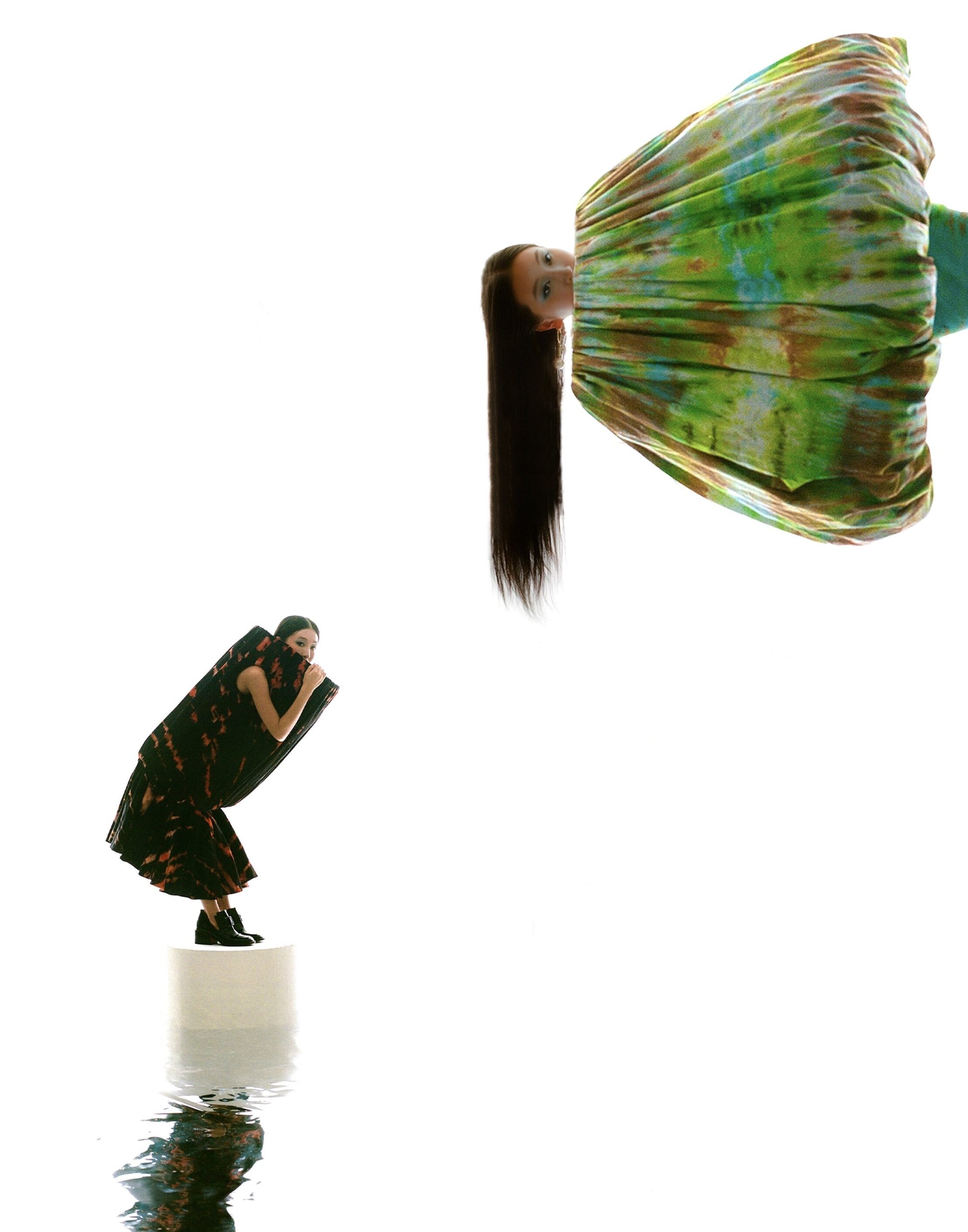
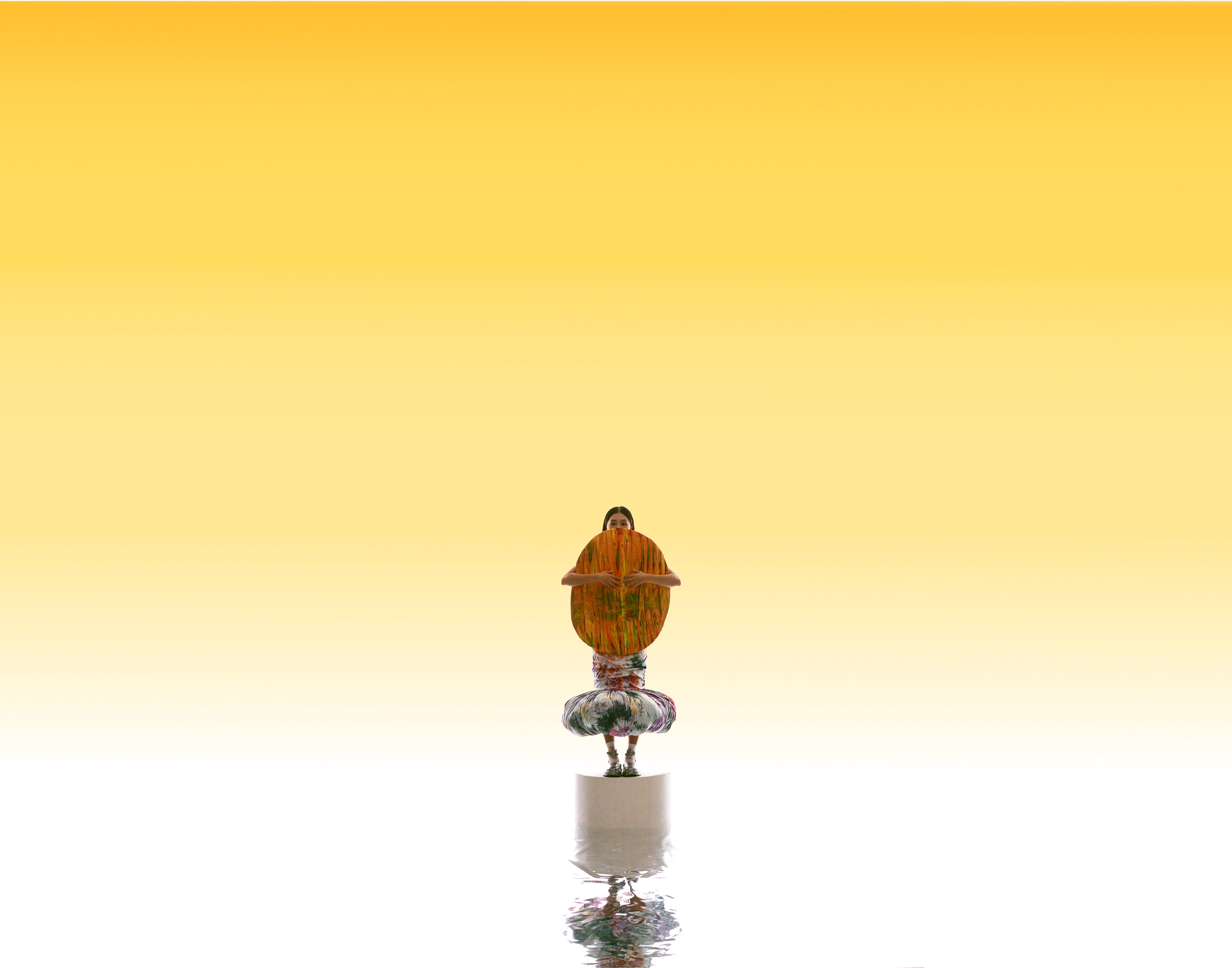
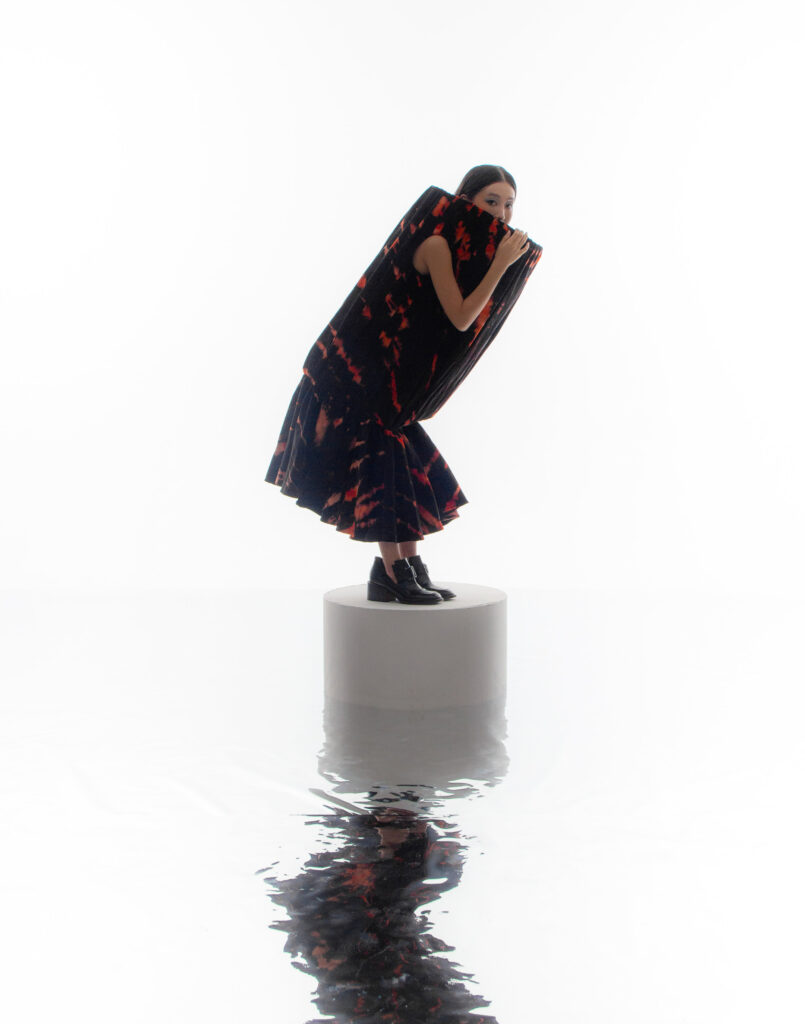
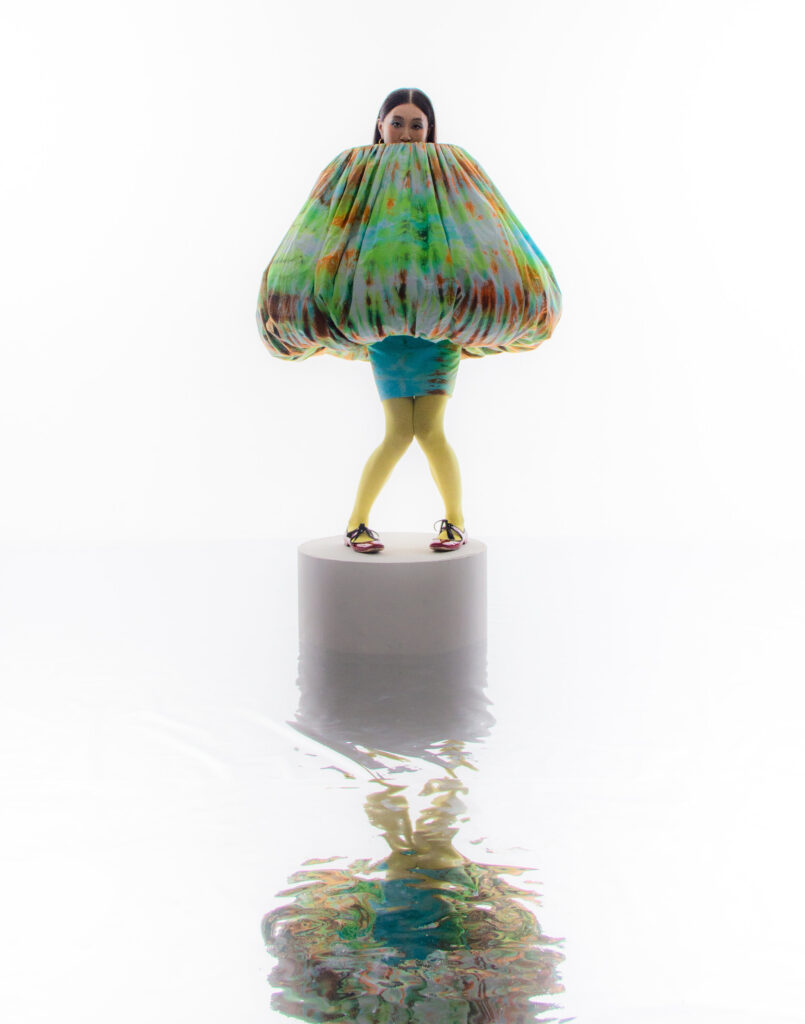
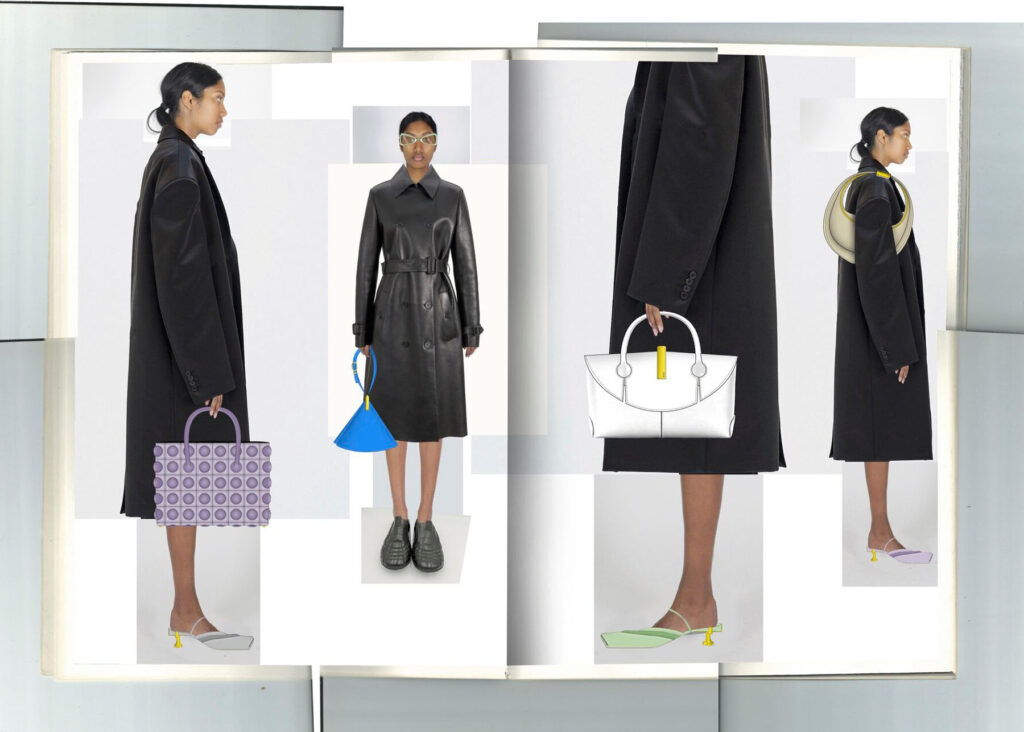
To paraphrase Fellini, things are not always what they seem. It is incredible how individuals’ minds can correlate images, objects, colours and shapes which do not originate from the same context. His name is Vivien Canadas, and his latest collection, A sip of fresh air, is an ode to visual culture and its boundless limits.

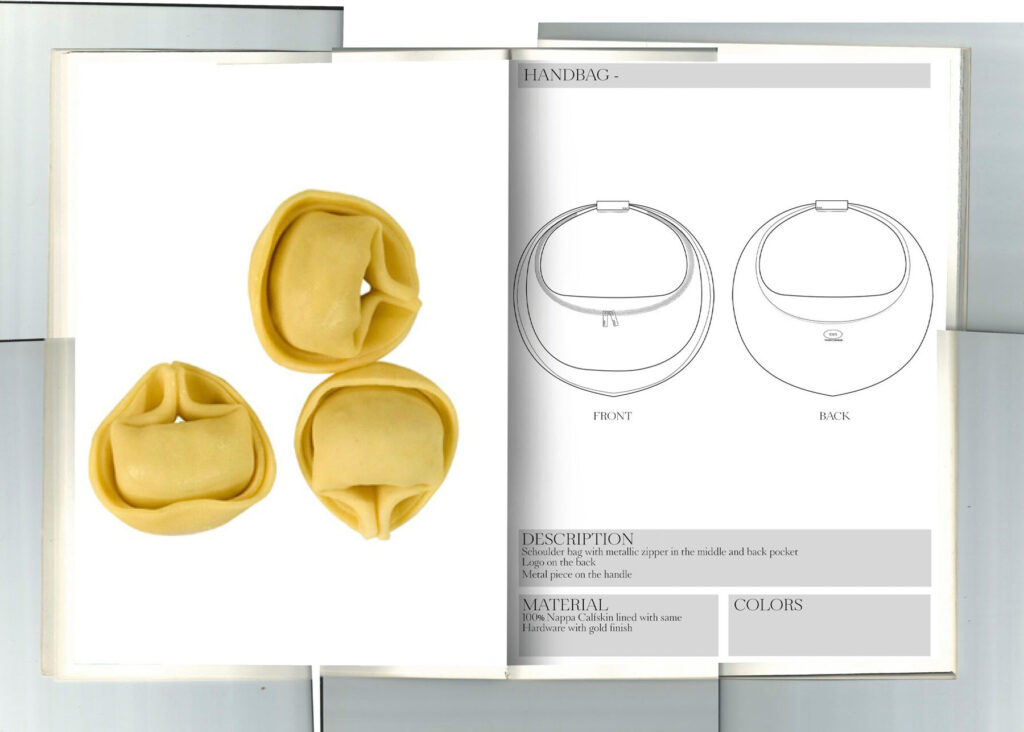
If I were asked what tortellini and a handbag have in common, I would probably call my grandma, asking the same question. On the other hand, the recent Central Saint Martins MA graduate, might have something to say about it. Taking inspiration from the simplicity of everyday life, the French designer took us on a wonderful journey across his process and peculiar eye for silhouette and shape.

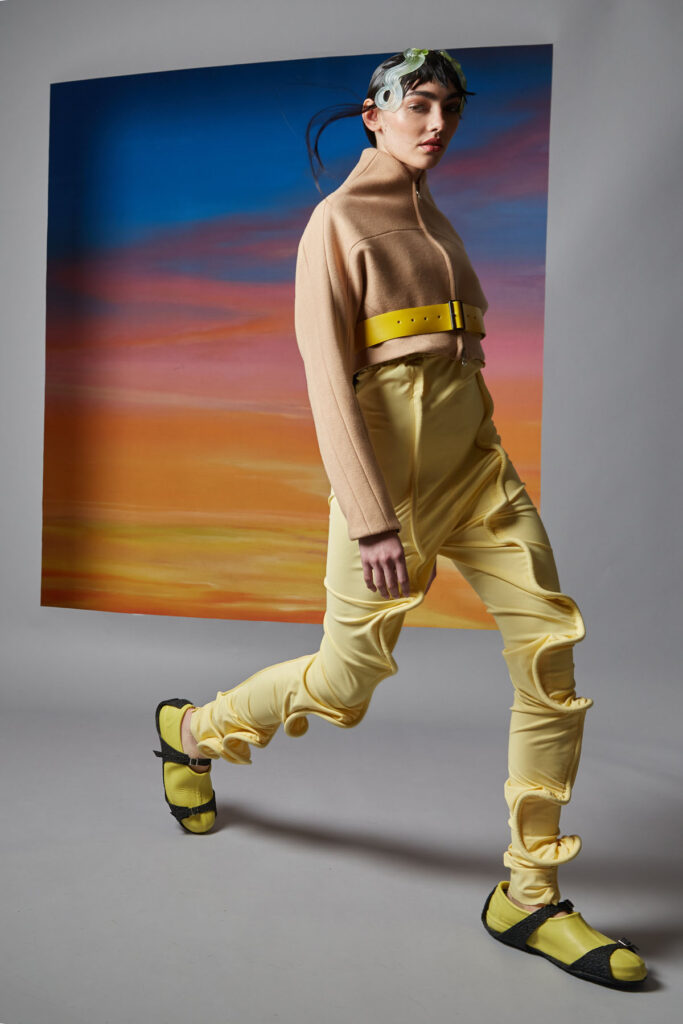
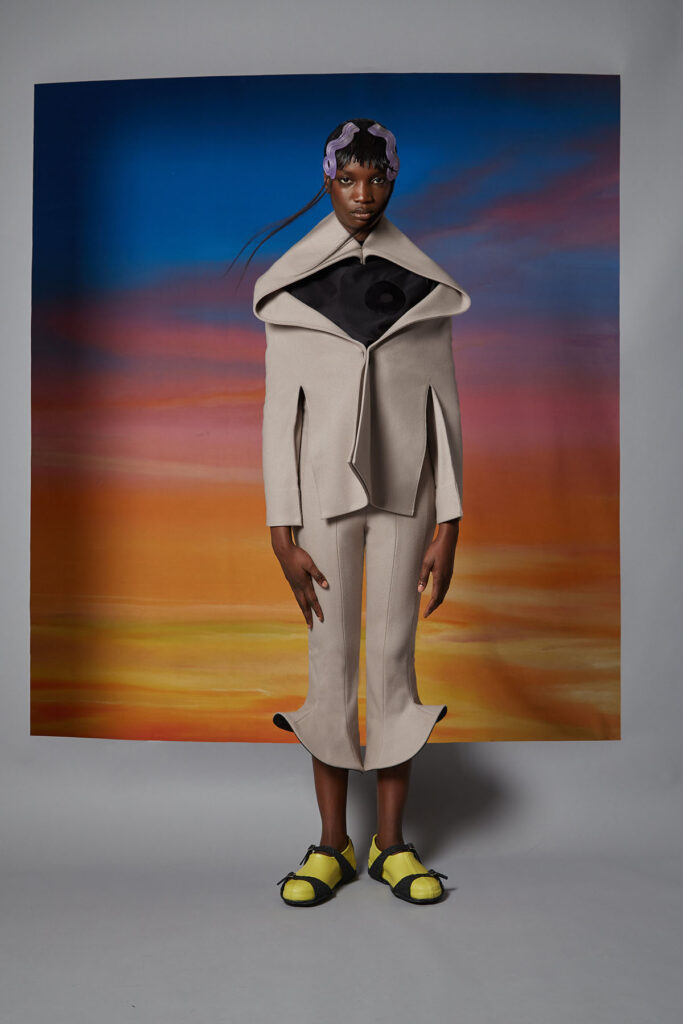
“To show humour, but also recall some kind of old-fashioned elegance” points out Vivien. The collection struck fashion’s preconceived notion of mundanity, and here we are, a second later, witnessing the evolution of a trumpet, into a pair of trousers.
Being able to surprise the world with such a brilliant MA collection, followed by your project in collaboration with Tod’s must have felt as an incredible achievement, congratulations!

Tell us more about your vision and inspiration in the process of making it.

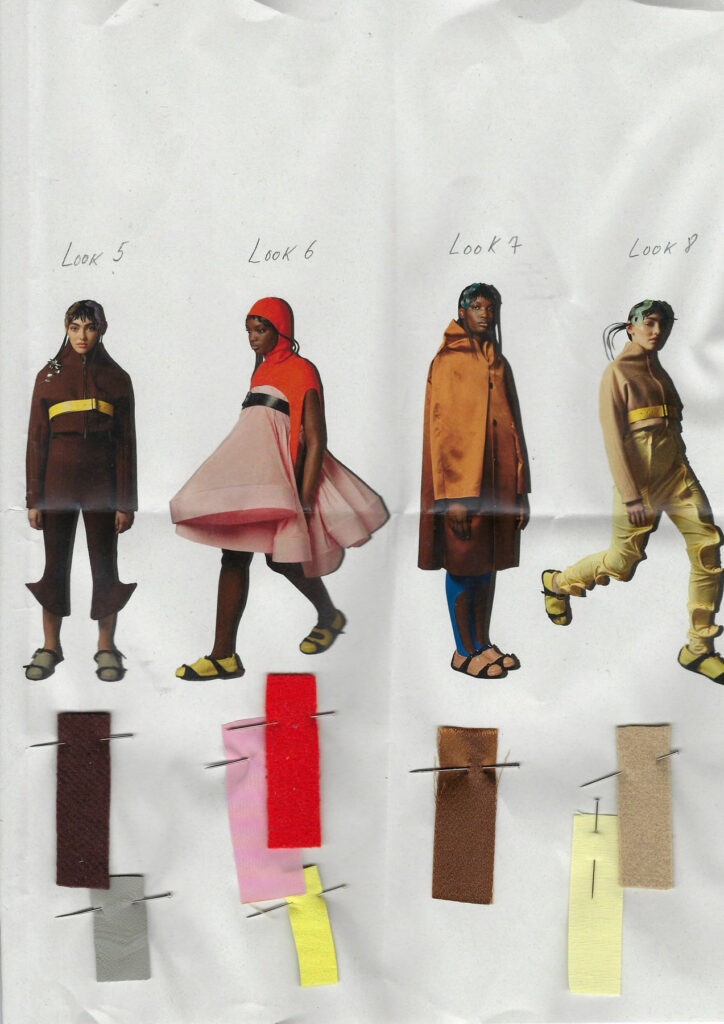
Thank you for your kind words! I’m very glad, my final collection and my Tod’s project caught the eye of NR Magazine. My design reflects my fascination for the ordinary and mundane. Through my research I visually collect artefacts, explore customs and incorporate these elements into my draping process. A trumpet evolves into trousers, a tortellini becomes a bag etc. A playful approach that does not intend to be literal. I aim to create a silhouette that shows humor, but also recalls some kind of old-fashioned elegance.

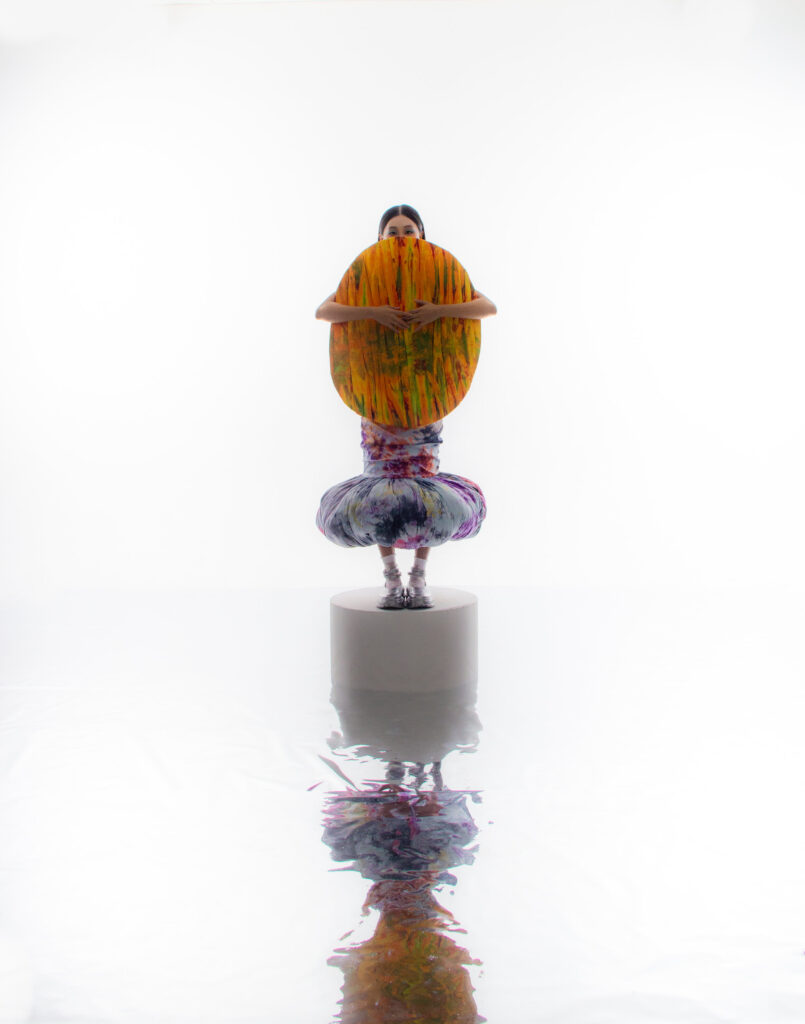
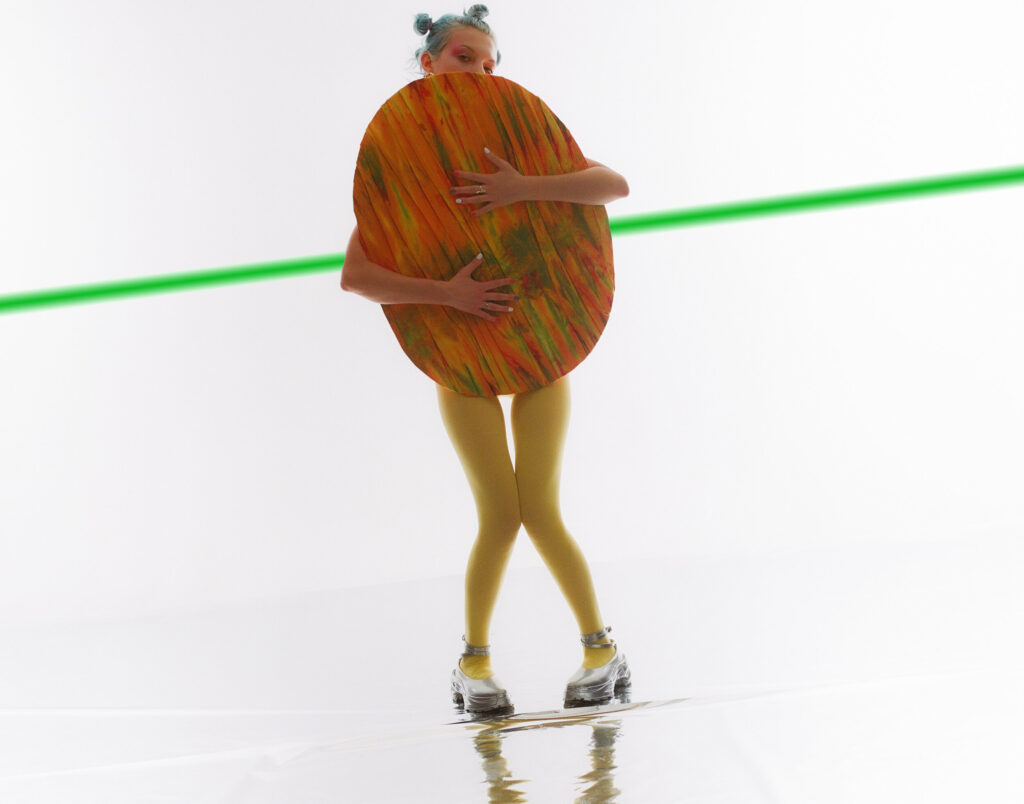
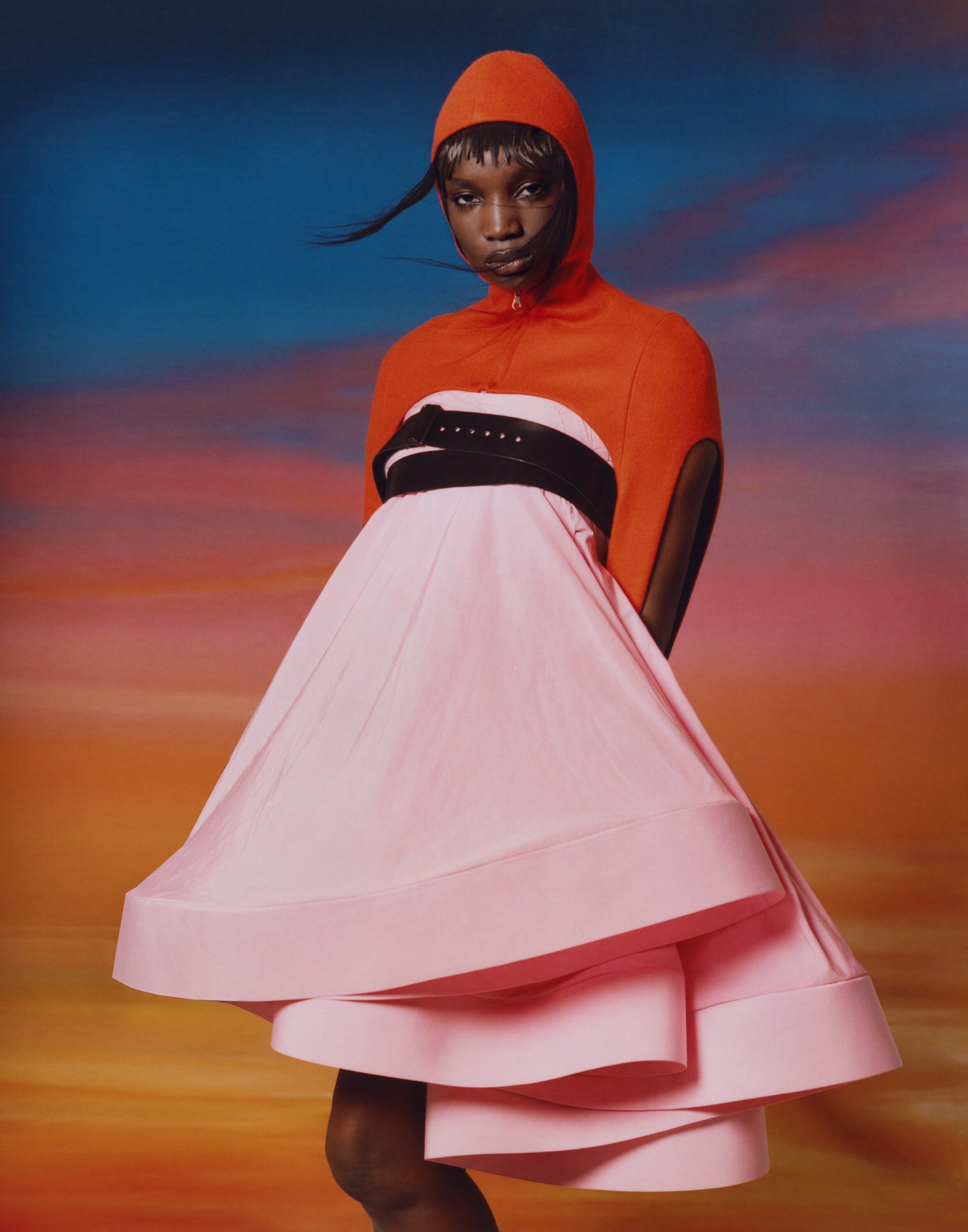
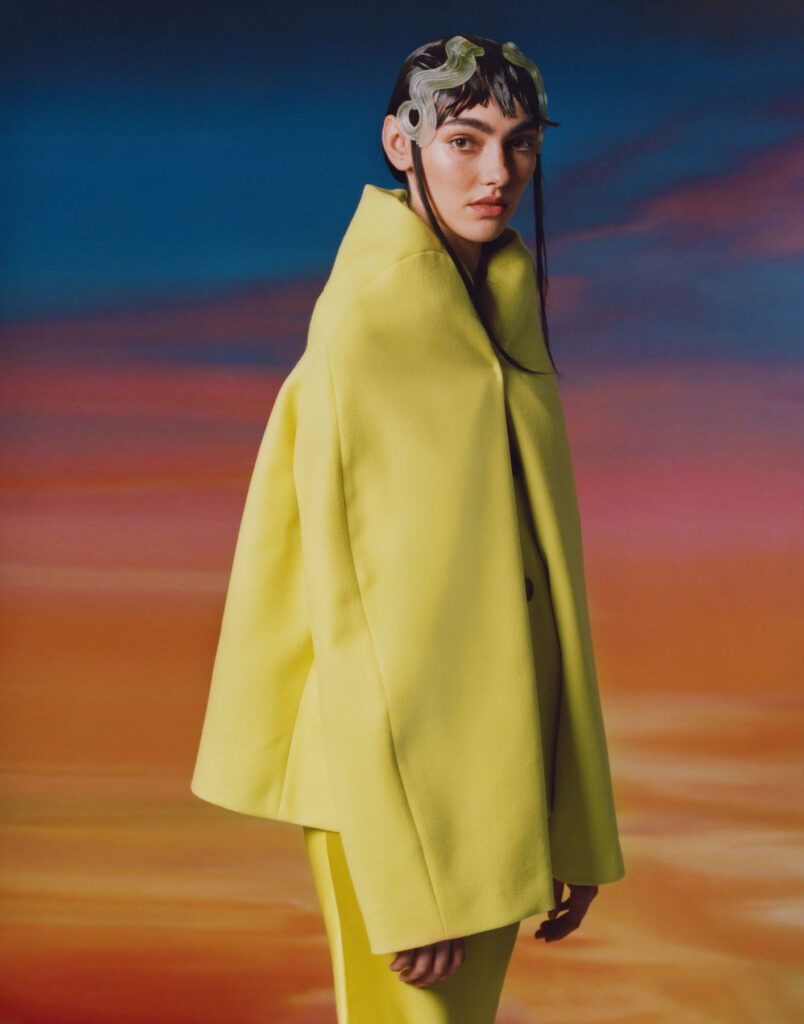
Part of my draping process for my MA collection was about recreating the movement of a garment caught in a storm. I designed voluminous skirt and dress that were based on a simple circle of fabric. Using such a shape was a direct reference to Christian Dior and his New Look silhouette. Subverting traditional techniques and volumes used in Couture is fundamental in my process.

Your collection, ‘A Sip of Fresh Air’ is an open invitation to escapism, to look at things under a different light. What would you like people to reflect on when looking at it?

In less than a century, humanity has completely transformed its natural habitat by escaping the countryside in favor of the city. A radical mutation that built some form of nostalgia.

My collection is an invitation for a city getaway.

«A moment to reflect on what is ‘modernity’ and how the ideal of countryside life redefines or transforms this concept.»

It is a celebration of the bridge between traditions and Mankind’s – perhaps odd? – progress.

The wind is blowing and taking everything on its way. Full skirts are flying, coats are pushed on the front of the body. “A sip of fresh air” is also about re-iterating and re-thinking our temperamental relationships to the elements.
Tell us more about Tod’s and the ‘Tortellini bag’.

For my project for Tod’s, I decided to explore the Italian food culture and gastronomy. One of the main references was the movie Roma by Fellini. A scene in particular was key to me: It’s evening and people are eating on a restaurant’s terrace.

«A moment of life that depicts with humor, and splendour, the Italian cuisine and its mise-en-scène.»

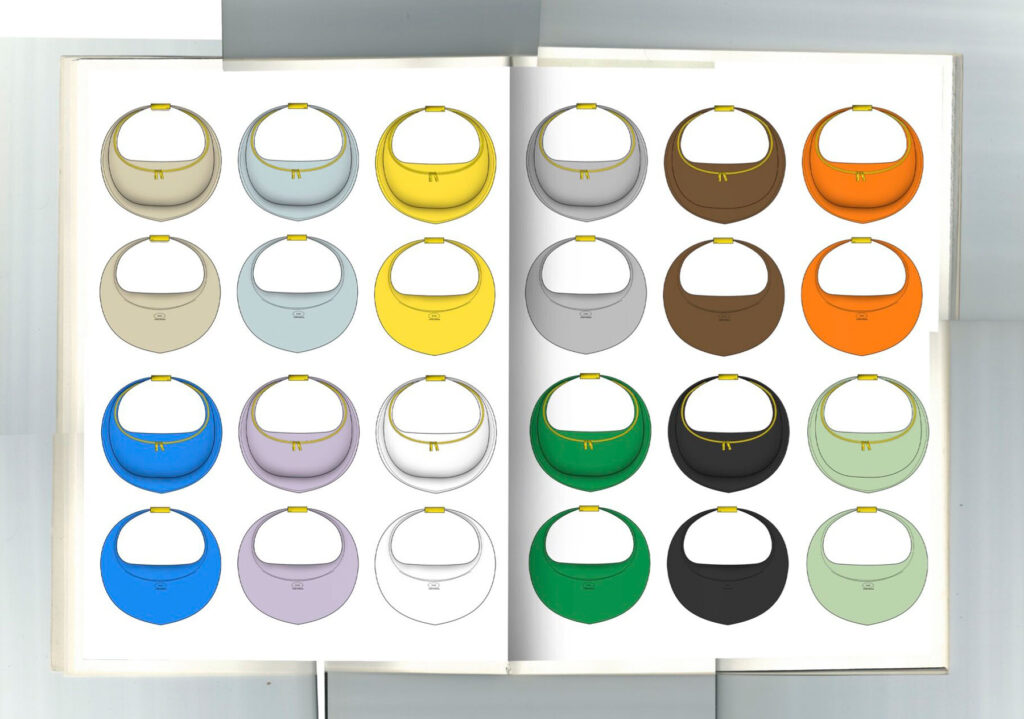
I was intrigued by the construction of the Tortellini. An emblematic ring-shaped pasta dish that is made from a flattened square dough and stuffing. Following the same construction, I thought of adding Tod’s elegance to the recipe. The result? A funny shoulder handbag in various colours.
Can you talk us through the collaborative aspects of your MA collection?

Fashion is about sharing. It is a human adventure that reaches its fullest when you get to collaborate, interact and create with others. I couldn’t imagine this project to be only about my own exploration. I wanted to incorporate other visions, and give them the space to express themselves. The shoes were designed in collaboration with Baptiste Faure. They are made from recycled Wellingtons, reworked into a pair of shoes, suited for urban life.

Collaborating was also a way to celebrate Daum’s savoir-faire, a crystal company founded not far away from home-town, Remiremont – France – in 1878. Using their unique craftsmanship of casting and colouring crystal, we designed “trompe l’oeil” headpieces. Resembling wet hair, the prosthetics reiterate our temperamental relationship with the elements, but also reflect my desire to build a new bridge between tradition and modernity.

The global circumstances in which you found yourself developing such a high caliber of work must have not been the easiest ones. In what way have you managed to adapt your practice to such a restrictive situation? What have you learned from it? How did you adapt your creative process to it?

Working on these projects was a chance: it forced me to stay resilient and pro-active despite the world situation. The lockdown pushed my process to evolve: more than ever before, I used my own body for my draping experimentations and fittings.

«It began as a necessity, and quickly became a FUNdamental step of my process.»

Things might not go the way you are planning, or you might not have the fabric you wanted: this experience taught me the essential value of being flexible.
Your journey into fashion started long before applying to CSM. Tell us more about your background and training.

Following a Masters degree at Sciences Po, Paris, and after completing a couple of internships, I worked as a junior designer at Maison Margiela for almost two years. Not your typical pathway… I hadn’t formally studied design before commencing the program at Central Saint Martins!

Looking at fashion Today, what are your hopes and concerns?

I hope fashion could go back to a more human scale.
The urge for relevancy in the work we produce has never felt more important than now. What do you have to offer?

As fashion designers, we are not only developing garments, we are creating a world. As a matter of fact, it is essential to take part in the ongoing conversation, and to reflect on the message behind my work. It appeared crucial, within my process, to understand who I am and what I represent, in order to support a progressive message that acknowledges and elevates others, no matter which gender, race, sexuality…

What can we expect to be seeing from you in the near future? Do you have any new projects coming up?

I would love to keep working on my own practice, and see where this takes me.

Credits

Images · VIVIEN CANADAS
https://www.instagram.com/viviencanadas/

Tess Roby

Abstractions of Daily Life and Subtle Portraiture

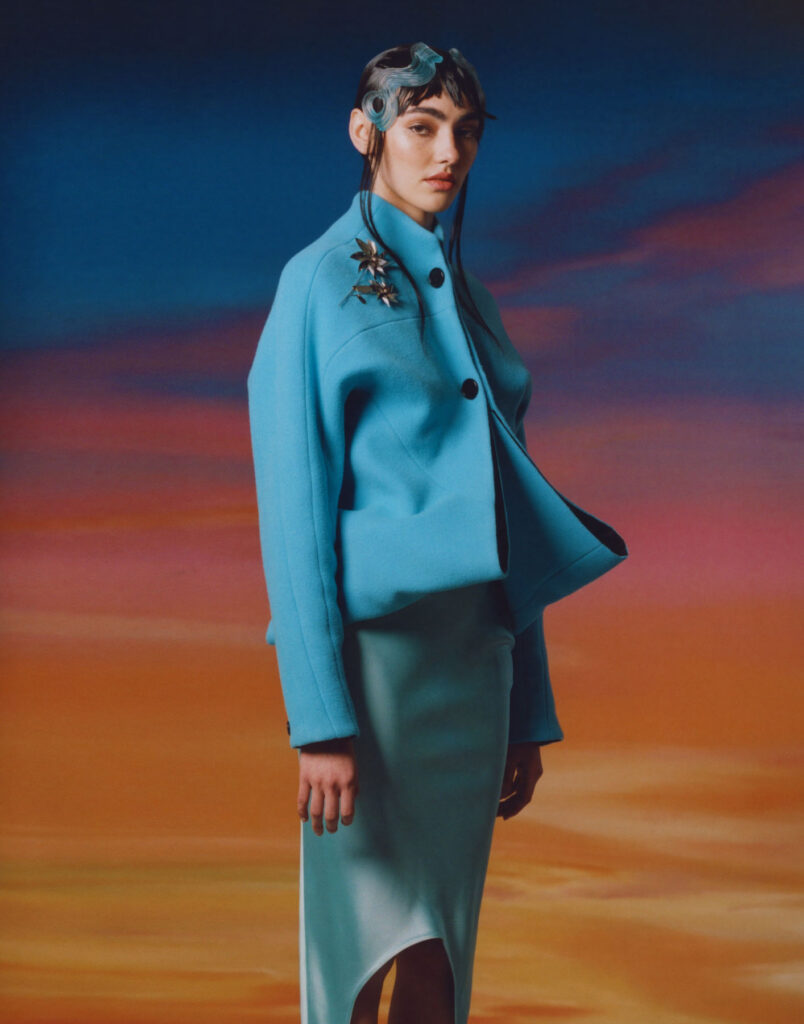
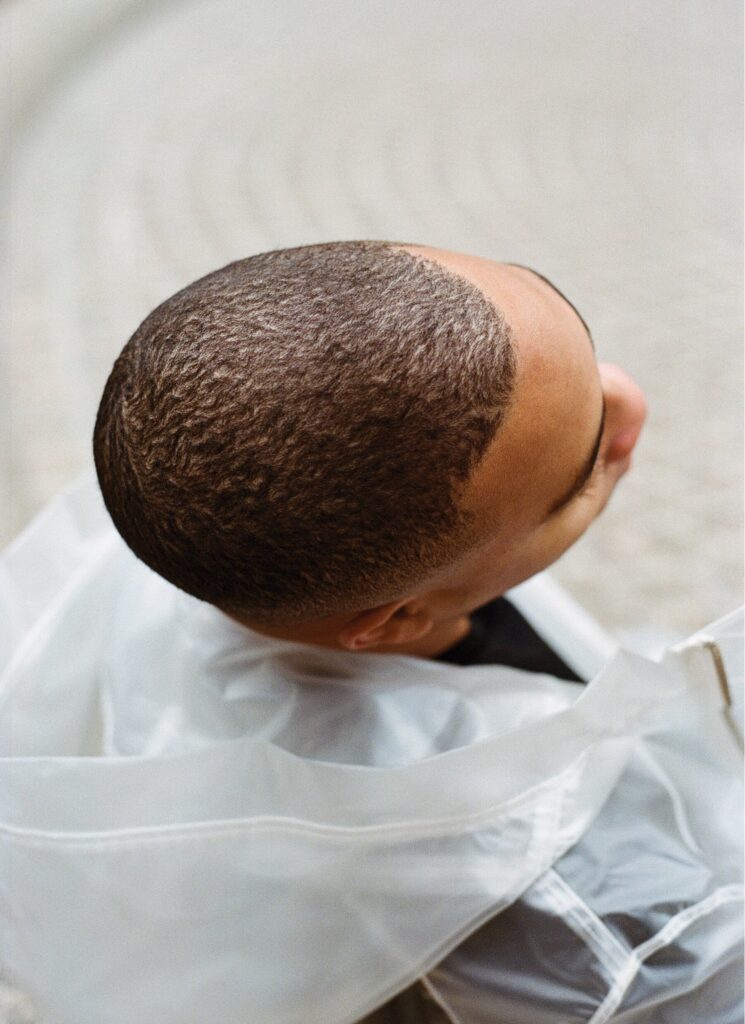
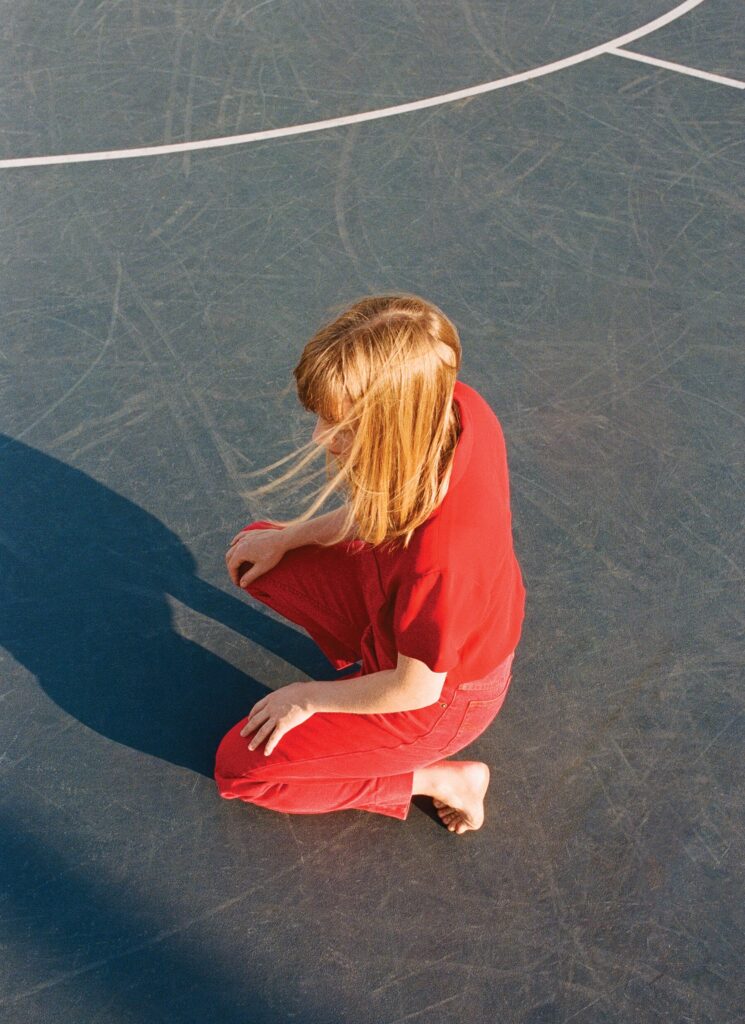
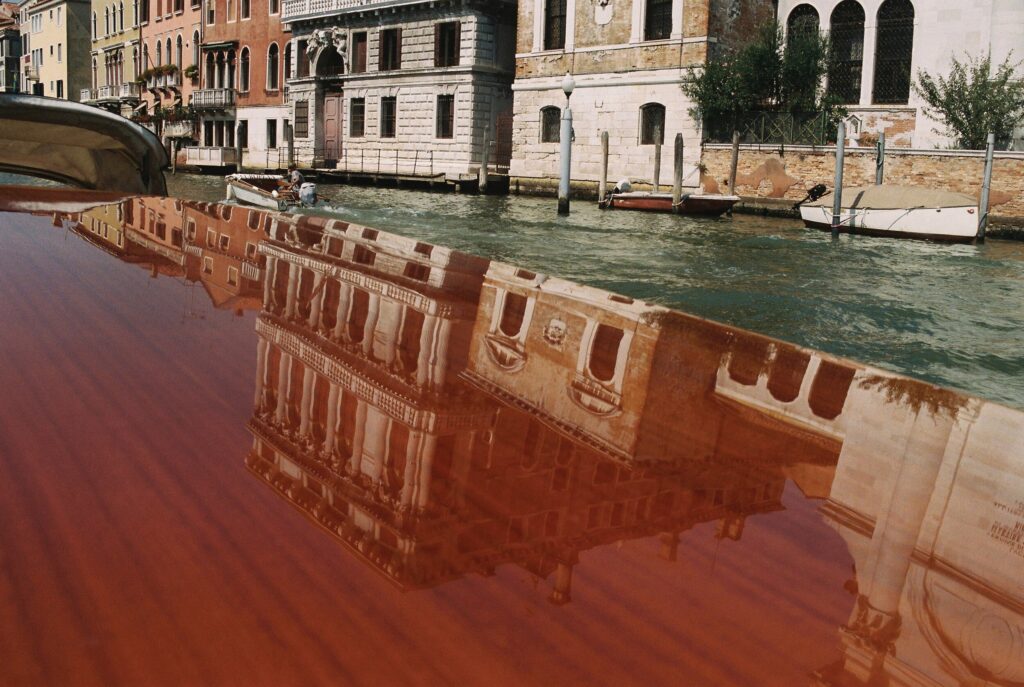
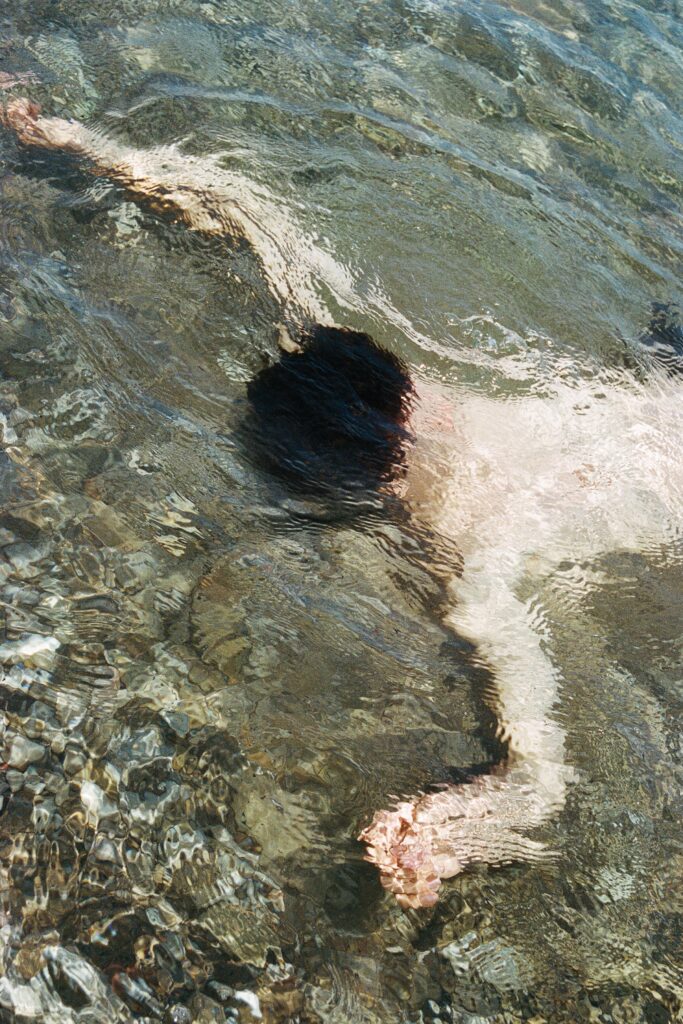
These photographs were taken in Montreal, Toronto, Los Angeles, Venice, and Washington State between 2017 and 2020. Shown together, they share what Roby is most drawn to in photography: abstractions of daily life and subtle portraiture. Gathered over time, her photographs ethereally capture her movements, presenting minute everyday occurrences that blur visual boundaries.

Reuben Selby

«making the industry ‘less worse’ is not enough»

Creative and modelling agency co-founder, fashion designer, sustainability advocate and researcher, set designer and collaborator… These are just a ‘few’ of the many shoes that took Reuben Selby’s work under the spotlight… Sounds a lot? Forget it. The designer seems to be only at the very first steps of a very promising career.

With Maisie Williams being his number one collaborator and girlfriend, the creative duo is actively challenging fashion normativity, making a change one step at a time.

When I first met Reuben and Maisie on a photoshoot set last fall, I remember them talking us through the message and intentions leading the freshly born brand. Today, Selby took a second to explain us the importance of collaboration, change and sustainability within his vision.

“Introspection is at the heart of the brand” suggests the designer, outlining the hopes and passions intertwined within his creations. What we are witnessing, it’s an inspiring act of love for creation, an invitation for reconsideration of our true identity.

Following a successful opening of FASHION FOR GOOD’s “GROW” exhibition, and an upcoming show planned to take place at the next LFW, we couldn’t be more excited to see what the future of the brand holds.

Where does your passion for fashion come from? What pushed you to start up your own brand?

My passion for fashion comes from my desire to create and bring art into the world. I wasn’t surrounded by fashion growing up, but I’ve always been fascinated by the idea of storytelling and building new worlds.

«I see fashion as one of many art forms that I use to express myself, which is also the true driving force behind my brand.»

For as long as I can remember, I have always wanted to run my own brand and curate shows.

What have been the greatest challenges throughout this past year?

Navigating the impact of Covid and Brexit on the fashion industry. I want the brand to be focused on fashion shows and collaborative projects more than bringing garments into production; however, the small runs we’ve planned to bring out have been massively disrupted.

What inspires you? What kept you pushing?

Striving for something bigger than myself is what truly inspires me. Creating an artwork that transcends, and connects deeply with an audience.

«I’m inspired to create new perspectives, to encourage people to look internally, in the hope to make the world a better place.»

We loved your latest homage to Christo and Jeanne-Claude’s legendary work. How has the collaboration come together?

Jeanne Claude and Christo’s work has always been a massive inspiration to me as an artist. However, only recently have I been able to come to terms with a deeper meaning to their work. Their pursuit of creating self-funded art on a grand scale is as equally, as admirable, of the work itself. The vision, the determination and drive resonate deeply within me: they reinforce the importance of being patient, reminding me how powerful an everlasting image can be.

You recently took part in FASHION FOR GOOD’s “GROW” exhibition in Amsterdam. Tell us more about your collaboration with Infinited Fiber.

Another core pillar of the brand is sustainability. Beginning with the brand’s conception, we felt responsible for building it the most ethical way possible. For our debut collection, we put a lot of work into the research and sourcing for partners to collaborate with. We were so inspired when we found Infinited Fibre: we thought of it as a fantastic opportunity to tell their story, and highlight their amazing work. Infinited fibre has a technology that turns cellulose-rich waste – a discard that would otherwise be landfilled or burnt into something precious – a 100% circular premium textile fibre. It reduces the world’s reliance on materials. We used the fibre for the cargoes and shirting in the collection.

The rumor has it we shall see a new collection coming up soon. Do you want to talk us through the inspiration behind it?

This June, we will be presenting our first show in London during LFW. I’m so excited for this project as I will be going deep into my cultural roots and my connection to the city. We’ve been working on this show solidly for seven months, compared to the two months that we spent on a daily show in Paris. We are taking things to a whole new level, and this will be the first time people get to see what our creative team is capable of. There will be a lot of raw energy and excitement, and I can’t wait for people to absorb it.

What statement lays at the core of your brand?

Introspection is at the heart of the brand. We often say we created the brand for introverts. To feel comfortable, without having to stand out or identify. The brand is the catalyst for self-expression: it aims to create an image that builds confidence, to push individuals to stay true to themselves.

Do you believe in change? What are your hopes for the future of fashion?

I 100% believe in change, but I also think that change is not easy, and perhaps, it is sometimes not welcomed. For change to happen, it has to be approached systematically, we have to realise how things are intertwined first. We need more people coming together, collaborating, and solving challenging problems, rather than performing individually. Also, the focus should project onto the roots of the problem: making the industry «less worse» is not enough.

Production and consumption must be reduced, which means businesses and people need to reconsider their motivations, in order to ensure an ecological and abundant world in the future.

«It is my deep hope to center fashion around creativity and storytelling, rather than profit and consumption.»

How has Maisie supported you in becoming one of fashion spokesmen?

Maisie is my number one collaborator. She brings so much of the energy and drive that pushes me to create. Maisie has a beautifully contrasting mind to my own, and she constantly questions how things should be done. She broadens my peripheral view when it comes to conceptualising what we’re going to create. I often have such a clear vision and focus, meaning that I’m not looking at the things I’m unaware of.

«To have someone on your side always giving creative energy means you will never create something that isn’t exciting.»

What is next to come for your brand?

My focus for the brand is to do good, and this can take any form. We want to collaborate and create projects that inspire people, and that’s all.

Credits

Images · REUBEN SELBY
https://reubenselby.co/
https://www.instagram.com/reubenselby/

Ekow Eshun

An Infinity of Traces, a selection of work from eleven Black women and non-binary artists

Walking into the airy gallery space from a quiet London side street, one is immediately struck with a powerful sense of joy, exuberance and pride in an exhibition that discusses incredibly serious topics surrounding Black identities in the UK. An Infinity of Traces, which showcases a selection of work from eleven Black women and non-binary artists, was originally planned to open shortly after a summer of intense discourse surrounding the Black Lives Matter movement and subsequent protests but was delayed due to Covid restrictions. The delay is not a bad thing as the exhibition serves as a compelling reminder of the ongoing nature of this discourse. There is always work still to be done. 

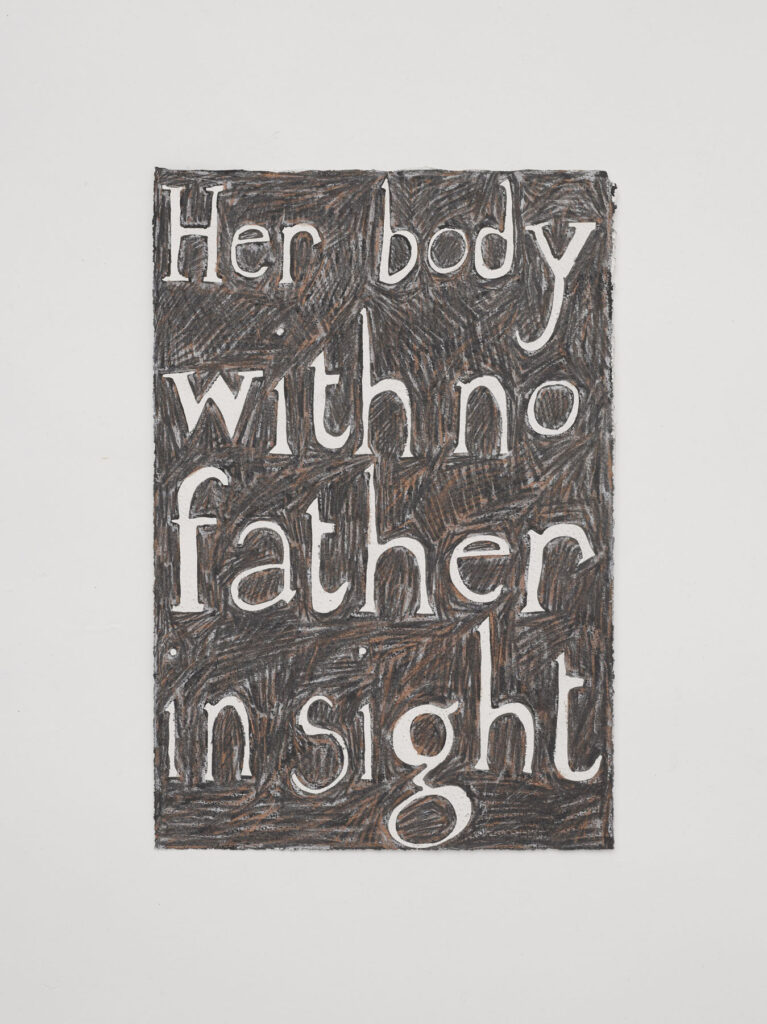
Immediately Jade Montserrat’s series of work draws the viewer into a discussion of Eurocentric beauty standards and colourism and how Black women are forced to navigate their bodies and thoughts within these structures. 

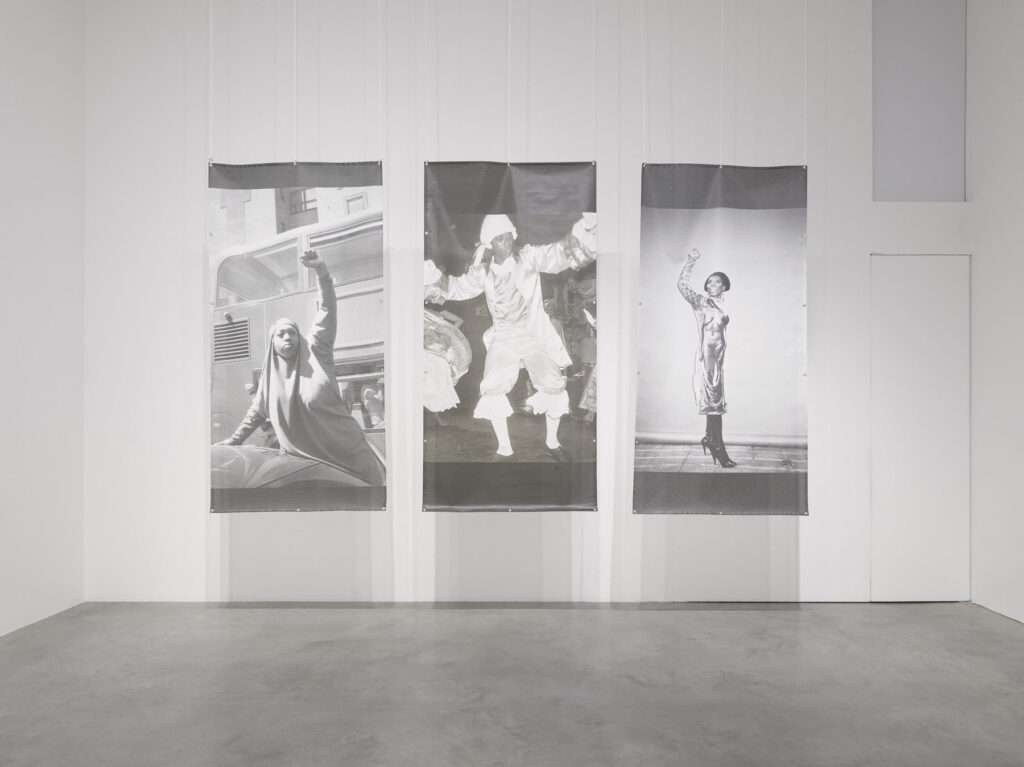
Across from this stretching line of mixed media drawings is Liz Johnson Arthur’s work, Spring… Times, which dominates the space. Three images from Johnson’s archive are blown up in black and white on banners that hang above the viewer. Anyone who took part in the BLM protests in London last summer will be immediately drawn to the image on the left. A Black Muslim woman stands on the seat of a car, holding on to the frame for support with the door flung open behind her, her fist raised in salute. 

During the London BLM protests, there was often a buildup of traffic due to the sheer amount of protesters that filled the roads. However, this traffic became a part of the protest as motorists would blast their horns and raise their fists in support. This sense of powerful community and strength was both incredibly touching and a potent motivator, something this particular image encapsulates perfectly. 

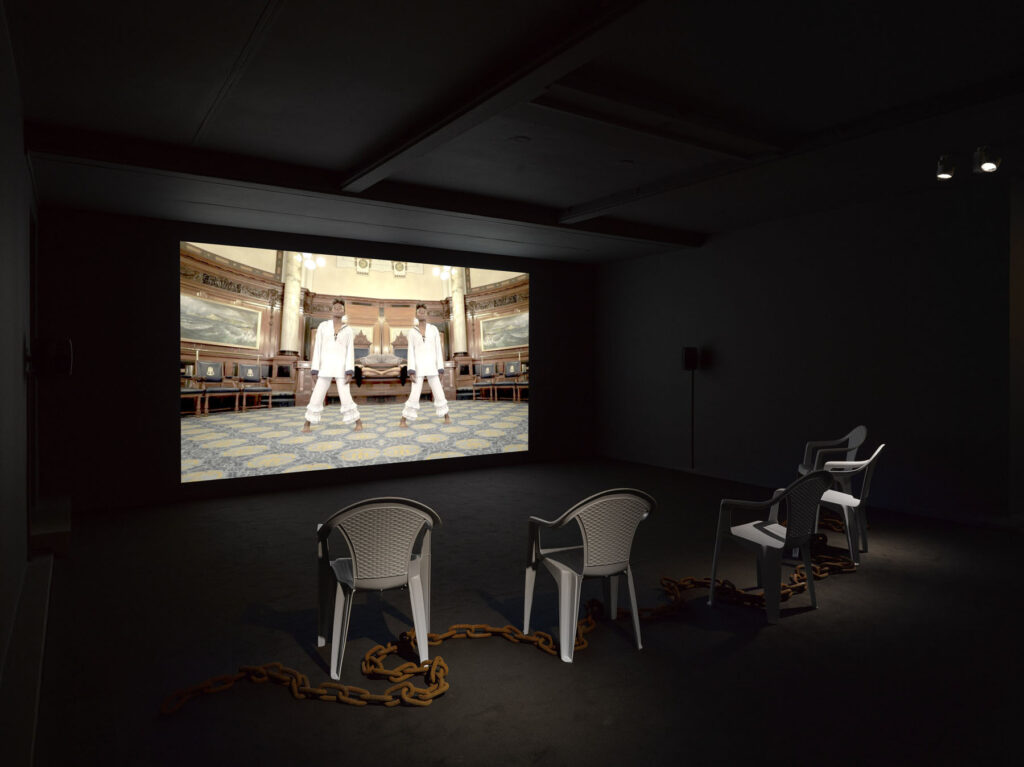
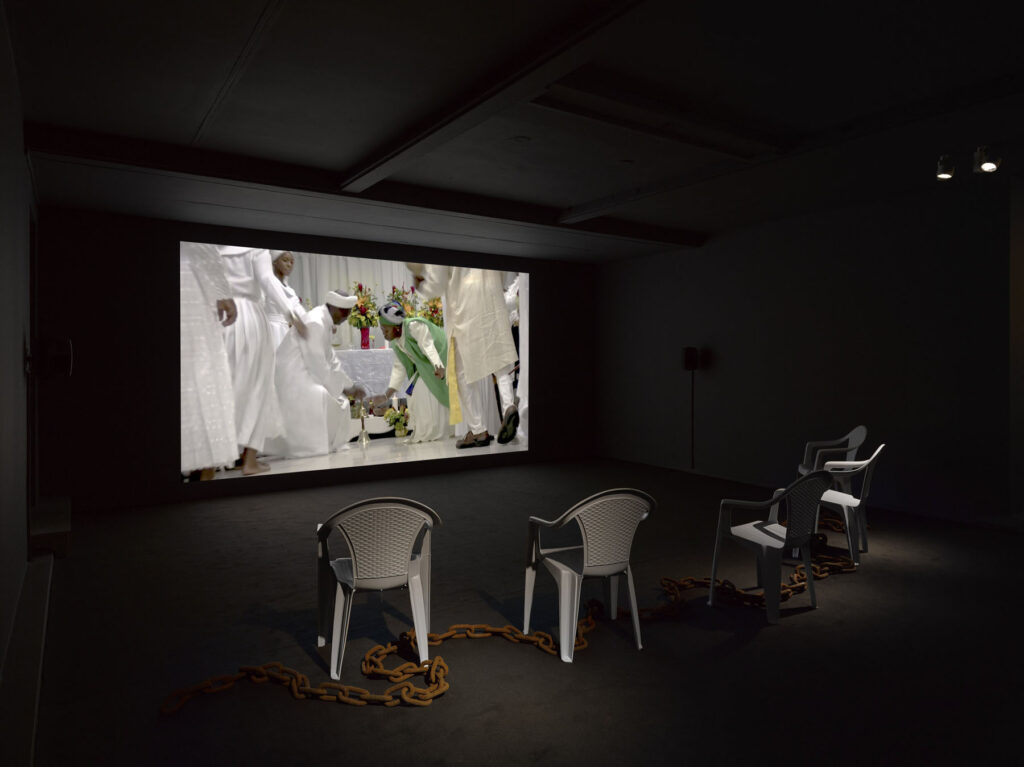
An Infinity of Traces contains a large number of video works, a medium which is often overlooked by gallery visitors who tend to briefly pause in front of the screen before zipping off to the next artwork, seemingly unwilling to commit to placing earphones over their heads and immersing themselves in the artwork. In the case of this exhibition it would be a mistake to do so as, with the exception of the forty one minute film by Alberta Whittle, it is quite possible to watch the entirety of all the video works in under half an hour. 

Alberta Whittle’s work, Between a Whisper and a Cry, is well worth the extra time though, exploring, through the mariner’s rhyme: “June too soon, July stand by, August it must, September remember, October all over,” Britain’s historical, cultural and political relationship with the Caribbean. Whittle’s practice is rooted in the history of the transatlantic slave trade, however, one is reminded of Britain’s treatment of Caribbean immigrants, in cases such as the Windrush Scandal, which is still an ongoing issue. 

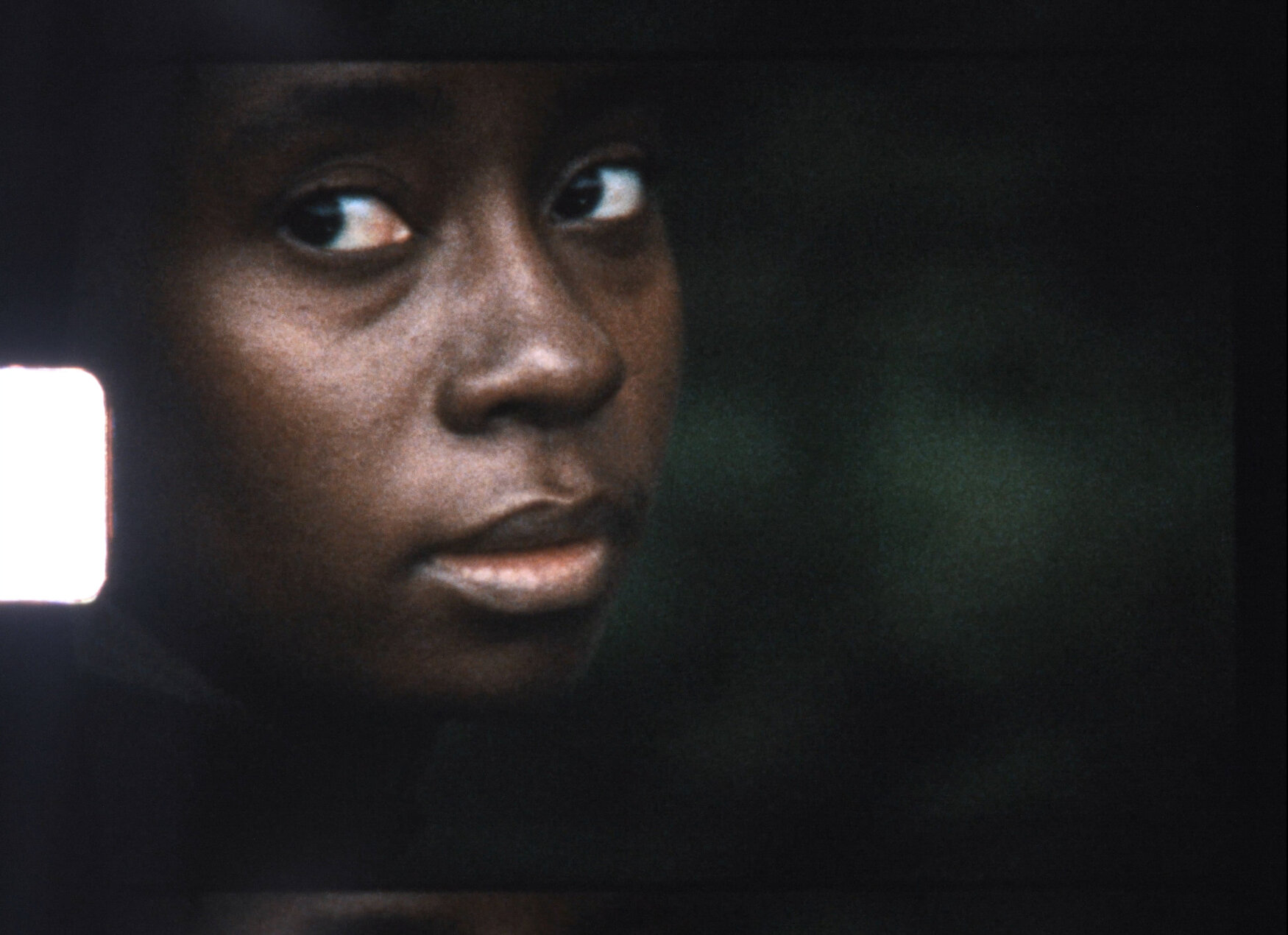
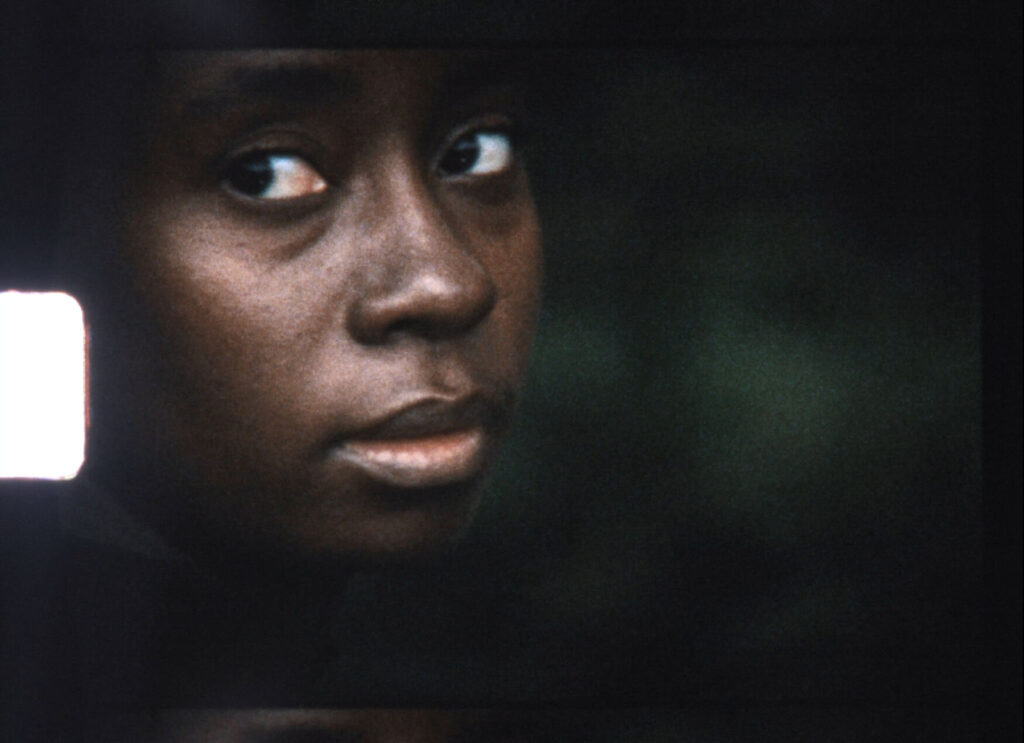
Ayo Akingbade’s Tower XYZ film is full of bright colours and youthful hopefulness, following three young women around London neighbourhoods and featuring 1970s Brutalist landmark, Trellick Tower. A young female voice raps the words “Let’s get rid of the ghetto.  I hope I don’t die for a long time. I still got things I want to do and look at and boys to talk to. I wanna see an African spirit or like sleep on top of a volcano.” The work simultaneously invites you in, as an older Black man, holding a sign saying ‘All is well’, smiles welcomingly at the camera but then pushes you away, as the camera follows three young Black women into a lift and they turn to stare, making the viewer feel like an unwelcome voyeur into their private lives and thoughts. 

The last artwork in the exhibition is a film by Rhea Storr titled Here is The Imagination of the Black Radical. Exploring the Bahamian Junkanoo and recontextualising it as contemporary art Storr’s work discusses ideas of Afrofuturism and radical imagination alongside such practicalities as what happens to carnival costumes and floats after the event. Interspersed with these discussions  is archival footage of carnival, with performers in elaborate costumes dancing to infectiously upbeat Afro-Caribbean music.

The exhibition will run from the 13th of April to the 5th of June at the Lisson Gallery on Bell Street and visits can be reserved here

Neue Nationalgalerie Museum

NR · WORLD
Published · Online

Feature · Neue Nationalgalerie Museum
Words · Nicola Barrett


1014_10_SM_210400_high.jpg

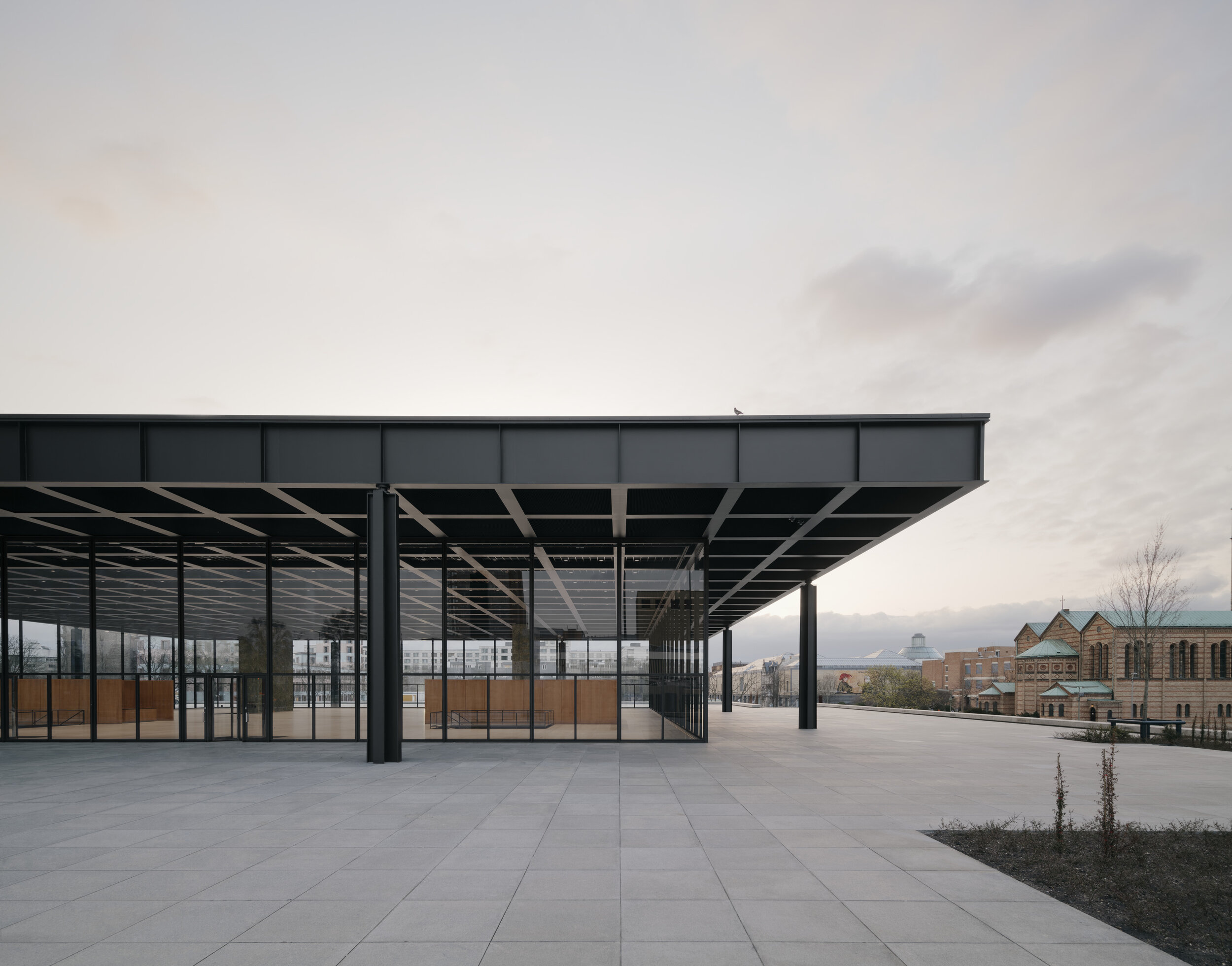
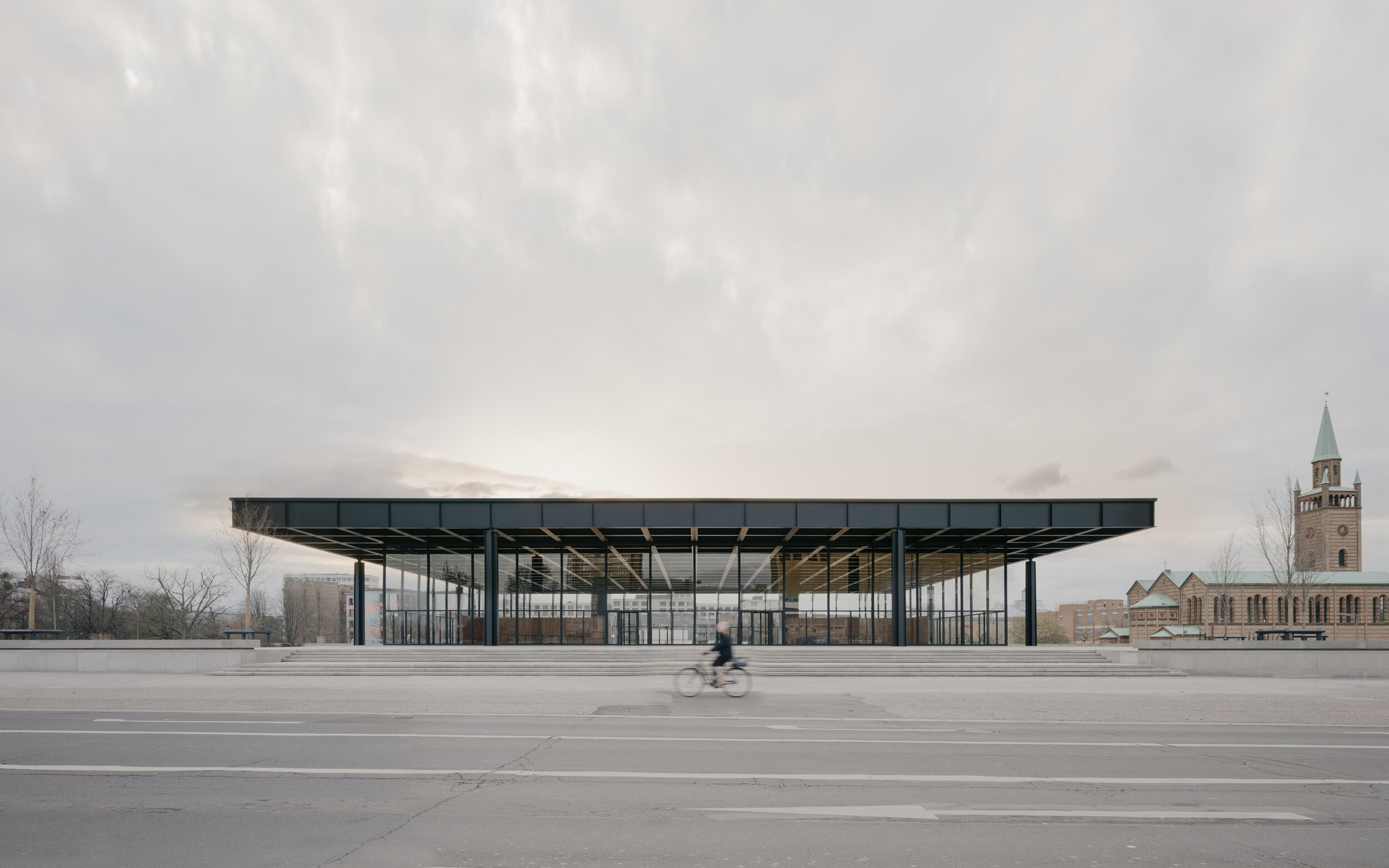
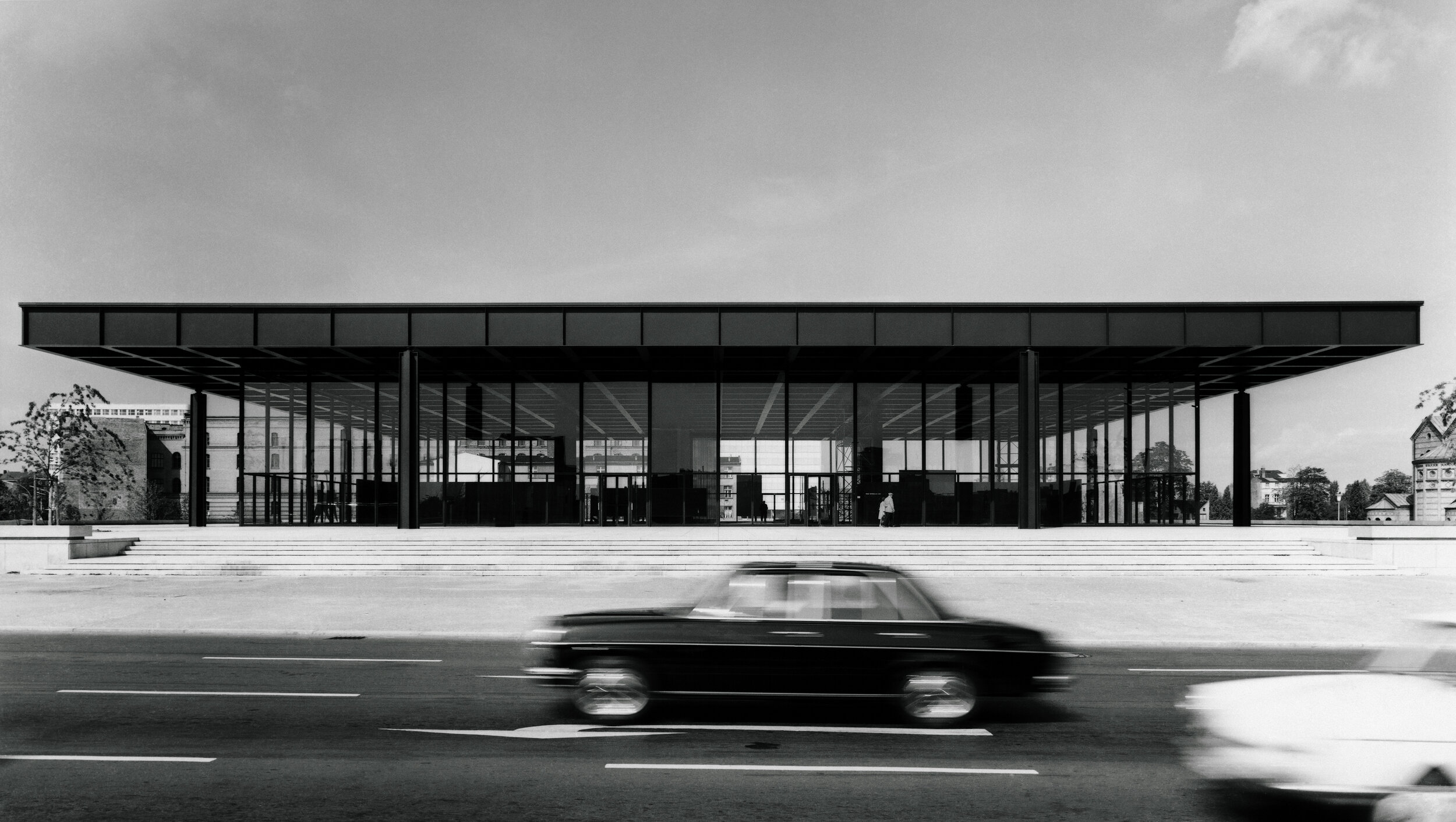
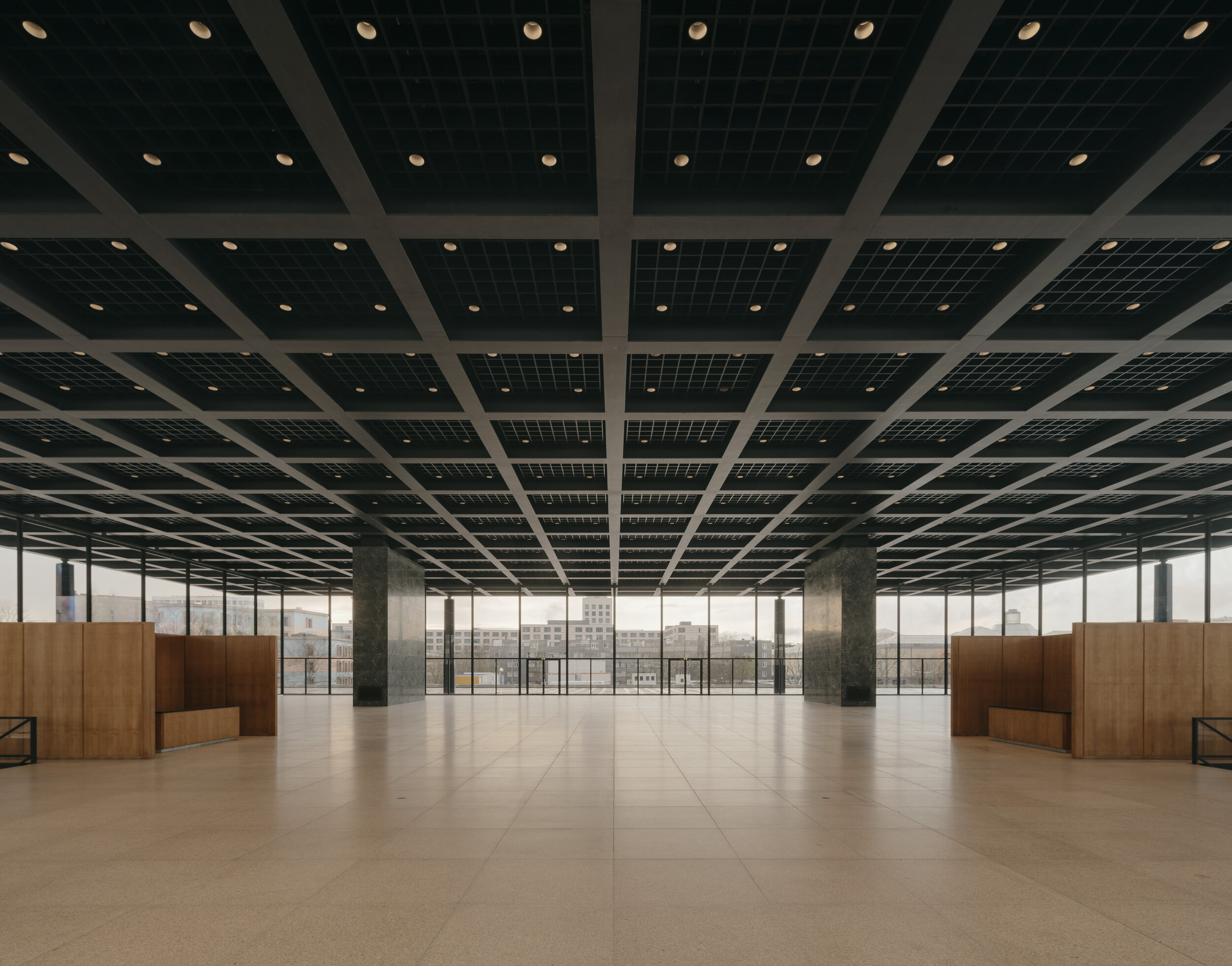
After years of refurbishment the Neue Nationalgalerie museum in Berlin has shed its cloak of scaffolding and has emerged into public view. At first glance it seems not much has changed, which is exactly the intention of David Chipperfield Architects who were commissioned to take charge of the first major renovation of the building since it was built in 1968. The practice has a diverse international body of work and has ‘won more than 100 international awards and citations for design excellence.’ The team at David Chipperfield Architects in charge of this project describe themselves as ‘invisible architects, striving to keep ‘as much of Mies as possible.’ 


They are referring to Ludwig Mies van der Rohe, one of the last directors of Germany’s famous avant-garde design school, the Bauhaus, and the architect who designed the Neue Nationalgalerie. Mies sought to establish his own style of architecture to represent modern times and the advancement of technology in the early twentieth century and embraced the aphorism ‘less is more’. The Neue Nationalgalerie is the only European building Mies designed after leaving his native Germany and emigrating to America before the Second World War. 


Historical photograph by Reinhard Friedrich

Historical photograph by Reinhard Friedrich

Speaking on his practices’ refurbishment of the museum, the firms founder David Chipperfield stated, “Taking apart a building of such unquestionable authority has been a strange experience but a privilege.” He went on to describe the refurbishment as “surgical in nature” as they addressed technical issues whilst protecting Mies’s vision. 


1014_10_SM_210400_N15_high.jpg


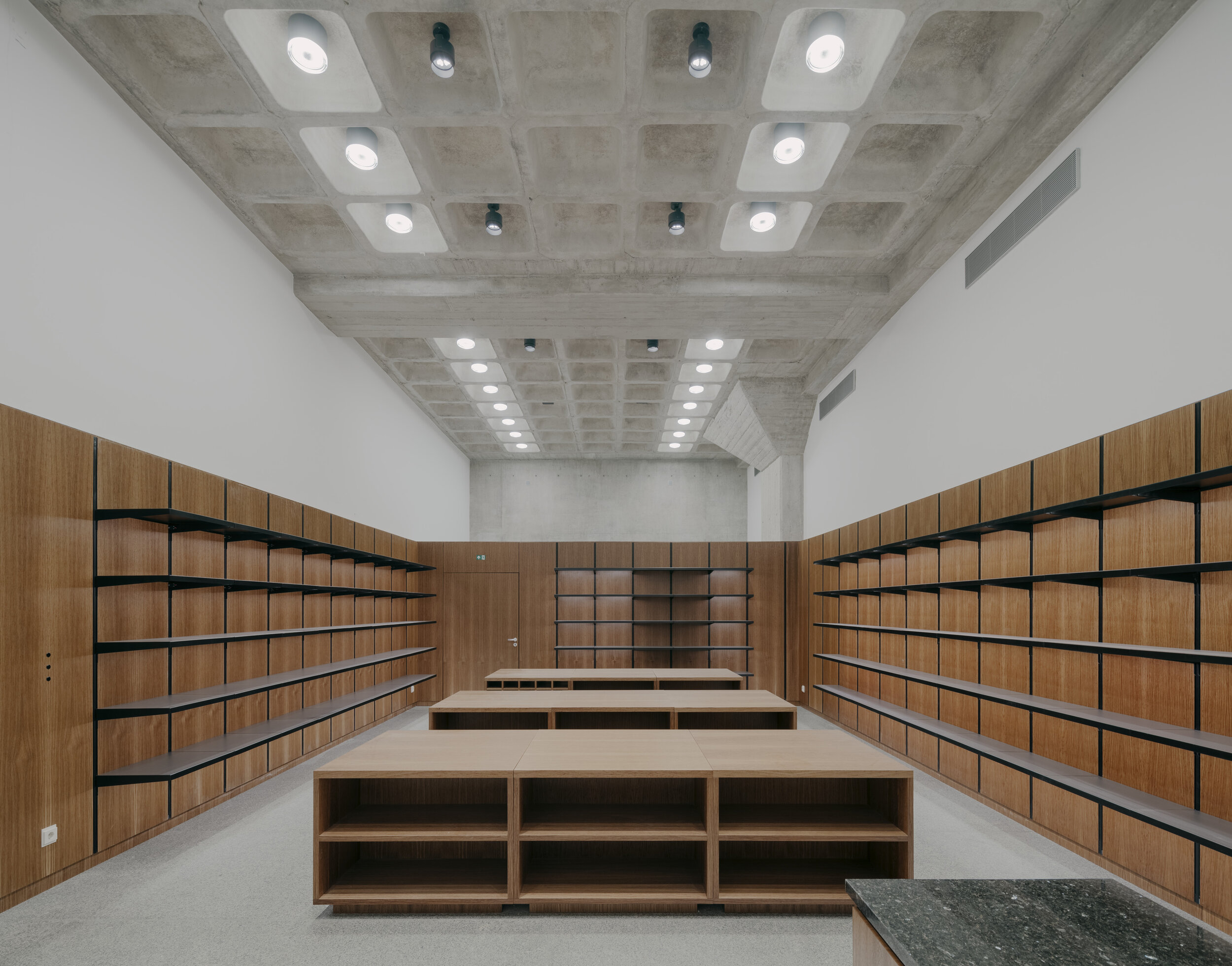
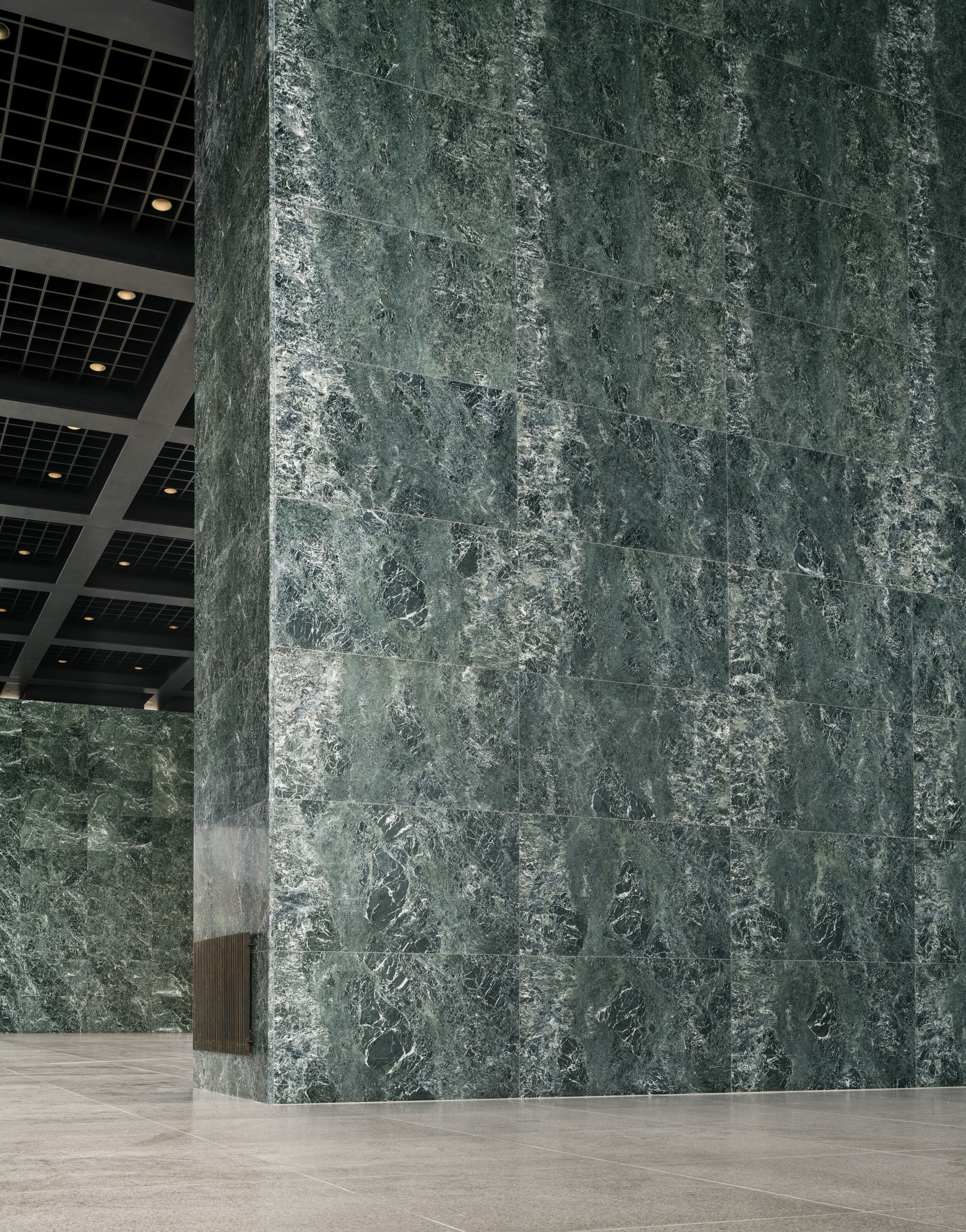
David Chipperfield Architects practice is characterised by  ‘meticulous attention to the concept and details of project’ and their ‘relentless focus in refining design ideas’ and this was evident in their aim to produce, not a new interpretation of the Neue Nationalgalerie, but a respectful repair. They accepted signs of ageing in the fabric of the building as long as it didn’t not impair visual appearance or usability.


 Mies often described his work as ‘skin and bones architecture’ and this Miesian principle is something Martin Reichert, Partner and Managing director of David Chipperfield Architects Berlin, uses to describe the renovation process. Calling the original surfaces the skin, and the shell construction the bones, he stated that these were kept, as they were ‘the most important characters of material heritage’. However, much of the ‘meat’ of the building, such as plaster, wire ceilings and porous concrete, was lost, aside from a small amount that was retained as evidence in preservation zones. 


1014_10_SM_210400_N20_high.jpg


1014_10_SM_210400_N7_high.jpg

Issues such as condensation were addressed by bringing the building closer to Mies original design. The original underfloor heating, which had been taken out of service at an early stage due to steel pipes becoming corroded and leaking, was restored making ‘an essential contribution to stabilising the indoor climate.’ In the case of unavoidable interventions, such as adding previously non existent disabled access, the changes are described as only ‘discreetly legible’. 


1014_10_SM_210400_N8_high.jpg

 The museum is expected to reopen to the public in August 2021 and more information on the restoration and opening details can be found on the Neue Nationalgalerie website .

IMAGES SIMON MENGES

INTERVIEW NICOLA BARRETT


LATEST PLACES AND DESIGN FEATURES

Tame Impala

«I think the energy of being in a place that you’ve never been in before can make your brain think in different ways»

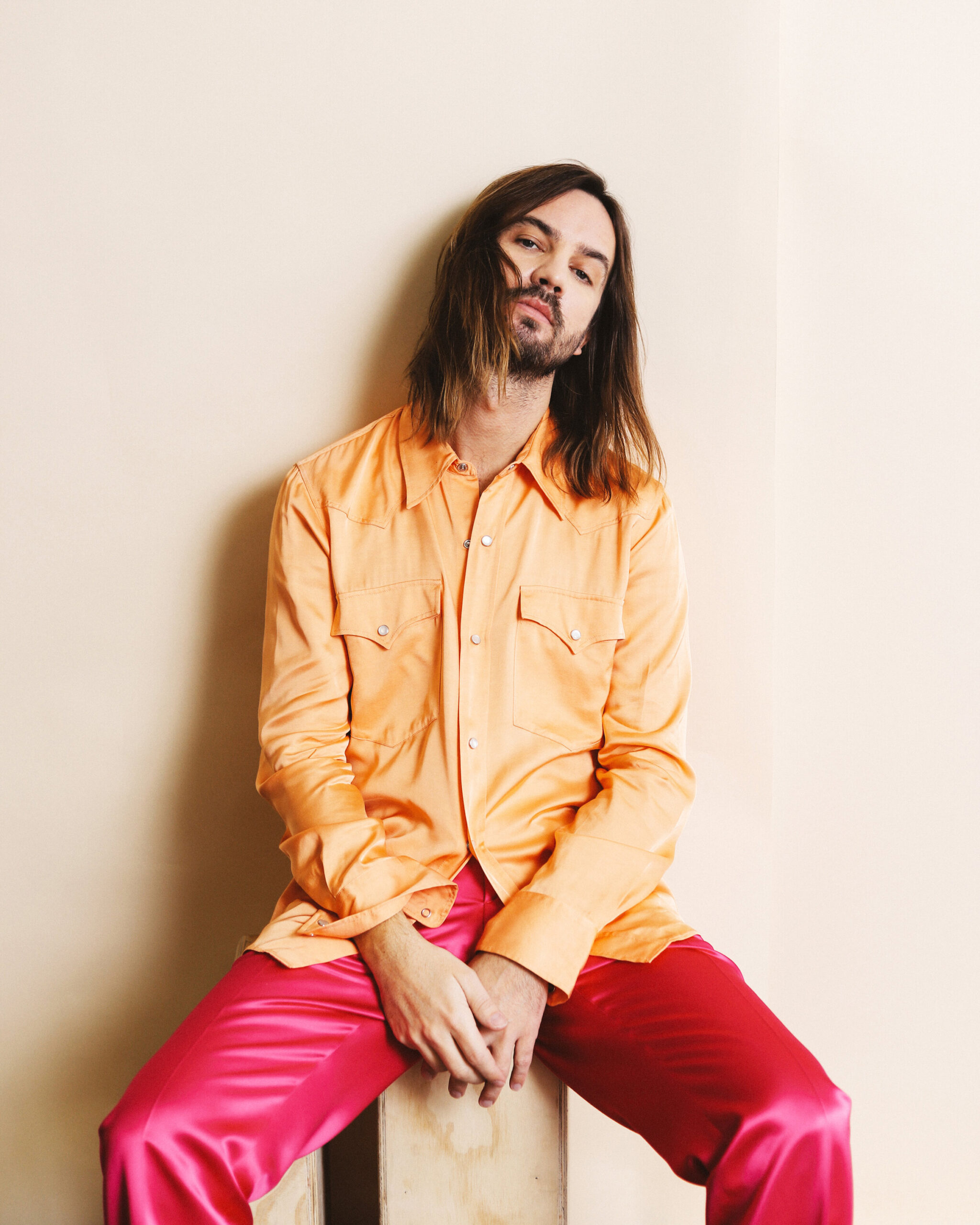
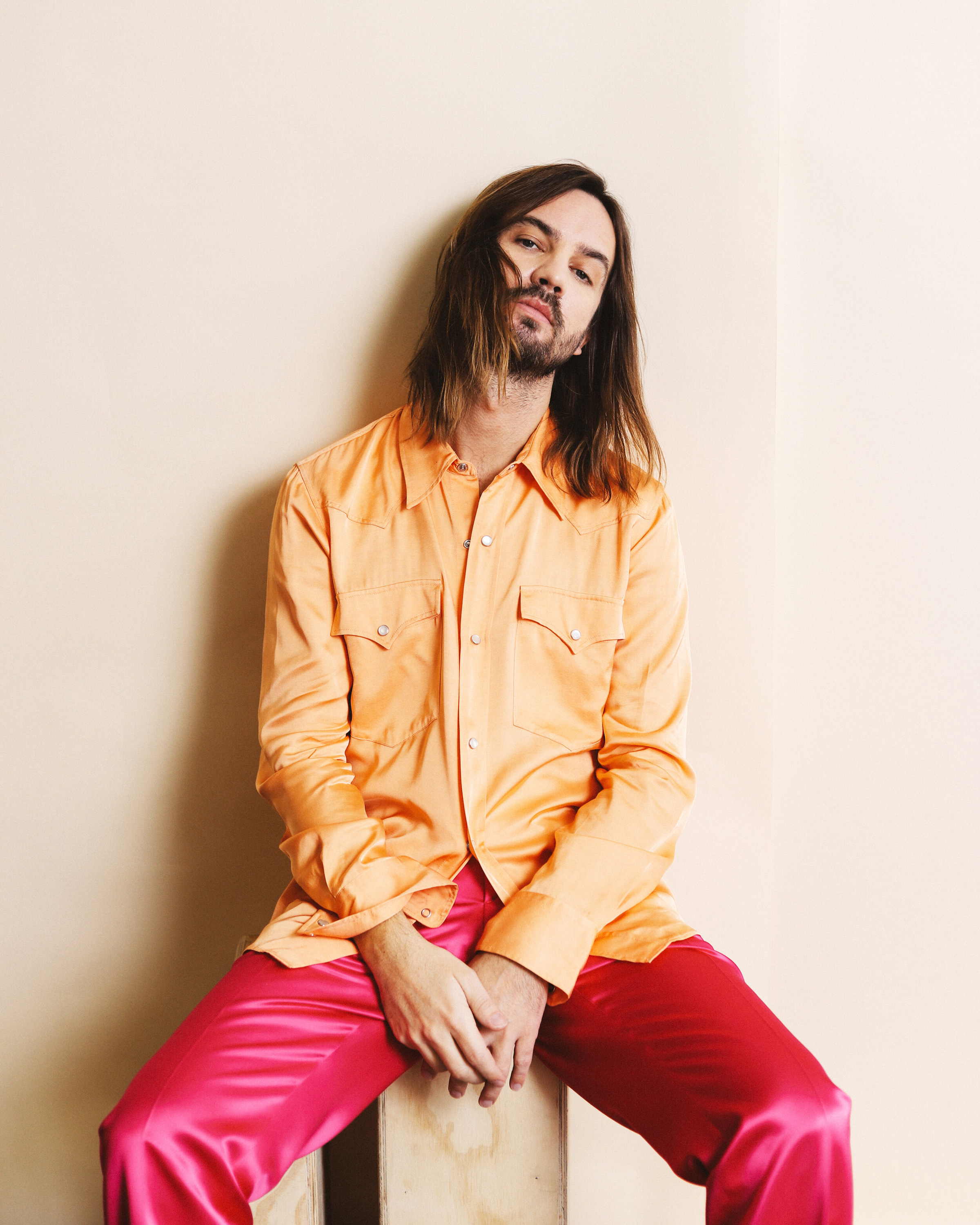
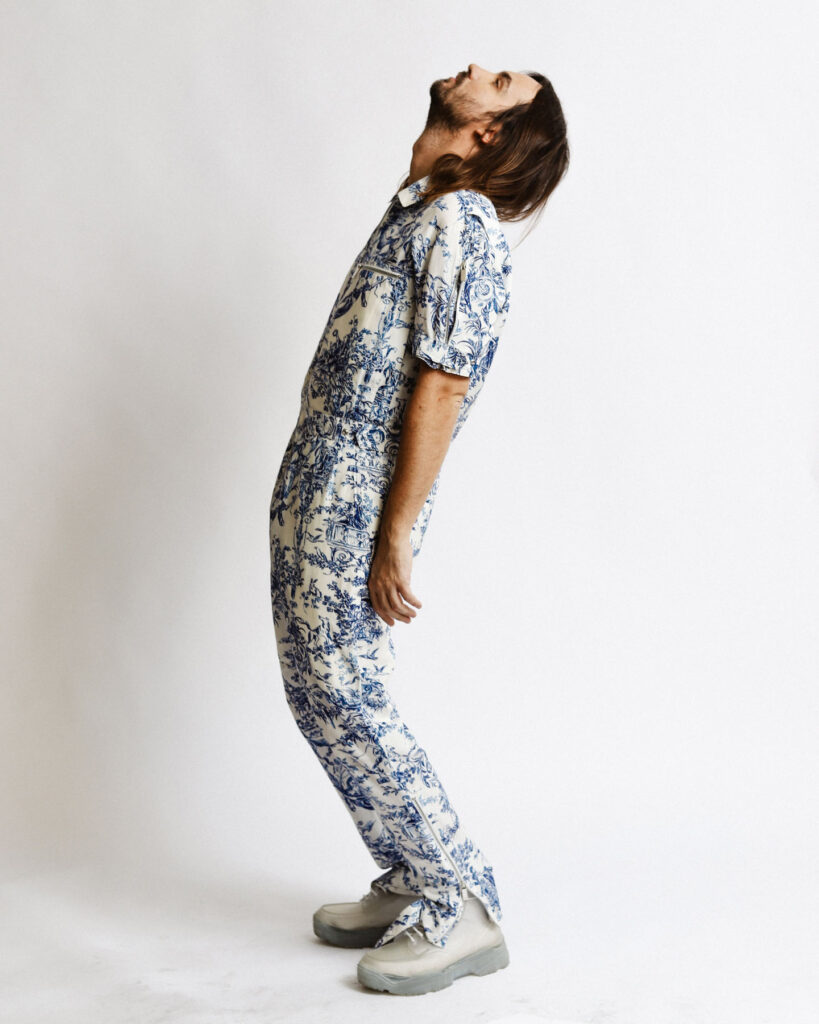
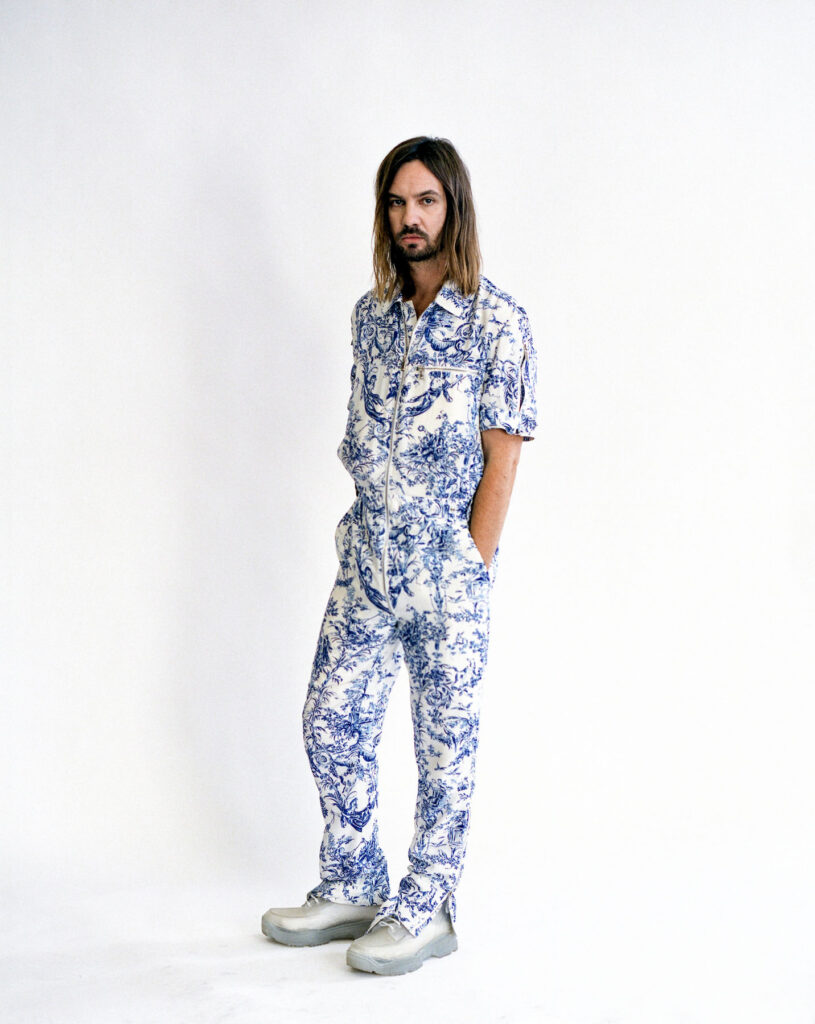
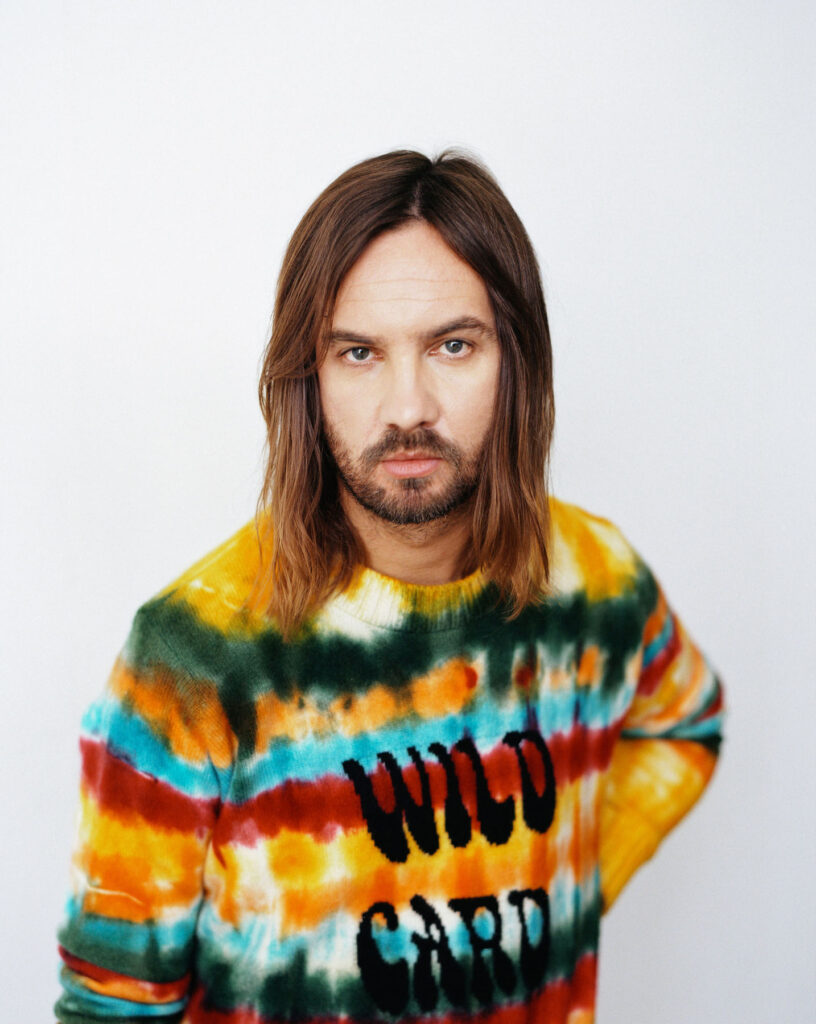
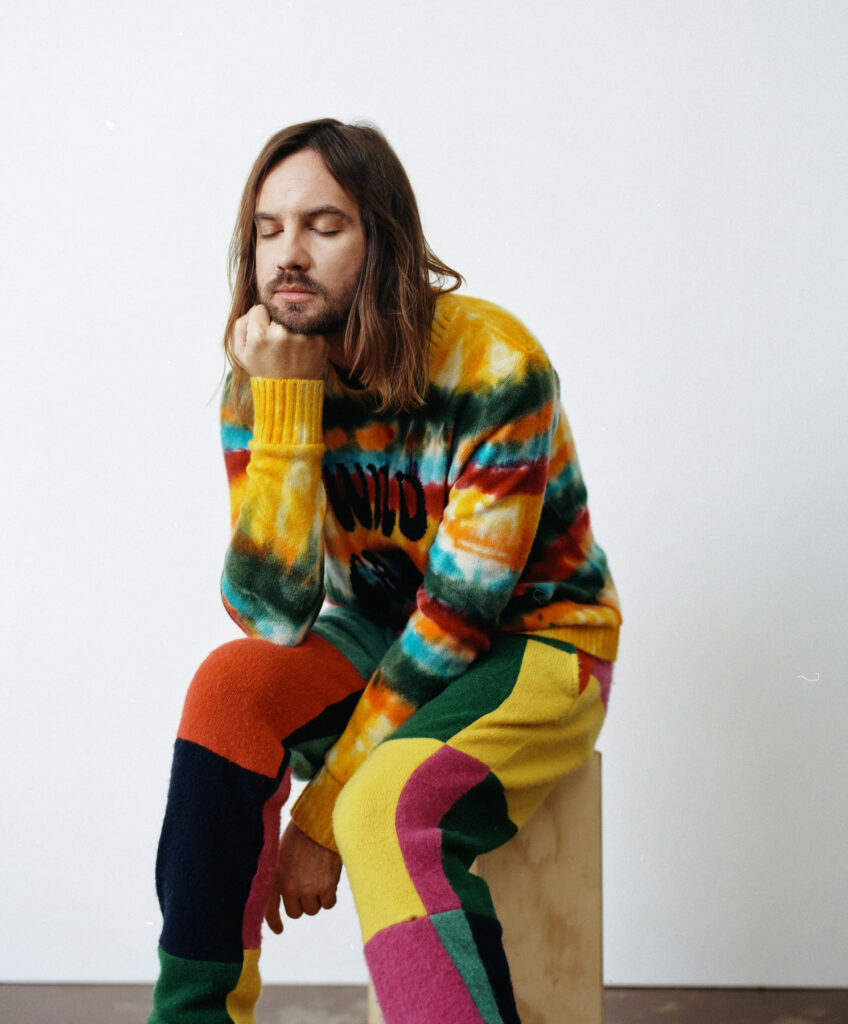
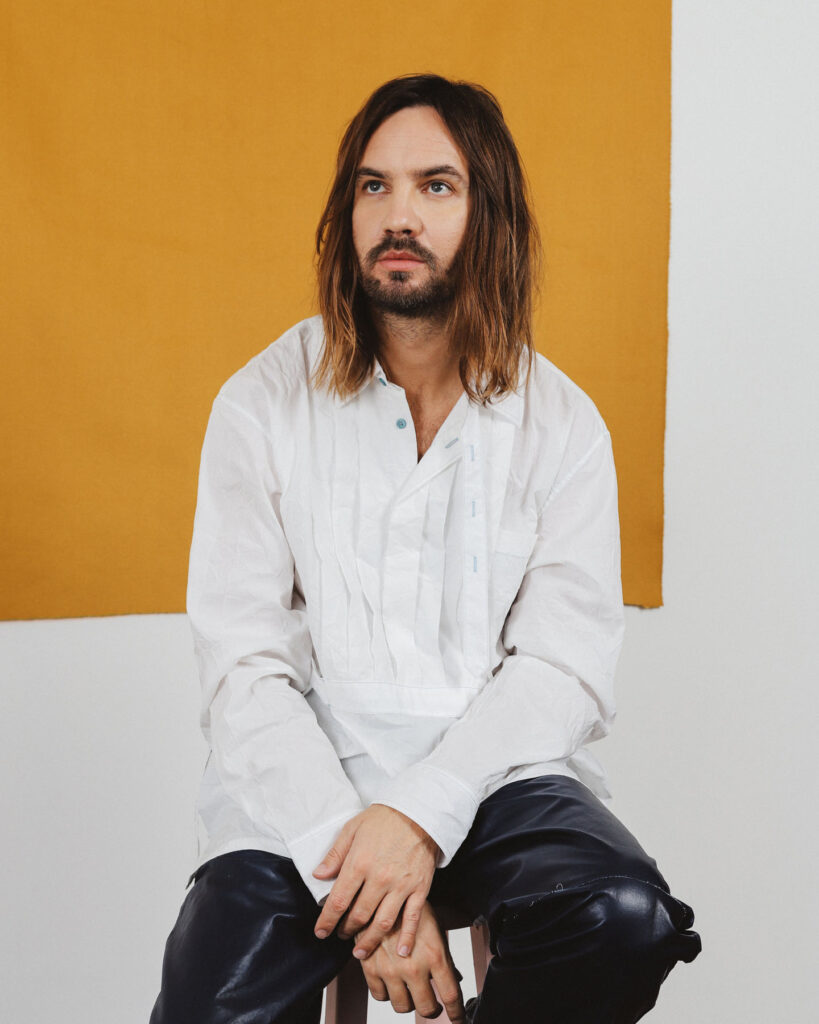
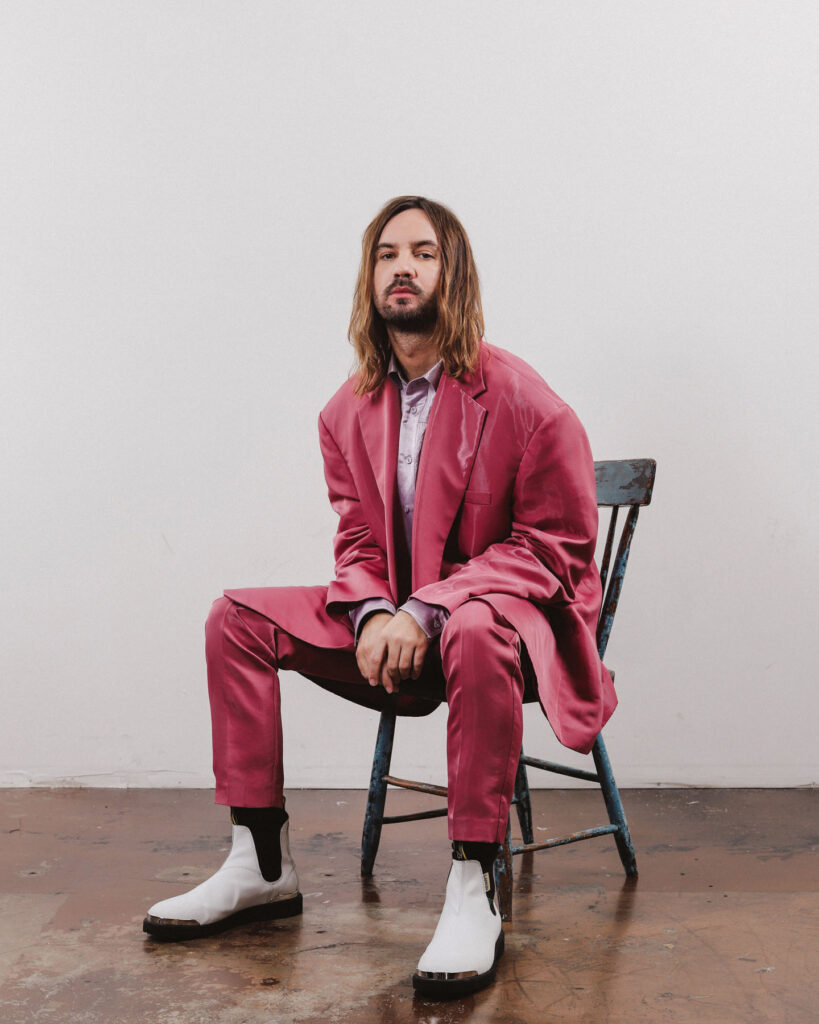
Kevin Parker’s shoot for NR Magazine came merely a few days before Los Angeles was locked down in response to the coronavirus pandemic that has, slowly but surely, turned everything we know on its head. ‘It was great to do something normal, something that I have been doing a lot of in the last few months; doing photoshoots and having fun,’ Kevin explains – now back in his native Perth, WA. ‘It took the attention away from everything that was going on. It was nice to spend three hours, just doing a photoshoot with wicked clothes.’ As the force behind the powerhouse band Tame Impala, Kevin is confident that the band has the resources it needs to weather the blow that the pandemic will have on the music industry; people still listen to his music online, ‘apparently’. When it comes to making music, it’s a well-known fact that Kevin works alone – so in that sense, business continues as usual. Yet, like many other artists who have had to abandon plans for the foreseeable future, the release of Tame Impala’s fourth album, The Slow Rush, in February has been overshadowed by this unprecedented upheaval. The band were due to play a number of shows in the US and Mexico in March, with an Australian tour following in April. ‘We’d spent so long preparing for the tour, and were at this absolute crescendo of getting ready for the shows – and as soon as we had played the first show, it was like, ‘Oh my God, what’s going to happen? For now, the dates have been postponed – which undoubtedly comes as a blow to the Tame Impala fans who have been waiting five years for a new album (though a number of fans turned to punning The Slow Rush’s exploration of ‘time’ in response to Kevin’s announcements of the postponed shows on social media; ‘it’s a slow rush’.) In its entirety, The Slow Rush is an infectiously funky record – and the influence of 70s disco and the current mainstream that has welcomed Kevin into its arms, are clear. Much of the heavy fuzz and reverb found on earlier Tame Impala albums have been slickened and given a shiny polish. Looking into the past may preoccupy some of Kevin’s lyrical reflections on the album, but there’s no reason for why Tame Impala’s sound shouldn’t move forward. It’s somewhat bittersweet that an album that unpicks the strangeness of time should come at a moment when, across the planet, we will have more time to contemplate the past and the future. It’s a heavy weight to place upon the shoulders of The Slow Rush, and if there was any kind of global crisis that was on Kevin’s mind at the time of writing the album, it would have been the climate crisis. Tame Impala partnered with Reverb, an organisation that works with artists to counterbalance the carbon emissions that are created through touring – something Kevin explains as a ‘no brainer’. Touring, especially on the level that the band are, has a huge carbon footprint, and trying to restructure the way world tours have been done for years would be a daunting task for Tame Impala to undertake themselves. But, it’s Tame Impala’s responsibility ‘first and foremost’ to ensure that the band is setting the right example, especially for a band that performs to thousands of people at every show (though, he hopes, the people that listen to Tame Impala are ‘probably not the kind of people going around denying climate change.’) During our Skype call, I ask Kevin about the prerequisites for listening to music; he says he has come to realise that his appreciation of music is shaped by ‘not necessarily the space, but who I was with when I heard it first, or what I was feeling.’ There’s a ‘helplessness’ to this reality; a ‘lack of control, from the songwriter’s point of view’ over how their music will be received. No doubt, Kevin could not have anticipated that The Slow Rush would come at the time it did; all that’s left to do now is listen to the album in solitude and await the moment when the music world comes back to life.

NR Magazine: The Slow Rush was a long time in the making – how do you feel listening to it now that it’s out there? Is it a relief to be done?

Kevin Parker: Absolutely, yeah. It’s funny because the moment I’m finished with the album, and the moment it comes out, I expect this huge sense of relief and a weight off my shoulders , but it never comes. That might just be because I have trouble appreciating things once they’re done; on release day, I didn’t get to enjoy it because I just can’t enjoy these things. I still enjoy the album, but it’s not always easy to enjoy the music when you’re aware of so many other people listening to it for the first time, and invariably judging it. When I look back, I remember thinking to myself, ‘Shit, am I ever going to finish this?’ Now, I am able to appreciate being on the other side of that. I was listening to the album yesterday; if I’m ever on Spotify for whatever reason, I’ll probably slowly make my way to the album and give it a listen – just to see what it sounds like now after a month. (It only came out a month ago, that’s crazy; it feels like a life time ago!)

What were your reasons for making an album that explores the concept of time?

It’s always been something that fascinates me – not time itself as a weird existential force – but the way it affects us. The way you can smell something, you know, if you walk past someone in the street who’s wearing cologne that someone that you were in a relationship with ten years ago was wearing, and you haven’t smelled it since then, it just sends you into an absolute time warp. The way these experiences shape our lives intrigues me. At the same time, I didn’t consciously go about making songs about all these things but, when it comes to an album, the kind of music that I’m making subconsciously informs what I start singing about. Like, when I made Lonerism, the chords and instruments I was using reminded me of times when I felt alone growing up, and so the album ended up being like that. And I feel like The Slow Rush is the same kind of thing, where the music I was making – the rhythms and cords – just made me think about the future, the past and everything in between.

I listened to Innerspeaker again a couple of weeks ago and it transported me back almost ten years back which was, like you say, an emotional time warp. Does the way you listen to your music change with the passage of time, or is the sentiment the same?

Definitely not, no! It’s funny you know, you’re saying about Innerspeaker – it’s the same for me. I hardly ever listen to the album the whole way through, but if I really pay attention to parts of it, it’s crazy because it so clearly reminds me of where I was and what I was feeling. Like for you, it’s kind of crazy; music is crazy how it can do that. I guess the other thing is, listening to Innerspeaker now, it feels like it was someone else. I just hear this naïve kid, not really knowing what he was doing, which is nice because I don’t judge it anymore. I don’t judge it in the way that I do with The Slow Rush. Innerspeaker was so long ago that any of the mistakes, any of the things that are wrong with it, just sound charming and cute, which feels weird to say…

I guess you’re so disconnected from it, with that amount of time passing?

Yeah totally. That’s also good because it finally allows me to listen to it like someone else, not as me – the person who made it. That’s kind of the dream, to be able to listen to your own work. I don’t know how much money I would pay to be able to listen to the songs I’m working on at the time, you know? To be able to listen to the album, as an outsider… I’d give anything to be able to do that, but it’s something that only time can offer.

I’ve seen a few people mention that the cover for The Slow Rush was 3D-animated, but it’s a photograph from Kolmanskop, Namibia, right?

Yeah – I’m not going to lie, I was a little bit disappointed when people asked how I synthesised the image. I was like, ‘Man, I flew half way across the world to take that picture!’

I can see why people don’t believe it’s real. How did you decide on using that as the album cover?

I was a little bit obsessed with abandoned places for a while, and the internet is full of pictures of these abandoned ghost towns; there’s just something so enthralling about them. I mean, probably not coincidentally, it’s like the experience of time passing smacking you in the face. I guess some people find it depressing to look at, but I just see such beauty in it. As soon as I saw that place, I knew that we had to go there. Kolmanskop is like a ghost town in the desert and it’s super windy, so sand just builds up in these amazing ways. What I love about it, is that it looks like liquid – and if you look at a picture, you can’t tell if it took the sand that’s up to the window a matter of minutes or decades to reach that point, you know? You can’t tell which it is and that’s kind of what I love about it.

You’ve previously spoken a lot about how you make music, but how important is the space around you during that process?

It’s important – not that I need to be in a particular place to make music, but I think there’s something about being somewhere new. I think the energy of being in a place that you’ve never been in before can make your brain think in different ways. So, with The Slow Rush, I tried to milk that. I was renting Airbnbs, taking music equipment with me and recording there for a week on my own. There’s this nervous tension about being in someone else’s house…

Though I guess, you got more than what you bargained for when you were staying in Malibu [when the worst wildfire season in California in 2018 ravaged the area]?

Well exactly, yeah. And I’d only been there for one night, and the next morning I just had to go. I had stayed there for a week earlier that month recording, and it’s funny because I think about that space – I started a few songs off this album there, and when I listen to something I think about where I was when I working on it. It takes me a while to realise that that space doesn’t exist anymore; it was completely burned to the ground, it was just rubble. When I listen to a song, or the chorus of a song I wrote there, I remember the colour of the walls; what the door looked like; what it was like leaning out into the backyard. It’s kind of weird to think it just doesn’t exist anymore because, in terms of memory, we never think of a space as not existing, you know? Our minds think of the space we’re in as these permanent places, not something that can just disappear in one day.

It goes without saying that Tame Impala has seen an unprecedented level of success in the past ten years – what’s next for Tame Impala and for you?

That’s a good question; I don’t know. Well, I want to get making music. One of the things I was looking forward to so much with finishing this album was it just being done with. There was so much stuff that I wanted to do, in terms of Tame Impala and not; there were things that I couldn’t do until I made this album. So now, I’m happy to be on the other side of it so I can do the things that seemed wrong before. I have no shortage of things that I want to do now. I’m kind of excited about it – whatever that ends up being.


Credits

Creative Direction · NIMA HABIBZADEH and JADE REMOVILLE
Photo · JJ GEIGER photo assistant AMANI BATURA
Fashion · SHAOJUN CHEN
Grooming · ALEXA HERNANDEZ
Interview · ELLIE BROWN
Special Thanks · Grand Stand HQ

Robert Wun

«finding the right balance between freedom and restrain, creativity and reality, patience and precision»

Robert Wun. Now let’s repeat: Robert Wun. We should not stop repeating, as we really might be facing one of the most extraordinary minds of contemporary fashion.

The Hong-Kong born designer sat down with NR to discuss his latest collection, the family memories that inspired it, and, most importantly, his fight for inclusivity. Leading us through a sincere recollection of anecdotes and reflections that shaped his aesthetic and beliefs, the young creator tells us a story of empowerment and attitude.

“Equality, Diversity, Sustainability and Accountability”, It’s a fight against the system what Wun’s aiming for. Nowadays more than ever, we are reminded of the urgent need for change within the institutions, and his creations are an open invitation to it. We might not yet be sure how to feel about Robert’s AW21 journey, but surely heaven has never looked this good.

Your last AW21 collection ‘Armour’ is simply mind-blowing. Tell us more about your inspiration behind it.

Thank you so much! The collection is a tribute to my grandmother whom I lost last year in October. The collection is also a celebration of her and all the women who have inspired and changed my life. Every look is inspired and named after a woman.
I admire powerful strong women because of my grandmother: she shaped my views of feminism, and taught me about love and respect. I have had the pleasure to connect and cross paths with incredible and inspirational women who I’m lucky to call my closest friends and family.

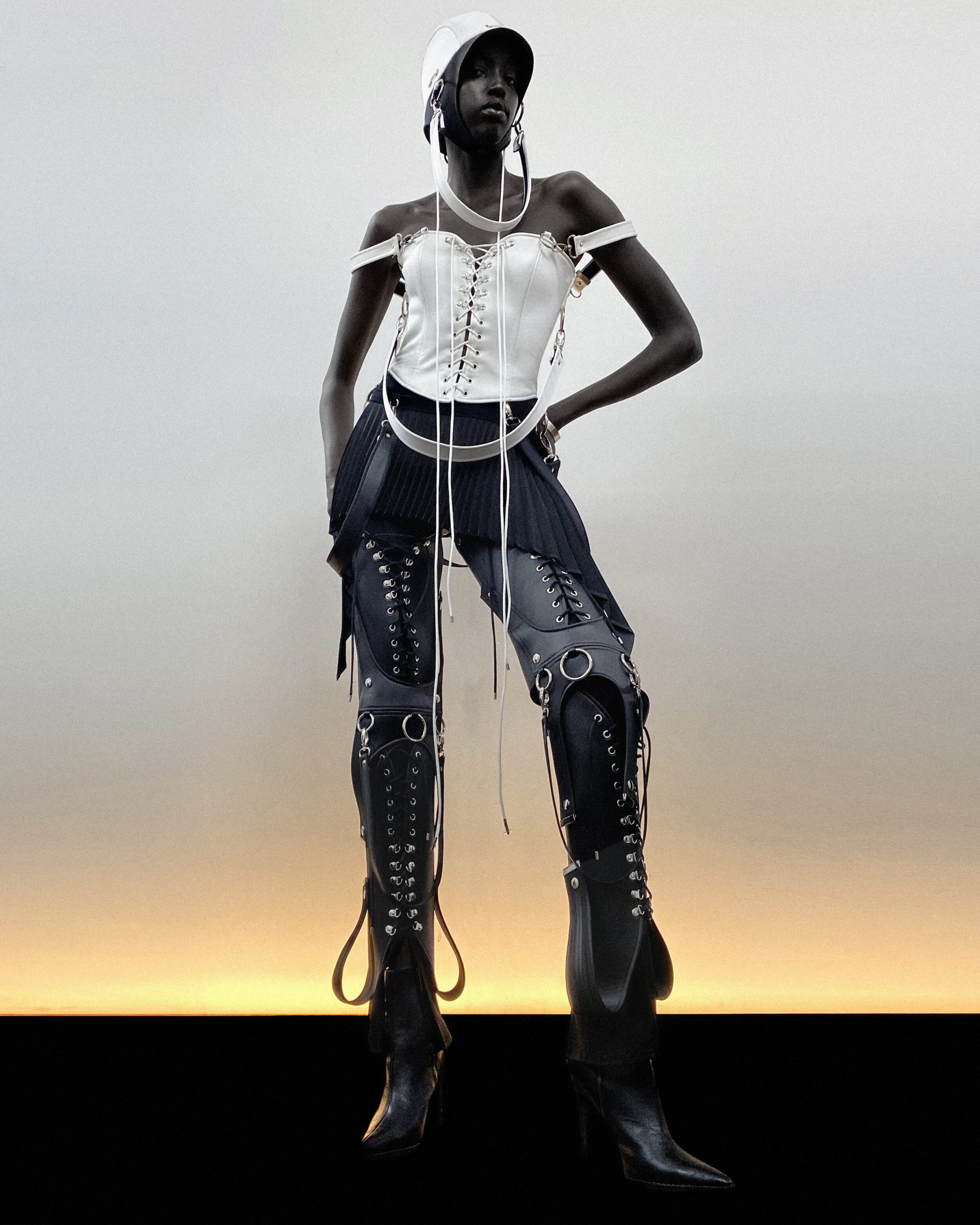
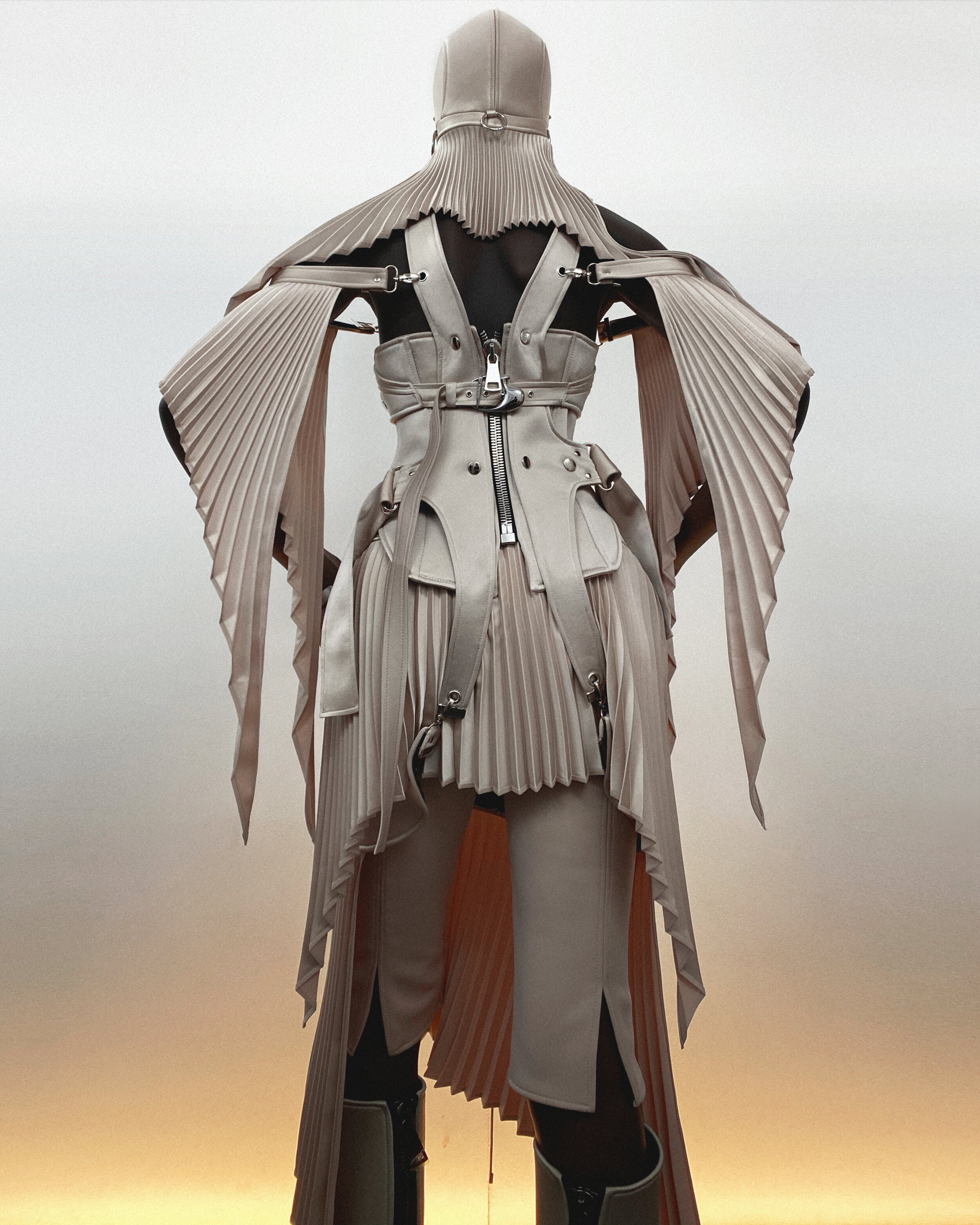
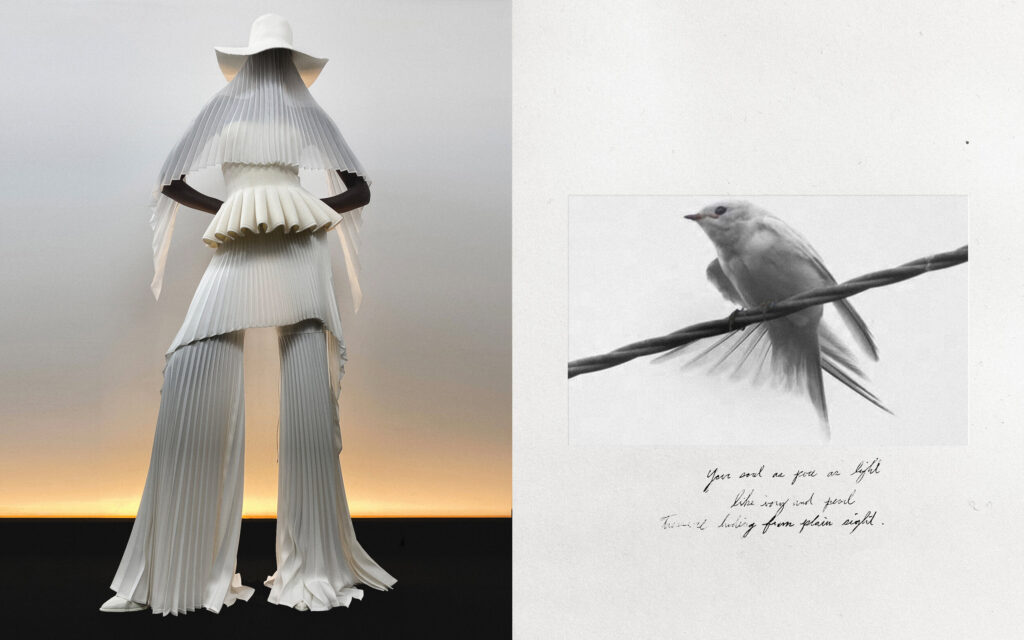
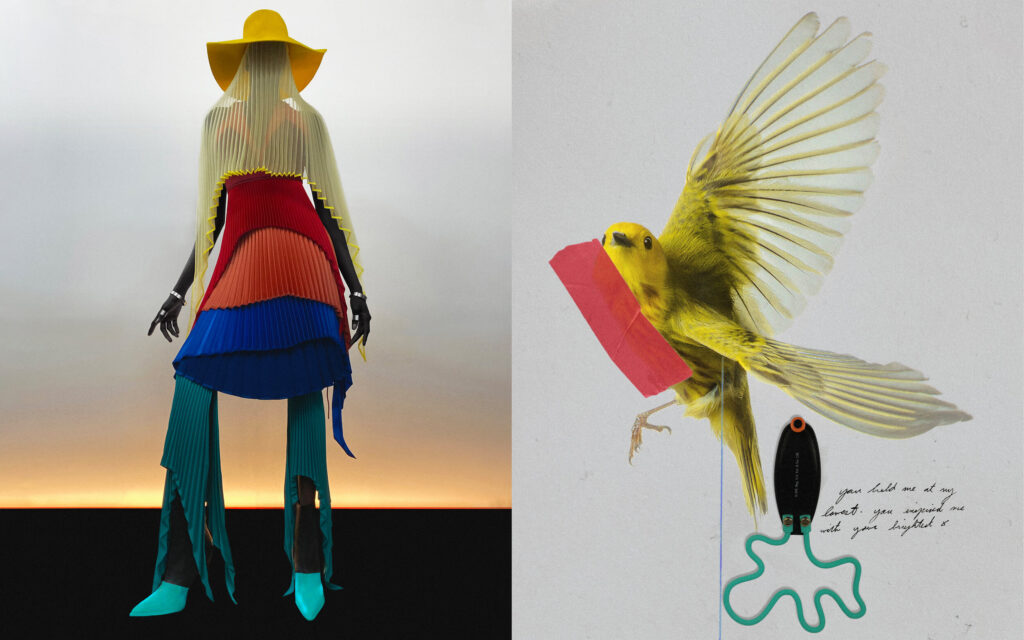
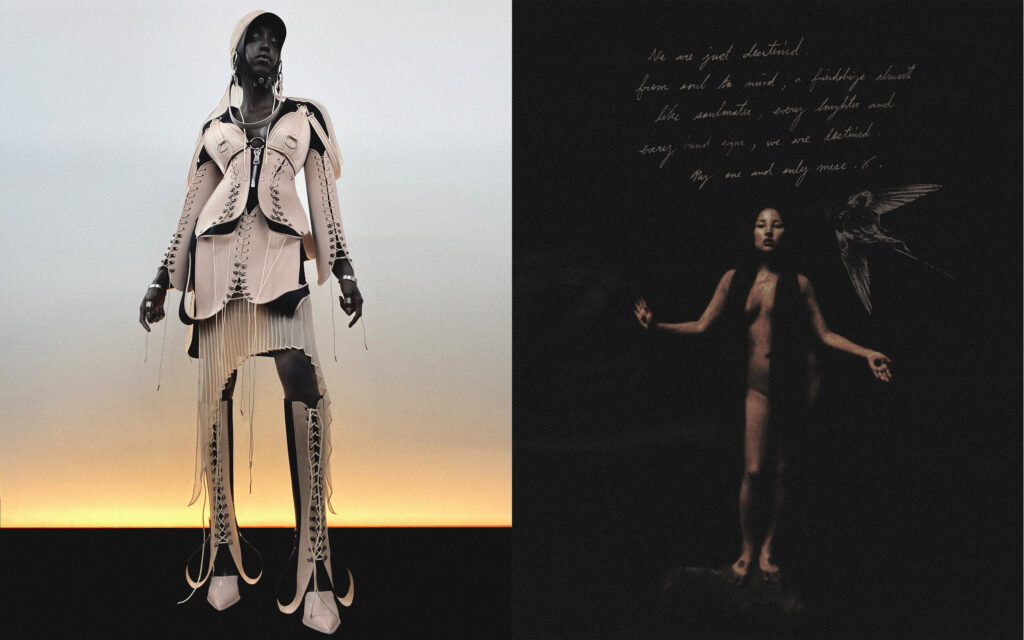
Swallow birds are a key inspiration of the collection. They were my grandmother’s favourite birds back in her village in Hainan Island, China. They also hold significant meaning to our family: according to a poem, young swallows are meant to one day leave their nest, and live their life without their parents. The poem resonates a lot with me, considering I left Hong Kong to pursue my dream in the UK. 

«This season, I am building an army to go to heaven with her.»

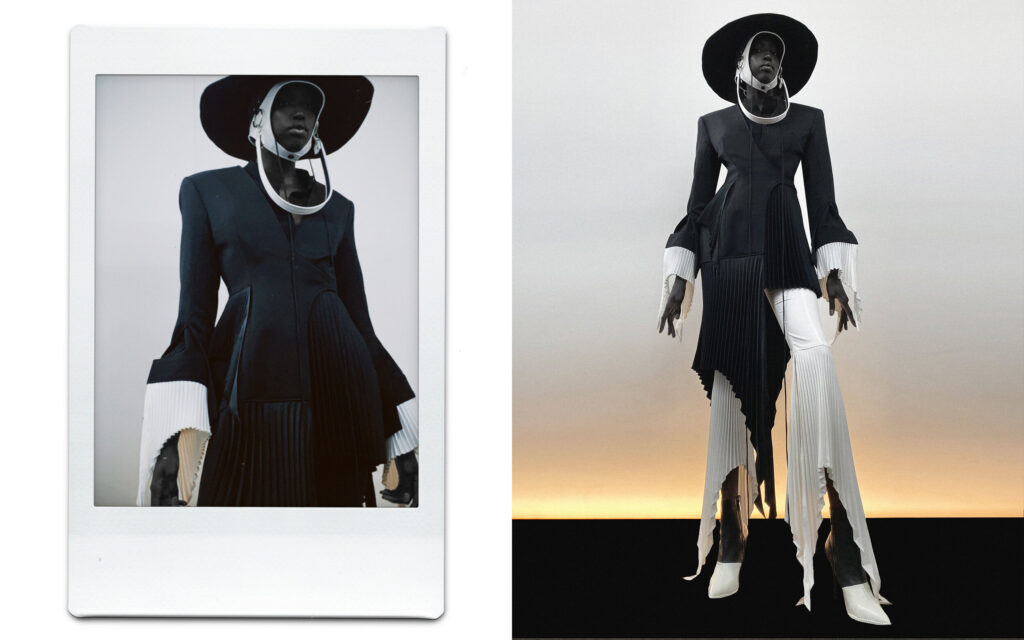
The collection is presented at dusk, as that’s how I’ve always imagined heaven’s gates to look like, in a sort of surreal dimension. It is my most personal collection: a self written diary documenting the many memories of my grandmother, my family, and my close friends. I also decided to photograph the collection myself. It felt right to be the one behind the lens – of what I believe to be – the most genuine collection I have ever created.

The idea of womanhood presence in your childhood played a determining role in shaping your aesthetic and designs. What do you see in it?

My work revolves around feminism, it shows my admiration towards strong women. 
During the post civil war, my grandmother moved to Hong Kong on her own. Mending clothes, making plastic flowers and sewing shoes, she raised my father as a single mother, not knowing a word of the native language. 
My mother’s work ethic of work & studying since the young age of 12.. She’s still pursuing a Doctor Degree.

«The idea of womanhood has always been very ingrained in our family, and the interplay between grace and strength is how I portray femininity in my work.»

Your training started a while ago at LCF. How has your practice developed since then?

Becoming a designer and brand owner, the biggest development is gaining responsibilities and business knowledge of the industry. I have grown, season by season: navigating in finding the right balance between freedom and restrain, creativity and reality, patience and precision.. And, ultimately, coming to the knowledge and the understanding of the importance in execution.

What were the biggest cultural challenges you faced in building up your vision?

I would say the biggest cultural challenge is the constant fight against the system. Trying to box me in a diversity category, it’s tokenism culture. As an East Asian designer, identity is constantly the only element they wish to see in my work. I found that dehumanising, it diminishes my vision. My work is not always about my heritage nor it certainly does fit into the western gaze perception.

What do you hope people will take away from your collections?

Hopefully something inspiring and timeless, profound, yet optimistic.

Pleats, pleats and pleats. Your approach to them is revolutionary: what is so special to you about them?

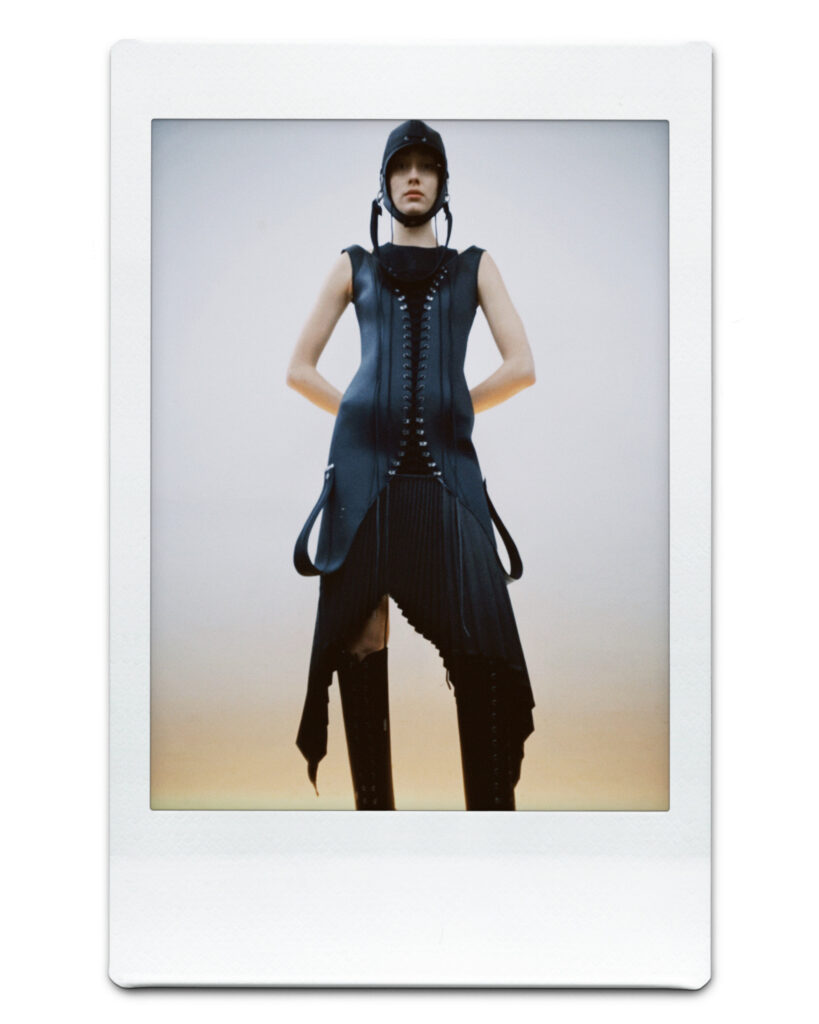
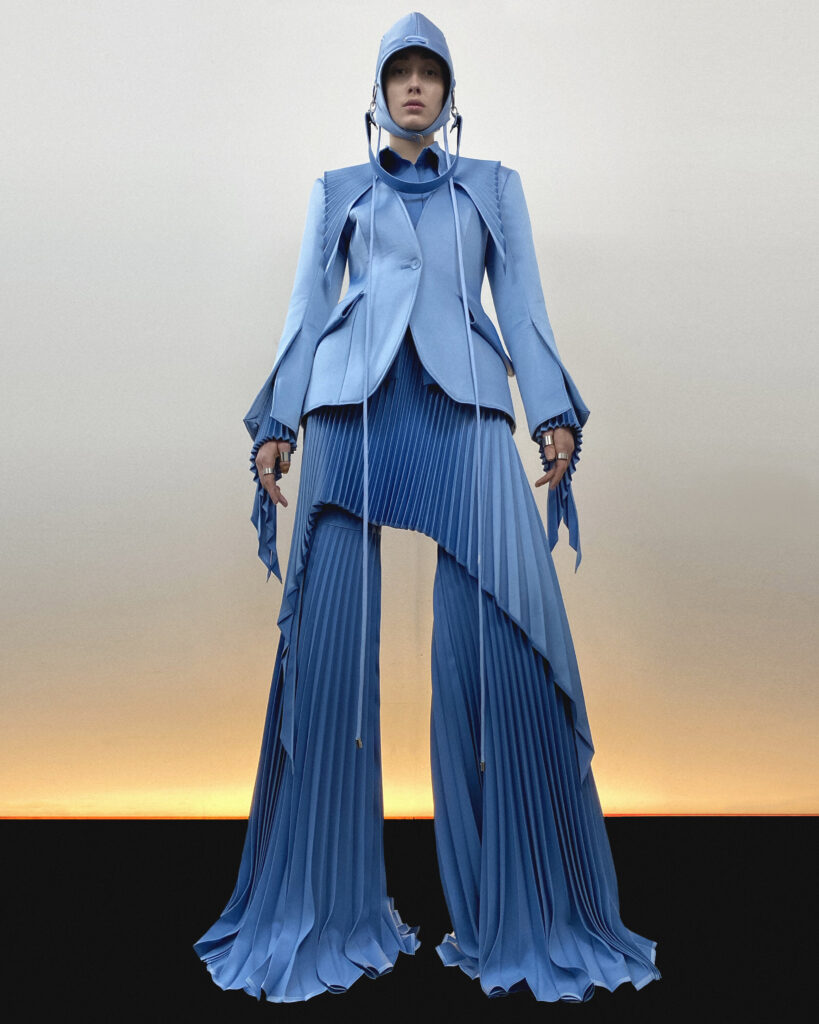
The pleat style and technique is called Sunray-pleating, I see them almost as a powerful pattern of illusion. Like a palm tree leaf, feathers on a bird’s wing, or sun rays through the clouds, I am always inspired and mesmerised with those patterns in nature.

Gaga, Cardi B, Willow Smith, Billy Porter, to name just a few of the celebrities that went for your designs.. How do you feel about such great feedback? Who would you love to see next?

It is such an honour and blessing to be able to dress all these powerful women. Many of them have inspired me since I was young! I would love to dress Naomi Osaka, Frances McDormand, and, of course, Beyoncé.

What do you believe to be the biggest urgency in Fashion right now?
Equality, Diversity, Sustainability and Accountability. How does your personal vision and practice embrace these?

«I have always aimed to normalise sustainability and diversity. I do not believe in marketing these values as a gimmick to sell the brand.»

I think they should be a common practice in all businesses, not just in fashion.

What should we expect from you in the near future?

What’s next for the brand will be a full e-commerce in 2021 and the introduction of new accessories. I am planning a very exciting collection for SS22: we will be working with incredible figures from the industry at expanding the brand’s language beyond gender, size and identity.

Credits

Images · ROBERT WUN
www.robertwun.com

Terrence Zhou

«It is less about aesthetics, but more about being sympathetic with our customers»

New York based Chinese designer, Terrence Zhou is radicalising our preconceived notions of body and silhouette. Leading us through a journey in between geometrical exaggerated volumes and block colours, the Parsons graduate is redefining our ways of seeing fashion. 

Terrence Zhou graduated from Parsons School of Design in 2020, following a degree in Fashion Design with a year student exchange program in the UK at Central Saint Martins, University of the Arts London. With plenty of projects on his shoulders, including a collaboration with Austrian jewellery brand Swarovski, and a design strategy proposal for Japanese cosmetic company Shiseido, the designer took a moment to speak with NR about his creative growth and process.

“I will keep creating and never stop.” affirms Zhou, reassuring us all about the difficulties and struggles experienced throughout the past year spent away from his loved ones.

With Maths at the core of his training background, the young designer talks us through the first steps through his career, his motivations, and the intentions behind his sculptural creations.

Your training began with Maths, to later shift to Fashion. Tell us more about your education experience.

I always wanted to do something art related. I know that I’m good at both Mathematics and Art. If I knew what I know now, I would say at a young age I already felt the calling for art and design. I never received any proper training as a kid, I would draw and paint on newspaper, or would make my uncle build sculptures with me. When it came to applying for university, I really wanted to go to Parsons. Unfortunately, I got rejected. I was thinking at the moment “Okay, great! Now I can focus on pursuing my second choice, Mathematics!”. It was a subject I was really good at and also interested in. While majoring in Mathematics in a liberal arts college and soul searching for two years, I decided to apply for Parsons once again. This time, I got in.

Do you reckon your mathematics background has somehow forged the way you design?

Definitely, still now I would do Maths problem sets for fun. Maths is a way of thinking and a way of living. It is a system of thoughts: it enables me to see the essence of every day matter. I personally find Mathematics very romantic. To me, Mathematics is a system that helps us understand the foundation of this 3D world. Back in middle school and high school in China, I really enjoyed inventing new ways to simplify steps of difficult Math problems. It was really funny! My Math teacher at the time thought I was also good at drawing: she would always invite me to draw graphs on the blackboard and teach the class how to solve problems my own way. The idea of constantly innovating and synthesizing from Mathematics has transformed into my design language. Even when in Parsons,

«I would always challenge myself at making the design process more efficient in terms of expressing my ideas.»

The past year has been a challenging one for us all, what did you learn from it? How has the pandemic affected your approach to fashion?

I am from Wuhan China. During that time, I was just worrying about my family. I haven’t been home for almost 3 years. The pandemic has never affected my perspective to fashion, rather, it revealed to me what my real approach is: no matter what happens on the outside, I will keep creating and never stop.

What are your thoughts on the direction Fashion has taken in relation to the current situation?

I feel that pandemic has expedited our journey to the virtual world. Working from home and online shopping have become a new norm. It definitely enabled us to abandon our preconceptions on many things and probably pushed us to envision more possibilities.

Collaborations also played an important role in the building of your brand. How did you manage to fit your aesthetic within Swarowsky and Shiseido?

Swarovski and Shiseido were two different projects when I was in school. Swarovski sponsored us crystals and we had to create a collection. The project with Cle de Peau Beaute and Shiseido was more interesting. Teamed with Columbia Business School MBA candidates, we provided design strategies to Cle de Peau Beaute to augment its client base in the US. Projects like this always make me think from a user experience designer perspective. It is less about aesthetics, but more about being sympathetic with our customers. It is a different creative process.

How do your origins inform your work?

No experience is ever wasted.

Why do you design? What is the message you want to convey with your garments?

I want to build connections with people who look at my work. It encourages them to think about everyday objects in ways they never thought about 10.

What will the next steps be for your brand?

Keep creating.

Credits

Images · TERRENCE ZHOU

www.terrencezhou.com

The Climate Clock

«A slow-motion carbon time-bomb we are dropping on ourselves and all of Nature»

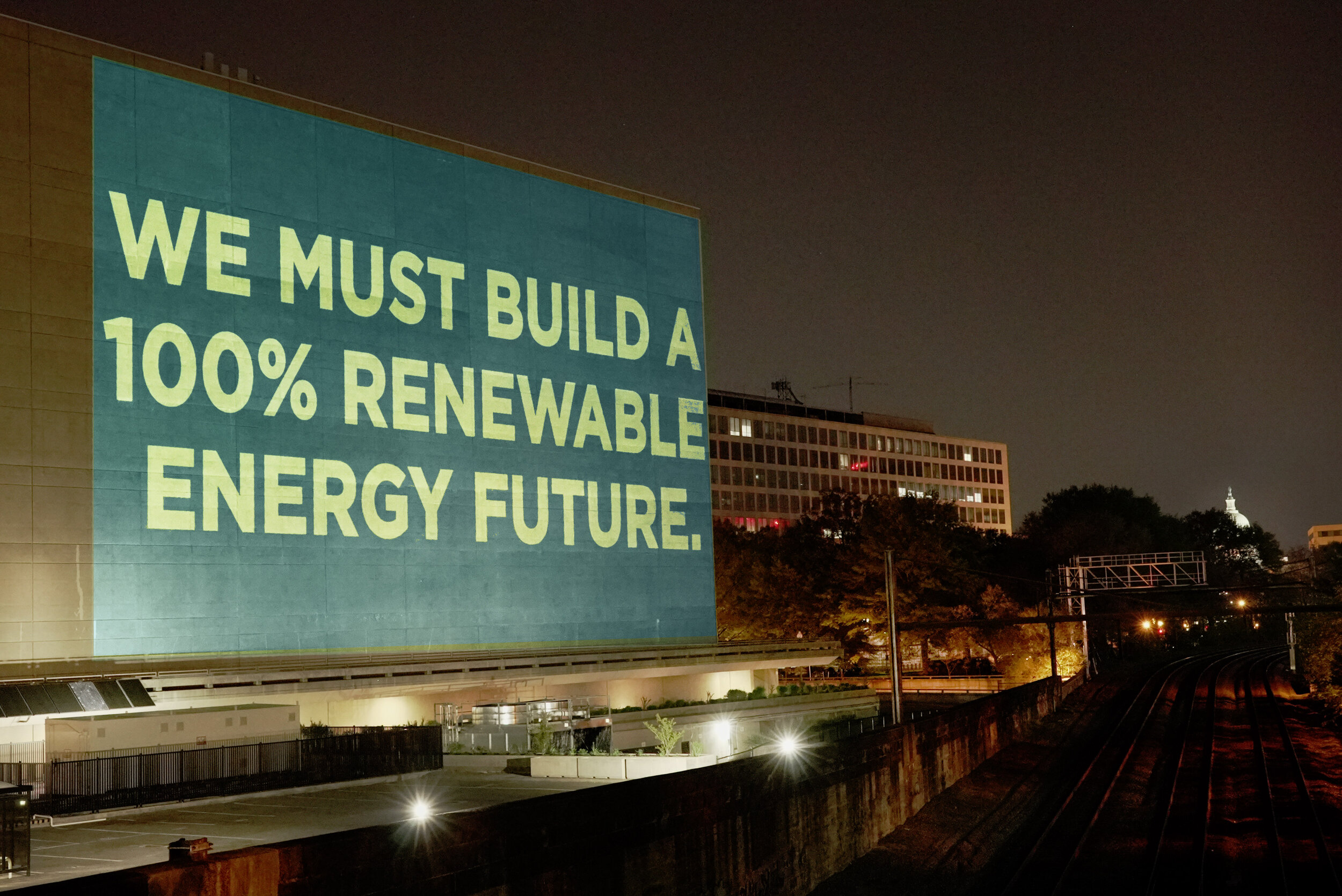
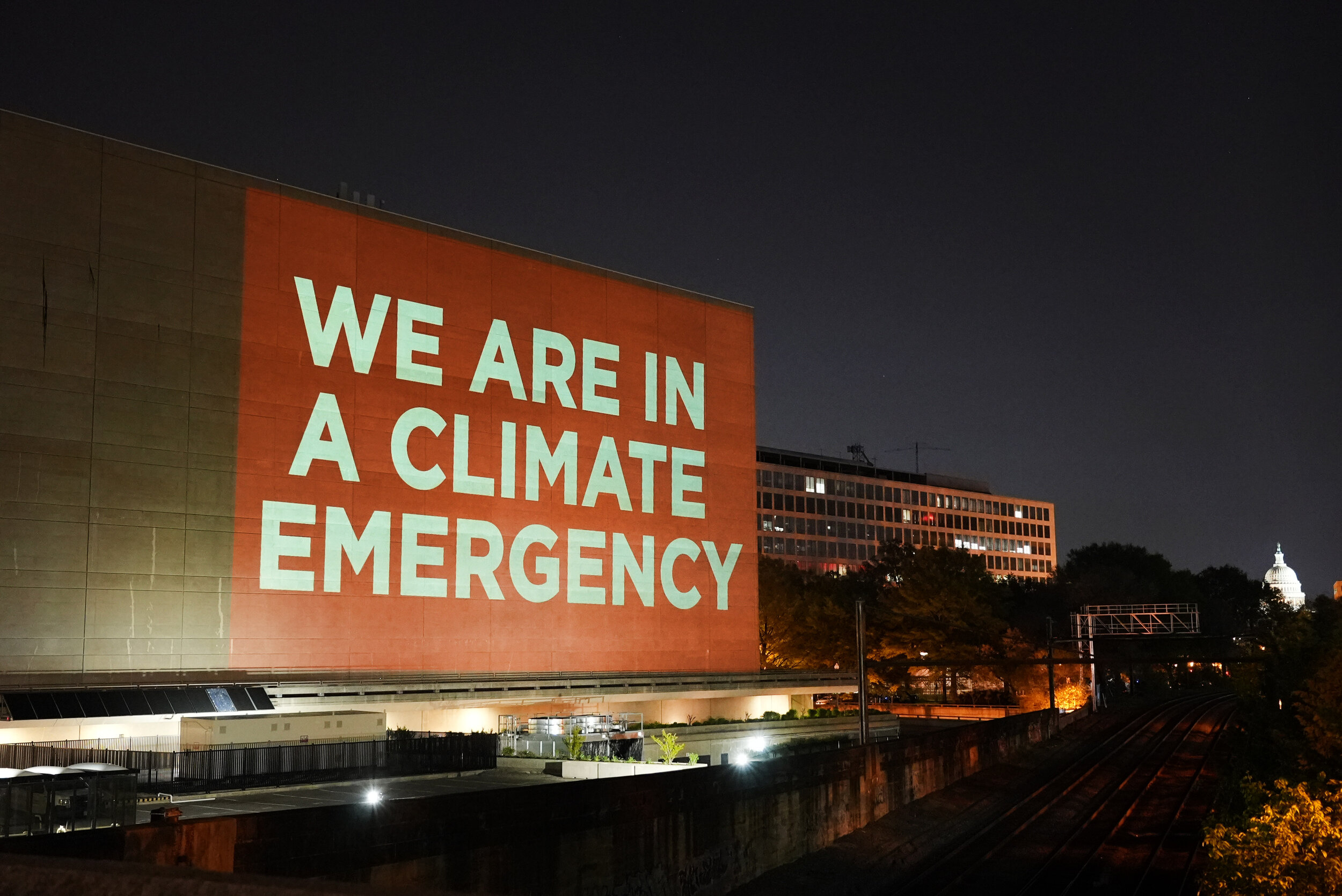
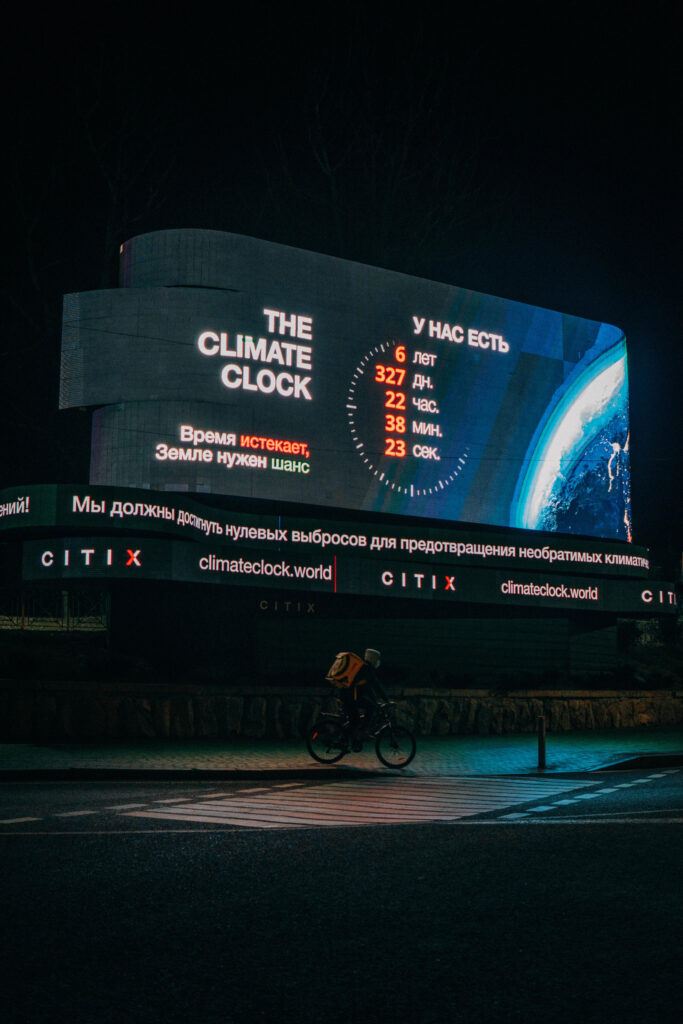
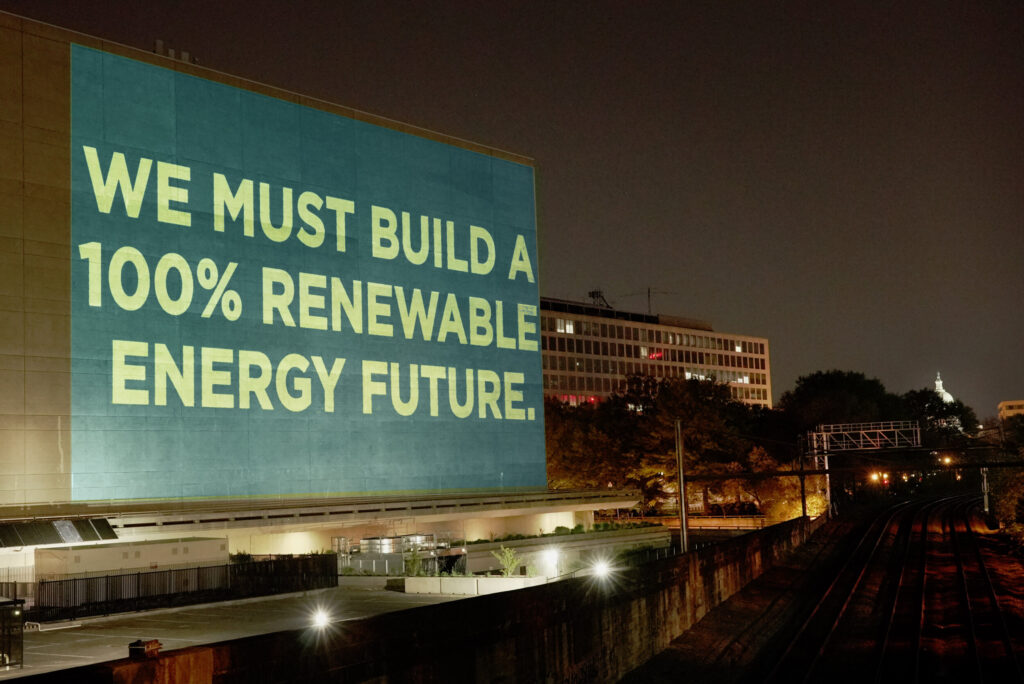
At the time of writing, there is six years, 267 days, 16 hours, 25 minutes and 57 seconds to stop the clock, so to speak, before the environment faces catastrophic events. Of course, by the time this goes to print, that number will be less. And in September 2020, when two artists, Gan Golan and Andrew Boyd, unveiled their ‘Climate Clock’ in New York, there were seven years remaining. The clock, plastered on the side of a building in New York’s Union Square, shows two figures. The first, in red, shows the time remaining to reach the 1.5 degree target, set by the Mercator Research Institute on Global Commons and Climate Change, which would provoke devastating environmental disasters around the world. The second, in green, shows the percentage of energy produced using renewable energy; our lifeline, as it were. 

The clock replaces Metronome, an LED public art installation unveiled in 1999 by the artists, Kristin Jones and Andrew Ginzel, that shows the length of time to, and from, midnight in a 24 hour cycle. As it happened, the artists behind the original public artwork had been looking to address the climate crisis through this work. Utilising the existing technology, the display was temporarily reprogrammed for the duration of Climate Week, ending on 27th September. For now, the Climate Clock remains in situ – that is, of course, unless it reaches zero.

Following the birth of his daughter (igniting a sense of urgency around the climate crisis) Gan Golan approached Andrew Boyd, to collaborate on the project. They had previously made a Climate Clock before, but on a much smaller scale. Nine days before the activist, Greta Thunberg, appeared at the UN Climate Action Summit in 2019, the pair were approached by email. “Greta wants a clock,” it read. They were able to band together enough coders, designers, artists and the like to make the clock in time for the summit, which was ultimately barred from being brought into the event by UN security. As the affair is summarised on Climate Clock’s website: “Oh, come on! It’s just a block with LED digits furiously counting down. Does that really look so much like a bomb?! Oh. Right. Well, that’s probably because it is a bomb! Or at least the symbol of a bomb. A slow-motion carbon time-bomb we are dropping on ourselves and all of Nature.”

The launch of the Climate Clock in New York chimed with the world in a much bigger way than Gan and Andrew had perhaps anticipated. And in the six or so months since its unveiling, smaller Climate Clock initiatives have launched across the globe. The first clock in Kazakhstan was turned on in January, another is planned in Glasgow to coincide with the United Nations Climate Change Conference (COP26) in November, and there are plans for one in the Bay Area – to name just three. Climate activism is not a recent phenomenon, but the past few years have undoubtedly seen an acceleration in their coverage, influence and engagement. 

The first Earth Day was marked on 22nd April 1970, during which 20 million Americans mobilised to voice their concerns for the direction in which the climate was headed. Every year since, Earth Day has taken place on the same day. The origins of Earth Day date back further, however, arguably to the publication of Silent Spring in 1962. The books author, Rachel Carson, rang the alarm bells that the twentieth-century way of life was having a devastating impact on the environment. Petrol guzzling engines; the acceleration of mass-production; the use of pesticides. Up until that moment, the world was somewhat unaware of the consequences of their behaviour on the environment, the eco system and on their own health.

Ahead of Earth Day 2021, NR Magazine partnered with Gan, Andrew and the Climate Clock team to highlight the urgency of addressing the climate crisis. We spoke with representatives from three of the satellite projects, in Kazakhstan, Glasgow and the Bay Area, to learn more about what drew them to the Climate Clock, and how their involvement is creating change within their local environments. The full video discussion, which took place over Zoom, will be unveiled on 22nd April, but below is a condensed and edited summary of the issues covered.

The three representatives, Meruyert from Almaty, Kazakhstan, James from Guildford, UK, and Kim from San Francisco, US, are all at different stages of their Climate Clock journey. ‘I saw the clock that they’d set up in New York over social media […] and it caught my attention,’ James explains. He recognised its huge potential to raise awareness about the upcoming COP26 summit throughout the country ‘because,

«not many people in the UK actually know it’s happening or what it is, which is not a good sign because that means that people around the world probably don’t know it’s happening either.»

For Meruyert and Kim, seeing the New York clock on social media helped sow the seed amongst their teams, too.

‘One of the team members, Galiya, found out that we could also put a Climate Clock in our city – in our country,’ Meruyert says. They began as a team of four, working to put up the ‘third biggest Climate Clock’ and the first in Asia. ‘It was crazy, it was huge […] And now, we’re doing new movements [and] projects in our community and getting into the eco activist life.’ Not long before the Zoom call, the Kazakhstan team welcomed their sixth team member. For Kim in the Bay Area, though, it’s currently just her and her friend, Hannah, involved. They’re still early on in the process, but are committed to doing something about the Bay Area’s lack of any ‘[real] substantial symbol of action towards the climate crisis’. 

Though the ultimate goal of Climate Clock is to “flatten the climate curve” it’s interesting to hear the immediate concerns of the respective teams. The shadow cast by Silicon Valley over the Bay Area is one that needs to be addressed, quickly, for the local environment, as well as the world. ‘[These areas] have a such a large sphere of influence. There’s so many corporations and companies that can work towards a more sustainable future.’ Kim hopes a ‘butterfly effect’ will occur, and so her goal is to put pressure on those companies. 

For both Meruyert and James, their action is aimed more at politicians. As James explains, the hopes for the Glasgow Climate Clock around the time of COP26 is that it will address the ‘huge disparity between current levels of political ambition and what needs to happen.’ The idea being that the clock will help mobilise the public, and put pressure on politicians to draft up seriously-considered strategies and policies; words that have actions behind them.

«We have a big problem, in the UK at least, with politicians talking the talk and saying things at these international summits, but then actually, domestically, not really living up to that.»

That’s a sentiment Meruyert shares, and it was the empty words of political leaders in Kazakhstan that energised the team to get to work. ‘The interesting thing is the people in political power say that they need to take action, but they want us – the younger generation – to save the world, to save the country. But they’re the decision-makers.’ This disconnect spurred Meruyert and team on; ‘that was the urgency. And after researching all the information we were like, “We must get it. We need to do it.” So, we did it.’  

Another issue that all three teams have had to address is criticism that, if real change depends on political power, the Climate Clock only scares and intimates the public. ‘We’ve definitely had some tough questions and concerns raised,’ Kim recalls, adding that a community college she contacted about adding the Climate Clock’s widget to their website were worried it was ‘too similar to a Doomsday Clock and would actually push people away.’

After the installation of the clock in Almaty, Meruyert’s team approached officials in Nur-Sultan, the capital of Kazakhstan, about installing a clock there. The response was that they didn’t want ‘negative energy in big public places.’ But as all three point out, what’s more terrifying is the fact that the 1.5 degrees threshold could be crossed due to global inaction. ‘I feel that the climate issue [is at] a point where such an urgent symbol is needed,’ notes Kim. ‘We don’t have forever to fix the issue, and I think that the Climate Clock is meant to be intimidating because it’s supposed to pressure people to take action.’ 

Collaboration comes before fear-mongering, within the Climate Clock community and beyond. The teams meet virtually every Wednesday with Gan and Andrew and have access to training and mentoring to help them get their local campaigns off the ground. Kim mentions that herself and Hannah, for example, received advice from the Kazakhstan team on how to reach out to local partners. Unlike Kim and Meruyert, James has been a climate campaigner since the age of 13, and the team in Glasgow have also had discussions with other climate activist groups in the city and beyond, including Fridays For Future and YOUNGO, the UN’s youth climate constituency.

Acknowledging his relative experience as a climate campaigner, James asks Kim and Meruyert whether they’ll continue to be involved in similar work after Climate Clock. Both agree that, in one way or another they will – because the issue isn’t just going to disappear. But as we approach Earth Day 2021, what do the three team members hope to have achieved by Earth Day 2022? 

‘I hope we’ll have managed to successfully use [the Climate Clock] to mobilise young people in the UK ahead of COP26, and managed to push for ambitious enough action – and start to have that filter through into policy around the world. But hopefully, we can still use it to continue to generate momentum around the country and the world to hold politicians accountable to the decisions they’ve made at that summit, and make sure that actually translates into physical action rather than just words that were spoken that once, in November in Glasgow.’ – James

‘To change people’s minds at the local level. All around the world, people want to change the climate crisis. But a year from now, I guess, first of all, on a local level, we want as many people as we can to join our movement; to know and to educate themselves and to realise that it’s real. And second, is to get our team bigger and bigger. One year from now, I hope our movement will grow to a bigger movement, to bigger projects and to stop climate change.’ – Meruyert 

‘I really hope to grow the Bay Area team too. Right now, it’s just a team of two people, so having that help would be great. But, on a local level I think there needs to be more education, especially for the younger generation. Our goal with the Climate Clock on a local level is to educate those people and bring awareness to these issues. In a larger sense, the corporations and companies that I talked about earlier, just helping them, pushing them, towards a more sustainable future is […] one of our main priorities.’ – Kim 

Credits

Images · THE CLIMATE CLOCK
https://climateclock.world/

David Caon

«equally useful, simple and beautiful»

CAON is a multi-disciplinary design studio based in Sydney, Australia and founded in 2009 by David Caon, a graduate of Industrial Design at the University of South Australia. Specialised in industrial, transportation, aviation, product, graphic and interior design, CAON provides innovative solutions. From aircraft interiors, tableware to furnishings for the workplace and home, Creative Director David Caon has mastered the art of applying design thinking to industrial design across different disciplines. The CAON philosophy is simple: precision analysis and bespoke response lead to unique outcomes appropriate to each individual case. Collectively, they believe that in the right hands design has the power to heighten human experience and enhance quality of life.

NR delves into the studio’s projects and partnerships with the likes of Qantas airlines on multiple occasions (whether it has been or the airline’s tableware or its fleet’s interiors), the studio’s take on sustainability as well as their plans for the future.

CAON is a multi-disciplinary design studio specialising in industrial, transportation, aviation, product, graphic and interior design. Did you study anything related to any of these fields? Did you study product design, architecture or interior design?

I studied Industrial Design (product design) and commenced a masters of transport design which I left after about 3 weeks in.

Caon studio seems to be very focused on industrial design. What led you to create your own practice? What is it that you are exploring or tackling with your work?

My ambition in the early days of my career working for designers was always to one day have my own studio. I spent my initial years working in Europe. Once I returned to Australia, I decided to realise my goal after working for a large multinational architectural practice. I realised that I liked being part of a smaller, more familiar unit. My focus is to create designs that are equally useful, simple and beautiful. I’m trying to create things that avoid trend and thereby stand a chance of being timeless. You can’t create something that’s timeless, you stumble upon it by chance, which I kind of like. But you can try for it.

This is not the first time that CAON is doing projects for Qantas Airlines (for instance the Qantas Airlines Economy Seatings and the interior of Qantas A380). How did the collaboration come about? As a designer, do you enjoy doing collaborative works?

I’ve worked with the airline in some form since about 2003. My first introduction was whilst working in the studio of Marc Newson. Once I started my own studio, they were almost my first client. So there has been a wonderful consistency and evolution in the relationship. As a designer, having a long term collaboration with a client is a wonderful thing, and in some ways a bit old school. When it comes to new projects, it means that we are already on the same page, speaking the same language. The brand also means a lot to me, it’s been such a big part of my career for so long. I want them to do well out of every collaboration. 

The colour palette and material palette both feel very relaxing and wellness focused. Was this something you wanted to make a point of? Travelling does take a toll on the body but well- designed spaces can heighten human experience and enhance quality of daily life and it feels that the Qantas First Class Lounge Interior in Singapore has achieved that. How did the collaboration with Akin Atelier unfold?

I try to limit the interior design projects I take on because I’m very detail-focused which isn’t necessarily efficient when designing spaces. My general design approach is guided by industrial design practice, so I’m quite aware that I’m biased towards smaller scales. I know its best if I collaborate with designers that are able to take a broader view. The collaboration with Akin was born out of my friendship with Kelvin Ho, who is the director of Akin Atelier. These projects are important to Qantas and I want to make sure they are as good as possible and as enjoyable as possible, so bringing Akin into the project ensured that and also meant that I had a sounding board. The feeling we have tried to create was a conscious decision to make the space feel more like a sophisticated lounge room, part Sydney, part Singapore. Functionally, space is very food oriented as well because lay over times tend to be short and we wanted to give the passengers as much opportunity to refresh and reinvigorate before the next leg.

What have been some of the responses to your projects? Is there a particular project you have worked on that was particularly well received and did this inform your future projects? As your method of design seems to rely or be influenced by the relationship between people and their surroundings, how does the way people react to work affect the way you create? You have also designed tableware products such as bottle openers and furnishings for the workplace and the home, which is a nice way to connect people to the things they use in their daily lives.

The Premium Economy seat for Qantas was really well received but it didn’t mean that we didn’t think it could be evolved when we came to update it for the A380. It’s funny, as a designer, people are a bit reticent to tell you anything that might be wrong with your design, but I’m keenly focused on progressing our process and honestly evaluating our work. I’m wary of praise and I try not to rely on it as a measure of whether a design has been successful. So I guess I’m saying that no, reaction to one project hasn’t driven the direction of another project. I try to involve my colleagues, from across a range of disciplines, in my design process, as a way of stress-testing ideas. And when I’m designing I tend to think of my friends and family, people that I know well, and imagine how they might use the objects or what they might think.

Do you have a particular effective method to approach projects as they seem to be quite bespoke and tailored projects?

The basic structure of our methodology is quite a traditional one. Research, ideation, prototyping and development. Given that we are often heading into unknown territory, we try to learn as much as possible about the type of product or object or space that we’re working on. With a lot of our projects, especially the more specialised transportation projects, design is a cog within a system, so we are working within a framework. Critically, I think our role is push beyond that framework somewhat so that we can introduce new ideas and find space for innovation. Depending on the structure of the project and our role, we will adopt our process.

How has been in Australia influenced your design method?

It doesn’t so much influence our method as it does the reality of our business. Design studios in Australia do not necessarily have the immediate connection to the broader world of clients, whether they be furniture houses, big iconic brands like Nike or the tech giants like Apple. We’re in a funny time zone and quite remote. And its a shame really because due to those limitations, studios here tend to be quite inventive. We have to manufacture a lot of our own work in order to have an output. I think this approach could bring a lot to the bigger clients out there.

Sustainability has been very much on a lot of companies’ radars in various fields whether it be fashion or design and architecture. As you are dealing in a few of your projects with an airplane company and air transport, which is one of the most polluting means of transport and thus has a consequential environmental impact, what are your thoughts on incorporating a more sustainable approach?

I’m 100% for it. Air transport is a challenging arena for innovation because of how careful manufacturers and suppliers need to be around safety. So innovation happens slowly within the bounds of certification and the like. Introducing new materials is a complex process, something I have tried on a number of occasions with limited success. That said, there is a desire to be more sustainable across the board which is palpable. We are making things as light as we can in order to be more and more efficient, burning less and less fossil fuels. I think the industry really does need a couple of technological step changes to really begin to contribute to reducing pollution.

What are some of the projects that you are working on for 2021?

There are a few things. CAON operates two brands in-house at the moment and we’re busy developing new products for those. Additionally we’ve established a brand in partnership with my friend Henry Wilson called Laker. Laker has been in the works for a number of years but we officially launched at the end of 2020. We’re also doing a new restaurant for Neil Perry in a beautiful part of Sydney called Double Bay. We’re doing that in collaboration with our friends ACME. Finally we’re continuing our explorations into the future of transport with a couple of research projects. 

Credits

Images · CAON STUDIO
https://www.caonstudio.com/

Subscribe to our
Newsletter