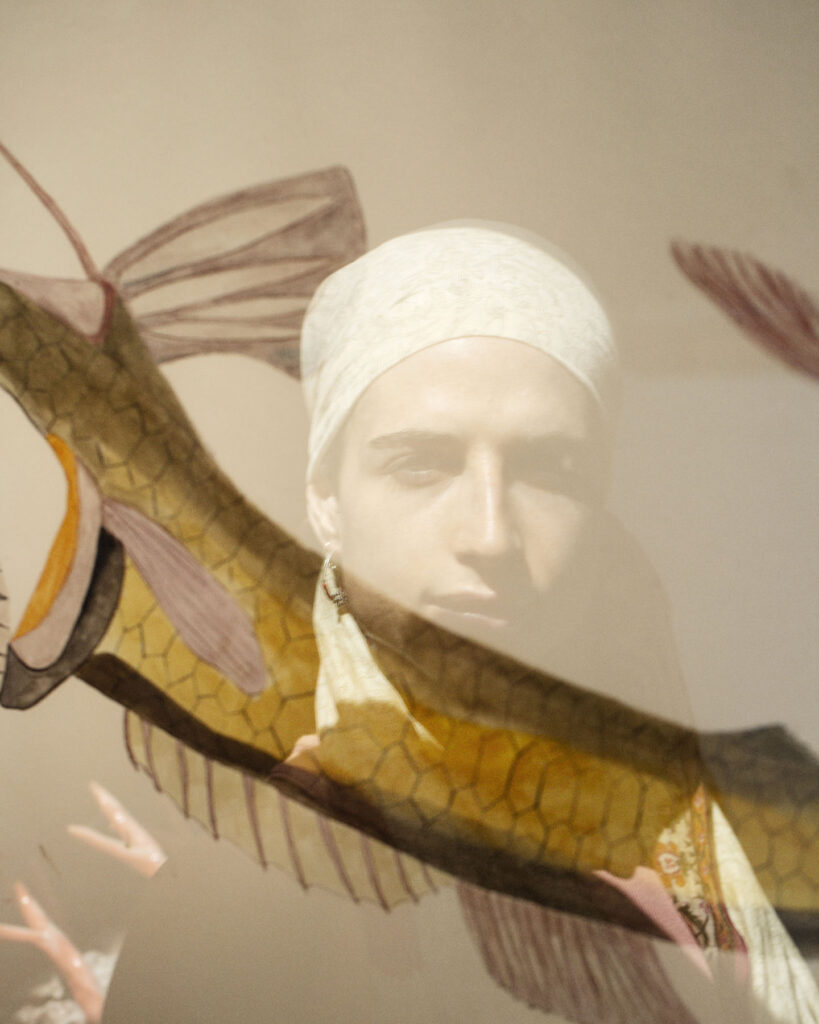
Archive page:


Kate Ahn

It’s Shock Therapy, Baby

Jasper Johns once said, ‘Hollywood is forever young, forever sexy and forever swollen with abundance.’ This makes sense when looking at the figures in Kate Ahn’s paintings. 

However, abundance in these works is qualified by searing faces and billowing forms stretching across the image and twisting in the frame. They are abundant in mixed yet meaningful messages, pained and charmed. Painting in series, Ahn depicts herself in varying stages of movement. Nearly always nude. The relevance of this nudity is open to interpretation. Still, Ahn’s subjects bring to life the late critic John Berger’s words, ‘Nakedness reveals itself. Nudity is placed on display. The nude is condemned to never being naked. Nudity is a form of dress.’

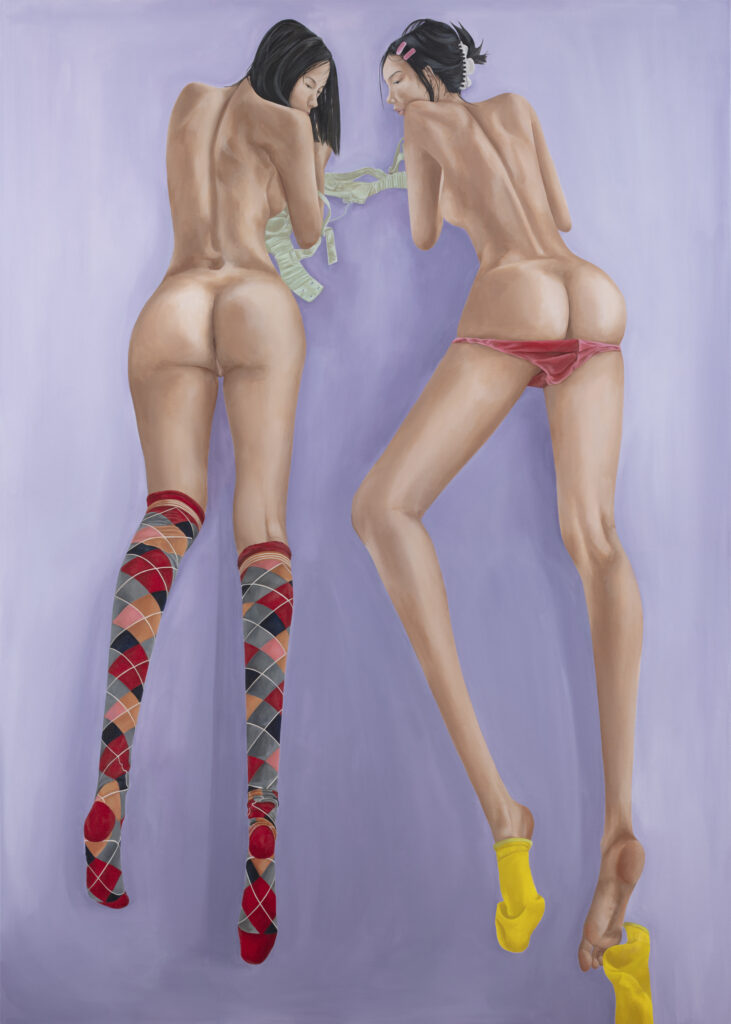
These figures are not just nude but clothed in meaning. They are overcorrections, pronounced perfectionism with an outcome of exaggerated beauty. A swagger of confidence sways on a bed, bounding between big buttcheeks and long legs, wavering between buoyant breasts and the torrential currents of bedsheet and brick wall. These forms are idealisations, idylls of what could be. They are powerful, exposed, fearless, and nuanced in nakedness, fiercely facing everything with glowing skin and stripy socks.  

Ahn is in Los Angeles. She grew up on the United States West Coast and has lived there for most of her life. In recent times, Ahn’s paintings have developed an ethereal strength. She discusses her work and artistic intentions are spread across the social and physical dermis of expressive geography. Ahn’s world is mapped around acrylic paint and produces figures that produce shock therapy that will force any white wall into submission. And they are also nude, but that’s only half the story. 

Billy De Luca: You are in LA right now. Did you just have a show there?

Kate Ahn: I had a show downtown at Gallerie Murphy — it’s an extension gallery of Terminal 27 on Beverly Blvd — and they just opened. I was there for one month, which was a great experience. It was very emotional for me because I sacrificed a lot for this show. It was almost 2 years of work, it was everything I had in me.

Billy De Luca: The commercial gallery scene can be terrifying. But having that proximity in LA must have been great. Did it get overwhelming having such access to your exhibited works?

Kate Ahn: Oh, no, I was even there after the opening a few times. I was so much a part of everything. From the paintings to the merchandise with Terminal27 and just the gallery preparation itself, I was there at every step.

Sometimes it is hard to collaborate and find people to take up your vision, but when there is synergy and trust, things always turn out beautifully. I also enjoyed being in the gallery to say hi to whoever came by.  

Billy De Luca: That can be a very personal experience. It changes the context when you see the person who painted the image before you. And how come you liked the collaborative aspect?

Kate Ahn: I like it, but I also think it can be challenging and sometimes divisive. I feel like I am also thinking about the audience and what the general public can digest each time I collaborate. As an artist, when you create your work, you can really just go all in. I don’t think about whether everyone will love it, but you have to consider that in collaborations. 

Having that restriction is also nice because It makes you think outside the box. You have to please other people and yourself; it allows me to have my art in many mediums. It isn’t just up on a wall: It can travel and transform into many different objects and forms, which is super exciting too. I try to do as much as possible within my freedom, but sometimes you can’t go completely explicit – for example, on a pair of shoes.

Billy De Luca: Finding that balance must have taken time. When did you start painting and getting into the fashion side of the arts? Did the transition help with selling your ‘ideas’ to the world?

Kate Ahn: I’ve been painting since I was  6, but I’ve also been into fashion since I was in my mother’s womb. A lot of it came from her. She’s always loved fashion and the arts and was the first person to introduce me to these worlds. From the outside, we are like complete opposites. But actually, I’d say there are more similarities than differences. I have this feeling that my mother sees me as a reflection of herself. Deep down, she’s secretly cheering me on and healing her inner child through me – even though she’ll NEVER admit to that haha. It’s like she’s looking at a mirror to see what she could’ve been (if all the rules and societal pressures didn’t alter or make her afraid of what she really wanted to do). I think I am my mother, and she is me.

But back to fashion haha. She definitely appreciates the design and artistic aspects of fashion, but I think she, just like many other people, is also attracted to the idea of class status that is prevalent in that world. This is where I’d like to think we differ: I love the art of fashion, but sometimes it can feel a little like high school. Personally, I don’t care about what’s most popular this season, who’s seated where, and what somebody is wearing at a show. Although I understand the allure, I just enjoy what makes me feel good based on my own narrative and understanding of each piece. 

Fashion has done a lot for me. It has helped me deal with the insecurities I’ve had my whole life, but it also gave me the freedom that I felt like I didn’t have. Clothing and accessories were my costumes and a mask. I wore it like armour.

Billy De Luca: That’s the beauty of being an artist, don’t you think? Fashion is in that same weird middle ground. It’s like hair. It will grow out of you and can get long enough to be another limb and part of who you are. But sometimes, it can get knotty and be a pain.

Kate Ahn: For sure. I definitely turned to painting to create these fantasies since I had such poor self-esteem (and still struggle with it). It’s how I cope to get through all of life’s bullshit. I think that’s how it is for a lot of artists. We are all struggling and trying to figure it all out. 

Billy De Luca: Do you always paint yourself? 

Kate Ahn: I have since I was 6. I remember one of my first paintings of a beach filled with all these girls, and all those girls were me. I’m not kidding. There were like 20 versions of me on that beach. But even since then, I’ve always encountered these “teachers” that did not seem to fuck with my vision! When I went to a bunch of art classes (a lot of them were Korean art classes), I had a couple of teachers who were very chill and open-minded, but I also had many teachers who were very conservative. One didn’t even offer figure drawing classes because it was ‘inappropriate’. I thought that was so crazy.

Billy De Luca: Where was this?

Kate Ahn: I grew up in Irvine — It’s a really nice area. You know, the suburbs. It’s deemed the safest city in America, with a huge Korean community. But I always hated it. I can’t think of a time when I didn’t want to leave. I feel privileged to be brought up in such a safe environment, but the environment felt so stale and mundane. One of the art classes I attended was 20 minutes away from my hometown, but the guy who ran the place was horrible. I eventually found another class that meshed better, but as much as I wanted to paint what I paint now, due to my age and environment, it really wasn’t an option. So I focused more on objects and foods that represented the female body and sexuality at the time.  It wasn’t until after college that I got to my self-portraits. 

Billy De Luca: Why was that?  Where was college?

Kate Ahn: I didn’t attempt to do my self-portraits until after college. The love that I got from my parents (after getting accepted into USC) felt too good to stray away from, especially after so many years of rebelling during my tween and teen years. So, naturally, during that time, I gave into their ways — which meant giving up art as a career. I went to school and went from art to Communication (with a minor in Finance). I told my parents — and convinced myself — that I would go into banking and make a lot of money. I thought that after that, someday I’d get back to my art…But that didn’t happen. I never did any of that besides graduating, but that’s something, right? 

I tried my best to conform, but it was just not in me. After my second year, I realised I was never going to be the person they wanted me to be, and I didn’t want it either. After graduating in 2020, I painted my first self-portrait. After my various jobs, I saved a bunch of money and said, OK, let me do what I want … I bought my first HUGE canvas. It had been my dream since I was 14 to paint on a canvas like that and to have enough time to work on such a scale. I was still shy and didn’t show my face. I marked it off. But the bodies remained. They were all me, variations of me or dreams of what it could look like. It became a fantasy.

So yeah, that was my first self-portrait, and it sold, so I thought, ‘I must be doing something right!

Billy De Luca: And how did your parents feel about that? 

Kate Ahn: They are still upset. I can sympathise with how they feel. As conservative parents, I think the subject matter alone would be difficult for them to digest. But on top of that, there is also a very real fear of their only child not having the stability that a more traditional career choice can provide. It’s not easy selling pieces, for sure. But that first piece was definitely something I took as a sign to just go for it. 

Billy De Luca: Do you think that painting is easier than the administrative and sales aspect?

Kate Ahn: Painting is way easier. It would be a dream to just paint and not worry about the selling side of the job haha. It makes me depressed sometimes, and it can feel like things are predestined in this industry. It’s so much about who you know. I ask myself a lot: Are these the things that make or break me as an artist? Do I need to be a person that can talk up my work or have someone willing to do that for me? Yes, it’s discouraging. But in the end, I can’t see myself doing anything else. I can’t stop what I’m doing, and I believe that if you really love it, you’ll find a way.  

Billy De Luca: Beforehand it was very much about the quality of the work and the consistency it bore in improving over time and being relevant in such times. Now, it is about self-marketing. You can have an agent and a Gallery, but if you don’t have a personality, then you can sell paintings all you want — but you may not be memorable. With your work, the images strike and transfer energy. Audiences have received that energy and are buying in. You can sell a painting, but you have to sell a self-portrait.

Kate Ahn: Yeah, I agree. Social media has definitely inflated and put this importance on not just your work but a person being an entire package. It’s like people themselves have become conglomerates: you’re the actor, the producer, the director, etc. Everyone has to become a multi-disciplined brand that must follow the fickle nature of social media. Like a walking billboard. It’s overwhelming, but it can be great because you can get your work out independently, cutting out the middleman like agents or galleries. But at the same time,  there’s a negative side that comes with oversaturating the avenues that lead people to not take you as seriously. I think of Andy Warhol, who essentially went for it and did it all. And unfortunately, having to deal with silly repercussions where some circles of the art world stopped taking him seriously for doing things unconventionally at the time. Fast forward to now, it’s kind of ironic how his way of doing things ended up becoming the standard today. Even now, it’s still hard to navigate what the perfect balance is between doing it all and still being taken seriously.   

And man,  there are so many days where I have wished I could paint anything else. Any object, like food or something. It’s easier to sell that as an idea. Instead, I paint really explicit self-portraits. And on that, there is a double standard. Women are in this really unjust and tough position where we are constantly objectified living in this patriarchal world, but the moment we start owning our own sexuality and our own bodies, we become lepers.  As much as my work receives a lot of love, it also receives so much hate. Even though we’ve been painting nude women for centuries, I think it is still very new for women themselves to be the ones painting our own bodies. I guess that’s too progressive even for this world haha.  

Billy De Luca: And what does that mean to you?

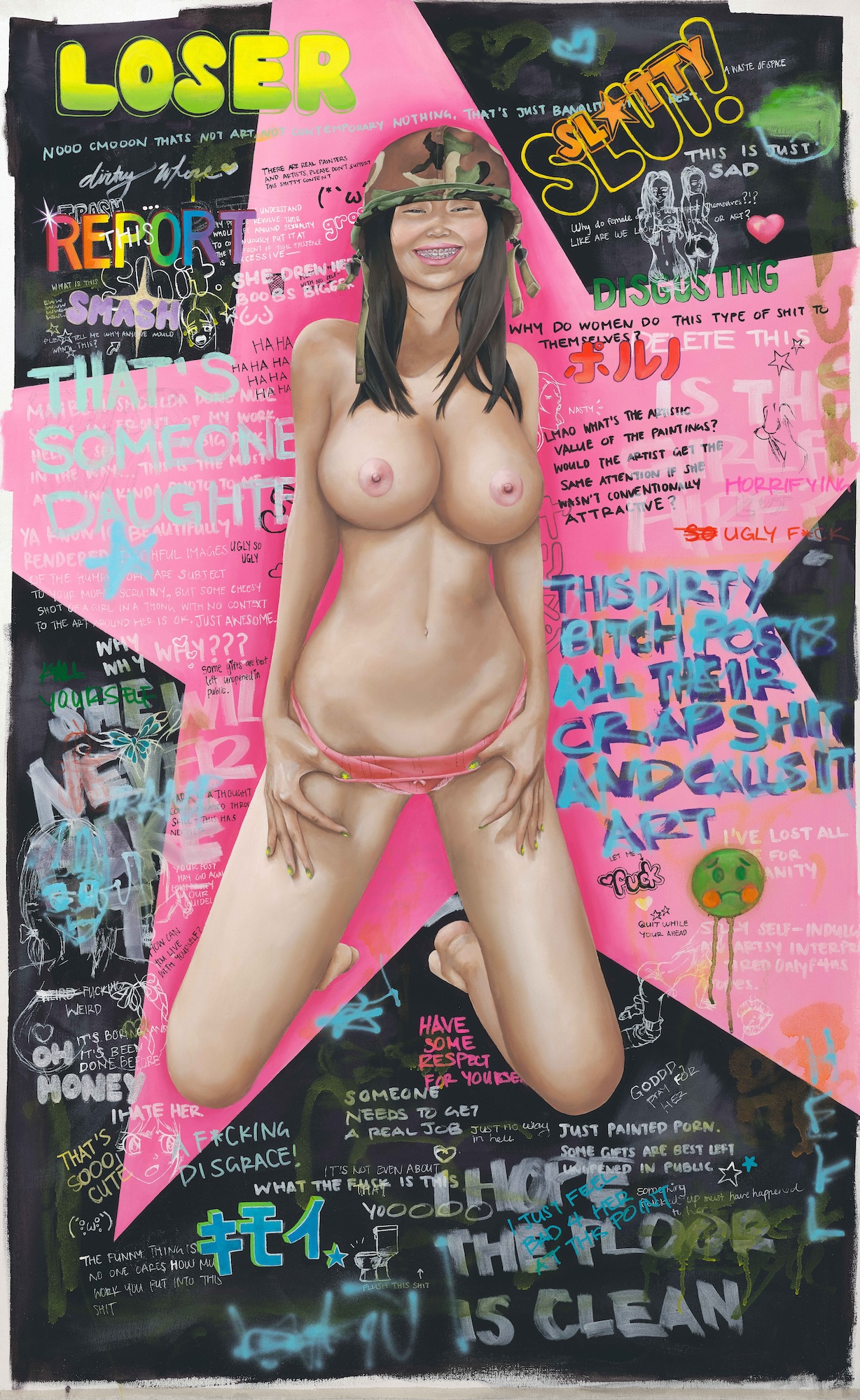
Kate Ahn: That’s one of the very reasons I continue to paint my self-portraits in the nude.I am fighting for my right and everyone’s right to own our sexuality and our body and control our own narrative because that’s a human fucking right. Sexuality isn’t everything, but to me, it is a representation of freedom because that was the first real restriction I faced in my life, and I think many others faced it too. I think women especially have to deal with the double standard of not being able to deal with the freedom of being a sexual being. In my work, I can own my sexuality. I can be who I want to be in my work. 
Billy De Luca: So it’s more than just you?

Kate Ahn: In a way, it is more than me. I think my work can become confusing as I am trying to fight the patriarchy, but at the same time, I am also trying to heal from my own self-esteem issues that may very well come from the male gaze. Critics could say I am just perpetuating the patriarch all over again, and I hate to say it, but maybe they would be somewhat true. But I can’t help the fact that being able to fantasise about myself in these various bodies and shapes helps me appreciate my actual body. It’s similar to how I play with clothing, I put it on like a mask and play this character enough to learn that my real self is actually not far away from my ideal self…it was just my anxiety and self-doubt clouding my brain. Maybe that’s unhealthy in some way, but I think a lot of people can relate to the journey of finding true love for yourself and that sometimes it takes unconventional ways to get there. And at the end of the day, I believe that by taking control of my own body and my own self-esteem issues, I still, in many ways, fight the patriarchy.  

Billy De Luca: Does the commentary influence you as much as it pushes you forward? 

Kate Ahn: With or without the commentary, the paintings would still be like this. But it does help my narrative. The more hate I get, the more my paintings will develop meaning. It just proves to me what I need to express in my work and why it’s important. Some people think I just paint porn…but for me, I feel like I sometimes do paint porn, and there shouldn’t be anything wrong with that. 

Billy De Luca: Is it hard to balance professional composure while being a human behind the work? 

Kate Ahn: Yah, it is difficult– at least for me, it is. I mean, being an artist to me means that you are choosing to be vulnerable. I know many artists that can keep the vulnerability strictly within their work but for me, I am, unfortunately, a person who tends to word-vomit everything I am going through within my work and outside of it too. I know it’s not the best habit. I know most people respect those who have that perfect ‘professional composure’ — characterised by a confident fearlessness, keeping their cool, even when shit is going sideways in their personal life. This might be completely delusional, but I’d still prefer to find a way to continue to be this open book and also be respected for it just because I feel like it’s so much a part of my character. 

Billy De Luca: However, having strong work which is the best thing that you put out at that time. That is what is going to be a huge driving factor. You might not sell. You might go from being very financially comfortable to financially uncomfortable. But through that ringer, one thing is still chugging along, still developing.  And that’s your painting. 

Kate Ahn: That’s right. And that’s why I’ll never stop either. The paintings are me. There’s no costume or façade or anything. It’s my soul. If I think back to where I was two years ago with my painting, it’s like…incomparable to my skill now.  So yeah, that helps me feel better. These feelings of insecurity have inspired me so far, and although I’m working on that, it does still help me produce. The emotions come out, and it makes the art worthwhile. You don’t have to be ‘healed’ to make people feel something — I think I’m just too hard on myself since the years are never easy, and there are so many constant changes. Even if it’s bad feelings, it’s feeling. If you’re feeling something, it’s art.
Billy De Luca: And what else do you see is changing?

Kate Ahn: For my new collection, I want to do more facial expressions similar to the whole 1970s erotica time period, where everyone looked so happy, vibrant, and alive. I feel like that is true for me since I’m a very smiley and happy person. I also want to continue to include more pieces of clothing and lots more socks, as that still is so much a part of me. I did do that a lot this year as I did, like… a lot of stocks.

Billy De Luca: I was going to ask about those…It reminds me of how men in the business sector ‘jazz up’ a suit with a sock. You end up being naked, showing the socks you wear, and they can be colourful and different, but they balance out the grey world of suits. It’s a stabiliser.

Kate Ahn: It’s an homage to my love of clothing…In a way that still allows me to be nude. Certain things go on when you conform to such a society. It’s so difficult to show your identity and be unique and yourself. So yeah, socks are awesome, and you can have so many cool socks. 

I’m obsessed with socks.

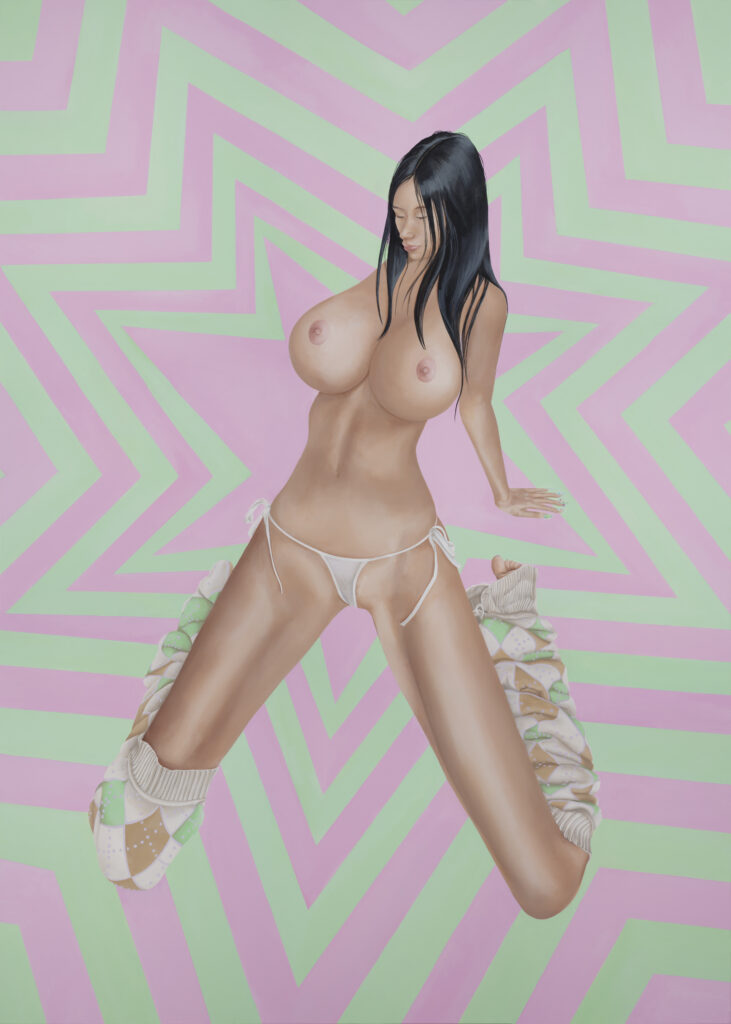
Billy De Luca: Besides the clothing, where do the colourful backgrounds come into it? Do the star-shaped pastels of pink and green come as afterthoughts?

Kate Ahn: The background comes later. I usually don’t know what to do for the background. That being said, I feel like it has to do with my inspiration from Japan, especially from love hotels.  Japan is just…different. I want the paintings to feel happy and alive. I learned a lot about love hotels recently. Back in the 70s, during the women’s liberation movement and just after they legalised abortion, all these love hotels popped up, and they embraced and nurtured the idea of sex and love. You can see it in the way they built these themed rooms and structures. It’s a fantasy that invites more fantasy. The beds are spinning, there’s colour everywhere, and the adult fantasy becomes a reality. And I love it. I love how it is accepting of the fact that humans are sexual beings. It’s happy and human. 

Billy De Luca: And does your subject matter and work rely on where you are geographically?  

Kate Ahn: Yah, I definitely think so. When I grew up in the suburbs, the constraints and staleness of the city definitely played a part in my work and also the person I became. That’s where you can see the rebellious nature of my work. And being that I was only an hour away from LA, it became a dream of mine from an early age to move here — which I finally did at 18. I think the environment here in LA is so nurturing to being different. It helped me gain confidence in my work. And the actual physical beauty of the city — the madness, the graffiti, I would say some of the strip clubs down here, too, have definitely inspired some of my works. 

Billy De Luca: Being in LA is historically seen as…intense. ‘Jasper Johns once said that Hollywood is forever young, forever sexy, and forever swollen with abundance.’ How do you feel about LA?

Kate Ahn: I think Jasper Johns is right. LA is forever young, sexy, and so swollen with abundance that I think it’s only natural to have this love-hate relationship with the city. You can’t be young forever. BUT maybe you can be sexy forever — depending on who’s looking — but living life in abundance will always catch up to you. That’s the thing with LA as much as it is a beautiful city, it’s also really superficial, but hey, I think you can find that just about anywhere in the world. I hate it here, but I also love it, and it will always be my home.

Billy De Luca: Last question… Does that solitude drive you to keep going? 

Kate Ahn: I don’t know if it really drives me. I think I am just so used to being alone. Being an only child basically prepared me to be an artist, you know? I think what drives me is that from a very young age, I had a dream of who I was going to be when I became a grown-up, and even though I still have ways to go, I am essentially living it. Even with all the people trying to bring me down and bet on my downfall, I will never let go of my dream. That’s what will always drive me to keep going.  

Credits

CRAP SHIT, 2023
TAKE ME THERE,2022
KATE #3, 2022
All Images courtesy of the artist.
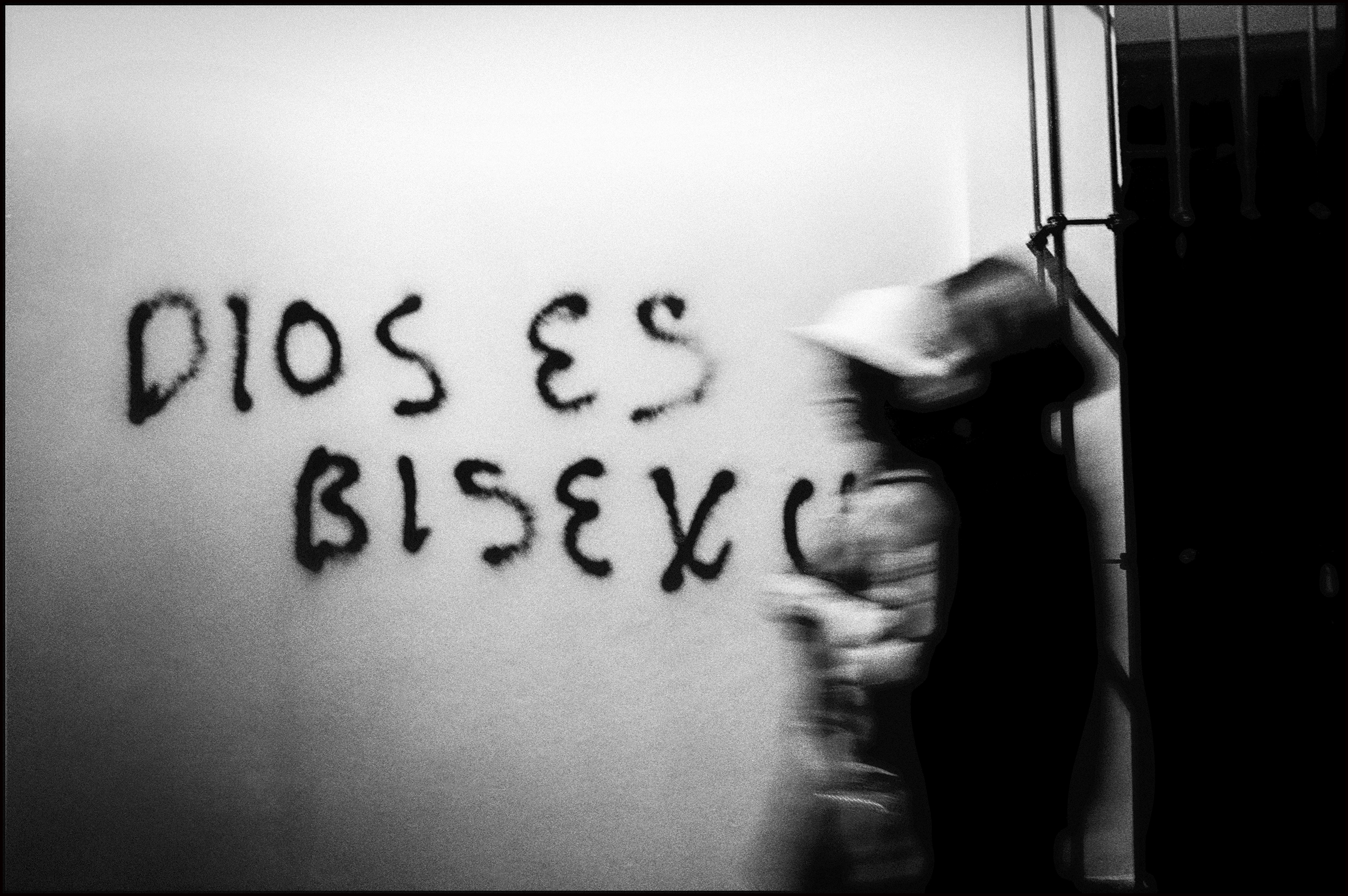

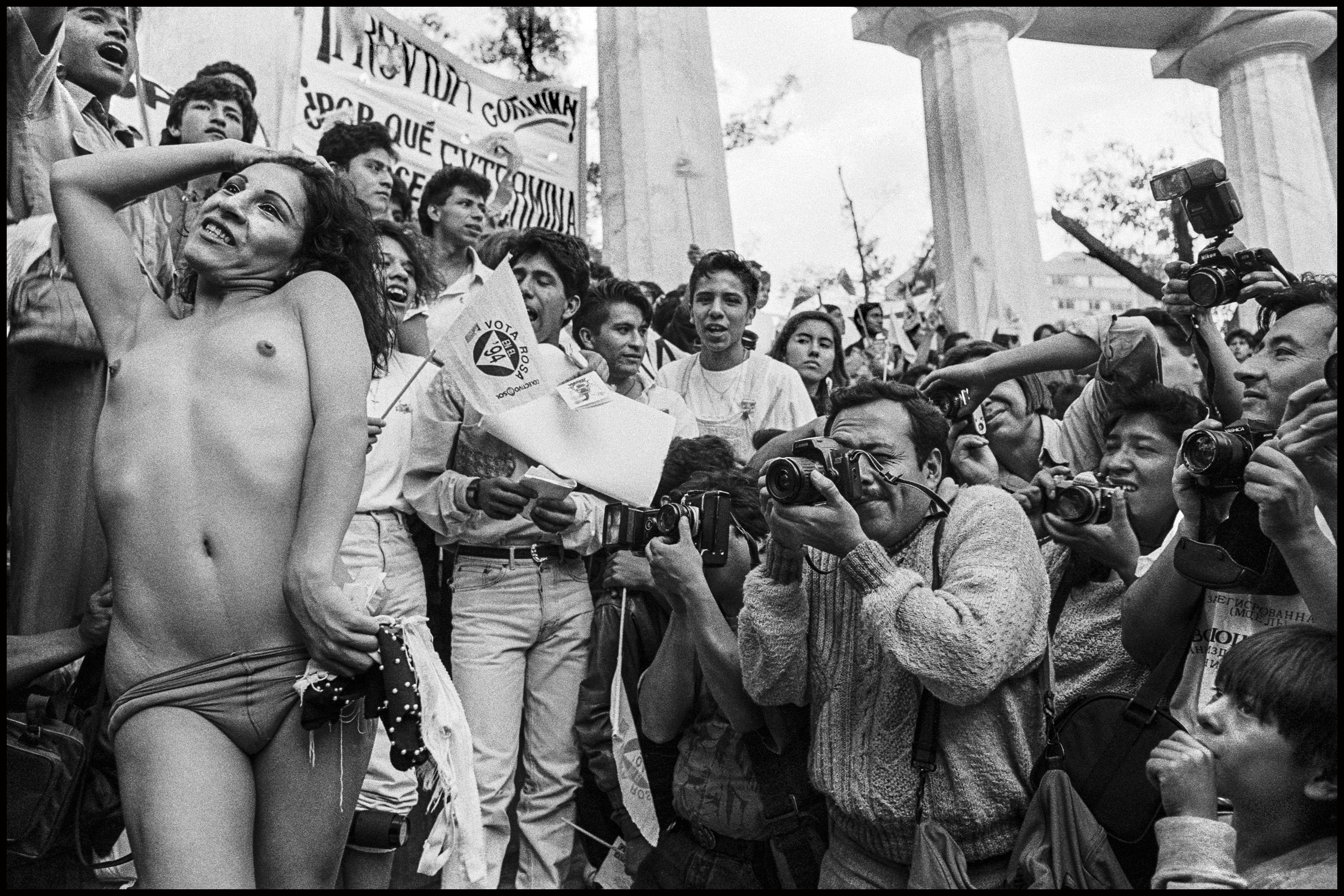
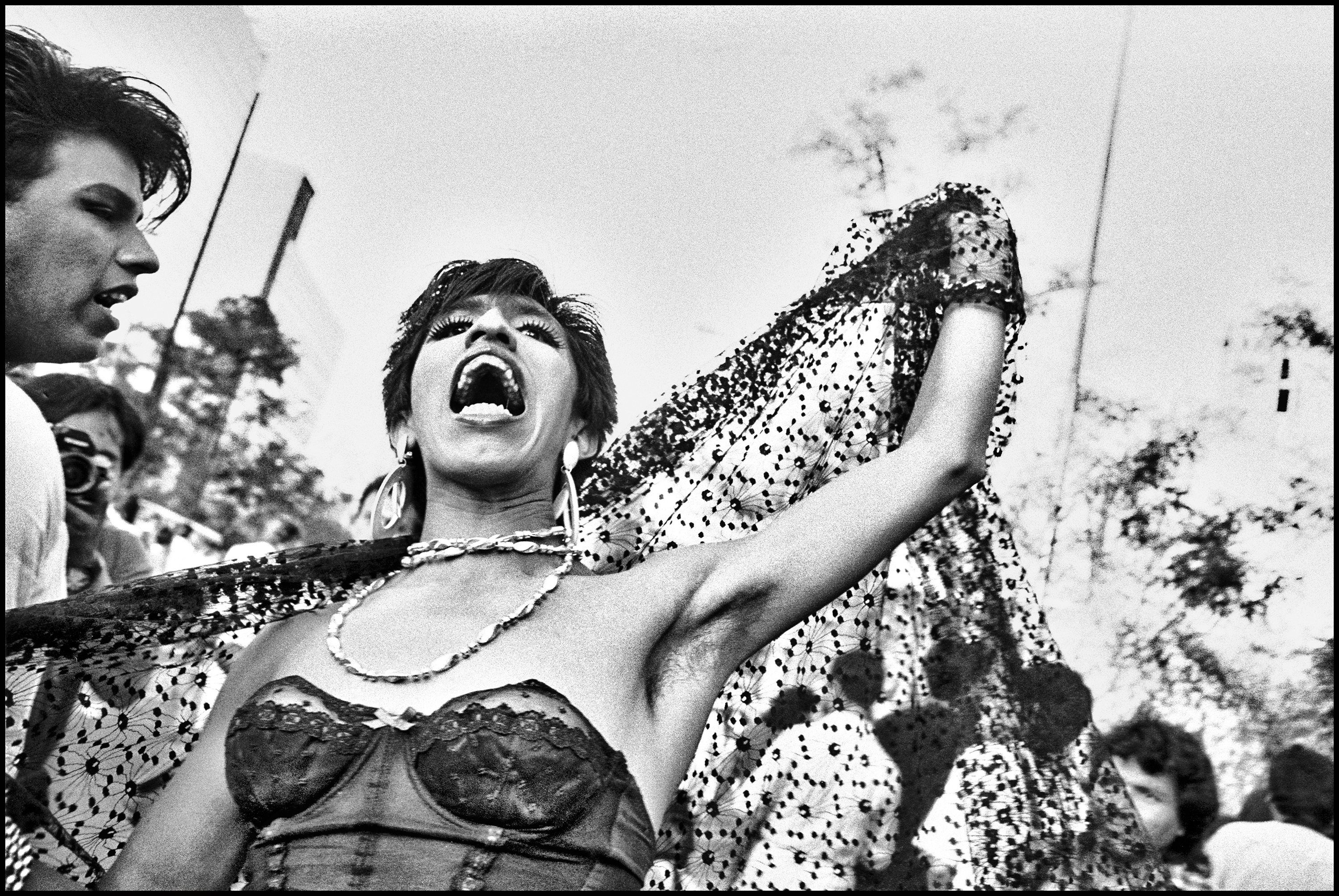
Yolanda Andrade

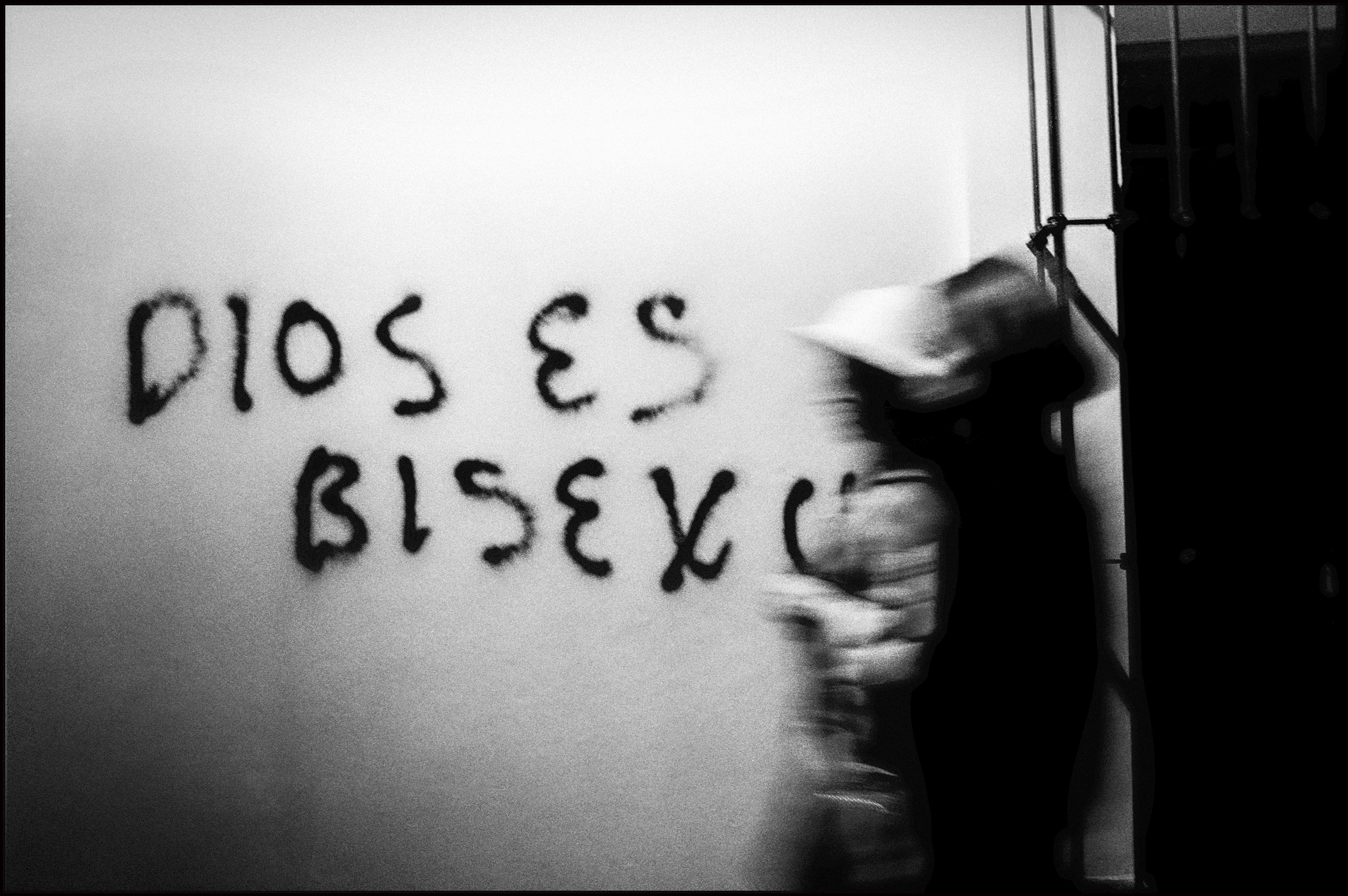
Dios es bisexual, Oaxaca, 1994

Street photography and cultural identity

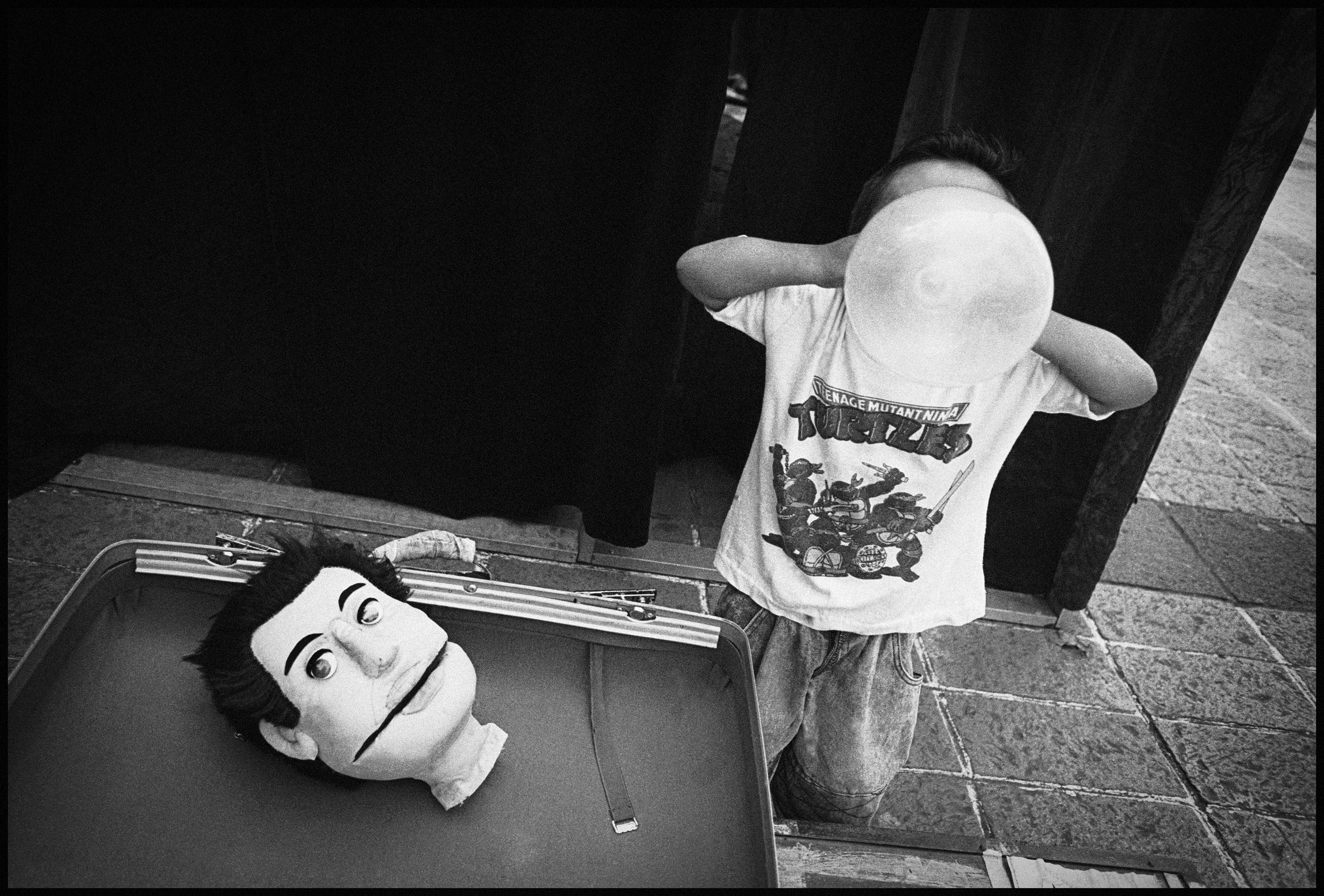
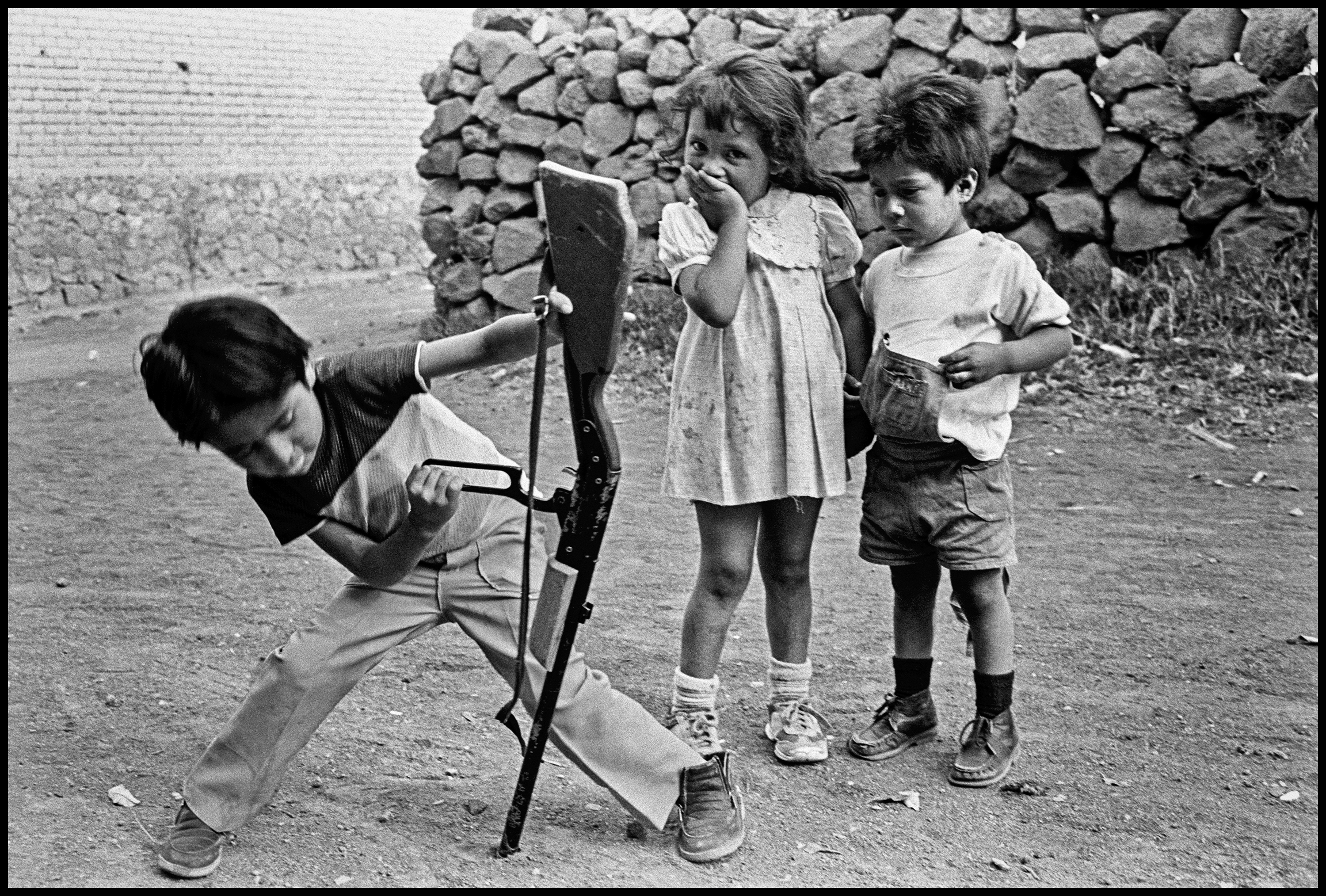
Yolanda Andrade (b.1950) is a Mexican photographer and one of the most prominent figures in the artistic landscape of Latin America. After graduating from the Visual Studies Workshop in Rochester, New York, in 1977, Andrade developed a career as a street photographer, experimenting with both analogue and digital photography, gaining international recognition as one of the few artists capable to capture the identity of a specific city and culture.

An accomplished teacher of photography, Andrade has taught since 1992 at the Escuela de Fotografia Nacho López and Centro de la Imagen in Mexico City, as well as the Instituto Tecnológico of Monterrey, Mexico. Among other accolades, she received a Guggenheim Fellowship for Creative Arts in 1994 as well as grants from the Mexican National Endowment for Culture and the Arts to fund her publications and projects in 1993, 1997, 2000 and 2003. Her work has appeared in more than ten photographic books, including Los velos transparenteslas transparencias veladas (1988) and Pasión mexicana / Mexican passion (2002).

Your work fits in the broad category of documentary photography, or as you prefer calling it, street photography. Can you tell me about how you started and what prompted you to photograph in the first place?

I started taking photographs at an early age. I enjoyed photographing my cousins with an old camera, which I was the only one to use. I remember that I went to the camera store to have the film developed and asked to have a new one installed. I started working when I was 15 years old, when as a gift to myself I bought a Kodak Retinette IA. It was a fine camera, manufactured in Germany, and you had to set the shutter speed, the lens opening and the distance. I learned the basics reading the instruction manual, and following what the film box said about the conditions of light: sunny, open shadow, shadow, etcetera. I started by capturing vacation shots and simple moments taken from my daily life. 

Afterwards, until 1973, my interest was to study theatre and movies. I attended an acting workshop for about three years. That was the year when my mother died and I had a series of changes in my life, which made me lose interest in what I thought was a vocation in theatre art. I needed to find a new interest related to the creative fields besides my daily job, so I turned my eyes again to photography. In the lab of a photo club in Mexico City I learned how to develop film and how to print in black and white, with the aid of photo magazines. In 1976 I decided that I wanted to make my passion a true profession, so I went to study photography at the Visual Studies Workshop in Rochester, NY. It was at this institution that I got to meet the most important street photographers of the time, like Robert Frank, Walker Evans and Lee Friedlander, among others, whose photo books made a great impact in my later work as a street photographer.

Looking at an overview of your pictures there is a clear switch around the year 2000, in which you suddenly leave black and white analogue photography for digital and colour. Could you tell me what prompted this change in your practice and in what way it affected your work?

Switching to digital cameras and colour was going to happen sooner or later. I think that for some time I was reluctant to make the change, but with an invitation that Mexican photographer Pedro Meyer made to a group of photographers to make a digital book in one day, which meant to shoot the images, design the book and upload it to internet the same night, prompted me to buy my first digital camera. At first, it was a slow process because I had to learn a new technique, but after a while I became fascinated by the colours in my pictures and finding a new way of seeing. This was the beginning of a new phase for me; traveling abroad became more frequent and photographing other places besides Mexico City was a refreshing new start as a photographer. Walking the streets of new cities, discovering new surroundings made me feel as excited as when I printed my first black and white photograph in the darkroom.

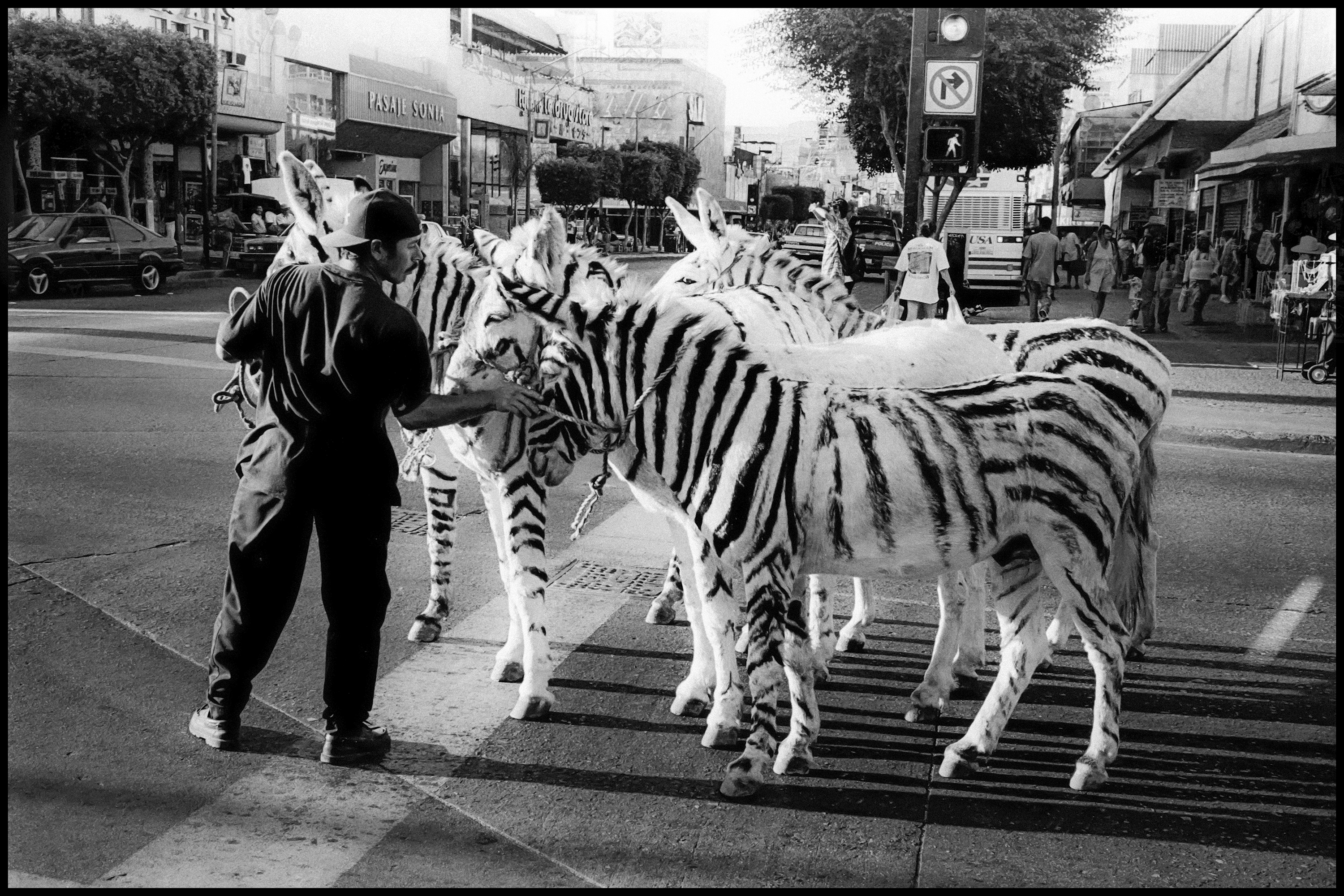
Cebras Tijuana, 1998

Talking about your working process, it’s clear that you think in terms of series, every single picture is part of a broader thematic umbrella, in the attempt to tell a story or simply to convey the impression of a specific cultural phenomenon. Your passion for photo books is therefore explained: they allow you to deliver your work to the fullest. Thinking in these terms, when do you know when a work is finished?

I would like to add something to your previous question. My interest in photo books started when I was studying at the Visual Studies Workshop, where there was a whole library and research centre that allowed us to explore the best photo books in the history of photography. But to have a book of my photographs published was a complex issue. The new digital technology opened to me the opportunity to play, explore, design and publish small, limited edition photo books on digital press. This way of editing my own books allowed me to publish a second edition, gave me the freedom to change the sequence or decide to let out some photographs or add new ones. To answer your question, I think it’s hard to know when a work is finished, as you keep producing images from recent shootings or you rediscover some pictures from reviewing old work. 

In general, the medium of photography is the attempt to freeze time: how does this practice relate to memory, and the time passing in an ever-frenetic world that constantly changes?

Every image, at least in my work, is a fragment of a memory of what I’ve seen and experienced in my life. One single photograph, even in the fast passing of time we are dealing with in our contemporary world, contains several layers of information about what we remember, what we observe in the actual taking of a photograph, and what we add when we edit and process the image. These actions are actually like a blending of the past, present and future.

Guerrillera gay, CDMX, 1994

“What intrigues me more about photography is to freeze an instant in the flow of time, and turn it into an ever-lasting image.”

Relating to this, we talked about social media and the way we perceive images nowadays, consuming enormous amounts of visual information at a high speed. I am curious to know, how do you think this new fruition method impacts social work?

Artefacts like cell phones, with high quality cameras to take photographs, are evolving at a fast pace every moment, offering automatic programs that produce perfect and beautiful images at the hands of millions of people around the world. They are the equivalent of the first Kodak cameras made for the amateurs. Perhaps, in this case, the themes are the same as in the past: family shots, vacation, social gatherings, sunsets and outstanding landscapes, but far away from the work of photographers, who are dedicated to build a body of work.

“In my opinion, the over production of ‘good’ or ‘beautiful’ images by amateurs complicates the comprehension of photography by the general public, especially when they are exhibited in galleries or museums.”

In a previous interview, while describing the first years of your work and the photographs you took in Mexico City, you stated that:

Life in the streets of Mexico City is the common denominator of my photographs. What I propose is the presentation, from a personal viewpoint, of different aspects of Mexican culture: images of death, religious processions, political events, social life, street theatre, popular culture, sexual identity and the combat against AIDS. The sum of all these themes also constitutes a visual autobiography.

In what ways does your work constitute an autobiographical reflection? How do you combine the individual with the collective?

All my photographs reflect my interests, my ideas, my way of thinking, as well as my experiences and my personal history. All together they are a sort of autobiography where the personal and the collective come together, creating one single story. 

Credits

Photographs · Courtesy of Yolanda Andrade

Ramla Ali

Ramla Ali’s enlightening fight in and outside the ring 

Professional boxer Ramla Ali (born in Mogadishu, Somalia) is definitely one of the forces of change of our generation. The featherweight boxer became a voice for refugees as she herself had to seek refuge with her family in the United Kingdom, from war-torn Mogadishu in Somalia in the late 1990s. Having earned a first-class law degree at the respected SOAS University of London, and delving further into her successful professional boxing career, Ali is forging for herself and others a trailblazing path ever since the undefeated boxer (7-0 in her professional career including two knock-outs)  won the English title in 2020. Making history at the Tokyo Olympics by earning a bronze medal and thus becoming the first Somali women to compete in boxing, at the Olympics, Ali is showing through the years, her perseverance despite what she has been through, and her determination in changing the game. Earlier this August, Ali performed a career stepping fight against García Nova in Saudi Arabia, as the undercard on the Anthony Joshua and Olexandr Usyk fight. Her career in fashion as a model and public figure has also been a way to provide representation for young women. As a Unicef ambassador and having funded the non-profit organisation Sisters Club, in 2018 in London, providing a safe space and free sport classes to women, Ali’s activism serves an amplifier for social causes, more specifically women’s rights and equality.
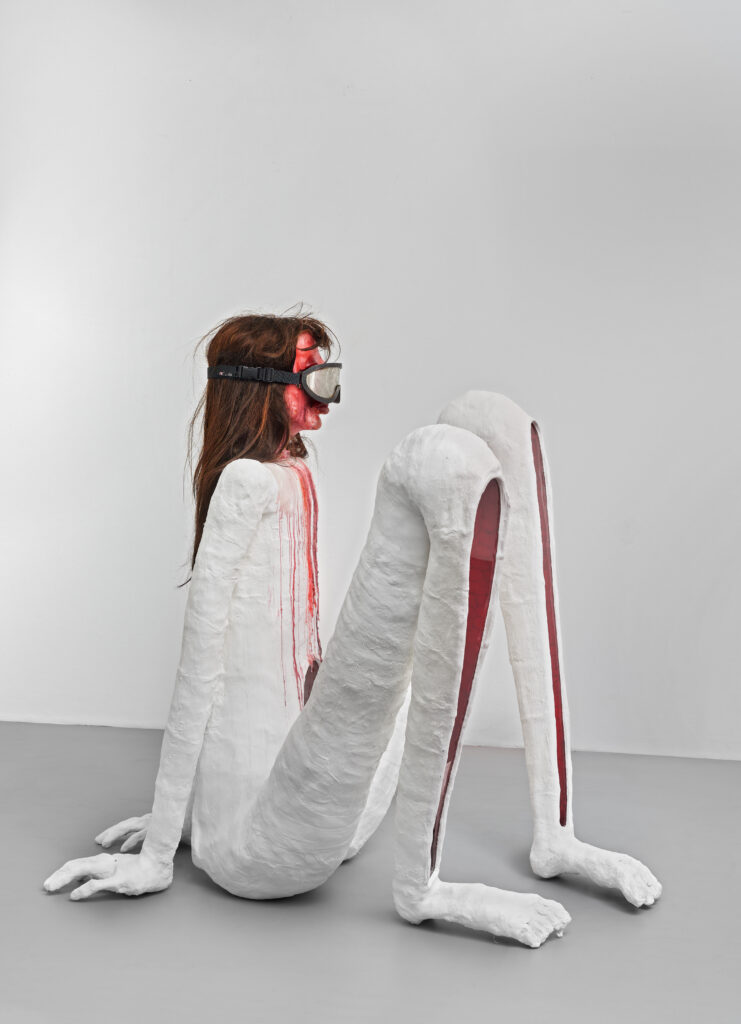
Ramla it is such a pleasure and honour to have you as one of our cover stars for this issue. 

Firstly, I wanted to congratulate you for your recent wins on your fights against Agustina Rojas at the o2 in London and against García Nova in Saudi Arabia. How are you feeling now? 

Honestly, A little tired. I had two back to back camps with little time to give my body any rest. But I wouldn’t change it for the world.

“I love boxing, I love being in the ring. It’s the only thing that gives me purpose and the only thing that allows me to feel brave.”

A career stepping stone recently was your now historic fight in Saudi Arabia earlier in August against García Nova, as the undercard on the Anthony Joshua and Olexandr Usyk fight. How was the preparation leading up to it? 

This fight itself was the most important of my career and throughout the training camp there was a pressure to perform and showcase women’s boxing, as I wasn’t just representing myself but also all women in combat sports. So the world can see that we deserve the same platform and opportunities as our male counterparts. My training was located in Southgate, adjacent to Compton in Los Angeles under the guidance of legendary coach Manny Robles who has been responsible for a number of world champions. It’s not an easy regime with Manny and I’ve chosen one of the hardest gyms in the world to train at but with this, comes the experience of being alongside some of the greatest talents in the sport today.

“My life has never been easy so I naturally have chosen the hard path to get prepared. “

It has only been since 2012 that Saudi women were able to compete at the Olympics in boxing. Your presence there is also a step towards equality in the country. What was it like, as a Muslim woman to be able to fight professionally in your holy land? And how do you wish this impact the future generations?

2012 was when women were first allowed to compete in the Olympics but Saudi Arabia as a country only allowed the participation of women in combats even more recently than this, my fight recently being the first professional female fight in history there. The hardest part though as I had the support of the promoters, and the region was really trying to educate people on why we choose to do this.

“My goal has always been to break down barriers for women and this competition allowed us to continue pushing for greater equality and inclusion in our sport.”

I was also fortunate enough to perform Umrah whilst in Saudi, which was an incredible experience getting to visit Mecca for the first time in my life.

How do you usually work with your coach and how was it to train under the supervision of the legendary Manny Robles? 

Working with Manny has opened my eyes to the very elite level of boxing training. Whilst in Los Angeles, I train twice a day, six days a week. Followed by one additional remedial session, two sports massages and one physiotherapy session (dry needling, cupping etc) and a further 2-3 sessions spent in a Hyperbaric Oxygen chamber. I do two sprint track sessions a week and one long run. I spar three days a week, followed by further boxing sessions for either technique or conditioning and then I also employ world famous strength and conditioning coach Mattias Erbin from Argentina who looks after all my strength, conditioning and recovery work. Mattias has worked with Lucas Matthysse, Jorge Linares, Brian Castano, Jamal Herring, Vergil Ortiz to name a few.

Do you have a favourite match of yours and what was so special about that fight?

In terms of amateur fights, it would have to be my African Zone Title gold medal in Botswana in 2019. The whole experience was just amazing, it was my first time at a championship in Africa which is the opposite of competitions in Europe or further a far. The fighters are tough and don’t stop but there is a real warmth and friendship between the countries and the teams which I loved. In terms of my favourite pro fight in boxing it would have to be Saudi because of the importance of the occasion and the fashion in which I won.

With each of your fights, it must be a constant progression and constant learning path. How was your journey to the Tokyo Olympics? 

The journey to Tokyo over the last previous five years was a real adventure with my husband/manager Richard, who was also my coach at the time during my amateur days. From getting lost at 2am in West African ghettos trying to find our hotel with signal and not being able to speak the language, to desperately finding cheap place’s to wash our clothes in the slums of New Delhi before catching a flight to another tournament somewhere else in the world. Experiencing an Olympics Games during Covid. There was a lot of up’s and downs. I don’t feel like I got the full Olympic experience, but im so glad to have competed.

What have been the biggest challenges you have had to go through and overcome? 

One of the biggest challenges like most female athletes in a male dominated support, is simply being a woman.

The biggest challenge for me initially was the lack of funding and support I received when competing for my native Somalia around the world. If people think it’s hard to compete as a woman in sport, it’s even harder as an African. I honestly don’t know how a lot of these incredible east African runner’s do it. I’m often told that women’s boxing is booming now and more opportunities are coming. Which to some degree is true but until more women tune in and support female athlete’s its hard to command pay and opportunity equality when our viewership is so much smaller than males.

When I fist started boxing, female boxers were so far and few that I didn’t even have a changing room in my local club. I either had to wait for each boy/man to get changed or walk home wet and sweaty.

Who/what has inspired you? 

I’m inspired by so many. Jackie Robinson because of what he had to endure on his journey. Venus and Serena have done so much for women of colour in sport. Ilwad Elman in Somalia is a hero of mine. 

You founded the non-profit organisation Sisters Club in 2018, in London which focuses on providing women with access to different sport disciplines including football, boxing and more.  Could you talk more about it and why you have created it? 

Sisters Club is a charity I founded in January 2018 which has recently taken on funding support from Nike & Lululemon which provides free weekly boxing classes to up to 300 women across London in four locations. The classes are specifically aimed at religious and ethnic minorities and those that have suffered domestic abuse to learn self-defense through the sport of boxing. But it is an inclusive class that welcomes all women from all background, races and beliefs. We have recently started hosting events across other sports including rowing, running, basketball and football as well to give our ‘sisters’ the chance to experience others disciplines. My hope is to expand the initiative to the U.S, Africa and the Middle East with the help of future partners. I started it out of the need to ensure women who look like me and have shared experiences are not left behind due to their background or their financial situations. It was born out of a need to create a community and platform that provided the opportunities I felt I never had growing up.

Do you have any future initiatives planned in your native Somalia?

I do hope to have the chance of expanding Sisters Club into Somalia at some stage.

You have mentioned before that the career of a boxer is a short one. Have you already envisaged what you would like to do after?

I do live day by day and try to appreciate the experiences and opportunities that come to me in the present but yes I have already begun to lay the foundation for what I hope to be doing for the next twenty years post sport.

The theme of this issue is IN OUR WORLD. Which impact would you like to make in this world? 

A quote that the great Mohammed Ali once said really resonates with me ‘your service to others is the rent you pay for your room here on earth’.

“For me, of course I’d love to be known for being an incredible boxer, but more than that, I want to be remembered for how much I helped others.”

Team

Talent · Ramla Ali at IMG
Photography · Dafy Hagai
Fashion ·  Clara Mary Joy
Makeup · Megumi Matsuno using Dior Capture Totale super potent serum and Dior Forever
Hair · Joe Burwin
Set Design · Haleimah Darwish
Photography Assistant · James Clothier
Fashion Assistant · Diana Scarpignato
Special thanks to Richard Moore

Designers

  1. Coat MM6 MAISON MARGIELA, head scarf vintage RICK OWENS, boots Vintage and bracelet Stylist’s own
  2. Jacket ADAM POULTER, skirt and shoes DIOR and ring CARTIER
  3. Jacket and shoes DIOR, shirt Stylist’s own, shorts vintage and ring CARTIER

Matias Alfonzo

Selfcare

Team

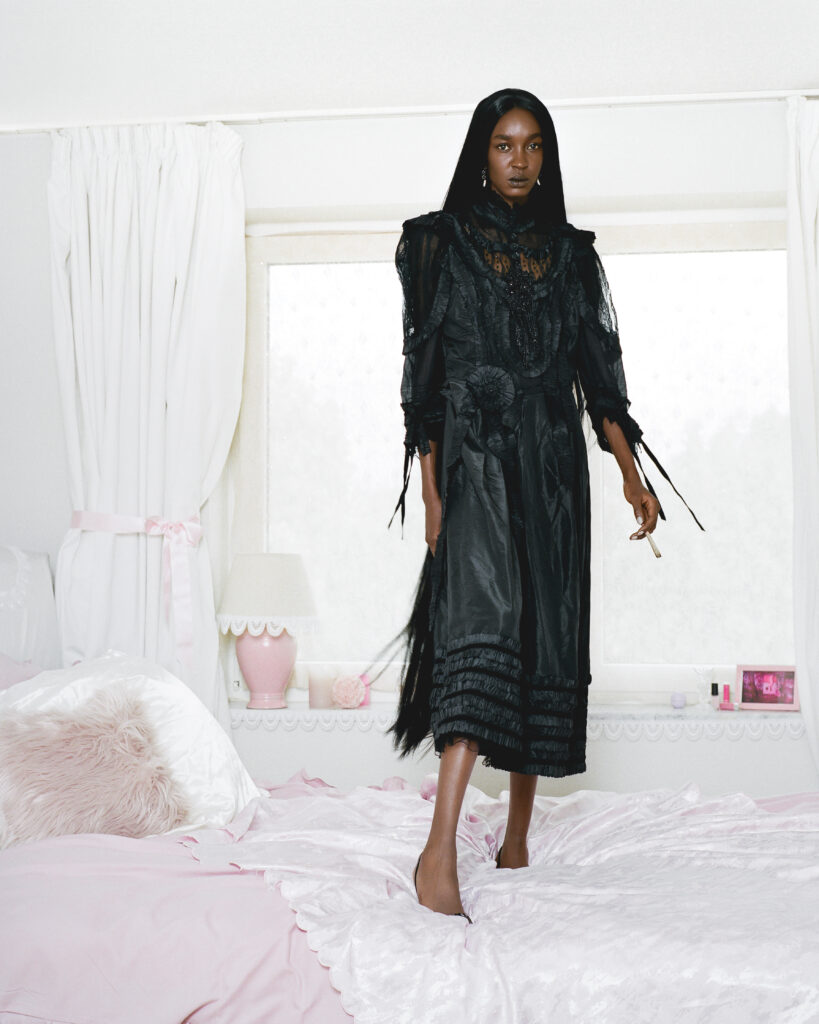
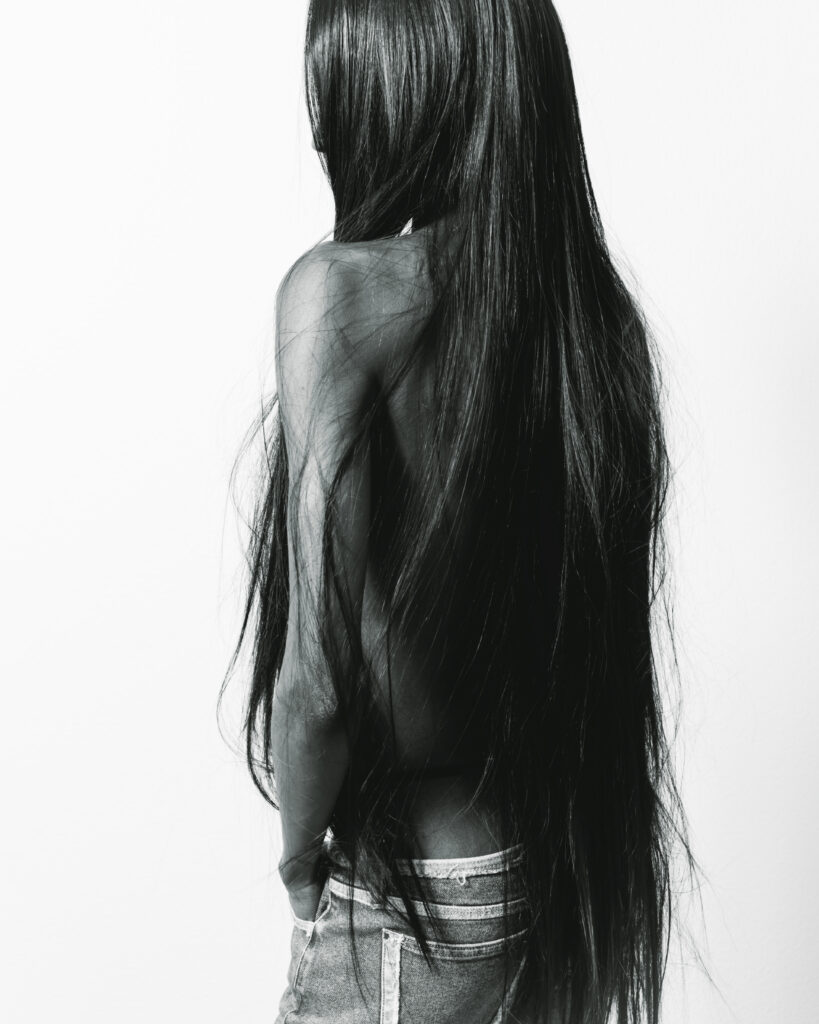
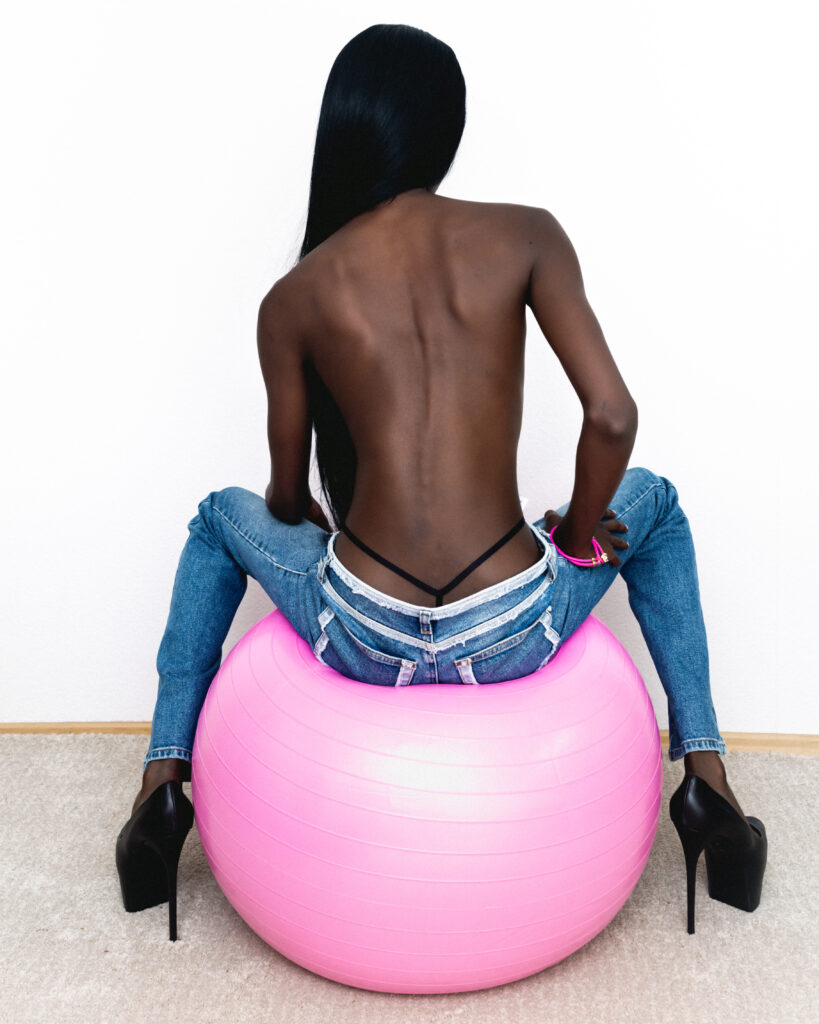
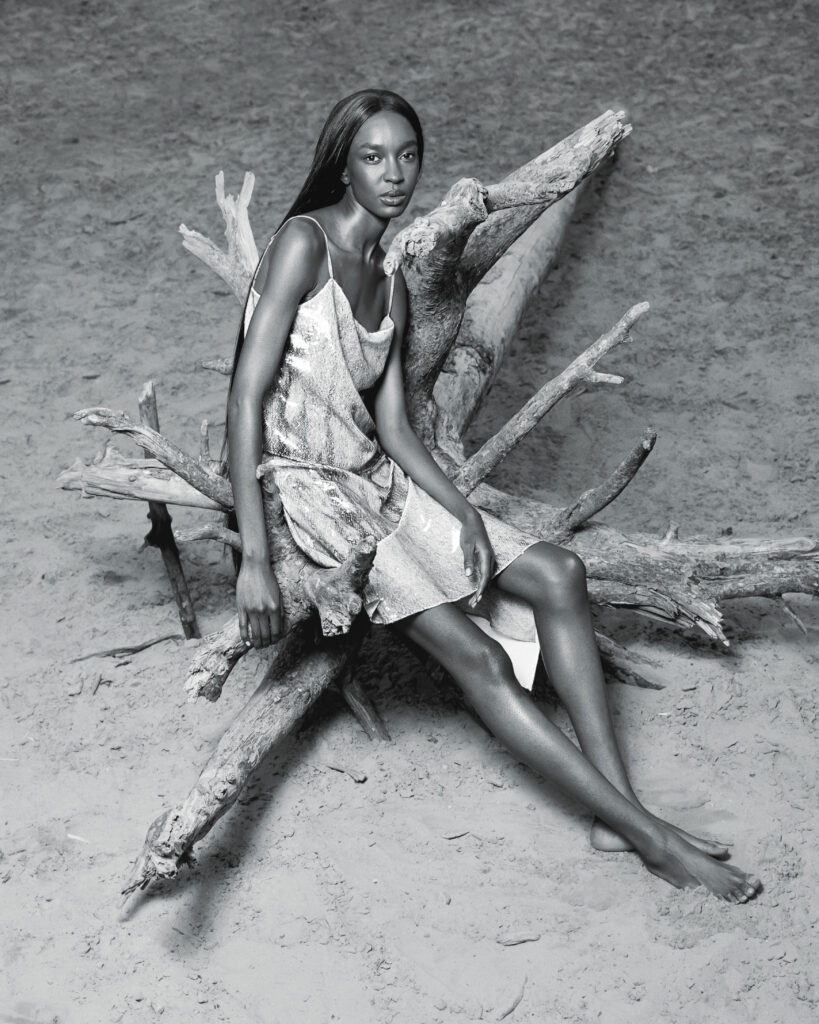
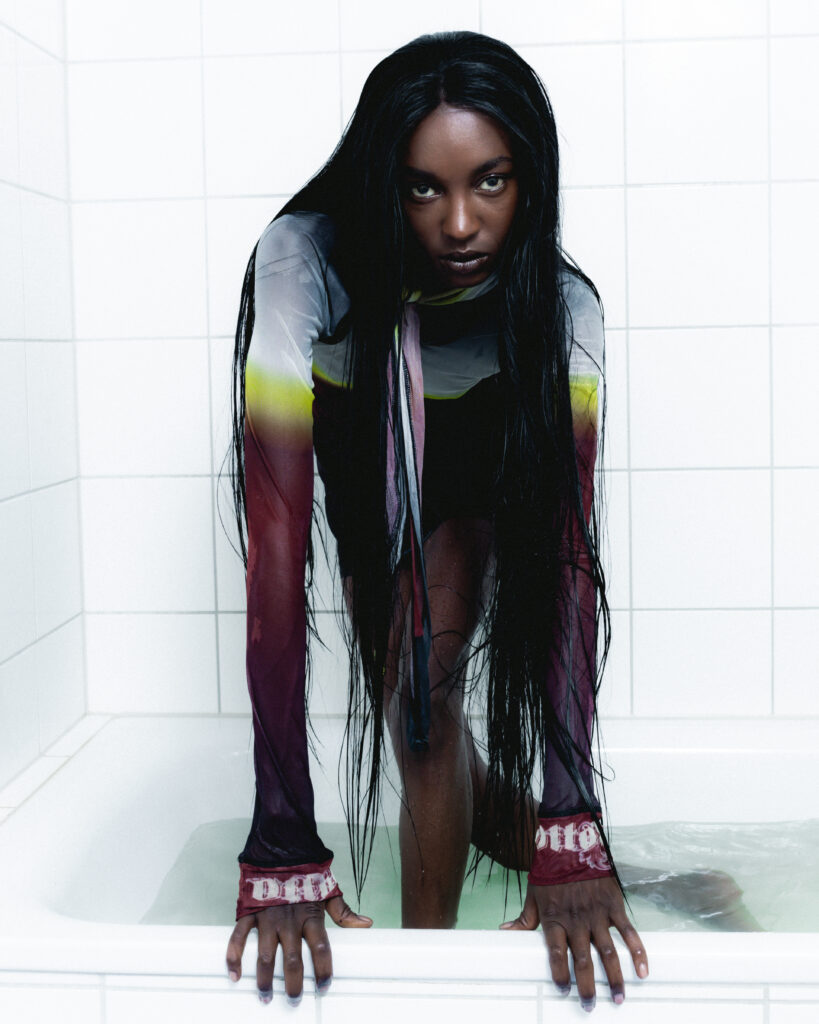
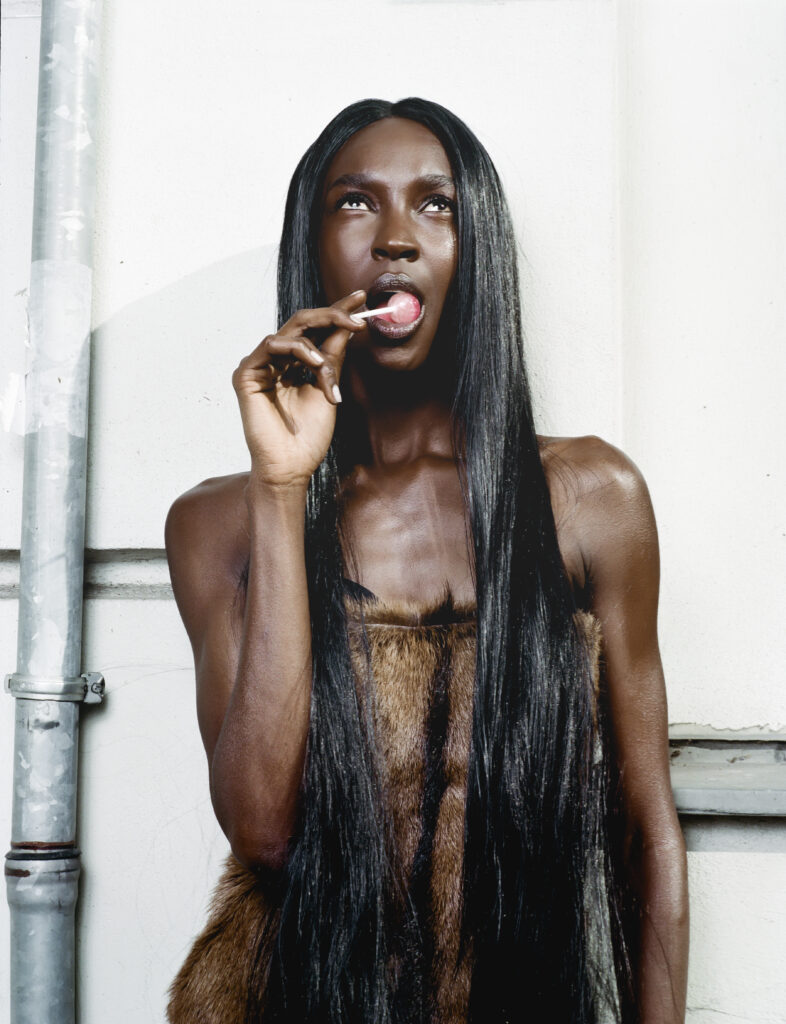
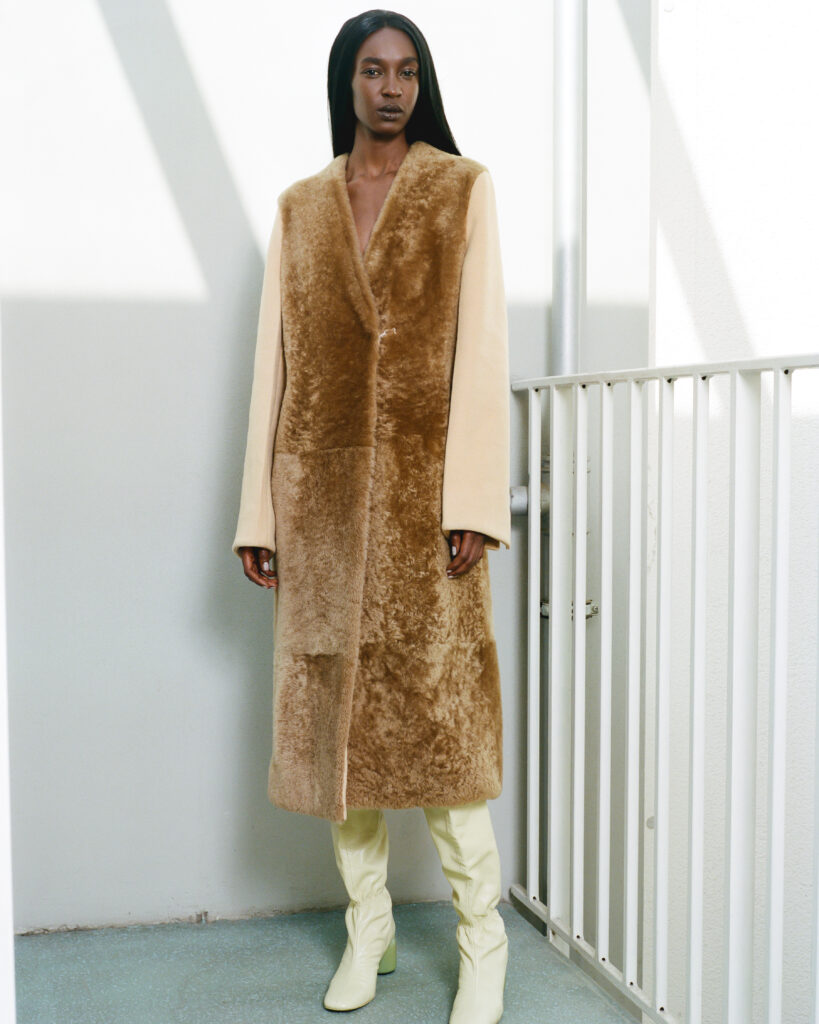
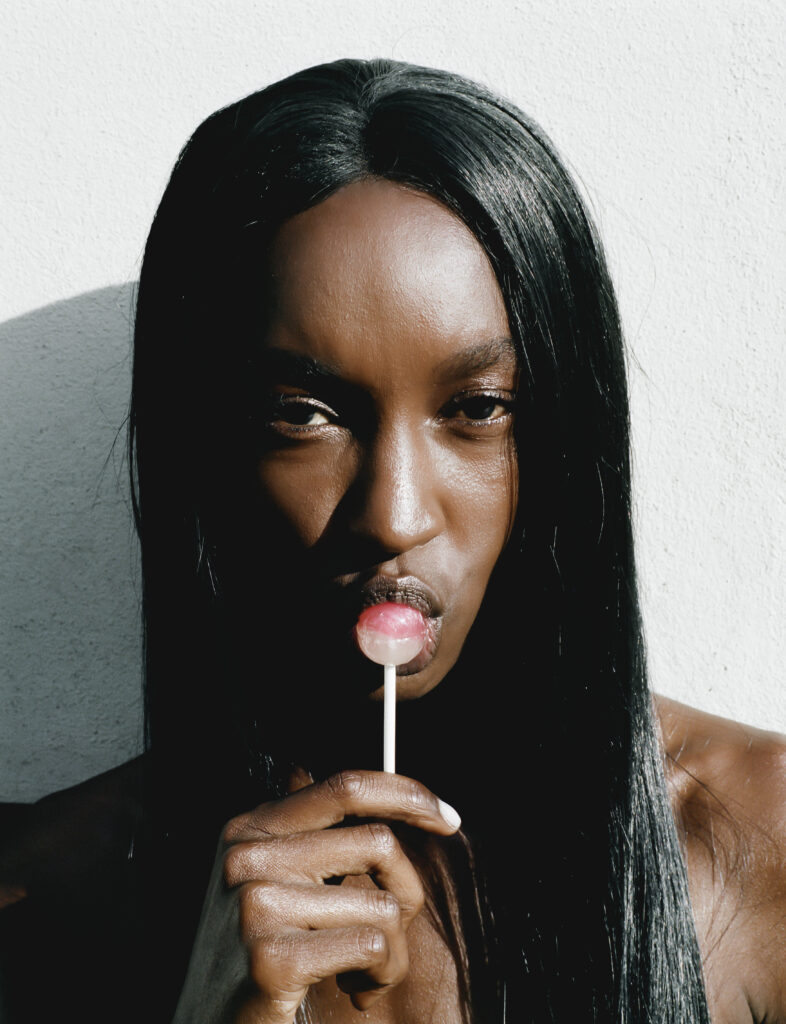
Model · Nicole Atieno at SMC Models
Photography · Matias Alfonzo
Fashion · Camille Franke
Casting · Julie Sinios
Production · Eugenia Vicari
Hair · Tina Pachta
Makeup · Victoria Reuter
Set Design · Nina Oswald
Fashion Assistant · Laura Caufapé
Set Design Assistant · Ruby Oswald

Designers

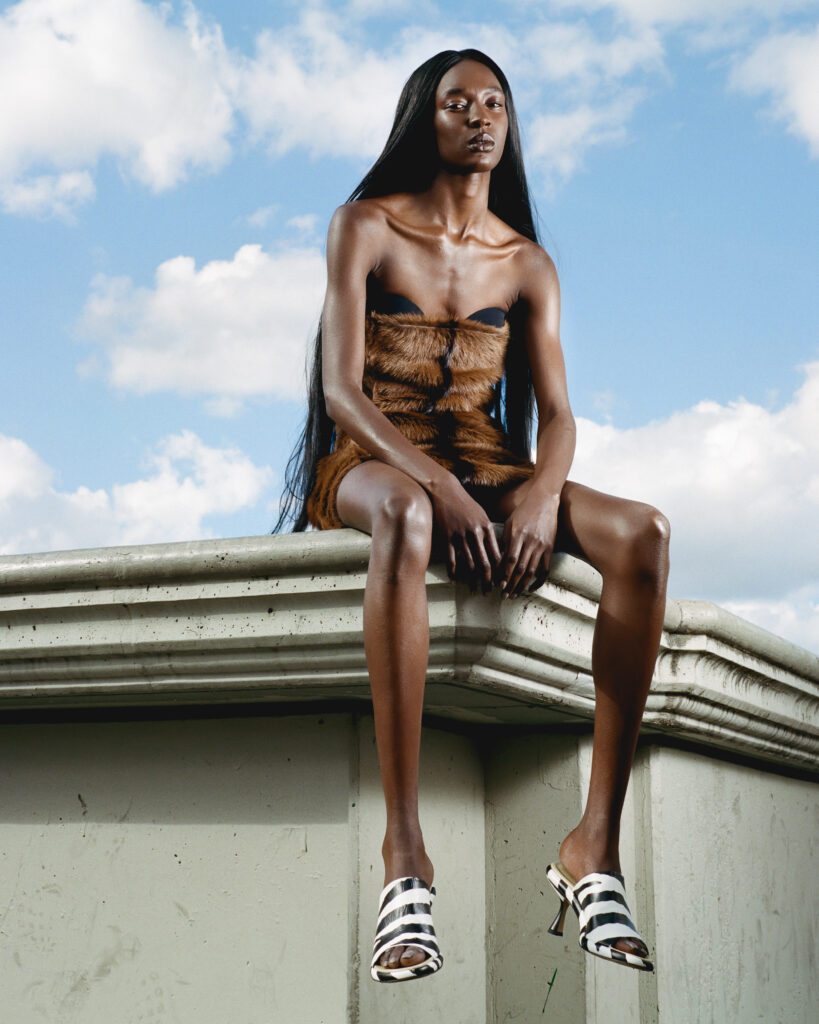
  1. Dress TOM FORD and shoes GIVENCHY
  2. Full look DU CIEL
  3. Dress LOU DE BETOLY, shoes JIMMY CHOO and bracelet BVLGARI
  4. Dress MARC JACOBS, shoes CHANEL
  5. String DU CIEL, jeans DIESEL BY GLENN MARTENS and pleasers ZANOTTI
  6. Dress DIESEL BY GLENN MARTENS
  7. Dress OTTOLINGER
  8. Full look JIL SANDER
  9. Dress SPORTMAX and shoes WANDLER
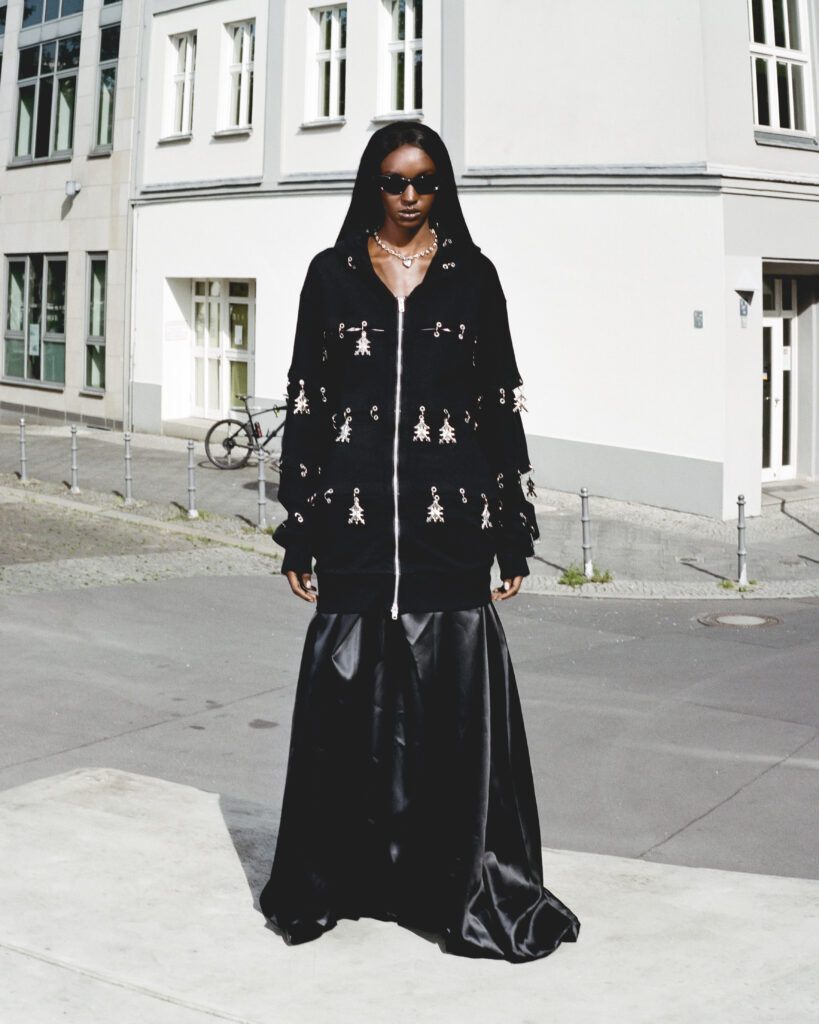
  10. Sunglasses BOTTEGA VENETA, jacket and skirt SANKUANZ and necklace RM ATU GELOVANI
  11. Full look GIVENCHY
  12. Dress JEAN-PAUL GAULTIER x LOTTA VOLKOVA

Rebecca Ackroyd


Rebecca Ackroyd, Hunter/Gatherer vii, 2018

From fragmented memories to ordinary encounters: Locating the subconscious in the work of Rebecca Ackroyd

Rebecca Ackroyd, 27, 2017

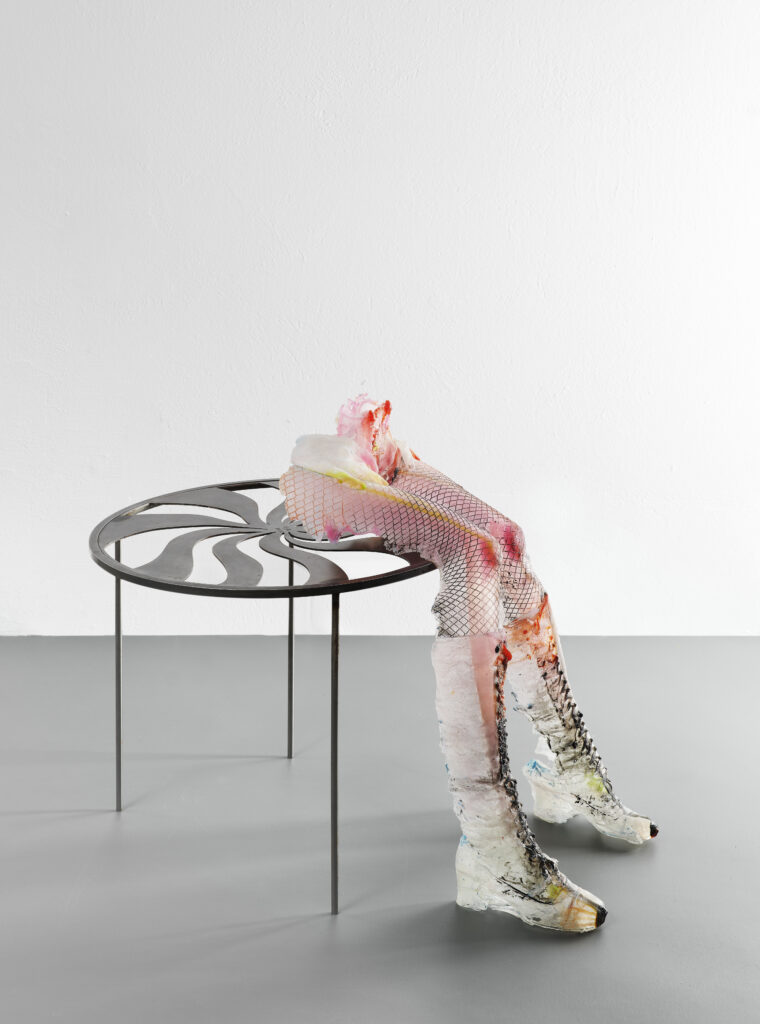
I speak to Rebecca Ackroyd via Zoom from her studio in Berlin in late August, not long before her solo exhibition, Fertile Ground, opens at Peres Projects in Seoul (until 13th October). She will also be exhibiting at this year’s Frieze London and in December at Art Basel Miami Beach. Fertile Ground, like much of Ackroyd’s practice, delves into the surreal whilst being grounded in the monotony of the everyday. In playing alone, for example, a cast of the artist’s hands in a sink is at once familiar and strange; the hands are disconnected from the body, whilst a blade – bloodied? – lies conspicuously in the basin. Those familiar with Ackroyd will know that epoxy resin casts of the body, often in lurid, sometimes grotesque colours, are a central part of her work. And oftentimes, fragments of these casts reappear in different bodies of work. In the Seoul exhibition’s title piece, fertile ground, the artist casts her arms, upper torso and legs wearing a pair of boots that belonged to her mother in the 1960s. The physical fragmentation of the artist’s body in this piece unpick the complexities of time and memory in relation to family history and connection. This can be evidenced by the fact that, as she tells me during our conversation, she has previously cast her mum’s ageing hands as well as her own, ‘and then in 30 years’ time, [mine] will be old and possibly look like my mum’s.’ This, she says, stems from an interest in preservation. But fertile ground also recalls, or reimagines even, an earlier sculpture, Tonguing the fence from her 2021 show,100mph which also features those 1960s boots. The 100pmh exhibition, which as the artist explains below came out of a dream journal she made during the first lockdown in 2020, had a crimson-tinged sleaziness to it. And if Fertile Ground grapples with the subconscious in order to examine how our sense of self is produced and reproduced through the memories we think we recall and stories we tell ourselves, 100mph delved into a very different part of the psyche. There, the works – and in particular Ackroyd’s gouache and pastel pieces – seemed to unlock a Pandora’s Box of what the artist terms ‘bad thoughts’. In pieces like 1,000,000 Eggs, green flesh gleams through fishnet tights, the strangeness of the tinted skin offset by a blood-red hand rested slightly coquettishly on a hip.

In unison with other pastel works on show at the exhibition,100mph recalls the garishness of Otto Dix’s triptych of Berlin nightlife from the early 1920s; in Metropolis (1925), like Ackroyd’s pastel works, there’s an uneasiness that oozes out – as a collective uncertainty seems to seep through the polished cracks (or, in Ackroyd’s case, grazed knees). Even the most exciting of circumstances – for Dix, a bustling club playing jazz music, or for Ackroyd, the experience of catching a flight to go on holiday as her work Singed Lids from the 2019 Lyon Biennale depicts –  can be boring experiences. Resin casts of airplane seats are positioned in the artist’s character disjointed fashion, with the remnant of a leg or a suitcase making the odd appearance. In that work, Ackroyd again recalls a collective encounter, pieced together through the fragmented lens of a distant memory. Of course, the comparisons with Dix are limited – he was attempting to capture a broken society in the aftermath of war and hyperinflation, and the sexual politics are a far cry from Ackroyd’s own handling of sexuality and femininity. But nonetheless, both seem to touch on how we, guided by that inner voice in our head, collectively go about trying to make sense of the world around us. And below, as the artist discusses the importance of ordinariness in her work, it seems that sometimes the most ordinary of circumstances feature in the strangest of dreams.

Rebecca Ackroyd,
Flower form, 2022

Rebecca Ackroyd, Flower form 2, 2022

Something that strikes me about your work, and seeing how it’s installed in exhibition spaces, is the idea of the encounter – and encountering the work in a space. For example, you’ve previously spoken about the use of a pub carpet as a recurring motif since you first used it in previous exhibitions in 2017, which is both part of the exhibition install and the work in a way. How do you think about the work within the space, and how do you visualize the experience and the encounter that the audience will have with your work in situ?

It really depends on the show and the mood at the time that I’m making the show. The last show I did at Peres Projects Gallery in Berlin, 100mph (2021), took place during lockdown and the basis for the work started from a dream journal I was making in the first lockdown. The works didn’t directly correlate to the journal though I ended up showing drawings from the dream journal in the show on a separate table. [But] it was mainly drawing because I didn’t have any assistance to make sculpture, and I was just working on my own with my boyfriend (he was my assistant!) 

The work was really informed by the idea of dreams, psychological space and something that’s more of a subconscious thought that is buried or hidden.

Rebecca Ackroyd, RAY!, 2018

“There was very much this relationship between a sort of deep internal space and bringing that out. I was really interested in how that could kind of be expressed through sexual desire or ‘bad thoughts’; a sort of internal mechanism of thinking that we don’t express.”

That was the driving force behind a lot of the drawings. 

The way install or approach altering the space really depends on the show, the content and the way I want it to feel. But I am definitely interested in there being familiar elements, like a carpet – the pub carpet, that I’ve used repeatedly, and I used again in 100mph – as a way of signifying a time, or a place, or a culture, and then contrasting that with these out-there drawings or psychological abstract works. I’m really interested in bouncing between places, and I think that’s definitely reflected in how I assemble a show. 

Rebecca Ackroyd, Hear Her, man hole, 2018

For your most recent show, Fertile Ground (2022), reference is made to an encounter you had with a building site in London. But to what extent do you look for an influence or an inspiration when it comes to making a body of work, or does a body of work come out of something more instinctive?

I think it really depends, like with Fertile Ground, you mention the building site – I wouldn’t say that that memory necessarily meant, or influenced, the actual works themselves. I think I’d started making the work already, and it’s almost like I look for anchors that root the work in different ideas.

Rebecca Ackroyd, 1990’s REST, 2018

And that particular memory felt like it grounded the show somehow. In fact, I wanted the building site to be the show image, but then I found the photo of it, and it was such a boring photo. I thought the idea was more interesting than the reality. In my head, I’d built it up as this really overwhelming visual encounter – which I think it was, but it just didn’t translate into an image at all. It just looked like a building site.

“It’s more interesting when the work is layered and bounces between different ideas of abstraction, figuration, personal history, and then more shared ideas of existence or life – or something more ubiquitous, like a shop shutter, or a tool.”

I’m interested in how work can be layered in that way basically; layering content and layering ideas.

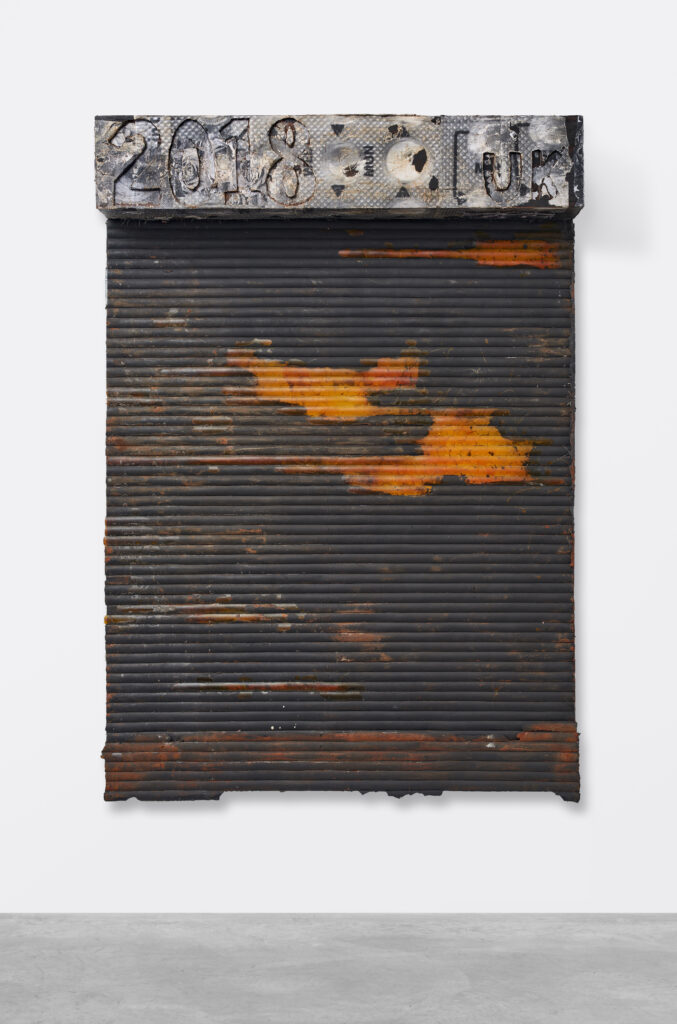
Rebecca Ackroyd, Tide Turn 2018 UK, 2018

In Fertile Ground, you’ve got the cast of yourself and you’re wearing your mum’s boots from the ‘60s, which is a very personal connection to your own experience. But, from what you just said, I get the impression that your work is less autobiographical, and the use of personal history is more a vehicle for exploring certain themes at a particular point in time?

Yeah, definitely.I mean it’s difficult, isn’t it? I think the term ‘autobiography’ sounds very literal, and so Idon’t necessarily see it as autobiographical. I see it more as ‘biographical’, in the way that I’m really interested in stories and memory, and how that becomes so fragmented. That informs so much of who we are. With the memory of the building site, I had this vision of something, and then when I actually looked at it, it was really underwhelming! And so, sometimes the thought of something is much more exciting, or inspiring than the reality of it.

Rebecca Ackroyd, RA MULCH, 2018

That also correlates with the creative process for me. I was talking about this to a friend recently, another artist (Sam Windett)– we were saying how when you’re making a show, you’ve got the idea of the show in your head and you’re really driven towards it. And then, you have the reality of being confronted with what you’ve actually done in the space.You’re suddenly in reality and you have to just deal with the fact that you’ve made these works. And that’s what it is – I feel like there’s always a tussle between the idea of the thing, and then the thing itself. 

That’s really interesting because the underwhelming reality of the building site memory also ties into the idea of the mundane that features in your work. In memories and dreams, we pick up on small things and remember them, but the reality is definitely not going to be what you thought it was. In works like Singed Lids (2019), for example, there are these bits of everyday detritus – the suitcase by the side of the seat. Is that mundane, or a way to be able to visualise through small fragments the things we can’t fully recall?  

I think it’s both. In Fertile Ground, there’s a cast of a sink with my hands. I’m really interested in ordinariness, especially with the sculptures. I like the idea of just capturing something that is quite unspectacular, you know – like doing the dishes. I’m more interested in that than I am a performative gesture or something. It took me quite a long time to realise that there’s something really special about living with ordinariness; appreciating normal, day-to-day experiences.

Rebecca Ackroyd, Carpet burn, 2022

And then the fragmentation within the casting is very much about referencing something incomplete, which again links back to the idea of a memory, or, with the Singed Lids piece, a remnant of something. Casting is a very direct way of being able to do that, and I see it as being related to photography in terms of capturing a particular moment. 

I think that’s really interesting because it’s almost like a reliable, true record of something. Whereas, with other mediums such as drawing, that’s always going to be more of an interpretation. And so, I wanted to ask you about the process of making work, and the contrast between having these sculptural works using materials like resin and wire, versus pastels, for example. How do you balance using these different approaches of making, and how do they then work together to create a wider body of work?

I came from making only sculpture to making these small drawings between bodies of work. And then, gradually, the drawings became the pastels, and now they’re as important. I don’t really see a distinction between the processes now.

Rebecca Ackroyd, Hunter/Gatherer viii, 2018

But with sculpture, the thing I struggle with is how full on it is physically. It’s something I have to plan a lot more and think about more in terms of practicality and how things are going to work.But quite often, when I make a cast, we make them in pieces in the studio, and then they’ll just kind of sit around the studio for months. Then eventually, they get incorporated into a work.

“So, in a weird way, my studio is a bit like a sort of graveyard! And then, they get brought to life.”

Rebecca Ackroyd, World view, 2020

I use the drawing and the sculpture in different ways. With the casting, it’s about bringing an element of reality into the work – using myself or a friend or family member, and then grounding that in a particular moment.

With the drawing, there’s definitely a greater freedom in terms of making, which is why I started them. I pretty much make every single one in a small version before I make them big, so I can work on a lot at the same time. I often have numerous ideas that I want to get out, then I can look at them and it gets translated onto a bigger scale. Or they just stay small, or I never show them.

“Making work is about finding ways in which I can have as much freedom as possible.”

It’s really important not to be precious, because once the drawings are on a bigger scale, there’s more pressure there to make it work. I think it’s really important to have the freedom to fail all the time. And I feel like with sculpture, it is this battle to not fail because it’s much harder to articulate. It’s a very different approach, but I feel like in a lot of ways, they inform each other.

Rebecca Ackroyd, Half moon or empty, 2020

You mentioned that you might cast something and then use it at a later date in a body of work. Do you see different bodies of work as a progression, or as a response to a previous body of work? 

I think it really depends. With the sink piece in Fertile Ground, I never thought I would show it because it was just on the floor of my studio for years and then it just seemed to make sense suddenly. So then it gets used in a completely different context.I think it’s probably a bit of both because, when I’m conceiving a show, and especially when it’s in a particular space that I’ve been to, I will be mulling it over and figuring out what I want it to be. I’ll imagine how I will enter that space and then that will inform certain elements – like what I might do to that space. But in terms of the individual works, I think quite often I just have an idea for work, and then I’ll make that piece. But sometimes, it’s less formed than that; it’ll just be a fragment of something, and maybe I’ll make a metal stand for it.

Rebecca Ackroyd, Tonguing the fence, 2020

It really snowballs when I’m making work for a show. I’m not a very good planner; I think that’s just the way I work, though. I have to be able to change and shift things.But then it’s funny, because earlier today, I was thinking of a show that I don’t even have planned, it’s just an idea for a show of work.

“I like to have that openness, and I also like to not necessarily know exactly what a show might be because it’s much more interesting and exciting, and it means that the work can turn into something unexpected.”

With Singed Lids, I don’t think any of the curators even knew what I was doing because it was just like, “here’s a cast of an airplane seat”, or “here’s this cast of a leg”. You couldn’t see the whole thing. I didn’t even see the whole thing until I was in the space; I had no idea if it was going to work or be any good. It’s quite terrifying to do that to yourself, but I do think that that can be one of the best ways to work, it allows the work to unfold. 

Credits

Artworks · Courtesy of Rebecca Ackroyd and Peres Projects, Berlin

Jenevieve Aken

“trying to shape the story and give voice to things that must change.”

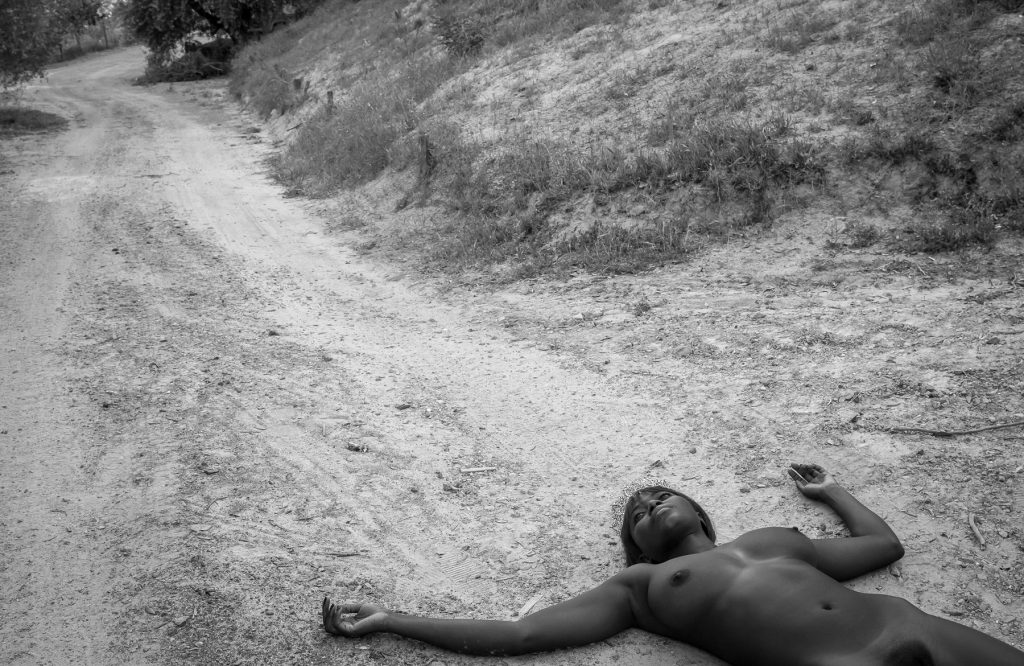
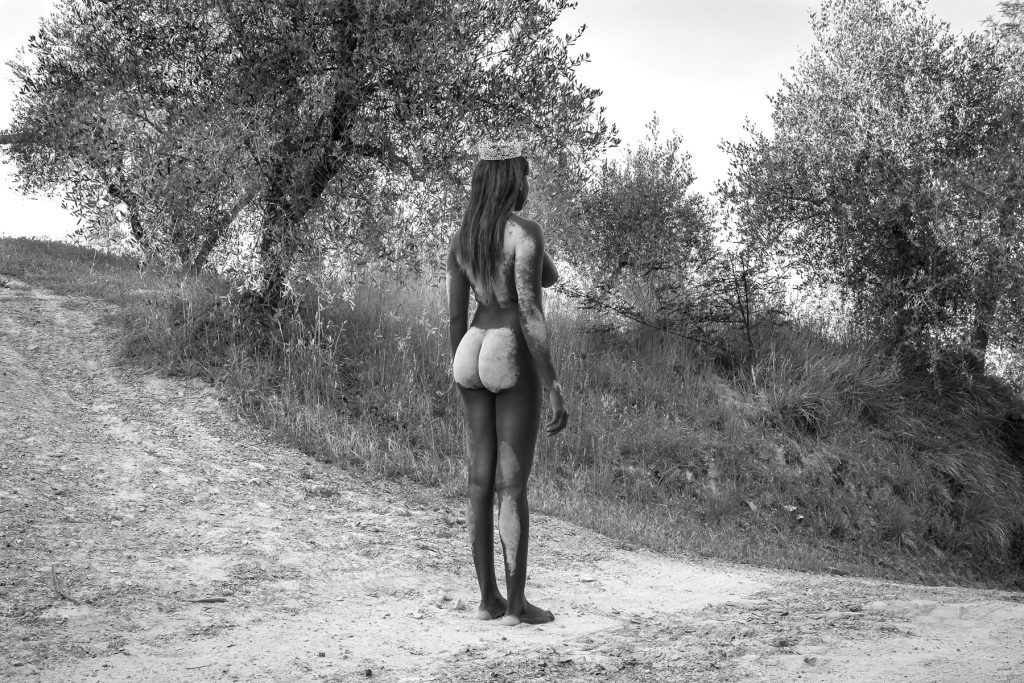
The photographer Jenevieve Aken is a storyteller. Though Aken often turns to self-portraiture, her work is never merely autobiographical. Rather, she takes on the role of both subject and photographer to tell stories that others recognise and see themselves in. As well as using her own experiences as the basis of her projects, Aken also reinterprets the stories of others, fictional (in Great Expectations, she fashions herself as ‘Miss Aken’, a play on Dickens’s Miss Havisham) and real. Her series, Sanctuary (2017), for example, sees Aken delve into the story of Elvira Orlandini who was raped and murdered in her home village of Palaia, Italy, in 1947. As Aken explains in her interview with NR, she was taking part in an artist residency in the village when she learned of the brutal tragedy of Elvira. Through a series of black and white images, Aken conjures up the spirit of the murdered woman, granting her a second chance at life. For Aken, the series is not just about Elvira, however; by depicting herself as defiant – and, crucially, alive – Aken seeks to shift the story away from victimhood to a tale of survival. As Aken explains of the series on her website, the despicable nature of assault on women’s bodies is shown “naked and exposed for the viewer to feel and see, to experience the vulnerability of women.”

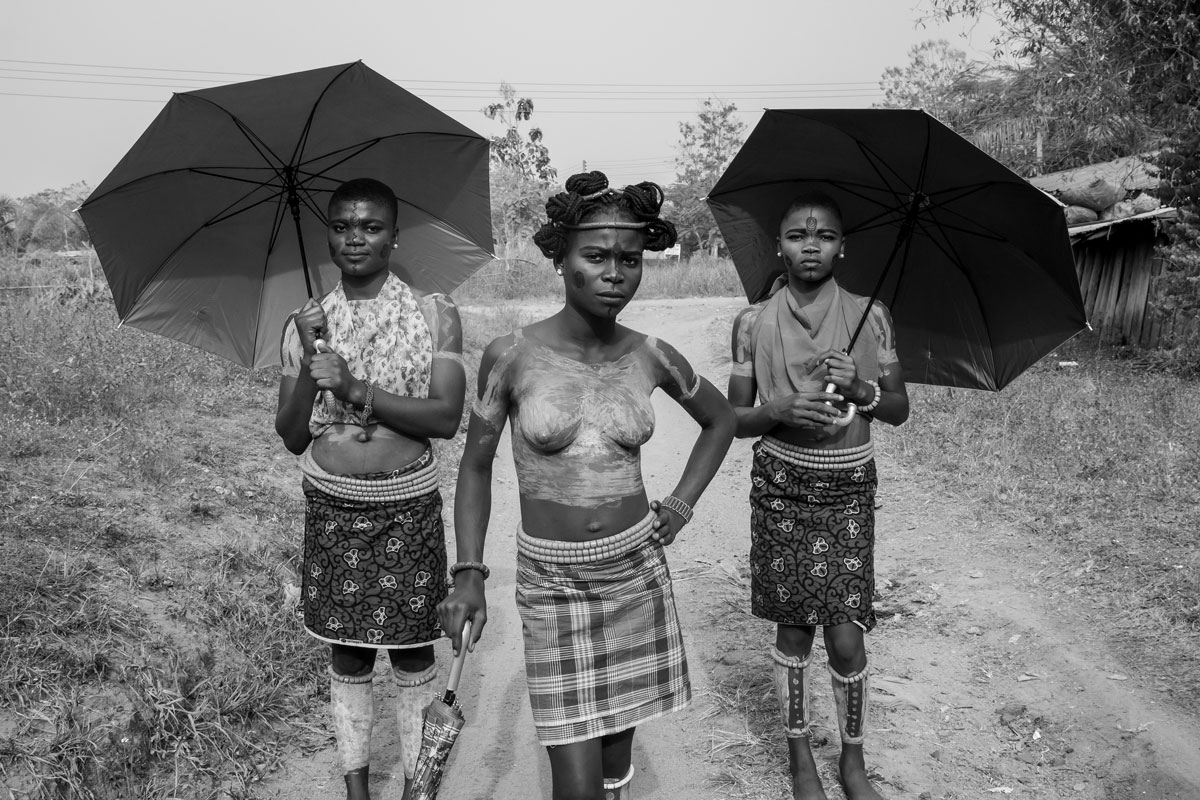
In her first photography series, The Masked Woman (2014), Aken explores the complexity of navigating womanhood in Nigeria, where she is from. The photographer plays with the depiction of an independent, professional woman (which Aken, herself, is), and in doing so, circumvents the male gaze and the stigmatization of sexually free women. In some ways, Great Expectations (2016) is a mirror reflection of that first series in which the character of ‘Miss Aken’ spends her life, jilted and still wearing in her wedding dress, at home – forever in limbo. But if these series grapple with the degrees to which women are free to choose their futures, Aken’s series, Monankim (2017), highlights the absence of choice (and voice) that comes with entry into womanhood. Here, Aken (this time, not subject, only photographer) shines a light on the rituals of female genital mutation – the series takes its name from the word used to refer to the process by the Bakor people, a group of minority tribes from Cross River State, Nigeria. By depicting young women preparing to undergo the highly stigmatised procedure, Monankim is a reminder to Aken, born into one of the Bakor tribes, of the ritual she was able to avoid. In essence then, Aken’s work shines a light on the balancing acts that many try to navigate; the illusion of freedom is, oftentimes, just that. 

NR: As a photographer and storyteller, what are some of the key aspects, features and details that inspire you to create a project around a particular story?

JA: I am constantly inspired by what I read, what I see, what I hear from different people and their experiences. I also get inspired by what is happening around me and my experiences; sometimes I get inspired just by myself, in my solitude. I guess that is what inspires me to create a relevant project around a particular story. 

How do you find the stories that you focus your work on? Especially in the case of Elvira Orlandini, how did you find out about her life and decide to create a self-portrait project around it?

I am constantly researching, reading and listening. I am always fascinated by stories – I think that is what helps me to find ideas to tell stories. Especially in the case of Elvira Orlandini’s story that I was told in an artist residency I was involved in Italy, in a village called Palaia in Tuscany. I lived there for one month. I heard and listened to Elvira’s tragic story about how her beautiful life was cut short by an unknown killer and how her ghost still roams the village and in the bush. And I also saw her grave by the roadside where her body was found, which was close to where I stayed. Elvira’s story dominated my mind, and that inspired me to create a story around her through self-portrait performance. Elvira’s story still resonates and [like her case], this is still happening to women around the world, begging or negotiating for their life.

“Some who are dead like Elvira’s spirit still linger on earth, looking for justice.”

In your work, especially The Masked Woman, you are both the subject and the viewer/producer – how do you navigate the representation of gender and identity by playing both roles on either side of the camera?

It wasn’t easy navigating this and playing both roles on either side of the camera. In The Masked Woman, which happened to be my first self-portrait series project as a young photographer, I was still navigating with my lens and how not to be passive or overlooked as a show-off or being sensual. Rather, I followed my intuition, and I chose to capture the attention of the viewer to avert the overall male gaze by facing it head on with my own actions and choices that explore the representation of gender and identity through a performative lens.

In the series Great Expectations, you are the character of ‘Miss Aken’, whose married life you imagine. Do you create detailed back stories for your characters in order to take on their role? And how do you connect with these characters? 

The Great Expectations series is a reference to the iconic novel by Charles Dickens, and I was inspired by the eccentric character of Miss Havisham. I was connected and drawn to the effect that her having been jilted at the alter had on her character, and how this affects wider society. That inspired me to play the role of ‘Miss Aken’ through self-portrait performance, where I model myself alongside the character of Miss Havisham by reinterpreting and (re)creating the story of Great Expectations

“in a contemporary African society, addressing the huge emphasis placed on marriage as an institution, where happiness, love, friendship are all afterthoughts; marriage first.”

In what way does storytelling allow you as the storyteller to engage with the real-life issues that inform your work? How did you decide to approach social commentary through an artistic style? 

I think for me it’s about the location of the idea; if I am able to trace how I have come about a narrative that I am obsessing about, then I find that I am able to map the story and give it honesty and approach it competently. For example, with the story about Female Genital Mutilation, Monankim, I am eternally grateful that my parents decided not to subject me to this trauma; I am aware that it was common in my hometown. I knew many young girls and women that were scarred in my community as part of this ritual of womanhood but

“I wanted to understand how to evolve that culture and the sort of intervention it would take to change things and end this harmful traditional practice.”

Monankim is a series in which you do not feature in front of the camera – when it comes to making photographs, what are the compositional elements you look for? And does this change from taking a self-portrait versus a portrait? 

I am very certain about my compositional elements when it comes to photographic image making. Both self-portraiture and taking portraits start from the aesthetic thought processing and intention. After, comes some of the things I look for, like the type of lighting as all my photographs are taken in natural light. I look out for the kind of spaces that fit the image idea and then comes the combination of arrangement of framing and positioning myself or my subject. 

At the heart of your work are societal issues/failures that women must confront and deal with (often alone or in silence). How does your work celebrate the struggles of women? And how does this empower both you, as the artist, and the viewer?

“Silence; many women often find themselves sitting alone with their thoughts and problems and without the language or community to help them to better understand.”

Society dictates that we observe and conform, and this is the root of my work: the sitting alone, contemplating alone and trying to shape the story and give voice to things that must change. So, I try to celebrate this because it is important, but my works is rarely ever celebratory but rather reflective and burdensome.

Credits

Images · Jenevieve Aken
https://www.jenevieveaken.com/

Chantal Elisabeth Ariëns

“It is in the nature of the mind to make something out of nothing, so an empty state allows the mind to rest and opens doors at the same time.”

It might have taken Chantal Elisabeth Ariëns ages to pull herself out of the state of chaos and into the utopia of emptiness, but such a transition defines what she produces today, from photographs to prints. Relieving certain emotions to provoke certain memories ushers the multidisciplinary artist into conjuring her most reflective essence, giving a home to the works of art she treasures the most.

From her reverence for water as a distilling element of life to the reminiscence of her sister’s youthful time, Ariens personifies the glory of existence: the stillness in dancing, the melancholy in capturing the relics of a passing, the times when realizations ask her to carry on.

I would love to learn more about your career transition. You first worked as a dancer, having studied at a ballet academy in Tilburg. You also modeled and assisted photographers. Why did you switch to photography? When did you realize it was time for you to hold the camera yourself?

I grew up with classical ballet and studied at the ballet academy, so my whole life was surrounded by ballet. But

“my dream to dance in a company like the NYC ballet fell apart.”

I started to look for something that could replace my passion for ballet. This was the quest. For a period, I started working as a model, where I got inspired by photographers I worked with and started to assist some photographers.

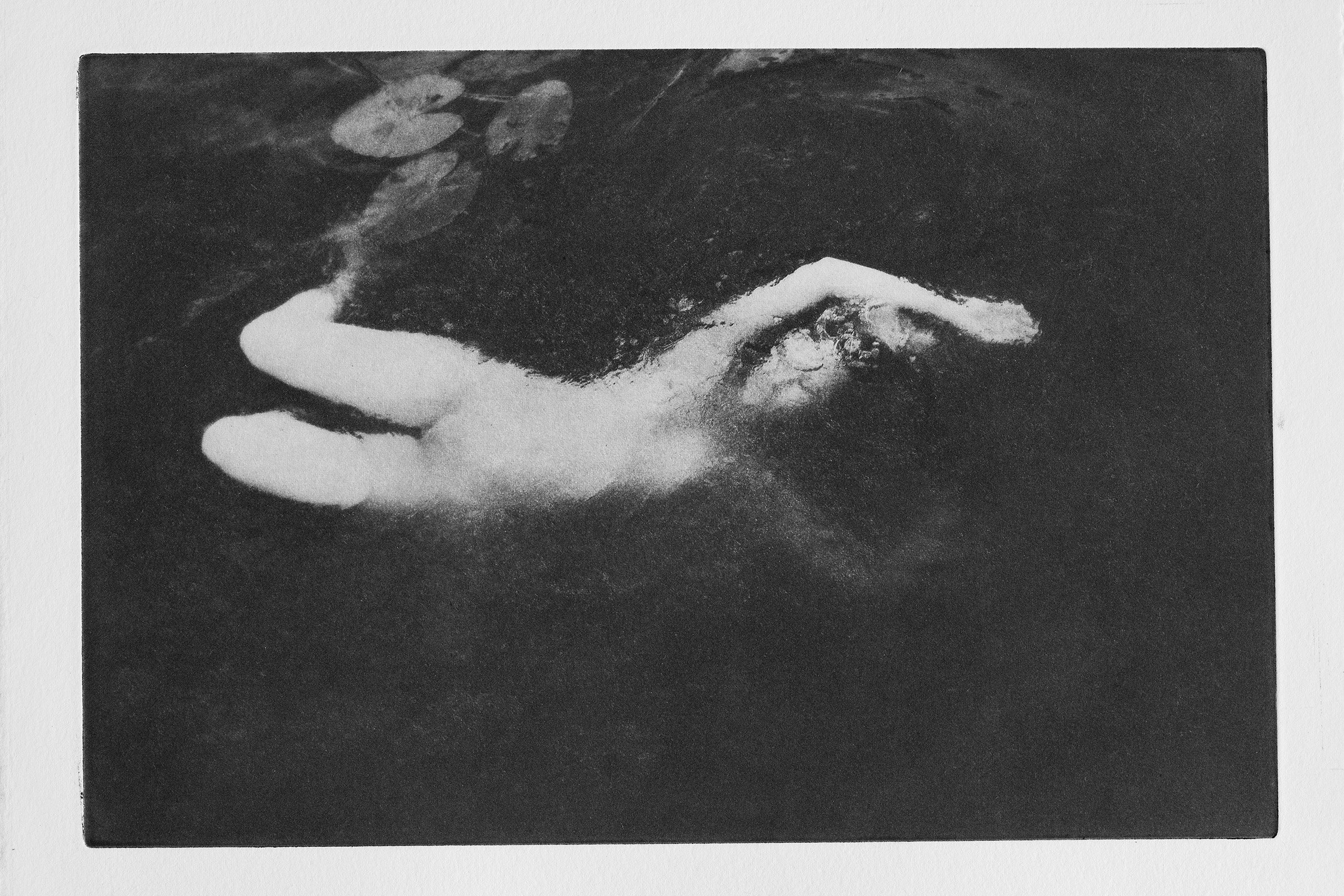
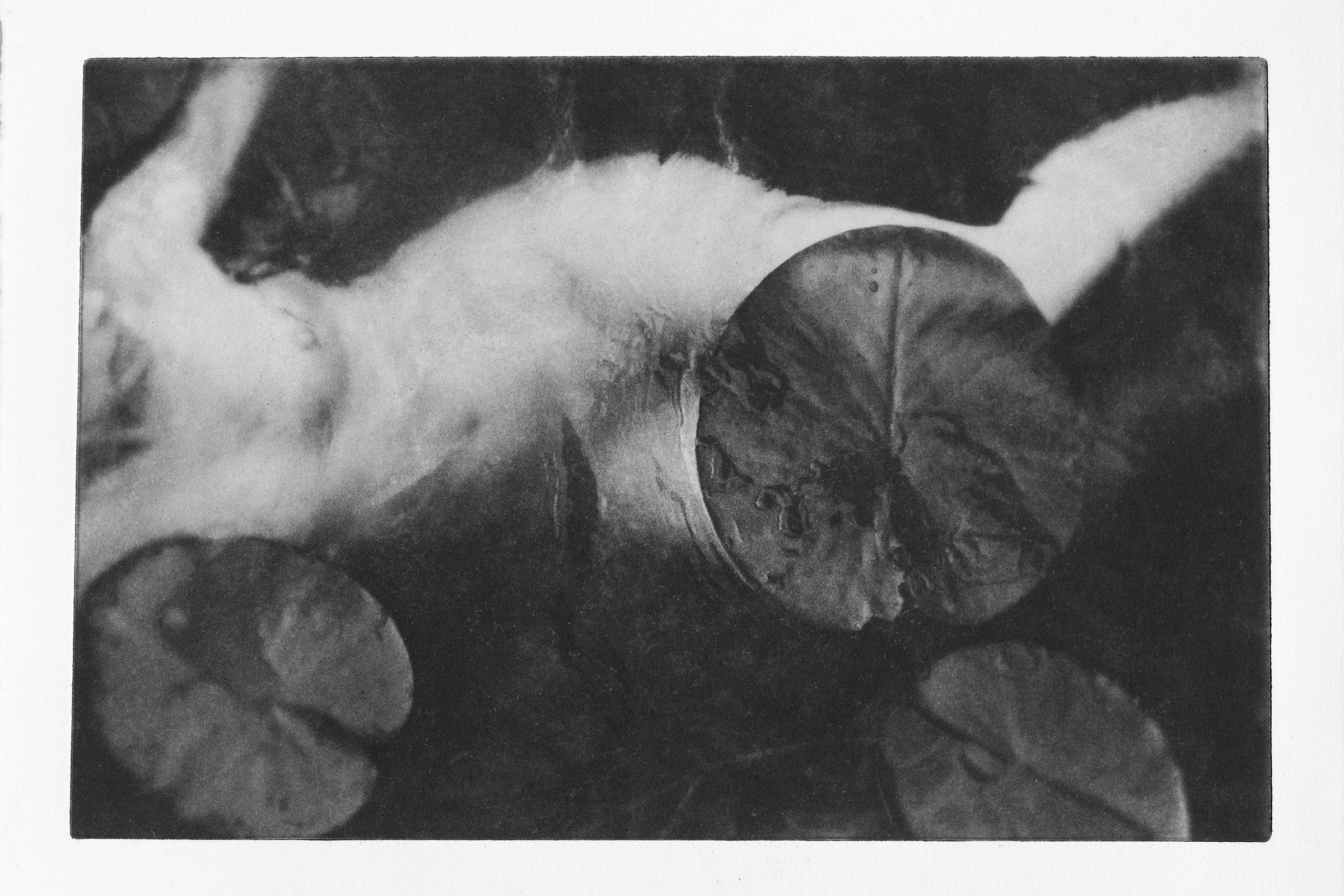
I am also a print-maker. I felt the need to create with my own hands, to give my prints more depth. I went in search of a craft technique that would allow me to do so, and this led me to the photopolymer etching technique. I love the tactility, the structure, the scent, and countless shades of black. The work itself is very intense and slow; it brings me to a more quiet part of myself and makes me more aware of how gratifying craftsmanship can be.

Delving deeper into your photographic philosophy, how did your ballet, photo modeling, and assisting experiences help shape your photography? What nuances from these backgrounds do you use in your practice today?

Dancing had been a way to express myself since a very young age. This was replaced by my love for photography. My father was a gifted photographer and a photo teacher in addition to his day job. He taught my sister and me how to print our own photos.

“Working as a model became the second part of my photographic education.”

It was wonderful to be able to learn from so many photographers, through their own ways of creating images, especially in the fashion world. Then, my process became different after working for magazines.

I felt the need to create from within after my younger sister passed away. I had to let go of concepts or themes to find out where my journey would take me. Gradually, I realized how everything turned out to be personal, including my relationship with the models I work with. I like to create an intimate atmosphere for the models to make them feel comfortable and be themselves.

I prefer to work with models with a background in dancing as they often move freely. It is important for me to make real contact in order to create images that move. They become personal from the moment I started to create my own world from the inside.

The inspiration of your works stems from the subconscious, a state of emptiness. How do you perceive an empty state? Is it meant to be filled, or just be left their void? 

In the past, it was not easy to enter an empty state of mind overnight. It took me years to be able to let go, meditate, and practice. It is in the nature of the mind to make something out of nothing, so an empty state allows the mind to rest and opens doors at the same time. This is where it became possible for me to dig deep and create my personal work, by letting it be void with all that will come up in a natural way.

As you have written: these images arise by giving space to emotion and exploring where the connection lies between emotion and memory. Emotions and memories are stored in the subconscious. For you, what is the connection between emotion and memory? What kinds of emotions and memories do you want to evoke?

For me, memories come with certain emotions, so bringing up certain memories can evoke certain emotions. I try not to evoke these emotions as I prefer them to arise in a natural way. It is by giving space that they will find their way. For me, photography is about connecting to the landscape, the people, and myself. It is about creating my own world.

Let us go through a few of your works. Where Are You reminisces about your younger sister, a time when you saw her everywhere. Would it be all right if you guide us through your state in this series?

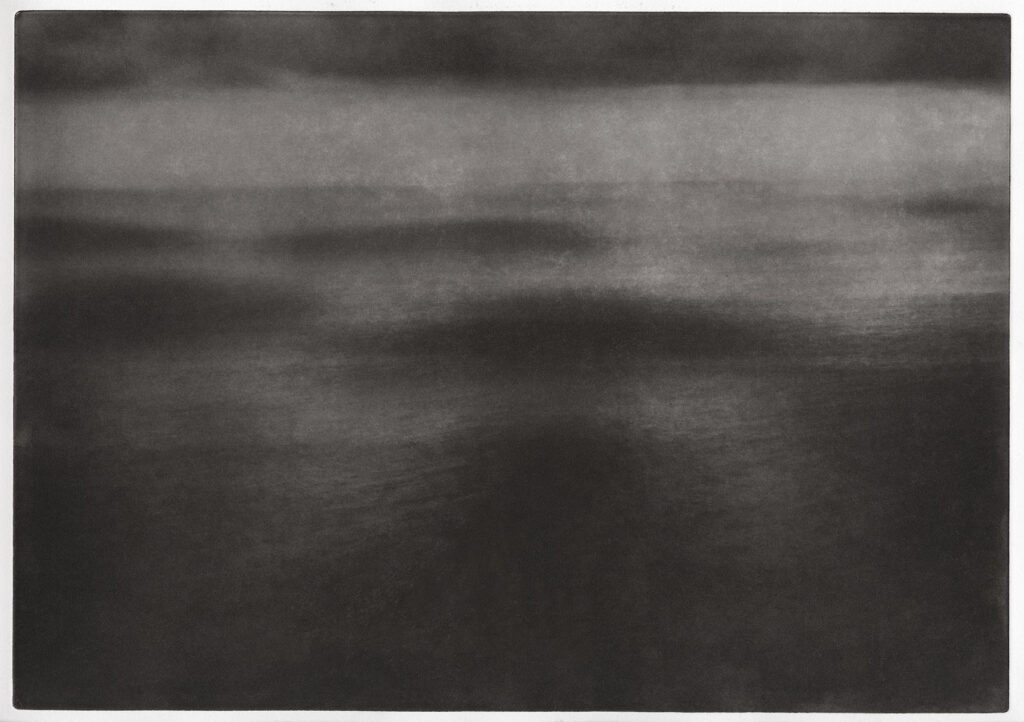
Where Are You #1: The image is taken by the moonlight, imagery of Taoism, and the yin energy that brings the viewer within. The feeling brought me to remember the memory of my sister drifting away.

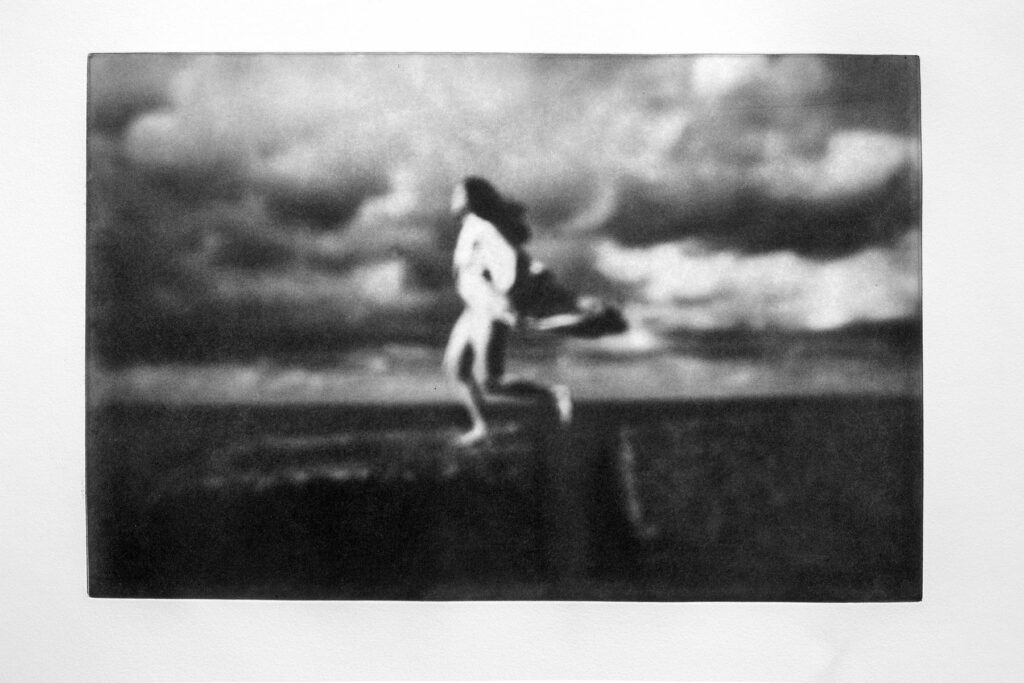
Where Are You #4: In my dreams, I was running fast to see glimpses of my sister. When I saw a figure running, I thought it was her.

Where Are You #11: I know it is not her, but it is the vague figure that is moving towards me that makes me think it is her.

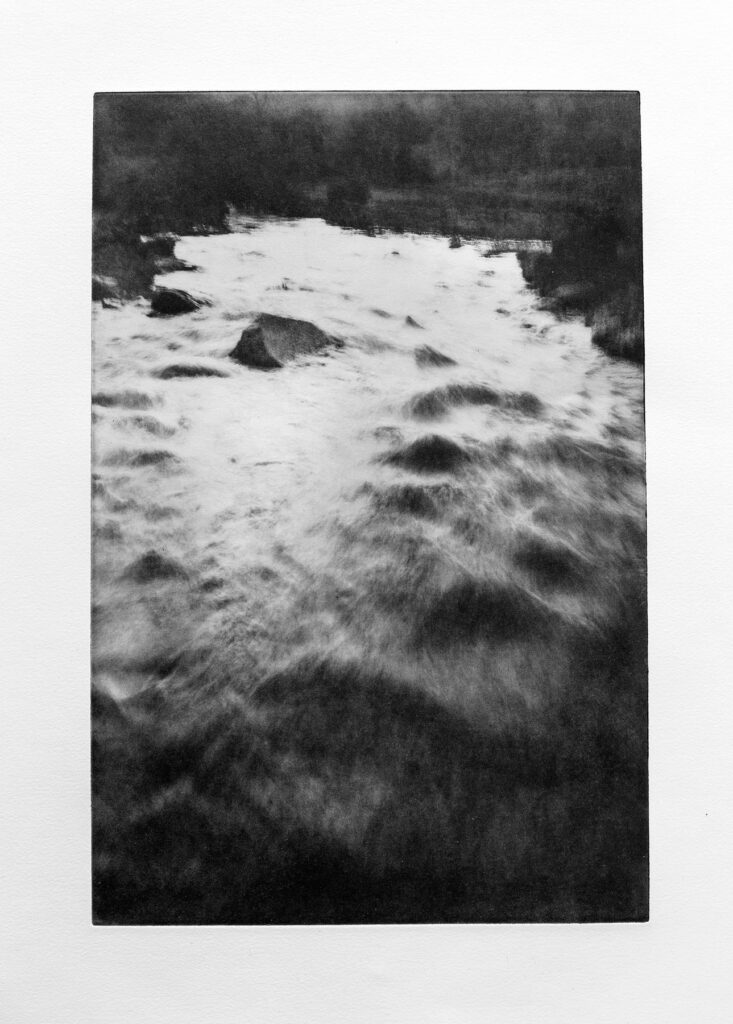
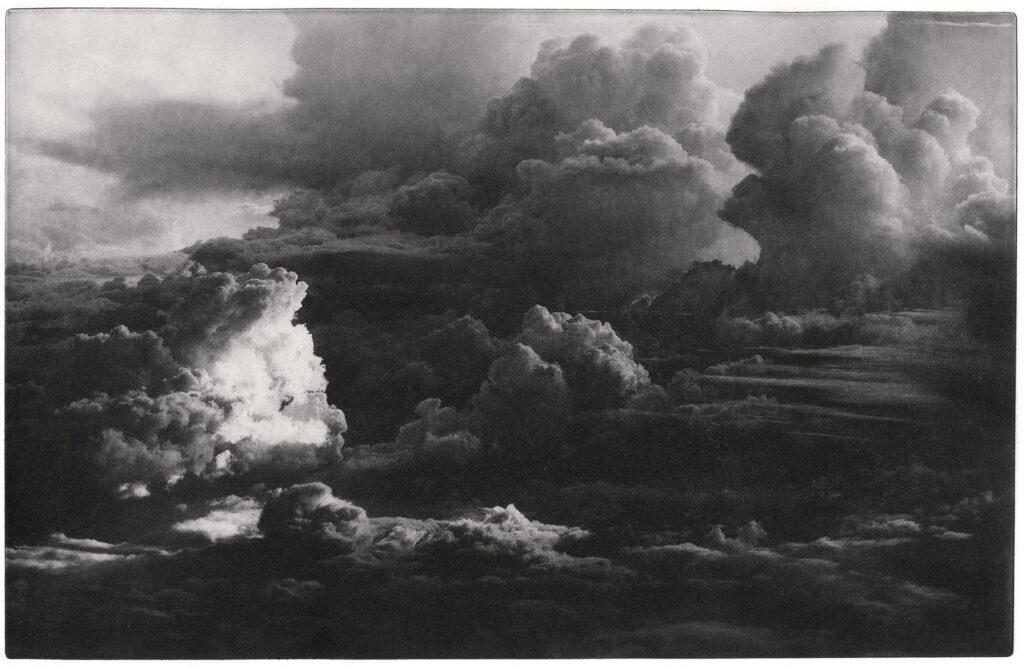
Where Are You #20: Ever-changing clouds, floating on air.

Where Are You #18: The sea, the waves, the clouds, the sun behind the clouds, the rays of light coming in. Here, there is a play between the dark and the light, the light and the dark. I was fascinated by it: it moved me in ways, it made me feel emotional, it lulled me into it, and it connected me to the ones I lost.

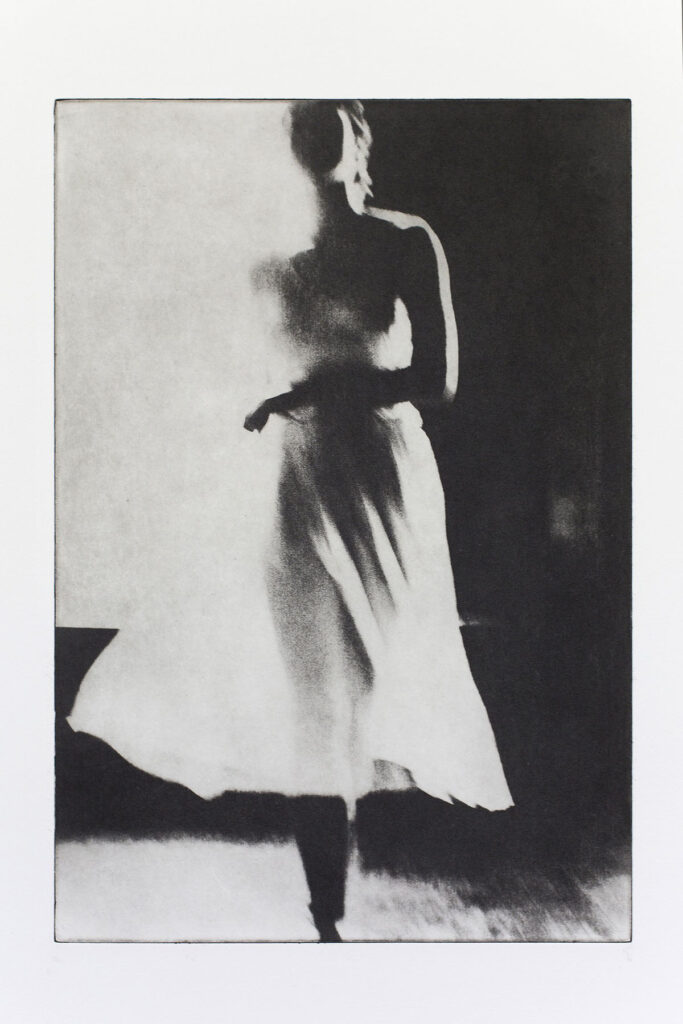
Unfinished #2: Here a teststrip of Marijn, I started photographing with her and still do, she became my muse.
In this image she reminds me of my sister, Nathalie.

Monologue Intérieur seems to be a photographic conversation between who you are and what you feel, an inner monologue associated with thoughts, fears, and emotions that come and go. Have you ever latched on a single emotion and found it difficult to let go? 

The inner monologue is often associative. Thoughts, moods, feelings come and go. I try to catch these in order to be moved by the image. It is not only about my feelings, but my models’ as well.

Nude photography can be a complex subject to me. It is about finding the purest and most liberating expression of strong femininity. It is combined with the inner monologue, transforming the images into layers of stories.

Water as a purifying, transformative, and healing gift of life. In Healing or drowning, water becomes the symbol of existence, the power of connection, softness, surrender, and forgiveness. When do you seek healing? Is it hard to surrender yourself to the flow of the universe? How do you forgive – by forgetting?

I seek healing especially in times of grief and turbulence like the last one and a half years, where we have all gone through certain waves.

“Surrendering to the flow of the universe is a never-ending challenge.”

For me, forgiving is not about forgetting. I think it is a process that experiences ups and downs, highs and lows like waves that come and go, trying to find the angle of compassion for others. I think these bring in the softness, the healing part, for others and myself.

You quote T.S. Elliott as part of your artist’s statement. “So the darkness shall be the light. And the stillness the dancing.” How do you relate to these words?

The words refer to my own process that started with the death of my younger sister. I went through deep grief, a depressing period, trying to find the light. This is why I started my series  ‘Where Are You’ with specks of black and bright white. 

If I had to go to a deeper layer of myself, I think I would uncover stillness while finding my way out, accepting that nothing will ever stay the same and that love never dies.

What’s next for Chantal?

I’m looking forward to some wonderful collaborations in Japan, Italy and Sweden and a period as Artist In Residence to be able to do research, experiment and deepen my work.

Credits

www.chantalelisabethariens.com/

Omar Apollo

Honing a Kaleidoscopic Vision

Omar Apollo appears, shoulders upward, in the bottom corner of his screen connecting to our Zoom call from his phone. Behind and above him is what appears to be a vast, vaulted wood ceiling. The twenty-four-year-old singer is calling from the San Jacinto Mountains in Southern California, where he’s currently holed up. “I went on this hike yesterday,” he enthuses, “we were super high up to the point where you felt kind of high – it was really weird because the oxygen was different up there. I got a little scared, but it was great.” At the top, he met an eighty-something year old man called Bjorn who hikes up the mountain a few times a week on the lookout for fires nearby.

The story of Apollo’s expedition the previous day comes up in our conversation in the context of style. “Right now, I’ve been on a kind of tactical thing, [I’ve] been dressing like a really cute hiker,” a fact corroborated by an Instagram post on his feed featuring a pair of Salomon trainers. But reaching the top of a summit (and then recounting the experience with breezy nonchalance) could also be an analogy, of sorts, for the singer’s career. Back in 2017, Apollo uploaded ugotme, a moody-yet-slinky two-minute bedroom jam to SoundCloud. It amassed tens of thousands of plays quite literally overnight, catapulting a twenty-year-old first generation Mexican American fast-food worker from Indiana into another universe.

In the four years since, ugotme has had over 1 million streams on the original upload alone. And, when we speak, Apollo is in the process of finishing up his debut album which will follow on from Apolonio, last year’s nine-track mini album. The singer is tight-lipped about specifics but does reveal that it is “honestly amazing. Like my best shit.” Alongside getting the album wrapped up, Apollo’s got a load of other bits to take into consideration; rehearsals, vocal lessons, preparing for tour, and so on. No wonder he’s spending some time in the Californian mountains – a moment of calm and clarity amongst the chaos, perhaps. That said, being on the move (and being on tour in particular) is something that Apollo says he thrives on. “I just can’t stay in the same spot; I feel like tour made me like that.” After the San Jacinto Mountains? Maybe Tennessee. “I just gotta finish this album.”

Compared with the production of Apolonio, the singer now has greater freedom to travel where the wind takes him. Apollo was forced to record the bulk of his last project from the constraints of his Los Angeles home when lockdown was imposed in early 2020. “I’m Amazing – I made a day before they announced that there was going to be a lockdown for two weeks.” Apolonio draws on Apollo’s wide-ranging sounds, exemplified by the equally wide-ranging names that feature – from Kali Uchis and Ruel, to Bootsy Collins and Albert Hammond Jr of The Strokes. Sure, it was his first project signed to a major label, but it’s an impressive and delectable record to come out of a year that seemed to put a stop to a lot of releases. But then, Apollo is used to making music from home, or at least in his bedroom. As a teen, he taught himself how to sing and play the guitar via YouTube videos. Nothing seems more fitting, then, than having Albert Hammond Jr arrive at his home to record Useless, on which Apollo fills a Julian Casablancas-shaped hole.

Following on from two EPs, 2018’s Stereo and Friends from 2019, Apolonio was a clear demonstration of Apollo’s potential, namely his ability to move with ease from lo-fi bedroom jams to funky pop. But, in some ways, Apolonio was stilted by the pandemic. “When I went back to play my first show it was really strange,” he recalls. “It was really strange ‘cause it was the first time I didn’t feel confident. It was like, ‘Oh my gosh, I haven’t toured this album. It’s my first time playing these songs…’” That first show was to smaller audience than he’d been performing to before the pandemic, but it would allow the singer to get back into his groove. Performing is something that, lack of shows due to the pandemic aside, comes easily to Apollo who says that he naturally loves being on stage. “I love the attention I get from it.” More than that though, he refers to being on tour as a sort of ‘normality’ compared with lockdown when days feel like little more than “filler days”. “When I was on tour, your whole day is set up for you for like, a month and a half, two months. And you feel really accomplished – like you did something.”

Apolonio is, at times, incredibly sexy, and at others, heart-wrenching in its angst. His music captures the emotions of a twenty-something, caught up in conflicting feelings of lust, longing, rejection and, at times, a cockiness. Want U Around (featuring Ruel), for example, is a glorious example of Apollo’s falsetto crooning melding with the funk-infused beat, contemplating unrequited love with heart-breaking precision. Meanwhile, album opener I’m Amazing is, as its title implies, of an entirely different variety. Given the vastness of his range, then, it’s little wonder fans go mad for him. With hair that changes colour like a mood ring, and an enviable, if eccentric, wardrobe, Apollo cuts the figure of a twenty-first century pop star. For the interests of NR’s theme this issue, I’m curious to know: how does Apollo grapple with the theme of ‘identity’ and who he is as a person through his music? He pauses for a while, figuring out how to respond. “I feel like I can have my own identity, but the way I’m perceived, I can’t control it. So, my identity is skewed in my head,” he says. “I have an idea in my head, but that might not translate.”

Apollo’s response is one that would, I imagine, resonate with many. The singer is old enough, just, to have grown up alongside the invention of so many digital technologies and platforms that have changed our experiences of the world. A lot of internet searches for Apollo bring up results for Reddit pages, for example, on which fans discuss, in minute detail, a certain aspect of a song, an outfit or elements of his life. The disconnect between who you think you are and who others think you are, is one Apollo says he has a weird experience with. For instance, he mentions having friends who are perceived as mysterious but are, by their own admission, “just quiet.” When it comes down to it though, Apollo states that he is “trying to make shit that moves me, and then these feelings are either subconsciously there or I dig for them and put them in songs.”

When it comes to making music, Apollo says that he has to find the time to write. It’s not productive for him to take the approach of saying, “‘Oh, I’ll make music when I feel like it.’” But he takes inspiration from his surroundings. “There’ll be some things that stick with me that you forget, and there’s some things that will stick with you that I forget,” he points out. “That’s kind of what I get from music.” I’m curious about the fact that it’s so hard to pin Apollo’s music down into one genre; is this an effect of how we find and listen to music now? Apollo isn’t so sure it’s a reflection of that. It’s less of case of overlapping genres, than seeking out different artists who encapsulate an emotion, a feeling, that he connects with. It’s more important to him that he can ask and answer, “Is this the best I could do at this moment in time? Did I put my heart into this?”

No matter how much Apollo might find inspiration in the things that surround him – a snippet of a conversation, a scene from a film – the outcome also relays a personal experience. And that, in part, seems to be where his listeners and fans really connect with Apollo. He recalls encounters with people who connect a love song he’s made with the loss of a friend. “It’s amazing that people can take things how they want to take them, consuming them how they want to consume them.” In contexts like that, it doesn’t matter so much how someone else interprets Apollo’s words; the emotion is conveyed in one way or another. “Obviously, you can have an idea, an identity, but the way it’s perceived, you can’t really… everyone’s point of reference is different.” 

Only Apollo can truly know who he is. But his personal style and the kind of visuals he uses give a good guess at what kind of performer he is. The cover of Apolonio, for example, takes Lenny Kravitz’s 2003 album, Baptism, and transforms it into a Prince-esque lilac, resulting in a coalescence of the two performers, as iconic for their hits as their style. But what does style mean to the Apollo? “I’ve gotta look how I feel so that takes time. I’ve got to be feeling amazing.” Growing up, the singer would often get his clothes from thrift stores – not always out of choice, but necessity. But style isn’t something that can be bought. Case in point? Apollo recalls being in elementary school and his elder siblings coming to him for advice on what to wear, to which he’d respond things like, “Nah – you’ve gotta change that, that looks ugly!”

So what about style as a performer? “Once I started touring, I started seeing my silhouette more on-stage and I started seeing pictures of myself and I was like – I need to figure out what I really like.” Apollo has a “show ‘fit” that he’ll wear on stage and then a “post-show ‘fit” because he doesn’t want to leave a venue wearing the same thing. Which means there’s also a pre-show getup too. Little wonder you can find articles online titled, ‘You Don’t Have to Know Omar Apollo’s Music to Appreciate his Impeccable Style’. Whilst true, I’d argue that browsing through Apollo’s back catalogue of music videos is a much greater introduction to the singer’s wardrobe than a static slideshow of (admittedly impeccable) images gleaned from social media.

Take, for example, the video for Kamikaze from last year, in which a blue-haired, patchwork jacket-clad Apollo emerges from a field of maize that somehow dwarfs the 6”5 singer. The premise of the video sees Apollo and friends hanging out over the course of a sun-drenched day, which transitions through dusk and then to night; the mood changes as darkness descends and rose-tinted memories fade into a murkier sense of the reality. Lyrically, the song sees Apollo reminisce about a past relationship, detached from the painful emotions and angst that came with it at the time. For the video, though, Apollo returned to Indiana to film with his friends. “It was a lot of fun, especially going back home and [shooting] scenes on streets that I grew up on.”

219, the area code where Apollo grew up is immortalised on Dos Uno Nueve, a Spanish corrido (a traditional Mexican ballad narrating a story) that positions his upbringing alongside his life now in Los Angeles. He hasn’t forgotten the times when the family had little to eat, but now he’s enjoying baguettes of the diamond kind. Apart from Dos Uno Neuve, Apollo sings for the most part in English. But he confirms that future projects, including his upcoming album, will feature songs in Spanish more prominently. How does he differentiate between singing in the two different languages? “Sometimes in Spanish, I’m a lot more open to flexing,” he laughs. “I’ll surface the ego for a sec and talk shit for two minutes.” Dos Uno Neuve is that, with a triumphant twist; using the medium of a traditional folk song to tell the tale of the child of immigrant parents who transcends the small-town (and small-minded, the song implies) mentality he grew up with.

“A lot of the music I consumed when I was younger was reggaeton when I was probably 11 or 12,” Apollo recalls. “It was very, very dirty and it just stayed with me,” he adds, “in my head I gotta be a little dirty bitch!” Apollo would get his regular dose of reggaeton, waiting in the carpark outside church for his mum. “She’d come out like, ‘Turn it off! Turn it off!’ I used to call radio stations – I was really creepy – and be like, ‘Hey, can you play this song…’” The influence of reggaeton on Apollo comes through on the 2019 single, Frío, and shows, once again, the singer’s ability to adapt his voice according to the subject of his lyrics or the language of choice. It also demonstrates the duality of Apollo’s dirty and deep side. That said, the most-liked comment on the video for Kamikaze describes “crying and twerking” simultaneously whilst listening.

Ahead of the release of the singer’s debut album, Apollo’s next single is Bad Life, featuring Kali Uchis. Back in January of this year, Apollo shared a 1:06 snippet of the song on social media, and it’s release now will surely satiate those who have been waiting a full version since then. It’s a slow jam, heavy on the reverb, that in some ways captures that early sound of ugotme. You can hear Apollo’s musical development in full effect – complemented flawlessly on Bad Life by Uchis’ silky vocals. Their ability to harmonise so well is what makes this song. “That’s what I love about it too. It’s like a really pretty tone together.” Apollo and Uchis are close friends, and perhaps it’s that connection that allows the song to “glue” together so well. “It’s just really nice to see the song get amplified by her,” Apollo adds. “I love her voice and she always has really great ideas.” And, Apollo enthuses, “it’s going to be a really sick introduction to the sound of the album.”

Credits

PHOTOGRAPHER · LE3AY
CREATIVE DIRECTORS · NIMA HABIBZADEH AND JADE REMOVILLE
FASHION STYLIST · SHAOJUN CHEN
SET DESIGN · YAO LIANG
PHOTOGRAPHY ASSISTANT AND LIGHT TECHNICIAN · SEH NOON
GROOMING · STEPHEN MOLESKI
INTERVIEW · ELLIE BROWN
SPECIAL THANK YOU TO · ROB CHUTE AT TOAST

Abiboo Studios

“sometimes the planning is just a roadmap to set the initial building blocks for the society to evolve”

Science fiction is in at the moment. In October we’ll be trooping to the cinema to watch the film adaptation of the Dune saga, which is to sci-fi what Lord Of The Rings is to fantasy. The viral Ice Planet Barbarians Kindle novels, an epic romance series about blue alien boyfriends, has been picked up by Penguin Random House. Even on Netflix the new Korean drama Squid Game, which blends together horror and near dystopian sci-fi in a nail-bitingly binge-worthy package, is currently number one in the whole of the UK and worldwide. And in 2054 they are going to start building a sustainable city on Mars.

Oh wait, that one isn’t fiction, it’s actually going to happen. Or at least that’s the aim of ABIBOO Studios who have teamed up with SONet to design Nüwa, one of five cities proposed to be built on the red planet, with the first colonists set to arrive in 2100. Built into the slope of the Martian cliffs near Tempe Mensa, “the steep terrain offers the opportunity to create a vertical city inserted into the rock, protected from radiation and meteorites while having access to indirect sunlight.” The city will be connected via high-speed elevator systems, and everything from schools to farming to indoor parks will be available to the citizens. To get there you will need to spend one to three months on a shuttle and tickets will cost a whopping estimate of $300,000. No need to worry about the return fare though, once you arrive on Mars you will probably be there for good, so it’s certainly not a journey for the faint-hearted. NR Magazine joined ABIBOO founder and chief architect Alfredo Munoz in conversation.

Nüwa is an incredibly exciting project and it has been stated that the things that can be learned during the conception and creation of this city could be applied to issues on Earth. However, is there not a risk that these solutions will never actually be implemented on Earth, especially as there are already solutions to issues here that still haven’t been fully implemented such as renewable energy etc, and the majority of resources will be focused on the space race and cities like Nüwa?

So there’s obviously always a risk of the innovation not being implemented, but there is definitely the opportunity to implement it. And that’s where the learning that we can do by thinking out of the box and implementing it back on Earth is very valuable. Let me give you one very simple example. When we were working on the solution for finding the most efficient way to generate food on Mars, we developed hydroponics technology, which in concept is a technology that allows farming indoors. It’s highly efficient. It has been going on on Earth for a while, but recently it’s become quite common in the US.

It’s not possible to have an animal-based diet on Mars. The reason for that is that they require a lot of space, which obviously on Mars, it’s tricky because we cannot have them all outside in the environment. We need to treat that spaces where animals would be in a similar way that we would treat the spaces for humans, with the right pressure, the right oxygen. This is very expensive to build and very expensive to maintain. So it was not realistic to consider a diet based on animals. The team of life support experts proposed a solution that was mainly based on algae and insects.

When we analyse the area that we needed per person to farm the food that humans would need on Mars, we were talking about a little bit more than 100 meters per person. That means that in 100 meters per person, we were able to generate all the food that future Martians could need. Okay. Now, let’s look at Earth, on average, every person requires 6000 m² for farming. So if you compare a 6000 m² per person versus 100 m² per person, there’s a huge gap. That means that we could use more efficient technology for crops and for farming and we could reevaluate the type of diet that we have on Earth. It can liberate a lot of space on Earth where we can actually plant trees or nature. That could help a lot with climate change.

So, yes, there is always a chance that the technology that’s developed for space will not be implemented on Earth, but sooner or later, if it actually brings value, it will be implemented.

How do you think culture would potentially evolve within these cities on Mars and what might those new culture’s look like and involve? 

So culture is very connected to how we live in the cities. One of the key aspects for us was to create a sense of identity, a sense of belonging. When we designed the city, we were very clear we were not designing a temporal settlement. We were aiming to create a city where people will go and live and die, and have families. So a sense of belonging and identity is critical, and that is part of what we think will drive local culture.

Another thing that I think is very important is the sense of community. So Mars is a very harsh environment. It’s not like Earth, where we change our environment as per our needs. On Mars, we will need to adapt to the environment. So that means that in such a harsh environment, we actually need to rely on each other much more than we do on Earth. On Earth, we used to rely on each other much more. Then as centuries passed and culture changed especially Western culture, we became much more individualistic. But we think that given the harsh environments on Mars, society will have to rely much more on their neighbours.

“We will need to look after our neighbours and our neighbours will need to look after us. If that trust is broken due to the harsh environment and challenging conditions on Mars, everyone might be at risk.”

That has a critical impact on how culture would be, because again, we ambition that culture must be more gregarious, where people will be not so focused on their own self, but also where the sense of community will be even higher than on Earth.

I imagine that there would have to be some kind of like a law enforcement system or some kind of punishment system. How would that work in such a small community to rely on each other?

Definitely, and that’s something very interesting that we still need to explore. We are currently at the state where we conceptualise the main ideas of the city. We are currently developing it from the architectural and engineering point of view, and the schedules that we are talking about are quite large. We might be able to start construction of the city on Mars by 2054, which is almost 35 years from now. So there is a lot of other analysis that needs to be done in conjunction with a multidisciplinary team of experts that might add some of those questions that you are asking.

There is always the risk of somebody not behaving properly and that has to be included in the way that the city functions in the same way that we are thinking about hospitals, the same way we are envisioning a location. It has to be considered what type of law will run on Mars. Maybe this is an organic process. Maybe the first settlers will have to find a way to organise things with some inspiration from some things that work on Earth. But then at some point, the society will have to be self-autonomous over there, and they will make their own decisions.

For this project there were included proposals for economic models, forms of government and dedication systems and the question was asked “Since we have the chance to start over, would life on mars be better than on earth?” However Nüwa will still retain many capitalist elements, “We envision a system that will combine the private sector – we’ll have our own economy and currency that will incentivise entrepreneurship”. Why not implement forms of true socialism or communism, as capitalism is already failing us here?

Sure, innovation will be critical. Settling on Mars will require levels of innovation that we are not even used here on from people on Earth. So we are not aiming for the city to have huge differences of wealth. Indeed, we do ambition that people might have more wealth than others, but not the extreme situation that we have here on Earth.

And when we look into the past at communism, humans find a way to look into their own personal interests without looking for the good of people. Right. I live in the US. I appreciate capitalism as a way to encourage innovation, and I think controlled capitalism is something that facilitates innovation. What is not good is that when you have monopolies that take over the market and new entrepreneurs cannot provide the innovation, that is not true capitalism. However, on Mars, we believe that intellectual property and an opportunity to generate value to society should be rewarded through recognition in society and through wealth among others.

But have you not considered creating a society that wouldn’t use money? Because then you would do away with the issues of some people having more and some people having less. Instead, you could come up with other ways to incentivise people to be innovative?

There are a lot of opportunities to continue exploring in this space. So again, we are architects and scientists, but it’s important for us to have people from different fields to add value to the project. We worked with a multidisciplinary group of experts that went from astrobiology, economy, life support systems, planetary design. So we have a very large amount of people, but that was only the first step, right. There will be a lot of opportunities to continue evolving so, going back to what we were talking about, it could be possible.

And definitely, there is something to investigate with that. But we don’t see, at least as of now, the harm of rewarding it through a certain level of wealth, because ambition is part of who we are as a species. We are the human species, wants to strive for a better life and wants to strive for a better thing for themselves and for their community. We ambition that Mars could be a great gateway for the scientific community to be recognised as they deserve. And that is connected again with innovation, connected to culture.

We’ve seen designs for Nüwa but there are also four other sister cities such as Abalos City which would be located at Mars’ north pole and Marineris City in one of the biggest canyons in the solar system. How might the designs of these cities differ from Nüwa?

Yeah, so we did not expand too much yet about the alternative cities but I’m going to explain first why there are many different cities. One is access to resources. In our case, we ambition self-sufficient, sustainable cities on Mars. That means that we are not relying on resources from Earth to operate or build a city, only in the very early phases. The rest will all be constructed from local resources on Mars. There are a lot of resources on Mars but they are in different locations. Therefore, we need to have a small set of settlements to be able to access those resources. Secondly, we must consider safety or resiliency. What happens if there is a problem, an emergency or something that is not expected in one city and everyone is in danger? We need to secure everyone and move them. Somewhere far enough away so they can be safe. And if you combine those two situations, we thought that to create a safe, long-lasting culture and colony on Mars, we needed to split it. And in this particular case, we split into five different cities.

We think that providing an open platform for creating identity is important as well, so different cities will have different cultures Some of them might be very different from each other, and that again connects to the sense of identity. Why do some people like London and others like New York because they are different, right? It’s not only about the culture of the people living there, but also the physical environment that makes room for that culture. It’s all interconnected. So we think that a successful permanent colony on Mars will be divided into different settlements, and all those settlements should have some type of unique identity

As life on Mars would require 10x more energy to support than on earth it has been stated that, even with the aid of technology, life there would involve an intense lifestyle and settlers could be contracted to spend 60-80% of their working lives contributing to the city. One cannot help be reminded of the song The Fine Print by Stupendium, which went viral during the pandemic, that talks about indentured servitude to corporations in space. As the price of a one-way ticket is estimated at $300k and would no doubt require a loan for the majority of people, what would prevent similar such issues from occurring in Nüwa?

So I’m not aware of the reference that you were mentioning. That $300,000 was a very quick estimate to premature to know what will it actually cost? That number was more of an academic level calculation based on today’s numbers. Is moving to Mars going to be easy or cheap? No, but you don’t need to go to Mars. If you don’t want to go to Mars, feel free not to go to Mars. Some people decide to move to very remote areas, and some people prefer to live in a nice, comfortable place in the Mediterranean, it’s is a personal choice, right? We can all choose what we want to do with our lives.  So some people might be more inclined in going to Mars despite the harsh environments.

But it’s going to be an extremely tough life, probably not appropriate for most of the people that live on Earth. Those that want the sense of adventure, the sense of exploring a new frontier in what being human is, and to be pioneers in what is next for the human species. Those are the ones that might be willing to go to Mars and have a very tough life. Again, it’s not easy not only because of the amount of work that will be required.

So again, if somebody wants to go to Mars for a holiday, probably that person is not going to be welcomed by the community because that’s not a person who is going to contribute.

We do ambition again, that the city is owned by the people, not by corporations. Again, there is a lot of room for development on this, but we think it’s important for the citizens to own the city and to own the proceeds associated with potential trade that might happen in the city. Obviously, there would be a lot of trade going back and forth between Earth and Mars.

But yeah, it’s not going to be easy, or cheap, or safe. And it’s not going to be pleasant because the diet is going to change, and the environments that we are building, which we think is amazing and so spectacularly beautiful, but they’re different to what we are used to. We’re not going to see the ocean, or nature, or have the opportunity to walk around without the suit.

“It’s only for certain people in the same way that in the fifteenth century some people were willing to risk their lives to travel west. In America we had the opportunity to explore new frontiers, and that will be only for some people that want to do it.”

I’m curious because you said that if you don’t want to go to Mars you don’t have to. But historically speaking, a lot of settlers and pioneers were people who were forced to go. If you look at Australia, a lot of people who were settled there were often criminals. It was the same with America. So I wonder what kind of people you would imagine would settle on Mars?

In this particular case, we ambition more people with vision, people that have a strong sense of community, a high appreciation for science. Which, again, if you actually look into the background of astronauts, they usually have a very high appreciation for science and for exploration, for adding some contribution to the history of humankind.

But in that particular case of settlers in the past, it was always connected to commerce. If you look at the reason, maybe not in Australia, but in the America the main reason why people were willing to go was commerce. And that’s where we see there is some room for the private sector to add value not only to the scientific community, but also tourism and mining. So there are opportunities that will come, associated with commerce between Earth and Mars, that could support some people to go.

Could a city like Nüwa be built on earth and would it be a viable economically and environmentally sustainable alternative to cities we have at the moment? 

Yeah, so some aspects could be implemented on Earth. One of the critical characteristics of Nüwa is that is in a vertical cliff. One of the reasons for it is to compensate for the pressure, because the pressure outside on Mars is very low but we wouldn’t need to do that on Earth. Radiation protection is also very important, but here on Earth, we don’t have that problem.

The magnetism on Earth protects us from that radiation. But we see problems with climate change, with temperature rising. In some areas, the temperature is becoming so high and that’s going to continue to increase, so living on the surface might become very complicated in the future. So we do see some room to implement some of the solutions that we will implement on Mars. In that case, as of now, we are working on building a small version of the solutions on Mars in extreme environments on Earth.

So you build a small building in order to learn from it, to adapt, and change things as needed in order to be able to modify whatever is required. So you can continue improving the solution. So that is something we are currently working on. So we ambition building some parts of the Nüwa city here as a way to achieve an additional level of research and development. Also with the possibility of adding tourism, the scientific community could come and start experiencing on a very small scale how society could operate on Mars.

The interior living spaces are obviously quite uniform and modern in design. However, it has also been mentioned that maintaining the good mental health of the people within these cities is imperative. As humans find expressing individuality important would there be scope to customise their living spaces or would that require too many resources? The same goes for fashion and other things like that?

Definitely, that’s a very important point. And we are currently working on that aspect. We do ambition customisation. That is very important again, to the sense of identity. We want to feel a sense of belonging, but we also want to feel that we are not one among many.  We have our own personal taste that has to be respected.

Similar to how we do co-living here on Earth or when you go to a dorm. You have private areas that are small, but you can customise a lot in your own space. Then all the common areas are public where you incentivise the social aspect of the community and where you have much more space to enjoy than in your private space.

Also with fashion, we are now working on the next round of designs where we are thinking about how fashion could be. If you wait a few months, you will have more opportunities to see how things are coming together.

What other ways do you think people will be able to express their identities within the cities?

Arts. We are giving a lot of importance to that. We think that self-expression will be an essential aspect of society on Mars. Again, the advantage here is that Mars is not going to be in isolation. It takes 20 minutes to communicate between Earth and Mars, so there will be a lot of communication and interaction between the Martians and the people living on Earth. Right. So there will be a lot of room for again transfer of ideas because life on Mars will be so different, people on Earth can learn a lot from the experiences that Martians will have.

The use of AI and robotic technology will be integral to life on Mars, however, have you considered how people’s relationships with AI and robots might have changed in the future and how that might affect cities like Nüwa? 

Definitely. We are working a lot on the next wave. I was telling you that in a few months you will be able to see the next round of exciting solutions for colonies on Mars that we are working on. And this question that you are raising is very connected to that.

“We see that AI and robotics will be essential for the survival of Mars, and therefore the relationship with humans will evolve. To consider robots not so much as tools, but as an emotional beings that we relate to.”

In Japan is very common that they don’t see robots as objects as we do in the West but instead see a type of soul associated with the robots. And we envision that not only on Mars, but in the near future. The relationship between artificial intelligence and humans is going to evolve or transcend from a pure tool to an emotional connection. I mean, the movie Her is a fun example. As we will not be able to have many animals on Mars robots could become the next type of pet where we have a very close emotional attachment.

I imagine because it’s like such a harsh environment, having that companionship would be essential for the good mental health of the people there.

Definitely. We think that the tools that robots will provide will not only be rational, they can also be emotional. And the communication with Earth as well. Again, remember that we are talking about the hyper-connectivity among the citizens on Mars and with the citizens on Earth as well.

Do you envision people being able to control the robot from different cities as a sort of way of online dating?

That’s again is something we might need to see what happens organically. Sometimes we can’t plan. As architects, we are good at planning, but sometimes the planning is just a roadmap to set the initial building blocks for the society to evolve. The local architects, the local politicians, the local engineers and the local artist will have to find their own way to live. That’s the beautiful part, right? To leave it so open. That allows for innovation locally. And that rounds up our conversation about how important innovation is going to be for the future Martians.

Credits

Images · ABIBOO STUDIO
https://abiboo.com/

Agnes Questionmark

“This is my dream, of being a new creature, half-human, half fish, to be a hybrid, something that can’t be recognised or put in a box.”

During May of this year, while we were just emerging out of a third lockdown and entering a world that was both forever changed and somewhat the same, something else, or rather someone, was also in the midst of transformation. In an abandoned health centre in Belsize Park the art installation/performance Transgenesis curated by The Orange Garden and Charlie Mills, was taking place. Over the course of twenty-three days, Italian artist Agnes Questionmark (Agnes?) climbed into the body of a giant octopus sculpture, which took up the entirety of a drained swimming pool, and stayed there for eight hours every day until the exhibition was over. 

For Agnes Questionmark (Agnes?) the start of the exhibition was also the start of her transition from the gender she was assigned at birth. However, she also considers herself trans-species, stating that her “dysphoria is not only gender-related but of species too. I wish I could find a hormone that allows me to become an octopus.” The sea plays a big part in Agnes Questionmark (Agnes?)’ work, she grew up on her father’s boat and being underwater is a comforting experience for her, which she has likened to returning to the womb. NR Magazine joins the artist in conversation. 

Your father was a sailor and you grew up on a boat. What was that like and how do you think those experiences have influenced your artwork specifically?

I grew up in my father’s boat. At the age of three, I discovered the underwater world holding his hand and at the age of eight, I dived for the first time by myself. The experience of being underwater was always a comfort zone, a familiar place where I would feel at home. I would fish and hunt, explore the fluid element with my body, feeling part of that habitat.
Being completely submerged was what I liked the most. In that precise moment, which only lasted a few seconds, I would feel at peace. Under the water, where sound is muffled, where sight is blurred, where touch is slimy, my body becomes light, my skin soft, I feel a sense of belonging, it’s like going back to the origin and falling into the arms of mother sea.

When my mother told me that, before she gave birth, I would hide in the womb, I realised that I had an unresolved relationship with my mother’s womb. I realised that my whole life I was trying to go back into my mother’s womb. I am trying to recreate that sensorial experience, being into the amniotic liquid, in the placenta. And the place where I felt closer to my mother’s womb is under the water.
Through my art and my performances, I am creating the feeling of being inside my mother’s womb, to perhaps solve my relationship with it.

I also grew up by the sea and one of my favourite games was to grab a big rock and sink to the seafloor to see how long I could hold my breath for. You stated that “Underwater was always a safe place, a place of comfort.” Did you ever play similar games and do you consider your artwork an extension of the play and exploration the ocean encourages in our childhood?

Holding myself with a rock underwater is still my favourite game. I can now hold my breath for about two minutes, so I have lots of fun holding myself with whatever I find under the water. As I said before, while I am underwater I remind myself that I am still in the womb. I like to watch around me and feel part of the habitat, I would look at the fish and pretend to talk to them, I would look at the rocks and pretend they are part of my house.

Your performance in Transgenesis lasted eight hours a day for twenty-three days. How did you cope with such long performances and did the experience affect you after the exhibition was finished?

Transgenesis was a ritual of self-destruction that announced the beginning of a new transformation. The day I started the performance was the day I started my hormone replacement therapy (HRT). While my body was standing at the top of a giant octopus, inside my body a real transformation was taking place. I was changing in real-time in front of the spectator. Even though the changes were not visible I would feel them. Since the first day I felt my body differently, touching myself felt different, my mood was different and my body began little changes that only I could perceive. Alas! I could not enjoy them because I was trapped and chained in the octopus. Every day I had to stand for 8 hours and perform.
It was devastating, an extreme action that consumed all my forces and all my energies. I felt exhausted, the more I would keep going the more I would feel the pain. I needed this process of destruction, I needed to die, to let a part of myself decay in order to flourish a new being. 

After the performance, I felt like a new person. Agnes? Was finally born and my new life began. It was the most dramatic ritual I could ever stage and I decided to share it with everyone. The show went viral, more than four thousand people booked themselves in and walked along my installation. There was a sort of peregrination towards the octopus. Everyone wanted to come see the great mother.

Over the course of the twenty-three-day performance that you did for Transgenesis you must have seen a lot of visitors. How did they normally react to your work and what was the most interesting reaction you witnessed?

Most visitors couldn’t believe their eyes. I immediately felt that I created something out of normal by looking at their faces, they were all scared but somehow enchanted by me. The experience was sublime, in a romantic view of a tragedy happening in front of their eyes, like a shipwreck. The viewer was contemplating a suffering being from a safe position, but they were still scared of falling, they wouldn’t get too close, they wouldn’t talk too loud, they would carefully choose their movements, they were all attracted by me but also very frightened. The energy in the room was very dense, all day there was a constant flux of people entering in the dark and loud space. Sometimes I would rest, sometimes I would be very angry, sometimes I would be calm and quiet. Often the spectator determined the energy of the room, I would perform with them at an unconscious level.
One day, a lady came right in front of me, she looked directly into my eyes and we looked at each other for a long time, I was repeatedly moving my arms back and forth following my breath, slowly she started synchronising my movements, it felt like an instinctive reaction to the connection we established. We performed for some minutes, together, moving our arms, looking directly in our eyes without touching but still connecting.

 A man used to come every other day, he used to sit down in front of me with dark sunglasses and watch me for hours. No movements, he would just sit down, listen and watch me perform. One day towards the end of the performance he stood up and started dancing like crazy. At that point I was exhausted, it was almost 8 hours of performance, but suddenly I felt all the energies recharged, he gave me strength and I started to perform with him, I felt like laughing and screaming but I could just express myself through my arms and my breath. Later on I discovered he was the singer of R.E.M.
Since the show was completely free we had the most disparate range of audience, from kids to adults, young students, to curators and gallerists, bougie of the neighbourhood or those who lived or were just lost on the street. An old woman came twice, I recognised her because she was holding the same plastic bag, she was messy and dressed as if she just came out from a Tim Burton movie. She wasn’t scared at all, she immediately came close to me, she came very close until she touched one tentacle. She was the one who came closer and stood up next to me and watched me from a very close distance. At first, I was scared because I felt vulnerable, I felt I had no vantage point towards her, she made me feel tiny and shy even though I was a giant octopus 5 metres tall and 9 metres long…

Your work is very personal and explores your transition. Do you think that the pandemic and subsequent lockdowns have allowed people more time and freedom to explore their own gender identity?

Yes, of course, statistics say that gender transition triplicated after Covid. I don’t think it was a matter of having more time to reflect and think but rather we were forced to face our own body because we were left alone with it. There was no opportunity to escape or avoid ourselves, no places to hide. Alone with our bodies, so we all had to find new relationships with ourselves and new compromises.

You have spoken of how your work explores the scientific, particularly in relation to the body. Do you think as technology advances the use of cybernetic body enhancements will become commonplace? Is that something you would potentially explore in the future? 

I was always interested in re-shaping and re-exploring my body. I feel our body is a potential machine in constant transformation. Watching my body changing radically through medicines is inspiring me to transform it at an even deeper level. Gender transition is the first step towards my cybernetic future. My next step would be exploring the possibility to expand my senses towards other beings in the sea, and therefore use extensions of my body to connect with them. 

You have stated that your dysphoria is not only related to your assigned gender but mainly caused by your assigned species. Recently there has been a rise in popularity in non-human x human relationships in media. Do you think there is a collective desire for marginalized groups to move away from ‘humanity’ and escape post-capitalist patriarchal trauma by becoming and embracing the otherworldly? 

Fascination with the non-human is becoming more popular and of a trend. Human prostheses, body extensions, claws, tentacles, tails, we dream of becoming a post-human creature to transcend our humanity and become something new. This is my dream, of being a new creature, half-human, half fish, to be a hybrid, something that can’t be recognised or put in a box. I am tired of being a human, my body is not representing what I feel. I feel more connected to the sea, I wish to talk with its creatures and connect with them and perhaps create new bonds. For this reason, we should rethink our way of communicating and relating to the world and start creating new ways of communication, starting with ourselves and our bodies. If we want to be post-human we ought to destroy our notion of being human and see ourselves as a potential being in constant transformation.

You have spoken often about wishing to return to your mother’s womb and your connection with female octopi who die when they become mothers. Do you consider yourself to have a fascination with the concept of motherhood and do you consider the creation of your artwork as a kind of birth?

The concept of the womb is the one of gestating life. I feel like my art is a womb, my studio is a placenta where things and beings are born. It’s a place that destroys to reshape itself, that kills and gives birth, like the mother. The mother has always been the figure of life and death at the same time. This is why we are all scared of our mother because we know she can kill us.

What advice do you have for young creatives looking to explore their identity and what does identity mean to you?

Identity doesn’t exist, gender is a construction of society. So forget about everything you learned and do whatever you like. You make your own rules. Be a rock star, be a rebel, don’t give a fuck about anything; don’t listen to anyone, follow your instinct and make lots of mistakes.
I always remember that I have the agency of being whatever I want to be, and If you want to be an octopus I am proof that you can do it!

Are you working on any projects at the moment and what plans do you have for the future?

I am transforming at a fast speed, everyday I am a new person. So my work is changing very fast too. I see and feel things differently, so I am enjoying my transformation and letting my new ideas come out. There are lots of projects I am working on at the moment, one of them is in collaboration with a great Greek artist who is also a trans-pieces queen so we are making something very special together.

Subscribe to our
Newsletter