Archive page:


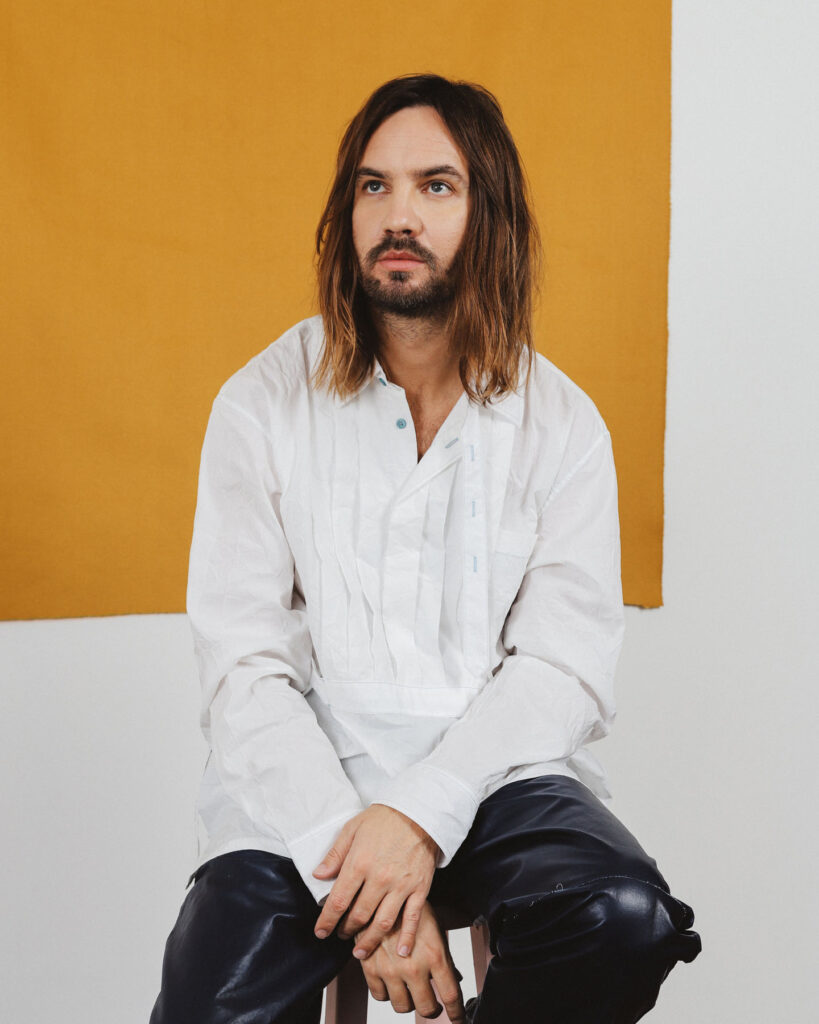
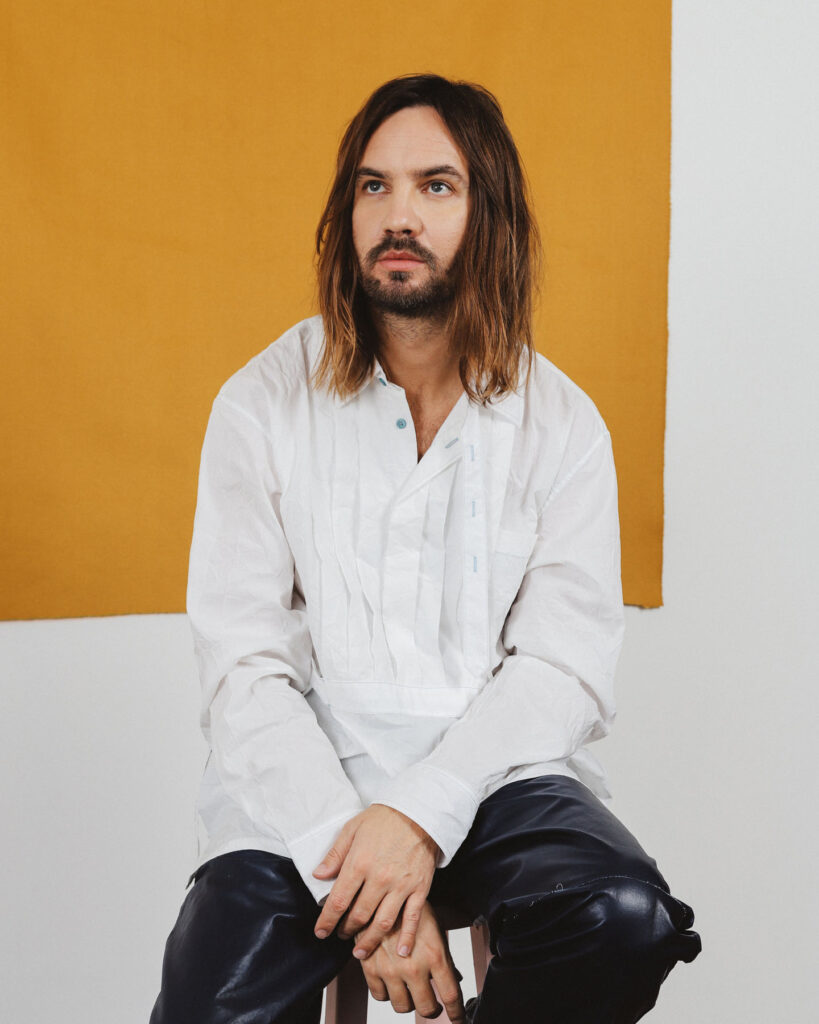
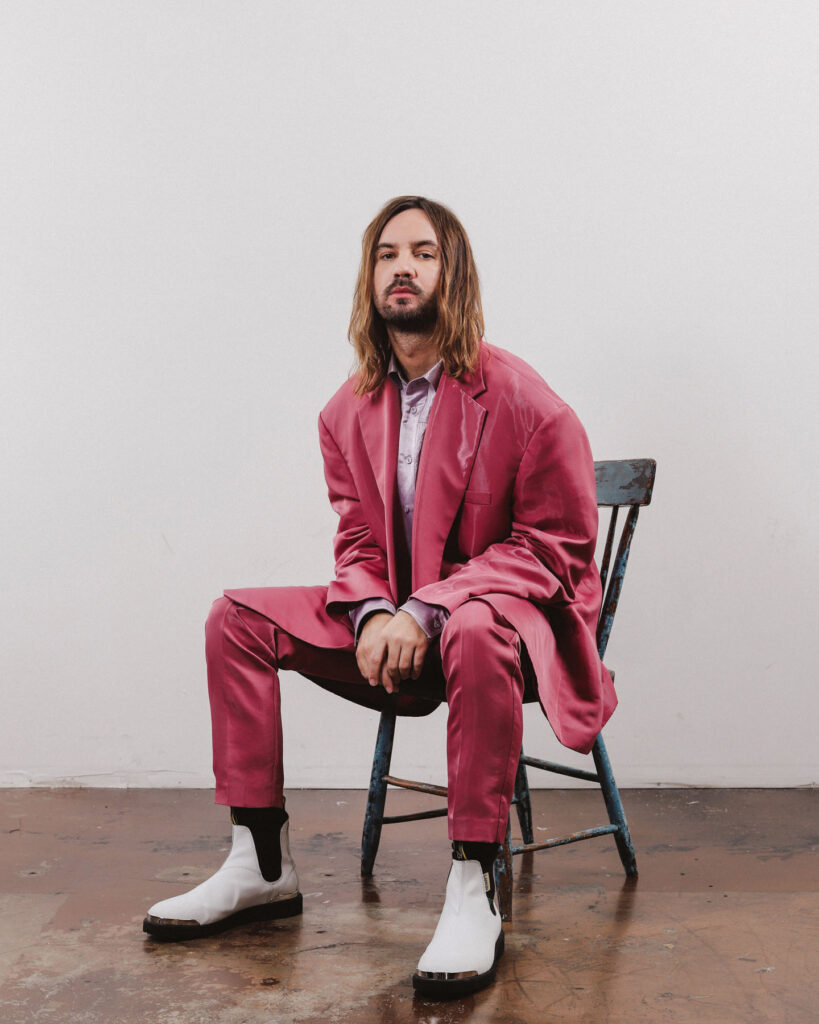
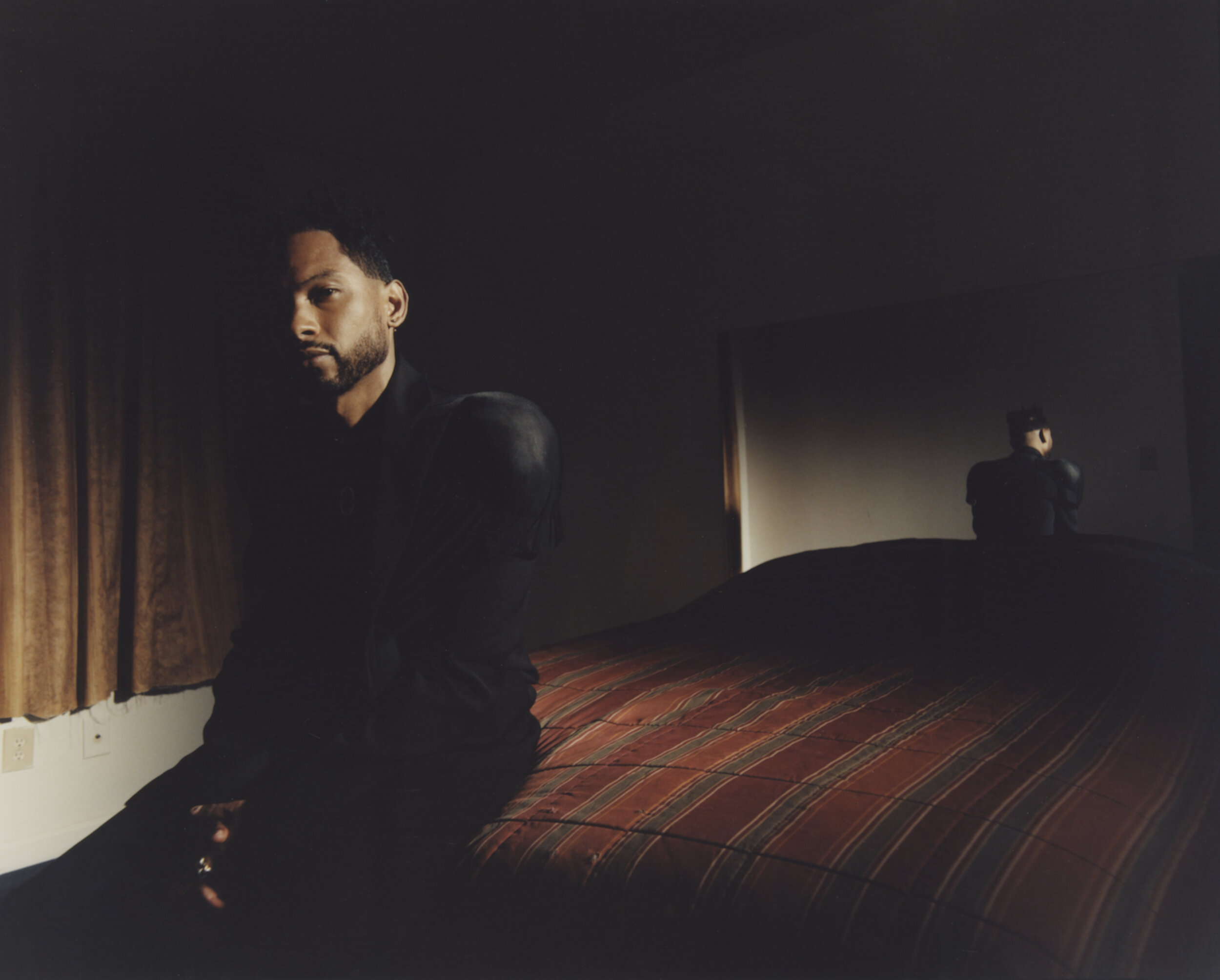
Ellen Allien

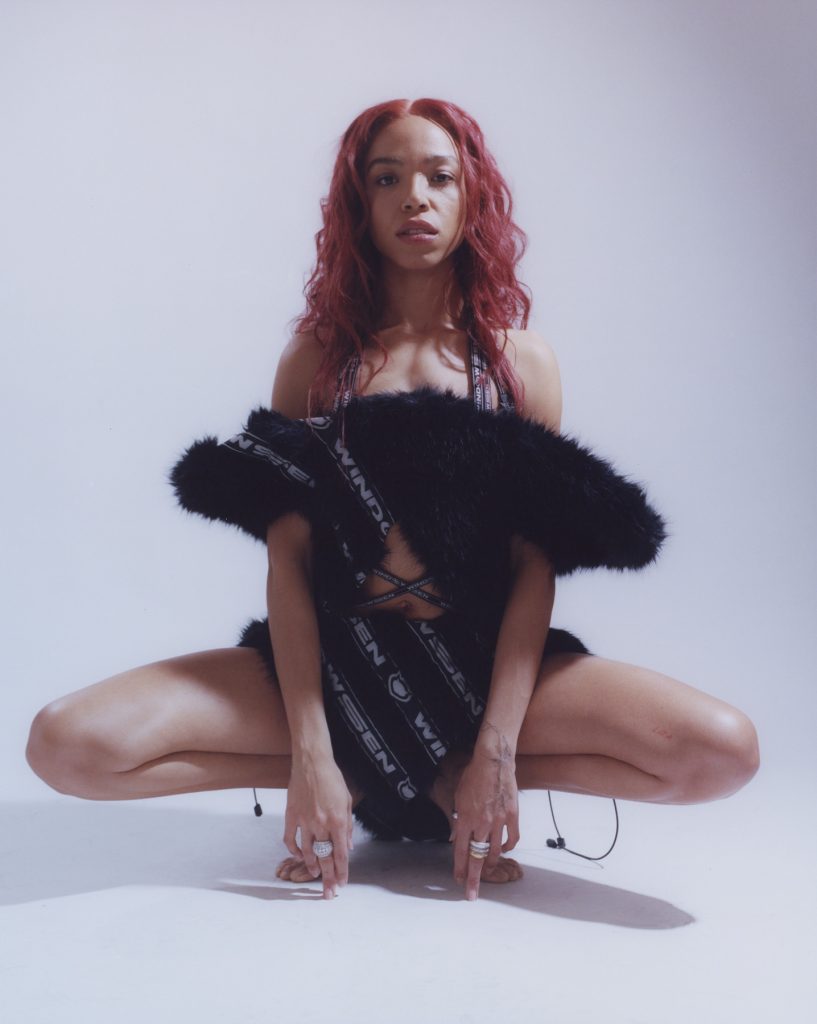
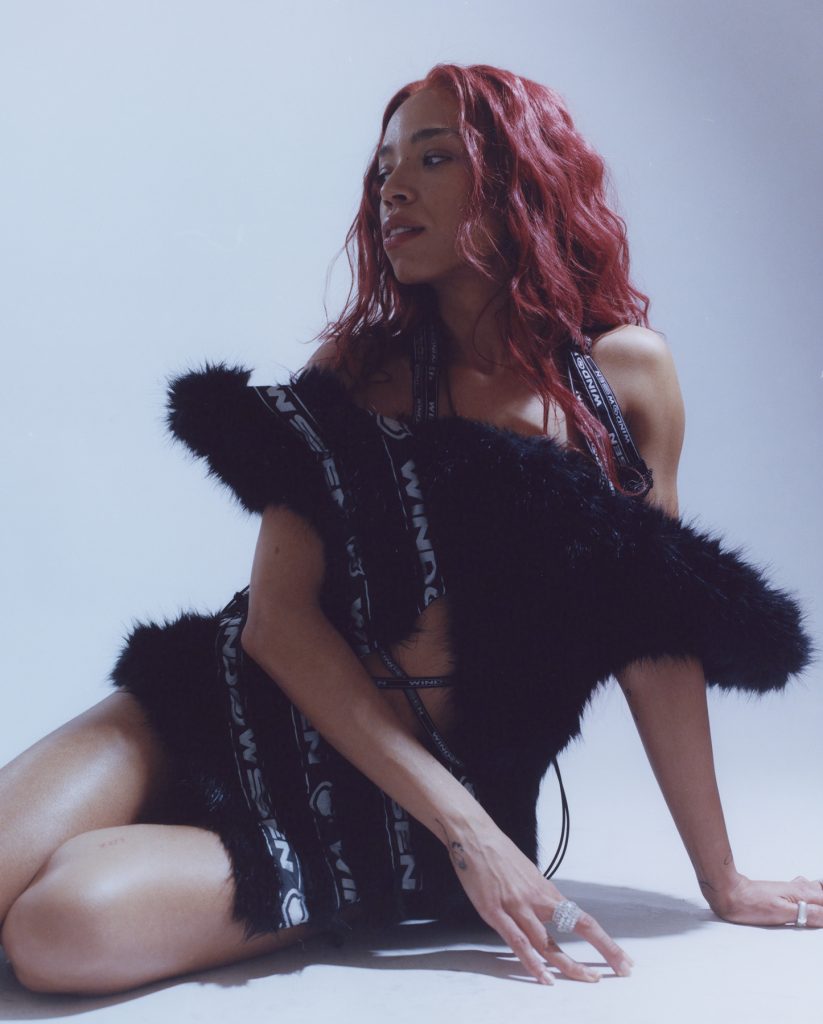
Ellen Allien, the legend of Berlin’s club history, has found that cultivating a strong community has been crucial to her creative process and success since the 90s. Her movement is grounded in friendship, emotional support and sharing ideas and resources. While others may seek rapid growth and instant recognition, Allien values patience, diligence, honesty and a touch of eccentricity.

With an unrelenting passion for new sounds, names and ideas, Allien is always on the lookout for fresh talent to add to BPitch, her multi-genre label founded in 1999, or to feature at her ‘We Are Not Alone’ techno party series and releases. As the big boss and experienced traveller, she takes full responsibility for her decisions and avoids spreading negativity to those around her. While she’s open to other perspectives and voices, ultimately, she makes the final call on what’s best for her. All hail the queen of her own life, Ellen Allien.
Ellen Allien is an iconic name in techno culture, and when I hear your name, I think of unending energy. How do you keep the energy going for so many years?

I’m very positive, and this keeps me going. I try my best not to spread negative energy or bring others down. I’m very social and outgoing, and some might see this as being positive or energetic, but it’s mostly because I know what I want and what’s good for me. I’ve made the right decisions for myself, which allows me to be confident and enthusiastic about life.

While travelling and DJing, I’ve encountered many challenging situations, such as not having a hotel, cancelled flights, missing equipment. These experiences have taught me valuable lessons, and instead of complaining about the situation, I focus on finding solutions. I also witnessed the fall of the Berlin Wall in the 90s, which made me realise how quickly things can change in society. 

We live among other people, which means certain things are beyond our control. For instance, my assistant could decide not to work anymore, or I could choose to close my company. Sometimes, things happen that we have no control over, and we may not have a solution.

The first thing one notices about you is that you’re very community-oriented. You don’t always need to be surrounded by famous or successful people. You enjoy spending time with those around you and creating intimate and fun initiatives, like the lockdown streaming from your balcony to make things more fun. That mindset is unique in this industry, because people often turn into divas or burn bridges with others when they become successful — but you’ve maintained a sense of community, which is impressive.

I’ve been running my record company since 1996, and we’ve worked with many artists. I’ve seen some really unique and interesting characters, but I’ve found that the craziest people often make the best music. So, no matter how someone may seem, we’re always happy to work with them. As long as the music is great, we are willing to deal with people. One artist told me recently: ‘Oh, Ellen, I do therapy now.’ I said, ‘Yeah, the therapy is good for you and your friends. But you know what? Be careful that your music doesn’t change because you’re a genius.’
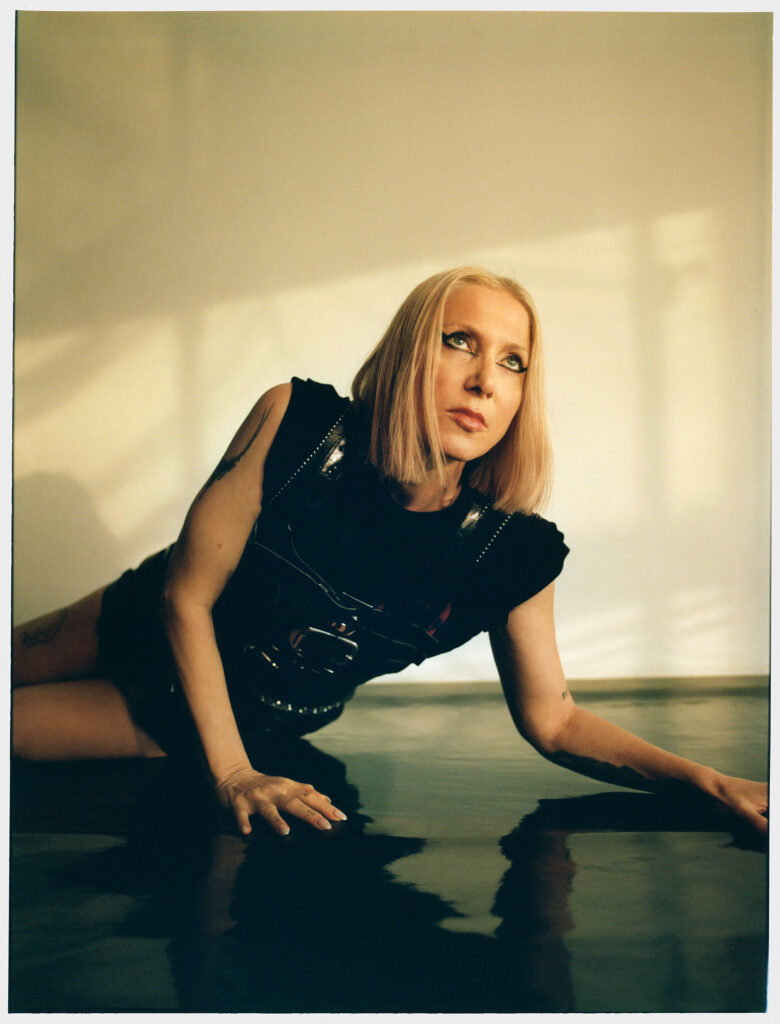
So it means you are good at handling chaos, right? 

I personally don’t have a lot of chaos in my life, but I do notice other people’s chaos. I try not to let it bother me too much; if I can maintain a normal sleep schedule and feel good, I can handle whatever is happening around me. I know that no one can destroy me except myself. If I let myself become too stressed or sick, then that’s my own doing.

Some people try therapy, and some do other treatments to feel better. Music is healing, and it’s something that I didn’t pursue because it was trendy or for money, but because it’s what I truly love. I’m obsessed with music and have been since I was a teenager. It’s my life. I love my job and I love travelling.

Producing something you love is beautiful. When the freshly pressed records arrive, you check a record sleeve for the first time. When you hold a magazine, you see the pictures and read the interview. When a painter paints an image and it turns out beautiful. You can analyse it and see how you can improve it, which brings you to another level. Being an artist is a beautiful thing because it’s created from your energy. Of course, people have to like it, but even if they don’t, you can still be happy if you love it.

It’s important to know your own tastes and trust yourself. It’s easy to fall into copying others, and it might be hard to be original because there’s so much out there. We all have influences, but if you take the time to analyse and understand how music or other art is made, you can try to create something similar in your own way. Many artists do this, and it can be a fun challenge in the studio. But, personally, I don’t approach creating in this way.

In one of your recent interviews, you mentioned that you don’t like this current trend with blends and edits from pop hits and radio music. It became especially noticeable when the internet culture hit the dance floor after we spent too much time online during the lockdowns. How do you not let the trends that don’t resonate with you affect your approach to DJing? 

Playing pop music that everyone knows makes it easier to make the crowd put their hands up for photos and videos, but that’s not what makes a great night for me. A great night is when people dance with their eyes closed or think while dancing, not just putting their hands up to popular songs by Britney Spears or Madonna. That’s the easiest way to have a big audience, but it should be more about finding a way to grab attention by doing proper research. Nowadays, people go online and take stuff they find without effort. They don’t go to record stores anymore, where the person selling records might have suggestions if you ask for something specific.

So, no, I don’t buy this. Maybe those DJs [playing radio hits] are going to grow fast. But they’re not doing anything original, outstanding or fresh. 

Time and people have evolved in today’s world, and so has the audience. As a DJ, we hold power to transform everything. We change the dance floor and the music if we take risks and blend different things together. We don’t just come to mix what’s already there. We must take chances. If you’re not willing to take risks, then you’re not a good teacher to me. Building a history or a specific journey is important, even if you don’t want to create something entirely new.
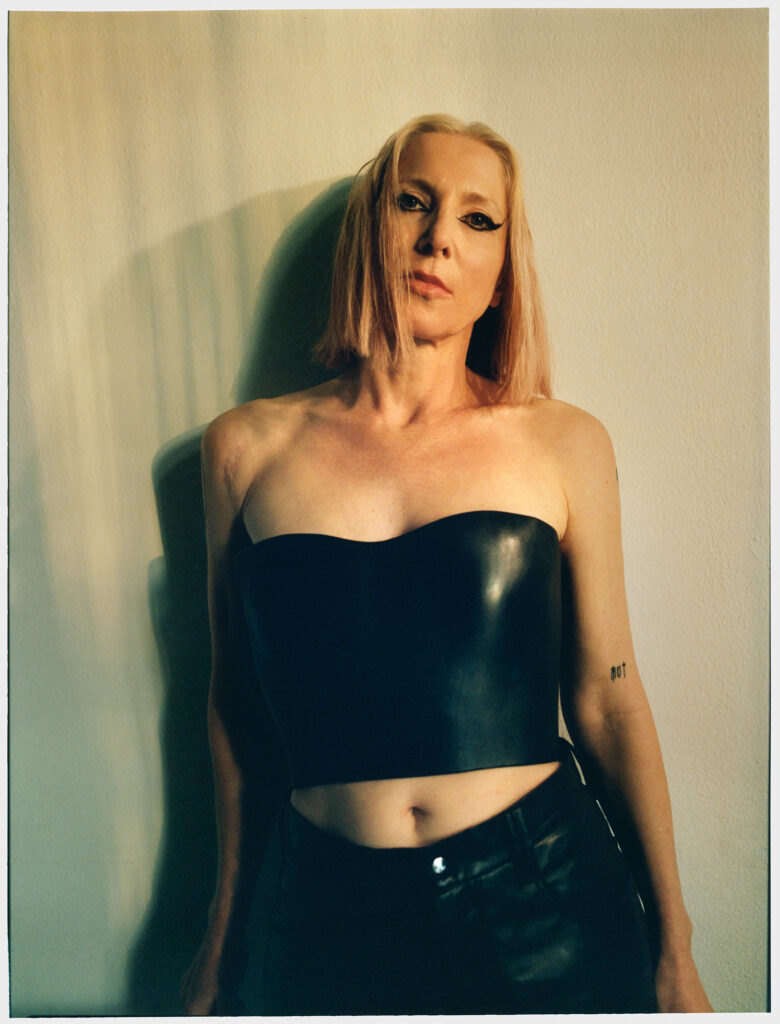
You mean building storytelling in music? 

Yeah, a story. I believe that for something to be considered art, it needs to have a story or meaning behind it. Simply playing music from other artists doesn’t qualify as art unless it’s done in a unique and handcrafted way. I love to bring people pleasure through my music. Seeing the audience react emotionally, whether it’s through smiling or crying, brings me joy. My goal is to create an atmosphere where the music takes over and the audience becomes lost in the sound and space. I want to create an experience where people can escape from their daily lives and immerse themselves in the music and atmosphere of the club.

Music is becoming increasingly global, with different scenes influencing each other. For example, many use Baile Funk or other edits of Latin American music in their sets. You’ve recently travelled to Brazil. Did you get inspired by the variety of music there and their unstoppable desire to dance? 

In Brazil, there are so many good musicians in the streets and slums, playing drums and making music everywhere. There are so many talented artists exploring new beat structures and so on. The scene in São Paulo is amazing, and it’s growing. The Carlos Capslock Festival was also fantastic, most of the festival goers are Brazilians, everybody is so kind, you can meet so many people and quickly connect with them. It’s super inspiring. I think it’s essential for Brazilian music to grow because Portuguese is more widely spoken than English. This music has to grow, and it’s great that black artists are getting more recognition now. After Black Lives Matter, everything changed, and more black artists are getting bookings now. This has to be the norm. We need Brazilian and South American music worldwide, playing on the radio in England, America and Germany.
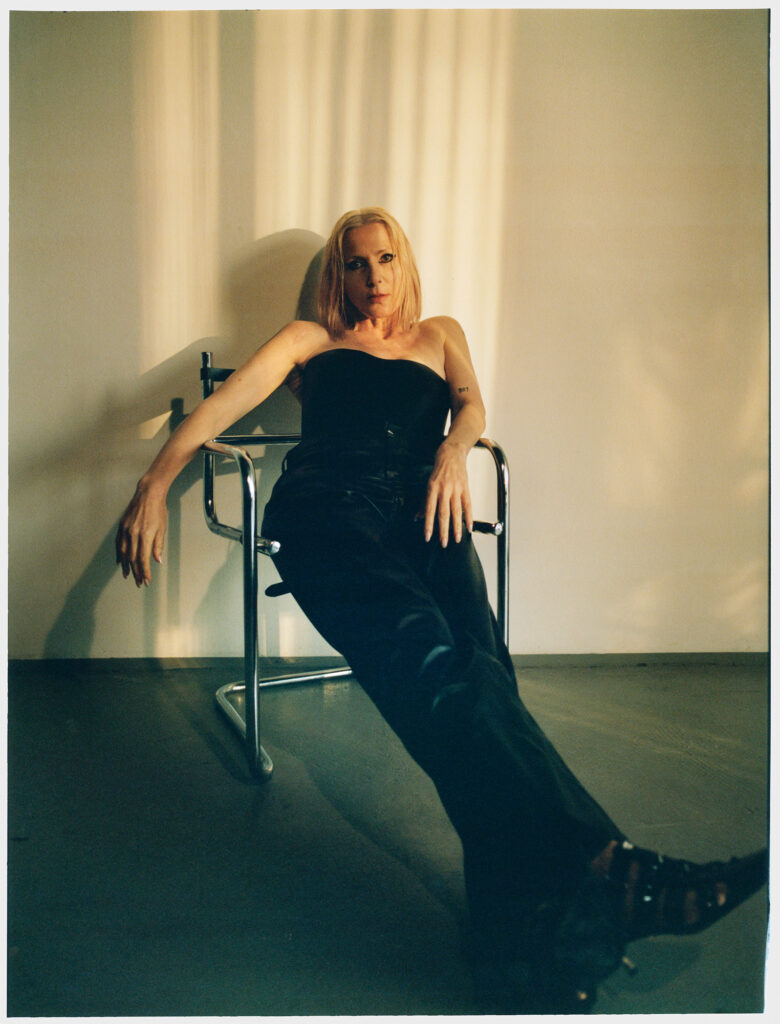
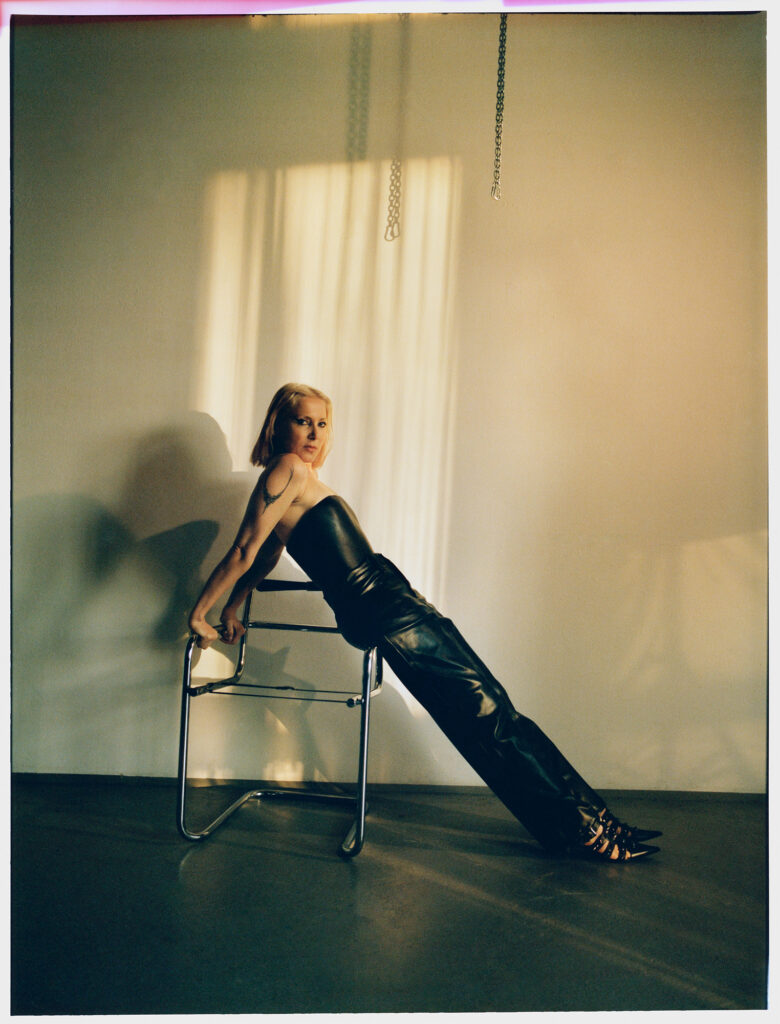
You mentioned earlier that you worked with Badsista on a track while you were in Sao Paulo. Is it something new that you will release together? 

We went in the studio and both recorded some vocals—she in Portuguese and me in German. We have to see later if we can use it.

I feel like after the pandemic, the techno scene has become more hysterical. Everyone is trying hard and fast to make it happen. It’s just like there’s not so much community spirit from my experience. To me it seems like many people are agitated to make a lot of money in one go. But how do you feel about the techno scene after the Covid?

I don’t have those feelings, at least not with our artist here at BPitch. Maybe at the beginning, some were nervous about paying the rent because prices for everything got very high. But I don’t feel like artists are hysterical because they have shows. Some promoters have failed, but some have become big. Many shows weren’t sold out last year, but now many of my upcoming shows are already sold out. 

On the other hand, too many artists want to grow fast because they see others doing it and want the same success. For me, it took a long time to start making good money. I had three side jobs for the first ten years, but that’s not something every artist goes through nowadays. However, you can grow fast if you have the right plan and a good manager. So, if that’s what you want, go for it! I just feel like if you don’t build a community around you, you will not last. I don’t care about those who don’t support or invest time in others. For me, music is sharing and caring. It’s also an intellectual exchange. 

To build a community in music, it’s essential to connect with people. You can invite your friends to collaborate on mix tapes or DJ sessions and make music with others as we did in Brazil. Even if nothing comes out of it, it’s still worth doing. This is a movement, and you’re just a little part of it. So it’s important to go with the flow.

If you’re nervous about business or money, people can sense it. They can see it in your face and on social media. Narcissists get anxious easily. They crave attention, money, and success; if they don’t get it, they freak out. They lack empathy and don’t care about building a community. They may create music that pleases the crowd, regardless of quality, just to gain popularity quickly. These people are not part of the true music movement. They have their own agenda and are only focused on their personal gain. Unfortunately, there are more and more people like this, as many grow up without a strong family structure or support system. 
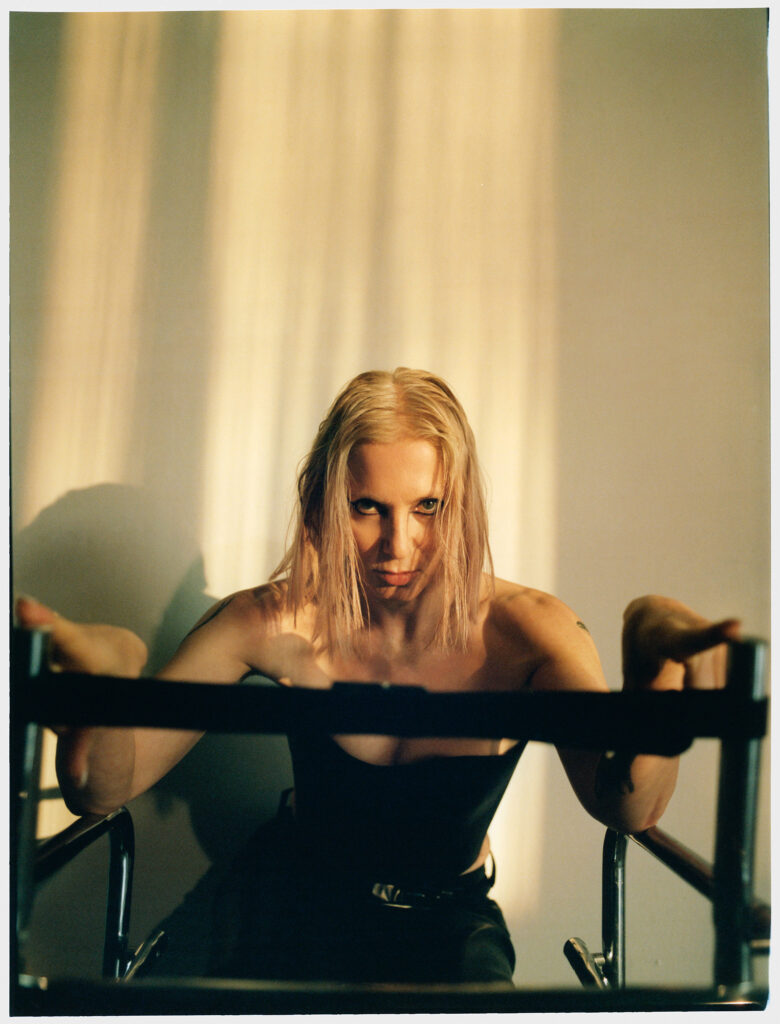
Your own parties ‘We Are Not Alone,’ held at RSO Berlin, invite various artists from big names to local emerging talents. Are you planning to get more extensive and international with it, or do you want to keep it intimate in your hometown?

Our approach with ‘We Are Not Alone’ is what I meant by ‘the community.’ We invite artists we love but also ask friends from our BPitch family to play. We try to have a colourful, queer booking. Our lineups are made with love, and we research a lot. We listen to the sets and productions and make sure that the artists we want to present fit our lifestyle. For example, when people run labels, you can see they do something for the movement. 

I like how you use the word ‘movement’ and not ‘scene.’

Movement means that there is a big river and we take each other in the right direction. I find this metaphor powerful because it reminds me to create and not get too nervous, even when our governments are stirring up fear. I see this as a radical way to survive in big cities, by not giving in to what they try to put on us and working for small companies instead. By building our own companies and supporting other talented people, we can make our movement bigger and stronger. But it’s not possible to do when you are working with Madonna edits, there are so many other talented singers to work with and reference. Just do your fucking research!

When your Rosen EP came out in early 2022, you started using the metaphor of the mask from the album’s artwork by Erased Memories. Is this about becoming more genuine when one takes off their mask?

When I released the album, I wanted to play more with this alien figure with a gold aura, based on the artwork of my album cover. I then decided to wear masks on my face as a way to emphasise that the image people have of me is not me but a projection of their beliefs and values.

Everyone sees me differently, depending on their religion, education, and other factors. That’s why I feel like I’m a fictional character that people create in their minds. But I’m okay with that, because I understand that people’s perceptions of me are influenced by the stories they hear or the media they consume.

Wearing masks helps me to emphasise this fictional aspect of my persona. It’s like a visual cue that reminds people that what they see is not necessarily the real me. This concept also applies to how I write my lyrics, as I often use metaphors and symbolism to convey my message. I like to keep things open-ended. The sentences in my music have a spiritual quality to them, allowing people to interpret them in their own way and let their imaginations run wild. That’s what makes techno so important to me – it’s electronic music that can allow people to dream and fantasise in their own way. My music is not about me or my message, but rather what people can make of it themselves. While I appreciate punk bands and raw lyrics, I also need music that lets me fly and dream and put my own ideas into it.

I feel like often, because of this escapist and hedonistic side of the club culture, people lose connection to reality and forget what techno represented originally. The idea of escapism was also there, but it was initially about exposing and resisting the world’s injustices and striving toward a more equitable and inclusive future. In today’s techno world, people often lose the connection to the times and places where music was a statement.

Music is still a statement. At least, at our parties, music is a statement. Of course, there’s also the capitalistic side of techno now because promoters want to make money with it. But there are communities in the underground who seek freedom, and by exchanging their ideas, they get stronger. That’s why a club is a place where not everybody should be able to enter.

The community must have space to communicate and create new forms of life. In underground clubs or rooms that aren’t accessible to everyone, people exchange ideas and make changes. They can say, ‘Tomorrow, let’s take to the streets and stage a demonstration, and 5,000 people will join us.’

All of this is created on platforms, whether physical or online spaces, that are not accessible to everyone. The club scene is particularly important for this. I’ve met many people I work with at clubs, bars, and restaurants. These places serve as essential meeting points. They are not just drug dens like some movies portray them. Instead, they serve as platforms for people searching for something they can change.

I hope we can create change together and find people who share our passions, whether in politics, photography, design, or any other field. On the other hand, some people are consumers [of club culture], and they need these spaces as therapy. 

We need these experiences to lose ourselves and sometimes to find ourselves again. It’s also a way to feel reborn. However, some become addicted to the lifestyle and end up in financial trouble, and you don’t see them around anymore. They may move to a different place or start doing something else. On the other hand, some creatives draw inspiration from the music and the people they meet there, and it fuels their creative blood.

I’ve met many people who used to have regular jobs but quit to work with creative communities. This transition can happen if you meet a diverse group of people, not just those from your field of study. In Berlin, many people meet at clubs. These clubs need areas where the music isn’t too loud so people can talk, sit and communicate effectively. This is crucial because it’s where many great ideas and collaborations start, eventually leading to art and other creative projects in the city.

Berlin is still attractive for newcomers, but many are complaining about gentrification and how it’s changing the city and its club culture. Local creatives are concerned with rising rent prices and living expenses.

The solution is to start rebuilding Berlin further outside the city centre, where space is still available. It’s up to us to bring our energy and make something happen rather than trying to fit into already overcrowded areas. When I started living in Kreuzberg, it was an underdeveloped area, but someone made it happen. We should remember that and try to replicate that success elsewhere.

In an earlier interview, you once said that in the 90s, when you were starting your DJ career, being a DJ also meant being a freak. To me, it means that being a DJ requires a certain level of uniqueness or quirkiness. What does this ‘freaky energy’ mean to you today? 

Like I said earlier, if you’re not different from others, you can’t create music that is truly unique. Having freaky energy is always good when creating music. You can approach music in a mathematical way, and it can still convey a lot of emotion, but it may lack some empathy. I prefer music that’s a little bit dirty and strange rather than ‘clean’ or sweet. However, it’s up to the listener to decide what they prefer, and I think every type of music has the right to exist. Having a bit of freakiness helps to create something new and different.

Team

Talent · Ellen Allien
Photography · Nina Raasch 
Styling · Fabiana Vardaro
Hair · Berenice Ammann  
Makeup · Sabina Pinsone 
Set Design · Stefanie Grau 
Photography Assistant · Žilvinas Tokarevas
Set Design Assistant · Lars Schefftel
Styling Assistant · Eimoan
Location · Plush74, Berlin 
Interview · Mariana Berezovska
Special thanks to Milena Brandy Crow and Melissa Taylor


Designers

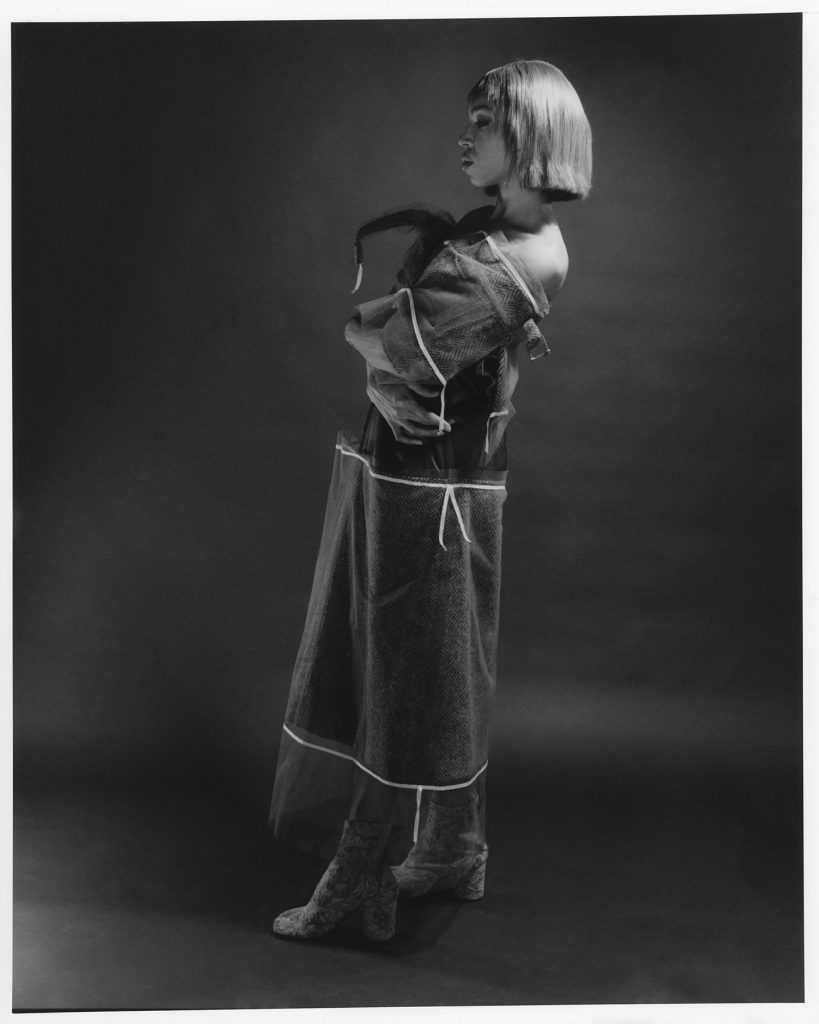
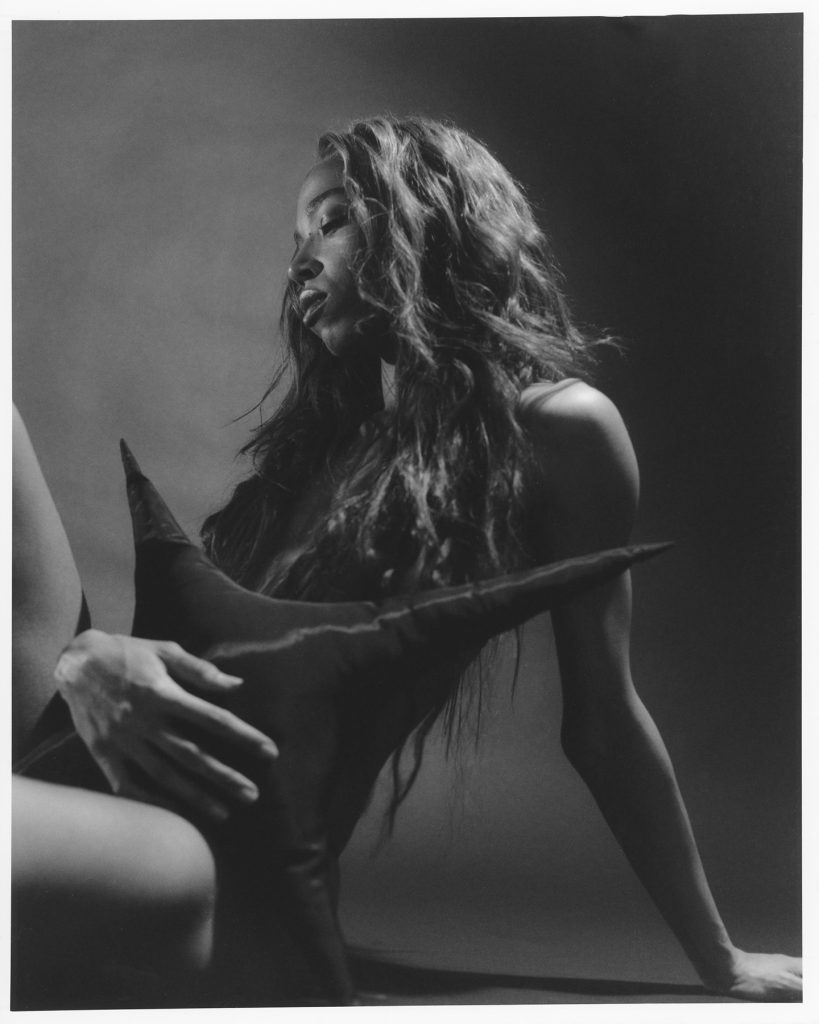
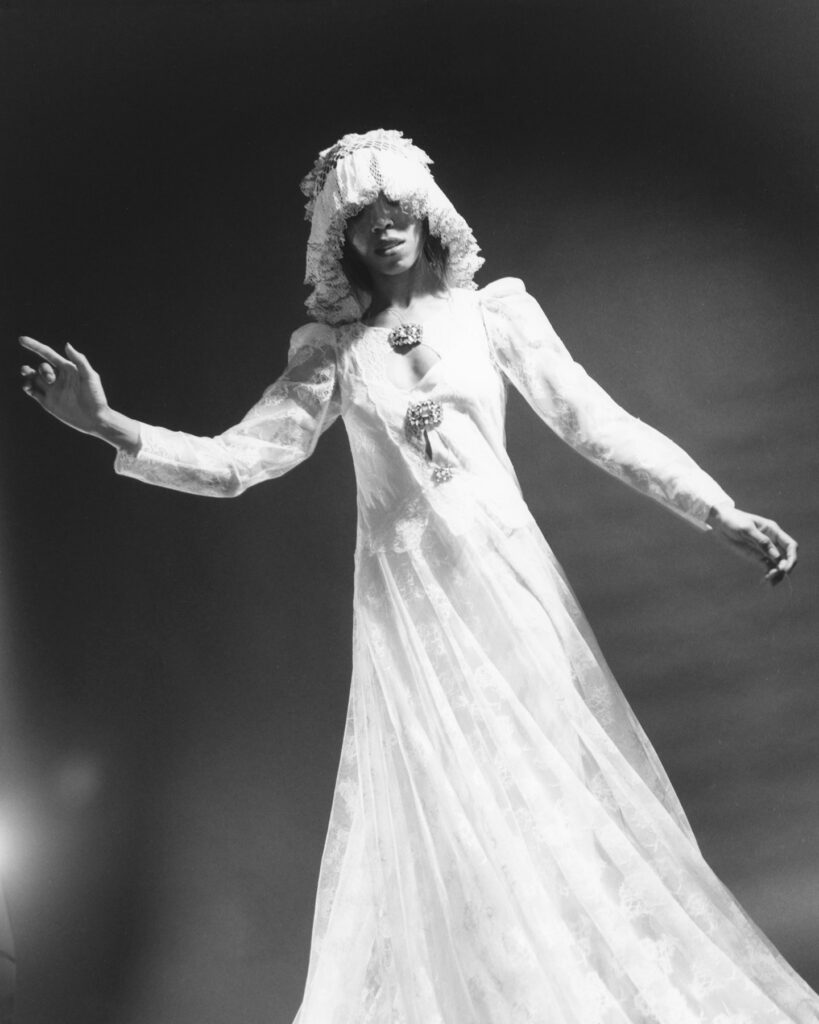
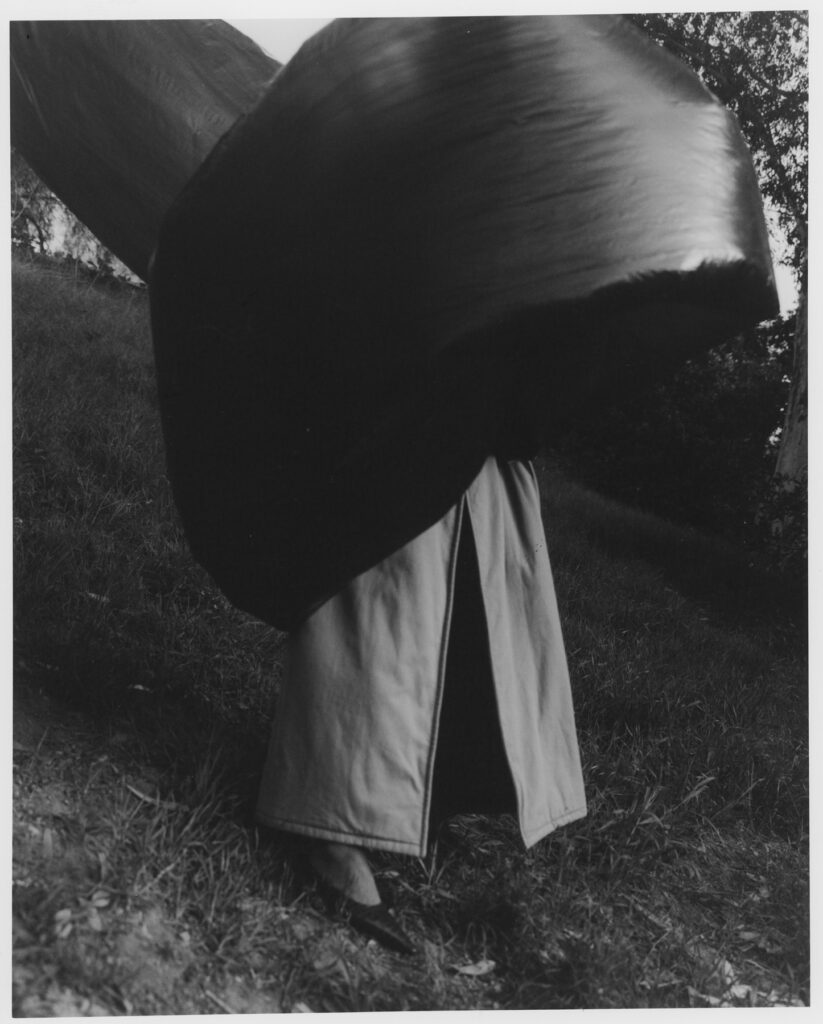
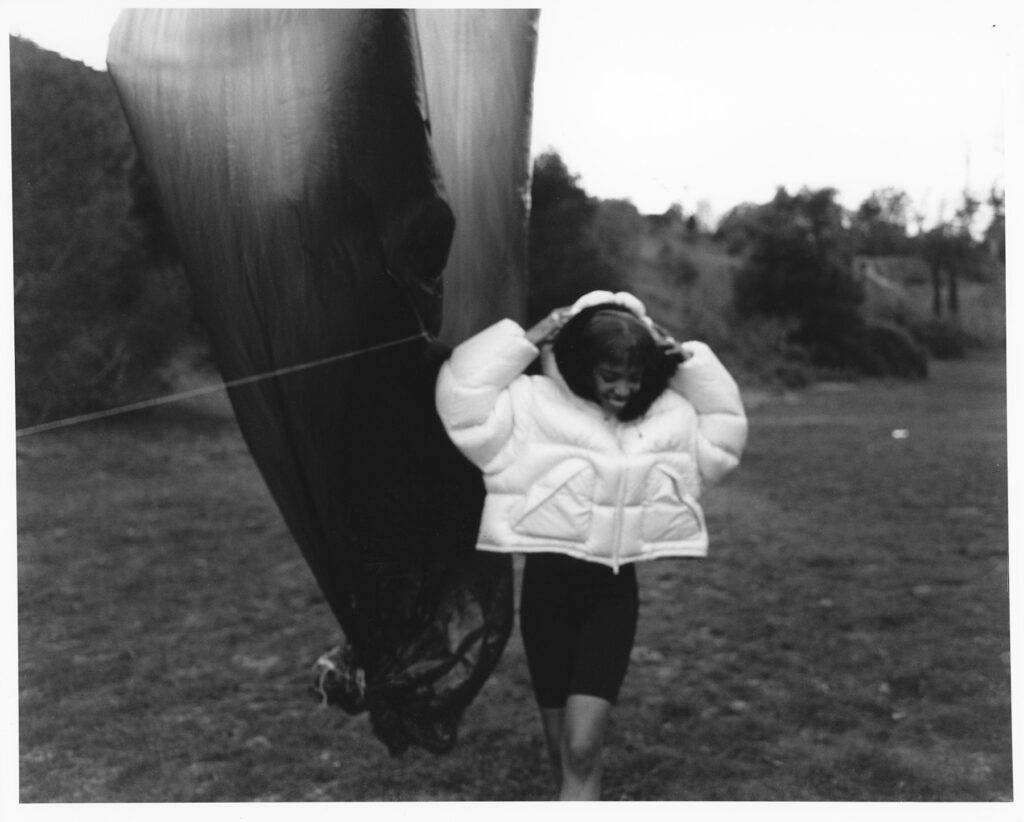
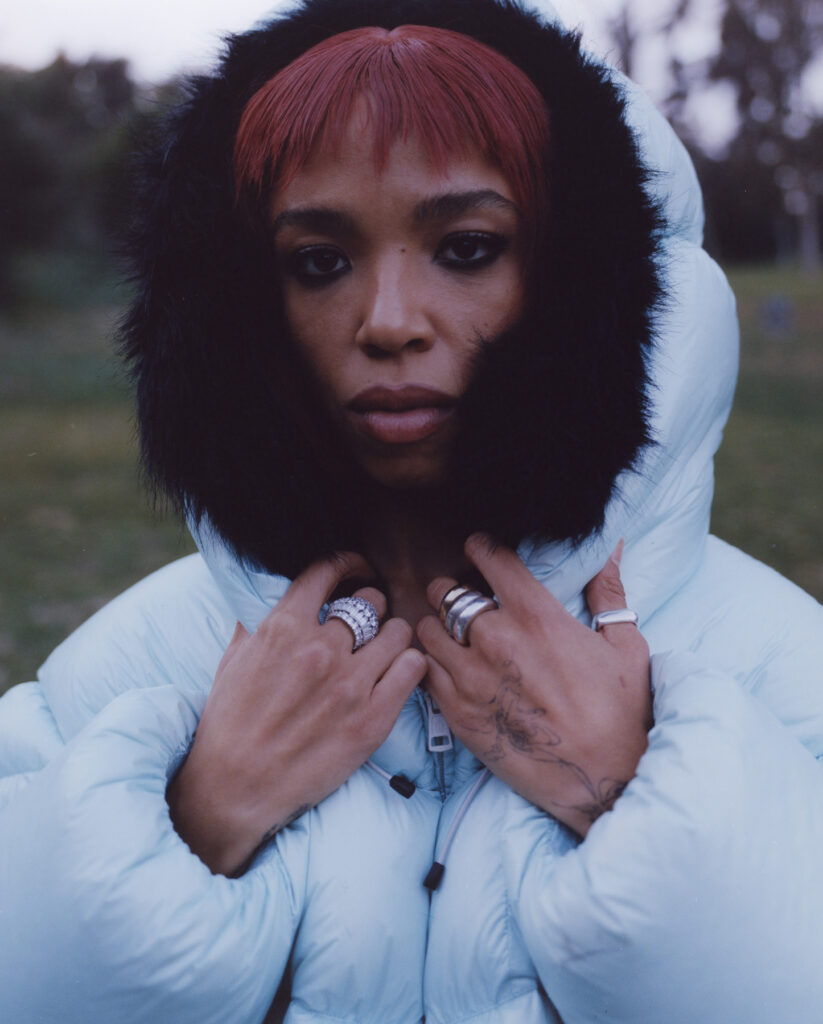
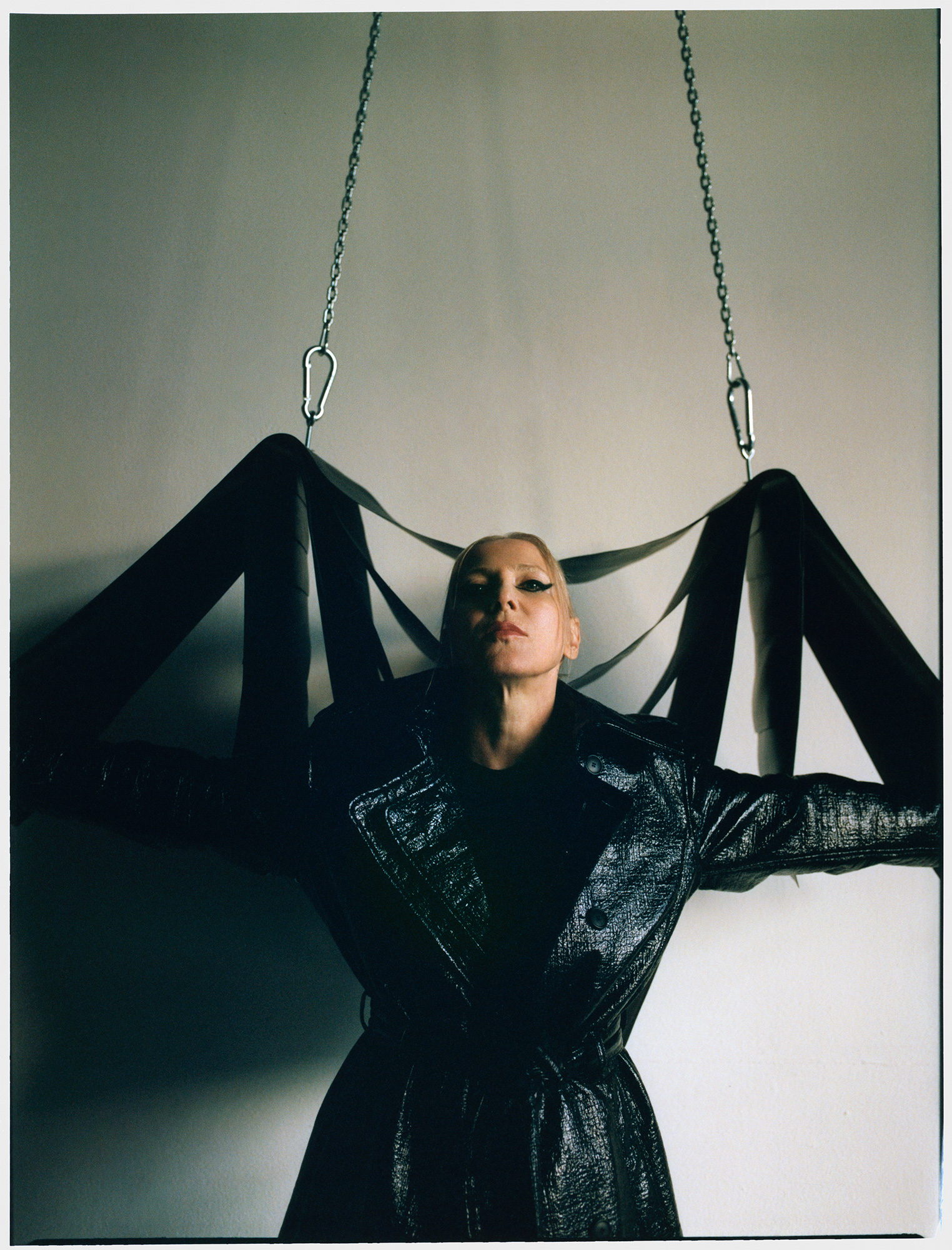
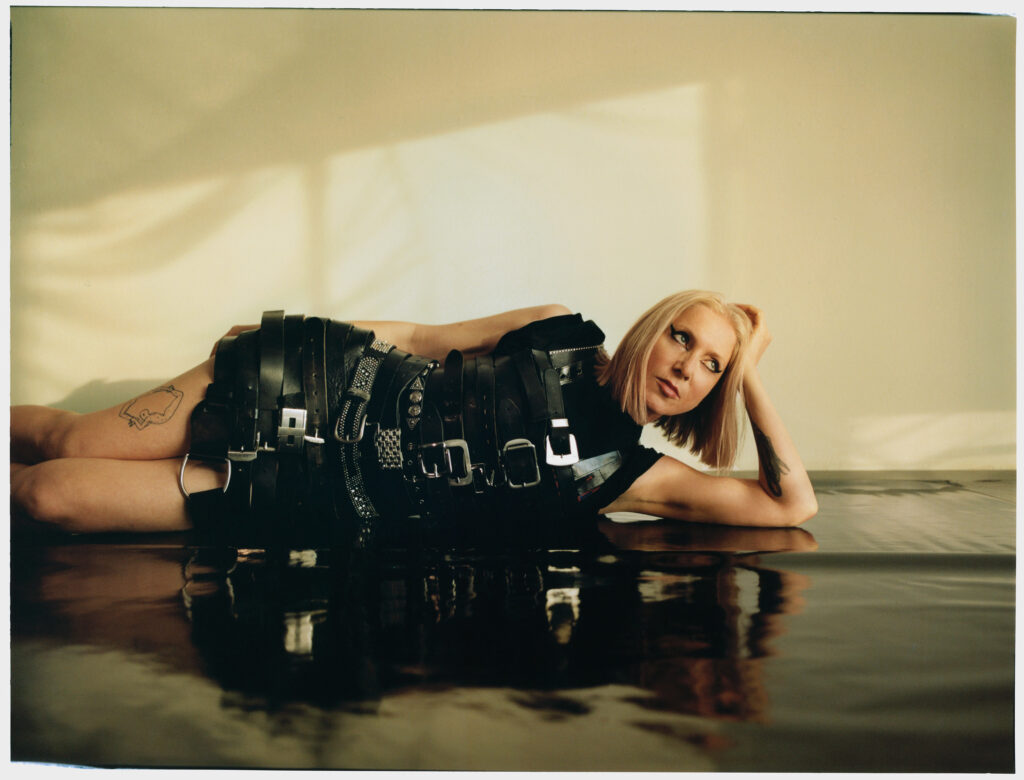
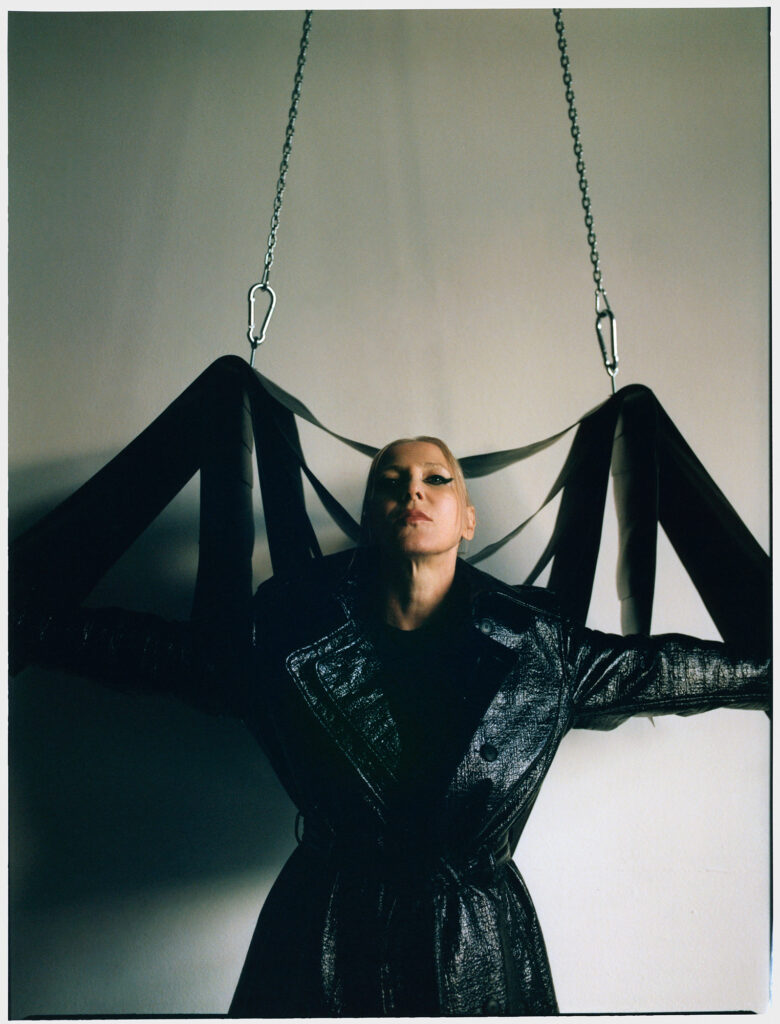
  1. Dress JEANNE FRIOT
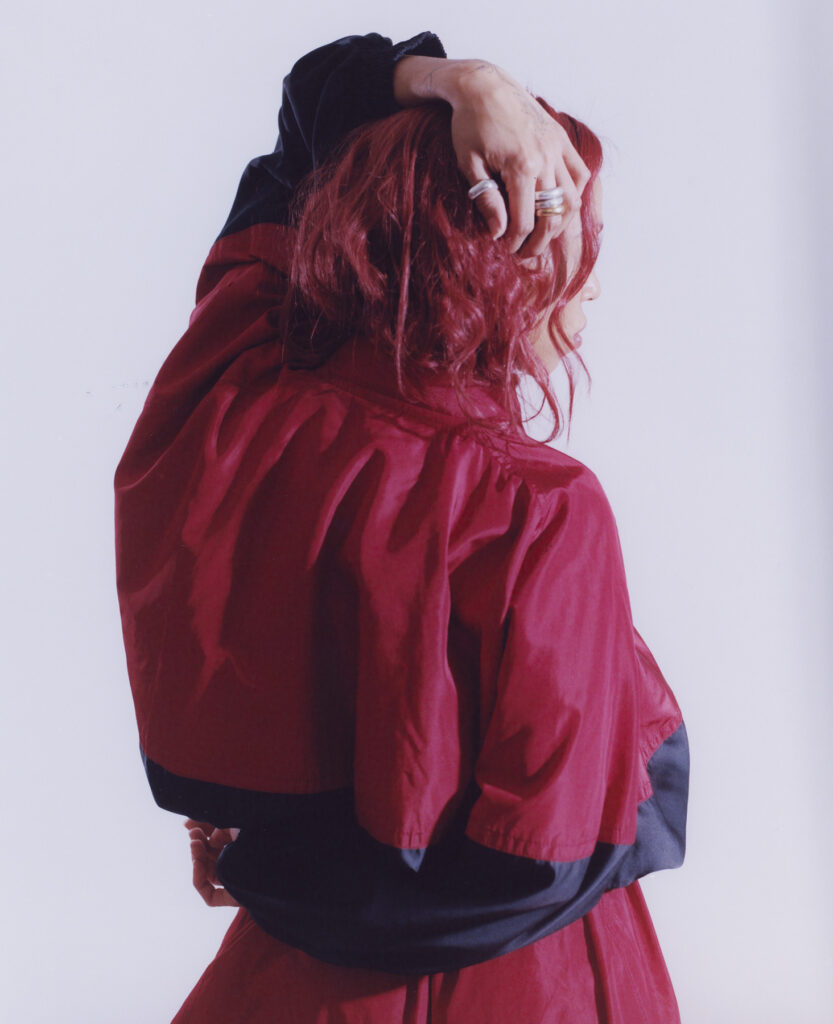
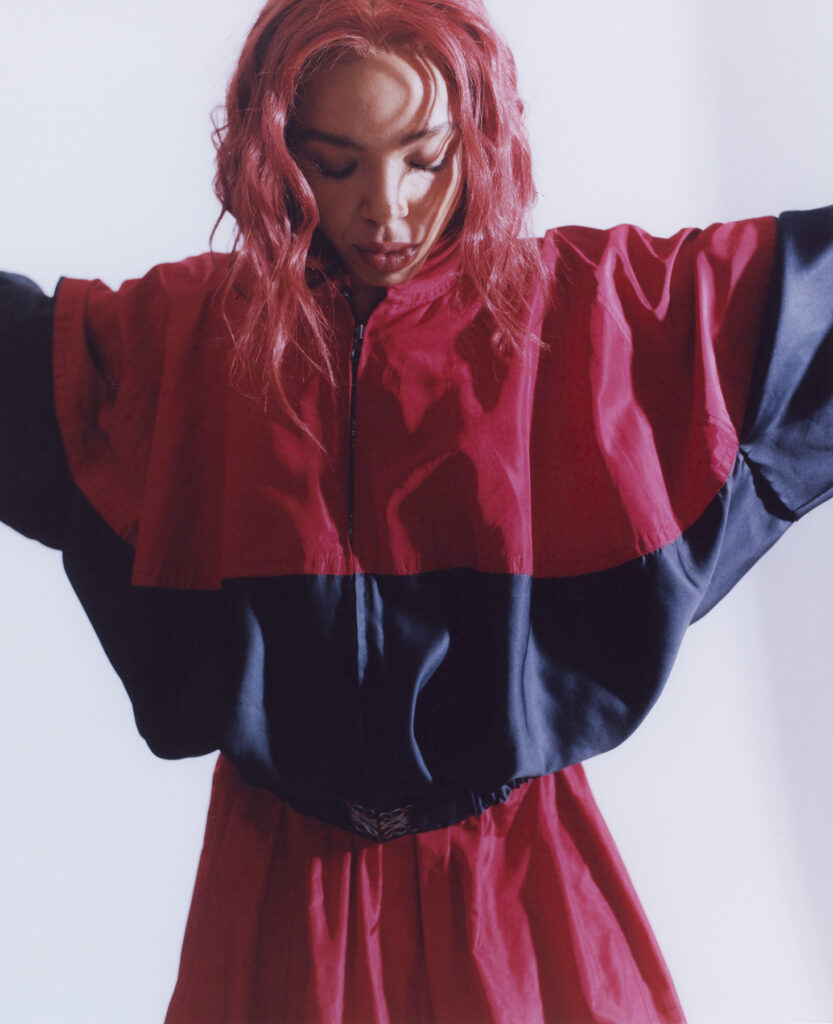
  2. Trenchcoat RICHERT BIEL
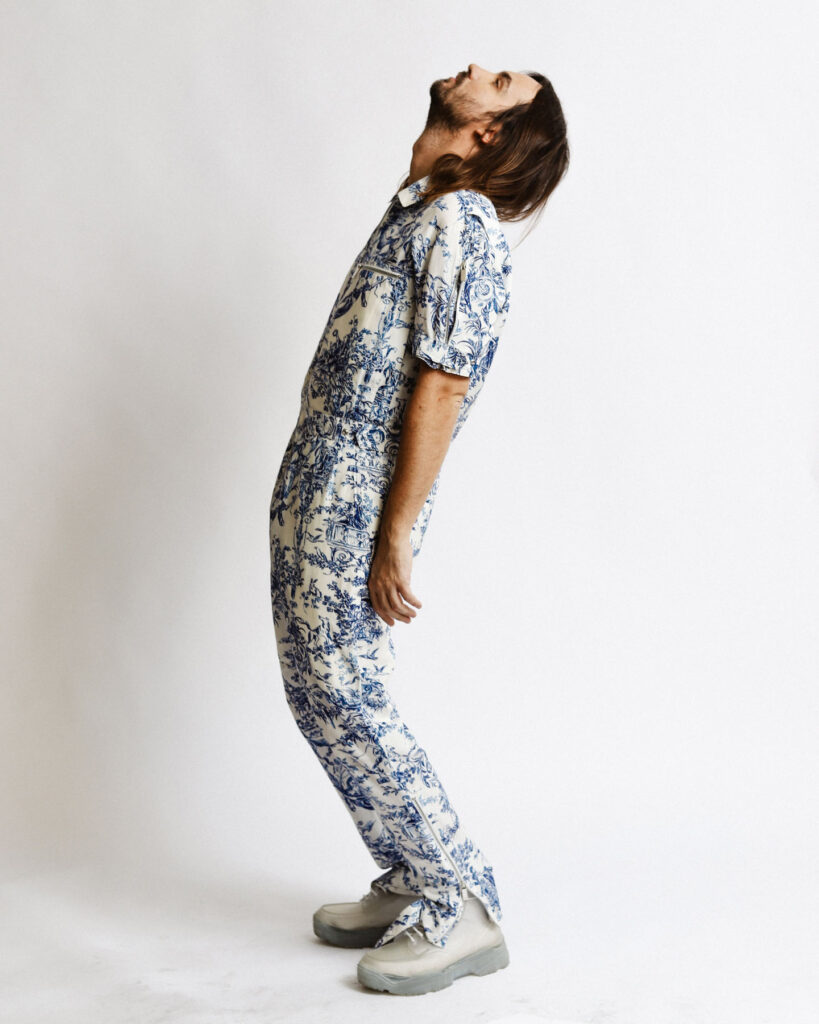
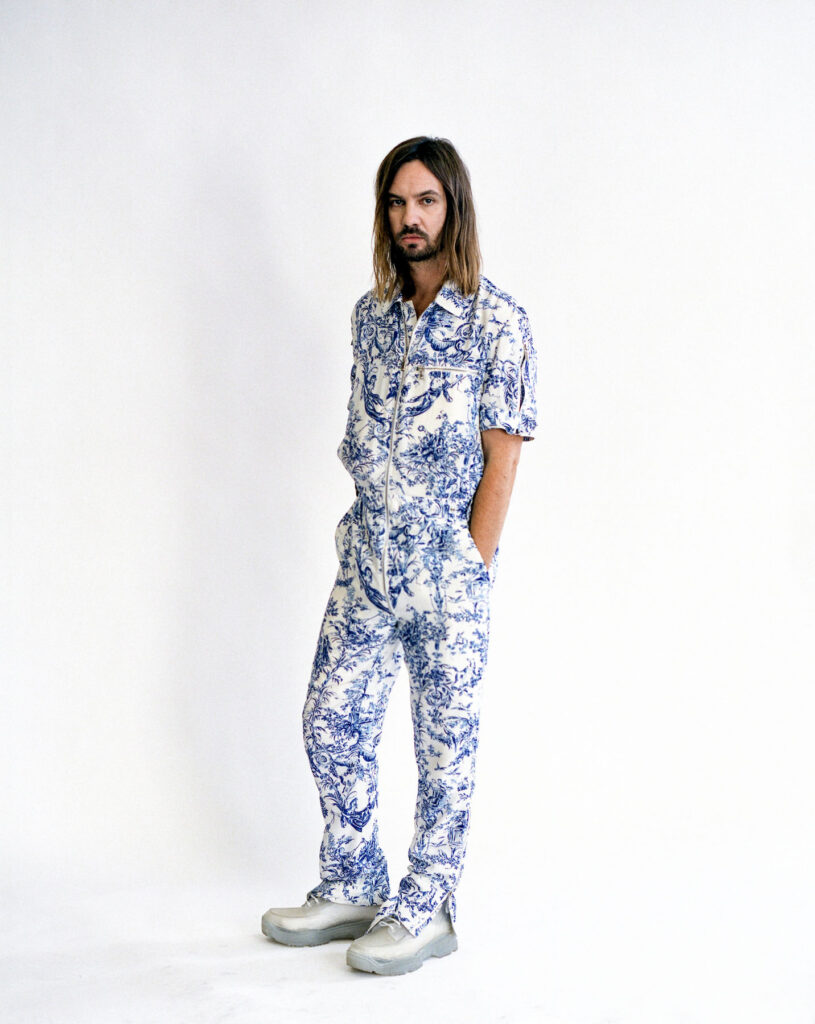
  3.  Bustier FENDI, trousers SIA ARNIKA and shoes VERSACE
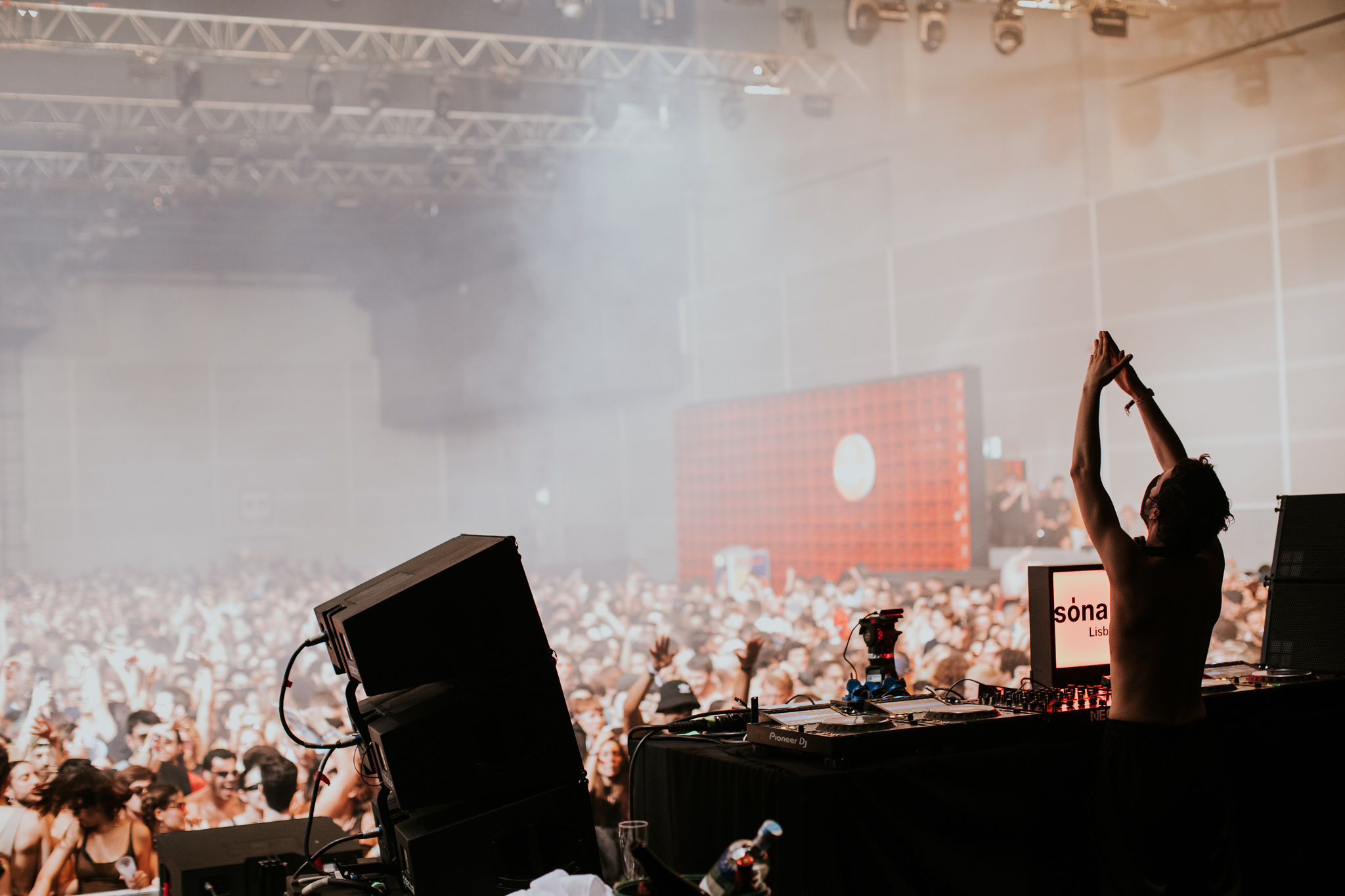
Sónar Lisboa 2023

For the second edition of Sónar Lisboa, a music and visual technology-driven art festival and sister event of Barcelona’s annual happening, which celebrates its 30th anniversary this summer, I had the opportunity to interview Gustavo Pereira, the main curator of the Portuguese team. With years of experience in the music industry and as a well-known DJ and promoter in the city, Gustavo closed the festival with a b2b DJ set alongside the legendary Rui Vargas, delighting the dedicated dancers.

As the festival season opens in Europe, it is fitting that it begins in Lisbon, one of the most beautiful and vibrant cities of Europe, which is also undergoing the most dramatic gentrification on the continent. Festivals have the potential to shape the cultural and social landscape of a city, and in this interview, we explore their responsibility to consider their impact on the local community and create a more inclusive city. Together with Gustavo, we discuss how responsible and inclusive programming of influential cultural organisations and promoter groups can impact the development of cities, gentrification, and support for local artists.

In our conversation with Gustavo, I am curious about Sónar Lisboa’s mission to promote forward-thinking culture, technology, and lifestyle while shaping the authentic side of the Portuguese edition, preserving Lisbon’s diversity and tackling homogenization. We also discuss Sónar’s approach to featuring local talent and its role in supporting the local music industry in the face of gentrification challenges.

As an experienced raver yourself, what changes have you seen in the Portuguese scene in recent years? And what inspirations and influences from the other scenes and cultural spaces have become more prominent here? 

I’ve been going to parties and live shows ever since I was really young. First, I went to live shows with my parents, then around 13/14 years old, with my brother, and later on my own. When I started clubbing, I mostly went to clubs and raves around Portugal and Galicia in Spain. I’ve seen lots of live shows, clubs, and nightlife in different genres and settings. Nowadays, I feel we’re going through an identity crisis because of the massive amount of music available today. People get used to that and look for all kinds of music and events, which, of course, is not a bad thing. In a way, it was easier to identify who listened to what, and that’s not happening anymore. 

Portugal is a melting pot for diversity and influences from other countries and cultures, and that reflects in the number of amazing artists we have nowadays producing incredible and extraordinary music from what’s been heard before. There is also a lot of respect for the origins and the music foundations. Personally, I try to get a nice balance between the old school and the new school: experience and creativity. 

What direction and guidelines in the curation do you share with Sónar Barcelona? And what makes Sónar Lisboa unique and worth travelling to? 

We work together on the line-up, but it’s always very important to present a balanced line-up with local talent, live shows, advanced music, and a contemporary vision with a touch of the foundations. Just the fact Sónar Lisboa is happening in a different city makes it unique and gives it a different touch. The local talent flavour, the gastronomy, the venues, and the experience are different here. Barcelona is the sanctuary, of course, and you can’t compare both. Just assume our differences and make it also special.

Lisbon is going through heavy gentrification, people are being pushed outside of the city, and young local creatives can hardly afford to live in the city, which is, of course, a significant loss for the city’s cultural development. Is there a way for Lisbon’sLisbon’s music industry to have a say in this development and think together with the city about how to make this situation fairer for the locals (I noticed the festival had been supported by Turismo de Portugal, Câmara Municipal de Lisboa, and Turismo de Lisboa, so I assumed such conversation might be a part of the discussion within your team)? 

There’s no interference in the work of those institutions from Sónar Lisboa. We have main concerns, and of course, we try to fight to promote the local culture and give everyone some voice and promotion as much as possible. It’s not an easy task, but the support from these institutions is also essential for our job here and shows their interest in it. At the moment, only the Lisboa city hall is supporting us, and we really appreciate it, but of course, the initial support from the other institutions was really important for our kick-off.

Due to its long history of immigration and colonisation, Lisbon is home to a diverse and vibrant mix of cultures, contributing to the city’s unique cultural identity. The city has been a port of entry for people from many parts of the world, including Africa, Asia, and the Americas. Gentrification can lead to a homogenization of the city’s culture, making it difficult for underground creatives to find audiences and venues for their works. How can Sónar, as an establishment for a forward-thinking culture, technology, and lifestyle, contribute to preserving the city’s diversity and tackle the problem of homogenization? 

Sónar Lisboa is part of the private cultural sector that helps promote and disseminate multicultural and diverse artistic talent. We have in our backbone the will and passion for exploring the heterogenization of national and international culture as much as possible, especially in the music and visual sector.

The Portuguese artists featured on this year’s Sónar line-up, such as DJ Nigga Fox, Rui Vargas and Gusta-vo, Violet and Photonz, and Sensible Soccers are significant to the local club scene and also made an essential impact on putting Portugal on the global map, and thus, of course, are essential to be a part of your booking. Yet, from some recent conversations with friends from the underground music scene in Lisbon, I learned that the smaller collectives feel underrepresented by the big festivals in Portugal, such as Sónar, that could potentially offer them financial support and opportunities to build international audiences and gain recognition. How do you, with your curatorial team, approach featuring the local talent in your program? 

We try to balance our work and actions as an organisation as well as possible. Of course, some of the names are already recognised but new and fresh names from smaller collectives as well. We keep our ears and eyes open but unfortunately don’t know all of them as we wish, and also, we don’t have slots for everyone all at once. We try not to repeat many artists from one year to another to give space to different artists to be part of Sónar Lisboa.

One of the central features of this year’s program of Sónar is the AI-generated image campaign. The fast-growing advances and use of AI technology have caused considerable anxiety in creative communities. There’s a growing sense of the digital and physical becoming blurred and reality becoming increasingly subjective. What role does the discussion on the AI influence in the music and visual art production play within your team and the scene you represent?

The discussion makes the intangible more tangible, and the conversation allows an ongoing dialogue within a community that can help regulate, find solutions, and even integrate responses to problems from our everyday life.

Sónar focuses not only on music but “Music, Creativity and Technology.” In your view, what trends and developments are driving the evolution of electronic music? 

Definitely machine learning is interacting with all forms of music and visual development in this industry. A lot is being done with new ways of processing these two separately and in an integrated way.

There’s been a growing competition among fast-emerging artists, many of whom are becoming popular over social media. Social media is also a result of technological advancement, but it often exploits its consumerist side more than its unlimited possibilities for creativity. Sometimes the artists who mostly invest time in developing their production and DJing skills find it hard to keep up with the artists who are more affine to social media and know how to keep their audiences entertained on Instagram or TikTok. Considering these developments, how can creativity be encouraged and nurtured more evenly in the electronic music industry today?

Social media occurs on and by the use of platforms, and they can allow us to show creativity to an amplified audience. You can see that on the best brands and pages you follow, so we should condemn the vehicle but the way we use it or not to showcase our creativity and talent. Of course, there’s social interaction at a bigger scale, but I believe that we can input social media with our best craftsmanship and use it in a good way. In a non-paid setting, it’s a recreational space for the electronic music scene.

How do you see Sónar Lisboa grow in the next few years? Are there any specific themes or new formats you want to explore, such as networking events, workshops, discussions, etc.?

I believe Sónar Lisboa’s growth and evolution will be dependent on the core of its context, and by that, I mean the team that makes it happen, Lisboa’s own evolution and growth, and the way the industry evolves we will mirror our own perception of this reality and try to keep things interesting for our audience.

Credits

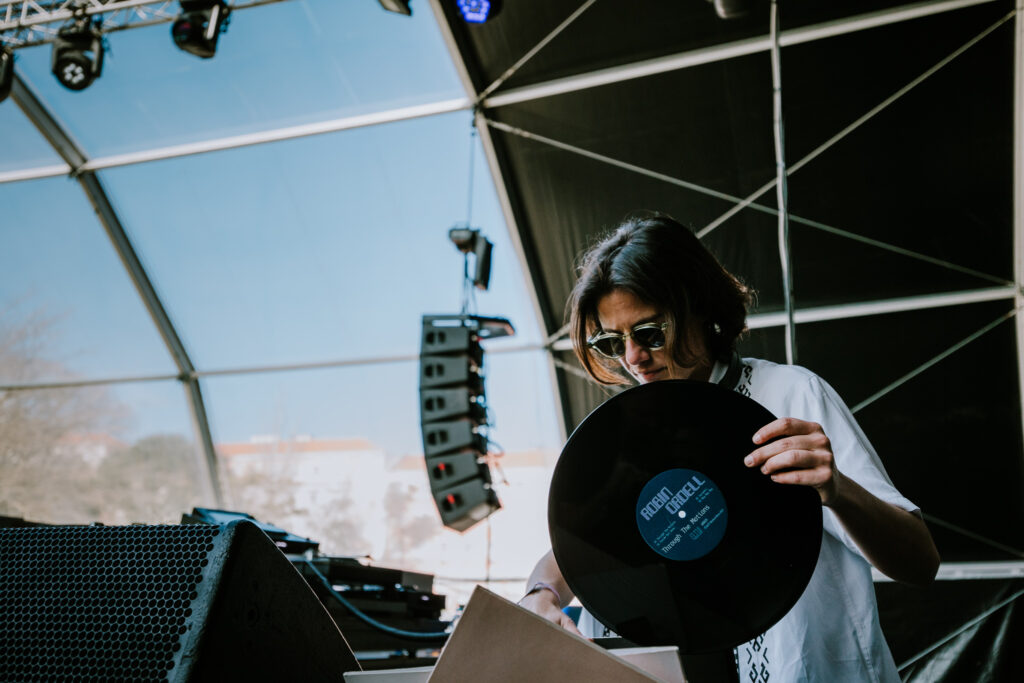
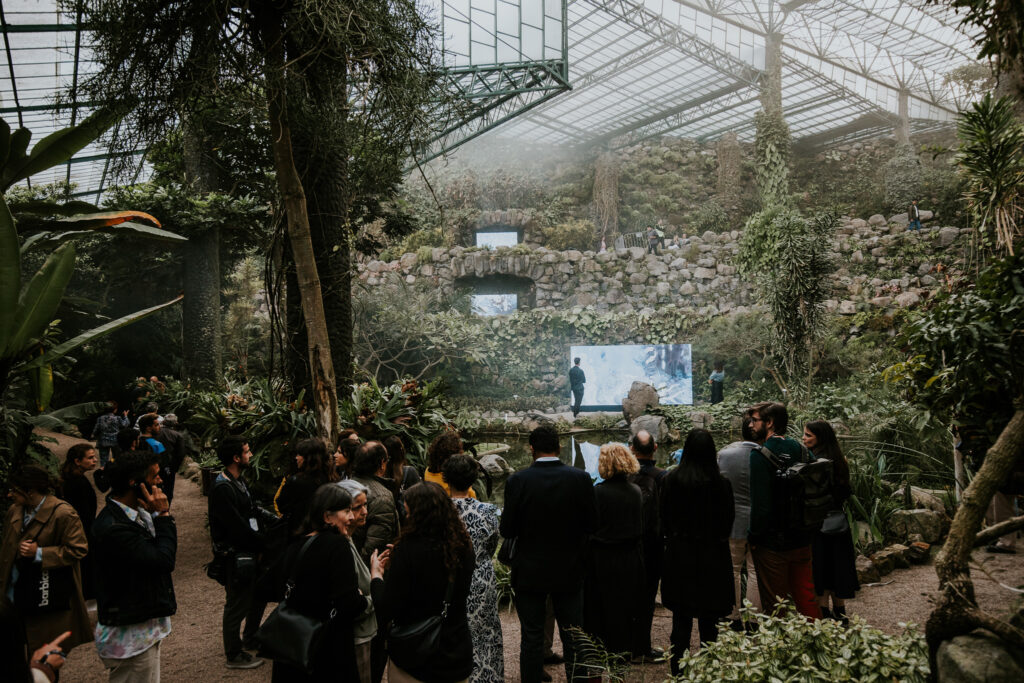
  1. Luisa, Sonar Park, Lisboa 2023. Courtesy of Pedro Francisco
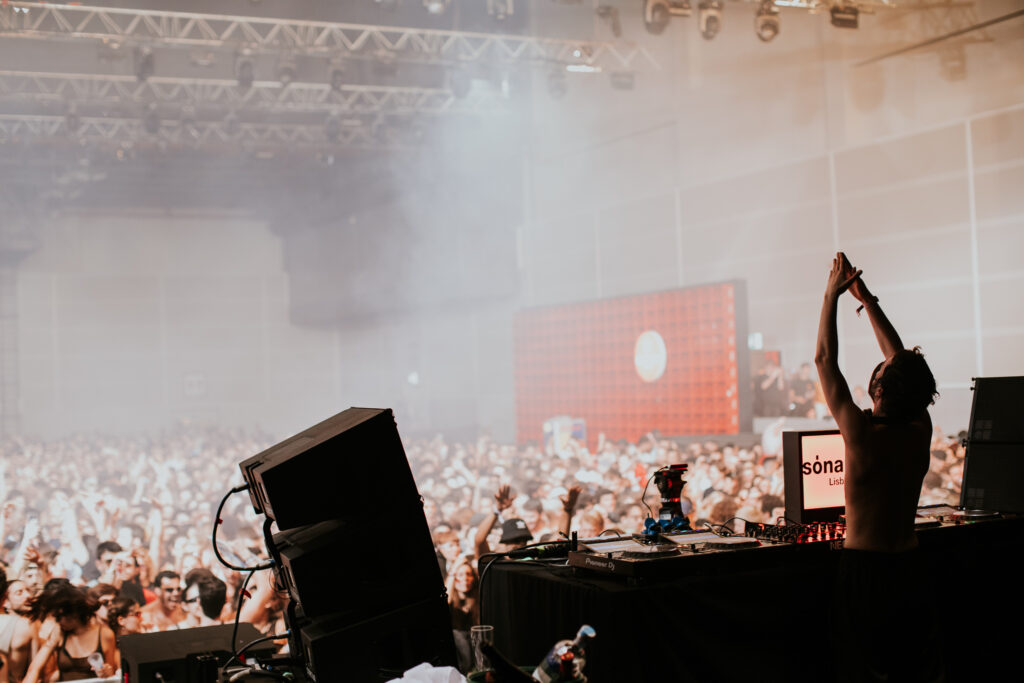
  2. I hate Models, Sonar Club, Lisboa 2023. Courtesy of Pedro Francisco
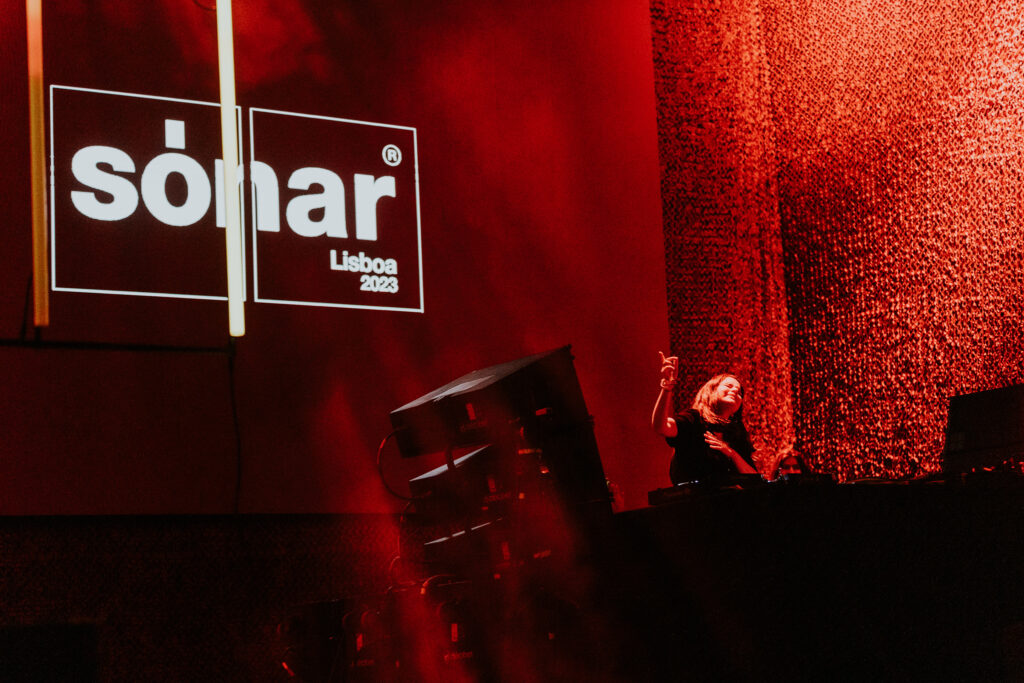
  3. Sofia Kourtesis, Sonar Club, Lisboa 2023. Courtesy of Pedro Francisco
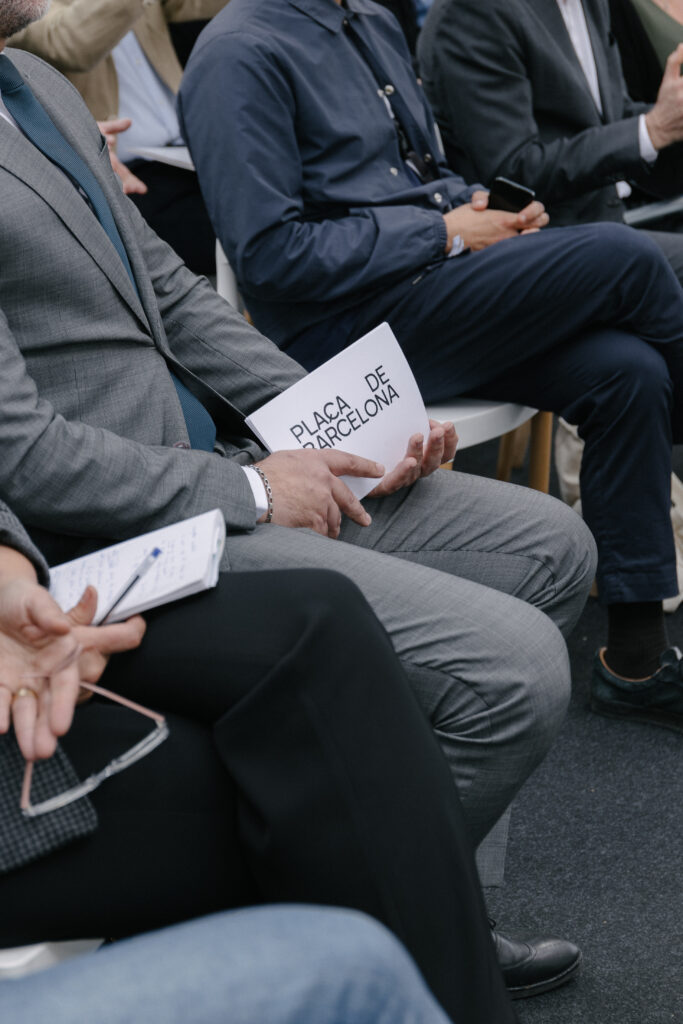
  4. Conference, Plaça de Barcelona, 2023. Courtesy of Neia
  5. Entangled Others, Clothilde, Sonar + D, Lisboa 2023. Courtesy of Pedro Francisco
  6. MetaAV, Sonar + D, Lisboa 2023. Courtesy of Pedro Francisco
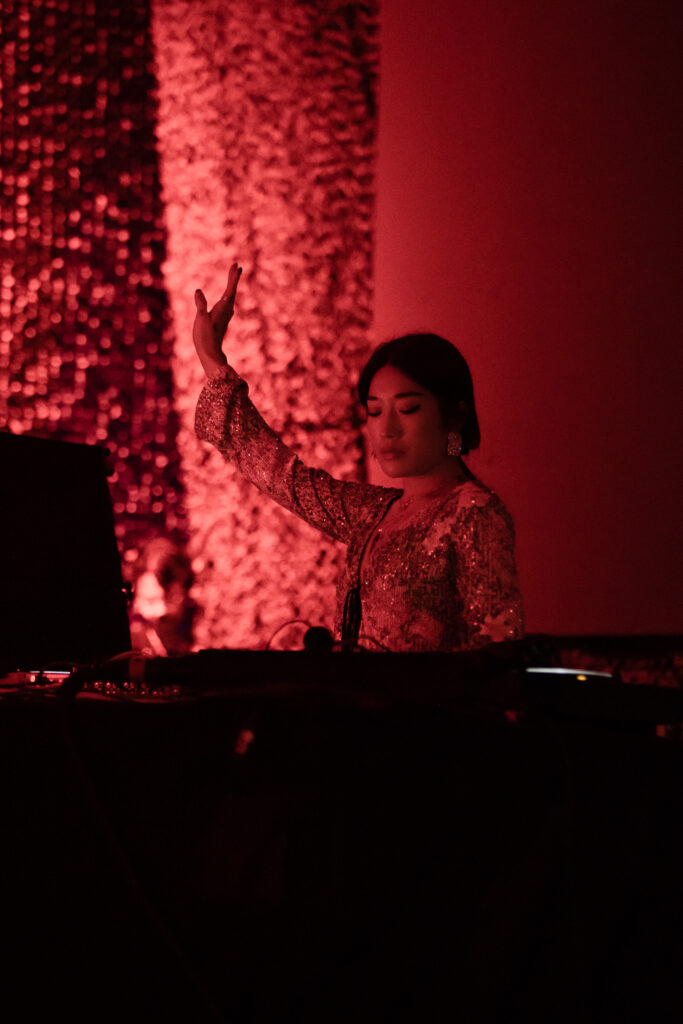
  7. Peggy Gou, Sonar Club 2023. Courtesy of Neia

    For more information visit Sónar Lisboa
    Special thanks to Rosalie De Meyer

Blackhaine

Blackhaine’ poetic yet brutal investigation of reality with unique soundscapes, choreography and cinematographic visuals.

Tom Heyes, also known by his artistic moniker Blackhaine is a rapper, poet and choreographer from Lancashire, UK. Known by many for his projects with Kanye West (Donda 1 and 2) and more, the multidisciplinary artist has forged for himself a solid path, establishing his own unique artistry. Chicago drill, industrial, ambient, experimental hip hop are some of the genres combined within Heyes’ unique soundscapes. With producer Rainy Miller, Heyes worked on delivering visceral releases first Armour, then And Salford Falls Apart. Released in June 2022, Armour II follows the trail of the two earlier bleak releases, perhaps an ending, nonetheless part of the bigger journey the audience embarks on when listening to Heyes. With tracks featuring the likes of Blood Orange, Iceboy Violet, Moseley, Richie Culver and Space Africa, Heyes is also giving space for other artists to enter his universe. Re-contextualising his anger, Heyes delivers poetic yet brutal narratives which juxtaposed with cinematographic visuals, immerse the viewer into Heyes’ inner world. Choreography plays a pivotal part in his practice as he continues to investigate reality. 

Here photographed in London by Berlin-based photographer Joseph Kadow, we witness an artist in his element, creating as he breathes, once again narrating a story of his own. Heyes talks through his genesis, the process and inspirations behind his body of work, spanning across choreography, music, spatial design. 

When and how did you start? 

I’ve been interested in film since I was young, from there I started to learn about sound and movement.

I held an interest in art and between jobs managed to make some decent pieces and work on other’s people’s visions for quick cash. 

During the pandemic I started creating my own film and sound pieces, releasing my first track Moors – and some film projects I created + a project named Armour made in collaboration with Rainy. 

Blackhaine is a node to the French cult classic La Haine on violence and inequality in the suburbs of Paris. You come from Lancashire, UK. How has the landscape of living on the margins and of social and regional inequality, influenced your practice? 

I’ve always felt detached from the current sound, I think being in isolated yet restricted places; Blackpool, Blackburn ect you have no expectations of being accepted by a mainstream crowd. This gives room for experimentation. 

I read Passing Time by Michel Butor recently and was inspired by the detail he created in his idealised Manchester, taking monuments/icons of the city and glitching them. It’s what I had been doing to Lancashire. 

Darker versions of locations feature in my work such as the M6 or the Moors, Rawtape and I used scans of Blackburn high street and Blackpool tower to create a world in Hotel. In my writing I talked about experiences here in tracks like Saddleworth or Stained Materials. 

“Using ultra realistic scenes that verge on boredom and taping a bleak-psychedelic lens to the camera was a huge influence in building the Blackhaine world.”

How is Manchester’s cultural environment and how is it influencing your writing? 

The environment is too self contained, and concerned with itself and it’s history when what we should be doing is looking outwards and ahead. There’s not much interesting happening here at the moment because there’s too many people left over from the 10s. 

The city hasn’t impacted my writing aside from being influenced by Joy Division. 

Drill, experimental hip-hop, ambient, industrial and electronic are genres part of your soundscapes. Are you more influenced by Chicago Drill or Brooklyn Drill? What are some of your musical influences? 

I’ve been into Chicago Drill since the start, however it was UK Drill that got me into writing.
I would say the industrial sound was an influence but the earlier post-punk side, not as much what’s happening there now.
At the moment I’ve been listening to Carti, Zone 2 and some more experimental stuff whilst I
work on my album. 


First Armour, then And Salford Falls Apart. How does Armour II succeed to these? 

There’s the obvious narrative link.

“Sonically I used a softer palette and wrote about a contracted hate that became inverted by gradual unease and paranoia.”

I put more focus on working with melody and traditional songwriting before my album. 

Armour II is death of Blackhaine before a burial. 

How do you usually work with producer and composer Rainy Miller? 

I write alone and with the ideas Rainy sent, before we sent parts back and forth online but with Armour II we started renting a studio together with Space Afrika so we could spend time in there. 

You showcase a unique choreography rooting itself from an extreme creative process. Could you talk more about this? Who are some of your favourite choreographers or a contemporary dance piece that moves you? 

My choreographic style is rooted in perversion and deconstruction of traditional technique, not an anti-technical statement but a separatist practice. I utilise improvisation and sculptural design in the process instead of overt unison structure, and when the work features this form of choreography it’s effect is exhaustion and depletion to the body/mind of the performer, allowing accessibility into new realms.

Choreography a subliminal art, the same modes I work in with writing and sound. The narrative structure of Armour II leading from my previous work is a context for myself and the listener however it is no anchor, this is world building with intent to suture between and deconstruct inside of reality, whilst considering base reality and boredom, hence the exhaustive features within my work. I was initially more interested in examples of choreography I could find in day to day life, the way the bodies on top deck moved whilst the bus turned a corner, a drunk body or the result of excessive strain on specific muscle in the arm.
Pre-tense is naturally prevalent in choreography.

“I think embodiment kills honest movement to a degree and my service as an artist is to
investigate reality within abstract art.”

My favourite choreographer is Tatsumi Hijikata, I developed my practice whilst watching Butoh videos and abusing drugs in my room and hotel apartments, around the time of the Manchester spice epidemic.
I’m watching a lot Gisèle Vienne, Louise Vanneste, studying Sun Ra’s relationship with dance and sound. I would say Philippe Grandrieux’s use of movement in his work as well as Steve McQueen’s in Shame has impacted my choreography also. 


How do you envision the live shows and how do you feel about finally being able to perform gigs in front of physical crowds? Visceral stage performances, atmospheric, intimate and raw sets are some of the comments from people who have already been to your live shows. How do you want the listening experience to be? How do you approach the spatial design situation too?

It’s great, during the first tour I worked intensively with spatial and atmospheric design.

“I want every show to be different, switching between shows of an exhaustive release for the audience and myself and shows that focus more on subtleties with performance and design.”

I work with heat and scent a lot, as well disorientation from lighting source. Playing drill between harsh noise/drone, these are elements that I work with impulsively, so I live edit the lighting, track list and other utilities whilst on stage with my team.

I don’t believe that playing all the hits equals satisfaction for the audience I want to create a journey for people to follow, experiencing the themes within my work physically and mentally having to endure moments discomfort before being allowed to feel gratification by silence or melody.

The feedback I have had has been great, everyone I have spoke too has had a different experience I’m grateful for everyone who comes to a Blackhaine show to experience. Thank you.

How did your collaboration with Blood Orange and Icebox Violet for ‘Prayer’ unfold?

I had the ideas of the track for a while, I was sent a rough loop from Rainy that triggered something in me. I kept revisiting the narrative and developing this film scene I had in mind, even down to the shots I wanted in the film that was made.

In And Salford Falls Apart and previous releases I didn’t work with other voices. A design focus of Armour II was to curate outside artists and let them inhabit my narrative, even to allow this to influence and lead me at times. I wrote to Iceboy Violet and Blood Orange to ask them to feature on the track and they delivered these beautiful verses back.

The theme of this issue is IN OUR WORLD, in your mind, what does England mean to you?

“Apathy.”

Now that Armour II is out for everyone to experience, what is next for you? 

I am building an infrastructure named Hain. This will act as a container for future work/curation and ideas beyond Blackhaine and an investment in culture.

Team

Talent · Tom Heyes (Blackhaine)
Photography · Joseph Kadow
Creative Direction · Jade Removille
Fashion · Azazel
Grooming · Linus Johansson
Photography Assistant · Masamba Ceesay
Fashion Assistant · Olivia Abadian

Overmono

The In-Between: Overmono create a layered and boundary pushing sound that exists between emotional states. 

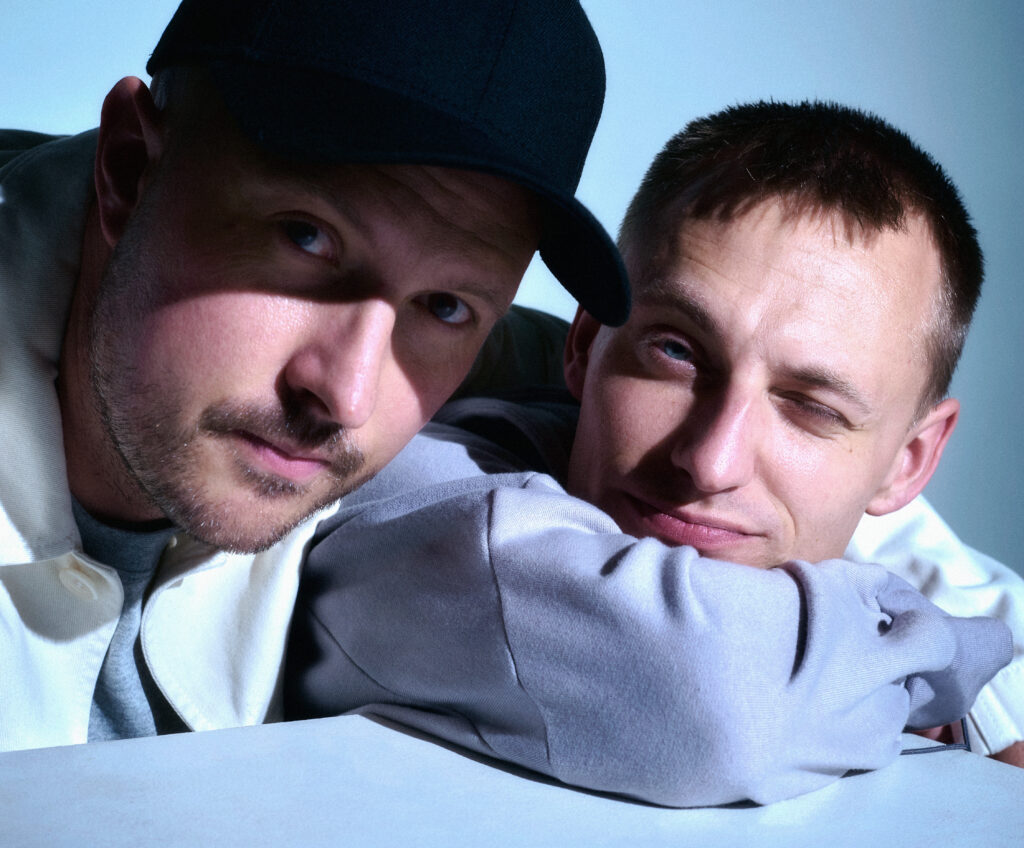
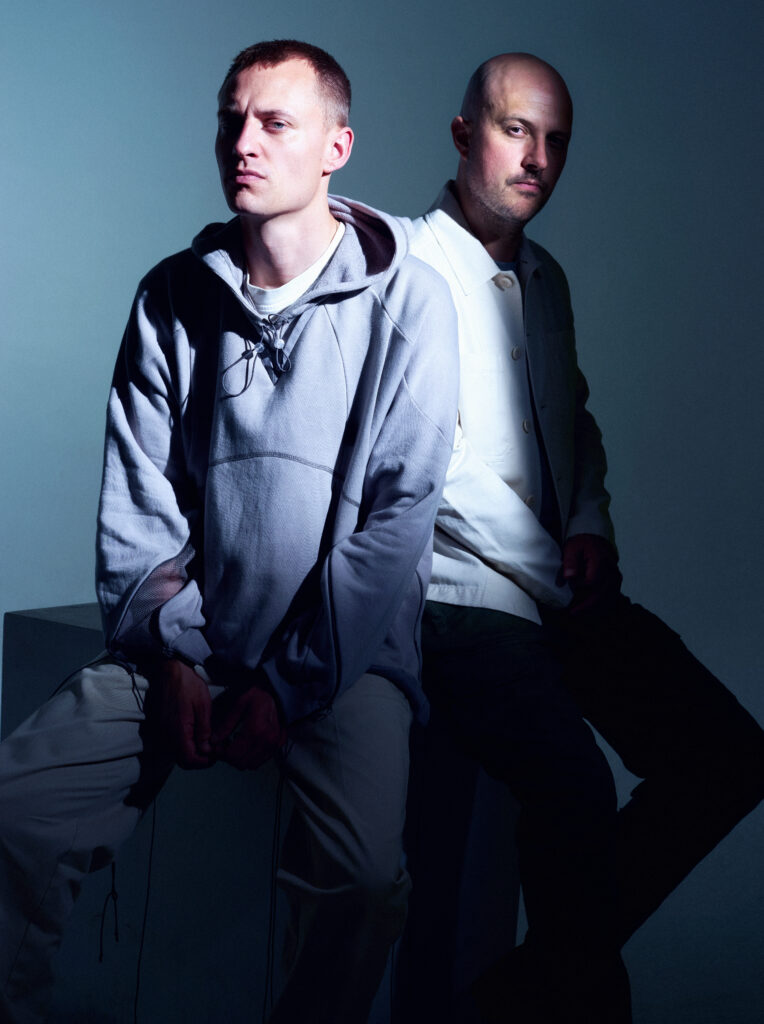
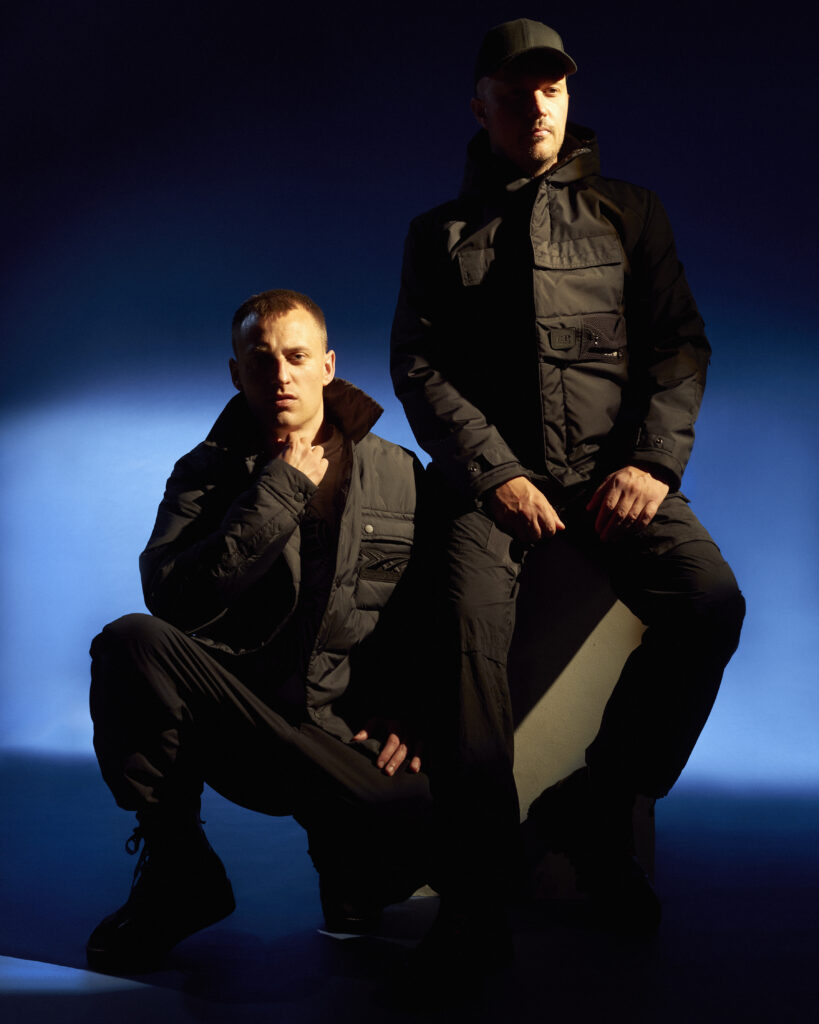
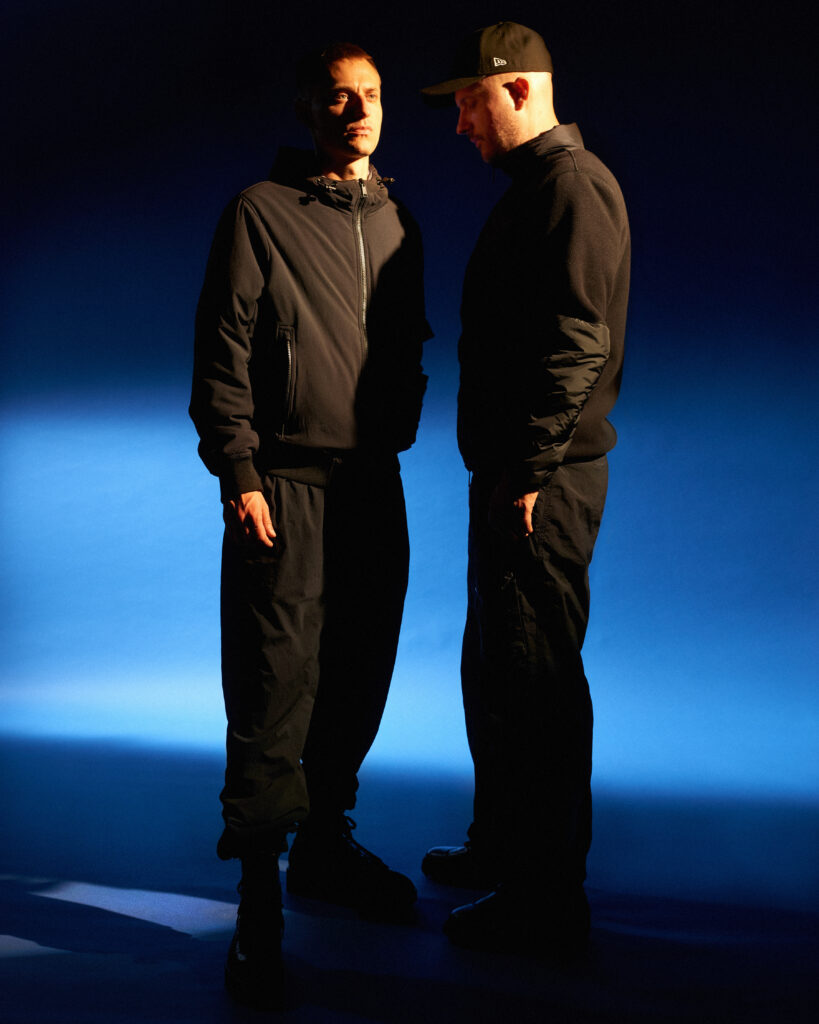
Overmono are a UK electronic music duo made up of brothers Ed and Tom Russell. Raised in Wales, the siblings had individual success as producers before joining forces as Overmono. Wanting to reduce the influence of their individual pasts from the mix, they isolated themselves in a cottage and started to develop the foundation behind their music. Now, through a standing relationship with pioneering British label XL Recordings, they have released a series of layered and boundary-pushing work that define their distinctive sound today.

For this issue, NR had the opportunity to catch up with Ed and Tom to discuss their memories of growing up together, their experience of shaping Overmono to this point and their ambitions for the future.

Tom and Ed, thanks for joining us for this issue. I’ve been looking forward to having this conversation with you. I want to start by asking you about your memories growing up together, and what your individual influences and gravitations were because you’ve both done so much individually before Overmono.

T: I’m the elder of the two. Growing up in a house together, I was getting into rave music and Ed could hear the music through my bedroom door. I had turntables and some records and Ed got a pair of turntables when he was ridiculously young, like when he was around 10 years old. Then he was stealing records from my room, so there was some cross-pollination going on. As we got older, Ed developed his own taste and went on his own journey, and I developed mine and went on my own one, but it was all generally electronic music.

E: It feels like over the years our influences or what we were into individually were sometimes miles apart from each other, but then 6 months later we would come back and we’d be listening to the same thing.

“As we got older the distance between us got narrower and narrower, and nowadays it’s really rare that Tom plays me a record and I turn around and say “that’s shit, I don’t like it”..”

T: Haha when that does happens, I get really annoyed and I’m like you’re just not getting it!

E:Yeah haha, and these days we’re so similar in the sense of what we’re into, which from a writing point of view, makes everything pretty effortless because we both know what we like and what we want to try to achieve.

That connection is definitely felt in Overmono, but as a listener I can also hear and distinguish your individual influences feed into this project as well. Listening to your individual projects, it feels as Overmono is a cumulation of all those individual journeys. I’d love to hear more about you experience during those earlier projects – Tessela (Ed), and Truss, MPIA3 and Blacknecks (Tom). 

T: I’ve always been really into Techno. Various styles of it. It has been a constant for me since my teens. I remember hearing Tanith on Tresor, it completely blew my mind and sent me down this rabbit hole. So, I just carried on doing that, and through the 2000’s I was getting more and more heavily into production, which led me into the projects you mentioned. I think for me, and I guess Ed can come back to this too because I’m speaking a bit for him as well, I felt really pinned in at the end. Because I’d done so much producing into a similar lane, I felt like that was what was expected of me. As much as I loved listening to that stuff, I felt like there were broader horizons I wanted to explore, and that inevitably led us down this path to start this project together.

E: I feel like we both started feeling that similar feeling around the same time. I remember releasing this one record and someone said to me “I’m all for artistic development, but where are the break beats?”.  It got to a point that I felt like I had to put a break in every single tune otherwise people would be like this doesn’t sound right. Tom you were probably at a similar point with more distorted stuff..

T: Yeah, if I didn’t do something that was really tough and distorted it would just get no attention or traction. I could make something in 5 minutes that was distorted, and don’t get me wrong I love that sort of stuff, and people would go mad for it. But I could spend a couple of months crafting something and think it was one of the best things I’ve ever done, and nobody would care.

E: And That was a big thing both of us were going through around the same time. When you’re making music and figuring out your sound, cultivating it and honing it, it might feel really nice; to know exactly what you need to do to make something good because it becomes effortless. But after a while, when the expectation becomes “this is what you do” then, you start to think there’s so many other influences I have that I want to start to broaden what I do here. You end up feeling blocked from doing that. 

“We got to a point that we were like “let’s just start making music together and see what that’s like. No one needs to know we’re doing it together, or that this project even exists. Let’s just write some music and see what that sounds like”.”

The series of first ten tracks we wrote, in a really short period of time – like 3 or 4 days – sounded quite different from our previous work but we were surprised by how cohesive it all sounded. There was no plan for it, we just said let’s take this equipment, go to this place, lock ourselves away, write some music and see what it sounds like.

T: It was so nice to be in this headspace where we had no expectations at all, and no personal expectations either. We just said “let’s go to this place, make some music and whatever happens, happens.” We had no intention to start the project at that point, we just wanted to write some new music together. The whole idea for Overmono came quite a bit afterwards. It was really amazing to have that freedom and it’s something we still try to maintain because it was so liberating.

E: It gets harder and harder the further down the road you get because the expectations start growing again, and once you put out a few records that have done well, it’s harder to come out with something that is really weird or super headsy. But that being said, we still have that same mentality that we try to go somewhere that isn’t our own studio, somewhere that is a different environment, somewhere that we can’t be contacted and we can’t contact other people. We just go there to sit and try to make some music.

“It’s that thing of disconnecting completely and forgetting about all the noise and any expectations. Then you end up writing some of the best stuff because we’re just having fun.”

Yeah, the Arla I-III series! It’s interesting to hear the process you went through to write this collection of tracks. I realise that you did projects together before this too, projects like TR//ER. To me, the Arla series definitely sounds like a more cohesive beginning or foundation to Overmono. I’d love to hear more about your process of forming your sound as Overmono at this earlier stage.

T: There was a lot of sampling in the Arla I-III EP series, and it was nice because I didn’t do a huge amount of sampling before so it was a fresh perspective in production for me, and – I learned a lot from watching Ed because he’s great at it, and for me this was cool because it was an area of production that I wasn’t familiar with and got to explore. 

I was given, as a long term loan, a large record collection from my brother in law, which was a DJ in Leeds in the late 80’s and early 90’s. He had loads of old House and Techno records, and it was just in his basement collecting dust and getting a bit of mould on it,. So, I was like I can take care of it for you. But it turned out there were only a few good records in there, and most of it was utter crap – white labels that probably never made it to an official release, but it was still a pretty good archive of early British House and Techno. We decided to make something out of it, so we went through it all and started to make this huge sample bank. That was kind of the foundation of a lot of the Arla tracks. This is also maybe why they have a cohesiveness because they were recorded through the same turntable and through the same process. 

E: They were so dusty weren’t they…

T: So dusty! So much crackle and noise, and it’s also why those tracks don’t translate to sound systems very well haha. A lot of it again, was me watching Ed using the sampler and also Ableton, because to that point I was mostly a Cubase user for all my life. Ed kept asking me to switch over to Ableton and I was like “Nah, I’m used to Cubase, that’s what I know – blah…-blah blah…” After a few days in the cottage writing the Area stuff, and watching Ed use Ableton, I was like holy fuck I gotta start using this! It made other stuff look so archaic. The amount of times I would try to set up a side-chain in Cubase and I couldn’t be arsed because it was so long-winded, and then watching Ed do it in seconds. Also, seeing how you could manipulate samples with warps and time stretches was really inspiring. 

E: I think during this session we had a few synth lines that have been just sitting around, so we started to process them through the same process that we were using for the record collection, so that added a different dimension to them. If you listen to original Arla samples a lot of them have a late 80’s sound to them but we just mangled them over and over till it didn’t sound like that. 

Because we weren’t in our studio, we just rented a cottage in south wales, we had a limited amount of equipment with us. We had a small mixing desk, two speakers…

T: Didn’t we borrow an Allen & Heath?

E: Yeah! We borrowed an Allen & Heath mixer from David.

T: Shout out to him for lending that to us. Everything went through that and we also had a Lexicon PCM 80. I don’t know if we had any other effects?

E: We just had that one Reverb, and we took a Virus C synth, and probably a compressor. Think there was another synth as well…

T: We took the JD 800, didn’t we?

E: Yeah it was the JD 800! Haha.

T: Haha it’s pretty much the heaviest synth we could fit in the car.

E: It was this beast of a synth that we only ended up using for one day. The rest of the days we were super productive and for one day we just dicked around for 6 hours on the JD 800, and we thought the stuff we wrote was super deep. The next morning we listened to the track and we were like “Jesus christ that one’s getting axed” haha!. I think it made it to some of the tracks at the end though. It was a bit fucked up and it sometime would go weird and out of tune. You would be recording a synth line and move a fader or open up a filter a tiny bit, and it would go mad! So we chopped some of those bits up and put them into the tracks too.

You could feel that, considering the amount of tracks in the series, there were different approaches between them. Going from a track like O-Coast to Phase Magenta to something like Harp Open, although there was definitely a cohesiveness, you could tell that there were different influences and gravitations behind each of them as well. I want to ask you about your first studio in Bromley, and your experience of setting up that studio together shortly after the Arla series.

E: After that time writing in the cottage, we both had separate studios for a bit. Tom had a studio in Soho and I would go there quite a lot. The studio was right across from Black Market Records, and we would end up writing a lot of the stuff at his studio. I had a studio in my flat too, and we split our time between there and Tom’s studio. 

That was really good for a while, but after a bit we thought let’s combine all our gear to one big studio because we were writing so much together. It just so happened that this really big studio was becoming available in Bromley, which is a half an hour south of Peckham. It hadn’t been touched since the mid 90’s. It had this swirly paint job that was pealing off, and old school carpets with fag burns all over it. That said, it had a good feeling to it. It had this massive control room, a live room and a kitchen. It was big enough to play a five-a- side football game. So we decided to take it. 

We set it up into two rooms. All the stuff that we used less often or used for our live shows one live room. There would be a bunch of synths set up with loads of effect pedals – and some random kit that we collected over the years. You could spend a day in there and have the freedom to start recording loads of stuff with all the gear, which was really fun. Then you had the control room that was properly a sound-proofed studio, which had all our gear set up in it and sounded amazing. That’s where we’d work on the tracks together. We were in that studio for three and a half years, and we spent quite a lot freshening it up. We took all the carpets off and sanding the floors back, but unfortunately the whole building got sold to developers. It was such a unique place. It was in the middle of nowhere.

T: It was the most unassuming place for a studio, just in the ass-end of absolutely nowhere –

E: There were no other studios there. It was opposite a chip shop, above a church, beneath a magazine printer, so it was so random. I remember every now and then we had someone come over to produce something with us. We had VK, a drill producer, come over and when I went down to get him, he  was like “nah, don’t know about this”. You had to go through this bin store and get to these industrial stairs and I remember looking at him and he was like “this isn’t right”.

T: The previous occupant put up these weird hospital signs, like “blood unit this way” or “radio therapy that way”…- obviously trying to put people off it.

E: It looked like a really weird NHS unit and was sort of an outlier. But yeah we were there for three and a half years and it was amazing. We wrote a lot of the Overmono stuff there. Still, when we had that studio we would book times to go away. We went to a remote hut in the Isle of Sky in the Highlands of Scotland. We would get as much gear as we could and fit it into a few peli cases to fly with. We would always keep that mentality of taking some gear and go write for however many days; where all routine could go out the window, to see what we come up with. Sometimes in five days we’d end up doing what we did in three months in the studio. But yeah R.I.P Bromley studios, we really loved our time there and it was an amazing place.

T: Yeah it really was!

One of the things that really stuck out to me reading about you in the past was you saying that you always felt like “you were always looking in from the outside”, even from early on in your careers. That you grew up outside of a big city and it never concerned you what the trend was at that time. I feel that these moments where you disconnect yourselves have been so potent because it’s so close to what’s been true to you from the beginning.

A track that I listened to a lot early on when I was getting into your music was actually called Bromley, which you did together with Joy Orbison. Before we move on from your time at Bromley, I want to ask you about your experience of working with Joy O, and also discuss the tracks you mentioned you made towards the end of this period because they’re some of my favourite work you’ve produced together.

E: The stuff with Joy Orbison started when he came to the studio a couple of times. We started to hang out and record a few things, so we decided to work on something official together. I remember I sent him a rough idea before and he was into releasing it on his label Hinge Finger, but I never ended up finishing it. So we thought “why don’t the three of us try to work on this track together and maybe we can get it to something that’s more finished”. We started pulling some of the stems from the original idea and started working on it together at the studio in Bromley.

“Us and Pete (Joy Orbison) have totally different working methods. For us, we’re really instinctual and we don’t really think of rules and structures.”

T: I think we’re just too disorganised for that kind of stuff. Personally I just don’t have the patience to stick with something for too long if I’m struggling with an idea. Ed usually perseveres longer than me, and often there are times it’s the right thing to do because the track gets cracking on.

E: Pete can persevere the longest, I’d say.

T: He has an unbelievable ability to stay laser focused on something. He can make these decisions hours and hours after being at the studio, where I’m just like I don’t know what’s going on anymore. He has an amazing ability to do that.

Really interesting to hear the story of how that all came together. I want to talk to you about your more recent releases on XL Recordings like Cash Romantic. I’m interested to hear about your process of shaping the sound behind these more recent releases.

T: By the time we moved away from the Arla series, we started using samples less and less, and we actually started making our own sample bank. We spent some time making up loops, synth lines and chord progressions that make a large sample bank that we now share. So a lot of these more recent tracks, their start points are from these samples we made. Gunk, for instance, is from a synth line that we originally came up with for our I Have A Love Remix, which is actually the last ever track we made at Bromley studios. So it was a really nice way for us to start Gunk off like that because that track – I Have A Love (Overmono Remix) – was a really special track for us. I think over the years, developing this sample bank that’s made of all our own samples, is a big part of our sound and serves as an important jumping off point for us. We started programming our own drums and aren’t doing much break-beat’s anymore. For example, the drums for Cash Romantic, the title track, is made from all programmed drums from a contact multi-sample drum pack. There’s no actual old sample break-beat, but instead everything’s much more processed.

“We always want to bring out the most grit and character we can out of things. Most of the time we have to use stuff in a way that they’re not designed to be used.”

That might be, for example, using an EQ to boost stuff so harshly that it starts distorting, but once you take that in the computer you can bring it back a little bit and take away some of the harshness.

“It’s about building layers of character and a sense of physical space. I struggle sometimes when listening to music that is too clinical or clean because there is this lack of physical space. That’s something we think about a lot; how the music itself sounds in relation to its space. Even if you’re listening with headphones with no interaction with the space around you, does it feel like it’s in its own space? And I think a lot of that comes from getting it out and running it through the different cables.”

It sounds like you’ve simplified or programmed your set up so that it’s more responsive to your making process, and that creates space for you to be more instinctive and expressive when shaping your sound. 

I’m curious to hear more about the story behind the imagery and visual content of your recent releases as well, and about your partnership with Rollo Jackson in creating that content.

E: There’s a few things that came together with the imagery. Mean dogs have traditionally been used in UK rave music like in old Drum & Bass records, and there was always this thing of dogs on chains snarling at the camera. It was something that became quite pastiche and didn’t age that well. Dobermans are perceived as these” vicious dogs”, but they’re not at all. That’s just how they’re trained and how people portray them to be. They’re actually really lovely and friendly dogs. So we thought “why don’t we do these sleeves with Dobermans on them?”. As soon as you tell someone “I have two Dobermans sat in a BMW on the cover of my album” they’re like “oh, that’s a bit cliché.”

T: And part gangster..

E: Yeah, haha! But they actually look quite playful and dopey, and in reality they are actually really playful.

“From a musical point of view that ambiguity of emotion is something we always gravitate towards. Something that feels like it’s between a few different emotional states. I think that’s what those dogs represent. Because of how we’re brought up to view Dobermans, when you portray them in a different way, you instantly feel like your are conflicted between different emotional states.”

You ask yourself “is this supposed to look aggressive and mean, or is it just lovely dogs being playful?”

Rollo (Jackson) has such an incredible eye and is able to see things in such a unique way. So many of the shoots we’ve done have been serendipitous. When we were shooting the cover for Everything You Need, it was in the carpark of the Bromley Football Club because we got kicked out of the other location. We showed up in a van with a couple Dobermans and a Boxer and they were like “what the fuck you guys doing?” haha

T: Haha, they were like, “get off our property!”

E: So we went to the football club and they were more accommodating. I just remember the sun coming out from behind the clouds and bouncing off the leather seats of the BMW, and we all looked at each other and were like that is it, that’s got to be the shot. And there’s still so much more to explore with that.

T: Also with Rollo, he’s so deeply involved in UK music culture. He has such a knowledge of UK dance music, specially London-centric forms of music, so he really gets where we’re coming from. Because of that we really feel like there’s a kinship there between us and we can really trust in his judgment of what we’re trying to achieve. Also, his judgment of what to avoid specially, like things that might be a bit pastiche, brings a fresh angle too while we explore things that we’re collectively into. 

I think this is a good point to ask you about your live shows and how this imagery ties into it. I’m curious to hear about how your live set up has evolved over the years and where you hope to take it next, as you are now embarking on on your UK, European and US headline tour. 

T: It’s a bit more professional these days that’s for sure, haha, It was a fucking mess back in day! We started with a booking request from Ireland in Limerick, and this was before Overmono even existed and before we did anything together. They were like “Would Ed and Tom like to play together?” and we were like “we’ve never done that or hinted that we wanted to do that together haha, but sure yeah why not!” So, suddenly we needed to figure out a techno live set-up. We had only released one track and suddenly we started getting a few gigs together. We were travelling around with the most insane amount of kit. We had this colour-coded pillow case system with different leads and cables in them. We had a blue pillow for our midi leads, a red one for our power cables, and a black one for our audio cables. They were all crammed into these giant peli cases with the rest of our gear. They would take two hours to set up and two hours to take down. We’d take some gear like a big drum machine and we’d only use it for 5 minutes.

E: I remember you used this synth that didn’t have any controls on it..

T: The EX, the Korg EX-800 desktop version!

E: Yeah haha, you’d be playing a pad off it and you’d want to open up the filter and you had to press this button to find the filter and keep pressing it to turn it up… it was a mess and quite lawless. We would just have to improvise and some of the shows were alright and some of them were terrible.. So by the time we started doing stuff together as Overmono we already had learned a lot. When you’re playing electronic music live, there are these pit-falls that are waiting for you to fall into and you have to spend some time navigating those from a technical point of view.

“Performing electronic music live is a big technical process that needs to be continuously worked on and refined.”

For the first few years after every Overmono live show, we would almost redo the entire live show after every gig. We would sit down in our hotel room after every show with a notepad and write down all the things we wanted to change or improve. We would write down what worked and what didn’t work, and record all the technical problems we had in the show. We would keep repeating this and over the years we started honing in on what it worked for us from a performance and technical point of view. 

Now we’re in such a different spot, the set up hasn’t changed for six months, which is a new personal record for us. We feel more confident and comfortable than ever because we spent a long time developing a set up that is all properly functioning and cabled so it feels more professional. That means we can focus and have fun with the performance side of it, instead of worrying about why that drum machine went out of time again. But now our headspace can be filled with the more exciting stuff like wondering what I can make with these drums do for the next five minutes, and do something interesting and weird.

The next logical step was figuring out the visual side of things, and for a long time we were figuring that out ourselves. But generally we had no idea what we were doing, so we just borrowed a bunch of modular video gear and recorded a lot of things out of it.

T: It looked good on a tiny screen and we were like that’s killer, but then got to a festival with a giant LED screen and it looked so bad and so pixelated.

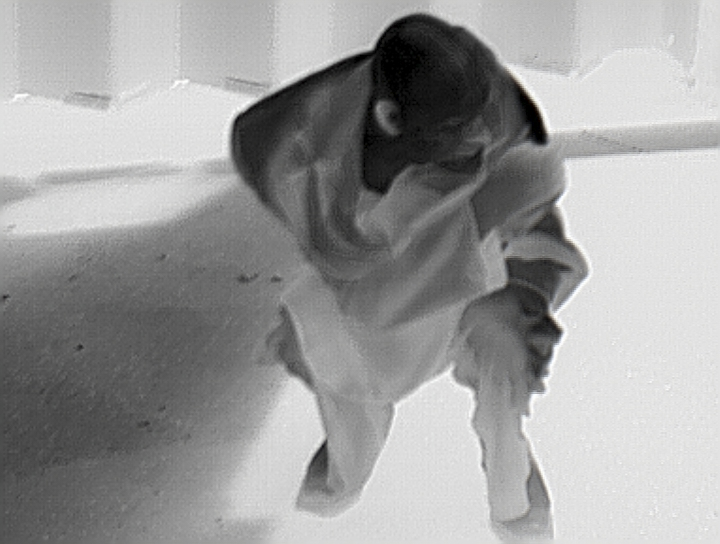
E: Now, we thankfully got more people on board to do that with us. We’re still pretty heavily involved because we have a clear idea of what it should be. So we’re more directly involved in the creative direction of the visual content, but now we have people that actually know how to use that gear. The visuals are generally split between footage that Rollo captured, like thermal images of the Dobermans running through a field, and then a lot of processed content we created with a visualiser called Innerstrings, who uses a lot of the same gear we were using but knows how to use it and he’s great with it. That’s enabled us to grow the show to what it is now, and we have ambitions to take it even further.

T: Like Ed said, the live show is something we are so deeply passionate about and something we’re continuously trying to grow. To make it more of an immersive experience in every step and try to think of the evolution of it. So that’s a big priority for us, but the biggest priority is to always keep writing and making music every opportunity we have.

“Our aim is to keep progressing and moving forward in writing music that we think is an evolution from where we were before.”

E: Going back to the live show, thinking about the covers we made with Rollo Jackson and our ambitions for the future, the live show gives us the chance to expand that into something more cinematic and the sleeve images start to feel more real.

“You suddenly feel like that whole world has opened up, so the further along we go the bigger we want that feeling to be. You see a Doberman running through a 50 meter screen, it’s just glorious and there’s nothing better. That’s what we want to keep growing and pushing towards.”

Team

Talents Tom and Ed Russell (Overmono)
Photography · Oli Kearon
Fashion · Kamran Rajput
Grooming· Daniel Dyer
Photography Assistant · Nic Roques
Fashion Assistant · Elza Rauza
Special thanks to Abigail Jessup, William Aspden at XL Recordings and Jon Wilkinson at Technique PR

Designers

  1. Left to right, jacket NORSE PROJECTS and hat Talent’s own; jacket SAUL NASH
  2. Left to right, jacket and trousers ONTSIKA TIGER and boots ARMANI EXCHANGE; jacket CP COMPANY, trousers TEN C, shoes and cap Talent’s own
  3. Left to right, full look ARMANI EXCHANGE; jacket and trousers MONCLER and shoes Talent’s own

72 Hour Post Fight

“Our music celebrates the coefficient of randomness that is unleashed by uniting multiple minds.”

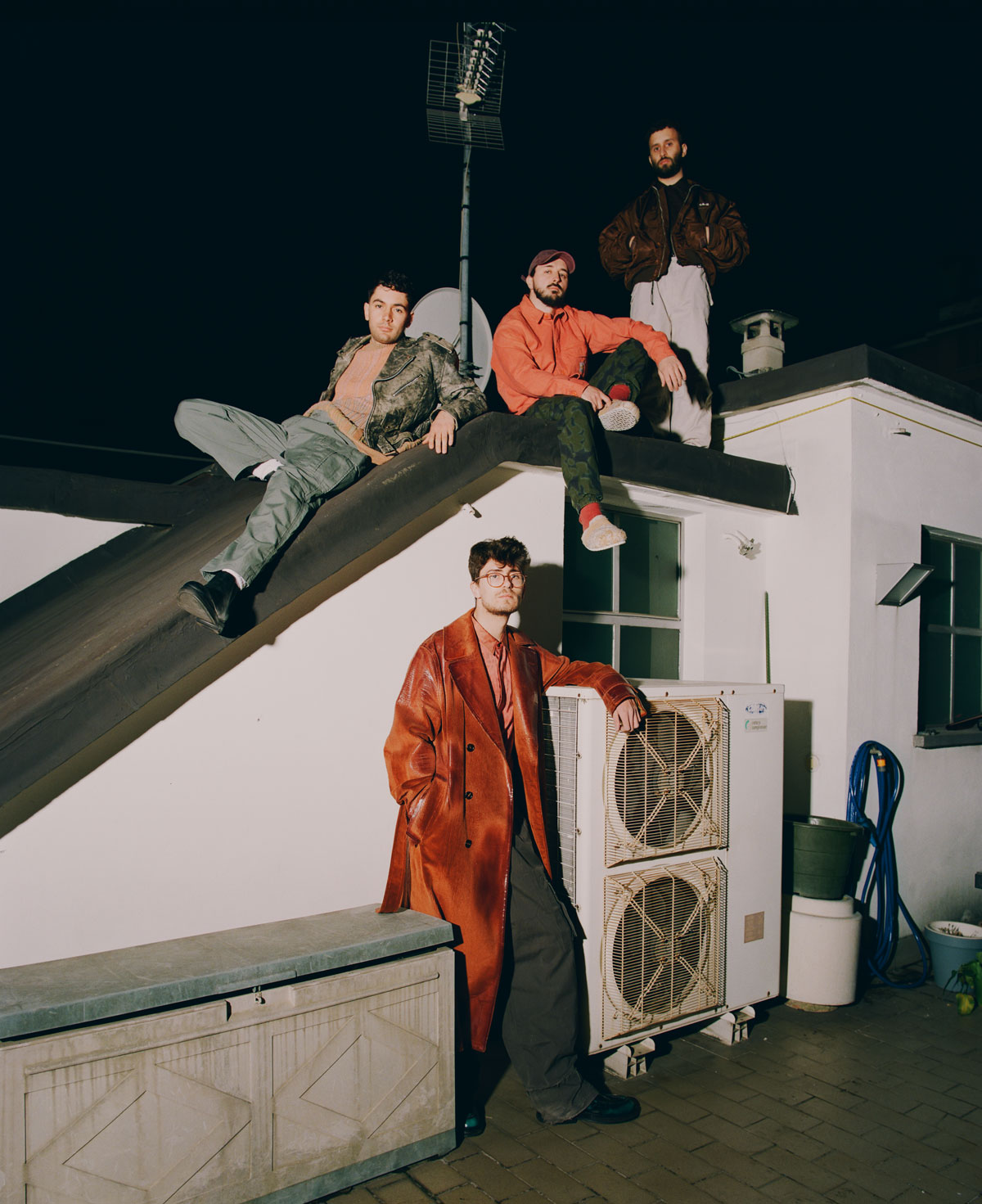
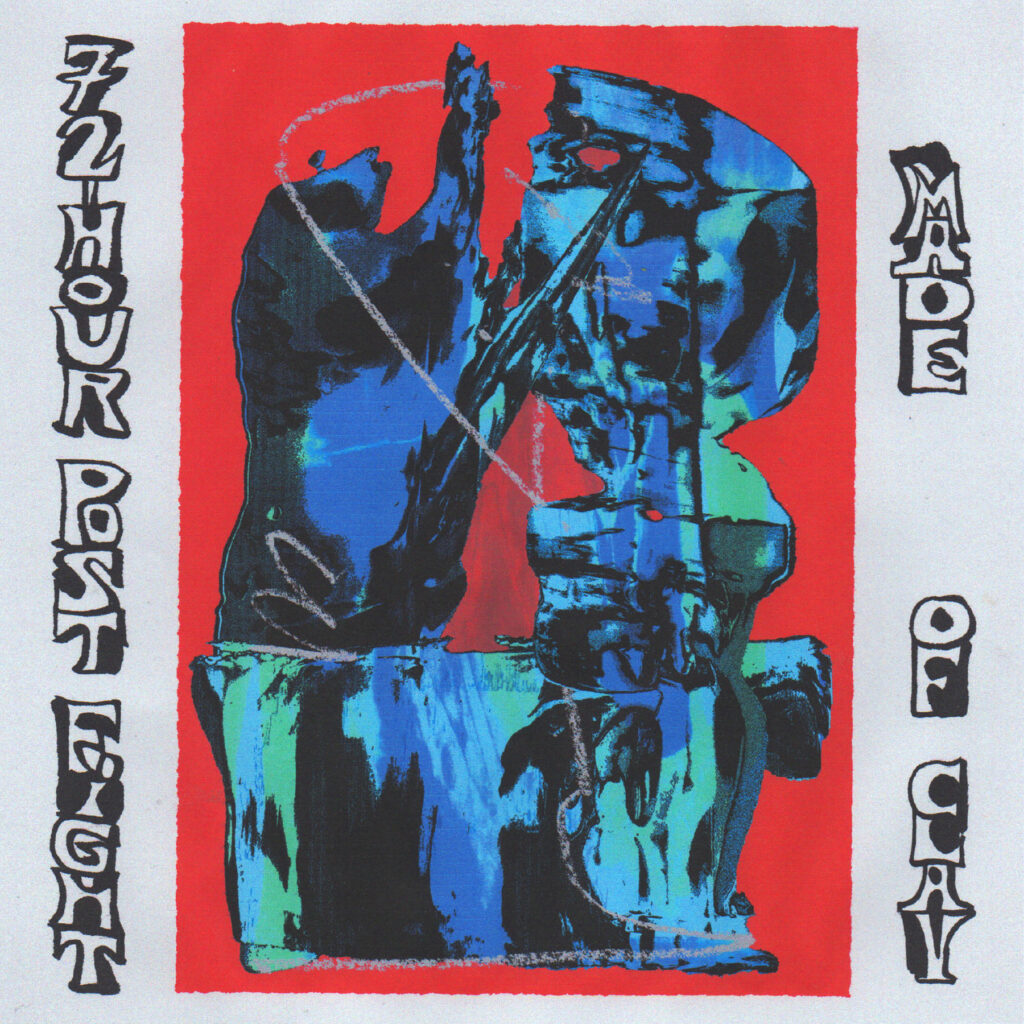
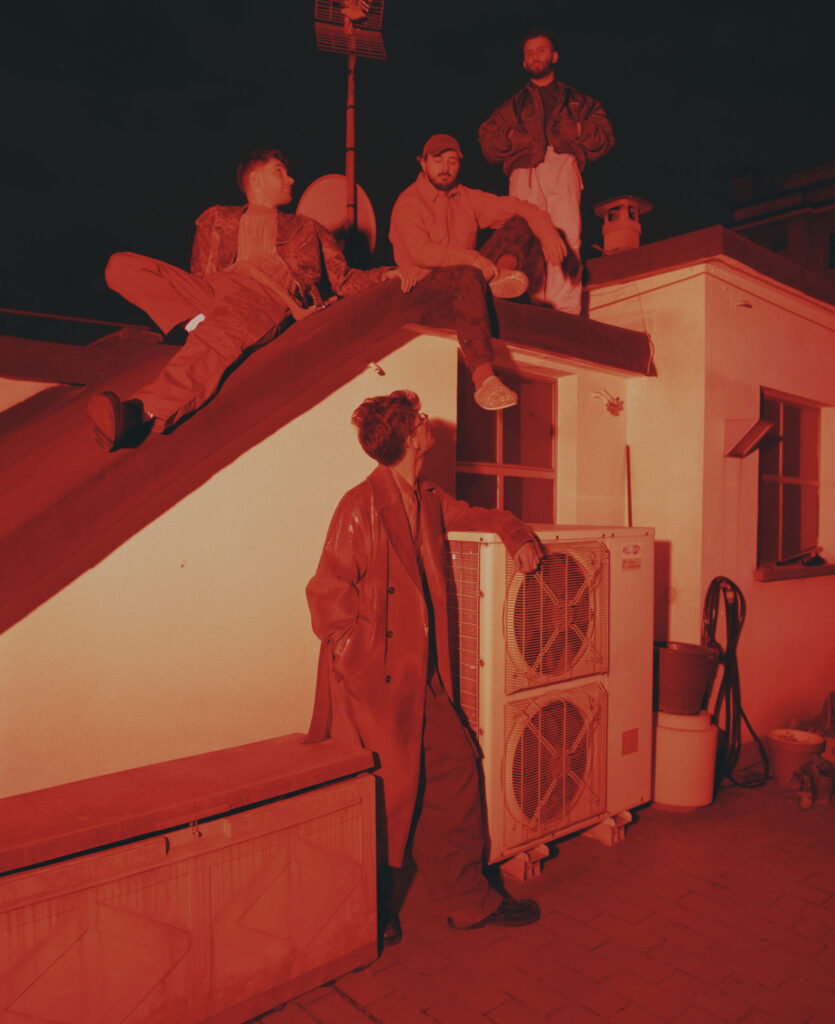
72 Hour Post Fight is an experimental project between two Milan-based producers and musicians. The group, whose debut eponymous album was released in 2019, exhibits a range of expertise and sounds; there’s guitarist Carlo Luciano Porrini (aka Fight Pausa) who was previously part of the emo band, LEUTE; Luca Bolognesi (aka producer, Palazzi D’Oriente); saxophonist Adalberto Valsecchi and drummer, Andrea Dissimile, who was also a part of LEUTE. It’s safe to say, then, that 72 Hour Post Fight have a pretty solid grasp of the music scene they’ve since (re)entered as a quartet. Their debut album introduced the music scape that has come to define their approach (an approach best described as just seeing where things end up going – as the band explain to NR below). Pairing ambience with moments that err towards the disconcerting, it’s an ode to the diverse background each band member brings – and their desire to see what they can create out of that. More than that though, their sound communicates the wide-ranging music each member grew up listening to – for example, friends since school, Carlo and Luca dreamed of forming a punk rock band – but be under no illusion that 72 Hour Post Fight are following in the footsteps of any one band or genre. The band released a remix version of the album also in 2019, which is a beautifully layered reinterpretation of what 72 Hour Post Fight first debuted. Their 2020 EP, NOT / UNGLUED, meanwhile, listens like a slick, tightened-up follow up to 72-HOUR POST FIGHT – a testament to the band’s hunch that working together might pay off. Now, they’re gearing up for the release of their latest single at the end of March. Made of Clay takes a slightly different direction to the album and EP, but it remains characteristic of their output so far. It’s a slow burner, with separate elements coming into focus over the course three minutes – 72 Hour Post Fight seem in no rush to hastily reach a crescendo, and their music is all the better for it. 

NR: There’s a lot of diverse sounds in your music, how do you coalesce elements of jazz, electronic, and so on?

72PHF: We actually don’t combine them at all! Our music certainly derives in large part from already existing music and genres, but every reference is purely coincidental and based on our musical backgrounds. On our first album the compositions were mostly based around sampling and saxophone, so this made our music easily comparable to jazz, hip hop and electronica. With this second [upcoming] album, the backbone of the songs is songwriting, and none of us are really purely jazz or hip hop musicians so other inspirations shine through as well. This choice of redirecting our writing approach made us stray even further away from a canonical classification of genres.

“If we had to express it in a word, we play non-background music – and in this container there is potentially room for everyone.”

NR: What can you share about your single, Made of Clay

72PHF: Made of Clay is a simple song. It’s very emotional and thrusting, and it has a certain decisiveness about it that we fell in love with. It started from a guitar riff that sounds taken straight out of our childhood’s CDs, and ended up being something new. Adalberto wrote this beautiful saxophone melody that narrates throughout the song, and Andrea came up with a simple and effective drum pattern for the last section while recording that really brought the song together (we actually had to cut our applause and cheering at the end of the take!) It’s not always this easy, but this time it was.

NR: Going back to the different elements in your music as well as references to indie and rock in Made of Clay. What do you think of categorising your music within a genre? Is that important, or not?

72PHF: The categorisation of our music is an external, ex-post fact that happens when we look at our music finished, with fresh eyes. We feel that trying to classify a song while it’s still being worked on could trap us in an uncomfortable comfort-zone, where we kind of know ahead of time the logical next steps to take to make it work.

“We are overthinkers by nature, so we tend to manufacture this randomness and chaos to give us the freedom to experiment and let our influences unravel, creating what we need to communicate, instead of what we should. Made of Clay was born exactly out of this need.”

NR: Besides 72 Hour Post Fight, you’ve all been part of other projects or played different kinds of music. How do you collaborate together as a band? 

72PHF: Coming from different backgrounds is a precious part of our creative journey. We all have different tastes in music, and it often happens to drive back home after rehearsals listening to some new music we recommended to each other. This is stimulating both our friendships and our creativity. Indeed, the writing of our last album has been a back and forth of ideas, constantly sending audio files and feedbacks, always trying to keep the desire to surprise each other.

NR: What does a 72 Hour Post Fight live show look like? (Or sound like!)

72PHF: Our shows are very energetic and improvisational. We have a lot of fun, but we also have to constantly be on the same page. Instruments take over. The songs we play are alive creatures that always change on stage, based on our feelings that night and our synergy. The show is very physical in that sense, we try to create an organic and lively experience alongside the audience. If you want to get us, you have to come and see us!

NR: Thinking about the album art for your music (especially the EP, NOT / UNGLUED), would you say that 72 Hour Post Fight has a certain aesthetic? If so, how would you define that? 

72PHF: We care a lot about the aesthetic of the project. We are lucky enough to work with amazing people that help us get our ideas from a crazy, abstract input to the real thing. During the NOT / UNGLUED EP release we started working with Giorgio Cassano and Nic Paranoia for the art direction of the project. They are young and talented creative minds, and they really helped us take the project to the next stages. We had this idea of a clear flexi-disc as a cover, and we wanted to incorporate our long-time friend Francesco Mastropietro’s drawing on it, and this slowly kickstarted the idea behind the whole album art. We even managed to turn the render into the real thing! For this new round of artworks, we decided to include in the project an incredible Portuguese-American visual artist, Bráulio Amado. This is the first time we worked with someone completely outside of our team, and we’re thrilled to experience the vision of another artist who doesn’t know us personally, but only through our music.

NR: As a final question, what would you say that your music, or your work together as a band, celebrates (the theme of the magazine)?

72PHF: Our music celebrates the coefficient of randomness that is unleashed by uniting multiple minds. We feel like this is the best way we found to let our music manifest. As authors and producers, we are always very strict about our solo works, but whenever we throw an idea at the band the result it comes back with is highly unpredictable. Even if we find ourselves far from where we thought we were going to end up compositionally, the song assumes its own independence and dignity that makes it perfect. Even now, listening back to our own discography, we wouldn’t change a thing, which is really shocking for control freaks like us.

Credits

Images · 72 Hour Post Fight
https://www.instagram.com/72hourpostfight/

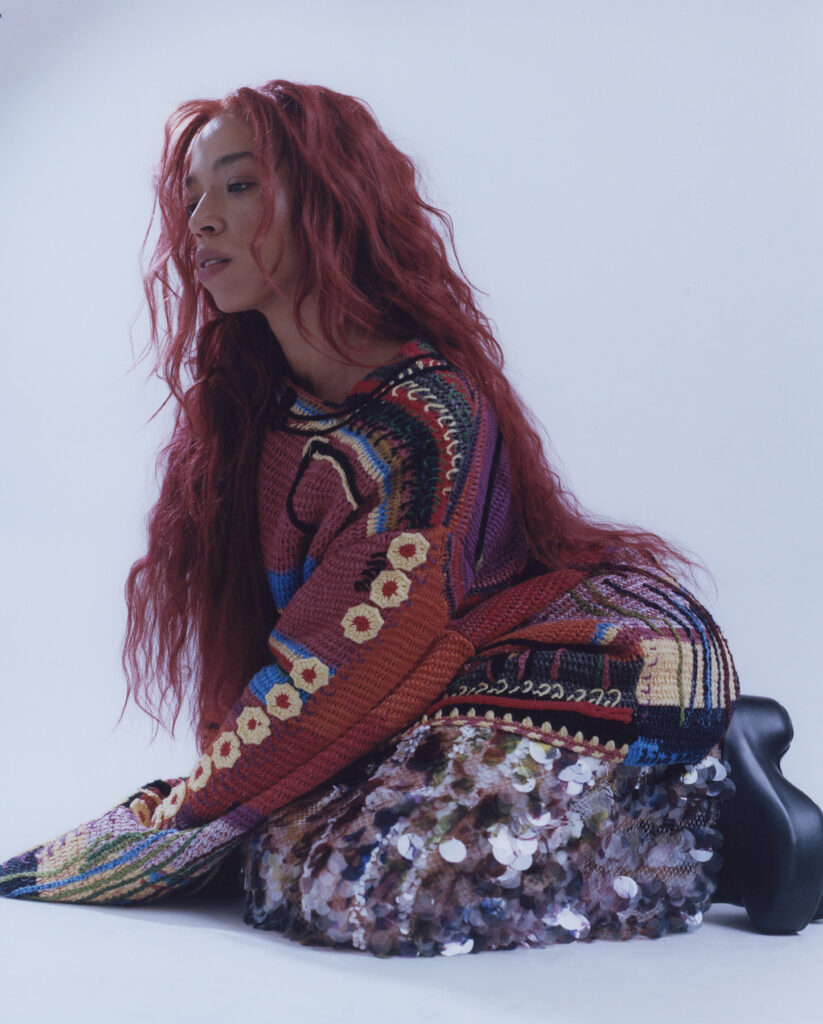
Zsela

“I think that’s part of the magic of a show is like, not knowing what is gonna happen.”

With the release of her 2020 EP, Ache of Victory, the singer Zsela was able to satiate an audience who had been waiting for this moment. Her voice – deep, sultry, smooth – breezily carrying the introspective five-track record along, from start to finish. Ache of Victory was a while in the making, with the artist taking her time to make it. She collaborated with the producer Daniel Aged, who’s worked with the likes of Frank Ocean, FKA Twigs and Kelala – a strong indication of the kind of sound that shapes Zsela’s EP. But Zsela’s voice is distinctively its own. If Ache of Victory fits within the current realm of R&B, it’s worth noting that the singer has previously supported the likes of Angel Olsen and Cat Power – and Zsela’s voice exudes a real soulfulness. In 2020, she joined Porches for a cover of ‘Porcelain’ by Red Hot Chili Peppers as part of the synth-pop band’s virtual tour on Instagram. And as a native of New York, Zsela’s become something of a glittering presence in the city’s fashion and art circuits. She covered Madonna’s ‘Like A Prayer’ at MoMA PS1 for New York brand, Vaquera, at their “Vaqueraoke” in 2019, and performed Tim Buckley’s ‘Song To The Siren’ alongside tracks from Ache of Victory at the Whitney Museum’s 2020 annual Art Party. The cover of Buckley’s song appears on a three-track EP, Live! (2020), alongside a rendition of Nina Simone’s ‘Don’t Let Me Be Understood’ from a 2019 performance at Zebulon in Los Angeles, and a cover of Talk Talk’s ‘I Believe in You’ from Zsela’s performance at the iconic New York venue, Joe’s Pub (take a glance at the “Notable Performers” list on the venue’s Wikipedia page if you need confirmation).

More recently, Zsela sang at Marni’s S/S ‘22 show in Milan, as part of performance composed by singer-producer Dev Hynes. Dressed as a “Marni mermaid” (as per a post on Zsela’s Instagram), the singer was accompanied by a live orchestra as she performed the song ‘Guide You Home’. But what’s next for Zsela? When the pandemic started, she found herself in Los Angeles – where she continues to live for now. She’s got a string of tour dates in the United States this spring, and has also been working on her first full-length LP. Speaking to NR over email, Zsela explains that this album will be less a continuation of Ache of Victory than about “letting go”. And on a phone call from LA, Zsela discusses taking her time with the album, the joy of performing live and her excitement for sharing new music. 

NR: You’re currently working on your first full-length album, how’s that going? Over email, you mentioned that this is about ‘letting go’, rather than being a continuation of your EP, Ache of Victory

Z: Well, it’s been a slow process. It’s finally starting pick up and things are coming together. I guess it’s kind of my brand [to take] time. It’s intentional and not intentional, because, at the same time, I’m just trying to be okay, or be better with myself with my mind and my environment – to be healthier. And that’s a slow process. At the same time, I’m so excited about the songs and I feel like, if over time I still have that drive and momentum for what I’m making, then I guess that just proves that I like them still – so I want to put them into the world. Right now, I’m seeing the light a little bit – getting things done – and that feels really exciting.

In terms of “letting go” versus continuation – with the EP, I was on such a mission to get that done because I had been sitting on those songs for a long time. Me and Daniel came up with this world of sound that we really drew from, and everything fit into that. But recently, I’ve been letting go completely because I feel that I’m happy with that introduction to me – but [also], there’s so much more that I want to let people into, about myself. And for the first time, the songs that I’m writing right now are doing that – they’re letting more out and more in. I feel that I’m letting more out through a different tone; Ache of Victory was a very strong singular tone. And this now feels like there’s more freedom; I’ve been feeling freer and less worry. Ache of Victory was wrapped up in a lot of pain; pain that I felt. So, letting go is related to that because, especially this year, we’re not out of the pandemic, and there’s so much pain. I was watching an interview with Prince where he was like, “music should uplift, only”. And hearing that, I’m like, yeah, I want to do that. We need that; I need that. 

NR: As you say, you’re taking your time and seeing how things go, but do you have a sense of how this album will work and when it’ll come to light? 

Z: I think there will definitely be new music this year. How much of it, and in what shape, I don’t know. But, talking about the album versus the EP, I’m wanting more levity in my life.

“There’s so much you can’t control and there’s so much uncertainty, but I’m chasing levity.”

And I’m doing that in this new music too, in a new way that wasn’t a priority with Ache of Victory. When I said [over email] that “fun is a priority in my creation process”, it really is for me now because making something from nothing is a beautiful experience. And to have fun with that is something I want because there’s so much else that’s part of the process that can be painful. Or, obsessive, like – “Oh my voice makes it sounds like this.” But I’m having a lot of fun with songwriting and seeing where my voice can go physically.  

NR: The theme of the magazine if ‘celebration’ – so I wonder, does that apply here, especially as you’re talking about introducing levity to your new work?

Z: Yeah, I think it really does. I think it’s very in the realm of what I’m talking about, I’m very interested in anything that we can [try] or celebrate. 

NR: When it comes to performing live, does that give you an opportunity to test out new music or to experiment with something? 

Z: When I went on my first tour, my first and only tour, I was playing songs that were already recorded. And that’s pretty normal, but right now, I’m about to go on a tour again and I think I’m gonna do a lot of new songs. I’m really excited because I’m learning that it’s a rare opportunity to be able to sing something before you’ve recorded it. When I did my first tour, I realized how much you learn from singing them and you’re like, “Oh – I probably would have done it like this.” So I’m excited to be able to try things with these songs before they’re actually finished. Especially because, with what I’ve been saying about trying new things and sharing more of myself,

“with these songs, I feel like I want them to breathe a bit in a way that I can learn from.”

I’m really excited for them live; I can already feel them live. Before, with Ache of Victory, I wasn’t really thinking about that as much when I was making them. But with making these new songs, it’s been more like, “Oh my god, I’m really excited to play this one.” 

NR: How does performing at fashion shows, versus gallery spaces, or on tour compare? 

Z: I don’t know how to compare – like, playing at a church, versus a bar, versus a wedding I didn’t know was a wedding, the Whitney? I don’t know. There’s no real comparison. But I think that’s part of the magic of a show is like, not knowing what is gonna happen. And being in different environments and being able to shift the energy – that’s exciting to me. 

NR: So what is the joy, or pleasure, of performing live for you?

Z: Singing into people’s eyes.

Credits

Talent · ZSELA at ELITE MODELS NEW YORK AGENCY
Photography · MIKAYLA JEAN MILLER
Creative Direction · JADE REMOVILLE
Fashion · SHAOJUN CHEN
Makeup · FRANCIE TOMALONIS
Hair · MALCOLM MARQUEZ
Writer · ELLIE BROWN
Special Thanks to · MIGUEL AVALOS

Mark Leckey

Mark Leckey

“I’ve felt this for a while about technology – that it’s inducing this strange kind of medieval state, in the sense that they cohabited two realms between the spiritual and the profane.”

“Ah rabbit holes, I know them” texts Mark Leckey, after I ask if we can delay our interview. I have a list of questions I could put to the artist, but I’ve lost myself in the matrix of his work. And where do you start? Perhaps with Fiorucci Made Me Hardcore, the 1999 video that put Leckey on the art world map. But that isn’t the beginning of the artist’s story, something the artist himself has subsequently explored. Leckey grew up in Ellesmere Port, a town used as an overspill for Liverpool in the late 1960s that looks back towards the city on the other side (the wrong side, Leckey would say) of the River Mersey. Leckey studied art in Newcastle, moved to London and, having not found success, decamped to the States for a while. Leckey has spoken previously about how, in the mid-to-late 1990s, he was interested in the music videos that were coming out at the time. But Fiorucci, the result of that intrigue, was less MTV and more ICA. And it was at the Institute of Contemporary Arts in London that the video was first screened. Fiorucci, with its thumping music over a montage of found footage of Northern Soul dancers and hedonistic ravers, may have since entered the domain of British art, but the artist didn’t become a household name at the time. That arguably came later in 2008, when Leckey won the Turner Prize for his exhibition Industrial Light and Magic at Le Consortium in Dijon, France – a show which concretely outlined the recurring themes that have since come to define his practice, in which the post-industrial landscape of his youth and the emergence of an alternative, quasi-digital landscape in its place, are recurring motifs. 

A week later, I meet Leckey – wearing a full-length white fur coat, matching plaid shirt and bottoms, and his signature pearl earring – at a pub near the artist’s North London home. Originally, our interview was scheduled to take place on Zoom, but I have a hunch that the rabbit-hole questions I have prepared could better benefit from meeting Leckey, a self-proclaimed hermit, in person. And over a pot of tea, we begin by discussing the art world, the internet and what it means to be a working-class art student today. It’s a topic Leckey has pondered over for a long time, but now, he suggests, if he were in his early twenties, he’d be prioritising NFTs over art school. “I don’t think NFTs are just bad drawings of monkeys,” Leckey says – there might be more to it than that. And if there’s a novelty to NFTs now, the German electronic band Kraftwerk seemed novel, too, at first. “You don’t know what the tail of that is going to be, or the direction it will go.” It’s in no way surprising that Leckey is thinking about NFTs, even if he says he is sceptical because of the environmental arguments made against them; he’s been dubbed the ‘artist of the YouTube generation’, and an art career spent scouring the internet for soundbites and videoclips to use in his work means that, naturally, Leckey is all too aware of what’s happening online. But, having rewatched Fiorucci on YouTube rather than the gallery setting it was made for, I wonder if the artist now considers his work to be made for the internet, or still to be absorbed in a physical environment? 

“Both, I think. I like the immediacy of putting something on Instagram.” Leckey has an upcoming show at Cabinet Gallery in South London, and so when that opens, he will also share the work on social media. But using Instagram doesn’t necessarily give Leckey a clearer indication of what people think of his output. “People can go ‘fire!’ or whatever,” he says in relation to the emoji – one of eight pre-set reaction emojis that Instagram suggests for its users in the comment section. “[But] I don’t know why they liked it. And then you can have an opening and people just sort of nod as they walk out the door – so I can’t gauge any response from that.” Fiorucci was one of the rare occasions Leckey got an immediate reaction, with people coming up to the artist and telling him what they thought of the piece. “And then, nothing happened,” he says of Fiorucci, “it slowly percolated. But it got its maximum impact twenty years later, around 2019.” The resurgence of interest in Fiorucci coincided with a huge show at Tate Britain, O’ Magic Power of Bleakness, in which the artist recreated a motorway bridge from the M53 in Merseyside to go alongside a new video work, Under Under In.  

But it was also around this time that rave culture of the late 1980s and 1990s enjoyed something of a renaissance. Perhaps that yearning for anything closely resembling the rave scene could explain the sudden interest in Fiorucci, even if the other side of it – Northern Soul – remains firmly in the domain of a particular vein of Northern working-class culture. Nostalgia is something Leckey often speaks of, so I wonder if he sees the renewed interest in Fiorucci’s depiction of rave for a younger audience as (misplaced) nostalgia? “Yeah, but then, it’s not,” he says. Growing up in the eighties, he was nostalgic for the sixties, the equivalent decade for today.

“Woodstock and all the rest of it seemed impossible, and I guess that’s part of the thing with rave. It seems both exciting and intoxicating, but also depressing.”

Leckey describes modern-day nostalgia as a “contemporary condition, of technology, of capitalism.” That much is evident in the 2015 video, Dream English Kid, 1964 – 1999 AD, in which the artist used found footage to recreate his childhood, having seen a clip online of a Joy Division concert he’d also attended in his youth. By using found footage, clips from television shows and a 3D rendering of that same M53 bridge, Dream English Kid doesn’t depict Leckey’s own childhood per se, but reconstructs a kind of collective memory. In that sense, he describes nostalgia as being algorithmic in a way; “it’s like data passing through your body.” An equivalence could be gentrification, “in that, as an artist or whatever, you’re just moving into space, blithely unaware of where you’re leading society.” So when it comes to nostalgia, Leckey says, “you’ll connect with these things in a very real way, but you’re actually just at the forefront of clothes manufacturers and all the rest of it that are going to come in your wake and exploit that.” 

There’s a bit in Fiorucci where a voiceover lists off clothing brands – Fiorucci, of course, but also Lee, Fila, Burberry, Slazenger, Lyle & Scott, Lacoste and Aquascutum – to name just a few. These were the brands of choice for the Casuals, a subculture of football supporters in the 1980s associated with designer gear and hooliganism (Leckey was, for lack of other entertainment, a Casual for a period in his teens). And like return of rave to popular culture, the brands that defined the Casual’s Terracewear seem to have seeped back into the collective consciousness, too. But, anyway, it takes a few listens to fully grasp the brands that are listed in quick succession in Fiorucci, the voiceover taking on a rhythm that seems to mimic the hardcore beats that Leckey samples throughout the video. Was that deliberate, on Leckey’s part? “I think when I did that, it was more out of embarrassment,” he says – “because it was me and I didn’t want my voice on it. So, I pitched it down and put loads of reverb on it.” The result was something more akin to an incantation. “And I suppose Fiorucci is about conjuring up a religious experience.”

Under Under In also plays on the idea of the almost religious dedication that is afforded to brands. Across five separate vertical videos that seem to mimic the world seen through Snapchat, we’re introduced to a group of kids at the centre of the film, their identity fixed in the brands they wear: Nike Air, Adidas, C.P. Company, North Face. “We’re Stone Islanders,” one boasts. But these kids also seem to betray their youth, drinking a £1.29 Maltesers drink, the sight of which might elicit a Proustian madeleine moment for anyone attending an English secondary school near a corner shop in the twenty-first century. The kids also recite the names of car brands they’re too young to drive, let alone own. But if Under Under In can be seen as a Fiorucci equivalent for a subsequent generation, Leckey thinks that the moment of brand affiliation as self has passed. “I read something really interesting about subcultures in the twentieth century,” he explains “and essentially how using consumption to define yourself has been wholly exhausted.” Now, it’s through opinions, not brands. “I listen to that bit in Fiorucci now and to me, it seems almost quaint.”

If the world that shaped Fiorucci and Under Under In has moved on, Leckey’s work continues to be a source of inspiration for others. There are 327 comments on the Fiorucci stream on Leckey’s YouTube channel – musings from the artist himself over the eleven years since it was first uploaded, and from viewers recalling the first time they saw the film, or the memories it evokes. In one comment, a user asks if they can sample part of Fiorucci. “It’s all part of the Creative Commons. Get in there,” Leckey responds. Soundbites from Fiorucci previously made their way into Jamie XX’s 2014 track, All Under One Roof Raving but, I wonder, so much of Leckey’s work is gleaned from what he finds online – how does he feel about others doing that with his work? “I wish they did it more!” he exclaims. “I mean, it’s just stuff really and it’s there for the taking.” Leckey describes found footage as being a surrogate that allows him to communicate something. “If someone can do that with my work in the same way, then that would delight me.” 

In last year’s To the Old World (Thank You for the Use of Your Body), Leckey repeats, reconstructs and deconstructs a ten second video he found on Twitter over the course of almost nine minutes. The video clip sees a boy take a run up before jumping through the side of a bus stop, his friends, out of shot, laughing (in shock? out of amusement?) as he crashes onto the floor surrounded by glass. But what was it about that clip that was so compelling to Leckey? “I always try and avoid drawing in theory, partly because I’m going to do it really badly, but it’s that Roland Barthes book, Camera Lucida; there’s something in that image that draws you in and connects in some way.” That could be, say, “some hi-res, beautiful, well-shot image,” but in Leckey’s case, it’s “some piece of shit” that affects him so resolutely. “And it’s like, why? What the fuck? Why is this making me feel anything?” He’s been thinking a lot recently about something the sci-fi writer, Philip K Dick, said: the symbols of the divine initially show up at the trash stratum.

“So there’s God in the midst of this shitty piece of videotape of this stupid kid.”

But that stupid clip of that stupid kid resonated more deeply with Leckey – after all, his work is usually, in some way, autobiographical. “As soon as I started watching it, it was like, I did shit like that when I was young.” But whilst Leckey’s work connects with lived experience, the process of making the video is as important. If Leckey set out with different intentions when he began making Fiorucci (it was, he says, intended as a kind of documentary), it quickly became about the medium itself. “I was looking at these VHS tapes and a strange intimacy and distance developed as I was watching. Something about the footage compelled me to look closer into the ghostliness. I’d find myself wanting to merge with it, but at the same time it’s continually pushing me out and repelling me because it’s a ghost and it’s the past – and it’s impossible.” To the Old World comes from a similar place – of simultaneous intimacy and distance. “We live in this continuously mediated space, and all I feel I can do is try and find some intimacy or immediacy in that.” It’s somewhere in this space that Leckey thinks we now reside, where memories and the present exist on the same plane. When it comes to the video clip from To the Old World, “I can be that boy jumping through the bus stop, I can one of his mates watching, and I can be me watching them, watching him. I can be all these things at the same time.” 

To the Old World, which was commissioned for Art Night and toured the UK in autumn 2021, followed a period in which Leckey – like many throughout the pandemic – struggled to make anything, let alone the video. But, he says, he began to see the bus stop in the clip as a sort of portal. “I look at it now, and realise it’s made out of a kind of frustration. There’s this kind of compression in it, and then it’s looking for a release.” At the end of To the Old World, after Leckey’s stupid bus stop kid has been turned into a repetitive motif, rendered in 3D, and re-enacted by an acrobat who recreates the jump from various angles, the piece ends in song – “a song of joy” as the boy disappears into the glint of fractured glass. Artistically, it’s a kind of ultimate release, but the ending also reflects another side of Leckey’s creative output – making music and hosting a monthly show on the Hackney-based online radio station, NTS. Does he find soundbites and music in the same way he finds footage? “There’s less choice with video,” Leckey says; he has a library of footage and sound, but the latter is much vaster. The problem with video is that, sometimes, it seems out of bounds, watermarked in a way that sound isn’t. But Leckey tried to approach To the Old World in the way he would making music or putting together an NTS show – music, with a visual element.

“I want to find a way of using video how I use sound, because it involves a sort of not caring, or not caring so much.”

When Leckey explains that his work is about getting to the root of what compels him about the footage and materials that he is drawn to, he jokingly asks why he “can’t just go out into a field and enjoy nature instead?” But, it seems, that is precisely what his next work will be. He is currently working on an accompaniment to the bus stop video which he summarises as a being “about a hermit getting joyful.” Leckey’s inspiration for this work comes from Orthodox Christian iconography – paintings of religious saints that don’t adhere to a traditional, Western understanding of art history. “These icons are not images or pictures,” Leckey says, but portals;

“When you look at an icon of a saint, you’re looking into heaven.”

So the artist has set about finding his own portal (or, a ‘channel as grace’ as the act of looking into heaven through an icon is called). “I went out to Ally Pally on a really beautiful, sunny day and recorded myself getting overwhelmed by the world.” The idea stemmed from the artist’s contemplation of hope, and hopelessness, during the pandemic – and a curiosity, then, to delve more into the divine. There’s a community of people that Leckey follows on Substack and TikTok who are investigating something similar. “Like I said before, the divine shows up at the trash stratum, and maybe it is.” The trash stratum here is TikTok, where users in Leckey’s orbit are attempting to grapple with what may lie beyond, or within, the internet (comparisons are made between the structure of the world wide web, and its similarities with NASA’s images of space). “There’s a strange confluence of things,” Leckey notes. “I’ve felt this for a while about technology – that it’s inducing this strange kind of medieval state, in the sense that they cohabited two realms between the spiritual and the profane. We sort of exist in two realms now. It’s the immaterial space, like you originally asked me about the internet, and the only antecedent I can think of is the medieval.” And with that, Leckey heads off to Sainsbury’s to get some bits. 

Credits

Images · Mark Leckey
https://markleckey.com/

Tame Impala

“I think the energy of being in a place that you’ve never been in before can make your brain think in different ways”

Kevin Parker’s shoot for NR Magazine came merely a few days before Los Angeles was locked down in response to the coronavirus pandemic that has, slowly but surely, turned everything we know on its head. ‘It was great to do something normal, something that I have been doing a lot of in the last few months; doing photoshoots and having fun,’ Kevin explains – now back in his native Perth, WA. ‘It took the attention away from everything that was going on. It was nice to spend three hours, just doing a photoshoot with wicked clothes.’ As the force behind the powerhouse band Tame Impala, Kevin is confident that the band has the resources it needs to weather the blow that the pandemic will have on the music industry; people still listen to his music online, ‘apparently’. When it comes to making music, it’s a well-known fact that Kevin works alone – so in that sense, business continues as usual. Yet, like many other artists who have had to abandon plans for the foreseeable future, the release of Tame Impala’s fourth album, The Slow Rush, in February has been overshadowed by this unprecedented upheaval. The band were due to play a number of shows in the US and Mexico in March, with an Australian tour following in April. ‘We’d spent so long preparing for the tour, and were at this absolute crescendo of getting ready for the shows – and as soon as we had played the first show, it was like, ‘Oh my God, what’s going to happen? For now, the dates have been postponed – which undoubtedly comes as a blow to the Tame Impala fans who have been waiting five years for a new album (though a number of fans turned to punning The Slow Rush’s exploration of ‘time’ in response to Kevin’s announcements of the postponed shows on social media; ‘it’s a slow rush’.) In its entirety, The Slow Rush is an infectiously funky record – and the influence of 70s disco and the current mainstream that has welcomed Kevin into its arms, are clear. Much of the heavy fuzz and reverb found on earlier Tame Impala albums have been slickened and given a shiny polish. Looking into the past may preoccupy some of Kevin’s lyrical reflections on the album, but there’s no reason for why Tame Impala’s sound shouldn’t move forward. It’s somewhat bittersweet that an album that unpicks the strangeness of time should come at a moment when, across the planet, we will have more time to contemplate the past and the future. It’s a heavy weight to place upon the shoulders of The Slow Rush, and if there was any kind of global crisis that was on Kevin’s mind at the time of writing the album, it would have been the climate crisis. Tame Impala partnered with Reverb, an organisation that works with artists to counterbalance the carbon emissions that are created through touring – something Kevin explains as a ‘no brainer’. Touring, especially on the level that the band are, has a huge carbon footprint, and trying to restructure the way world tours have been done for years would be a daunting task for Tame Impala to undertake themselves. But, it’s Tame Impala’s responsibility ‘first and foremost’ to ensure that the band is setting the right example, especially for a band that performs to thousands of people at every show (though, he hopes, the people that listen to Tame Impala are ‘probably not the kind of people going around denying climate change.’) During our Skype call, I ask Kevin about the prerequisites for listening to music; he says he has come to realise that his appreciation of music is shaped by ‘not necessarily the space, but who I was with when I heard it first, or what I was feeling.’ There’s a ‘helplessness’ to this reality; a ‘lack of control, from the songwriter’s point of view’ over how their music will be received. No doubt, Kevin could not have anticipated that The Slow Rush would come at the time it did; all that’s left to do now is listen to the album in solitude and await the moment when the music world comes back to life.

NR Magazine: The Slow Rush was a long time in the making – how do you feel listening to it now that it’s out there? Is it a relief to be done?

Kevin Parker: Absolutely, yeah. It’s funny because the moment I’m finished with the album, and the moment it comes out, I expect this huge sense of relief and a weight off my shoulders , but it never comes. That might just be because I have trouble appreciating things once they’re done; on release day, I didn’t get to enjoy it because I just can’t enjoy these things. I still enjoy the album, but it’s not always easy to enjoy the music when you’re aware of so many other people listening to it for the first time, and invariably judging it. When I look back, I remember thinking to myself, ‘Shit, am I ever going to finish this?’ Now, I am able to appreciate being on the other side of that. I was listening to the album yesterday; if I’m ever on Spotify for whatever reason, I’ll probably slowly make my way to the album and give it a listen – just to see what it sounds like now after a month. (It only came out a month ago, that’s crazy; it feels like a life time ago!)

What were your reasons for making an album that explores the concept of time?

It’s always been something that fascinates me – not time itself as a weird existential force – but the way it affects us. The way you can smell something, you know, if you walk past someone in the street who’s wearing cologne that someone that you were in a relationship with ten years ago was wearing, and you haven’t smelled it since then, it just sends you into an absolute time warp. The way these experiences shape our lives intrigues me. At the same time, I didn’t consciously go about making songs about all these things but, when it comes to an album, the kind of music that I’m making subconsciously informs what I start singing about. Like, when I made Lonerism, the chords and instruments I was using reminded me of times when I felt alone growing up, and so the album ended up being like that. And I feel like The Slow Rush is the same kind of thing, where the music I was making – the rhythms and cords – just made me think about the future, the past and everything in between.

I listened to Innerspeaker again a couple of weeks ago and it transported me back almost ten years back which was, like you say, an emotional time warp. Does the way you listen to your music change with the passage of time, or is the sentiment the same?

Definitely not, no! It’s funny you know, you’re saying about Innerspeaker – it’s the same for me. I hardly ever listen to the album the whole way through, but if I really pay attention to parts of it, it’s crazy because it so clearly reminds me of where I was and what I was feeling. Like for you, it’s kind of crazy; music is crazy how it can do that. I guess the other thing is, listening to Innerspeaker now, it feels like it was someone else. I just hear this naïve kid, not really knowing what he was doing, which is nice because I don’t judge it anymore. I don’t judge it in the way that I do with The Slow Rush. Innerspeaker was so long ago that any of the mistakes, any of the things that are wrong with it, just sound charming and cute, which feels weird to say…

I guess you’re so disconnected from it, with that amount of time passing?

Yeah totally. That’s also good because it finally allows me to listen to it like someone else, not as me – the person who made it. That’s kind of the dream, to be able to listen to your own work. I don’t know how much money I would pay to be able to listen to the songs I’m working on at the time, you know? To be able to listen to the album, as an outsider… I’d give anything to be able to do that, but it’s something that only time can offer.

I’ve seen a few people mention that the cover for The Slow Rush was 3D-animated, but it’s a photograph from Kolmanskop, Namibia, right?

Yeah – I’m not going to lie, I was a little bit disappointed when people asked how I synthesised the image. I was like, ‘Man, I flew half way across the world to take that picture!’

I can see why people don’t believe it’s real. How did you decide on using that as the album cover?

I was a little bit obsessed with abandoned places for a while, and the internet is full of pictures of these abandoned ghost towns; there’s just something so enthralling about them. I mean, probably not coincidentally, it’s like the experience of time passing smacking you in the face. I guess some people find it depressing to look at, but I just see such beauty in it. As soon as I saw that place, I knew that we had to go there. Kolmanskop is like a ghost town in the desert and it’s super windy, so sand just builds up in these amazing ways. What I love about it, is that it looks like liquid – and if you look at a picture, you can’t tell if it took the sand that’s up to the window a matter of minutes or decades to reach that point, you know? You can’t tell which it is and that’s kind of what I love about it.

You’ve previously spoken a lot about how you make music, but how important is the space around you during that process?

It’s important – not that I need to be in a particular place to make music, but I think there’s something about being somewhere new. I think the energy of being in a place that you’ve never been in before can make your brain think in different ways. So, with The Slow Rush, I tried to milk that. I was renting Airbnbs, taking music equipment with me and recording there for a week on my own. There’s this nervous tension about being in someone else’s house…

Though I guess, you got more than what you bargained for when you were staying in Malibu [when the worst wildfire season in California in 2018 ravaged the area]?

Well exactly, yeah. And I’d only been there for one night, and the next morning I just had to go. I had stayed there for a week earlier that month recording, and it’s funny because I think about that space – I started a few songs off this album there, and when I listen to something I think about where I was when I working on it. It takes me a while to realise that that space doesn’t exist anymore; it was completely burned to the ground, it was just rubble. When I listen to a song, or the chorus of a song I wrote there, I remember the colour of the walls; what the door looked like; what it was like leaning out into the backyard. It’s kind of weird to think it just doesn’t exist anymore because, in terms of memory, we never think of a space as not existing, you know? Our minds think of the space we’re in as these permanent places, not something that can just disappear in one day.

It goes without saying that Tame Impala has seen an unprecedented level of success in the past ten years – what’s next for Tame Impala and for you?

That’s a good question; I don’t know. Well, I want to get making music. One of the things I was looking forward to so much with finishing this album was it just being done with. There was so much stuff that I wanted to do, in terms of Tame Impala and not; there were things that I couldn’t do until I made this album. So now, I’m happy to be on the other side of it so I can do the things that seemed wrong before. I have no shortage of things that I want to do now. I’m kind of excited about it – whatever that ends up being.


Credits

Creative Direction · NIMA HABIBZADEH and JADE REMOVILLE
Photo · JJ GEIGER photo assistant AMANI BATURA
Fashion · SHAOJUN CHEN
Grooming · ALEXA HERNANDEZ
Interview · ELLIE BROWN
Special Thanks · Grand Stand HQ

Miguel

“I’m more interested in exploring the subtext of the why”

Why does purity have sex-appeal? What happens when you ask desire to strip? Is it cumpassion or compassion standing there? Have the closed fists of a lover around your heart understood what it meant to pray? Did they pray for you or did they just have you on your knees? 

The difference between intimacy and sex has long evaded many of us for far too long as we wrap our naked bodies in sheets instead of awareness, checking our phones before we even turn to see if the person next to us has batted an eye in waking consciousness. When we’re unable to communicate with ourselves or our better halves, we turn to music, we turn to Miguel. The Grammy Award winning artist is known for his sensual ballads. His 2017 critically acclaimed album War & Leisure, debuted at #1 on the Billboard R&B Albums chart and #9 on the Billboard 200 chart. But as we’ve been waiting for our next, favorite slow-jam, waiting to read the lips of an angel before they even part, Miguel turns the lights on. 

He needs more, he is more and his cravings no longer can be fulfilled simply by tender embraces and physicality chained to emotion. Miguel is looking for something deeper, looking to fill up space as he is, instead of carving it out of self-censorship, longing and lust. As he matures, he’s been making an effort to become his own friend, admitting to the fact that for some time, the person in the mirror blinked back but didn’t look like the person he wanted to be. He’s focusing on genuine understanding, relatability instead of selfhood dependent on difference and exploring darker tones with his new music because as he says, “there’s no way to tell the whole story without actually presenting the whole. I’ve shown everyone one side of me but now let me show you the other side, too.”

I know you’re also close with your grandma who left Mexico, sacrificing her own career in music to make a life for your family in the States, helping to shape your identity and inform your relationship to music and home. My own grandma recently turned 100 so I’ve been thinking a lot about matriarchy and home in general. 

My grandmother’s are almost polar opposites in terms of their temperaments. I didn’t get closer to my grandmother on my mom’s side until I was an adult and that’s been a whole other, fun relationship to develop that I didn’t expect to have at all. She was stern because she had to be and I only am able to see that now. The opposite goes for my grandmother on my father’s side, who you mentioned. She was always really warm, affectionate and loving but as I got older and business and life made it much harder to be there physically and it just wasn’t as much of an adult relationship. I look at family as being a sense of not only your journey as an individual, but as a representation of the bigger journey.

It’s like your legacy almost?

Yeah and not even as a measure for your accomplishments but just in your disposition, your humanity.  

“Our temperaments, our choices, our affinities are informed by our families.”

Yeah it’s this idea of a foundation. You’ve been likened to Prince and been a sex symbol in the minds of many and that was your foundation almost on which your career was initially built. But as you matured, you’re shifting that foundation as sex perhaps becomes intimacy with yourself as you begin to explore these darker tones in your work? 

I am anything I want to be, everything I want to be and sometimes that is sexy but not all the time. I welcome whatever it is that people need to connect with and I don’t control it. If I am sexy to certain people, great, that’s awesome but I just know that that’s not all I have to offer. It’s certainly not what keeps me interested in anything. I gravitate to things that feel sexy but I’m more interested in exploring the subtext of the “why” that is and so much of that comes from the depth of the darkness and the light, the interplay of it all.

It’s interesting because we aspire for depth but we don’t always equate it to being anything to do with darkness per se, we see it as a positive thing associating it with emotional growth. We’ve all been exploring this within the past year as we’ve had to confront ourselves. In what ways have you become more intimate with yourself and what do you feel more distant from?

I’ve been going back to this analogy recently because it’s the easiest way for me to remind myself but think about how often the operating systems on our phones get upgraded, now it’s like every couple of months, there’s something new, something better, a more efficient version. Life for humans should be experienced this way, in abundance, happiness and fulfillment. For me it hasn’t necessarily been new things, it’s just being able to see what needs optimizing and sometimes that means having to discard things we once needed.

What are some of those things for you that you’re cutting out of your system?

A lot of fear-based survival stuff, a lot of choices that reflect growing up having to move around, or not necessarily being in a place where we could afford things everyone else had, or feeling like an outsider based on the fact that I’m brown and black. What we do throughout life is to find ways to protect ourselves and for a lot of people that becomes their reality and stays their reality. For whatever reason, I was really lucky. I had parents that even though they weren’t together, they still held me down as much as they possibly could. I had enough of a support system to believe in myself, which is really at the end of the day, the core factor of anyone doing anything fulfilling. That ends up in great ways, fueling you and then in other ways, maybe weighing you down.

Right so it sounds like fulfillment to you is synonymous with self acceptance and we see that manifests on the Art Dealer Chic EP series. It’s funny when you realize what the difference between creating space and filling it up as you are feelis like. People seem to be gravitating towards this place you’ve stepped into especially with the release of Funeral and the new music on your greater horizon. 

Yeah I definitely just want to do the work. At the end of the day, an artist is about their work and I want to do my work with as much freedom from my even from my own feelings of requirement, or efforts to tick any kind of boxes per se. Inevitably, when you know your livelihood comes from your art, it’s going to find its way in one way, shape, or form so you need to be vigilant about creating clear boundaries. I’ve definitely experienced those moments where it becomes a challenge to see clearly and remember what the whole point of the gig is and I just remember that hey, I’m here to share, that’s what I’m here to do and I found a means of doing it through music.

“I get to be of service when I am my most honest here in this arena.”

Why is sharing so important to you? Why is that your driving force?

Probably because of the feeling that it generates. There’s been a couple of really awesome conversations I’ve had with my friends and fans that have shown me to the moon type support and they never really knew me but the connection was so genuine and there was a lot of belief there. I think of those people, and the people who I haven’t met yet but that I might meet through my music that I could possibly help to just feel good.

“That’s the awesome thing about any medium – the opportunity to connect with someone else that makes you forget your differences.”

Sharing is also interesting because like you said you might not know these people and nevertheless, that boundary you previously mentioned, begins to dissipate and maybe that’s the thing that we’re all looking for. The work you do as an artist is a lot emotional labor, you’ve broken down the boundaries yourself so that those listening are free of inhibition and able to access the parts of yourself that you’re putting forth in a way that mirrors intimacy. 

To add to that, it might be that I’m craving deeper connection in my life so I’m looking for ways to build that however I can and obviously that starts with a deeper connection with myself. I’ve really made a genuine and consistent effort over the past few years to really hone in and check in with myself, asking, “how are you feeling about you?” The more I’ve become my own friend, because I don’t know that I necessarily was, I realize how important this lesson was and it allowed me to shift, transition. I proved that I can write a good, even great, love song, I provided that I can do sexy, but what is that? Is that fulfilling? Does that fulfill me? I don’t think it really fills the cup all the way. 

What fills your cup all the way then? Even when you say you’re seeking out these deeper connections — what does that look and feel like to you? What is a “deep connection”?

Just like complete support, you know? I think that I’ve yet to really tap into what makes me relatable as a human being. I think that’s probably where I feel the most excited, the most uncomfortable and undeveloped. I don’t always lead with that. It’s interesting to look at the ways that we do our best to stand out and for a long time that was very, very important to me. But as I’m maturing and looking at the world, I’m going that’s not how I help right now. I used to champion being “an other” or different but like, we get it. You’re different and so is that person, and that person, and that person but let’s find the connection. 

Credits

Photography · RICKY ALVAREZ
Fashion · SHAOJUN CHEN
Creative Direction · NIMA HABIBZADEH and JADE REMOVILLE
Grooming · NADIA MOHAMMADPOUR
Production · THIRTEENTH PRODUCTION
Location · PEERSPACE
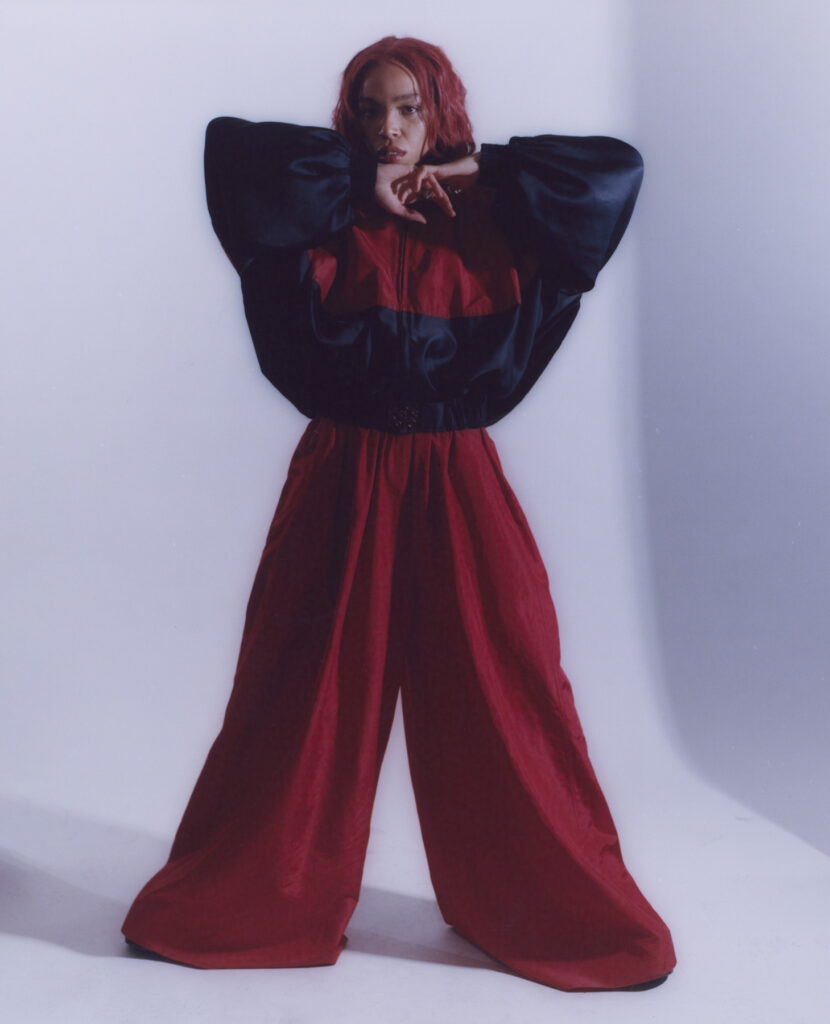
Interview · LINDSEY OKUBO
Special Thanks · Edge Entertainment

Goya Gumbani

“it’s like breakfast or dinner”

Born and raised in Brooklyn, rapper Goya Gumbani moved to London as a teenager. Landing a retail job at the London branch of Pharrell and Nigo’s streetwear label, Billionaire Boys Club, Goya joined a hub of fashion and music. The story goes that when the store closed, BBC would become a de facto studio – with industry heavyweights passing through its doors. Goya went on to pursue music, notably with the release of the 2018 EP, Morta & More Doves, but fashion has remained on his orbit. For one, he walked the Louis Vuitton AW presentation earlier this year – a far cry from ‘[modelling] in mad streetwear stores basements’ five years ago, as he shared on Twitter. Goya’s slick personal style is both an amalgamation of his inspirations (‘I like shit that looks 80s – pro Black, UK Reggae and Dub man from Brixton,’ he told BBC), and a visual embodiment of the London music scene that has come to influence his sound. Last year was a busy year for Goya, releasing five EPs with the likes of producer Oliver Palfreyman, on November’s six track EP Truth Be Sold, and with Bori on Steps Across the Pond from March (which got a limited edition vinyl pressing last month, a year after its release). Goya’s catalogue is consistent in its warmth. Often reflective and contemplative – and at times, existential – Goya’s vocals are perfectly matched to the soulful, hazy beats that are coming to define the artist’s sound. 

How do you set the pace of making music, and when do you know if something makes the cut for release?

I do this every day – at this point it’s like breakfast or dinner. I wake up and think about something music related. The making the cut process really just depends on where I’m at sonically or visually.

“Being from Brooklyn, living in London” is something of a tagline attached to your name. In terms of your sound, style and influence though, how do these elements come together?

They are both two great cities, they have both taught me different things from different perspectives. Both cities are in my DNA at this point, so they make me – if that makes sense.

I’d love to know if working at Billionaire Boys Club opened up your experience of London in different ways. How much of working there influenced your transition into music?

Yeah BBC was like a hub, everybody from every crack of the world used to pass through. So I met a lot of people in all fields, but most of the people I worked with there, also made music. I use to think I would just meet people to meet ‘em. But soon after, I realised you meet everyone for a reason. It’s not only to talk sweet nothings, but to build an grow to some degree.

At what point did you feel ready to share your music with people around you? 

Few years ago, I just had something I wanted to show, which kinda lead me to a place where I wasn’t fazed by my own self-doubt. 

I really love the EP covers/videos, and how they’re all quite different – is there any relationship between the music and the visuals you use? (If so, to what effect?)

The artwork and visuals are a lot. I feel like that’s gonna speak to you before you even hear anything. So it’s chosen with the intent to grab and leave wonder… Everything relates though; it’s all one big canvas of imagery that can speak on its own if needs be.

Besides appearing in the Louis Vuitton AW21 presentation, what defines ‘style’ and your style? 

Style is expression and personal touch to me. I worked in a couple menswear spots back in the day, so that gave me the knowledge into different eras and how style was a time stamp. But, my old boy Jack used to tell me: “if no one likes it, you going in the right direction”, Which I took as get dressed for yaself and you can’t go wrong. So that’s the motto.

What are you currently working on, and what can we expect from you this year?

I got a collab project coming out with [the producer] Subculture and a solo tape coming out this year I’m excited about. Few things with some familiar faces too… Oh and catch me on a few festival line ups!

Credits

Photography · DAVID REISS
Styling · SERGIO PEDRO
Creative Direction · NIMA HABIBZADEH AND JADE REMOVILLE
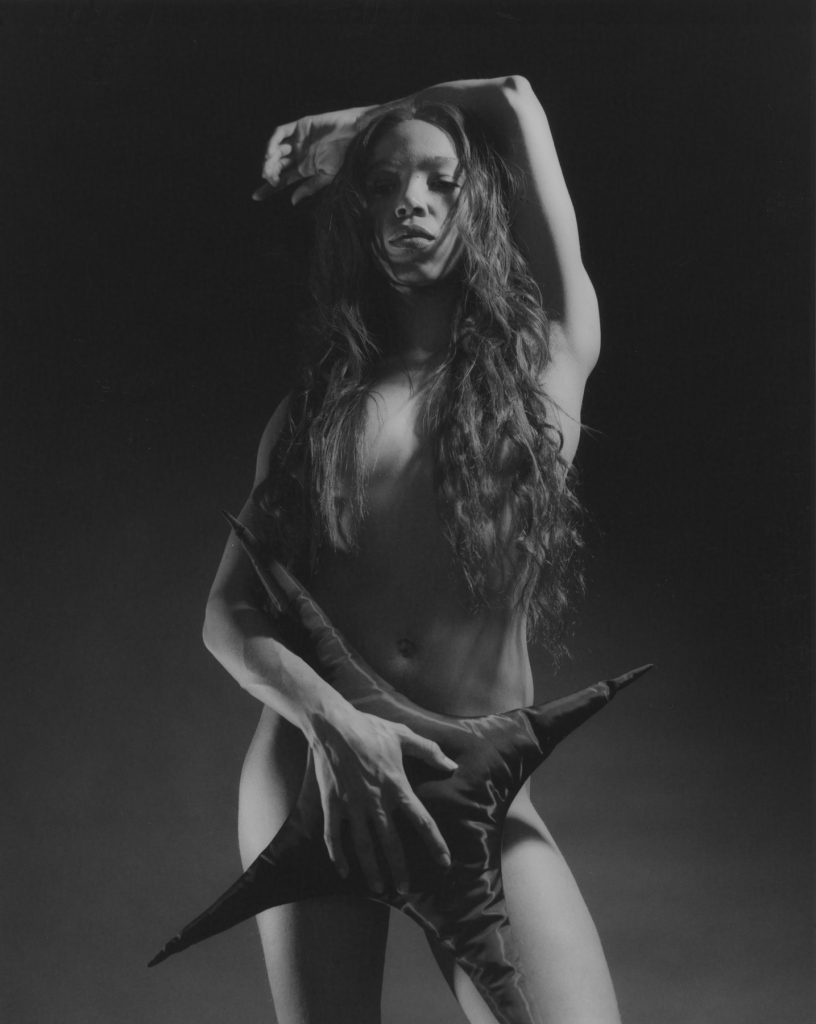
Interview · ELLIE BROWN

Subscribe to our
Newsletter