Archive page:


Okolo

Riding Around: From riding bmx bikes to shaping a multi-disciplinary design collective, OKOLO strives on collaboration and presenting the unexpected

OKOLO is a Prague based design collective founded by Adam Štěch, Matěj Činčera and Jan Kloss. They operate in a multitude of disciplines ranging in research, design, curation and architecture. Their key focus is delivering educative content and experiences through various mediums such as graphic design, illustration, publication and curatorial projects.

For this issue, NR is in conversation with Adam Štěch, to discuss OKOLO’s individual and collective journeys as a practice to this point, and to hear more about their ambitions for the future.

Adam, Thanks for joining me today. We’re lucky to have you for this issue and I’ve been looking forward to our conversation. I want to start by asking you about how you all met. I’d love to hear about your individual backgrounds and journeys, and how you came together as OKOLO.

Of course. We really appreciate it too. It started when I moved to Prague in 2005. I moved here to study Art History at the university, so my background is in Art History. I’ve always been a curious person. I’d always go around and try to meet people. At that time I was, of course, studying, but I was quite into BMX bikes, actually, bicycles in general. This is quite a strong connection between all of us. I went to my classes in university and after that, in the evening or afternoon, I always went to some skateparks or street spots to ride my BMX. One day I met this group of guys that were even younger than me. One of these guys was Matěj, Matěj Činčera, who was still in high school. He told me I’m interested in art and want to study graphic design. We realised we liked a lot of the same stuff. So we started to go out for beers and taking about doing some projects together.

“This lead to the idea of OKOLO coming around because OKOLO means “around” in Czech.”

We wanted to express that we were interested in the things that we find in everyday life, things that we like and admire . Whether it’s the design of bikes, furniture, artwork or architecture, anything. So we said, ok, let’s start some projects. We started to make t-shirts with some illustrations of real design objects on them. These t-shirts came with a text, with a story of what was on the t-shirt. So these t-shirt’s were a curated selection of some specific objects from design history. This was the beginning of our approach, and I think it’s still rooted in the same idea that we always want to present something from design history in a new way, through a new contemporary curatorial and graphic approach. Then we made our first issue of OKOLO Magazine in 2009. Basically that’s the year that OKOLO started, and at that point it was Matěj, My brother Jakub and I. My Brother was is crazy for bikes. He’s probably one of the most knowledgeable guys around bikes and bike design.

A few months after we met Jan Kloss. Jan wasn’t really from the BMX community but he was more into skateboarding and rap music. Both of these are also very close to me. I loved skating for its lifestyle, and we were all really into rap, groove, funk and soul. It was really great that we all met like this and had a similar vibe and sense of humour, and had the same values in our lives. What was important was that we each had different skills. I’m the curator. I’m the guy who writes the content and comes up with concepts for our projects. And Matěj and Jan are graphic designers, but slightly different from each other. Matěj’s much more into working with materials. He works with paper to create handmade installations, but also makes objects out of paper. He’s really skilful in this because his father was a packaging designer as well. And Jan’s more into the visual side of graphic design, not only creating logos but coming up with visual concepts for our books and visual features for our projects. So this is a perfect match, as each of us brought something different to the table. This allowed us to work independently as group and create everything in-house ourselves. This, I think, is our biggest advantage. But we’re really open as a collective, and do different projects on our own. I’m teaching and doing books with other publishing houses. Jan has a sneaker brand called PÁR, which means “pair” in Czech. Matěj is also teaching. So there’s projects that we do completely independently, but if there’s an opportunity for all our skills to connect and it would benefit a project, we always connect and do it together.

It’s interesting to hear how far back you all go and what interests your relationship is rooted in. I can visualise a trajectory of the different points and happenings that connected you all, it’s meaningful to hear how that relationship has built up to shape the dynamic you share.

Exactly! it’s really nice that we’re really good friends. We can really party together, we can see each other and hang out in any situation. It’s really like we’re kind of family. But In the last few years we don’t get to see each other as much. Jan has a family and Matěj lives a bit outside of Prague, so it’s nice that the bond between us is very strong.

It almost sounds like a mechanism that you’ve developed together, that you can rely on. It’s an established dynamic that you can activate when something comes around that you can all work together on. Even if you’re all doing different things and living in different places.

I’d say it’s basically a system, you know, If someone approached us with a brief, we already know how to process it, how to approach it and start developing concepts together. So it’s really an intuitive process for us.

We talked about your interest in BMX bikes, but I also wanted ask you about your lager brand and your exhibition about bottle openers. One of the things that I found interesting, which you touched on, is your approach to curating your shows. You seem to have a collective emphasis to re-introduce objects in a new context or alongside other objects, to give them a new meaning or narrative. Can you explain why you gravitate towards this approach when re-introducing these objects?

I think mostly the topics we are curating, we are choosing just because we love them. You know, for example, this bottle opener, this idea was born sitting having beer because we really love drinking beer, you know, and we laugh and have a good time during that. Also, this idea connected with the opening of our new gallery and studio space. So it was perfect idea to open our new space with the exhibition of bottle openers. Small things, you know, nicely designed, which have value and are everyday life objects. But they are really beautifully made and beautifully designed.

“For me as a curator, it is interesting to always choose a topic, do research and then show the broad spectrum of the topic. All the versions of all the incarnations of this topic as possible. It’s always based on this process of choosing something familiar, but to show it in a selection, which nobody would’ve put together.”

We like to really make this effort to choose different examples. Bottle openers or lamps or whatever, and to make a story, that somehow links in between them and then presents them in, let’s say, a fresh way. 

I’m coming from an academic background, but I’m not really academic. I don’t like it so much, this academic environment, which is very traditionalist and old school in many ways. We always wanted to educate, to bring this academic information, interesting information that is not well known, and to present it in completely not academic way. To present it in an almost new contemporary way to the public. Because our public or our people who follow our work and they are not academics, they are basically designers. But of course, designers, they do their own work and they don’t always have time to study books and read books as I do for example. So I always wanted to spread this information, which I have in my memory, in my design research, and to present this information in a catchy new way that is also understandable to people who are in the scene, but also people who are completely outside of our discipline. 

It’s almost like you’re creating a new vocabulary to re-introduce your research that feeds back into the system you talked about earlier.

It’s also very personal. We always have a lot of passion. It maybe can sound a bit cliche but the passion is the most important thing that you can have in what you are doing, whatever you are doing. It’s something that drives us. Even it’s a small exhibition in our gallery in Prague, where few people come to, or if it’s Triennale di Milano, like one of the most prestigious events in design. Basically, all our projects are on the same level, let’s say, because we love them all. We’re presenting this interesting information and stories of design through our personalities.

I think that reflects what you mentioned earlier that you love all your projects and that passion in a way is weaved through all your processes, whether it’s for bigger or smaller projects. 

I know one of your passions is modernist architecture. I’ve been following your instagram account for a while and you have a nice collection of modernist gems on there. Where did this interest start and how does modernist architecture as a global movement but also in the Czech republic influence the work you create. I’d love to hear your scope on why it was pivotal as a movement and how it has evolved through different happenings over time.

Mhm, I think the 20th century’s the golden age of design and architecture. It’s the time when all these amazing movements came from and they were really idealistic. They were utopian and were very optimistic. I think it’s seen and felt through the objects. I kind of miss a bit this idealism in contemporary design. This idea of a bigger goal, and to create really the new society, the better world. Modernism is basically about that. It’s the movement which originated as a tool, used to show us how our society could grow better. The tool that was accessible to more people and they could afford quality products which help them in their everyday life. So, this is what I think is really extraordinary about the modernist ideas. 

I’m kind of a retro person, so I’m not really as interested in contemporary architecture as much as the 20th century because there’s something in it, some special atmosphere, some charm, which really attracts me to it. You can tell these stories. You can read the stories. So for me, it felt natural that I focused on the 20th century design because you can feel the diversity of design. What was done in Scandinavia is different, and what was done in Brazil and in Japan is different, but everything is somehow connected under this big idea of of modernism. It’s like picking some chocolate from a bonbon. You don’t know which is better, and you want them all basically haha. For me, modernism is this period that I can really find so many beautiful forms, shapes and materials, and all its architects and designers across the world. And it’s basically an endless source of of stories for me. 

For 15 years, basically even more, like 17, 18 years it’s been a constant for me. A constant study of 20th century design and architecture. In my head I have a huge archive, and it’s something that you can always find something to explore, something new. I think in last ten years, and maybe because of our work a little bit, it’s got a popularity among the public, and suddenly you see that brutalism now’s quite trendy. People are travelling and taking photos. Now it’s become a thing our generation has started to re-discover, and it’s great that even the people who aren’t really geeks like me are discovering this, and they find some beauty in it. Social media and digital publications have had a big part in this as well. I think it’s a good time now to continue in this because it suddenly has much more of an audience than before.

Although at first, your instagram account focusing on modernist architecture seems separate from your work as OKOLO and from your separate studio account, once you look deeper you realise that some of your projects find their roots in this obsession. For me Mood-boards, and of course, your publication Modern Architecture Interiors are evidently bringing these two worlds together under one umbrella. I want to ask you about your process and experience of putting these projects together with Jan and Matěj.

You mean Mood-boards for Vitra?

Yeah exactly!

Yeah, that’s the perfect example of how we can connect our skills. Because the “Mood-boards” project came up because I was asked by a curator in Vitra Design Museum that they’re doing this exhibition called “Home Stories”. It was about interiors set in different periods and different countries showing the evolution of the domestic space. They asked us, so you’re a curator and a theoretician, but you work with your colleagues. Maybe you could do a project that will be on the edge of research and some form of artwork. So these mood-boards were really a great idea because I could connect my knowledge from visiting houses to them. We chose three houses, which were “Villa Tugendhat by Mies van der Rohe”, “Villa Müller by Adolf Loos” and “Villa Beer by Josef Frank” in Vienna. And I visited these houses properly once again to research all the materials which were used in them. Then we tried to get samples of these materials, as many as possible, and create some kind of collage out of them.

This part was more the work of Matěj, because he really was able to work as a sculptor, to put all these samples together in a nice collage structure, which you can put on your wall as an artwork. But if you read the caption that comes with it you find out that it’s an exact imprint of a real iconic interior. So this project is a really nice example of how we connect our skills. For example, this project took about ten months to complete, and for the first months I traveled all around visiting these houses. I took all the pictures and documented all the details. Then I also visited some experts who would really tell me, yes, this marble’s this kind of marble. It’s not Carrara marble, but it’s a marble from Switzerland or so on. I gathered all this information and produced this research and I passed it onto Matěj and he created these mood-boards as a visual and as our art piece. It’s nice that these projects have different timelines for each of us. Mostly, I always work in the beginning on the concept and on the research and then the work of guys is starting in the second part of the process, when they’re starting to do the graphics and how this research will be displayed or how it will be conceived. 

Regarding the book for Prestel – “Modern Architecture and Interiors”, this book’s kind of a Bible for me. It’s my little Bible. It’s 15 years of travelling and visiting architecture. It started with me travelling and visiting many, many houses. I always wrote some articles or made some small exhibitions about it. But I never put it all together. So in 2018, I started thinking, okay, I have so many buildings which I’ve visited, so maybe it would be nice to put everything together and do a really huge book. Then we met Lars who is really nice guy, Lars Harmsen. He is editor in chief of Slanted magazine. It’s a graphic design magazine. Very strong magazine.

Yeah I know it. It’s a great magazine.

Harmsen told me, Oh, if you have such a big archive you should do a book for Prestel. I have some friends there, I can connect you and maybe they’re interested. I reached out and they said they were interested. So we said, ok, let’s do a book and I started gathering everything, all my archive. I realised that I have maybe 1500 houses already documented and I selected 1000 of them. I decided to approach the book as a starter pack in the sense that you don’t have too much information there, but it can motivate you to find out more. So it’s kind of a crossroad for different readers, suitable for deeper research for every single reader. We decided to do a book layout that would be understandable, which would also be efficient. We discussed it together – as OKOLO, and we said, okay, let’s do one building per page from A to Z – in alphabetical order. Jan created this layout, which I found to be quite universal. Then everything was ready to print, and Prestel told us we can’t print a 1000 pages and we needed to reduce it. They said you have to reduce it by 200 pages. That was a really sad moment for me, so now it’s just under 900 pages. I also had some issues with copyrights. Of course, all the pictures are my own, but there are some architects like Le Corbusier or Frank Lloyd Wright, which charge you a lot of fees, so I quite often have to edit out a lot of these pictures I took because the fees would exceed thousands of euros. 

Yeah that’s always a bit frustrating. This book to me incapsulates such an extended period of time of research and a beautiful form of obsession, even if it’s a reduced amount. Hearing you talk about these two projects, you can understand how you individually initiate projects and later in the process come together to collaborate on the delivery of the project. They also highlight your relationship with the community of creators and collaborators around you. 

I guess this would be a great point to ask you about your ten year anniversary book. I found the layout of the book quite interesting and very much in tune with the story behind the process you just explained for these projects. Half of the book showcases your work as a collective. The other half your individual work and personalities, and also your relationship with your community and collaborators. Can you please speak about the story behind choosing this format and your experience of putting this project together.

For sure! The format was actually Jan’s idea. We had our anniversary party in 2019, and it was quite big. Many friends came and it was fun. After we said, okay, that’s it. We did a party. We won’t do a book. We were thinking about a book, but we said we have a lot of work and thought we didn’t have time to do a book. But then, like few months later, Jan came because he’s totally a workaholic, and said “hey, I was thinking we should do this book, let’s do this book! I have a really great concept. Let’s do two parts for the book. One part will be about our work, and the other part will just be about our life, our friends and the people we’ve met. I said, that’s great, I think we should do it! 

So we gathered all the projects we made, even some really small ones we almost forgot about. Also, we all went through our photo archives and found these crazy pictures from the parties, from the openings and from travelling. It was really great that each of us had different pictures from different memories and projects. I think this is what exactly characterises us. That we love our work and we can even sometimes show it off, you know, and that we did this nice book. But I think maybe even more important are these moments meeting amazing people that share the same values and the same interests as us, who have many stories to tell. So all these great people, it’s so joyful, and we’ve been very lucky to visit and work with such amazing artists and designers. It’s really something that will be in our memory forever. When we sometimes go out for a beer together, we always talk about them. these rare memories are very, very valuable to us. This book is perfect for when someone’s visiting our studio, and we’re like we did this book and you can see our projects. But the most funny thing is from the other side, where they can see our photos from the from the parties and from back in the days when we were much younger. You can see it’s not a really difficult concept to do this, it’s basically very basic. Maybe in general, We really don’t like very complicated curatorial concepts. I think we’re kind of straightforward in this way. 

It’s crucial this idea of going with what’s closest to you, because so often when designers try to showcase such an expanded period of their practice and careers, it becomes a very serious conversation. To me, this can result in over complicating the conversation and making it less digestible for a broader audience. 

Also, I think there’s a lot of value in the side of your book that exposes your personalities and interactions with your community over this period. As a reader, viewer, designer, or whatever, I find this humane side of your book much more tangible and relatable. I appreciate that you’ve opened up this side of your experience in such an honest and simple way, and dedicated such a big portion of this book to it.

It’s also visible when we go somewhere to do an exhibition or something, and we arrive and they see three smiling guys, and I think we have a bit of a charm. I think they can see the passion in us, that we are dedicated to what we love, and this somehow opens doors for us. That we’re authentic and we aren’t pretending something. We can be at some crazy posh design week party, and we’ll still act like us. Super chill guys from Prague that like to drink beers and hanging out with each other. We gravitate towards the same people who are authentic and true. I have to say I’ve been super lucky that the people I’ve collaborated with were all really good people, and I think this is something that truly imprints into your mind and into your heart. Sometimes, you know, there are so many pretentious things in our discipline. This is something I’m really not interested in, and as I get older and older I kind of get angry at these people, like what the fuck, be normal, you’re not the star, haha. 

I definitely get that haha! I think the reason you’ve connected with the people you have has a lot to do with where you stand individually and as a collective. Over time your position and work asks the questions that interest you and attracts like minded people and partnerships. As someone that is only at the beginning of that journey it’s inspiring that over 15 years you’ve managed to keep your values so close to you and how that’s surrounded you with a community of likeminded people.

Yeah, thank you very much, I really appreciate it! I really do.

Touching on your collaborators and relationship with your community, I want to ask you about your work with Maria Cristina Didero and the exhibition, Designers, and the publication, People, you created together. It’ll be great to hear about the research you and her did together, and how Matěj and Jan visualised this research.

It was funny. We were in touch with Maria, but very lightly. We knew each other somehow, and we were in touch via email. For our gallery in Prague, we always like to invite designers that we’ve met before to come and exhibit there. We’d say we don’t have any money, but we’ll cover your flight and accommodation, and we’ll give you this space to do some cool project together. We’ll have a nice opening and have fun during the party. Basically, all of these designers that were invited were like yeah why not, let’s do it! And when I see them again, sometimes years later, they always remember those memories, and say they had fun in Prague with us doing these projects. It was the same with Maria. We were like let’s invite a curator, instead of a designer. It would be interesting. So I wrote her an email saying that I wanted to invite her to prague for a lecture and an exhibition, and she said “yeah, I’d love to! But what is the exhibition that you want to do?”. I had a spontaneous idea and I said because you’re not a designer but you’re a curator and writer, you can showcase your writing. What if you choose your favourite designers that you’re writing about, and we’ll – OKOLO, choose a specific part of the text and we’ll make some graphic posters out of them. And she said I love it, let’s do it! So I kind of became a curator that curated a curator haha. I curated Maria’s writing and it was so nice. I shared this with Jan and Matěj and we decided to do some posters and visualisations of the designers work that Maria was writing about, and these came as a visual representation of Maria’s work. It was a really fun opening during Designblok – Prague-based design festival. 

A year after Maria asked us if we could do a version of this exhibition in Milano, and we did “People” as a catalogue publication for this exhibition. We added some more designers for this exhibition, and we created more illustrations. And also we completely changed the media. Instead of posters shown in Prague, we decided to to a special publication with these illustrations.  We did this for Mostro, which is the graphic design festival in Milano. We invited her first to Prague, and this resulted in her inviting us a year later to Milano, and it’s really cool that this lead to this project having some kind of evolution.

That’s really interesting to hear how this partnership lead to a friendship and an on-going collaboration. 

I want to finish by asking you about what you’re working on now, and also about what you’re looking forward to in the future.

The Triennale is the project we’ve been working on for the past year. It’s the official Czech presentation at the Triennale di Milano, which is a legendary event going since the 1930’s. The main topic is “Unknown, Unknowns; Introduction To Mysteries”.

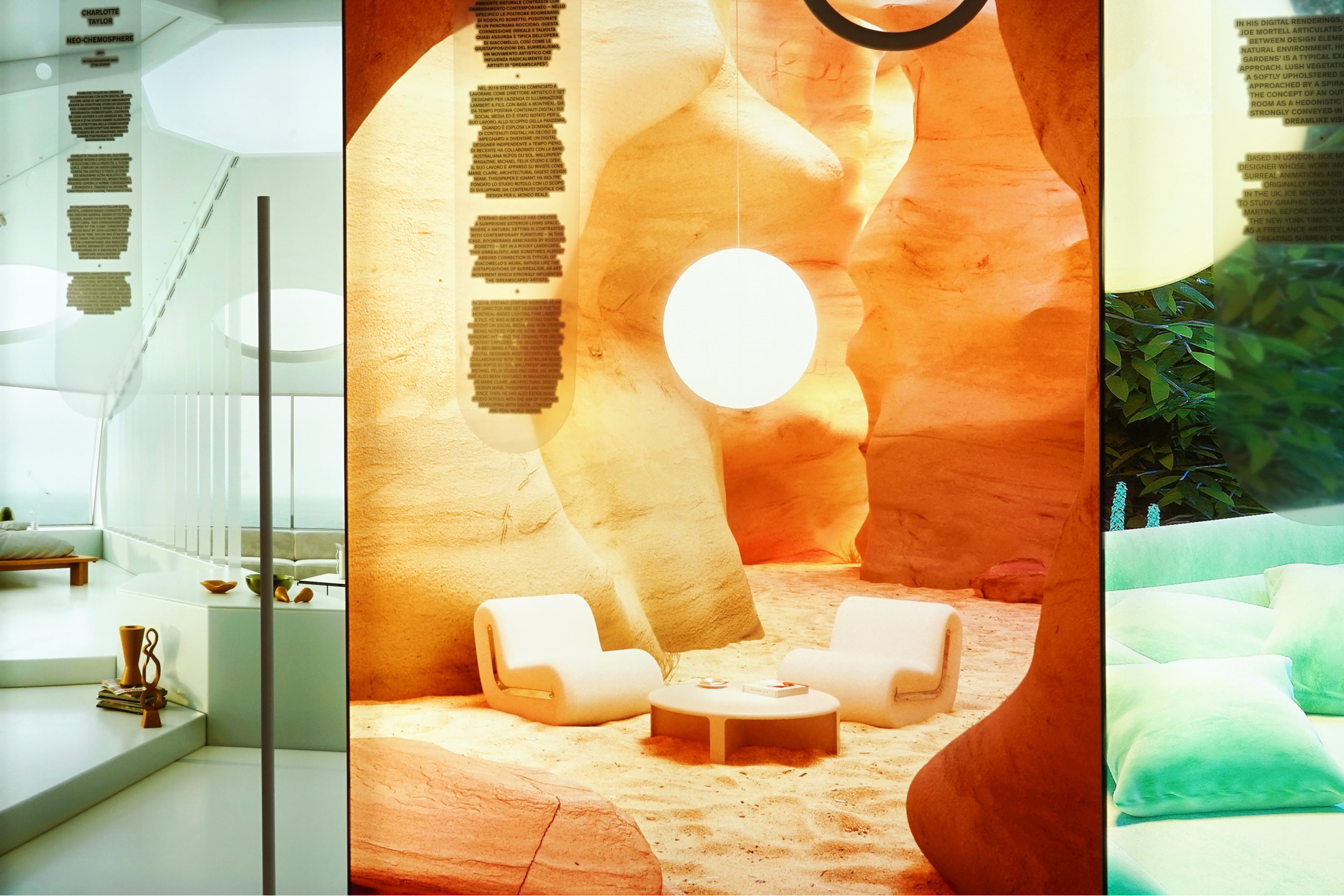
We were asked by the Czech Museum of Decorative Arts, which is the organiser of the Czech Pavilion, If we’d like to curate something under this topic. So we created an exhibition that we’re opening next week, which is called “ Casa Immaginaria: Living In A Dream”. It’s about the phenomena of “Dreamscapes”. During the pandemic there was quite a rise of this new digital phenomena, of creating fictional interiors of fantasy-like living environment, as a form of visual perfection or even fetish. You can relate that we were sitting in our homes during the lockdown and we were dreaming and fantasising about these dream-like environments that we wanted to be in and escape to.

And I think that’s part of the reason why this Dreamscapes phenomena came about. So I got in touch with some of these designers that create these Dreamscapes, which mostly call themselves digital artists. I thought this was a great topic for the theme of this show, focusing on this idea of escaping to some unknown world through these images. We did this installation that we printed these large more than 2 meter format prints mounted on light boxes, presenting this new phenomena of Dream- scapes. We added real metal constructions in-front of the images which work as an extension of the fantasy world into our reality, which symbolise the border between reality and fiction. Also, we’re presenting some historical context of fictional houses and interiors, in a similar process to our previous curations. We made a catalogue as well, and next week is the opening of the show. It’s going to be a big event with the minister of culture attending, which we’re really excited about.

That’s super exciting, and it touches on a feeling that we all collectively experienced and a period we all went though. This imagination that came out of our isolation, and presenting this section of work in this format is introducing them to us in a new light.

Yes, exactly. So this was our last project and now we’re doing a museum exposition for the Czech furniture company TON, which was born out of Thonet. It is a company that is now based in the original factories founded by Michael Thonet in the 1860’s. They produce handcrafted bent wood furniture using steam. We are curating a retrospective of their portfolio. I actually did a book for them and that’s were this project started – the book was not an OKOLO project, it was done with their own graphic designers, but this exhibition is our collective project.
Credits

Images · Courtesy of Okolo

Filippo Scotti

Relieving trauma has Filippo Scotti revisit parts and memories of himself

Filippo Scotti wears a worried look as he fires off apologies for being five minutes late into the call. He was helping his friend with a project and lost track of time. He asked him to pedal fast when the two breezed through the street on his friend’s bike, hoping to catch the interview on time. After a bout of reassurance that he has nothing to worry about, he drinks from his 1.5 liters of water bottle to fight off the 38 degrees celsius heat crashing over Rome. Drinking tons of water forms part of his daily routine along with hours of physical training for his next project. NR tries to break through the secret project, but Filippo’s lips remain sealed. The only piece of information he gives is that “imagine wearing a t-shirt when it is 10 degrees out there. I have to prepare my body for that.” He assures us that he will not be doing jump stunts like Tom Cruise. Even if that were the project, Scotti would buckle down in a heartbeat to physically prepare for it.

On starting out

Scotti started out as a theater actor in Naples at the age of 16, and even before that, his mother had encouraged him to try his hand out at acting when he was 11. While on tour with his theater group for shows, an agency signed him, the gradual shift of the young actor from theater to cinema. His new lineup brimmed with auditions where he would prepare each day to spew out his memorized lines with depth to match his character’s emotions, almost melding with his own. Those moments culminated in Scotti earning the role of Fabietto Schisa in Paolo Sorrentino’s The Hand of God (2021). Now that he is thinking about it with NR, he admits he got lucky.

Working for the movie nudged Scotti to look at the cinema industry as a spider web where he always has to move, audition, secure roles, act, and go on press tours. The cycle repeats, and he admits it took him a while to get a hang of the rhythm. But his strike of luck keeps him in the spotlight, project after project. “I am also lucky that people whom I worked and work with trust and have taught me how to be and stay in character, to always be ready for what is coming. I am always learning and never stopping, and that is a double-edged sword for me. It scares me, but at the same time, it excites me. The whole experience is just wonderful,” he says.

On preparing for the shoot

From luck, the conversation flows to how mathematical he sees the process of being on set is. Everything seems to be planned – a miscalculation in schedule, equipment, script, and post-production means shooting delays. The viewers see the finished product flashed on the cinema screens, but it only scratches the surface of what happens behind the scenes (not the bloopers that seem to detract the attention from the hard work invested in producing and making a movie).

Scotti tells NR that often he wakes up early only to start shooting late in the afternoon or at night. The physical and mental preparation he undergoes also comes in handy when his first hours are spent idly waiting for his turn. Then, when he acts in a scene and the first take is not good enough, it might take two, three, four, five, or more takes before he can settle down. “During the shoot, I block out any thoughts so I can stay focused on my character. When I do more than five takes – even four because I always target a maximum of three takes – I start to hit this wall and fall into this repetition. It affects the way I act, so I strive to get it all done before the third take,” he says.

On relieving trauma

For The Hand of God, some takes took more than three times, and as the shooting went on, Scotti found himself in the shoes of Fabietto’s character, beyond the biopic he was portraying. He would think of ways to tap into Fabietto’s pain and tragic experiences, but would end up feeling obligated to play the role. Sorrentino noticed, sat with him, and told him that he should give his truth to the lines of his character. “If I am to say my lines, I should think of my truth – the painful events that happened in my life,” he says. Scotti followed the director’s advice and soon, he relieved his truth, even if it meant digging up the past he had already buried. “While I did not live the tragedy Fabietto lived, I felt the pain he felt as I remembered my past,” Scotti tells NR.

When asked about the experiences he went through, Scotti pauses. Seconds of silence have passed before he speaks. “I am only going to share one event that was strange for me,” he begins. When he was in high school, Scotti enjoyed the company of his friends, the topics his teachers delved into, and the theater classes he had in between. Yet the young actor felt as if he was in limbo, the weight of an unknown sensation seemed to be putting him in stagnation. He felt stuck and he could not pinpoint why. “Until now, I find it hard to describe the feeling,” he says. “I wanted to study, but I did not want to study. There was this push-and-pull feeling that tired me out.” Suddenly, Scotti was playing a role of a character who was stuck and wanted to find a way out, a real-life portrayal of a role he saw in movies. Like a coming-of-age movie, he figured out that he felt free after he pursued acting full-time. He still studies for pleasure from time to time, but he no longer has time to beat. His pace, his time.

Relieving his past traumas for his role in The Hand of God made Scotti realize how, at times, he has to take off his mask and acknowledge and understand his vulnerability. “To accept it is difficult sometimes,” he says. “But I feel lighter afterward, knowing that I have understood what it meant.”

On fame and recognition

Scotti has experienced being recognized on the street for his role as Fabietto. When asked if the gradual build-up of fame surrounding his career affects him, he says that he is more focused on the emotions and depth he dedicates to his roles rather than the recognition he receives from the public. It pleases him to know that he can influence viewers with his acting – he even receives direct messages on his social media, which he reads, double taps, and treasures – and Scotti reminds us that the Scotti who portrayed a role in his previous project differs from the Scotti today. “Am I the same person? Would I be able to do better in the next project? Responsibilities come and go. I love being the message people can relate to, and I hope to continue that.”

On moving beyond acting

During his press tours for The Hand of God, Scotti was asked at times if he wanted to be a director one day. He could not remember when he had said that, or if he had even said it at all, but somehow, it piqued the press’ curiosity over his next venture. For NR, he says he loves writing and the idea of crafting characters over directing a movie, but that above all, he would love to produce movies. “If I were to have the opportunity in the future, I would love to open my own production company,” he says. “It would be difficult but worth it at the same time. The idea is exciting, to be honest.” 

Scotti already has a name for his production company, but he says he will keep it to himself for now. As for the movies he will produce, he wants some gut-wrenching scripts based on reality. They do not have to be drama or tragedy. He envisions his movies as means to address topics that the general public might not be open or ready yet to talk about or reflect on. While he is unsure of specific themes, his statement circles back to how he dealt with his trauma, a potential overview of the visual narratives he wants the public to see.

On reflecting on his own

As a fan of words, Scotti used to bring a notepad in his pocket to jot down his thoughts. They were gone the moment they crossed his mind, and he wanted to keep track of these phrases, hoping they would make sense when he revisits them in the future. Touring and traveling means he stays far from home and finds himself on his own. In the times he is in his own space, Scotti ponders on life, love, movies, his career, his next path, his decisions, his regrets, and what he might have forgotten to say or do. “For example, I am living in Rome and my family is living in Naples. It feels far and close at the same time. I check in with myself on what I feel when I experience this. Then, I write down my thoughts,” he says. He has replaced his notepad with a ‘notes’ app on his phone. He reminds us that his thoughts are not poetry, but just jumbled words that made sense to him at the moment of writing, a set of word vomit he feels acquainted with.

Filippo Scotti appears hesitant to share one of his personal thoughts. He fumbles on his phone and stammers as he finds an excuse to refuse. We assure him it is fine if he does not want to share anything. He calls his typed-down thoughts shitty and bad. We disagree. He turns his phone to the camera and shows a long list of saved thoughts on his app. He clicks on one and purses his lips. “Last night, I dreamed of your pain. Up close, I can see the waves of the sea,” he reads. Earlier, he said he wants to base his acting on emotions for people to relate with, a mission he eyes to fulfill by playing a character. His delivery for NR can attest that while he still has mountains to climb, he is already on his way to reaching their peaks.

Team

Talent · Filippo Scotti
Photography · Bobby Buddy at Kaptive
Fashion · Victoire Seveno at Kaptive
Hair and Grooming · Miwa Moroki
Set Design · Clara de Gobert and Nico Plinio Lanteri
Agents · Carole Congos and Amal Jefjef
Fashion Assistant · Flore de Sermet
Special thanks to Gianni Galli

Designers

  1. Full look PRADA
  2. Full look PRADA
  3. Full look PRADA
  4. Full look PRADA
  5. T-shirt RON DORFF, jacket, trouser and shoes BOTTEGA VENETA
  6. Full look PRADA
  7. Jacket ACNE STUDIOS and t-shirt RON DORFF

Andres Serrano

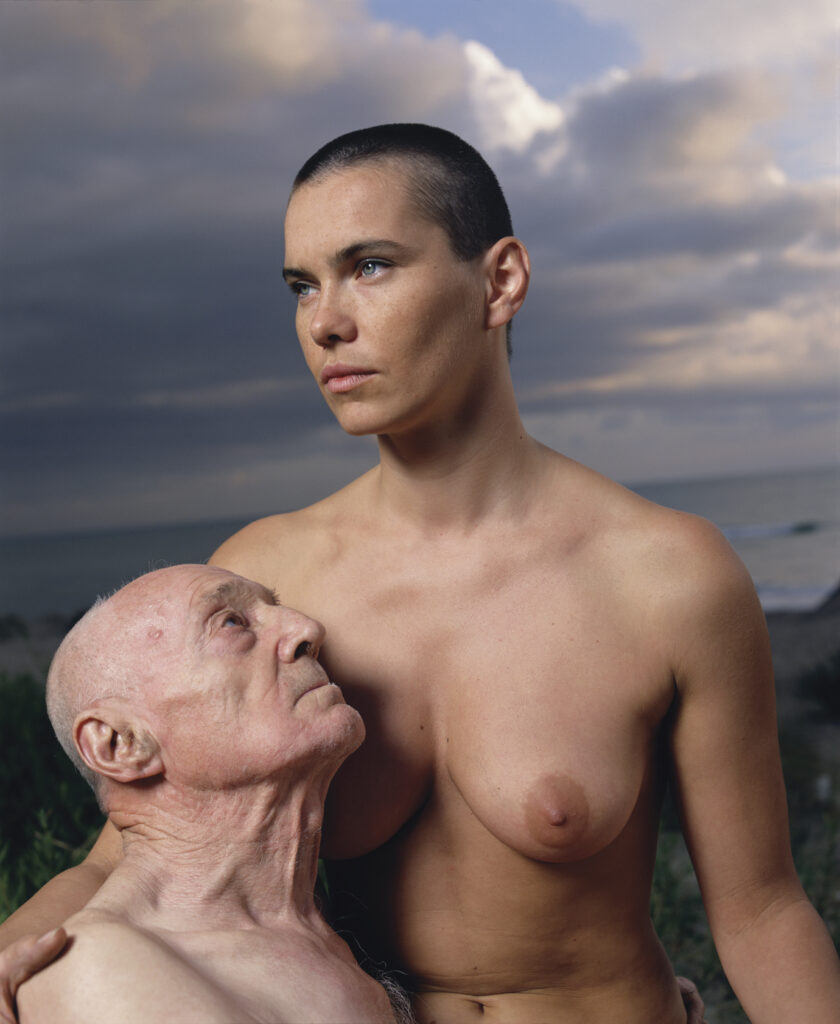
Andres Serrano, Pieta (Early Works 1984-1987)

The transgressive art of Andres Serrano, an introspective window into the past that continues to feed our present 

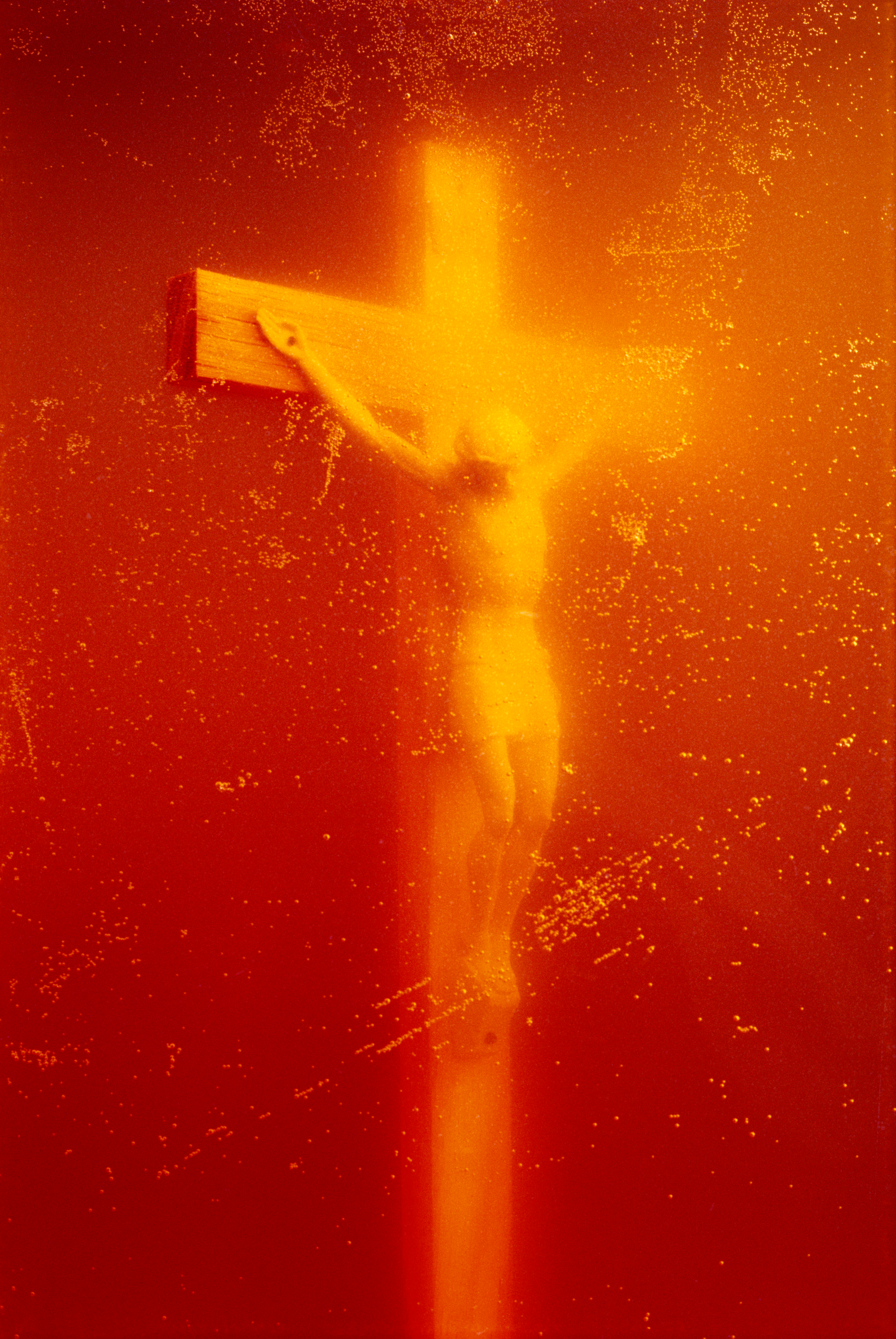
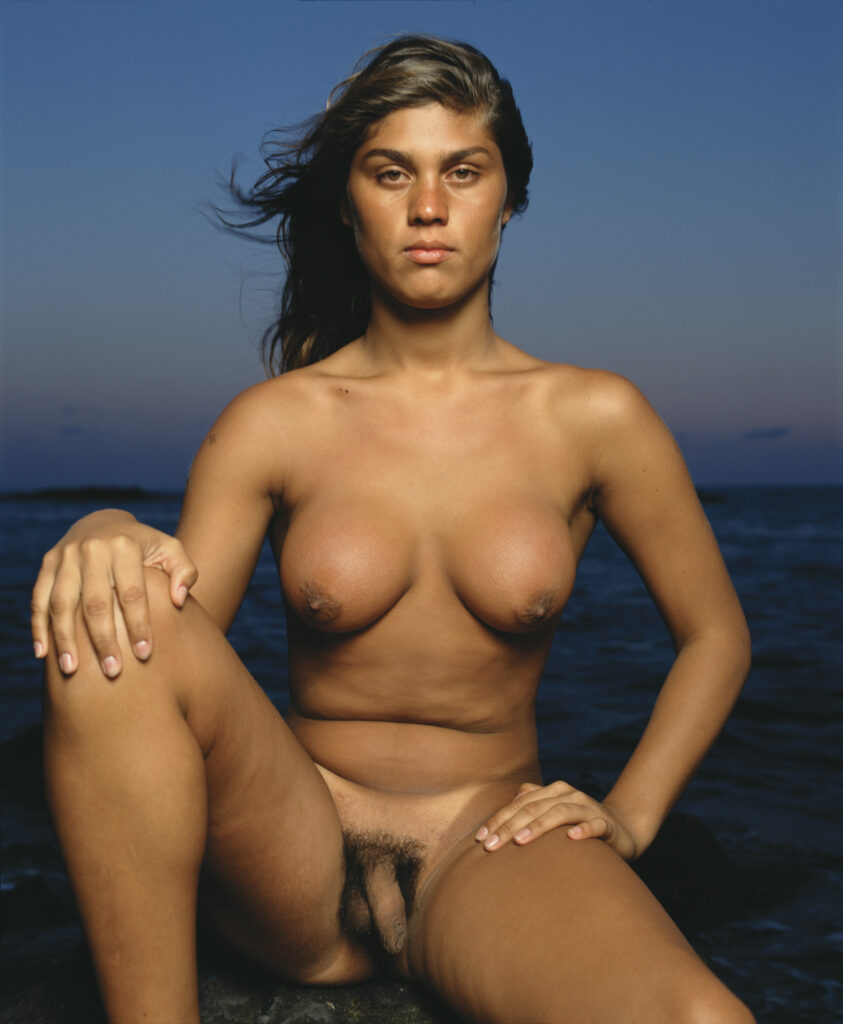
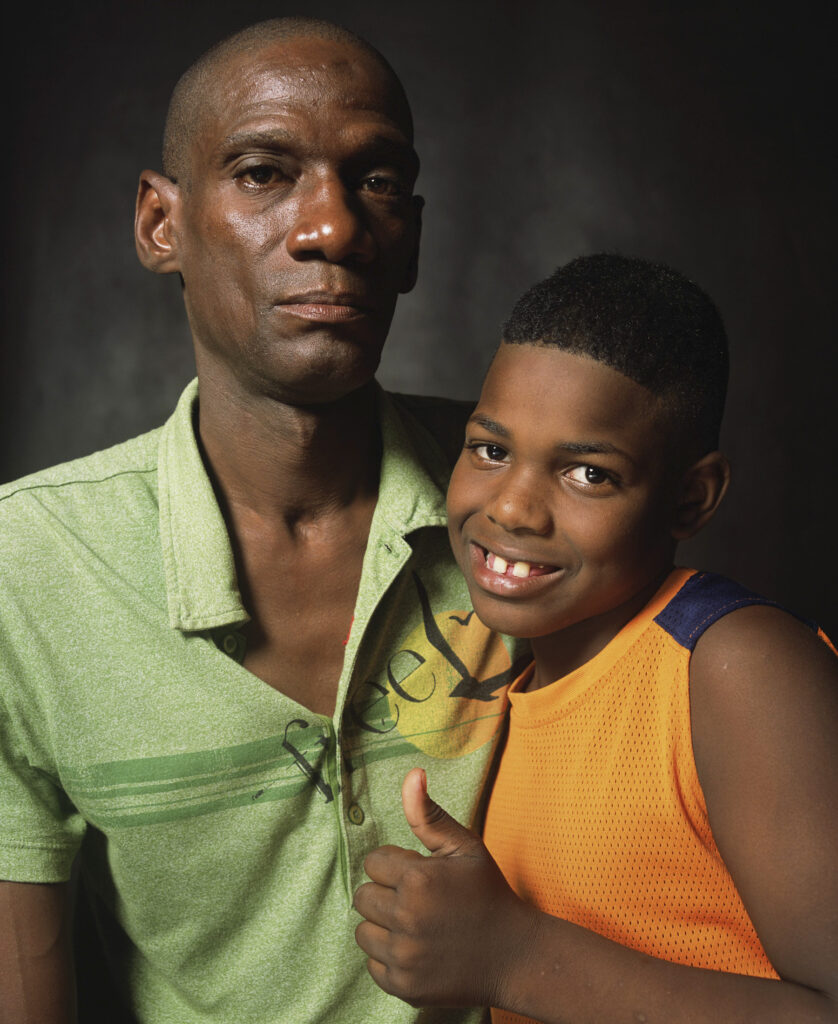
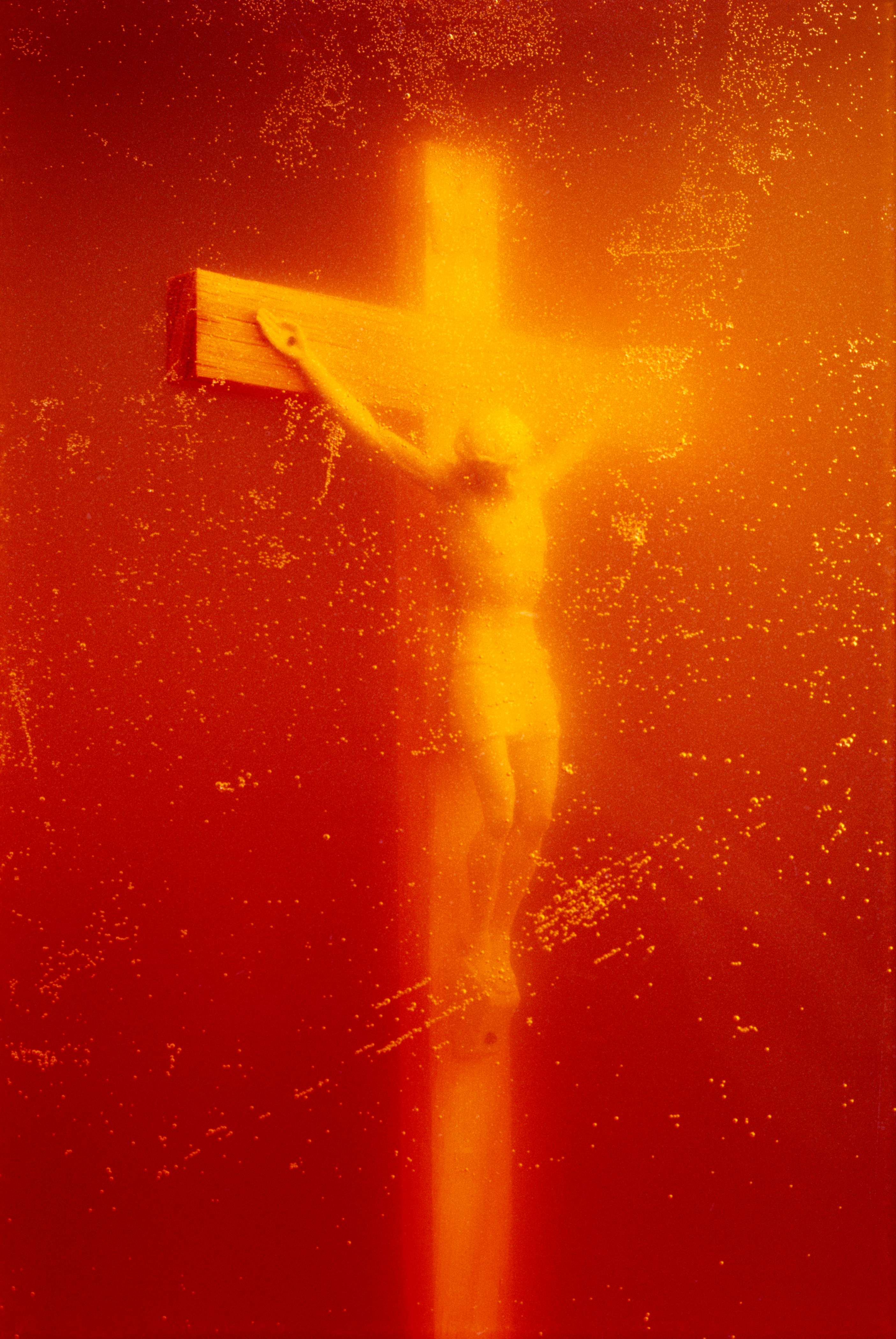
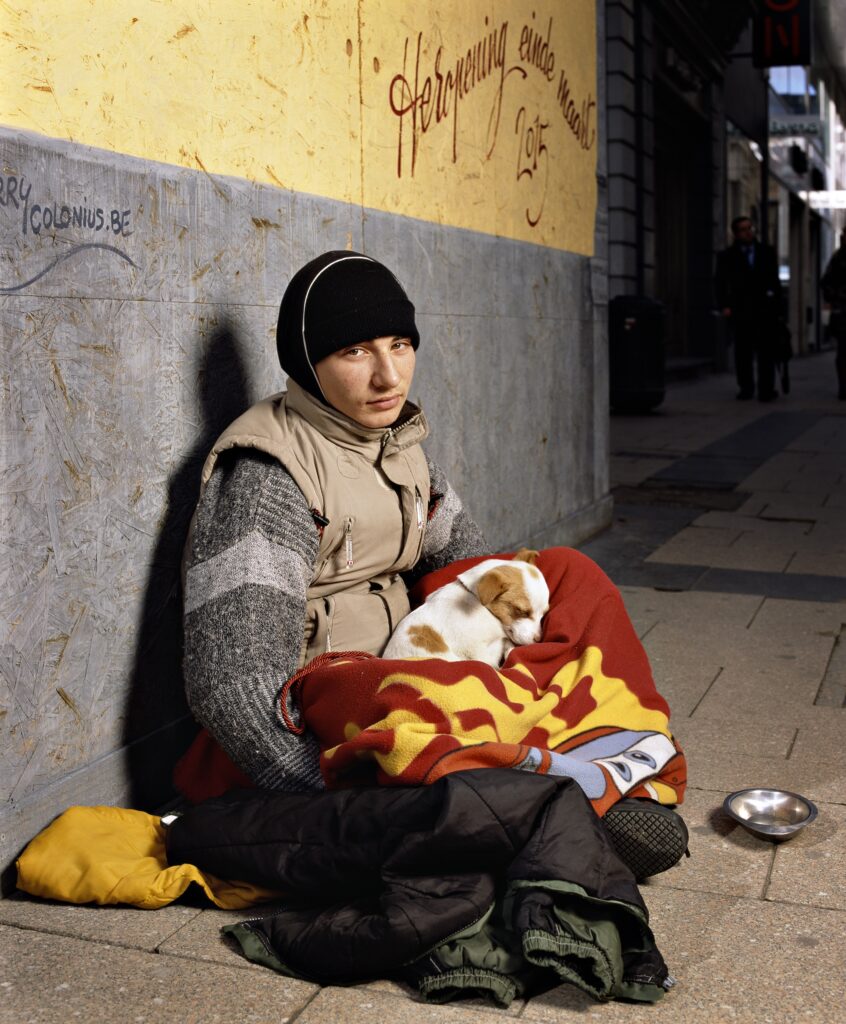
Andres Serrano (born 1950 in New York, United States) has been recognised for his thought-provoking photographs and installations. Although the public might mostly recognise his famed Piss Christ, 1987 installation, featuring a small figurine of crucified Christ immersed in the artist’s own urine,  the photographer has created an archive of series reflecting on societal themes ranging from death, religion to torture, racism and more. The scenes and subjects of Serrano’s painting-like photographs provoke the mind exactly like one would hope art does. Trained in sculpture and painting at the Brooklyn Museum Art school and inspired by Baroque and Italian Renaissance art, rituals and religious iconography infused by his Roman catholic upbringing, Serrano’s transgressive art is timeless. Representing the destitute and the marginalised (Residents of New York, 2014), sharing an  authentic and personal take on Cuba (Cuba, 2012), portraying one of the most infamous leader of our generation (The Game: All Things Trump, 2018-2019) are only a few of the many themes and subjects Serrano explore. No matter the matter, Serrano manages to bring its beauty and inherent peace to the surface as the subject takes precedence in his work. There is a confrontational aspect to Serrano’s body of work and that is the success of his challenging work. Serving as a tool for introspection and engaging the viewer to see what it is not easy to view, Serrano’s art is an invite to reflect and not perpetuate the horrors of the past that continue to feed our present. 

Andres, it is an honour to interview you. I have discovered your work  a few years ago and have been fascinated ever since. Thank you very much for taking the time to participate, I am delighted to have you as part of this issue. I would like to start from the beginning.  I was watching an interview with photographer Joel Meyerowitz (How I Make Photographs: Joel Meyerowitz in conversation with Amanda Hajjar) and he was reflecting on a life changing moment that made him see a realm of possibilities in front of his eyes: being on set with the great Robert Frank, in New York. Have you had an event like this, that changed the course of your life or initiated the beginning of your career? 

I’ve had a few life changing moments, some good, some not. The problem with those moments is that you don’t always realize how profoundly they can affect you when they’re occurring. I used to see my life as a fast train not making any stops.

“The journey was more important than the destination. When you look back, you can’t say, “I should have done things different.” If you could, you would have, but you didn’t. I’ve fucked up more than once but I’m still here.”

There was one pivotal moment: when the Beatles came to America. I was 13. They were followed by the Rolling Stones and everyone else. Soon after that I discovered Bob Dylan and I was set for life.

You were born in New York, grew up as an only child raised by your mother. Your mother was born in Key West, Florida, was raised in Cuba and thus only spoke Spanish that you then had to learn at a young age. How did these different cultural identities impact you? 

The good thing is that I had to learn Spanish at an early age. The bad thing was that I didn’t like my mother. We fought all the time. But that was also a good thing because she was tough so I had to be tougher. The only cultural identity problem I had was when Castro came into power and a kid in the fifth grade discovered my mother had been raised in Cuba. After that, the little prick would tease me by calling me “Castro” or “Cuban.” It would piss me off and also embarrass me. The Cuban Missile Crisis in 1962 was a big deal and no one wanted to be called “Castro” or “Cuban.” 

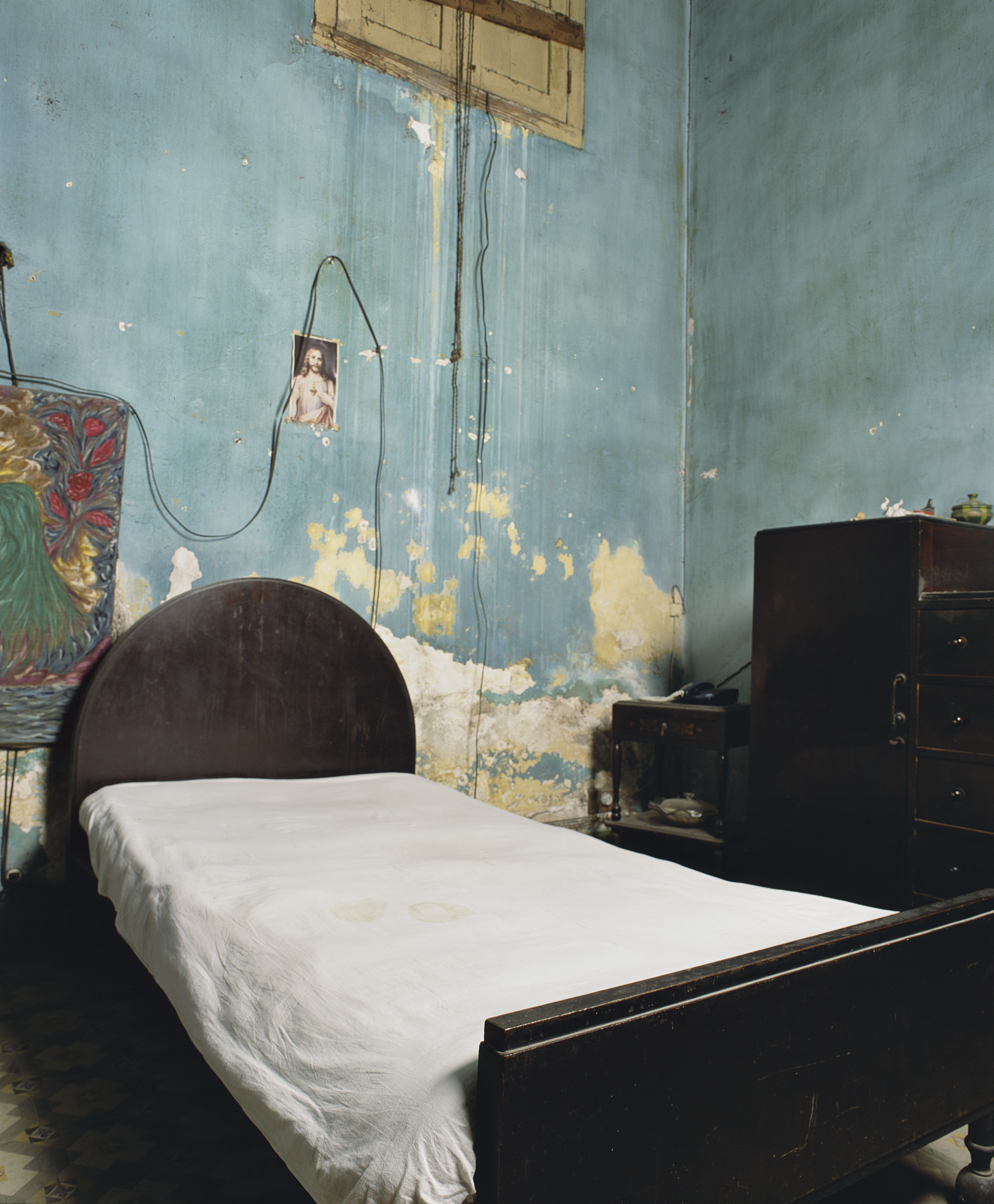
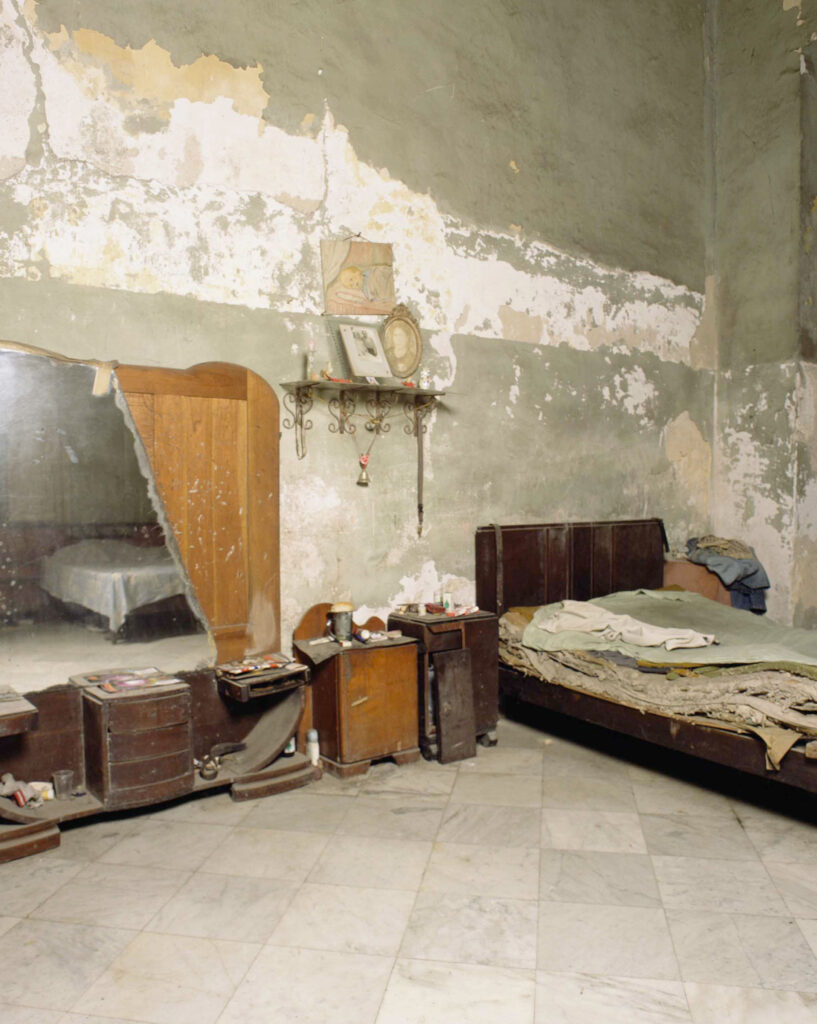
Andres Serrano, Bedroom with Jesus (Cuba 2012)

60 years later you would think that kind of stigma wouldn’t matter but apparently it does. America still acts like Castro and Cuba are its biggest enemies. It’s easier to pick on someone you don’t need or fear than to stand up to the real strongmen. 

When President Biden went to Saudi Arabia he went for oil, not to confront the Crown Prince about the murder of Jamal Khashoggi. And when he tried to bring it up the Crown Prince responded by telling him America wasn’t so clean either. What’s Biden going to say to that? “You’re wrong, we don’t kill innocent people or put children in cages.”

Andres Serrano, Magdalena, 2011 Courtesy of the artist and Galerie Nathalie Obadia, Paris/Brussels

I tell you what impacted me more than anything else. As a child growing up, my mother had several schizophrenic episodes. She would be fine for two or three years then she would have a nervous breakdown that would last a couple of weeks before she returned to normal. I was always trying to figure out what was going on in her head during those periods. It taught me to read people, to get a sense of what they were thinking and feeling.

Some people are obvious. They are what they appear to be. I would always shake my head when the political pundits on television would spend so much time trying to figure out what Donald Trump meant by the things he said. Trump is transparent. He means exactly what he says.

What was it like to travel there and discover it, later on, as an artist for Cuba, 2012 (exhibited in Brussels, 2014)?

I loved your documentation of the interiors of the houses and the portraits specially of the women. Did you feel attached to Cuba?

I loved Cuba when I finally went. I waited my whole life to go. I don’t like to travel except for work. I needed a reason to go to Cuba and the reason came when Jorge Fernandez invited me to the Havana Biennial. Actually, I think I asked him to ask me. I participated and at the same time I went to do some work. I felt very much at home there. I feel at home whenever I go somewhere to work. 

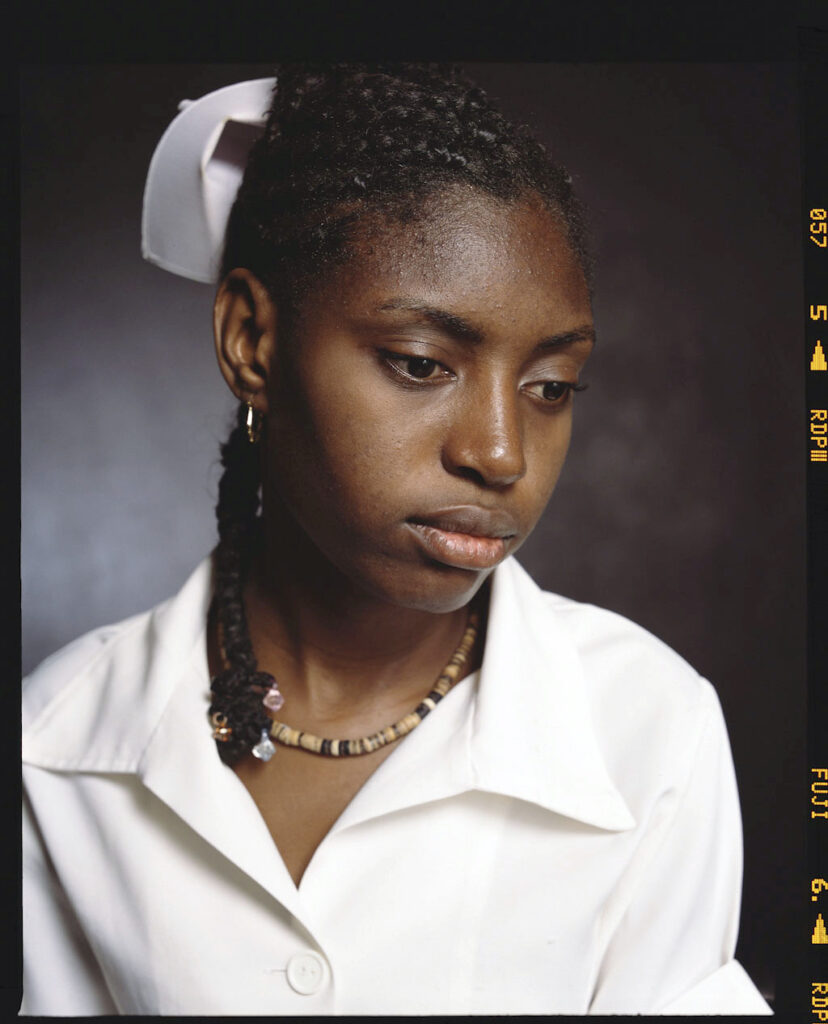
Andres Serrano, Cuba, 2012

The Cubans were very welcoming and I had a blast working day and night. Work, especially when it’s your work, gives you tremendous energy. I had my wife, Irina, my assistant from New York, some friends and comrades and a driver that drove us in a large SUV from one end of Cuba to the other. Talk about a great road trip! What I like best is driving in the middle of the night not knowing what you’re going to find. I don’t drive but I like being on the road, especially at night. 

Andres Serrano, Cuba, 2012

The people are amazing! Cubans speak Spanish in a very precise way. They enunciate their words clearly. Once, in Havana, I saw a large stack of bread in a bakery that I wanted to photograph. I use lights and need time to set up for a shoot so I decided to go back the next day to photograph the bread. But the next day the bread was gone. They explained that the bread arrives early and would start selling immediately. So I bought all the bread in advance that was coming the following day. The next day, after I got to the bakery and took my picture, I told them, “Ok, now you can sell the bread again.”

I never talk much about myself in terms of ethnicity because it’s not important. All you need to know is that I was born and raised in New York City. But there are always people who like to get into your background, like it’s meaningful or the most important thing they can say about you. If you’re Black or White in America they don’t question you, but if you’re in a category that’s not easy for them to define, they try to define you anyway. My mother was born in America. I was born in America but they still want to place you somewhere else. I remember when we got back from Cuba I was telling someone about the trip. A couple of minutes into the conversation they say to me, “So what was it like going back to Cuba?” and I’m thinking, “Motherfucker, didn’t I just tell you I had never been to Cuba!”

“I don’t like to be called a photographer, but I have been called worst things.” At 17 years old, you studied painting and sculpture at the Brooklyn Museum art school. That background in painting can really be seen through your photography with the descriptiveness of the titles, the colours and the texture of the photographs. Why did you engage with photography as your preferred medium?

After two years at the Brooklyn Museum my scholarship ended and I didn’t have a studio to paint or sculpt. But I lived with a girl named Millie and she had a camera so I started taking pictures with Millie’s camera. I always knew I wasn’t a photographer but an artist who chose to take pictures as his art practice. I never went into a darkroom or printed my photographs (I still use film.) Photography has been a means to an end and that end has been to create art. I’ve always said I learned everything I know about art from Marcel Duchamp who taught me that anything, including a photograph, could be a work of art.

When I was in my twenties during the Seventies I wound up in the East Village taking and selling drugs. It was a period when I stopped taking pictures because I was not an artist at that point but a drug addict. 

Andres Serrano, Blood Cross, 1985 Courtesy of the artist and Galerie Nathalie Obadia, Paris/Brussels.

I can’t say it was a bad time because I was having a good time. But it stopped being a good time when the people around me started dying and I knew it was time for me to leave. If I had gone from the Brooklyn Museum Art School to being an artist I probably would have been a different artist although I can’t imagine how. Everything is going to have an impact on you one way or another but you might stay the same. 

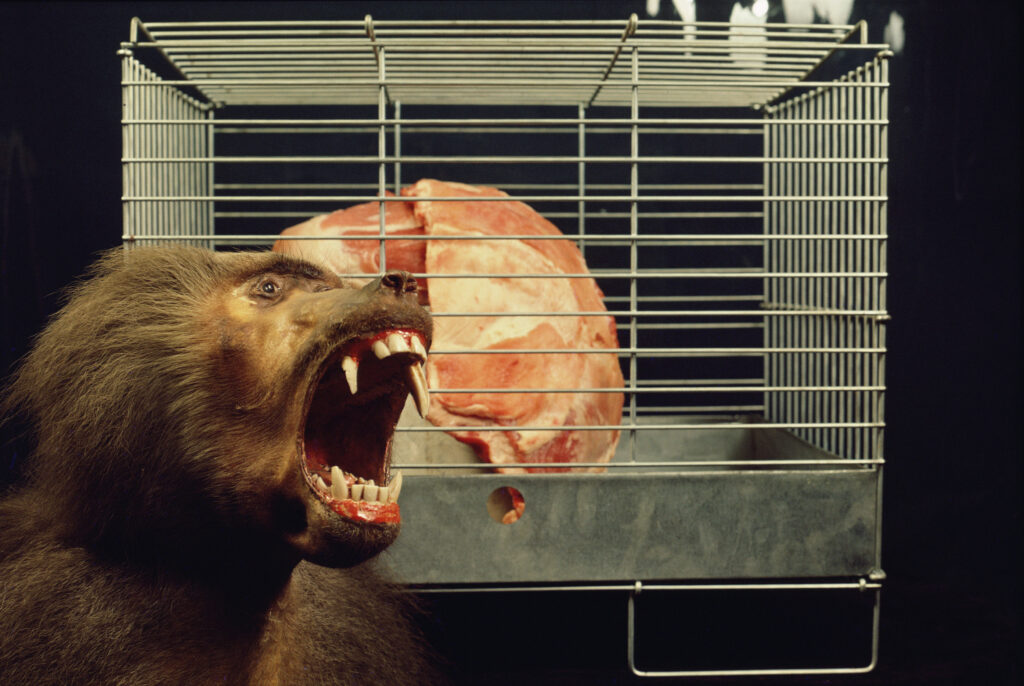
Andres Serrano, Caged Meat, 1987
Courtesy of the artist and Galerie Nathalie Obadia, Paris/Brussels.

The 1980s in New York, what did this mean as an artist in terms of starting out, getting recognised by galleries, having shows etc? How is it now?

The 1980s in New York was an exciting time for me. I met and married my first wife, Julie Ault, in 1980 and got back into art shortly after that. Julie had just formed an artist collective called Group Material along with Tim Rollins, her friend from Maine. Group Material was a group of several artists who mounted group exhibitions of other artists’ work that addressed social and cultural issues such as AIDS, consumerism and democracy. I was never a member of Group Member. Julie was doing her thing and I was doing mine, but it was through Julie that I became aware of what some artists were doing. I met some great artists like Leon Golub and Nancy Spero who were always super nice. They were very encouraging to other artists. 

It was Julie, who, upon meeting Felix Gonzales-Torres invited Felix to join the group. Felix didn’t need Group Material to make it but Julie recognized his talent early. Back then I wasn’t thinking about the art world, I was just doing my work. Julie and I lived on East 10 St. and when the art scene moved to the East Village several galleries, including Jay Gorney Gallery and P.P.O.W., came to our block. Interestingly, art, punk, graffiti, new wave music and street culture all came together in the East Village. Even the Post-Modernists were there. The first time I saw Jeff Koons work was at International With Monument on East 7 St. where Jeff showed his basketballs in water.

Andres Serrano, St. Clotilde II, Paris 1991
Courtesy of the artist and Galerie Nathalie Obadia, Paris/Brussels

The Eighties were also important for me for another reason. It was when rap and hip-hop appeared. The first time I heard Rapper’s Delight I knew it was something. I spent the whole decade listening to and collecting rap records. Music has always moved me more than art. Art does not touch me in the same way music does and rap was riveting.

Julie and I separated after ten years. I spent the Nineties going to clubs and listening to dance and house music at night and creating pieces during the day. 

Things are different now. People come out of art school knowing what galleries they want to get into. There’s Instagram and social media. I’m not on social media. I still use a flip phone. If it wasn’t for Irina, 

I wouldn’t have any idea of what’s happening in the art world. I still don’t. I think art and culture is now defined by algorithms.

Controversy and provocation play a huge part in your work. Was that something intentional?

With Piss Christ,1987 for instance although some viewers may see it as a blasphemy, it is important to note the attention brought to the act of crucifixion and thus dying. As Sister Wendy says in an interview :’An abuse shouldn’t take away its use’ (‘Sister Wendy in Conversation With Bill Moyers’ 1997). As a religious person, how does your faith interact with your art?

I’ve always thought that being an artist was the least controversial thing I’ve done. My life has been much more intense than my work. I remember when I first heard Dylan sing “And if my thought-dreams could be seen, they’d probably put my head in a guillotine, but it’s alright, Ma, it’s life, and life only,” and I thought, “That’s ridiculous. How could anyone get mad at you over what you’re thinking?”

Andres Serrano, Piss Christ, 1987
Courtesy of the artist and Galerie Nathalie Obadia, Paris

I was born and raised a Catholic and have been a Christian all my life but who cares? Certainly not the people who label you “anti- Christian and blasphemous.” There are people who think only they know what it means to be a Christian. You can’t talk to these people because they’re convinced that only they know the answer. It must feel good to tell other people how to live their lives. Personally, I don’t have that luxury or want the responsibility. 

I like what Sister Wendy once said about me in an interview. “Serrano is not a terribly gifted young man but he tries.” I was in my late forties at the time so I was flattered that Sister Wendy called me a “young man.” I also liked when Senator Jesse Helms got up on the Senate floor and said, “Andres Serrano is not an artist. He’s a jerk who’s taunting the American people.”

Piss Christ made me think about the installation of Italian artist Maurizio Catalan, The three hanging kids (Untitled, 2004) that had been taken down almost immediately by the Italian authorities. When asked about the work, Catalan wondered if the real tensions and horrors of contemporary life should not shock us more. The Klan, 1990, Torture, 2015 and Infamous, 2019 are very confronting for instance, to the tainted history of the world. In your eyes which role art should play in society? 

Art should play the role it wants to. It’s not for me to tell the art world what to do or not do. They wouldn’t listen to me anyway. I’ve never been a political or activist artist although there could be some element of that in my work.

“I’d rather let the work speak for itself. My work is a mirror that’s open to interpretation. People see what they want to see.”

Half the people voted for Biden and almost half the people voted for Trump. It’s up to you to decide which side is more fucked up. I never voted in my life until I voted for Obama. Twice. In the last election I didn’t vote for Biden. I voted against Trump. If a tomato had been running for president I would have voted for that tomato.

Theoretically, Democrats talk a good game but often can’t deliver. On a practical level, the Republicans won’t raise your taxes. People try to shame you into voting. As an American you have the right to vote and you have the right not to vote. Even the Supreme Court sometimes says, “Let’s sit this one out.”

Since the theme of this issue is IN OUR WORLD, which themes would you wish to see more tackled in the art world?

The art world is not the real world so it’s hard for me to see how it could tackle anything other than itself. There’s a feeling of sameness in the air, same people, same faces, same chatter, same agenda. It pretends to care and promote inclusivity but that inclusivity only includes the people who fit the demographics they’re looking for. You can’t deviate from the status quo otherwise you’re left out in the cold. 

I left Paula Cooper Gallery in New York in 2008 and since then I’ve been a stranger in my own country. 

Andres Serrano, Denizens of Brussel. Cristo, 2015
Courtesy of the artist and Galerie Nathalie Obadia, Paris/Brussels

I’ve had a great many museum exhibitions in Europe and around the world thanks to Nathalie Obadia and Yvon Lambert. I was even appointed a Chevalier in The Order of Arts and Letters in 2017. 

But I’ve only had one museum exhibition in America and that was in the 90’s. I recently saw Adam Weinberg, Director of The Whitney Museum of American Art, at the Whitney Biennial and told him, “You know I’m an American artist and I’ve never been in the Whitney Biennial. I guess you’re waiting for me to die before you show me.” Adam laughed and said, “We’ll do something long before that.” 

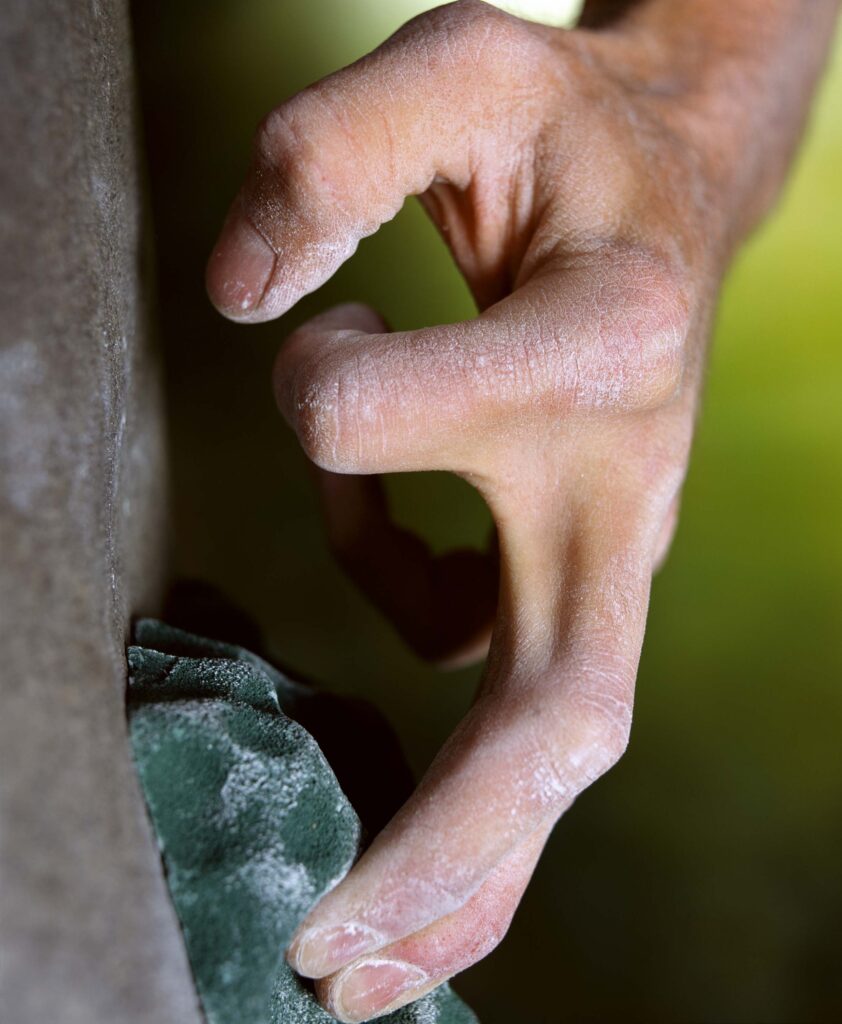
Andres Serrano, Chris Sharma, Rock Climber, 2006
Courtesy of the artist and Galerie Nathalie Obadia, Paris/Brussels

When I was a junkie in the East Village I felt somewhat distant from the people around me. “I am with you but I am not like you.” I still have that feeling. 

Could you talk about your breathtaking series The Morgue, 1992 and those portraits. What was the reason behind the series and how was that experience considering that you were photographing people who had passed away. How was the interaction between them, yourself and the camera?  

The inspiration behind The Morgue series was simple. I wanted to look at death. My interaction or involvement with the dead was as an artist who wants to find that inner peace that comes from an art that gives you spiritual and aesthetic comfort; the thing that brings stillness and tranquility. You could hear a pin drop in my work. It’s a moment frozen in time. When a song is right, when a picture pleases, it makes you feel like everything is right with the world. There’s beauty and grace everywhere, even in death.

With The Morgue, 1992, I think the titles indicating the causes of death in a way engage the viewer to wonder about the personal lives of these people. By this interrogation, it adds texture and life again to the stillness of death. That’s why I dont feel a sense of voyeurism but dignity and beauty. You have mentioned before that you are passing through. Could you delve into that? 

The truth is we’re all passing through going from one thing to another, one place to another. I always title my work in such a way as to describe what you’re looking at. In the case of The Morgue, the cause of death tells you what brought these people to this place and everything I know about them.

“People change and in death they change even more. But the sense of humanity lingers on even after one’s demise.”

It was this essence that I wanted to capture. The soul and spirit of a person cannot be seen but it can be felt.

Could you talk about your collaboration with Supreme and how did that unfold? Which other brands would you be interested in collaborating with?

Supreme came to me and said they wanted to do something with my work. They had ideas and designs for sneakers, sweatpants, sweatshirts, hoodies and a skateboard with my work. It was an easy collaboration. All I had to do was say yes. In 1996, Kirk Hammett and Lars Ulrich from Metallica came to me and asked to use one of my images for a new album they were coming out with called, Load.

They following year they came out with Reload, the follow up to Load and again asked for one of my images. They also made t-shirts and other merchandise with my work. I’m always flattered and open to collaborations of my work with good artists and brands. I’m very proud of Load and Reload and the Supreme collection. 

I’d like to collaborate with Gucci, Dior or Balenciaga. Sometimes the design houses are more cutting edge than the galleries. They know it pays to think outside the box. When people like you, they like what you do and these brands are well liked by their clients. The reason they’re liked is because their goods are well made and of good design. People always look forward to the new collections.

Do you have a favorite piece/body of work that you’ve realised?

I always have my favorites. I used to call them, “masterpieces,” the images from a particular series that stood out for me. There are many such images from The Morgue, The Klan, Immersions…etc.

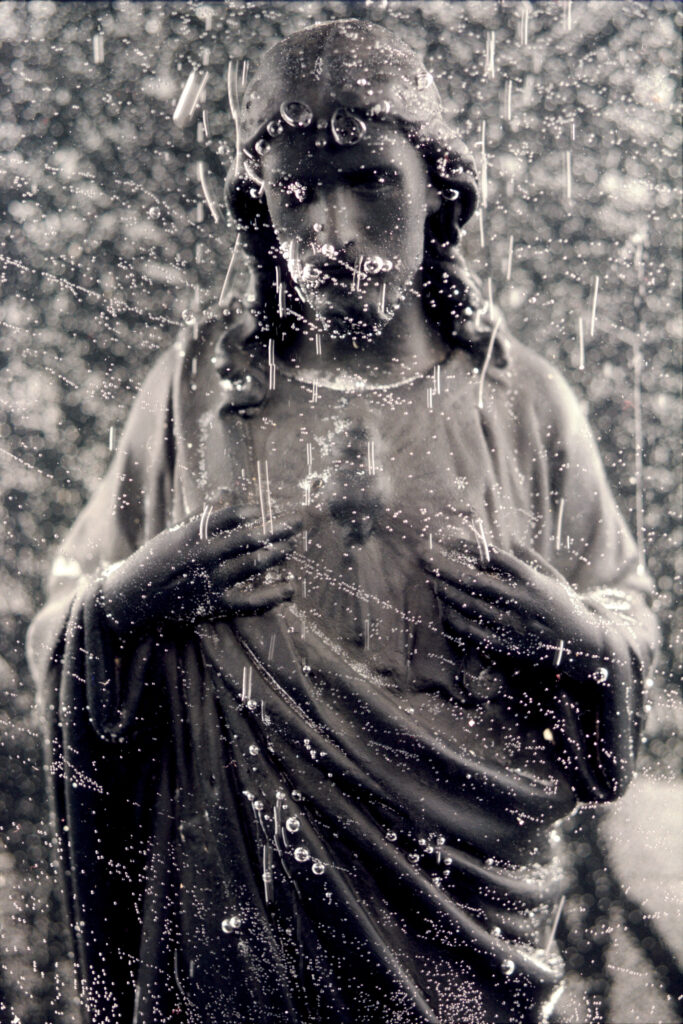
Andres Serrano, Black Jesus (Immersions 1987-1990)

Piss Christ did not stand out for me until it was controversial and then it became one of my favorites! The favorites usually get a lot of attention. 

Your new series, The Robots, 2022 will be shown this November in Paris at Nathalie Obadia gallery. Could you talk about the series?

The Robots was inspired by NFTs and the Metaverse because before the Metaverse, there were robots. I like working with real things, not reproductions. And when I decided to create portraits of robots I went looking for vintage robots. I bought them on Ebay and other auctions. They’re mostly from the 60’s, and 70’s with a few from the 80’s. Some of them are rare and desirable.

The Robots is about race, childhood, science, science fiction and human nature. The word robot was coined by Karel Capek, and appears in his 1920 play, RUR or Rossum’s Universal Robots. It derives from the Old Church Slavonic word, “rabota,” which means “servitude or forced labor.” There are references to the work of Jean-Michel Basquiat, Jeff Koons, Kaws and Andy Warhol in The Robots, intentionally and unintentionally. 

I did enough work for several exhibitions because as I started making them I realized they could be a book of robots. There are all kinds of robots: Japanese robots, European robots, black robots, white robots, …. Some of my favorite pictures are those of the very simple children’s robots. I love Mickey The Robot, Mr. Rembrandt Robot and Chuckling Charlie The Laughing Robot. All of these will be included in the exhibition at Nathalie Obadia Gallery. 

I once told Leon Golub about a bad review I got in The New York Times. I said to Leon I didn’t want to take it personally but it hurt my feelings. He said to me, “You should take it personal because when they criticize your work, they criticize you.”  Leon was right. I am The Robots!

Credits

Artworks · Courtesy of Andres Serrano

Ciro Galluccio

Memento

Team

Model · Tilda Jonnson at Brave Models
Photography · Ciro Galluccio
Fashion · Alessandro Ferrari
Production · Anna Baldocchi at Ro-of
Casting · Isadora Banaudi
Hair · Alessia Bonotto
Makeup · Martina D’andrea
Photography Assistant · Fabio Firenze
Fashion Assistant · Francesco Giuliani

Designers

  1. Poncho MONCLER COLLECTION
  2. Dress GIADA MONTENAPOLEONE
  3. Slippers ALANUI x SUICOKE
  4. Dress KRIZIA
  5. Jumpsuit Vintage
  6. Shirt OUR LEGACY
  7. Tank top SCHIESSER

WHAT IS IDENTITY? – NR MAGAZINE ON THE STACK

From meeting at a law school to branching out the magazine into a myriad of niches, Jade Removille and Nima Habibzadeh, co-founders and creative directors of NR Magazine, sit down with Fernando Augusto Pacheco of Monocle’s The Stack to discuss NR Magazine and its recent print issue on Identity

“NR is a print, bi-annual publication that we co-founded in 2016 in London. It is a way for us to narrate a story through different artists, photographers, cultures, and creatives that we are inspired by and that we want to give a platform to and for our readers to discover because, for us, NR is a window to what is around us and what is going on in our society,” says Jade as she introduces the magazine.

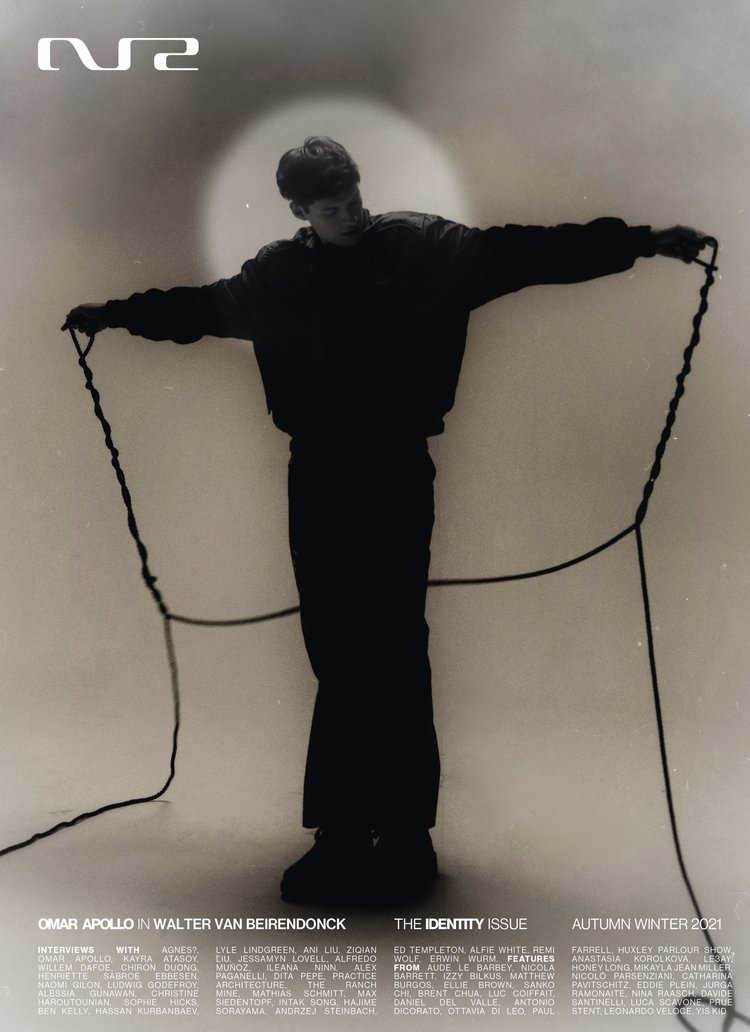
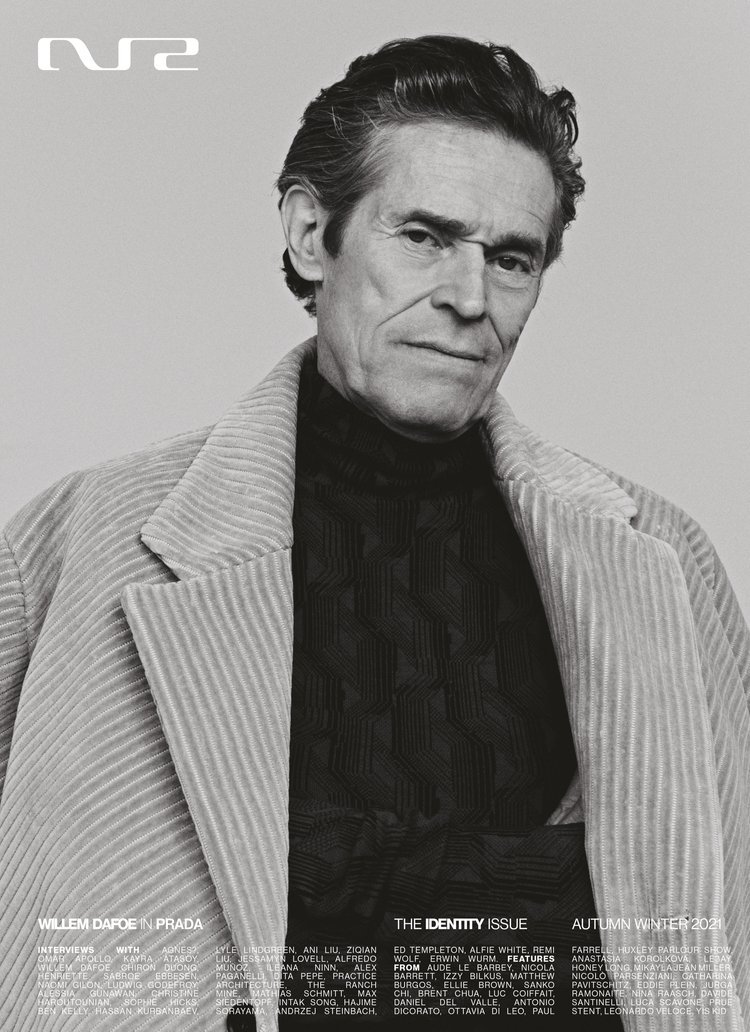
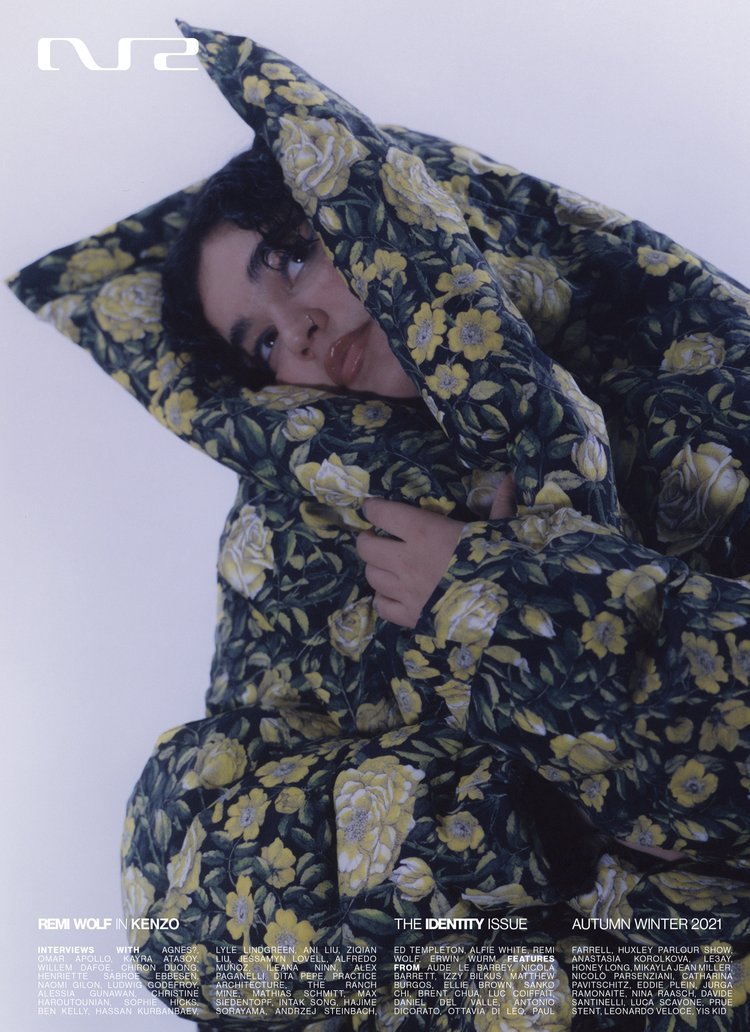
The conversation moves along until it touches upon issue no. fourteen. The Identity issue covers interviews with Willem Dafoe, Omar Apollo, Remi Wolf, and a Bottega Veneta fashion editorial special. It enshrines the readers an escape towards the creatives’ utopia: a journey through the varying creative processes, an overview of their private lives, an in-depth understanding of their philosophy, and their personal perceptions of identity. The issue opens up dialogues concerning the fluidity and fertility of identity: all masks lifted, all truths bared.

“We work with so many different people globally. We try to work with people that are not necessarily heard of from Ed Templeton who is a professional skateboarder and photographer to Eddie Plein the creator of grills. We like to touch upon so many different people within the art and culture world while also bringing together people in the music world in the fashion world. It is a combination of different people coming together,” says Nima.

Listen to the full interview here.

WORDS MATTHEW BURGOS


LATEST UPDATES

Domenico Gnoli

“I never actively mediate against the object, I experience the magic of its presence”

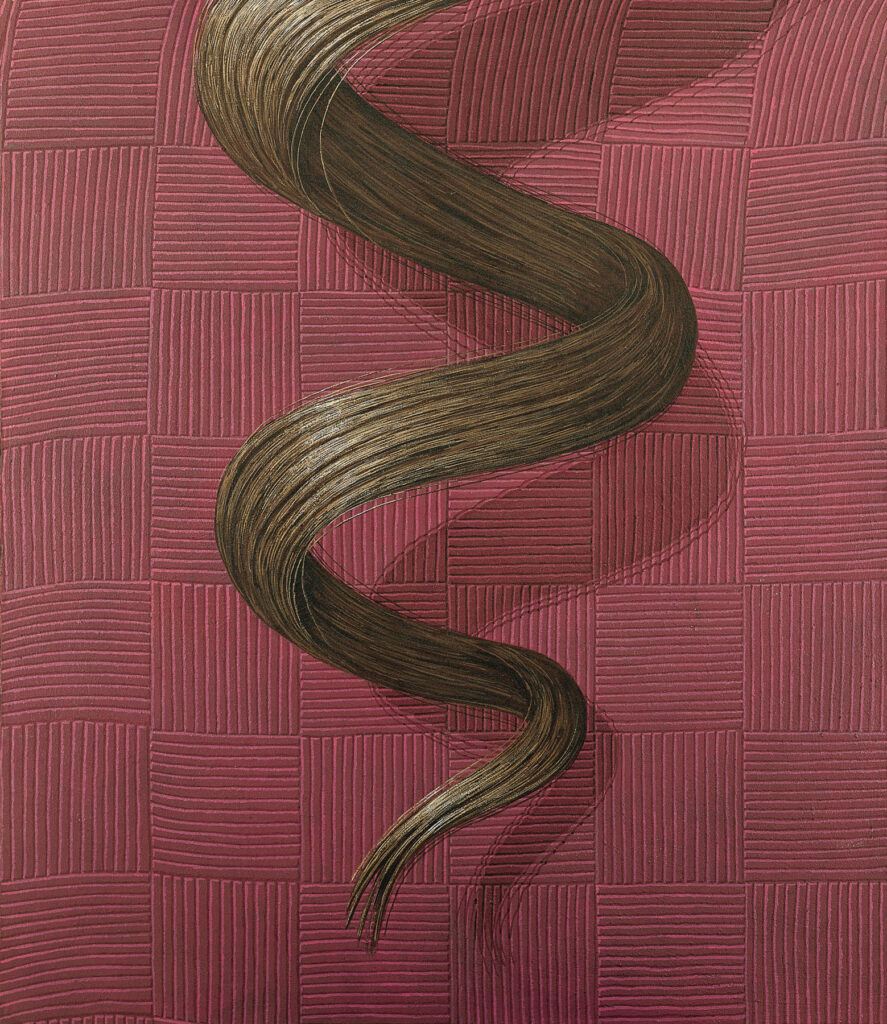
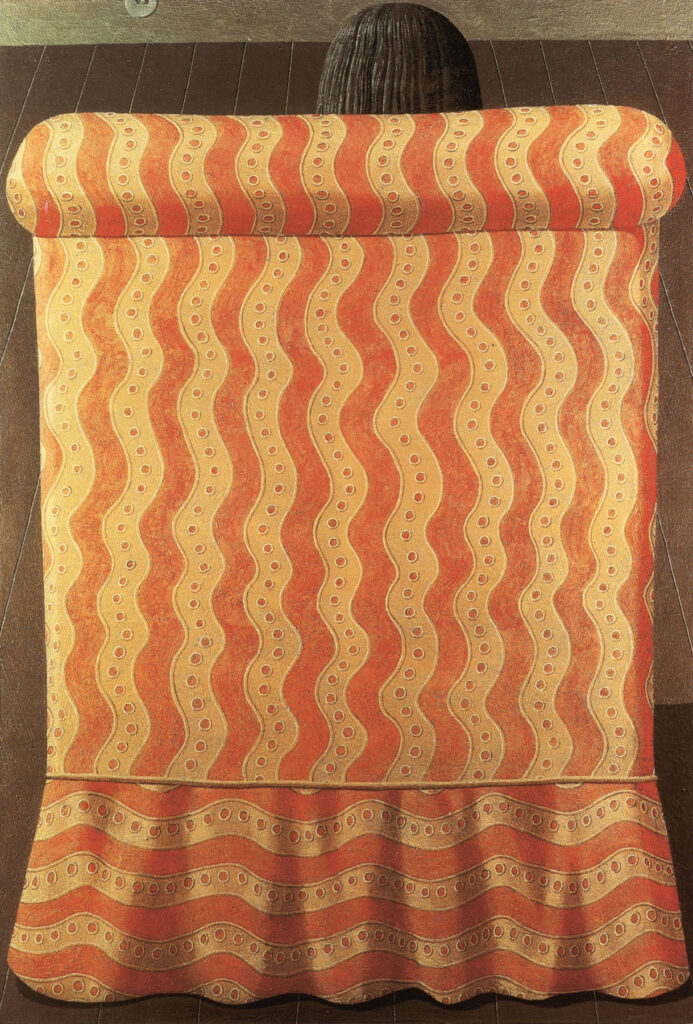
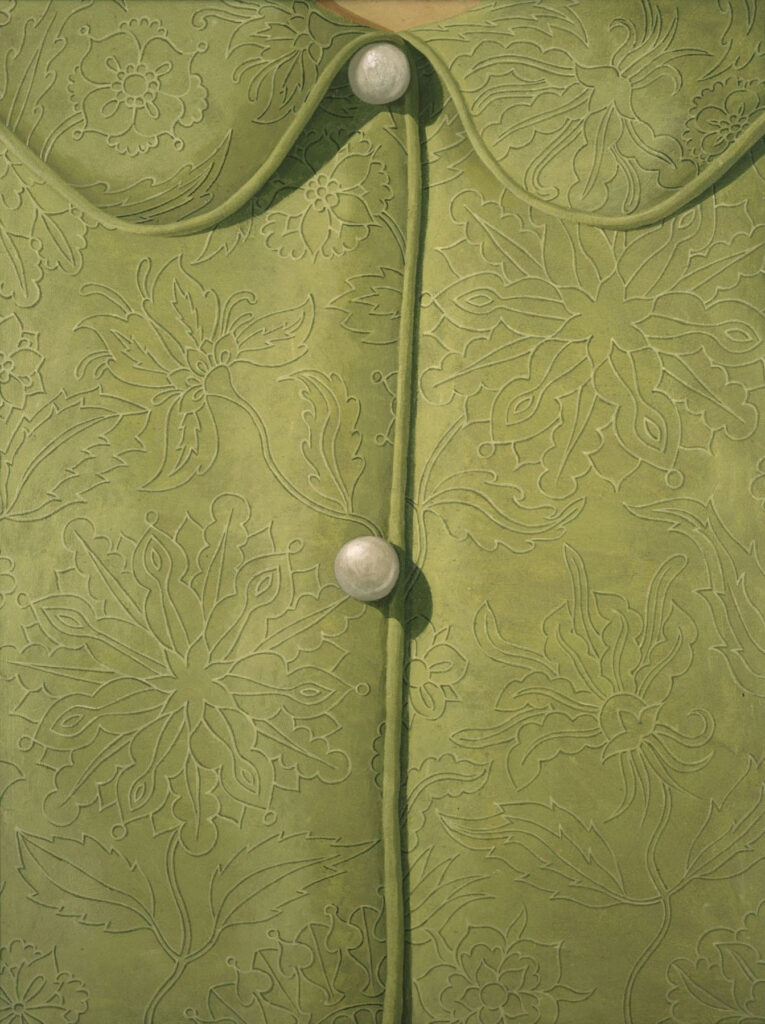
As one enters the exhibit – the soft stumps of the shoes break the silence – the first instinct is to graze the fingers over the relics of Domenico Gnoli, to violate the laws Fondazione Prada upholds just to caress the paintings on display and test their hyperrealism. As the sensation passes, a new emotion washes over: the awareness of stepping into someone’s home and looking into their private lives, becoming an insider and an outsider at the same time. The artist may not have intended to cause such an emotion, but there it is in its youthful peak. From the shadow clothing over the fabrics and wave-like curls of the hair to the figures sleeping under the sheets, Domenico Gnoli mastered narrating the everyday life everyone tries to hide.

Fondazione Prada presents the exhibition “Domenico Gnoli” in Milan from 28 October 2021 to 27 February 2022. This retrospective forms part of the series of exhibitions that Fondazione Prada has dedicated to artists – such as Edward Kienholz, Leon Golub, and William Copley – whose practice developed along paths and interests that took a different direction from the main artistic trends of the second half of the 20th century. The exhibit marks an exploration of Gnoli’s practice within a discourse free from labels and documenting the international cultural scene of his time, all while understanding his art’s contemporary visual relevance and recognizing the inspiration he drew from the Renaissance to illustrate the value of his works. 

Conceived by Germano Celant, the exhibition brings together over 100 works produced by the artist between 1949 and 1969 and will be complemented by as many drawings. A chronological and documentary section featuring materials, photographs, and other items will retrace the biography and artistic career of Domenico Gnoli (Rome, 1933 – New York, 1970) more than fifty years after his death. The project has been realized in collaboration with the artist’s Archives in Rome and Mallorca, which preserve Gnoli’s personal and professional heritage.

A homeowner touring a sojourner in his abode encompasses the arrangement of Gnoli’s artworks at Fondazione Prada. The yellow seat covers form uniform patterns, so freshly washed and pressed for an elegant dinner party that Santiago Martin-El Viti – based on Gnoli’s portrait of him sitting in one of the sofas – would attend. A beige shirt soon appears on a yellow tablecloth with silhouettes of flora in green, the creases and folds of the shirt visible even without scrutinizing the painting. From the living room, Gnoli heads towards the bathroom where an empty bathtub awaits next to a branch of a cactus that adorns the minimalistic interior.

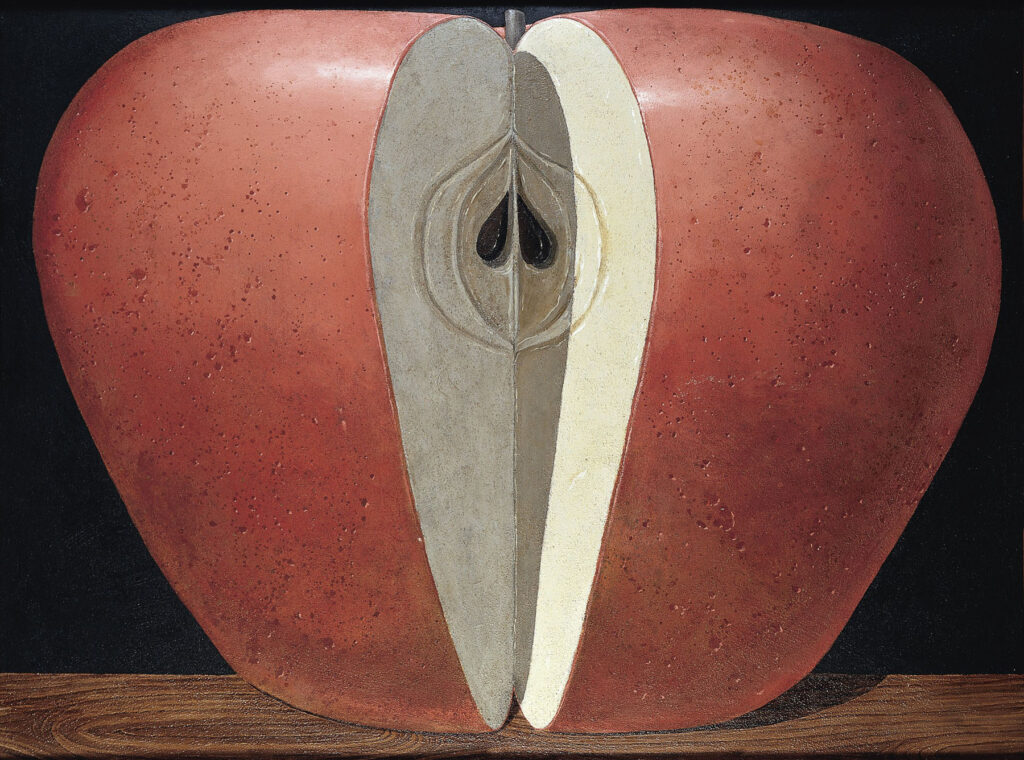
Author: Domenico Gnoli (1933-1970) Title: APPLE Date: 1968, signed and dated on the reverse Dimensions: 117 x 158 cm Medium: Acrylic and sand on canvas Inscriptions: on the reverse inscribed by Domenico Gnoli: D. Gnoli 1968 ” apple ” (1,60 x 1,20) Inv. Fundación Yannick y Ben Jakober no.51 Fundación Yannick y Ben Jakober

“Many things have changed for me: I finally feel I have shrugged off many constraints and prejudices,” Gnoli wrote in 1963 and a letter to his mother. “I paint as I feel without worrying about the current culture and my responsibilities towards it and I intend to live the same way: free and faithful only to the truth that I feel now. Life begins now; up to this moment I have been apprehensive of too many things: school, friends, modern painting, socialism, marriage, culture, maturity, responsibility. I have painted a whole load of imaginary characters: a large woman reading the newspaper, a gentleman peeing against a tree, an office worker, a poetic waiter with blue lips, and then numerous portraits, but with a difference: instead of people seen from the front, they are seen from behind. Because, I thought to myself, mountains are painted from every side and so are houses, flowers, animals, trees: everything. Men and women are not, however. They are the exceptions and are only painted frontally, in three-quarter profile or from the side. Why?”

Down the hall, guests find the elevator that will take them up to the private spaces of Gnoli’s home. As the doors open and the bell dings, they stumble upon the guestrooms where intoxicated guests may sink into one of the well-made beds. All the beds are available except the ones where Gnoli and a woman sleep. In a couple of his paintings, they break up and make up in a span of two canvases, implied by the joined and separated figures under the sheets that Gnoli’s art style highlighted. 

Author: Domenico Gnoli (1933-1970) Title: CURL Title during the exhibition at the Sidney Janis Gallery, even though it does not appear on the catalogue this painting was exhibited Date: 1969, painted in s’Estaca, Majorca, October 1969, last paining painted by D.G. Dimensions: 139 x 120 cm Medium: Acrylic and sand on canvas Inv. Foundation C. no. p23 Courtesy Fundación Yannick y Ben Jakober

From the exhibit’s text: “For many years Gnoli’s work was interpreted in relation to the forms of realism that arose in stark contrast to the abstract and conceptual currents of the 20th century. Gnoli was viewed as a pop or hyperrealist artist by contemporary critics, who nevertheless recognized the peculiarity of his poetic imagery and artistic production. Over the following years, art critics drove their attention to those paintings made from 1964, characterized by a photographic cut and a specific interest in the human figure and objects, acknowledging the inspiration that he drew from the Renaissance or underscoring his ability to create paintings capable of creating a dialogue with the observer.”

The connection between Gnoli and the viewers sizzles, the manifestation of the intended dialogue. From one alley to another, the transition in storytelling simmers in the next paintings. The house party is about to begin. The noise of the invited crowd on the ground floor filters through the master bedroom where Gnoli and the woman deck up. The private and public lives start to blur the more the viewers wander around to gaze at Gnoli’s paintings.

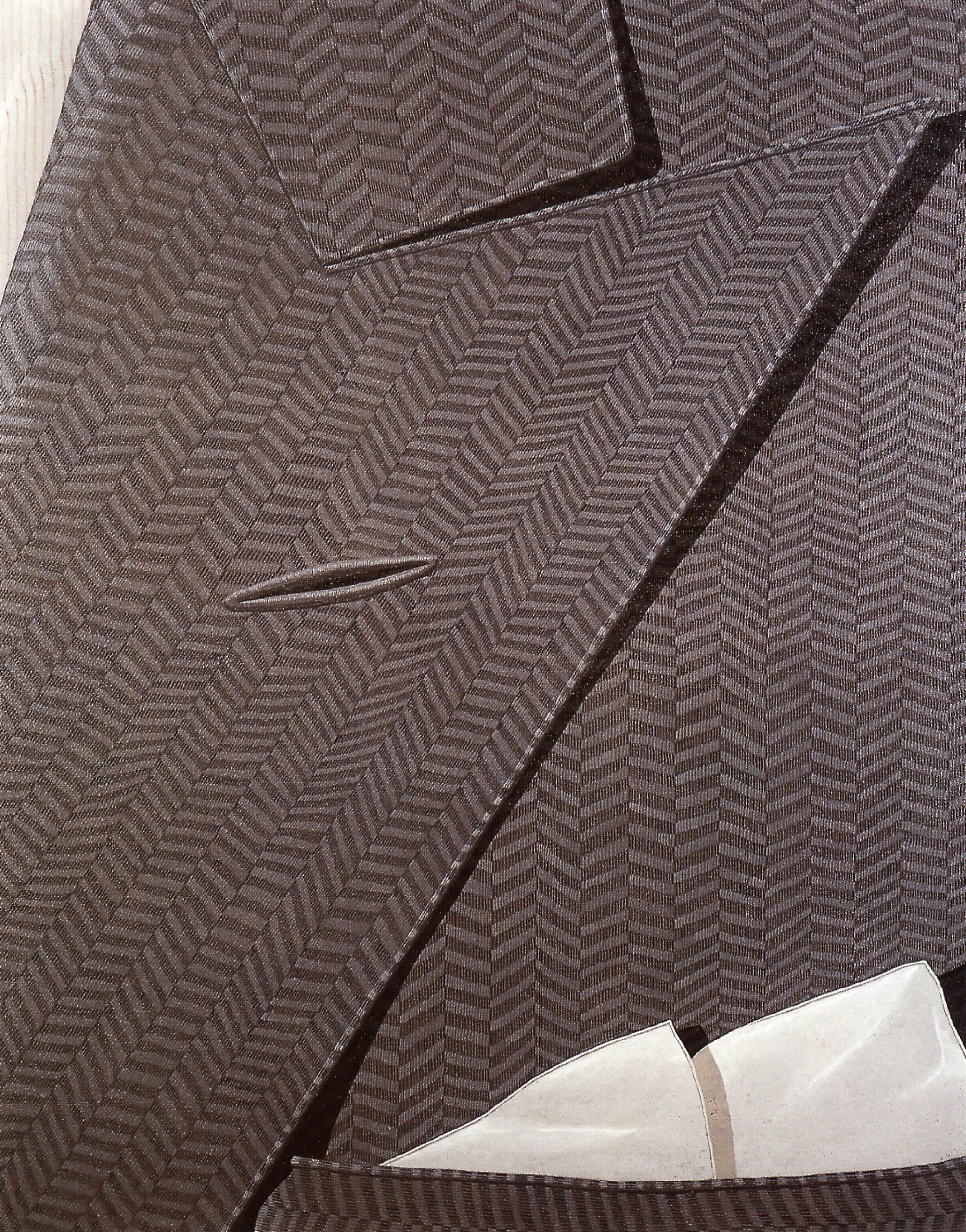
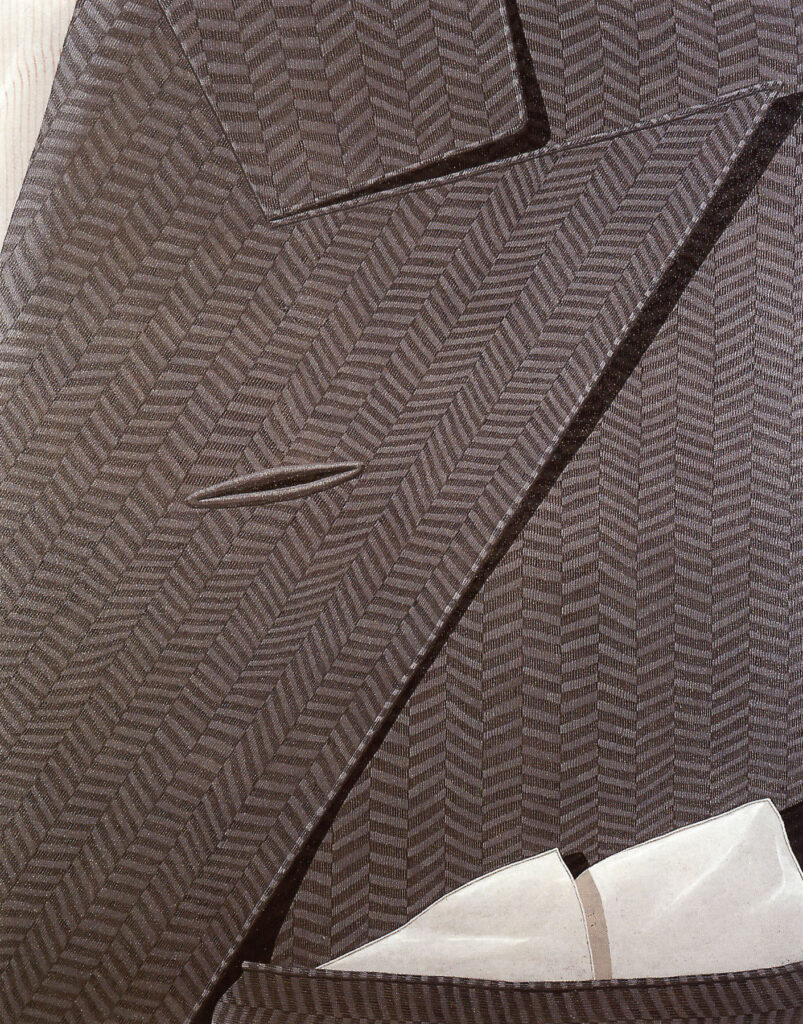
On his canvases, the selection of hairstyles – neck-length, braided, and curled – comes first before choosing the shoes to wear for the party – flats or heels, leather or synthetic. Next up, Gnoli’s artworks zoom into the details of the clothing to don: the folds of the shirts’ collars, the pearl buttons of the dresses, and the zippers of jackets. Almost ready, the artworks display a necktie and a bowtie, both in stripes, and an ironed suit with a pocket square. Gnoli and the woman close their bedroom door and head for the elevator, a huff to expel the breath of excitement and agitation before inquiring “Ready?”

In 1965, Gnoli expressed how he had always embodied his art practice, but it did not attract attention due to the abstraction’s moment. “I have never even wanted to deform: I isolate and represent. My themes come from the world around me, familiar situations, everyday life; because I never actively mediate against the object, I experience the magic of its presence,” he commented. Only then, thanks to Pop Art, that his paintings became comprehensible, the employment of simple, given elements that he neither amplified nor reduced. 

Three years later, the artist deemed his system as a vehicle of showing two scenarios in one space. “You begin looking at things, and they look just fine, as normal as ever; but then you look for a while longer and your feelings get involved and they begin changing things for you and they go on and on until you don’t see the house any longer, you only see them, I mean your feelings,” he penned. “For instance, take some of these modern pictures where nobody can tell what’s what; they are a mess because they only represent the feelings rumbling about without giving you any idea of why it happened.” At Fondazione Prada, Domenico Gnoli welcomes the viewers into his home and hands them an invitation to reminisce the legacies he left.

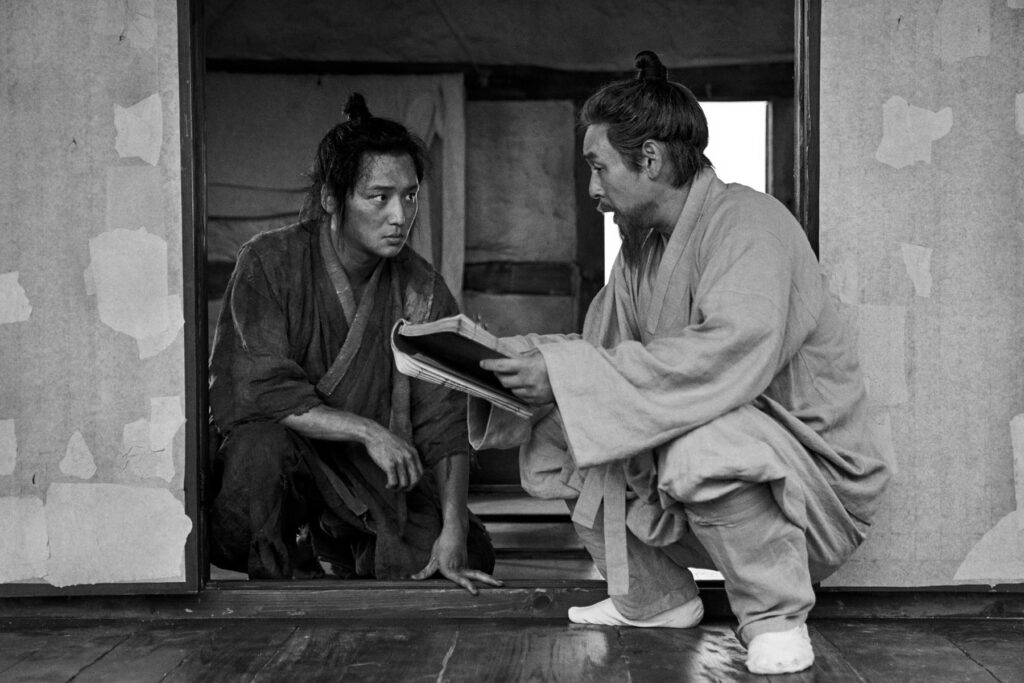
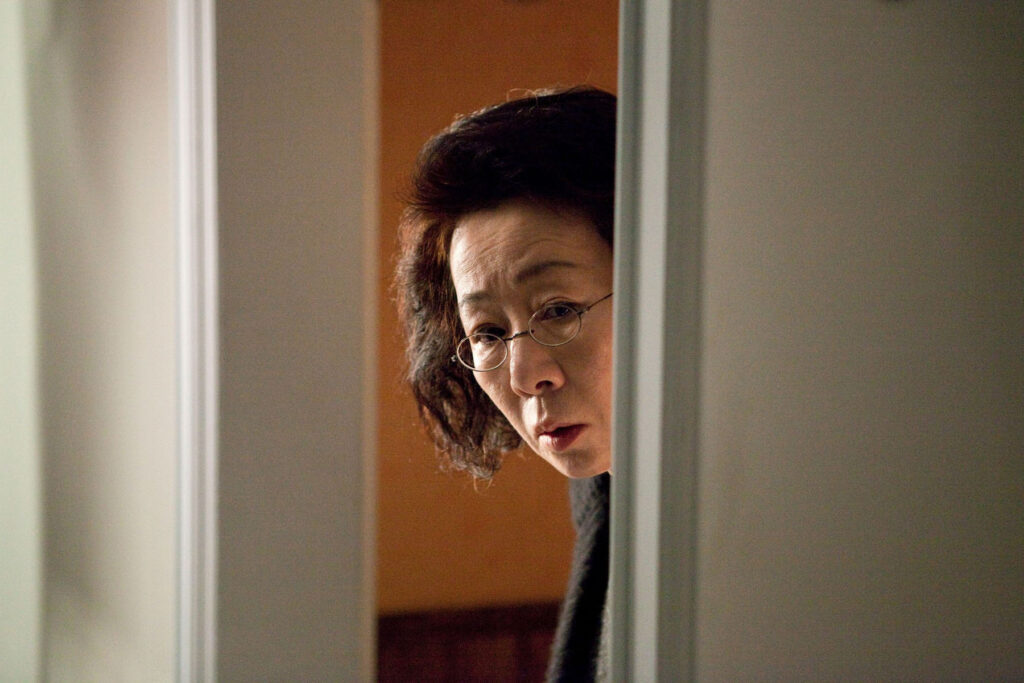
16th London Korean Film Festival

Collectors, Josée And Recalled: The 16Th London Korean Film Festival In Review

It’s been a good year for Korean cinema and TV, one would have to have been hiding under a rock to not have heard of Squid Game, the Kdrama which took Netflix by storm. In addition to this actress, Youn Yuh Jung became the first Korean actor to win an Academy Award this year for her portrayal of a Korean grandmother in Lee Issac Chung’s film Minari. Of course, we cannot forget Bong Joon Ho’s success with awards in 2020 for his film Parasite either, nor ignore the fact that other 2021 Korean dramas such as Hellhound or My Name have also seen international popularity.

However, due to the pandemic, many of us have had to witness this success on the small screen at home so the opportunity to watch some of the best of Korean cinema on the big screen at the 16th London Korean Film Festival was a pleasure in itself. Spread across nine venues in the capital the festival also allowed viewers to visit a variety of London cinemas such as Cinema in The Arches, Everyman, Screen on the Green and the Genesis Cinema among others. Of course, with such a huge lineup of films, it would be impossible to discuss all of them so NR Magazine chose three to review.

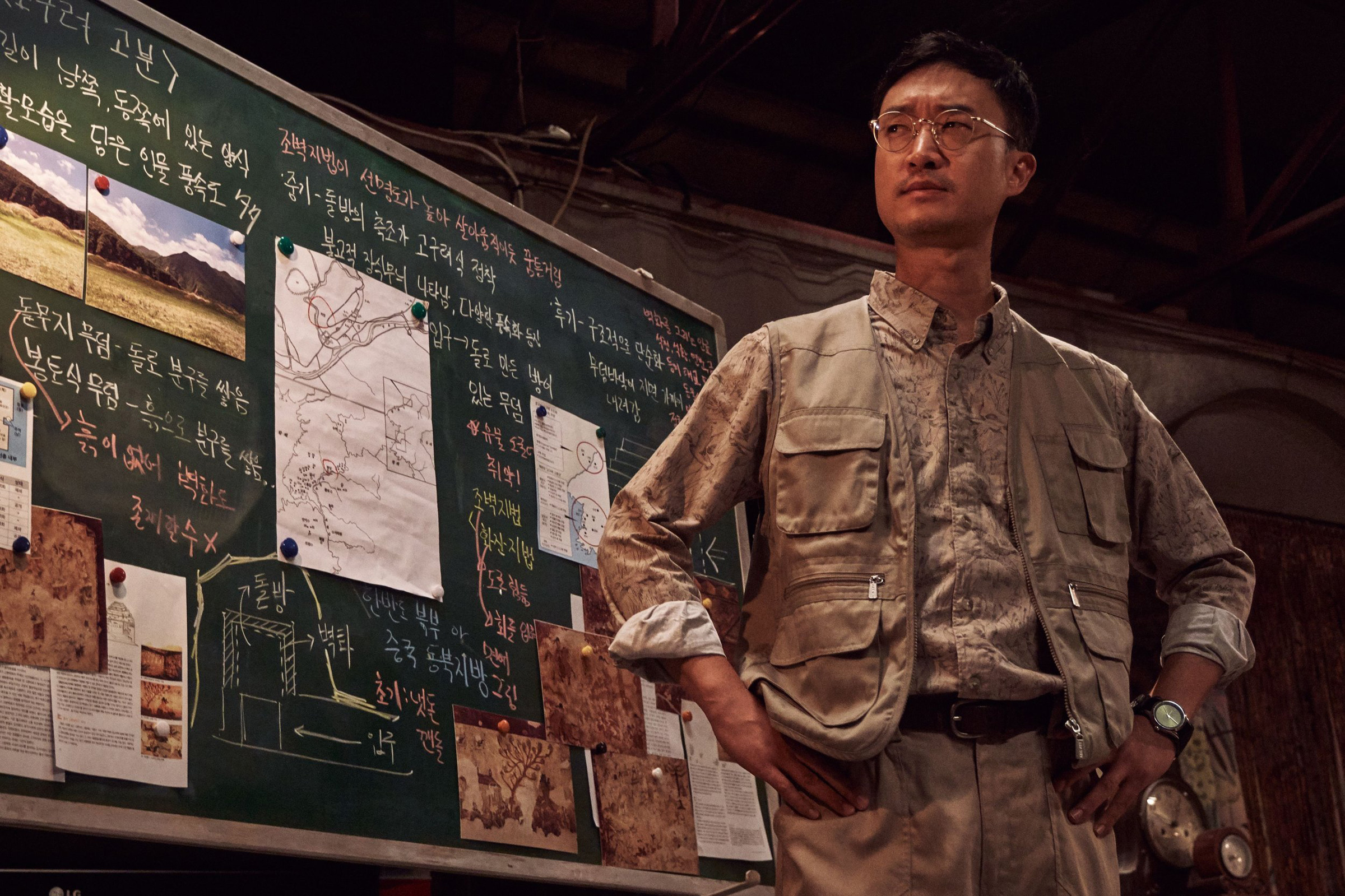
The first of the three was Collectors at Everyman, Screen on the Green. Directed by Park Jung Bae the film follows a group of misfit ‘tomb raiders’ on a blockbuster comedic heist. The two main leads of the film have also enjoyed success outside of the cinema this year. Lee Je Hoon, who plays a roguishly likeable artefact thief, also starred in the popular bittersweet Netflix drama Move To Heaven whilst Shin Hae Sun, who takes on the role of the beautifully cunning museum creator, also gained huge recognition for playing the chaotic Queen in the historical comedy Mr Queen. In Collectors, their chemistry and comedic timing is undeniable and leave the audience hoping to see them work together again in other projects. Meanwhile, the rest of the cast, several of whom also stared in Squid Game, gave spectacular performances of their own. Park Jung Bae creates a crown pleasing romp that keeps you guessing, and laughing, right to the end.

Next was a total change of pace with the slow bittersweet romance, Josée at Ciné Lumière. Kim Jong Kwan’s adaptation of the Japanese film Jose, the Tiger and the Fish was a quiet and soulful exploration of a disabled woman (Han Ji Min) whose life is obviously very lonely. When she meets a young student (Nam Joo Hyuk) it seems as if things might change for the better but the audience very soon realises that Josèe is an unreliable narrator and is left wondering how many of the events of the film are real and how many are simply figments of her imagination. This isn’t the first project Nam Joo Hyuk and Han Ji Min have worked together on and the pair have a very obvious chemistry albeit a morose and intense connection. Kim Jong Kwan makes the viewer question reality whilst forcing them to appreciate the beautiful mundanity of life.

Finally, we finished the festival with Seo You Min’s Recalled at Genesis Cinema. A dreamy but intense thriller that follows Soo Jin (Seo Yea Ji) who wakes up in hospital with amnesia after a serious head injury. Her doting husband Ji Soon (Kim Kang Woo) is with her every step of the way on her recovery but when Soo Jin begins to get prophetic visions she starts to distrust everything about her seemingly perfect life. The storyline leaves you thinking you have cleverly guessed the ending before pulling the rug out from under you. Seo You Min leads the audience through a rollercoaster of emotions before tugging at their heartstrings one last time as the credits roll.

While immensely enjoyable the London Korean Film Festival highlights the need for cinemas to diversify from their unfortunately stolid Hollywood fair. The popularity of Korean media in mainstream culture in recent years highlights that cinema is moving away from long-lasting Western hegemony. It would be great to be able to watch Korean movies in the cinema year-round but for now all we can do is look forward to the 17th London Korean Film Festival in 2022.

For further information and announcements visit koreanfilm.co.uk

Anicka Yi

“If I had to guess I would say I was smelling the Machine Age, but honestly it was hard to tell”

I decided to binge Foundation recently, the Apple Original series based on Issac Asimov’s famous sci-fi novels. It’s a fantastic piece of television but in it there are a few throwaway lines that mention ‘the robot wars’. The series is set millennia in the future, long after humans have populated the galaxy, but that simple phrase sets the imagination whirring.

Quite often when scrolling social media you come across videos of robots that scientists are working on, some humanoid, some not. However one thing is constant, and that is somewhere in the comments people are joking that these robots will one day turn on us, and ‘the robot wars’ will become reality. This sentiment is unsurprising, especially from a generation brought up on media such as Black Mirror. But what if they didn’t turn on us? What if the ‘robots’ or the ‘machines’ become part of the ecosystem, benign artificial beings that live in the wild and evolve on their own?

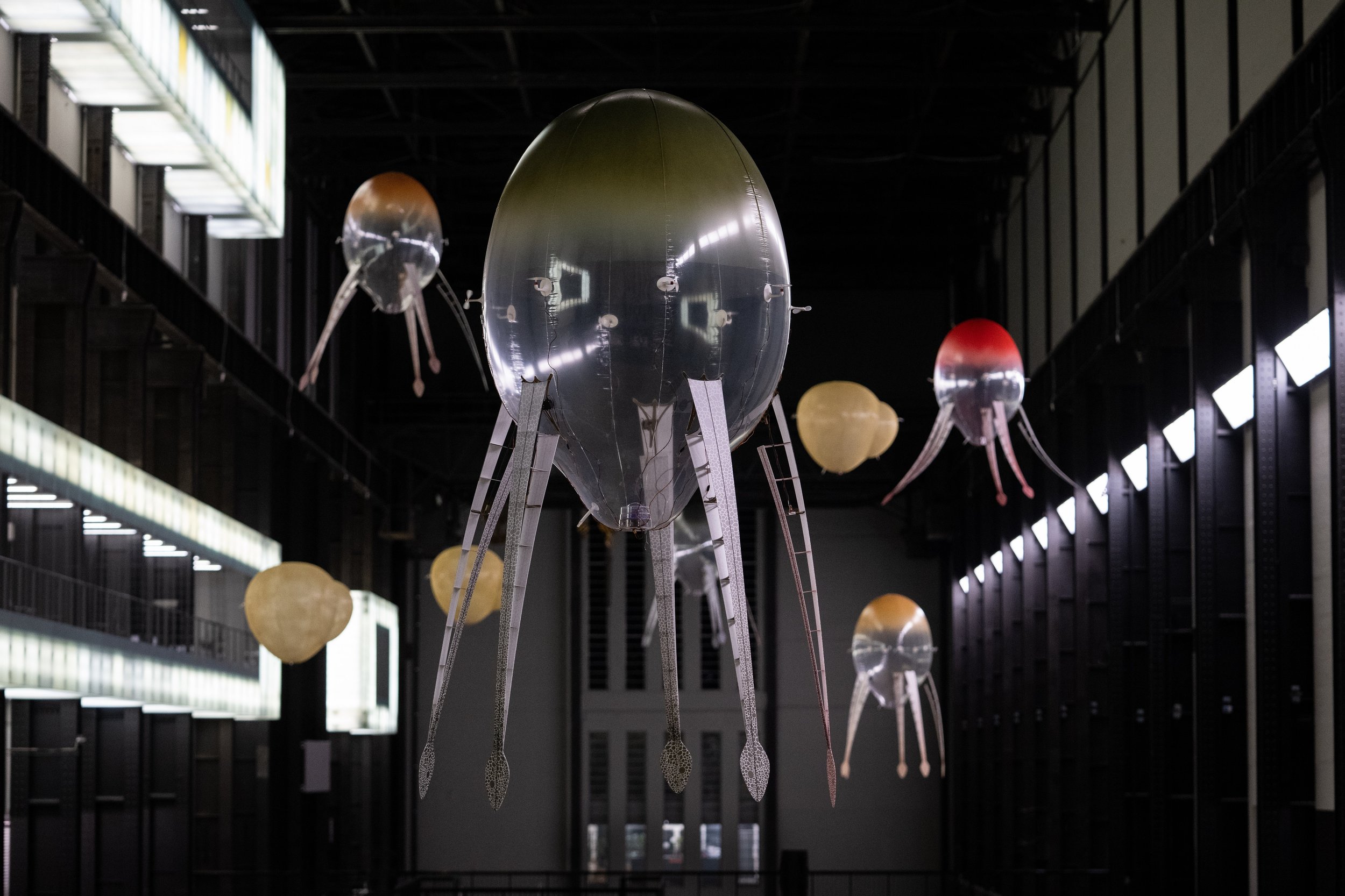
Anicka Yi’s installation in Tate Modern’s Turbine Hall explores such a possibility. As you enter the space you spot them, flying high above the crowds of visitors, like strange sea creatures with gently waving tentacles and whirring propellers. They come in a variety of pinks and yellows and some are transparent. Yi calls them aerobes, and in addition to sea creatures draws inspiration from mushrooms. The hairy, bulbous aerobes are called planulae, whilst the ones with tentacles are called xenojellies. “Combining forms of aquatic and terrestrial life, Yi’s aerobes signal new possibilities of hybrid machine species.”

Yi collaborates with a team of specialists using artificial intelligence to pilot these aerobes, and they all follow unique flight paths generated by ‘a vast range of options in the systems software’. The machines use electronic sensors placed in various locations around Turbine Hall as a stand-in for their senses and react to changes in their environment inducing visitors heat signatures. “This sensory information affects their individual and group movements, meaning they will behave differently each time you encounter them.”

Another thing you might notice upon entering the Turbine Hall is the smell. When I visited it smelled swampy, almost like a peat bog mixed with the smell of petrol and metal. This is intentional, another part of Yi’s instillation are smellscapes. Based on different times in history these smellscapes change from week to week. There are marine scents from the Precambrian period, coal and ozone from the Machine Age of the 20th century, vegetation from the Cretaceous period, or spices that were used during the Black Death plague of the 14th century. If I had to guess I would say I was smelling the Machine Age, but honestly it was hard to tell.

Overall the exhibition does feel a little sparse. The Turbine Hall is a huge space and it feels like the number of aerobes in comparison are rather small. One feels that in the world that Yi is visualising that these aerobes come in great swarms that fill the skies like flocks of sparrows. Reality is a little different, understandably but the concept remains and upon leaving the space you find yourself wondering what the world would be like if it was populated by herds of roaming robots or packs of floating synthetic aerobes.

Credits

Images · ANICKA YI
Info · https://www.tate.org.uk/whats-on/tate-modern/hyundai-commission-anicka-yi

Photos

  1. Anicka Yi, In Love With the World, Hyundai Commission, Tate Modern
  2. Anicka Yi, In Love With the World, Hyundai Commission, Tate Modern
  3. Anicka Yi, In Love With the World, Hyundai Commission, Tate Modern
  4. Anicka Yi, In Love With the World, Hyundai Commission, Tate Modern

Joselito Verschaeve

“sometimes you do not have the vocabulary to pinpoint your feelings towards a project, a place, an object, or a person”

The ambition to photograph the purity of isolation in nature infiltrates the images of Joselito Verschaeve. In his works, the fog clothes the rock formations, a hand soaks in the color of the coals, the sea laps over the grainy shore, the crescent-shaped sun ray filters through the cracks, and Joselito grips the camera in his hands. In every image, the unspoken longing to form a bond with nature, or perhaps become Mother Nature herself, tugs a wandering soul to embark on a pilgrimage with the Belgian photographer.

As one skims through the works Joselito has captured so far, they may deduce them as a meditative perception of the environment, a narrative-infested series that touches on a myriad of undefined themes with nature at the heart of his philosophy. Joselito may have just commenced his journey, but he has already left an imprint in those who gaze at his images, and now, in NR Magazine.

I would love to learn your background in photography. How did you end up taking photographs? Has this always been your first choice of medium, and why? Did you try other artistic mediums before this?

Before studying photography, I had studied 3D animation where we had to create a series of environments that were often dystopian-themed. We had to go out and create images out of worn-out objects to source our aimed textures. After a while, I realized I enjoyed image-making more and the world-building you could imply with sequencing.

Let us get into your philosophy in photography. Your work leans on day-to-day encounters. Why do you draw your photographic influences from this well? What encounters do you remark as the most significant to you, and why?

It leans on day-to-day encounters because it is the most honest way through which I can show my work. These are the moments that tend to take place in my life, but I happen to have my camera with me during these times. After these moments, the ball keeps rolling, and I can reminisce the places that I have discovered through these events, or be happy with what I got from that day. The most significant encounters I recall are the images that I captured.

You also turn to narratively driven images. Could you elaborate more on this? What kind of stories do you want to narrate through your images?

Part of my practice is the day-to-day encounters; another part is just my general fascination for dystopia, nature, history, and future events. The influences of the photographs I capture from this mindset: How can I make this newfound scene fit in these themes? I think this also forms part of my practice, just seeing if I can transform these set scenes into different ones. That is where the narration and sequencing of images come into place to tie the story together.

You have shared that you are building an archive that can fit different themes. Other than the ones already mentioned above, what other themes are you exploring? Do you have certain topics that you want to dive into soon? Why?

I would like to stay dedicated to these themes. What I do want is to narrow it down to certain topics. Now, I’m leaning towards places that see repetitions in natural events, or man-made places that withstand the test of time and nature. For me, these places come closest to my idea of dystopia where nature has the upper hand.

I want us to talk about If I Call Stones Blue, It Is Because Blue Is The Precise Word (2020 – 2021). First, how did you come up with the title? What is your relationship with it? Did you plan it, or did it pop up after the series finished?

It is from a Raymond Carver book, which echoes ‘day-to-day encounters’ in the best way. I think it categorizes under ‘honest fiction’ which sounds amazing on its own. Anyway, he uses it to write a poem, but the line is originally from Flaubert. My relationship with it is that sometimes you do not have the vocabulary to pinpoint your feelings towards a project, a place, an object, or a person. However, this does not stop you from understanding the significance of your emotions, so you compare them to the closest feeling that you do know. This is what I feel and do.

All images are black and white. Do you feel a deeper connection with this style rather than the colored ones? Is it more of a personal choice or a conscious one to tap into your audience’s emotions? 

There are a few reasons for this. Of course, the images I make share common thoughts, but the black and white style helps my images grow on each other. They may be at completely different times and places, but this variety causes interesting dialogues. To simply put it: the monochromatic style causes timelessness.

I see a lot of images deriving from nature: the uneven formations of rock, the silhouettes of forest trees, the gentle laps of the sea’s waves, and a bird trapped between the branches of trees. Does nature have a healing effect on you? Do you find it meditative? What do you think and feel whenever you place yourself in nature?

I think it is more on the idea of nature that piques my interest. It is in itself timeless and independent, which is how I would like my images to appear and be like. The balance between being comforting and intimidating is something that I admire. It is why I am so fascinated by the dynamic between nature and man-made: having the power to tear down sound and established structures versus life designs that have adapted foundations to withstand this former’s power.

What is next for Joselito?

I have an upcoming book with VOID, a publisher based in Athens. I am looking forward to this. Other than that, I will keep doing what I do and work on other projects. I have always worked on the “we will see what happens next” philosophy, so let us see what will happen next.

Tina Modotti

Women, Mexico and Freedom

Held at Museo delle Culture in Milan, Tina Modotti: Women, Mexico, and Freedom showcased the photographs of the Italian photographer, activist, and actress, the testament to the indelible mark she left on the history of contemporary photography. Biba Giacchetti, the exhibition’s curator, remembered Tina as an icon of photography and civil commitment. “During her short lifetime, Tina Modotti fought on the front line for freer and fairer humanity, and to bring aid to the civilian victims of conflicts like the Spanish Civil War. This exhibition illustrates the artistic phase of Tina Modotti’s life, a period that lasted barely a decade, and coincided with a historical era of extraordinary cultural, political, and social ferment. Tina succeeded in measuring up to the greatest artists of her day, and the technical and experimental research she undertook is of great interest. Tina’s activity was closely linked to the currents of Surrealism, whose boundaries it transcended, however, allowing her to steer her art towards new forms of communication. The originality in the way Tina executed her work will forever remain unsurpassed.”

Born in Udine on 16 August 1896, Tina attended the early years of elementary school but dropped out at the age of twelve to work in a spinning mill and help support her family. When her father emigrated to the United States, she joined him in 1913. She sojourned between San Francisco and Los Angeles, came into contact with the vibrant cultures of the cities, and experienced a key moment in her education: she acted in theater and cinema, modeled, painted fabric, became involved with the poet and painter Robo Richey, and met the photographer Edward Weston.

One photograph displayed a scene from a film where Tina’s acted. She was sitting on a low stool perched on hay- and dirt-covered floor and rested her chin over her right fist as she gazed far from the camera’s lens. Her sorrowful eyes and frazzled hair, which only added to her beauty, reflected the distress she felt for the character she was in. Titled The Tiger’s Coat (1920), the scene preluded the dissatisfaction Tina felt in playing roles that were solely based on her Mediterranean beauty, a reason she abandoned her acting career. “We had a good laugh over the villainous character she portrayed. The brains and imaginations of our movie directors cannot picture an Italian girl except with a knife in her teeth and blood in her eye,” from Edward Weston’s Daybooks on March 12, 1924.

Walking through the exhibit, I found a photograph of Tina and Robo de l’Abrie Richey, her then-partner, during their stay in Los Angeles. The years Tina spent with Robo gravitated her towards a group of bohemian intellectuals who discussed philosophy, psychoanalysis, art, and photography – signals of Robo’s influences over her. Tina would stay in touch with “Vocio,” Robo’s mother, even after her partner’s untimely death. When Walter Frederick Seely captured the couple in 1921, the sense and essence of home permeated the frame: Tina kneeled on a cushioned stool as she attended to a garment while Robo fixated his gaze on his painting, his paintbrush deepening its puncture over the canvas. When Robo passed away, Tina sat by the window of her home in Tacubaya. She leaned an arm on the railing, angled her face sideway, and let the sun caress her skin. Her somber look may not have only been due to grief, but also nostalgia as one may feel from her letter to Edward Weston, the person who took the photograph, in 1922: “Oh! The beauty of it all! Wine – books – pictures – music – candlelight – eyes to look into – and then darkness, kisses.”

Tina and Edward’s relationship deepened. Tina on the Azotea, a series of nude pictures taken by Edward, explored the commonalities they shared. He photographed Tina sunbathing on the floor while her eyes closed, her serene expression oblivious to Edward’s lingering gaze. In his description of Tina during the shoot: “My eyes and thoughts were heavenward indeed — until, glancing down, I saw Tina lying naked on the Azotea taking a sun-bath. My cloud ‘sitting’ was ended, my camera turned toward a more earthly theme, and a series of interesting negatives were obtained. Having just examined them again I am enthusiastic and feel that this is the best series of nudes I have done of Tina,” from Edward Weston’s Daybooks on July 9, 1924.

In 1923, Tina moved to Mexico with Edward and was acquainted with the artists of the Mexican Renaissance including Frida Kahlo and Diego Rivera. For seven years she devoted herself to photography, developing her own personal process, and becoming one of the avant-garde exponents of “social photography”. Tina’s political engagement focused on supporting the freedom of the oppressed against oligarchies and the opposition to the United States’ major influence in Central America. On another front, she worked to oppose international fascism. In 1927, she joined the Mexican Communist Party, where she came into contact and became involved with Xavier Guerrero. During her time in Mexico, Tina collaborated with the magazine El Machete, which brought together artists who shared the same views and ushered Tina to introduce Frida Kahlo to Diego. In a photograph taken in 1929, Tina, Diego, and Frida were seen participating in the 1929 May Day Parade, the revolutionary spirit of Tina blossoming.

From 1926 onwards, Tina stayed in Mexico, earning her living from photography and becoming more entangled in politics. While her photography took a propagandistic turn, Tina’s lens never wavered in highlighting people, disseminating emotions, philosophies, and messages to her viewers regardless of their social class. In two photographs, In the Streets of Mexico City (1929) and Elegance and Poverty (1928), Tina’s empathetic gaze towards mankind unraveled. She found an elderly man on the street in freezing weather and spent the night trying to find a place for him to stay, leaving his side only when someone offered a home for him to stay and sleep in. Her experience fueled her political voice to take a stance for the weak through photography and social engagement.

All her life, Tina missed her family, whom she often could not visit because of the political persecution she suffered. In 1936, Tina learned that her mother, Assunta Mondini Modotti, had died after returning to Italy with one of her sisters. In a letter she wrote to her sister Mercedes, she expressed: “Having you close by would have made my immense sorrow more bearable, it would have filled the great and horrible void that our blessed mother has left behind…”

She turned her attention to photography with her still life images and portraits helming her modernist aesthetics and her political creed. In Hands of a Washerwoman (1928), the way she spotlighted the frailty of the hands insinuated the dignity of the work, a contrast to Hands of a Puppeteer (1929) where it personified power. She also captured sombrero, hammer, sickle, corn cob, guitar, and cartridge belt, symbols of life she lived while in Mexico. She exhibited them with pride and determination in her last show in Mexico City, before being forced to leave the country.

In the show’s narration: “In 1930, accused of an unsubstantiated ‘plot’, Tina was expelled from the country, and after a short period of time spent in Berlin, she joined Vittorio Vidali in Moscow, where she worked for international Red Aid. She then moved to Paris, and in 1934 and 1935, she conducted clandestine missions to Austria and Spain. During the Spanish Civil War, Tina was involved in the organization of military health, assistance for orphaned children, and bringing aid to the civilian population. She met artists, writers, and poets like Pablo Neruda and Antonio Machado, intellectuals and photographers who had gone to Spain to offer their support to the Republic, including Robert Cape and Gerda Taro. Severely affected by the defeat of the Republic, Tina Modotti returned to Mexico in 1939, where she died of a heart attack on 6 January 194Z after having dinner at the home of the former director of the Bauhaus, Hennes Meyer. Straight after her death, the violent attacks of the right-wing Mexican press ceased only following the publication of Pablo Neruda’s poem Tina Modotti ha muerto.

As I walked towards the exit, I looked to my left and found a red wall with the poem Pablo Neruda dedicated to Tina Modotti. Reading it under the glare of the spotlight, the stanzas reminisce the Tina visitors would never meet in this lifetime:

Tina Modotti, o sister of mine, you do not sleep, no, you do not sleep,
perhaps your heart can hear yesterday’s rose grow, 
yesterday’s last rose, the new rose.
Rest gently. o sister of mine.
Yours is the new rose, yours is the new land:
you wear a new dress made of deeply sown seeds
and your gracious silence is covered in roots.
You will never sleep in vain, o sister of mine. 
Pure is your name, pure is your fragile life
bee, shadow, fire, snow, silence, foam;
steel, line, pollen make up your
slender, iron frame.

One day they will come by your small tomb,
before yesterday’s roses wilt,
those from the past will come to see, tomorrow, 
where your silence burms.

They are yours, o sister of mine: those who today speak your name:
we who from every place, from the waters end from the land,
stay in silence and say other names with your name.
For the fire dies not.

Subscribe to our
Newsletter