Archive page:


Georgina Starr

“I rebought forty of my favourite destroyed singles and had them played simultaneously on forty record players.”

It’s difficult to summarise the art of Georgina Starr. Since the early 1990s, the artist has made use of the array of tools (video, sound, written word and live performance) at her disposal to create a rich and varied body of work. In early works, Starr engaged a cast of miniature paper figures as stand-ins for real life conversations the artist would covertly record in public spaces. Later, Starr appears in her work – though the extent to which she was performing as herself is itself part of her practice. In The Party (1995), a 25-minute video installation, Starr takes on the role of Liz (a character whose advances are rejected by another character in a previous film). As Starr tells NR below, though the role was fictional, the process of making the film instils it with autobiographic elements. Characters, motifs and themes recur throughout Starr’s work, which enable the artist to rework and reimagine earlier ideas. But it isn’t just Starr’s own oeuvre that she recreates, with much of her work taking inspiration from existing film and literature. The breadth of reference points throughout Starr’s work are demonstrative of the extent to which the artist employs a process of meticulous researching to inform her practice. 

Aspects of Starr’s work recall a childhood spent watching tv; the object in the corner of the living room which, she explains in The Voices of Quarantaine (2021), became her “gateway to another world”. Indeed, the blurring of reality and imagination, autobiography and fiction are common features of her work. Starr’s film, Quarantaine (2020), is not, as you might think, a response to the pandemic. Rather, the artist began working on Quarantaine before COVID; the film’s title referring to the French word for forty, historically also the term for a period of enforced isolation over forty days. The film tells the story of strangers who are transported to an alternative universe which the two women must navigate their way through. Across the breadth of Starr’s work, the body – the female body and feminine identity in particular – are (re)investigated. In her later works, including Quarantaine, Starr is no longer in front of the camera, with a cast of performers enabling the artist to realise her practice on a larger scale. Most recently, the artist orchestrated a live performance in collaboration with French fashion house, Hermès, which in true Starr style, is a dazzling display of colour – flawlessly synchronised and splendidly surreal. 

NR: What have you been working on recently?

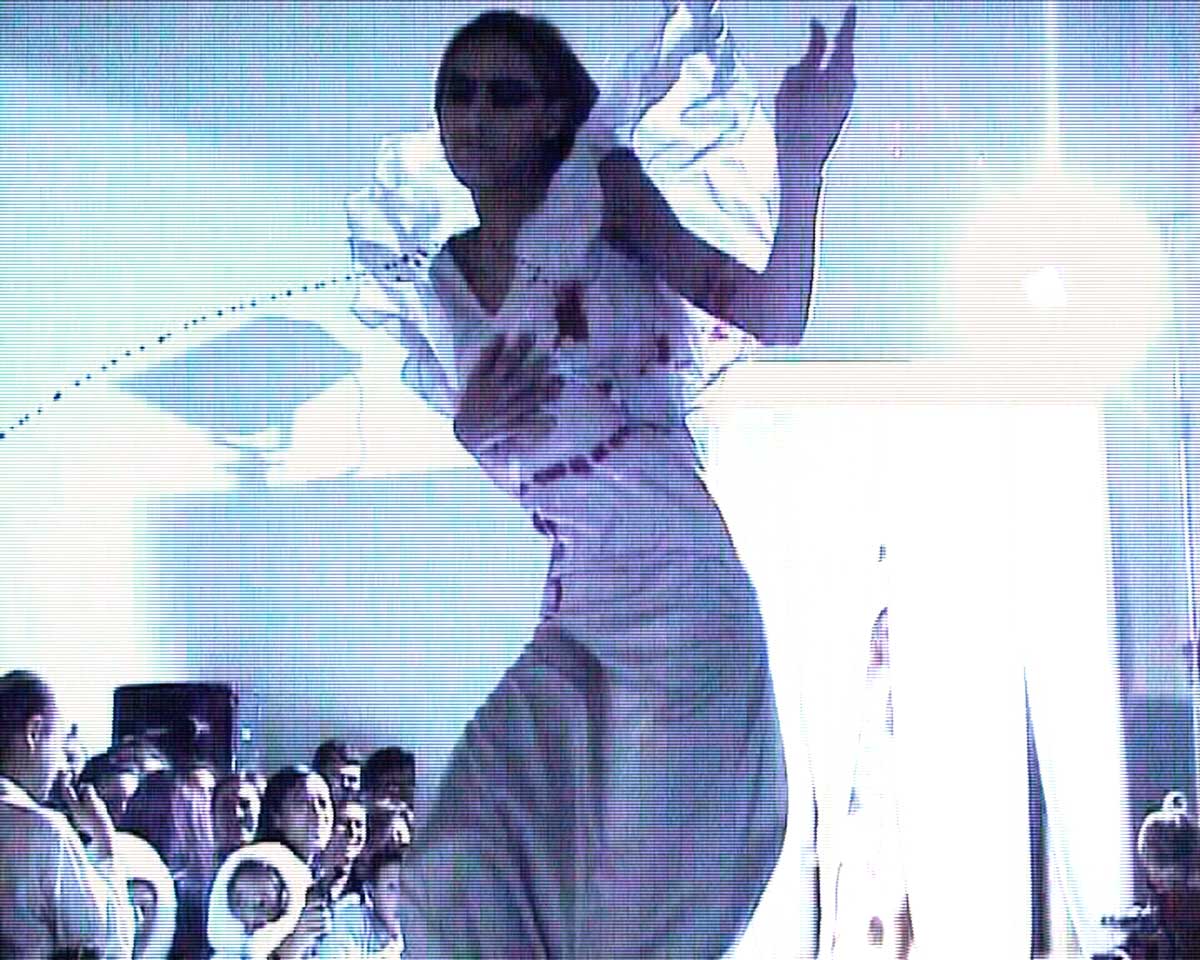
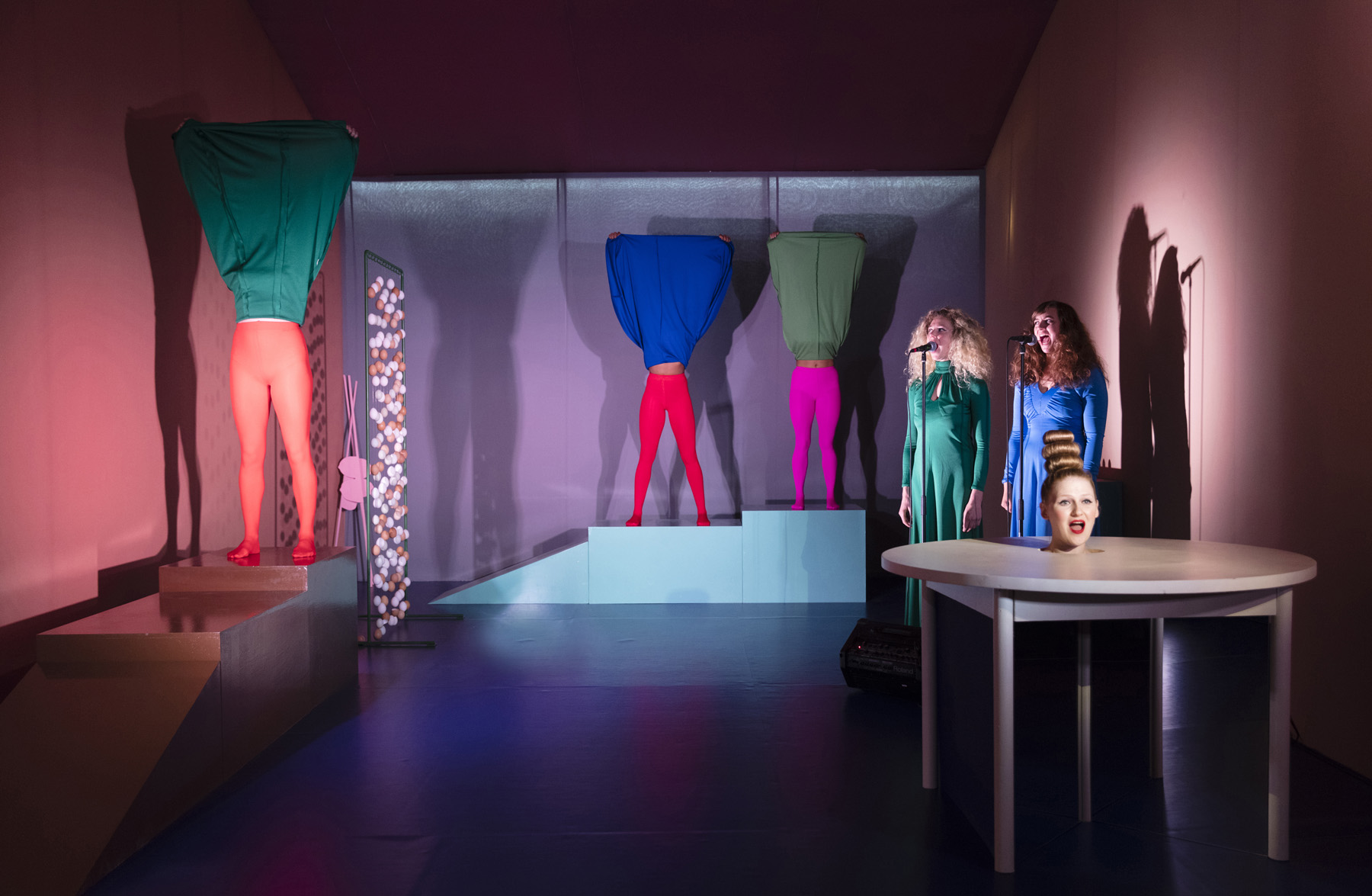
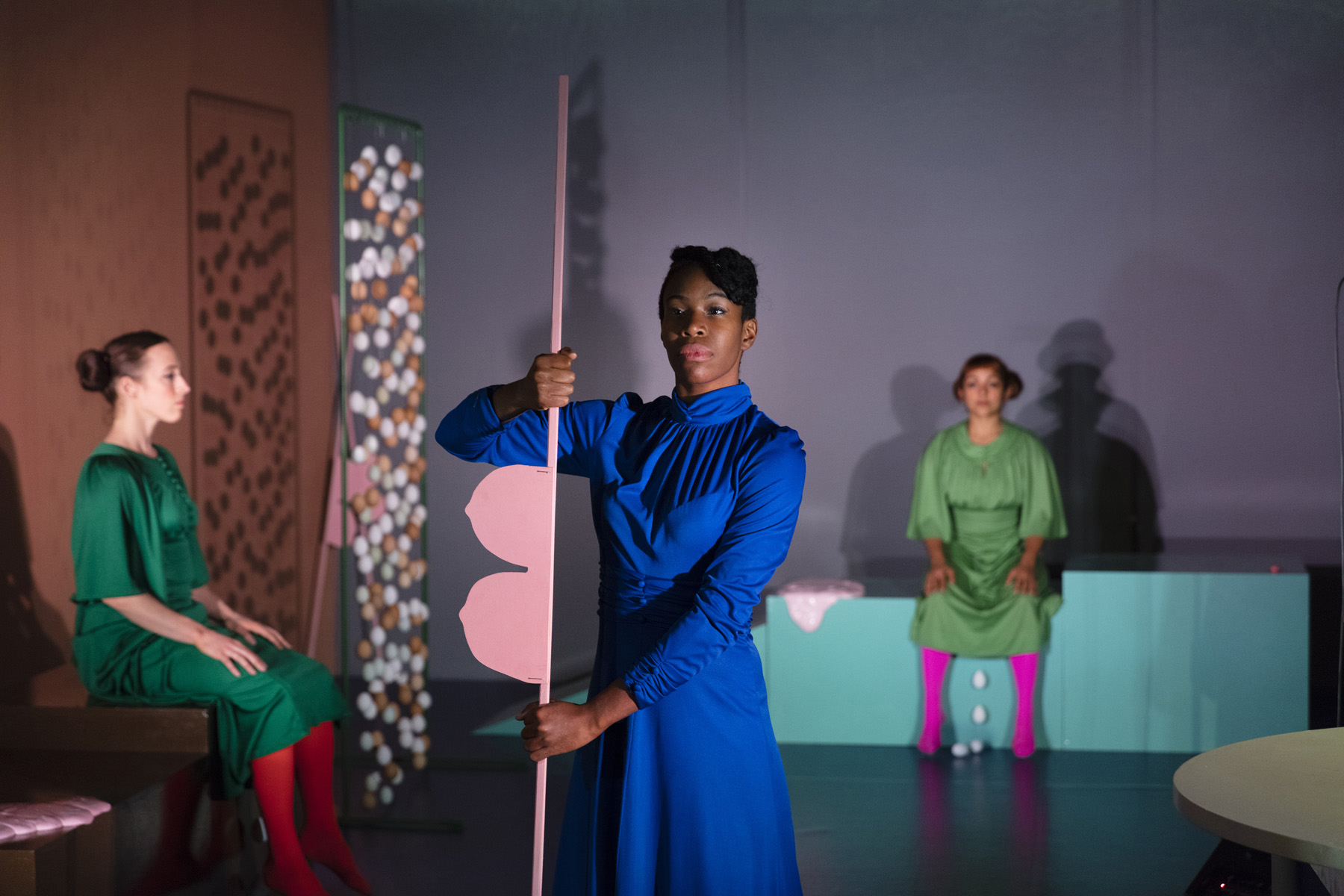
GS: I have been working on a new performance artwork in collaboration with Hermès to showcase their SS22 collection designed by the brilliant Nadège Vanhée-Cybulski. We performed it on 3rd February at a one-off special event titled ‘Gelato!’ at Old Sessions House in Clerkenwell. It incorporates a large set—a huge pastel coloured mountain sculpture, a new musical score for percussion which I developed together with composer, Thomas Haines, and is performed by four female percussionists, nine dancers and eight models all wearing Nadège’s designs. It was quite epic—a cross between a theatre play, a sculptural installation, opera, dance and fashion show. The collection is really joyful and screams summer, so I began by thinking about what ‘gelato’ would sound like. I imagined metallic sounds and warmer sounds of fabric on wood—glockenspiels, triangles, drums, wooden percussion, vibraphones, and I had a vision of a magic mountain which the performers, wearing these amazing clothes, would emerge from moving in synchronization with the sounds—this was my starting point.

NR: What does the process of rehearsing or being in workshops involve? 

GS: With live performance works, the rehearsal period is more intense. I always script and storyboard, and it was the same for Gelato! There are spoken word poems in this piece as well as the music and choreography. By the time we went into workshopping in mid-December we were at a really good stage with the musical composition, and I had choreography ready to show to the dancers. We were working with four incredible percussionists who were able to immediately play the working score so that the dancers could start to interpret the live instrumentation and we could adjust the score as went, which was a brilliant way to work. The music starts out very minimally and gradually builds up as the percussive mallets are handed to the musicians. Some instructional elements were built into the score, so everyone’s movement was highly choreographed, and I had constructed my own mallets using coloured threads from the collection – so these were woven into the piece. The workshopping days were crucial to figure out if the movement and vocals I had imagined alone in my studio could even work on a grander scale! I had props too, as I wanted the performers to all begin from inside a ‘mountain’ and emerge with large circles like musical notes transforming the whole picture into a giant score. There were twenty performers to direct, so it was pretty intense. We went into full-on rehearsals for six days at the end of January and had the first dress rehearsals at the venue the day before the show. I loved this collaboration with Hermès, it was wild.

NR: How does working with performers compare to playing the role of other performers (alongside) yourself? 

GS: The casting process is always really complex as I have a very clear idea of how I want the performers to look and what voices they bring. For both the Hermès piece and my last film Quarantaine (2020), it took a long time to find the right people, months of searching and meeting people. When I perform inside my work it’s a very insular and personal process, often just me and the camera. For my film THEDA (2007), I built all the sets in my studio and worked for a year filming myself in the various Theda Bara inspired roles, so became totally absorbed into the character. The way I work with a bigger cast definitely has some connection to this, I feel the need to demonstrate rather than just describe, it’s quite mediumistic, transferring my movement and voice into them. I like to work with a mix of professional and non-professional performers as the non-pros bring something magical and otherworldly. It often feels like the less experienced person is a stand-in for me in some way—I relate to them more strongly as they are working things out on their feet and negotiating this strange environment they find themselves in. 

NR: There are characters, themes and motifs – the brain, the bubble – that reoccur in your work; did you always attend to develop your practice in this way? Or did it just occur over time? 

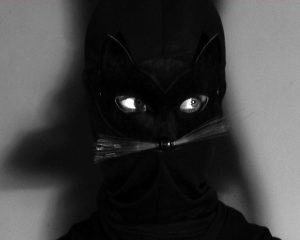
GS: All the pieces I’ve made from the very beginning are completely interlinked. It happens naturally that one work leads to the next, so the themes and motifs overlap and merge. Sometimes an element in a work I made twenty-five years ago might suddenly appear in something new. A performance work I made at the Stedelijk Museum Amsterdam in 1995 called The Hungry Brain suddenly started to inform a work I was developing in 2013 which eventually became Before Le Cerveau Affamé a new performance and installation piece. In this work I created an illustrated set of predictive cards (Le Cerveau Affamé), the suits were the bubble, the hand, the brain and the cat. These cards found their way into my film Quarantaine. The cards appear in a critical scene in ‘The Grey Room’ where a group of waiting women are chosen for a card reading—the cards selected guide them to the next level of the journey in the film’s narrative. Sometimes it seems like one big Gesamtkunstwerk!

NR: As an extension of that, in The Voices of Quarantaine you make reference to De Quincey’s The Palimpsest of the Human Brain which seemed to be an apt description of your work. Would you say that your work is palimpsestic?

GS: I think my last answer definitely describes a very palimpsestic way of working. I enjoyed making the performance lecture, The Voices of Quarantaine (2021), as I got to reveal some hidden details at the heart of my film Quarantaine. There are so many layers of meaning in my work it can baffle some people, so it’s useful to be able to unpeel these for the viewer. Although the lecture itself was something of a palimpsest too. While I was reading De Quincey, I realised that his essays had directly inspired Dario Argento’s 1977 masterwork Suspiria which in turn had inspired the forest wall-mural I had painted in a scene in Quarantaine. At the very beginning of Quarantaine we follow two women through an arboreal portal in a city park which leads them into a school of instruction—the first room they encounter has the eerie wall painting. The mural in Suspiria had always haunted me so it became an ominous character within my film—it holds another portal to take the initiates onto the next stage of the voyage.

NR: How much of your work is grounded in the idea of autobiography, and to what extent does the notion of autobiography become a way to introduce (fictional) narrative?

GS: There is quite an even mix of the fictional and factual, but it’s so integrated that I often lose track of which is which. I made fictional works in the past which I performed in and people presumed they were autobiographical. An early video The Party (1995), for example, was a piece about a lonely female character who throws the perfect party for one. It began as a fictional narrative, but I did spend two days alone having a party in my studio—constructing a bar, making food, dancing, drinking elaborate cocktails. When I look back at this work it’s part of my history and feels almost autobiographical, it’s a perfect merging of the two. There are personal stories within Quarantaine, which I discuss in the lecture, these stories begin from a ‘real’ place or at least a memory of something real and gradually become so entwinned within the world I’m creating that they drift away from reality and become something totally new. 

NR: How do different mediums lend themselves to a particular work? What informs whether you use audio, film or a live performance?

GS: The idea usually informs what the piece will be.

“A memory I had about my parents burning all my records when I left home for example ended up transforming into a live sound performance piece called Top 40 on Fire (2010).”

I rebought forty of my favourite destroyed singles and had them played simultaneously on forty record players. It created a cacophonous sound at first that sounded like fire, but as each track petered out you started to hear the voices of the singers coming through and the final vocal lyric was quite profound. If I’m commissioned to make a work then it’s slightly different, although sound always plays a huge part of every work. Live works are the most difficult for me as it’s impossible to control exactly what will happen on the night. I’m pretty controlling about all the details so this can drive me insane; the uncertainty—at some point you have to let a performance live without you. When I made Androgynous Egg (2017), a live piece for Frieze a few years ago, it took me ages to let the performers just own the piece. It was performed four times a day for the whole of Frieze and it was only on day two when I realized that I didn’t need to sit in all the performances—they had it, it belonged to them now and I had to set it free, like releasing a child into the world. Quarantaine was really borne out of Androgynous Egg. I knew that I wasn’t finished with some of the subjects—the eggs, the Pink Ursula Material, the instructional poetry, even the choreography, and that I needed to make a film. Writing and making the film was my way of taking back the control I had relinquished with the performance. It meant I could close-in on the action and focus on the important details. Filmmaking is more my natural medium. I love editing with image and sound, it’s where the magic happens.

NR: In relationship to the magazine’s theme – celebration – how does your work celebrate, and explore, womanhood?

GS: I would say that it does this in every sense. I began in the early ‘90s by working with my own body and voice to create video and sound works. These works gave me an actual voice. I was suddenly able to articulate something within the work in a way that I felt I couldn’t in real life. It was a celebration of my inner world. Over the years I’ve gained the experience and confidence to transfer this and to share the ideas with performers, musicians, singers and composers so that the world becomes bigger, more complex and intense. THEDA was the last work I performed in front of the camera. It was a very physical work where I was on screen the whole time for forty minutes. Each time I screened the work at a cinema I invited different musicians to accompany it and perform a live soundtrack. I had done it a few times in London and New York when I realised that it was predominantly men that were playing the music; by some strange fluke it had worked out this way. I was invited to screen it in Berlin at an old silent movie theatre and decided that this time it should be a woman accompanying it. I tracked down this amazing soprano Sigune von Osten—diva der neuen musik, who had worked with John Cage and Luigi Nono, and she agreed to compose a new soundtrack and perform live to the film. There was something incredible about the combination of a woman (me) attempting to dissect and enact the lost films of another woman (silent movie star Theda Bara) while being interpreted and accompanied by the extraordinary vocals of a third woman (Sigune von Osten), it was a metaphysical experience—a total celebration and exploration of the female body and voice.

Credits

Images · Georgina Starr
http://www.georginastarr.com/
Sho Shibuya

“I just so happened to want to capture the contrast of the beautiful sky against the ominous news.”

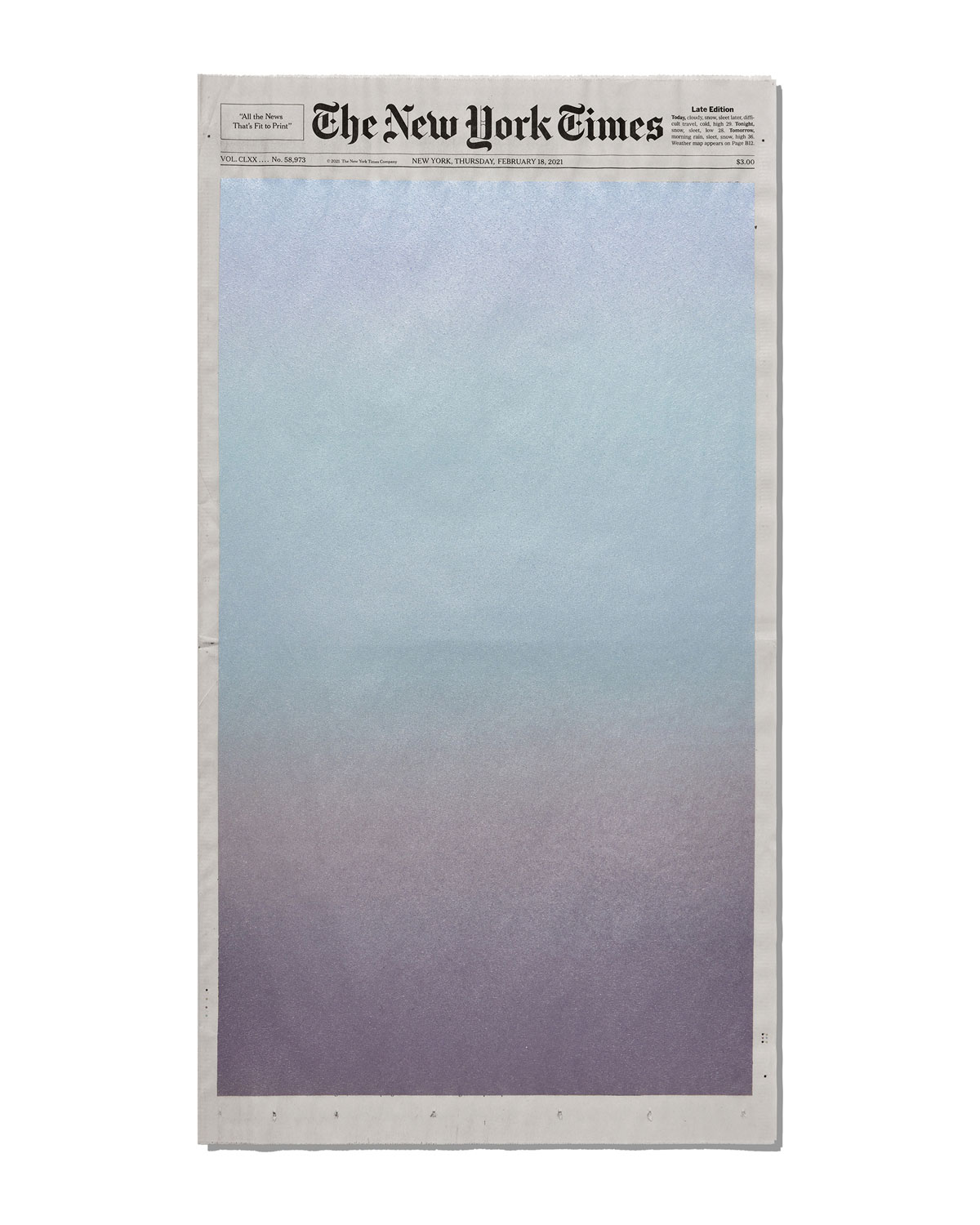
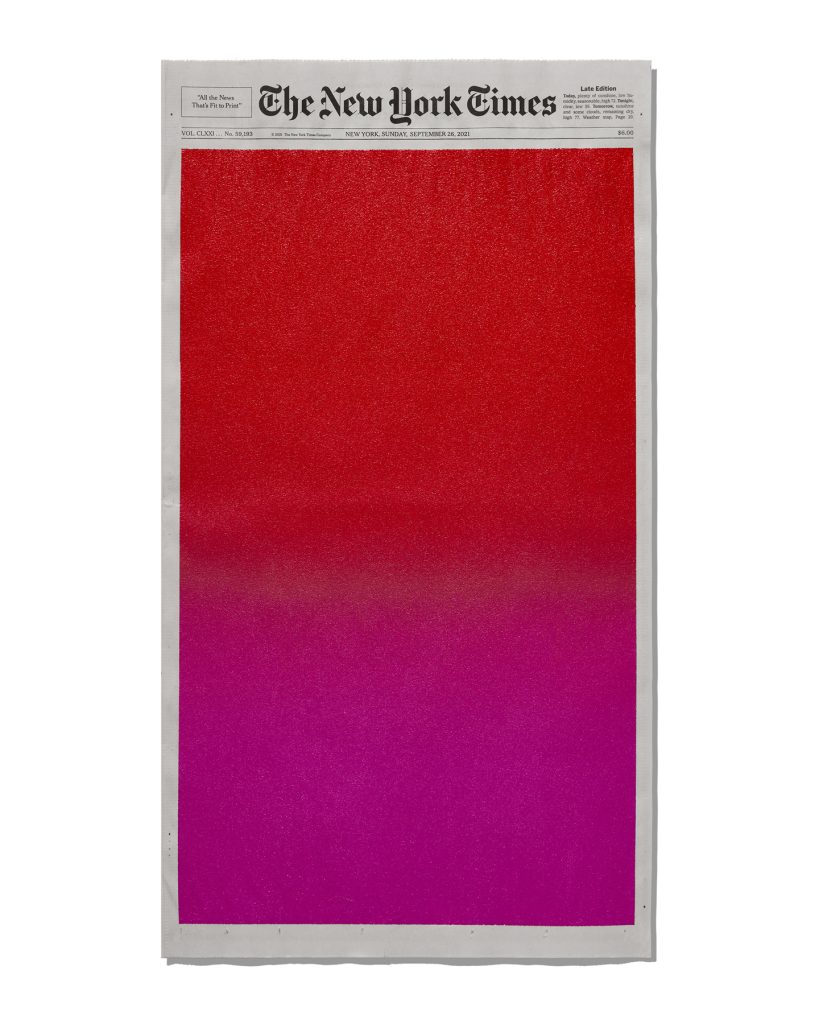
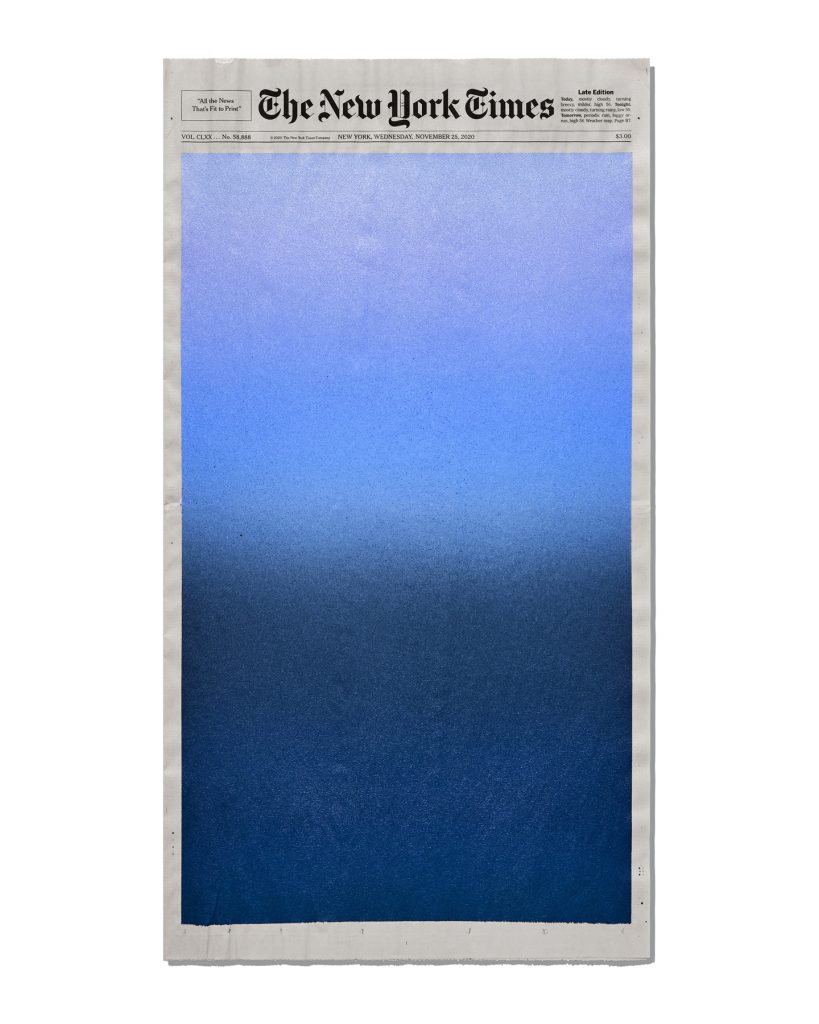
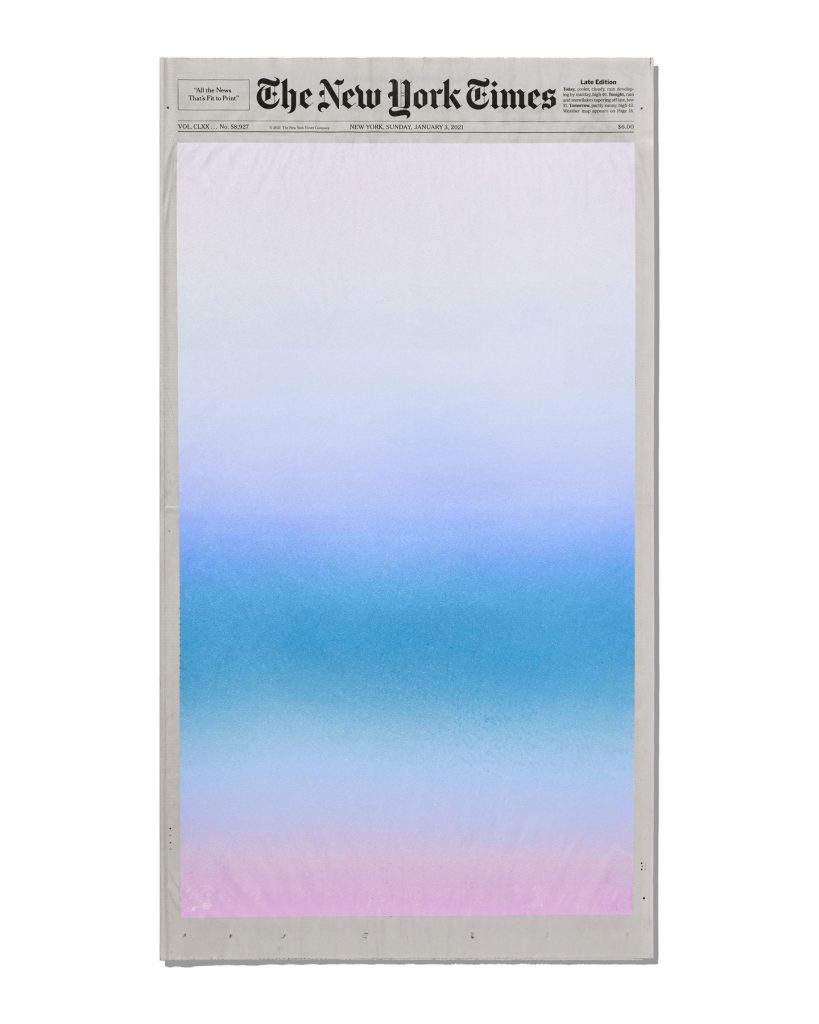
Sho Shibuya is a graphic designer who has lived in New York for the past ten years – the last five of those years spent painting every day. Originally from Tokyo, Shibuya’s move to the Big Apple gave rise to a fascination with the city and the elements of design that are distinctively “New York”. In fact, something the designer was quickly struck by was the number of plastic bags that littered the city’s streets – is there anything more “New York” iconic than the “Thank You” plastic bag? Shibuya began collecting abandoned bags which were the subject of a book from 2019, Plastic Paper. If the project was a celebration of the city’s rich visual identity, as captured in plastic bags, it was also designed as to provoke a necessary conversation about the environmental hazards caused by single-use plastic. The bags were banned state-wide on 1st March 2020, though a loophole meant that retailers serving food can still these bags. Nonetheless, Shibuya’s bag collection was featured in a New York Times article the day before the ban. 

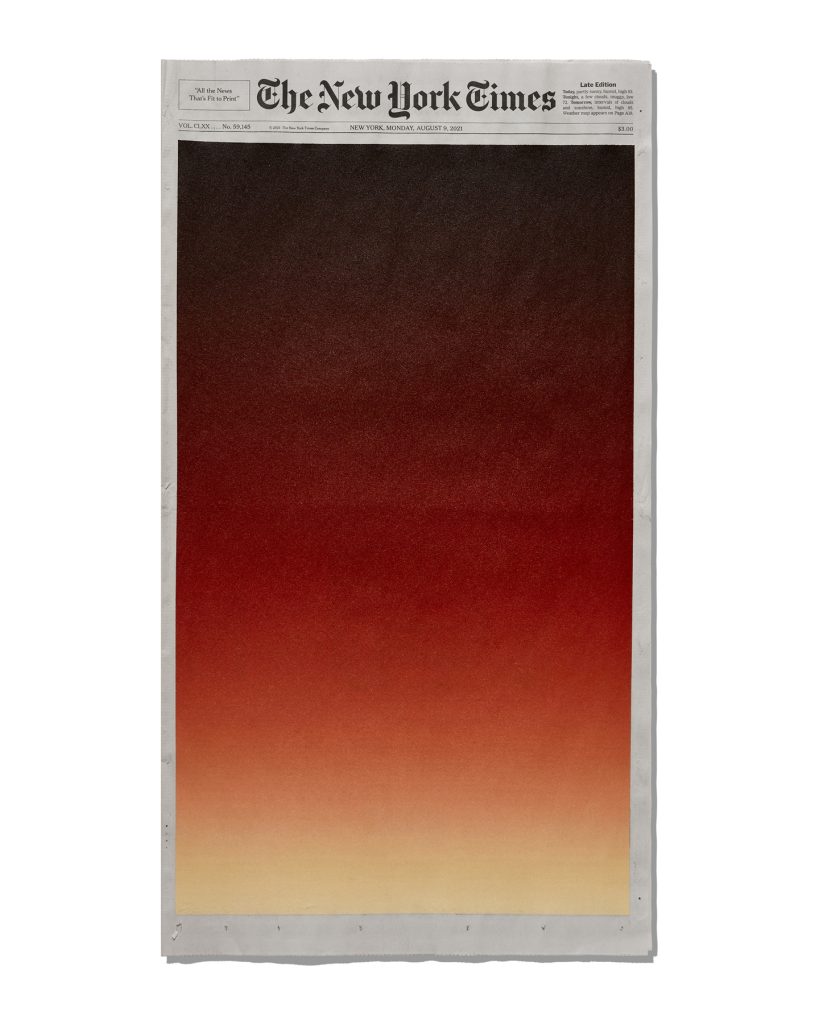
Fast forward to late May that year – with the city slowly emerging from lockdown following the first COVID wave – and Shibuya’s work appeared on the pages of the New York Times once more. This time, however, it was the designer sharing a photograph of a full-page painting over the newspaper’s cover on Instagram. Shibuya depicted a sunrise gradating from white to deep blue on the day that the Times paid tribute to the almost-100,000 deaths to COVID in the United States at that moment in time. This was Shibuya’s first full-page painting on (or over?) the cover of the New York Times, and it captures the way in which the designer (and painter) strives to “really understand [an] event and show respect to any cause.” There was some criticism to that initial post – that in painting over the names, it was glossing over the scale of pandemic’s impact – but as the subsequent paintings reveal, Shibuya’s creative interpretations of that day’s news, whether poignant or funny, emotional or thought-provoking, have come to attract an appreciative, warm response from a growing Instagram audience.

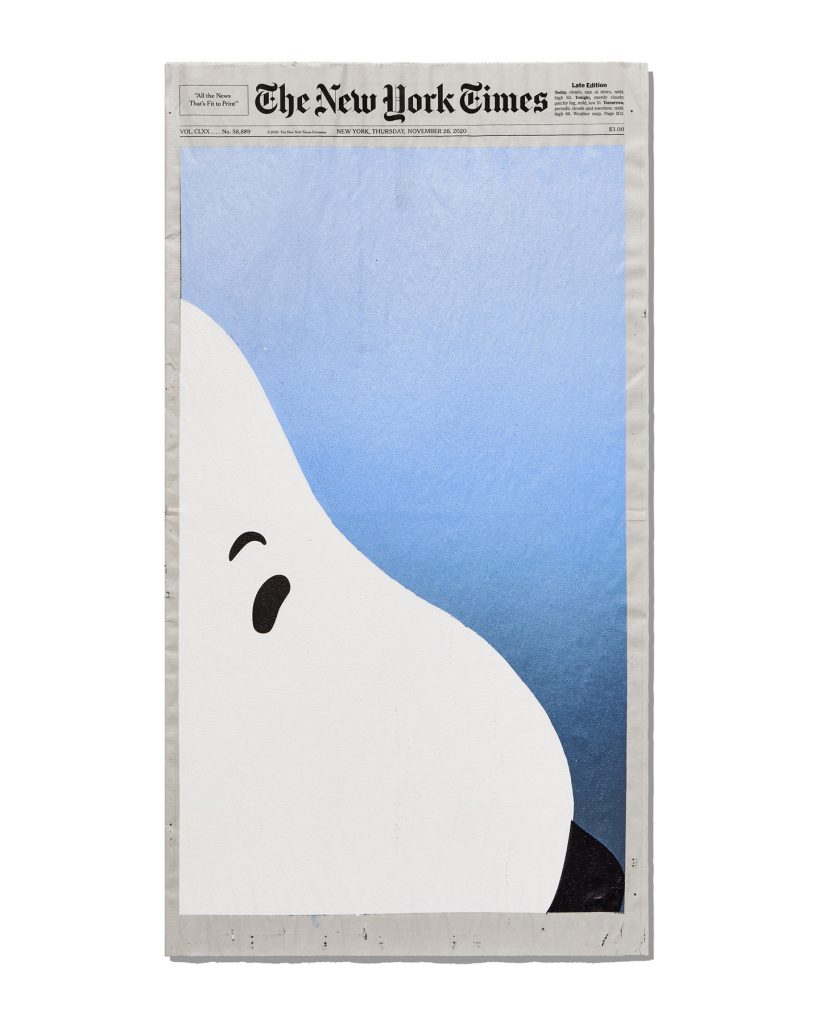
By using the daily New York Times as his canvas, Shibuya paintings move between reportage of local, American and international affairs – from painting the giant Snoopy inflatable from the 1988 Macy’s parade on Thanksgiving, the diagonal lines synonymous with OFF WHITE in honour of Virgil Abloh’s death, a collaboration with Patti Smith urging Americans to vote in the 2020 election, to painting scenes from the floods and forest fires that gripped the world last summer. If Shibuya began by painting the sunrise each day from his window during the lockdown, his paintings have become an entryway into a wider celebration of the little things we can be hopeful about. Each day, no matter what, the sun rises – and the news, no matter how difficult it may be, continues. And amongst that, Shibuya’s paintings give us a moment of pause and reflection. 

NR: You started sharing Sunrise Through a Small Window on Instagram during the first American lockdown in 2020; were you expecting the kind of response you have had since then?

SS: Not at all. Painting has been part of my daily ritual for over five years. It just so happened that this series seemed to strike a chord in people. I appreciate the response; it makes me feel connected to the world through my work.

NR: What was it like being commissioned to paint two new sunrise scenes and exhibit a further 53 of your newspaper paintings in collaboration with Saint Laurent at last year’s Art Basel Miami for the 55 Sunrises show? 

SS: I visited the Yves Saint Laurent Museum in Marrakesh, Morocco, back in 2018. I was fascinated by the whole experience there. Three years later, the collaboration started, and I am grateful for the opportunity. It was my first time in Miami. The idea for the location came from [Saint Laurent creative director] Anthony Vaccarello; I never expected the show to be held on the beach. I thought, it’s a wild idea that you will be able to look back and experience the sunrises and the turmoil of 2020 and 2021. Then, after you are finished looking at the painted sunrises, you can see the real sunrise on the ocean outside.

“It’s like a time capsule, or like a pathway from past to present, and perhaps a future, because I believe the sunrise carries with it some bit of hope or optimism for the future.”

NR: The New York Times paintings are quite different to your book Plastic Paper and the creative platform associated with it. How, in different ways, do both relate to the experience of living in New York?

SS: The objects at the centre of each work, the designs on the plastic bags and the New York Times newspaper, are both everyday objects in New York. From a foreigner’s view, I treat them differently. For instance, if someone took a trip to Japan, they would probably notice cultural significance in mundane objects, like Japanese typography on a sign or Pachinko store, etc. The everyday objects feel fresh to me. That emotion made me use it as a canvas.

NR: Do you have an idea of which painted New York Times covers, news or events might resonate with your audience?

SS: Each piece has different reactions. For instance, the inflation piece that visually explains “no more 99 cent pizza” might resonate with people in New York. In another article, I depicted the tragedy of the wildfires in Greece, and I received a lot of comments from Greece. If the events somehow relate to how people feel or what they’re thinking about, they respond. It’s a natural reaction.

NR: Some of your newspaper paintings (like Rudy Giuliani’s melting hair dye) are quite playful, whilst others are more poignant, how do you decide what kind of approach you’ll take with the paintings?

SS: I never plan what to paint. It is always spontaneous.

“I always start after reading an article, and if something lingers in my mind afterward, I paint that feeling or thought so I can speak up in a visual way.”

NR: What was it about the cover of the New York Times that lent itself to being the canvas for your sunrise paintings in the first place?

SS: I think it was a bit of chance. I always read the New York Times every morning, and when I made the very first painting, I just so happened to want to capture the contrast of the beautiful sky against the ominous news.

NR: Of all the New York Times paintings you’ve shared on Instagram, which one means the most to you? And which have people most engaged with?

SS: The first full-page painting: May 24, 2020. The New York Times cover paid homage to the 100,000 people who had died from COVID. I was really emotional painting that one and still remember every moment of when I was painting it. The most engaged one was when I painted the Palestinian flag on the cover. I agree when Haruki Murakami said, “between a high, solid wall and an egg that breaks it, I will always stand on the side of the egg.”

Credits

Images · Sho Shibuya
https://www.instagram.com/shoshibuya/

Photographer Hal

“My photography is not possible without a relationship of trust with the subject.”

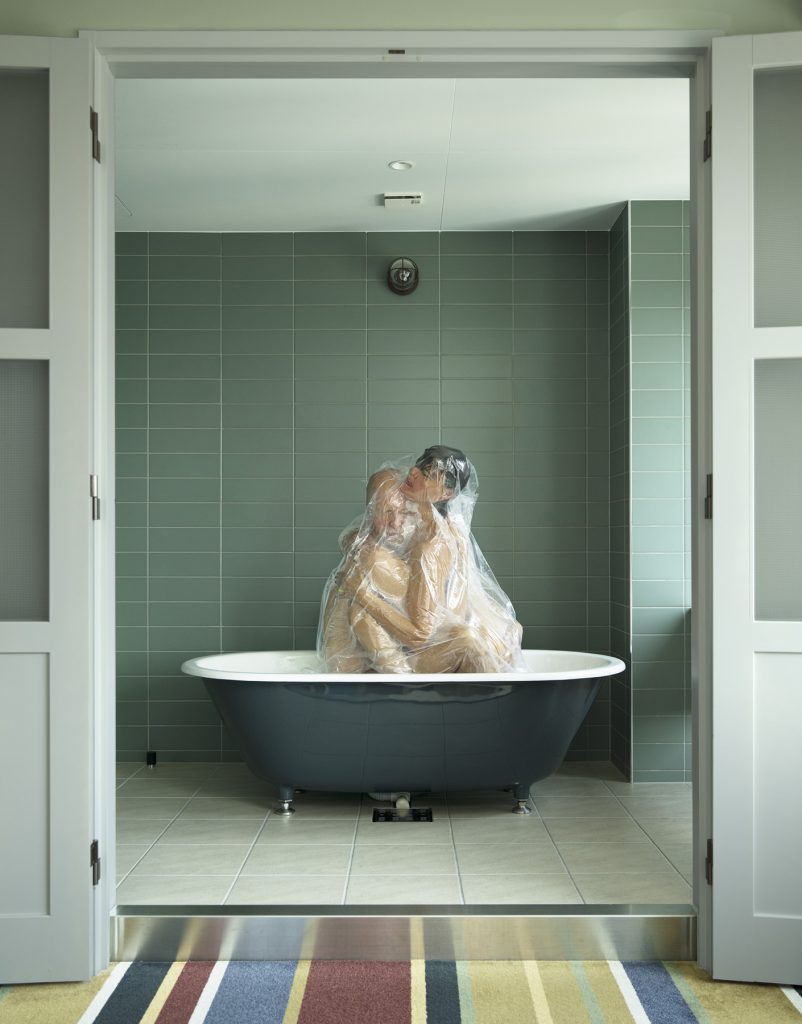
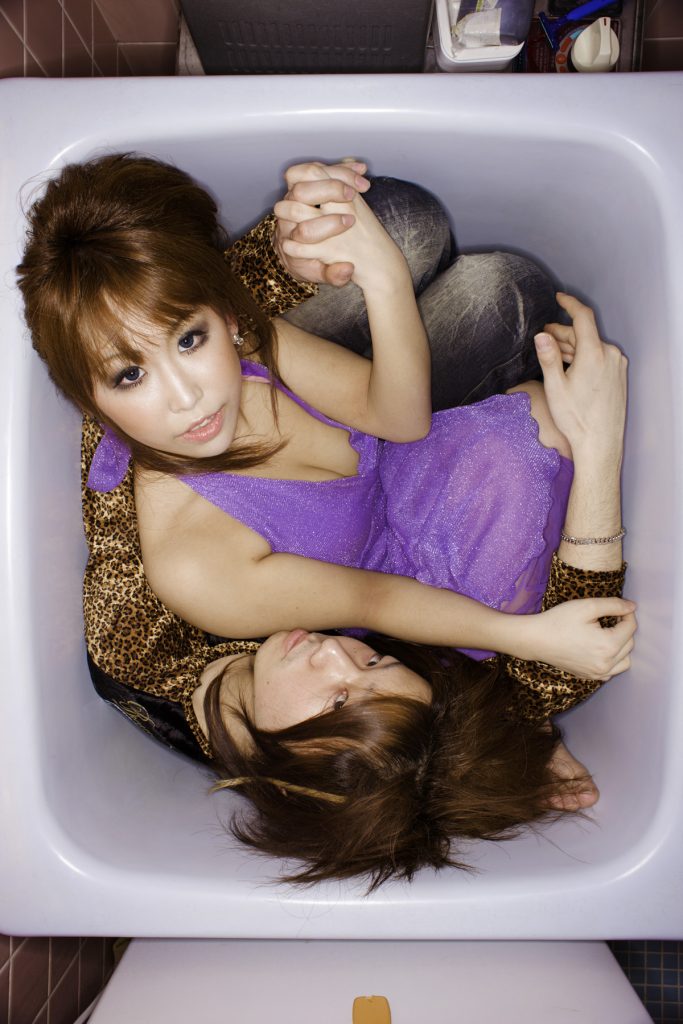
Though Photographer Hal takes his moniker from the artificial intelligence character of the same name in Stanley Kubrick’s 2001: A Space Odyssey, there are not too many similarities between them. Whereas the sentient HAL 9000 becomes wholly untrusting of his human peers, ‘trust’ is a fundamental component of Hal, the photographer’s, work. Over the course of his career, Hal has dedicated his time to photographing couples – couples he often approaches in bars in his hometown, Tokyo – with the aim of capturing a sense of their love for one another. In his early series, Pinky & Killer DX, Hal invited couples to pose as if they’re inside a purikura (a Japanese photo booth in which the photos are printed onto stickers with effects added over the top). Later, Hal moved his couples to the bathtub and captured the ways in which his (often clothed) subjects arranged themselves in such a contained, small space. Naturally, Hal has also photographed couples pressed against the transparent plastic door of washing machines, but it is his various Flesh Love series that take the idea of capturing a couple’s intimacy to another level. 

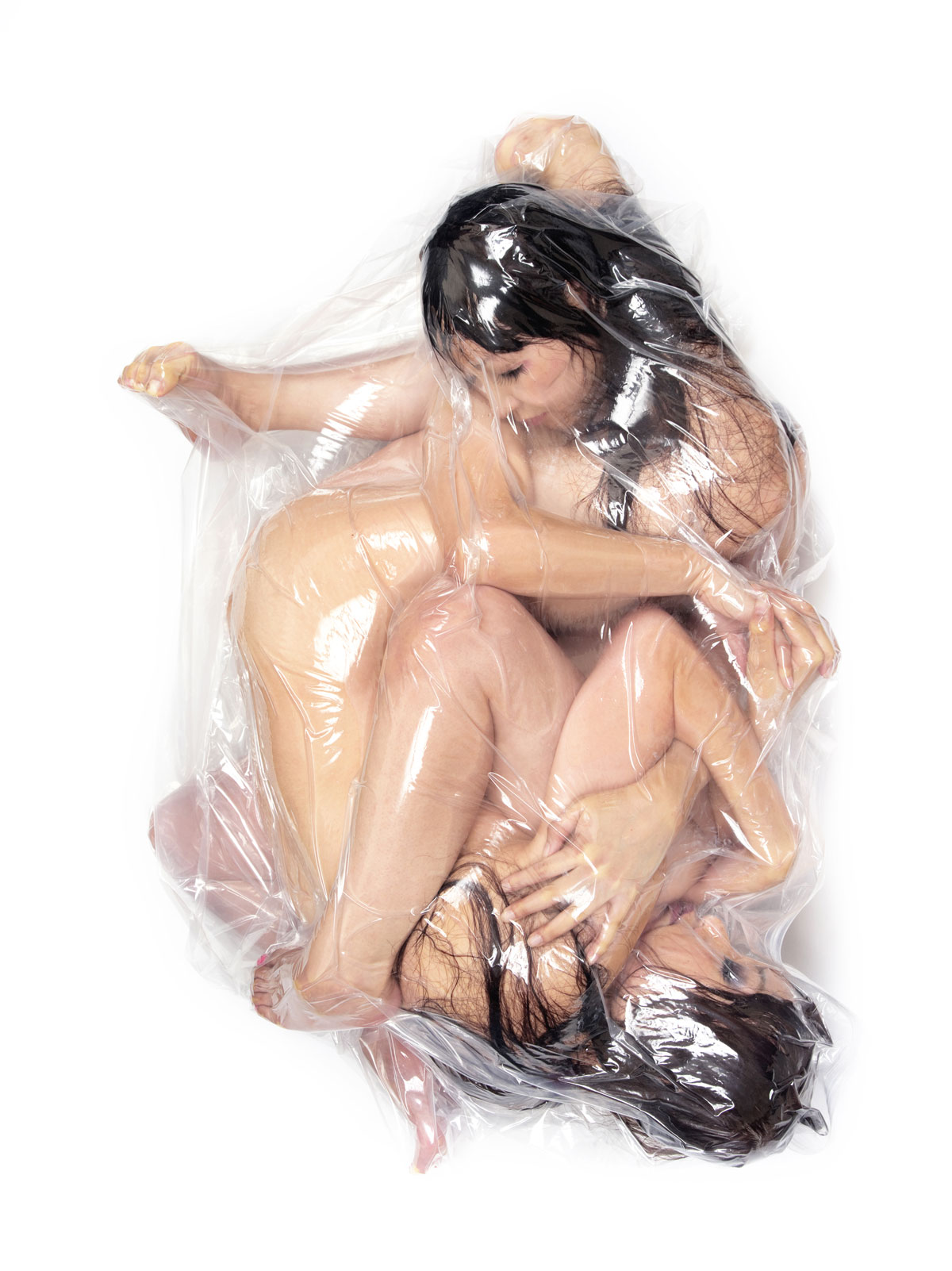
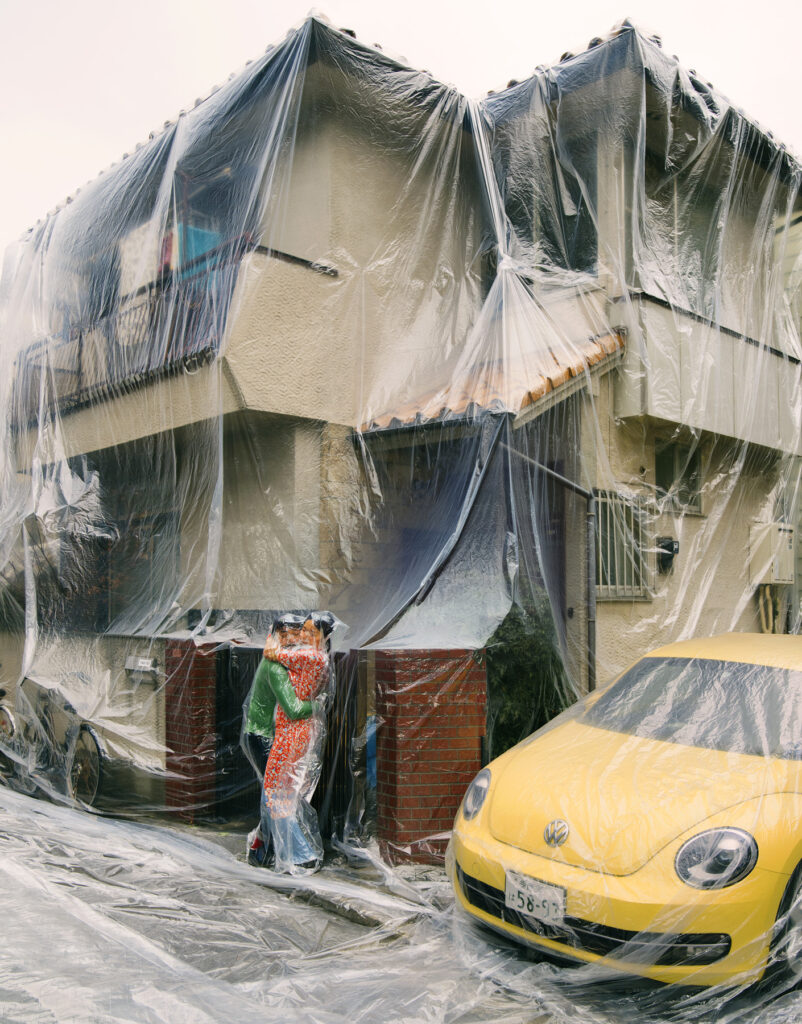
In Flesh Love, Hal vacuum packs couples in custom-sized plastic bags; their shrink-wrapped bodies carefully positioned in a way that captures the unique bond that defines that couple’s love (no vacuum-packed couple will be the same). It’s here that trust really comes into being in Photographer Hal’s work. Approaching strangers – again, often in bars – to invite them to be photographed in an oxygen-free environment is a big ask. Working with assistants who help arrange a couple into position, Hal has mere seconds to take one or two shots after the vacuumed subjects have been sealed up before reopening the bag. I ask Hal where the concept for vacuum packing couples comes from, to which he replies that new ideas always come from previous work. “It may be close to the process by which manufacturers improve their industrial products,” he suggests. And indeed, over time Hal has updated his own formula; in Zatsuran, couples are photographed in and amongst their possessions. It’s interesting to see the extent to which ‘stuff’ can shape the personality of a particular couple’s bond – a love of music could be characterised by a collection of vinyl records or, say, guitars.

In Flesh Love Return, Photographer Hal places his sealed couples amongst other settings, whilst in Flesh Love All, his subjects’ possessions are also wrapped in plastic. The result is a series of beautiful images that raise questions (namely – “how?” which is answered below), but also of what the material and built environments around can say about love. At its most intimate, Hal’s work shows how love can exist in the absence of anything else, but as humans, we instinctively build stories and connections with one another amongst the objects and environments that surround us. That’s something that, no matter how sentient he may have been, HAL 9000 could never understand. 

NR: How do you capture a sense of the personality and the style of the couple in your photos?

PH: I used to choose models and the clothes or props they wear, but these days I do not have [that] much control. I thought that would bring out the individuality of the subject. I recently held my retrospective exhibition [at the Gallery Tosei in Tokyo last year] and noticed that the age, clothes, and shooting method of the subjects were linked to my age at that time. So even if you shoot a work ten years ago, it won’t be the same.

How does your work celebrate the idea (and the power) of love?

“The basis idea of my work is ‘to shape love’.”

In order to realize that, I mainly focus on couples a subject and shoot an image of two people using different methods (such as the vacuum-sealed bag or bathtub). With regards to the Flesh Love All series, I location scout first; in that time, I decide on an angle, the lens etc. Then I measure everything in the range of the camera. Based on this, I make a [big enough] plastic bag with staff over ten to fourteen days. I take it to the scene on the day of shooting, and then pack and shoot everything.

There’s an intimacy to your work – whether capturing couples in a bathtub or in a vacuum pack, do you ever feel like you are intruding on this intimacy?

My photography is not possible without a relationship of trust with the subject. We have enough meetings before shooting to [build up] communication.

What has your work, and meeting so many couples, taught you as an individual and as a photographer?

At first, I was shooting love as ‘sexual love’, but as I continued shooting, the types of love expanded to love as devotion and philanthropy towards the outside world. My on-going series,

Flesh Love All contains a message that we can connect with, not only to ourselves, but also with outside society and we can shape the direction of love.”

You only have one or two chances to release the shutter for your photographs; are you always happy with the outcome? 

I have never been, and will never be, satisfied with the pictures I take. Because there is no limit to the quality of the work.

Credits

Images · Photographer Hal
http://www.photographerhal.com/

Malerie Marder

Malenie Marder

“We only have a short time on this planet and it’s impossible for me not to be in touch with people’s pain… So maybe I’m celebrating people’s vulnerability and softness”

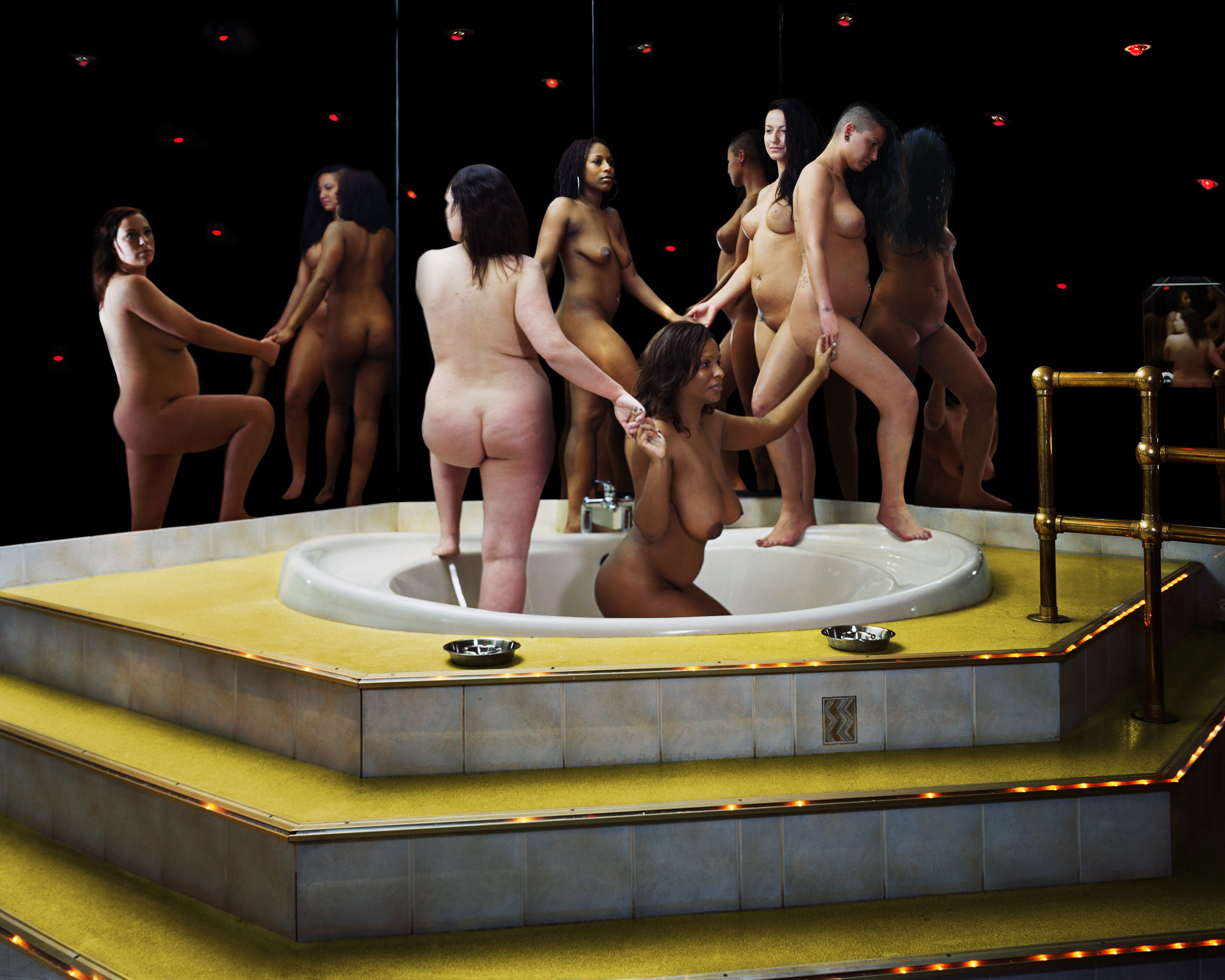
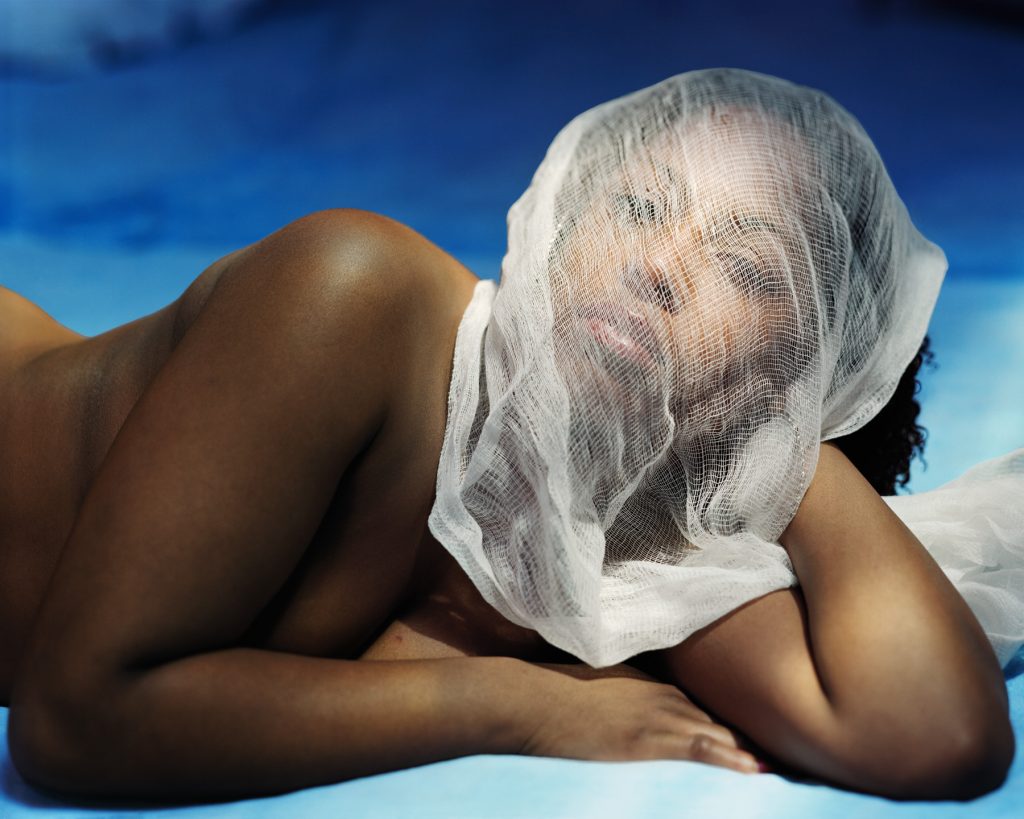
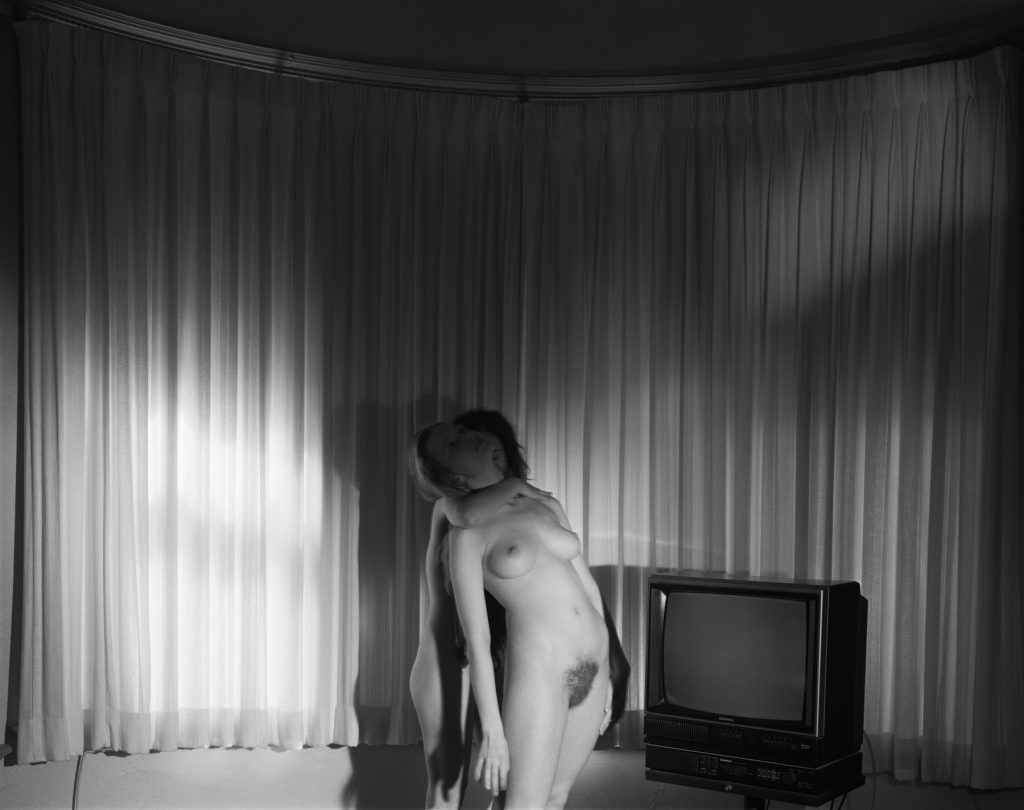
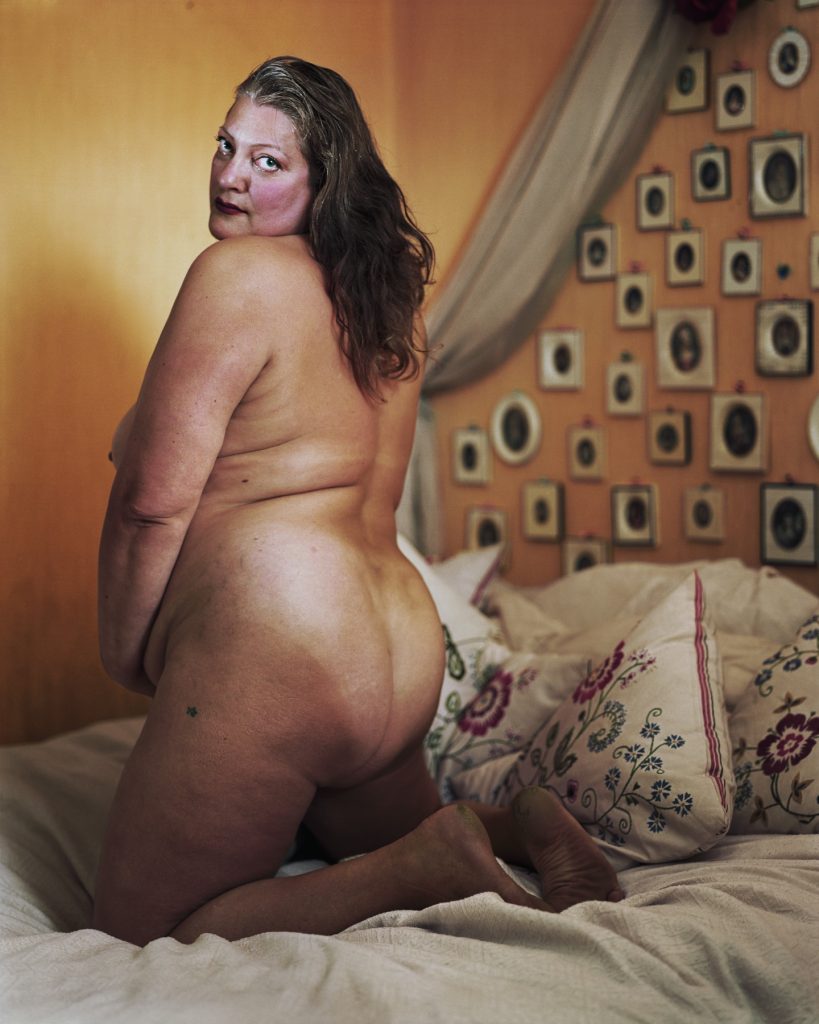
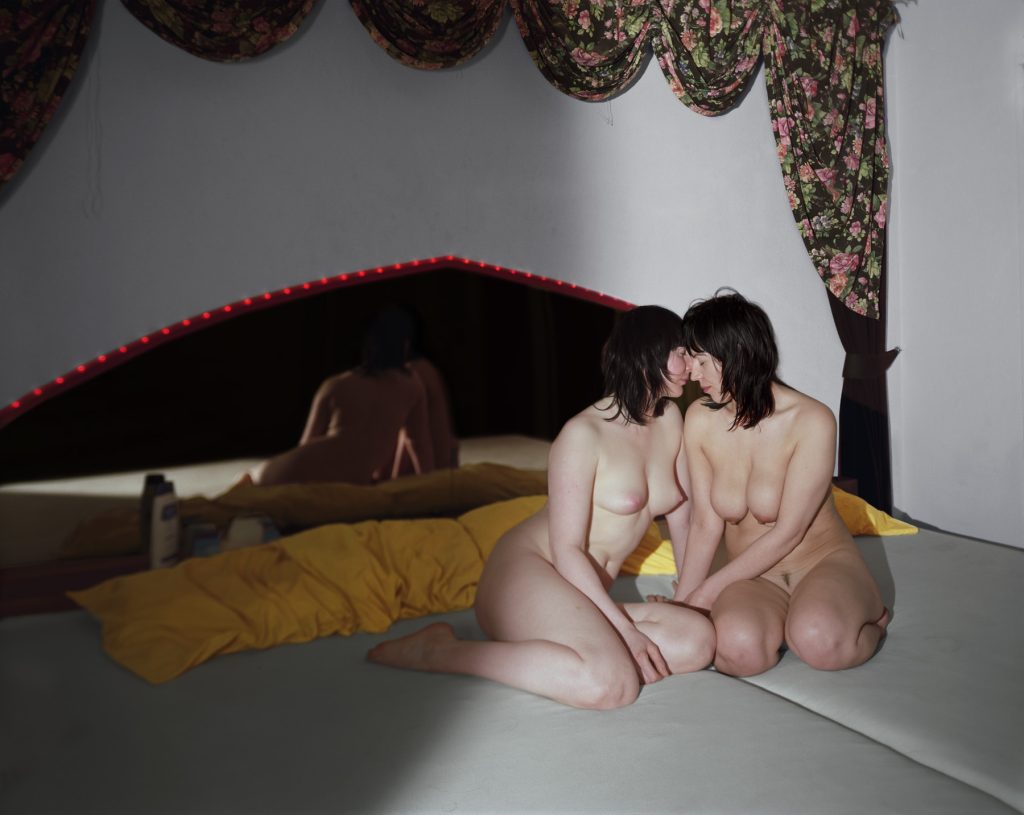
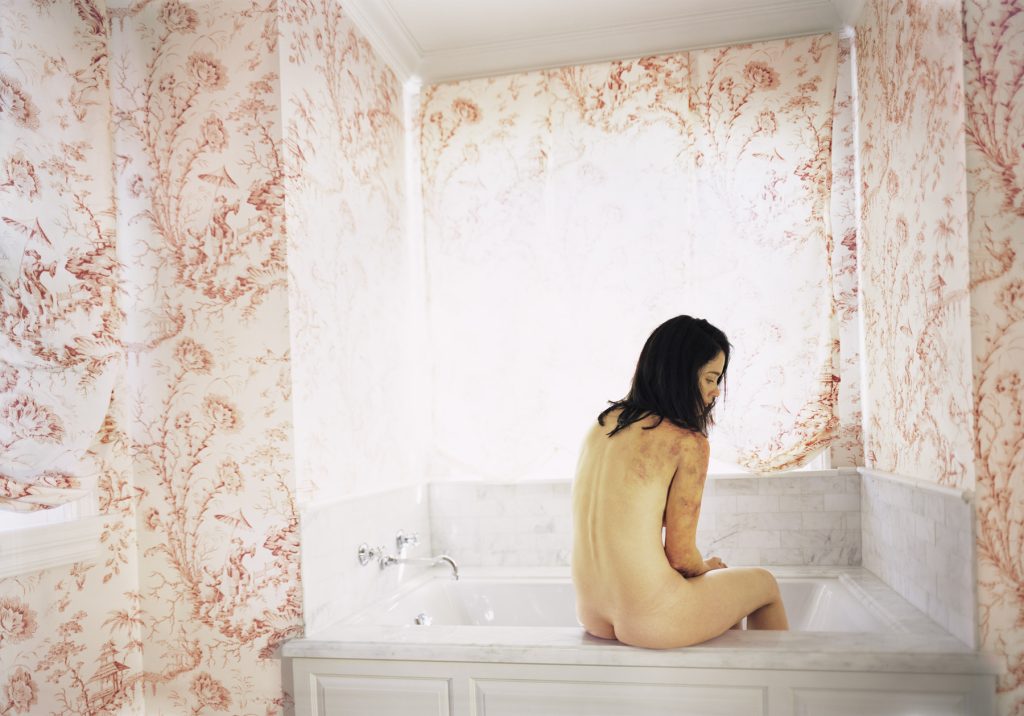
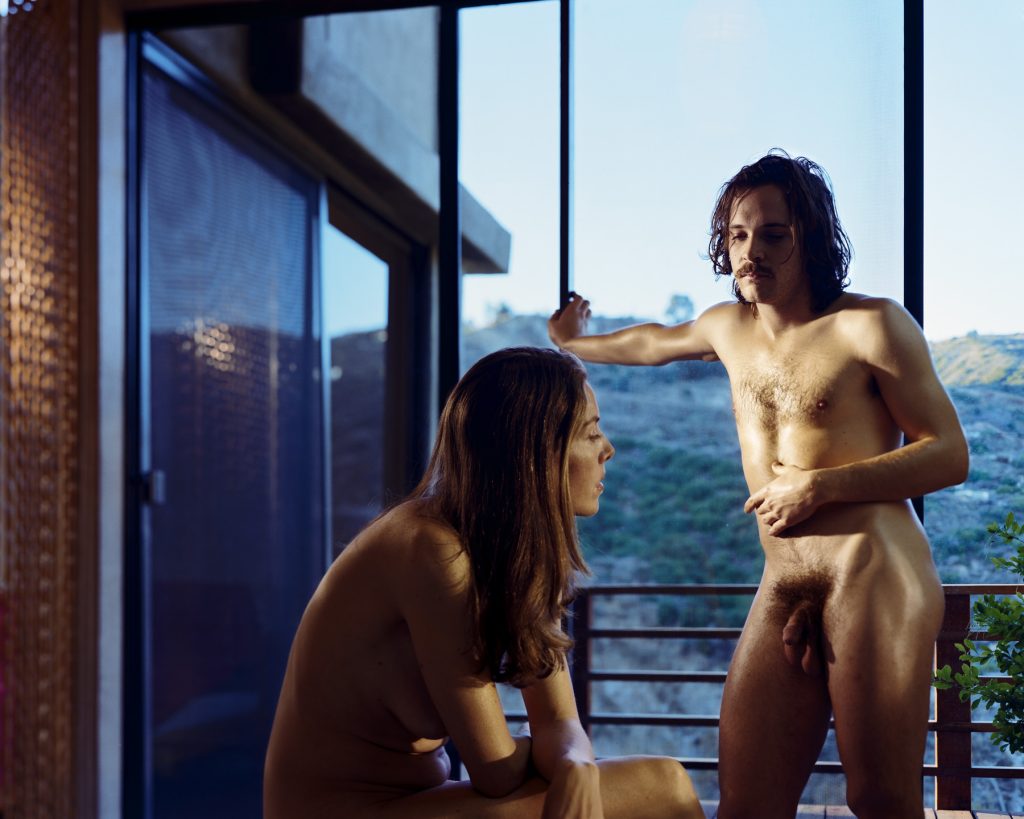
If Malerie Marder is something of a voyeur, her subjects are never unaware that they’re being viewed by the photographer, her camera and us, the audience. In fact, the subjects of Marder’s intimate work often know the photographer intimately herself. In Carnal Knowledge, a body of work published in 2011 spanning ten years, Marder photographed family, friends and herself – usually in a state of total undress, often in seedy motel rooms or within the interiors of suburban Middle America. Despite the voyeuristic quality that exudes in her work, Marder somehow pulls back from an overtly sexual image. Perhaps this is because of a mundane, yet alluring, encounter the young Marder had, as a photography student under Stephen Shore’s direction at Bard College in the early 1990s – one which would define her future practice. Marder was invited to photograph a family friend engaging in an illicit affair with a married lover in a hotel suite, using the techniques she’d just been learning at college. But if the lasting impact of that first commission speaks to the mise-en-scène of the photographer’s work now, so does the fact that the lover, after the affair ended, demanded for the negatives afterwards. “I’ve been trying to re-create those pictures ever since,” Marder told Artforum in 1999, “simply because they were worth burning.” Naturally then, some of Marder’s images verge on the erotic – capturing a moment that feels, as the viewer, like an intrusion. As the photographer tells NR, there’s always something of a mystery within her work, where it’s not always quite clear what is going on.

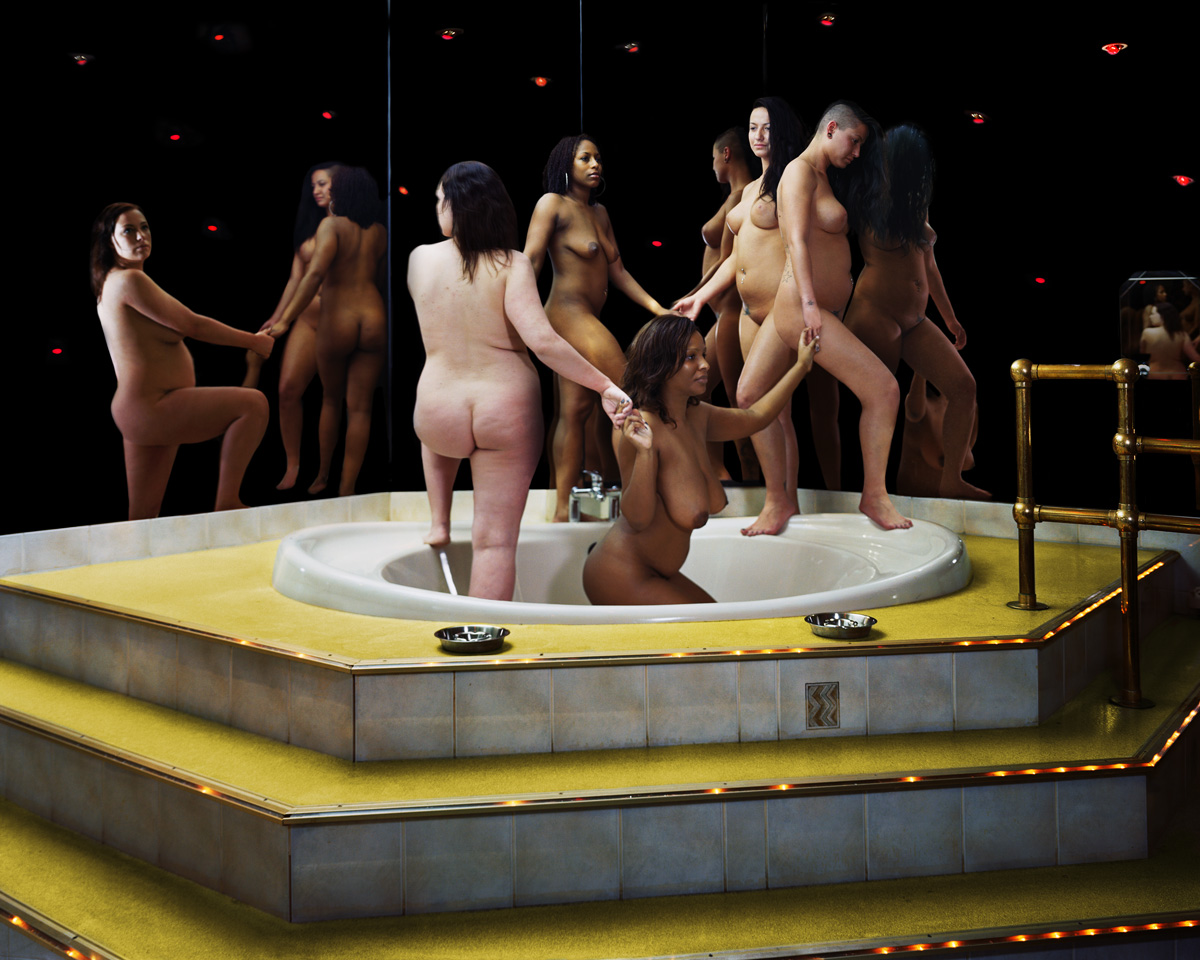
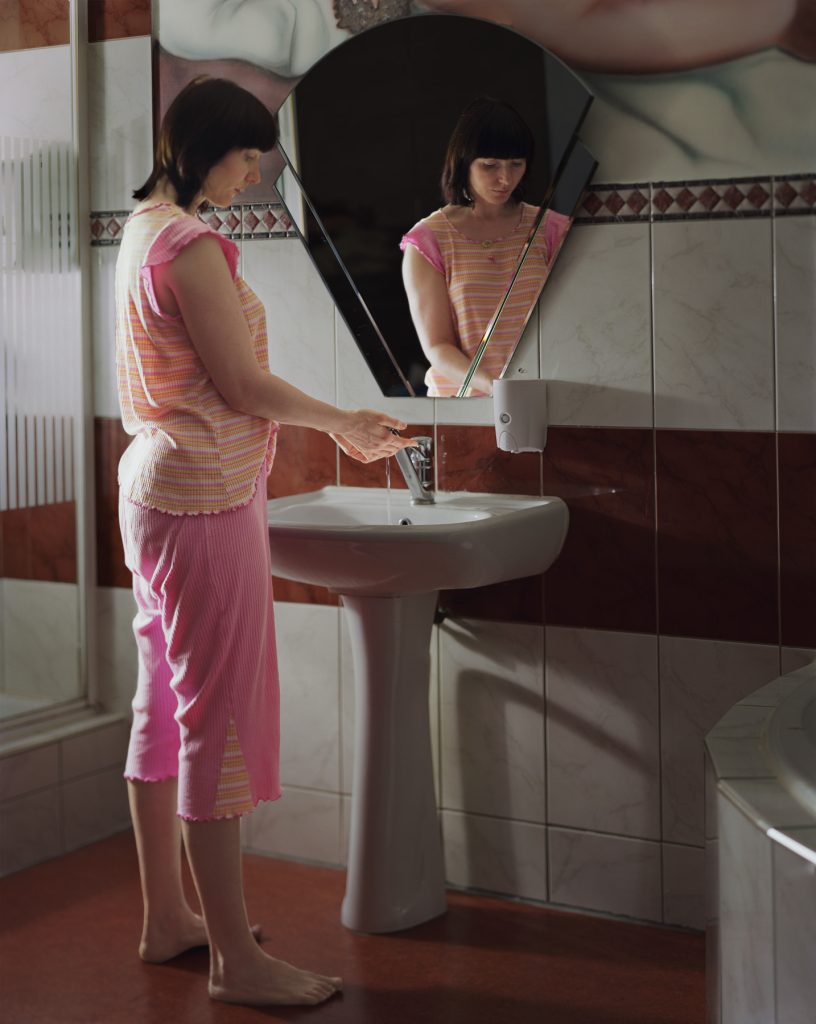
But Marder’s work is never accidental, and often staged. This is most obvious with pictures that seem to make direct reference to art history; take Bath House (2001), for example, in which a scene of (majority male) nude bathers are positioned in such a way to recall one of Paul Cezanne’s paintings of bathers from the late nineteenth century. More recently, Marder’s second body of work, Anatomy (2013), plays with art historical references for different effect. The series, taken over four years, sees Marder photograph sex workers in Rotterdam, positioned in different settings within the private spaces in which they work. If Anatomy captures an intimacy like Carnal Knowledge, it’s less the fact that we feel like we’re intruding on a private scene, than a behind-the-veil glimpse into the lives of these women – the spaces they occupy, the relationships they make with one another, Marder, and the camera’s lens. In one image, Marder’s subjects are positioned in a way that recalls Henri Matisse’s La Danse (1910) – but if that painting has a joyful lightness to it, Marder’s photograph, in response, is more grounded. And perhaps that’s where the essence of Marder’s work lies; between the emotion that the sight, or the thought, of the nude body evokes, and the candid nakedness that we really see.

NR: Since that first encounter, shooting a family friend and her partner, (how) has your approach to photographing changed?

MM: I think that first encounter showed me what an illicit affair actually looked like. Those are the moments I centred on – the explosion of emotions, the secrecy, the desire — the fact that I was actually able to capture that when I was in the whirlwind of what was unfolding showed me I could perform under pressure. I think my set ups have become more tactile and I can more easily identify what I’m looking for, but the more comfortable I become, the more I push myself. I try to transcend what I’ve done. There’s always resistance, both externally and internally, but this is universal. This is not just endemic to me. 

NR: How do you negotiate with your subjects when taking their photograph? How much is staged by you, and by the subject themselves?

MM: I decide on the setting and then we both figure out what comes next. Some of it is more choreographed by me, but usually I end up capturing an aspect of them that is revealed.

“It’s like writing — you have a sense of what you want to say but you haven’t yet written the words.”

NR: What informs the setting in which your subjects are photographed? Do you choose a location depending on the subject, or vice versa?

MM: Both — sometimes I’ll see a place and wait for the perfect person to match that character, or I’ll meet someone and try to hone in on where I should photograph them. I find people are more fascinating than most places, so settings are harder to procure. 

NR: How does ‘celebration’ tie into your work; if you were to ‘celebrate’ something, what would that be?

MM: That is a genuinely a fascinating question. I like the idea of celebrating people’s beauty. I’m a fanatic about light and I like there to be a certain mystery — I feel both create a kind of romanticism, even if it’s on the melancholy side. But that does not mean it is any less of a celebration. We only have a short time on this planet and it’s impossible for me not to be in touch with people’s pain… So maybe I’m celebrating people’s vulnerability and softness…

NR: Something that has been said of the Anatomy series is the lack of ‘you’ being in the work; how important is it to have a relationship with your subject, and is it important that there is an element of “self-portraiture” in your photography? 

MM: It’s only important when I’m purposefully playing a part in the picture. Often times, I end up being in the picture and I’m just part of the shadow… helping the image along, but then there are times where it is more compelling for the viewer to know it is me.

“Self-denial plays a large part of what I do; I sincerely doubt I am in any of my pictures.”

NR: In terms of creating an image, how does colour (or its absence) play into your work?

MM: It plays a big role. For me, black and white is more like a sensual memory and colour is closer to present tense. So, when I try to create a dream-like state, I find it easier to say it in black and white. I still attempt to do this in colour as well. I group images by colour, and certain colours mean certain things — or elicit certain emotions or feelings. I try to saturate as much colour into an image as possible even if it borders on garish. A little like how Douglas Sirk filled his compositions in “Imitation of Life” with flowers — one long funeral. I am not sure what the saturation of colour means, but I think it is my attempt to overwhelm reality with as much beauty as possible — otherwise the darkness creeps in. You can still see it, of course. 

Credits

Images · Malerie Marder
https://maleriemarder.com/

Laila Majid

“I’d like to situate my work within a moment like that, one which teeters on an edge between oppositions.”

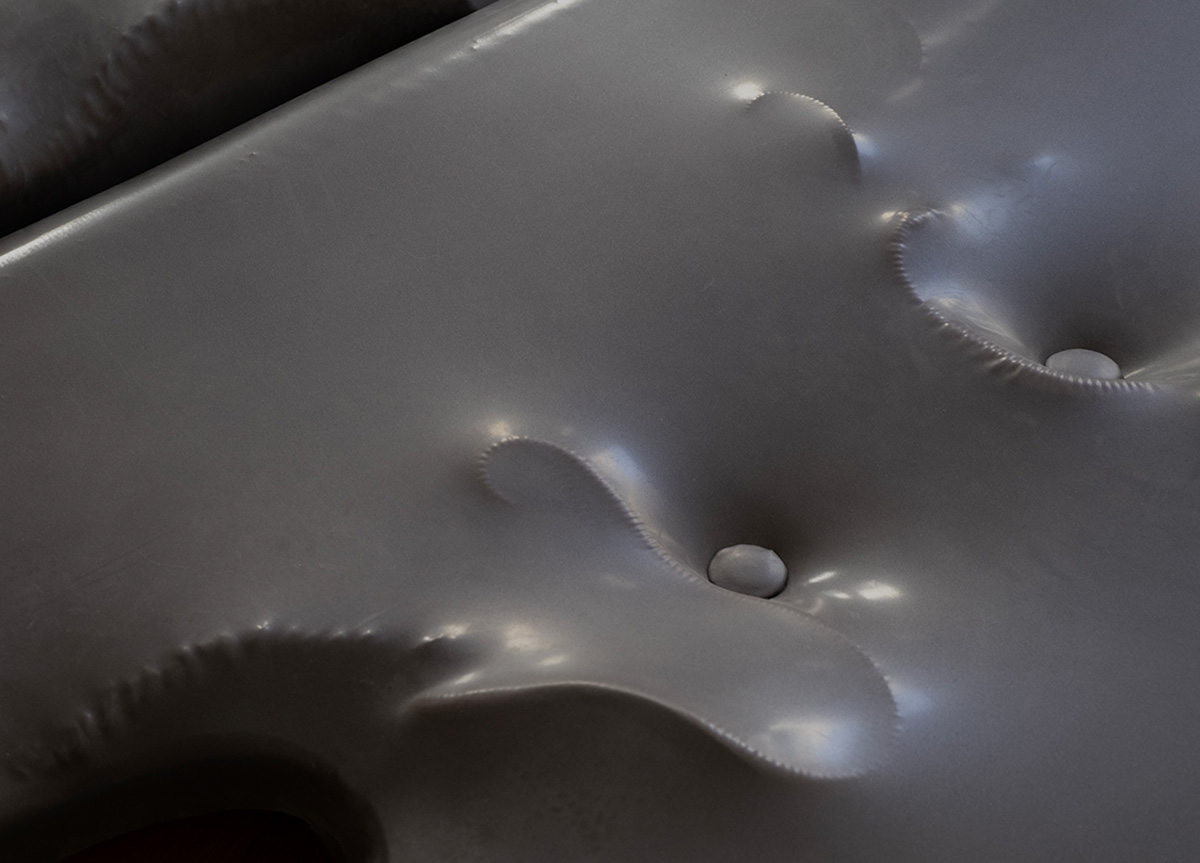
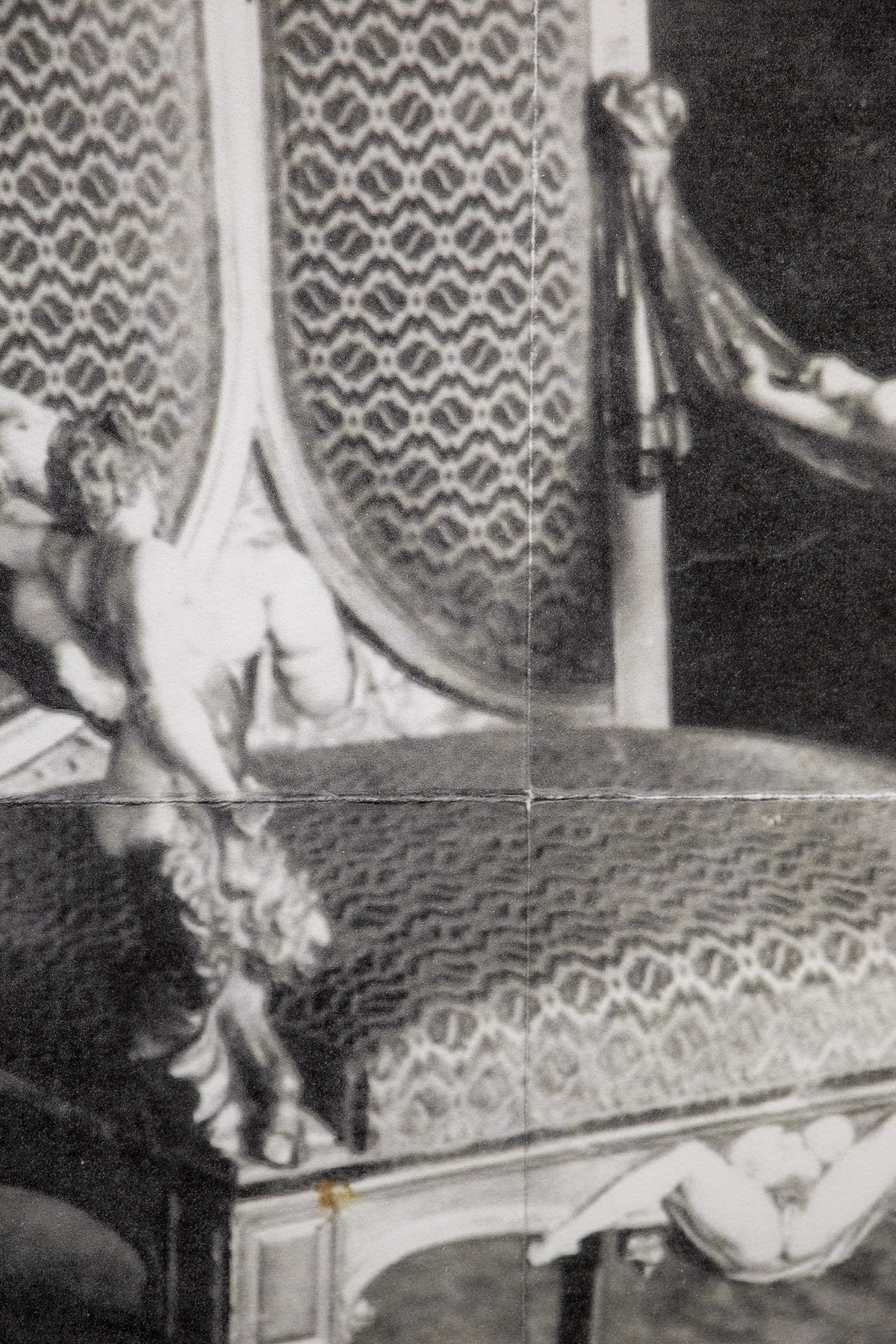
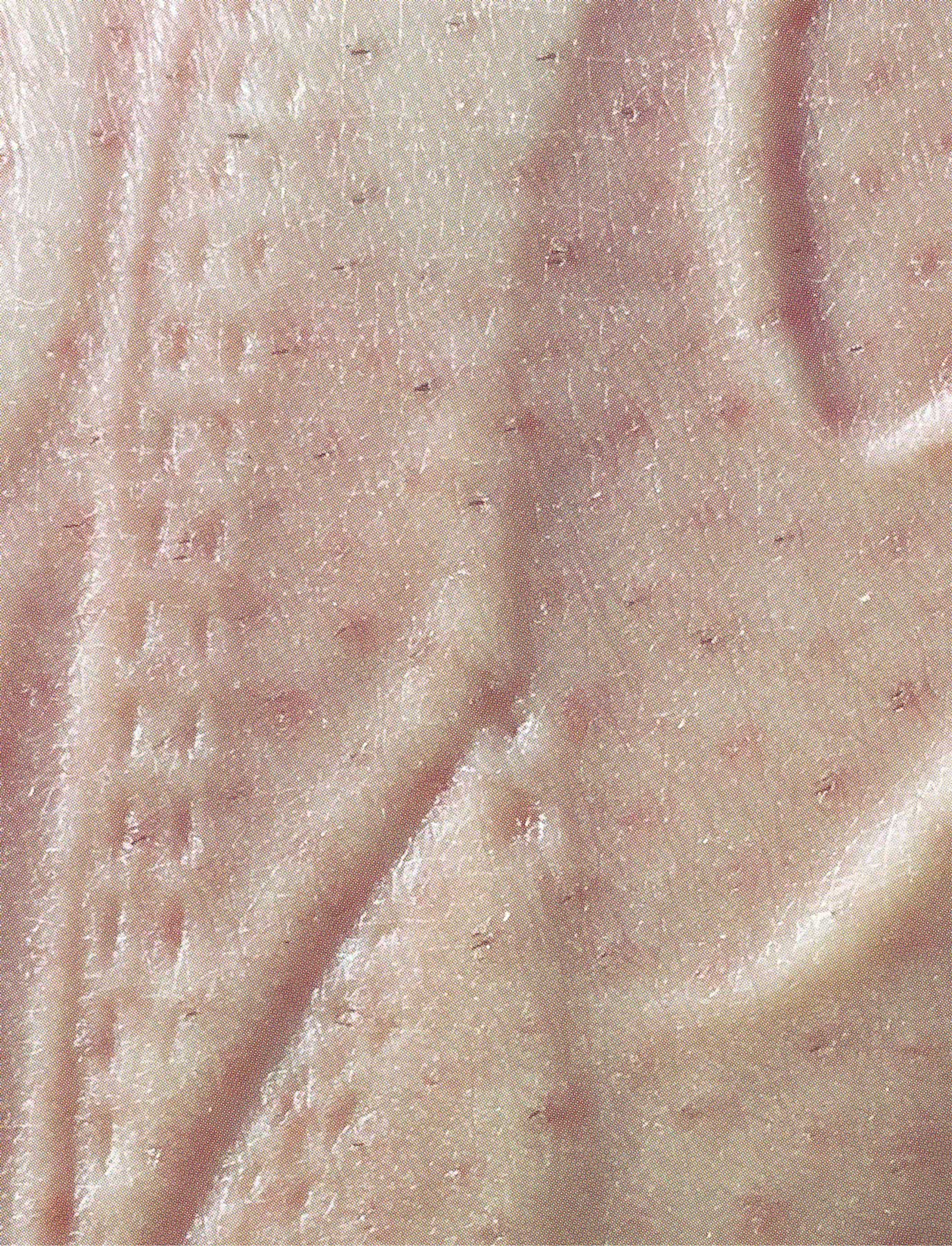
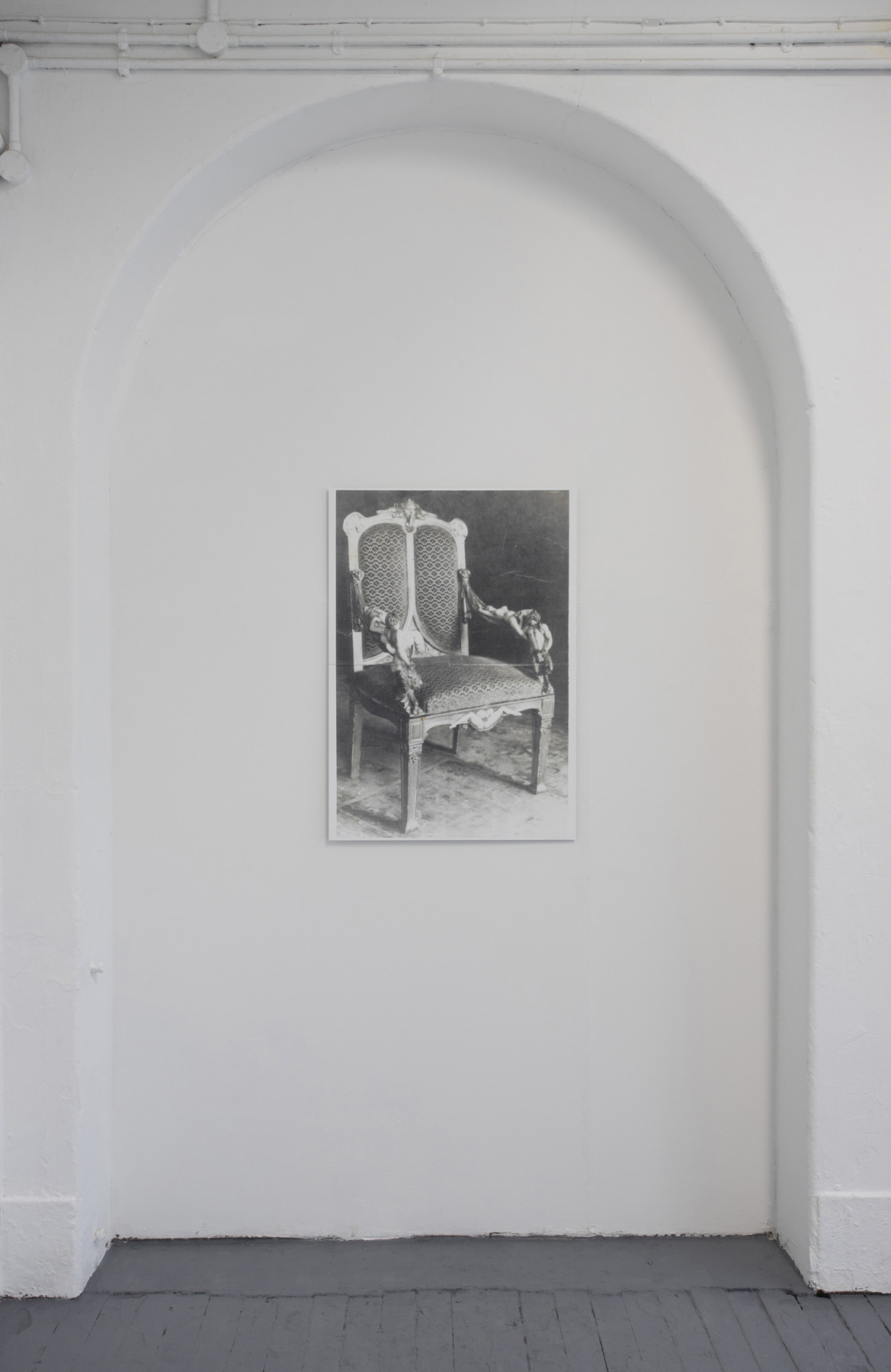
For the artist Laila Majid, exploring the relationship between materials and the body is a recurring theme. Her artwork, Rosie (2019), for instance, is a close-up shot of the imprint of a trainer on the calf of a friend’s leg having been sat cross-legged for a period of time. The markings of the shoe and stitching of the fabric are punctured by the ever-so-slight presence of hair regrowth – the effect is an almost surreal investigation of the similarities between the two surfaces (the now-absent trainer; the skin after wear). Rosie was exhibited as part of the Nude show at Fotografiskia, Stockholm, as well as being selected for the prestigious Bloomberg New Contemporaries show in 2021, with Majid explaining in an interview for the exhibition’s platform that, by “morphing [the body] into a new and unfamiliar form” what we think of as being real is destabilised. That much is apparent in Crease (2021), exhibited at the Slade School of Fine Art MA degree show, in which a black and white photograph of what appears to be a fairly innocuous antique chair, on closer inspection, features erotic mouldings.

The artist is now studying Film Aesthetics at the University of Oxford. It’s a logical step for Majid, who often turns to video and film in her practice – “I’ve never studied film in such a focused way before,” she tells NR over email, “so it’s also helped me to dig deeper into current interests.” In particular, the artist has been “looking into the close-up shot, and the relationship that this sort of shot has to both intimacy and abjection (as facilitated by the camera’s proximity to that which is being filmed).” In previous video works such Macro (2020) and concave/convex (2018), Majid furthers her investigation of the body – animal and human, respectively. In both pieces, the natural surfaces of Majid’s surface (fur, saliva, tongues) take on an almost unnatural quality, creating an interesting counterpoint to the way in which the artist grants synthetic fabrics, by contrast, an organic quality. By turning to a range of materials, mediums and methods throughout her practice, Majid’s work challenges, or distorts, the boundaries of that which we might think of as being diametrically opposed: to that end, how concrete, and how different, are what we think of, or see, as being ‘real’ or ‘alien’?

NR: Am I correct in thinking that Rosie is printed on latex, which makes me wonder how the layering of material features in your work?

LM: Rosie is actually printed directly to vinyl, the printer however uses latex inks (commonly used to produce banners, outdoor signage, etc.) Although the work isn’t printed onto latex, this is a material which I frequently use in my work, and one that I always seem to come back to. I’m interested in the close relationship between latex and the body. It is a stretchy, skin-like material that, in its use as a material of fetishwear, sits directly on the surface of the body, fusing to the form of the wearer in a moment of sweaty skin-on-skin contact. I think this speaks to a layering of surfaces that you bring up. Latex definitely operates in this way; as a non-porous material often used to craft tightly fitting garments, it effectively sticks to and becomes an extension of the body of the wearer, and an extension of the skin itself. Layering, in this case, works to facilitate transformation through dress (change in appearance and physique/sexual release/role play etc.)

NR: What is your process of working with, and sourcing, different materials? And how do you navigate working in different mediums?

LM: Sometimes this is quite an intuitive process, of feeling seduced by the physical properties of a given surface. I also think that it’s important to pay attention to what an image or object may need, be it a specific surface or printing ink. With Rosie, for example, I knew that the image needed to be printed on vinyl given the connection that this material has to window displays and advertising.

“I’ve always felt it important to approach image and surface in such a way whereby they feel bonded or dependent on one another.”

NR: You recently had a joint exhibition, not yet, with your on-going collaborator, Louis Newby at the San Mei Gallery – what does the process of collaboration, more generally, look like for you?

LM: I’ve always been drawn to collaboration given the potential to enrich one’s work through the inclusion of new voices. This was much the case with the video piece in not yet, where we worked with different collaborators who were able to contribute to and elevate the work in various ways, through animation, sound design and AI programming. 

NR: And, in terms of your work with Louis Newby, how do you navigate your separate artistic practices to create collaborative work, and a joint show?

LM: Our collaborative practice truly sits in the space between our separate practices. Louis and I have spoken before about the idea that our collaborative work depends on our own practices/individual interests to take shape in the way that it does, and yet does something different to each of our practices as it sits between the two.

Laila Majid

NR: Found objects (film, comics, journals) feature in not yet, whilst your Instagram account combines your work, personal photography and other imagery – does the concept of the archive, and the act of archiving, feature in your work? 

LM: Instagram is tricky, I can never really figure out how to use it. For now, it exists as a combination of different sorts of images, as you’ve described. I also struggle with the app given its harsh terms and conditions and censorship rules. Instagram aside, images have always been important to me. They feed directly into the work I make and are an invaluable source of research (found images, pixelated screenshots, scans of images from magazines, my own photographs). I enjoy the process of collecting images, perhaps this act of collecting can be thought of as archival. Louis and I also have a shared archive of found images pulled from a vast array of sources which we use to generate print works.

NR: How do you negotiate the human body and other animal forms (real, imagined) in your work? 

LM: One thing that immediately comes to mind is the undifferentiated body – a form that points to a potential growth/change/development. I find it interesting to think about how one could present a moment of transformation— how a still image, for example, could hold this moment.

“When does one body morph into another, or suggest a form exterior to its appearance?”

This is something that you often see in science fiction/supernatural horror – for example, at which point does the arching of the spine/contorting of the body tip into an anatomical language that suddenly becomes unfamiliar? I’ve been thinking a lot about [Soviet film director and theorist, Sergei] Eisenstein’s idea of ekstasis in this way, which he explores as a transition ‘to something else’, from one state to another (‘to be beside oneself’).

NR: You’ve spoken previously about seduction and repulsion in relation to beauty – how do these two, supposedly opposing, concepts feature in your work more generally? 

LM: I think I focus more on how the two come together, in such a way that they rely on one another to produce a specific effect/affect. I suppose that seduction and repulsion go well together in that their marriage can be used as a tool to reconsider beauty. Pushing oppositional forces together within the same pictorial space also creates tension; it’s a combination which unsettles. I don’t think this is necessarily specific to the seduction/repulsion relationship, but in broader terms I’m reminded of the movement of the body during pleasure- contorted, arched, muscles clenched on the one hand, and giving into total pleasure and bodily sensation in a moment of release on the other. I’d like to situate my work within a moment like that, one which teeters on an edge between oppositions.

Credits

Images · LAILA MAJID
https://lailamajid.net/

Mark Leckey

Mark Leckey

“I’ve felt this for a while about technology – that it’s inducing this strange kind of medieval state, in the sense that they cohabited two realms between the spiritual and the profane.”

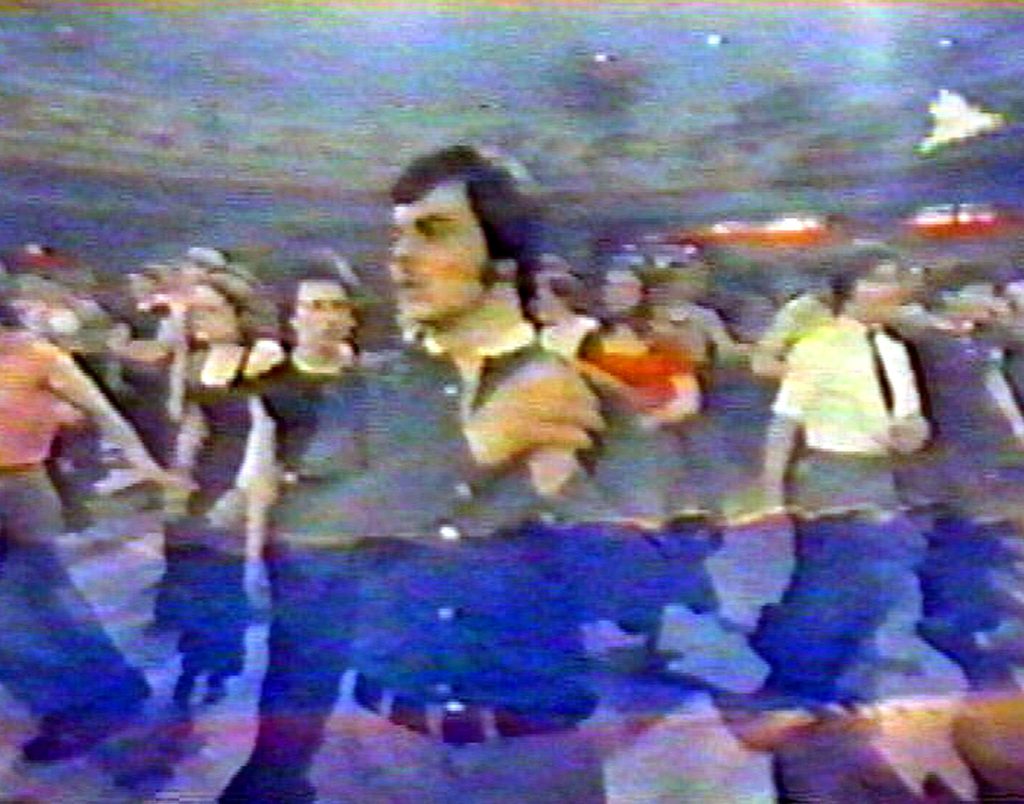
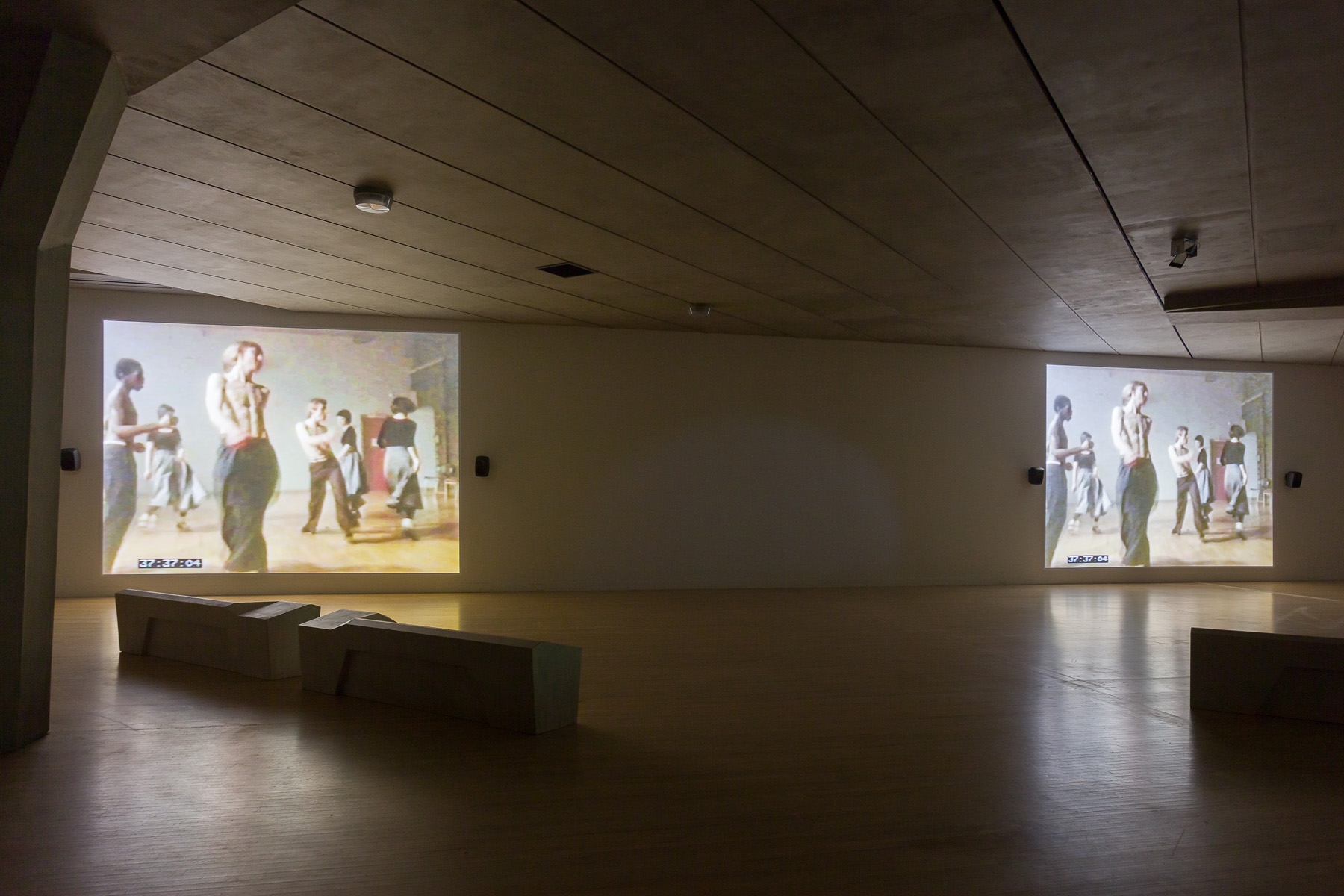
“Ah rabbit holes, I know them” texts Mark Leckey, after I ask if we can delay our interview. I have a list of questions I could put to the artist, but I’ve lost myself in the matrix of his work. And where do you start? Perhaps with Fiorucci Made Me Hardcore, the 1999 video that put Leckey on the art world map. But that isn’t the beginning of the artist’s story, something the artist himself has subsequently explored. Leckey grew up in Ellesmere Port, a town used as an overspill for Liverpool in the late 1960s that looks back towards the city on the other side (the wrong side, Leckey would say) of the River Mersey. Leckey studied art in Newcastle, moved to London and, having not found success, decamped to the States for a while. Leckey has spoken previously about how, in the mid-to-late 1990s, he was interested in the music videos that were coming out at the time. But Fiorucci, the result of that intrigue, was less MTV and more ICA. And it was at the Institute of Contemporary Arts in London that the video was first screened. Fiorucci, with its thumping music over a montage of found footage of Northern Soul dancers and hedonistic ravers, may have since entered the domain of British art, but the artist didn’t become a household name at the time. That arguably came later in 2008, when Leckey won the Turner Prize for his exhibition Industrial Light and Magic at Le Consortium in Dijon, France – a show which concretely outlined the recurring themes that have since come to define his practice, in which the post-industrial landscape of his youth and the emergence of an alternative, quasi-digital landscape in its place, are recurring motifs. 

A week later, I meet Leckey – wearing a full-length white fur coat, matching plaid shirt and bottoms, and his signature pearl earring – at a pub near the artist’s North London home. Originally, our interview was scheduled to take place on Zoom, but I have a hunch that the rabbit-hole questions I have prepared could better benefit from meeting Leckey, a self-proclaimed hermit, in person. And over a pot of tea, we begin by discussing the art world, the internet and what it means to be a working-class art student today. It’s a topic Leckey has pondered over for a long time, but now, he suggests, if he were in his early twenties, he’d be prioritising NFTs over art school. “I don’t think NFTs are just bad drawings of monkeys,” Leckey says – there might be more to it than that. And if there’s a novelty to NFTs now, the German electronic band Kraftwerk seemed novel, too, at first. “You don’t know what the tail of that is going to be, or the direction it will go.” It’s in no way surprising that Leckey is thinking about NFTs, even if he says he is sceptical because of the environmental arguments made against them; he’s been dubbed the ‘artist of the YouTube generation’, and an art career spent scouring the internet for soundbites and videoclips to use in his work means that, naturally, Leckey is all too aware of what’s happening online. But, having rewatched Fiorucci on YouTube rather than the gallery setting it was made for, I wonder if the artist now considers his work to be made for the internet, or still to be absorbed in a physical environment? 

“Both, I think. I like the immediacy of putting something on Instagram.” Leckey has an upcoming show at Cabinet Gallery in South London, and so when that opens, he will also share the work on social media. But using Instagram doesn’t necessarily give Leckey a clearer indication of what people think of his output. “People can go ‘fire!’ or whatever,” he says in relation to the emoji – one of eight pre-set reaction emojis that Instagram suggests for its users in the comment section. “[But] I don’t know why they liked it. And then you can have an opening and people just sort of nod as they walk out the door – so I can’t gauge any response from that.” Fiorucci was one of the rare occasions Leckey got an immediate reaction, with people coming up to the artist and telling him what they thought of the piece. “And then, nothing happened,” he says of Fiorucci, “it slowly percolated. But it got its maximum impact twenty years later, around 2019.” The resurgence of interest in Fiorucci coincided with a huge show at Tate Britain, O’ Magic Power of Bleakness, in which the artist recreated a motorway bridge from the M53 in Merseyside to go alongside a new video work, Under Under In.  

But it was also around this time that rave culture of the late 1980s and 1990s enjoyed something of a renaissance. Perhaps that yearning for anything closely resembling the rave scene could explain the sudden interest in Fiorucci, even if the other side of it – Northern Soul – remains firmly in the domain of a particular vein of Northern working-class culture. Nostalgia is something Leckey often speaks of, so I wonder if he sees the renewed interest in Fiorucci’s depiction of rave for a younger audience as (misplaced) nostalgia? “Yeah, but then, it’s not,” he says. Growing up in the eighties, he was nostalgic for the sixties, the equivalent decade for today.

“Woodstock and all the rest of it seemed impossible, and I guess that’s part of the thing with rave. It seems both exciting and intoxicating, but also depressing.”

Leckey describes modern-day nostalgia as a “contemporary condition, of technology, of capitalism.” That much is evident in the 2015 video, Dream English Kid, 1964 – 1999 AD, in which the artist used found footage to recreate his childhood, having seen a clip online of a Joy Division concert he’d also attended in his youth. By using found footage, clips from television shows and a 3D rendering of that same M53 bridge, Dream English Kid doesn’t depict Leckey’s own childhood per se, but reconstructs a kind of collective memory. In that sense, he describes nostalgia as being algorithmic in a way; “it’s like data passing through your body.” An equivalence could be gentrification, “in that, as an artist or whatever, you’re just moving into space, blithely unaware of where you’re leading society.” So when it comes to nostalgia, Leckey says, “you’ll connect with these things in a very real way, but you’re actually just at the forefront of clothes manufacturers and all the rest of it that are going to come in your wake and exploit that.” 

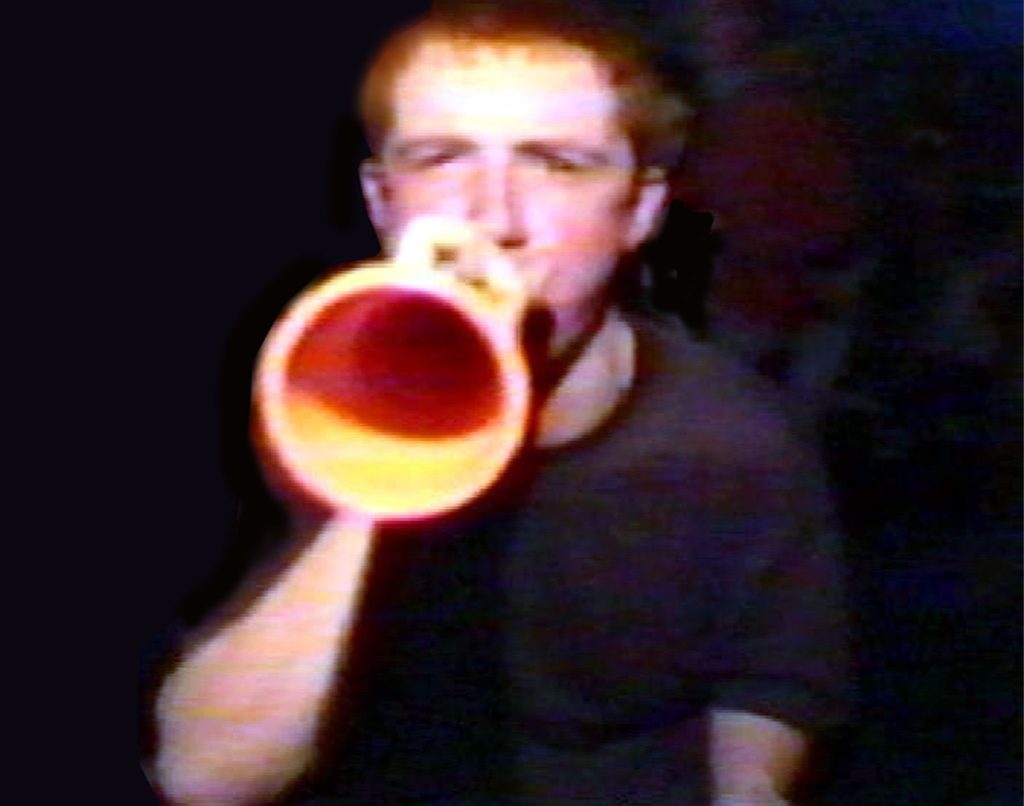
There’s a bit in Fiorucci where a voiceover lists off clothing brands – Fiorucci, of course, but also Lee, Fila, Burberry, Slazenger, Lyle & Scott, Lacoste and Aquascutum – to name just a few. These were the brands of choice for the Casuals, a subculture of football supporters in the 1980s associated with designer gear and hooliganism (Leckey was, for lack of other entertainment, a Casual for a period in his teens). And like return of rave to popular culture, the brands that defined the Casual’s Terracewear seem to have seeped back into the collective consciousness, too. But, anyway, it takes a few listens to fully grasp the brands that are listed in quick succession in Fiorucci, the voiceover taking on a rhythm that seems to mimic the hardcore beats that Leckey samples throughout the video. Was that deliberate, on Leckey’s part? “I think when I did that, it was more out of embarrassment,” he says – “because it was me and I didn’t want my voice on it. So, I pitched it down and put loads of reverb on it.” The result was something more akin to an incantation. “And I suppose Fiorucci is about conjuring up a religious experience.”

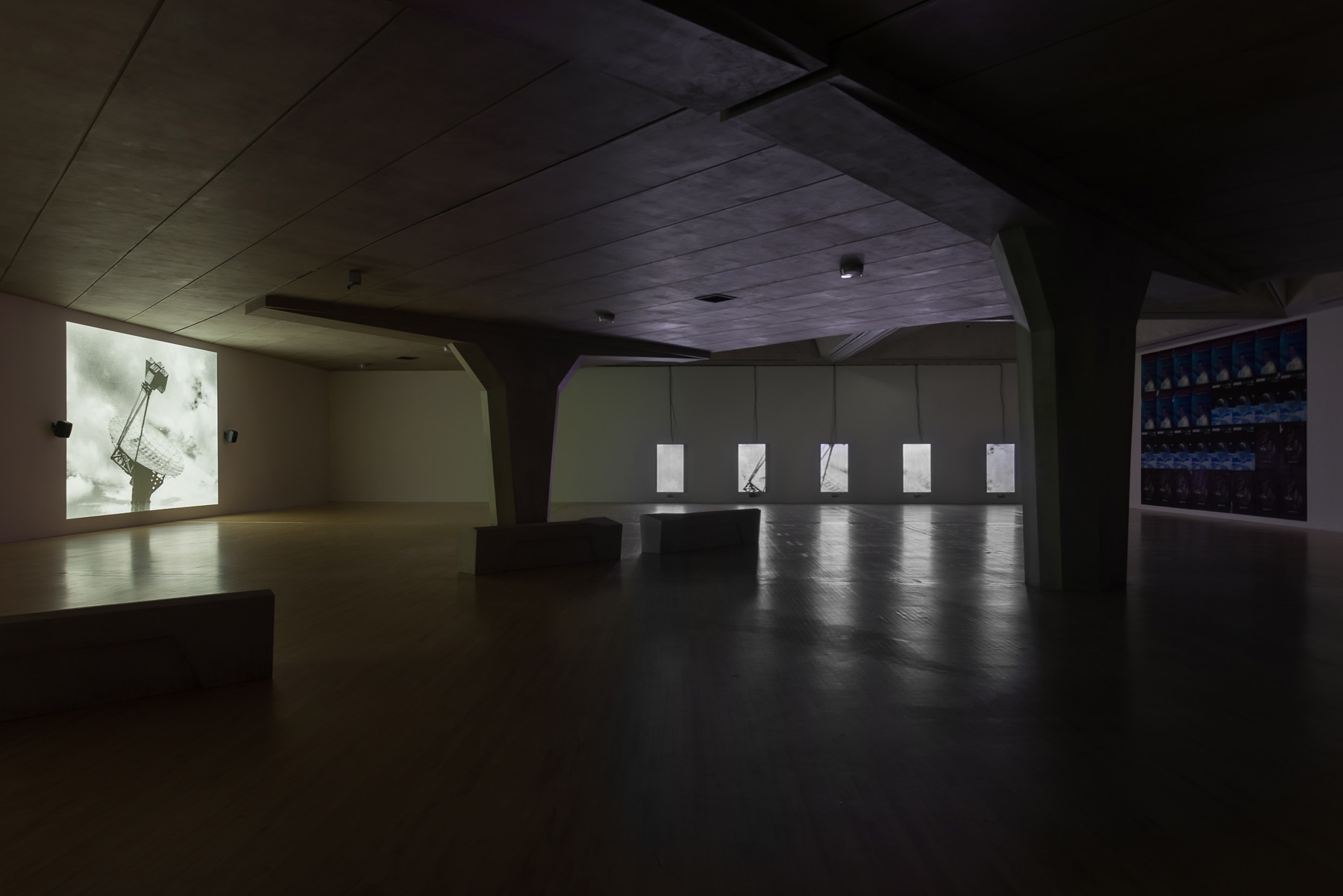
Under Under In also plays on the idea of the almost religious dedication that is afforded to brands. Across five separate vertical videos that seem to mimic the world seen through Snapchat, we’re introduced to a group of kids at the centre of the film, their identity fixed in the brands they wear: Nike Air, Adidas, C.P. Company, North Face. “We’re Stone Islanders,” one boasts. But these kids also seem to betray their youth, drinking a £1.29 Maltesers drink, the sight of which might elicit a Proustian madeleine moment for anyone attending an English secondary school near a corner shop in the twenty-first century. The kids also recite the names of car brands they’re too young to drive, let alone own. But if Under Under In can be seen as a Fiorucci equivalent for a subsequent generation, Leckey thinks that the moment of brand affiliation as self has passed. “I read something really interesting about subcultures in the twentieth century,” he explains “and essentially how using consumption to define yourself has been wholly exhausted.” Now, it’s through opinions, not brands. “I listen to that bit in Fiorucci now and to me, it seems almost quaint.”

If the world that shaped Fiorucci and Under Under In has moved on, Leckey’s work continues to be a source of inspiration for others. There are 327 comments on the Fiorucci stream on Leckey’s YouTube channel – musings from the artist himself over the eleven years since it was first uploaded, and from viewers recalling the first time they saw the film, or the memories it evokes. In one comment, a user asks if they can sample part of Fiorucci. “It’s all part of the Creative Commons. Get in there,” Leckey responds. Soundbites from Fiorucci previously made their way into Jamie XX’s 2014 track, All Under One Roof Raving but, I wonder, so much of Leckey’s work is gleaned from what he finds online – how does he feel about others doing that with his work? “I wish they did it more!” he exclaims. “I mean, it’s just stuff really and it’s there for the taking.” Leckey describes found footage as being a surrogate that allows him to communicate something. “If someone can do that with my work in the same way, then that would delight me.” 

In last year’s To the Old World (Thank You for the Use of Your Body), Leckey repeats, reconstructs and deconstructs a ten second video he found on Twitter over the course of almost nine minutes. The video clip sees a boy take a run up before jumping through the side of a bus stop, his friends, out of shot, laughing (in shock? out of amusement?) as he crashes onto the floor surrounded by glass. But what was it about that clip that was so compelling to Leckey? “I always try and avoid drawing in theory, partly because I’m going to do it really badly, but it’s that Roland Barthes book, Camera Lucida; there’s something in that image that draws you in and connects in some way.” That could be, say, “some hi-res, beautiful, well-shot image,” but in Leckey’s case, it’s “some piece of shit” that affects him so resolutely. “And it’s like, why? What the fuck? Why is this making me feel anything?” He’s been thinking a lot recently about something the sci-fi writer, Philip K Dick, said: the symbols of the divine initially show up at the trash stratum.

“So there’s God in the midst of this shitty piece of videotape of this stupid kid.”

But that stupid clip of that stupid kid resonated more deeply with Leckey – after all, his work is usually, in some way, autobiographical. “As soon as I started watching it, it was like, I did shit like that when I was young.” But whilst Leckey’s work connects with lived experience, the process of making the video is as important. If Leckey set out with different intentions when he began making Fiorucci (it was, he says, intended as a kind of documentary), it quickly became about the medium itself. “I was looking at these VHS tapes and a strange intimacy and distance developed as I was watching. Something about the footage compelled me to look closer into the ghostliness. I’d find myself wanting to merge with it, but at the same time it’s continually pushing me out and repelling me because it’s a ghost and it’s the past – and it’s impossible.” To the Old World comes from a similar place – of simultaneous intimacy and distance. “We live in this continuously mediated space, and all I feel I can do is try and find some intimacy or immediacy in that.” It’s somewhere in this space that Leckey thinks we now reside, where memories and the present exist on the same plane. When it comes to the video clip from To the Old World, “I can be that boy jumping through the bus stop, I can one of his mates watching, and I can be me watching them, watching him. I can be all these things at the same time.” 

To the Old World, which was commissioned for Art Night and toured the UK in autumn 2021, followed a period in which Leckey – like many throughout the pandemic – struggled to make anything, let alone the video. But, he says, he began to see the bus stop in the clip as a sort of portal. “I look at it now, and realise it’s made out of a kind of frustration. There’s this kind of compression in it, and then it’s looking for a release.” At the end of To the Old World, after Leckey’s stupid bus stop kid has been turned into a repetitive motif, rendered in 3D, and re-enacted by an acrobat who recreates the jump from various angles, the piece ends in song – “a song of joy” as the boy disappears into the glint of fractured glass. Artistically, it’s a kind of ultimate release, but the ending also reflects another side of Leckey’s creative output – making music and hosting a monthly show on the Hackney-based online radio station, NTS. Does he find soundbites and music in the same way he finds footage? “There’s less choice with video,” Leckey says; he has a library of footage and sound, but the latter is much vaster. The problem with video is that, sometimes, it seems out of bounds, watermarked in a way that sound isn’t. But Leckey tried to approach To the Old World in the way he would making music or putting together an NTS show – music, with a visual element.

“I want to find a way of using video how I use sound, because it involves a sort of not caring, or not caring so much.”

When Leckey explains that his work is about getting to the root of what compels him about the footage and materials that he is drawn to, he jokingly asks why he “can’t just go out into a field and enjoy nature instead?” But, it seems, that is precisely what his next work will be. He is currently working on an accompaniment to the bus stop video which he summarises as a being “about a hermit getting joyful.” Leckey’s inspiration for this work comes from Orthodox Christian iconography – paintings of religious saints that don’t adhere to a traditional, Western understanding of art history. “These icons are not images or pictures,” Leckey says, but portals;

“When you look at an icon of a saint, you’re looking into heaven.”

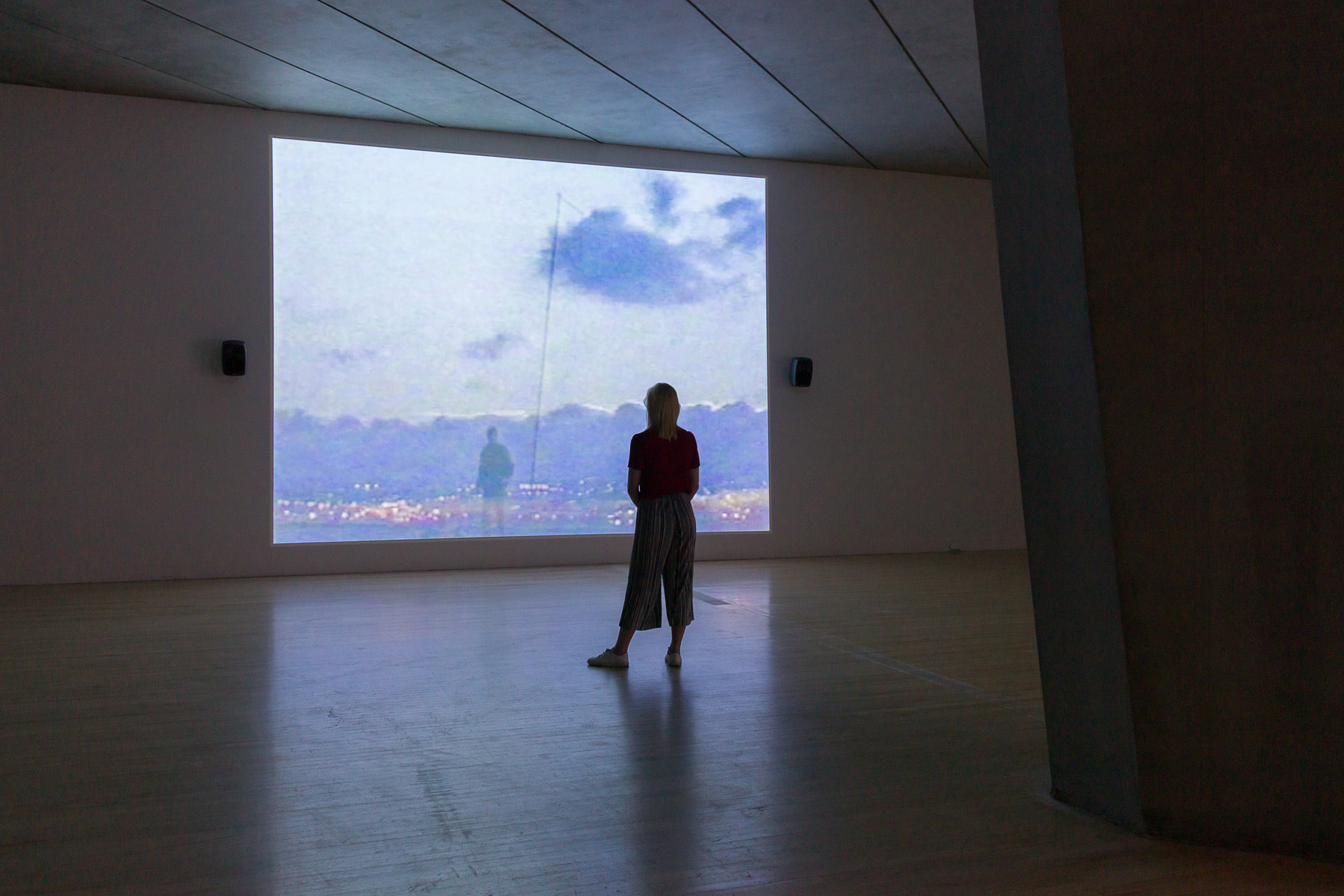
So the artist has set about finding his own portal (or, a ‘channel as grace’ as the act of looking into heaven through an icon is called). “I went out to Ally Pally on a really beautiful, sunny day and recorded myself getting overwhelmed by the world.” The idea stemmed from the artist’s contemplation of hope, and hopelessness, during the pandemic – and a curiosity, then, to delve more into the divine. There’s a community of people that Leckey follows on Substack and TikTok who are investigating something similar. “Like I said before, the divine shows up at the trash stratum, and maybe it is.” The trash stratum here is TikTok, where users in Leckey’s orbit are attempting to grapple with what may lie beyond, or within, the internet (comparisons are made between the structure of the world wide web, and its similarities with NASA’s images of space). “There’s a strange confluence of things,” Leckey notes. “I’ve felt this for a while about technology – that it’s inducing this strange kind of medieval state, in the sense that they cohabited two realms between the spiritual and the profane. We sort of exist in two realms now. It’s the immaterial space, like you originally asked me about the internet, and the only antecedent I can think of is the medieval.” And with that, Leckey heads off to Sainsbury’s to get some bits. 

Credits

Images · Mark Leckey
https://markleckey.com/

Illya Goldman Gubin

Exploring the ambiguities of life through the rapid shifts the present feels

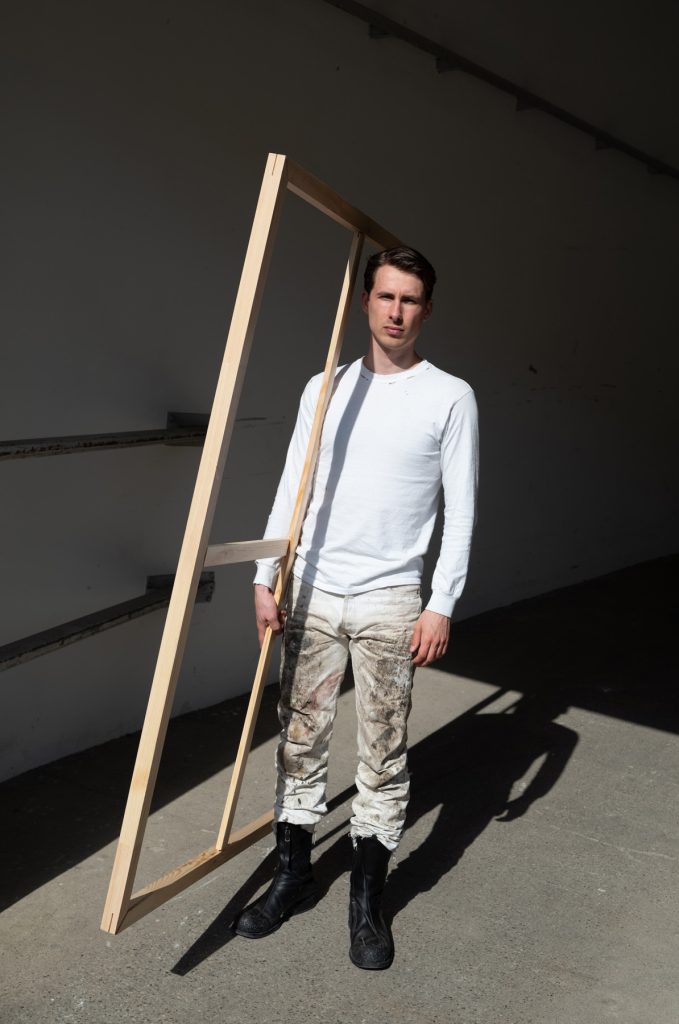
The first three-dimensional, physical object that multidisciplinary artist Illya Goldman Gubin made comments on the everyday obstacles creatives face in a world dominated by consumerist logic. From the descriptions, several images may come up – glitching computer screens, broken doors, burned bridges, thrashed rooms, or maxed out credits cards – but Gubin built his storyline around an object famed for the hierarchy metaphor: a ladder. “The sculpture is a physical manifestation of the internalized struggle to climb the proverbial social ladder, our personal hopes, dreams, and challenges manifesting in a sculpture of rough materiality,” says the artist. Soon, viewers will find out the interconnectedness of everything Gubin works on.

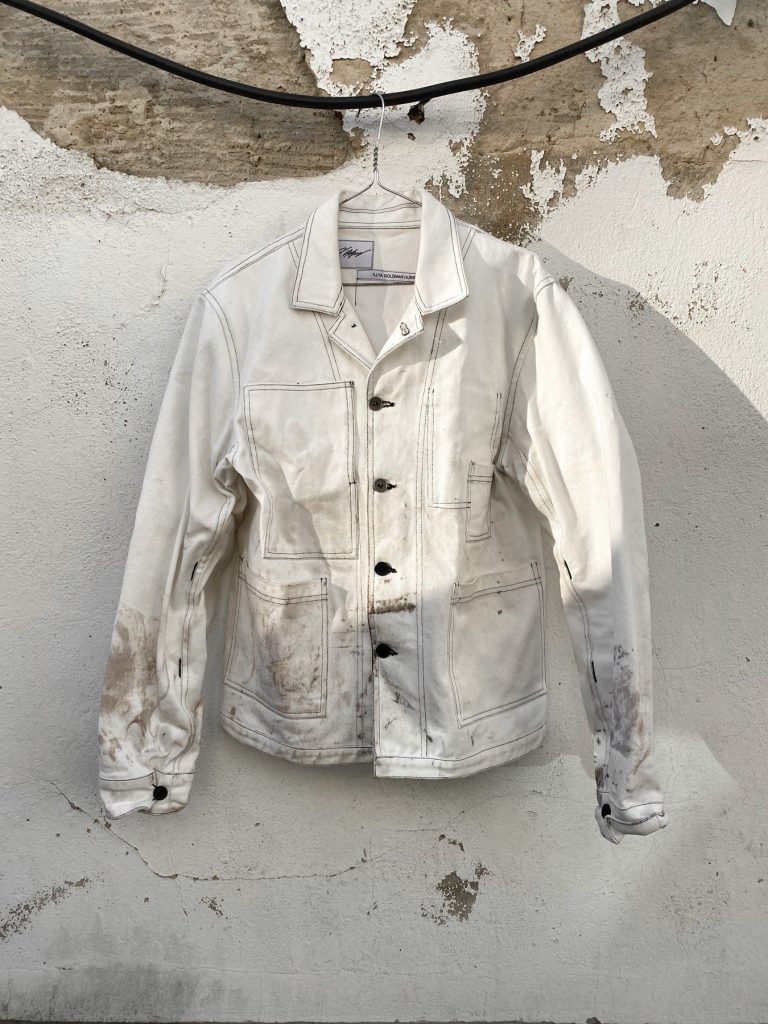
An atelier and an art shop define the homes of Gubin. The first sees the continuation of his artworks, a deviation from a fashion line or merch and a journey towards works of art created from works of art. “The greed for a dialogue between clothes and artworks becomes a study. The clothes are created with the Japanese idea “Ichi-go, ichi-e”. This means ‘One Time, One Meeting’ which reminds us of the ephemeral nature of everything around us,” the brand states. It lies upon the idea that one can never dip their toes into the same lake twice as the water flows – always moving, never settling.

From this ethos, the atelier comes to life. It breaks the binary continuum of thinking and feeling, science and mysticism, tradition and innovation, handmade and luxury goods, and perfection and imperfection. Gubin’s installations underline the complexity of human consciousness to unearth the depth of self-understanding. He borrows terms from Judaism and infuses them into his words, serving as reminiscences to the cultural imprint. For the artist, the culmination of multiple perspectives, fused with self-reflection, gives birth to a realm of new sanity, a marriage between codes of the past and newly acquired knowledge.

Gubin not only explores the ambiguities of modern life, challenged by the rapidly shifting conditions of the present, but also creates multi-layered reflections of everyday perception. He transforms paradigms, materials, space, and time into works that usher the audience into a sensorial experience, an invitation to think, feel, see, hear, and meditate. From that cocoon of meditation, Gubin captures the zen and essence of perpetuity and mold them into sculptures, canvasses, furniture, bags, bowls, t-shirts, lamps, soils and so much more. His body of works remains in a constant state of flux, moving in and out of the spirit to understand the self, to open the mind and heart, and to liberate one’s spirit.

For NR, he celebrates his voice and visions as a multidisciplinary artist through a tone he knows best: poetic, philosophical, polished, and pragmatic.

NR: Where and how did your fascination with “breaking the binary continuum of thinking and feeling, science and mysticism, and blurring the line between tradition and innovation, handmade and luxury goods, perfection and imperfection” start? What personal experiences nudged you to found I G G?

IGG: It started from questioning my inner self and finding answers in different areas and philosophies. I wanted to bring ideas and questions together. I wanted to start an open dialogue.

“It is all done for energy and the closeness to the earth.”

Your atelier is divided into an art shop and a catalog. Starting with the art shop, you reiterate that “it is not a fashion line or merch, but works of art that are created from works of art.” Is there a reason you’ve stressed this?

Yes. I try to push the boundaries of a clothing piece by combining and intertwining it with my artistic practice which, as the result, becomes a significant enlargement of my work.

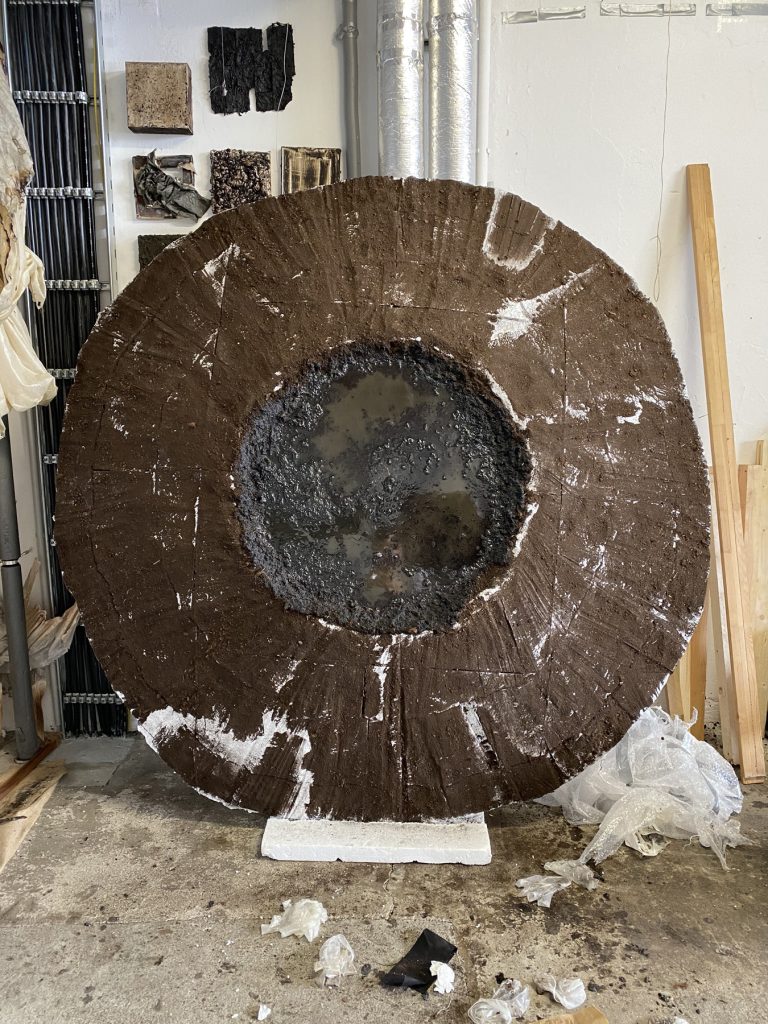
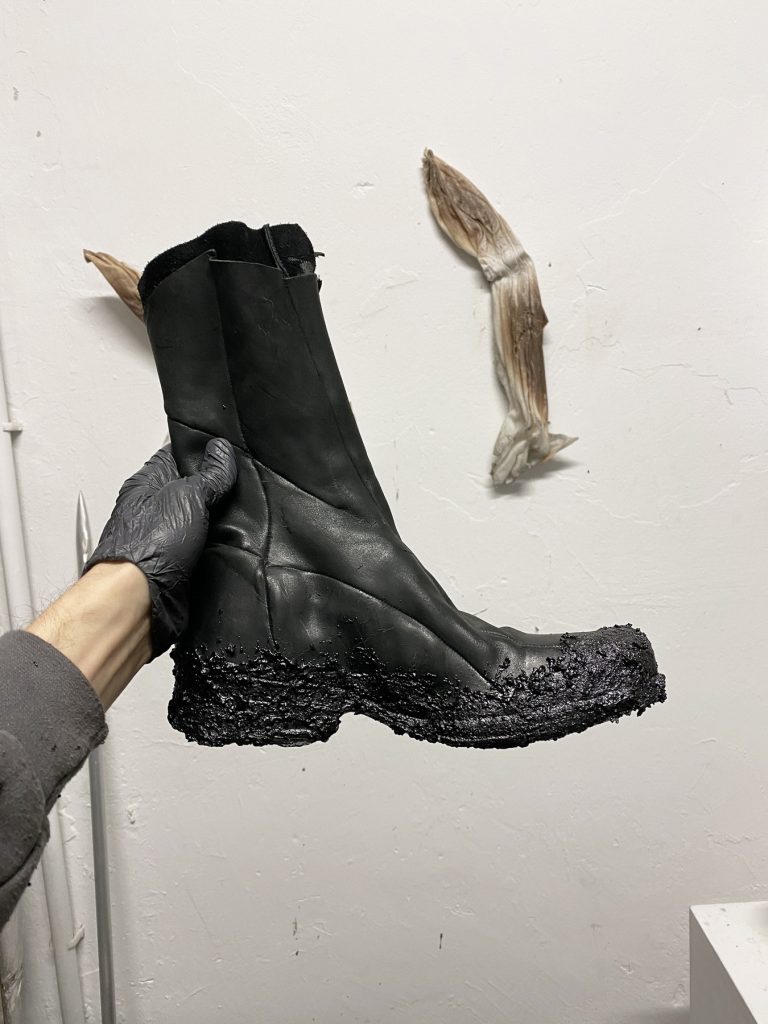
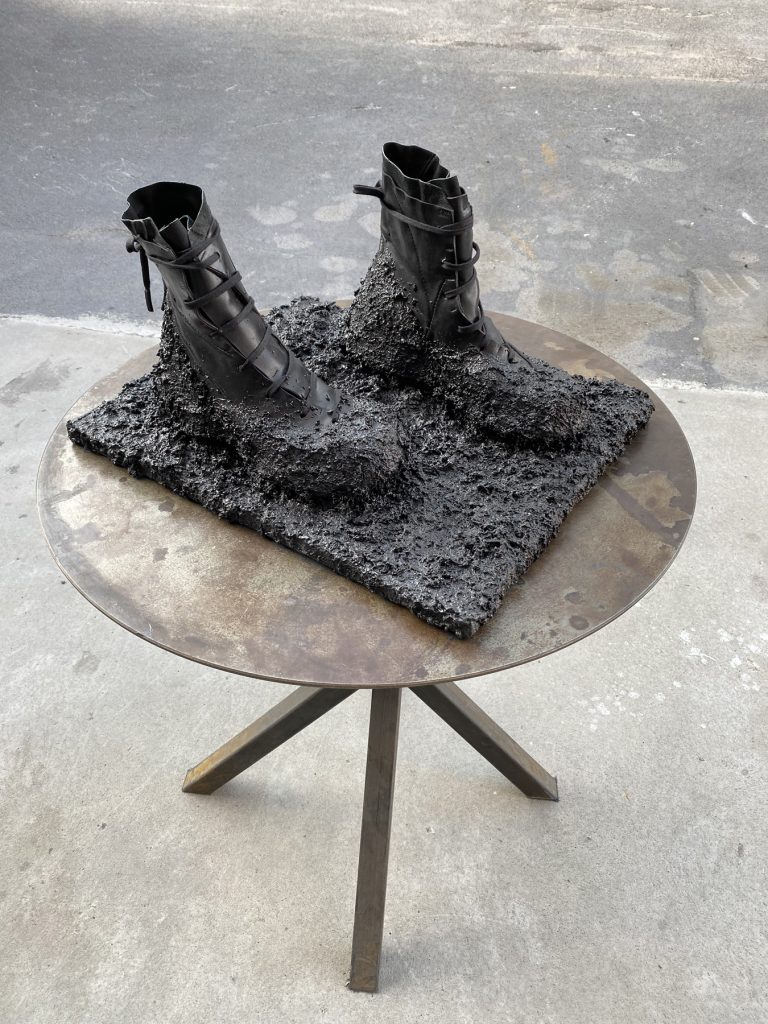
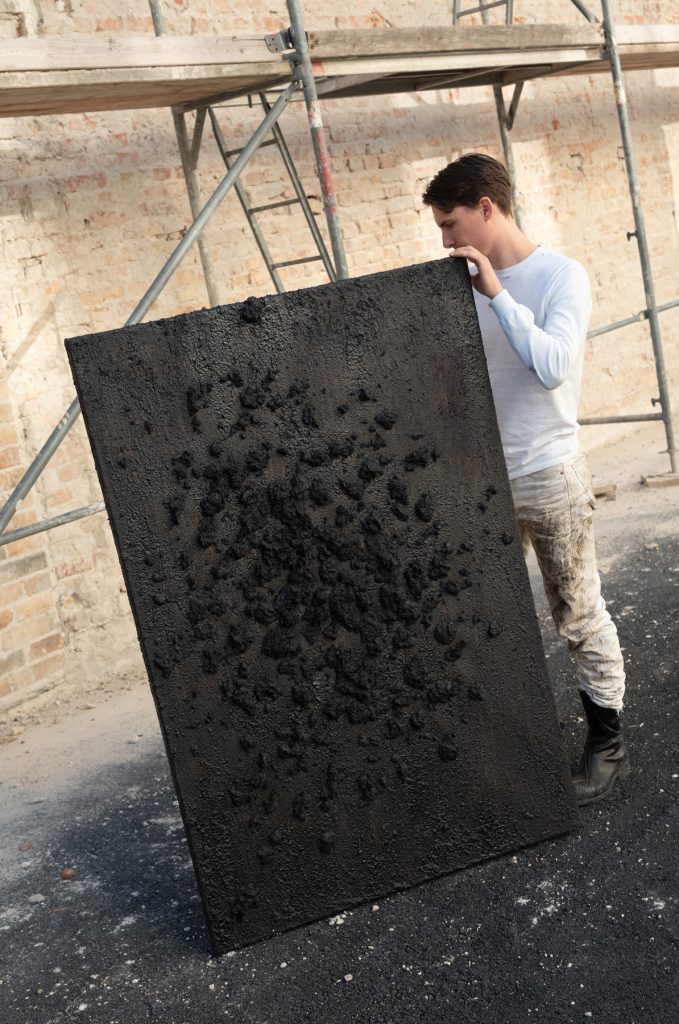
For instance, the surface of the Struktur shoes is ‘hand-worked’ with the same medium as the ‘Struktur’ artworks. Additionally, the shoes are physically attached to a ‘Struktur’ artwork, which has an indirect invitation to be removed by the owner by force. The end result is a state of wearable artwork.

As for your catalog, I am looking at your first project (“Ladder”) and your recent (“Karton Vase”). Between these years, what changes did you make and experience in your artistic, creative, and business style?

My mind became more balanced. My visions are clearer, and the narratives become more conscious. An artist is a student of his own studies trying to find an answer to a question of one’s personal experience.  

How do you perceive timelessness during the shifting conditions of our present?

My own beliefs, interests, and paradigms are guiding my open-mindedness. Timelessness is still influenced by the Zeitgeist;

“the only difference arises from how you process the flow of information from the observation to the understanding, a contemporary way of thinking.”

Could you share a few projects that resonate well with you, projects that seem to converse with you? What are their backstories?

My latest projects cannot be really examined separately. They all share a similar spirit, a similar beginning, and a similar aim. My aim is always to heal my spectators’ precoded opinion and/or thinking which is given by their experience.

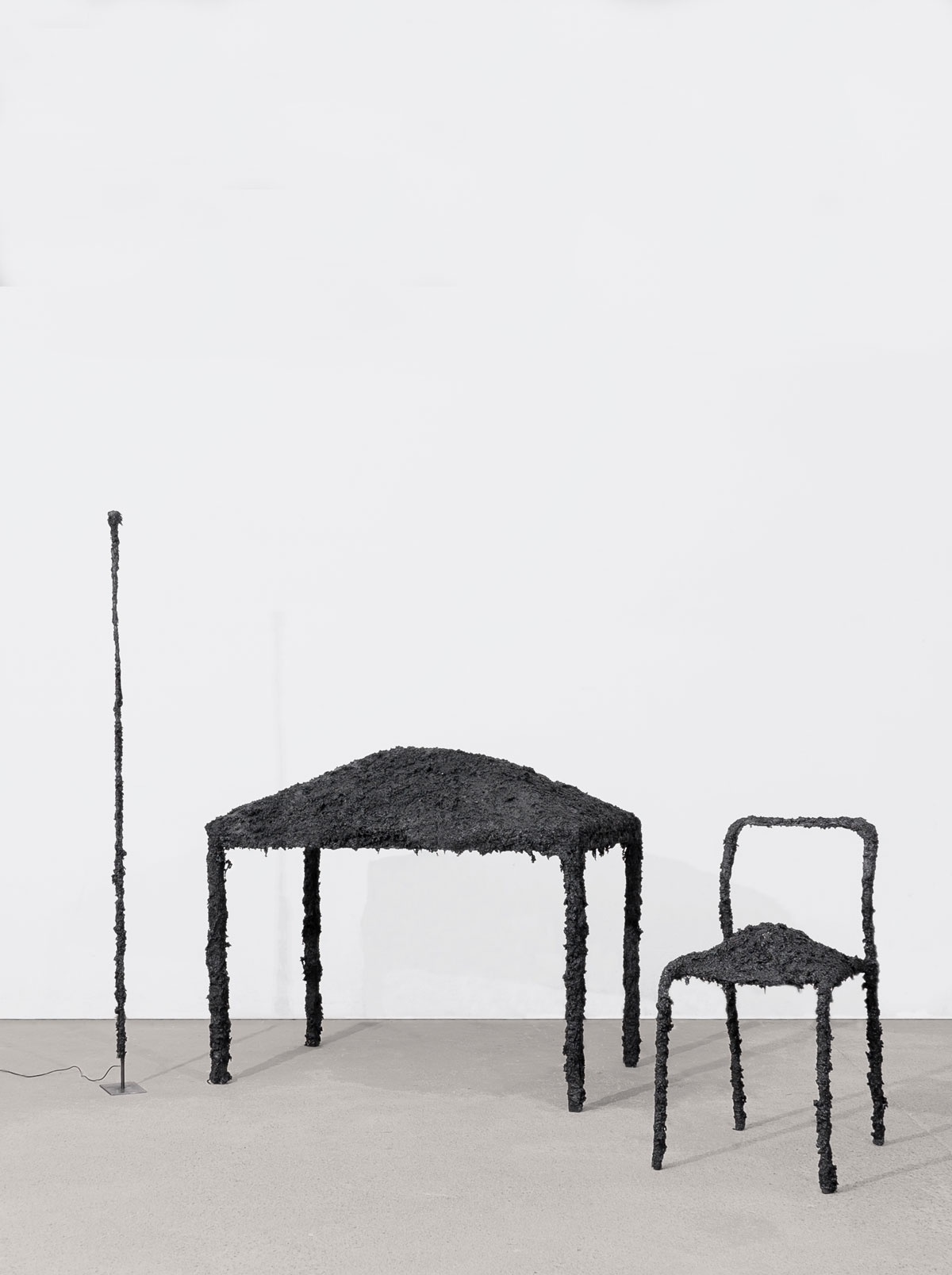
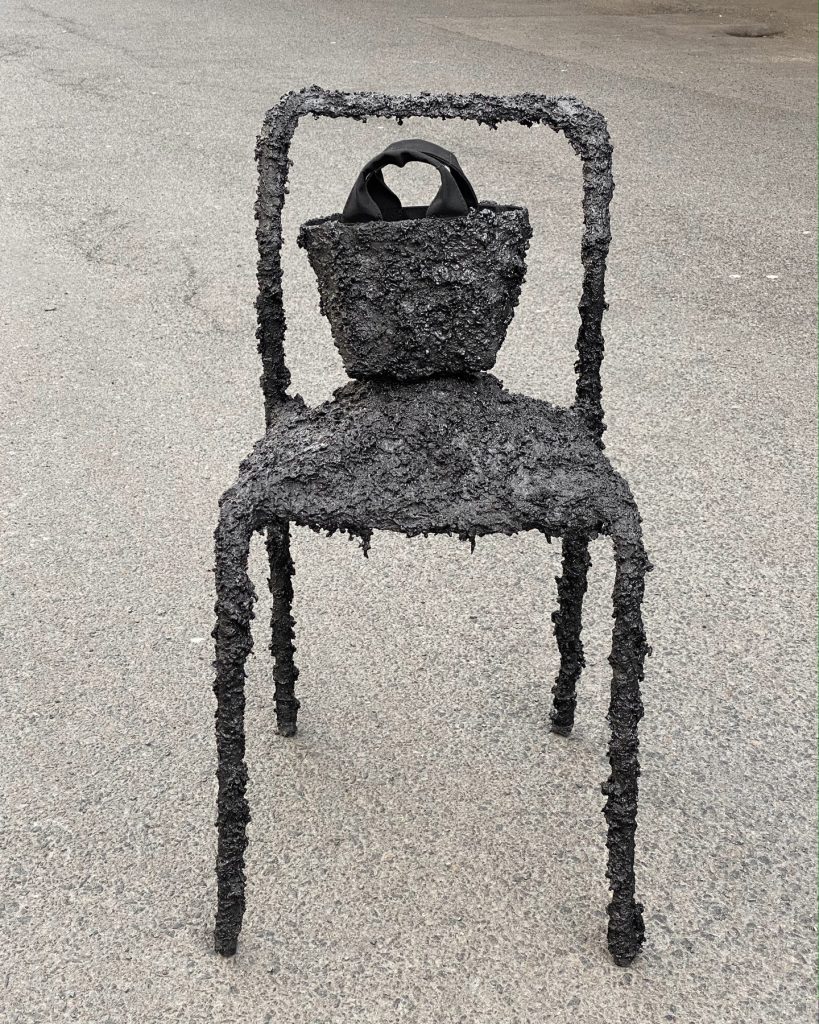
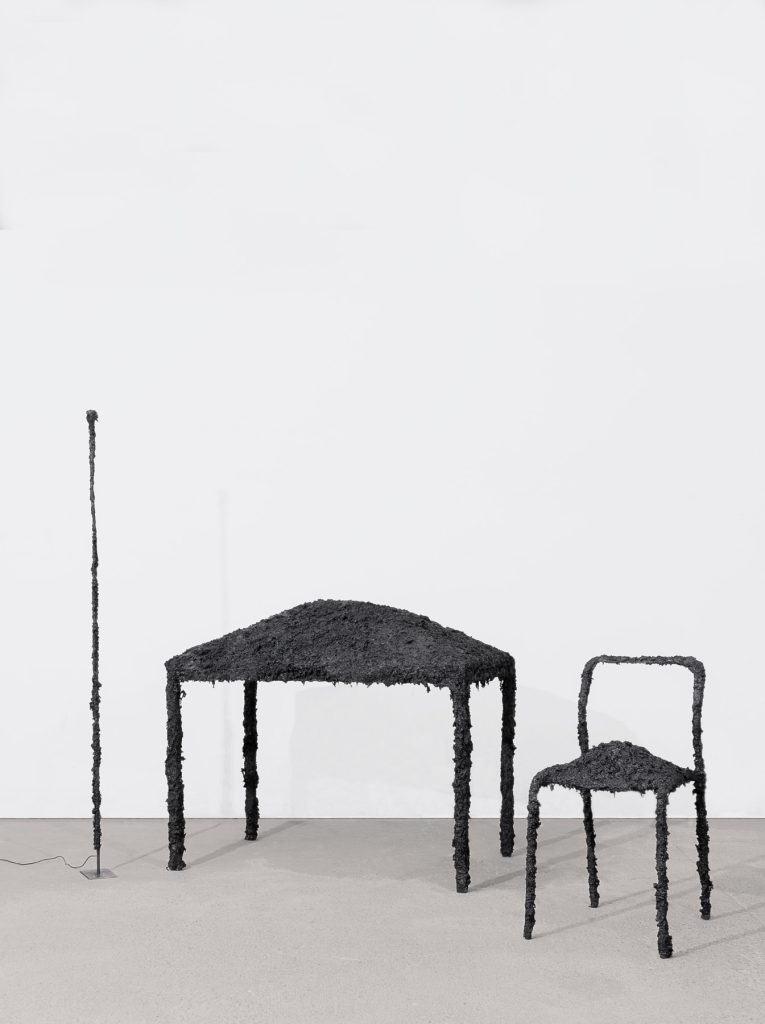
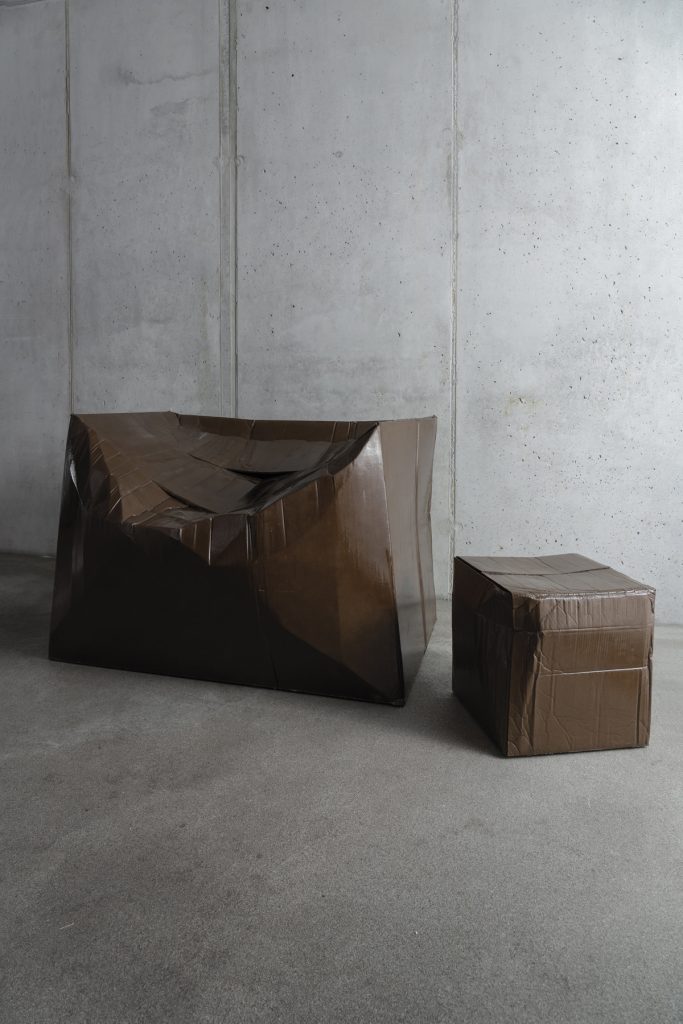
My ‘Karton’ furniture evokes a non-useable feeling, a forgotten childish dream. ‘Profil’ sculptures give spectators a distinctive look of regular fabrics hanging from the ceiling. My ‘Juxtaposition’ piece revokes a human act of protecting objects for their longevity.

All of these do not appear to be what they look like at first glance. I always encourage the spectators to interact with my work.

“I believe that only through the physical dialogue can my work achieve an ending. The idea is bigger than the outcome.”

In line with our theme Celebration, how do you celebrate yourself as an artist, a designer, and a creative? What joys outside your work do you live up?

To be honest, it feels very difficult to acknowledge the point where one can put a checkmark on the work. The work is always in the process. However, I am trying to learn to celebrate every day. The sum of the process is the outcome of the work. Living in the present can help one to realize happiness. 

Is there anything that we should look forward to from you in the upcoming months?

At this time of answering the questions, I am in Los Angeles. In April, I will participate in a large group show at Side Gallery where I am excited to show my ‘Karton’ furniture series.

When I think further from here, I do not know what is coming next. Probably this is being in the now?

Credits

Images · Illya Goldman Gubin
https://www.igg-atelier.de/

Valie Export

“The most important issue for me is: how can we live together peacefully?”

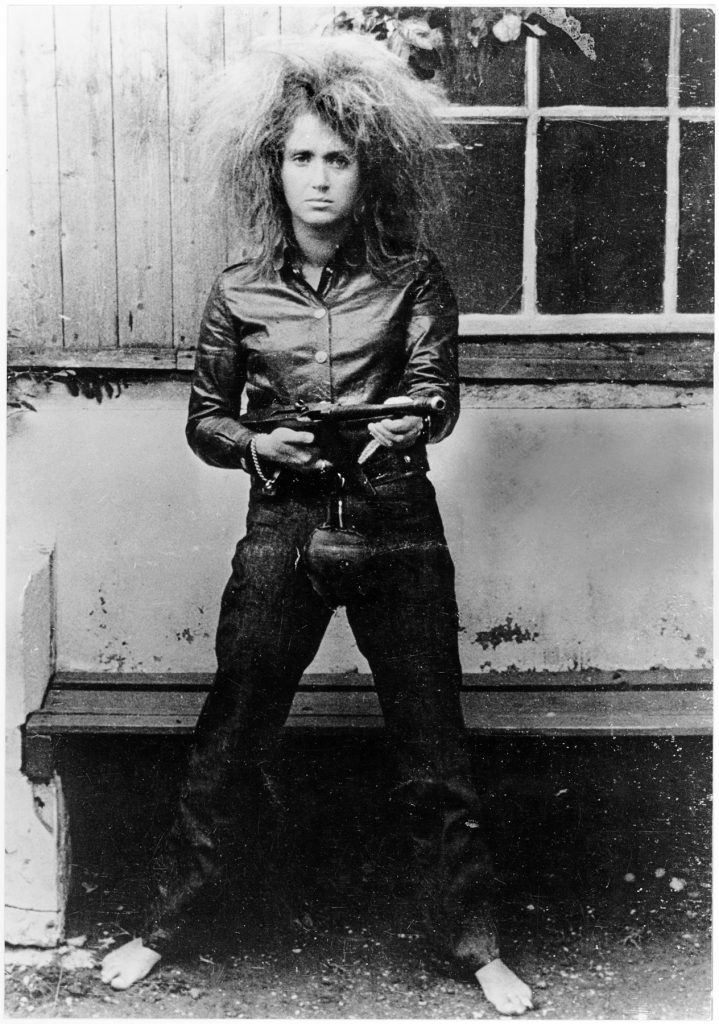
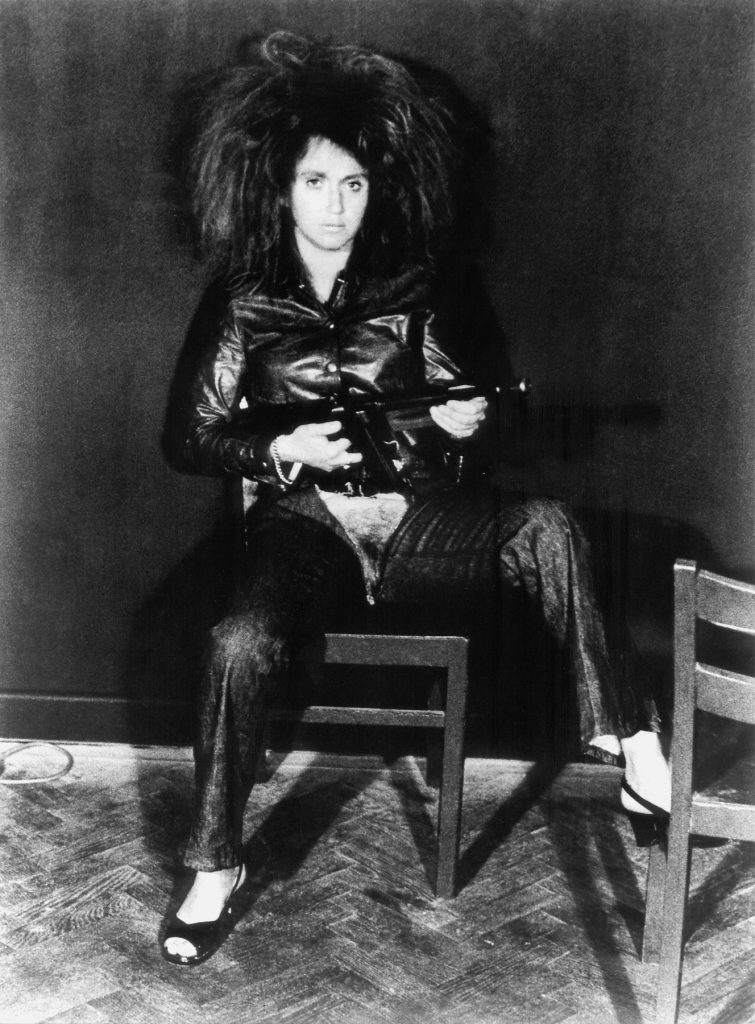
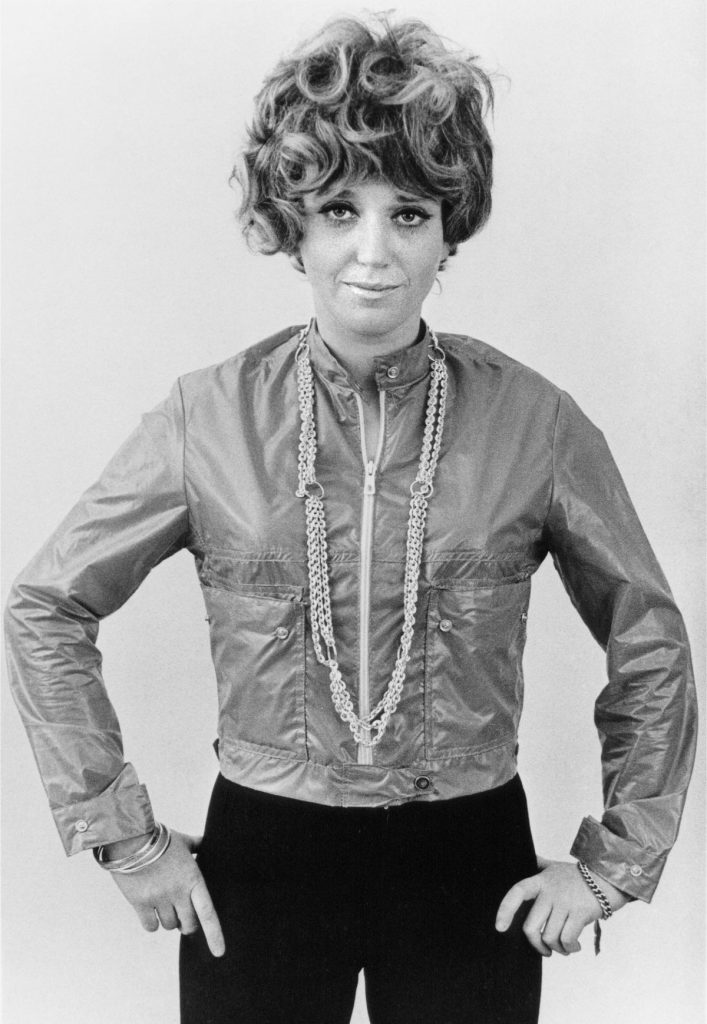
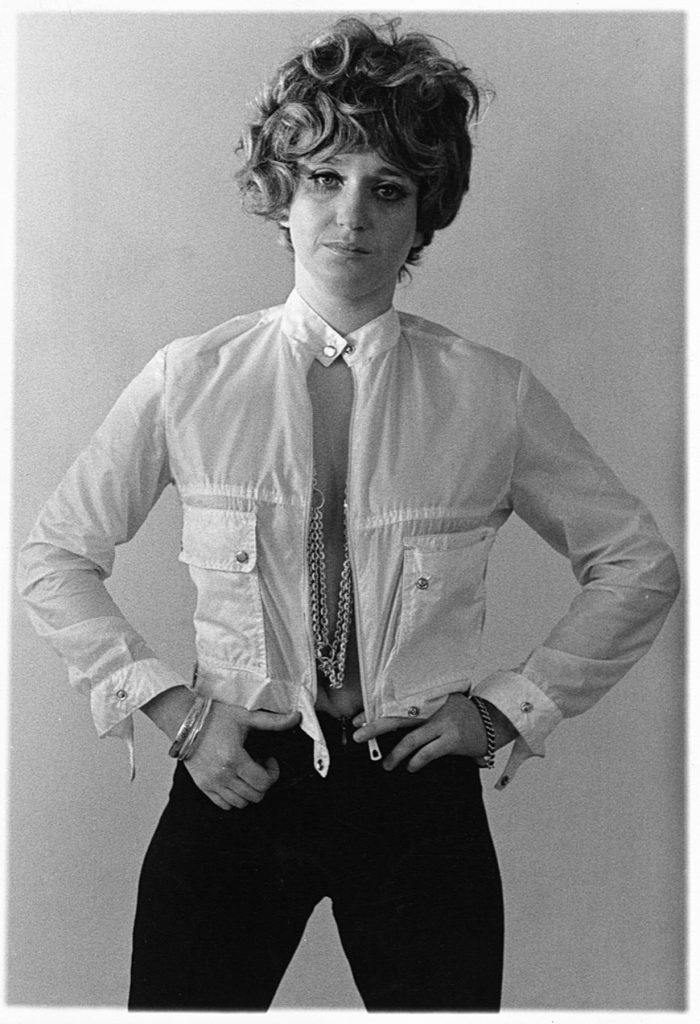
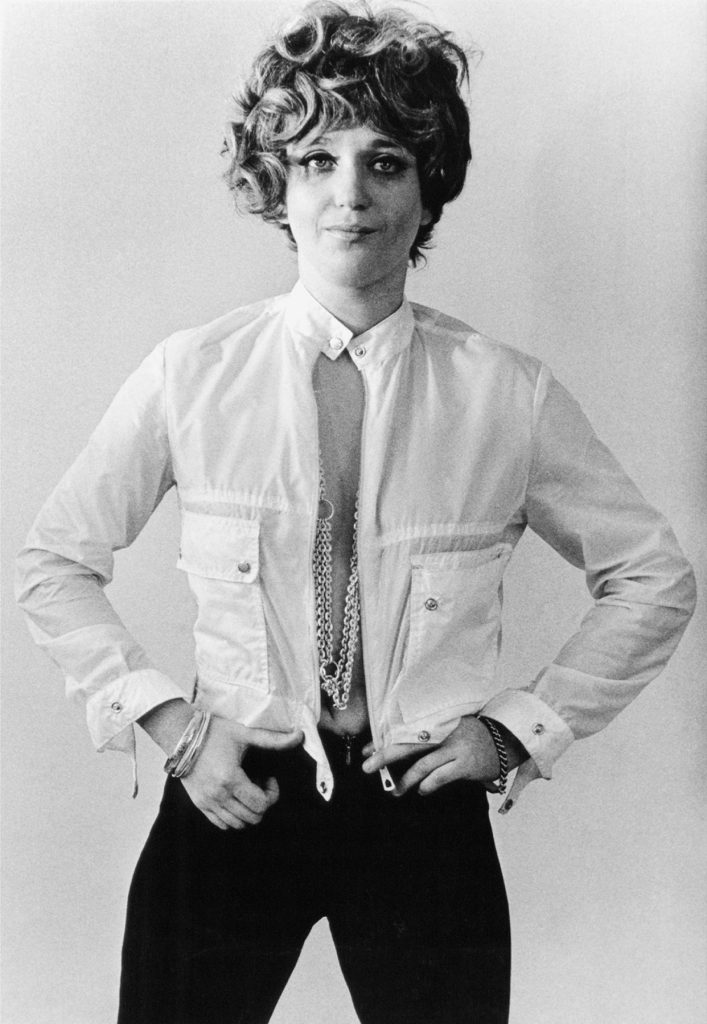
In 1968, the artist VALIE EXPORT walked into a porn film screening at a cinema in Munich, wielding a machine gun and wearing crotchless pants. Forcing the gaze of cinemagoers to meet her bare crotch, VALIE EXPORT sought to demonstrate that women, in film, were merely passive agents – look instead, she demanded, at a real woman, not a depiction of how they are shown to be seen. But only part of that story is true; it wasn’t a porn film screening, and the artist did not have a machine gun. Nonetheless, the tale of VALIE EXPORT’s action has entered the domain of art legend. Part of the myth that surrounds what really happened can be attributed to a series the artist created the following year. In Aktionshose: Genitalpanik (Action Pants: Genital Panic, 1969), VALIE EXPORT is photographed wearing those crotchless pants, her legs wide, as she holds a machine gun across her chest. But if, by entering the cinema in Munich, VALIE EXPORT forced the viewer to confront a ‘real woman’, the Aktionshose series is less clear-cut. Here, the artist adopts a macho abrasiveness – such is the power of a staged photograph to manipulate how gender and identity are represented and viewed. By contrast, the triptych Identitätstransfer (Identity Transfer, 1968) takes a nuanced approach to explore a similar theme. Across three portraits, the artist subtly adapts the way she poses, how her clothing hangs, and the expression on her face. Who’s to say which is more feminine, and which is more masculine? 

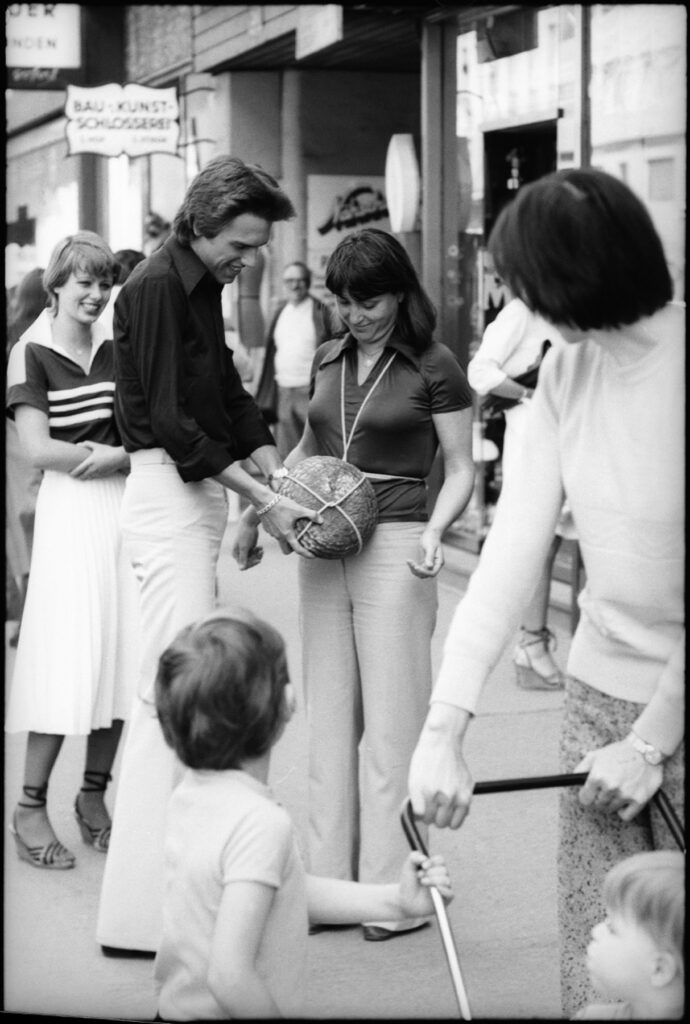
Part of the Vienna Actionists art group in the 1960s, VALIE EXPORT was an early adopter of using film to confront and subvert representations of gender and identity. As VALIE EXPORT tells NR, Aktionshose is part of her expanded cinema practice, in which the traditional boundaries of film are subverted, and the viewer (unwittingly at times) plays an active role. This is perhaps most obvious with Tapp und Tastkino (Tap and Touch Cinema, 1968) which saw VALIE EXPORT invite members of the public to put their hands in a curtained box, shaped like a television or the stage of a theatre, that the artist wore across her chest. Inside the box, VALIE EXPORT’s, mostly male, participants were able to touch her bare breasts for 33 seconds, whilst directly confronted with the artist’s face in close proximity. It’s impossible to underplay VALIE EXPORT’s contributions to feminist art practice – even down to her name itself. The artist changed her name to VALIE EXPORT in 1967, in reference to both a childhood nickname and a brand of cigarettes, thus removing the patriarchal connotations that her former name (her father’s surname, and later, her husband’s surname) had. In this way, VALIE EXPORT’s work is a negotiation, nay confrontation, of the patriarchal ways through which a woman’s experience is constructed.

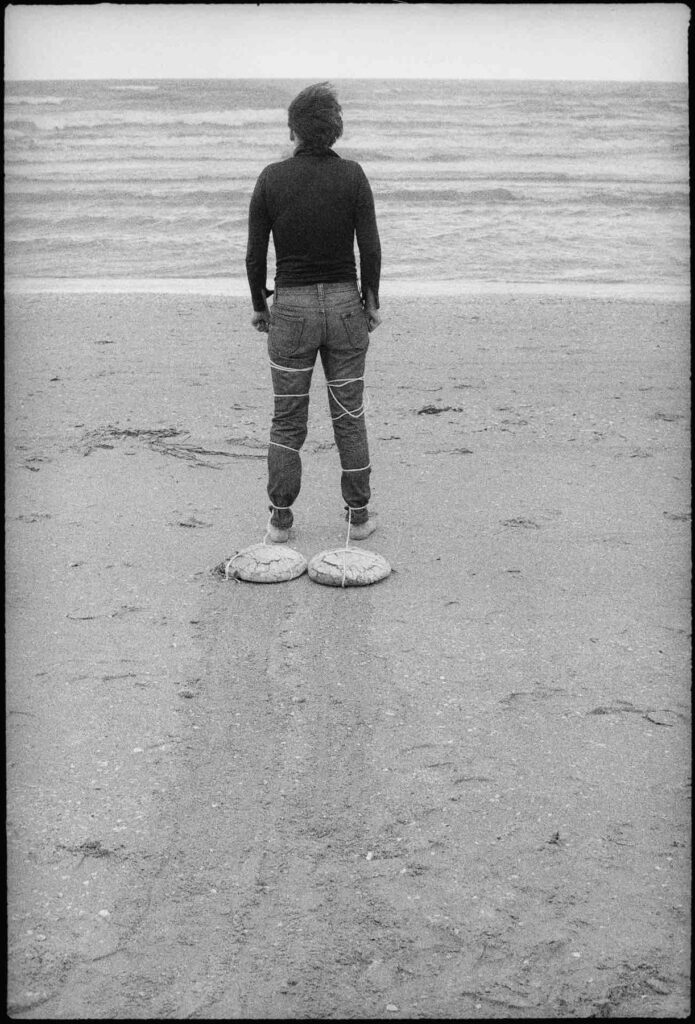
Crucial to this, is the artist’s navigation of space. VALIE EXPORT’s early work came at a time when Austrian society was still deeply conservative. In the series Body Configurations from the 1970s, for example, the artist is photographed contorting and morphing her body to complement the built environment of Vienna. Yet no matter how far VALIE EXPORT adapts her body in sculptural ways, she remains unable to fully replicate the cold, patriarchal surfaces of her architectural surroundings. The series is, nonetheless, a reclamation of space – as is the fact that the screenprints of the Aktionshose series were pasted up in public spaces around the city. Whilst the artist has adapted to using new video technologies over time, and broadened the themes she explores (such as politics and violence), the impact of VALIE EXPORT’s early work, radical as it was at the time, remains important today.

NR: Aktionshose: Genitalpanik and the legendary story about the original action, remain hugely influential; did you anticipate the impact that it would have? 

VE: Of course I expected it to have some effect, but not that it would have this kind of impact. Aktionshose: Genitalpanik is an ‘Expanded Cinema’ practice, which was screened for the first time in a Munich art cinema. In this action, I walked through the rows of the theatre wearing the Action Pants. The audience left the theatre, and it emptied quickly. Afterwards, I used the same pants to create a self-staged photo series in and in front of an abandoned movie theatre and made the poster, which has become quite well known. I tried for years to exhibit the photo series and/or the poster, but unfortunately people refused to show them. I only succeeded in exhibiting the works very late in my life. 

Do you think an audience’s reaction to your work varies depending on the time period in which they engage with it? Have people’s reactions to your work changed over time? 

I have difficulty assessing whether people’s reactions to my work have changed over time.

“I think that the reactions are just as strong today as they were back in the day but might go in a different direction.”

Today, my works are also documents of a time of artistic and political awakening, and represent the breaking away from prevailing rules and opinions that are prescribed by society. With my artistic expression, I try to portray socio-political and cultural-political oppressions and norms through art-political processes and to sharpen the perceptions we have of them. 

Have your own reactions/feelings towards your work changed over time? If so, how and why? 

My own reactions and sensibilities have not changed. I always perceive my works in the context of the respective time in which they were created.

“I create my artistic expression with a view on the present period of time – and maybe also with a gaze to the future.”

You’ve spoken previously about how your art was made in reaction to the society and culture that it was contemporary to – how much of that moment in time has changed, and how much has remained the same? 

I don’t think a lot has changed fundamentally. It requires a vigorous process of awareness to perceive change and to recognise the repetitive. Often the same things are only embedded in a different context.

How has your practice changed over time and have the initial demands of your work given way to new concerns? 

The passing of time gives rise to new concerns. But these concerns also always seem to have a common thread. 

From your perspective, what conversations should artists be having now – and through which mediums should these be communicated? 

I believe conversations should be had about every possible issue and communicated through all kinds of mediums.

“The most important issue for me is: how can we live together peacefully?”

The theme of the magazine’s issue is ‘celebration’; what would you celebrate in relation to the impact that your work has had on the themes you sought to explore/counter? 

Oh, I could think of many rituals that would lead to a celebration – but they are mostly determined by rules. I wish for a free celebration. 

When you came up with the name VALIE EXPORT, which you stamped on your work and as an identity through which to communicate meaning, did you consider that you were creating yourself as a brand? 

I didn’t invent VALIE EXPORT as an alter ego but a trademark. As a trademark with which I export my thoughts, through which I export my ideas, weave them into dynamic networks. For some years now, VALIE EXPORT has become a trademark: VALIE EXPORT®. This is how it should always be spelled, but the capitalisation is mostly ignored. The trademark is an advertisement for VALIE EXPORT rather than myself. 

Credits

Images · Valie Export
https://www.valieexport.at/

Jingze Du

Displacement fuels the desire to persevere until one’s art resonates with self-identity

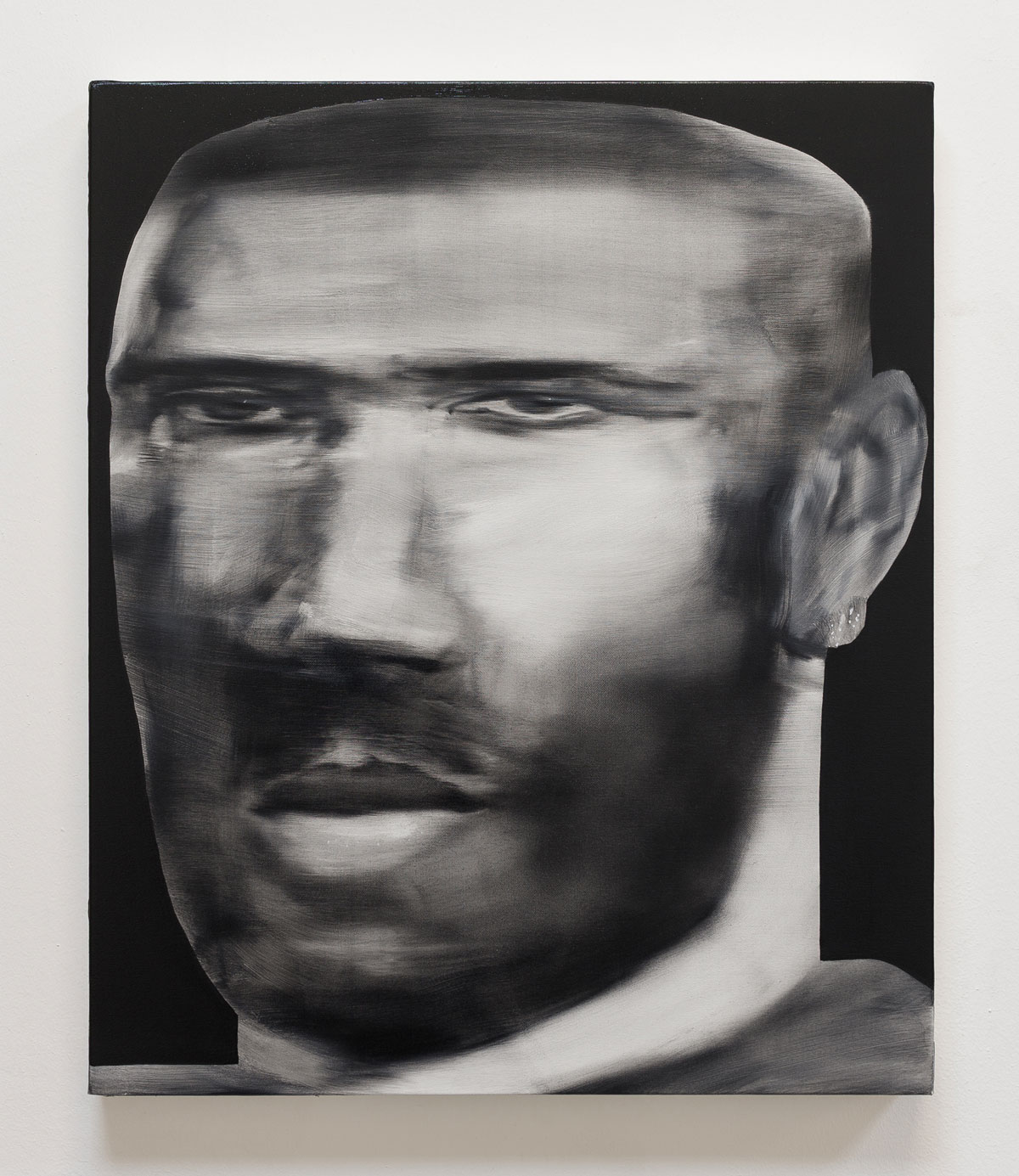
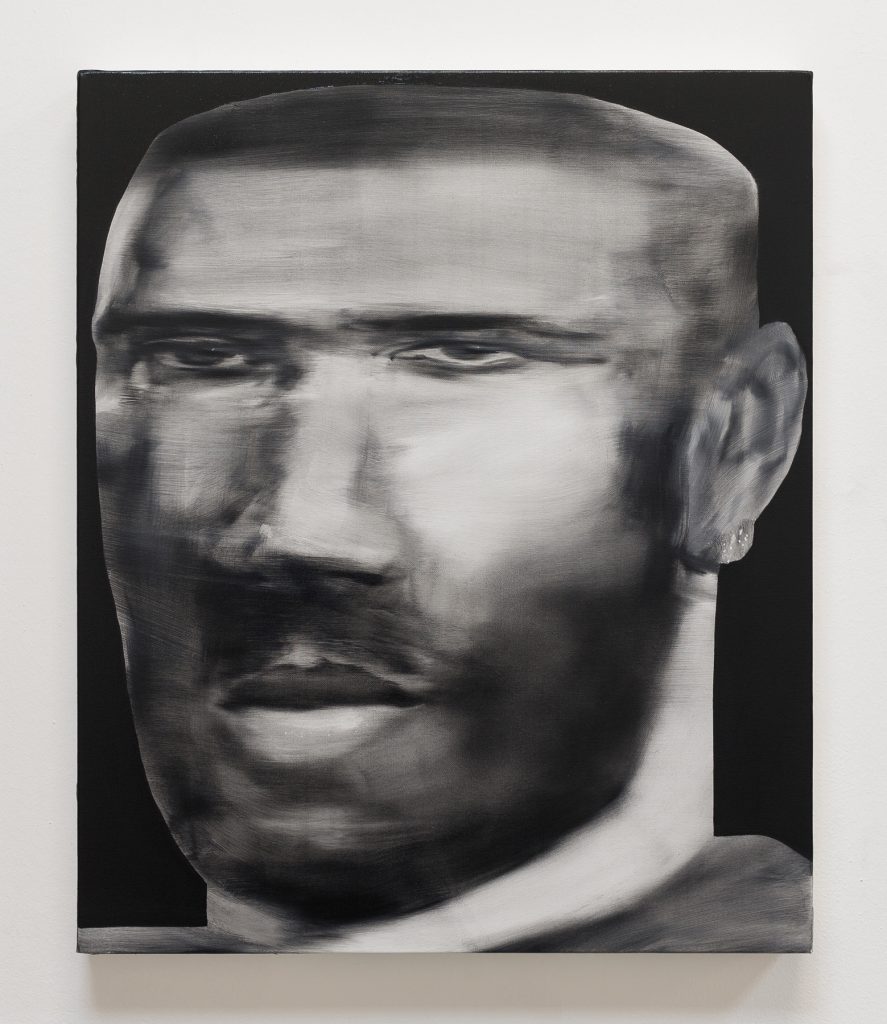
The aura of displacement rocked the beginnings of artist Jingze Du when he first arrived in Dublin, Ireland from Yantai, China at the age of 13. With his mother’s belief in his artistry keeping him on his feet, he sought after refining his communication skills in English, a prerequisite of survival in an English-language-dominated country. As soon as he fed his mind with vocabulary, those used in the arts field as well, he set off his artistic endeavors until he gave birth to portraits and approaches that explore the extremes of his identity: strength and weakness; fast and slow; masculine and feminine; validation and rejection; external and internal; conformity and independence; and the space in between his Chinese and Irish self.

On starting out

A memory the artist dearly remembers stems from his meeting with painter Wu Xiaolin who had felt reluctant to take in the young man as his mentee. Upon seeing his drawings, a conviction compelled him to accept him, and Du learned individualism as his art style. For every stylized artwork the young artist would produce, his mentor would frown upon it and ask him to rework what he produced, to find his center and self along the way instead of infusing what the public could already see. Soon, Du developed his sense of composition, contrast, light, and shadow, and the necessity that each work must possess an immediate emotional impact.

He started investing more of his time in painting at the age of 15. His mother, his ever-devotee, would encourage him to visit museums and exhibitions, and Du would halt walking to observe the paintings’ surfaces from different angles, soaking in the techniques, emotions, and motivations of the artists on the wall.

On being distant

After his undergraduate in the National College of Art and Design in Dublin, Du flew to London to study his MA at the Royal College of Art. He admitted feeling lost during his first year, drawn from the costly tuition and living costs of the city. He sought refuge in his studio, spending most of his time holing up and toying with his newfound, tension-filled creativity. The artist felt isolated from his decision, but it soon found a new light as he visited the studio of Ellius Grace, an old friend from Ireland.

Their conversations opened up alleys for the artist as the friend had offered him a list of interesting bookstores to visit around the city. From then on, Du enjoyed the luxury and life London could offer him, hopping in and out of museums, galleries, fairs, artists’ studios, parks, dessert bars, and hotpots as often as possible. He later realized that the longer he placed himself outside of his studio – although he still thought that being inside carried a personal value too – the more he felt the power London held over him.  

When he came home one day from a city trip, he received an offer from The Royal Hibernian Academy in Dublin on a six-month residency that would start in January 2020. The prestigious proposal came with a spacious and sunlight-filled studio, a game-changer for the artist, but the new space only formed a chunk in the overall buzz that rushed in his veins. Coming back to Dublin felt like home to Du. Setting his eyes upon the landscapes, surroundings, and buildings that dotted the skyline, the scenery reminded him of some scenes from Macbeth: the weather, the wind, the mud, the rituals, the pagan forces, and the humans who kneel at the mercy of nature.

On identity

Looking back in the past, Du refrained from identifying identity in his works. He struggled with the role individuality played in his art even though he had gathered up the tools, mediums, and ideas of such roots from his mentor Wu Xiaolin. Eventually, the theme of identity rose to the surface, and the artist slowly accepted that it would often, if not always, infiltrate his works. These days, identity seems to act as a second skin for him. He feels comfortable and safe exploring his past, discovering how much of his mindset echoed the philosophy of existentialism before his move to London in 2017.

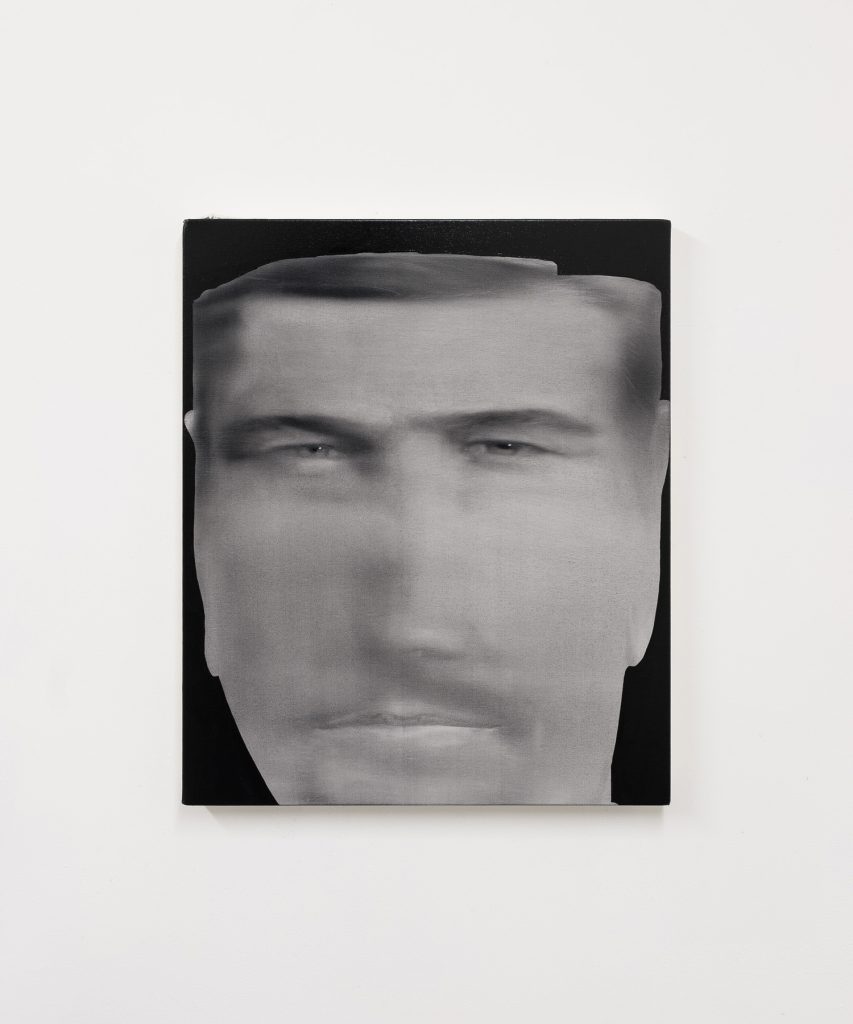
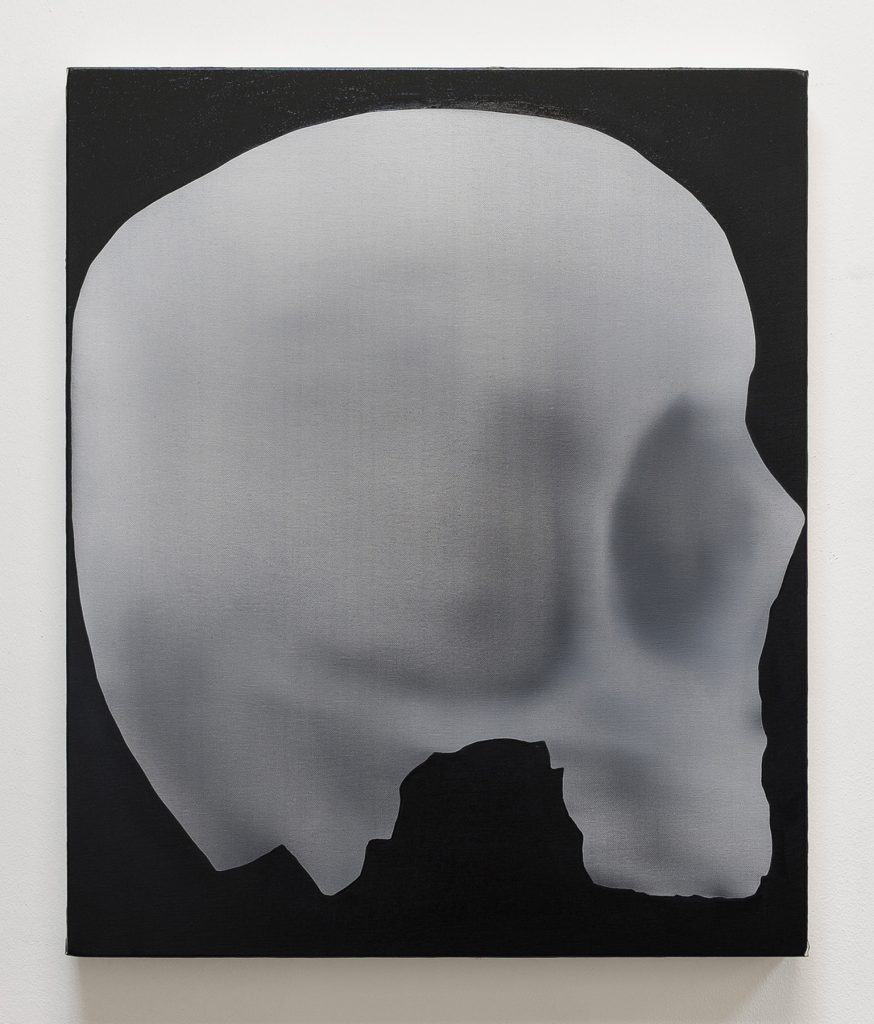
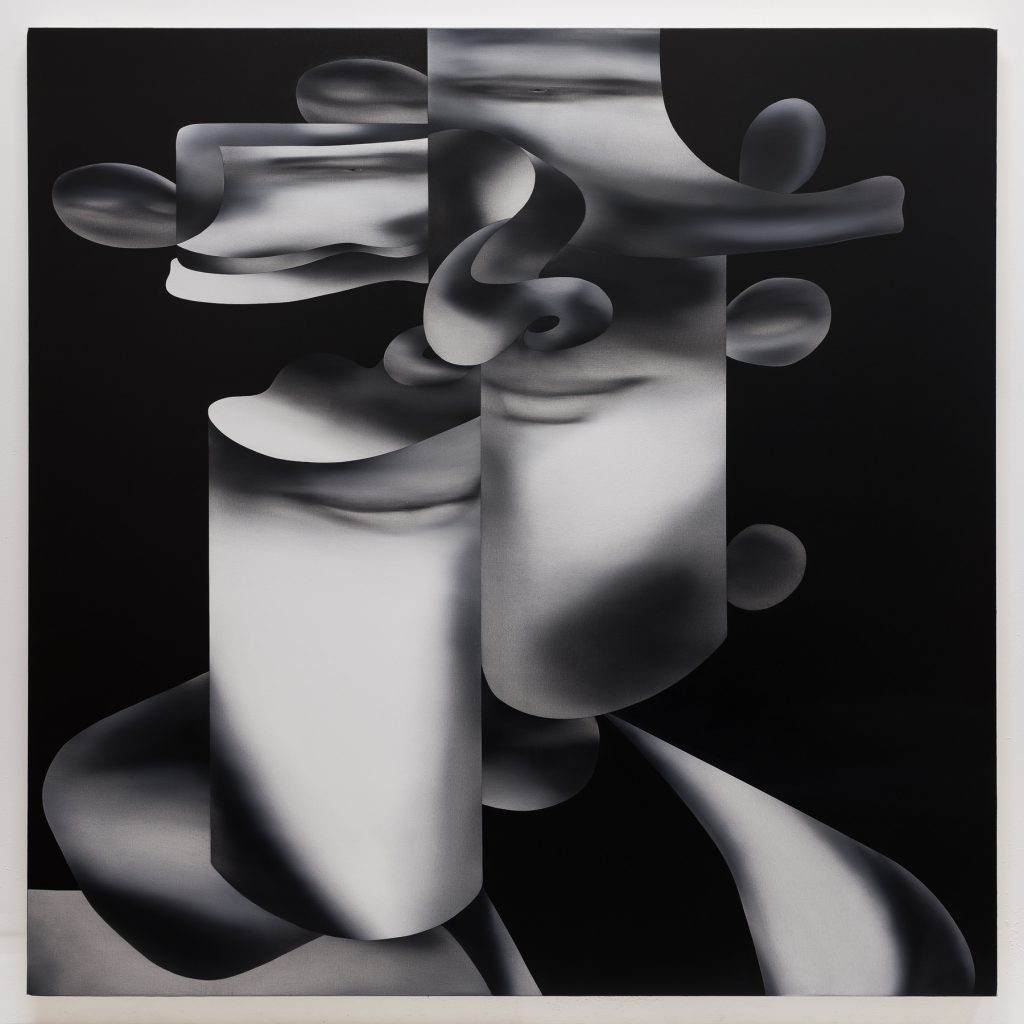
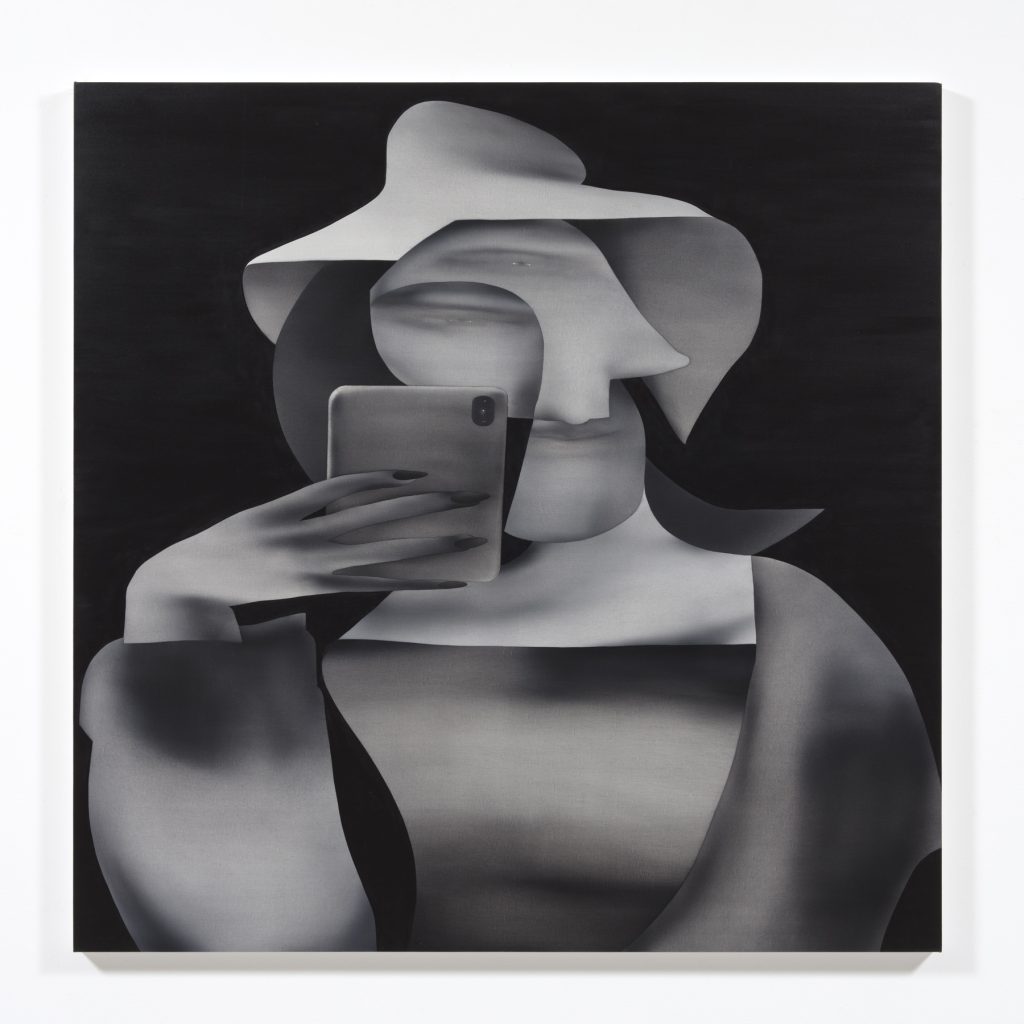
From a technical perspective, he began tinkering with linen instead of canvas as the finer grain conferred on him the ease to improve the quality of his paintings over a surface. He also started using much thinner oil paint which enabled him to better control his subtle, tonal differences. The shifting shades of warmer and colder grays resonated well with him, an element that now nudges him to aim for simplicity that yields the tunes of soulfulness. 

He confesses that whenever he lives in a new environment, his former identity meets the foreign one, a resurgence within him commencing. Since his former identity may sometimes, if not oftentimes, face defeat, he retreats and becomes an outsider, which he shares his learning mechanism to observe the new and the old, the contrast and the complement in the facets of his life.

Returning to Ireland meant returning to a familiar place, and Du believes it enabled him to explore the extremes of his identity, giving birth to his series In between where various extremes interact: strength and weakness; fast and slow; masculine and feminine; validation and rejection; external and internal; conformity and independence as well as the space in between his Chinese and Irish self.

On creative process

When Du introduces additional elements, colors, or forms into his works, it carves a path of experimentation for him on how the newer figures interact with the existing ones. He hopes for a reaction to come out, perhaps a revision of his current style, but he never forces anything. He welcomes his results with open arms and values organic growth more than anything else. His penchant lies in embracing joy from the inability to foresee the direction his artworks lead him to, enjoying the journey as he moves forward with every stroke, emotion, and material he anchors. Heart wins over the head, and his logic surrenders to his intuition. Each work informs future works and projects.

The subjects and themes he accumulates before diving into his creative work involve a plethora of identity and influences rooting from the East and West. Aside from this, he seeks knowledge on history to help him comprehend the context of his practice and support the statements he will include in the backstories of his works.

His viewers have asked him if globalization affects his work, and while he responds positively when inquired, he reiterates not going beyond his means to create a series or piece that concentrates on globalization. Its nuances penetrate the subtlety of his drawings and mediums, but more than anything else, he invites his viewers to view each of his works with an open heart, to feel it rather than reason out with or explain it.

On changes

Somehow, Du has learned to start as many projects as he can, boundless from any structures or systems. A free-flowing thinking that asks him to develop and further each work whenever he can, stripping himself bare from any pressure to finish it on time or as soon as he can. These works may evolve and transform into products of his mind that steer away from his original ideas, but for the artist, that has always been the plan. For Du, time changes and so do his artworks, so does his identity.

Credits

Images · Jingze Du
http://www.dujingze.com/

Anicka Yi

“If I had to guess I would say I was smelling the Machine Age, but honestly it was hard to tell”

I decided to binge Foundation recently, the Apple Original series based on Issac Asimov’s famous sci-fi novels. It’s a fantastic piece of television but in it there are a few throwaway lines that mention ‘the robot wars’. The series is set millennia in the future, long after humans have populated the galaxy, but that simple phrase sets the imagination whirring.

Quite often when scrolling social media you come across videos of robots that scientists are working on, some humanoid, some not. However one thing is constant, and that is somewhere in the comments people are joking that these robots will one day turn on us, and ‘the robot wars’ will become reality. This sentiment is unsurprising, especially from a generation brought up on media such as Black Mirror. But what if they didn’t turn on us? What if the ‘robots’ or the ‘machines’ become part of the ecosystem, benign artificial beings that live in the wild and evolve on their own?

Anicka Yi’s installation in Tate Modern’s Turbine Hall explores such a possibility. As you enter the space you spot them, flying high above the crowds of visitors, like strange sea creatures with gently waving tentacles and whirring propellers. They come in a variety of pinks and yellows and some are transparent. Yi calls them aerobes, and in addition to sea creatures draws inspiration from mushrooms. The hairy, bulbous aerobes are called planulae, whilst the ones with tentacles are called xenojellies. “Combining forms of aquatic and terrestrial life, Yi’s aerobes signal new possibilities of hybrid machine species.”

Yi collaborates with a team of specialists using artificial intelligence to pilot these aerobes, and they all follow unique flight paths generated by ‘a vast range of options in the systems software’. The machines use electronic sensors placed in various locations around Turbine Hall as a stand-in for their senses and react to changes in their environment inducing visitors heat signatures. “This sensory information affects their individual and group movements, meaning they will behave differently each time you encounter them.”

Another thing you might notice upon entering the Turbine Hall is the smell. When I visited it smelled swampy, almost like a peat bog mixed with the smell of petrol and metal. This is intentional, another part of Yi’s instillation are smellscapes. Based on different times in history these smellscapes change from week to week. There are marine scents from the Precambrian period, coal and ozone from the Machine Age of the 20th century, vegetation from the Cretaceous period, or spices that were used during the Black Death plague of the 14th century. If I had to guess I would say I was smelling the Machine Age, but honestly it was hard to tell.

Overall the exhibition does feel a little sparse. The Turbine Hall is a huge space and it feels like the number of aerobes in comparison are rather small. One feels that in the world that Yi is visualising that these aerobes come in great swarms that fill the skies like flocks of sparrows. Reality is a little different, understandably but the concept remains and upon leaving the space you find yourself wondering what the world would be like if it was populated by herds of roaming robots or packs of floating synthetic aerobes.

Credits

Images · ANICKA YI
Info · https://www.tate.org.uk/whats-on/tate-modern/hyundai-commission-anicka-yi

Photos

  1. Anicka Yi, In Love With the World, Hyundai Commission, Tate Modern
  2. Anicka Yi, In Love With the World, Hyundai Commission, Tate Modern
  3. Anicka Yi, In Love With the World, Hyundai Commission, Tate Modern
  4. Anicka Yi, In Love With the World, Hyundai Commission, Tate Modern

Subscribe to our
Newsletter