Archive page:


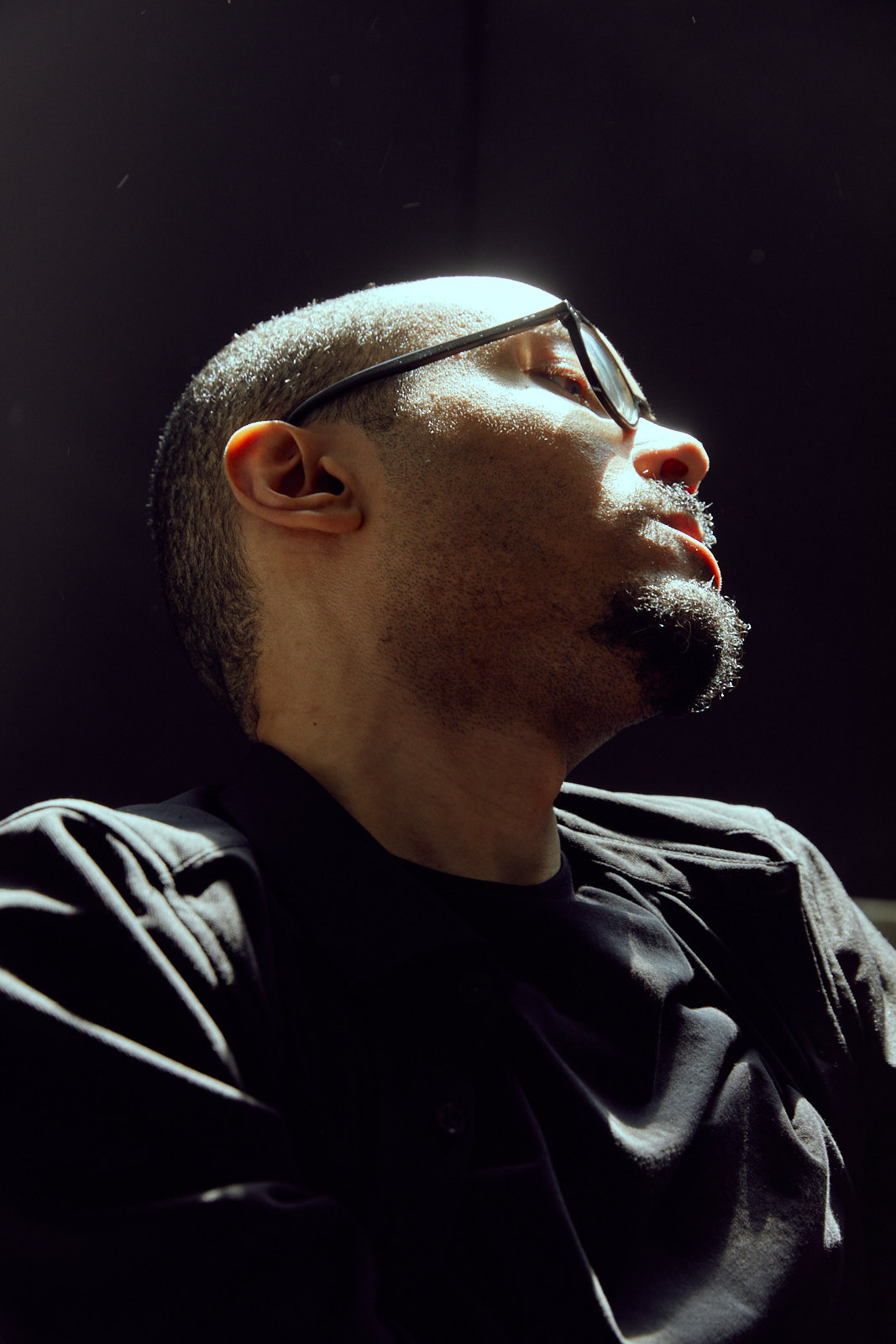
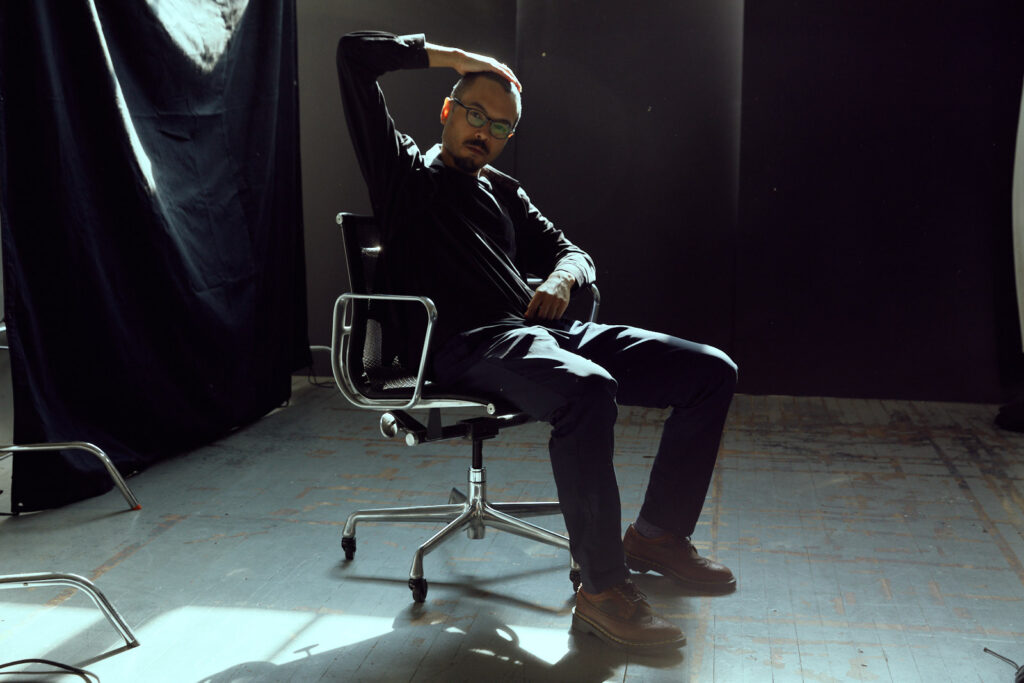
Shubostar

Between ‘Altered Egos’ and Virtual Realities

In the neon-lit alleys of Berlin’s music scene, Shubostar is a name that resonates like a pulsating beat. From the pixelated realms of computer games to the rhythmic cadences of cosmic disco, her journey is a symphony of contrasts. But what’s the thread that ties her gaming roots to her musical prowess?

Dive deep into Shubostar’s past, and you’ll find a young game designer from South Korea, exploring the world accompanied by the sound of early computer games. With just one guitar, one kick, and one snare – oh, Cakewalk, you beautiful music crafting beast – she produced tunes that echoed the minimalistic charm of MS-DOS classics and latter. Her favorite games? Princess Maker and World of Warcraft. Fast forward, and while her music has evolved towards cosmic disco, that simplicity remains. It’s not about complex configurations; it’s about a melody that lingers. Shubostar’s journey from a game designer in South Korea to a Berlin-based music sensation is a tale of two worlds: reality and virtuality. At the heart of it lies the concept of the ‘altered ego’. Altering the ego to be with peers and friends; altering your self-perception when entering the virtual environment of a second life promising game or an experience-engaging rave; but never altering her minimalist street style in fashion, that she lately embraced with the newest fashion collab of A Better Mistake and Telekom Electronic Beats: Altered Ego. 

Marcus Boxler: I am very happy to talk to you again, Shubostar, after we met in Montenegro during the Summer of Joy” festival by Electronic Beats. Last time we did not have a chance to dive deeper into your roots: computer games. You graduated in computer game programming and created music for virtuality. How would you describe the music you produced back then? 

Shubostar: Ooof, that was already 20 years ago! Maybe you remember the first computer games, their design, the feeling. The music was only one simple melody. 

Marcus Boxler: Does this have an impact on your musical style today? 

Shubostar: Probably yes, now that you mention it. Even today, I am way more interested in creating a melody, rather than a complex configuration. Even for the sound. Nowadays, I use a pre-set, when I create music. But, I often change it, because I know how it works. So the roots in computer game programming left their mark, haha. 

Marcus Boxler: Do you still play video games?  

Shubostar: Nooo, I had to stop! It was too dangerous for me! I had been so into computer games, it became like a drug for me. I nearly dropped out of university, because I was missing some lectures. 

Marcus Boxler: Ok! We will talk about derivatives for being addicted a little bit later, but before I want to dig deeper into the connection between computer games and your approach to producing music today. 

Shubostar: When you’re gaming you’re alone in the physical world. Of course, there are multiplayer games and even gaming rooms or tournaments. But mostly, you are playing alone. You’re alone on your laptop, but you are not alone in the virtual world. You are connected to others. It’s like being in control of a different reality, where the connection to others surpasses the physical reality. That’s the idea I pursue with my music. To expand the connection between people on an unspoken level – virtually. 

Marcus Boxler: Did you know that the term ‘virtuality’ actually comes from theology? When Christians talked about virtuality, they meant a non-physical environment that you can only reach via preaching or meditation. 

Shubostar: I know this state! I sometimes go into this state shortly before I fall asleep. It’s like trance. 

Marcus Boxler: Blending the virtual with the real. Speaking of blending, your music combines italo disco and electronic synthesizer sound in a very unique way. For your inspiration you mentioned the likes of Daft Punk, Air but also Alexander Robotnick and Daniele Baldelli in earlier interviews. Tell us more about that.

Shubostar: I’ve always been intrigued by things that feel real but aren’t present. Like space. It’s there, but we don’t really feel it. The universe is expanding every second we exist, but we don’t feel any of it. At least, not in a way we can articulate, yet. It’s a reality, but it’s not tangible.

Marcus Boxler: And the Italo Disco influence? 

Shubostar: It comes with the synthesizer. It’s danceable, it’s uplifting. It came naturally…

Marcus Boxler: Speaking of things that come naturally: You are also the founder of a record label: uju records. Can you tell us the story of how you became a record label owner? 

Shubostar: Yes, I founded “uju Records.” It’s Korean and it means ‘cosmic’. However, the journey is way less impressive than you probably think. When I used to live in Mexico, I produced an abundance of music. Like, really a lot! The one percent of my favorite record labels that I reached out to and that – at least – replied, did not want any of the music. During that time I was living with my best friend who advised me to found my own record label and release the music myself. Easier, faster. He helped me with the logo and artworks and this is how the romantic story goes. 

Marcus Boxler: Is there a greater goal to the label? Do you want to sign other artists maybe? 

Shubostar: It’s all about me (laughs). The label was really just an entity to release my own music and not be dependent on another label. Also, I don’t want to put too many different artists into one shape, being the label. What I do consider, is to do a cosmic disco compilation. That would be with other artists as well. 

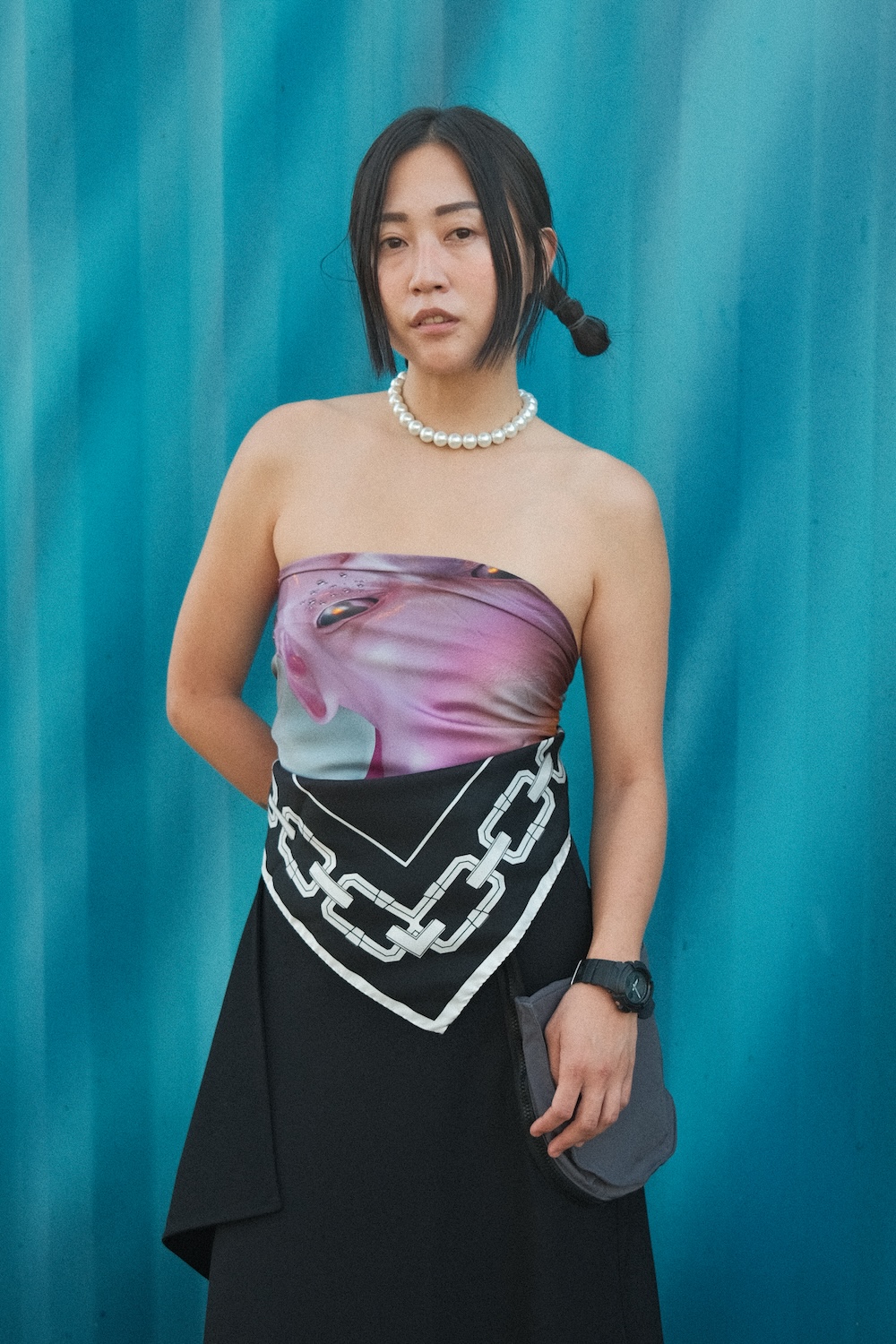
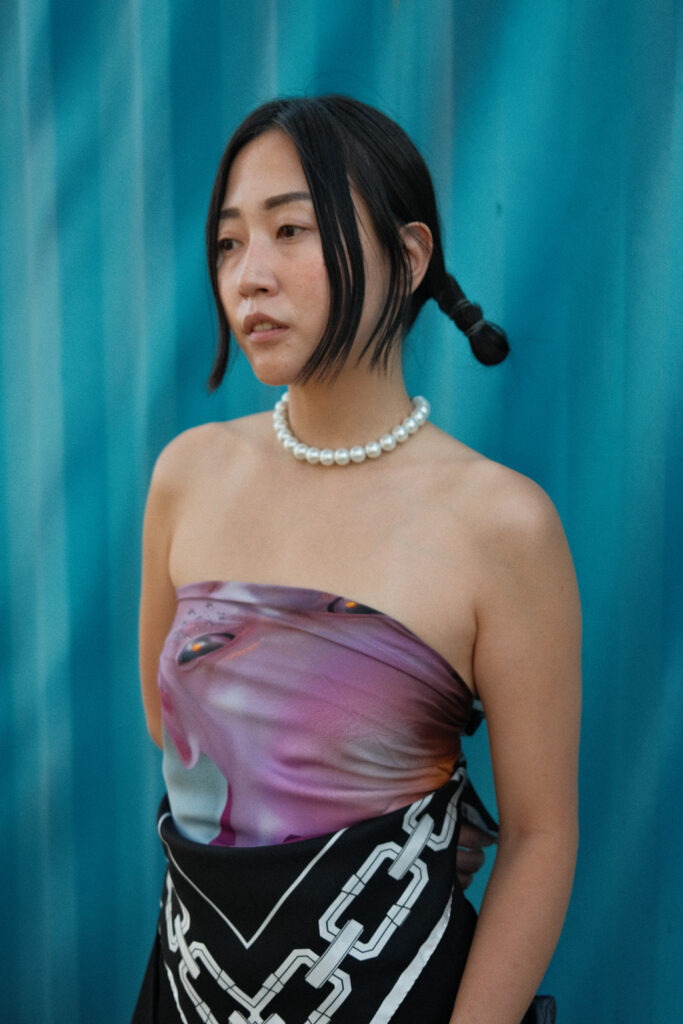
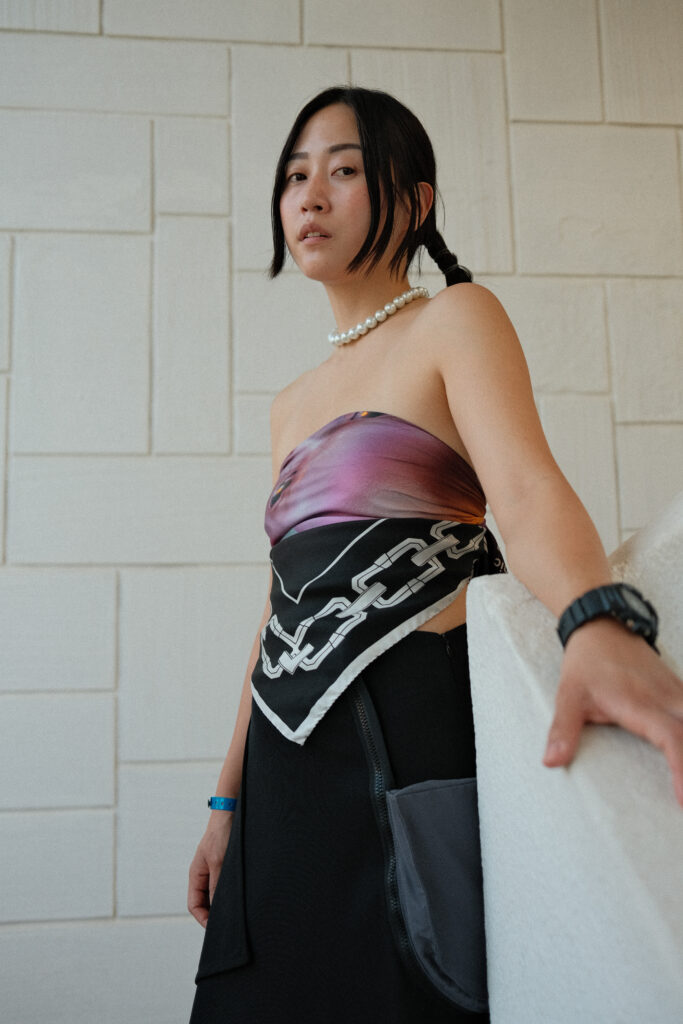
Marcus Boxler: Your style isn’t just limited to music. Your fashion sense is quite iconic. Last time we met, you were wearing a bandana top, wrapped around your body, combined with a – Id call it – mediterranean pearl look. What drives your style choices?

Shubostar: Yeees, I remember that look. It was a piece from the newest collection collab of A Better Mistake and Electronic Beats. It’s called: Altered Ego. I believe in expressing myself fully, whether it’s through music, art, or fashion. Usually, I love street style. But at the same time, I can say with a certainty of 100 percent: That I’m minimalist. 

Marcus Boxler: Really?!

Shubostar: Absolutely. I don’t like to buy many clothes. But whenever I choose something, I need it to be wearable for a week and not have it feel boring. That’s my measurement. It has to feel comfortable and I have to be able to wear it for a show or if I go to the supermarket. Wear it for ten years and exchange it, only if it’s ‘broken’.

Marcus Boxler: That is the core of Minimalism. I think we grasped a little bit of the real Shubostar”. Is there also an altered ego of yours, that you would like to share about? 

Shubostar: Altered me? I think every version of me is altered as soon as I leave the doorstep and interact with other people. No? 

Marcus Boxler: Indeed, but its the same you. Or, are you changing your behavior in the presence of other people? 

Shubostar: Freaking, yes! Don’t you? I mean I love to socialize with my peers and I love to bring an uplifting vibe and happy mode to the group. But sometimes, after a few days of interacting, I need some time alone. To recharge the battery. And then run the game again. 

Identity is representation, transforming communication into community. Picking up the phone with a colleague or with a friend sets a completely different tone, and therefore creates different narratives throughout all social entities. Though alone at her computer, Shubostar was always part of vast communities. Either online or on the dance floor. This duality of being physically alone but virtually connected influenced her style and sound. 

In essence, Shubostar’s music is where her real self meets her ‘altered ego’, creating tracks that resonate both in clubs and in the hearts of those who listen. 

Credits

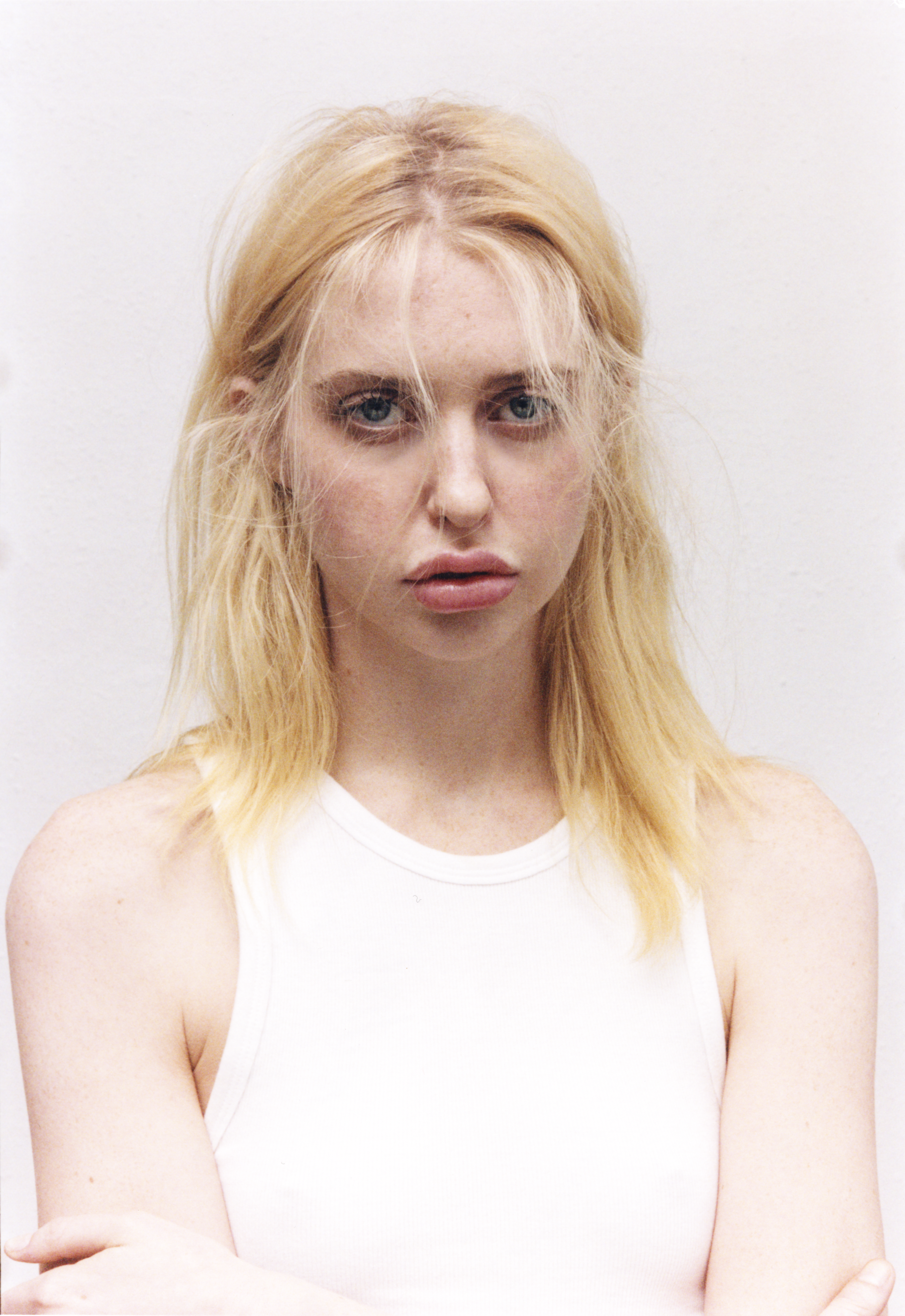
Photography · Marvin Jockschat for Telekom Electronic Beats 
Shubostar is wearing Telekom Electronic Beats x  A Better Mistake 


7132 Hotel

A Haven of Sojourn

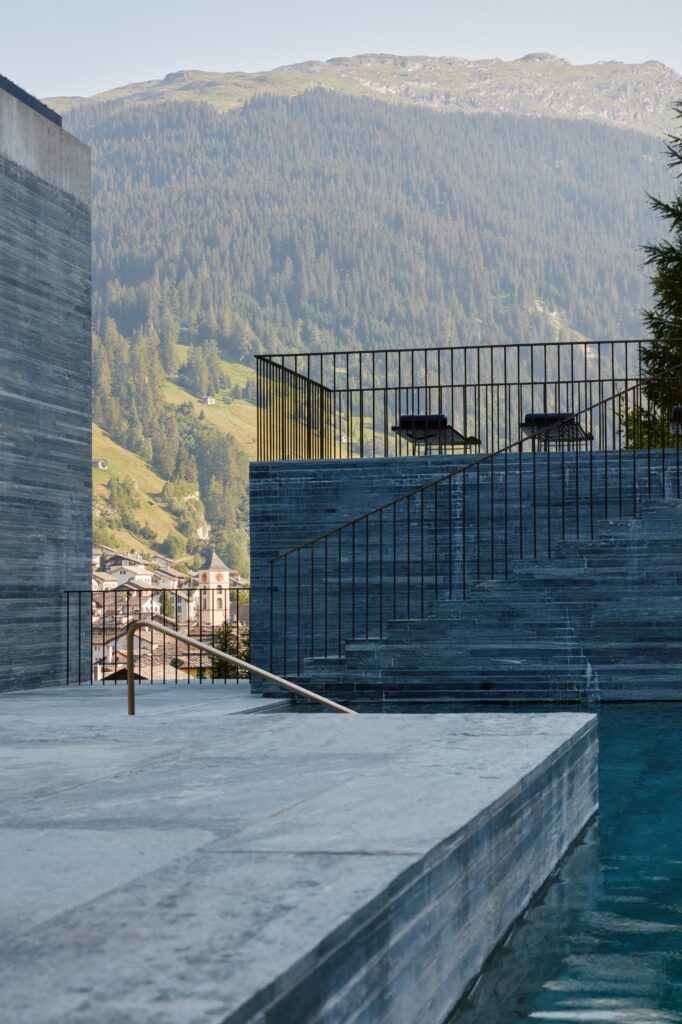
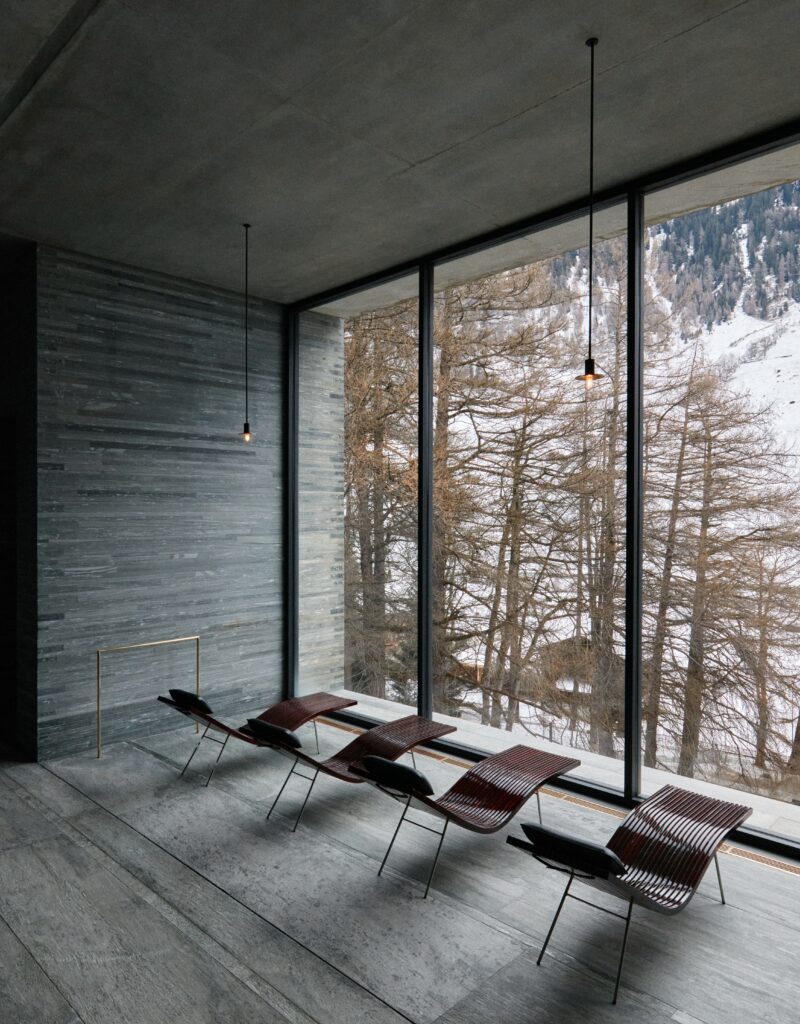
The mountainous village of Vals is blessed by the grace of natural wonders. Rising above sea level in the Canton of Grisons, the Swiss idyllic refuge is home to thermal waters dubbed healing hot springs, their history dating back to the 17th century. Here once lay a sanatorium transformed into a spa hotel in 1964, brought about by the physicians marveling at the curing properties of the springs in the 19th century.

The entrance of the spa hotel ushered in a shift from medical tourism to leisure travel within the neighborhood, all the while retaining the suggestion of a place for alternative healing methods. In 1983, the municipality of Vals reigned over the hotel compound and tapped architect Peter Zumthor, a Grisons native, to architect a new structure to house the thermal baths. The mineralized water of the St. Peter spring had been luring in bathers for more than a century, but Zumthor’s architectural masterpiece for the thermal water’s new home further ushered the territory as a sought-after getaway.

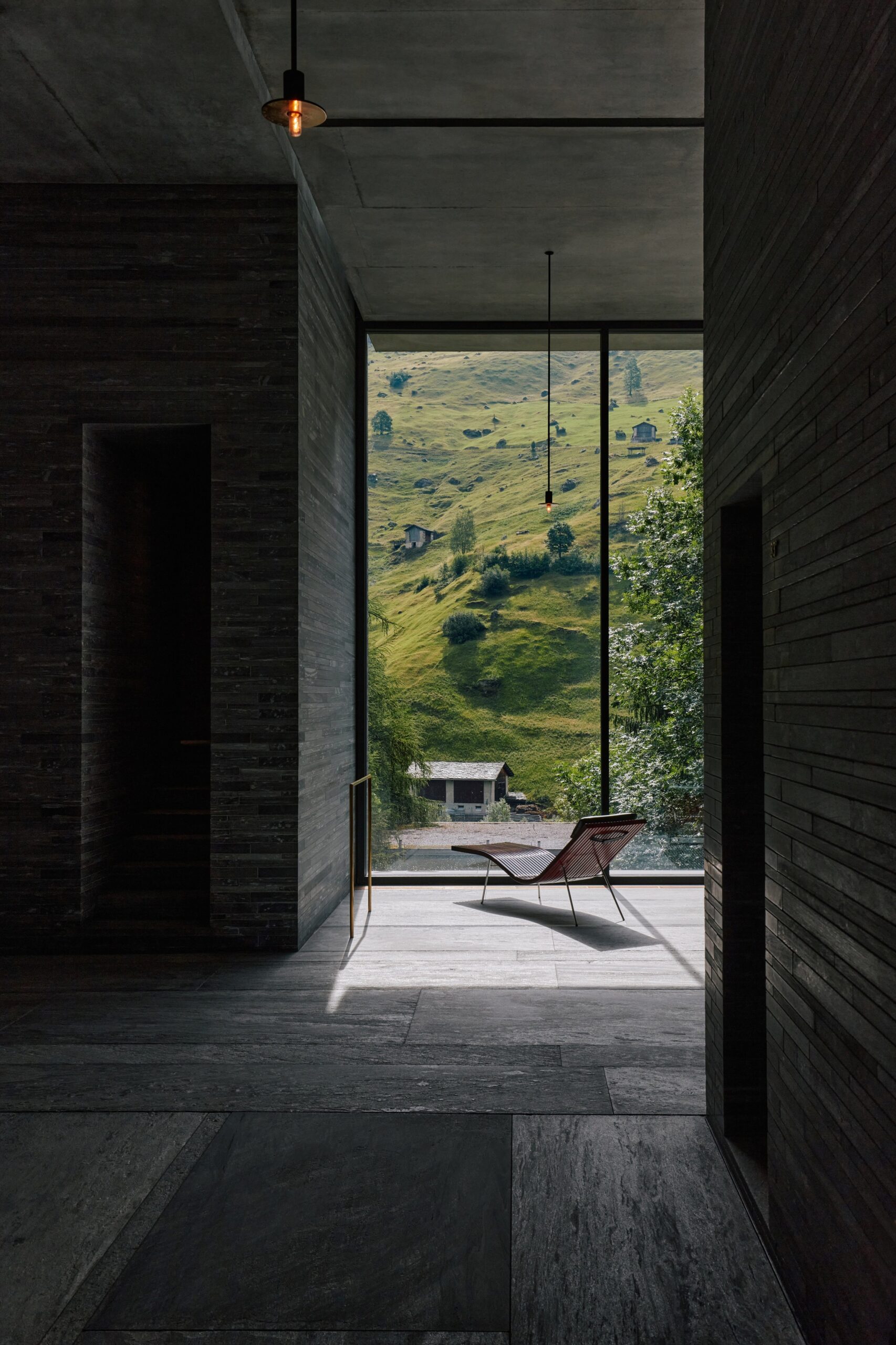
He built a monolithic building made of raw concrete and 60,000 slabs of Vals quartzite, a nod to the archaic beauty of the Vals Valley, and divided the baths into six pools, spanning between 14°C and 42°C pools. Here, the stone architecture and the lush natural land enclosing it form a visual and spiritual harmony. From then on, the architectural community of Vals grew, forming an ensemble of sought-after hospitality and structures backed by the minds and craftsmanship of some of the most revered architects today.

Two years after the opening of Zumthor’s thermal baths in 1996, his masterpiece and the hot springs were honored a status of protected heritage. Yet as years went by, the surging demands of more sophisticated travel and tourism urged the community of Vals to burst forth from its cocoon. Avant-garde buildings began to appear, crafted under the hands of celebrated architects, namely Tadao Ando, Kengo Kuma, and Thom Mayne. Their presence has pronounced Vals as a haven of sojourn that welcomes guests to dip their toes in its remedial mineral springs and luxuriate in one of the world-class accommodations surrounded by the meandering hills, fragrant fields, lengthy hiking trails, and snow-capped ski slopes.

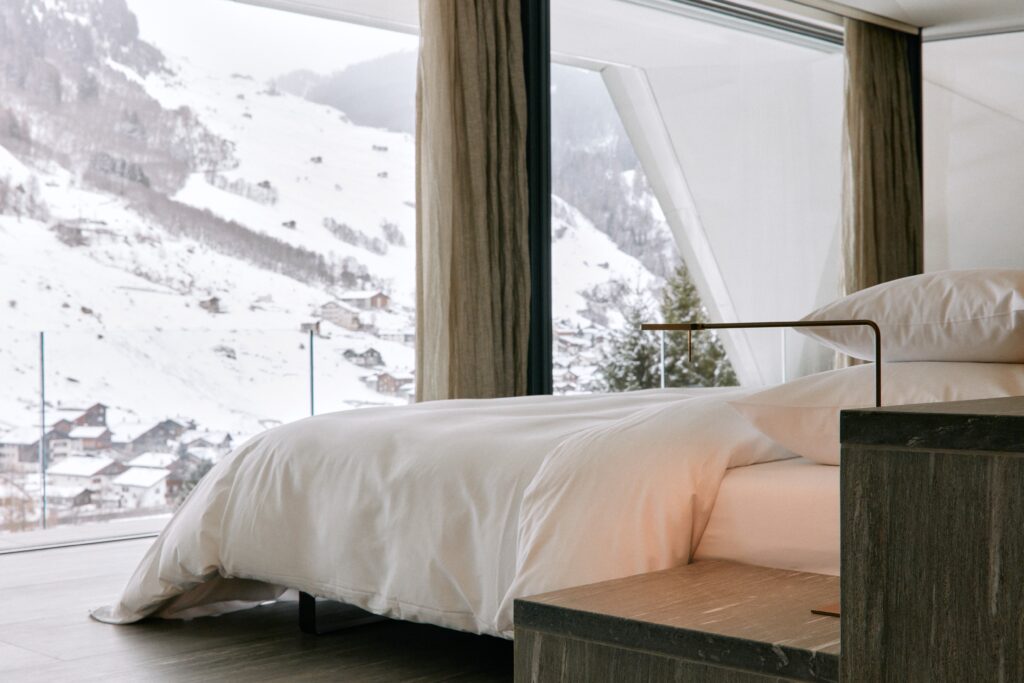
7132 House of Architects suits the name it was given. Tadao Ando and Kengo Kuma bring in the influences of their Japanese roots as they both steep the rooms they designed in the design ethos and lifestyle of their homeland. Ando pays homage to the subtle aesthetics of Japan’s tea houses when designing his 18 rooms and bathes each space with a transition between wooden panels and slabs. His balcony windows offer unobstructed views of the alpine scenery from the mountainside across the room, and his minimal use of furniture, other than a bed taking up most of the space and a wooden bedside table, distills any kind of clutter and distraction.

Similar to his compatriot, Kuma employs the tranquil aura of wood to envelope his 23 rooms in a sensation of cozy oakwood cocoons. He layers the modern Swiss oak panels, one slightly on top of the other, until it forms what may resemble dragon scales that make up the walls and ceilings. Continuity threads Kuma’s design. He places a lengthy slab of wood beside the bed which extends to the bathroom and where the basin and faucet are set upon. Here, openness follows as Kuma veers off from closing up the space and opts for an open floor-level shower with clear glass casing and a base of local granite. Showering means the guest affords a view of the bed and the abundant grove peering through generous windows.

When Thom Mayne’s design emerges, a sudden shift takes place. The architect, who designed 22 rooms, turns to wood for some of the spaces and black stone for the rest. He plays with the two materials, often letting the other win while ensuring they complement each other. In his wood-winning rooms, a sculptural free-standing shower stall stands at the center of the space, an attempt by Mayne to immerse the guests in a three-dimensional experience of space. Its lifesize, stone-like architecture is corralled with a luminous, milky film to enable the guest to see the outside from the inside. Stepping into Mayne’s Stone rooms, Vals quartzite creates a cinematic ambiance, occasionally interfered with by the warm glow of light concealed behind the walls and the lemon-yellow enclosure of the shower stall.

From thermal baths to hotel rooms, Peter Zumthor exhibits a sensuous journey physically and emotionally. His ten rooms are distinctive from his collaborators as he infused each space in stucco lustro, a plastering technique from the Italian Renaissance that produces light-reflective gloss and likens to the surface of marble. He selects a spectrum of zesty and introspective hues, swinging from lush red and vibrant yellow to illusory black, and melds everything with handpainted curtains made of Habotai silk. Luxury at work effortlessly infiltrates the rooms, coupled with the chandelier wrapped in what may be globe-carved stones. 

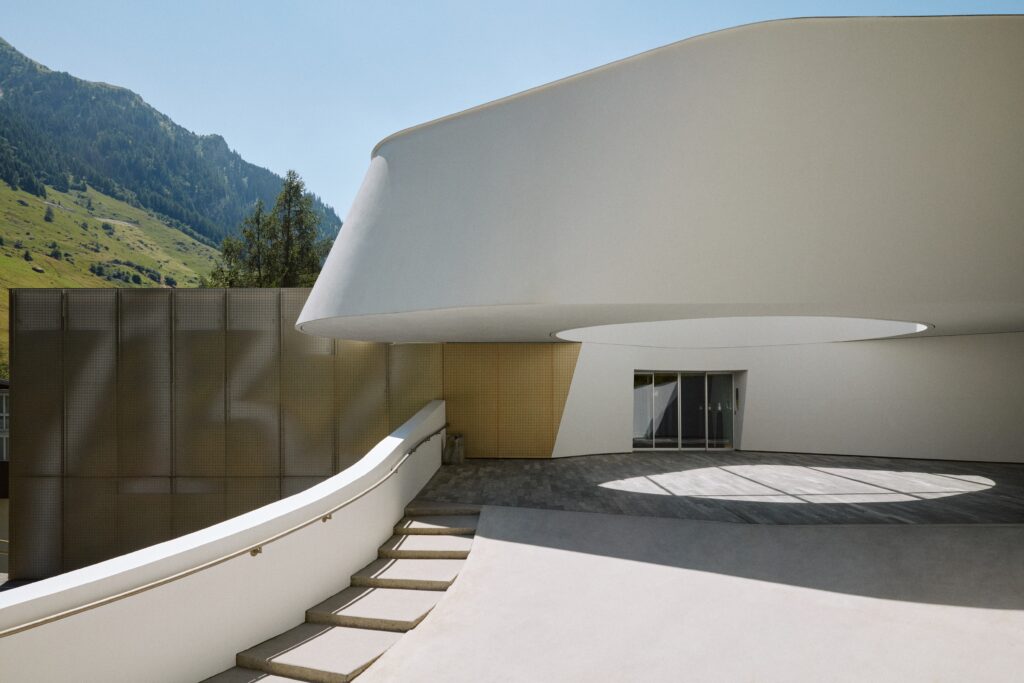
7132 House of Architects is an idle passageway to the entire 7132 dreamscapes. Before reaching 7132 Thermal Baths, guests may pad through  7132 Hotel 5S whose three penthouse suits on its top floor were also designed by Kengo Kuma. Inside the hotel, rare natural materials like wood dominate the landscape, forming a harmonious balance with the scenic grassland sitting outside the property. In another path, guests are led to the chalet of 7132 Glenner, an adjoining accommodation, which sits at the center of the village. Its traditional Swiss design blends well with the modern interior and rooms, an understated guest house brushing against architectural giants within the complex.

It is no longer a myth how Vals gradually received its namesake as a coveted destination and a welcoming respite in the cradle of Swiss nature, from the hotel rooms designed by revered architects to the believed curing property of the hot springs. Even if the guests move away, the lasting impressions 7132 has left them pulls them back in, inviting them to once again return and soak in the wonders of nature and luxury.

Credits

All images courtesy of Julien Balmer.
Discover more on 7132.com

Primavera Sound Festival Madrid 2023

When we think of European summers and the festivals that define each month, drenched in sunlight with the heat on our skin, one such festival that joins ranks beside the northern titans like Dekmantel and Glastonbury is Primavera Sound. Initially beginning its legacy in Barcelona in 2001 and now for the first time in Madrid, the festival has become a pioneer in the events space, becoming one of the largest and most-attended festivals in Europe. Boasting headliners such as The xx, Tame Impala, Kendrick Lamar and Patti Smith, but also spotlighting smaller, local artists, it’s a place where creatives big and small come together and revel in the Barcelona heat.

With a focus on gender equality and their role in the sustainability of the location, this year’s Primavera Madrid debut is an opportunity to reexamine their track record of eco-conscious achievements and active gender equality efforts. In this interview, I chat with festival curator Joan Pons about the music scenes of Spain, TikTok-era festival etiquette and the broader subjects of inclusivity and sustainability at Primavera.

Is there a specific moment in time or influence from the music or creative scene that inspired you to get into the curation game? Were you an experienced raver or partygoer all along, or rather somebody more behind the scenes?

Of course. We have always explained (almost taking on legendary dimensions) that the idea of the festival was born from four friends, who at the beginning of the century wanted to bring the alternative and electronic music artists of that time who were not touring in our country. We believe that this initial idea remains: we still consider ourselves music fans and we still want to bring our favourite artists of our present to our home. More than a raver, personally, I consider myself what I said before: a music fan who has been to many festivals, of very different music styles and each one of them is enjoyed in a different way. Some are for dancing, others for sitting and relaxing, others for a singalong, others to surprise you and others to provoke new sensations. I think Primavera Sound, in the end, is a festival where you can find all these kinds of possibilities. In other words, we have made the festival in our own image and likeness.

When considering the rave and music scenes, Madrid and Barcelona might not immediately spring to mind for many. What is it about these cities, specifically the Spanish and Catalan music scene, that might draw more people to these places to rave? Is there a stark difference between the two?

I would like to politely disagree with the apriorism from which this question arises: Barcelona and Madrid are two cities that, at least in this century, have been very important places on the map through which almost all relevant artists and tours have passed. Proof of this is our own history – if we did a festival, it was because there was demand from the public, artists and industry. Also, international interest – for years now, more than 50% of our audience has been from abroad, and 30% from the UK. So we understand that if you say Barcelona, for some people, the first thing that will come to mind will probably be the football team, but for music fans or those with cultural interests, it will probably be Primavera Sound. Obviously, this cultural vibrancy and musical life make cities a hotbed of club scenes, concert halls, music scenes and important artists. Some of them were maybe born around the festival, performing their first steps and finally being headliners, like this year’s Rosalía.

You’ll often see on platforms like TikTok the discussion of festival etiquette, and that many partygoers have ‘forgotten’ how to behave or act respectfully during concerts and events. This was most likely borne out of the Covid lockdown, with a lot of Gen-Z’ers experiencing their first nights out and festivals without the ‘practice’ of partying in their later teens. With Primavera focusing on sustainability and inclusion at its core, how does the festival foster the environment of making people feel free to experience the music in their own way, while also recognising the need for respect and care of the artists and organisers?

The Primavera Sound public is very abundant and diverse, and there will be both aware and escapist people – you can’t tell. What we can say is that the festival is aware and doesn’t want to be a bubble detached from reality, and if some of our gestures, decisions and actions in this sense can help the public that attends the festival to be so too, then that’s perfect. We have done visibility actions and we’ve been involved with both Open Arms and Greenpeace. We also believe that by moving forward on the path of sustainability we are raising awareness among our public (such as the reusable cups, with the almost total elimination of plastics), with tarpaulins explaining the UN programme of 17 sustainable development goals, of which we have been part of since 2019, because the organisation itself made us aware that we were complying with many of them.  There are also pioneering initiatives such as Nobody’s Normal, which was born as a protocol to prevent, inform and act in the face of sexual aggression and is now a plan for the promotion of sexual and gender freedom. 

Finally, there are our identity decisions, which may seem artistic, and also speak of the reality surrounding us with an inspiring and transforming spirit: the parity poster, increasingly inclusive and diverse because reality is also increasingly inclusive and diverse, not by chance. We believe it is a duty to our time and our reality, and this is what our assistants have told us with very positive feedback that we did not expect after the first year of implementation. They said that they were finally at a festival where they felt free, safe and comfortable to show their sexual identity. So in the end, maybe we do have an aware public.

Primavera boasts a 50/50 gender and pronoun lineup from 2019. With the fact that many bigger industry names feature in Primavera each year, how do curators ensure that smaller artists, some of whom might be LGBTQ+ or gender non-binary, also get the spotlight, as well as financial support? What is the process for research there?

We believe that there is no small print at Primavera Sound and that every name on the line-up matters. If it’s at Primavera, it’s because we love his/her/their music, that’s for starters. Each artist fulfills their function, whether in terms of artistic balance or diversity. The truth is that there is not much mystery in creating an inclusive and gender-balanced line-up, you just have to want to do it – once you have that in mind, it almost works itself out. We also feel that the smaller names actually get the same exposure as the big names because the line-up comes out with all the artists at the same time. They share the spotlight with each other. Also, we create individual assets for each and every one of them and promote all of them equally. It would be disrespectful if that weren’t the case.

I would like to think that this year we have made progress in the gender-balanced lineup, because it’s no longer 50%, and we have taken into account 10-20% of artists who do not identify with a binary separation of gender. We believe that percentage will get higher and higher because, in reality, it will also be higher and higher. If in some way we manage to make this aspect visible through our artistic programming, we can only be proud.

The festivals obviously draw thousands of partygoers each year. In cities like Madrid, where there are issues with heavy tourist flows and the pollution and impact on the local residents that come with it, how does Primavera ensure that the residents of Madrid are not negatively impacted by this large presence of festival-goers?

We believe that our impact on any city that hosts Primavera Sound does not have to be assumed to be negative. In fact, in economic terms, it is highly positive for many sectors (public transport, restaurants, hotels, museums and leisure). In more intangible terms, it brings a cultural value to the life of the city, which during the days of the festival becomes more vibrant and with the eyes of the whole world on it. 

On the other hand, we don’t believe, based on our studies and attendance data, that Primavera Sound festival-goers are an annoying type of visitor to the city. In fact, when we talk about it with the institutions of each city, we tend to consider them as cultural tourism.

Primavera has renewed its partnership with the UN Sustainable Development Goals Campaign. With pledges like gender equality and education on the docket, does this alliance inspire Primavera to become a leader in this sustainability and inclusion space – what are you hoping to inspire with this alliance? Do you see yourself as an example in the festival scene?

We like to think that if we are really so insistent on the issue of inclusion and gender equality, it is because Primavera Sound is such a popular festival with so much media attention that we believe in and defend this policy. With this, it can be inspiring for others and ultimately transformative. Whether it really is, I can’t say. But it definitely would NOT be if we didn’t do it. About sustainability – although we received the A Greener Festival award, we know that it is a long road, a process which we will improve little by little. So, if we are an example to anyone, it is to ourselves: each year’s progress should be a benchmark to be beaten in the next edition.

Credits

More info · Primavera Sound Festival Madrid
Special thanks to Chris Cuff (Good Machine PR), Joan Pons and Henry Turner (Good Machine PR)

Tak Sugita

Tokyo One Day

Team

Photography · Tak Sugita
Styling · midori at W
Hair and Makeup · Katsuyoshi Kojima at Tron
Model · Kanon Hirata at Tomorrow Tokyo

Designers

  1. Full look MSGM
  2. Full look MSGM
  3. Full look KENZO
  4. Dress STELLA MC CARTNEY, shoes ACNE STUDIOS
  5.  Dress and Sandals ACNE STUDIOS, necklace JUSTINE CLENQUET
  6.  Top and Skirt SPORTMAX, Sandals STELLA MCCARTNEY
  7.  Full look VALENTINO, ear-cuff ±BALANCE
  8.  Dress STELLA MC CARTNEY, shoes ACNE STUDIOS
  9.  Dress JENNY FAX, sandals ACNE STUDIOS and necklace JUSTINE CLENQUET
  10. Full look FERRAGAMO

Lucas Christiansen

The Better Me

Team

Photography · Lucas Christiansen
Styling · Jeanna Krichel
Casting · Chisom Abuba at Whitecasting
Hair · Maria Ehrlich at Collective Interest
Makeup · Haneen Ajub
Set Design · Kristin Baumann
Model · Jojo Schneider at Tigers
Photography Assistants · Louis Headlam and Florin Elbel
Styling Assistant · Nutsa Khurtsilava
Retouching · Studio Gessner
Location · KMX Studio

Designers

  1. Top and string SELEZZA and bodysuit Stylist’s own
  2. Dress ZIMMERMANN, tights WOLFORD, boots BOSS and gloves Stylist’s own
    Ring BIMBA Y LOLA
  3. Top and Skirt NAMILIA, tights WOLFORD and boots MARTIN MARGIELA
  4. Coat SELEZZA, bodysuit WOLFORD and shoes MARTIN MARGIELA
  5. Top and Skirt MARINA HOERMANSEDER, tights FENTY and shoes SAINT LAURENT
  6. Top MARINA HOERMANSEDER, dress MARIE LOUISE VOGT, shoes Saint Laurent and bracelet Stylist’ own
  7. Dress and Trousers KILIAN KERNER, shoes MAISON MARGIELA and rings LOTTA DJOUSSOU
  8. Dress MARIE LOUISE VOGT, latex socks Stylist’s own and shoes SAINT LAURENT


Chloe Cherry

One Life To Live

Every few years, an ‘it-girl’ arises and claims her throne, crowned as such by loyal fans and social media enthusiasts alike. The contemporary it-girl is not only defined by her looks, but possesses the intelligence and self-assertiveness to back it up. Chloe Cherry is all of these things. After leaving her rural hometown of Lancaster, Pennsylvania to pursue the adult film industry, she shed her inhibitions and opened herself up to the world. But it wasn’t until a few years down the line that Chloe would realise just how much that fortitude would pay off. 

Before she knew it, Chloe had landed the role of a lifetime, debuting for the first time in the mainstream entertainment industry as the beloved Faye in the viral hit sensation Euphoria. But prior to morphing into her aloof alter-ego behind the camera, Chloe lived a quintessential life — her down-to-earth, authentic disposition is undeniable. Like many of us, she grew up sourcing fashion inspiration from YouTube and discovered her favourite beauty looks by experimenting with technicolor eyeliners and iridescent glitter. Her small-town upbringing left her constantly yearning for something bigger. After speaking to her, it’s really no surprise that she struck gold — in every meaning of the sense, Chloe is a true star. 

Even as a young child, Chloe knew she was destined to be seen, but her insular surroundings didn’t often yield big-screen stars. She reflects on growing up, remarking that Lancaster was a small-town environment, that she was different. She dreamt of bursting that bubble and making a name for herself, but she knew early on that she’d face some hurdles along the way. Luckily for Chloe, she managed to topple those hurdles through a rock-solid confidence in herself.

You were born and raised in Lancaster, PA before playing Faye and your life changing forever. I’m also from Pennsylvania and I’m very familiar with the restrictions that can come along with the lifestyle many lead in that area. How did your hometown shape you as a person and dictate your path?

It was definitely a small town with a lot of small-town values. People were very gender divided — where I live in LA there’s so much gender fluidity and we didn’t have anything like that. People generally weren’t as open-minded about things and I feel like even I wasn’t as open-minded about life and people when I lived there. They also don’t really think that much bigger outside of what they were born into. It was a very close-minded community that thought religion, specifically the Christian religion, was the correct way to live, and that you were just supposed to follow a certain amount of correctness. That changed me, because it made me really want to break out and do whatever I want. I very stifled by the judgment that people had there. 

I feel like it yielded this person that is truly not afraid to show her different sides.

I’m not afraid to do anything, pretty much, if I want to. I think growing up there kind of told me that it’s okay to break a mould, do you know what I mean? It’s okay to do something outside of what is ‘normal.’

Before Euphoria, you were in the adult film industry. This is an experience that you have described as liberating. Have you always been in tune with your sexuality? What gave you the personal fortitude to shed your inhibitions and show that side of yourself to the world?

My comfort in my sexuality basically just came from really wanting to put myself out there. Being from Pennsylvania, in the middle of nowhere Pennsylvania, you don’t really have any connections, especially to Hollywood. I think that just made me want to try literally anything just to get out of that. Even though it’s totally fine to live this way, so many of the people I grew up around kind of live the same way that their parents did. I’m really grateful that I took a huge chance in life and that it got me somewhere. Where I’m from, people don’t really take chances. 

What is the most valuable lesson you learned from the adult industry that you brought with you into mainstream television? 

One of the most valuable lessons I learned is how to act, how to be on set, and how to follow directions — that’s where I learned to be an actor and a good performer in general.

What I feel radiates from you is an unbridled sense of self-assuredness. What is your advice to others who may not be as comfortable in their own skin? 

We only get one life to live. We’re all born and we all didn’t choose to be born, but we definitely didn’t choose to have to work to live. So I just really think that we really shouldn’t judge ourselves on what we do for work in order to live, because it’s all about what kind of day you can get through. You can’t really live your life based on the people around you because those people might be out of your life one day. And then what matters? At the end of your life, it’s only gonna be you, so you need to make sure that you’re happy with your choices.

I’m sure that being on a TV show and all of the amazing things you’ve experienced lately have been a big 180 for you. When you were younger, did you always aspire to have an audience-facing role? What was your dream back then?

Growing up, I always thought I would be some kind of performer or that I would be on camera. At first, I never really knew that I was that good of an actor because when I was acting as a kid, in school plays and stuff, I never really got the big roles. But I was a good enough actor for the adult industry. So it’s been actually a pretty crazy surprise to me that all this has happened, but it’s taught me that sometimes people just have natural skills. I think that’s what I have more than anything — natural skill. A lot of it, especially playing Faye, just kind of comes easily to me. It didn’t really take a ton of training or anything.

Faye became such a likeable character because I think many of us saw ourselves in her. She said the things that we were all thinking and she also acknowledged her own flaws and shortcomings — she was real. In what ways do you relate to Faye, and on the flip side, were there any qualities of the character that were difficult for you to channel? 

One quality that was hard for me to channel in Faye was just not caring about anything, but I feel like part of that is also being on drugs. So I’ve done a lot of research about being on drugs. The way that she doesn’t care what people think and will talk back to people — I feel like I don’t really relate to that. But I do relate to the way that she really likes to find a sense of community and a sense of home. I feel like that’s what she’s searching for by staying with Fez; she wants to belong. 

Your life outside of Faye underwent such a drastic transition. Have you found that sense of community yet?

I feel like I have a decent amount of community here. I’ve met a lot of people, but it’s funny — I find myself so easily becoming friends with a gaffer or a makeup artist. But I don’t as easily become friends with people that are the other actors. I know a lot of them, but I feel like a lot of my friends are people that are behind the scenes and are just really fun and easygoing. 

In some ways that makes sense because you can probably relate to those people more, given how quickly all of this picked up for you. After falling in love with your character, many fell in love with you for your genuine personality, your quirky, colourful style and infectious charisma. You’ve become a Gen Z ‘it-girl’ in your own right. So, I want to know about the ‘it-girls’ or individuals that paved the way for you — who were your icons growing up?

I loved Chloe Sevigny’s and Alexa Chung’s style for a really long time. I always loved Ryan Murphy’s shows and was inspired by the fashion on his shows. Miley Cyrus is somebody that I’ve looked up to and I also really love Claudia Sulewski’s style — I watched her videos for a while.

I can see all of those coming together to inform your style, and even Faye’s personal style in the show. I wanted to revisit your experience playing that role. I really appreciated the point where you mentioned that playing Faye feels natural — I think that’s why you and the character mesh so well and we all took a liking to her.

I don’t know if I’ve said this in an interview before, but there’s this one moment of my audition for Faye that I’ll never forget. I came in and I said the lines and I had this whole act that I would put on of being like, fucked up. I was doing the lines like that and then Sam goes, ‘No, stop. Just say it how you would say it.’ And then I just said the lines to how I would say it and then I got the role.

Which is amazing. It was effortless.

The only thing about being related to Faye — I think it’s so good. I just hope it’s not the McLovin effect where I’m typecast for the rest of my life. But I mean, I feel like it’s perfect. It comes so naturally to me. Faye is almost like a side of me. If I had kept going at my craziest and just kept going on drug and party binges, I might have ended up like Faye.

Faye is like you in another dimension. 

Totally.

You brought up a really important point about wanting to avoid being boxed in. You’re at such a pivotal moment now; it’s only the beginning. I listened to you on Emily Ratajkowski’s podcast, where you reiterated that as a young girl, you always yearned to have a flashy persona. You wanted to be the ‘hot bimbo’ that everyone knew. It reminded me of a recent article that The Cut published titled, ‘The Reclamation of Bimbohood‘. Basically, it was about how our contemporary understanding of ‘bimbohood’ encompasses attractive and socially-engaged women — they are self-proclaimed bimbos who ooze confidence. Do you resonate with that at all? Especially coming from the realm of adult film, how have you managed to reclaim your own sexuality and identity?

When it comes to Faye, I feel like she’s a bimbo, but in a way that you wouldn’t always imagine. She’s kind of a low-end bimbo, you know what I mean? The trashiest version of a bimbo. But with adult films, being a bimbo was very empowering because so many people would like you when you looked like that. Part of me sometimes misses being a part of such a sex-positive environment where instead of people constantly making threads on Reddit saying my lips are so terrible, people were like, ‘Oh my God, you look so amazing.’ I kind of miss that different view. Even if it was a more perverted view, I kind of thought it was almost more positive than such a perfectionist perspective. Doing adult films actually made me a lot more confident in my looks and just everything about me. I feel very physically confident about things since doing that. I think Faye is also the same in that way. Faye is also somebody who uses her sexuality and looks to get things in life and she’s very confident. 

Totally — and there’s a profound power behind that. How has it been navigating the scrutiny now that you have opened yourself up to a whole other world?

Dude, it’s so weird now. What I don’t miss in porn, is people would call me fat all the time because I was showing my body, but now I don’t really get people calling me fat anymore because I don’t show my body as much. People now scrutinise my looks in such an interesting way. They’ll say, ‘Oh my gosh, she’s so fake. Look at her lips.’ Whereas people used to not really say that. 

It’s very intriguing to hear the difference between the two types of entertainment from your perspective. Part of what makes your character and your true persona so endearing is your affinity for making people laugh. You don’t seem to take yourself too seriously and have cited shows like Curb Your Enthusiasm and It’s Always Sunny as your go-tos. If you could be a character in any comedy, who would you choose and why? 

I personally consider Succession a comedy. I think I would make myself one of Cousin Greg’s mean girlfriends — that would be funny. I do really like Curb Your Enthusiasm. I would love to be a part of that. I feel like I could be a waiter that Larry David fucks with or something like that. 

Not only are you a multi-faceted actress, but you have modelled for Laquan Smith, GCDS, Blumarine and more. You’ve gotten to live out the experiences of any fashion enthusiast’s dreams. Have you always been into fashion?

I’ve always been really into fashion. I love looking at fashion online and it’s something that I’ve always followed on social media. It was really surreal for me to be able to walk in those shows and I really hope I get to walk in more one day.

I would describe your style as effervescent, frisky and engaging. I’ve seen you take a liking to graphic tees and Y2K-era silhouettes. How would you describe your own style and what types of pieces do you usually gravitate towards? 

I usually gravitate towards stuff that — this sounds kind of weird — but I like stuff that looks like something that I personally would’ve worn as a kid. It’s basically just because I have the same taste that I did as a kid, so I dressed very Y2K because I grew up in that time period. I’m really attracted to stuff that was ‘in’ back then; it’s just ingrained in my brain. I also like really weird stuff, stuff that looks really unique. But for the most part, I constantly wear clothes that are reminiscent of the 2000s. 

You were also the face of Urban Decay’s Bond Liquid Lipstick. Urban Decay is one of the first makeup brands that I fell in love with as a tween getting into beauty regimens. What are some of your earliest makeup memories? 

Actually, one of my earliest makeup memories involves Urban Decay. The first time I started wearing makeup, I was in sixth grade and I didn’t really wear real makeup. I would just take this glitter eyeliner and put sparkles on my eyelids every day. Then eventually I got this Urban Decay blue eyeliner and then I started doing that.

I had the exact same blue eyeliner and I loved it. How has that routine evolved as you’ve matured?

I’ve never told this to anybody, but when I was 15 years old I discovered Lily-Rose Depp; I found her Instagram and I loved her aesthetic and the way she did her makeup. It was so simple. She would literally just do a little bit of blush, mascara, and nice eyebrows and I was just obsessed with it. So I completely dropped all my crazy makeup, started doing really simple makeup and I’ve just done it like that ever since. 

You’re just getting started showing the world who Chloe Cherry really is — you’re an esteemed actress, a model, a style icon for many, and even a SoundCloud rapper. How do you hope people remember you decades from now? What’s the legacy you’d like to leave behind and what are you working on right now that you’re excited about?

A few years down the line, we’re on Euphoria season seven. I maybe have my own fashion line, maybe my own skincare line, I’m doing more beauty campaigns and just doing all sorts of high fashion campaigns. I love being on Euphoria, but if that ended, I’d love to be a regular on something else. I just want to keep continuing to do what I do because I love it.

Team

Talent · Chloe Cherry
Creative Direction · Jade Removille 
Photography · Ricky Alvarez
Styling · Kathryn Typaldos at Forward Artists
Hair · Ericka Verrett at A-Frame
Makeup · Rob Rumsey at A-Frame
Styling Assistant· Nicole Grasty
Location · FD Photo Studio Los Angeles
Interview · Kayla Curtis-Evans
Special thanks to Lucy Greene at Anti Agency, Amanda Horton at ALH PR, Hannah Hardison at A-Frame


Designers

  1. Top and skirt RICK OWENS
  2. Tank TNA
  3. Tights GRETA GARMEL and shoes RICK OWENS
  4. Top from Archive Vintage, shirt and skirt ECKHAUS LATTA, socks COMME SI and shoes ARIELLE BARON from conti comm
  5.  Top and skirt ELENA VELEZ and earrings MEJURI
  6.  Hair clip SARAH APHRODITE, top PRADA from Archive Vintage, skirt POLLUX, shoes VALENTINO, bracelet MEJURI and leg warmers vintage
  7. Dress JEAN-PAUL GAULTIER from Archive Vintage


Bambou Gili

Les Dîners de Mamito, 2022

Painting and the challenge of storytelling

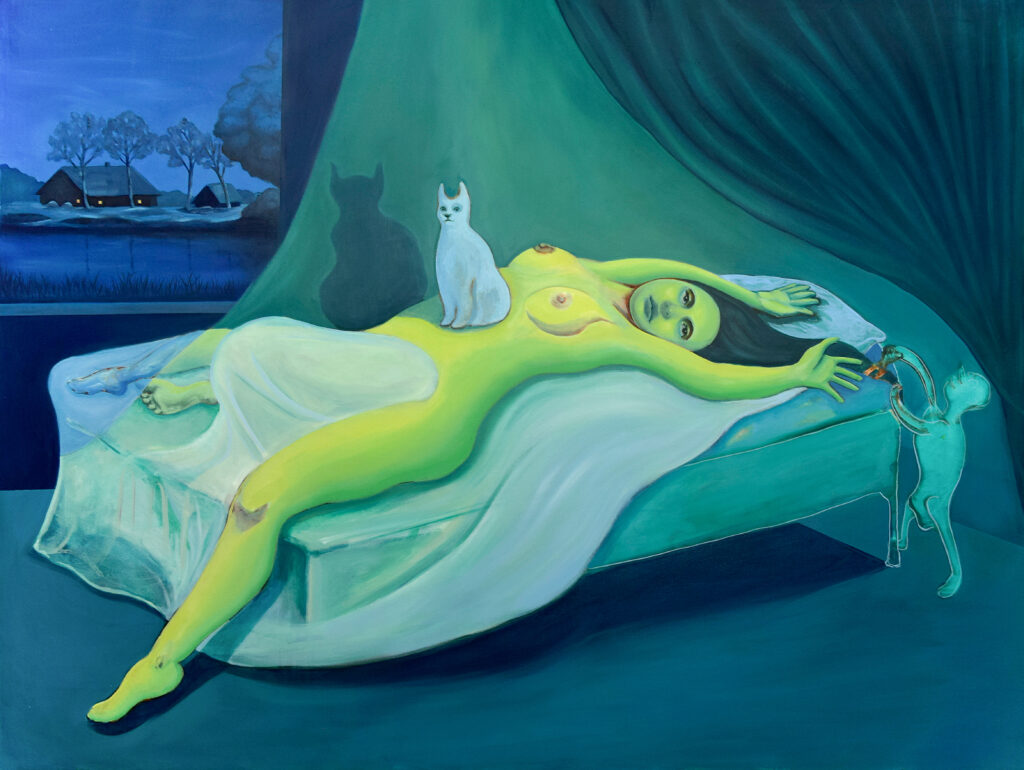
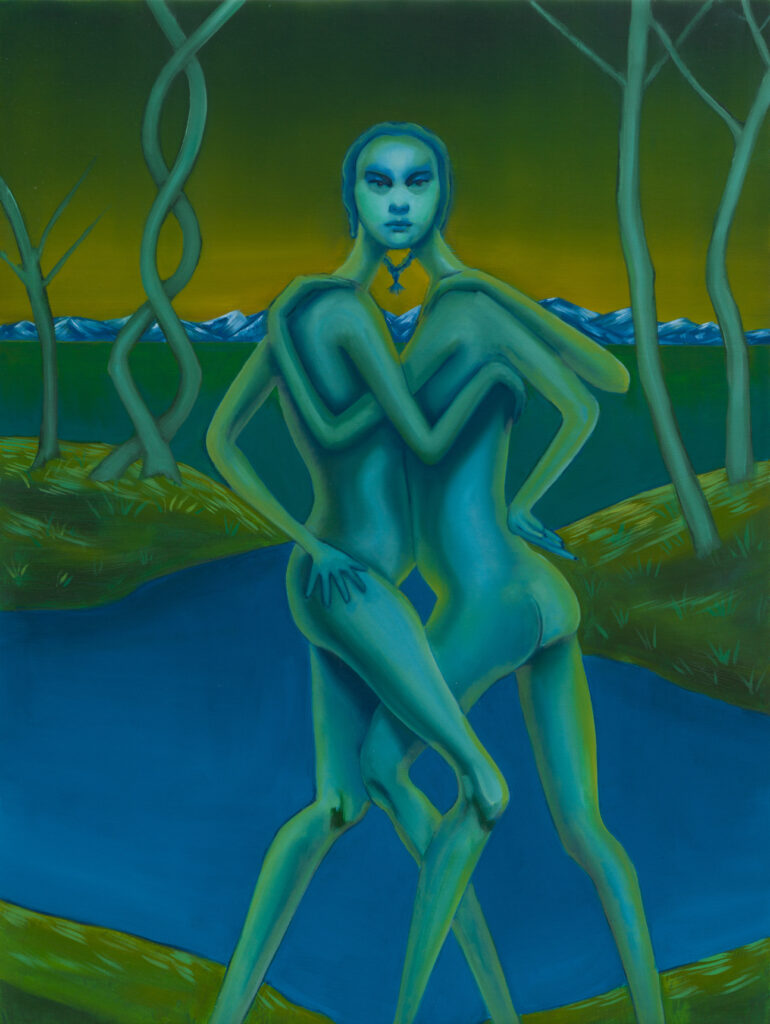
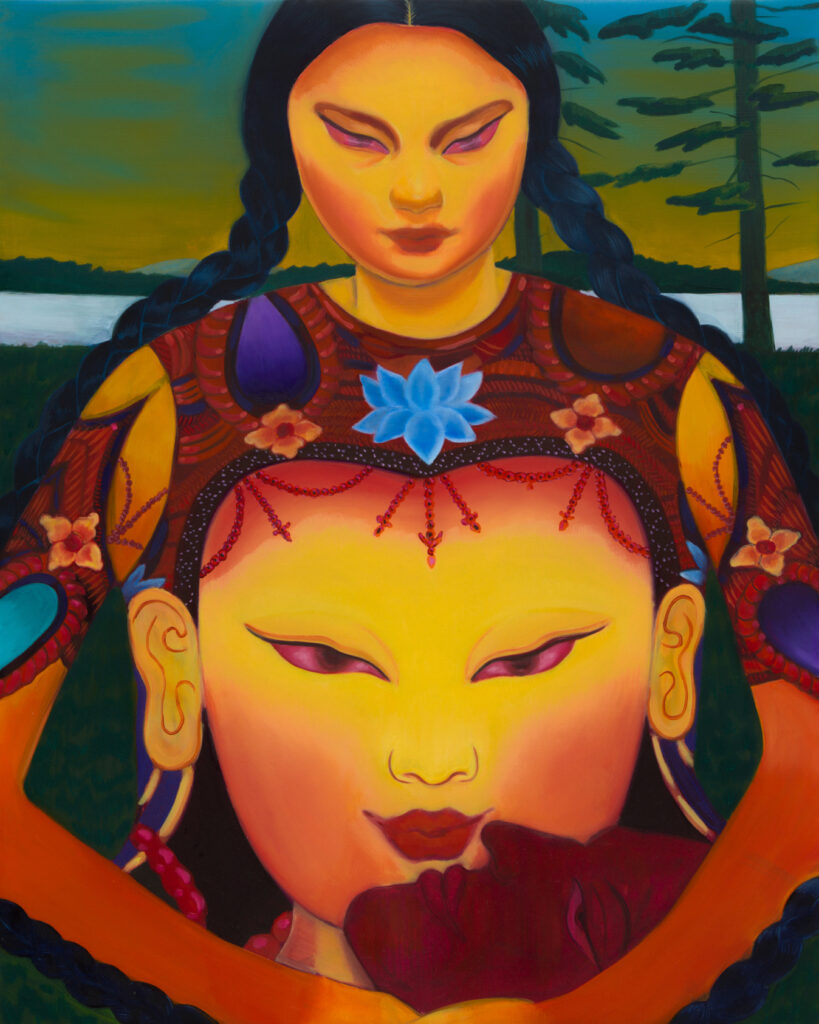
Bambou Gili’s paintings are world-building projects, sprawling in narrative and unified by rich, tight colour palettes. Throughout her body of work, fantastical landscapes activate the feminine figures inside them, allowing for nature to become an ally, a co-conspirator, a unique character in and of itself. In each series, the artist — whose inspirations range from the animation of Hayao Miyazaki to the French Impressionists — dives into a singular colour spectrum to experiment freely and tap into possibility. Oil drippings in green, blue or purple produce a textural, eerie stillness that moves across tableaux like an omniscient spectre. Gili’s surrealistic scenes, imbued with this energy, are both clandestine and playful: lush plants, serene bodies of water and ethereal trees conceal subjects from one another as their concurrent stories unfold, and each protagonist exudes a presence that matches the magnitude of her surroundings. Within Gili’s alternate universe, environment and human emotion vibrate at an equal frequency somewhere between waking and dreaming.

Your paintings deliver an intriguing sense of mystery, a haunting quality,sometimes spectral but in some cases almost ironic. The subjects are oftenwomen portrayed in nature or domestic settings. One particular work or yours, Sleep Paralysis(2021)reminds me of The Nightmare by Heinrich Füssli(1781), while others bare similarities with the secret forests of Rousseau. Beside arthistorical sources, what are the inspirations behind your works? Do you look at peoplefrom your personallife,photographs,magazines,socialmedia?

Yes! Neighbourhood Sleep Paralysis was based off of Nicolai Abildgaard’s Nightmare (1800), after Heinrich Füssli. Regarding inspiration, nothing is off-limits. I tend to gravitate towards working in series. I like to focus on an idea for a long period of time and see what bodies of works come out of it. While I’m doing research for that idea, I scour everything. If I see something that makes me think of the series, I document it and store it in my series folder. So, take my last one — I was looking at imagined scenes from Calvino’s Nonexistent Knight, 14th-century armour from the MET collection, Scooby Doo  stills, etc.

While looking at your works one can clearly notice the predominance of blue and green, applied both for living figures as for landscapes. Where does this fascination with these tones come from?

Ha! I get this question a lot. Fun fact: In Zulu, ‘blue’ and ‘green’ are the same word. When I go to the MET, I’ll end up staring at a bright green Lisa Yuskavage painting, admiring the use of colour.

In my last solo, The Non-Existent Night, the series started as an exercise to focus on colour at night. A way to consciously limit my palette to greens, blues and purples. That’s not to say I want my next series to focus on these tones exclusively.

Aggie & Pieter, 2022

Talking about light work and how important it is for you, I was reminded of theimpressionists, who often tried to capture the same subject under different light. Can you tell me something about this study of light and how you incorporate it inyour practice?

Light at night is notoriously hard to capture. You don’t often see a true representation of lowlight scenes. Photos and videos often do a bad job portraying those blues. Which is what led to my night series.

I find the dichotomy of timeframes in your work very interesting: on the one hand, the depicted subjects don’t belong to a specific era historically, on the other, they’re located in the specific — and narrow — time frame of the night. How do you look at time when addressing a new series? Is there a straight conceptionoflinearity?

Honestly, I have not thought about it! I think that the red thread here is the fact that all humans have experienced the night.

I had the pleasure of seeing a preview of your new series, which you willexhibit in your next solo show at Night Gallery (LA) in March. Can you explain the inspiration behind it and how you shaped it through paint?

The work is based on, built around Goodbye Earl, a country song by the [Dixie] Chicks. It’s an upbeat tune, just four minutes or so, but as you listen, you’re introduced  to an entire saga — two childhood friends grow up together in a rural area. One moves out, the other stays. The one who stays ends up in an abusive relationship and, try as she might to leave, can’t seem to escape. Well, after exhausting legal outlets, she falls back on her old friend, who returns and helps hatch the plan…Earl has to die.

Now, the thing that intrigued me about the song was the storytelling. They manage to build this entire world — give you details about the friendship, walk you through a murder, get you on their side — in a matter of minutes. Not a movie or a six-part series,  but a short song. But somehow, there’s considerable depth, a lot of colour to the story and the characters.

As a painter, I thought that’d be an interesting challenge. Can you, like The Chicks have  done in a song, tell a story in a series of paintings? A story you physically walk and move through? And more than just illustrating a story, can you express the same depth? Have it stand on its own — draw you in, intrigue you, where is this going? ‘Oh shit! But, wait, oh yes, let’s go’. In short, can it move you the way the song does? A world-building exercise.

Storytelling is thus pivotal to your work. Whether it’s to convey a specificsense of mystery, like in the 2020-22 series on the night, or an actual concatenation of events, a single painting exists in relation to the other. Thinking in these terms, what was the difference between your old works and this last series?

Surely there’s some stylistic coherence. So they’re loosely related. But I mean, every year of my life you could ask me to look back two years in the past, and I’d be slightly embarrassed of who I was and what I was doing. You could read that really pessimistically,  but the way I see it…if you’re not feeling that way, you’re not evolving.

Blue Kitchen, 2021

While talking about your upcoming show, you told me that the theme of the song slowly became close to your personal life while you were painting the series. In what sense do you think that this song by the Chicks and your translation of it in paint can be relevant for yourself and for collective society, women in particular?

Making the works, you’re forced to view the Goodbye Earl narrative through the cultural context of 2022. It’s not just an arbitrary story. It’s about friendship, relying on your fellow women, revolution if you will. That if it really has to come down to me or you, well, I’m choosing me, bitch. Fuck you. That rings different after 2022, after overturning Roe. Gives it a stronger bite.

But still, there’s a femininity to the murder. They kill Earl over dinner. Compare that to, say, the Goodfellas painting (from this series) — the opening scene, Pesci, DeNiro and Liotta are driving down a dark road, they hear some bumps in the trunk. They pull over, open the trunk, where there’s a guy, barely alive and covered in blood. Pesci stabs him a bunch, DeNiro shoots him multiple times, and Liotta’s voice-over: ‘As far as I can remember, I always wanted to be a gangster’.

You gotta love that these ladies didn’t want to kill someone, didn’t want to take it there —  so when they’re forced to, it’s considered, it’s bloodless. Just a poisoning of peas.

How do you see your work developing in the future?

It’s an opportunity to experiment with new colours, new themes. I hope it feels completely  different.

Evil Twin in Vivienne Tam, 2022

Artworks

  1. Les Dîners de Mamito, 2022. Courtesy the artist and Jeffrey Deitch, Los Angeles Photo: Charles White
  2. The Face Stealer’s Pond, 2021. Courtesy the artist and Perrotin, New York
  3. Neighborhood Sleep Paralysis, 2020. Courtesy the artist
  4. Aggie & Pieter, 2022. Courtesy the artist and Night Gallery, Los Angeles Photo: Nik Massey
  5. Mind-Body-Body Problem (After Junji Ito), 2022. Courtesy the artist and Lyles and King, New York
  6. Blue Kitchen, 2021. Courtesy the artist and Arsenal Contemporary Art, New York
  7. Evil Twin in Vivienne Tam, 2022. Courtesy the artist and Lyles and King, New York

VTSS

After the release of her EP Circulus Vitiosus, the London-based artist has proved one thing: never let them know your next move!

‘I guess I’m ready to get married,’ Martyna Maja, better known as VTSS, jokes over video call after she fell down the stairs of her apartment last night. No cause for concern — it takes more than a stiff neck to get her worked up. As a matter of fact, the Polish techno misfit has been taking care of herself lately. She took a one month break and now takes life one existential crisis after another. Frankly, Maja has never been feeling better. ‘I finally like where I am and who I am,’ she says of a stellar career since her breakthrough in 2018. 

Ever since her EP Circulus Vitiosus was released at the end of last year on Ninja Tunes, the Polish-born artist showed the world that VTSS is more than just your favourite DJ. It’s an exploration of different alter egos –– never the same, always surprising. Not only for herself but also for her loyal stans, who are rightfully obsessed with her virtuosity and the way she feels utterly relatable, cracking jokes while constantly refining her very own take on techno music. ‘The idea of not pleasing anyone and not pleasing older generations was a bit of a breakthrough for me,’ she admits, knowing perfectly well what she’s doing behind the decks and not taking any hate from some internet troll hiding within the cracks of anonymity. 

VTSS has been growing up — she found her superpower and the answers that have been inside her all these years. 

Let’s start with some self-reflection. What’s something you learned about yourself recently?

That I’m not invincible. I learned how fragile we are as humans, how this nightclub lifestyle I’ve been living for almost half of my life really takes a toll on my health. With this career path, it’s normalised to tour 52 weeks a year. I feel like I’ve been lying to myself, telling myself, ‘it’s just one more week, and then you get a break’, but you can’t fix yourself when you’re physically exhausted. That’s why I called January off, which was the first time I ever had a holiday in 5 years. Now, I’m trying to figure out a balance of living this hedonistic lifestyle and not making myself feel worse. 

You’re hugely inspired by the process of becoming and self-healing. Could you share a bit of your journey? Where did you start, and how did you end up where you are now?

As a kid, I was quite good at everything, so I never really found this one thing I’m exceptional at. When you put all your eggs in different baskets, you’re kind of a social butterfly. As a result, I never really found myself until I found my purpose, and my purpose turned out to be work. That was probably when I was 20. Until then, I have been doing random shit I felt I was supposed to do. I went to law school and economics school just because I had a bit of interest, but back then I didn’t know what I really wanted to do. I fell in love with clubs, and music turned out to be the answer to missing some part of my identity. It has been a bumpy ride, we all know how careers in music are. Now, after almost 15 years since I started clubbing, I’m trying to find a purpose outside of work.

“It feels great to also be a person outside of being a musician and my work.”

I imagine it to be quite difficult when people put you in a box and expect you to be that one thing, no in-betweens.

Absolutely, and if this is your whole identity, it will really affect you when someone says something bad or mean. I guess that’s the case for a lot of people, and it’s a scary and dangerous place. When it’s all your life and all who you are, there’s nothing left if anything goes wrong. I’ve been working on this for the last 3 years, and it feels great to also be a person outside of being a musician and my work. It’s a process that is going to last forever, but it’s fun to go on this journey and to feel like finding this identity that I’ve been looking for, and finding the answers that have been inside me all those years. 

Your EP, Circulus Vitiosus wasreleased at the end of last year on Ninja Tune. What feels like a vicious circle in your life?

At one point, everything felt like a vicious circle. It’s been a journey to break all of them, so it doesn’t feel like that anymore. With this EP, VTSS got her voice –– it’s not just beats, there is a story behind it. I realised that VTSS is an exploration of all the versions of me if I had made different choices at some point. Some of those might hit closer to the truth than others, but I guess this really helped me to figure out what the truth is for myself. 

This issue is all about virtuosity. Have you always believed in yourself and your skills, or do you have moments when you don’t feel good enough?

It took me years and years of active practicing, touring and working every single week to be where I am and what I do the way I do it. I’m quite comfortable DJing in front of people, but last year when I started to go in the studio for the first time, I was absolutely terrified. It was the first time I started to make music with other people, not by myself at home, or sending stems back and forth. It was also my first session as a vocalist in front of strangers, which is such a new thing for me. I did my first session with Boys Noize, and we made an amazing track I’m really excited about. At the beginning I was so insecure and scared of going into these sessions that I don’t know enough, that I’m not technical enough, and that I will be so embarrassed. Afterwards, I learned that it’s actually OK to admit you don’t know stuff. It’s not like anyone is going to laugh at you, and if they do, it means they are mean people, and you never want to have anything to do with them anyway. Everyone does stuff in their own way and that’s the magic of it –– even the most DIY ‘unprofessional’ ways can be incredibly inspiring to others. 

When I think about my first Boiler Room for example, I might cringe about some technical aspects or mistakes that I hear, but skill comes with practice! Especially in creative arts, there are so many ways to do stuff. There’s no rulebook.

“Even if user10735 will tell you this is not the right way to do stuff, it doesn’t mean anything. You just have to keep going, get better and find your way.”

While we’re at it, what’s a secret skill of yours not everyone knows about?

I give amazing relationship advice. That has always been my obsession. You know, if someone says something silly, I’m holding it in — so I don’t give unsolicited advice. 

Imagine, you start all over and become a therapist…

Maybe at one point! That would be fun. Let’s see where music gets me and if I have the capacity to do it for the rest of my life, or at least for the next 20 years. But if not, this is the closest of what I probably would get into. When I speak to my therapist, I’m always like, ‘rate my coping mechanism!’

“Sometimes it’s really hard to work on yourself when your friends expect you to be who they know you are.”

You’re someone who embraces change, and not only moved from Berlin to London, but also shifted direction with your music. Do you feel like change comes easy for you, or is it a certain feeling you just have to act on? 

For me, change always felt natural. When I was a kid, I changed schools quite a lot. As I said before, I didn’t know my place and nothing really felt significant enough for me. I guess this is also my ADHD, which I didn’t know I had back then. It has always been very easy for me to move on, and I always loved the idea of starting over. That’s why London is so great because it’s so big that if I’m done with it, I can just move south and might not even run into anyone I know. I do love a little reset, getting rid of all the expectations and ideas of you, even the ideas your friends have about who you are. Sometimes it’s really hard to work on yourself when your friends expect you to be who they know you are. Sometimes it’s nice to have a clean slate, especially if you have many identity crises like I had, apparently. I had always lived by this quote from Sharpay of High School Musical fame: ‘It’s out with the old and in with the new.’ Now that I’m growing up, I don’t have the energy and time to play that game anymore. I finally like where I am and who I am, so maybe I don’t need to run away that much.

How do you manage to be your unapologetic self throughout this journey? 

It took me a long time to find out who I am, and I obviously made a lot of mistakes and burned a lot of bridges along the way. But you shouldn’t be scared of disappointing people if it’s for the greater good, and you shouldn’t let people’s expectations of you hold you back in any way.

That’s one of the most important things I learned in my whole career. Especially where I come from, there has always been this one idea of what techno music or what a DJ was supposed to be like. When I was younger, I tried to please a lot of people with my sound, because I knew if I would play too like this or that I would get hate for it. The idea of not pleasing anyone and not pleasing older generations was a bit of a breakthrough for me. I’m not Gen Z, sadly, but what I love about this generation so much is this unapologetic attitude of just doing your own thing.

“It was a really stressful process knowing this is who I am, but the whole world doesn’t know about it yet.”

There will always be haters, you can never please everyone.

Exactly. Even if there were moments when I was really affected by what was being said online, I got through it, because I knew the end goal and the only reason this is going to work out was authenticity. For me, it was also the courage to use my own voice with the last EP and release the music that wasn’t expected from me. I let go of my shell, and that was the breaking point for my identity process. I have always been struggling with vulnerability in everything –– in public spaces, but also in social relationships. It was a really stressful process knowing this is who I am, but the whole world doesn’t know about it yet. It’s been interesting to release something unexpected and invite all the hate. It made me feel stronger and helped me to be more vulnerable. You can’t be authentic without being vulnerable.

What’s your advice to help push yourself out of your comfort zone instead of postponing your ideas and dreams to the perfect moment, which doesn’t exist in the first place?

There will never be the perfect time, and waiting for hard things to get easier is not going to make us any stronger. I know that when you’re struggling to survive every day, it’s incredibly hard to see the potential in yourself and in your life. When you see people who share the same qualities do well on social media, it can either be inspiring or often make you feel so much worse because it seems like they are so much ahead of you. When I started to make music, I just had an old laptop I couldn’t even install Ableton on. So I borrowed an old white MacBook from a friend –– absolute vintage vibes –– and cracked the program. I didn’t have production headphones, so I just used random earpods and watched YouTube tutorials. It was an absolute nightmare, and I wanted to quit because I couldn’t get anything to work. None of the channels could hold more than one (even built-in) plugin, so I had to freeze and flatten every stem after every move. There will always be obstacles — what you have to do is nurture the drive inside you. Your mind will try to distract you, it doesn’t want to change stuff, it wants to keep the safe routine of the bare minimum. 

There’s nothing sexier than saying no. What’s the last thing you’ve been saying no to?

I’ve been saying no to alcohol for like a month and a half now. I realised how it was sabotaging the love for my work. When I woke up after a gig, the hangxiety was the only thing I remembered after a few days. I also said no to a work relationship, which was really hard to say no to because it felt like a good idea, and we’ve been nurturing it for a second. With stuff like that, it’s an act of kindness to let go and move on. I highly recommend saying no! If they don’t come back with a better opportunity, someone else will. It’s not the end of the world. If you don’t feel it, you shouldn’t push it. The universe has a way to find the right thing for you! 

Team

Talent · VTSS
Creative Direction and Photography · Erika Kamano  
Styling · Natacha Voranger
Hair · Chrissy Hutton
Makeup · Mathilda Mace
Set Design · Louis Gibson
Photography Assistant · Steve Braiden
Styling Assistant · Aoife Akue
Retouching · Anna Pinigina
Location · Little Big Studios London
Interview · Juule Kay
Special thanks to Ludovica Ludinatrice at Modern Matters

Designers

  1.  Dress RUI ZHOU, shoes SINI SAAVALA and earring ROHAN MIRZA
  2.  Necklace ZWYRTECH, dress ANNA HEIM, panties SEHNSUCHT, leg warmers ANNA HEIM and shoes MATHILDE FENOLL
  3.  Dress LOUISE RICHARDSON and shoes BBSMITH
  4.  Dress SINI SAAVALA, shoes MATHILDE FENOLL, gloves MATHILDE FENOLL and pendant ZWYRTECH 
  5.  Head piece SOMA FAITANIN, leather piece SOMA FAITANIN and bodysuit PATRYCJA PAGAS 
  6.  Full look JOYCE BAO, shoes SINI SAAVALA  and earrings MILKO BOYAROV 

Cruel Santino

Born in 1992, Nigerian-born artist Osayaba Andrew Ize-Iyamu, aka Cruel Santino, has spread his talents at a pace and rhythm that has led to rapid development in his oeuvre and skillset.  Entering into Santino’s world is no easy feat.  An analysis of his work is cumbersome and tiring. It almost feels like walking into a packed gallery with great artwork but not enough walls.  In this case, there is a word limit. Looking at Santi’s work is difficult because, no matter what area is observed –  whether it is his video-game production, filmmaking, graphic designs or music, it makes no difference – there is a level of quality and intimate love that has been squeezed through the medium.  Since he released Mandy & The Jungle (2019), Santi has been seen as a musician. This box has various conditions that assist and obstruct an artist’s ability to create. He has since outstretched his wings and engulfed a wider array of mediums, a decision that has allowed him to reach a diverse range of audiences and express his entirety to the world.   

Observation involves a negotiation of the mind. When examining his work, it is easy to become amazed and overwhelmed by the impressive variety of skills the artist has and the  breadth of knowledge in each area he produces.  He is an example of how technical assertions and a devotion to craft can foster prosperous results for him as an artist and those who ensure his ongoing production.  In doing so, he has made a lot and has no plans of slowing down.  NR attempts to decipher the man who has no limits to his portfolio.  As he digs his toes into game design, creative direction and art unmarked by labels, Santi advocates for a movement towards creative freedom that is accessed by all.

 Santi is not merely an artist with raw talent but somebody that devotes his entire being to his work.  His intentions? To ensure others can do the same. Unbound by the conceptual chokehold of artistic monogamy, Santi sits down with NR to delve into how dreams are more than concepts: they are an impetus for potential action.

There is more to Cruel Santino (Santi) than meets the eye. To list accolades or only discuss his music would be reductive.  His art sets a scene that is unbound by the rhetoric of constriction.  His art is the object of the discussion, and he is the subject.  So, where are we, Santi?

I’m in London right now.  I’ve been here since the end of January and have another two weeks. I came here to try to get a different space to work in.  I had a bunch of stuff to do here, and I’ve been producing and doing everything here.

And you were just celebrating the first anniversary of your last album release: Subaru Boys: Final Heaven, released last year on March 4, 2022.  You celebrated through ‘Subaru World’.  What is that?

I did an installation and show in early March to celebrate the one-year. It definitely doesn’t feel like it has been a year. It was unplanned, but it was pretty well done. Showcasing the characters and the world of ‘Subaru’, the Institute of Contemporary Arts (ICA) instilled an immersive anime experience in collaboration with NTS Radio.  It felt great seeing the world we had built, the sounds made and the distance we have covered and will continue to cover.

And what were your inspirations for the album itself?

I usually have four things that make up my being: gaming, anime, film and music. For ‘Subaru’, the two main ingredients in its production were gaming and anime. Those are things that have always been around me in my life, and I have consumed them for my entire life. Even today, I checked how many games I had played between the release of PlayStation 4 (in late November 2013) and PlayStation 5 (released in late 2020) eras. It was about 340 different games.

That is… a lot.

It is a lot. And If you check my body, all my tattoos are anime related, so I feel like those two things are definitely the main ingredients that have made up ‘Subaru’.  I also took a lot of inspiration from Hideo Kojima, who really pushes the boundaries of what a game is and is meant to feel like; he’s just trying to tell you that a game can be anything. It doesn’t have to be one-dimensional or the same thing every time: he proved that a game can be anything.  I like to apply how he treats games to everything I do, whether music or video.  In doing so, I’m making music that can transport people and doesn’t have a box, music that can build a world that can be taken wherever through sounds.

And how do you see gaming transposed onto your work? 

Lots of games are played as drugs to release you from feeling, but I like to play AAA Campaign games, which really differ from Battle-royale type gaming.  There’s more of a narrative.  There is a world behind it, with excellent sound design, great voice-acting and graphics. I study all those things, and they all inspire me.

When did this all start? How did gaming become the conduit for your self-expression?

I didn’t realise until recently (maybe around 2020), but gaming shaped my sound immensely. When I was younger, I didn’t really have a way to hear various songs back home (in Nigeria). I found so many songs through Fifa, for example. I really only found songs through the games I played.

Released in 2019, Mandy & The Jungle (your first studio Album) was inspired by a lot of things…cartoons, the dancehall era, and gaming.  But things changed after that.

I needed to push the boundaries of what I was trying to make. At one point, during some period of quarantine, I was gaming too much, listening to music, watching anime, and getting to the point where I couldn’t ever see anything the same way anymore. I would look at everything in life and hear anything and its sound, run back home and try to fuse the sound, thinking, ‘oh, this would sound great in a game’, or when I would make songs, I would try looking for a clip of the game and put my music over it, watching the clip to see how it made me feel.  Everything felt like anime to me. The thing is, I wanted to make a world that would attract what I wanted. I want to make games, I want to make anime, and I want to make more films.  I asked myself, ‘how do I build this world with what I’m trying to do?’ and it came through the world of ‘Subaru’, which is slowly attracting everything I want.

When it comes to your movements in the creative sphere, you’ve done graphics for artists, directed videos for musicians like Goldlink and worked in many areas.  When did all that start?

I’ve done that all my life.  I’m not just a musician.  I have never been just a musician.  When I was just a kid, when I was ten, I used to act in Church and do Church dramas in schools and started writing scripts and stuff like that. I could have been anything at first: I could have been an actor or a writer or anything; I wanted to create experiences and create stuff. But, the thing is, music came out because of all these other things around me that I’ve crafted and sharpened to build up the music. Even down to the creation of characters in ‘Subaru’, I’ve been able to give people backstories and worlds around them. I feel like, if you know me and my music, you would never see me as a musician.

You are more than just ‘one’ thing.

Definitely, the way I see life and create music is like method acting.  It’s sort of like Daniel Day-Lewis, going into his own space and shedding off ‘the self’ for the role. It’s crazy because you think, ‘how do you go from playing this character to another’ and you realise he really is just shedding off the old and becoming the new , applying it to himself and growing. I feel that you can’t play a role that is not in you, so if you feel there is something in you for it, you just have to learn more about it to the point where you can become it and do it.  

Do you think you’ve achieved that level? Are you happy with how far you’ve come?

I feel like I’m still working on that. Coming from Nigeria, trying to do what I’m doing is… well, some people don’t think it’s even possible, so I’m just happy that I can do the things that I’m doing right now because I have the chance to do it and keep growing in that environment.

And how do you think people react to your multi-faceted style?

Some people don’t understand what I do, but I feel like I’m more concerned about creating. That’s the thing. People have received me well, they appreciate what I do, and that’s great. It keeps me going, but my focus is on the fact that I have to keep creating, and I have to keep making sure to keep pushing boundaries.

Over fame and novelty, you seem to really promote a priority of production – so do you just want to create? Did you always try to do this from day one?

Yeah, I just want to create. Success (and all that other stuff) will come if your creation is pure and timeless. I’ve always tried to incorporate myself into everything; all my videos are directed by me, and most of them are edited by me. I’ve always tried to be that person who can do most crafts.  My craft wouldn’t be mine if I didn’t do the work; you can tell something is missing. If I don’t put all these touches in my work, it will never feel like it’s ‘Santi’. So that’s why I try to have as many roles as possible in my projects.

Did someone inspire you to make a conscious effort to take on that burden?

I’m just good at creating stuff. Where I come from, I’ve always dreamed of making these things in my country, trying to improve all these aspects of my country. I want to hopefully make a game there, and if you have the infrastructure to set it up, and I  have the foundation of sound to set the music up. Now that I’ve gone from making sounds to making an anime, gaming world, I can see it getting bigger and going further. I want to keep making things that expand possibilities, and since I’m not just a musician, I’ll be able to do it.

When transferring a skillset and mindset from one album to another or one project to another, there must be variations in your level of confidence and experience. Where do you think you have improved?

Recently I’ve learnt how to make my music cinematic and learnt more about the technical side of film. Before, I could edit and direct, but now, I shoot stuff for my friends, I shoot stuff myself, and I go out and shoot a video and come back home and edit properly. All of that came later, though, after years of experience. 

Was there any group or person that inspired you to go into this multi-direction?

Nobody ever really gave me advice. I’ve literally always been in this bubble working. Sometimes I wish that I’d had a mentor. I don’t really have anybody else, and I started building all this up around covid, both before and around that period. 

How important is your team?  Does it feel special to work with people now?

It feels good. It feels great when people try to help you do stuff because people taking time out of their lives to help you is really kind. For me, generally, anyone that does that, I’m eternally grateful.

“As humans – and especially artists – we need to realise that you can’t downplay the interplay between us and how much it can help you build.”

You are only one person, and you can’t do it all by yourself, so appreciate anybody who is there for you in any capacity, no matter what it is.

Do you find it important to be in other people’s lives? Does it make you feel good to contribute to other people’s lives? Are you now in a community where everyone helps everyone?

It makes me feel better, but it’s more about their feelings. It is essential to make people feel. To make people feel like you know their worth, no matter what the person is doing. If people take their time to help you build your world, then they believe in you so much that they take their own time to work on you.  So you have to take time out of your life to help them. It makes you feel humbled and balanced, it makes you feel human. Sometimes when you are an artist, you are a step back from what is happening in the world. You can be so focused on what you are doing but be unaware of what is going on around you. I feel like taking time out to be around people keeps you in the loop. People keep you in the world.

So the community keeps you up-to-date with what’s going on. Does it help you keep producing new material? How does collaboration further this goal?

I just want to see it all happen. Collaboration is key in all of it. The journey of your world to someone else’s world is very important. A sense of community definitely helps. If I had stayed to myself,  I wouldn’t have grown as an artist. Meeting new people helps so much, and last year I took time off to spend time with my friends in their worlds, and they helped me so much with building ‘Subaru’.  
Do you have friends in the industry that have helped you? 

I don’t have ‘industry friends’. I just have friends that I’ve always known before. We all came together and found ourselves in this place, and I feel that’s also what makes everything feel so different to me.  I don’t have music people or anything. The people that make music are my friends? I knew them before we stepped anywhere near music, and they’ve always been with me, and that’s why our community is strong and the way it is. 

“Starting up together changes everything.”

Where does the media come into your world and the world of others? What do you think people have to say about you?

Everybody creates whatever they want to think or say about me. The media is going to come in and do their thing.  At some point, I was known as a devil worshiper because I liked horror movies. Later it was something else… It’s just a lot of things. I don’t think I’ve ever been described as one thing for too long. They just let me do my thing, and they are always in anticipation and will either like it or not.  I don’t think it’s ever been straightforward with me, and I don’t think there has ever been one way the media has interacted with me.

You can always keep them guessing. It’s probably better for you: you have less obligation to perform to a certain standard. People will eat it up no matter what, but does the fact that you make so much mean that audiences must experience all of it to truly appreciate you as an artist?

I believe that in everything I do, there is no specific audience or demographic. I make everything for everybody. There has to be some substance to draw from everything.  There are ways to draw people in, people from different sectors, and I don’t focus on one demographic because I’ve been inspired by so much that it should be for everyone.  

Surely that gets overwhelming… It can’t be easy when you are working with so many senses, especially since you aren’t just producing sounds but images, concepts, emotions and tactile substances.

Ah, yes, always. I need to try to rest. I need to start taking breaks because I never take breaks; mentally, I just can’t do it, and if I hear a sound, I just want to go back and produce and start thinking of what I need to do, or I start brainstorming a shoot. It’s a never-ending cycle, and I’m trying to work on it.  That’s the thing; sometimes, it’s just not the best. I can hear one sound, and I’m already zoned in.

Do you think that your drive is always going to be there? Even if you don’t rest?

No matter how driven I am, I feel the effects of me working myself too much and overthinking. I definitely need to work on that; as a human being, you can’t treat your body well without some recalibrations. But it’s not easy, and even if I’m travelling, I’m working or inspired to work.

So you have a bit of a full plate.  Does that impact your time management? 

Luckily, no. I take my time with everything, and since I’m doing so much, I have to really ensure that everything is balanced.  I can spend three months making the music and then spend another month on the writing. When I build up the music more, I have the opportunity to build up more of the narrative. Just giving time for certain things is really important.  After each project, I look at what I have done and whether I could have done something better. No matter how good or great something is, time needs to be devoted to knowing all the components; even if they take me a long time to develop, I must make sure that I treat every aspect of the concept and give every bit of it the same treatment and love. Everything has to have energy in it.

How do you see your work growing? What’s your end goal, and what do you feel is the best thing that could happen?

You have to just keep learning.

“My goal is to create a space where Nigerians, Africans and the world, in general, can tap in and create freely. I want to make a safe space for people with dreams.  I hate that they are just dreaming. If they want to do it, they should be able to.”

Once there’s a safe space for that, anybody can achieve their creations. There is so much talent in the world and people with dreams. What I have put down, what led me to create what I’m making, needs to be facilitated for someone. The codes must be passed to someone so that new things can be built; that’s just how life should be. If there’s a space where all of this can exist, then we will be able to create things forever.

The plan, then, is to facilitate people’s dreams. 

A lot of people keep to themselves. But people together can push boundaries. Lots of artists don’t really come together to produce something, and it puzzles me. Unfortunately, not every environment allows you to dream that much, and it’s nobody’s fault in particular. Some countries just don’t give room for that sort of creative freedom.  Everything I’m doing is a dream because it came from a dream, not from me seeing that it was possible.  It was just a dream and a belief that I could do this and change how things work. That’s what keeps me pushing. I could have chased the commercial route and chased solely making money. But that’s not why I’m doing all of this.

“It wouldn’t feel right for me to do that, and my goal is to create an environment where you show love to everybody and ensure everybody tries.”

Team

Photography · Lea Winkler
Styling · Emma Simmonds 
Grooming · Ryunoshin Tomoyose
Photography Assistants · Guy Parsonage and Tom Frimley
Location · Spring Studios
Interview · Billy De Luca
Special thanks to Jaisha Thomas-Hinds at Wired PR


Designers

  1.  Jeans VERSACE JEANS COUTURE at The Arc, jewellery BUNNEY, belt and trousers POLO RALPH LAUREN, boxer shorts ANDERSON & SHEPPARD, socks SHIRO, shoes CHURCH’S and angel wings COSTUME STUDIO
  2.  Blazer vintage at The Arc, polo shirt and shirt POLO RALPH LAUREN, hoodie COMME DES GARÇONS x MORPHEW at The Arc, jeans A1 DENIM, tie vintage from The Vintage Collection Camden, belt POLO RALPH LAUREN, boxer shorts ANDERSON & SHEPPARD, socks SHIRO, shoes CHURCH’S
  3.  T-shirt vintage at The Arc, hoodie COMME DES GARÇONS x MORPHEW at The Arc, jeans A1 DENIM, socks SHIRO and shoes CHURCH’S
  4.  Denim shirt POLO RALPH LAURE, t-shirt GAP, jeans A1 DENIM, jewellery BUNNEY, socks SHIRO and shoes CHURCH’S
  5.  Denim shirt POLO RALPH LAUREN, white shirt DEGE & SKINNER, t-shirt GAP and jewellery BUNNEY
  6.  Hoodie COMME DES GARÇONS x MORPHEW at The Arc, shirt vintage at The Arc, jewellery BUNNEY, boxing shorts vintage LONSDALE at The Arc, socks SHIRO and shoes CHURCH’S

Tommaso Montenesi Posch

We suck young blood

Team

Photography · Tommaso Montenesi Posch
Art Direction · Luca Paolantonio and Tommaso Montenesi Posch
Styling · Luca Paolantonio
Casting · Morfosi Studio
Hair · Dominique Ascione at Blend Management
Makeup · Raffaelle Tomaiuolo at Blend Management
Set Design · Giulia Zollet
Models · Samuele C, Ko Eun Woo and Paul
Photography Assistants · Marcello Raguso and Maria Luisa Zoccoli
Set Design Assistant · Elisa Grumi
Poster Design · Pierfrancesco Gallo
3D Artist · Michele Ciniero

Designers

  1. Coat, Shirt and trousers VAIN, top MAINLINE:RUS/Fr.CA/DE and shoes SONORA
  2. No credits
  3. Shirt and tie GEORGE WENDELL, skirt JOHANNES AHLFORS and shoes SONORA
  4. Shirt and trousers ARTTU AFELDT, top MAINLINE:RUS/Fr.CA/DE and tie E.MARINELLA NAPOLI
  5. Full look PRADA
  6. Suit ALEXANDER MCQUEEN, top MAINLINE:RUS/Fr.CA/DE and shoes OUR LEGACY
  7. Full look FERRAGAMO
  8. Full look ARTTU AFELDT, shoes GEORGE WENDELL, shirt and shorts ARTTU AFELDT and leggings stylist’s own
  9. Coat and Trousers XIMONLEE, shirt JOHANNES AHLFORS, gloves VAIN and shoes SONORA

Subscribe to our
Newsletter