Archive page:


Matthew Genitempo

Mother of Dogs

Mother of Dogs is a project that I began and completed at the beginning and middle of quarantine. Life had been tossed in the air once the pandemic hit, so my partner and I began taking daily walks by the train tracks next to our house in order to introduce some stability. That project could be related to growth considering our development towards balance and steadiness.”

Alessandra Sanguinetti

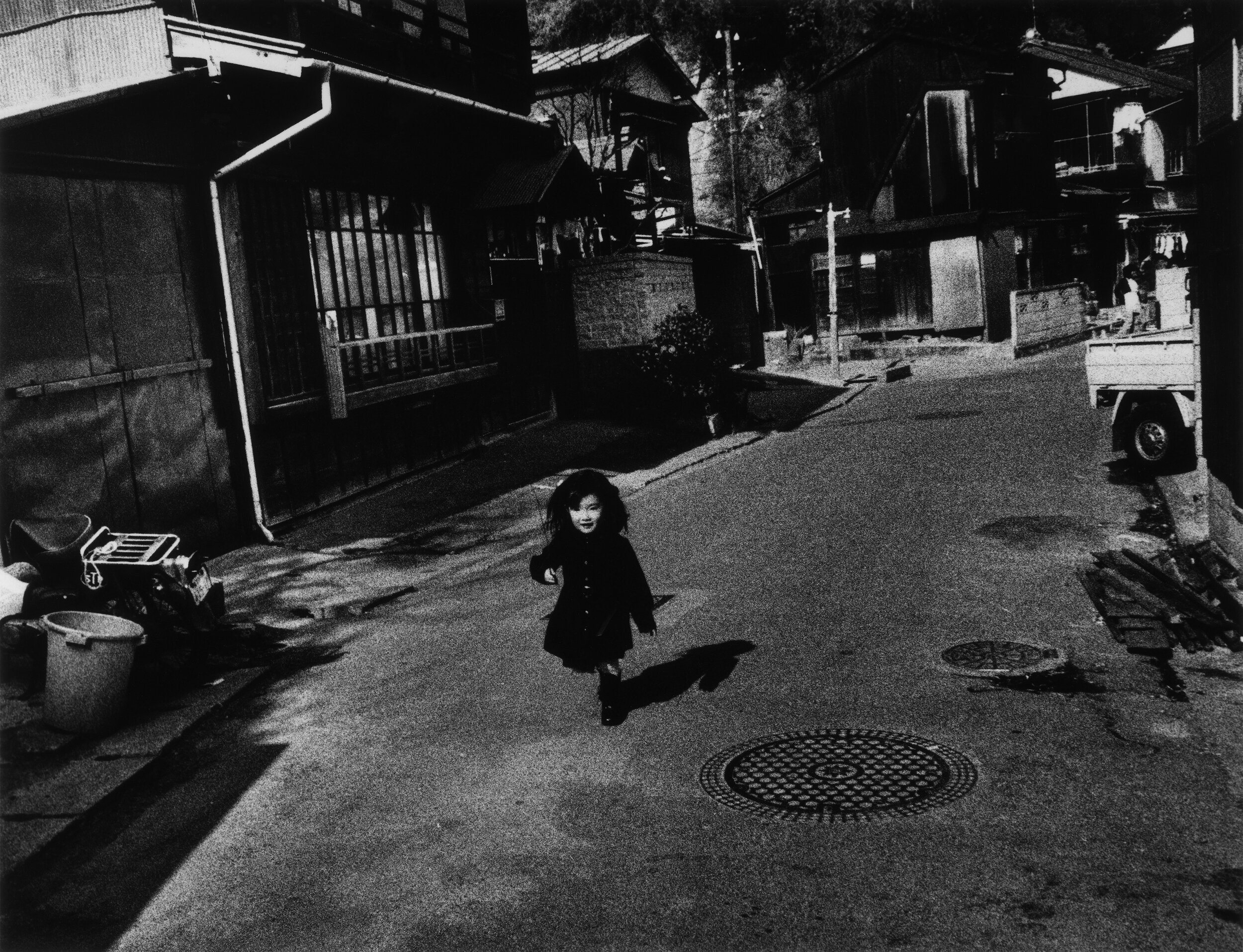
New-York based photographer Alessandra Sanguinetti often explores through her work, changes, experiences and feelings in society. Sanguinetti’s photography is infused with a certain serenity and a beautiful melancholia showing a certain level of trust between her and her subjects.

Her decade long project The Adventures of Guille and Belinda captures two cousins growing up together in the rural province of Buenos Aires, in Argentina. It is a testimony of family, a study of love, tracing the girls’ lives between every day and imagination from the ages of 14 to 24 and their passage from girlhood to young womanhood. The series which began in 1998 is the subject of two booksThe Adventures of Guille and Belinda and the Enigmatic Meaning of Their Dreams (Nazraeli) and ten years later,The Adventures of Guille and Belinda and the Illusion of an Everlasting Summer(Mack).

Recently, Alessandra Sanguinetti shot a cover for Vogue Italia for their January 2021 Animal issue which aimed at bringing awareness to the urgency of the environmental problem.

When I was nine years old a book I began to get curious about the books on our living room coffee table. Amongst books about nature and old ‘masters’ (Caravaggio etc) there was a Lartigue, a Chim (David Seymour), Dorothea Lange book , and Wisconsin Death Trip, by Michael Lesy. It was the latter that made me beg for a camera. I had a gut reaction to that book – it was the first time I saw, or paid attention to, images of people long gone, and it was the first realization that I was going to die and disappear as well. I panicked and had immediately associated photography with death, life, and memory.

I did receive a camera for Christmas and set out to memorialize everything in my life.

That’s the way it’s been since.

As far as my practice, it was in my twenties that I consciously realized photography was a way to relate to the world and a way to make a living. I’d never thought of myself as an artist or anything in that neighborhood, until then.

Credits

Images · ALESSANDRA SANGUINETTI
https://www.instagram.com/alessandra_sanguinetti/

Designers

  1. Cecilia
  2. Christen
  3. Hadil, 2003
  4. Mayelin
  5. Jessica
  6. Miriam. Aida Refugee Camp, West Bank, Palestine, 2004
  7. Sarita
  8. The Couple
  9. Mothers, 1999
  10. Untitled, 2009
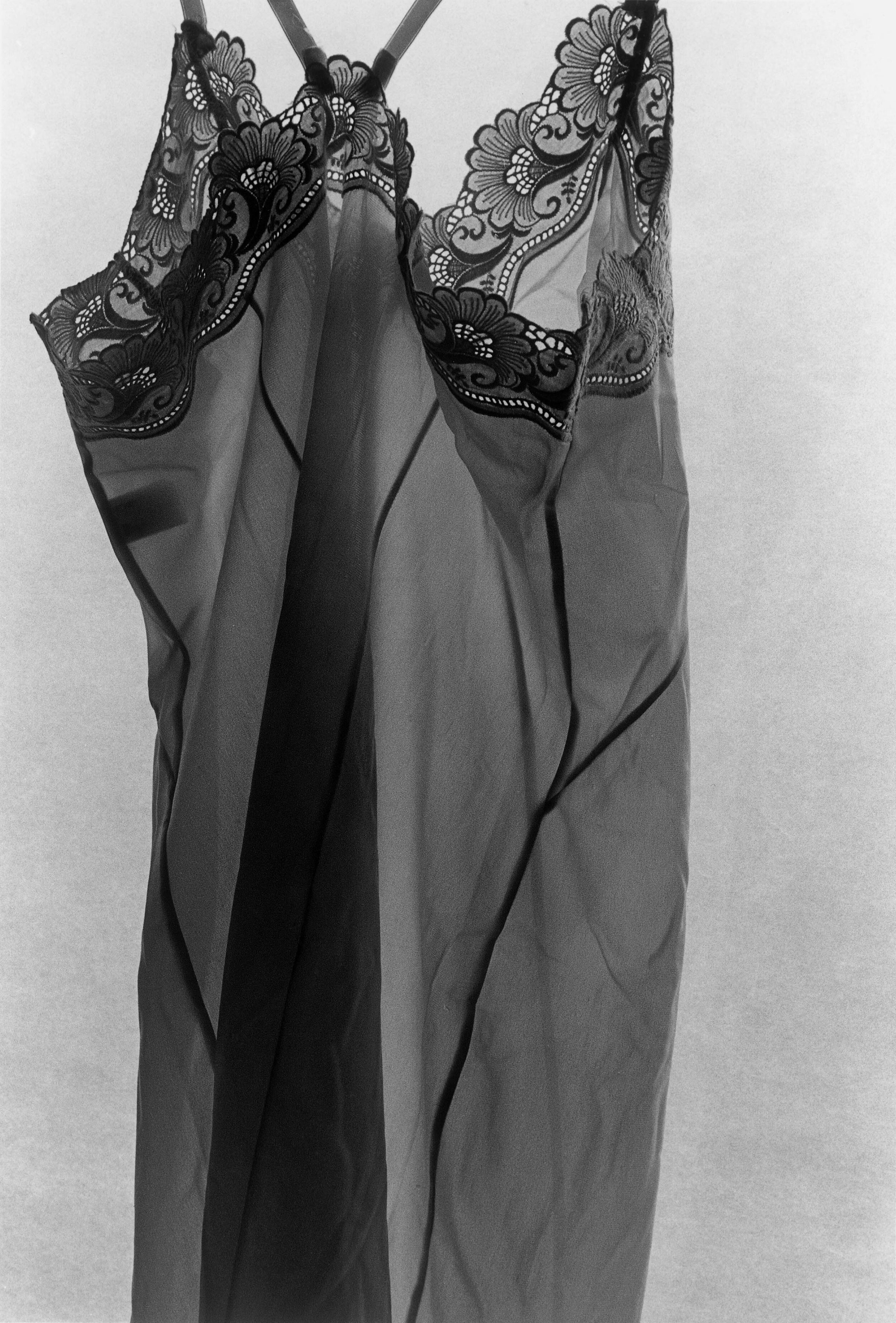
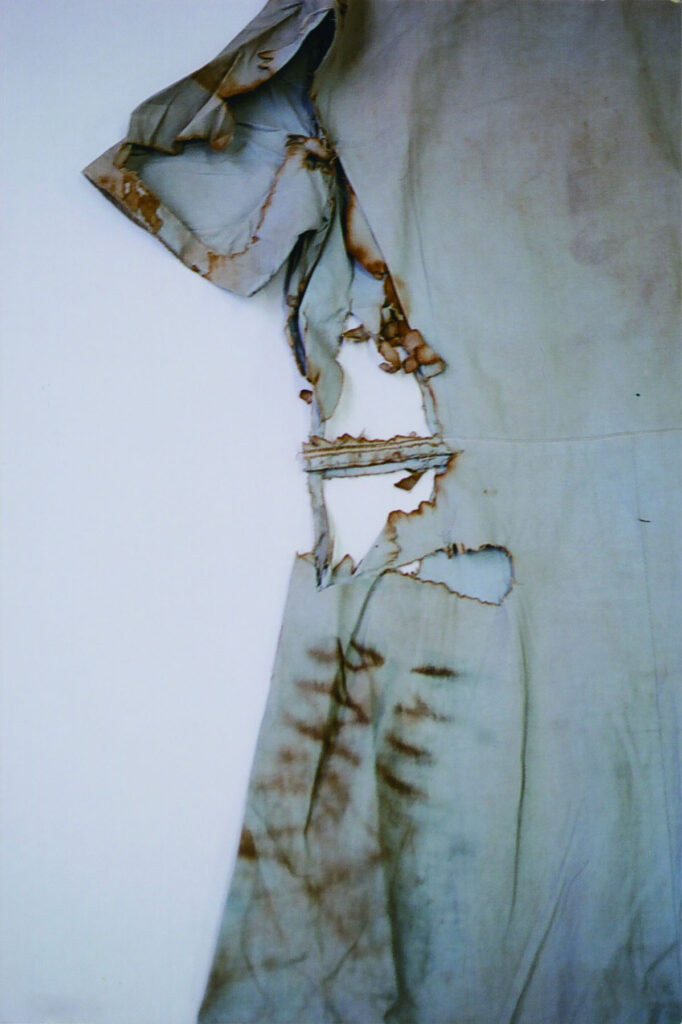
  11. The Blue Dress, 2000
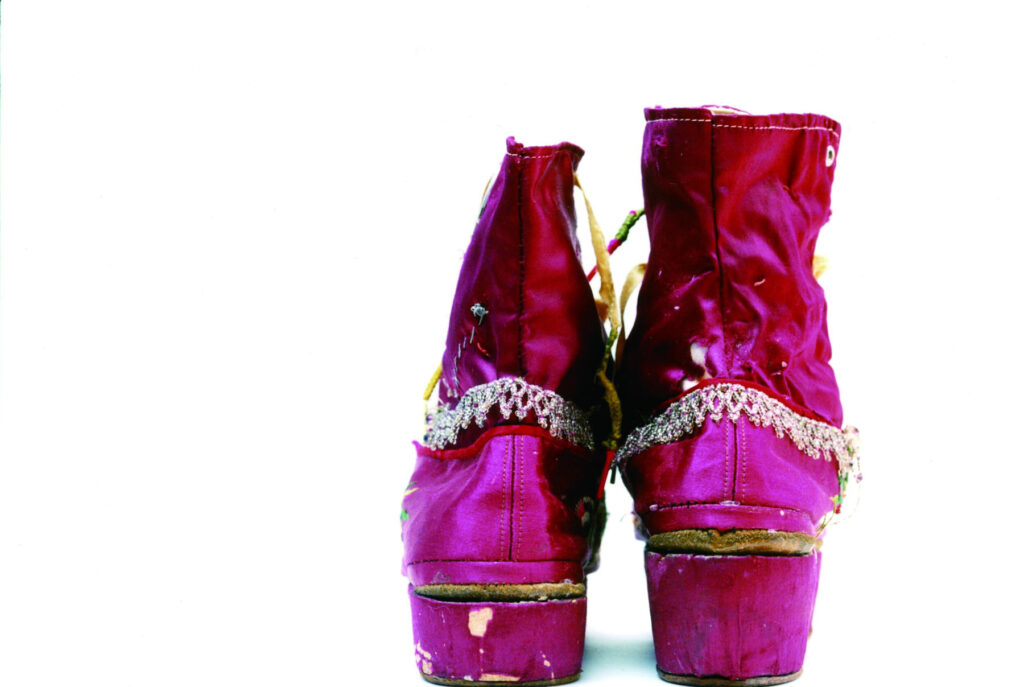
  12. Untitled, 2009

Pelle Cass

Selected People

Credits

Images · PELLE CASS
https://pellecass.com/

Alexandra Leese

Me + Mine

My body. My limbs. My hair. My nose. My skin. My heart. My lungs. My breath.

Much of what we are taught about ourselves as women is that our bodies are not ours. As if we are someone else’s to keep, to define, to use, take pleasure in, and to hurt.

Loving our bodies is not as simple as it sounds when we are still finding a home within us. When we’re alone in nothing but our skin.

While nudes have traditionally been used to display our bodies for the pleasure of the male viewer, these portraits of us are distinct in that they evoke the safety we feel when no one is looking. We do not produce images for the gaze of patriarchy or to compete with other women. We don’t seek to empower people — we know empowerment happens when we take control for ourselves.

Across many regions and cultures, though it doesn’t represent every kind of body and beauty out there, this project is us sending nudes to ourselves — not to be consumed but to be revered. Each woman has a unique, evolving relationship with her body. What we have in common is being alongside one another on the path to loving our bodies how we choose, despite the battles we may face.
So we dream along our journeys. We touch each hair, each fold, each wrinkle, and each scar, remembering that we belong to ourselves.


Credits

Words · Alexandra Leese and Xoài Pham
Me + Mine is available for purchase via antennebooks.com
Proceeds of Me + Mine will be donated to the organisations Black Trans Femmes in the Arts, Trans Law Centre and Rape and Sexual Abuse Support Centre.

Félix Maritaud

“you just have to give it a space, a medium, the body”

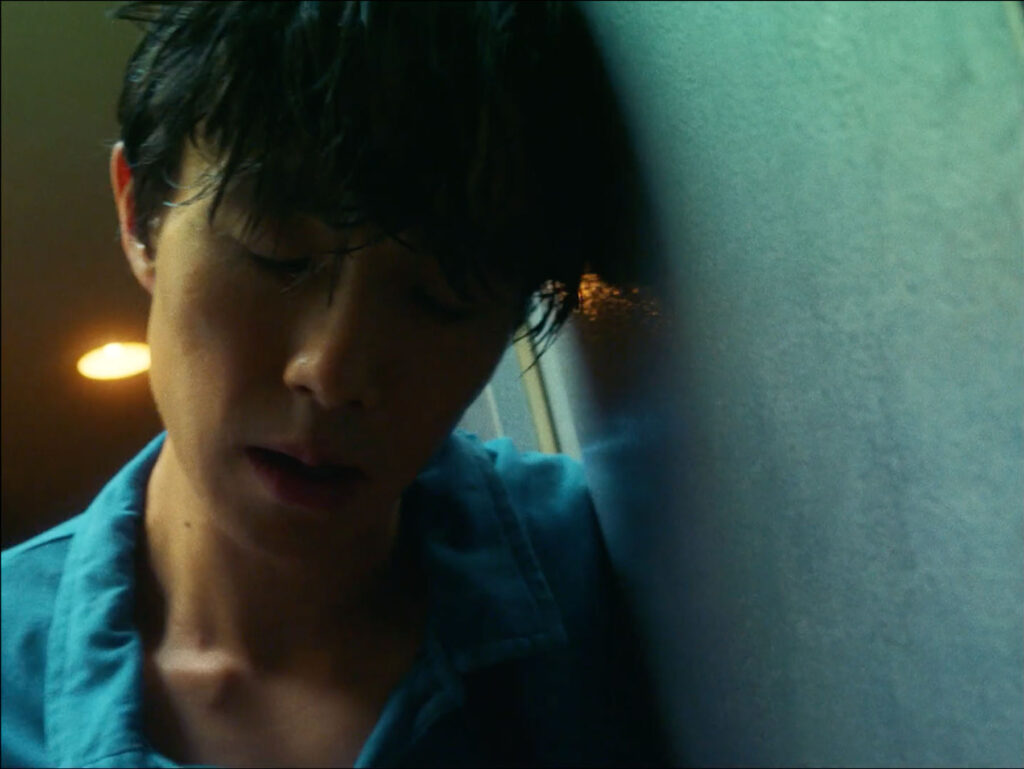
Félix Maritaud has catapulted to success in French Cinema with his breakthrough role in Sauvage; solidifying him as one to watch. The Camille Vidal-Naquet directed film, depicted Maritaud as a male sex worker in the streets of Strasbourg in search for love. Maritaud’s ability to play emotionally complex characters has proved to be a reason why he is helping to change the landscape of French cinema and challenge Queer roles within. 

NR speaks with the actor about some of his most prevalent roles and the preparation behind the characters and where we can expect him in the future. For the 28-year old Saint Laurent muse, 2021 will be a fruitful year with projects such as L’énnemi de Stephan Strekker, and in Tom by Fabienne Berthaud.
Felix, It is great to speak to you. First of all, growing up, was there a significant role that inspired you to get into acting?
I won’t lie, I never thought about acting before some people asked for it, it just happened, and for good because i really do love this way to explore life through my body.

Before that I was more inspired by art history, artists, paintings, I’m not watching a lot of films, I don’t have many references about movies and cinema, I just participate sometimes.

One of your first roles was in ‘120 Beats Per Minute’ (2017) directed by Robin Campillo. It is a unifying movie between the personal and the political, tracing back the story Act Up Paris and the lobbying of their activists for adequate legislation, proper research and treatment for those with HIV/Aids. It also centers on the romantic lives of the characters in the movie. Why did you decide to pick this role?

First i always had been really moved and inspired by the history of the creation and actions of ACT UP, even when I was in fine art school at 19 with friends we did « anti-patriarchy » actions creating a group called ACT HOLE as a tribute to ACT UP activists, so when they called me to do a casting ( my first one) for the film i though i already belong to it. 

A standout performance for us was your role in ‘Sauvage’ (2018) in which you play the role of a young sex worker. Could you tell us about the preparation you had done prior to filming?

The casting process was quite long, the idea was really to create a body to the character, a way to move, to stand, to walk, to be naked etc. Camille hadn’t in mind a body like mine writing, he was thinking of a more fragile body type, even if i’m not strong btw, my body was imposing something that we had to adjust and adapt using dance workshops and lots of talks, practicing the body movement of the character on Paris streets,

“trying, trying things to find this strength into vulnerability that is what makes to me the beauty of this young sex worker.”

How was it working with Camille Vidal-Naquet, the film director of ‘Sauvage’?

It was really great, he really knew what he wanted about the film and the character, and we had a really friendly relationship, with all the team actually, so it created a space of strong artistic expression based on truth, empathy and love, because that’s what the movie is about. Camille is a really precise director, and on the other hand he is really open to what the team had to say, or propose.

You have mentioned previously that the character you played in ‘Sauvage’, stepped into your shoes rather than the other way around especially because of how specific the script was. Could you expand on this?

I don’t think of characters as persons you’re building entirely consciously, I don’t want to either. I think that what’s interesting to catch on camera is more an energy, something more fluid than a definition of codified, psychological things that people used to think as the way to define or describe characters.

I think that at a moment of commitment to a character, you can’t ‘control’ it anymore, you just have to give it a space, a medium, the body. So as it was a really intense role, and a really intense shooting too and as I trusted the script and Camille I just let the characters vibration the use of my body, it was really intense, but I did learn a lot from it.

So I’m giving space to my characters, I let myself be pure energy just to let them in, creating their own narratives with my body,

“I think of this job as a relationship, and I try not to impose things on relationships.”

You have also worked with Gaspar Noé in his medium-length movie ‘Lux AEterna’ (2019) produced by Saint Laurent’s creative director, Anthony Vaccarello. Could you tell us more about the movie and how it was working with Gaspar Noé?

I don’t know if I would say ‘movie’ to talk about this work of Genius Gaspar Noé, to me Lux Aeterna is a kind of a narrative manifest about creation of chaos with many levels of understanding. The movie makes me feel like a parallel to what movies are doing to life, changing perceptions of realness, creating a form of chaos as a distortion of an equilibrium between senses and the ‘ways it goes’.  

I like working with Gaspar, it’s really something. As Saint Laurent produced the movie, he had the opportunity to do what he wanted and express it really freely,

“I never saw a script, or texts to learn, pure genius energy.”

You have a strong affiliation with Parisian fashion houses such as Lanvin and Saint Laurent. How does fashion inspire you and your work?

I feel fashion is like a place in society where desire is key and expression of the self is at the center of purposes, style is a way to express people’s self. I met Anthony Vacarello during a radio show we were both invited by Beatrice Dalle, then he invites me to some shows and we get to know each other better, i really like his vision about desire, this provocative chic sexiness with beautiful fabrics and materials, I think he’s making women really powerful and sexy, I really do like what he does, I like wearing SAINT LAURENT leather jackets, its makes me feel so much strength. For Lanvin, I knew Bruno Sialleli from a long time maybe 10 years from common friends, I like his poetry, it’s soft, colors and shapes are soft and sometimes belongs to dreams, joyful ones, and as we have almost the same age we have lots of references in common, he’s a really nice guy.

Your latest role was in ‘L’Ennemi’ directed by Stephan Streker (2020), a movie encapsulating the idea that as human beings we are our own worst enemies in the end. The character you play, Pablo, was written with you in mind. Can you tell us a bit about Pablo and how you played him?

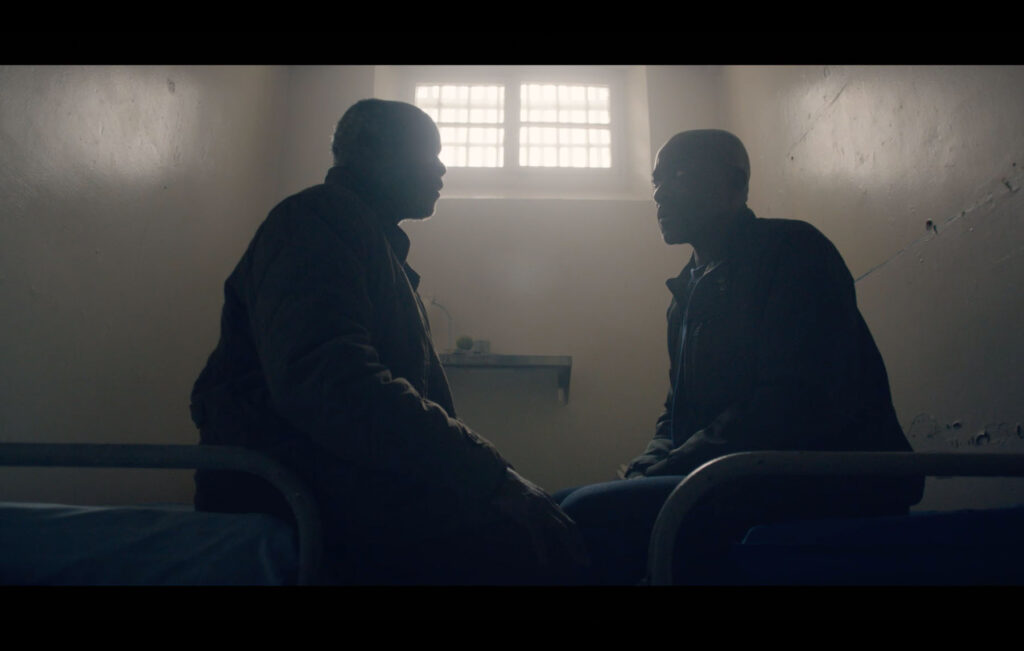
Pablo is jailed with the main character of the movie, they share the cell, it’s a really close relationship into space at first and then into minds, their relationship show a form of class warfare between them, an average politician jailed in front of a young guy, it’s a beautiful relationship and working with Jeremie Renier was a real pleasure, he’s a great guy and always ready to play what I do like a lot.

You have had a lot of success French cinema with these independent movies. Do you have any desire to break into international mainstream cinema?

I wouldn’t say mainstream as to me this word belongs to something I try to escape most of the time in my own life, but yes, I will do every project where i feel like it can reach a level of emotions and sensations i would enjoy, I have many projects to come outside of French films, I love to discover new horizons and way to create so I stay really open to new experiences.

What’s next for you?

You’ll see me soon in L’énnemi de Stephan Strekker, and in Tom by Fabienne Berthaud where I play a guy coming out of prison and finding out he’s a father with the great actress Nadia Teresckevitch, and in You Won’t be Alone, an Australian/American/Serbian horror movie by Goran Stolevski that is  gonna be legendary. At the same time I’m focusing on self stuff like artworks langage to understand more of life, creating pictures, poetry and having fun with DATAs.

Credits

Photography · MICHELE YONG
Fashion · MIREY ENVEROVA
Art Direction · LAURA GAVRILENKO
Grooming · MIKI MATSUNAGA
Creative Direction and Interview · NIMA HABIBZADEH and JADE REMOVILLE
Production · THIRTEENTH PRODUCTION

Rick Schatzberg

“conversations helped to create the atmosphere I needed to portray vulnerability”

Rick Schatzberg grew up in a suburb of Long Island in the 1950s – a place constructed out of nothing but a post-war optimism for prosperity and abundance. A place that, by Rick’s own admission, was in reality, characterised by its monotony and it’s ‘nowhereness’. Surrounded by the comfort of middle class living, Rick and his friends discovered the world by hanging out in one another’s bedrooms, the local mall or a wooded area not far from their suburban enclave. As teenagers, the boys (as they came to be known amongst themselves) would experiment with alcohol and drugs, and hang out with girls; an upbringing unremarkable to anyone who wasn’t there at the time. As they grew older, the boys took on different careers. Rick moved to New York and became an entrepreneur, the others would become teachers, taxi drivers, salesmen, realtors and healthcare workers But they remained what Rick calls a ‘cohesive entity,’ eternally bound together by their childhood moniker.

The Boys, the second photobook by Rick Schatzberg, is the result of both his pivot into photography and the unexpected death of two of his friends in close succession. Confronted with the fragility of life, Rick began in earnest to take photographs of the remaining boys. Using a large format camera, the images of himself and his friends, now in their mid-60s, are a stark reminder of the passage of time. In and of themselves, Rick’s photographs are tender portraits capturing the toll of time and age on the human body. But in the book, these images are interspersed with snapshots and photographs from the boys’ youth. Aged bodies become youthful, smiling faces – hanging out, experimenting with weed. Though Rick is quick to outline that The Boys isn’t nostalgic, there’s something poignant in flicking through the book’s pages and recognising the quirks and characteristics of each of the boys as time passes by. Addressing the responses he’s had so far about the book, Rick sums this feeling up well in our interview below: ‘anemoia: nostalgia for a time or place you’ve never known’. Many of the old photographs included in the book are snapshots that had been forgotten about – forgotten in the almost immediate aftermath that they were taken. They raise questions of memory; can the boys even recall the time and place that the photograph puts them in?

Alongside the images, old and now, are twelve short texts. One is an email exchange between Rick and two of the boys trying to piece together the facts of a fight that happened at a wedding. Their recollections of what actually occurred differ; evidence of the unreliability of memory. To celebrate the release of the book, Rick spoke in conversation with the photography writer and curator, David Campany in early 2021. As well as discussing the subject matter of The Boys, something that came up as crucial to the book’s release is its design. As part of the book launch, Rick shared a video of himself going through the book to demonstrate that the large format photographs of his friends feature as fold out pages (something, he tells the audience via Zoom, his mentors and peers from his photography course advised against). But something that also stands out in the structure of the book is that the 12 texts Rick includes in The Boys read like snapshots themselves.

An accompanying essay to the book by the writer, Rick Moody, raises this point, writing about the ‘relationship between a still image and the kind of expressive power that we associate with narrative activity.’ In the context of The Boys, as a photobook, this takes on historical significance. Writing about the 1920s, a time of the proliferation of the photobook and the photo essay, the academic Andreas Huyssen describes how a new form of literature appeared.

The “modernist miniature”, popularised by novelists like Franz Kafka and critical thinkers like Walter Benjamin, sought to capture modern life with photographic precision through words. In that way, then, Rick’s book is much more than a selection of photographs of his peers – young and now old – it’s a reckoning with how we navigate time, memory and our existence through the lens of modern life.

How did your experience of studying photography influence The Boys?

My work on The Boys was influenced by my art school education in several ways. To begin with, the photography MFA program I was enrolled in at Hartford University, Connecticut, is heavily focused on photobooks, and I went knowing I’d be making one. I thought I already knew a fair amount about photobooks, but the breadth of what I was exposed to by teachers, guest artists, and student colleagues was eye-opening. I had to examine my motivations to make any work and to think about how I would make a book that wasn’t just a collection of interesting pictures, but something with substance and depth.

In grad school, one of the challenges of making work that you hope to eventually present to the world is interpreting and deciding what to do with the near constant feedback you receive. You go to art school to not be limited by your inclinations. But there’s also the danger of gearing your work for approval of teachers and fellow students. In the end, I had to absorb what was helpful and discard what wasn’t; making that distinction was sometimes a confusing struggle. 

At the virtual launch, you emphasised that this book had to be universal, and not nostalgic. What feedback have you had from people about The Boys? Does it differ from the boys themselves, those who come from the same place/time, and those with no real connection to the American suburb?

For me, the work is not really nostalgic; I feel that the almost forensic nature of the large format portraits grounds the work in the present. But I may have overstated my case against nostalgia a bit. The feedback has been consistent in that the work evokes an emotional response, which I find very gratifying. But judging from what people have written or told me, the way into the work has really varied. For some, the immediate connection is nostalgia for their youth or that time or place. For others, typically younger readers and often European, it may be anemoia: nostalgia for a time or place you’ve never known. (Like films and novels, photography is good at evoking this.) I’ve heard from people for whom the portrayal of enduring friendship was the hook, and after reading the book they either felt the urge to reach out to friends they have not been so attentive to or lamented that they didn’t have friendships that lasted into adulthood.

Obviously, this work is radically specific: a very particular group of white guys of a particular generation, raised in a very particular American suburban community.

“From the outset though, my feeling was that if this work isn’t felt to be universal then it’s a failure. Mortality, after all, is the bedrock of our biology.”

You mentioned the importance of collaboration in making the book – did this collaboration extend to your friends? Or did they feature just as subjects? Why did you use a large format camera for the portraits? 

I discussed the deeper underlying themes of the project – aging, loss, memory, mortality, friendship – with my friends during our photo sessions. Though my directions for posing were minimal, these conversations helped to create the atmosphere I needed to portray vulnerability. I also explained that I planned to use the work as the basis of my master’s thesis so they understood that there would be a critical audience for the work beyond our circle. Their attitudes went from gracious acceptance to genuine interest. It was as though they became partners with a stake in the outcome.

“It was clear that I would be making unheroic portraits that might not be flattering, and they understood there was good reason for doing so.”

The word that often came to mind in these photo sessions was ceremonial. Using a 4×5 film camera, with all its fussy rituals and storied traditions, felt performative and serious. The slow, cumbersome, and mysterious (to my subjects) process helped amplify the psychological intensity surrounding the project. In the face of our brothers’ deaths, together we were creating a formal certificate of presence (to use Roland Barthe’s expression), using traditional tools.

That said, it is was not a true collaboration because the power to select specific portraits for use in the book was mine alone. My friends did not even see the images I was choosing between, nor did they know how I would ultimately deploy the portraits in the book. They trusted me. It was important to assert my authorial voice, but without entirely drowning out the voices of my friends, which they asserted through the written word, their snapshots, and their gestures in the portraits.

We’re faced with the processes of ageing, time and mortality in The Boys – when returning to your childhood home and neighbourhood for the book, had the nowhere place you came from aged too?

In the winter, with the trees bare, the neighborhood looks very much like it did 50 years ago. In the warmer months the trees, mature and leafy, give the neighborhood a homier, more established feel. The automobiles in front of many of the homes are now more numerous and luxurious, probably more a sign of growing consumer credit and a shift in values than of greater wealth.

The short texts in The Boys read like snapshots, how and why did you choose the texts you include?

I was interested in constructing narratives to loosely link text and images that would stand as discrete memories – not stories as such but fragments that help tell the larger story. I chose to write short texts that could function in different ways: sometimes straight narrative; sometimes like vague, recovered memories; sometimes as meditations; and sometimes more as dream than narrative. The one outlier is the story about my father. I didn’t initially think to include this in the book. I was having a conversation with my editor and I related the story to her.

“She told me to write it down and as soon as I did, I knew it belonged in the book.”

In his essay, Rick Moody refers to a good photograph as one left in a drawer for 30 years. Did the archives of photographs of yourself and the Boys ever come to light in the intervening years leading up to the making of this book? If so, in what circumstances?

Several of the snapshots have been circulating for ten years or so on social media. Others, which I found loosely strewn in boxes stored away for years, may have been passed around shortly after they were taken but were mostly forgotten. Time conferred poignancy as Rick Moody describes, but curating enlarged full-bleed versions astride pictures of old men and stories of death, makes new meaning. Even the more familiar old snapshots felt like new discoveries.

Credits

Images · RICK SCHATZBERG
https://rickschatzberg.com/

Lyndon French

The Mysteries of the Secrets

Credits

Images · LYNDON FRENCH
https://lyndonfrench.com/

Goya Gumbani

“it’s like breakfast or dinner”

Born and raised in Brooklyn, rapper Goya Gumbani moved to London as a teenager. Landing a retail job at the London branch of Pharrell and Nigo’s streetwear label, Billionaire Boys Club, Goya joined a hub of fashion and music. The story goes that when the store closed, BBC would become a de facto studio – with industry heavyweights passing through its doors. Goya went on to pursue music, notably with the release of the 2018 EP, Morta & More Doves, but fashion has remained on his orbit. For one, he walked the Louis Vuitton AW presentation earlier this year – a far cry from ‘[modelling] in mad streetwear stores basements’ five years ago, as he shared on Twitter. Goya’s slick personal style is both an amalgamation of his inspirations (‘I like shit that looks 80s – pro Black, UK Reggae and Dub man from Brixton,’ he told BBC), and a visual embodiment of the London music scene that has come to influence his sound. Last year was a busy year for Goya, releasing five EPs with the likes of producer Oliver Palfreyman, on November’s six track EP Truth Be Sold, and with Bori on Steps Across the Pond from March (which got a limited edition vinyl pressing last month, a year after its release). Goya’s catalogue is consistent in its warmth. Often reflective and contemplative – and at times, existential – Goya’s vocals are perfectly matched to the soulful, hazy beats that are coming to define the artist’s sound. 

How do you set the pace of making music, and when do you know if something makes the cut for release?

I do this every day – at this point it’s like breakfast or dinner. I wake up and think about something music related. The making the cut process really just depends on where I’m at sonically or visually.

“Being from Brooklyn, living in London” is something of a tagline attached to your name. In terms of your sound, style and influence though, how do these elements come together?

They are both two great cities, they have both taught me different things from different perspectives. Both cities are in my DNA at this point, so they make me – if that makes sense.

I’d love to know if working at Billionaire Boys Club opened up your experience of London in different ways. How much of working there influenced your transition into music?

Yeah BBC was like a hub, everybody from every crack of the world used to pass through. So I met a lot of people in all fields, but most of the people I worked with there, also made music. I use to think I would just meet people to meet ‘em. But soon after, I realised you meet everyone for a reason. It’s not only to talk sweet nothings, but to build an grow to some degree.

At what point did you feel ready to share your music with people around you? 

Few years ago, I just had something I wanted to show, which kinda lead me to a place where I wasn’t fazed by my own self-doubt. 

I really love the EP covers/videos, and how they’re all quite different – is there any relationship between the music and the visuals you use? (If so, to what effect?)

The artwork and visuals are a lot. I feel like that’s gonna speak to you before you even hear anything. So it’s chosen with the intent to grab and leave wonder… Everything relates though; it’s all one big canvas of imagery that can speak on its own if needs be.

Besides appearing in the Louis Vuitton AW21 presentation, what defines ‘style’ and your style? 

Style is expression and personal touch to me. I worked in a couple menswear spots back in the day, so that gave me the knowledge into different eras and how style was a time stamp. But, my old boy Jack used to tell me: “if no one likes it, you going in the right direction”, Which I took as get dressed for yaself and you can’t go wrong. So that’s the motto.

What are you currently working on, and what can we expect from you this year?

I got a collab project coming out with [the producer] Subculture and a solo tape coming out this year I’m excited about. Few things with some familiar faces too… Oh and catch me on a few festival line ups!

Credits

Photography · DAVID REISS
Styling · SERGIO PEDRO
Creative Direction · NIMA HABIBZADEH AND JADE REMOVILLE
Interview · ELLIE BROWN

Subscribe to our
Newsletter