Archive page:


Tatsuo Miyajima

“If you want to use technology to create your work, stop studying technology”

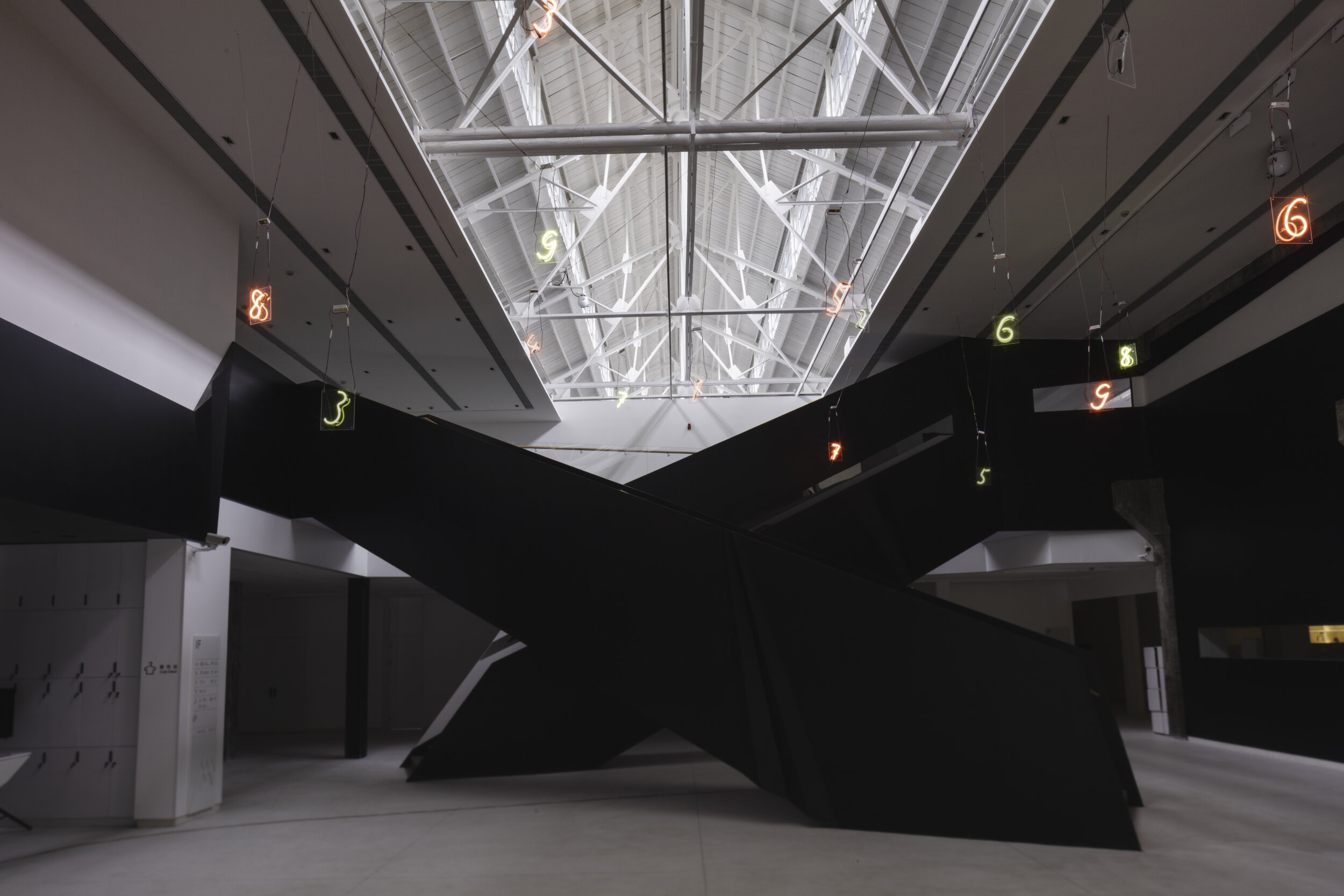
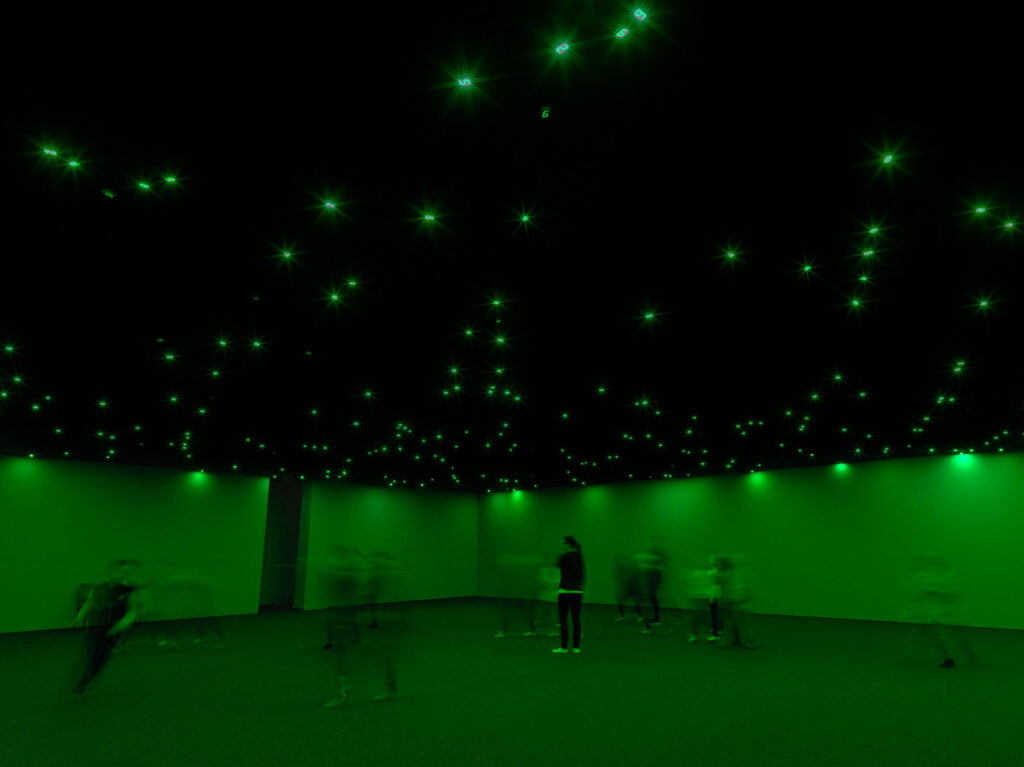
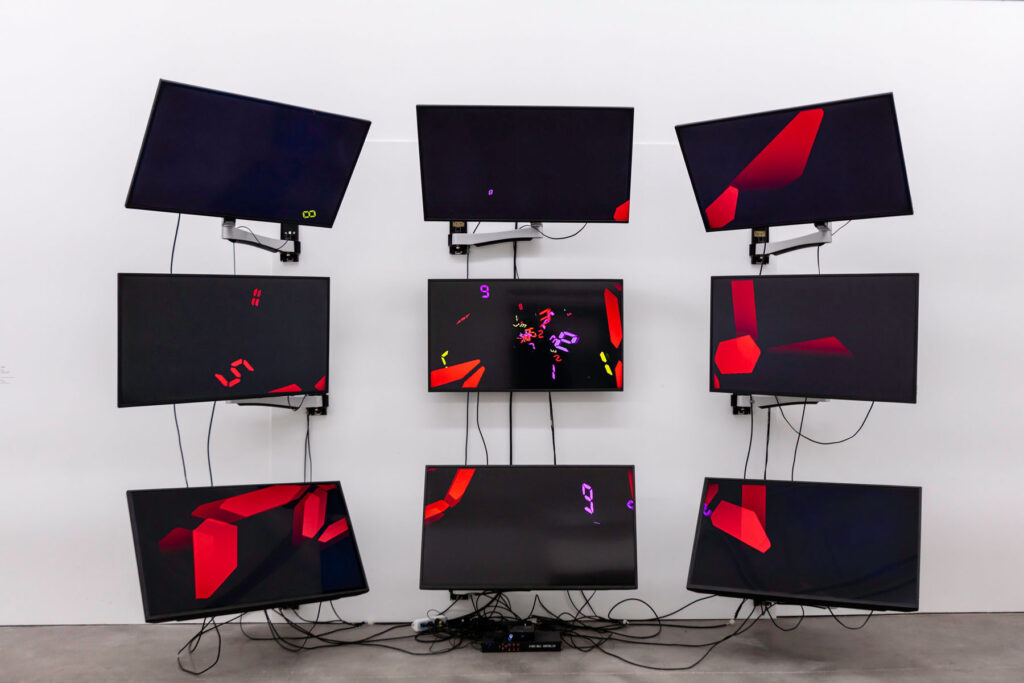
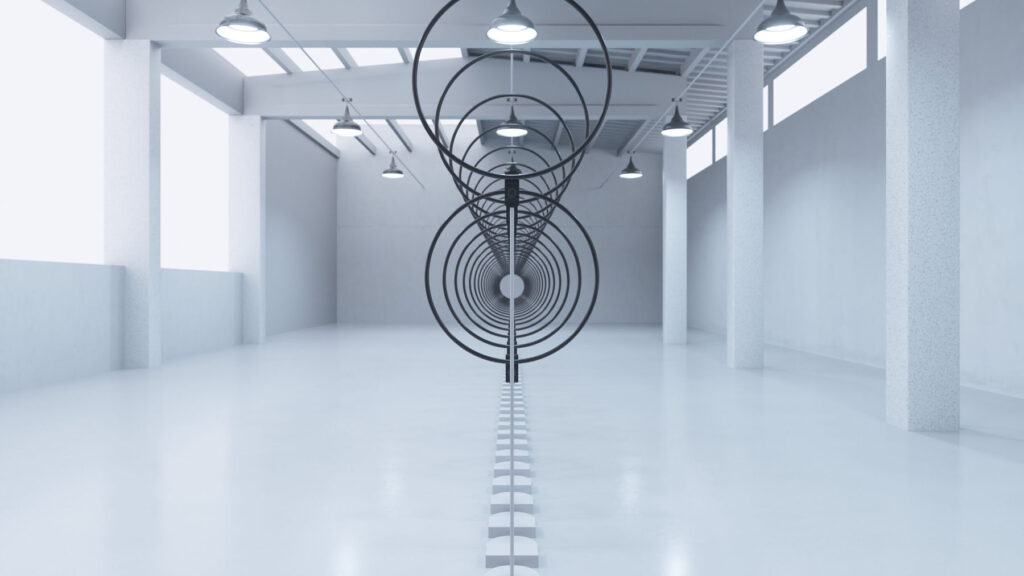
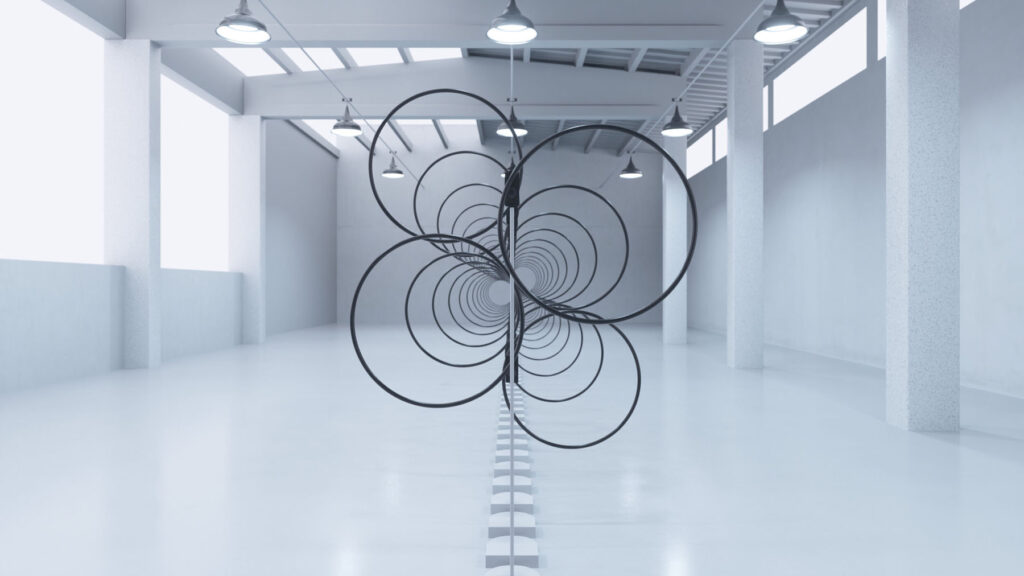
Sometimes it can feel like life is dominated by numbers, sums and allotments of time, all looming over us in with the blinking flashing urgency that comes with our increasingly digital environments. With Tatsuo Miyajima’s work, this feeling has become reality. Whilst his art ranges across a wide variety of mediums there is a single focus; numbers. Specifically the kind you find on old digital clocks or calculators. Miyajima is one of Japan’s leading sculptures and installation artists, and his work is centred around his use of LED counters, which flash sequences of numbers from one to nine. His work is also heavily influenced by Eastern and Buddhist philosophy. NR Magazine joined the artist in conversation. 
One of your three artistic concepts is ‘keep changing’. How do you think your work has changed throughout your career?

For the first 7 years after my debut, I was only making installations that showed LED works in a dark room. However, in 1995, I had an opportunity to do a performance in London, and from that point on, I began to do works that involved people and asked them to participate. Since 2005, I have been working with a wider range of materials, including digital numeric drawings, photographs, and computer programs, in addition to LED works. Since 2010, I have been using AI in my work, and I am still expanding the range of my expression with various materials.

You have said that “art has long been isolated from the real world, and spoiled within a framework of the ‘art world’. Do you think social media apps, such as Instagram and Tiktok, on which creators can show their works is an effective way to break down these barriers?

In terms of the fact that many people can express themselves easily, I say yes. However, the point that the expression is too concerned about the reputation of “likes”. It means No.

How has the pandemic affected you and has it had any impact on the way you approach your art practice?

It was sad that I could not go abroad because of the pandemic. However, I was grateful for the fact that I was able to work calmly. I am also glad that the pandemic has made it clear that art is an essential and important part of human life. It is hard to say right now how this pandemic will affect us in the future. However, I am sure that it will naturally appear in my works in the future.

Tell me more about your recent work Counter Object – 000 (2020). What was the process behind it?

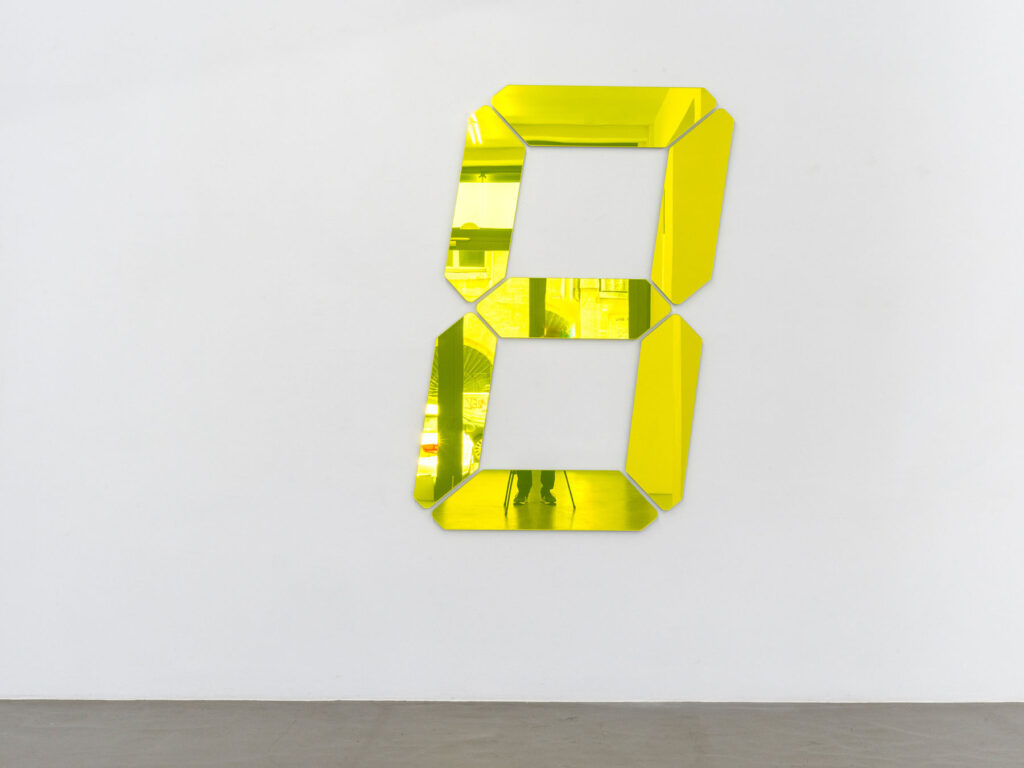
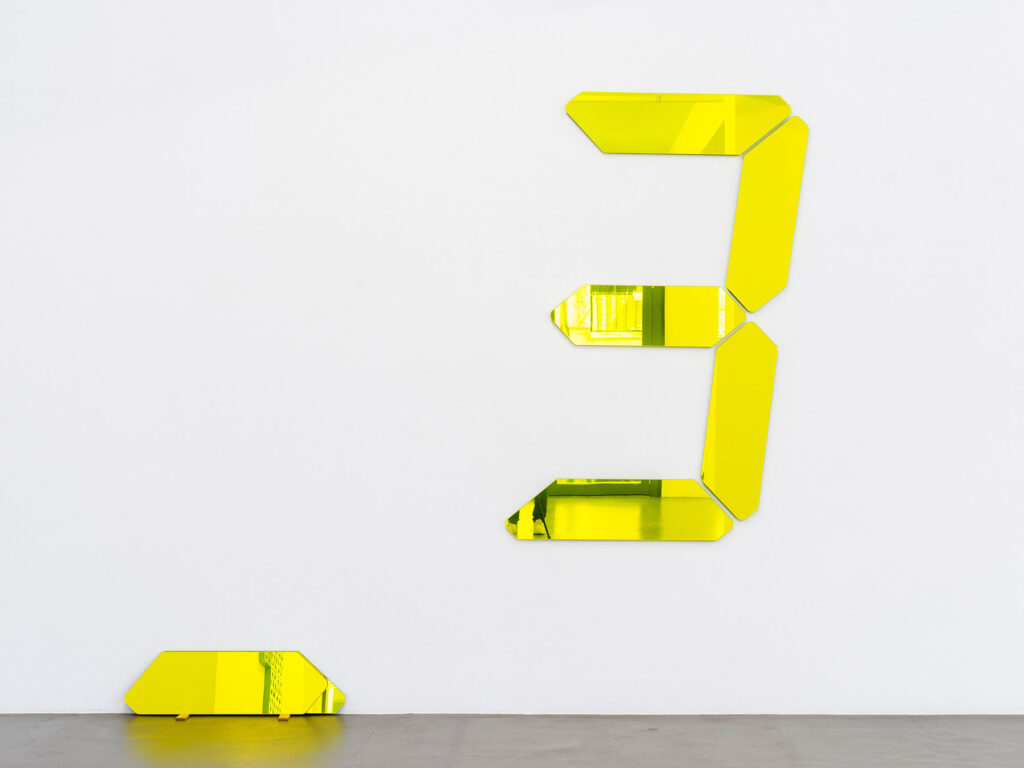
In fact, this work was also born out of the pandemic. 20 years ago, I did an installation in Stuttgart where I placed mirrors of digital numbers on the floor. During the pandemic, the Buchmann Galerie organized a group exhibition, but I could not go to Germany. So, Buchmann suggested that I show something similar to the work I did in 2000. I proposed a new idea. I proposed a new idea, which was to display mirror-like digital numbers on the wall and change them with dice. This is Counter Object – 000, which I plan to develop further by using different materials.

Your art is largely based in technology, are there any new technologies that you are interested in incorporating into your artwork?

I always have a concept and use technology as a tool to realise it, but not the other way around. If technology is the first step in creating a work of art, it will not be art, but only product design.

Although a lot of your work revolves around numbers, the number 0 is never shown in your work, why is that? 

This is because 0 means “death”.

“Death is invisible to the eye. That’s why I always represent ‘0’ as blank, or dark so that I can’t see it.”

Like your work, much of the world relies heavily on technology. Have you ever considered what would happen if that technology was no longer available to us and if that ever happened what artworks would you create then?

If I had been born in the third century, I would have made “mosaics” out of stone. If I had been born in the 13th century, I would have been painting with “tempera”. And if I had been born in the 18th century, I would have definitely painted in “oil”. All these techniques were the latest technology of their time. You can see that artists have always expressed themselves with technology that is adapted to the times.

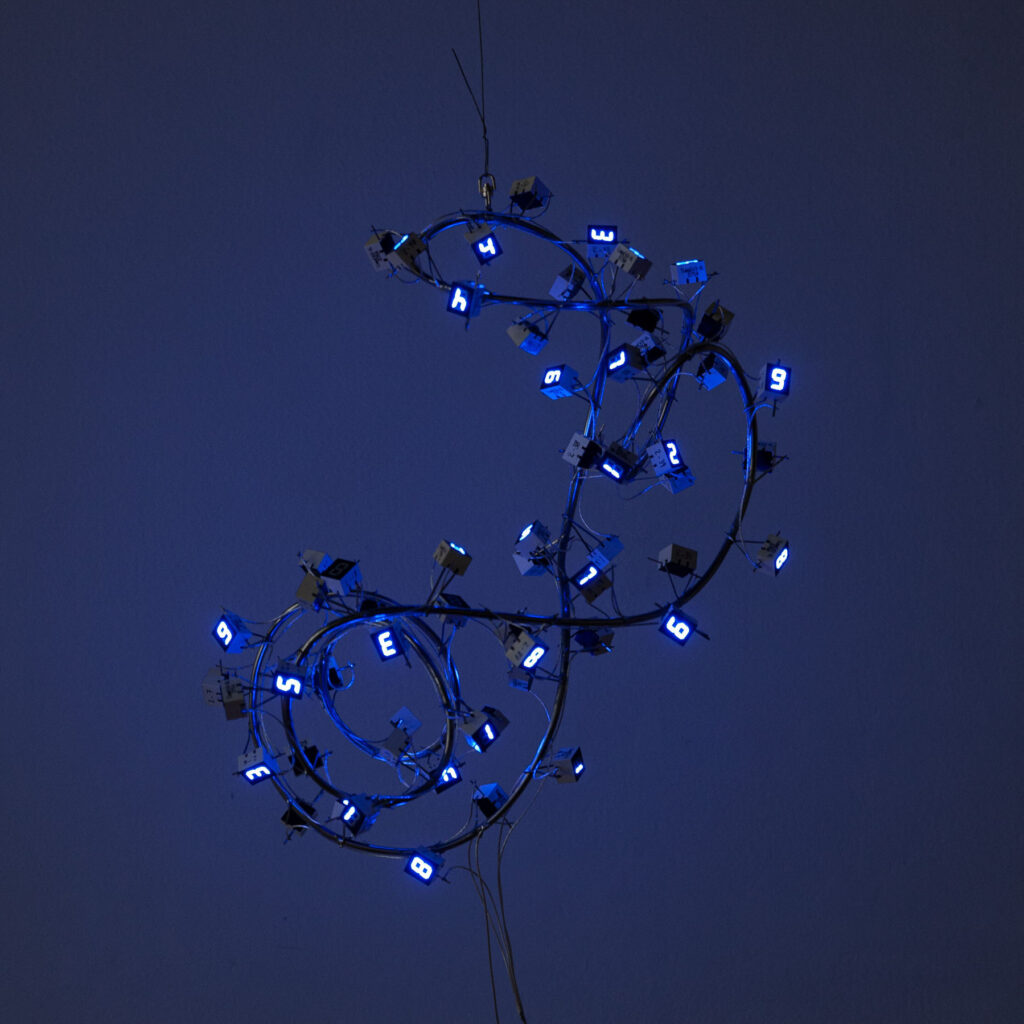
What was the particular concept behind C.F. Loop: Helix no. 2 and was there any reason why you chose blue for the LEDs? 

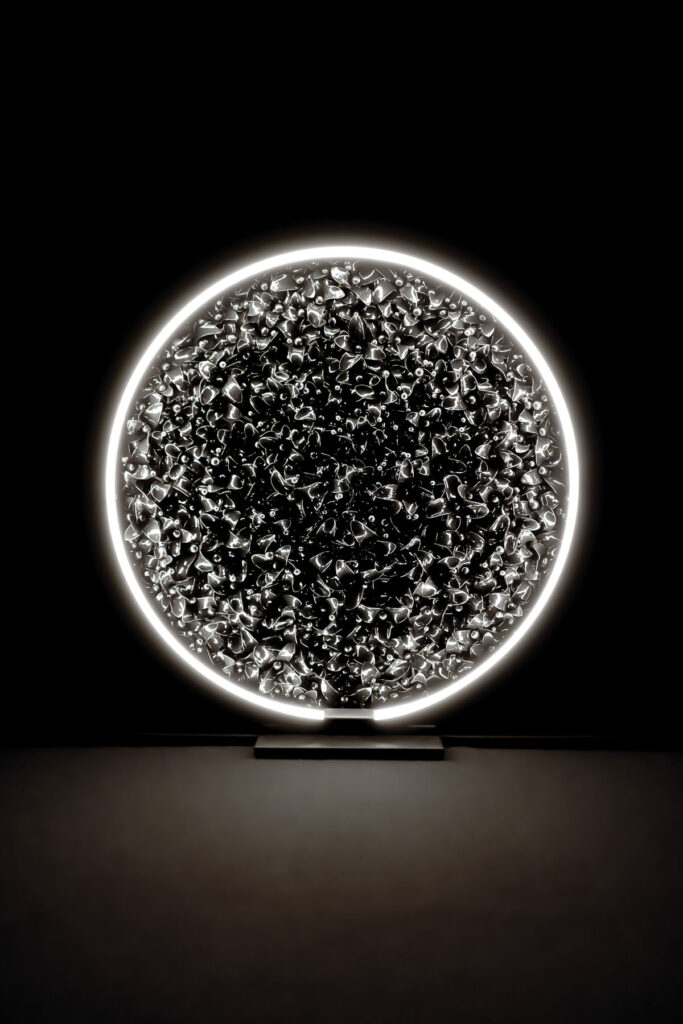
C.F. Loop is a Study Model that considers the structure of time. Time is connected to a circle, but it must be an irregularly shaped circle. I expressed this by having the numbers counting 9-1 lined up in a circular pattern. In the series of works, I also used red and green LEDs. Each color expresses the differences of each character.

What exactly is it that you want people to take away from your work? 

I do not impose a concept on the viewer.

“Artworks are not meant to give something to the audience. Rather, I believe it is something that allows the viewer to discover the sensitivity and imagination within themselves.”

What was the most exciting project you worked on and why?

I am currently working on a piece called “Sea of Time – Tohoku”, which will be my most exciting project yet.  After experiencing the 2011.3.11 Great East Japan Earthquake and Tsunami, I have created a project plan to work with people in Tohoku. LED devices used in the project represent the eternity of life. I am aiming to ask 3,000 people mainly from the affected areas to set the speed of the LED display to create an artwork. I plan to install it at a high-class location in the Tohoku area where we can see the sea.

Your work Hiten (2020) reminds me somewhat of a map of the world. Were you trying to create any particular shapes with the placement of the LED numbers or is it purely abstract? 

This work HITEN refers to an angel painting in a cave in Dunhuang, China. This angel is clothed in a robe of extreme colors and is fluttering freely in the sky without being controlled by anyone. So it is an abstract way of arrangement, placed so that it can fly freely in the sky.

What advice do you have for young creatives looking to create art with technology?

If you want to use technology to create your work, stop studying technology. There are many technology specialists who are better than you. Instead, you should study philosophy, anthropology, and art, and focus on creating original ideas. Then you can use technology to express them. 

Credits

Images · Tatsuo Miyajima
https://tatsuomiyajima.com/

Luna Ikuta

“We recognise the past, present, and future but it makes me think perhaps there is a beyond”

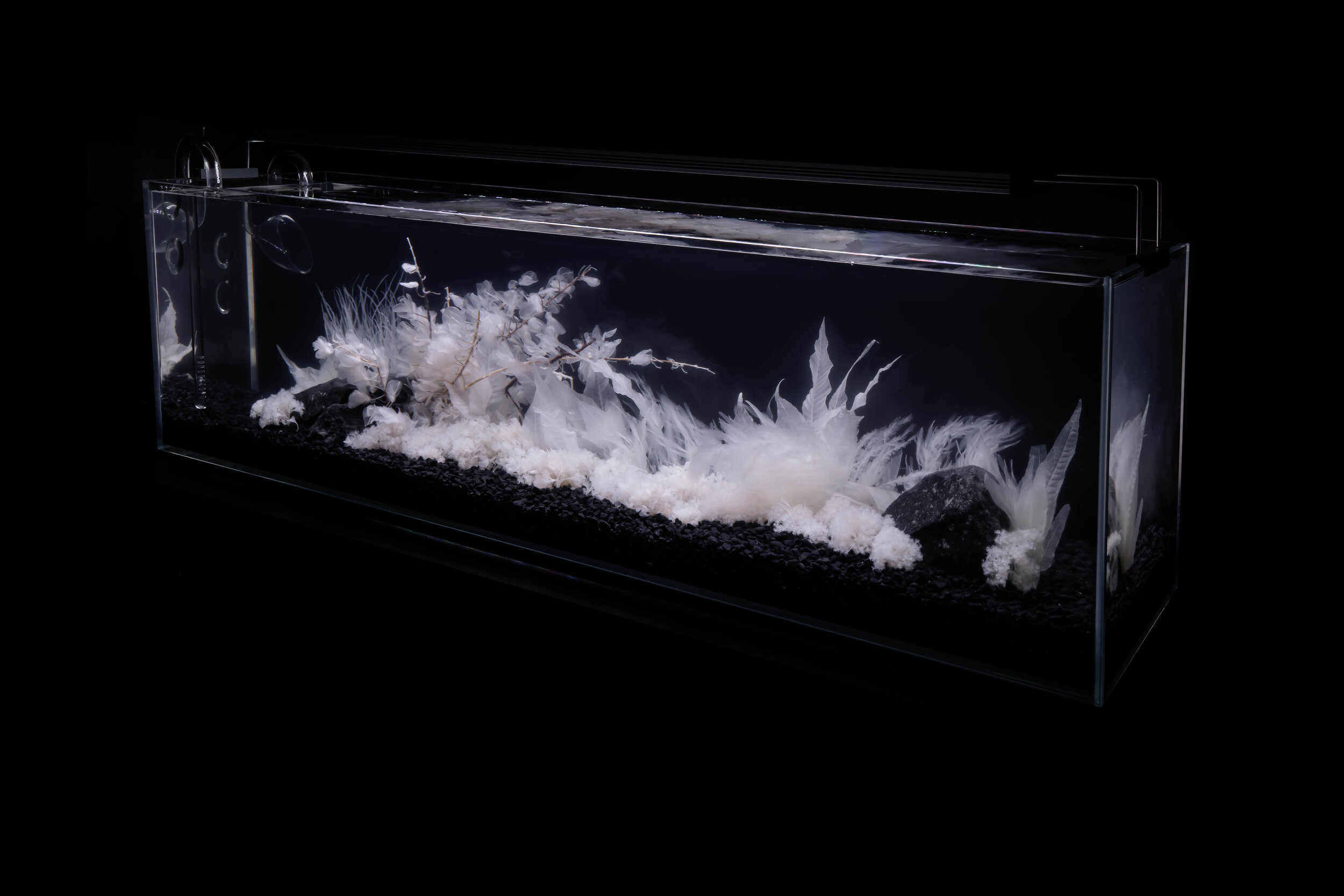
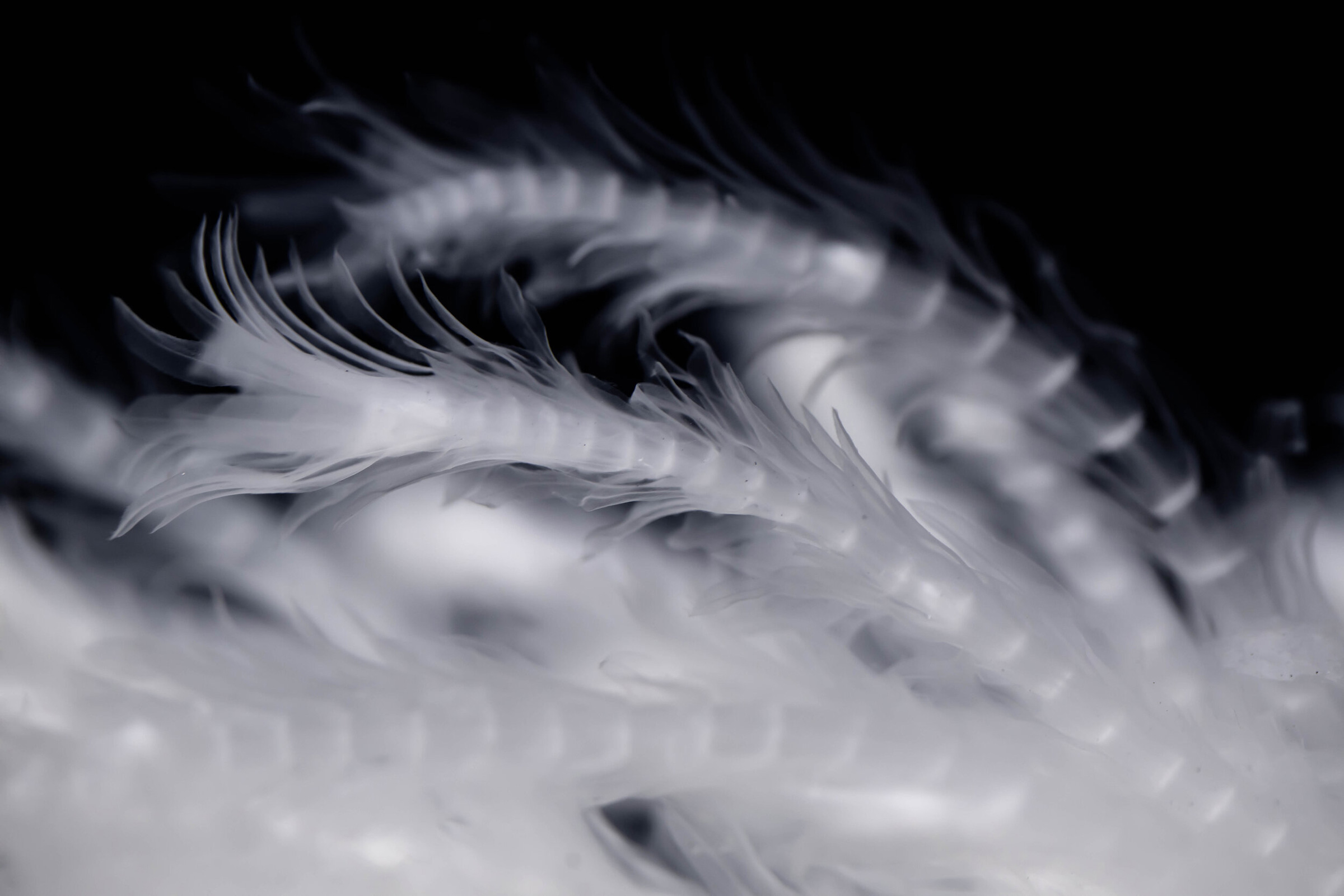
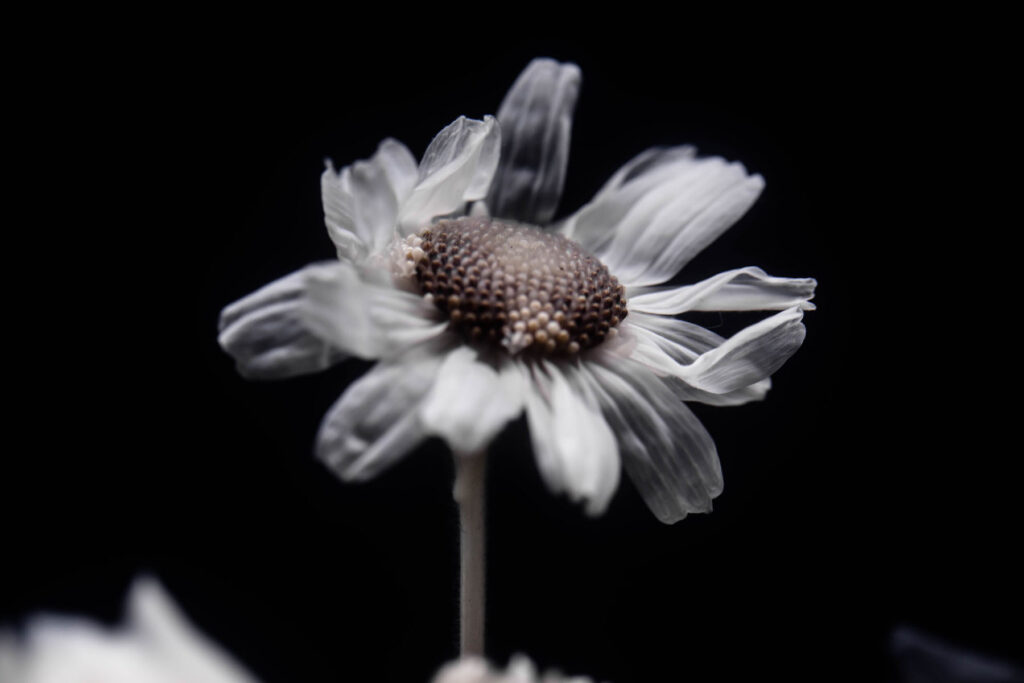
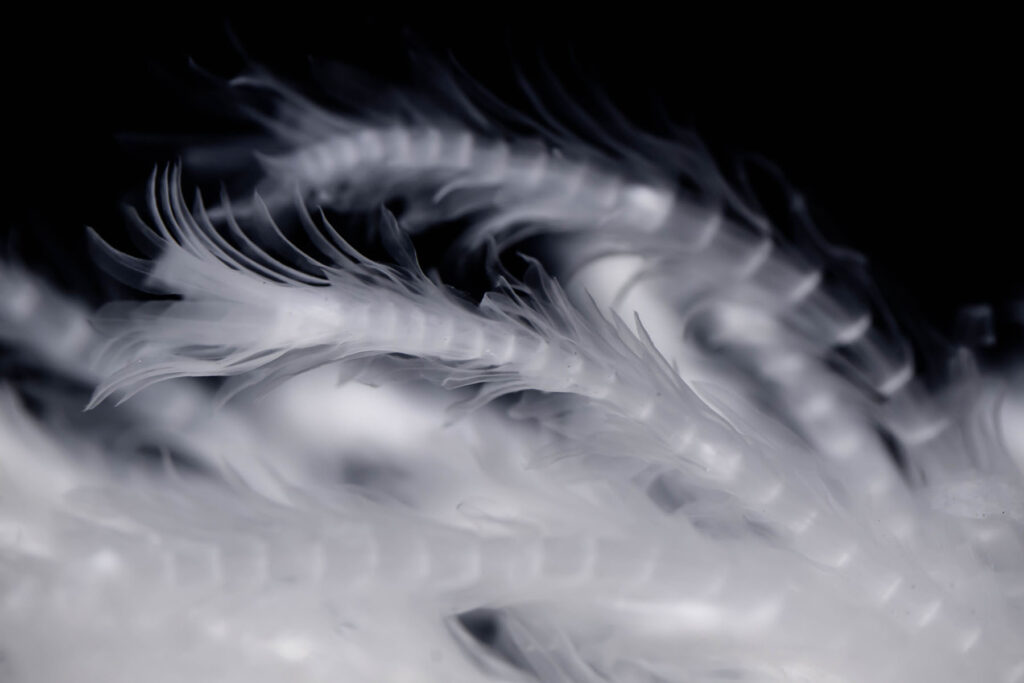
Ghostly white flowers float gently against a sea of black. Delicate pale fish weave their way through the waving fronds of these transparent florae. Luna Ikuta creates these mystical aquatic landscapes by stripping away the colour and chlorophyll from living plants. This process involves “extracting the living cells from plants while leaving the ECM (extracellular tissue matrix) intact.” The flowers are then submerged underwater which causes them to sway softly mimicking the movement caused by light breezes in the natural world. 

Ikuta’s aim was to de-sensationalise peoples perception of the outside world by showing them the wonders that could be found in their immediate surroundings. The flowers she used were found on walks around her home in Los Angeles. By transforming them into translucent wraithlike forms these artworks evoke the image of ‘reincarnated spirits’ whilst allowing people to marvel at the natural structures found in their local environments. NR Magazine joined the artist in conversation about her work. 

With your botanical artworks, how long does the process of stripping away the living cells of the plants take? And how long does the ECM (extracellular tissue matrix) last once you have completed this process?

Each plant behaves differently but on average it takes about three weeks. Even though completing a tank arrangement from start to finish takes about a month to create, the transparent gardens are all ephemeral works. These installations eventually disintegrate and disappear after about six months. The works are filmed shortly after they are installed and embalmed as digital relics. 

You have stated that you believe black to be the richest of all colours. Is that why you have chosen to use exclusively black backdrops with all your botanical artworks?

I like using monochromatic palettes in a lot of my works across various mediums. In my sculptural works, I am obsessive about texture and am drawn to muted palettes for I feel excessive color distracts from form and adds unnecessary noise. These botanical works are also an extensive study of texture and form. Each plant was made transparent using a process revealing intricate vascular networks and structures otherwise invisible to our eyes. In these artworks I want the focus to be about the subject and to transport the viewer into an otherworldly space illuminated solely by the ghostly flora.

You stated that you are inspired by Japanese culture. Was there any particular aspect of this culture that influenced your botanical works?

I was born in Tokyo, Japan but was raised in the US. I travel back to Japan to visit relatives every year and grew up in a bilingual household. As I’ve grown older I realise this is my particular advantage to always be living between those two worlds. For that reason, it’s not too important for me to identify with one or the other when it comes to my work because I am just me. The Japanese inspiration comes more from a place that’s difficult to express in words.

“I am mainly interested in making work that connects to the human spirit.”

Do you think there is an intrinsic link between art and science that people tend to overlook as there is a tendency to view the two fields as separate?

As a multimedia artist I’m interested in material science, so I have always seen an intrinsic link between the two. I believe art benefits from science when trying to create experiences that are foreign to everyday life. The science behind the process of creating the Afterlife series also plays a role in the narrative of the work. These artworks combine sculpture, digital media, chemistry, and biology to create an experimental installation that transforms our natural world. The plants are no longer alive but are preserved as ghostly skeletons in the liminal space between life and death. This art practice is also an ongoing experiment. I never know the result of the clearing process for each plant and sometimes it doesn’t work out. This creates challenges and discoveries that propel new ideas and I am always learning. 

You have a background in industrial design, how does that inform your art practice? 

Industrial design covers a very wide spectrum of trades. What I value the most from this background is that I know how material things are made. I am very hands-on and have experimented with everything from woodworking, metalsmithing, ceramics, 3D modelling, architecture, etc. By having a foundational understanding of various production processes I can be autonomous and it’s very freeing. As an independent artist, every project has my hands on it from the finished artwork, documentation, to building out entire showrooms. My practice ranges from sculpture, installations, furniture, digital media, and now aquarium art. The biggest challenge is answering “what kind of art do you do?” since my methods of making are always changing per project. 

Would you ever consider taking other biological forms than plants and stripping away their living cells to create artworks?

I have only scratched the surface of the botanical world using this process and there are so many more plants I would like to work with. I started to see that once you remove the plants from their natural context, they can transform into something entirely different from their original character. In one of my tanks, I placed Chrysanthemums, Sunflowers, and Queen Anne’s Lace as the foreground of the landscape and they resembled very close to sea anemones. Grass looks like aquatic snakes, and some plants look like clams when placed in a specific way.

“Nature has a beautiful way of effortlessly mimicking other life forms in ways I never noticed, and this space is more interesting for me to play with.”

Some of your works involve live fish. How do you deal with the practicalities and ethical concerns of using live animals in your artworks?

My pet Bettas! As a practicing aquascaper, I have experience in monitoring water conditions to make it safe for fish. They are beautifully majestic creatures and I am grateful for their involvement in my films.

Do you think people have become more appreciative of nature due to covid and subsequent lockdowns and if so how is that reflected in your botanical works?

During lockdown, all I did was go on walks outside. It seemed like my friends were all doing the same. Social media was depressing, and the news was even more depressing! On these daily walks, I would observe flowers blooming on the hillside of my house and these subtle changes in the landscape became my elusive “pandemic clock” measuring time. I enjoy watching the life cycle of nature because it’s a quiet but hopeful message. Flowers bloom and wilt but come back again next season. We recognise the past, present, and future but it makes me think perhaps there is a beyond. If so, I wonder if death is really something we have to fear? A lot of my work uses plants that are foraged from my immediate surroundings, so despite awful 2020 I am thankful for the time I had to fully immerse myself into California’s nature.

What advice would you give to young creatives who are interested in combining art and science?

You don’t need to be a scientist! 

Are you working on any projects at the moment and what plans do you have for the future?

Yes!  I am currently exhibiting these works, AFTERLIFE, at The Transparent Garden which is both my studio and showroom. This gallery showcases eight physical aquaria, each paired with a custom-built LCD screen preserving the video form as collectible art objects. This show was the first time I had shown the physical tanks to the public. I am also releasing a series of NFT’s of the filmed aquariums that will be released on Superrare July 5th. AFTERLIFE ends on June 13th but I really enjoyed meeting everyone who came by the space and I am excited to continue using this gallery as my experimental playground. I am also installing my first permanent public arts sculpture in Los Angeles. I have been working on that piece for over a year so I am excited to see it finally rest on site. Oh and Daruma 2022! 

Credits

Images · LUNA IKUTA
https://www.lunaikuta.com/

Judy Watson

“In making the work I make I am lifting up my ancestors and their stories and learning more from them every day”

Judy Watson is an Australian artist whose practice is based on her exploration of her matrilineal Waanyi Aboriginal heritage and the experiences of Aboriginal people since British colonisation. Exploring Waanyi culture through the lens of collective memory, she then incorporates these histories into her artworks, often drawing on archival research and documents.

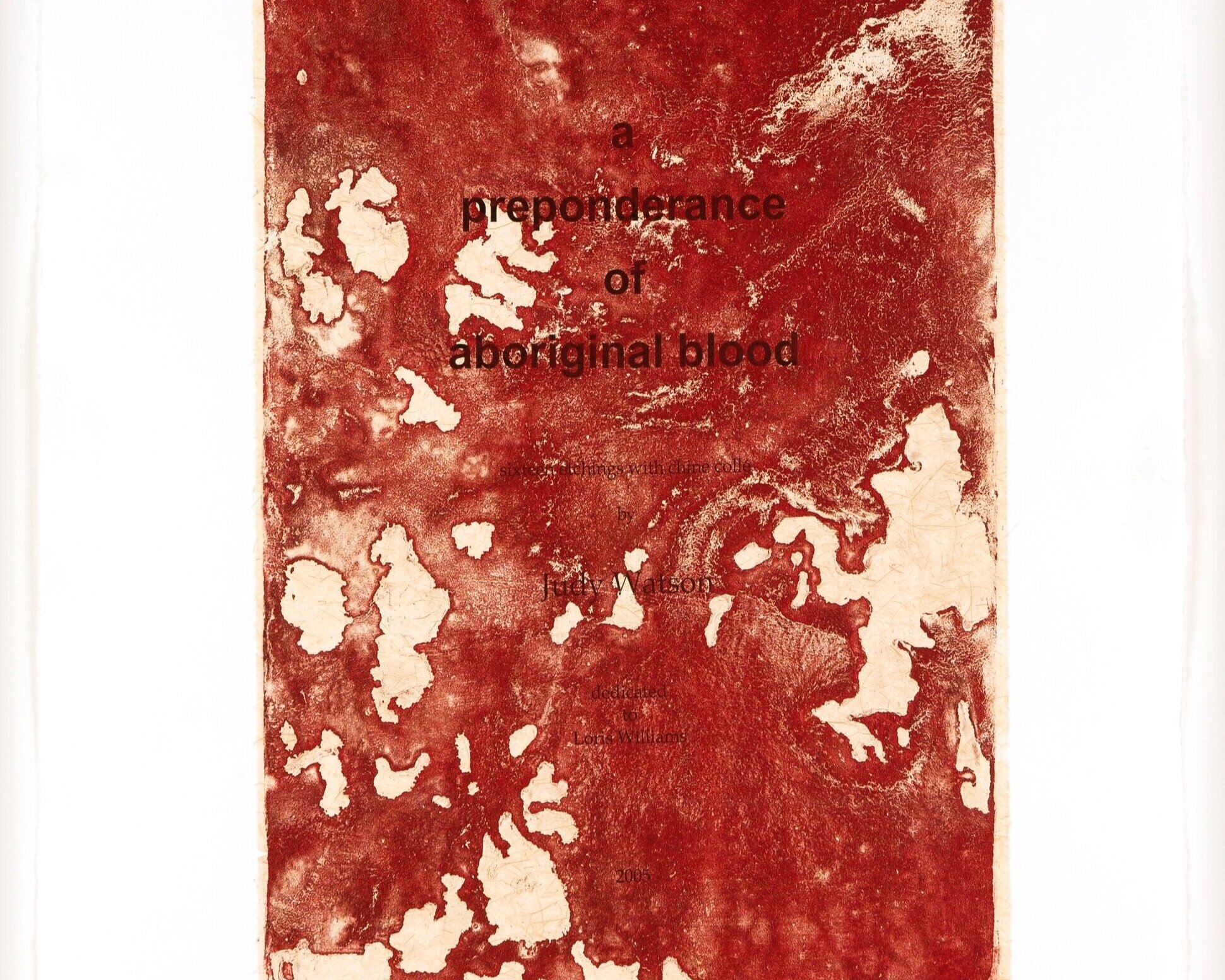
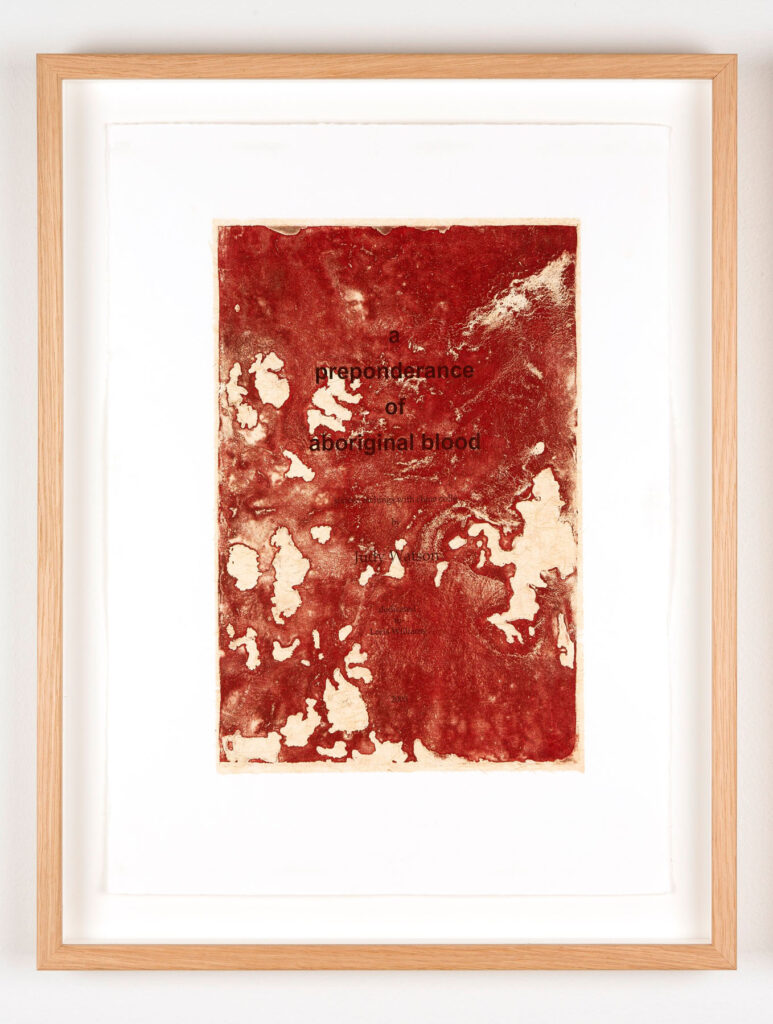
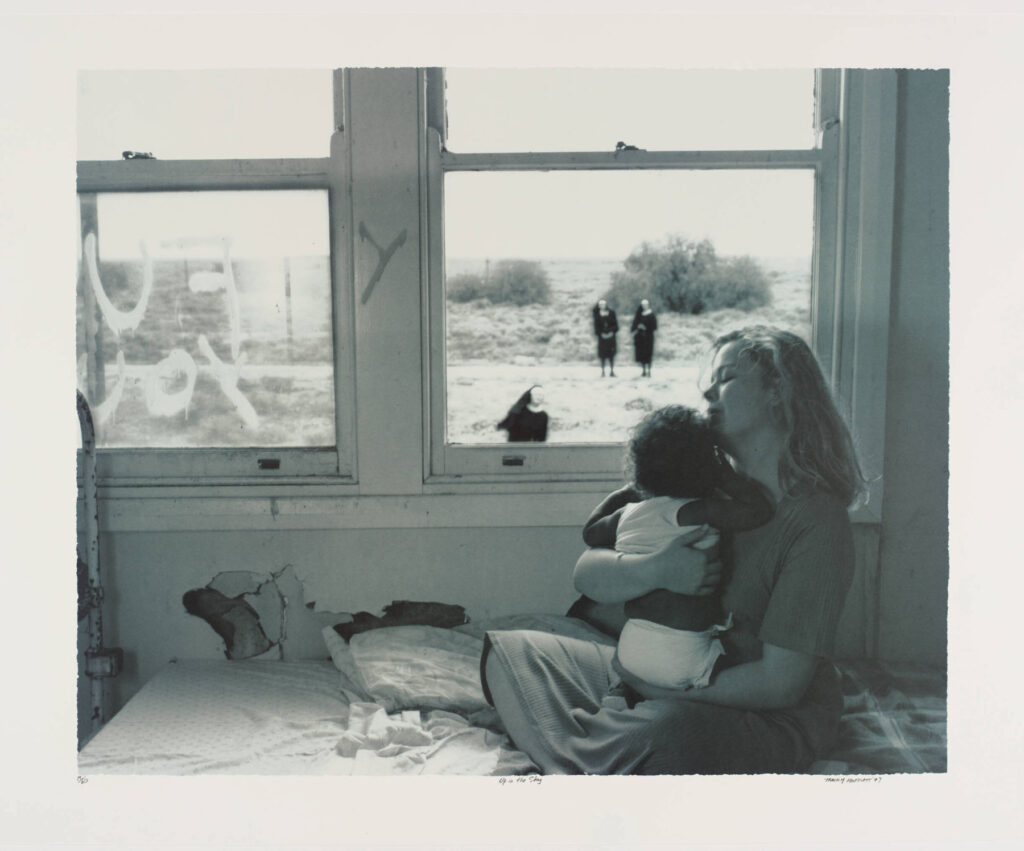
Watson’s work a preponderance of aboriginal blood uses copies of documents from the Queensland State Archives which are then layered with ‘blood-like pools of red paint, symbolising the pain and deaths of Aboriginal people.’ The documents in question are evidence of the discrimination Aboriginal Australians faced, including voting rights.’Full blooded’ Aboriginal people were not allowed to vote but ‘half caste’ Aboriginal people were. The artwork highlights the awful treatment of Aboriginal peoples in Queensland as a reflection of the ongoing effects of British colonisation.

This artwork will be part of A Year in Art: Australia 1992, a free exhibition at Tate Modern. The exhibition brings together a selection of over 25 works, many on show for the first time in the UK. The exhibition explores how artists have acknowledged the continuing relationship Aboriginal and Torres Strait Islander peoples have with their lands, as well as the ongoing impact of colonisation and the complexities of representation in Australian society today. The exhibition is available to view from June 8th 2021 until Spring 2022.

When it comes to ideas of social change you have described your work as subtlety discreet with a strong message that insinuates itself into the viewer’s consciousness, do you think that aesthetically pleasing and subtle artworks can be used as an effective form of activism?

Yes, I think the power of aesthetics and subtlety can embed themselves into people’s memory and slowly leak their contents into their consciousness before they can put up resistance. Sound and smell can be a strong activation as well.

Do you think this exhibition, and your artwork specifically, will make British people more aware of the issues of British colonialism and how that affected/affects Aboriginal and Torres Strait Islanders? 

Yes, if people look into the work, they will get a sense of the oppression of Aboriginal people under the ‘Act’.

You talk about collaborating with family members on your artworks. Did they have any specific input/influence on a preponderance of aboriginal blood, and if so in what way?

I spoke to my mother, Joyce Watson about this work. She is also trained in printmaking, in fact, I was one of her first art teachers at Art School in Townsville. After making this work I took Mum and Dad into the Queensland State Archives with me. I showed them the files held on my grandmother, Grace Isaacson (Camp) and her mother Mabel Daly, among other members of my matrilineal Aboriginal family. I made a second artist book: ‘under the act’ based on these files. My mother is very supportive of me using this material in order to show the public what it was like for our people to live their lives under this institutionalised brutality and bureaucracy. My grandmother, Grace Isaacson gave permission for us to access her files.

You speak about collective memories as an inspiration for your work, have you found that a lot of personal histories and information have been lost due to a fear of discrimination from British colonialism? And if so did you find that loss of personal histories frustrating when researching during your process?

Many people have helped me to uncover documents and history about my Aboriginal family. I did interviews with my grandmother Grace, my mother Joyce and other family members from Mt Isa over the years. I’ve also undertaken a lot of research as have others about these untold stories of colonisation in Australia. It was hard at first to find these stories but we achieved it with persistence and hard work. There is more to be unearthed in the future.

Can you tell me about your creative process for a preponderance of aboriginal blood? How did you come up with the idea and how did you go about the physical process of making the artwork? 

I went to a talk by Loris Williams (an Aboriginal archivist) and Margaret Reid at the University of Queensland about Indigenous people and the right to vote in Queensland. They showed amazing documents on their PowerPoint and this is where I first heard the terms: half-blood and a preponderance of Aboriginal blood. Immediately I knew that this is what I wanted to make work about. I had been asked to make an artist book for the commemoration of Queensland women and the right to vote. I knew I wanted to focus on Aboriginal women in particular. I asked permission to use the images from Loris Williams’s talk and it went from there.

I’ve discussed the making of the work in previous texts that you can access from the description in ‘a preponderance of aboriginal blood’.

In previous works you have united your Aboriginal heritage with your English, Scottish and Irish ancestry such as standing stone, kangaroo grass, red and yellow ochre, is this also the case with a preponderance of aboriginal blood? How else do you navigate the contrast of these ancestries within your work?

My work ‘burnt shield’ which is in the collection of the Queensland Art Gallery could be the shape of a European family shield. It could also be the female shape of the pubic area, or the waterhole at Duwadari waterhole, Lawn Hill Gorge, Boodjamulla National Park in NW Queensland. Sometimes I have referenced my skin colour, derogatory names and imagery associated with flayed skins. These are earlier works, both in prints and works on canvas.

You stated that shared experiences are an important part of your work. How do you feel to be a part of this group exhibition and is there any other artists artwork that particularly resonates with or stands out to you?

There are many amazing artists whose works resonate with me.

Sometimes I know them and sometimes I don’t but their work goes beyond the knowing.

You describe discovering how your Aboriginal ancestors were treated as a ‘heavy burden’, do you consider your artistic work/process as a way to work through, express and deal with that ancestral trauma?

In making the work I make I am lifting up my ancestors and their stories and learning more from them every day. I want to pass that knowledge onto my children and to others in the wider community.

What other media (i.e. books, films, documentaries)  would you personally recommend to people who are looking to learn about Aboriginal and Torres Strait Islander histories and cultures and the effects of British colonialism? 

Tony Roberts ‘Frontier Justice’, Timothy Bottoms ‘Conspiracy of Silence’, Bruce Elder ‘Blood on the wattle’, Rachel Perkins ‘First Australians’. So many books, videos, resources…

What artworks are you currently working on and which topics do you plan on exploring in the future?

I am currently making two bodies of work for different projects and venues that I can’t reveal yet.

One project is looking at climate change. The other is looking at a big issue affecting Aboriginal and Torres Strait Islander people in custody. I am also working with more research around the Aboriginal women in my family, the stations they worked on, the maps of the country. Other imagery will appear as I go through the process of making the work.

My public artwork ‘bara’ will be installed soon at the Botanical Gardens in Sydney, looking down at the Opera House. It is a large work in marble that represents the bara / fish hooks made from shell. These were predominantly used by Aboriginal women in Warrane / Sydney when they were fishing in their Nawi / bark canoes in the waters around Sydney, catching fish for their families in Gadigal Country.

Credits

Joe Mortell

“When working on a new scene, I always aim to have at least one unique element in it”

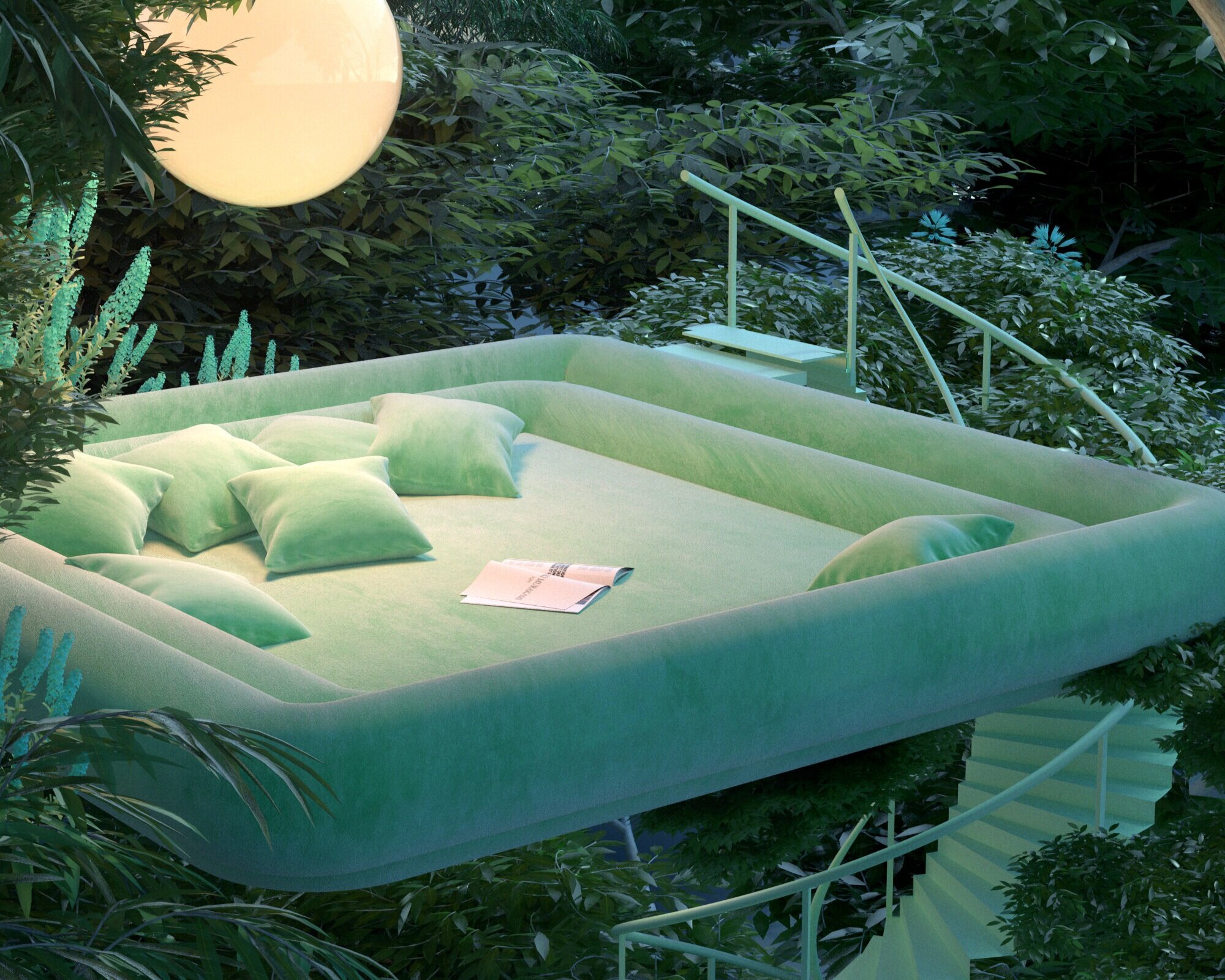
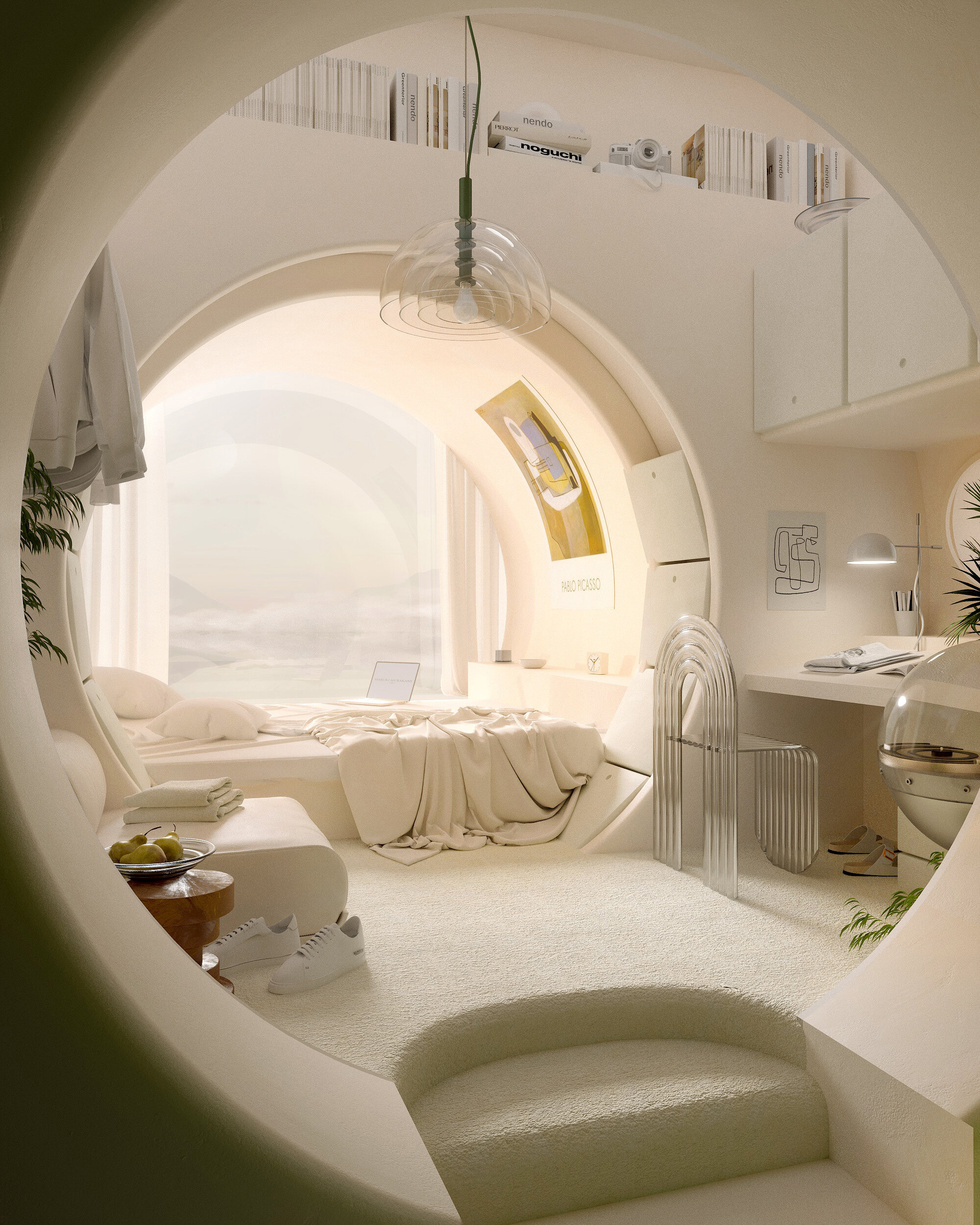
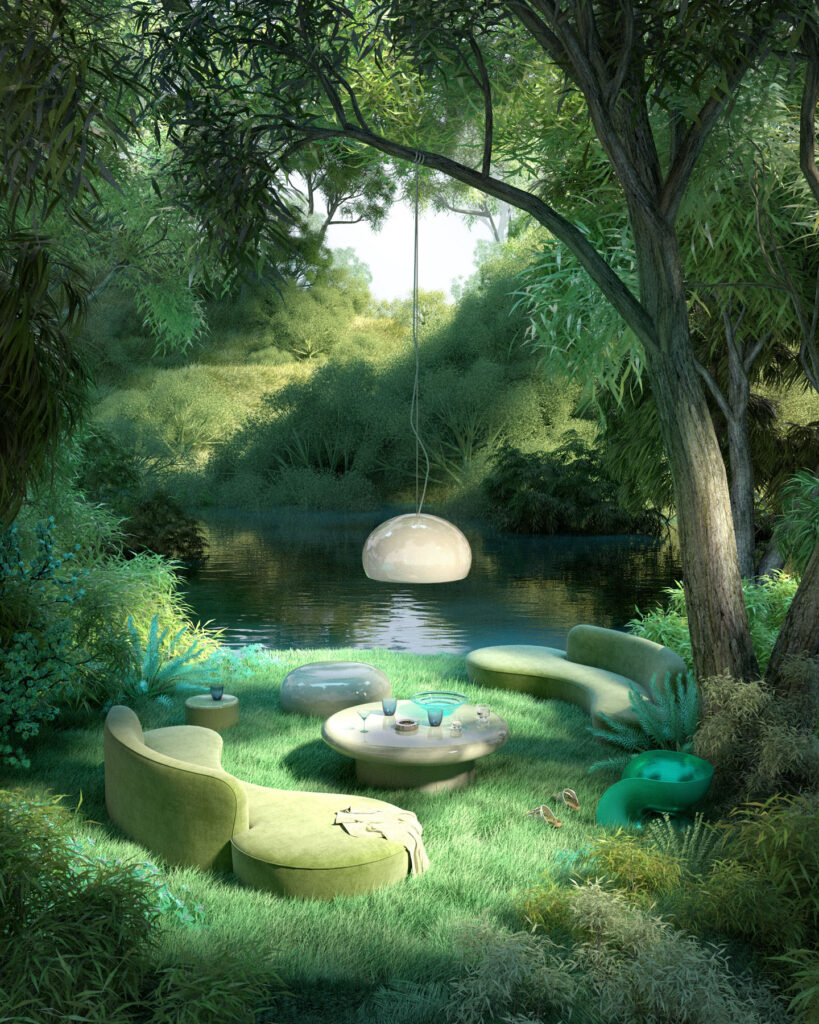
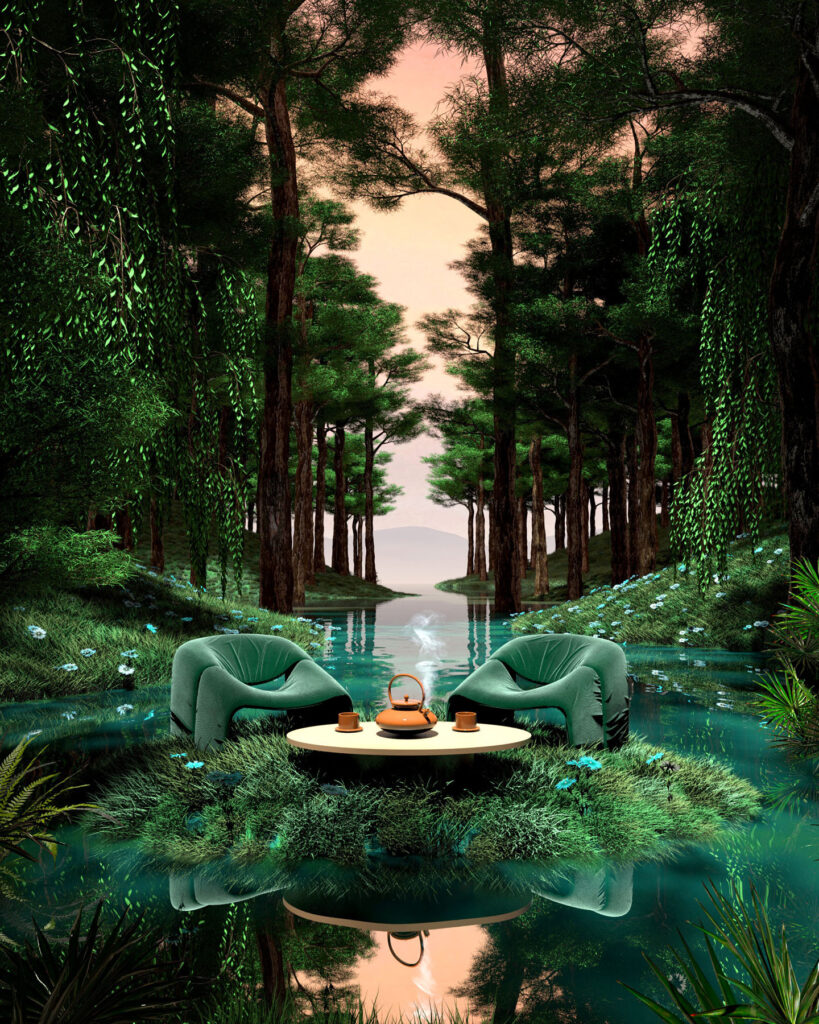
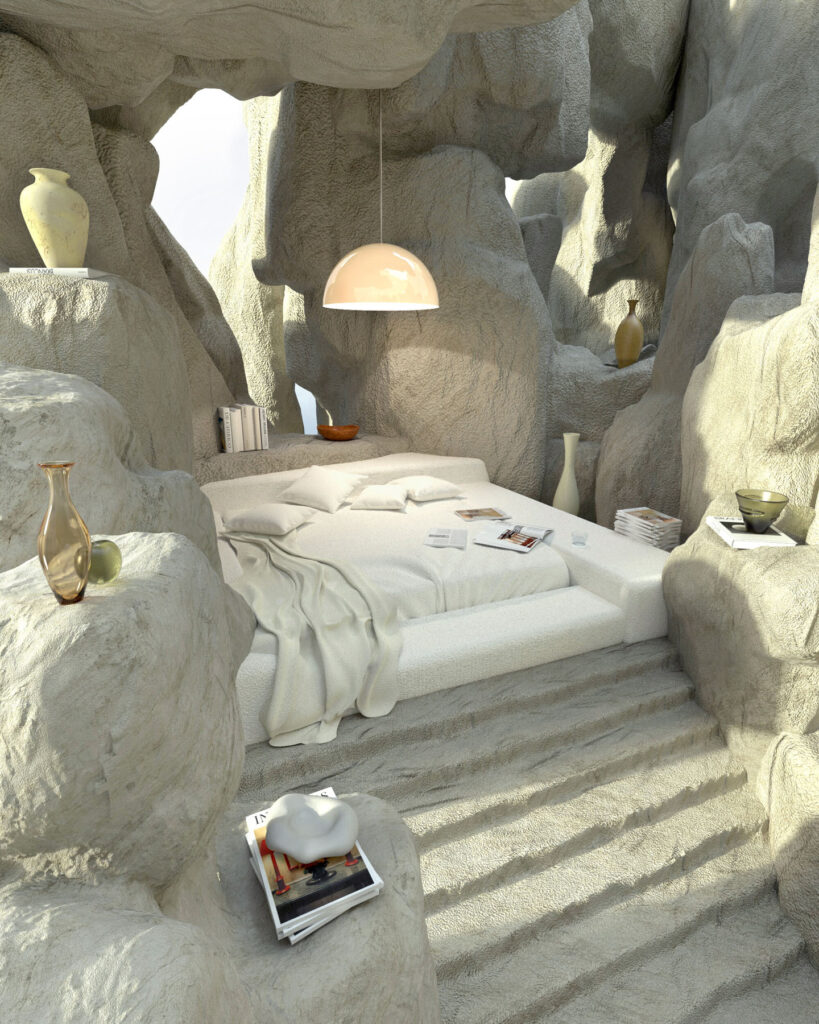
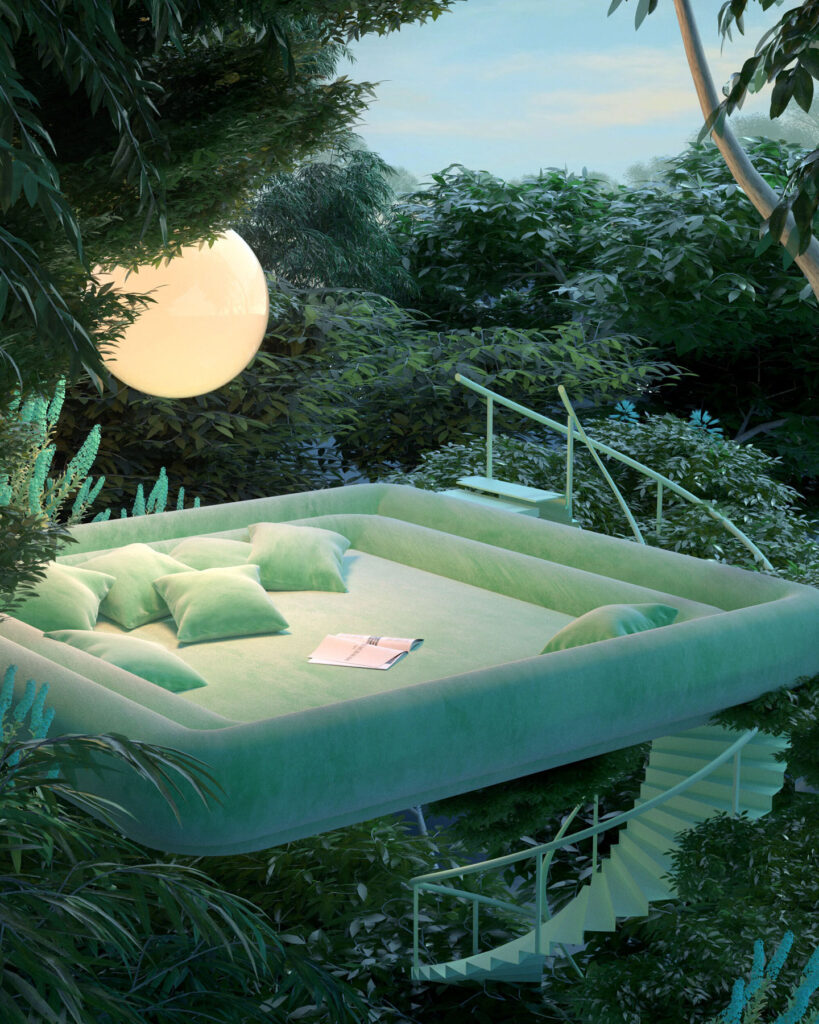
Joe Mortell is a 3D designer based in London, whose work combines the efforts of creative direction, animation and illustration to construct elegantly rendered interiors and landscapes. Often merging into one another, Mortell’s interiors and exteriors integrate to form a unique and surreal aesthetic, crafted with a high level of detail.

Mortell’s 3D rendered environments have a comfortingly familiar, dreamlike quality to them. With their carefully stylised compositions and polished imagery, it is as though we’ve been given a glimpse into a digital utopia. With ambient lighting, inventive furnishings and alluring textures, Mortell’s work transfigures the digital realm into something almost tangible.

Initially moving to London to study graphic design before specialising in 3D work, Mortell has built a vibrant and impressive career, working internationally with the likes of The New York Times, Wallpaper*, Selfridges, Louis Vuitton, Moët Hennessy, Youth to the People and more. NR Magazine speaks with Joe to learn more about the details of his 3D designs, pop culture influences and creative process.

What attracted you to start working with 3D design?

I love the amount of freedom 3D can give you as a designer! There are so many different areas within it to explore, learn and experiment with. When I first started, I was trying out almost anything that came to mind. Animating things like wind moving through plants, light beams passing through windows and light refracting through rippling glass. You never know what new effect might come out when you experiment within 3D. Even today, around 5 years after I started, I have a huge list of things I want to learn and experiment with.

What do you enjoy most about working with digital and surreal landscapes?

I really enjoy merging the outside world with interior spaces. They have a really nice mix of feeling unusual and surreal but also inviting. You can imagine yourself walking into them, relaxing and even exploring past the edges of the frame.

I feel that up until now it’s been very difficult and expensive to imagine spaces like these without a large movie budget. Within 3D it’s not only really quick to create things like this but it also gives you the freedom to experiment quickly and stumble across happy accidents.

The past year has been such a struggle for the arts and for creatives – how have you managed to stay motivated?

As with a lot of other people, this past year gave me a lot of free time that I wasn’t expecting to have. Personally, this enabled me to spend a lot of time experimenting and refining my 3D work. I enjoy doing it so much that it feels like a hobby when I’m learning something new or trying out a new idea for a scene. I feel as if the last year has allowed me to see what I want to achieve in my work a lot more clearly. I realise this really isn’t the case for everyone. My advice to anyone that is struggling is to try and find a completely new creative area that interests them and experiment with it. If you can find a creative area that you really love, the motivation will come on its own.

When do you feel like a work is ‘complete’?

I tend to focus on the composition of a scene first so I can settle on a direction and will then have a good base to work from. After that’s in a good place I start to add natural elements and furniture until the pairings feel right together.

The last 50% of the work that I put into a scene will be all about the smaller details and that’s where I feel the scene starts to really feel complete. These will be details in the materials and textures to make them feel natural along with small objects to make the scene feel lived in. An ideal scene will have small areas that catch the eye and really hold your interest.

What are the most important things you consider when designing your 3D landscapes?

When working on a new scene, I always aim to have at least one unique element in it. This could be the shape of the architecture, the natural landscape, the lighting, the colour palette or maybe even something simple like a unique piece of furniture. Using this method has helped me to find entirely new approaches to making scenes. Some things that I’ve tried out as an experiment before have become the core foundations in what I create today.

What spaces and landscapes inspire you and your practice?

The spaces that inspire me the most are almost anything retro and futuristic. I love the unique shapes in the architecture and the super bold and stylish furniture within them. I’m always aiming to find the right balance between vintage and futurism in my work.

I’ve also started to become very inspired by renaissance landscape paintings. They manage to achieve a feeling of amazing depth within them by using clever areas of shadowing and lighting to break down the scenery into something more readable. The lighting and scenery in these paintings always have a brilliant powerful feeling to them that would be amazing to try and capture in a 3D scene.

What aspects of your own life influence your creative vision?

I’m a huge movie fan so this has played a big part in how I imagine new scenes. I especially enjoy anything surreal, or anything dream based. Studio Ghibli movies stand out as some of my favourites along with movies such as Eternal Sunshine of the Spotless Mind with its incredible surreal scenes. I’m also a fan of Nintendo, so the worlds in Zelda and Super Mario have always really inspired me.

What have been your favourite projects to work on?

I have so many favourites it’s difficult to pick! I find that working in 3D allows you to work on such a wide variety of different projects. I find that I either particularly like working on something I haven’t tried before that allows me to experiment a bit, or on the other end, a project that allows me to really focus on refining the realistic details.

A few projects that do come to mind are modelling and animating birds for AllBirds shoes and NYT that allowed me to try something new. I also recently worked on a project for Wallpaper* with Charlotte Taylor where we mixed furniture with outdoor spaces. Another would be creating six unique surreal animations for Youth to the People.

Are you working on anything at the moment?

Right now I’m working on some really exciting projects. Some of which are collaborations with other 3D artists where we will be creating spaces together. Combining different skill areas that we have to make some really unique ideas. Also, as I’ve been solely focusing on still images the past few months, I’m working on bringing motion back into my work and creating a series of surreal animations.

Discover more here joemortell.com

Jean Dubuffet

Chaotic yet vibrant visual tumult, mirroring the hectic pace of life in the last quarter of the century

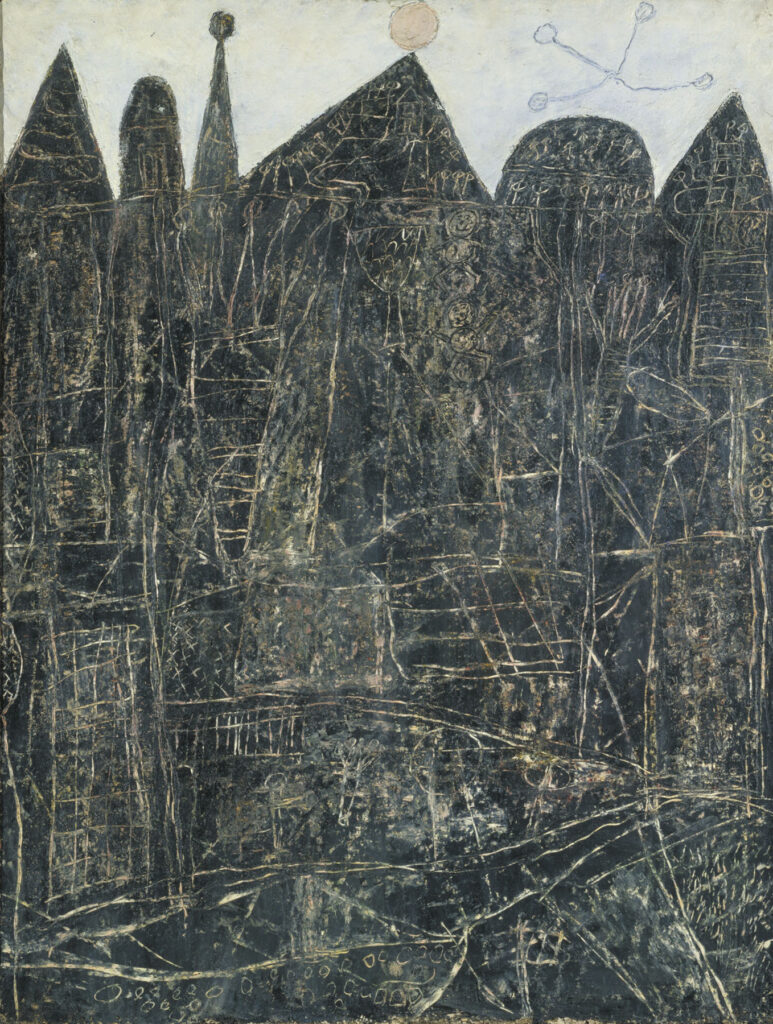
Barbican Art gallery presents ‘Jean Dubuffet: Brutal Beauty’, the first major UK exhibition in over 50 years celebrating the career of Art Brut pioneer Jean Dubuffet. The exhibition explores Dubuffet’s rejection of conventional notions of beauty in favour of more subversive forms and presents the artist as a multifaceted innovator of the immediate post-war period, adept at translating his creative vision through a vast range of artistic mediums, creating works out of mud, glass and cement.

Walking through the exhibition, visitors can track the course of Dubuffet’s career, as his practice and inspiration evolves and progresses. Abundantly inventive and playful, Dubuffet’s oeuvre includes assemblies of butterfly wings, scrawled illustrations, viscous and visceral painted landscapes and female nudes – monstrous and captivating – that all come together as a chaotic yet vibrant visual tumult, mirroring the hectic pace of life in the last quarter of the century. 

A defining feature of the exhibition is Dubuffet’s variety of technique and materiality. His work prompts a unique kind of introspection and contemplation, as he captures the sombre essence of the post-war period. Dubuffet’s scenes and caricatures rail against traditional ideas of beauty and capture the beauty of the mundane and something in a gritty and poetic way.

The exhibition is on at the Barbican until the 22nd August.  For more information visit Barbican

Paolo di Paolo

Milano. Fotografie 1956 – 1962

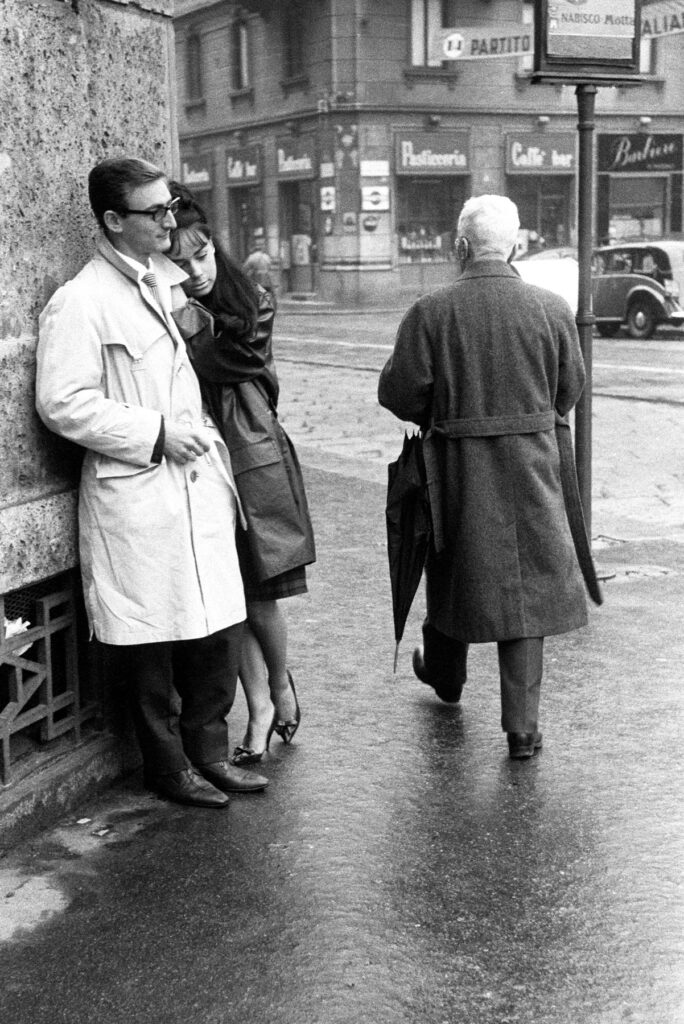
As I enter an entryway clothed in a mass of tendrils and leaves, a restaurant heralds the space with diners enclaved among the green shrubbery. I follow the walkway until I find myself at the footsteps of a staircase, leading towards the gallery. Fondazione Sozzani presents the exhibition Milano. Fotografie 1956 – 1962 of Paolo di Paolo, curated by Silvia di Paolo in collaboration with Bvlgari. The series of photographs displays di Paolo’s adoration and admiration to the city of Milan, which meant a sense of traveling to a foreign country for the photographer. The exhibit showcases di Paolo’s conception of Milan, an unprecedented and untouched look before globalization. Mist hovers, residents and pigeons flock the city center, and the romance of typography and companionship croons the metropolis: the photographs lull the visitors back into the ripening state of Milan.

Humid air permeates the quaint space of the exhibit, stirring up warmth against the twenty-five-degree weather outside. The sliding door remains opened, stuck in its machinery, but whirs whenever a guest walks into the area. As I make my way inside, the glint of the seventeen overhead warm lamps, dangling over the square-shaped metal railing, reflects on the glossy purple floor. It adds illumination into the space as if the two closed windows on the left side are not enough to spill the sunlight inside. Positioned in the middle, a DNA-shaped metal seat waits for three tired guests, but there are only two visitors at the time, myself included.

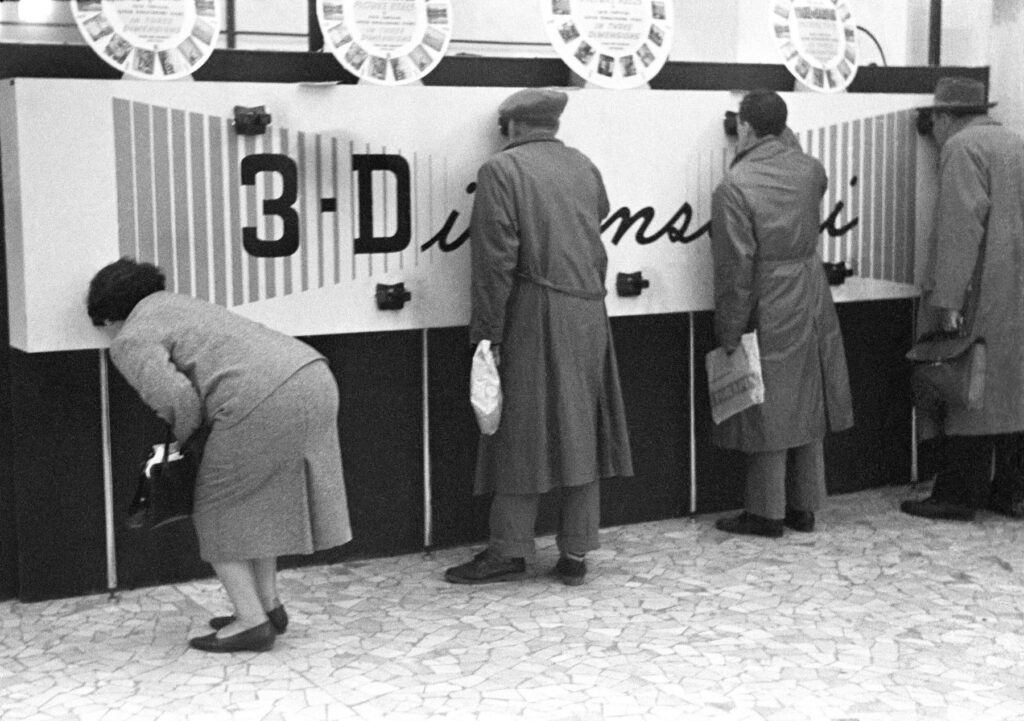
Strolling to the left side by the entrance, di Paolo’s reverence for Milan springs up. The photographer captures four open windows in an architecture for La natura resiste. From afar, a person holds onto the railing of a window as they dust off the beam they crouch on, but the attention suddenly diverts to the sawed trunk and branches attached to the remains of the tree with a rope. The classic human versus nature tale leaps off the frame, a lost narrative from the two images of Fiera di Milano that position beside it. In these two photographs, captured in 1962, a crowd inspects the thermal circuit breakers with its cresting gray thin wires inserted into an unwieldy-looking box where the name KLIXON remains embossed on the side. The business men’s observant and analytical gaze at the device outlasts their time so much that they have forgotten to notice the two nuns in their habit uniforms that observe with them, who are enthralled by how the device functions. As di Paolo walks further in the 1962 technology fair, he captures three men and a woman peeking through the viewfinders of the cameras nestled into the walls which promise 3D images during the decade.

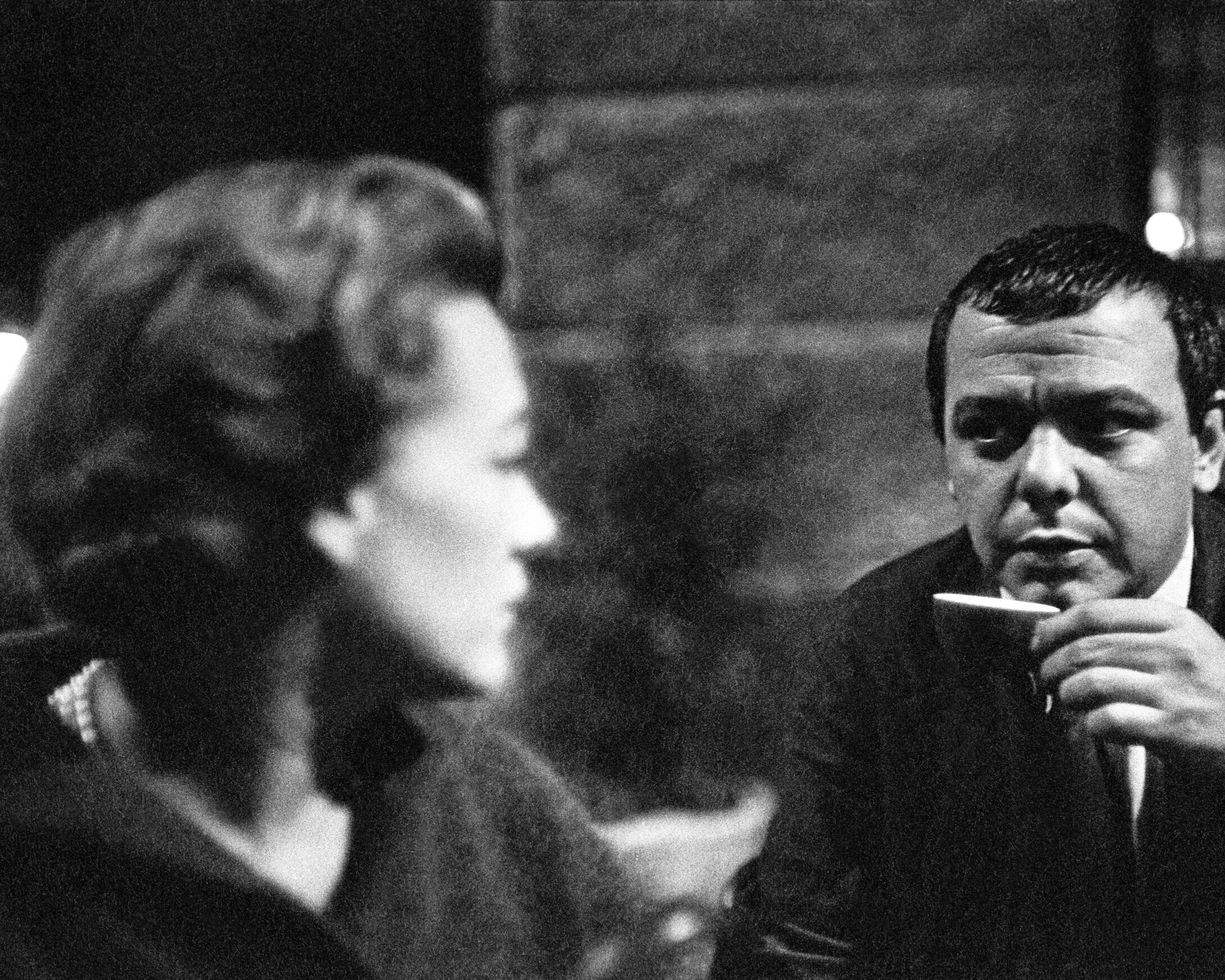
The year 1960, two years before the fiera, means di Paolo goes to Bar Jamaica and weaves through the bustle of Milan’s folks, photographing their humane interaction by giving each imagery his definition of grandeur in the city life. An orator raises his hands as he looks at the ceiling, swooned by his own declarations and dismissing the puzzled looks of the man behind him. A man sits beside a woman and courts her, bending his head sideways to usher humor into his punchlines, while she directs her eyes far from his presence. A woman looks behind her to find a man in his pensive expression as he raises his small cup, snugged between his forefinger and thumb, just below his lips. On the other side of the room, a group of men gambles in a room clothed with bathroom tiles. Here, the primary subject wears an unperturbed expression while a lit cigarette snuggles between his teeth, oblivious to the curious onlooker behind him who stands too close to the player and desires to offer advice on which card to throw on the table.

Magnolia on the radar, the celestial flow of luxury in the 1960s: di Paolo walks into the Aretusa Night Club, his camera in tow. Inside, an overhead lamp casts shadows across the space, illuminating romance and haze to wrap with the nostalgia of the evening. A man hooks his arm around a woman’s hips and tugs her to his body. They sway to the soft hum of the music and pay no attention to the patrons that surround them as they gaze into each other’s eyes, falling and ruminating. Such a sight differs in Sala da ballo as patrons dance to the sound of the live band, a mix of piano and guitar tunes over the saxophone lullabies.

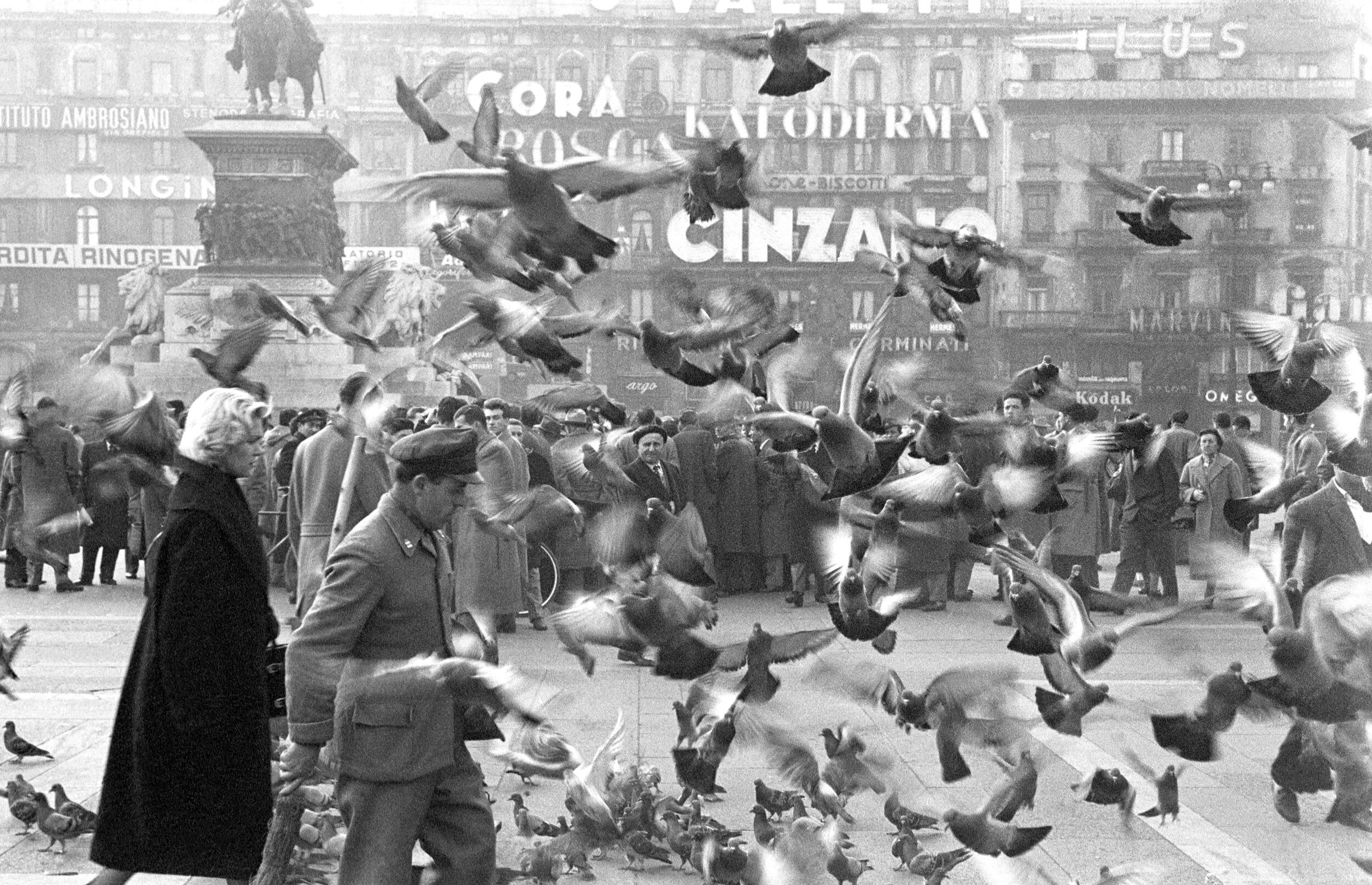
Di Paolo commands his camera to record the political discussion in Duomo, the heart of Milan, when the year pivots back to 1958. The frantic pigeons flap their wings aggressively as they flock the city center, masking over the photograph. As one sees beyond the birds, residents crowd beside the monument of Vittorio Emanuele II to participate in political exchanges in their heavy winter coats, handheld purses and attache cases, tipped hats, and cigarette stubs between the lips. In the background, the forgotten era of typography in a myriad of designs and styles pepper the antique and historic architecture of Milan, a slow ascent towards modernization and minimalism.

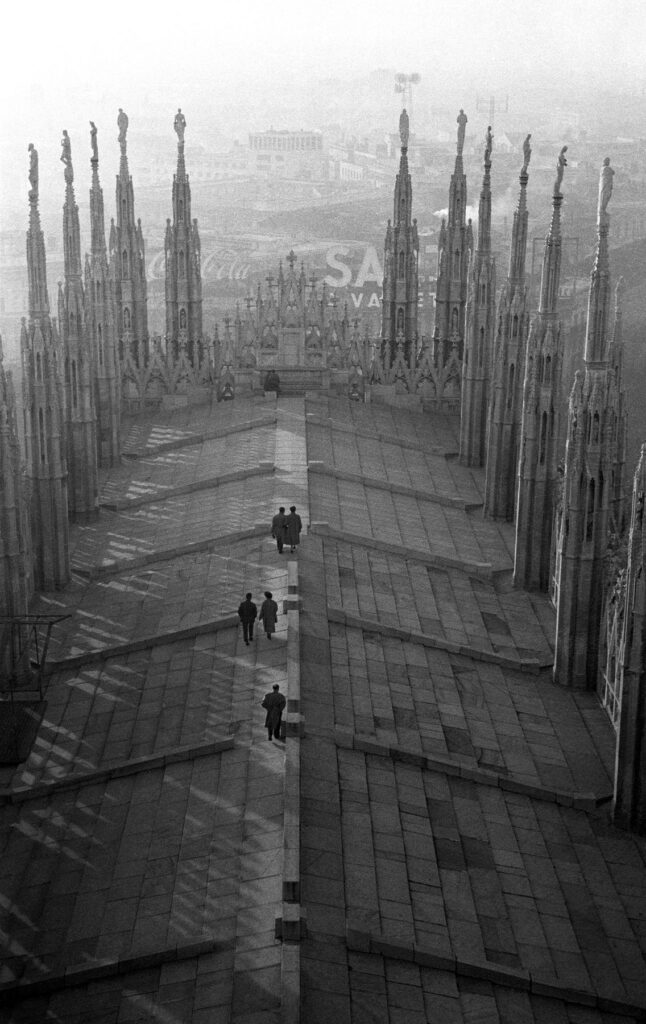
The photographer’s storytelling on Milan endures as he captures a lone man walking on the roof of the cathedral with his phone on his ear, his scrunched eyebrows signal distressed against the lush and resplendent of the church. In Sul tetto del Duomo, – on the roof of Duomo – di Paolo hovers his camera to carpet the shot with the cathedral’s poignance, a registered vaporous memory to last and test time. As di Paolo walks down the cathedral and into the streets of Milan, he bumps into a couple, innamorati a Milano, lazing in the angle of a street – the man in trench coat looks afar as contentment flashed across his face and lets the woman beside him rest her cheek and hands on his left shoulder. Milan serenades the couple in the shelter of its romantic arms, enshrining their affair with a state of zen and mirage for years to come.

Dusk turns into nighttime, and the city center glows with Christmas string lights and street lamps. Di Paolo shoots four photographs for le luci di Natale as the exhibit forwards in 1962 and demonstrates the solemn celebration far from the Western upbringing. A policeman wears his cap and stands alone in the corner of a street, watching the pedestrians cross as the rattle of the tram passes by. Cars honk as they jam the street and appear slower than the crowd who germinate the sidewalks on foot. A policeman – his back facing the lens – stands outside Galleria Vittorio Emanuele II in Duomo, watching the residents stoll around the space and away from the frenzy Milan encounters today. The last photograph, the one that sits on top of the three frames, shows street lamps decorated with sticks of light to emulate fireworks in a starless sky. Here, a sense of finale has dawned in defiance.

I step back from the four photographs of le luci di Natale and turn around to find myself alone in the room. The afternoon sun creeps into its peak, and the rays pass through the window panes and bounce on the floor, attempting to replicate the reminiscence of Milan between the 1950s and 1960s. The longer I remain in the four walls of Fondazione Sozzani in Via Corso Como, 10 with Milano. Fotografie 1956 – 1962 of Paolo di Paolo, the more I realize that the beauty, divinity, and fertility of the bygone years persist.

Credits

Images · FONDAZIONE SOZZANI
For more information visit
Fondazione Sozzani
Corso Como 10, 20154 Milano
tel. +39 02.653531
galleria@fondazionesozzani.org

James Barnor

Exploring the nuances and societal transitions in the 1950s and 1960s, as London was blossoming into a multicultural capital

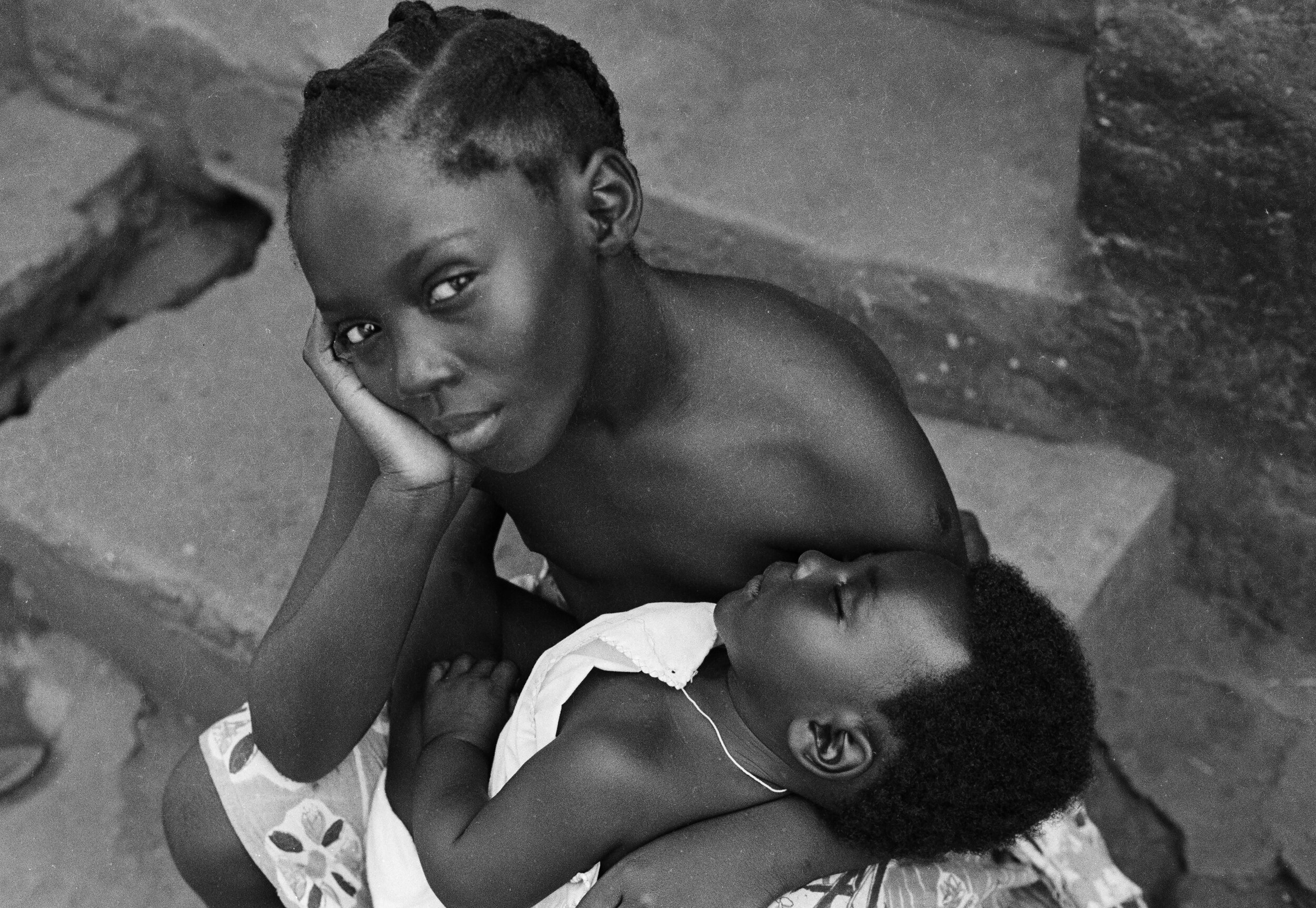
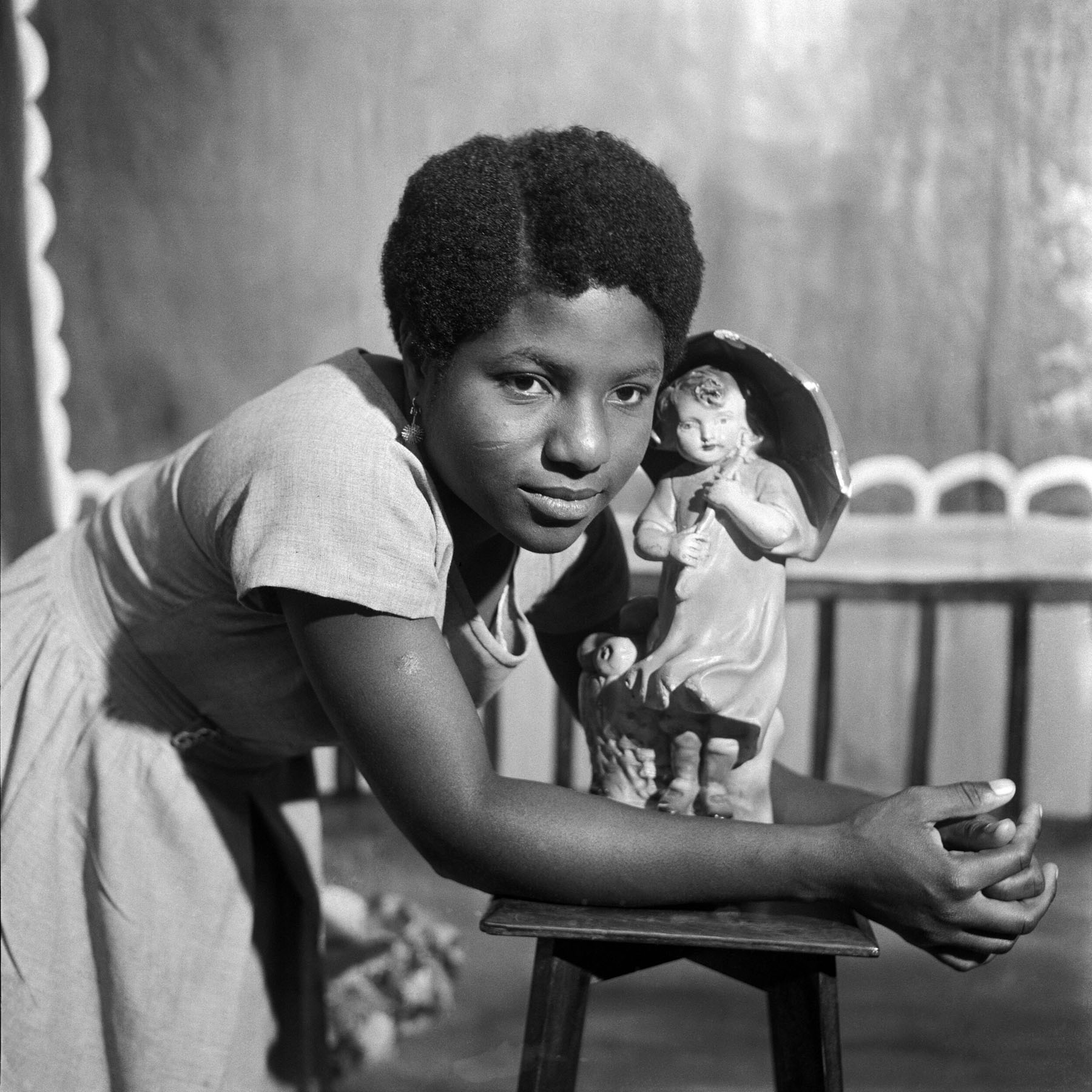
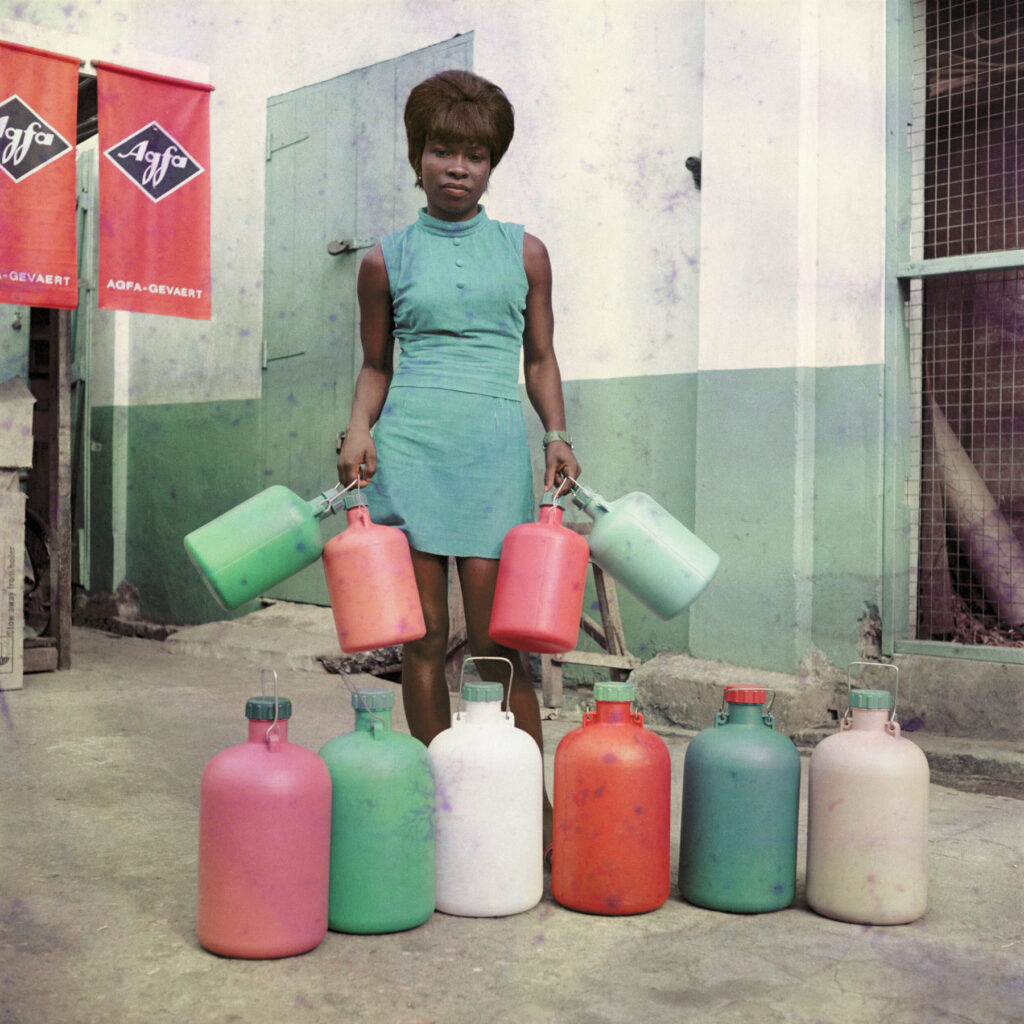
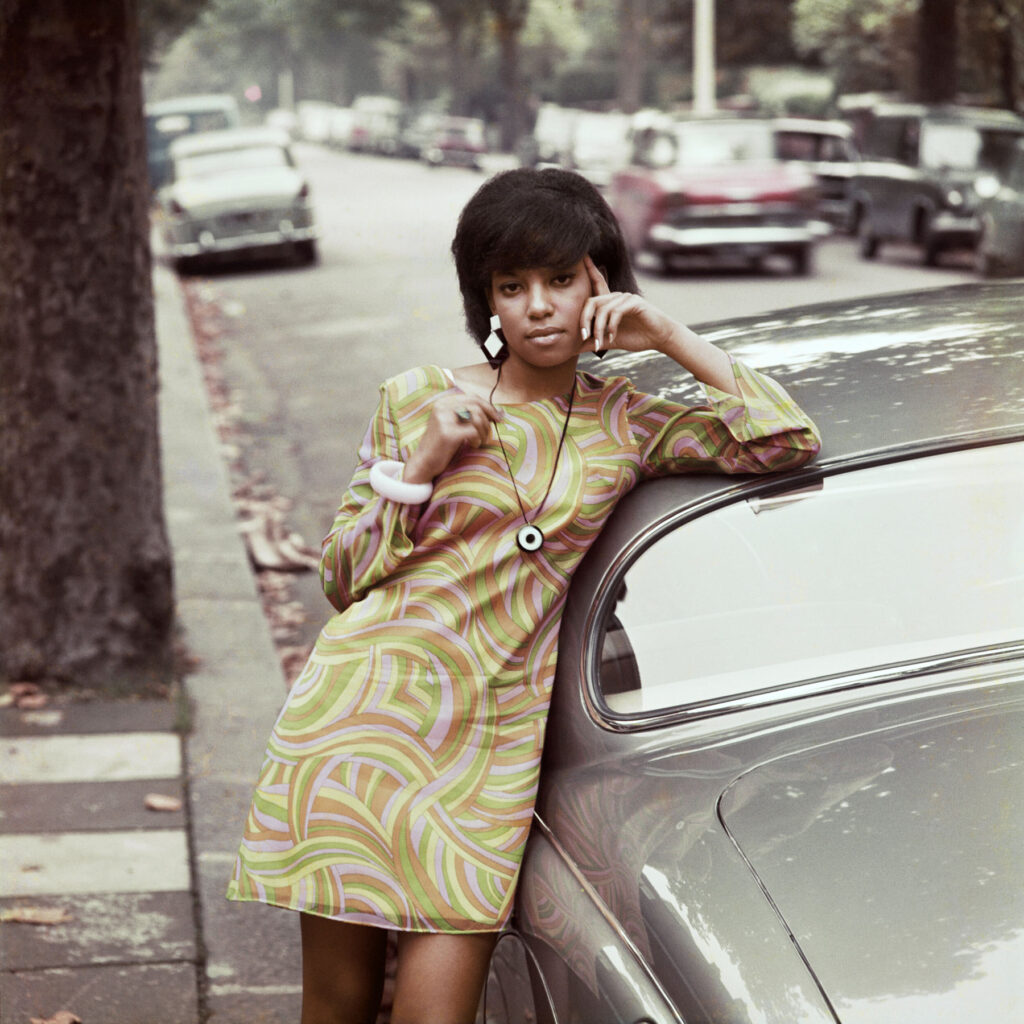
London’s Serpentine Gallery presents an overview of the career of British-Ghanaian photographer James Barnor. Working over two continents and over six decades as a studio portraitist, photojournalist and Black lifestyle photographer, Barnor’s career covers a multitude of photographic genres and offers a wider social commentary, documenting major socio-political changes in London and Accra.

On the cusp of Ghana’s Independence in the early 1950s, Barnor set up his famous Ever Young studio in Accra. Arriving in London towards the end of the decade, he began working with the South African magazine Drum, capturing the experiences of the African diaspora and the style and creative spirit of the period. Barnor returned to Ghana in the 1970s, where he continued his work with portraiture, established himself in the music scene and created the country’s first colour processing lab.

Barnor’s street photography explores the nuances and societal transitions in the 1950s and 1960s, as London was blossoming into a multicultural capital. Returning to the city 1994, Barnor’s work focussed on documenting the Black communities that had settled in London – something that had previously been documented by mostly white, European photographers. His portraits of the African diaspora in London focus on the members of the Black Power Movement, while also capturing different fashion trends present in Britain’s Black community during the 1960s.

Barnor’s body of work spans six decades and possesses a clarity of vision and a sense of community and sensitivity that he both extends towards and brings out in his subjects. The Serpentine’s exhibition displays Barnor’s work from 1950-80 and draws from his archive of around 32,000 images, all mapping the flourishing cultures of two cities and reflecting Barnor’s ceaseless uplifting and creative energy.

‘James Barnor: Accra/London’ runs until 22nd October at the Serpentine North Gallery.

Motoi Yamamoto

“Our lives, that we live here now, it is always wrapped up in ephemerality”

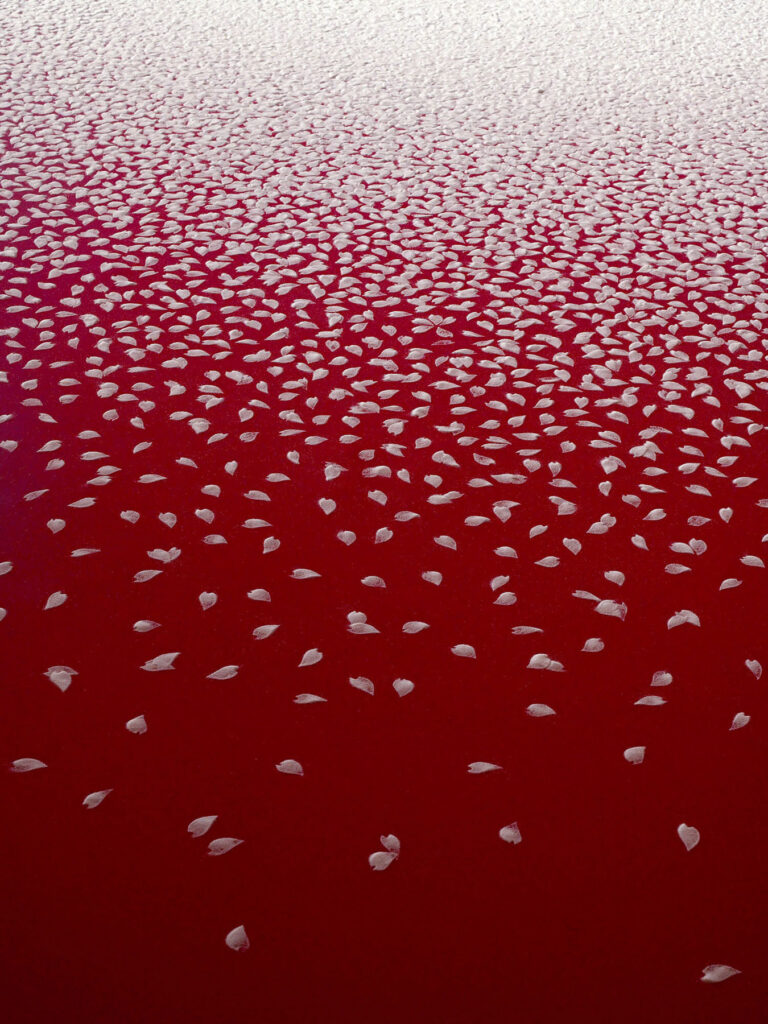
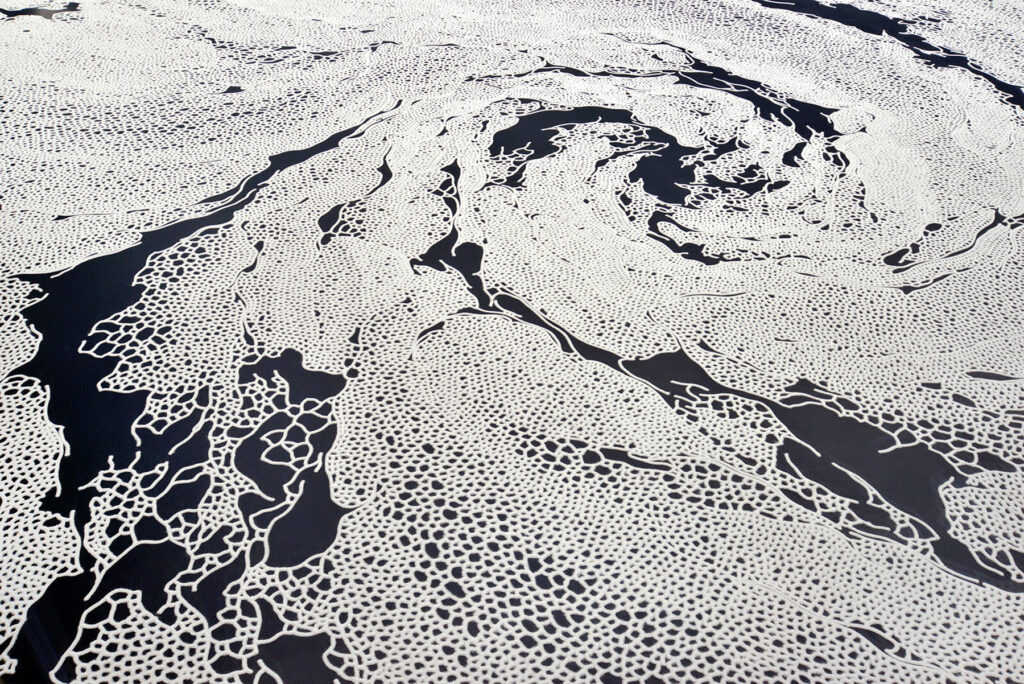
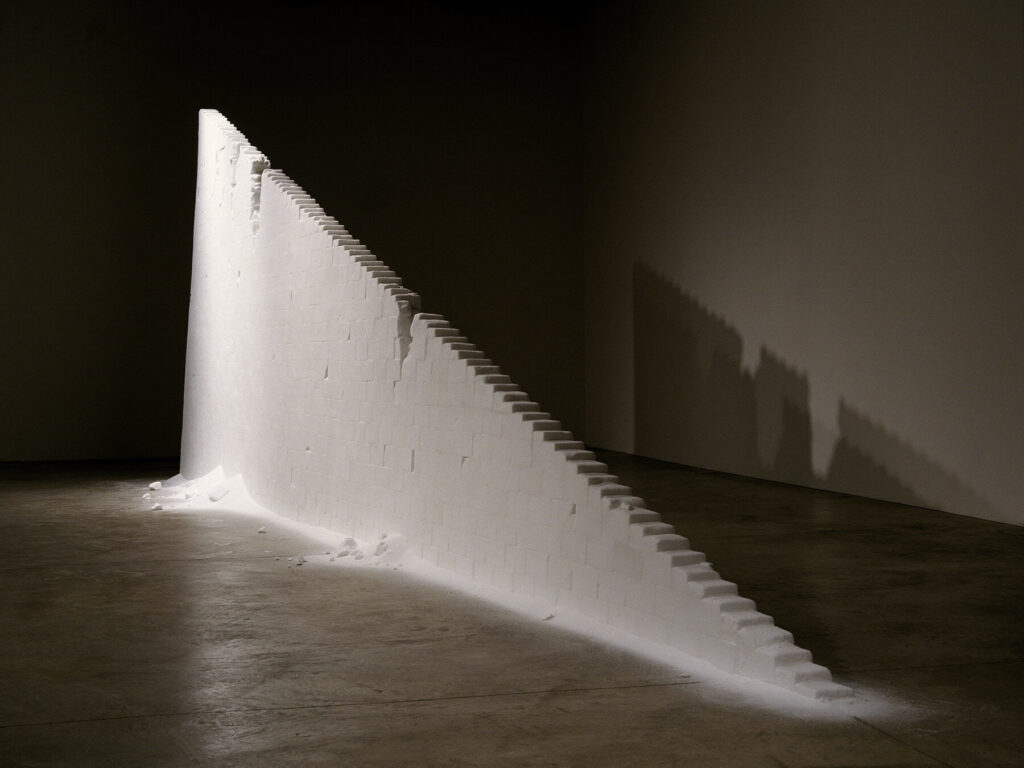
Soft white piles of salt weave across the floor in delicate and intricate patterns that fill entire rooms. These transient installations are the result of hours of painstaking work from artist Motoi Yamamoto, for whom these creations are a way to remember his sister, who he lost in 1994 to a brain tumour, and his wife, who passed away in 2016 due to breast cancer.

Yamamoto states that he “keeps creating so that I will not forget memories of my family.” He considers the long hours he spends on each artwork as a way to help him to retain those memories. “I look for a convincing form of acceptance to come to terms with the parting of ways.”

On the last day of each exhibition, Yamamoto invites the public to help him destroy the artwork, gather up the piles of salt, and then return them to the sea. The cyclical nature of this act is inherently spiritual and references the cultural use of salt in Japanese traditions such as funerals. NR Magazine spoke to the artist about his practice.

I’ve noticed that you use a fine white seas salt to create your works, have you ever considered using other types of salt like pink rock salt which typically has larger crystals? 

I’ve only used it once in the past. In 2011, I used pink Himalayan rock salt in a large-scale solo exhibition in a museum. It was a work that looks like a Japanese rock garden. But one of the major reasons I use salt is its transparent whiteness and beauty as a crystal, so I think I will continue to use salt that looks white in the future.

Do you consider the process behind your work as a form of therapy that can help you work through and deal with the trauma of personal loss? 

The reason why I make art is to realise the farewell to the precious persons in a convincing way. I keep making art so that I don’t forget memories of those precious people.

“I see my work as ‘a mechanism to fight against the self-defence instinct of oblivion’.”

Salt has a particularly traditional and spiritual significance in Japanese culture, but also in many other cultures and practices around the world. What do you think it is about salt that makes it a globally significant and spiritual substance? 

Salt is a food necessary to support people’s lives. It is familiar but takes a considerable amount of time and effort to collect, which makes it both rare and essential. Another major advantage of salt is that food can be preserved and stored for a long time by salting. These are important functions of salt that support our life.

You have spoken about how you spend much of your time raising your daughter and that you want your work to look to the future. Do you involve your daughter in your art practice and does her view of the world offer you inspiration for your work? 

Basically, making art is a means to solve my own problems. But as she grew up, I sort of adopted changes in her will and mind and opened up opportunities to think about my work together with her. For example, one of the major reasons why I use blue as the underlying part of my work comes from the words my wife spoke before she died, but I asked my daughter about how bright and vivid the blue colour should be, and I decided to use the colour she chose for the work I am going to show this fall.

Both the process you use to create your works and then the returning of the salt to the sea when the installation is over, have an element of ritual to them. Do you think these acts could be considered a form of performance art? 

Certainly, there are performance elements in “public production” and “project to return to the sea”. However, it only looks like a performance as a result if you try to categorise it. It’s not my intention to establish it as a performance.

The patterns that make up your work are very organic in their form, is there a particular reason behind this? How do you plan out the designs?

The labyrinth-like complex shape was originally triggered by the winding form of the brain as my sister died of a brain tumour. And labyrinths have a meaning of rebirth. I began to draw the swirling works “Floating Garden” because the form of a vortex has a similar meaning to that of a labyrinth, mainly in East Asia.

What was the most challenging installation you worked on and why? How did you overcome these challenges? 

One of the most difficult works was a solo exhibition at a church in Cologne in 2010 in cooperation with MIKO SATO GALLERY. From 5:00 a.m. to 9:00 p.m., I worked more than 14 hours a day. Because I decided that the area originally planned was not enough to face the majestic space, it was necessary to take far more time than initially planned. With the help of the gallerist, the director, and many others, I managed to create a very satisfying work. The time I spent in Cologne is my treasure.

There is an ephemeral nature to both your completed artworks and the medium you use to create them. Do you think that nature is something that originally drew you to creating art in this way?

Since my sister and wife passed away at a young age, I always spend a finite time, permanently conscious of death. Even while I’m answering your question I am using my limited lifetime. There is no doubt that it is a very precious and limited time. Our lives, that we live here now, it is always wrapped up in ephemerality.

What advice would you give young creatives who want to create installations but perhaps don’t have the space or the resources to do so? 

After my wife died, I cancelled all my work to rebuild my life with my daughter. And I printed out hundreds of photos of my memories with my wife and put them on the wall of my room. That’s when I became suddenly aware that creating an installation and putting photos on the wall are equivalent to me.

My aim is to remember people who are precious to me, and I want to make sure that I never lose sight of the fact that creating installations with salt is just a means to get closer to that aim.

What projects are you working on at the moment and what plans do you have for the future? 

This year I am working on a new project. The Oku-Noto International Art Festival is a big challenge. Create huge installations in what was once a nursery. It is a plan to combine an area that uses a large amount of salt with an area drawn with paint. I’ll paint the walls, ceilings and floors of the nursery with the light blue colour that my daughter chose.

From next year onwards, I would like to realise exhibitions overseas again, for example in Germany, France and other countries.

Collectif Scale

“We don’t have the pretense to guide people younger than us, because we can also learn a lot from a new generation, born « connected »”

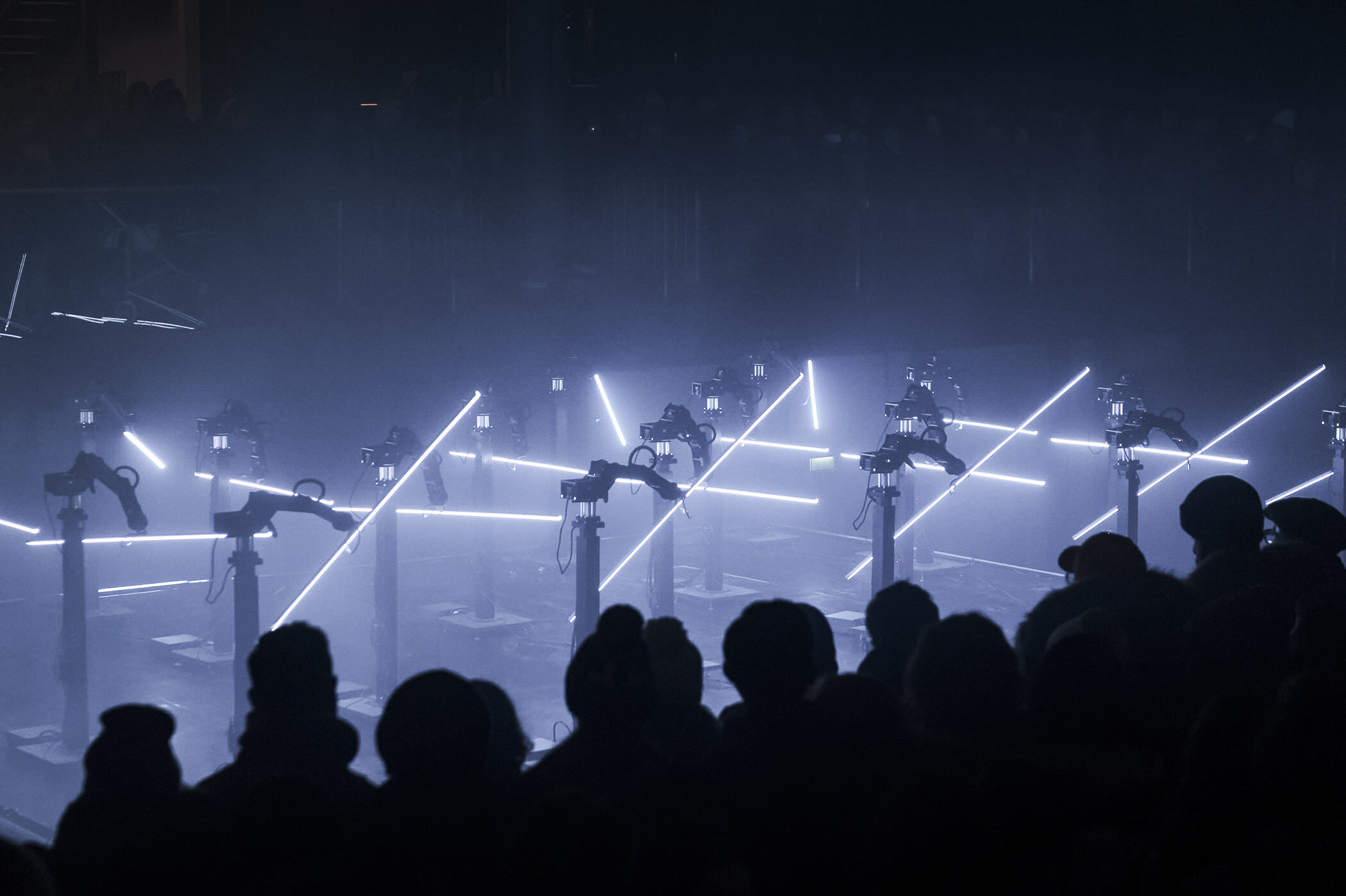
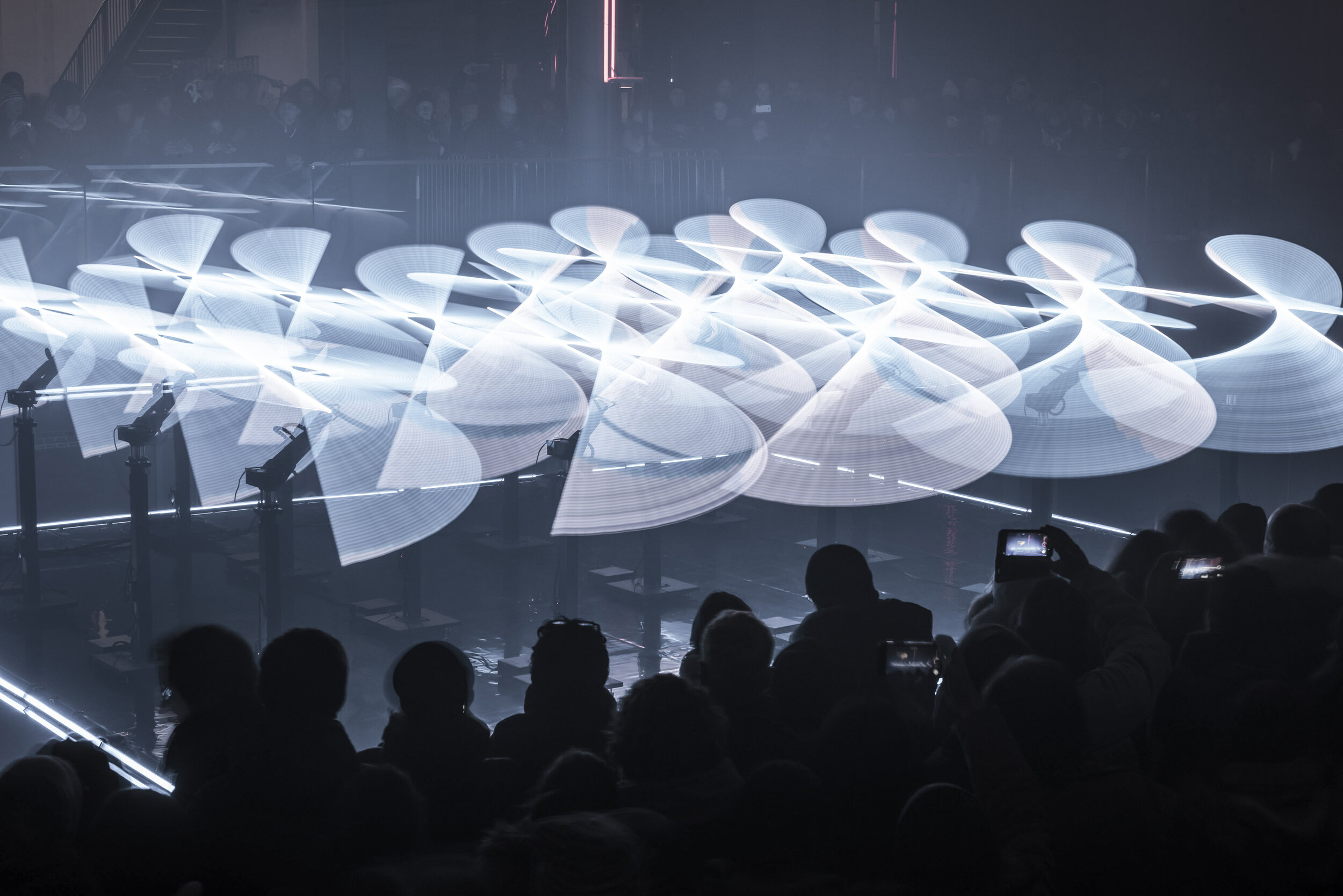
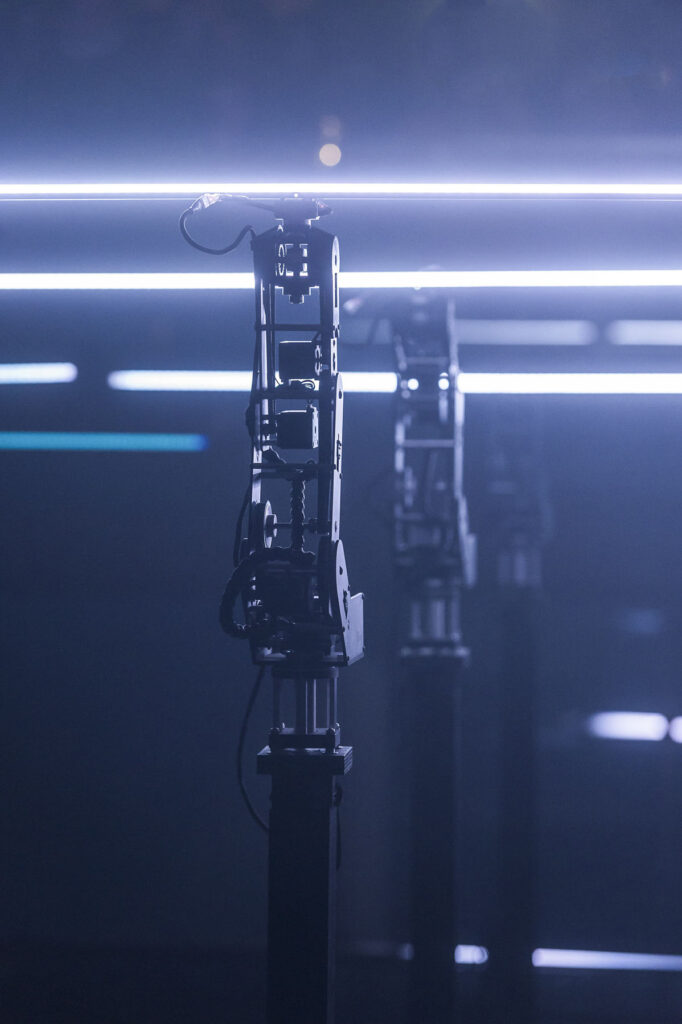
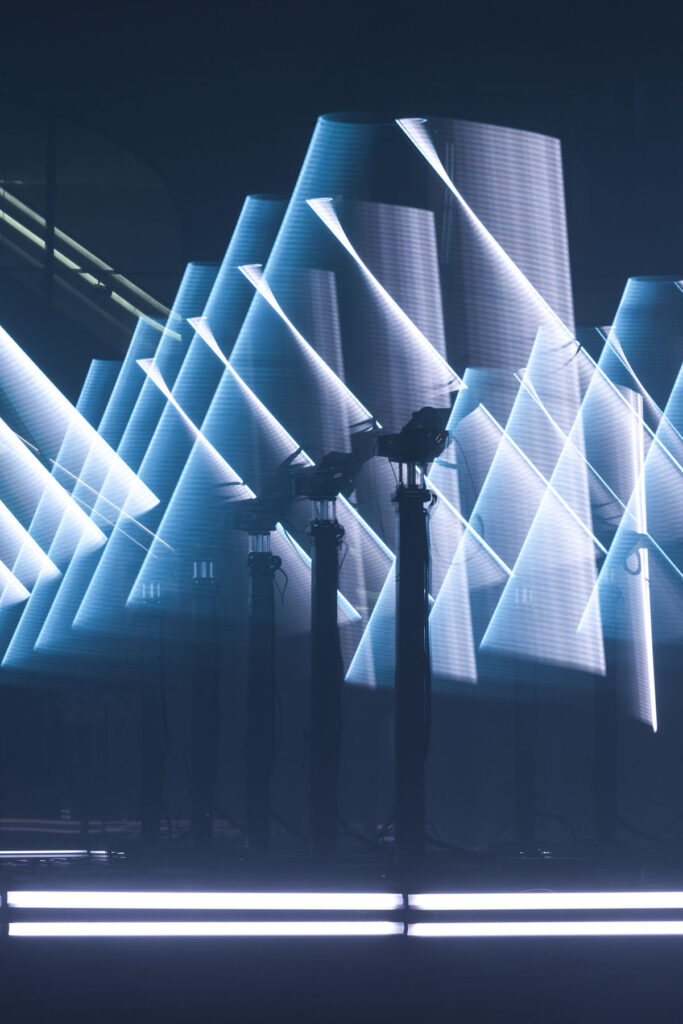
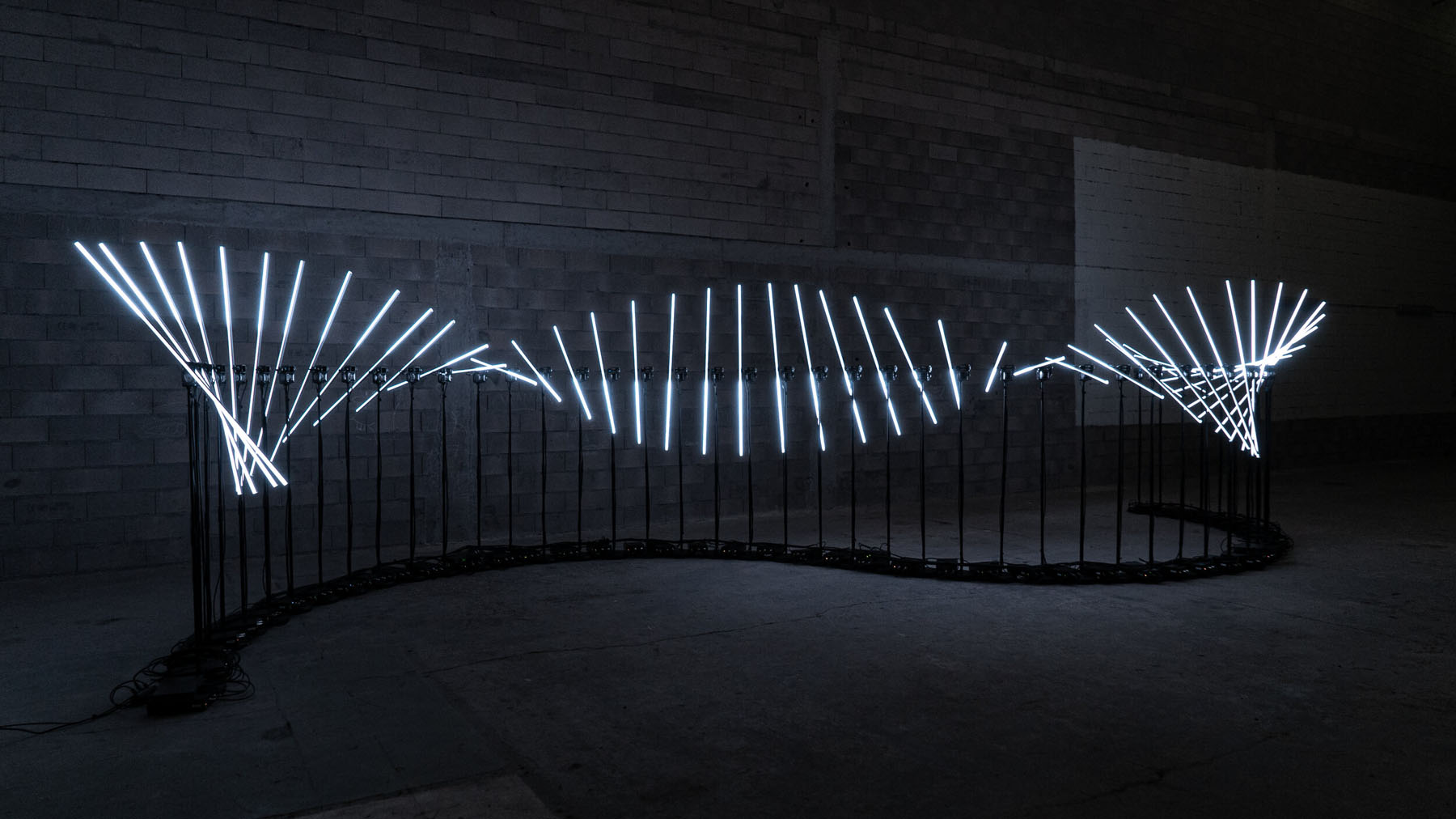
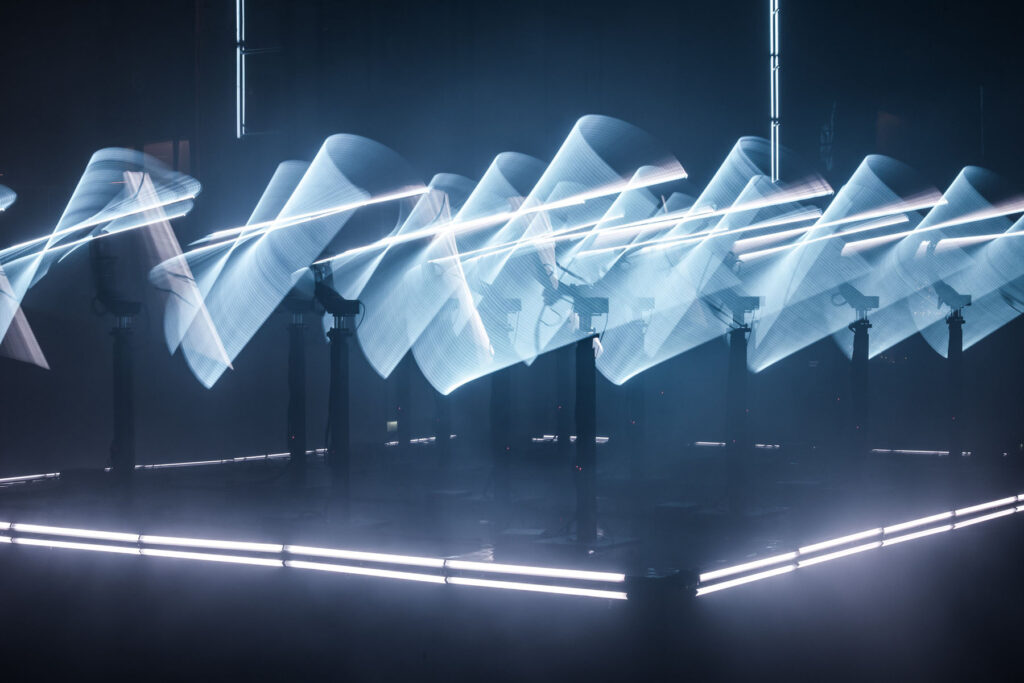
Rods of light twirl and twist, a line of hula hoops loop around each other in a mesmerisingly technical dance, a gallery space is transformed into a kinetic universe of projected images, all to hypnotic soundtracks of electronic and classical music. Collectif Scale is a group of artists and technicians based in Paris who pool their respective knowledge and experience to create cutting-edge augmented installations. Since their beginning, they have “questioned the links between music and the visual, light and architectural design, entertainment and contemporary art, nature and the future, man and machine.” They seek to provide the answers to these questions through their installations. NR Magazine spoke to the collective about their practice.

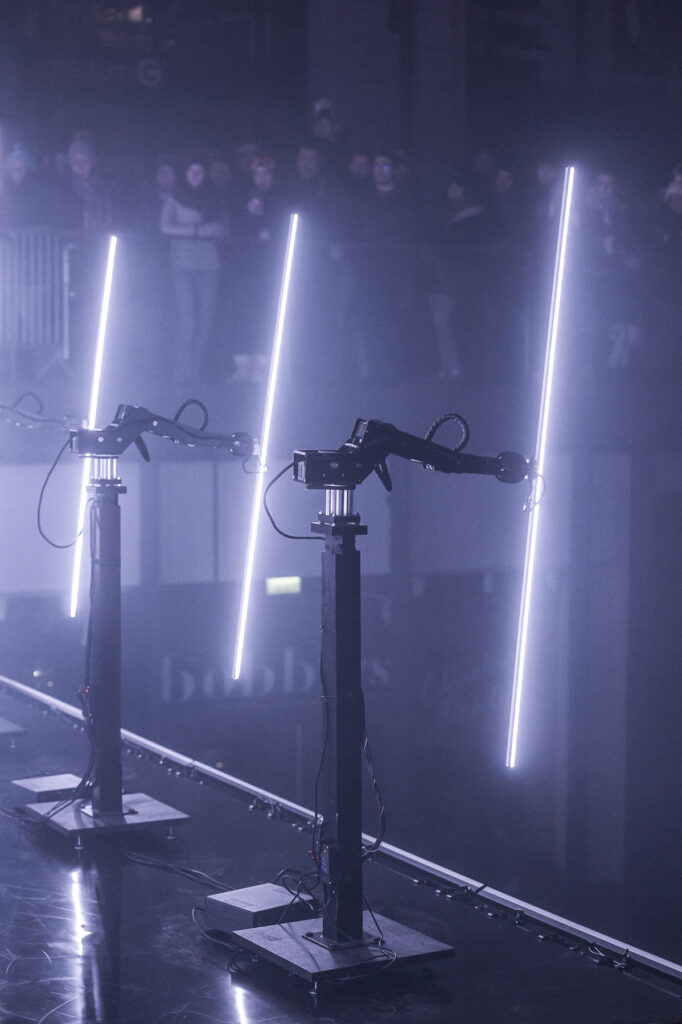
Your CODA installation has been described as ‘the ballets of robots’. How do you feel about this description and do you think it’s accurate. 

The starting point of CODA was to work around with the idea of a choreograph of lights and create a piece like a dance show or a ballet, where we would replace the body of dancers with robots and light. But even if many people see in CODA a reference to pop-culture, such as Star Wars or video games, our first idea was to produce a ballet of lights, more than a ballet of robots.

You state the collective does not individually define themselves as artists. What do you define yourself as?

Scale is just the pseudo of a visual designer and this designer happens to be a collective of friends.  As we produce different kinds of installations, from scenic scenography for live shows to pieces for art exhibitions, we don’t like to describe ourselves as artists but prefer to consider ourselves as creative technicians or just scenographers.

You have said that the current health crisis has complicated presenting to the public. Would you consider making outdoor installations? 

Since the crisis, most of the festivals or productions try to match with some new rules (outdoor exhibition, outdoor festival, etc…) In order to continue showing installations, we have just finished our first outdoor and waterproof installation. We also have decided that our future installations must be outdoor compatible in any case.

Do you draw inspiration from other artists or creatives when conceptualising your work? 

Not really. Most of the artists and collectives are connected, like us, to these social networks, so we can see what is produced all around the small world of new media art. When we are looking for a new idea, in general, as much as possible, we try to imagine something that has never been produced. In the end, we can say that the work of the others allow us to create new things because we don’t want to reproduce something existing.

What was the most difficult project you worked on, what are some of the challenges you faced and how did you overcome them? 

CODA was probably the most challenging project because it was our first project using motors. After 10 years of using video and LEDs, it was quite difficult to appropriate a new medium. Using motors, bots and mechanics involved a lot of physical constraints (torques, gravity, collisions, kinetic, etc..) We had to work and learn a lot to produce CODA and be able to control robotic arms in real-time and on stage. It reminded us of when we were in school. You open a book, you read, you learn, you try, you experiment, etc…

In the end, CODA is a perfect synthesis of the last 10 years of learning and experimenting. Even if we had the idea 3 years ago, we could never have produced it before, because of our lack of skill and the accessibility to those robotic technologies. We are happy because it really marks the end of a period and the start of something new and very exciting. CODA is maybe our best cocktail of poetry and technology.

You have said it is possible to live with technology but not nature. Are there particular patterns or structures in nature that you reference in your work? 

When you’re using robotic arms like CODA, it’s a reference to nature because a robotic arm is a bad copy of the human body’s mechanics. Beyond this idea, we think that nature is, in any case, very inspiring. From an artistic point of view, nature always produces the most beautiful things one can see: a dancer will always be more beautiful than a robot, an eclipse will always be more impressive than a projector.  From a technical point of view,  physics, mathematics and sciences are there to explain and decode to us how nature works, because nature is always more advanced than human knowledge. We feel it’s natural to draw inspiration from nature more than other artists, and also there’s no problem with copyright.

You mention the group’s love of video games and that there is a level of interactivity between your work and the public. Do you have any plans to create fully interactive, game-like works in the future? 

For many years, we’ve talked about the idea to produce an art piece that looks like a game, including levels, gameplay, etc… We still haven’t found the right idea but we’re working on it. More than video games, we are also very inspired by roller coasters and amusement parks. It would be a dream to customise a roller coaster, to make it interactive and for it to become an art installation.

What was the most exciting project you worked on as a collective and why? 

In the beginning, each new project seemed more exciting than the previous one haha. It’s only after several months that we realise if that one project was really exciting or not. The most exciting one was probably when La Gaité Lyrique, a famous place for digital art in Paris, asked for us to produce an entire exhibition, our first one, in 2014.

Do you have any advice for young creatives looking to create ‘augmented art’? 

We are still young ;). We don’t have the pretense to guide people younger than us, because we can also learn a lot from a new generation, born « connected ».

Are you working on any projects at the moment and do you have anything planned for the future? 

We have just finished a new installation the last week. The tours, festivals and exhibitions seem to be starting again in few weeks so we will probably be on the road once more, and will try to show something in real life.

Fabian Oefner

“discoveries in science and technology have always been a catalyst for the arts”

Destruction and creation go hand in hand in Swiss artist’s Fabian Oefner’s work. Everyday objects are sliced up and then reconstructed in resin or placed between the pages of a book, allowing the viewer to see the secret inner workings of a Nike shoe, a voice recorder, a camera and so on. Sports cars appear to have been caught mid-explosion, with cogs, gears and screws floating in chaotic unison, but are instead the combined product of hours of individual photographs. Drones map out the changes to a glacier over the last hundred years in eerie long exposure photographs. Oefner’s work straddles the so-called divide between art and science highlighting the interconnectivity of the two subjects.

You are most well known for combining science and art in your work, but do you not think that all art requires an element of science and vice versa? 

Absolutely. To be quite honest, I always found it strange to be identified by combining art and science. To me that’s the most natural thing. If you look at the history of art, the combination of art and science has always been there. Da Vinci and Michelangelo’s close studies on the anatomy of the human body allowed them to create their masterful paintings and sculptures, Vermeer’s use of a camera obscura resulted in these marvellous compositions of his, etc. The list goes on and on.

“I believe that discoveries in science and technology have always been a catalyst for the arts.”

How did you decide on the objects you used in Heisenberg, you mentioned that they were all connected to memory but was there any other criteria you used to select them? 

Memory definitely has been the most important deciding factor. But I also have to add that the series is not done yet, those are just the six initial objects. I would love to expand the series to about 12 sculptures. Objects that might be included are typewriters, a violin, the first Mac computer and a Moog synthesizer.

Much of your work requires hours and hours of time to complete. Do you consider the lengthy process part of the work, a kind of performance art as it were? 

That’s an interesting thought…one of my favourite quotes about art is one by Yves Klein who said: “My works are only the ashes of my art” I can relate to that. To me, the art is hidden somewhere in the process. But

“I think to a certain degree that process is manifested in the final sculpture.”

With your exploded car series you had the opportunity to work on a real life-sized car, have you ever considered working with something even bigger? 

I have, yes. I would love to create a Disintegrating image of a Blackbird SR-71, the fastest plane ever created. Since this plane is more than 30 feet long and the few surviving examples are all in museums. So the challenges to create the image are tremendous. But I guess that’s one of the reasons I want to and eventually will create this image.

What’s the most challenging project you have worked on and why? How did you overcome those challenges?

“Timelines”, my work on the changing landscapes in the Alps has been very complex. The technology to create these images is still in very early stages, so you have to be very flexible in adapting to what’s possible and what is not. Also, the environment in which these images were created was a challenge, high up in the mountains, during the night, with wind gusts at 100 km/h and snowfall. At this point, you sometimes question yourself why not choosing something simpler to do.

But in the end, those projects are always the most rewarding, the ones, where it’s just one obstacle after the next. But

“if you persevere and keep that vision of yours in front of you, then eventually you will succeed.”

What advice would you give to young creatives who have an interest in both art and science? 

To believe in their work. That it means something to the world, that you are creating it. And to not look left or right, worrying about whether their work is Instagramable or not. Sooner or later, you will find the right people, that will appreciate what you do.

You consider your practice as a form of modern archaeology and you mentioned finding a note in one of the cameras you deconstructed. Have you ever found anything else like this? 

I cannot think of something tangible right now like the note, but I often wonder about what the story of all those objects is, for example, the cockpit voice recorder. How many parts of the world has it flown over, what conversations between pilots it has recorded. It would be fascinating to know the answer to these questions.

Much of your work involves deconstructing and examining man-made objects, have you ever considered doing the same with forms found in nature? 

No, this is something I haven’t considered for my work. I use a different iconography than objects from nature to convey my ideas.

What was the artwork that you felt the most connection to and excited you the most? Why that one in particular? 

It’s the series of sculptures I am working on now, which are called “Momentum”. The objects will be published later this year. 6 sculptures that depict a moment in time in three dimensions. I loved them so much because they are taking everything I learned so far to the next level. I cannot wait to share them with you.

Credits

Images · STUDIO OEFNER
https://fabianoefner.com/

Subscribe to our
Newsletter