Archive page:


Ramla Ali

Ramla Ali’s enlightening fight in and outside the ring 

Professional boxer Ramla Ali (born in Mogadishu, Somalia) is definitely one of the forces of change of our generation. The featherweight boxer became a voice for refugees as she herself had to seek refuge with her family in the United Kingdom, from war-torn Mogadishu in Somalia in the late 1990s. Having earned a first-class law degree at the respected SOAS University of London, and delving further into her successful professional boxing career, Ali is forging for herself and others a trailblazing path ever since the undefeated boxer (7-0 in her professional career including two knock-outs)  won the English title in 2020. Making history at the Tokyo Olympics by earning a bronze medal and thus becoming the first Somali women to compete in boxing, at the Olympics, Ali is showing through the years, her perseverance despite what she has been through, and her determination in changing the game. Earlier this August, Ali performed a career stepping fight against García Nova in Saudi Arabia, as the undercard on the Anthony Joshua and Olexandr Usyk fight. Her career in fashion as a model and public figure has also been a way to provide representation for young women. As a Unicef ambassador and having funded the non-profit organisation Sisters Club, in 2018 in London, providing a safe space and free sport classes to women, Ali’s activism serves an amplifier for social causes, more specifically women’s rights and equality.

Ramla it is such a pleasure and honour to have you as one of our cover stars for this issue. 

Firstly, I wanted to congratulate you for your recent wins on your fights against Agustina Rojas at the o2 in London and against García Nova in Saudi Arabia. How are you feeling now? 

Honestly, A little tired. I had two back to back camps with little time to give my body any rest. But I wouldn’t change it for the world.

“I love boxing, I love being in the ring. It’s the only thing that gives me purpose and the only thing that allows me to feel brave.”

A career stepping stone recently was your now historic fight in Saudi Arabia earlier in August against García Nova, as the undercard on the Anthony Joshua and Olexandr Usyk fight. How was the preparation leading up to it? 

This fight itself was the most important of my career and throughout the training camp there was a pressure to perform and showcase women’s boxing, as I wasn’t just representing myself but also all women in combat sports. So the world can see that we deserve the same platform and opportunities as our male counterparts. My training was located in Southgate, adjacent to Compton in Los Angeles under the guidance of legendary coach Manny Robles who has been responsible for a number of world champions. It’s not an easy regime with Manny and I’ve chosen one of the hardest gyms in the world to train at but with this, comes the experience of being alongside some of the greatest talents in the sport today.

“My life has never been easy so I naturally have chosen the hard path to get prepared. “

It has only been since 2012 that Saudi women were able to compete at the Olympics in boxing. Your presence there is also a step towards equality in the country. What was it like, as a Muslim woman to be able to fight professionally in your holy land? And how do you wish this impact the future generations?

2012 was when women were first allowed to compete in the Olympics but Saudi Arabia as a country only allowed the participation of women in combats even more recently than this, my fight recently being the first professional female fight in history there. The hardest part though as I had the support of the promoters, and the region was really trying to educate people on why we choose to do this.

“My goal has always been to break down barriers for women and this competition allowed us to continue pushing for greater equality and inclusion in our sport.”

I was also fortunate enough to perform Umrah whilst in Saudi, which was an incredible experience getting to visit Mecca for the first time in my life.

How do you usually work with your coach and how was it to train under the supervision of the legendary Manny Robles? 

Working with Manny has opened my eyes to the very elite level of boxing training. Whilst in Los Angeles, I train twice a day, six days a week. Followed by one additional remedial session, two sports massages and one physiotherapy session (dry needling, cupping etc) and a further 2-3 sessions spent in a Hyperbaric Oxygen chamber. I do two sprint track sessions a week and one long run. I spar three days a week, followed by further boxing sessions for either technique or conditioning and then I also employ world famous strength and conditioning coach Mattias Erbin from Argentina who looks after all my strength, conditioning and recovery work. Mattias has worked with Lucas Matthysse, Jorge Linares, Brian Castano, Jamal Herring, Vergil Ortiz to name a few.

Do you have a favourite match of yours and what was so special about that fight?

In terms of amateur fights, it would have to be my African Zone Title gold medal in Botswana in 2019. The whole experience was just amazing, it was my first time at a championship in Africa which is the opposite of competitions in Europe or further a far. The fighters are tough and don’t stop but there is a real warmth and friendship between the countries and the teams which I loved. In terms of my favourite pro fight in boxing it would have to be Saudi because of the importance of the occasion and the fashion in which I won.

With each of your fights, it must be a constant progression and constant learning path. How was your journey to the Tokyo Olympics? 

The journey to Tokyo over the last previous five years was a real adventure with my husband/manager Richard, who was also my coach at the time during my amateur days. From getting lost at 2am in West African ghettos trying to find our hotel with signal and not being able to speak the language, to desperately finding cheap place’s to wash our clothes in the slums of New Delhi before catching a flight to another tournament somewhere else in the world. Experiencing an Olympics Games during Covid. There was a lot of up’s and downs. I don’t feel like I got the full Olympic experience, but im so glad to have competed.

What have been the biggest challenges you have had to go through and overcome? 

One of the biggest challenges like most female athletes in a male dominated support, is simply being a woman.

The biggest challenge for me initially was the lack of funding and support I received when competing for my native Somalia around the world. If people think it’s hard to compete as a woman in sport, it’s even harder as an African. I honestly don’t know how a lot of these incredible east African runner’s do it. I’m often told that women’s boxing is booming now and more opportunities are coming. Which to some degree is true but until more women tune in and support female athlete’s its hard to command pay and opportunity equality when our viewership is so much smaller than males.

When I fist started boxing, female boxers were so far and few that I didn’t even have a changing room in my local club. I either had to wait for each boy/man to get changed or walk home wet and sweaty.

Who/what has inspired you? 

I’m inspired by so many. Jackie Robinson because of what he had to endure on his journey. Venus and Serena have done so much for women of colour in sport. Ilwad Elman in Somalia is a hero of mine. 

You founded the non-profit organisation Sisters Club in 2018, in London which focuses on providing women with access to different sport disciplines including football, boxing and more.  Could you talk more about it and why you have created it? 

Sisters Club is a charity I founded in January 2018 which has recently taken on funding support from Nike & Lululemon which provides free weekly boxing classes to up to 300 women across London in four locations. The classes are specifically aimed at religious and ethnic minorities and those that have suffered domestic abuse to learn self-defense through the sport of boxing. But it is an inclusive class that welcomes all women from all background, races and beliefs. We have recently started hosting events across other sports including rowing, running, basketball and football as well to give our ‘sisters’ the chance to experience others disciplines. My hope is to expand the initiative to the U.S, Africa and the Middle East with the help of future partners. I started it out of the need to ensure women who look like me and have shared experiences are not left behind due to their background or their financial situations. It was born out of a need to create a community and platform that provided the opportunities I felt I never had growing up.

Do you have any future initiatives planned in your native Somalia?

I do hope to have the chance of expanding Sisters Club into Somalia at some stage.

You have mentioned before that the career of a boxer is a short one. Have you already envisaged what you would like to do after?

I do live day by day and try to appreciate the experiences and opportunities that come to me in the present but yes I have already begun to lay the foundation for what I hope to be doing for the next twenty years post sport.

The theme of this issue is IN OUR WORLD. Which impact would you like to make in this world? 

A quote that the great Mohammed Ali once said really resonates with me ‘your service to others is the rent you pay for your room here on earth’.

“For me, of course I’d love to be known for being an incredible boxer, but more than that, I want to be remembered for how much I helped others.”

Team

Talent · Ramla Ali at IMG
Photography · Dafy Hagai
Fashion ·  Clara Mary Joy
Makeup · Megumi Matsuno using Dior Capture Totale super potent serum and Dior Forever
Hair · Joe Burwin
Set Design · Haleimah Darwish
Photography Assistant · James Clothier
Fashion Assistant · Diana Scarpignato
Special thanks to Richard Moore

Designers

  1. Coat MM6 MAISON MARGIELA, head scarf vintage RICK OWENS, boots Vintage and bracelet Stylist’s own
  2. Jacket ADAM POULTER, skirt and shoes DIOR and ring CARTIER
  3. Jacket and shoes DIOR, shirt Stylist’s own, shorts vintage and ring CARTIER

Lila Steinkampf

Lila Steinkampf’ jelly cakes form an edible sensual experience that becomes a part of one’s body

Jelly cakes as objects of desire prelude a sensual dessert experience that cake artist and food stylist Lila Steinkampf makes. She works with jelly as a temporary sculptural medium that can be consumed while infusing a pure sensual experience, swinging between the art of sweets and the pleasure they give. She tells NR that the fact is that jelly cakes can be eaten and therefore becomes a part of your body, making them an accessible artwork. “It makes you stop for a second, try to grasp what you have in front of you. It makes you talk about the future of food,” she says. The kinship her consumers have with her jelly cakes moves beyond the visible form of food. The slow slide of the knife’s hilt onto the gelatinous surface sends an electric buzz on the skin. A shiver follows as the lilac whip cream and glossy tapioca pearls drip gradually. A slice of Steinkmapf’s treat invites the consumer to take the plate to their room and ravish the dessert at a languid pace, alone.

Steinkampf trained as a communication designer and worked as a research-based graphic designer and visual journalist before shifting toward cake making and designing. Jelly comes through as her go-to medium since she believes it toys with her creativity and allows her to explore her visual storytelling. “I could not find this space in art institutions and in my practice before. I feel free to fully express myself now, even if it is commissioned work,” she says. She adds that she can get analytical in the way she prepares and designs her jelly cakes, and the symmetry and intentional decorations of her works testify to her statement. Metaphors and allegories bond with her edible sculptures through her use of flowers, pieces of jewelry, feathers, olives, fruit, and soft colors.

Each cake she designs takes several hours to produce. “I am working in steps, but the cooling process interrupts the design process. Before that, the development of the concept and flower selection takes place. Every piece is a custom design, a personal exploration of a new technique, or color research,” she says. The versatility of her material means she can reheat and cast it again in any shape and form. She molds the jelly and twists it to her benefit, unlike baked chiffon cakes that might not fold under her desired shape and outcome. Ingredients-wise, nothing becomes discarded as Steinkampdf repurposes the leftover materials from her previous cakes – such as the fruit and flowers – to design a new one, and shares them with the people close to her. 

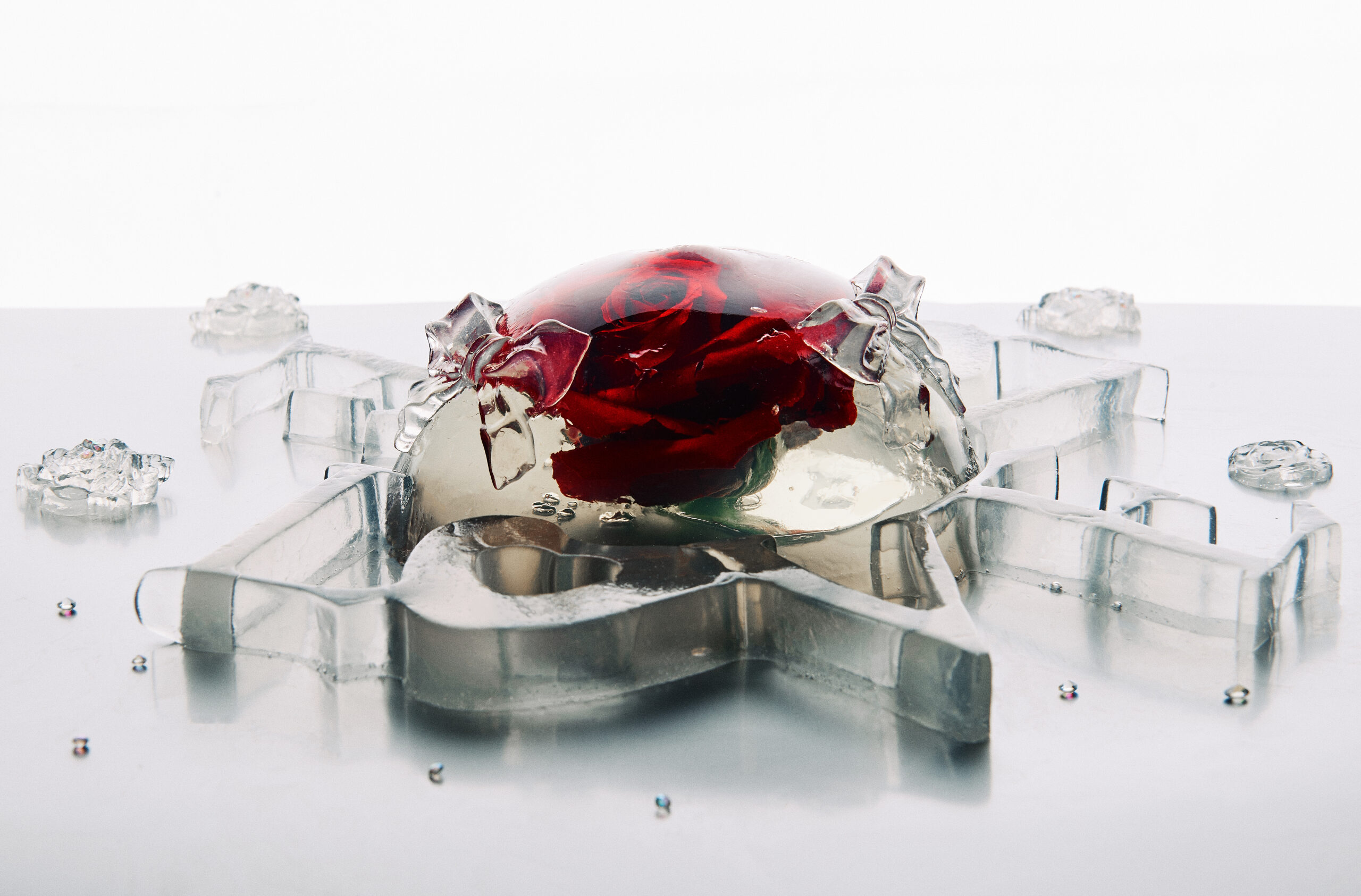
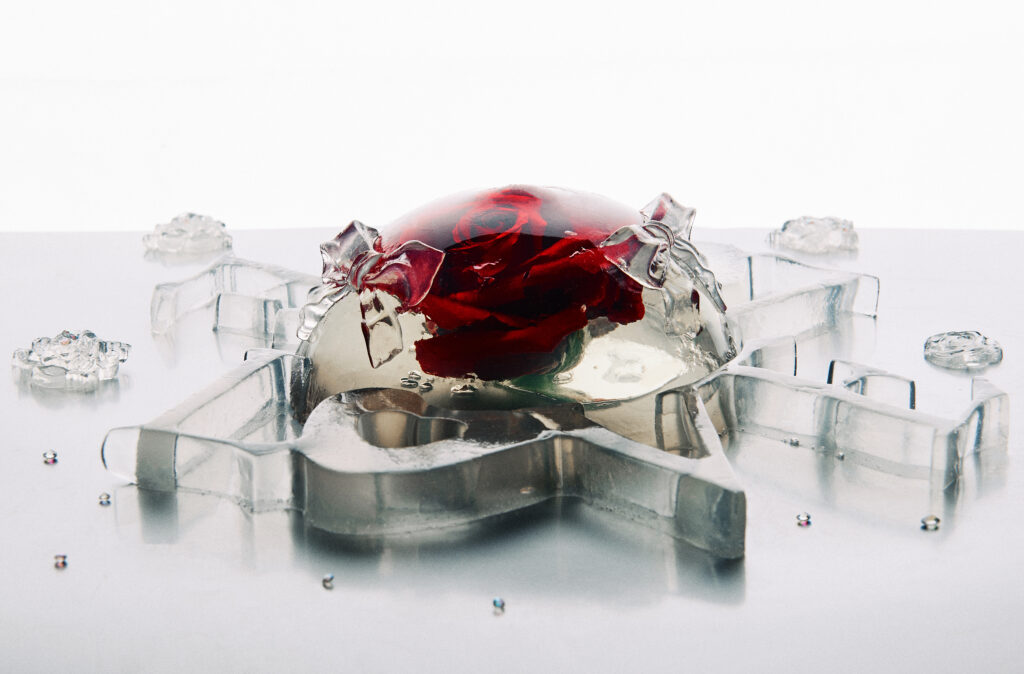
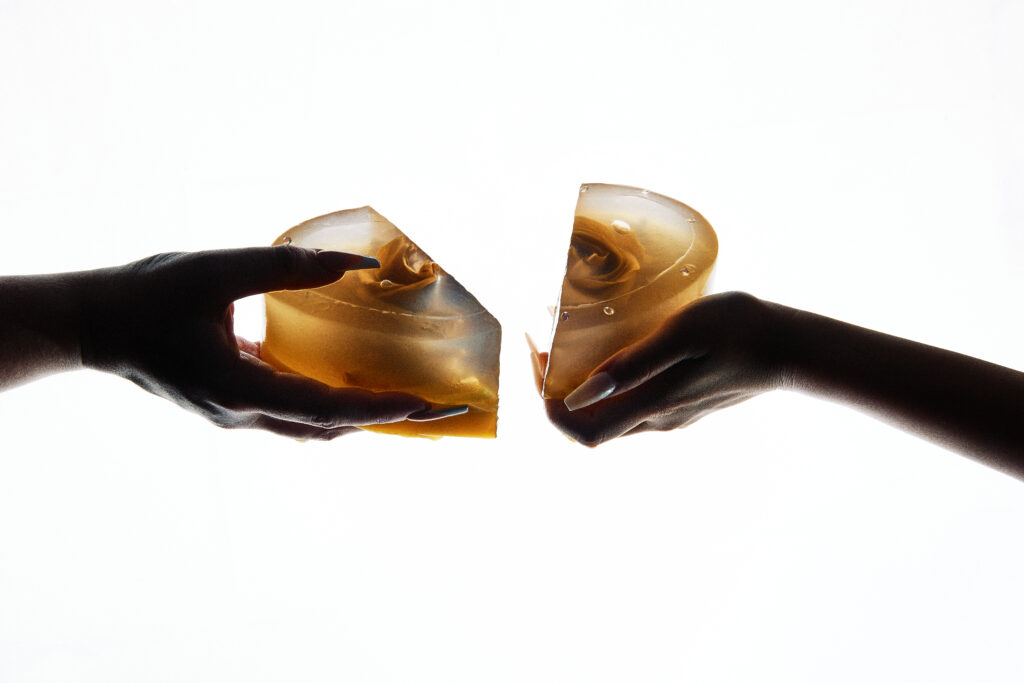
When she says she wants to explore the depth of her visual storytelling, she means well. Two golden cherries top her two green, rounded jelly cakes for her commissioned work with Adidas. Petals of flowers scatter around the presentation, adding up to the soft and striking features of her creation. For another order, she sculpts a rose from a red-hued jelly, injects a real rose in the middle, and places everything inside a heart-shaped, transparent cake. When sliced, the cake displays a broken heart with uneven cut lines, jagged by the knife. Sometimes, she fills the inside with strands of blonde hair, and once, she planted a curvy phallus-like design in the center of a whipped-covered cake. Steinkampf needs no words to describe why she does what she does. A glimpse of her creations is enough to flirt with the viewer’s imagination. What follows next are the salivating mouths these cakes are poised to feed.

Since her works are also through collaborations and commissions, brands and clients give her the freedom to translate their briefs and requests, and Steinkampf oozes excitement as she brainstorms what visuals she can make out of the verbal and written words. “It pushes me to go out of my comfort zone and risk developing a new visual language. There are times I feel nervous about the end product and how it is going to be perceived by the client, but until now it always turned out in the best way I could have imagined. This is the best way I can think of working – there is a balance between my own approach in tryouts as well as freedom in commissioned work,” she says.

The surroundings of Steinkampf growing up influence the flowers present in her design oeuvre. Her grandmother grew her own flowers in her garden and would pluck the bloomed ones to decorate the community church every Saturday. Steinkampf would join to assist her grandmother, and they would prepare huge bouquets inside the church, especially the altar. “By doing this, she taught me a lot about color composition and set design with the altar as the stage,” she says. Turning to her parents, both are gardeners who fostered Steinkampf’s curiosity over gardening. The cake artist and stylist owes her green sensitivity to the spacious garden her family had while growing up. She learned to identify what they needed to grow in their garden and how to let them bloom, acting as her parents’ novice gardener. 

Today, Steinkampf is far from being called a novice in the floral department. Working with flowers so closely for her cakes has made the artist and stylist aware of the natural crevices, waves, and bents of the florals, allowing her to marvel at the detailed structures found in every bloom. “It never fails to amaze me every time I spend time with them. I started deconstructing the blooms to see how their expression changed. This is what defines the detailed look of my cakes today,” she says, who adds that living in an urban environment now and being dependent on flower shops changes and informs her approach. “The geographical trading routes of the cut flowers market are determined by exploitative working conditions which we should be aware of while working with flowers.”

When Steinkampf started making cakes for private birthdays, she soon realized it formed a bond between her, the person who commissioned the work, and the people who received her cakes as presents. An element that freely runs in her work ethic today lies in how she treats what she makes as a personal token to gift and share. At the same time, her desserts spring as a genre of deconstruction to which she eventually adds layers visually. “This is a beautiful image for me. The consistency of the jelly forces you to invent something new if you want to share. The basic elements connect you with the other people on the table, but every served dessert turns into its own world. Jelly gets this magical shine when it is cut, and the light finds its way through. Combined with flowers and fruits, it starts to tell its own story staged in a small bowl,” she says.

Opting out for a less-subdued, more-pronounced body of work, Steinkampf diverts the attention of her consumers from looking at cakes solely as sweet treats to fulfill their cravings. Her instinctive and technical details turn her jelly cakes into luxurious souvenirs that stimulate the senses through their color, texture, flavor, and sparkle. “These are exactly what I am working towards to,” she says. For every mouth-ready cake designs she makes, Lila Steinkampf motivates the consumers to slow down – maybe take a picture for social media – scrutinize the design, mentally and/or physically applaud the artist behind the creations, and dig in for pleasure without thinking twice. 

Team

Photography · Adrian Escu
Cake artist and food stylist · Lila Steinkampf at Future Rep
Set Design Assistant · Tra Ma Nguyen

Amia Yokoyama

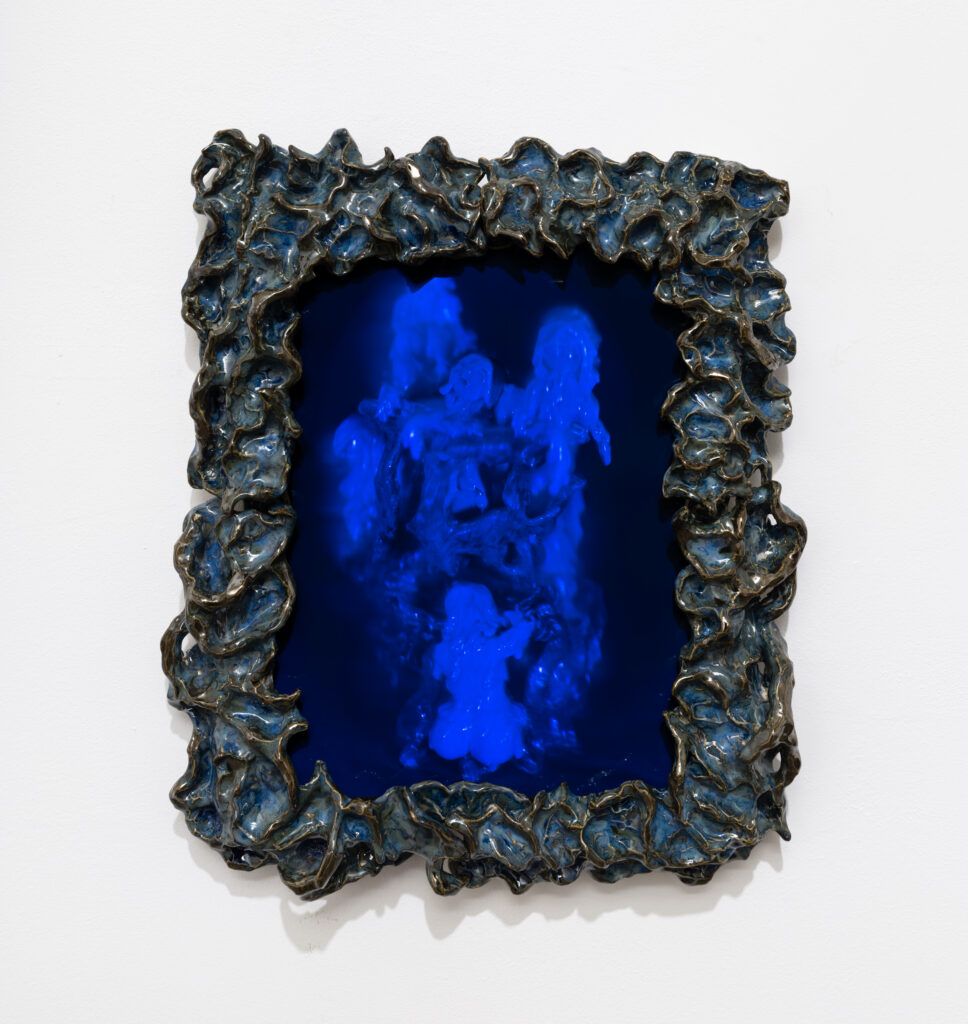
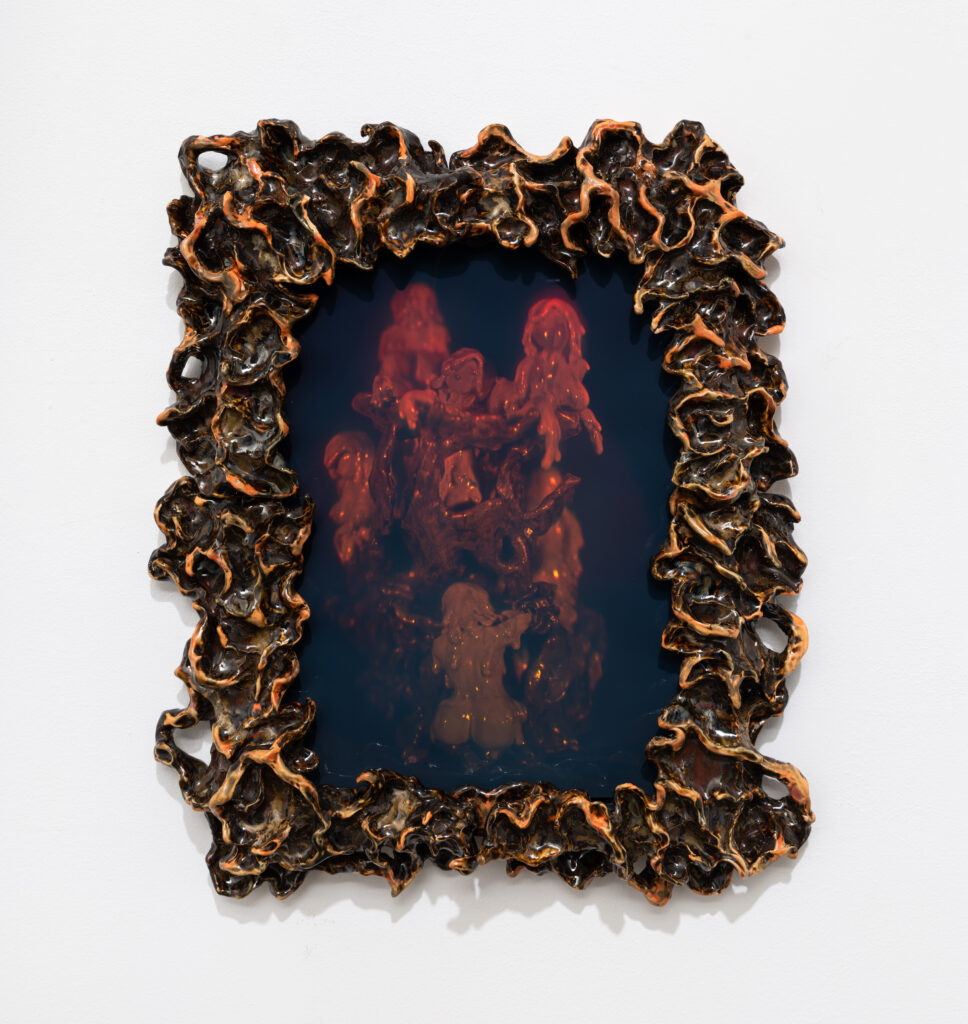
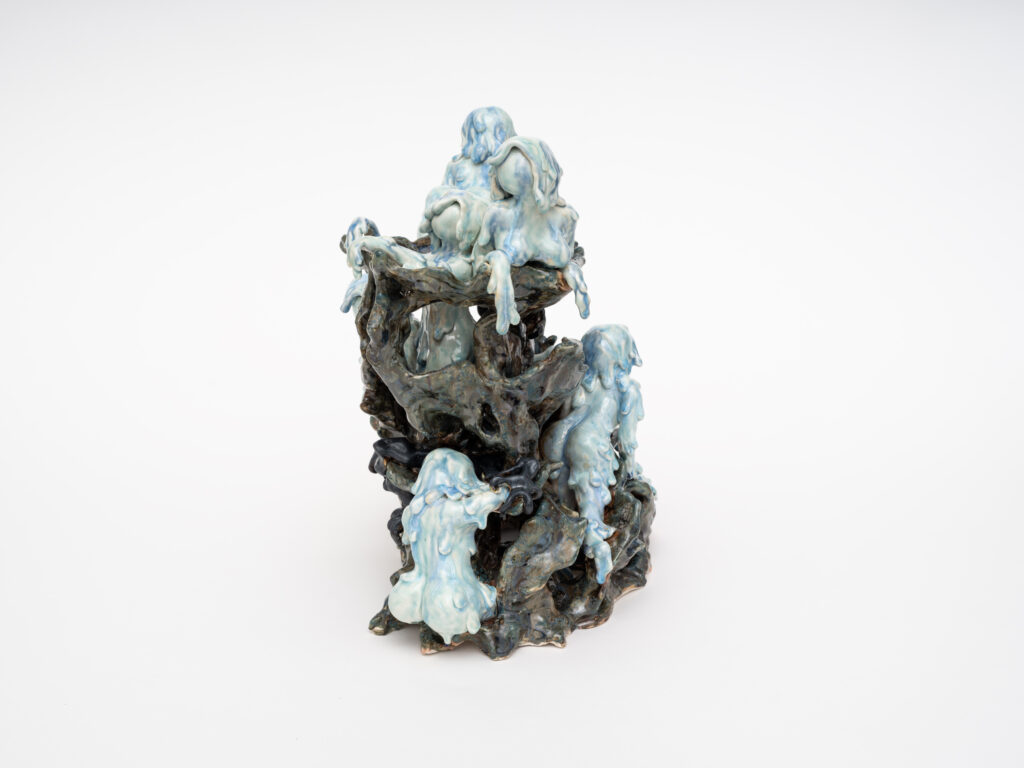
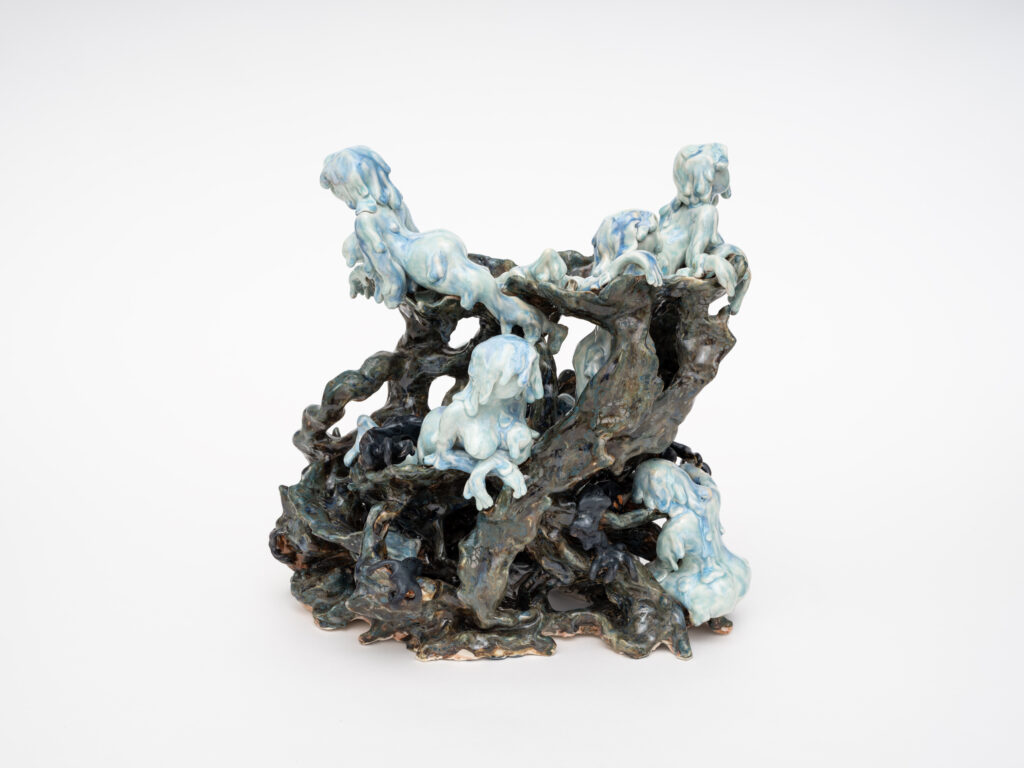
Amia Yokoyama, Słow Moon Sink
Ceramic

What the immaterial creates, the material makes

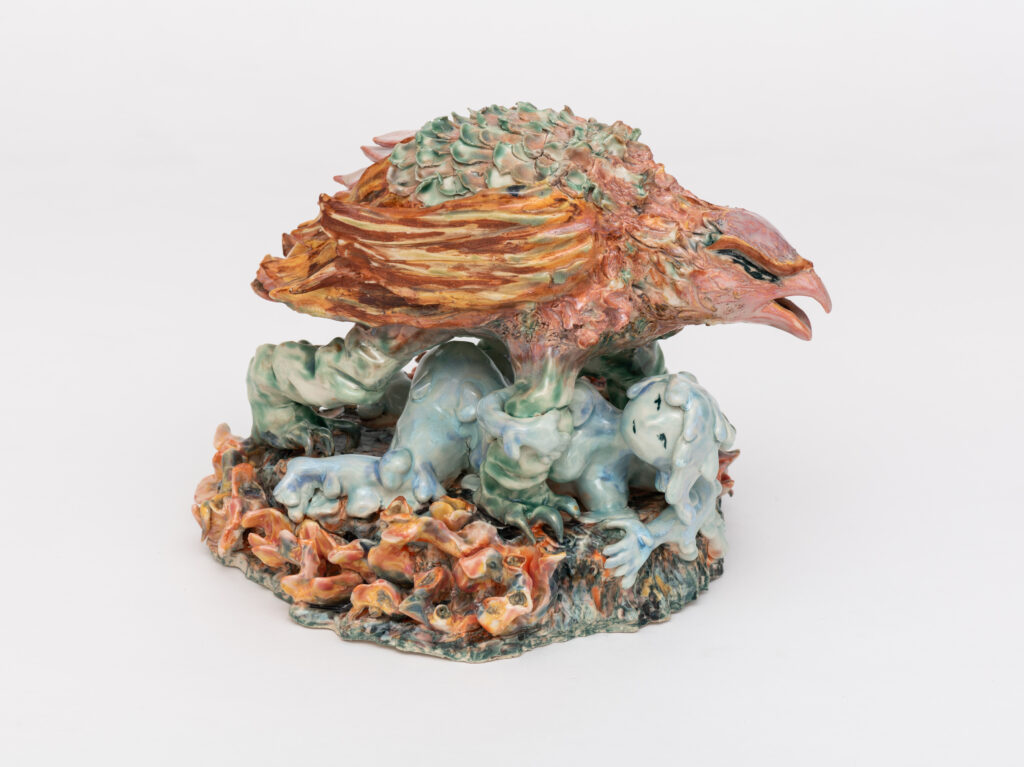
The lack of contentment governs the persistence of Amia Yokoyama to unfold the transaction between permanence and impermanence, fragility and strength. She tells NR about the void she desires to fill with whatever gnaws at her at the time she falls under its spell. She always seeks something, always on the hunt to uncover more, the reason she keeps sculpting and producing videos and animations. Somewhere between these works of art, she finds the depth of herself, the truth she owns that lies within the realms of her material and immaterial creativity. When she describes her practice, she lends her audience a piece of herself, and they soon realize the fidelity she upholds, questioning the elements of the Earth, the states of matter, the spaces that live within the physical and the memories, and the existence of layers in the digital world.

Whatever theme she touches upon, she borrows from other cultures, such as the prowess of Anime in Asia, to magnify, and sometimes distort, her objects, videos, and installations. In one work, viewers can find two naked feminine figures in euphoria as one caresses the skin of the other, beneath her breasts. In another work, a talk show occurs, hosted by two tech-driven figures who look the same. The Japanese-American artist gravitates towards pyschedelic approach to her practice, offering drugs to satiate the high-maintenance affairs of her viewers towards modernized, digitized, and sensual art. For NR, she taps into the poetess in her, layering the narratives about her art, self, and beliefs in a nature that reflects what she creates.

Amia, how has your journey been so far with your work? Was it easy achieving the creative process you have today?

It has been long, unruly, twisty, and unpredictably slippery at times, but I would not have it any other way. My process has been guided through searching for moments that trigger my creative spirit. These moments are the catalyst for my motivation. I get excited when these senses are tickled simultaneously like intellect, feelings, sensory, emotions, beauty, and tension, to name a few. When all of these are activated as I work, I know I am on the right path. If they are not, I keep searching.

“This journey means reaching for a visual language that can sing when lyrics alone do not quite cut it.”

Amia Yokoyama, Untitled (red) Ed 1, 2022

Having a Japanese-American profile, in what ways do your cultural background and upbringing influence your art and the way you make it?

I think that my early acknowledgement of my childhood and the feeling of not belonging encouraged a propensity to imagine and create worlds where I did feel I belonged.

“Inside my head, it was much more exciting, nurturing, and generous than my external social world.”

I began to develop my own relationship with my environment rather than a relationship that was heralded by my parents, teachers, or peers. 

I grew up in a multicultural household isolated within a vast sea of homogeneity, so differences, misunderstandings, and uncertainties were regular companions. This gave way to always feeling and knowing I was sutured of diverse and often disparate parts that do not fit into the ways the world told me they should.

“This understanding left the needle and thread in my hand to sew, take away, and ultimately give permission to myself to be something of my own desire.”

Amia Yokoyama, Slow moon sink, 2021
Ceramic

When the world told me that I did not make sense, I began the process of liberating myself from their idea of this ‘sense’ and allowed myself to expand the rules of existence.

“The childhood process of building sanctuary within my inner world has propelled me into my practice as if art were the overflow.”

Do you see the world – in general – as a symbiosis of humanity or dependent on self? Are you dependent on anything, artistically speaking?

Neither, or both, plus everything else. Humanity suggests a human-centric understanding of interdependency. I feel dependent on everything, all the spectrums of living and non-living things. I also know that the division between those two categories are not so exacting.

Amia Yokoyama, Slow mon sink, 2021
Ceramic

I see that you have this penchant for constant movement in all directions. Where does the affinity for this concept stem from? What is your opinion about those who map out their lifeline up to its finest details (go to college, find a job, earn money, buy a house, have a family, etc.)?

I have never experienced life as something linear. My experience in life moves in all directions, so I know nothing other than that. Being alive is ecstatic and chaotic with so many forces at play. I sometimes imagine it as a hurricane or a tornado whose energy needs humidity, dryness, coolness, and warmth, all happening at the same time.

Amia Yokoyama, In Our Embrace Eternal, 2021
Porcelain and glaze

The energy that I conjure feels like all those factors. They need to happen to create the core force that pulls things into the center.

“This movement, the tension between the core and the outer winds, is ultimately what gives the tornado its visible form, a form that can build and grow in this energy or dissipate just as easily.”

The idea I am trying to embody might be located at the center – in that stillness in the middle, the eye of the storm – but I may never arrive there. And if I do, it might only be moments before I am thrown back out again into the chaos of the surrounding energies at play.   

Amia Yokoyama, Biding Time For Enrapt Demise, 2021

You have mentioned that when it comes to your art, you are not interested in judgment and relation. Could you elaborate more on that?

I believe you mean that I am interested in relation. Judgment is arrival, a fixed point, a decision, something definitive. Whereas relation is something that is more wayward and present, something interstitial. For me, that is the intriguing part.

Amia Yokoyama, Deliquesced in the Valley of Heaven, 2021
Porcelain and glaze

A sense of femininity and feminine prowess is present in your sculptures. The softness and hardness of the edges complement, an overview of Yin and Yang. How do these concepts influence your life as an individual? What other themes do you convey in your sculptures?

With clay, there is a loud and constant negotiation between permanence and impermanence, fragility and strength. There are moments of transformation that happen throughout the process, when earth and water come together, when the air hits the water, and when the fire hits the earth. This flow between states of matter or the shapeshifting of material identities is something I feel connected with.

With my video and animation practice, it swings between dimensions, materializing and dematerializing from 3D to 2D space, back into 3D, sliding into 2D again, and back and forth.So much of my existence resonates with this multi-dimensional translation. When these various modes of existence play out at the same time, and this back-and-forth is engaged, there is an illusory or almost binaural experience where the mind simulates something that is obviously not there in a physical sense.

“This is the space where the alternative forms of being are born. This is the place I seek.”

Amia Yokoyama, Harbinger (Tengu), 2022
Ceramic

“I am interested in another layer of existence which is the dematerialized, the digital, and the fragmented projections of the self.”

The characters in my work come from notions of digitally rendered, animated, non-human figures bearing feminine shapes. They are Anime-inspired erotic and aesthetic objects that can traverse existence between the physical (clay) to the digital (dematerialized).

Anime is one of the most visually distinctive, largest exported and consumed contemporary media from East Asia. They embody borderless beings who increase their collective life force through rhizomatic reproduction. They are an amalgamation of bodies, fluid, and overflowing desire and excess.

“The portion of their bodies seduces by promising ecstasy and ultimately death.”

They are literal and abstracted in their philosophical underpinnings and poetic in their materiality.

Going through your video installations, your works engage the meeting between utopia and dystopia. How do you conceive these realms? Are they based on personal or external experiences?

I would say they are based on both my internal and external experience and perhaps even more so where those distinctions begin to overlap. I do not think of the concepts of dystopia or utopia when I am conceiving of these realms. I think of them more as personal mythology.

“Utopia connotes perfection, and perfection has no place here. Dystopia connotes something harmful or undesirable.”

That being said, I do like the literal translation of utopia – “no place” – as if it were a space of refusal.

Amia Yokoyama, Measure Wants the Seam, 2021
Porcelain and glaze

How is your artistic world unfolding these days? Is there anything missing that you want to look for? Also, how would you like your art to influence the world?

There is always something missing, always something I am looking for, always more to uncover, which is why I keep making. I like to keep the carrot on the string and the garden growing within the trampled ground beneath me, you know?

Credits

Sculptures · Courtesy of Amia Yokoyama and Sebastian Gladstone

Bianca Fields

Bianca Fields, Got something for You, 2022

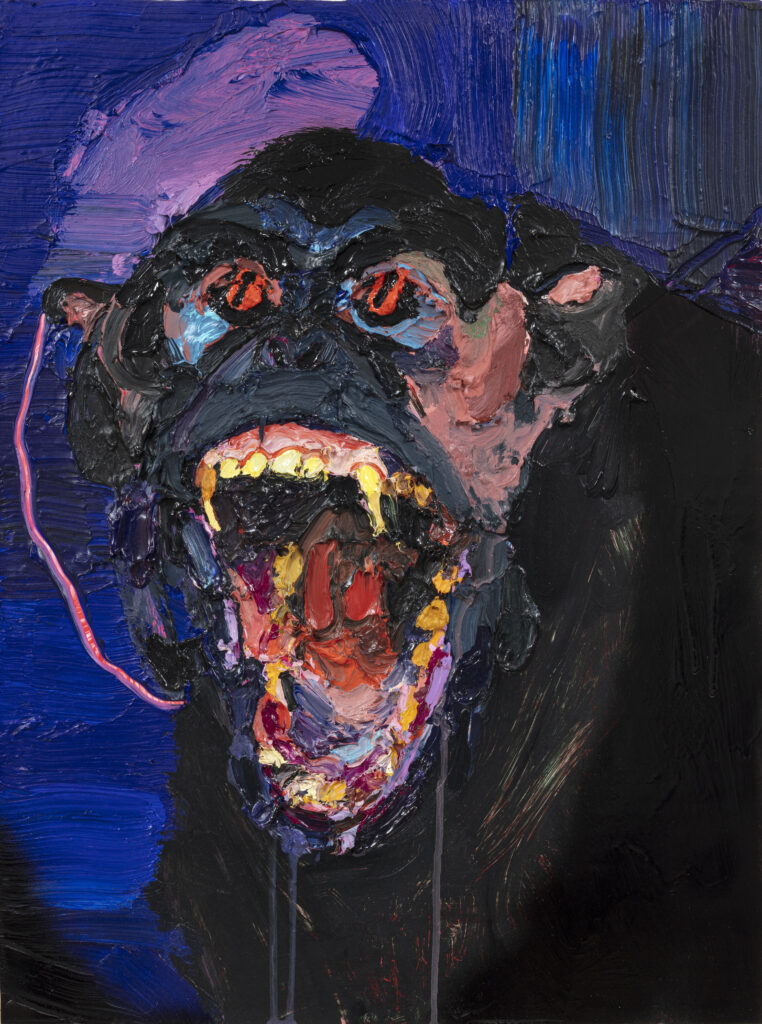
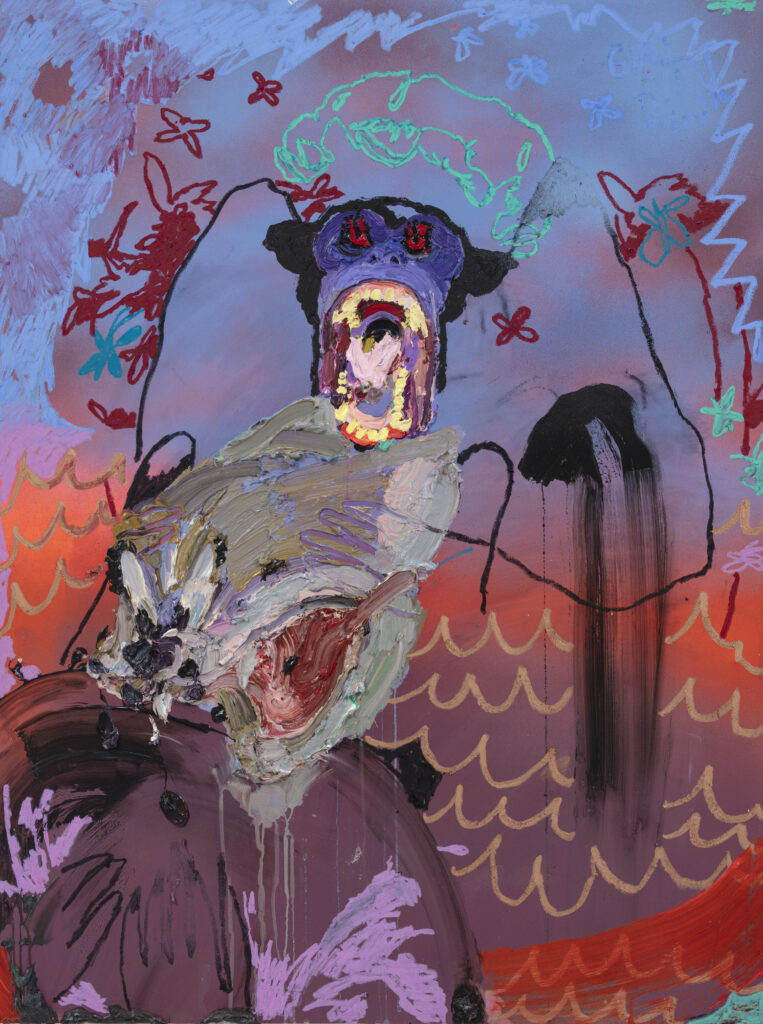
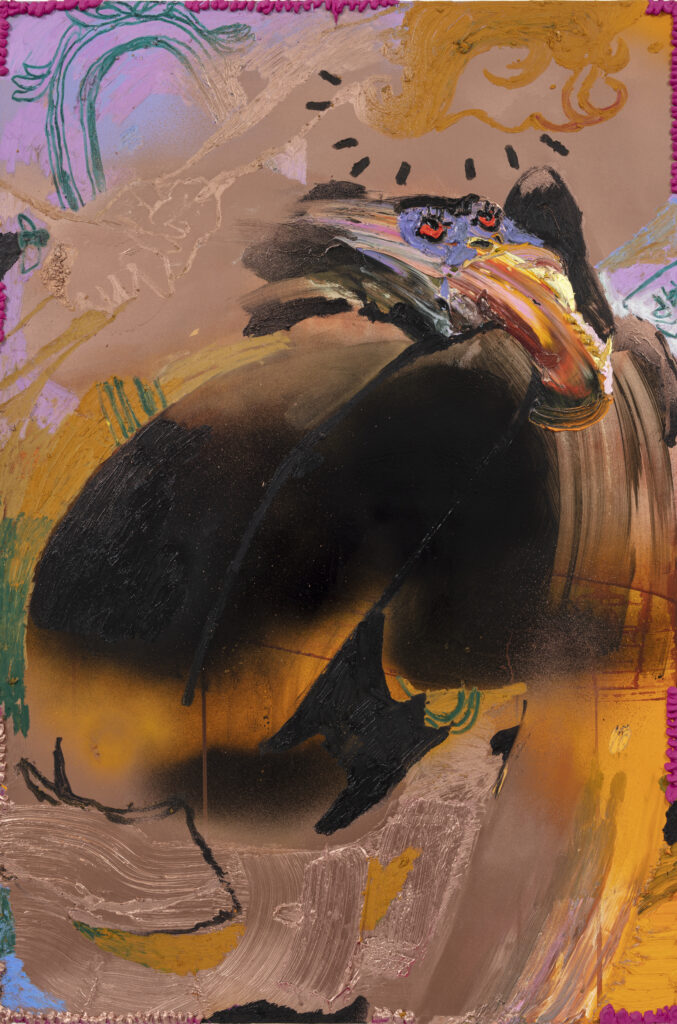
“What inspires me to create at this time is finding a way to articulate the nature of noise in America;”

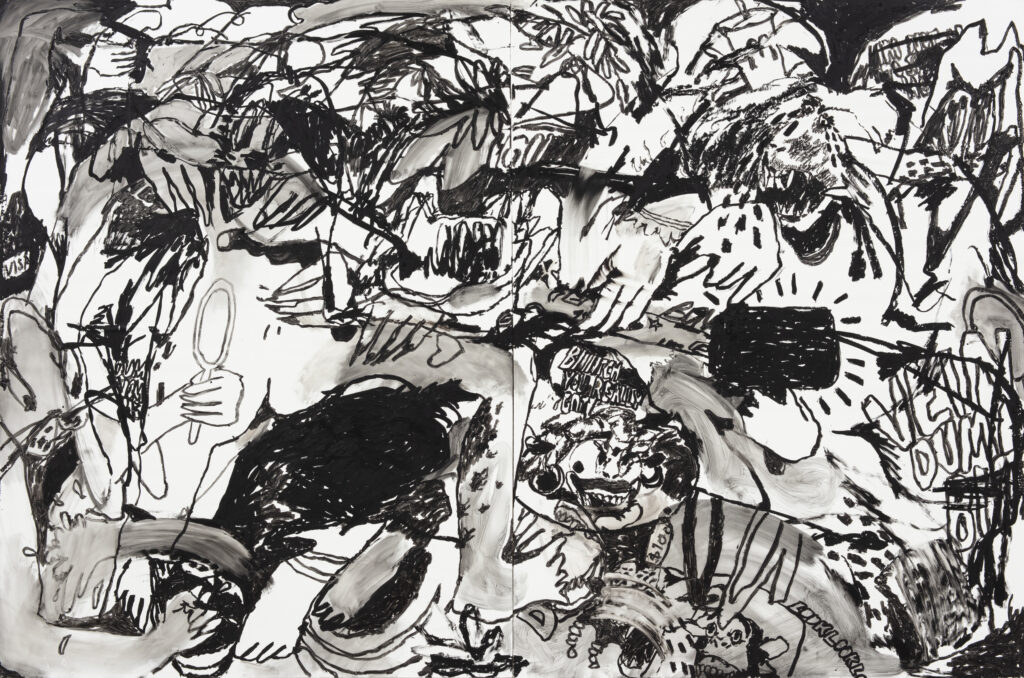
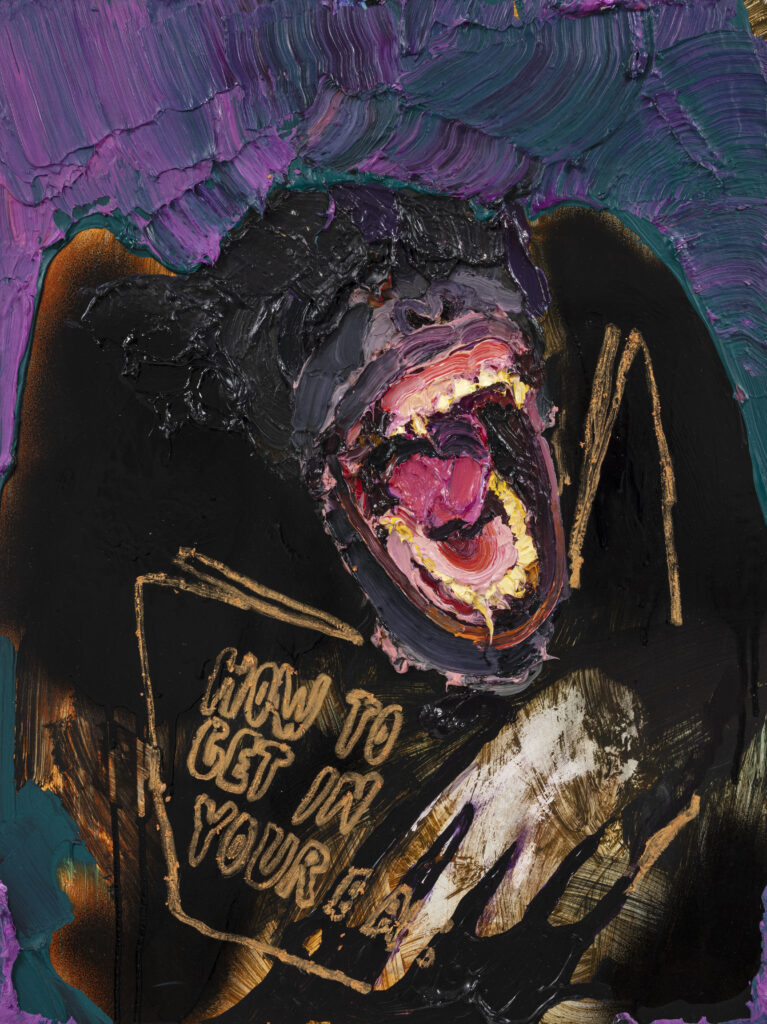
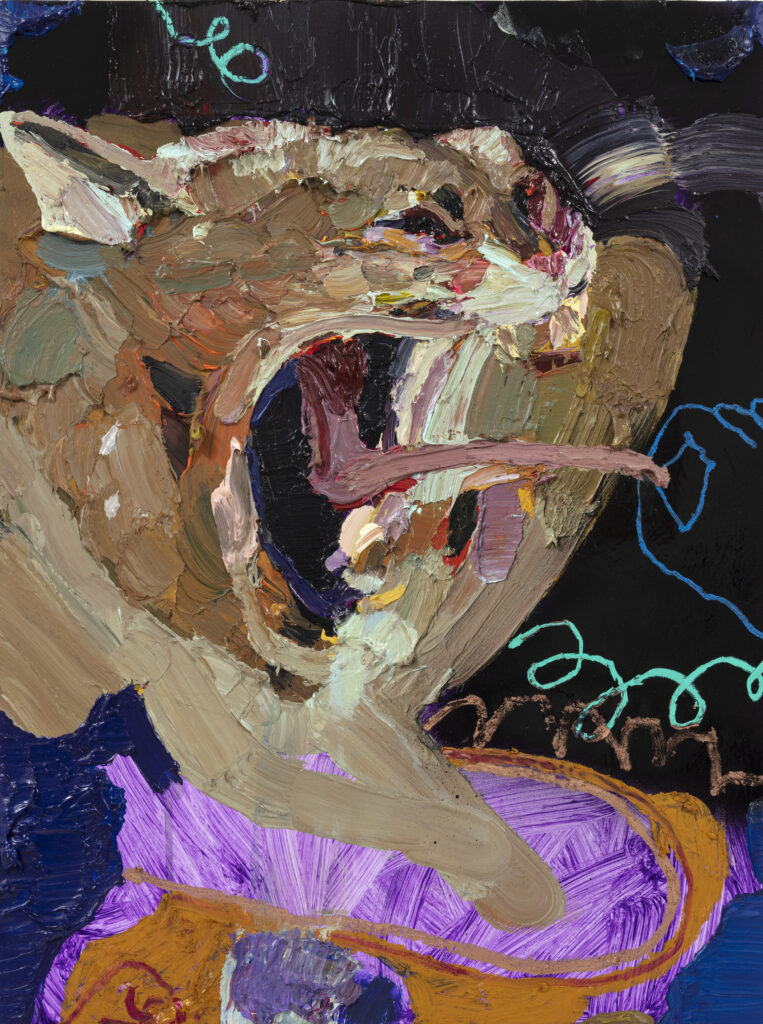
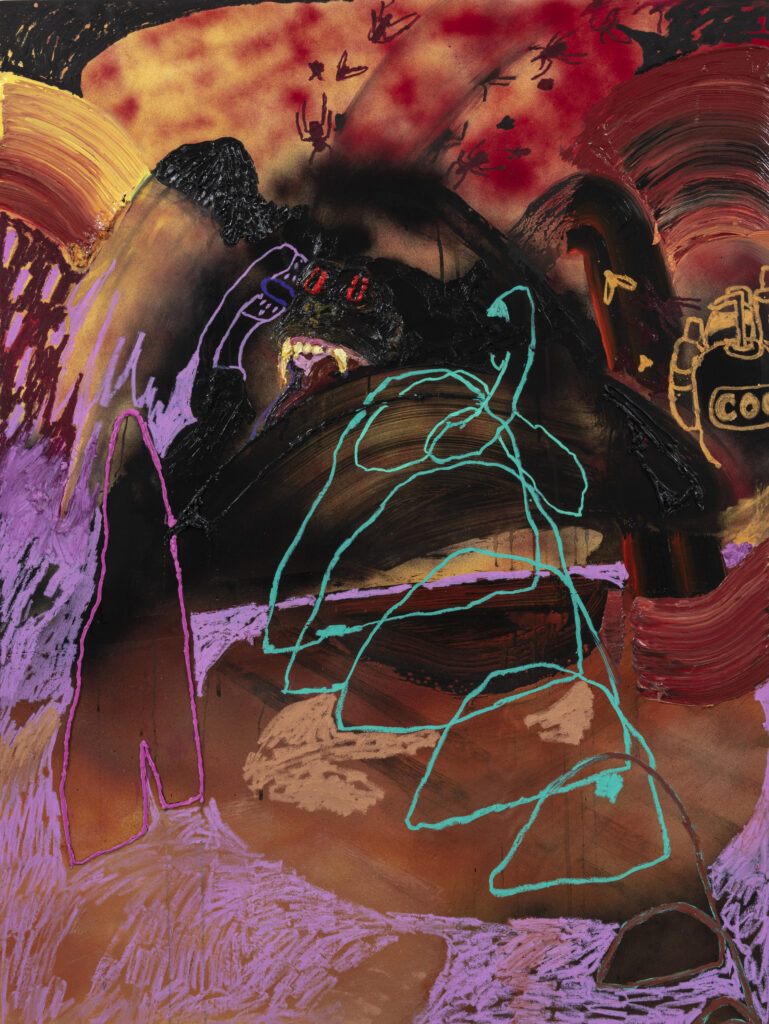
Bianca Fields (born 1995, Cleveland, Ohio) is a contemporary artist, currently based in Kansas City, Missouri. Fields is one to watch in the contemporary at world scene as she strikes with her highly charged paintings. NR had the pleasure of conversing with Fields, delving further into the influences behind her deeply-emotional body of work, the process supporting her craft as well as her future endeavours in Seoul and London. 

When did you start creating? When did you realise this was something you wanted to purse? 

I have always been musically inclined, since about 6 years old. Once I learned the transcendental process of painting/mixing colours in high school, I  became interested in painting — practically obsessed. I never had the intention of pursuing it as my career. I started off at a community college with high hopes of weakening this idea of pursing art, but shortly after was confronted by my painting professor, saying “he suggest I not come back next semester,” following that I should apply to the Cleveland Institute of Art, using the computers on the floor above us. 

You are originally from Cleveland, Ohio but moved to Kansas, Missouri after graduating in painting at the Cleveland Institute of Art College in 2019. Why the relocation and how does your background inform your practice? 

I met my partner who is also native to Cleveland, in art school. He is also an artist; a product designer. Prior to me graduating, he moved around a bit with designer jobs. By the time I received my BFA, he had settled at Garmin International in Kansas City. I love the midwest. Being from the midwest and living even closer to the center of America is very odd. It’s also very wholesome. The culture is like a big bowl of warm, wholesome soup. I spent a lot of time in art school hanging out with my friends who didn’t attend art school. I still would consider them some of the most creative, complex and innovative artists i have ever met. Because I’ve spent the vast majority of the pandemic in Kansas city, I’d still consider it an offbeat, yet fulfilling journey. I think it has forced me to turn within a bit in my work — it’s become a bit more introspective. 

Bianca Fields, I told you, you wasn’t gone b in the mood, 2022

One thing that is striking at first sight in your artworks is their powerful yet youthful energy within the colours, lines, text and texture. How did you discover and fine tune your craft?

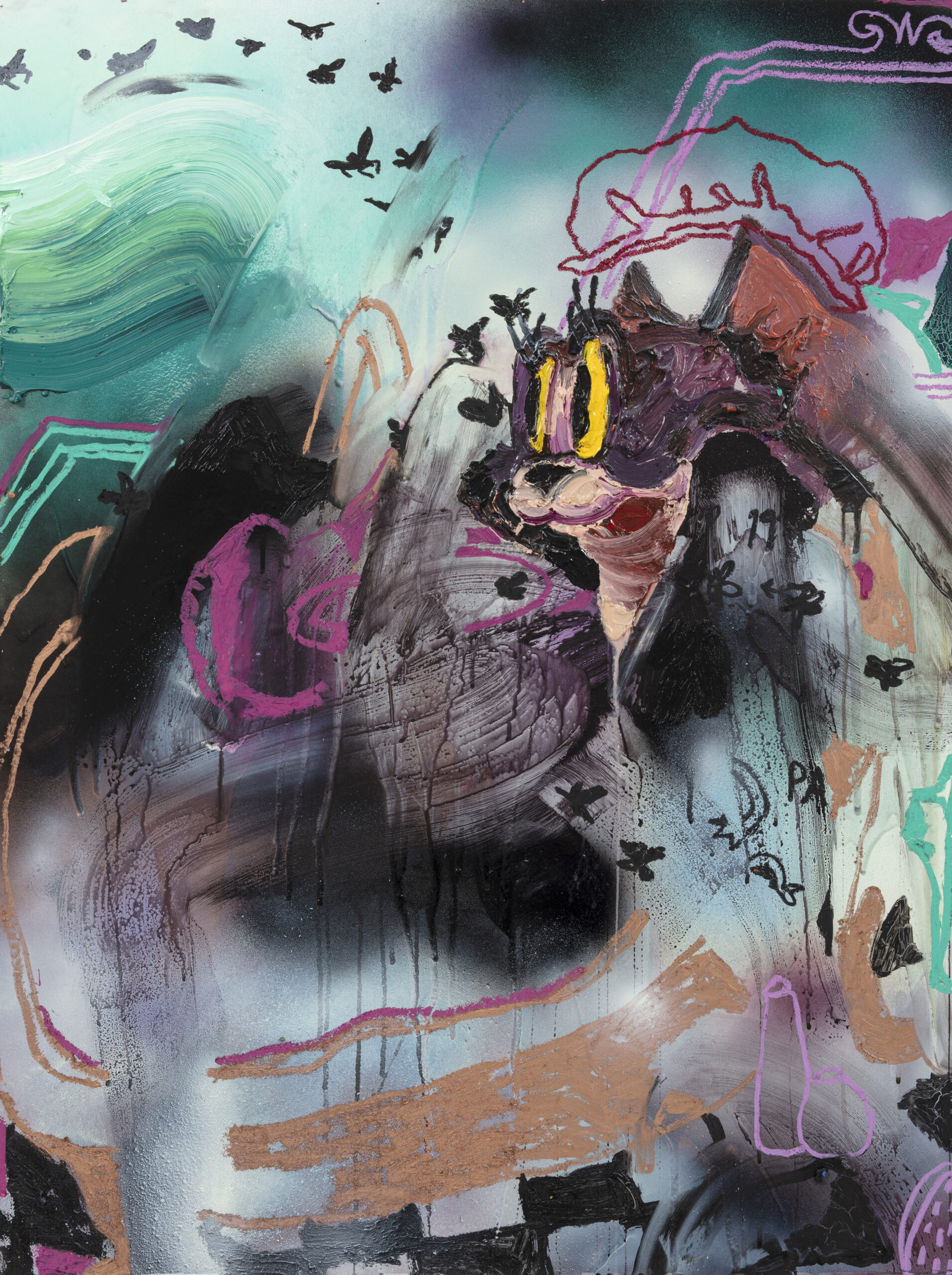
As a young girl, I spent countless hours watching the American Animated TV show, Tom and Jerry. “Tom,” the fictional character from Tom and Jerry, has become a protagonist in my work that contribute to this series of highly charged paintings.

“I always think about how his character was limited to words, practically mute. It remained up to me as a viewer, as a young girl, to put sound, color and imagination in order to make sense of this anxiety-inducing show.”

What was the first piece of art you saw that left an impression on you?

The works of Allison Shulnik. It seemed like something funny or absurd to do, but when I found myself working in this fashion, I couldn’t imagine painting in any other way. 

Although your body of work bursts with vibrant colours and is almost cartoon-ish (with ‘Soul Tap’, ‘Rejected Rep’) I find myself exposed to artworks presenting a deep palette of emotions. It may also be because of a certain way I feel in this present moment whilst looking at your artworks, but there is a particular mirror effect to them. As the artist, how is your relationship with your work? 

I refer to a vast majority of the 36” x 24,” (medium to small sized pieces) as my “Mirror” pieces. These paintings particularly recall being a 6 year old girl and simultaneously looking at/through myself. The copper-chrome works are also that of my complexion — bringing damage, curiosity and vulnerability into the indestructible space that holds my world of paintings together. It also brings the metaphysical power and urge to come closer to the glistening; unusual but captivating. An overwhelming presence that I often experience as a black female artist. 

I also like to think of the palettes for my paintings as a subconscious strive for a “bruise” quality. bruises are beautiful, but I find it very frustrating to replicate the palette in an almost artificial way; challenging this idea with electrifying colors. I will always take risks in my palette and will continue to fearlessly allow the decayed rotten colors to seep through the cracks of the work. 

Would you consider your pieces therapeutic? How do you engage with your work and vice versa?

“Even though these works may appear as haywire or almost deafening, I experienced a paradoxical state of extreme silence and fragility when creating these paintings.”

The thick, obliterated rendering of the mouths of these yelping creatures are slow and silent. Working in a more (expressionistic/intuitive fashion) the mouths are where I slow down the process of rendering. ‘Pressed out like Peanut Butter’ and ‘Smeary Eyed’ were made pretty close in time to each other. I think this is when I started examining the process of what the depiction of the yelping mouths meant to me. I started to see them as portraits of myself; laying within the screams of these creatures.

“I started to feel like I could truly see myself during that era of making. “

Bianca Fields, Hold My Purse, 2022

You have also done some sculpture work such as ’Five and Below’, in foam, resin and papier maché, with a weaving comb on top. It reminds me of how the afro comb was worn in the hair as a symbol of union against oppression during the Civil Rights Movement. Was it something you had in mind when creating this piece? Could you talk about its significance? 

This idea certainly came to mind. I very much view this specific character within the realm of my work, as a caricature/symbol of black femininity. Pairing this sculpture work with the painting, “rejected rep,” had me thinking about the representation of the athletic black female body and the process of stripping femininity away. I consider myself a very active person who works out on a daily basis. Adding elements like the comb and wig feel like “ornaments” to the subject; signifiers of non conformity.

What is your favorite part of your practice?

I would probably say when i reach the end of the painting; where i start to slow down. There is a lot of chaotic, fast mark making in the process of making these works, but I think the viewer is actually left with more of my slowed down, brutal process of covering it all up. I will usually take a large brush and completely close the subject in with thick walls of paint. I will also take whatever leftover paint on my palette, scrape it into one large wad, and intricately place it somewhere inside the work.

The theme of this issue is IN OUR WORLD. What is it in our world that inspire you to create? Who/What are your influences? 

I think what inspires me to create at this time is finding a way to articulate the nature of noise in America; essentially operating in a regimented social environment.

“The tropes of the internet world also inspire me and affect the way that I see/process. I find it a challenge to think about the spaces between language, images and culture— and where representation of the black female body fits in between.”

I’ve recently started to reread Julia Kristeva’s essay on abjection, ‘Powers of Horror.’ The last time I’ve thoroughly read it was in undergrad. Her writings inspire me to unpack a bit of tension that I’ve yet to bring to the surface in my work. Actualizing different pieces and part of my body that I have once neglected. It also helps me compartmentalise my symbolic realm of thought when making these paintings. In other terms, things that are very close and fragile to me. 

You have had your first solo exhibition with Steve Turner, Los Angeles. What did this mean to you and what can we expect from you in the forthcoming months?

It has been a pleasure working with Steve Turner; they truly have great trust and faith in my visions and processes. We have such a great system. The turnout of my most recent solo show has me super eager to flesh out further ideas within this realm. Next I have untitled art fair Miami (Steve Turner), KIAF art fair Seoul, Korea (Steve Turner), and Frieze London (Carl Freedman gallery) . 

Credits

Artworks · Courtesy of Bianca Fields and Steve Turner LA

Veronica Fernandez

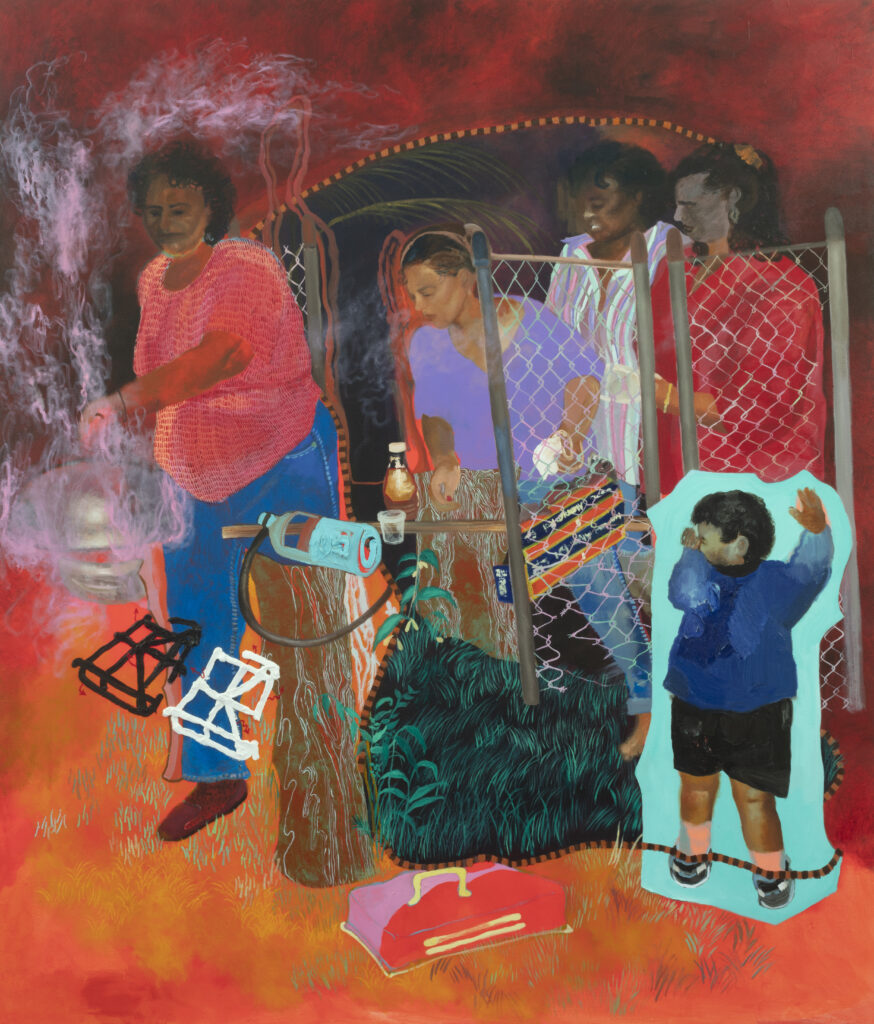
Veronica Fernandez, Before I’ve Existed, Now I’ve Lived

Collective intimacy  and the impermanence of emotions

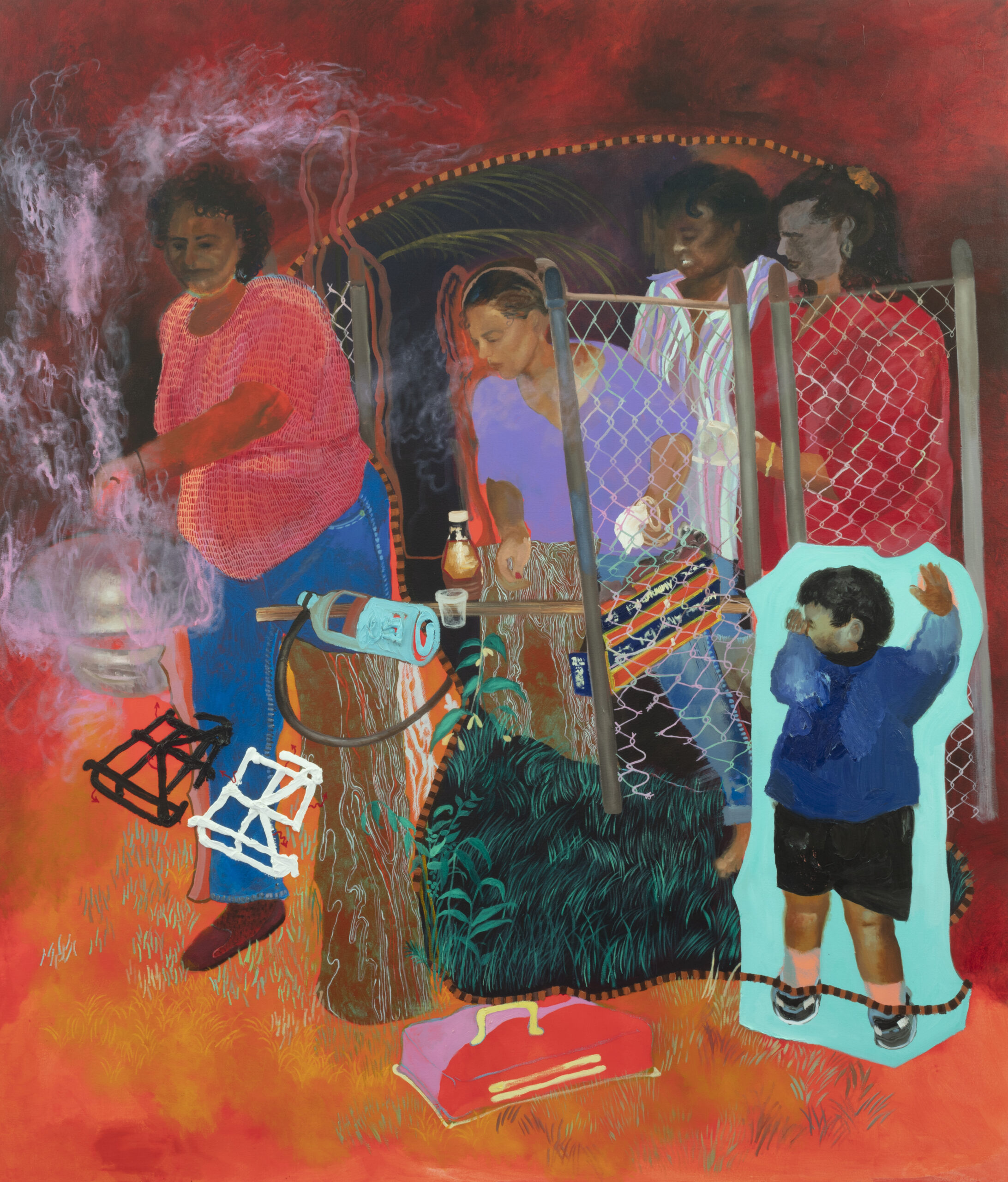
Veronica Fernandez (b. 1998) is a mixed media artist from New Jersey, who is currently working in Los Angeles, California. 

Fernandez’s work investigates relationships between people and their environments: drawing from her own memories, she attempts to illustrate the complexities of domestic life, giving space to intimate moments of the everyday. Pulling from a variety of source material – from images of family members taken from photo albums to art historical references – Fernandez blurs personal recollections into emotive scenes that evoke a shared nostalgia, or a sense of  colelctive recognition. She purposely reworks aspects that feel familiar into unfamiliar territory, taking what is hers and morphing it to better relate to a general consciousness. Drawing attention to the impermanence of emotions, Fernandez imbues her work with a sense of unfinishedness, allowing the narratives to remain open-ended for the viewer to make their own. This sharing of experience allows her to speak to a community and discuss our foundations as human beings: where we come from, what shapes us, and how we interact with one another. 

Veronica Fernandez, Trustfall

If you had to describe your body of work and what drives you to paint, what would you say?

“My body of work I would say is a form of storytelling about people and the places their bodies live through, depicting the impermanence of emotions.”

My initial drive to paint came from unpacking my own experiences growing up and spiraled really into these conversations about the human experience and how we adapt to change and the different moments in our lives, in the attempt to capture a fragment of intimacy and explore how it engages with others.

When looking at your work from a first glance two things hit immediately: size and color. Going back to this idea of intimacy and its actual space, could you tell me whether there is a link between the size of your works and this concept of entering one’s world?

I have always been in love with large scales. I started working on large scales in my New Jersey bedroom in 2019, testing wether I could transpose smaller sketches into larger surfaces. The intimacy that comes with a larger piece is different as opposed to when I work on my sketches and smaller pieces, which serve more as a form of  personal release, like a page in a diary.

“My larger paintings deliver a sense of intimacy, of acceptance, that I feel absorbs people, almost as if it were a portal.”

Space is something that I never had growing up, it was never something set in stone, so for me, it was exciting to create art that could take up actual space when I finally had a little to take advantage of. I want others to become absorbed in these works about people that want to be heard, understood, and seen, so they can also see themselves and feel to some extent that they’re taking up space too.

Take me through your working process: how do you select a moment in time that you want to depict? Does it always start from a family album or is it also a moment you experienced, or the impression of someone you recently met?

My paintings primarily stem from my experiences, then most of the time I’ll find which photographs I think work best that I can deconstruct or pull from. When I think about starting a painting, there’s usually an essence, a general sense I want it to have,  which then drives me to search for poses, gestures, facial expressions, colors, shapes, or objects from my references. The paintings usually consist of the combination of a few photographs (around 4-5), which shape the ground for a new sketch. It’s not until I get into the actual canvas that I can step back and see how to truly alter the first draft. As I work on different layers I usually incorporate different moments in time that I think will really bring a special element to the painting or change the original direction for the better.

Veronica Fernandez, Watch A Leader Cry

The only moment where my process is more directly linked to a physical photographs is when I find a picture that I think is absolutely stunning, whether it be the colors within the image, the facial expressions or the composition. Then I start from that singular element and work around it.

The role of memory and recollection is thus pivotal to your work. How is your relationship with the past, and how do you transform it to something you engage with in the present?

Throughout my work process, I try to alter the familiar into unfamiliar territory. To create the works, I do reflect on my own experiences and engage with my personal memories, captured in photographs. The final idea I work with comes from stripping down these photographs and really reconstructing them and see what they transform into in the final imagery on canvas. When I work with my personal reference material and find myself altering the original picture  I feel like I can see it at a distance and really step back and comprehend it.

“What once was a memory from my past can become a person from that memory in a new environment, with a new expression or new overall depiction, possibly surrounded by new figures I’ve created.”

The original story becomes thus a new idea that can be universally absorbed. On a formal level, I love using color, texture, and other techniques to bring a new contemporary palette to the soft pastel undertones of the older photographs I have.

I have noticed that the subject matter in many of your works are children. In relation to what you talked about before, the impermanence of emotions, do you think that childhood is key in this research towards change and possibility? Because youth is change in its purest form I guess – the openness to the future in both temporal and conceptual ways.

Children are definitely representative of openness to the future and have this kind of unpredictability hovering over them in relation to what can become of them in my work. The early years of our lives shape who we become. This sort of tabula rasa at one point everyone starts off with that slowly but shortly accumulates all these perceptions is very interesting to me. Everyone has their own specific stories, experiences, struggles, wins, losses, and even when we are too young to fully grasp the totality of every situation, we still feel and live through them. 

“This whirlwind of emotions that come from the earliest point of our lives really tie into how human beings can adapt to their experiences later on in their lives, and reflect the layers that make up each and everyone.”

The child’s mind creates that first layer, and I think that incorporating them in my works  llows me to play with these innate curiosities human beings have and how they navigate themselves in the world over time.

Titles are always very specific in your paintings. Contrary to many contemporary artists, you always seem to describe a work with precise accuracy of words. Could you tell me more about this particular attention?

The titles of the pieces stem from many places, sometimes I’ll hear my family members say phrases as forms of life lessons that I think are special, and I’ll remember them and think about how I can alter them to make them stronger, more accurate. Recently I’ve gotten into poetry, and will take a line or two I think can really stand on their own and apply it to paintings that I am already planning on making.

I think it’s important to utilize everything I can to get closer to the viewer, I want people who see my work to be able to envision themselves in it and allow it to touch them in some way or another. I think it’s interesting that very often titles are left out in gallery displays, and sometimes it isnt until you get the information written somewhere else that you can see another side to the work. I want people to be able to experience my work right away, not simply through just a title, but through what the title is to me, which is in fact poetry. I think this purposefulness can be a tool I can offer them as a chance to express that as an artist I am trying to have a conversation about people, and I am actively reaching out beyond the image.

Veronica Fernandez, Superheroes

Talking about the viewer and ways to reach put to him/her,  in which way do you try to combine the autobiographical source in your works with the outside world, in the attempt to leave space to the audience’s own gaze?

Sometimes the stories are represented through the imagery, and other times the painting evokes just the underlying emotions that come from those experiences, even though the actual source is not as recognizable. The figures in my work are depicted in different ways, some are more realistically rendered, others are recreated in odd colors, like full red, or many are altered to be irrecognizable through painterly gesture.

“Altering the identity of the figures helps me to create the distance from it that is so pivotal to its reconstruction, enough for me to continue it as anew.”

I also throw in a lot of made up elements into the paintings, to the point where the original ideas that inspired the painting become just a starting point, a vague compass, leaving the openness necessary for the viewer to incorporate his/her own elements into the story. 

Veronica Fernandez, Through Steam (Lay Your Burdens Down)

In relation to the magazine’s theme –in our world – how do you think your work translates the sense of being in this time – from this current sociopolitical climate to this specific creative dimension?

We live in a strange world, where so many people feel that they are not being seen, heard, and overall understood. As I mentioned before, many of the figures in my work are asking to be understood or acknowledged in their positions too.

“I try to create an opportunity for compassion, curiosity and most importantly for conversation.”

Regardless of the way the paintings are received, I always try to make them accessible, to leave space for the other, to aknowledge the viewer and telling him/her that they are welcome, and their experiences matter.

Credits

Artworks · Courtesy of Veronica Fernandez

Ayşe Erkmen

Ayse Erkmen, Luminous, 1993-2015 
Installation view, SMAK, Ghent, 2015 Photography by Dirk Pauwele

Unhooked meanings transcending the worlds of architecture and spatial design

Ayşe Erkmen (born 1949, Istanbul, Turkey) is one of Turkey’s most important visual artists.  Her practice has long examined the social and political implications of physical space including infrastructure, urban planning and architecture. Currently based between Istanbul and Berlin, Erkmen transcends the world of architecture and spatial design and pushes the boundaries when it comes to the transformation of both indoor and outdoor sites. On Water, 2017, a beautiful installation that debuted at the international open-air exhibition, Sculpture Projects, in Münster, Germany, is one example of Erkmen’s visually striking site-specific installations and demonstrates the importance of the audience in the completion of some of her artworks. 

NR joins the sculptor and artist in conversation to discuss the influences that have informed her practice, how her work pertains both in Istanbul and Berlin and how it engages with specific histories and culture. Erkmen delves into the nature of a certain leitmotiv present in some of her work and the concepts behind Plan B, 2011, Pond to Pool to Pond, 2016 and On Water, 2017.

Ayşe is a beautiful name. I have read that it means happily-living one. Would you say you are? 

I think so too, Ayse is a beautiful name and I am grateful to my parents for giving it to me. It not only means happy but also moonshine and life, a very popular name, short and modest, shared by all generations and all social groups. Yes I am a happy person in general with lots of anxieties which strangely do not prevent me from being happy.  Actually I believe that anxieties are one important  ingredient of happiness. Happiness without worries would be a kitschy one.

You are recognised as one of the foremost Turkish artists. What does this mean to you? 

I don’t think I understand myself as one of the foremost Turkish artists. Actually I would not like to be known as a Turkish artist but I guess one cannot escape its origin. I like the fact that I am from Istanbul though, for having had the chance to being very familiar with this amazing, vicious city, an opportunity like my name, something that happened to me. My fame is kind of strange. Young artists know me very well and they appreciate me as I also appreciate very much this fact of being popular among young generations. I had been teaching in Germany for quite some time and I am hoping that I have had some influence on this. As to the  fact of being collected, earning money, being the muse of art fairs, etc.. this is not me. I guess, I have a special place in todays art context: people seem to like my work but they don’t know how to place it in their lives. I am hoping that the reason is that I am giving them something new that they have not yet known, they haven’t seen or did not think about before, therefore not confirmed yet!

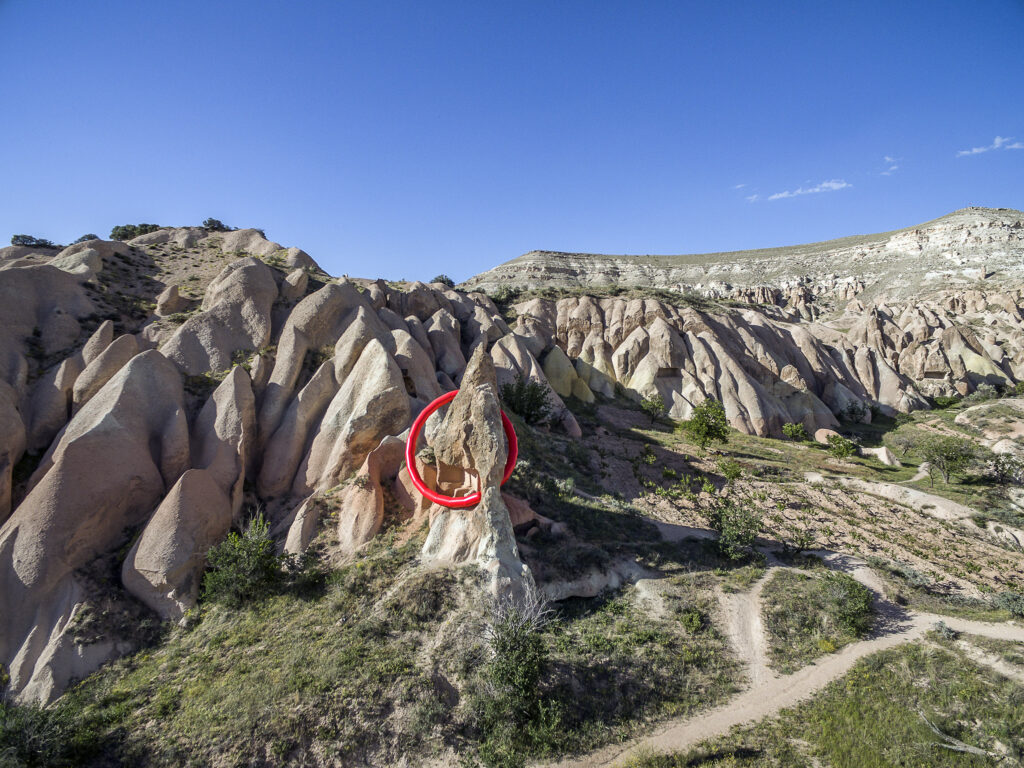
Let us Cultivate our Garden (Group) (curated by Fulya Erdemci and Kevser Güler). Cappadox Festival II, Cappadocia (Turkey), 19.05. – 12.06.2016. Exhibited work: Ödül / Prize, 2016. 142 Site-specific installation Photo Credit: Murat Germen

You are currently based between Istanbul where you were born and Berlin. How do these two cities inform your practice? Do you see any correlation between the two?

I have to quote musician/artist Ahnoni here who once said: “I want to go but I don’t want to leave” on a similar situation of living in multiple places. I feel exactly like that, always looking forward to the other place but sad to leave the place I am in. Istanbul being a difficult city as it is, makes me happy by just being there, the shout of its seagulls, the smell of the seawater, the honks of the boats, even the most serious conversations ending with chit-chats, its noble stray animals and endless variations of life style.

Ayşe Erkmen – Half of (Solo). Galerie Deux, Tokyo (Japan), 14.09. – 22.12.1999. Exhibited work: Half of, 1999; Photo Credit: Artist archive

Berlin a contrast but a good companion to this city; being so peaceful, easy and quiet if it were not for the official gray recycled envelopes of bureaucracy which one receives frequently. There, the small talks do not continue long and conversations turn into culture and art which is wonderful. Berlin is a city with so many venues of art, music, theatre, etc that knowing that they are always there one neglects them and gives too much a rain check. Berlin is a city that supplies too and pampers its citizens whereas Istanbul does this only by being there in that location that every time it angers or disappoints the blue sky and the seagulls appear out of nowhere.

Water appears as a recurring element in your work. Why this leitmotiv and what is your relationship to it?

“Water is something I can’t escape as an art location whether it is given to me or chosen by me, be it a river, the sea, a canal or a small pond. I always have the strong feeling that I should not lose this chance of being on water or using water as material whenever I can catch the opportunity.”

Skulpture Projekte Münster, 2017 (Group) (Catalogue) (curated by Kasper König, Britta Peters, Marianne Wagner). Stadthafen 1, North side: Hafenweg 24, South side: Am Mittelhafen 20, Münster (Germany), 10.06. – 01.10.2017
Exhibited work: On Water, 2017
Site specific installation: ocean cargo containers, steel beams, steel grates, 6400 x 640 cm walkway
Photo Credit: Roman Mensing

These fortunate offers make the recurrence in my work, unlike other repeating elements like animals, like stones and rocks, archival images, etc that are much more of a choice of mine. Water is not stabile, it moves and makes things move, It has power to create unexpected occasions and coincidences. I am looking for these instances that surprise me as moments that I do not have much control over.  In some works I made buoys in water move balls on land which directly relates to the unpredictable movements of water’s effect on land. This makes continuously changing sculptural moments. In my work this is in general what I am looking for.  Things that happen without the artist’s intention, water is chance. 

“Besides there is the beauty of water that one cannot ignore although I would not want to be in a position of getting advantage from such a glorious appearance. I try to be  as neutral as possible mixing it with contrasting technical vehicles that are invisible, unwatched companions of water.”

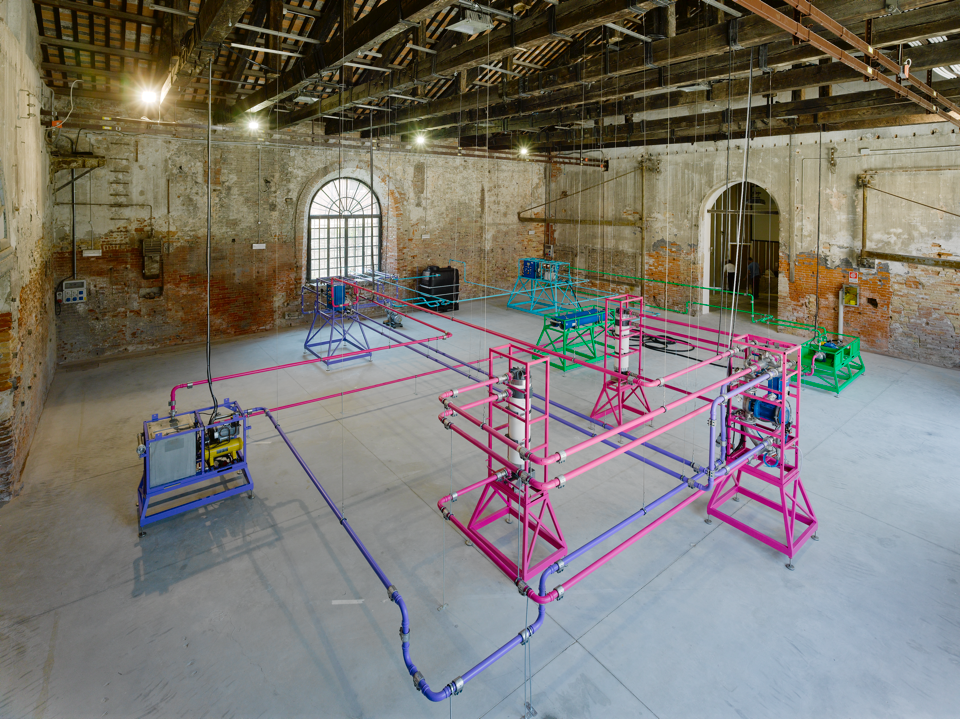
Could you delve into the concept for Plan B, the installation at the 2011 Venice Biennale, that transformed the Arsenale exhibition venue into a room for purification?

Plan B was prepared in a very short time, I still cannot imagine how we could achieve that project in four months only. Fulya Erdemci; the curator was selected in December before. She had to think which artist to choose for about two months. After being appointed by her I had to think what to do  for a while but it did not take long as at our first location trip I saw that the place given to us as pavillon location at that time had the only window that opened to the sea/canal unlike the other rooms in Arsenale. This window to water told me that I had to find a way to bring it into this room one way or other. The canals of Venice that surrounds the whole city gave me the form and informed me that the room should be like the city itself surrounded by water. On the other hand the water needed to have an aim to come into this space. The most common thought about water is to drink it. There came the final idea.

Plan B (Solo) (Catalogue) (curated by Fulya Erdemci). 54th Venice Biennale, The Pavilion of Turkey, Artigliere, Arsenale, Venice (Italy), 04.06. – 27.11.2011
Exhibited work: Plan B, 2011
Installation: water purification system, pipes, pumps, cleansing machines painted in specific colors according to their function
Photo Credit: Roman Mensing

Then we found a very sophisticated water distilling company in the middle of Germany. Fulya travelled from Amsterdam, me from Berlin, we visited the company and started working to make the plan B exhibition. In four months time realised the work, we made an extensive catalogue edited by Danae Mossman from New Zealand together with Fulya Erdemci and we also made a wonderful tote bag designed by Konstantin Grcic. Our idea was that if people would not want to make the effort to come to our space almost at the end of the Arsenale, would definitely come to get their beautiful Grcic bags! And it happened! We met in London at Danae Mossman’s flat to make the interview for the book. Danae was living in London at the time, Konstantin from Frankfurt, me and Fulya from Istanbul but were in Berlin and Amsterdam at that moment. We met many times, travelled to Venice and to other cities, had lots of fun, all of us from different parts of the world. 

Plan B was created from one unit of a mobile water purifying machine rented for the duration of the biennial. This device was dismantled, its pipes between units  prolonged according to the proportions of the given space, heightened to various levels depending on the advice of technicians and at the end of the installation, we even added minerals for the sea water to became tasty mineral water. The pipes came into the room from the canal and went back to the canal. My first idea to make the visitors drink the water was given up and the title therefore became Plan B. Fulya Erdemci and I had a last minute thought that making people drink water out of this work would be a too easy gesture and make the work too popular and take it out of its real content.

Your work as a sculptor and artist transcends the worlds of architecture and spatial design. Have you ever wanted to also become an architect?

I never thought of becoming an architect. Architecture and design always  has purpose and function. I was and am still interested in purposelessness. I am always trying to achieve the most unhooked sense that aims to make the work be far from serving a reason or expectation.

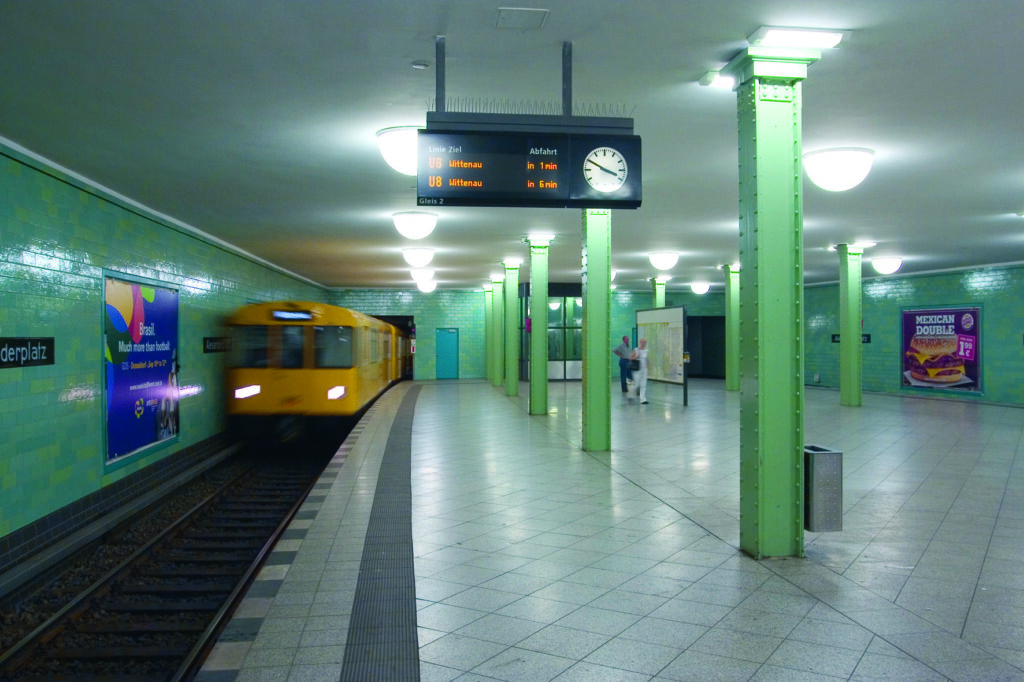
U2 Alexanderplatz (Group) (Catalogue) (curated by “Arbeitsgruppe U2 Alexanderplatz”, Neue Gesellschaft für Bildende Kunst e.V. [NGBK]: Christoph Bannat, Uwe Jonas, Annette Maechtel, Tine Neumann, Barbara Rüth and Birgit

Anna Schumacher). Alexanderplatz, Berlin (Germany), 27.09. – 29.10.2006. Exhibited work: U8, 2006. Intervention: existing speaker, computer, sensor, two CDs (As each train pulled into the platform of line U8, dramatic-sounding music was played for the time it took the train to come to a stop. Two pieces were played, both in the fashion of trailer melodies used for television series.) Photo Credit: Artist archive

Each of your work engages with specific sites, histories, cultures and societies. How does your work respond to the situations you face?
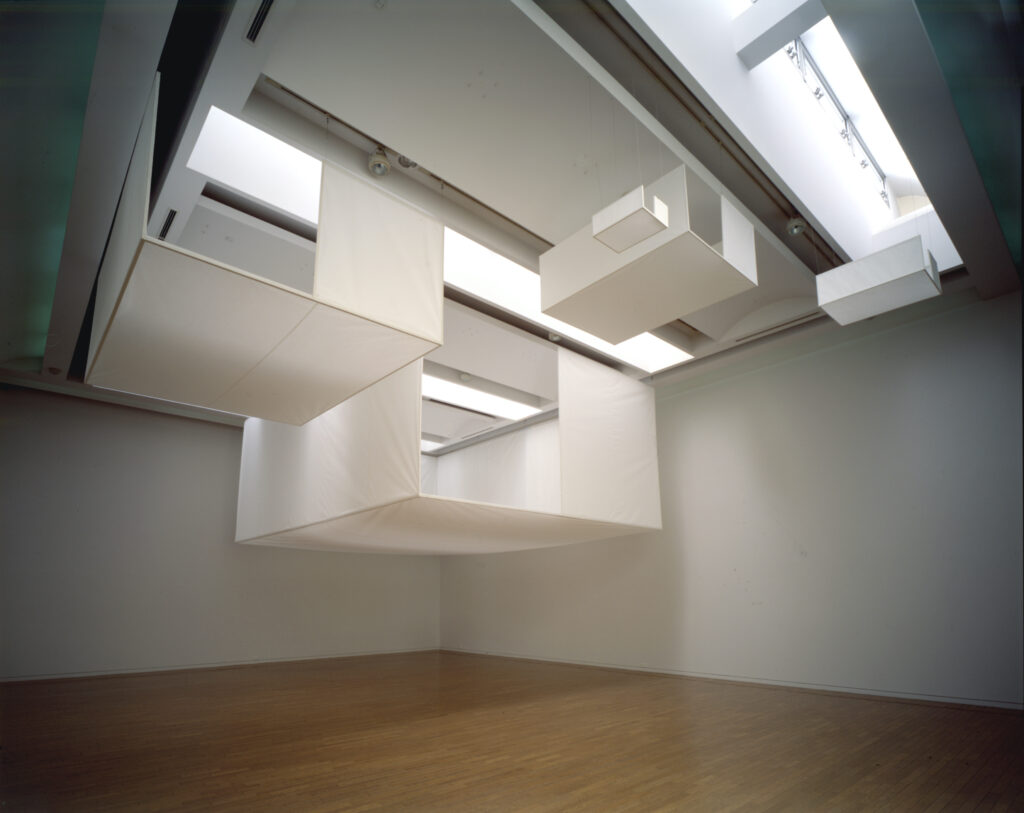
A very good question and a very commonly asked one. Everyone asks me how my work responds to the site, its history, etc..The situations I face in a place is a very important part of this procedure. For example one of my most site specific work “Half of” for a gallery space of one room only (Galerie deux/Tokyo) was inspired simply by just the plan that was sent to me to introduce the gallery. Plan included the walls as well that when you folded the plan it became the maquette of the space.  This was my simple inspiration for the work I made there which was consisting of five maquettes hanging from the ceiling, one by one becoming smaller, each one being half of the previous one . All was made effortlessly out of rice paper and wooden sticks by competent Japanese hand-workers. 

Every work that engages with specific sites needs its own agenda which can be totally different each time and not necessarily with the expected inspiration. Sometimes it is history but a historical place can also get an artwork that has nothing to do with that because I also can have my kind of plans at the time which I want to realise urgently. Of course I feel the most successful when the work looks as if it had always been there or when I spend very little or no effort to make a work sparkle in the space or the best for me would be if I bring nothing to the space and only use the given elements of a space like my works with elevators for instance.


Pond to Pool to Pond, 2016, Japan and your most recent exhibition in Istanbul, I Insist, 2022 are other examples of your site-specific installations.  How do you channel the premises of the spaces you use into your installation to reveal the space’s previously concealed features?

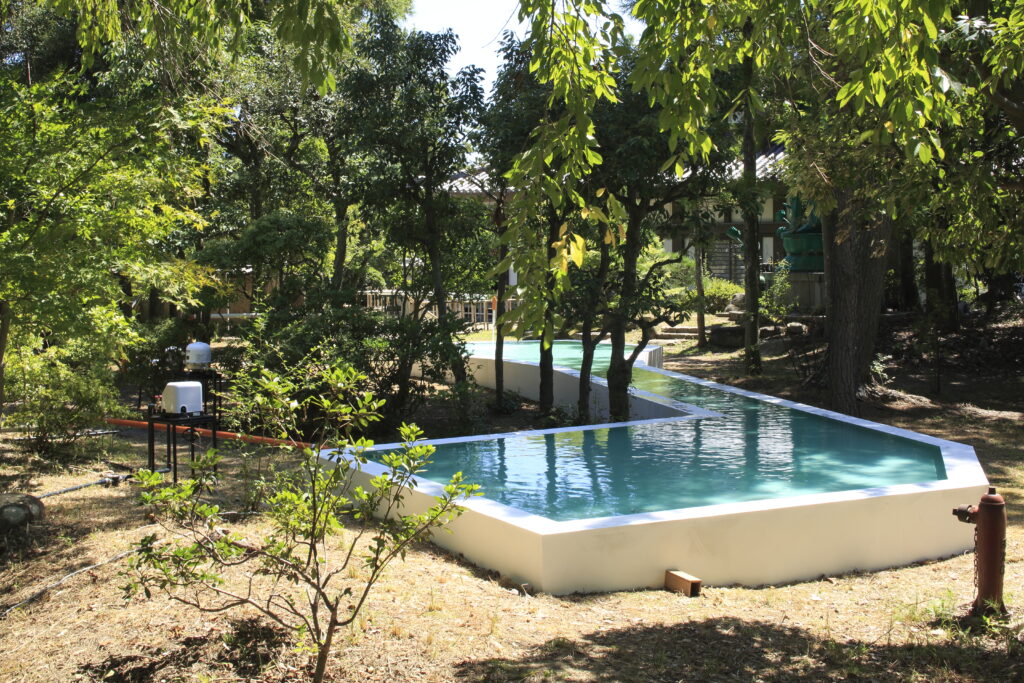
Pond to pool to pond in Nara, Japan is another version of a water cleansing work. In this exhibition each artist had been given a Temple in Nara to work with. My Saidai-ji Temple had a small pond which was dirty, almost like a swamp with lots of mosquitos. My aim was to clean  this pond and to be able to do that, I installed a pool next to it. The shape of the pool was very much following the borders of nature placed in between trees and holy rocks.  Between the pond and the pool, I installed the water cleaning and pumping system, much simpler than the Venice one because this time it just had to clean the pond. The pipes were installed to go inside the pool and the pond, the cleaning pumps were working continuously and carrying the dirty water back and front. In about a few hours both the pond and the pool were crystal clean and frogs started coming to the pond. The much needed balance of nature came back here and a bright blue colour of water with an unusual shape.

Art Projects at 8 Shrines and Temples – Travelling over 1300 Years of Time and Space (Group Exhibition) (Catalogue) (curated by Toshio Kondo, Art Front Gallery Tokyo). Culture City of East Asia 2016, Nara, Saidaiji Temple, Nara (Japan), 03.09. – 23.10.2016
Exhibited work: pond to pool to pond, 2016
Site-specific installation: already existing pond in site, connected to pool constructed out of wood, concrete, mortar, water and connecting pipes, cleansing and pumping machines
Photo Credit: Keizo Kioku

“I Insist” is an exhibition that follows another exhibition titled “Ripples” in the same gallery and uses the leftover material of the previous show. The previous show Ripples was about the unfair gentrification of an area in Istanbul and also about making a first show in a gallery that is part of this gentrification. I cut out rectangles off the new plaster walls of the  clean, white cube like gallery space and hanged these wall pieces from the ceiling. The left over wooden panels on the walls at the back of these cut out plasters had white small circular traces created by chance.  Aside from this I made a sound piece out of the reading of the names of all the shops and studios on the street leading to the gallery giving reference to the fact that these  places will soon be the victims of this gentrification and will be gone in a short time. This was the sound of their archive, music of memories.

In the five years later exhibition “I insist”, I painted these leftover panels that had been hanging before; each one a different wall colour, each one a different size, handled with their cracks and breaks together and hanged them side by side on the walls of the gallery as if this is how they should behave, as paintings like what a gallery is for.

As can be seen in these three examples I have used the nature of one location/Saidai-ji Temple /Nara whereas I have used the politics of an area/ Dolapdere/Istanbul and in the third exhibition I have used politics of art /Gallery Space.


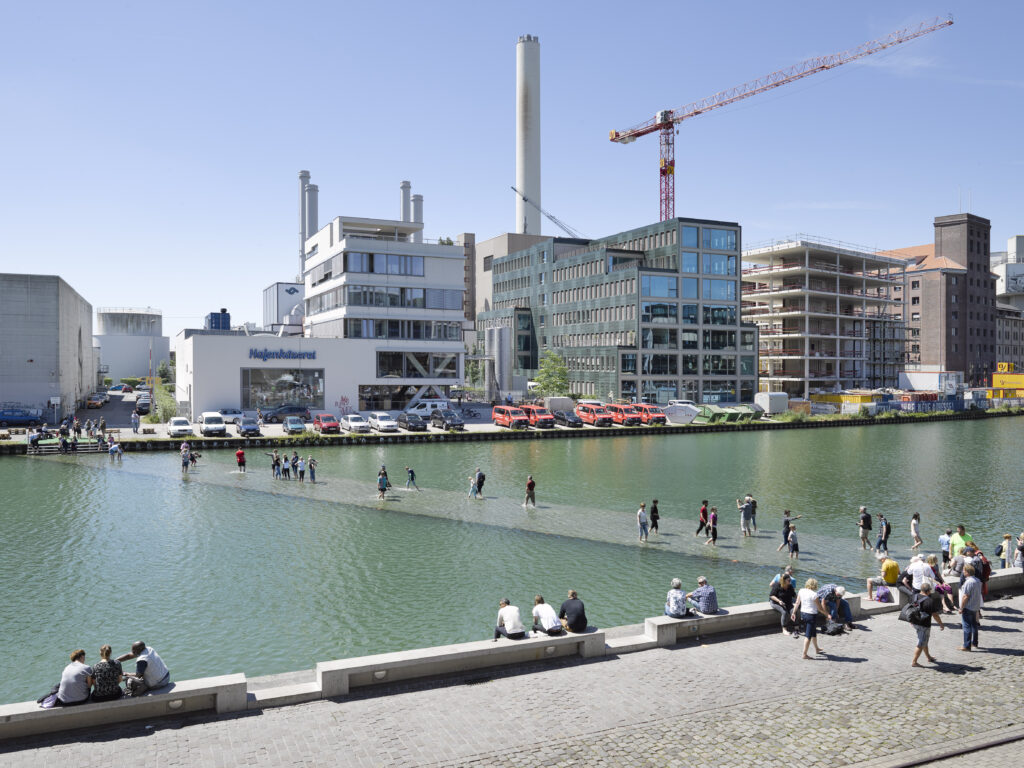
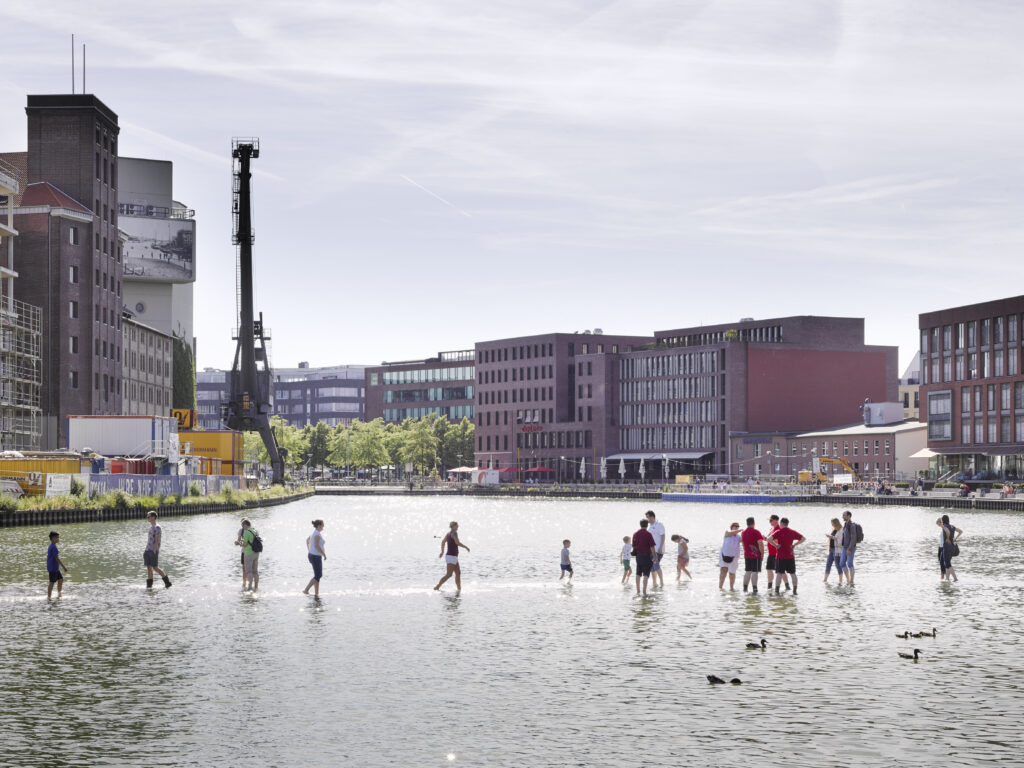
On Water, 2017, a beautiful installation that debuted at the international open-air exhibition, Sculpture Projects, in Münster, Germany took two years to be realised. People use it daily and the vision of passersby crossing the river whilst seemingly walking on water provides a beautifully striking scene. The public becomes an actor in this surreal scene. Could you talk more about the installation and its concept revolving around urban transportation and displacement?


The idea of the “on Water” installation came from the idea to be on Water. This was my second time of being invited to Sculpture Project Münster. My first contribution was moving sculptures on air by helicopter. The title of that work was “on Air” also giving reference to broadcasting. From being on air the first time around, I thought to be on the ground the second time would be too normal a gesture. In between the two exhibitions (1997 and 2017) I had taught at Kunstakademie Münster, therefore knew the city pretty well including this dead end/one way channel where a lively atmosphere was always existent; on one side art studios, galleries, restaurants, bars etc.. on the other part more industry and offices.  

Skulpture Projekte Münster, 2017 (Group) (Catalogue) (curated by Kasper König, Britta Peters, Marianne Wagner). Stadthafen 1, North side: Hafenweg 24, South side: Am Mittelhafen 20, Münster (Germany), 10.06. – 01.10.2017
Exhibited work: On Water, 2017
Site specific installation: ocean cargo containers, steel beams, steel grates, 6400 x 640 cm walkway
Photo Credit: Roman Mensing

As it is clear from the images I made a plan to make a bridge that goes under the water and connects these two shores that people experience the magic of walking on water and to have the miraculous and mystic image of people effortlessly standing on water.

Not only people of course, dogs, bicycles, ducks were also there. Some moms and dads were teaching swimming to their kids. People had the chance to chat on water. It became too popular always full of visitors. The walk on water was slow and thoughtful which made kind of ceremonial and somber at times.


Do you like for the public/audience to interact with your artworks? It feels in some instances such as in that the audience completes the artworks.
Yes, sometimes. In the case of “on Water” without the audience the work would have been invisible. The same goes for the work Shipped Ships where once people of Frankfurt were passengers in boats coming from Turkey,Italy and Japan. These two works and some more carried the risk of being unseen if not for the visitors.

“For some works lack of participants is not a problem. Mostly I like the audience to interact with works hoping they fulfil and feel my purposelessness.”


How influential is the audience’s perception of the themes you explore, to your work?

“I must say it is not very influential. I actually believe that the perception of the audience of the themes I explore should not be strong. I would rather give the audience something that they have not experienced before therefore their judgment as well as mine should not be accurate.”


You have explored the use of acrylic in your very first works (Yellow Plexiglas Sculpture, 1969, Istanbul). Why did you choose this material in particular? Which other techniques and media have you set in place to use?
In 1969, I was a student of sculpture in the Academy of Art in Istanbul and I found these two pieces of plexiglass on the street. Plexiglass was for me a very advanced material at the time. I was fascinated. Without knowing much what I would do with them,I bent them and rolled them in a huge pot with hot water and placed one inside the other and participated in the school exhibition “New Tendencies” with this work. I placed it on the grass outside the exhibition room, maybe my first art in public space and to my surprise got the award of the exhibition with some money involved. This prize was not as important for me as these shiny plexiglass pieces. After the exhibition I recycled them to make other sculptures with the same hot water technique until the two plexi pieces broke down and disappeared. 

I have great  interest in material and have learned a lot from professionals who are experts on these materials. I like to work with professional people and I am mostly ready to change my forms according to their suggestions. Therefore I feel free to work in any media or technique as I wish or as my idea suggests.


What is your approach to form?


The same applies to form. I don’t have a strict or steady style. I have given myself the freedom to work in any material, style, or medium although I believe that I have a good feeling for form as I have had a very classical sculpture education for more than five years.

“I have learned a lot from one of my teachers Şadi Çalık who always said: ‘Forms should be outward rather than inward,  as if they are hiding something inside, as if the inside is pushing from within’”

Kıpraşım / Ripple, 2017; Untitled sculptures, 2017. Site-specific installation, deconstructed plaster walls, revealed wooden walls; 19 aluminium sculptures: variable dimensions. Photo Credit: Hadiye Cangökçe.

He always thought that although we dont see the inside, the inside of a sculpture is as important as outside which meant one should give the same importance to parts that are invisible as the parts visible. This stayed with me and applies to everything in life, in my opinion.


Your body of work shows a dedication to long-term researched based projects. What is source material for new ideas? What books do you like?


I like fiction books. I also like lifestyle magazines to be informed of what is happening. I don’t watch tv these days. I watch a lot of films almost one every night some days. I love to go to cinema salons, even queuing for the ticket or popcorn is exciting for me but I am not doing it so much anymore because of the lazy comfort we have inside our homes now. I also sit on my own outside in a cafe and have coffee and watching the daily life. When I am involved in a project like on Water for example, I make lots of unnecessary research. I am not a research artist in the sense to display the outcome of research or knowledge as an art piece.

This issue’s theme is IN OUR WORLD. In your eyes, what does our world need less and more of?


I will have to give a very classical answer, maybe too much like a slogan but as it has high priority and urgency in these times when we cannot say “Our World” anymore like in earlier years :

“More peace, equality and justice, less discrimination, racism, less starvation.”


What are you working on at the moment?


I am very happy to be working on two permanent projects one for Japan/ Shikoku Island at the tip of a jetty and one for Istanbul right on the sea close to a shipyard from 15th century. The work in Shikoku island is almost ready, for the Istanbul one we will start working in August and will be ready for the 17th Istanbul biennial in September. I am excited for both as they will again happen on water.

Credits

Artworks · Courtesy of Ayşe Erkmen

Rebecca Ackroyd

Rebecca Ackroyd, Hunter/Gatherer vii, 2018

From fragmented memories to ordinary encounters: Locating the subconscious in the work of Rebecca Ackroyd

Rebecca Ackroyd, 27, 2017

I speak to Rebecca Ackroyd via Zoom from her studio in Berlin in late August, not long before her solo exhibition, Fertile Ground, opens at Peres Projects in Seoul (until 13th October). She will also be exhibiting at this year’s Frieze London and in December at Art Basel Miami Beach. Fertile Ground, like much of Ackroyd’s practice, delves into the surreal whilst being grounded in the monotony of the everyday. In playing alone, for example, a cast of the artist’s hands in a sink is at once familiar and strange; the hands are disconnected from the body, whilst a blade – bloodied? – lies conspicuously in the basin. Those familiar with Ackroyd will know that epoxy resin casts of the body, often in lurid, sometimes grotesque colours, are a central part of her work. And oftentimes, fragments of these casts reappear in different bodies of work. In the Seoul exhibition’s title piece, fertile ground, the artist casts her arms, upper torso and legs wearing a pair of boots that belonged to her mother in the 1960s. The physical fragmentation of the artist’s body in this piece unpick the complexities of time and memory in relation to family history and connection. This can be evidenced by the fact that, as she tells me during our conversation, she has previously cast her mum’s ageing hands as well as her own, ‘and then in 30 years’ time, [mine] will be old and possibly look like my mum’s.’ This, she says, stems from an interest in preservation. But fertile ground also recalls, or reimagines even, an earlier sculpture, Tonguing the fence from her 2021 show,100mph which also features those 1960s boots. The 100pmh exhibition, which as the artist explains below came out of a dream journal she made during the first lockdown in 2020, had a crimson-tinged sleaziness to it. And if Fertile Ground grapples with the subconscious in order to examine how our sense of self is produced and reproduced through the memories we think we recall and stories we tell ourselves, 100mph delved into a very different part of the psyche. There, the works – and in particular Ackroyd’s gouache and pastel pieces – seemed to unlock a Pandora’s Box of what the artist terms ‘bad thoughts’. In pieces like 1,000,000 Eggs, green flesh gleams through fishnet tights, the strangeness of the tinted skin offset by a blood-red hand rested slightly coquettishly on a hip.

In unison with other pastel works on show at the exhibition,100mph recalls the garishness of Otto Dix’s triptych of Berlin nightlife from the early 1920s; in Metropolis (1925), like Ackroyd’s pastel works, there’s an uneasiness that oozes out – as a collective uncertainty seems to seep through the polished cracks (or, in Ackroyd’s case, grazed knees). Even the most exciting of circumstances – for Dix, a bustling club playing jazz music, or for Ackroyd, the experience of catching a flight to go on holiday as her work Singed Lids from the 2019 Lyon Biennale depicts –  can be boring experiences. Resin casts of airplane seats are positioned in the artist’s character disjointed fashion, with the remnant of a leg or a suitcase making the odd appearance. In that work, Ackroyd again recalls a collective encounter, pieced together through the fragmented lens of a distant memory. Of course, the comparisons with Dix are limited – he was attempting to capture a broken society in the aftermath of war and hyperinflation, and the sexual politics are a far cry from Ackroyd’s own handling of sexuality and femininity. But nonetheless, both seem to touch on how we, guided by that inner voice in our head, collectively go about trying to make sense of the world around us. And below, as the artist discusses the importance of ordinariness in her work, it seems that sometimes the most ordinary of circumstances feature in the strangest of dreams.

Rebecca Ackroyd,
Flower form, 2022

Rebecca Ackroyd, Flower form 2, 2022

Something that strikes me about your work, and seeing how it’s installed in exhibition spaces, is the idea of the encounter – and encountering the work in a space. For example, you’ve previously spoken about the use of a pub carpet as a recurring motif since you first used it in previous exhibitions in 2017, which is both part of the exhibition install and the work in a way. How do you think about the work within the space, and how do you visualize the experience and the encounter that the audience will have with your work in situ?

It really depends on the show and the mood at the time that I’m making the show. The last show I did at Peres Projects Gallery in Berlin, 100mph (2021), took place during lockdown and the basis for the work started from a dream journal I was making in the first lockdown. The works didn’t directly correlate to the journal though I ended up showing drawings from the dream journal in the show on a separate table. [But] it was mainly drawing because I didn’t have any assistance to make sculpture, and I was just working on my own with my boyfriend (he was my assistant!) 

The work was really informed by the idea of dreams, psychological space and something that’s more of a subconscious thought that is buried or hidden.

Rebecca Ackroyd, RAY!, 2018

“There was very much this relationship between a sort of deep internal space and bringing that out. I was really interested in how that could kind of be expressed through sexual desire or ‘bad thoughts’; a sort of internal mechanism of thinking that we don’t express.”

That was the driving force behind a lot of the drawings. 

The way install or approach altering the space really depends on the show, the content and the way I want it to feel. But I am definitely interested in there being familiar elements, like a carpet – the pub carpet, that I’ve used repeatedly, and I used again in 100mph – as a way of signifying a time, or a place, or a culture, and then contrasting that with these out-there drawings or psychological abstract works. I’m really interested in bouncing between places, and I think that’s definitely reflected in how I assemble a show. 

Rebecca Ackroyd, Hear Her, man hole, 2018

For your most recent show, Fertile Ground (2022), reference is made to an encounter you had with a building site in London. But to what extent do you look for an influence or an inspiration when it comes to making a body of work, or does a body of work come out of something more instinctive?

I think it really depends, like with Fertile Ground, you mention the building site – I wouldn’t say that that memory necessarily meant, or influenced, the actual works themselves. I think I’d started making the work already, and it’s almost like I look for anchors that root the work in different ideas.

Rebecca Ackroyd, 1990’s REST, 2018

And that particular memory felt like it grounded the show somehow. In fact, I wanted the building site to be the show image, but then I found the photo of it, and it was such a boring photo. I thought the idea was more interesting than the reality. In my head, I’d built it up as this really overwhelming visual encounter – which I think it was, but it just didn’t translate into an image at all. It just looked like a building site.

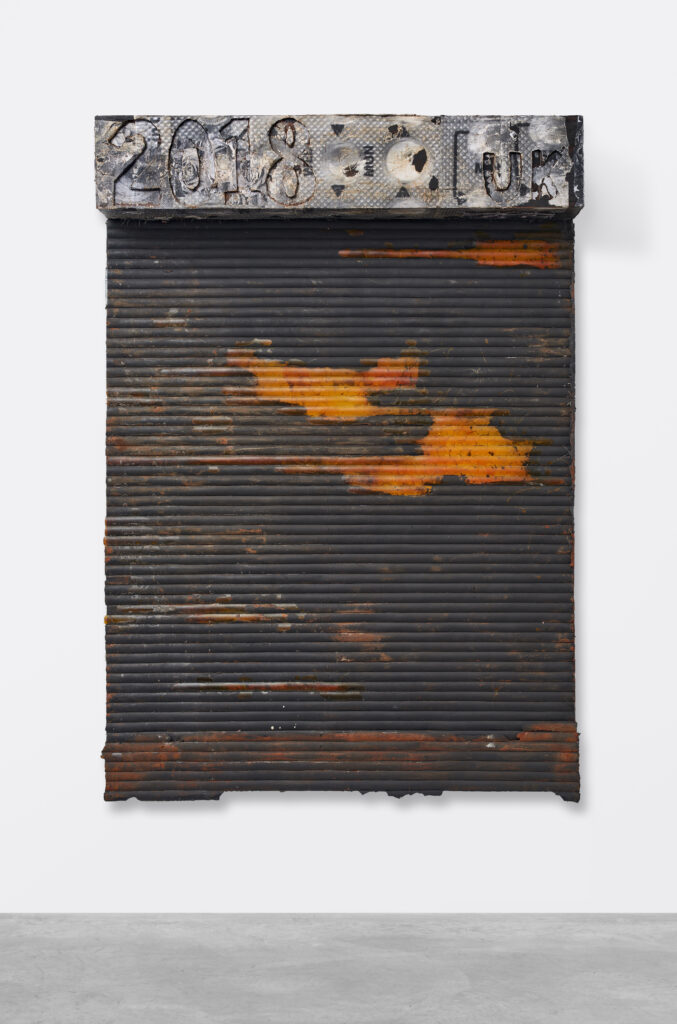
“It’s more interesting when the work is layered and bounces between different ideas of abstraction, figuration, personal history, and then more shared ideas of existence or life – or something more ubiquitous, like a shop shutter, or a tool.”

I’m interested in how work can be layered in that way basically; layering content and layering ideas.

Rebecca Ackroyd, Tide Turn 2018 UK, 2018

In Fertile Ground, you’ve got the cast of yourself and you’re wearing your mum’s boots from the ‘60s, which is a very personal connection to your own experience. But, from what you just said, I get the impression that your work is less autobiographical, and the use of personal history is more a vehicle for exploring certain themes at a particular point in time?

Yeah, definitely.I mean it’s difficult, isn’t it? I think the term ‘autobiography’ sounds very literal, and so Idon’t necessarily see it as autobiographical. I see it more as ‘biographical’, in the way that I’m really interested in stories and memory, and how that becomes so fragmented. That informs so much of who we are. With the memory of the building site, I had this vision of something, and then when I actually looked at it, it was really underwhelming! And so, sometimes the thought of something is much more exciting, or inspiring than the reality of it.

Rebecca Ackroyd, RA MULCH, 2018

That also correlates with the creative process for me. I was talking about this to a friend recently, another artist (Sam Windett)– we were saying how when you’re making a show, you’ve got the idea of the show in your head and you’re really driven towards it. And then, you have the reality of being confronted with what you’ve actually done in the space.You’re suddenly in reality and you have to just deal with the fact that you’ve made these works. And that’s what it is – I feel like there’s always a tussle between the idea of the thing, and then the thing itself. 

That’s really interesting because the underwhelming reality of the building site memory also ties into the idea of the mundane that features in your work. In memories and dreams, we pick up on small things and remember them, but the reality is definitely not going to be what you thought it was. In works like Singed Lids (2019), for example, there are these bits of everyday detritus – the suitcase by the side of the seat. Is that mundane, or a way to be able to visualise through small fragments the things we can’t fully recall?  

I think it’s both. In Fertile Ground, there’s a cast of a sink with my hands. I’m really interested in ordinariness, especially with the sculptures. I like the idea of just capturing something that is quite unspectacular, you know – like doing the dishes. I’m more interested in that than I am a performative gesture or something. It took me quite a long time to realise that there’s something really special about living with ordinariness; appreciating normal, day-to-day experiences.

Rebecca Ackroyd, Carpet burn, 2022

And then the fragmentation within the casting is very much about referencing something incomplete, which again links back to the idea of a memory, or, with the Singed Lids piece, a remnant of something. Casting is a very direct way of being able to do that, and I see it as being related to photography in terms of capturing a particular moment. 

I think that’s really interesting because it’s almost like a reliable, true record of something. Whereas, with other mediums such as drawing, that’s always going to be more of an interpretation. And so, I wanted to ask you about the process of making work, and the contrast between having these sculptural works using materials like resin and wire, versus pastels, for example. How do you balance using these different approaches of making, and how do they then work together to create a wider body of work?

I came from making only sculpture to making these small drawings between bodies of work. And then, gradually, the drawings became the pastels, and now they’re as important. I don’t really see a distinction between the processes now.

Rebecca Ackroyd, Hunter/Gatherer viii, 2018

But with sculpture, the thing I struggle with is how full on it is physically. It’s something I have to plan a lot more and think about more in terms of practicality and how things are going to work.But quite often, when I make a cast, we make them in pieces in the studio, and then they’ll just kind of sit around the studio for months. Then eventually, they get incorporated into a work.

“So, in a weird way, my studio is a bit like a sort of graveyard! And then, they get brought to life.”

Rebecca Ackroyd, World view, 2020

I use the drawing and the sculpture in different ways. With the casting, it’s about bringing an element of reality into the work – using myself or a friend or family member, and then grounding that in a particular moment.

With the drawing, there’s definitely a greater freedom in terms of making, which is why I started them. I pretty much make every single one in a small version before I make them big, so I can work on a lot at the same time. I often have numerous ideas that I want to get out, then I can look at them and it gets translated onto a bigger scale. Or they just stay small, or I never show them.

“Making work is about finding ways in which I can have as much freedom as possible.”

It’s really important not to be precious, because once the drawings are on a bigger scale, there’s more pressure there to make it work. I think it’s really important to have the freedom to fail all the time. And I feel like with sculpture, it is this battle to not fail because it’s much harder to articulate. It’s a very different approach, but I feel like in a lot of ways, they inform each other.

Rebecca Ackroyd, Half moon or empty, 2020

You mentioned that you might cast something and then use it at a later date in a body of work. Do you see different bodies of work as a progression, or as a response to a previous body of work? 

I think it really depends. With the sink piece in Fertile Ground, I never thought I would show it because it was just on the floor of my studio for years and then it just seemed to make sense suddenly. So then it gets used in a completely different context.I think it’s probably a bit of both because, when I’m conceiving a show, and especially when it’s in a particular space that I’ve been to, I will be mulling it over and figuring out what I want it to be. I’ll imagine how I will enter that space and then that will inform certain elements – like what I might do to that space. But in terms of the individual works, I think quite often I just have an idea for work, and then I’ll make that piece. But sometimes, it’s less formed than that; it’ll just be a fragment of something, and maybe I’ll make a metal stand for it.

Rebecca Ackroyd, Tonguing the fence, 2020

It really snowballs when I’m making work for a show. I’m not a very good planner; I think that’s just the way I work, though. I have to be able to change and shift things.But then it’s funny, because earlier today, I was thinking of a show that I don’t even have planned, it’s just an idea for a show of work.

“I like to have that openness, and I also like to not necessarily know exactly what a show might be because it’s much more interesting and exciting, and it means that the work can turn into something unexpected.”

With Singed Lids, I don’t think any of the curators even knew what I was doing because it was just like, “here’s a cast of an airplane seat”, or “here’s this cast of a leg”. You couldn’t see the whole thing. I didn’t even see the whole thing until I was in the space; I had no idea if it was going to work or be any good. It’s quite terrifying to do that to yourself, but I do think that that can be one of the best ways to work, it allows the work to unfold. 

Credits

Artworks · Courtesy of Rebecca Ackroyd and Peres Projects, Berlin

George Rouy

Abstraction and distortion in art come out intuitively to George Rouy along with human emotions and relationships

In his earlier artworks, George Rouy would paint elongated facial features for the wide bodies of his subjects. He would stretch the figures on the canvas through his strokes, and at times, have them sit or stand side-by-side as if conversing.

Then, around 2021, a shift took place.

Gone are the visible features of the face, replaced by intentional marks and lines guided by the haze of the moment, his creative spirit being summoned to life. Smudges of paint brush against a mosaic of splatters. Flecks of color shower dedicated spaces on the canvas. The figures still appear visible, yet invisible at the same time. They might be tall or short. Their genders, androgynous. They are colliding, manipulating the viewers first, then they sync, re-arranging themselves like puzzle pieces and letting their viewers know everything falls into place in the end. Rouy, an aficionado of abstraction, has transitioned, and he is introducing an evolution of his artistic practice.

The bodies in Rouy’s artworks evoke an innate sense of connectivity and transcendence. They trespass the realms of the physical and the beyond, almost anchoring an indescribable reason they visually came into sight in the first place. They might be five different characters Rouy brewed in his mind, but they could also be an individual with five versions of themselves. Deciphering the intention of Rouy’s paintings depends on the viewers, but the artist creates a two-way channel in his works. For every painting the viewers see, Rouy seems to ask them to trust him with their deep-seated thoughts, emotions, and fears and let him paint them through his style. For every painting he creates, Rouy stirs human sensations until he delivers.

NR wants to learn more about the psychedelic nature of Rouy’s works and mind, the desire that powers the artist to pick up his brush and lose himself in the moment of painting. When we caught up with the artist, he was in the middle of finishing some artworks for his next show. He would be flying out of the UK in the next couple of days, leaving the 12 paintings he was working on simultaneously for a while inside his studio in Kent, London. At one point, Rouy tells us he paints intuitively. He scraps off planning and gears toward illustrating what feeds his mind, whether based on his experiences or observations. Somehow, themes of interactive relationships, self-growth, therapy, and psychology bubble up and simmer in his paintings. These nuances might be implied, but one can see how they linger in Rouy’s works, drawing in whoever lays their eyes upon his paintings and locking them in there.

At first, NR wanted to ask Rouy whether he had always wanted to be an artist, then move along wherever the conversation would take us. But even before we asked him the question, Rouy had already let us in on what he would be doing in the next few days. A lot of it involved traveling, ruminating, finding breathing space, and looking at his artworks as he sits or stands before them, idling. The moment he spilled all these thoughts, we shifted our questions, inverted-pyramid style. From the role of energy in his artworks to the culmination of his present style, Rouy talked us through his artistry, influences, and life as an artist, revealing parts of himself that might be under wraps from the public’s eye. 

We started with his travels.

Does consistent traveling affect your creative process? 

I think yes. What I have found over the years of doing this is that I have times of concentration or intense work then a break. I have found that my creative process works a lot better now where I relentlessly paint all the way through before I try to find breathing space. For instance, I have solidly worked for a month now, and I will be taking a few weeks off just to ruminate and process. Then, I will come back and look at my works with fresh eyes. I see what I have done objectively and more since I have taken off some emotions and am now able to see what needs to change or shift. In that respect, traveling works well. 

I also often find myself preparing for a show, so it is good to have the works just sitting in the studio for quite a while, just to live with them. They can breathe and have their own life without me working relentlessly on them all the time.  

What is your breathing space? Do you intentionally create your own breathing space, or do you just do random activities? 

Walking, for instance, on a day-to-day basis is breathing space. Strolling in the countryside is a great way for me to process parts of the day, especially in the summertime. I find it harder to find my breathing space in winter because of the lack of light – it is always dark when I leave the studio – but I love to think of other ways to take some time off. Currently, I am between here (Kent) and Paris.

In Paris, I work more on the computer, study my art, and think about where the series is at. I was there a month ago looking at the paintings I already had in the studio, took photographs of them, then looked at them through Photoshop, just to process everything in a different way. Then, I am just actively looking at my works, and I think it is important. The act of looking also takes up time since my paintings become jigsaw puzzles, and I try to work out the next parts. Sometimes, it just does not quite click at the moment, so I let it simmer for a while before looking at it again. 

I have come to a point where I need to take some time off and come back to the studio once I feel rested because I get so caught up in the energy.

“I think painting is about having and regaining this energy and preserving the excitement, impulse, movement, vibrance, and emotions, especially because the works become a lot more abstract in areas.”

These works also need a sense of clarity, so I am trying to find and maintain that as much as I can. When I have a few to 12 paintings at the same time in my studio, I often jump from one artwork to another, so the energy gets transferred quite easily. I am conscious that when I quickly shift, things stagnate, or when I work on one painting for too long, something sucks the magic out of the artwork. It loses the spell it once had. 

Since you put it in this way, does painting ever get overwhelming for you? 

There is this idea that you have higher expectations of yourself at times, and you are constantly searching for more discoveries, so you never get quite content with the discoveries that you have already found. I think the overwhelming part is to maintain these high standards of and by self. When you reflect or get to a point when you look at some of the works you did that you felt successful, you look back to how you did in the past.

It is not that you are trying to top or match them, but I think this is where it gets overwhelming, when these successes are not happening now. When this happens, you push through it – you work through it until things reveal themselves.  It is like when we plant a seed, it takes time before the plant fully grows. 

I notice that some of the facial features of your subjects are blurred. Is that intentional? 

The faces anchor the work and the composition. They can also be a distraction that ultimately defines the work – it is about having the right amount of purpose to them. I am into abstraction, and the blurred faces break emotions and sensations by delivering physical marks in the painting. When I start to apply them, I begin to see that everything becomes emphasized while they also contradict each other. The face is about having blurred moments of life, and having these pushed out in distorted ways allow the works to have the same breadth. 

Sometimes, it is hard to explain. They just have an energy about them and a certain feel that is not of this earth – it is not from here. It is not even photographic. There is a clear distinction between these faces when they appear right, but when they do not, there is this balance between the ugly and the beautiful – transcendence and out of this world. These days, I am more into computer-generated faces or AI and the historical representation of a figure within a sculpture. Here, I can distort the face, making them heightened versions of humans. I also think about the idea of distortion or blurring as something that is not quick, but a time-based movement that links with the rest of the marks in the painting. They turn out to have the same amount of flow and energy.  

Would you say then that your paintings are energy-based? 

Not entirely energy-based, but they have an awareness of the physical in terms of their anatomy, time, and movement. So, the act of distortion can be hidden – you cannot quite tell how long strokes took or where the moment began. Other things can be visible such as the dancing figures in some paintings. 

I notice that you often use lush or dark colors for your paintings. Do you resonate well with the dark palette or do you have any intentions in the near future to shift to bright tones? 

Some of them have become brighter, but gray still is important in my work in terms of it sitting between the realms of dark and light and how it can emphasize contrast and complement well with the shades I use. I also like how gray can have different hues like pink gray or greenish gray.

I also notice that you have a lot of bodies on your canvas. How did you arrive at this point that you wanted to turn bodies into the subjects of your art?

It is an uplifting movement for me to have these bodies in my work a sense of connectivity and purpose – of flow, movement, and rhythm. I would say I am someone who has been into exploring figurative painting and how to achieve a painting that has multiple figures in it without giving a headache. I think about the figures as organisms who could be versions of themselves. There could be two people but split up into five figures. It is less about a collective, but a depiction of those you know in a space or non-space.

On the other hand, their meaning depends on how the viewers perceive them. Sometimes, the viewers place themselves in the realm that I created. Other times, they deem my paintings as romantic and soft. There is always an underlying intention to these figures and how they interact. Then, there is also this feeling of morphing, a shaping of an internal representation, of one’s psyche or being, and I think these are massively involved in my works. We are living in this life full of intricacies as an individual and as a collective, and I am thinking about these internal pressures, whether that is beauty, ego, or something else. Similar to how we show other people love or compassion, we have these intricacies that form part of who we are.

I did a painting last year called Shit Mirror (2021), and it was on how you can perceive yourself one day and have a good feeling about yourself then the next day, you have a completely different representation or idea of yourself. It is erratic when it comes to the human mind, and I try to represent it with marks, movement, and contradictions because ultimately, nothing is static. I think we live in a world where maybe we have the ideas of what and who we are, those that we think are set in stone or in one journey, then we realize they are endlessly moving.

In this matter, do you think psychology and the study of self are two of the many factors that have helped you develop or pursue your style today?

I have gone through a large amount of therapy and have to dig deep into parts of my own self-growth that there have been a lot of things I have had to tap into with myself that naturally comes out in the work I do today. I have always had this keen interest in these features of my experiences, and being able to express some of them, even hint at or allow them to just be present there, feels resonating.

I think you sometimes get forced into doing a lot of self-growth. In my case, there has been a lot of digging into internal beliefs, both rational and irrational, and they appear over time or I generate them. Then, they distort the sense of self and what is my reality in relation to other things. I have dug deep into layers of my deep-seated fears too, and I think when we start to embrace and understand these, we allow ourselves to push deeper into those areas of our mind and sensation.

Do you have any other sources of influences? 

My work is so intuitive. I can go away and experience experiences, but the ideas that I have just sit in the periphery and do not fully sit in. It is not like I am going to do a painting about this or that, no. It all just comes out in an intuitive way. Also, being around other people and having interactive relationships are important too. I often spend time on my own, painting figures. From there, I have these two extremes where I spend so much time on my own – I also live on my own – and doing these paintings about figures of human interactions and about human sensations. All of them are intense experiences to live through which then can be parts of my influences.

Have you always wanted to be an artist, then?

Absolutely. Being an artist and painting have always been my natural ways to communicate. They have never felt like a struggle. School was hard for me since it was difficult express myself through drawing and art even though they felt natural to me.

“I have always wanted to be an artist, but it was challenging to tell that to my teachers because one needs to understand how to be and what it is to be an artist to fully understand the life of it.”

It has been a huge process, overall, and I am very lucky to be doing this.

Do you have any artistic rituals before you paint?

Yes, I have got rituals. I do some exercise in the morning and in the evening. Then, I go for a walk after painting in the studio (if there is light outside). I make sure I do not work overtime. Then, I have a bath every night because I am normally covered in paint, so having a bath every night is a moment – my moment. So, not many rituals, I think.

How do your immediate surroundings influence your artistic practice today?

Living on my own, going at my own pace with everything, and not being in London were massive shifts in how I operate. There is a lot more consideration and pace that is not rushed anymore unlike in London where I had always felt urgency. Now, it is more just about looking, taking everything in from my surroundings. The thing is that in London, I would commute to the studio, step inside, and tell myself “I have to paint now.” It was a lot frantic. Whereas here in Kent, I could just come here, do a little bit of painting, and sit and look at them. Sometimes, maybe even not paint and just look at them. This is where the surrounding influences come in.

Team

Talent · George Rouy
Photography · Markn and Brigita Žižytė
Fashion · Emma Simmonds
Creative Direction · Jade Removille
Special thanks to Rosie Fitter and Thibault Geffrin at Almine Rech

Designers

  1. T shirt Vintage LAURA ASHLEY at LONDON.VINTAGE, paint splattered jeans and shoes George’s own, boxer shorts SUNSPEL and all jewellery George’s own
  2. Vintage YVES SAINT LAURENT wool suit at GASOLINE RAINBOWS, shoes CHURCH’S and jewellery George’s own
  3. Dress, archive GHARANI STROK at THE ARC
  4. Jewellery George’s own
  5. Vintage YVES SAINT LAURENT wool suit trousers at GASOLINE RAINBOWS and belt, shoes and jewellery George’s own
  6. T-shirt in red ribbed jersey, archive HELMUT LANG AW1997 at ENDYMA and classic tailored trousers in polished calfskin, archive HELMUT LANG AW2000 at ENDYMA, crystal drop earrings Stylist’s own, shoes CHURCH’S and all jewellery George’s own
  7. Vintage YVES SAINT LAURENT wool suit trousers at GASOLINE RAINBOWS and belt, shoes and jewellery George’s own
  8. Leather shirt and trousers BOTTEGA VENETA and all jewellery George’s own
  9. T-shirt in red ribbed jersey, archive HELMUT LANG AW1997 at ENDYMA and crystal drop earrings Stylist’s own
  10. Archive HELMUT LANG SS 2004 cut out Nipple tank at ENDYMA, Archive HELMUT LANG 1998 Painter Jeans at NDWC0 Archive, Paint splattered shoes and jewellery George’s own
  11. Black wool suit BOTTEGA VENETA
  12. Archive JUNYA WATANABE, SS 2002, Poem shirt at NDWC0 Archive. Black jersey strappy top, archive ALEXANDER MCQUEEN SS2002 ‘Dance of the Twisted Bull’ at THE ARC, classic tailored trousers in polished calfskin, archive HELMUT LANG AW2000 at ENDYMA, shoes CHURCH’S and all jewellery George’s own.
  13. Vintage YVES SAINT LAURENT wool suit trousers at GASOLINE RAINBOWS and belt, shoes and jewellery George’s own

Overmono

The In-Between: Overmono create a layered and boundary pushing sound that exists between emotional states. 

Overmono are a UK electronic music duo made up of brothers Ed and Tom Russell. Raised in Wales, the siblings had individual success as producers before joining forces as Overmono. Wanting to reduce the influence of their individual pasts from the mix, they isolated themselves in a cottage and started to develop the foundation behind their music. Now, through a standing relationship with pioneering British label XL Recordings, they have released a series of layered and boundary-pushing work that define their distinctive sound today.

For this issue, NR had the opportunity to catch up with Ed and Tom to discuss their memories of growing up together, their experience of shaping Overmono to this point and their ambitions for the future.

Tom and Ed, thanks for joining us for this issue. I’ve been looking forward to having this conversation with you. I want to start by asking you about your memories growing up together, and what your individual influences and gravitations were because you’ve both done so much individually before Overmono.

T: I’m the elder of the two. Growing up in a house together, I was getting into rave music and Ed could hear the music through my bedroom door. I had turntables and some records and Ed got a pair of turntables when he was ridiculously young, like when he was around 10 years old. Then he was stealing records from my room, so there was some cross-pollination going on. As we got older, Ed developed his own taste and went on his own journey, and I developed mine and went on my own one, but it was all generally electronic music.

E: It feels like over the years our influences or what we were into individually were sometimes miles apart from each other, but then 6 months later we would come back and we’d be listening to the same thing.

“As we got older the distance between us got narrower and narrower, and nowadays it’s really rare that Tom plays me a record and I turn around and say “that’s shit, I don’t like it”..”

T: Haha when that does happens, I get really annoyed and I’m like you’re just not getting it!

E:Yeah haha, and these days we’re so similar in the sense of what we’re into, which from a writing point of view, makes everything pretty effortless because we both know what we like and what we want to try to achieve.

That connection is definitely felt in Overmono, but as a listener I can also hear and distinguish your individual influences feed into this project as well. Listening to your individual projects, it feels as Overmono is a cumulation of all those individual journeys. I’d love to hear more about you experience during those earlier projects – Tessela (Ed), and Truss, MPIA3 and Blacknecks (Tom). 

T: I’ve always been really into Techno. Various styles of it. It has been a constant for me since my teens. I remember hearing Tanith on Tresor, it completely blew my mind and sent me down this rabbit hole. So, I just carried on doing that, and through the 2000’s I was getting more and more heavily into production, which led me into the projects you mentioned. I think for me, and I guess Ed can come back to this too because I’m speaking a bit for him as well, I felt really pinned in at the end. Because I’d done so much producing into a similar lane, I felt like that was what was expected of me. As much as I loved listening to that stuff, I felt like there were broader horizons I wanted to explore, and that inevitably led us down this path to start this project together.

E: I feel like we both started feeling that similar feeling around the same time. I remember releasing this one record and someone said to me “I’m all for artistic development, but where are the break beats?”.  It got to a point that I felt like I had to put a break in every single tune otherwise people would be like this doesn’t sound right. Tom you were probably at a similar point with more distorted stuff..

T: Yeah, if I didn’t do something that was really tough and distorted it would just get no attention or traction. I could make something in 5 minutes that was distorted, and don’t get me wrong I love that sort of stuff, and people would go mad for it. But I could spend a couple of months crafting something and think it was one of the best things I’ve ever done, and nobody would care.

E: And That was a big thing both of us were going through around the same time. When you’re making music and figuring out your sound, cultivating it and honing it, it might feel really nice; to know exactly what you need to do to make something good because it becomes effortless. But after a while, when the expectation becomes “this is what you do” then, you start to think there’s so many other influences I have that I want to start to broaden what I do here. You end up feeling blocked from doing that. 

“We got to a point that we were like “let’s just start making music together and see what that’s like. No one needs to know we’re doing it together, or that this project even exists. Let’s just write some music and see what that sounds like”.”

The series of first ten tracks we wrote, in a really short period of time – like 3 or 4 days – sounded quite different from our previous work but we were surprised by how cohesive it all sounded. There was no plan for it, we just said let’s take this equipment, go to this place, lock ourselves away, write some music and see what it sounds like.

T: It was so nice to be in this headspace where we had no expectations at all, and no personal expectations either. We just said “let’s go to this place, make some music and whatever happens, happens.” We had no intention to start the project at that point, we just wanted to write some new music together. The whole idea for Overmono came quite a bit afterwards. It was really amazing to have that freedom and it’s something we still try to maintain because it was so liberating.

E: It gets harder and harder the further down the road you get because the expectations start growing again, and once you put out a few records that have done well, it’s harder to come out with something that is really weird or super headsy. But that being said, we still have that same mentality that we try to go somewhere that isn’t our own studio, somewhere that is a different environment, somewhere that we can’t be contacted and we can’t contact other people. We just go there to sit and try to make some music.

“It’s that thing of disconnecting completely and forgetting about all the noise and any expectations. Then you end up writing some of the best stuff because we’re just having fun.”

Yeah, the Arla I-III series! It’s interesting to hear the process you went through to write this collection of tracks. I realise that you did projects together before this too, projects like TR//ER. To me, the Arla series definitely sounds like a more cohesive beginning or foundation to Overmono. I’d love to hear more about your process of forming your sound as Overmono at this earlier stage.

T: There was a lot of sampling in the Arla I-III EP series, and it was nice because I didn’t do a huge amount of sampling before so it was a fresh perspective in production for me, and – I learned a lot from watching Ed because he’s great at it, and for me this was cool because it was an area of production that I wasn’t familiar with and got to explore. 

I was given, as a long term loan, a large record collection from my brother in law, which was a DJ in Leeds in the late 80’s and early 90’s. He had loads of old House and Techno records, and it was just in his basement collecting dust and getting a bit of mould on it,. So, I was like I can take care of it for you. But it turned out there were only a few good records in there, and most of it was utter crap – white labels that probably never made it to an official release, but it was still a pretty good archive of early British House and Techno. We decided to make something out of it, so we went through it all and started to make this huge sample bank. That was kind of the foundation of a lot of the Arla tracks. This is also maybe why they have a cohesiveness because they were recorded through the same turntable and through the same process. 

E: They were so dusty weren’t they…

T: So dusty! So much crackle and noise, and it’s also why those tracks don’t translate to sound systems very well haha. A lot of it again, was me watching Ed using the sampler and also Ableton, because to that point I was mostly a Cubase user for all my life. Ed kept asking me to switch over to Ableton and I was like “Nah, I’m used to Cubase, that’s what I know – blah…-blah blah…” After a few days in the cottage writing the Area stuff, and watching Ed use Ableton, I was like holy fuck I gotta start using this! It made other stuff look so archaic. The amount of times I would try to set up a side-chain in Cubase and I couldn’t be arsed because it was so long-winded, and then watching Ed do it in seconds. Also, seeing how you could manipulate samples with warps and time stretches was really inspiring. 

E: I think during this session we had a few synth lines that have been just sitting around, so we started to process them through the same process that we were using for the record collection, so that added a different dimension to them. If you listen to original Arla samples a lot of them have a late 80’s sound to them but we just mangled them over and over till it didn’t sound like that. 

Because we weren’t in our studio, we just rented a cottage in south wales, we had a limited amount of equipment with us. We had a small mixing desk, two speakers…

T: Didn’t we borrow an Allen & Heath?

E: Yeah! We borrowed an Allen & Heath mixer from David.

T: Shout out to him for lending that to us. Everything went through that and we also had a Lexicon PCM 80. I don’t know if we had any other effects?

E: We just had that one Reverb, and we took a Virus C synth, and probably a compressor. Think there was another synth as well…

T: We took the JD 800, didn’t we?

E: Yeah it was the JD 800! Haha.

T: Haha it’s pretty much the heaviest synth we could fit in the car.

E: It was this beast of a synth that we only ended up using for one day. The rest of the days we were super productive and for one day we just dicked around for 6 hours on the JD 800, and we thought the stuff we wrote was super deep. The next morning we listened to the track and we were like “Jesus christ that one’s getting axed” haha!. I think it made it to some of the tracks at the end though. It was a bit fucked up and it sometime would go weird and out of tune. You would be recording a synth line and move a fader or open up a filter a tiny bit, and it would go mad! So we chopped some of those bits up and put them into the tracks too.

You could feel that, considering the amount of tracks in the series, there were different approaches between them. Going from a track like O-Coast to Phase Magenta to something like Harp Open, although there was definitely a cohesiveness, you could tell that there were different influences and gravitations behind each of them as well. I want to ask you about your first studio in Bromley, and your experience of setting up that studio together shortly after the Arla series.

E: After that time writing in the cottage, we both had separate studios for a bit. Tom had a studio in Soho and I would go there quite a lot. The studio was right across from Black Market Records, and we would end up writing a lot of the stuff at his studio. I had a studio in my flat too, and we split our time between there and Tom’s studio. 

That was really good for a while, but after a bit we thought let’s combine all our gear to one big studio because we were writing so much together. It just so happened that this really big studio was becoming available in Bromley, which is a half an hour south of Peckham. It hadn’t been touched since the mid 90’s. It had this swirly paint job that was pealing off, and old school carpets with fag burns all over it. That said, it had a good feeling to it. It had this massive control room, a live room and a kitchen. It was big enough to play a five-a- side football game. So we decided to take it. 

We set it up into two rooms. All the stuff that we used less often or used for our live shows one live room. There would be a bunch of synths set up with loads of effect pedals – and some random kit that we collected over the years. You could spend a day in there and have the freedom to start recording loads of stuff with all the gear, which was really fun. Then you had the control room that was properly a sound-proofed studio, which had all our gear set up in it and sounded amazing. That’s where we’d work on the tracks together. We were in that studio for three and a half years, and we spent quite a lot freshening it up. We took all the carpets off and sanding the floors back, but unfortunately the whole building got sold to developers. It was such a unique place. It was in the middle of nowhere.

T: It was the most unassuming place for a studio, just in the ass-end of absolutely nowhere –

E: There were no other studios there. It was opposite a chip shop, above a church, beneath a magazine printer, so it was so random. I remember every now and then we had someone come over to produce something with us. We had VK, a drill producer, come over and when I went down to get him, he  was like “nah, don’t know about this”. You had to go through this bin store and get to these industrial stairs and I remember looking at him and he was like “this isn’t right”.

T: The previous occupant put up these weird hospital signs, like “blood unit this way” or “radio therapy that way”…- obviously trying to put people off it.

E: It looked like a really weird NHS unit and was sort of an outlier. But yeah we were there for three and a half years and it was amazing. We wrote a lot of the Overmono stuff there. Still, when we had that studio we would book times to go away. We went to a remote hut in the Isle of Sky in the Highlands of Scotland. We would get as much gear as we could and fit it into a few peli cases to fly with. We would always keep that mentality of taking some gear and go write for however many days; where all routine could go out the window, to see what we come up with. Sometimes in five days we’d end up doing what we did in three months in the studio. But yeah R.I.P Bromley studios, we really loved our time there and it was an amazing place.

T: Yeah it really was!

One of the things that really stuck out to me reading about you in the past was you saying that you always felt like “you were always looking in from the outside”, even from early on in your careers. That you grew up outside of a big city and it never concerned you what the trend was at that time. I feel that these moments where you disconnect yourselves have been so potent because it’s so close to what’s been true to you from the beginning.

A track that I listened to a lot early on when I was getting into your music was actually called Bromley, which you did together with Joy Orbison. Before we move on from your time at Bromley, I want to ask you about your experience of working with Joy O, and also discuss the tracks you mentioned you made towards the end of this period because they’re some of my favourite work you’ve produced together.

E: The stuff with Joy Orbison started when he came to the studio a couple of times. We started to hang out and record a few things, so we decided to work on something official together. I remember I sent him a rough idea before and he was into releasing it on his label Hinge Finger, but I never ended up finishing it. So we thought “why don’t the three of us try to work on this track together and maybe we can get it to something that’s more finished”. We started pulling some of the stems from the original idea and started working on it together at the studio in Bromley.

“Us and Pete (Joy Orbison) have totally different working methods. For us, we’re really instinctual and we don’t really think of rules and structures.”

T: I think we’re just too disorganised for that kind of stuff. Personally I just don’t have the patience to stick with something for too long if I’m struggling with an idea. Ed usually perseveres longer than me, and often there are times it’s the right thing to do because the track gets cracking on.

E: Pete can persevere the longest, I’d say.

T: He has an unbelievable ability to stay laser focused on something. He can make these decisions hours and hours after being at the studio, where I’m just like I don’t know what’s going on anymore. He has an amazing ability to do that.

Really interesting to hear the story of how that all came together. I want to talk to you about your more recent releases on XL Recordings like Cash Romantic. I’m interested to hear about your process of shaping the sound behind these more recent releases.

T: By the time we moved away from the Arla series, we started using samples less and less, and we actually started making our own sample bank. We spent some time making up loops, synth lines and chord progressions that make a large sample bank that we now share. So a lot of these more recent tracks, their start points are from these samples we made. Gunk, for instance, is from a synth line that we originally came up with for our I Have A Love Remix, which is actually the last ever track we made at Bromley studios. So it was a really nice way for us to start Gunk off like that because that track – I Have A Love (Overmono Remix) – was a really special track for us. I think over the years, developing this sample bank that’s made of all our own samples, is a big part of our sound and serves as an important jumping off point for us. We started programming our own drums and aren’t doing much break-beat’s anymore. For example, the drums for Cash Romantic, the title track, is made from all programmed drums from a contact multi-sample drum pack. There’s no actual old sample break-beat, but instead everything’s much more processed.

“We always want to bring out the most grit and character we can out of things. Most of the time we have to use stuff in a way that they’re not designed to be used.”

That might be, for example, using an EQ to boost stuff so harshly that it starts distorting, but once you take that in the computer you can bring it back a little bit and take away some of the harshness.

“It’s about building layers of character and a sense of physical space. I struggle sometimes when listening to music that is too clinical or clean because there is this lack of physical space. That’s something we think about a lot; how the music itself sounds in relation to its space. Even if you’re listening with headphones with no interaction with the space around you, does it feel like it’s in its own space? And I think a lot of that comes from getting it out and running it through the different cables.”

It sounds like you’ve simplified or programmed your set up so that it’s more responsive to your making process, and that creates space for you to be more instinctive and expressive when shaping your sound. 

I’m curious to hear more about the story behind the imagery and visual content of your recent releases as well, and about your partnership with Rollo Jackson in creating that content.

E: There’s a few things that came together with the imagery. Mean dogs have traditionally been used in UK rave music like in old Drum & Bass records, and there was always this thing of dogs on chains snarling at the camera. It was something that became quite pastiche and didn’t age that well. Dobermans are perceived as these” vicious dogs”, but they’re not at all. That’s just how they’re trained and how people portray them to be. They’re actually really lovely and friendly dogs. So we thought “why don’t we do these sleeves with Dobermans on them?”. As soon as you tell someone “I have two Dobermans sat in a BMW on the cover of my album” they’re like “oh, that’s a bit cliché.”

T: And part gangster..

E: Yeah, haha! But they actually look quite playful and dopey, and in reality they are actually really playful.

“From a musical point of view that ambiguity of emotion is something we always gravitate towards. Something that feels like it’s between a few different emotional states. I think that’s what those dogs represent. Because of how we’re brought up to view Dobermans, when you portray them in a different way, you instantly feel like your are conflicted between different emotional states.”

You ask yourself “is this supposed to look aggressive and mean, or is it just lovely dogs being playful?”

Rollo (Jackson) has such an incredible eye and is able to see things in such a unique way. So many of the shoots we’ve done have been serendipitous. When we were shooting the cover for Everything You Need, it was in the carpark of the Bromley Football Club because we got kicked out of the other location. We showed up in a van with a couple Dobermans and a Boxer and they were like “what the fuck you guys doing?” haha

T: Haha, they were like, “get off our property!”

E: So we went to the football club and they were more accommodating. I just remember the sun coming out from behind the clouds and bouncing off the leather seats of the BMW, and we all looked at each other and were like that is it, that’s got to be the shot. And there’s still so much more to explore with that.

T: Also with Rollo, he’s so deeply involved in UK music culture. He has such a knowledge of UK dance music, specially London-centric forms of music, so he really gets where we’re coming from. Because of that we really feel like there’s a kinship there between us and we can really trust in his judgment of what we’re trying to achieve. Also, his judgment of what to avoid specially, like things that might be a bit pastiche, brings a fresh angle too while we explore things that we’re collectively into. 

I think this is a good point to ask you about your live shows and how this imagery ties into it. I’m curious to hear about how your live set up has evolved over the years and where you hope to take it next, as you are now embarking on on your UK, European and US headline tour. 

T: It’s a bit more professional these days that’s for sure, haha, It was a fucking mess back in day! We started with a booking request from Ireland in Limerick, and this was before Overmono even existed and before we did anything together. They were like “Would Ed and Tom like to play together?” and we were like “we’ve never done that or hinted that we wanted to do that together haha, but sure yeah why not!” So, suddenly we needed to figure out a techno live set-up. We had only released one track and suddenly we started getting a few gigs together. We were travelling around with the most insane amount of kit. We had this colour-coded pillow case system with different leads and cables in them. We had a blue pillow for our midi leads, a red one for our power cables, and a black one for our audio cables. They were all crammed into these giant peli cases with the rest of our gear. They would take two hours to set up and two hours to take down. We’d take some gear like a big drum machine and we’d only use it for 5 minutes.

E: I remember you used this synth that didn’t have any controls on it..

T: The EX, the Korg EX-800 desktop version!

E: Yeah haha, you’d be playing a pad off it and you’d want to open up the filter and you had to press this button to find the filter and keep pressing it to turn it up… it was a mess and quite lawless. We would just have to improvise and some of the shows were alright and some of them were terrible.. So by the time we started doing stuff together as Overmono we already had learned a lot. When you’re playing electronic music live, there are these pit-falls that are waiting for you to fall into and you have to spend some time navigating those from a technical point of view.

“Performing electronic music live is a big technical process that needs to be continuously worked on and refined.”

For the first few years after every Overmono live show, we would almost redo the entire live show after every gig. We would sit down in our hotel room after every show with a notepad and write down all the things we wanted to change or improve. We would write down what worked and what didn’t work, and record all the technical problems we had in the show. We would keep repeating this and over the years we started honing in on what it worked for us from a performance and technical point of view. 

Now we’re in such a different spot, the set up hasn’t changed for six months, which is a new personal record for us. We feel more confident and comfortable than ever because we spent a long time developing a set up that is all properly functioning and cabled so it feels more professional. That means we can focus and have fun with the performance side of it, instead of worrying about why that drum machine went out of time again. But now our headspace can be filled with the more exciting stuff like wondering what I can make with these drums do for the next five minutes, and do something interesting and weird.

The next logical step was figuring out the visual side of things, and for a long time we were figuring that out ourselves. But generally we had no idea what we were doing, so we just borrowed a bunch of modular video gear and recorded a lot of things out of it.

T: It looked good on a tiny screen and we were like that’s killer, but then got to a festival with a giant LED screen and it looked so bad and so pixelated.

E: Now, we thankfully got more people on board to do that with us. We’re still pretty heavily involved because we have a clear idea of what it should be. So we’re more directly involved in the creative direction of the visual content, but now we have people that actually know how to use that gear. The visuals are generally split between footage that Rollo captured, like thermal images of the Dobermans running through a field, and then a lot of processed content we created with a visualiser called Innerstrings, who uses a lot of the same gear we were using but knows how to use it and he’s great with it. That’s enabled us to grow the show to what it is now, and we have ambitions to take it even further.

T: Like Ed said, the live show is something we are so deeply passionate about and something we’re continuously trying to grow. To make it more of an immersive experience in every step and try to think of the evolution of it. So that’s a big priority for us, but the biggest priority is to always keep writing and making music every opportunity we have.

“Our aim is to keep progressing and moving forward in writing music that we think is an evolution from where we were before.”

E: Going back to the live show, thinking about the covers we made with Rollo Jackson and our ambitions for the future, the live show gives us the chance to expand that into something more cinematic and the sleeve images start to feel more real.

“You suddenly feel like that whole world has opened up, so the further along we go the bigger we want that feeling to be. You see a Doberman running through a 50 meter screen, it’s just glorious and there’s nothing better. That’s what we want to keep growing and pushing towards.”

Team

Talents Tom and Ed Russell (Overmono)
Photography · Oli Kearon
Fashion · Kamran Rajput
Grooming· Daniel Dyer
Photography Assistant · Nic Roques
Fashion Assistant · Elza Rauza
Special thanks to Abigail Jessup, William Aspden at XL Recordings and Jon Wilkinson at Technique PR

Designers

  1. Left to right, jacket NORSE PROJECTS and hat Talent’s own; jacket SAUL NASH
  2. Left to right, jacket and trousers ONTSIKA TIGER and boots ARMANI EXCHANGE; jacket CP COMPANY, trousers TEN C, shoes and cap Talent’s own
  3. Left to right, full look ARMANI EXCHANGE; jacket and trousers MONCLER and shoes Talent’s own

Okolo

Riding Around: From riding bmx bikes to shaping a multi-disciplinary design collective, OKOLO strives on collaboration and presenting the unexpected

OKOLO is a Prague based design collective founded by Adam Štěch, Matěj Činčera and Jan Kloss. They operate in a multitude of disciplines ranging in research, design, curation and architecture. Their key focus is delivering educative content and experiences through various mediums such as graphic design, illustration, publication and curatorial projects.

For this issue, NR is in conversation with Adam Štěch, to discuss OKOLO’s individual and collective journeys as a practice to this point, and to hear more about their ambitions for the future.

Adam, Thanks for joining me today. We’re lucky to have you for this issue and I’ve been looking forward to our conversation. I want to start by asking you about how you all met. I’d love to hear about your individual backgrounds and journeys, and how you came together as OKOLO.

Of course. We really appreciate it too. It started when I moved to Prague in 2005. I moved here to study Art History at the university, so my background is in Art History. I’ve always been a curious person. I’d always go around and try to meet people. At that time I was, of course, studying, but I was quite into BMX bikes, actually, bicycles in general. This is quite a strong connection between all of us. I went to my classes in university and after that, in the evening or afternoon, I always went to some skateparks or street spots to ride my BMX. One day I met this group of guys that were even younger than me. One of these guys was Matěj, Matěj Činčera, who was still in high school. He told me I’m interested in art and want to study graphic design. We realised we liked a lot of the same stuff. So we started to go out for beers and taking about doing some projects together.

“This lead to the idea of OKOLO coming around because OKOLO means “around” in Czech.”

We wanted to express that we were interested in the things that we find in everyday life, things that we like and admire . Whether it’s the design of bikes, furniture, artwork or architecture, anything. So we said, ok, let’s start some projects. We started to make t-shirts with some illustrations of real design objects on them. These t-shirts came with a text, with a story of what was on the t-shirt. So these t-shirt’s were a curated selection of some specific objects from design history. This was the beginning of our approach, and I think it’s still rooted in the same idea that we always want to present something from design history in a new way, through a new contemporary curatorial and graphic approach. Then we made our first issue of OKOLO Magazine in 2009. Basically that’s the year that OKOLO started, and at that point it was Matěj, My brother Jakub and I. My Brother was is crazy for bikes. He’s probably one of the most knowledgeable guys around bikes and bike design.

A few months after we met Jan Kloss. Jan wasn’t really from the BMX community but he was more into skateboarding and rap music. Both of these are also very close to me. I loved skating for its lifestyle, and we were all really into rap, groove, funk and soul. It was really great that we all met like this and had a similar vibe and sense of humour, and had the same values in our lives. What was important was that we each had different skills. I’m the curator. I’m the guy who writes the content and comes up with concepts for our projects. And Matěj and Jan are graphic designers, but slightly different from each other. Matěj’s much more into working with materials. He works with paper to create handmade installations, but also makes objects out of paper. He’s really skilful in this because his father was a packaging designer as well. And Jan’s more into the visual side of graphic design, not only creating logos but coming up with visual concepts for our books and visual features for our projects. So this is a perfect match, as each of us brought something different to the table. This allowed us to work independently as group and create everything in-house ourselves. This, I think, is our biggest advantage. But we’re really open as a collective, and do different projects on our own. I’m teaching and doing books with other publishing houses. Jan has a sneaker brand called PÁR, which means “pair” in Czech. Matěj is also teaching. So there’s projects that we do completely independently, but if there’s an opportunity for all our skills to connect and it would benefit a project, we always connect and do it together.

It’s interesting to hear how far back you all go and what interests your relationship is rooted in. I can visualise a trajectory of the different points and happenings that connected you all, it’s meaningful to hear how that relationship has built up to shape the dynamic you share.

Exactly! it’s really nice that we’re really good friends. We can really party together, we can see each other and hang out in any situation. It’s really like we’re kind of family. But In the last few years we don’t get to see each other as much. Jan has a family and Matěj lives a bit outside of Prague, so it’s nice that the bond between us is very strong.

It almost sounds like a mechanism that you’ve developed together, that you can rely on. It’s an established dynamic that you can activate when something comes around that you can all work together on. Even if you’re all doing different things and living in different places.

I’d say it’s basically a system, you know, If someone approached us with a brief, we already know how to process it, how to approach it and start developing concepts together. So it’s really an intuitive process for us.

We talked about your interest in BMX bikes, but I also wanted ask you about your lager brand and your exhibition about bottle openers. One of the things that I found interesting, which you touched on, is your approach to curating your shows. You seem to have a collective emphasis to re-introduce objects in a new context or alongside other objects, to give them a new meaning or narrative. Can you explain why you gravitate towards this approach when re-introducing these objects?

I think mostly the topics we are curating, we are choosing just because we love them. You know, for example, this bottle opener, this idea was born sitting having beer because we really love drinking beer, you know, and we laugh and have a good time during that. Also, this idea connected with the opening of our new gallery and studio space. So it was perfect idea to open our new space with the exhibition of bottle openers. Small things, you know, nicely designed, which have value and are everyday life objects. But they are really beautifully made and beautifully designed.

“For me as a curator, it is interesting to always choose a topic, do research and then show the broad spectrum of the topic. All the versions of all the incarnations of this topic as possible. It’s always based on this process of choosing something familiar, but to show it in a selection, which nobody would’ve put together.”

We like to really make this effort to choose different examples. Bottle openers or lamps or whatever, and to make a story, that somehow links in between them and then presents them in, let’s say, a fresh way. 

I’m coming from an academic background, but I’m not really academic. I don’t like it so much, this academic environment, which is very traditionalist and old school in many ways. We always wanted to educate, to bring this academic information, interesting information that is not well known, and to present it in completely not academic way. To present it in an almost new contemporary way to the public. Because our public or our people who follow our work and they are not academics, they are basically designers. But of course, designers, they do their own work and they don’t always have time to study books and read books as I do for example. So I always wanted to spread this information, which I have in my memory, in my design research, and to present this information in a catchy new way that is also understandable to people who are in the scene, but also people who are completely outside of our discipline. 

It’s almost like you’re creating a new vocabulary to re-introduce your research that feeds back into the system you talked about earlier.

It’s also very personal. We always have a lot of passion. It maybe can sound a bit cliche but the passion is the most important thing that you can have in what you are doing, whatever you are doing. It’s something that drives us. Even it’s a small exhibition in our gallery in Prague, where few people come to, or if it’s Triennale di Milano, like one of the most prestigious events in design. Basically, all our projects are on the same level, let’s say, because we love them all. We’re presenting this interesting information and stories of design through our personalities.

I think that reflects what you mentioned earlier that you love all your projects and that passion in a way is weaved through all your processes, whether it’s for bigger or smaller projects. 

I know one of your passions is modernist architecture. I’ve been following your instagram account for a while and you have a nice collection of modernist gems on there. Where did this interest start and how does modernist architecture as a global movement but also in the Czech republic influence the work you create. I’d love to hear your scope on why it was pivotal as a movement and how it has evolved through different happenings over time.

Mhm, I think the 20th century’s the golden age of design and architecture. It’s the time when all these amazing movements came from and they were really idealistic. They were utopian and were very optimistic. I think it’s seen and felt through the objects. I kind of miss a bit this idealism in contemporary design. This idea of a bigger goal, and to create really the new society, the better world. Modernism is basically about that. It’s the movement which originated as a tool, used to show us how our society could grow better. The tool that was accessible to more people and they could afford quality products which help them in their everyday life. So, this is what I think is really extraordinary about the modernist ideas. 

I’m kind of a retro person, so I’m not really as interested in contemporary architecture as much as the 20th century because there’s something in it, some special atmosphere, some charm, which really attracts me to it. You can tell these stories. You can read the stories. So for me, it felt natural that I focused on the 20th century design because you can feel the diversity of design. What was done in Scandinavia is different, and what was done in Brazil and in Japan is different, but everything is somehow connected under this big idea of of modernism. It’s like picking some chocolate from a bonbon. You don’t know which is better, and you want them all basically haha. For me, modernism is this period that I can really find so many beautiful forms, shapes and materials, and all its architects and designers across the world. And it’s basically an endless source of of stories for me. 

For 15 years, basically even more, like 17, 18 years it’s been a constant for me. A constant study of 20th century design and architecture. In my head I have a huge archive, and it’s something that you can always find something to explore, something new. I think in last ten years, and maybe because of our work a little bit, it’s got a popularity among the public, and suddenly you see that brutalism now’s quite trendy. People are travelling and taking photos. Now it’s become a thing our generation has started to re-discover, and it’s great that even the people who aren’t really geeks like me are discovering this, and they find some beauty in it. Social media and digital publications have had a big part in this as well. I think it’s a good time now to continue in this because it suddenly has much more of an audience than before.

Although at first, your instagram account focusing on modernist architecture seems separate from your work as OKOLO and from your separate studio account, once you look deeper you realise that some of your projects find their roots in this obsession. For me Mood-boards, and of course, your publication Modern Architecture Interiors are evidently bringing these two worlds together under one umbrella. I want to ask you about your process and experience of putting these projects together with Jan and Matěj.

You mean Mood-boards for Vitra?

Yeah exactly!

Yeah, that’s the perfect example of how we can connect our skills. Because the “Mood-boards” project came up because I was asked by a curator in Vitra Design Museum that they’re doing this exhibition called “Home Stories”. It was about interiors set in different periods and different countries showing the evolution of the domestic space. They asked us, so you’re a curator and a theoretician, but you work with your colleagues. Maybe you could do a project that will be on the edge of research and some form of artwork. So these mood-boards were really a great idea because I could connect my knowledge from visiting houses to them. We chose three houses, which were “Villa Tugendhat by Mies van der Rohe”, “Villa Müller by Adolf Loos” and “Villa Beer by Josef Frank” in Vienna. And I visited these houses properly once again to research all the materials which were used in them. Then we tried to get samples of these materials, as many as possible, and create some kind of collage out of them.

This part was more the work of Matěj, because he really was able to work as a sculptor, to put all these samples together in a nice collage structure, which you can put on your wall as an artwork. But if you read the caption that comes with it you find out that it’s an exact imprint of a real iconic interior. So this project is a really nice example of how we connect our skills. For example, this project took about ten months to complete, and for the first months I traveled all around visiting these houses. I took all the pictures and documented all the details. Then I also visited some experts who would really tell me, yes, this marble’s this kind of marble. It’s not Carrara marble, but it’s a marble from Switzerland or so on. I gathered all this information and produced this research and I passed it onto Matěj and he created these mood-boards as a visual and as our art piece. It’s nice that these projects have different timelines for each of us. Mostly, I always work in the beginning on the concept and on the research and then the work of guys is starting in the second part of the process, when they’re starting to do the graphics and how this research will be displayed or how it will be conceived. 

Regarding the book for Prestel – “Modern Architecture and Interiors”, this book’s kind of a Bible for me. It’s my little Bible. It’s 15 years of travelling and visiting architecture. It started with me travelling and visiting many, many houses. I always wrote some articles or made some small exhibitions about it. But I never put it all together. So in 2018, I started thinking, okay, I have so many buildings which I’ve visited, so maybe it would be nice to put everything together and do a really huge book. Then we met Lars who is really nice guy, Lars Harmsen. He is editor in chief of Slanted magazine. It’s a graphic design magazine. Very strong magazine.

Yeah I know it. It’s a great magazine.

Harmsen told me, Oh, if you have such a big archive you should do a book for Prestel. I have some friends there, I can connect you and maybe they’re interested. I reached out and they said they were interested. So we said, ok, let’s do a book and I started gathering everything, all my archive. I realised that I have maybe 1500 houses already documented and I selected 1000 of them. I decided to approach the book as a starter pack in the sense that you don’t have too much information there, but it can motivate you to find out more. So it’s kind of a crossroad for different readers, suitable for deeper research for every single reader. We decided to do a book layout that would be understandable, which would also be efficient. We discussed it together – as OKOLO, and we said, okay, let’s do one building per page from A to Z – in alphabetical order. Jan created this layout, which I found to be quite universal. Then everything was ready to print, and Prestel told us we can’t print a 1000 pages and we needed to reduce it. They said you have to reduce it by 200 pages. That was a really sad moment for me, so now it’s just under 900 pages. I also had some issues with copyrights. Of course, all the pictures are my own, but there are some architects like Le Corbusier or Frank Lloyd Wright, which charge you a lot of fees, so I quite often have to edit out a lot of these pictures I took because the fees would exceed thousands of euros. 

Yeah that’s always a bit frustrating. This book to me incapsulates such an extended period of time of research and a beautiful form of obsession, even if it’s a reduced amount. Hearing you talk about these two projects, you can understand how you individually initiate projects and later in the process come together to collaborate on the delivery of the project. They also highlight your relationship with the community of creators and collaborators around you. 

I guess this would be a great point to ask you about your ten year anniversary book. I found the layout of the book quite interesting and very much in tune with the story behind the process you just explained for these projects. Half of the book showcases your work as a collective. The other half your individual work and personalities, and also your relationship with your community and collaborators. Can you please speak about the story behind choosing this format and your experience of putting this project together.

For sure! The format was actually Jan’s idea. We had our anniversary party in 2019, and it was quite big. Many friends came and it was fun. After we said, okay, that’s it. We did a party. We won’t do a book. We were thinking about a book, but we said we have a lot of work and thought we didn’t have time to do a book. But then, like few months later, Jan came because he’s totally a workaholic, and said “hey, I was thinking we should do this book, let’s do this book! I have a really great concept. Let’s do two parts for the book. One part will be about our work, and the other part will just be about our life, our friends and the people we’ve met. I said, that’s great, I think we should do it! 

So we gathered all the projects we made, even some really small ones we almost forgot about. Also, we all went through our photo archives and found these crazy pictures from the parties, from the openings and from travelling. It was really great that each of us had different pictures from different memories and projects. I think this is what exactly characterises us. That we love our work and we can even sometimes show it off, you know, and that we did this nice book. But I think maybe even more important are these moments meeting amazing people that share the same values and the same interests as us, who have many stories to tell. So all these great people, it’s so joyful, and we’ve been very lucky to visit and work with such amazing artists and designers. It’s really something that will be in our memory forever. When we sometimes go out for a beer together, we always talk about them. these rare memories are very, very valuable to us. This book is perfect for when someone’s visiting our studio, and we’re like we did this book and you can see our projects. But the most funny thing is from the other side, where they can see our photos from the from the parties and from back in the days when we were much younger. You can see it’s not a really difficult concept to do this, it’s basically very basic. Maybe in general, We really don’t like very complicated curatorial concepts. I think we’re kind of straightforward in this way. 

It’s crucial this idea of going with what’s closest to you, because so often when designers try to showcase such an expanded period of their practice and careers, it becomes a very serious conversation. To me, this can result in over complicating the conversation and making it less digestible for a broader audience. 

Also, I think there’s a lot of value in the side of your book that exposes your personalities and interactions with your community over this period. As a reader, viewer, designer, or whatever, I find this humane side of your book much more tangible and relatable. I appreciate that you’ve opened up this side of your experience in such an honest and simple way, and dedicated such a big portion of this book to it.

It’s also visible when we go somewhere to do an exhibition or something, and we arrive and they see three smiling guys, and I think we have a bit of a charm. I think they can see the passion in us, that we are dedicated to what we love, and this somehow opens doors for us. That we’re authentic and we aren’t pretending something. We can be at some crazy posh design week party, and we’ll still act like us. Super chill guys from Prague that like to drink beers and hanging out with each other. We gravitate towards the same people who are authentic and true. I have to say I’ve been super lucky that the people I’ve collaborated with were all really good people, and I think this is something that truly imprints into your mind and into your heart. Sometimes, you know, there are so many pretentious things in our discipline. This is something I’m really not interested in, and as I get older and older I kind of get angry at these people, like what the fuck, be normal, you’re not the star, haha. 

I definitely get that haha! I think the reason you’ve connected with the people you have has a lot to do with where you stand individually and as a collective. Over time your position and work asks the questions that interest you and attracts like minded people and partnerships. As someone that is only at the beginning of that journey it’s inspiring that over 15 years you’ve managed to keep your values so close to you and how that’s surrounded you with a community of likeminded people.

Yeah, thank you very much, I really appreciate it! I really do.

Touching on your collaborators and relationship with your community, I want to ask you about your work with Maria Cristina Didero and the exhibition, Designers, and the publication, People, you created together. It’ll be great to hear about the research you and her did together, and how Matěj and Jan visualised this research.

It was funny. We were in touch with Maria, but very lightly. We knew each other somehow, and we were in touch via email. For our gallery in Prague, we always like to invite designers that we’ve met before to come and exhibit there. We’d say we don’t have any money, but we’ll cover your flight and accommodation, and we’ll give you this space to do some cool project together. We’ll have a nice opening and have fun during the party. Basically, all of these designers that were invited were like yeah why not, let’s do it! And when I see them again, sometimes years later, they always remember those memories, and say they had fun in Prague with us doing these projects. It was the same with Maria. We were like let’s invite a curator, instead of a designer. It would be interesting. So I wrote her an email saying that I wanted to invite her to prague for a lecture and an exhibition, and she said “yeah, I’d love to! But what is the exhibition that you want to do?”. I had a spontaneous idea and I said because you’re not a designer but you’re a curator and writer, you can showcase your writing. What if you choose your favourite designers that you’re writing about, and we’ll – OKOLO, choose a specific part of the text and we’ll make some graphic posters out of them. And she said I love it, let’s do it! So I kind of became a curator that curated a curator haha. I curated Maria’s writing and it was so nice. I shared this with Jan and Matěj and we decided to do some posters and visualisations of the designers work that Maria was writing about, and these came as a visual representation of Maria’s work. It was a really fun opening during Designblok – Prague-based design festival. 

A year after Maria asked us if we could do a version of this exhibition in Milano, and we did “People” as a catalogue publication for this exhibition. We added some more designers for this exhibition, and we created more illustrations. And also we completely changed the media. Instead of posters shown in Prague, we decided to to a special publication with these illustrations.  We did this for Mostro, which is the graphic design festival in Milano. We invited her first to Prague, and this resulted in her inviting us a year later to Milano, and it’s really cool that this lead to this project having some kind of evolution.

That’s really interesting to hear how this partnership lead to a friendship and an on-going collaboration. 

I want to finish by asking you about what you’re working on now, and also about what you’re looking forward to in the future.

The Triennale is the project we’ve been working on for the past year. It’s the official Czech presentation at the Triennale di Milano, which is a legendary event going since the 1930’s. The main topic is “Unknown, Unknowns; Introduction To Mysteries”.

We were asked by the Czech Museum of Decorative Arts, which is the organiser of the Czech Pavilion, If we’d like to curate something under this topic. So we created an exhibition that we’re opening next week, which is called “ Casa Immaginaria: Living In A Dream”. It’s about the phenomena of “Dreamscapes”. During the pandemic there was quite a rise of this new digital phenomena, of creating fictional interiors of fantasy-like living environment, as a form of visual perfection or even fetish. You can relate that we were sitting in our homes during the lockdown and we were dreaming and fantasising about these dream-like environments that we wanted to be in and escape to.

And I think that’s part of the reason why this Dreamscapes phenomena came about. So I got in touch with some of these designers that create these Dreamscapes, which mostly call themselves digital artists. I thought this was a great topic for the theme of this show, focusing on this idea of escaping to some unknown world through these images. We did this installation that we printed these large more than 2 meter format prints mounted on light boxes, presenting this new phenomena of Dream- scapes. We added real metal constructions in-front of the images which work as an extension of the fantasy world into our reality, which symbolise the border between reality and fiction. Also, we’re presenting some historical context of fictional houses and interiors, in a similar process to our previous curations. We made a catalogue as well, and next week is the opening of the show. It’s going to be a big event with the minister of culture attending, which we’re really excited about.

That’s super exciting, and it touches on a feeling that we all collectively experienced and a period we all went though. This imagination that came out of our isolation, and presenting this section of work in this format is introducing them to us in a new light.

Yes, exactly. So this was our last project and now we’re doing a museum exposition for the Czech furniture company TON, which was born out of Thonet. It is a company that is now based in the original factories founded by Michael Thonet in the 1860’s. They produce handcrafted bent wood furniture using steam. We are curating a retrospective of their portfolio. I actually did a book for them and that’s were this project started – the book was not an OKOLO project, it was done with their own graphic designers, but this exhibition is our collective project.
Credits

Images · Courtesy of Okolo

Subscribe to our
Newsletter